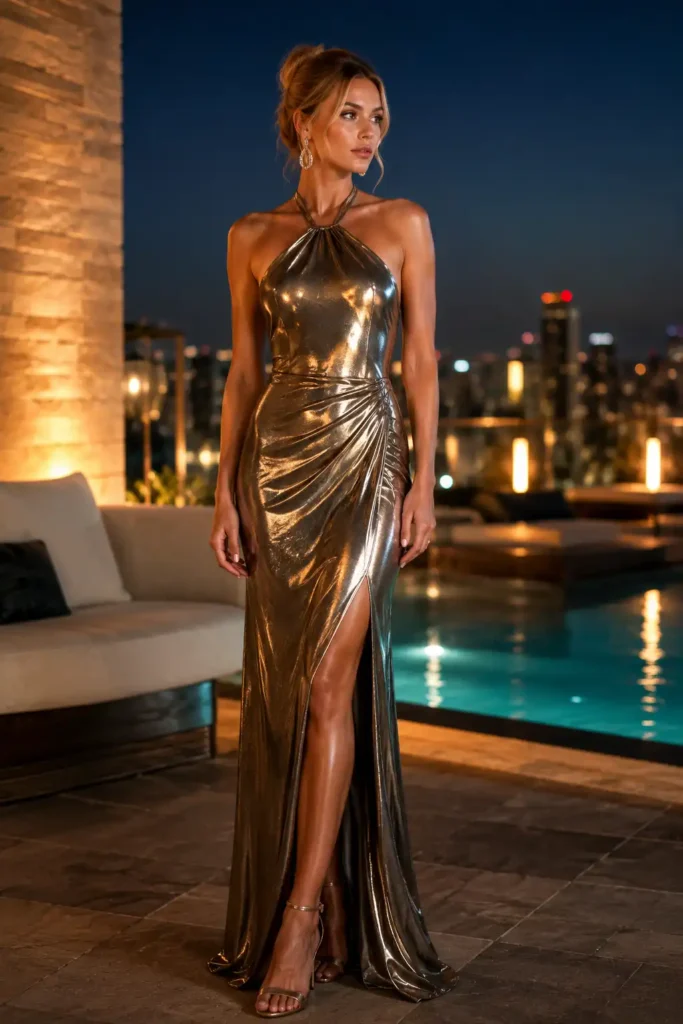
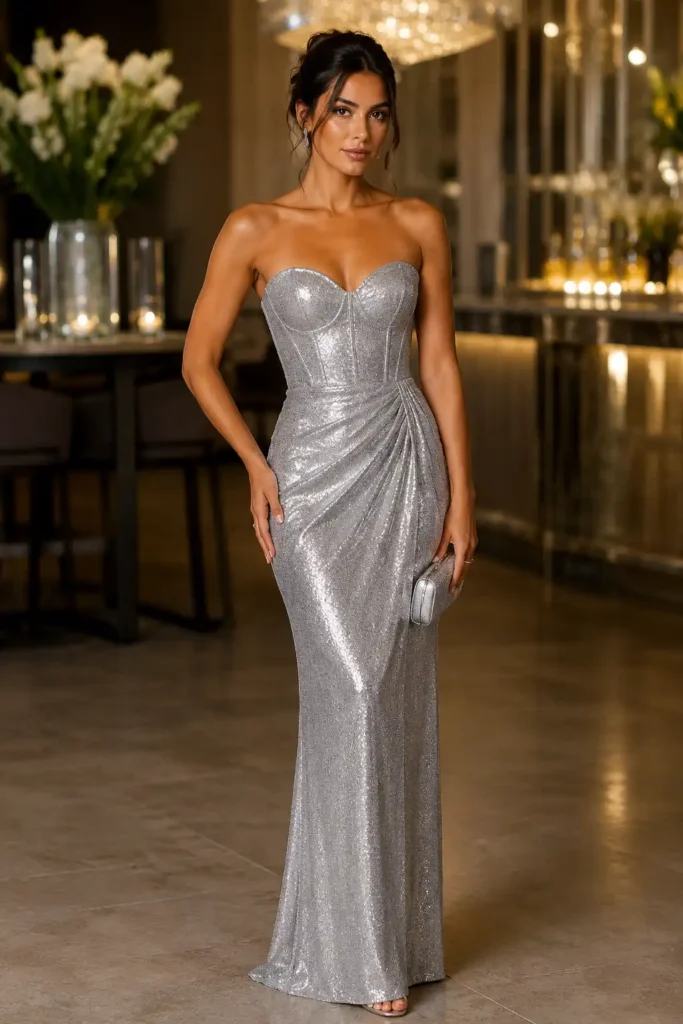
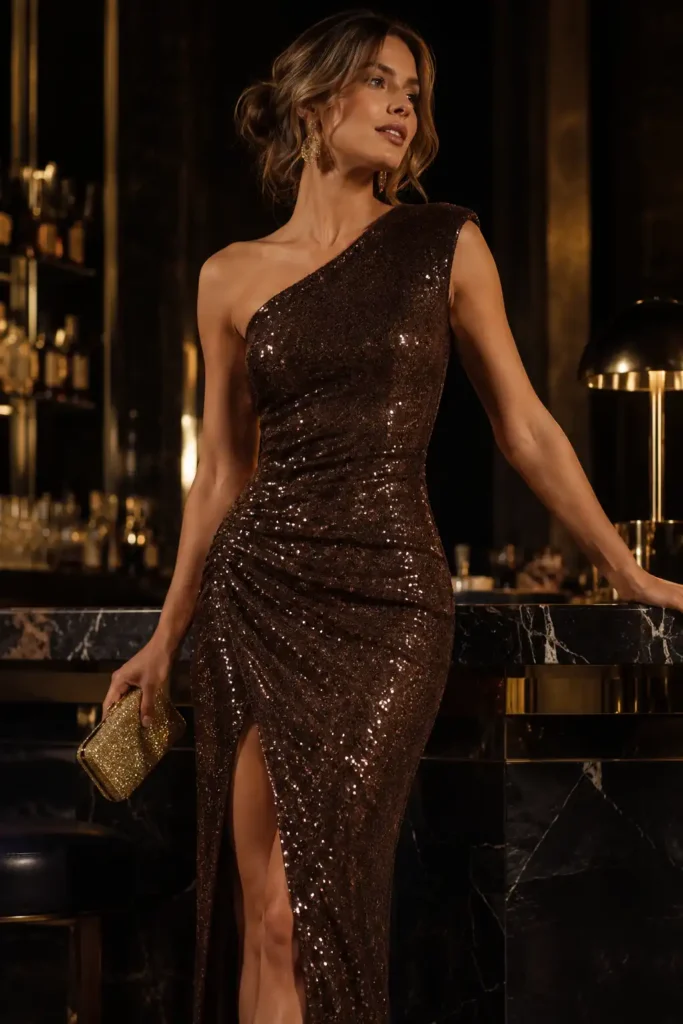
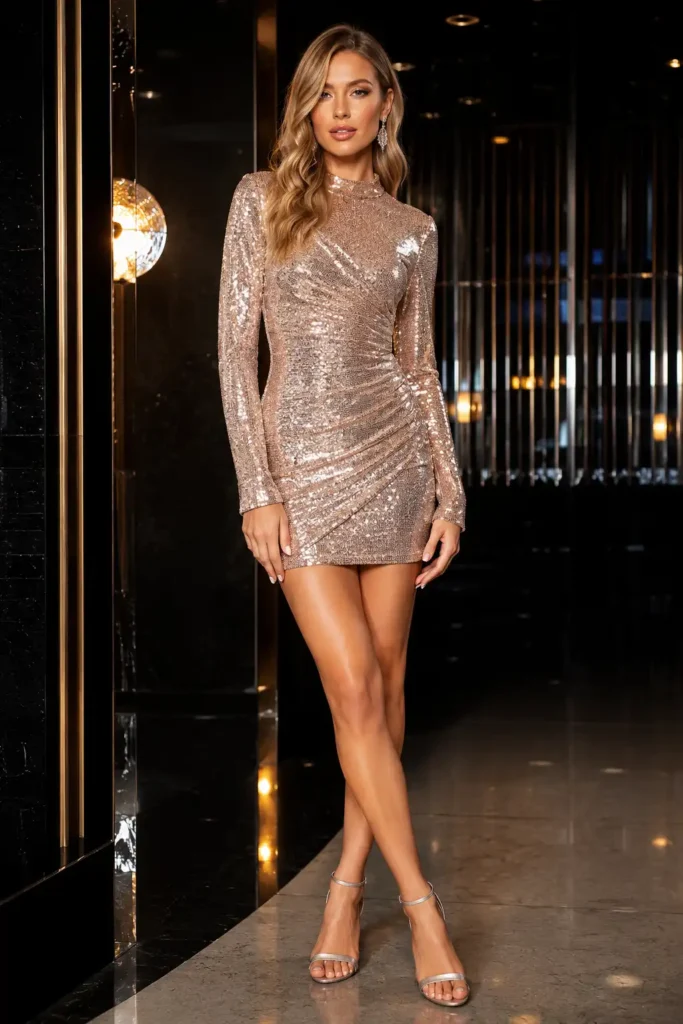
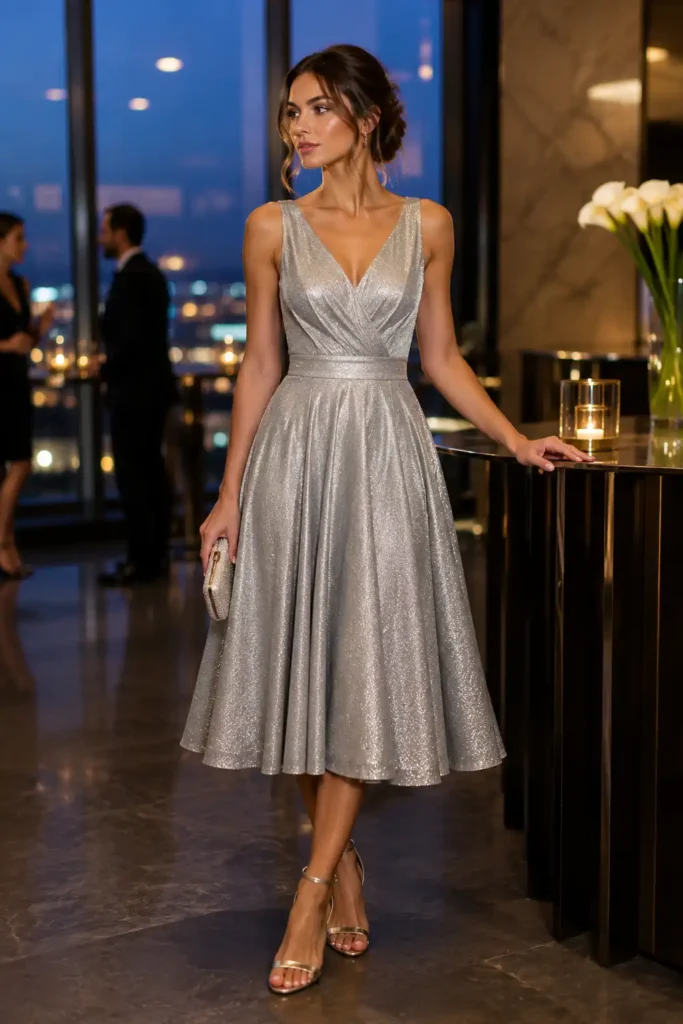
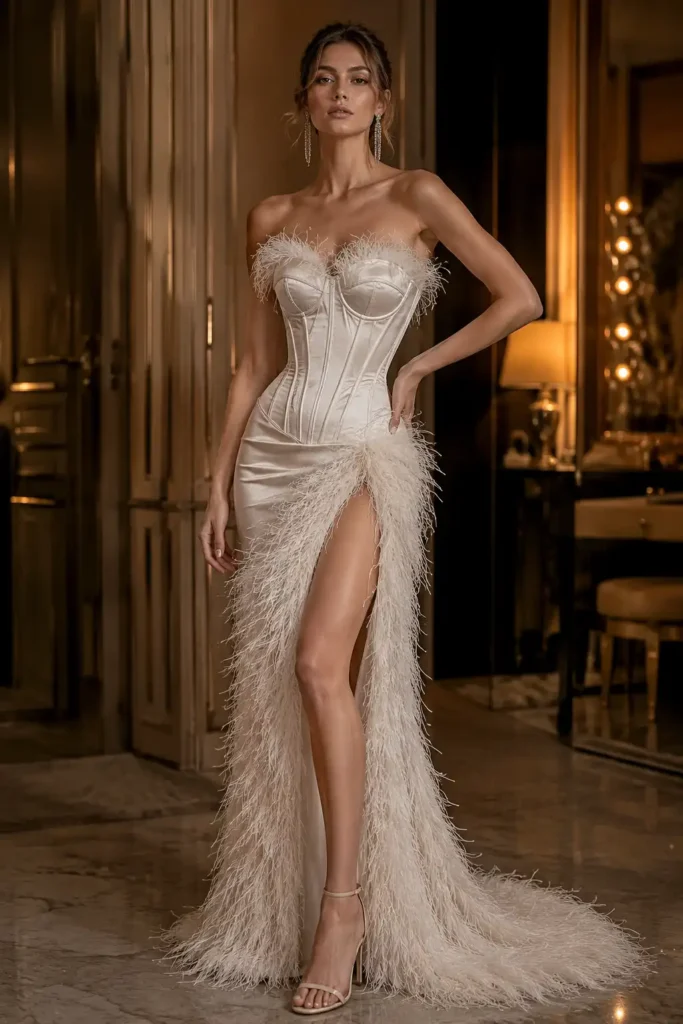
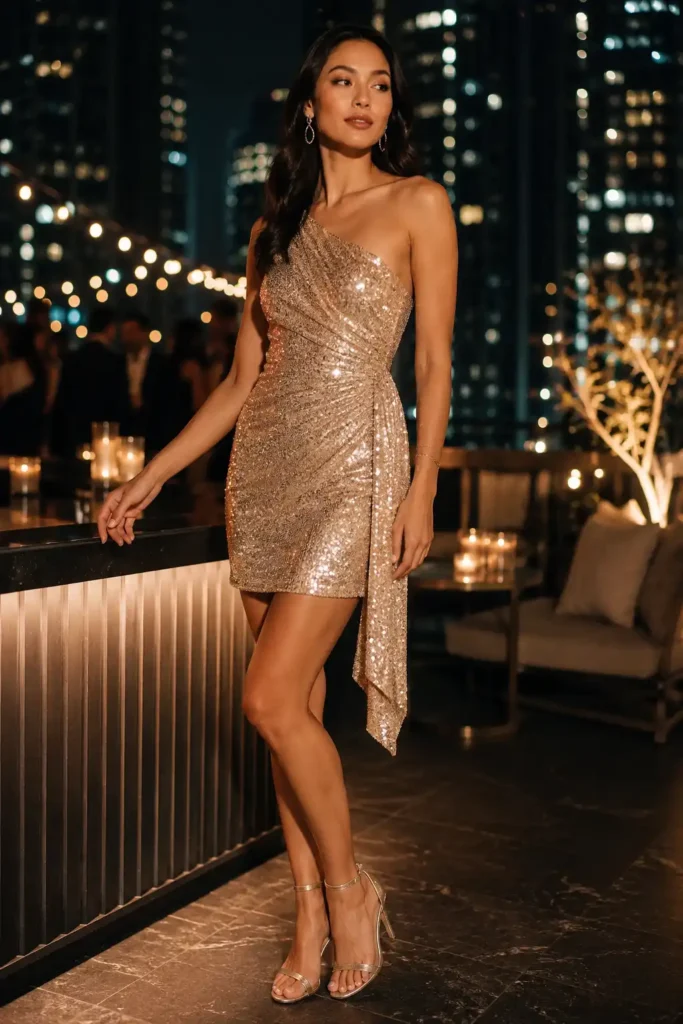
...

Sequin Party Dress Collection Manufacturer

Private-label sequin partywear developed for strong visual impact, reliable fit, controlled workmanship, and repeatable bulk production.

Jinfeng Apparel develops sequin party dress collections for established fashion brands, occasionwear labels, ecommerce programs, retailers, and sourcing teams. Product development covers mini, midi, maxi, bodycon, corset, halter, strapless, backless, one-shoulder, feather-trim, and mixed-fabric styles. Every program is reviewed around sequin density, base-fabric stretch, lining coverage, skin contact, seam thickness, zipper clearance, size grading, surface inspection, packing protection, and delivery timing.

  • 10-30 styles can be coordinated within one seasonal collection, with development priorities set around campaign, commercial, and long-lead designs.
  • Brand programs commonly range from 20,000 to 80,000 pieces in total, divided by style, color, size ratio, launch priority, and delivery batch.
  • MOQ starts from 200 pieces per style/color, subject to sequin fabric availability, color development, trims, construction, packing, and production scheduling.
  • 2 sample rooms, 7+ senior pattern makers, 20+ sample machinists, 6 owned factories, and 10+ long-term production partners support multi-style execution.

Manufacturing Capacity Behind Every Sequin Collection

A strong collection needs more than attractive samples. Development, production allocation, quality control, packing, and shipment records must stay connected across every style and color. Jinfeng Apparel combines dedicated sample development with a scalable Guangdong production network for seasonal and repeat-order programs.

Since 2008

Long-term experience in premium women’s fashion development, dress sampling, bulk production, private-label packing, and export coordination.

6 Owned Factories

Styles are allocated according to silhouette, fabric behavior, decoration level, construction difficulty, order volume, and delivery sequence.

10+ Production Partners

Long-term satellite partners add controlled capacity for multi-style programs while project standards, sample references, and QC requirements remain centrally managed.

2 Sample Rooms

First samples, fit samples, revised samples, photo-ready samples, PP samples, and Golden samples are developed before standards move into bulk production.

7+ Pattern Makers

Senior pattern makers control bust, under-bust, waist, hip, neckline depth, strap length, slit height, dress length, lining, and structural balance.

15+ QC Inspectors

Inspection covers incoming materials, cutting, first-piece approval, inline sewing, measurements, appearance, packing, AQL review, and shipment readiness.

Built for Established Fashion and Occasionwear Programs

Jinfeng Apparel is structured for brands with clear product direction, professional sample development needs, planned bulk quantities, and defined launch windows. The working model combines design interpretation, pattern development, material sourcing, sample revision, PP approval, production control, branded packing, and export delivery.

Strong Project Fit

Suitable programs include seasonal partywear collections, holiday drops, premium ecommerce capsules, occasionwear ranges, multi-channel retail assortments, and sourcing-company orders. Teams may begin with tech packs, line sheets, original samples, sketches, reference images, fabric directions, or an approved brand block. The strongest fit comes from projects with a planned assortment, clear style quantities, confirmed size architecture, realistic development budget, and a bulk-production target.

  • Fashion brands managing 10-30 styles per launch
  • Partywear, clubwear, occasionwear, and holiday programs
  • Private-label and retail-ready delivery requirements
  • Repeat-order and multi-batch production planning

Clear Service Boundary

The manufacturing model is not based on open-stock resale, single-piece fulfillment, or ready-to-ship inventory. Production begins after product review, material and construction assessment, sample development, and commercial alignment.

The boundary protects pattern quality, bulk consistency, material traceability, and delivery control, especially for sequin garments where decoration, lining, fit, and packing cannot be treated like ordinary basic apparel.

  • No ready-stock wholesale program
  • No one-piece fulfillment model
  • No personal made-to-measure service
  • No lowest-price-only development route

Where Sequin Party Dress Collections Commonly Fail

Sequin dresses combine decorative surfaces, sensitive base fabrics, close-fitting silhouettes, lining, closures, and demanding presentation standards. Small errors can spread across thousands of pieces unless risks are identified before cutting and controlled during production.

Missing Sequins

Cutting, seam preparation, handling, and finishing can loosen sequins or expose empty areas. Risk increases around darts, side seams, armholes, zipper openings, hem edges, and curved panels. Inspection must distinguish acceptable edge trimming from visible decoration loss on the garment face.

Skin Scratching

Necklines, underarms, sleeve edges, shoulder straps, side seams, and open-back edges may touch skin. Lining coverage, binding, facing, seam orientation, sequin removal, and soft edge finishing must be planned around the intended wearing position, not added after fit approval.

Bulky Seams

Dense sequins trapped inside seam allowances create ridges, broken needles, uneven feeding, zipper bulging, and distorted curves. Controlled removal zones, seam allowance width, layer count, stitch selection, and pressing method must be confirmed during sample development.

Unstable Fit

Stretch sequin mesh, woven embroidered bases, heavy all-over sequins, and lined structures behave differently on body. Bust, waist, hip, neckline, strap, and hem measurements may change after hanging, lining attachment, or repeated fitting unless pattern balance is reviewed by fabric type.

Visual Mismatch

Sequin direction, surface reflection, base color, dye lot, motif placement, and lining tone can create obvious differences under studio light or retail lighting. Color and shine approvals need physical swatches, sample garments, and bulk-lot checks rather than screen images alone.

Packing Damage

Face-to-face friction, uncontrolled folding, heavy carton compression, and exposed trims can create scratching, snagging, flipped sequins, feather damage, or permanent surface marks. Packing method must be tested on the approved garment before bulk packing starts.
Sequin Velvet and Sensitive Surfaces​

Build a Commercially Balanced Sequin Party Collection

A complete assortment needs visual excitement without forcing every style into the same price, silhouette, or wearing occasion. Jinfeng Apparel helps structure collections around commercial roles, launch timing, construction difficulty, and repeat-order potential.

  • Create Clear Product Roles
    Hero styles carry campaign impact through dense sequin surfaces, corset structures, feathers, dramatic sleeves, asymmetry, or premium embellishment. Core commercial styles use cleaner silhouettes and more repeatable construction for broader volume. Entry-price styles control fabric density, lining scope, seam count, and trim complexity without making the range look weak. Supporting styles add different lengths, coverage levels, and color options so the assortment feels complete rather than repetitive.
  • Balance Silhouette and Coverage
    A strong range may combine bodycon mini dresses, structured corset dresses, relaxed slip shapes, long-sleeve mini dresses, one-shoulder midi dresses, halter maxis, backless styles, and coordinated two-piece sets. Coverage should vary across neckline, sleeve, back, slit, and length so retailers can serve different age groups, climates, and event settings while preserving one visual direction.
  • Control Complexity Across Styles
    Not every design should carry dense sequins, boning, cups, feathers, cut-outs, and special packing. Complex details are concentrated in selected campaign pieces, while high-volume styles use proven structures and stable materials. Development priorities are set early so long-lead fabrics and difficult patterns move first, preventing a few complicated styles from delaying the complete launch.
  • Plan Color as a System
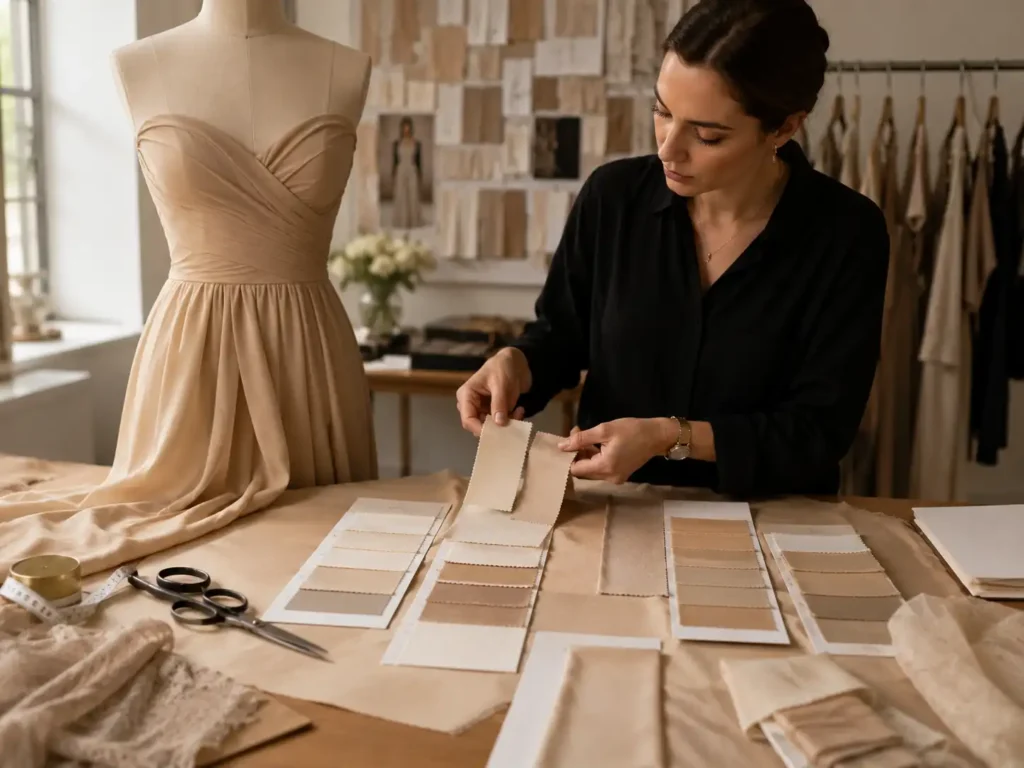
    Color planning considers sequin finish, base-fabric tone, lining color, zipper color, thread color, trim plating, and photography under direct light. Metallic silver, gold, champagne, black, emerald, burgundy, navy, pink, and iridescent finishes can reflect differently even when the supplier names sound similar. Physical swatches and garment samples provide a more reliable standard than digital color selection alone.

Sequin Party Dress Styles We Develop
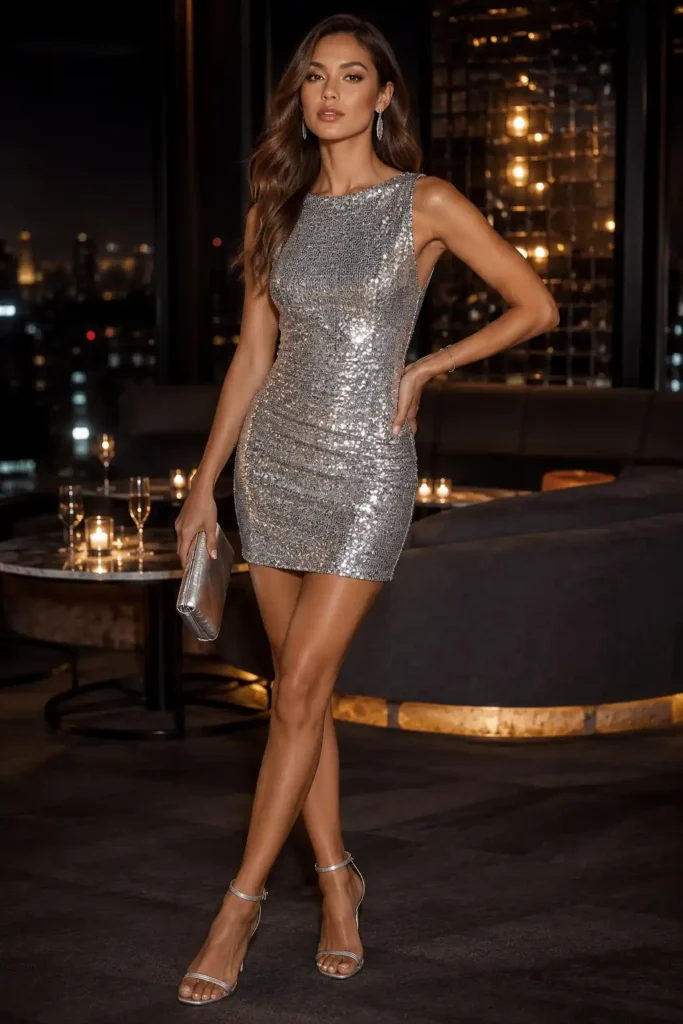
Each silhouette is developed around its own pattern, support, lining, movement, and surface-control requirements. Product cards below can be used as separate Elementor image cards with front-view, back-view, construction-detail, or on-body images.

Sequin Mini Dress

Built for holiday, birthday, club, and campaign drops. Development focuses on finished length, hip ease, hem coverage, lining length, zipper position, and movement exposure. A mini style may use bodycon, A-line, shift, ruched, or structured silhouettes depending on target channel and price point.

Bodycon Sequin Dress

Stretch direction, recovery, compression, bust-waist-hip balance, and lining elasticity determine whether the garment shapes the body or creates drag lines. Pattern grading must account for the combined behavior of sequin mesh and lining rather than scaling measurements mechanically.

Corset Sequin Dress

Bra cups, boning, under-bust position, waist reduction, neckline stability, back opening, and seam bulk require coordinated pattern and sewing trials. Sequin removal zones around corset seams must preserve the visible surface while allowing clean construction and comfortable wear.

Halter Sequin Dress

Halter styles need stable neck tension, balanced armhole coverage, controlled front depth, and a secure back structure. Heavy decoration can pull the neckline forward, so strap width, fastening method, lining support, and garment weight are checked during fitting.

Strapless Sequin Dress

Upper-edge grip, bust shaping, side support, boning, cup position, zipper strength, and dress weight determine security. Internal support may include silicone tape, power mesh, elastic, cups, and boning according to silhouette and comfort target.

One-Shoulder Dress

Asymmetric necklines require left-right balance, stable shoulder placement, controlled armhole shape, and accurate sequin direction. The supported side must carry garment weight without twisting the opposite neckline or shifting the waist seam.

Backless Sequin Dress

Backless designs combine exposure with structural risk. Strap angles, back depth, side-seam position, bust support, lining finish, fastening, and edge comfort are developed together so the dress remains secure without visible internal support.

Long-Sleeve Mini

Sleeve mobility, armhole comfort, cuff finish, underarm scratching, sleeve twist, and sequin density are checked before approval. Stretch bases need recovery control, while woven embroidered bases may require gussets, softer underarm finishing, or partial lining.

Sequin Midi Dress

Midi proportions depend on waist placement, skirt balance, slit height, hem movement, and visual density. The longer body area exposes shade and direction differences more clearly, making fabric-lot control, motif alignment, and hanging checks important.

Sequin Maxi Dress

Maxi styles require weight management, stable shoulder or bodice support, balanced skirt panels, smooth lining, slit control, and careful packing. Heavy fabrics may lengthen after hanging, so sample and PP measurements should be rechecked after rest.

Feather-Trim Sequin

Feather trims add movement and campaign value but raise risks around color matching, shedding, sewing position, pressing, storage, and packing. Trim length, density, attachment line, and replacement tolerance are approved before bulk order.

Sequin Two-Piece Set

Coordinated tops and skirts expand styling options but require exact color matching, size pairing, label consistency, SKU control, and set packing. Waist exposure, top length, skirt rise, and combined fit are checked together rather than as unrelated garments.

Choose the Right Sequin Fabric for Each Style

Sequin fabric selection changes the pattern, sewing method, garment weight, lining requirement, loss allowance, cost, and packing plan. Approval should cover both the decorative face and the base material beneath it.

Sequin DirectionTypical BaseStretchRelative WeightBest UseMain Production Risk
Stretch all-over sequinStretch mesh or knitMedium to highMediumBodycon mini, fitted midi, sleevesMeasurement growth, seam waviness, lining mismatch
Dense embroidered sequinMesh or woven baseLow to mediumHeavyCorset, statement mini, premium midiBulky seams, weight pull, broken needles
Scattered sequin meshFine mesh or tulleLow to mediumLightOverlay, sleeve, layered skirt, softer party stylesDecoration gaps, mesh damage, visible seam allowances
Patterned sequin embroideryMesh or woven baseVariesMedium to heavyPlacement-led dresses, premium panelsMotif alignment, cutting waste, panel mismatch
Iridescent or holographic sequinMesh or knit baseVariesMediumCampaign mini, festival, holiday stylesColor shift, scratch visibility, lighting inconsistency
Mixed sequin and beadworkMesh or woven baseLowHeavyHero pieces, evening-led partywearHandwork variation, long lead time, special packing

Make Sequin Dresses Comfortable Enough to Wear

Comfort must be engineered into the garment before approval. A clean exterior cannot compensate for scratching edges, unstable bust support, visible lining, restricted movement, or excessive weight during an event.

Full Lining

Full lining separates the body from the sequin base and covers internal seams. Fabric selection considers stretch, recovery, breathability, opacity, static, color influence, and garment weight. Lining length must remain controlled so it does not hang below the shell or pull the outer layer.

Partial Lining

Partial lining suits sleeves, overlays, cut-outs, or controlled sheer effects. Coverage boundaries need stable edges and deliberate placement. Underarm, bust, waist, hip, and zipper areas are reviewed according to movement and camera lighting.

Power Mesh Support

Power mesh can improve bust, waist, or back stability without adding rigid structure. Stretch direction, recovery, layer tension, seam placement, and skin comfort must match the outer fabric and intended compression level.

Cups and Boning

Cups and boning support strapless, corset, deep-V, and structured styles. Cup shape, spacing, under-bust line, boning hardness, casing, seam bulk, and back opening are verified on body before production standards are locked.

Protected Edges

Sequin removal, binding, facing, lining turn-back, soft tape, or covered seams can reduce scratching at necklines, armholes, cuffs, back edges, and slits. The correct method depends on surface density and visible design lines.

Weight Distribution

Heavy decoration must be carried by the bodice, straps, waist, or internal support rather than one fragile edge. Hanging checks reveal length growth, neckline pull, twisted seams, and uneven hems before approval.

Design Details That Determine the Final Fit

Party dresses are judged in motion, under direct light, and through close-up photography. Pattern and construction decisions must hold the neckline, shape the body, keep the surface clean, and protect the wearer throughout an event.

Bust Support

Cup position, under-bust line, neckline shape, side coverage, dart direction, boning, power mesh, and lining tension are reviewed together. Weak support creates gaping, sliding, drag lines, or exposure even when flat measurements look correct.

Waist Placement

A waist seam positioned 1-2 cm too high or low can change the entire silhouette. Natural waist, high waist, corset waist, and dropped waist structures are matched to brand fit standards and fabric behavior.

Hip Balance

Bodycon and fitted styles need adequate hip shaping without side-seam rotation, horizontal drag, lining pull, or zipper distortion. Stretch and recovery are reviewed after movement and resting.

Zipper Clearance

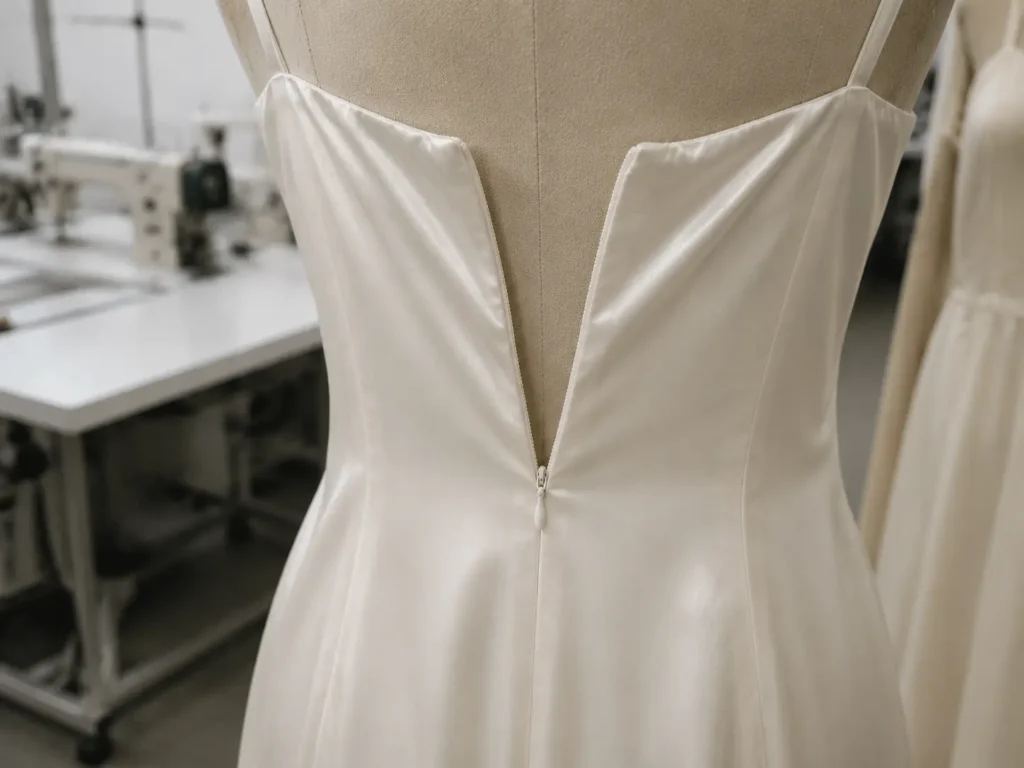
Sequins are cleared from zipper teeth, seam allowance, and top stop areas where needed. Tape color, zipper length, backing, top hook, waist intersection, and lining attachment are approved for flat closure.

Strap Stability

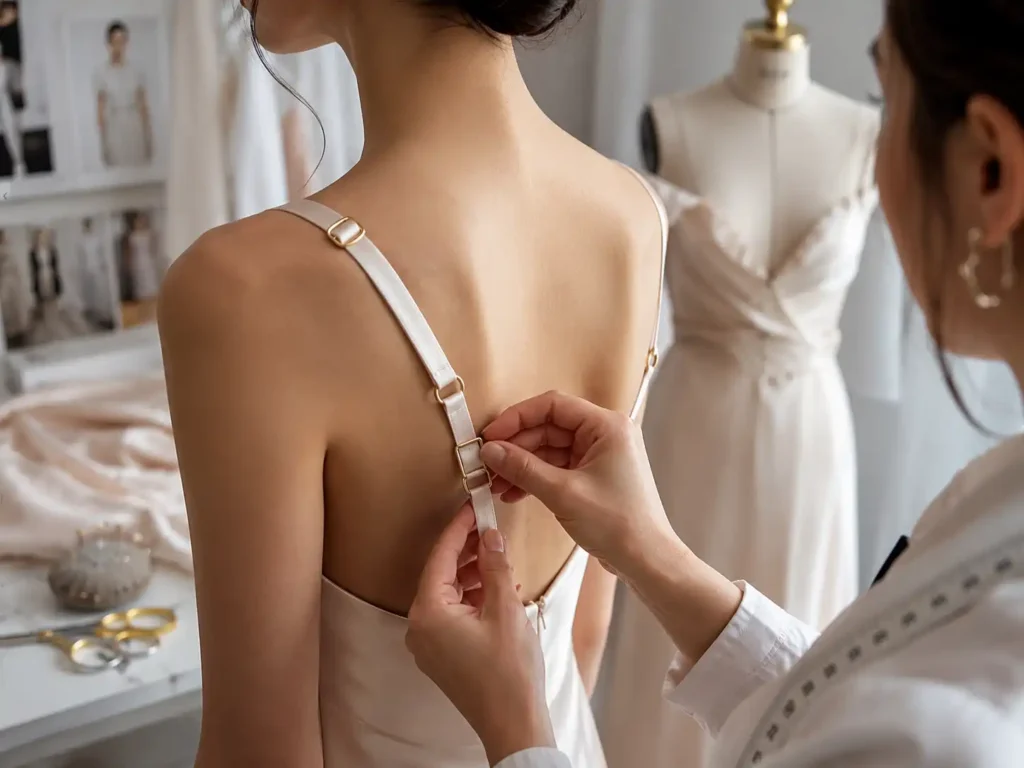
Strap width, length, angle, slider position, attachment reinforcement, and garment weight determine whether straps stay in place. Heavy embellished dresses may require wider or internally reinforced straps.

Slit Control

Slit height is checked during standing, walking, sitting, and photography. Reinforcement, lining opening, seam finish, edge comfort, and left-right placement must remain consistent through size grading.

Sequin Direction

Directional sequins, motifs, and reflective surfaces must follow approved orientation across front, back, sleeves, and panels. Reversed pieces become highly visible under light even when color is technically identical.

Hem Balance

Mini, midi, and maxi hems are checked after hanging and pressing. Heavy decoration, bias panels, curved hems, and stretch bases can grow unevenly, requiring controlled resting and final balance checks.

Control Collection Cost Without Flattening the Design

Cost control begins with product architecture, not last-minute price cutting. Jinfeng Apparel reviews fabric density, garment structure, lining, trims, labor, wastage, packing, style quantities, and delivery sequence to protect the visual direction while reducing avoidable cost.

Collection TierCommercial RoleConstruction DirectionCost-Control Levers
Entry CommercialAccessible volume styleClean silhouette, lighter sequin density, standard lining, limited special trimsUse available colors, consolidate fabric, reduce panel count, standardize zipper and labels
Core FashionMain sales stylesBalanced sequin impact, developed fit, controlled support, branded packingShare base blocks, coordinate colors, optimize cutting layout, group compatible trims
Statement PremiumCampaign and high-impact stylesDense surface, corsetry, feathers, mixed embellishment, premium liningConcentrate complexity in selected styles, confirm handwork zones, protect long-lead materials early

What We Review Before Starting Your Collection

A useful initial assessment needs enough information to identify fabric, pattern, workmanship, MOQ, packing, and timing risks. Complete files lead to faster decisions and fewer quotation revisions.

Style Files

Tech packs, line sheets, sketches, reference images, original-sample photos, and construction notes reveal silhouette, panel lines, closures, support, lining, embellishment, and finish expectations.

Quantity Plan

Quantity per style and color determines material purchasing, cutting efficiency, line allocation, unit cost, packing split, and production scheduling. Total program volume alone is not enough.

Color Direction

Pantone references, physical standards, sequin finishes, base colors, lining tones, zipper colors, thread, and trim plating need one coordinated approval route.

Size Architecture

The project should identify alpha sizing or numeric sizing, target market, base size, grade rules, fit model information, priority measurements, and extended-size requirements.

Launch Window

Photo-sample date, selling launch, warehouse deadline, inspection window, freight route, and split-shipment needs are mapped backward before sample priorities are set.

Brand Delivery

Main label, care label, size label, hangtag, barcode, polybag, carton mark, packing ratio, warehouse guide, and required documents are reviewed before PP approval.

Develop Complex Sequin Samples Before Bulk Production

Sampling converts design intent into a production standard. The process tests the fabric, pattern, support, decoration, sewing method, fit, measurement, and packing behavior before thousands of garments enter production.

Project and Material Review

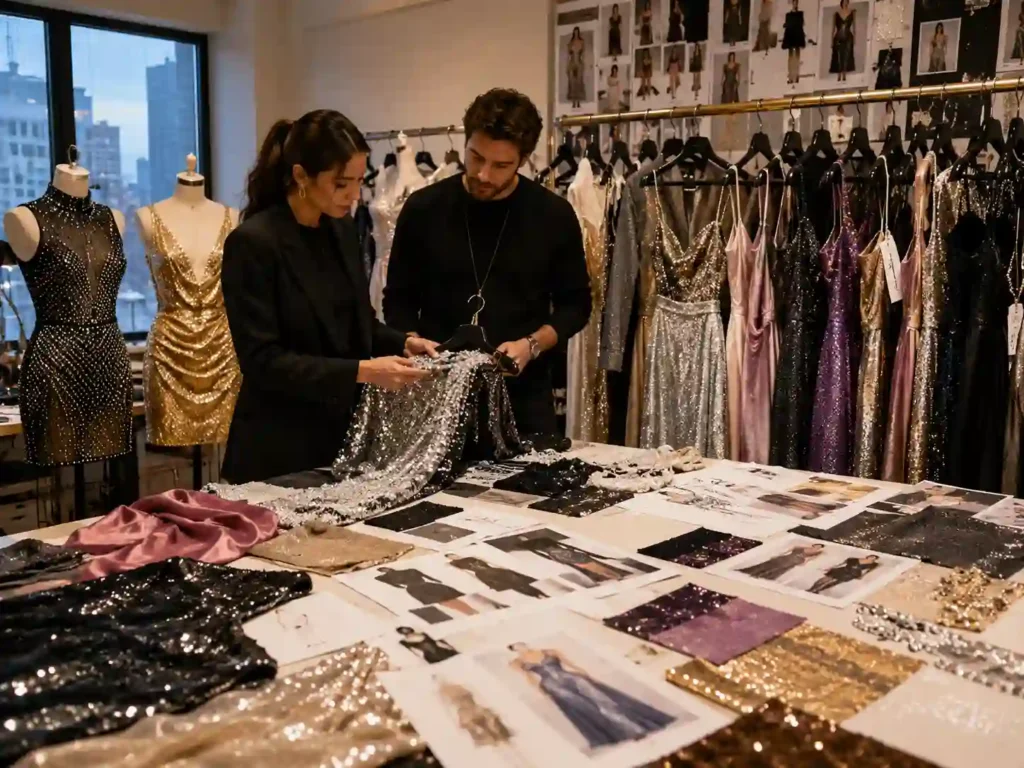
The development team studies the style file, intended selling occasion, target price level, quantity, size plan, and delivery schedule. Sequin fabric is reviewed for base structure, stretch, recovery, weight, usable width, decoration direction, supplier MOQ, color availability, and surface risk. Lining, zippers, cups, boning, elastics, feathers, labels, and packaging are assessed together rather than after the shell is developed.
Pattern and First Sample

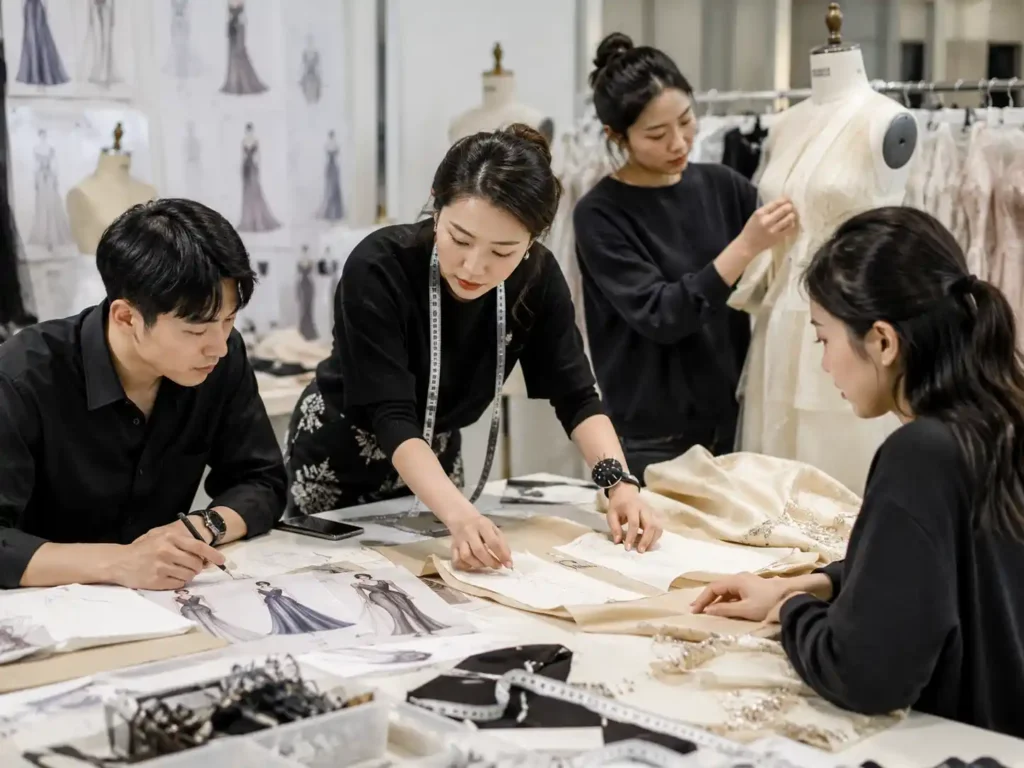
Senior pattern makers establish the block, neckline, bust support, waist position, hip shaping, length, slit, strap, armhole, back opening, and lining. Sample machinists test seam preparation, sequin clearing, needle behavior, zipper installation, lining attachment, edge comfort, pressing, and surface handling. The first sample is measured and reviewed on body or against the brand fit standard before comments are issued.

Revision and Photo-Ready Sample

Revision records separate pattern changes, measurement changes, fabric replacement, trim changes, workmanship comments, and visual styling comments. Photo-ready samples may prioritize approved color, surface appearance, hem balance, and camera-facing details while maintaining the same construction route intended for bulk production. Any temporary material used for photography is clearly identified and cannot silently become the bulk standard.

PP Sample and Golden Standard

The PP sample locks approved fabric, color, lining, trims, measurements, construction, labels, packing method, and finishing standard. A Golden sample or sealed reference supports factory instruction, inline inspection, final inspection, and repeat-order comparison. Changes after PP approval are evaluated for cost, material availability, pattern updates, schedule impact, and the need for another confirmation sample.

Manage Multiple Styles Around the Launch Calendar

A 10-30 style collection should not enter development as one undifferentiated list. Sample priority, fabric readiness, complexity, photography needs, and production sequence must follow the commercial launch plan.

Hero Styles First

Campaign, homepage, paid-media, influencer, and key wholesale styles receive early fabric booking and sample-room priority because delayed hero images can hold back the entire launch.

Long-Lead Materials

Custom sequin colors, patterned embroidery, feathers, special zippers, custom hardware, and handwork are reviewed first so material lead time does not become a hidden delay after fit approval.

Core Sales Styles

High-volume silhouettes move through fit and PP approval with clear deadlines. Shared blocks, lining, zippers, and labels can reduce development variation when brand standards allow.

Photo Samples

Photo-ready quantities, color needs, model size, shipment address, and campaign deadline are separated from salesman samples, fit samples, and bulk PP requirements.

Bulk Windows

Material arrival, cutting, sewing, inline inspection, finishing, packing, final inspection, and freight booking are scheduled by style group and priority rather than one vague completion date.

Split Delivery

Launch-sensitive programs may send selected hero styles, priority colors, or 10-30% of urgent quantities by air while the remaining bulk travels by sea, with separate SKU, carton, invoice, and packing-list control.

Match Each Style to the Right Production Unit

Factory allocation is based on construction and material behavior, not convenience. The goal is to place each style with a team familiar with its fabric, support structure, decoration, quality risks, and expected output rhythm.
Structured Partywear

Corset, strapless, cup, boning, deep-V, and fitted woven styles are assigned to units experienced in structured women’s fashion. Production standards include bust support, waist alignment, zipper flatness, internal casing, lining, and symmetric panel control.

Stretch Sequin Styles

Bodycon dresses, fitted sleeves, ruched silhouettes, and stretch mesh styles need teams familiar with stretch direction, recovery, feeding tension, lining elasticity, side-seam balance, measurement stability, and surface protection.

Decorated Statement Styles

Dense embroidered sequin, feather trim, mixed embellishment, asymmetry, and long formal silhouettes require slower handling, defined handwork points, controlled storage, extra surface inspection, and protective packing.

Workmanship Controls for Cleaner Sequin Construction

Sequin garments demand deliberate preparation before sewing and disciplined handling after sewing. Cleaner results come from controlling the material at each construction point rather than relying on final inspection to hide structural errors.

Cutting Preparation

Fabric direction, right and wrong side, motif placement, usable width, damage, stretch direction, nap-like reflection, and cut quantity are checked before bundling. Pattern placement is adjusted for directional or patterned surfaces to prevent visible mismatch.

Seam Clearing

Sequins are removed or managed within selected seam allowances where density would create bulk, broken needles, poor feeding, or raised ridges. Visible decoration boundaries are protected so clearing does not create empty lines on the garment face.

Needle and Stitch

Needle selection, stitch length, thread type, tension, machine speed, seam support, and layer count are tested against the real fabric. One setting cannot be assumed for stretch sequin mesh, dense embroidery, and mixed beadwork.

Zipper Installation

Zipper teeth, top stop, waist intersection, seam allowance, lining, and hook-and-eye areas are cleared and stabilized. The closure is checked flat on body, not only on the hanger.

Lining Attachment

Lining is attached without pulling the shell, exposing edges, shortening the garment, twisting side seams, or restricting stretch. Tack points, hem relation, zipper connection, and coverage are documented in the sewing instruction.

Surface Finishing

Final handling checks flipped sequins, missing areas, loose threads, scratches, stains, snagging, crushed feathers, press marks, and direction consistency. Pressing temperature and pressure are controlled to protect plating and base fabric.

Control Every Stage From Fabric to Final Packing

Quality control begins before cutting and continues through sewing, finishing, packing, and shipment records. Each checkpoint is tied to the approved sample, measurement specification, workmanship requirements, and brand packing instructions.

Material Inspection

Sequin face, base fabric, color lot, usable width, direction, stretch, defects, missing decoration, backing quality, lining, zippers, trims, and labels are checked before release.

Cut Panel Check

Panels are checked for size, quantity, direction, damage, motif placement, stretch distortion, missing sequins, and correct bundling by style, color, and size.

First-Piece Approval

The first sewn piece establishes seam method, zipper, lining, support, measurement, appearance, and surface handling before the process is repeated across the line.

Inline Inspection

Neckline, straps, bust, waist, hip, zipper, side seams, slit, lining, sleeve, symmetry, stitch quality, and decoration are checked while correction is still contained.

Measurement Review

Priority points may include bust, under-bust, waist, hip, front length, back length, strap length, armhole, neckline depth, slit height, sleeve, and hem. Tolerances follow the approved specification.

Appearance Inspection

Surface direction, shade, missing sequins, scratches, stains, loose threads, seam ridges, zipper bulging, exposed lining, uneven hems, and pressing marks are reviewed.

Packing Audit

Main labels, care labels, size labels, hangtags, barcodes, polybags, size stickers, style-color-size ratio, carton marks, carton quantity, and protective layers are verified.

Final and AQL Review

Final inspection and AQL sampling may be performed by Jinfeng, the brand team, or an appointed third party according to the approved inspection plan and shipment requirement. 

Protect Sequin Dresses Through Packing and Delivery

Retail-ready delivery combines garment protection, brand presentation, SKU accuracy, warehouse identification, and export documentation. Sequin surfaces need a packing method matched to decoration density, trim type, garment length, and freight route.

Private Labels

Main label, care label, size label, hangtag, barcode, RN or importer details where provided, and brand artwork are produced and placed according to approved files. Final legal wording remains subject to the brand’s market requirements and confirmation.

Surface Separation

Tissue, protective sheets, garment-facing separation, folded sleeves, covered feathers, or individual protective layers reduce friction and snagging between embellished surfaces.

Controlled Folding

Fold lines avoid rigid corset areas, dense embellishment zones, feathers, and fragile edges. Maxi and structured styles may require different fold plans from stretch mini dresses.

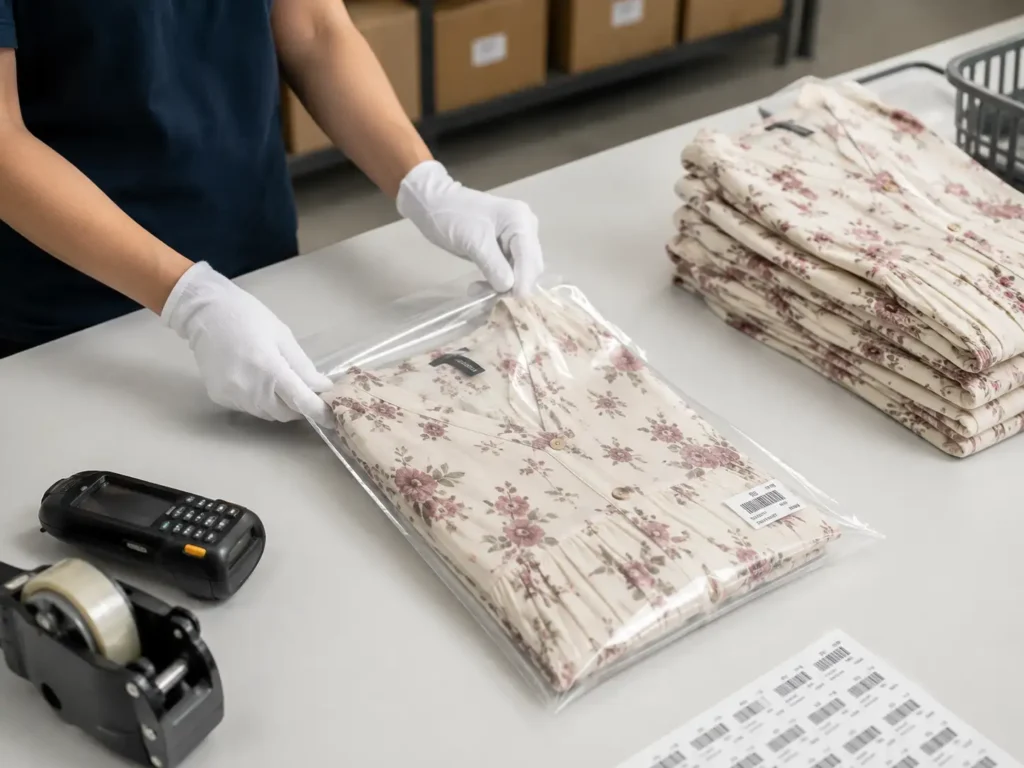
Polybag and Sticker

Polybag thickness, warning text, ventilation, adhesive placement, size sticker, barcode, SKU, and style-color-size identification are checked against the approved packing file.

Carton Control

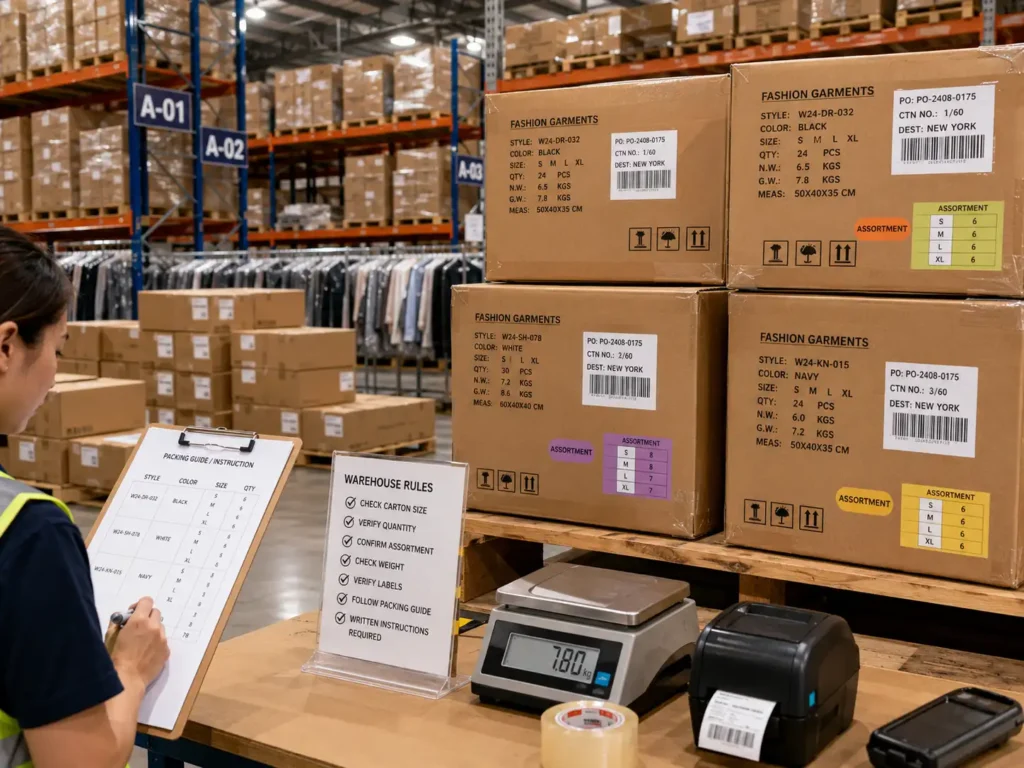
Pieces per carton, size ratio, style separation, carton marks, carton dimensions, net weight, gross weight, and compression are reviewed to protect goods and support freight planning.

Shipment Coordination

Express courier supports samples; air freight supports urgent launch quantities; sea freight supports regular bulk orders; and air-sea split shipment can balance timing and freight cost. Client-appointed forwarders are supported with cargo data and pickup coordination.

A Manufacturing Partner Built for Brand Protection

Long-term cooperation depends on verifiable manufacturing structure, disciplined project records, responsible compliance support, and protection of unreleased product information.

Manufacturing Evidence

Jinfeng Apparel has focused on custom women’s fashion since 2008. The development and production system includes 6 owned factories, more than 10 long-term production partners, 2 sample rooms, 7+ senior pattern makers, 20+ sample machinists, 12+ merchandisers, 15+ QC inspectors, and 30+ finishing and packing workers. No equipment quantities are claimed without verified records.

Compliance Support

Factory-audit documents, quality-system information, material certificates, and third-party testing can be reviewed according to the factory, fabric supplier, color, certificate scope, validity, target market, and project requirement. Sedex, SMETA, BSCI, OEKO-TEX, GOTS, GRS, SGS, Intertek, BV, or ITS references are confirmed by actual available records rather than presented as universal coverage.

NDA and Confidentiality

Tech packs, line sheets, original samples, patterns, measurement files, material directions, labels, hangtags, barcodes, packing files, order quantities, target prices, and unreleased designs can be protected through NDA-based cooperation. Client names, logos, unpublished garments, and commercial files are not used publicly without written authorization.

Frequently Asked Questions About Sequin Dress Manufacturing

MOQ starts from 200 pieces per style/color. Final MOQ depends on sequin fabric availability, custom color, motif, trims, lining, construction, packing, size split, and production schedule. Special sequin embroidery, custom dyeing, handwork, feathers, or highly fragmented color plans may require higher material or production quantities.
Yes. Programs may include 10-30 styles across mini, midi, maxi, bodycon, corset, halter, strapless, backless, one-shoulder, long-sleeve, feather-trim, and coordinated-set directions. Styles are prioritized by campaign importance, commercial volume, material lead time, construction risk, and delivery phase.
Useful files include tech packs, line sheets, reference images, sketches, original-sample photos, quantity per style/color, size range, fabric direction, color plan, target delivery date, label files, packing instructions, and target market. A preliminary assessment can begin with incomplete files, but final pricing requires confirmed materials and construction.
A common planning range for a complex sequin first sample is around 10-20 working days after suitable fabric and trims are available. Revised, photo-ready, and PP samples depend on fit comments, material changes, color approval, and construction updates. Final timing is confirmed by style rather than promised as one fixed number for the complete collection.
A common production planning range is approximately 35-55 days after PP approval, bulk material confirmation, label approval, and packing confirmation. Custom sequin development, handwork, feathers, multiple colors, peak-season scheduling, third-party testing, or phased delivery may extend the timeline. Material booking and PP approval dates strongly influence the result.
Jinfeng Apparel can source available colors, review supplier options, arrange swatches, or assess custom color development. Approval should cover sequin finish, base fabric, lining tone, zipper, thread, trim plating, dye lot, lighting, MOQ, and lead time. Custom color cannot be confirmed from a screen reference alone.
Control methods may include full or partial lining, covered seam allowances, local sequin removal, binding, facing, soft tape, edge turn-back, power mesh, and adjusted trim placement. Neckline, underarm, sleeve, strap, slit, and back edges are checked according to actual movement and skin contact.
Yes, but production allocation and timing are planned by fabric, structure, decoration, quantity, and line capability. A stretch bodycon mini and a dense sequin corset maxi may share a collection but require different sample tests, factory units, sewing instructions, QC checkpoints, and production speeds.
Private-label support can include main labels, care labels, size labels, hangtags, barcodes, polybags, size stickers, carton marks, packing ratios, and warehouse-related identification. Artwork and legal label wording must be approved before production. Sequin protection may require additional tissue, separation, folding, or carton controls.
Yes. NDA-based cooperation can protect tech packs, patterns, samples, measurements, material directions, labels, packaging, order information, and unreleased designs. Confidential materials are used for project assessment, development, production, QC, packing, and delivery and are not publicly disclosed without authorization.

Start Your Sequin Party Dress Collection

Send Jinfeng Apparel the product information already available, even when the collection is still being organized.

Kelly and the development team will review the assortment, identify material and construction risks, confirm whether the planned quantities fit the manufacturing model, and outline the next step for fabric sourcing, sample development, quotation, PP approval, bulk production, packing, and delivery.

More complete files allow a more useful assessment, while early-stage line sheets or reference images can still support an initial feasibility review.

  • Tech packs, line sheets, sketches, reference images, or original-sample photos
  • Quantity per style/color, planned total volume, and preferred size range
  • Sequin effect, fabric direction, lining, support, trims, and color plan
  • Photo-sample date, launch date, warehouse deadline, and delivery country
  • Main labels, care labels, hangtags, barcodes, polybags, and carton requirements
  • Inspection, testing, factory-audit, NDA, or documentation requirements

Tell Us About Your Dress Project

Share your product details, estimated quantity and development requirements. Our team will review your project and provide practical OEM/ODM production feedback.

Premium Women’s Apparel Production for Fashion Brands

From dress sample development to bulk production, JF Apparel supports fashion brands with confidential OEM/ODM manufacturing, reliable quality control and scalable production support.

START YOUR DRESS PROJECT

Ready to Develop Your Next Dress Collection?

Share your design concept, product requirements or sourcing plans with our team. We’ll review your project and provide practical feedback on development, materials, MOQ and production.

7-10 Days

Sample Development

200 PCS

Starting MOQ

Fast Response

Professional Follow-Up