
Dress Manufacturer for Supply Chain Managers
Specialized dress development and scalable production for fashion supply chains requiring clear milestones, controlled quality and dependable delivery.
Jinfeng Apparel supports global fashion brands and established apparel programs from style review, fabric sourcing and pattern development through sampling, bulk production, quality control, private-label packing and export coordination. Supply chain teams gain one accountable manufacturing route for multi-style dress collections, seasonal launches, replenishment orders and second-source qualification.
- 6 owned women’s fashion factories supported by 10+ long-term satellite production partners
- 100,000+ pieces of coordinated monthly womenswear capacity, allocated by style complexity and delivery window
- 18+ sewing lines and 6+ flexible lines for woven, stretch, occasion and mixed-fabric programs
- 12+ merchandisers and 15+ QC inspectors coordinating milestones, inspections, packing and shipment readiness
Operational Facts for Supplier Qualification
Since 2008
6 Owned Factories
Six owned women’s fashion factories form the core production base. Orders are allocated according to fabric type, garment construction, workmanship level, quantity, color split and delivery date.
Owned capacity gives supply chain teams a defined route for key programs, while project allocation remains subject to line loading and approved production planning.
10+ Production Partners
More than ten long-term satellite production partners extend specialist capability and seasonal capacity. Partner use is coordinated around product suitability, approved quality standards and order requirements.
Final production routes should be confirmed during onboarding so supply chain teams understand where each style will be cut, sewn, inspected and packed.
100,000+ Pieces Monthly
Dedicated Development Team
Merchandising and QC
What Supply Chain Managers Need From a Dress Vendor
Capacity Reliability
- Capacity is confirmed after style and order review.
- Complex operations receive separate loading assumptions.
- Schedule changes are communicated before they affect final inspection.
Material Readiness
Fabric and trim delays often consume more time than garment sewing.
Each program therefore requires an approved material list, supplier lead time, color status, minimum purchase requirement and expected arrival date. Custom dyeing, printing, lace, sequin fabric, branded hardware and private-label packaging receive individual tracking because one late component can hold an otherwise completed order.
- Approved fabric and trim references are recorded.
- Custom developments carry separate timing.
- Alternatives require brand approval before use.
Production Visibility
- Material, cutting, sewing, QC and packing status are separated.
- Open risks include owner and next action.
- Shipment readiness is reported before freight handover.
Bulk Consistency
- PP approval freezes the production standard.
- Golden samples guide line and final inspection.
- Revisions are transferred into controlled production files.
Delivery Control
- Critical dates are visible from the beginning.
- Late approvals are reflected in the schedule.
- Recovery choices include cost and timing impact.
Document Accuracy
- Label artwork and placement require approval.
- Barcode and SKU data are checked by style, color and size.
- Carton records are reconciled before release.
Where Jinfeng Fits in Your Vendor Portfolio
Best-Fit Programs
- Seasonal collections with 10-30 styles
- Dress-category sourcing or second-source qualification
- Multi-color and extended-size programs
- Bulk orders requiring private-label packing and export support
Operating Boundaries
- Tech pack, original sample, sketch or reference image can start review.
- Sample development is charged separately.
- Production timing is confirmed after PP and material readiness.
- Final factory and line allocation follows project approval.
Dress Categories Supported Across Seasonal Programs

Mini and Short Dresses
- Common materials: poplin, satin, crepe, jersey and stretch woven.
- Control points: hem balance, lining coverage, waist level and seat ease.
- Suitable for trend drops, party capsules and repeatable core styles.

Midi Dresses
- Common materials: satin, chiffon, crepe, jersey, mesh and suiting.
- Control points: slit height, sweep, lining length and waist alignment.
- Suitable for occasion, office, brunch and transitional collections.

Maxi Dresses
- Common materials: chiffon, satin, mesh, rayon and lightweight woven.
- Control points: total length, grain, panel balance, lining and hem finish.
- Suitable for resort, evening, occasion and vacation programs.

Party and Cocktail
- Common materials: stretch satin, mesh, jersey, velvet and sequins.
- Control points: symmetry, ruching density, zipper lay, stretch recovery and trim security.
- Suitable for social launches, holiday drops and event-driven programs.

Occasion and Evening
- Common materials: satin, chiffon, lace, tulle, velvet and embellished fabric.
- Control points: internal support, drape, pressing, closure security and hem.
- Suitable for formal events, wedding guests and premium occasion collections.

Bodycon and Corset
- Common materials: ponte, power mesh, stretch satin and bonded fabrics.
- Control points: compression, recovery, cup position, boning and closure tension.
- Suitable for club, party and statement evening programs.

Satin and Slip
- Common materials: charmeuse, stretch satin, duchess satin and satin-backed crepe.
- Control points: shade, grain, seam smoothness, neckline and strap length.
- Suitable for occasion, bridesmaid, party and premium ecommerce ranges.

Mesh Lace Sequin
- Common materials: power mesh, embroidered mesh, corded lace, tulle and sequin fabric.
- Control points: holes, motif placement, seam bulk, lining and embellishment security.
- Suitable for eventwear, partywear and visually led collections.

Resort and Printed
- Common materials: rayon, viscose, linen blends, chiffon and lightweight cotton.
- Control points: print repeat, shrinkage, opacity, seam slippage and packing creases.
- Suitable for vacation, cruise, summer and warm-market collections.
Fabric and Trim Risks Controlled Before Production

Fabric Availability
- Stock status and supplier MOQ are recorded.
- Bulk reservation follows written approval.
- Custom development timing is added to the critical path.

Color Consistency
- Shell, lining and trim colors are reviewed together.
- Bulk lots are identified by batch.
- Shade grouping is maintained through cutting and packing.

Fabric Performance
- Stretch direction is marked for fitted styles.
- Shrinkage findings feed finished measurements.
- Delicate surfaces receive handling and pressing controls.
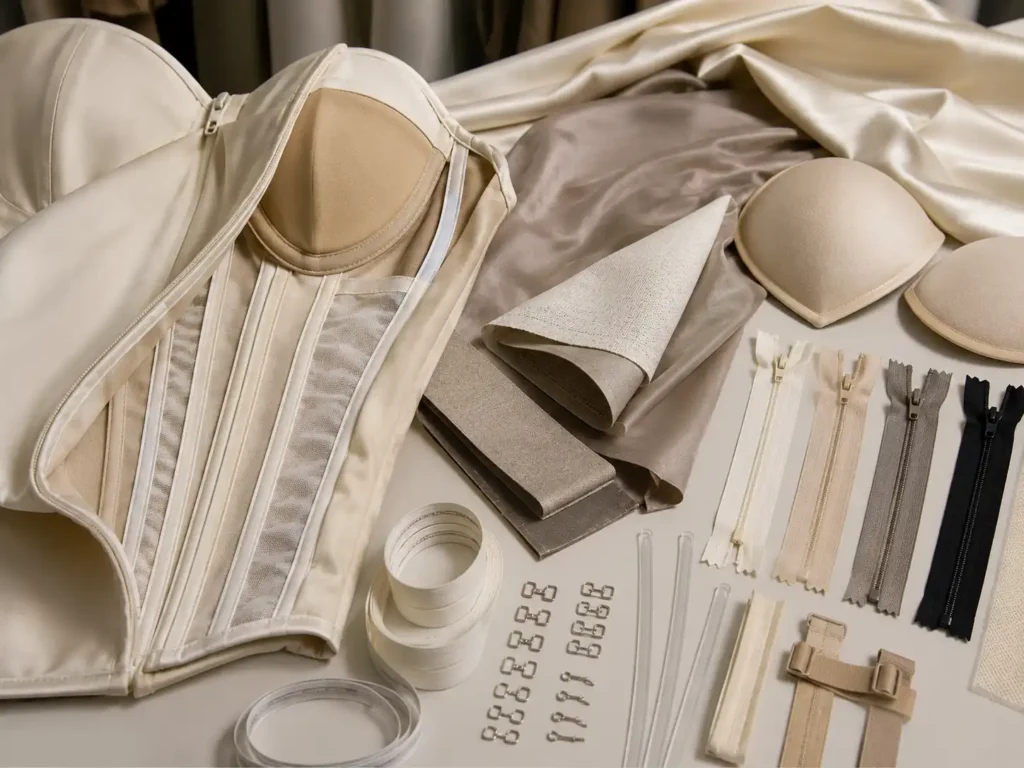
Lining Decisions
- Coverage is checked under natural and strong light.
- Lining length is measured separately.
- Support layers are defined for corset and occasion styles.

Trim Lead Times
- Standard and custom trims are separated.
- Wear comfort and durability are reviewed during sampling.
- Replacement trims require approval before bulk use.

Approved Alternatives
- Alternatives are submitted with photos, swatches or data.
- Pattern and lining impact is reviewed.
- Approved changes update BOM and production records.
Engineering Dresses for Fit and Repeatable Production
Strong dress development connects the design image with real body proportions, material behavior and a repeatable sewing route. Jinfeng reviews structure before sampling, corrects fit through controlled pattern versions and prepares production files that transfer approved decisions into bulk.
Structure Review Before Pattern Cutting
Reference images often hide seam lines, internal support, closures and lining. Product review identifies neckline construction, bust shaping, waist seam, hip ease, cut-outs, slit, hem, zipper, straps and internal support before pattern work begins. A halter satin dress, for example, may need neckline stabilization, controlled back tension and a lining structure that prevents rolling. A corset dress may require cups, boning, waist stay and a closure strong enough for repeated wear. Early structure review prevents a visually attractive first sample from becoming impossible to reproduce at line speed.
- Confirm design intent and target market.
- Identify hidden construction and stress areas.
- Separate visual details from structural requirements.
- Estimate production difficulty before formal sampling.
Pattern Development and Fit Control
Seven or more senior pattern makers support mini, midi, maxi, bodycon, corset, slip, halter, strapless, backless, jumpsuit, skirt and matching-set development. Pattern work is tied to fabric stretch, drape, thickness and recovery rather than copied from a universal block. Fit review measures upper bust, bust, underbust, waist, high hip, full hip, length, armhole, neckline depth, strap length, slit and other style-specific points. Sample comments are converted into updated pattern versions and measurement files so production uses the approved shape rather than informal verbal instruction.
- First pattern validates structure.
- Fit sample checks body proportion and movement.
- Revision history protects approved changes.
- Final pattern version is linked to PP and Golden samples.
Grading Across a Commercial Size Range
Grading requires more than adding the same amount at every seam. Bust support, neckline depth, strap spacing, waist position, hip ease, slit height and garment length may need different rules across the range. Stretch dresses also require stable negative ease, while structured dresses need enough movement without losing shape. Extended sizes may require a dedicated fit review or additional sample because cup placement, boning length and support cannot be scaled mechanically. Final grade rules, tolerances and measurement points are agreed before bulk cutting.
- Define base size and market size chart.
- Set grade rules by measurement zone.
- Check visual proportion, not only circumference.
- Use additional fit validation for sensitive silhouettes.
Production Feasibility and Workmanship Planning
Approved appearance must be achievable across hundreds or thousands of pieces. Jinfeng reviews operation sequence, seam access, pressing method, handling risk and inspection needs during development. Ruching density, lace alignment, sequin seam clearing, invisible zipper insertion, narrow strap construction, binding, boning and layered hems each require defined methods. Production instructions capture seam type, stitch requirement, placement references, tolerances and critical checkpoints. Difficult operations can receive an approved first piece before full line output, reducing the risk of repeating one mistake across an entire batch.
- Translate design detail into a repeatable operation.
- Confirm construction during PP review.
- Prepare workmanship references for operators and QC.
- Separate special processes from standard sewing flow.
A Structured Supplier Onboarding Process
RFI and Company Review
- Output: supplier profile and open-document list.
- Decision: proceed to product and capability review.
NDA and File Exchange
- Output: signed confidentiality route and controlled file exchange.
- Decision: release design and program information.
Product Capability Review
- Output: capability comments, questions and initial risk list.
- Decision: approve styles for costing and sampling.
Commercial and Capacity Review
- Output: commercial framework and provisional loading plan.
- Decision: open sample development.
Sample Qualification
- Output: approved sample, final specifications and quality points.
- Decision: approve production standard.
Production Alignment
- Output: confirmed production pack and milestone plan.
- Decision: release material and line booking.
Samples That Build a Production Standard

First Sample
- Review: silhouette, construction, fabric direction and cost alignment.
- Evidence: photos, measurements and internal comments.

Fit Sample
- Review: body proportion and movement.
- Evidence: measurement report, fit photos or video and revision list.

Revised Sample
- Review: closure of previous comments.
- Evidence: updated pattern, size chart, BOM and revision record.

Photo-Ready Sample
- Review: visual readiness and styling accuracy.
- Evidence: sample photos, material status and differences from final production.

PP Sample
- Review: complete bulk standard.
- Evidence: approved PP sample, specifications and production pack.

Golden Sample
- Review: final production reference.
- Evidence: sealed sample linked to final files and quality checklist.
Capacity Planned by Style and Delivery Window
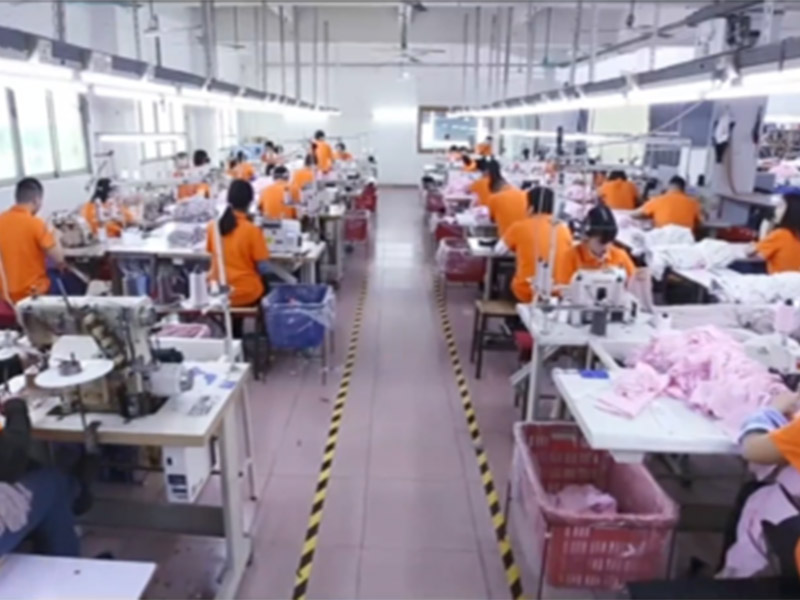
Owned Factory Base
- Core programs receive planned line allocation.
- Production records remain separated by style and color.
- Factory assignment can be disclosed during supplier approval.
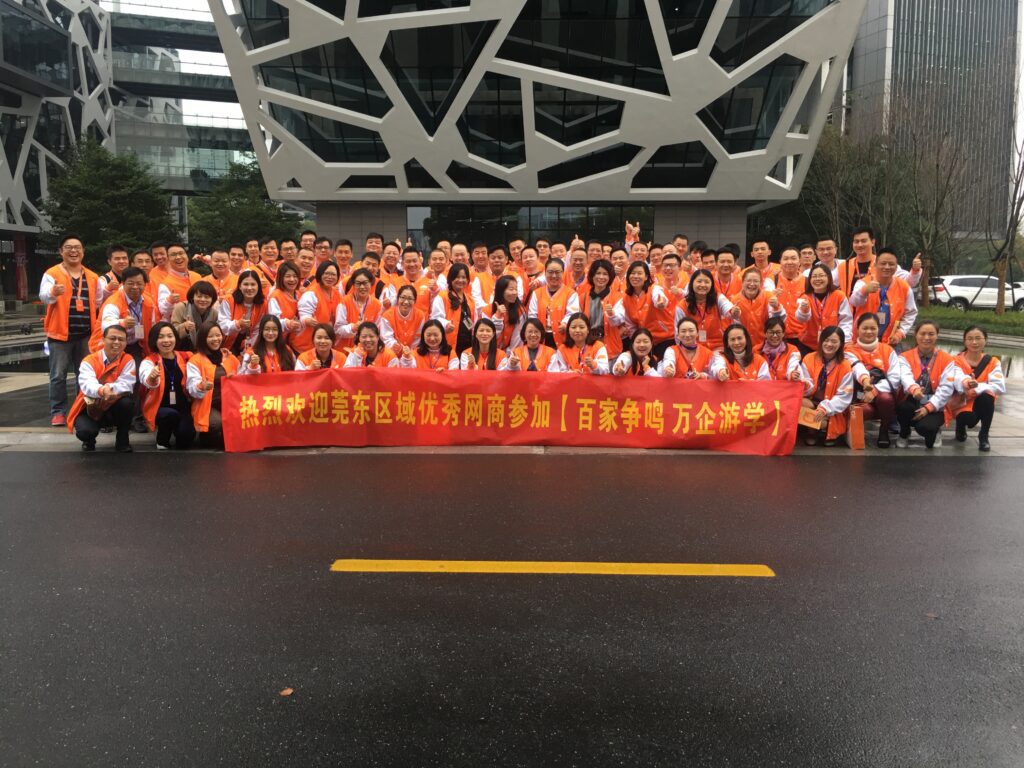
Specialist Partner Network
More than ten long-term satellite production partners add capacity and specialist support when a collection includes varied products or seasonal peaks.
Partner selection follows product suitability and approved requirements rather than open-market outsourcing after an order is accepted. Supply chain teams can request production-location confirmation, available audit documents and the control route used for materials, sewing, QC and packing.
- Use is based on product and capacity fit.
- Control requirements follow the approved program.
- Unapproved production transfer is not treated as normal practice.
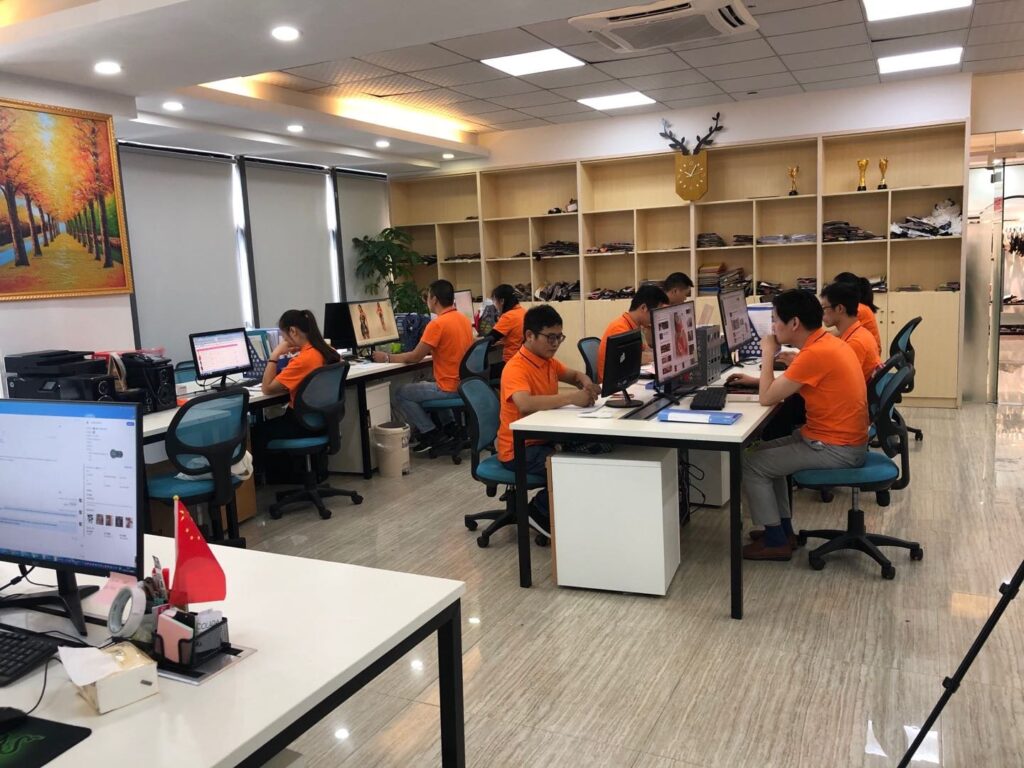
Program Allocation Logic
- Simple and complex styles receive different loading assumptions.
- Material arrival controls the usable production window.
- Priority and split-shipment options can be planned before bulk release.
Milestone Visibility From Booking to Shipment
Milestone reporting gives supply chain managers evidence for launch planning, inventory decisions and internal escalation. Reporting can be aligned with the brand’s cadence, while each update separates completed work, open risk, responsible owner and required approval.
| Milestone | Evidence Shared | Decision or Risk Controlled |
|---|---|---|
| Program Release | Approved style list, quantity matrix and target dates | Confirms scope, priority and owner before material booking |
| Material Booking | Fabric and trim status, supplier dates and open approvals | Identifies late components before production capacity is consumed |
| PP Approval | Approved sample, measurements, BOM, workmanship and packing files | Freezes the bulk standard and exposes unresolved changes |
| Cutting Start | Bulk material receipt, shade status, marker and cutting release | Prevents unapproved lots or pattern versions entering production |
| Sewing Progress | Line start, output status, first-piece and inline findings | Shows whether workmanship or capacity needs corrective action |
| Final Inspection | Finished quantity, measurement and appearance results, AQL status | Confirms repair, recheck and shipment-release readiness |
| Packing Completion | Packed quantity, barcode checks, carton list and marks | Protects warehouse accuracy and shipment documentation |
| Cargo Ready | Final packing list, carton data, booking and document status | Coordinates forwarder pickup and closes factory-side delivery risk |
Quality Gates Protecting Bulk Dress Production

Fabric Inspection
- Verify supplier lot and approved color.
- Record defects and usable quantity.
- Hold uncertain material before cutting.

Shrinkage and Stability
- Review shrinkage or dimensional change.
- Confirm stretch and recovery where required.
- Update production allowance before bulk cutting.

Cutting Control
Cutting QC verifies pattern version, fabric face, grain, stretch direction, print placement, nap, shade group, marker, size ratio and cut-piece count. Delicate panels are checked for snagging, holes, sequin loss or lace damage. Cut bundles receive identification so size, color and lot do not become mixed before sewing.
- Use only released pattern versions.
- Separate shade lots and size bundles.
- Inspect critical panels before sewing.

First-Piece Approval
- Compare against PP and Golden samples.
- Confirm critical measurements and workmanship.
- Release the line only after corrections close.
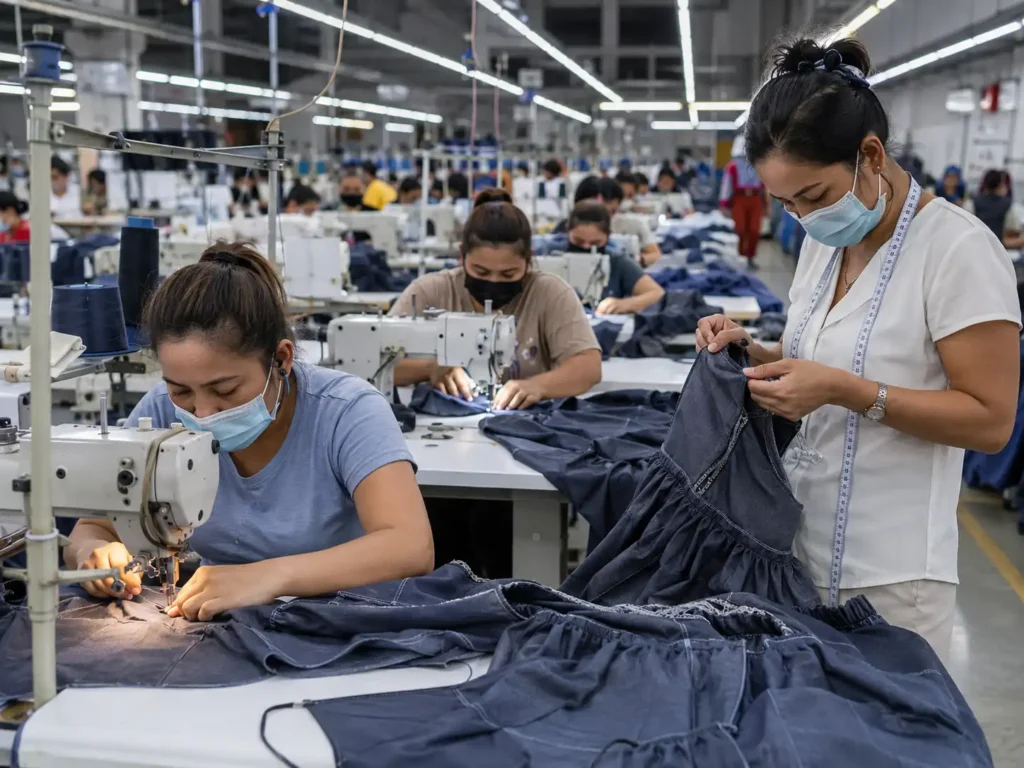
Inline Sewing Inspection
- Inspect at selected operation stages.
- Record recurring defects by line and style.
- Recheck corrected output before continuation.

Measurement Control
- Use consistent measurement method.
- Separate critical and secondary points.
- Investigate repeated trend toward one tolerance limit.

Final and AQL
- Final inspection follows approved standards.
- AQL level is agreed by project.
- Open defects are repaired and rechecked.

Packing Verification
- Scan or verify barcodes where required.
- Check mixed-size and mixed-style ratios.
- Reconcile carton totals with the packing list.
Cost Control Beyond the Lowest Unit Price
Dress cost is shaped by material yield, construction, color and size fragmentation, private-label requirements, quality work and delivery choices. Jinfeng reviews cost drivers early so commercial decisions protect product value while reducing avoidable rework, delay and emergency freight.
| Cost Driver | Supply-Chain Impact | Control Route |
|---|---|---|
| Fabric weight and width | Changes consumption, drape, freight weight and unit cost | Compare approved options, usable width and cutting yield before bulk |
| Custom dyeing or printing | Adds supplier minimums, color approval and material lead time | Limit fragmented colors, approve lab dips early and reserve bulk |
| Lining and support layers | Affects opacity, comfort, fit, labor and garment weight | Match support level to silhouette instead of using one lining for all styles |
| Corset, ruching and drape | Adds operations, skill requirement, inline checks and repair risk | Review construction during sampling and set repeatable workmanship |
| Color and size fragmentation | Creates more cutting, labeling, packing and management work | Concentrate volume in key colors and use an approved size ratio |
| Special trims and branding | Adds independent MOQ, development cost and late-item risk | Approve standard options early and lock artwork before production |
| Testing and inspection | Adds sample quantity, laboratory time and possible correction work | Define test and AQL requirements before final quotation |
| Split or urgent shipment | Raises freight, handling and documentation cost | Prioritize critical SKUs and avoid premium freight for the full balance |
Continuity Planning for Seasonal Dress Programs
Material Alternatives
- Alternative swatches or data are submitted.
- Fit and construction impact is reviewed.
- BOM and approval records are updated.
Capacity Reallocation
- Revised loading is documented.
- Critical styles receive clear priority.
- New production route follows the same standard.
Backup Production Lines
- Eligibility is defined by product type.
- Material and trims remain controlled.
- QC coverage follows the transferred order.
Split Shipment Planning
- Priority quantity is approved by SKU.
- Packing and documents remain shipment-specific.
- Remaining production keeps a separate release date.
Repeat-Order Records
- Previous standard becomes the starting reference.
- Material continuity is rechecked.
- Changes are logged before repeat production.
Escalation and Recovery
- Risk owner and decision date are visible.
- Options include commercial and timing effects.
- Closure is recorded in the project file.
Compliance Support Built Around Each Program
Factory Documents
- Production location is linked to the order.
- Document availability is checked during onboarding.
- Expired or missing records remain visible.
Audit Support
- Audit requirement is defined before line booking.
- Applicable factory evidence is submitted.
- Corrective actions are tracked when required.
Certified Materials
- Match certificate scope to the material.
- Confirm validity and transaction documents where relevant.
- Add material MOQ and timing to the program plan.
Testing Coordination
- Brand defines required standard and method.
- Testing samples are identified by style and lot.
- Failed results trigger review before shipment.
Label Information
- Material composition data is verified.
- Artwork version is controlled.
- Market-specific requirements are separated.
Order Traceability
- Maintain style and lot identification.
- Store approval and inspection evidence.
- Link packing records to shipment release.
Private-Label Packing for Distribution Accuracy

Main Label
- Confirm artwork version and dimensions.
- Check appearance and skin contact.
- Inspect placement during sewing and final QC.

Size and Care Labels
- Separate each market or language version.
- Match label size to garment size.
- Verify content against approved material data.
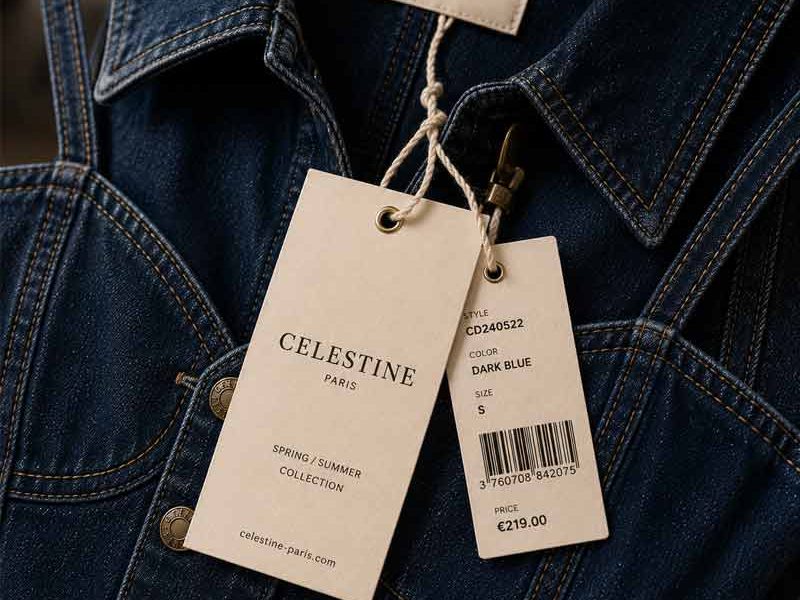
Hangtags and Barcodes
- Approve artwork and variable data.
- Run sample scans when required.
- Audit application during final inspection.
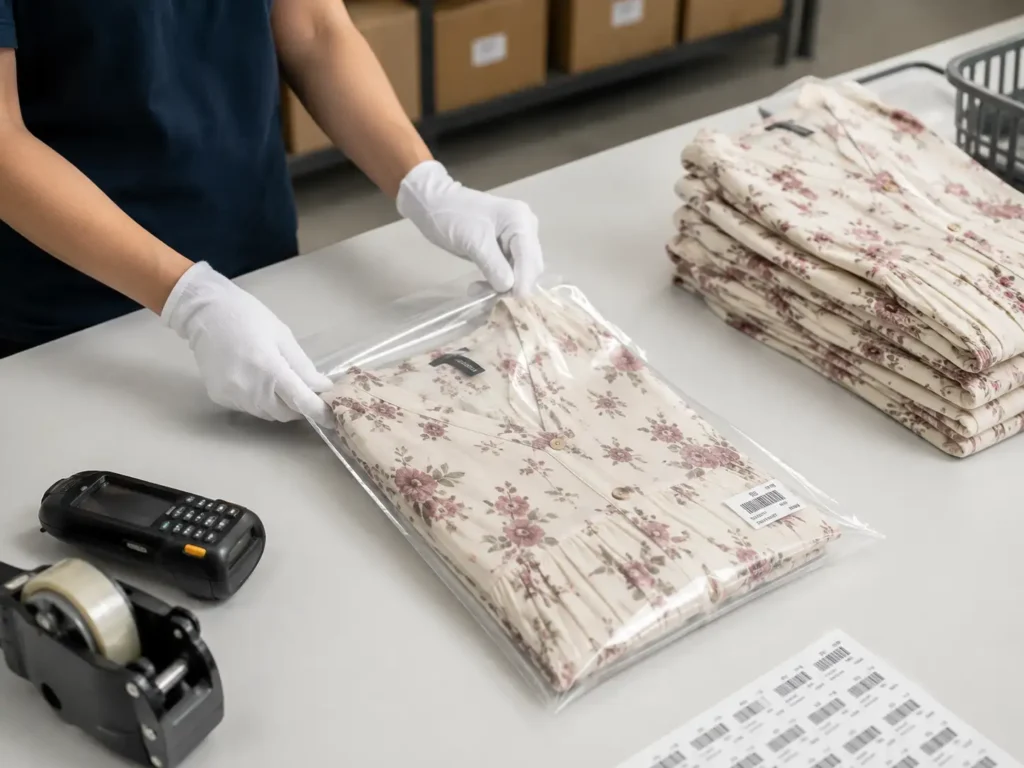
SKU Polybag Labels
- Use approved sticker templates.
- Check garment-to-bag match.
- Control reprints and unused label stock.

Carton Marks
- Approve carton-mark layout.
- Reconcile numbering and quantities.
- Check destination and warehouse references.
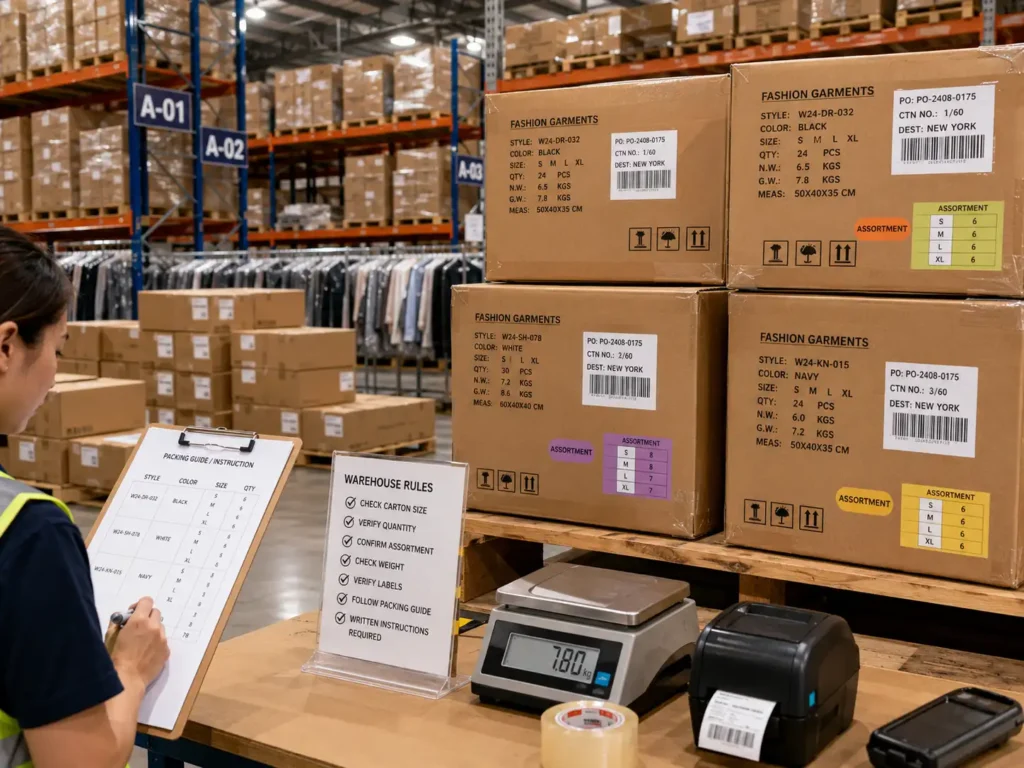
Warehouse Packing Guide
- Confirm pack method before final production stage.
- Test carton fit and fold recovery.
- Record approved assortment and sealing method.
Delivery Coordination Through Forwarder Handover

Shipment Planning
- Define required cargo-ready date.
- Separate factory lead time from transit time.
- Review holiday and peak-season constraints.

Forwarder Coordination
- Confirm forwarder contact and booking reference.
- Provide final carton data on time.
- Release cargo against approved instruction.

Export Documents
- Reconcile documents with packed quantities.
- Confirm consignee and shipping details.
- Retain shipment copies in project records.

Split Deliveries
- Approve shipment split by SKU and quantity.
- Keep remaining balance visible.
- Close each batch against its own documents.
Built for Seasonal Collections and Repeat Orders
Seasonal Collection Development
- Group development by material and complexity.
- Prioritize campaign and launch-critical samples.
- Keep style files independent while coordinating shared resources.
Repeat-Order Control
- Use the previous approved standard as baseline.
- Reconfirm materials and variable commercial terms.
- Issue a controlled revision when any detail changes.
Multi-Batch Production
- Plan waves before bulk release.
- Keep material and shade continuity under control.
- Track completed, shipped and open quantities separately.
A Clear Team Behind Every Dress Program
Kelly Coordination
- Coordinates initial qualification.
- Routes files to the relevant team.
- Maintains the primary communication entry.
Product Development
- Clarifies design and material intent.
- Identifies technical and commercial risks.
- Prepares the sample-development route.
Pattern and Sample
- Develops and controls pattern versions.
- Produces required sample types.
- Transfers approved changes into production files.
Merchandising Team
- Maintains milestone and approval records.
- Coordinates material and production status.
- Escalates schedule and specification risks.
Quality Team
- Checks product near the source of defects.
- Records and follows corrective action.
- Supports final release and AQL inspection.
Finishing and Logistics
- Protects final garment presentation.
- Verifies packing and carton accuracy.
- Coordinates cargo-ready handover.
Dress Programs Managed Around Real Supply Constraints

24-Style Seasonal Launch
- 24 styles
- 62,400 pieces total
- 2-4 colors per style
- XS-XL size range
- 3 shipment batches
- 49-day bulk window

Second-Source Qualification
- 12 styles
- 28,800 pieces total
- 4,800-piece validation stage
- XXS-2XL range
- Secondary-source approval path
- 32-day validation window

Complex Occasion Collection
- 18 styles
- 34,200 pieces total
- 1-3 colors per style
- Structured and embellished construction
- 2 cargo-ready windows
- 52-day bulk window
Frequently Asked Questions for Supply Chain Managers

Start a Dress Supplier Review With Jinfeng
- Company or brand name and primary sales market
- Tech pack, line sheet, original sample, sketch or reference images
- Estimated quantity per style and color, including the planned number of styles
- Fabric direction, color plan, size range and target price position
- Private-label, barcode, packing, warehouse and compliance requirements
- Target launch date, cargo-ready date and any current supplier risk needing attention


