Skip to content
Summer Dress Collection Manufacturer
Custom summer dress development and multi-style production for established fashion brands planning coordinated seasonal launches.
- Collection programs commonly cover 10-30 styles, including mini, midi, maxi, resort, printed, occasion and lightweight day dresses.
- Jinfeng Apparel supports projects from 200 pcs per style/color, with 6 owned women’s fashion factories, 10+ long-term production partners and 100,000+ pcs monthly capacity.
- Two sample rooms, 7+ senior pattern makers and 20+ sample machinists support parallel development, fit correction, photo samples and PP approvals.
- Fabric, color, size, private-label packing and delivery milestones are managed as one collection rather than unrelated single-style orders.
Collection Capacity Built for Seasonal Scale
Since 2008
6 Owned Factories
10+ Production Partners
100,000+ Monthly Capacity
2 Sample Rooms
15+ QC Inspectors
Built for Structured Summer Dress Programs
Strong Project Fit
Productive Starting Point

Where Summer Collections Commonly Lose Control
Sheer Light Colors
Unexpected Shrinkage
Print Direction Errors
Color Batch Variation
Sample Timing Bottlenecks
Packing Crease Risk
Build a Balanced Summer Dress Collection
A commercially balanced range usually mixes attention-driving styles with dependable shapes, varied lengths and price tiers. Percentages below are planning references, not fixed rules; the final mix should follow brand identity, channel data and launch goals.
| Collection Role | Style Examples | Typical Share | Commercial Purpose | Production Focus |
|---|---|---|---|---|
| Hero styles | Statement print maxi, corset mini, cut-out midi | 10-20% | Campaign visibility and social content | Complex fit, print placement, photo sample priority |
| Commercial core | A-line midi, wrap dress, ruched mini | 30-40% | Broad wearability and stable conversion | Fit consistency, repeatable fabric, scalable sewing |
| Lightweight daywear | Cotton sundress, smocked dress, shirt dress | 15-25% | Daytime, travel and warm-weather use | Shrinkage, opacity, seam strength, pocket balance |
| Resort direction | Halter maxi, slip dress, tiered dress | 10-20% | Vacation, beach club and destination sales | Drape, hem balance, strap stability, packing |
| Occasion extension | Wedding guest midi, satin slip, chiffon maxi | 10-20% | Higher selling price and event demand | Color consistency, lining, pressing, zipper control |
| Collection add-ons | Matching set, skirt, fashion top, jumpsuit | 5-15% | Cross-selling and visual variety | Color matching, size pairing, coordinated packing |
Summer Dress Styles We Manufacture
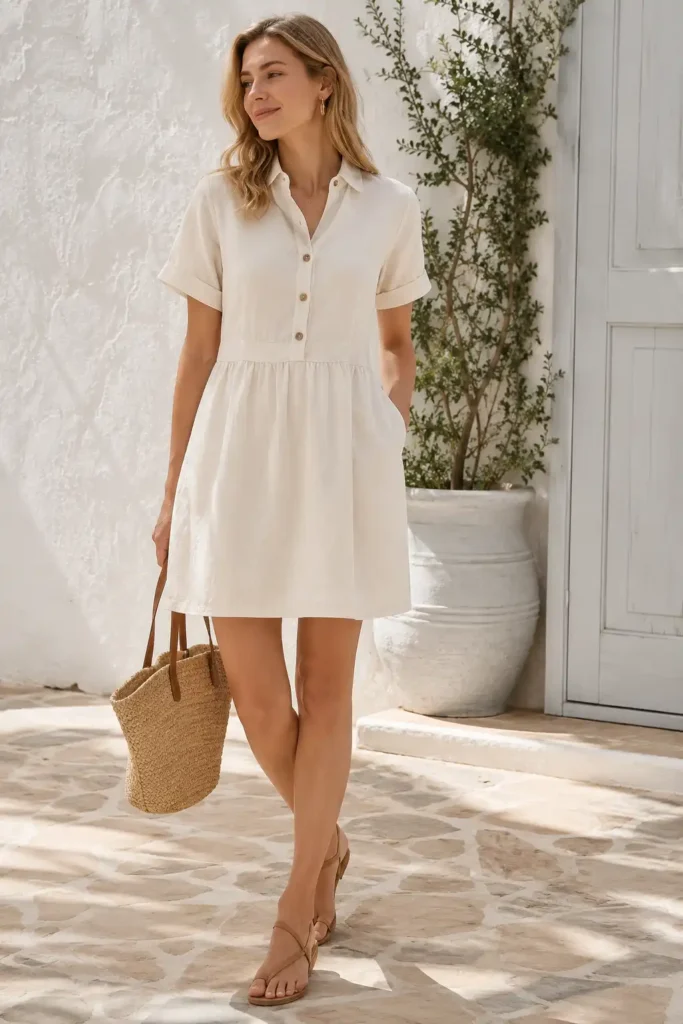
Cotton Sundresses

Mini Dresses

Midi Dresses
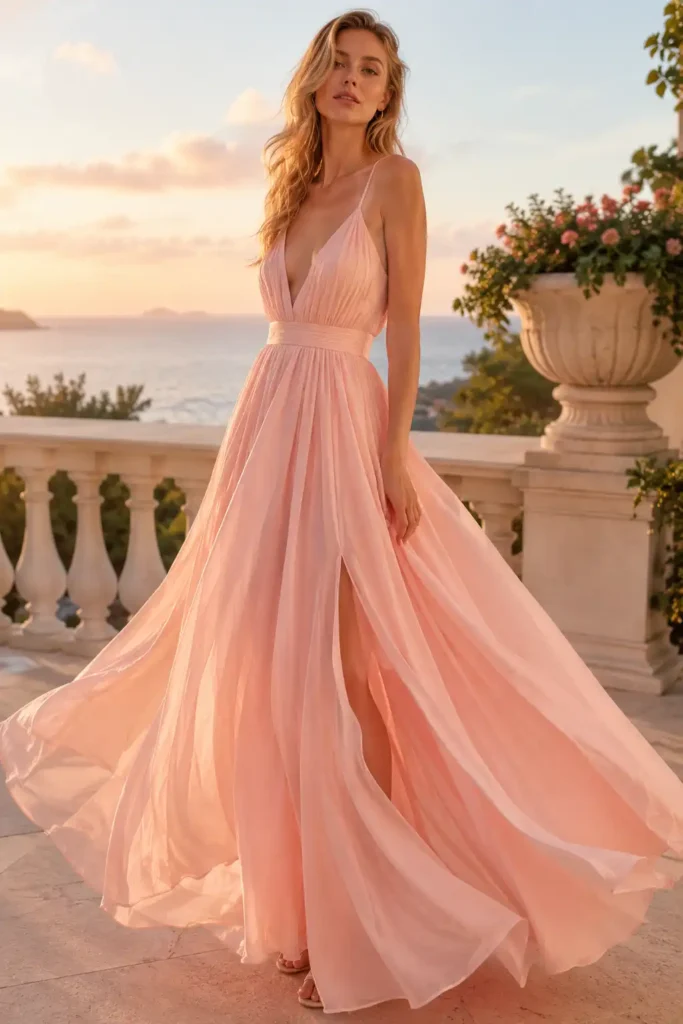
Maxi Dresses

Resort Dresses

Vacation Dresses

Printed Dresses
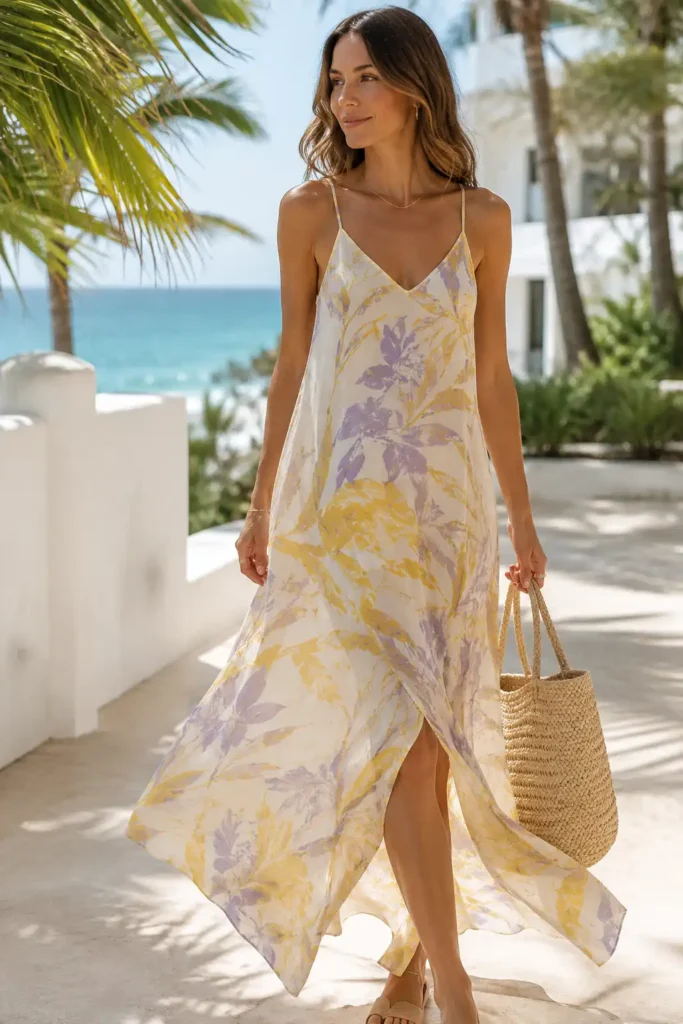
Slip Dresses

Linen-Blend Dresses
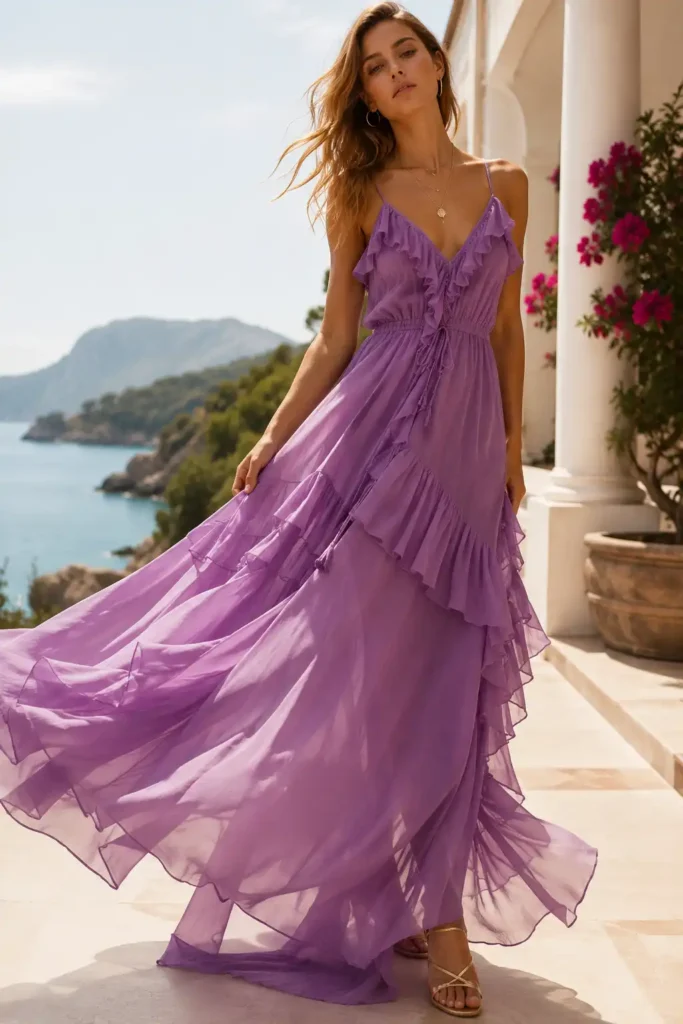
Chiffon Dresses

Ruched Dresses

Summer Occasion
Summer Fabrics Selected for Wearability and Production Stability
Fabric direction should be decided through silhouette, target selling price, opacity, care expectations, print method and bulk availability – not trend appearance alone.
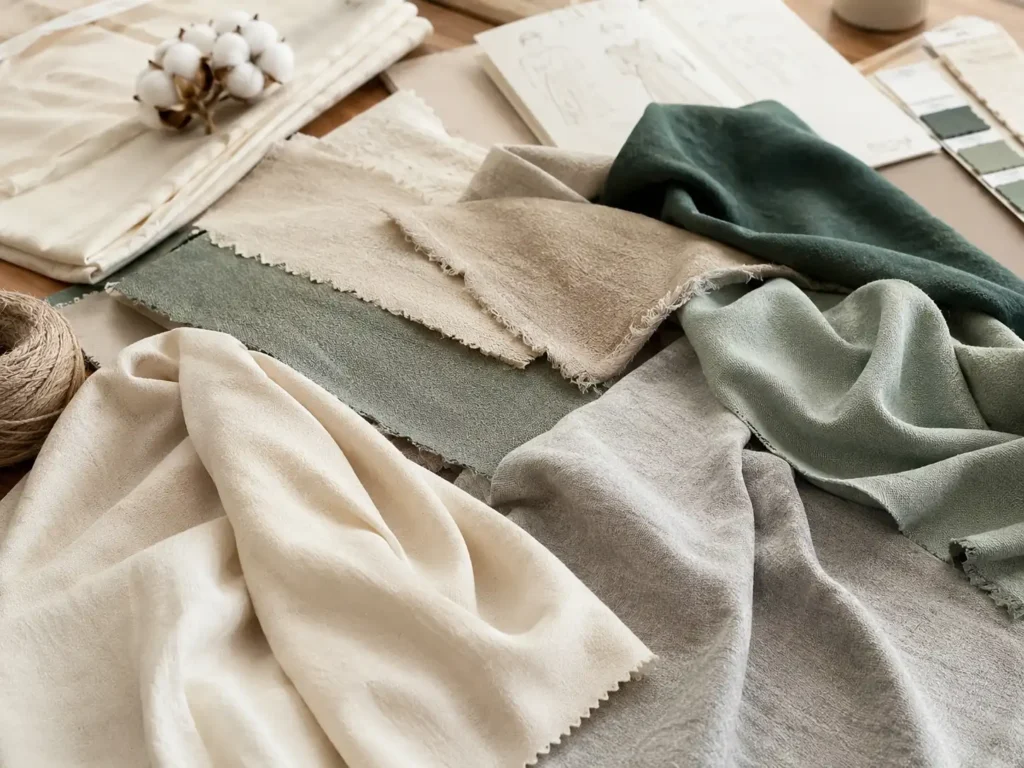
Cotton and Cotton Blends
Cotton poplin, voile, dobby and blended woven bases can deliver crisp sundresses, fitted bodices, shirt dresses and tiered silhouettes.
Many commercial summer woven bases fall around 70-140 gsm, although weave density and finish often matter more than weight alone. Lower-density white and pastel fabrics may require a lining, partial lining or changed seam construction.
Pre-production review covers shrinkage, colorfastness, seam slippage, puckering, fusible compatibility and pocket show-through.
A fabric that looks clean as a flat swatch may reveal underlayers once it is stretched across the bust or photographed in sunlight. Pattern dimensions may need adjustment after shrinkage results are confirmed.
- Best suited to: sundresses, shirt dresses, fitted bodice styles, smocked dresses and casual midis.
- Main controls: shrinkage, opacity, seam puckering, color transfer, pocket visibility and pressing.

Rayon and Viscose Directions
Rayon and viscose produce fluid drape, cool touch and strong movement for printed midis, maxis, wrap dresses and resort silhouettes.
Common working ranges often sit around 90-160 gsm, but fiber blend, yarn construction and finishing can significantly change shrinkage, stretch and recovery.
Bulk planning should include dimensional stability, skew, seam strength and hanging behavior.
A fluid fabric may lengthen at bias areas after cutting or pressing, which affects side seams and hem leveling.
Print direction and shade consistency also require attention because the same collection may use one base across several silhouettes.
- Best suited to: printed maxis, wrap dresses, tiered dresses, relaxed midis and resort styles.
- Main controls: shrinkage, skew, seam slippage, print repeat, hem drop and wash stability.

Linen and Linen Blends
Linen supports a premium natural story, while linen-rayon, linen-cotton and synthetic linen-look blends can improve drape, softness and cost control. Fabric selection should consider the acceptable level of wrinkling, transparency, slub variation and shrinkage rather than treating all linen directions as equivalent.
Structured shirt dresses may need a firmer base; fluid maxis often perform better in softened blends. Interfacing at plackets, waistbands and button areas must follow the fabric hand. Seam allowance, stitch density and pressing methods are adjusted to reduce seam grin, puckering and excessive edge distortion.
- Best suited to: shirt dresses, A-line midis, resort maxis, wrap dresses and coordinated sets.
- Main controls: shrinkage, slub distribution, wrinkling, seam appearance, button reinforcement and opacity.

Chiffon, Satin, Mesh and Lace
Dress collections often need a fabric ladder rather than one universal base. Chiffon adds movement, satin raises occasion value, mesh creates layered or fitted details, and lace brings texture. Each material changes pattern behavior, lining choice, sewing method, pressing and packing.
Satin requires consistent shine direction and snag protection. Chiffon requires controlled cutting, stable seams and careful hems. Mesh needs stretch-direction and transparency checks. Lace needs motif placement, edge planning and lining-color coordination. Combining these fabrics without a common approval system can create visible inconsistency across one launch.
- Best suited to: occasion dresses, slips, layered maxis, cut-out styles, statement details and wedding guest capsules.
- Main controls: shade, snagging, transparency, stretch recovery, motif placement, edge finishing and packing pressure.
Control Transparency, Shrinkage, Prints and Wrinkles Before Bulk
Summer fabric risks are best resolved during development, while lining, pattern, artwork and packing can still be changed without disrupting bulk production.
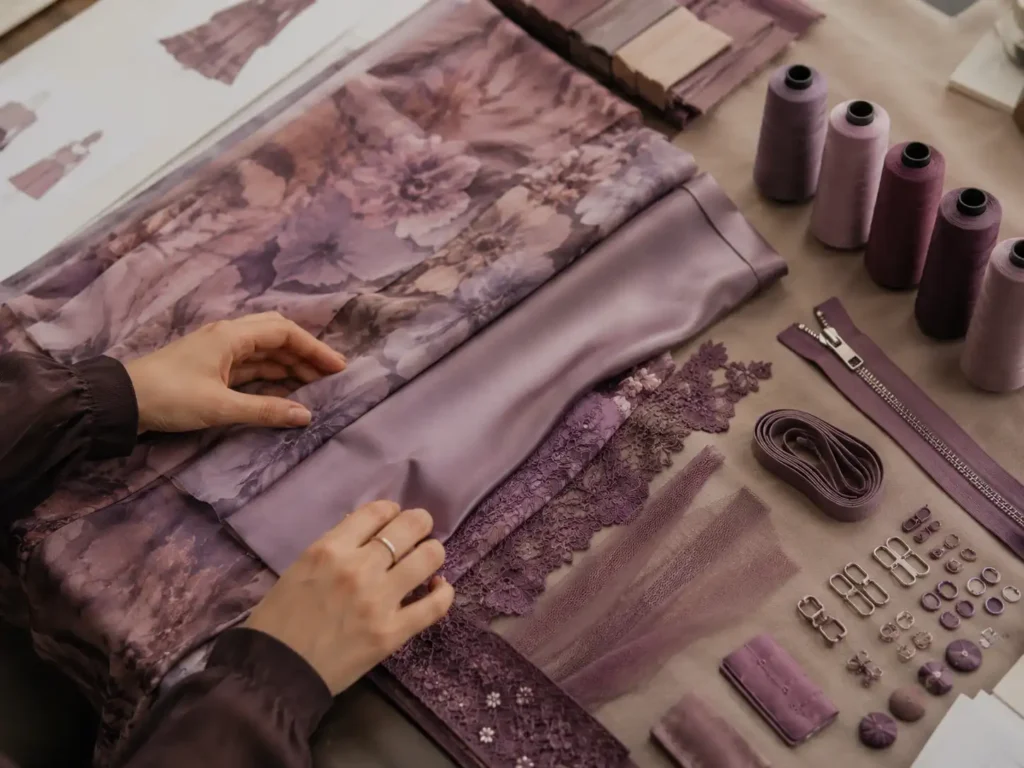
Transparency and Lining Control
Opacity is evaluated on the body, under strong light and across stress points such as bust, hip, seat and pocket areas. Outer fabric, lining color, lining weight and seam allowance work as one system. White lining under ivory fabric may look brighter than expected, while dark lining can change the garment tone.
Partial lining can protect breathability, but the lining edge must not show through the outer layer. Slip lengths, side-seam position and facing depth are checked against movement and photography. Light colors also require clean handling during production and packing because marks become more visible.

Shrinkage and Dimensional Stability
Fabric shrinkage affects more than finished length. It may move the waist, deepen armholes, shorten straps, change neckline coverage or distort tier spacing. Fabric testing is reviewed before final pattern lock when the material or care method presents risk.
Where shrinkage is material, patterns, cutting allowances or garment wash processes are adjusted before bulk. Replacing fabric after sample approval can require a new fit review because different drape, stretch and shrinkage can change the same pattern substantially.
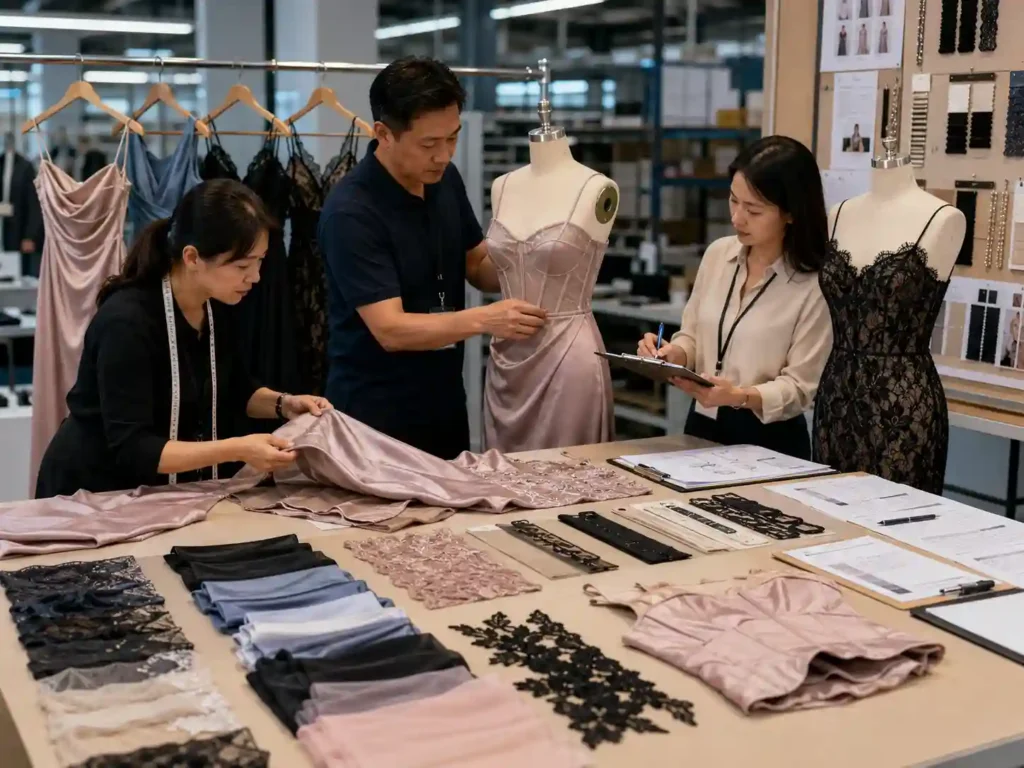
Print Repeat and Placement
Print files are reviewed for repeat size, direction, scale, color count and intended placement. Border prints, engineered placements and center-front motifs usually need separate marker planning from all-over prints. A reference image alone may not provide enough information for production artwork.
Bulk controls include approved print strike-off or lab sample, base-fabric confirmation, shade review, cutting orientation and panel placement instructions. Garments are checked for upside-down motifs, mismatched fronts and visible variation at key seams.

Wrinkle and Packing Management
Wrinkling depends on fiber, weave, finish, garment construction and carton pressure. A lightweight dress can be travel-friendly without being wrinkle-free. Folding trials help determine whether a style needs tissue, a wider fold, hanger packing or reduced carton compression.
Structured bodices, padded cups, ruffles and long satin skirts need special attention. Pressing standards and cooling time are set before packing so heat and pressure do not create shine marks, distorted panels or permanent fold lines.
Fit and Construction for Summer Dresses
A summer dress should feel light without losing neckline security, bust support, waist definition or movement. Pattern decisions are reviewed against fabric behavior and intended wearing occasion.

Bust, Neckline and Strap Stability
Key measurements include bust, underbust, front neck drop, back neck drop, armhole depth and strap length. Halter, tie-strap, bandeau, corset and backless shapes each need different support logic. A visually clean neckline can still fail when it gaps, rolls, shifts or exposes the lining during movement.
Sampling checks bra compatibility, coverage and stress at attachment points. Adjustable straps, elastic, grip tape, boning, cups or internal support may be used when the design requires them. Reinforcement is selected according to fabric weight so added structure does not make the dress bulky.
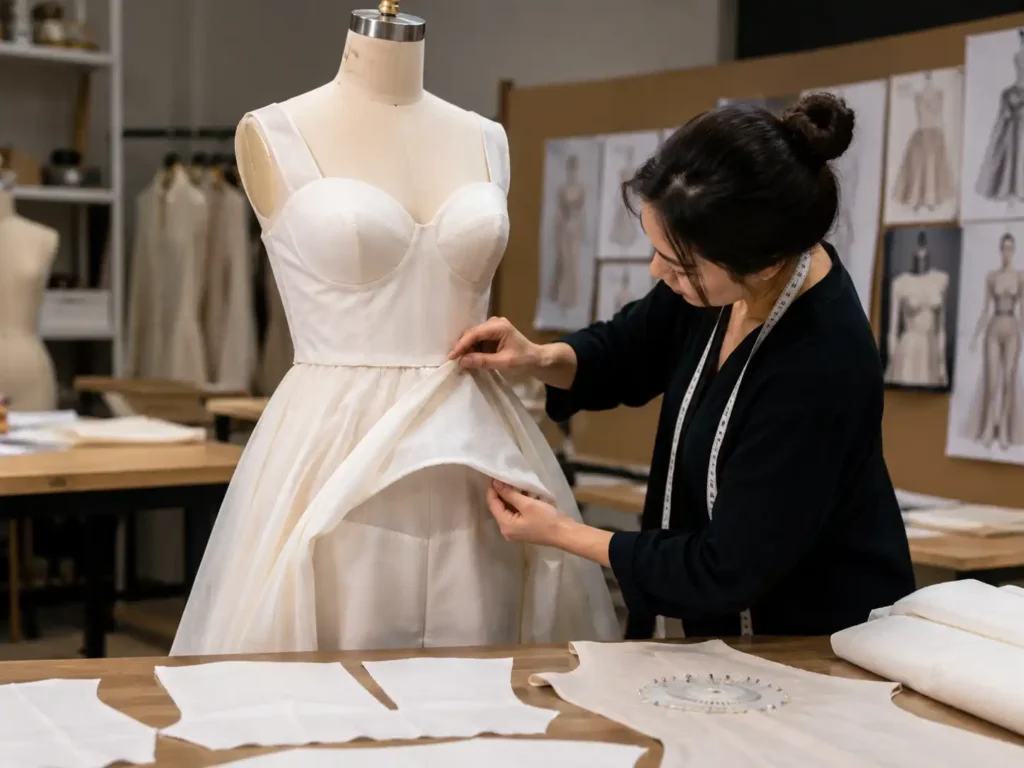
Waist, Hip and Skirt Balance
Waist placement defines the proportion of mini, midi and maxi dresses. Too high can shorten the bodice; too low can weaken shape and movement. Hip ease must follow silhouette and fabric stretch, especially for bias slips, fitted woven styles and ruched jersey dresses.
Skirt balance is checked at front, back and side seams. Wrap overlap, slit position, tier width and gathering ratio are measured rather than judged only by appearance. On long fluid styles, hanging behavior is reviewed before the final hem is established.

Size Grading and Tolerances
Bulk sizes follow the confirmed size chart and grade rules. Bust, waist, hip, total length, strap length, armhole, neckline depth, slit height and lining length are prioritized according to the design. Typical garment tolerances vary by measurement, fabric and construction; critical visible points may need tighter control than sweep or relaxed areas.
Grade review looks for proportional change, not only numeric increase. Necklines, cups, straps, armholes and skirt length may need product-specific rules so larger and smaller sizes preserve coverage, support and visual balance.

Construction and Workmanship
Lightweight fabrics reveal needle marks, puckering and seam tension. Stitch density, seam type, needle selection, thread and pressing are matched to the material. French seams, binding, overlock, narrow hems, rolled hems, clean facings and partial linings are selected according to transparency, fraying and selling-price goals.
Workmanship checks include straight seam paths, matched left-right details, flat zippers, even ruching, secure strap ends, clean lining joins, stable pockets and balanced hems. Decorative simplicity does not reduce the need for control; minimal dresses often expose small defects more clearly.
Start Development From Clear Product Information
Tech Packs
Line Sheets
Original Samples
Fabric Direction
Size Requirements
Launch Plan
Multi-Style Sampling Without Losing the Launch Calendar
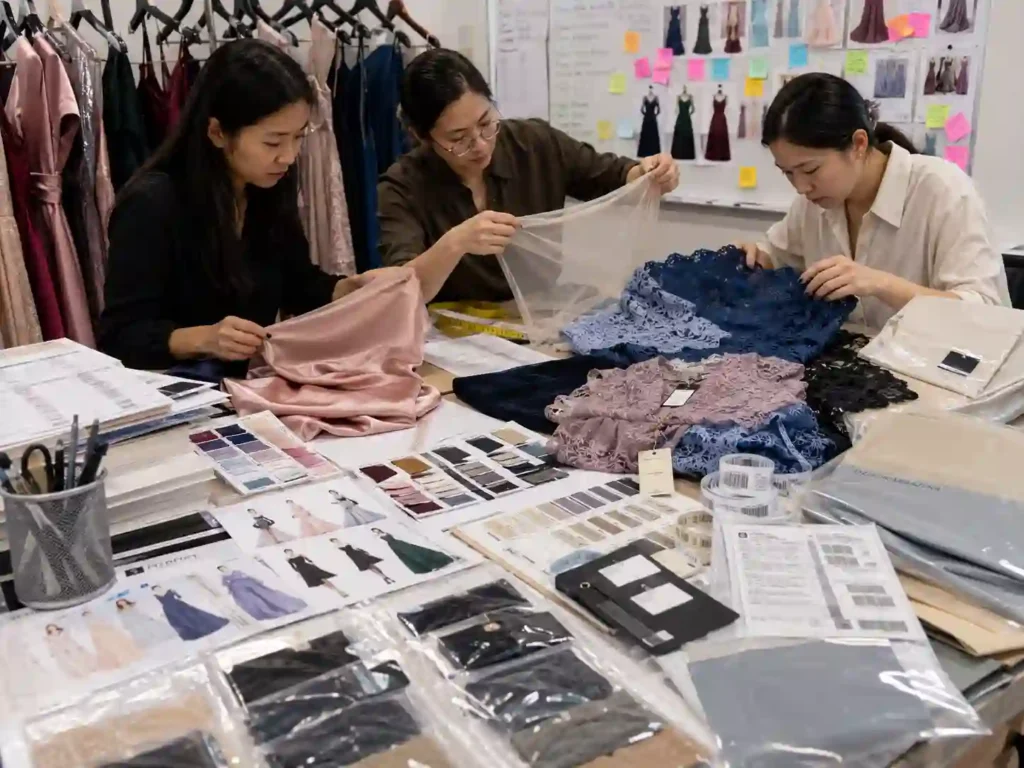
Collections of 10-30 styles need grouped development, clear priorities and recorded approvals. Jinfeng Apparel uses two sample rooms, 7+ senior pattern makers and 20+ sample machinists to support parallel progress.

Group Styles Before Sampling
Styles are grouped by fabric family, silhouette, pattern complexity, trims and launch priority. A printed rayon group may share one approved base; a corset group may share cups, boning and fit references; a satin group may need coordinated shade and pressing standards.
Grouping reduces duplicate sourcing and makes feedback easier to compare. It also helps identify which styles can use common blocks and which require independent patterns. Hero SKUs, photo samples and long-lead materials receive priority instead of entering one unstructured queue.

Use the Right Sample Type
First samples test the initial interpretation. Fit samples focus on measurements and body balance. Revised samples close recorded comments. Photo-ready samples may need final color and finish for campaign use. PP samples lock production details, while the Golden sample provides a sealed reference for bulk.
One sample should not be expected to perform every role. Moving directly from an early visual sample to bulk can leave measurements, lining, labels, packing and workmanship insufficiently confirmed.

Track Revisions by Style
Bulk sizes follow the confirmed size chart and grade rules. Bust, waist, hip, total length, strap length, armhole, neckline depth, slit height and lining length are prioritized according to the design. Typical garment tolerances vary by measurement, fabric and construction; critical visible points may need tighter control than sweep or relaxed areas.
Grade review looks for proportional change, not only numeric increase. Necklines, cups, straps, armholes and skirt length may need product-specific rules so larger and smaller sizes preserve coverage, support and visual balance.
Plan Realistic Timing
Initial review often takes 1-3 working days once usable information is received. First-sample timing commonly ranges around 7-15 working days depending on fabric availability and complexity; revised and PP stages require additional time. Custom prints, dyeing, special trims or numerous changes can extend the schedule.
A final timeline is built after style count, materials, sample types, feedback speed and launch milestones are known. Early approval of key fabrics and priority styles provides more control than demanding the same speed for every SKU.
Lock Approved Samples Before Bulk Production
Product Standard
Brand Standard
Production Handover
Plan MOQ, Samples and Delivery by Collection
MOQ is calculated by style and color, while sizes are distributed within the confirmed quantity. Timelines depend on material readiness, style complexity, approval speed, order scale, packaging and transport.
| Planning Item | Working Reference | Main Variables | Collection Advice |
|---|---|---|---|
| Standard MOQ | From 200 pcs per style/color | Fabric stock, color, trims, construction, packing, schedule | Consolidate colors and fabrics where commercially suitable |
| Multiple sizes | Distributed within each confirmed style/color quantity | Size ratio, grade rules, market requirements | Confirm base size and ratio before bulk cutting |
| Initial review | Often 1-3 working days | Completeness of tech pack, line sheet and quantity plan | Submit the full collection overview together |
| First sample | Commonly 7-15 working days | Fabric availability, print, structure, trim development | Prioritize hero SKUs and long-lead materials |
| Revised / PP samples | Additional 5-12+ working days per stage | Number of comments, new fabric, approval speed | Close comments in one consolidated revision list |
| Bulk production | Often 30-60+ days after approvals and materials | Order size, style count, factory allocation, finishing, QC | Lock PP, labels and packing before production |
| International transit | Express/air: days; sea: several weeks | Destination, route, customs, service level | Work backward from warehouse or launch date |
Protect Target Cost Without Weakening Collection Value
Fabric Strategy
Construction Strategy
Collection Strategy
Match Every Dress Group to the Right Production Line
Multi-style manufacturing works best when allocation follows product behavior. Jinfeng Apparel coordinates 6 owned women’s fashion factories and 10+ long-term partners around fabric, construction, quantity and schedule.

Production Allocation by Product Type
Light woven sundresses, fluid rayon maxis, stretch bodycon styles and structured occasion dresses do not belong on the same production setup simply because all are dresses. Allocation considers fabric handling, seam type, lining, pressing, trim complexity, order size and required finish.
Style groups may be separated while remaining under one project plan. Shared fabric, color and packing standards are controlled across the collection, and each assigned line receives the confirmed sample, pattern, measurement chart, BOM, trim card and QC focus.
Material and Cutting Readiness
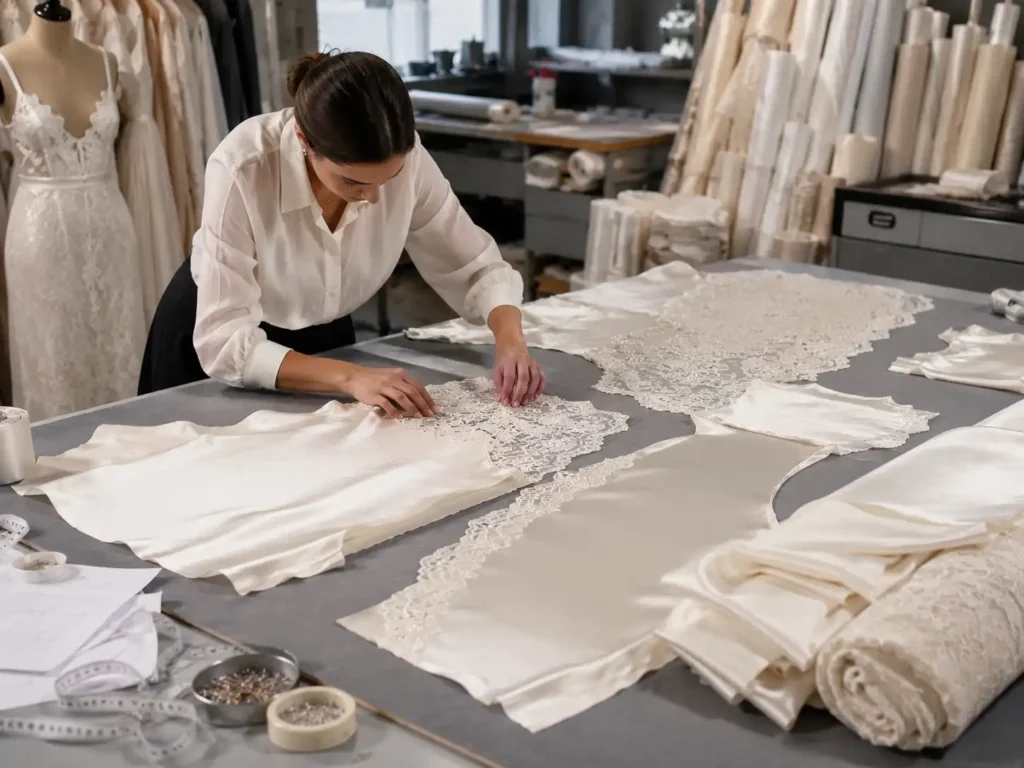
Bulk should not begin while core fabric, lining, trims or label information remains uncertain. Incoming material checks cover quantity, shade, width, hand feel and visible defects according to the project. Print and directional fabrics require approved cutting orientation.
Cutting plans consider size ratio, marker efficiency, print placement and fabric behavior. Slippery, stretch or easily distorted materials need handling controls so panels do not change shape before sewing.

Sewing and In-Line Control
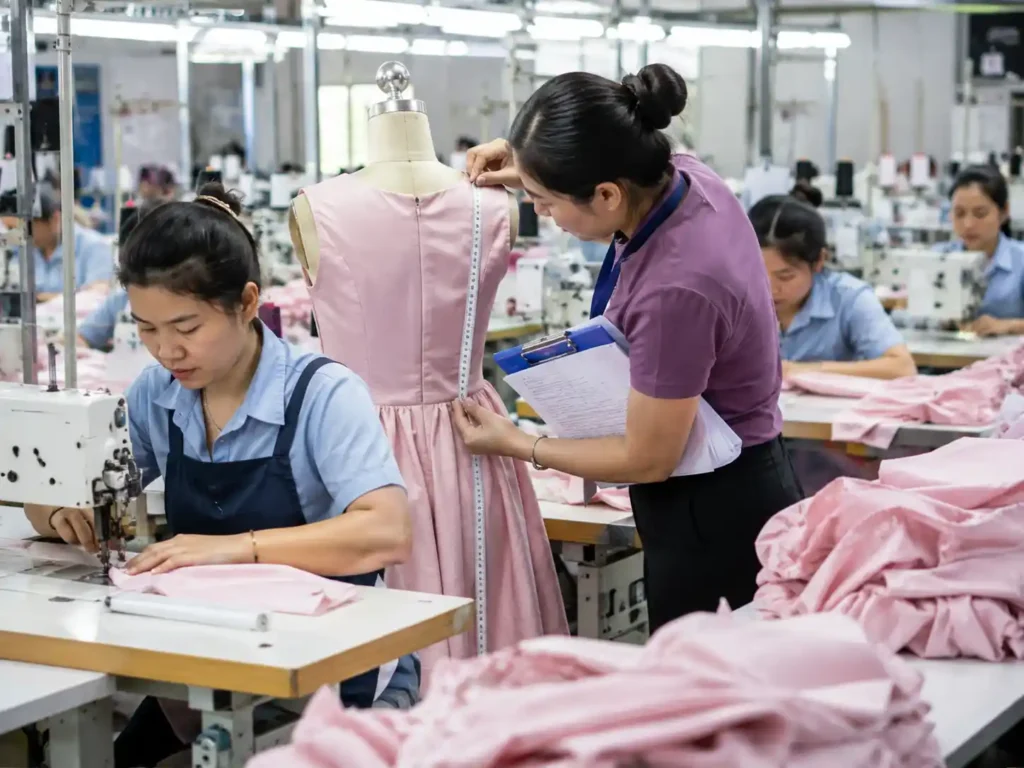
Production instructions identify critical operations such as neckline stabilization, zipper insertion, gathering, strap reinforcement, lining attachment, boning, cups, narrow hems and slit finishing. Early in-line checks are used to detect recurring issues before the full quantity reaches finishing.
Measurements and workmanship are reviewed against the approved standard. Repeated defects are classified, corrected and rechecked rather than left for final inspection alone.
Finishing, Pressing and Packing
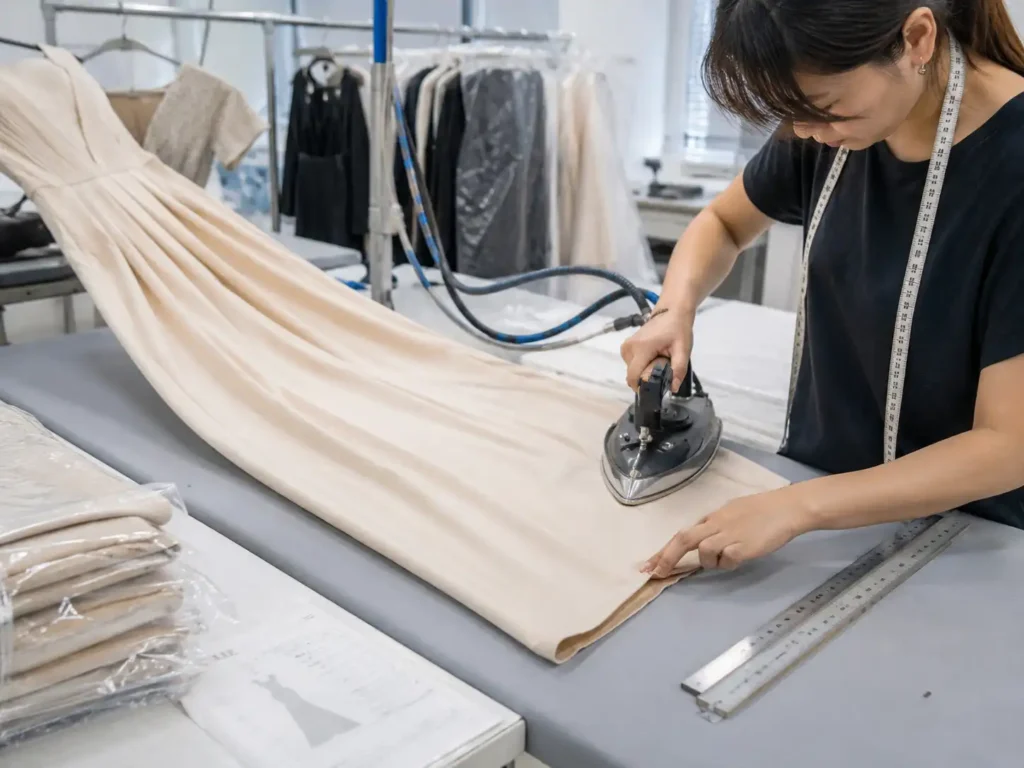
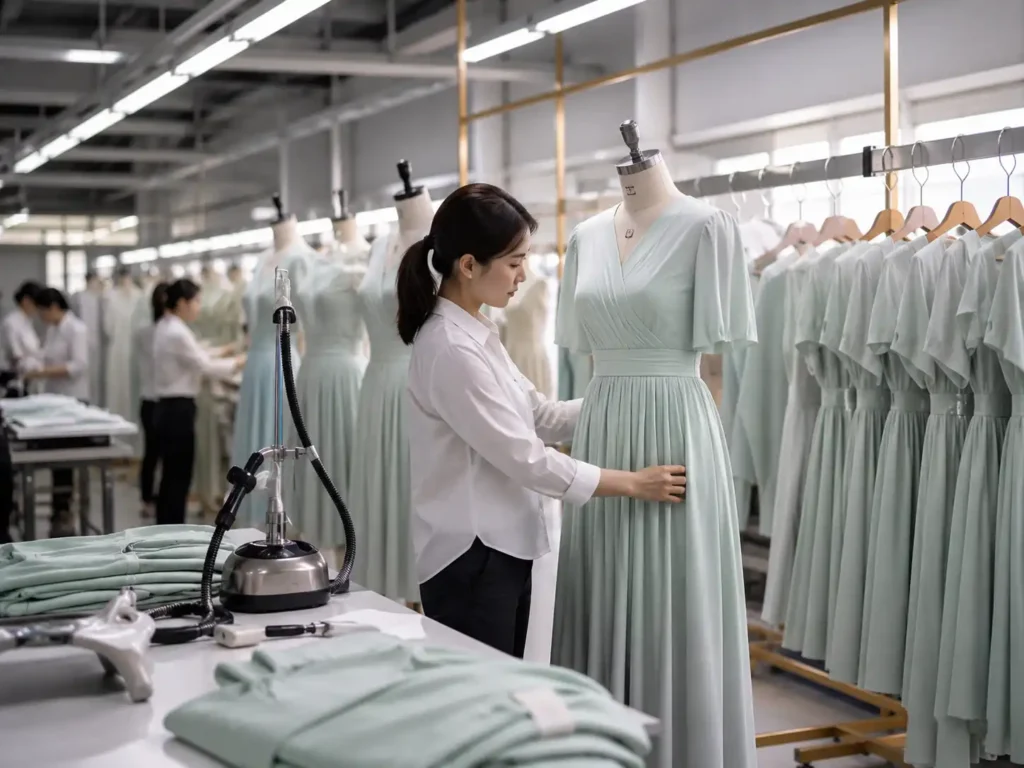
Finishing removes loose threads, verifies shape and prepares each garment for presentation. Pressing temperature and pressure follow the material; satin, mesh, lace and lightweight synthetics can be damaged by unsuitable heat or contact.
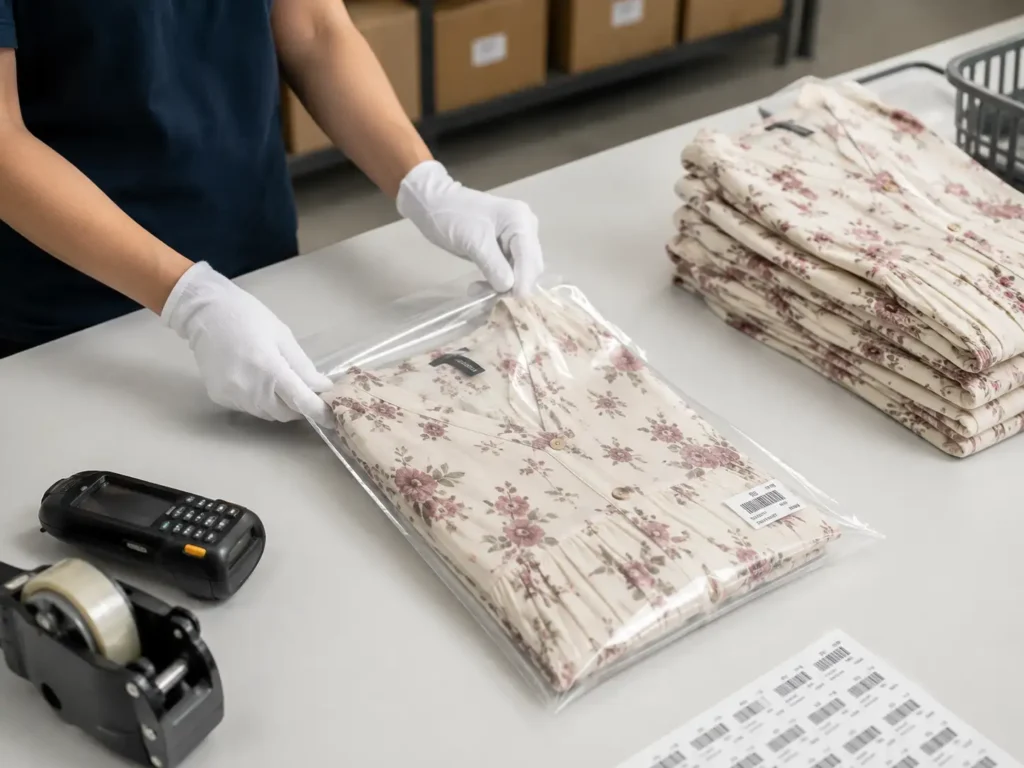
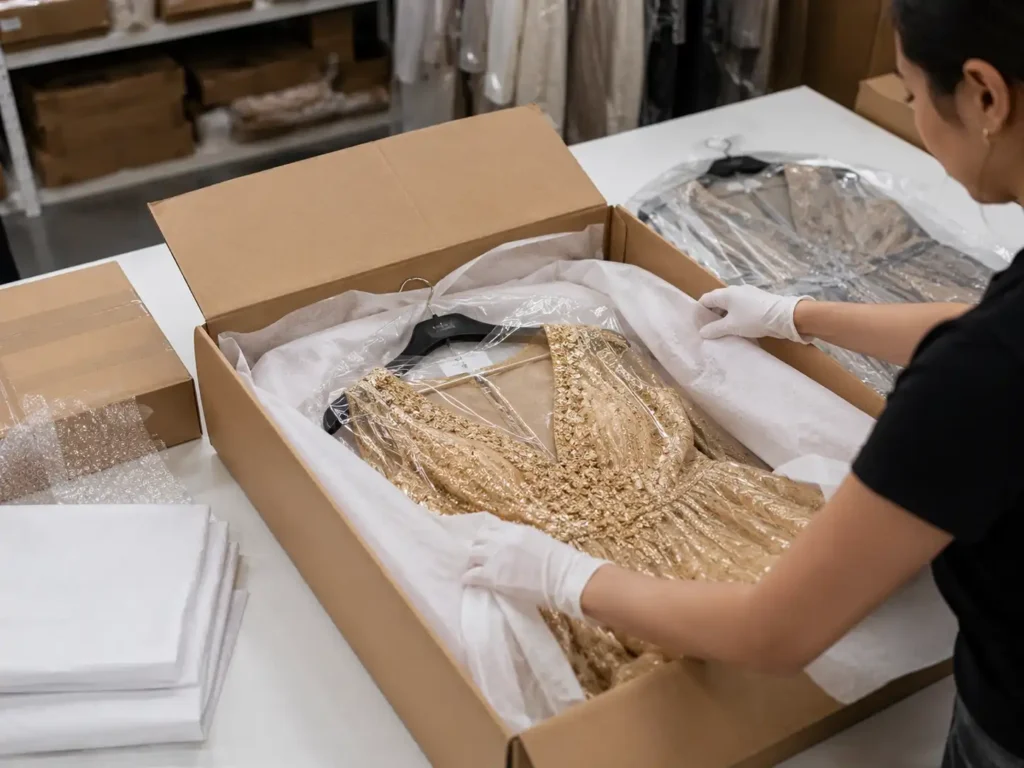
Packing follows style, size, color, barcode and destination. Long skirts, cups, ruffles and delicate surfaces may need adjusted folding, tissue, hanger or carton arrangements to reduce deformation during transport.
Quality Control Built Around Summer Dress Risks
Inspection priorities change by fabric and silhouette. A single generic checklist cannot control opacity, print direction, stretch recovery, long hems and structured bodices equally well.

Fabric and Cutting Checks
Incoming materials are reviewed for shade, visible defects, width, hand feel and consistency with the approved reference. Light colors receive opacity attention; prints receive repeat and direction checks; stretch materials receive direction and recovery review.
Cut parts are checked for count, direction, pattern placement and distortion before sewing. Correcting print orientation or panel shape at cutting stage prevents repeated defects across the full order.
In-Line Workmanship Checks
Bulk should not begin while core fabric, lining, trims or label information remains uncertain. Incoming material checks cover quantity, shade, width, hand feel and visible defects according to the project. Print and directional fabrics require approved cutting orientation.
Cutting plans consider size ratio, marker efficiency, print placement and fabric behavior. Slippery, stretch or easily distorted materials need handling controls so panels do not change shape before sewing.
Final Garment Checks
Finished garments are reviewed for measurements, appearance, cleanliness, pressing, color, symmetry, labels and overall match to the approved standard. Maxi lengths, slit heights, lining lengths and neck drops receive product-specific attention.
Sampling plans, AQL requirements or client inspection arrangements can be coordinated according to the order. Final inspection does not replace process control; it confirms the result of earlier controls.

Packing and Shipment Checks
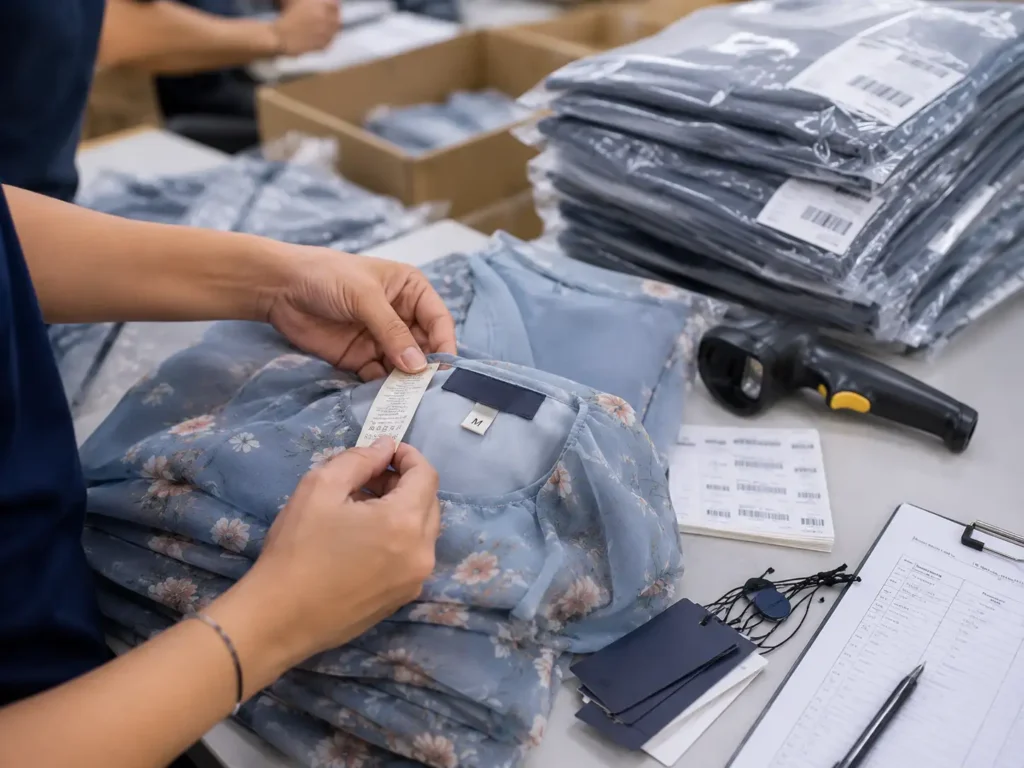
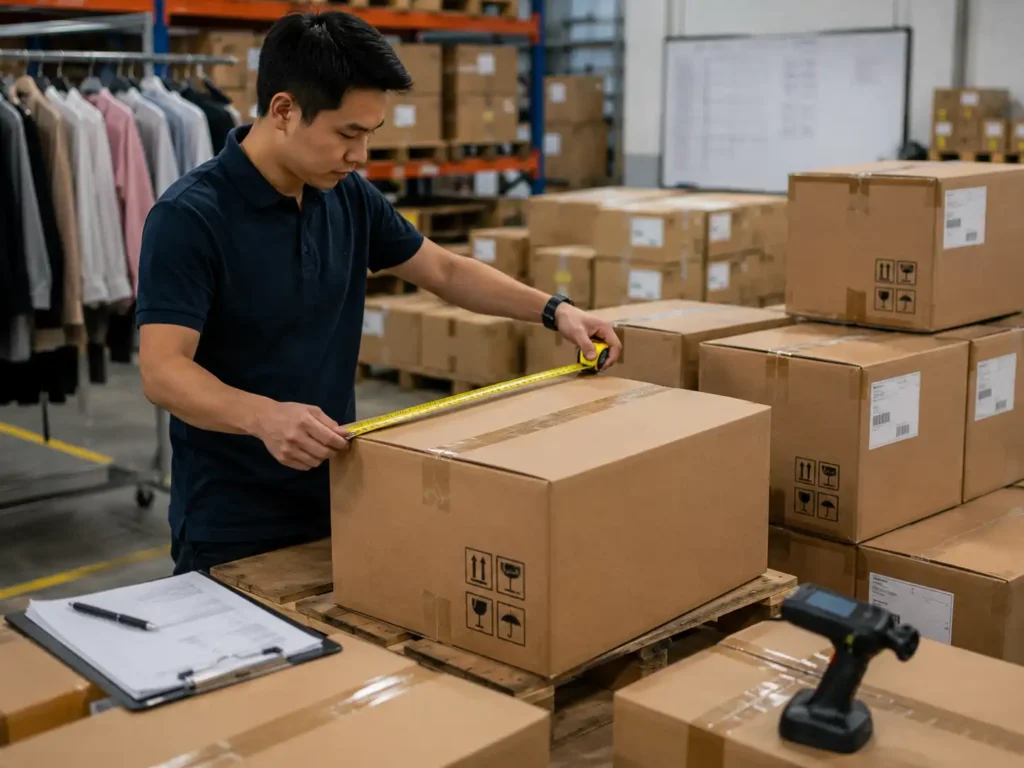
Packing QC confirms style number, color, size, barcode, PO, quantity, polybag, label placement, carton mark and destination. Warehouse labels can include PO number, SKU, color, size, carton number and quantity according to the supplied guide.
Cartons are checked for assortment accuracy and presentation. Shipment documents and packing information are coordinated before dispatch to reduce receiving delays and warehouse discrepancies.
Private Label Packing for Retail and Ecommerce Delivery
Brand Labels
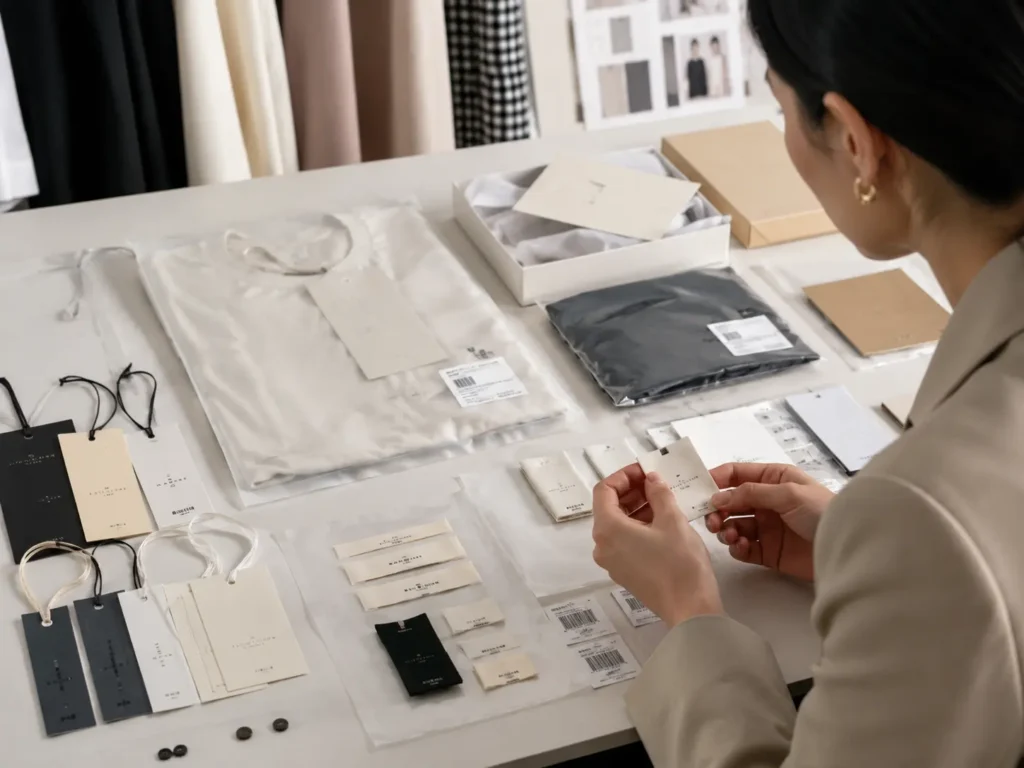
Support covers main labels, size labels, care labels, hangtags and approved placement. Material, dimensions, color, folding and attachment method are confirmed before bulk. Label suppliers may have separate MOQ and lead-time requirements.
SKU and Barcodes
Polybag and Folding
Carton Assortment
Split Destinations
File Protection
Protect the Launch Window and Future Reorders
Seasonal success depends on backward planning from campaign, warehouse and sales dates. Reorder readiness depends on accurate records after the first production run.
Build Backward From Launch
The project timeline includes requirement confirmation, fabric and trim approval, pattern development, first samples, revisions, PP approval, material arrival, cutting, sewing, in-line QC, finishing, packing, inspection and shipment. Each stage needs a confirmed owner and decision date.
Air freight may shorten transit but cannot recover time lost through unresolved fabric, repeated fit changes or late label approval. Early confirmation of hero styles and long-lead materials gives the most control over the launch window.
Use Sample Priority
Campaign pieces, core commercial styles, exclusive prints and complex structures may need different sample priority. The goal is not to finish every sample on the same day; it is to secure the styles that unlock photography, material ordering and production planning first.
A style tracker shows material status, pattern status, sample round, comments, approval and next action so delays remain visible before they affect the whole collection.
Prepare Reorder Records
Jinfeng Apparel can retain pattern references, measurement files, fabric details, trim records, label placement, packing instructions and QC notes for repeat orders. Records reduce repeated setup and help preserve approved construction.
A reorder still requires confirmation of fabric batch, color, quantity, size ratio and current material availability. New colors or replacement fabrics may need fresh sampling because drape, shrinkage and shade can change the garment result.
Plan Multi-Batch Delivery
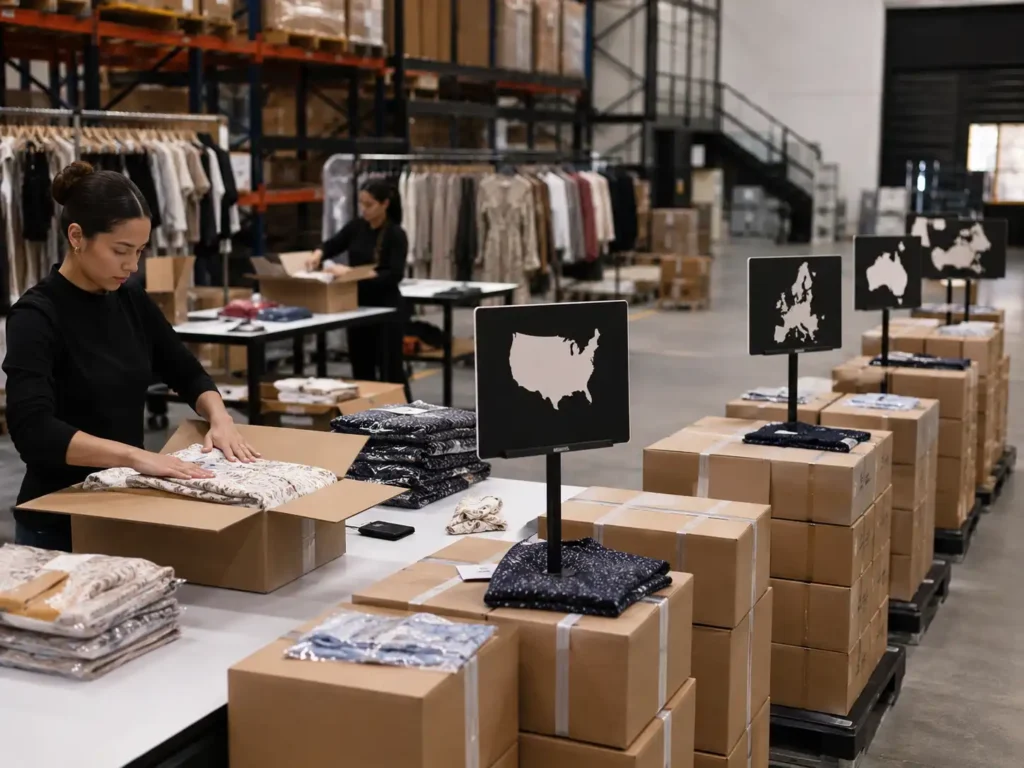
Large collections may be separated into campaign delivery, first retail allocation and later replenishment, provided material and production planning support the split. Phased shipment can protect early sales dates while remaining quantities complete under the same project controls.
Split delivery should be decided before packing because PO allocation, barcode lists, carton marks and destination labels must match each shipment.
Summer Collection Programs Managed at Brand Scale
US Ecommerce Launch
EU Resort Collection
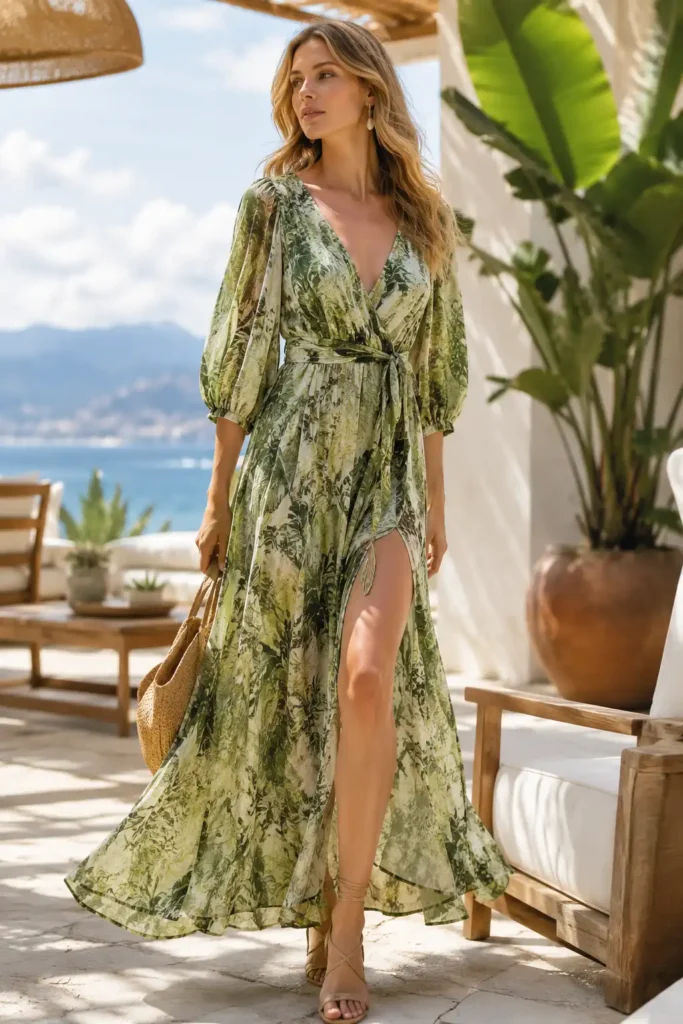
An anonymous European resortwear brand developed 15 styles and approximately 36,000 pieces, including printed rayon maxis, chiffon midis, tie-back dresses and lightweight coordinated sets. Main controls covered print direction, fabric transparency, shrinkage, strap stability, long-dress hems and travel-friendly folding. Key campaign styles were prioritized before the commercial core moved through PP approval and bulk production.

Australian Summer Drop
Frequently Asked Questions for Summer Dress Collections
Yes. Multi-style collections are grouped by fabric, silhouette, trim, complexity and launch priority. Each style keeps its own sample status, pattern, measurements, BOM, approval and QC points while the overall collection follows one timeline and packing plan.
MOQ starts from 200 pcs per style/color, depending on fabric availability, color development, trims, construction, packaging and production schedule. MOQ is not calculated by combining several different styles into one total.
Yes. Sizes are distributed within the confirmed quantity for each style/color according to the approved size ratio. The base size, grade rules and final breakdown should be confirmed before bulk cutting.
Yes. A project can begin from line sheets, reference images, sketches, original samples, size charts and fabric direction. Missing construction, measurement, trim and packing details are identified during review before final quotation or sampling.
First samples commonly require around 7-15 working days after usable information and materials are available. Revised, photo and PP samples require additional time. Custom prints, dyeing, complex structures or delayed feedback can extend the schedule.
Yes. Fabric direction may cover cotton, rayon, viscose, linen blends, chiffon, satin, mesh, lace and other suitable bases. Availability, color, hand feel, opacity, shrinkage, MOQ and bulk stability are reviewed before confirmation.
Yes, subject to artwork, base fabric, print method, color approval, supplier MOQ and lead time. Exclusive prints and custom-dyed colors normally require more development and may have higher material minimums than stock options.
Yes. Support can include main labels, size labels, care labels, hangtags, barcodes, stickers, polybags, carton marks and warehouse labels. Packaging suppliers may have separate MOQ and lead-time requirements.
PP approval locks the final pattern, measurements, fabric, color, trims, construction, labels and packing. Production receives the approved sample and supporting files, while QC checkpoints are built around the style’s known risks.
Yes. NDA-based cooperation can cover tech packs, line sheets, samples, patterns, fabric and trim information, label artwork, packaging files, order data and unpublished styles. Anonymous case descriptions do not disclose protected brand information.

Start Your Summer Dress Collection With Jinfeng Apparel
Send the available collection information for an initial manufacturing review. Kelly and the Jinfeng Apparel team will assess product scope, fabric direction, fit and construction risk, sample priority, MOQ structure, private-label requirements and the launch window before outlining the next development and quotation steps. Clear information allows the team to provide a more useful response and identify which styles are ready to sample first.
- Line sheet, tech packs, sketches, reference images or original sample photos
- Expected style count and quantity per style/color
- Fabric, print, color and trim direction
- Size range, base size and target market
- Main labels, care labels, hangtags, barcodes and packing guide
- Photo date, launch date, delivery destination and preferred shipping plan