
Vacation Dress Collection Manufacturer
Develop coordinated vacation dress ranges from line sheet and fabric direction to approved samples, controlled bulk production, and retail-ready delivery.
- Collection scale: Structured development for 10-30 styles across mini, midi, maxi, printed, day-to-dinner, and event-led vacation dresses.
- Order planning: MOQ starts from 200 pieces per style and color, with fabric, print, trim, size, and packing requirements reviewed before quotation.
- Development resources: 2 sample rooms, 7+ senior pattern makers, and 20+ sample machinists support parallel style development and revision control.
- Production reach: 6 owned womenswear factories, 10+ long-term satellite partners, and 100,000+ pieces of regular monthly capacity support brand programs commonly totaling 20,000-80,000 pieces.
Capacity Built for Multi-Style Vacation Collections
Since 2008
Six Owned Factories
Ten Plus Partners
Two Sample Rooms
Monthly Production Capacity
MOQ From 200 Pieces
Who We Develop Vacation Dress Collections For
Global Fashion Brands
Resortwear Labels
Premium Ecommerce Brands
Multi-Channel Retailers
Product Development Teams
Sourcing Teams
Where Vacation Dress Collections Commonly Lose Control
Styles Look Unrelated
Mini, midi, and maxi dresses can drift into separate visual stories when necklines, waist positions, print scale, trim language, and color balance are approved one style at a time. Collection review should identify hero shapes, supporting silhouettes, shared details, and repeated brand codes before patterns and samples move too far apart.
- Align neckline and waistline language.
- Define repeated trims or construction details.
- Control print scale across different garment lengths.
- Keep entry, core, and premium styles visibly connected.
Fabrics Change the Silhouette
A sketch may look consistent across several dresses, yet rayon, chiffon, linen blend, and satin create very different drape, body, transparency, and movement. Using one fabric direction for every style can weaken the range. Fabric groups should be matched to shape, lining, seam construction, care method, and expected retail positioning.
- Compare weight, hand feel, drape, and width.
- Check shrinkage and wrinkle character.
- Review lining color and length.
- Confirm whether pattern adjustment is required after fabric changes.
Prints Lose Their Scale
- Confirm artwork dimensions in centimeters.
- Approve strike-offs on the selected base fabric.
- Review front, back, sleeve, and border placement.
- Record directional cutting and matching requirements.
Fit Varies by Silhouette
Halter, wrap, slip, strapless, backless, and shirt dresses require different fit controls. A shared size chart alone cannot solve bust coverage, shoulder pressure, wrap overlap, armhole exposure, waist placement, hip ease, slit safety, or maxi length. Each silhouette needs dedicated pattern points and tolerance priorities.
- Review bust, waist, hip, and total length.
- Check strap length and neckline depth.
- Confirm movement while walking, sitting, and raising arms.
- Seal the approved pattern version before bulk grading.
Samples Miss Launch Dates
Collection sampling becomes slow when every style is treated as equally urgent, feedback arrives in mixed formats, or materials are changed after patterns are finished.
Launch-critical styles should receive priority, comments should be consolidated by version, and material decisions should be locked before photo and PP sample stages.
- Rank hero, campaign, showroom, and supporting styles.
- Group samples by fabric and construction family.
- Use one revision tracker per style.
- Separate photo sample approval from final PP approval when specifications differ.
Bulk Quality Becomes Uneven
- Transfer final pattern, BOM, trim card, and sewing standard.
- Use style-specific measurement and appearance checklists.
- Conduct incoming, cutting, sewing, garment, and packing checks.
- Compare bulk pieces against approved Golden samples.
What Makes a Vacation Dress Commercially Ready
Lightweight Comfort
Travel-Friendly Structure
Controlled Transparency
Beach-to-Dinner Versatility
Photo-Ready Fit
Seasonal Delivery Readiness
Build a Complete Vacation Dress Product Range
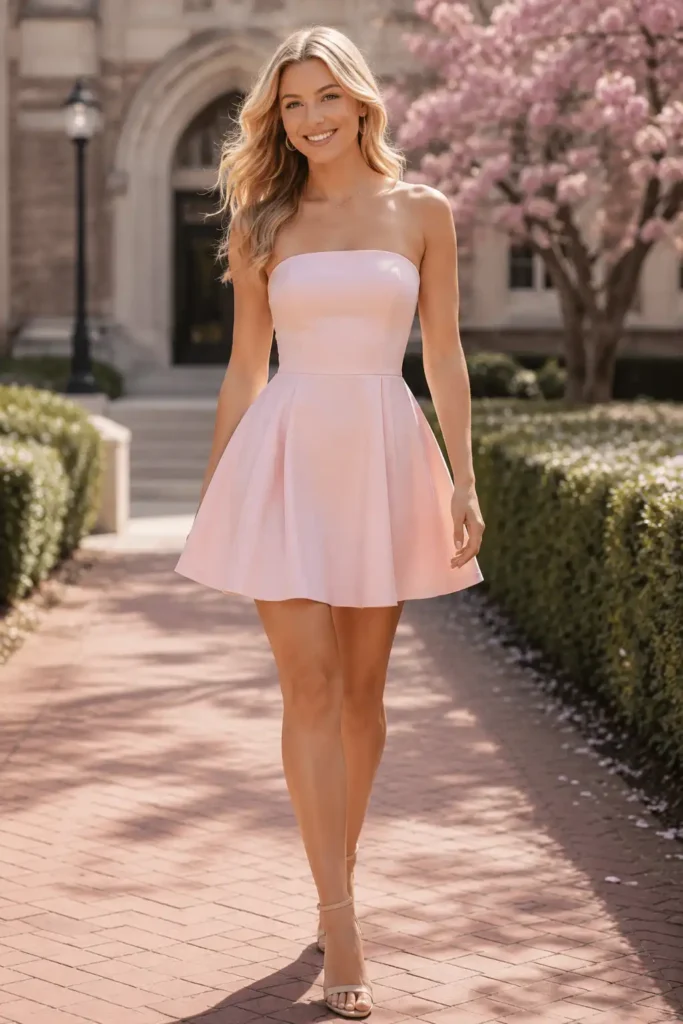
Mini Sundresses
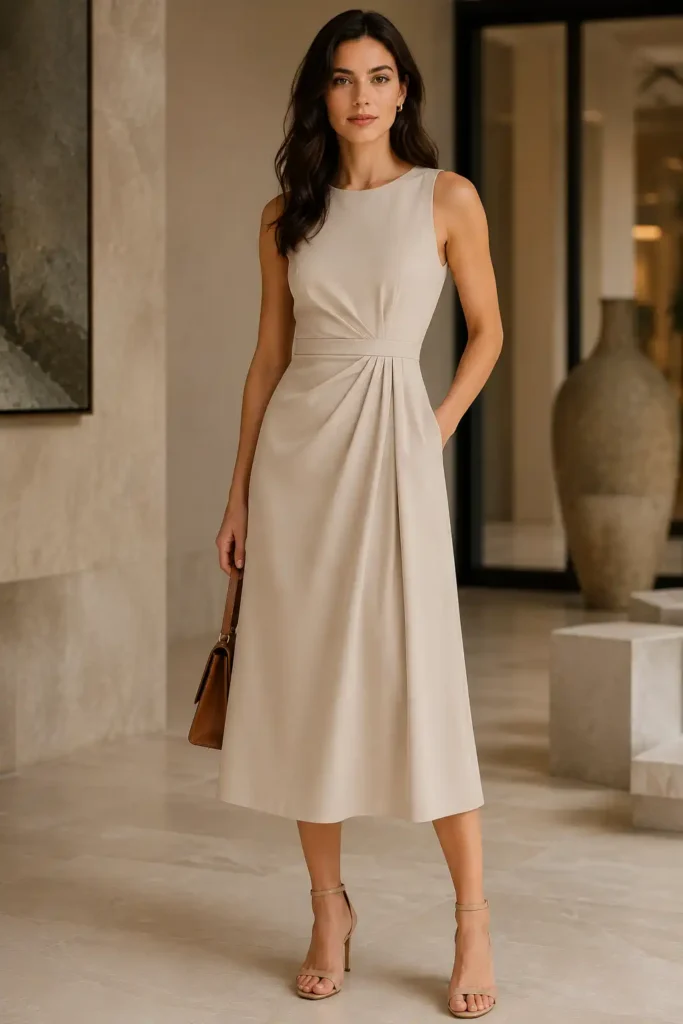
Midi Day Dresses

Maxi Resort Dresses

Wrap Dresses

Shirt Dresses
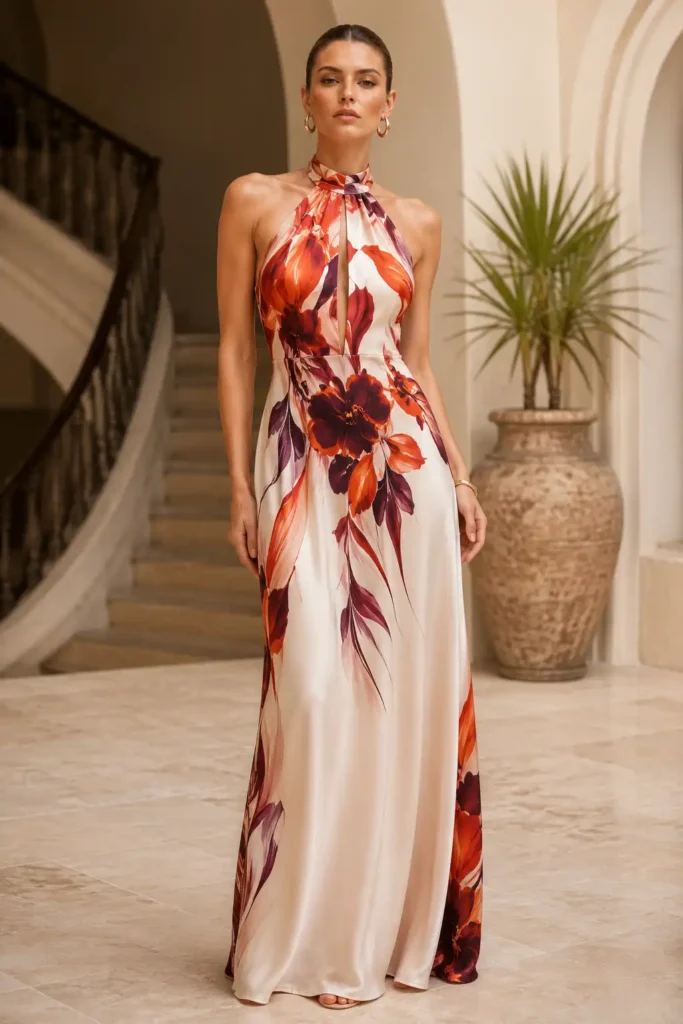
Halter Backless Dresses

Slip Ruched Dresses

Evening Vacation Dresses
Plan the Collection Before Sampling Begins
A clear range plan reduces duplicated samples, fragmented material orders, price confusion, and late design changes. Jinfeng Apparel reviews style roles, fabric groups, color direction, sample priority, size architecture, packing needs, and delivery windows before development resources are committed.
| Planning Area | Information to Confirm | Manufacturing Effect | Approval Point |
|---|---|---|---|
| Style Role | Hero, core, supporting, image-led, repeatable | Sets sample priority and resource level | Approved line sheet |
| Length Mix | Mini, midi, maxi, floor length | Changes fabric use, pattern balance, and packing | Range review |
| Occasion Mix | Beach, brunch, travel, dinner, event | Guides fabric, support, lining, and finishing | Product brief |
| Fabric Groups | Rayon, viscose, chiffon, linen blend, satin, printed woven | Supports shared sourcing and production allocation | Fabric direction |
| Color and Print | Core solids, seasonal colors, exclusive prints | Affects lab dips, strike-offs, MOQ, and shade control | Color or print approval |
| Size Range | Standard, extended, petite, tall | Changes grading, fit samples, measurements, and packing | Size-chart approval |
| Sample Priority | Campaign, showroom, fitting, supporting | Protects launch-critical dates | Sample calendar |
| Delivery Structure | One shipment, split shipment, multi-market | Affects production sequence, carton plan, and freight | Shipment plan |
Vacation Dress Fabrics Selected by Performance
Fabric selection starts with the garment result rather than a material name. Weight, width, drape, shrinkage, transparency, wrinkle character, print method, lining, care requirements, MOQ, cost, and bulk availability all influence whether a fabric can support the intended silhouette.

Rayon and Viscose for Fluid Daywear
Rayon and viscose are widely used for vacation dresses because they feel soft, drape naturally, and accept floral or destination-led prints well. Common rayon weights for relevant dress development often fall around 100-180 gsm, while viscose choices may extend through a broader range depending on weave and blend. A soft hand alone is not enough. Wet behavior, shrinkage, wrinkle appearance, print clarity, seam stability, and wash-care expectations need review before final selection.
Pattern decisions: Fluid fabrics can drop differently after hanging, especially on maxi skirts, bias sections, gathered panels, and asymmetrical hems. Patterns may need adjusted ease, stabilized necklines, controlled shoulder seams, and measured hem equalization after garment relaxation.
Transparency and lining: Pale colors and lightweight constructions may require full lining, partial lining, double-layer bodices, or carefully selected nude-tone lining. Lining must move with the outer shell without becoming visible at the hem, armhole, slit, or neckline.
Print and bulk control: Exclusive prints should be approved on the actual base fabric because surface texture and absorbency change color appearance. Bulk checks focus on shrinkage, print shade, hand feel, bowing, skew, seam puckering, hem level, and wash-test measurements. Care labeling should match tested behavior rather than relying on generic instructions.

Linen Blends for Natural Resort Texture
Linen blends create an immediate resort signal through texture, breathability, and a relaxed surface. Linen-cotton, linen-rayon, and linen-polyester blends can offer different balances of natural character, softness, structure, wrinkle level, and price. Pure visual appeal must be weighed against transparency, yarn slubs, shrinkage, stiffness, batch variation, and the brand’s tolerance for natural creasing.
Silhouette matching: Shirt dresses, A-line midis, relaxed maxis, tie-front styles, and coordinated sets often work well in linen blends. Very fitted or highly draped silhouettes may require softer blends or different pattern ease. The garment should be designed around the fabric’s body rather than forcing a fluid shape from a crisp construction.
Surface expectations: Natural slubs and irregular texture can be part of the desired look, but acceptance standards should distinguish normal character from holes, thick yarn faults, stains, weaving defects, or excessive shade variation. A sealed fabric standard helps production and QC teams judge consistently.
Production controls: Pre-production review should cover shrinkage, pressing temperature, seam finish, needle choice, lining, fusible compatibility, and garment washing when required. Packing should limit sharp folds where appearance matters, while product imagery and care communication should reflect the natural wrinkle character honestly.

Chiffon and Lightweight Crepe for Movement
Chiffon delivers softness, movement, and layered volume for vacation maxis, tiered dresses, wedding-adjacent resort styles, and event-led pieces. Lightweight crepe can provide a similar fluid effect with more surface body and, in some constructions, easier opacity control. Both materials require attention to fabric sliding, seam handling, transparency, snagging, and hem balance.
Construction planning: French seams, narrow overlocking, rolled hems, baby hems, binding, or lining attachment methods are selected according to the design and fabric. Heavy seam allowances or unsuitable tension can create puckering and visible ridges. Tiered and gathered sections require controlled ratios so bulk volume matches the approved sample.
Lining strategy: Lining color should support the shell without changing the print or garment tone. Lining length must remain hidden during walking and photography, while slit and wrap areas need sufficient coverage. Necklines and armholes may require stay tape, facing, or controlled understitching to prevent stretching.
Quality focus: Incoming and final checks cover holes, pulls, snags, shade variation, fabric sliding, uneven layers, exposed lining, twisted seams, and unbalanced hems. Long chiffon dresses should be hung or rested before final hem evaluation because fluid sections can settle after sewing and pressing.

Satin and Printed Wovens for Elevated Looks
Satin supports evening vacation dresses, slip silhouettes, cowl necks, draped midis, and polished resort dinners. Printed wovens support floral, tropical, geometric, and destination stories across daywear and multi-style ranges. Both categories can look premium when surface direction, color, print, cutting, stitching, pressing, and packing are handled carefully.
Satin controls: Luster direction, snagging, color variation, seam puckering, press marks, water spots, and folding creases are major concerns. Cutting panels in inconsistent directions can create visible shade differences even from the same fabric roll. Needle marks and rework may remain visible, so sewing standards need to be correct from the start.
Printed woven controls: Print repeat, border placement, panel direction, stripe or motif alignment, and fabric width influence both appearance and consumption. Placement print or border print requires accurate pattern mapping before cutting. Base-fabric shrinkage must be considered because it can change repeat dimensions and garment measurements.
Packing and inspection: Surface-sensitive satin may need tissue, protective bags, hanger packing, or reduced carton pressure depending on style and shipment. Printed styles require shade and motif checks across garment panels. Approved fabric, color, print, and packing standards should be available to production and QC teams.
Control Exclusive Prints and Collection Color Stories

Base Fabric Selection
- Approve the print on the intended bulk base.
- Confirm shrinkage before final artwork scaling.
- Check whether lining changes the visible color.
- Record fabric width for marker planning.

Print Scale Repeat
- State artwork size in centimeters.
- Review scale on full-size pattern sections.
- Test small and large silhouettes separately.
- Preserve approved repeat information in production files.

Direction and Placement
- Mark top direction on every relevant pattern piece.
- Define center-front or focal motif position.
- Approve border distance from finished hems.
- Estimate extra consumption for matching requirements.

Color Standard Approval
- Approve lab dips or strike-offs under suitable light.
- Record acceptable shade range when appropriate.
- Match lining and trims to the approved shell.
- Keep approval records linked to style and fabric batch.

Strike-Off Review
A strike-off confirms more than color. It allows review of sharpness, registration, penetration, repeat accuracy, surface feel, transparency, and the interaction between artwork and the selected fabric. For large collections, strike-offs should be prioritized around hero prints and fabrics with the longest lead time.
- Compare artwork scale against the garment.
- Review front and reverse where relevant.
- Check color fastness or wash performance by requirement.
- Approve corrections before bulk printing.

Bulk Shade Control
Bulk printing can vary by batch, roll, machine setting, and base-fabric lot. Incoming fabric checks should identify roll or shade groups before cutting. Garment panels should not be mixed across visibly different lots when shade sensitivity is high. Final inspection compares finished garments against the approved standard.
- Record print and fabric batch numbers.
- Separate visible shade groups.
- Check panel-to-panel color consistency.
- Review replenishment risk before using remaining fabric.
Fit and Construction for Travel-Ready Vacation Dresses
Vacation silhouettes often expose shoulders, backs, necklines, waists, and legs while using soft fabrics with limited structure. Pattern control must protect the intended look without creating pressure, gaping, exposure, twisting, or unstable garment lengths across the size range.

Neckline, Bust Coverage, and Shoulder Security
Halter, strapless, deep-V, wrap, cowl, off-shoulder, and backless dresses each distribute support differently. A neckline that looks balanced on a flat sketch can gape, pull, collapse, or expose the side bust once the garment is worn. Jinfeng Apparel reviews upper bust, full bust, under bust, neckline depth, armhole shape, shoulder or neck pressure, strap position, back height, and closure method during pattern and sample development.
Support choices: Depending on the design, stability may come from lining, facing, stay tape, elastic, bra cups, side support, under-bust seams, hidden snaps, adjustable sliders, or carefully positioned ties. Heavy internal structure is not automatically appropriate for a lightweight vacation dress, so support should match both the visual direction and comfort level.
Fit review: Front, side, and back images help identify gaping, pulling, uneven neckline edges, side-bust exposure, or back instability. Movement checks should include walking, reaching, sitting, and normal arm movement. Strap lengths and attachment points are recorded, not adjusted informally during bulk sewing.
Bulk control: QC focuses on neckline symmetry, strap length, attachment security, armhole depth, closure function, and finished measurements. High-risk openings should be compared with the Golden sample during sewing and final inspection.

Waist, Hip, and Silhouette Balance
Vacation dresses range from relaxed and gathered to fitted, bias-cut, ruched, and wrap constructions. Each shape needs a clear relationship between bust, waist, high hip, full hip, skirt volume, and overall length. Inconsistent ease can make a flowing dress look oversized or make a soft fitted dress pull across the abdomen and hips.
Pattern decisions: Waist position should align with the intended body proportion and style concept. High-waist, natural-waist, dropped-waist, and empire shapes require different front and back balance. Gathered or elasticized waists need controlled tension and distribution; fitted silhouettes need enough movement for sitting and walking.
Size development: Grade rules should protect neckline, strap, armhole, waist, hip, slit, and length relationships instead of enlarging every measurement mechanically. Extended sizes may need additional pattern adjustments to maintain coverage and silhouette. Petite or tall programs require separate length logic when the range demands it.
Bulk control: Measurement inspection covers key points by size, while visual inspection checks side-seam position, waist-level consistency, pulling, twisting, and gathering distribution. Approved tolerances should reflect garment structure and fabric behavior.

Lining, Transparency, and Inner Construction
Lightweight vacation fabrics can reveal underwear, seam allowances, pockets, facings, or uneven lining under daylight and camera lighting. Lining must solve opacity without making the garment hot, stiff, heavy, or visually disconnected from the shell. Color, weight, stretch, drape, and shrinkage should be compatible with the outer material.
Coverage strategy: Full lining suits many pale, chiffon, or event-led dresses. Partial lining may work for skirts, bodices, or layered constructions. Double-layer shell fabric can preserve a softer appearance in selected areas. Built-in shorts, modesty panels, or additional overlap may be considered for short or open styles where the design permits.
Construction control: Lining should not pull at necklines, twist at side seams, show below hems, or restrict movement. Slits, wrap openings, open backs, and cut-outs need specific lining maps. Seam finishes must remain smooth and comfortable against the body.
Bulk inspection: QC compares lining length, color, attachment, seam security, and visibility against the approved sample. Opacity is checked in suitable light rather than under factory lighting alone.

Hem, Slit, and Finished Dress Length
Length is a core commercial specification for vacation dresses. Mini styles must remain wearable during movement; midi proportions should suit the intended silhouette; maxi dresses need even hems, stable floor clearance, and balanced front-back length. Slits should enhance movement without creating uncontrolled exposure.
Pattern and sample review: Finished length is measured from defined reference points because neckline and strap structures vary. Bias, chiffon, rayon, viscose, gathered skirts, and asymmetrical panels may drop after hanging or pressing. Long dresses may require a rest period before final hem correction.
Slit control: Slit height is approved as a finished measurement and reviewed while walking and sitting. Reinforcement, lining, seam allowance, and top finishing must prevent tearing or distortion. Wrap styles need overlap checks at the slit area.
Packing effect: Long dresses can develop fold lines, compressed hems, or surface marks in transit. Packing method, carton pressure, hanger use, tissue, and garment folding are selected according to fabric and destination needs. Final QC records length, hem level, slit height, and packing presentation.
Test the Details Travelers Notice Most
Wrinkle Appearance
- Confirm acceptable surface character.
- Review packing folds on the finished garment.
- Select pressing and steaming instructions.
- Avoid unsupported “wrinkle-free” claims.
Packability
- Set a repeatable folding method.
- Protect surface-sensitive trims.
- Control carton quantity and pressure.
- Match packing to freight and warehouse handling.
Opacity
- Review front, back, and side views.
- Test standing and movement conditions.
- Confirm lining tone and coverage.
- Record approved construction in the tech file.
Shrinkage
- Measure before and after testing.
- Record length and width change.
- Recheck fit-sensitive points.
- Update pattern or care instructions where required.
Movement Comfort
Vacation dresses are worn while walking, sitting, climbing steps, dining, and moving between indoor and outdoor settings. Fit review should include stride, slit opening, wrap overlap, arm movement, neckline security, strap pressure, and sitting comfort. A garment can match measurements and still fail during real use.
- Test common body movements.
- Check short lengths and open backs.
- Review elastic, ties, and closures.
- Confirm lining does not restrict the shell.
Color Print Stability
- Approve the actual base fabric.
- Check print or dye batch records.
- Review lining and trim color interaction.
- Confirm testing needs by market and care claim.
From Collection Brief to Retail-Ready Delivery
Collection Brief
Style Review
Fabric Print Direction
Pattern Development
Multi-Style Sampling
Sample Revisions
PP Golden Approval
Bulk Production QC
Packing Export Delivery
Multi-Style Sampling Without Losing Collection Control
Sampling becomes manageable when style priority, sample purpose, fabric readiness, revision ownership, and approval status are visible. Jinfeng Apparel uses separate records for each style while coordinating shared materials and launch dates across the whole collection.
Prioritize Hero and Launch-Critical Styles
Not every style needs to move at the same speed. Campaign pieces, showroom samples, sales meeting samples, and high-volume core styles should be identified early.
Priority is based on launch importance, material lead time, construction difficulty, photography schedule, and expected bulk volume.
A typical 10-30 style range may begin with a smaller group of hero styles to confirm the overall fit, fabric direction, print scale, and finishing language. Supporting styles can follow once repeated decisions are stable. Faster approval on shared fabrics or trims reduces duplicated work across the range.
Sample calendars should state which styles need first sample, fit sample, revised sample, photo-ready sample, PP sample, or Golden sample. A photo-ready sample may be finished for campaign appearance before every bulk specification is final, so its status must not be confused with PP approval.
Approval decisions and dates are recorded against each style code. Delayed comments on one style should not block unrelated styles unless they share the same material, pattern block, print, or trim decision.
Group Styles by Fabric and Construction
Grouping creates efficiency without forcing unrelated styles into one process. Rayon and viscose dresses may share shrinkage review, print approvals, and soft woven production resources. Chiffon styles may share lining and hem methods. Satin pieces need surface protection and controlled pressing. Structured shirt dresses require different collar, placket, and fusible standards.
Each group can use a shared fabric reference, trim family, color standard, or construction note while retaining individual patterns and measurements. Grouping also helps sourcing teams see how a material delay affects several styles and whether a suitable substitute can protect the launch.
Pattern families may support controlled extensions, such as converting an approved midi body into a maxi variation or changing a sleeve while retaining the same bust and waist block. Any extension still needs sample validation because length, balance, fabric consumption, and movement change.
Production planning benefits from the same grouping logic. Styles approved together can be allocated to appropriate factories and lines, while separate high-risk styles receive additional sample or QC attention.
Record Every Revision by Version
Verbal comments and scattered chat messages create high risk in multi-style development. Each revision should state style code, sample version, issue, cause, requested change, measurement change, fabric or trim change, cost effect, lead-time effect, and whether a revised sample is required.
Fit changes are converted into updated patterns and size charts. Fabric changes require confirmation of composition, weight, width, stretch, drape, transparency, MOQ, price, and lead time. Construction changes are added to sewing instructions. Approved trims are recorded in the BOM and trim card. Packing changes are added to label and packing files.
Front, side, back, and detail images can support written comments but should not replace measurements or clear construction instructions. Version naming must remain consistent so sample room, merchandisers, production teams, and brand teams refer to the same physical sample and file set.
Once revisions are approved, outdated files are removed from active production use. The final production pack should point to one approved pattern, size chart, BOM, construction standard, QC checklist, packing instruction, PP sample, and Golden sample.

Plan MOQ Across Styles, Colors, and Prints
MOQ starts from 200 pieces per style and color. Collection feasibility also depends on fabric minimums, print methods, custom dyeing, trims, labels, size ratios, and packing materials. Quantity planning should occur before final samples and material commitments.
| Order Structure | Initial Feasibility | Main Reason | Recommended Action |
|---|---|---|---|
| 1 style x 1 color x 200 pcs | Normally reviewable | Meets the standard garment starting MOQ | Confirm fabric, sizes, trims, and packing |
| 1 style x 2 colors x 200 pcs each | Normally reviewable | Each color reaches the starting MOQ | Confirm separate fabric and SKU plans |
| 1 style x 2 colors x 100 pcs each | Usually below the standard structure | Quantities are divided below MOQ by color | Consolidate colors or increase volume |
| 4 styles x 50 pcs each | Does not equal 200 pcs per style | MOQ is not pooled across unrelated styles | Select priority styles and build viable quantities |
| 10-30 style collection | Reviewable by project | Every style, color, and material group affects feasibility | Submit a complete line sheet and quantity plan |
| Exclusive digital print | Requires print and base-fabric review | Artwork, base fabric, color, repeat, and printer minimums apply | Approve strike-off and print MOQ before bulk |
| Custom-dyed fabric | Often raises material minimum and time | Lab dip, dye lot, shade band, and mill minimums apply | Consolidate colors and approve the dye route early |
| Custom labels and packaging | May have independent minimums | Woven labels, hangtags, polybags, and boxes use separate suppliers | Align packaging quantities across the collection |
| XS-XL size ratio | Normally workable within each approved style/color quantity | Excessive size fragmentation complicates cutting and packing | Provide a commercial size breakdown |
Scale Multi-Style Collections Across the Right Production Lines
Multi-style programs need production allocation by fabric, silhouette, construction difficulty, quantity, workmanship, and delivery priority. Jinfeng Apparel uses 6 owned factories, 10+ long-term satellite partners, 18+ sewing lines, and 6+ flexible production lines within a coordinated production and QC system.

Allocate Factories by Product Structure
A lightweight rayon maxi, a lined chiffon wrap dress, a satin slip dress, and a linen-blend shirt dress should not be assigned by available space alone. Each group needs suitable pattern understanding, sewing methods, pressing control, handling discipline, and finishing standards. Factory allocation considers woven or stretch behavior, surface sensitivity, seam complexity, print direction, lining, trims, quantity, and required delivery date.
Owned factories provide the core production base, while long-term satellite partners extend capacity and specialist support. Allocation remains linked to approved samples and project files. Jinfeng Apparel coordinates material readiness, production orders, Golden samples, QC standards, packing instructions, and shipment planning across the selected units.
For a 10-30 style collection, allocation may be organized by material family or construction family. Chiffon and fluid woven styles can be grouped where narrow hems, lining, and fabric sliding are familiar. Satin pieces may be placed where surface handling and pressing are stronger. Shirt dresses may use teams experienced in collars, plackets, buttons, and structured finishing.
The objective is consistent execution across the collection, not forcing every style through a single line or distributing work without a common standard.

Transfer Approved Samples into Production Files
Sample approval must become production information. Final patterns, size charts, BOMs, fabric references, trim cards, sewing instructions, label positions, packing instructions, QC checklists, PP samples, and Golden samples form the production handover package.
Production teams should know which details are appearance-critical, measurement-critical, or safety-critical. A vacation mini may prioritize finished length, lining, armhole, and strap security. A maxi may prioritize total length, hem balance, print direction, and slit height. A shirt dress may prioritize collar symmetry, placket flatness, button spacing, and sleeve movement.
A pre-production meeting reviews potential errors before cutting and sewing begin. Material batches, pattern version, seam methods, special machines or attachments where confirmed, pressing limits, inspection points, label requirements, and packing methods are discussed with the responsible teams. Unknown equipment counts are not used as sales claims; production planning centers on verified lines, trained teams, and approved process standards.
Changes after handover are documented and reissued. Outdated patterns or instructions are removed from active use to reduce version conflict.

Control Material Readiness and Line Loading
Production cannot begin reliably when fabric, lining, zippers, labels, or packaging are incomplete. Material status is tracked by style and color before line loading. Incoming material checks review fabric identity, composition information, weight where required, width, color, print, hand feel, transparency, shrinkage records, defects, and quantity. Trims are checked for specification, color, size, function, and bulk availability.
Multi-style loading should avoid placing every style on the same start date. Launch-critical pieces, shared-material groups, and similar constructions can be sequenced to protect efficiency and delivery. Flexible lines support multi-SKU organization and smaller style groups within the standard MOQ structure, but flexibility still depends on confirmed materials, approved samples, and reserved production time.
Cutting plans consider fabric roll and shade groups, print direction, marker efficiency, size ratios, and panel matching. Sewing schedules then align with in-line QC and finishing capacity so completed garments do not accumulate without inspection or pressing resources.
A visible production tracker allows style-level decisions when a material or approval delay affects one part of the range.

Keep One Quality Standard Across Every Unit
Multiple factories or lines increase capacity but also increase the need for common standards. Every unit receives the relevant Golden sample, measurement chart, tolerance, workmanship standard, fabric and trim reference, label map, packing instruction, and QC checklist.
QC follows the garment through incoming materials, cutting, sewing, in-line inspection, garment measurement, appearance review, pressing, packing, and final inspection. Style-specific risks are added to the checklist. Printed dresses receive direction, placement, and shade controls. Chiffon receives snag, lining, seam, and hem checks. Satin receives luster direction, stains, puckering, pressing, and packing checks. Linen blends receive shrinkage, transparency, surface, and wrinkle-character review.
The 15+ QC inspectors work within the wider production system rather than relying on a final check alone. Inspection findings are recorded and communicated so corrective action can occur while production is active.
Final shipment approval also covers SKU, barcode, size ratio, polybag, carton mark, packing quantity, and document accuracy.
Quality Control for Multi-Style Vacation Dress Orders

Fabric Inspection
- Record fabric and shade batches.
- Separate visibly different rolls.
- Confirm lining compatibility.
- Escalate material problems before cutting.

Print Shade Review
- Check motif size and direction.
- Review front-back panel consistency.
- Confirm border distance and placement.
- Keep print batch records for replenishment.

Cutting Direction Control
- Mark top direction clearly.
- Keep shade lots separated.
- Check critical motif placement.
- Verify cut quantity by size and color.

Sewing Seam Inspection
- Review high-risk operations early.
- Check seam methods by fabric.
- Control gathering and ruching ratios.
- Correct issues before large quantities accumulate.

Measurement Fit Checks
- Measure representative pieces during production.
- Compare results by size and line.
- Investigate repeated drift.
- Review visual fit together with measurements.

Hem Finishing Review
Mini lengths need safety and consistency; maxi lengths need front-back balance and even floor clearance. Fluid fabrics may settle after sewing or pressing. Hem inspection checks level, stitch quality, lining position, slit finish, asymmetry, puckering, and garment relaxation where required.
- Measure from defined reference points.
- Allow appropriate rest for fluid styles.
- Check slit reinforcement.
- Review hem after final pressing.

Label Packing QC
- Match style, color, and size codes.
- Verify fiber and care information.
- Check barcode readability where required.
- Confirm carton quantity and marks.

Final Inspection AQL
- Compare garments with the Golden sample.
- Classify critical, major, and minor issues where specified.
- Record findings and corrective actions.
- Release shipment only after the required approval route.
Private Label Packing for Retail and Ecommerce Delivery

Main Size Labels
- Confirm brand artwork and label dimensions.
- Map placement by garment structure.
- Check label supplier MOQ and lead time.
- Approve attachment on the PP sample.

Care Fiber Labels
- Provide approved legal text and translations.
- Verify shell, lining, and trim information.
- Match care claims to material behavior.
- Control label version by destination market.
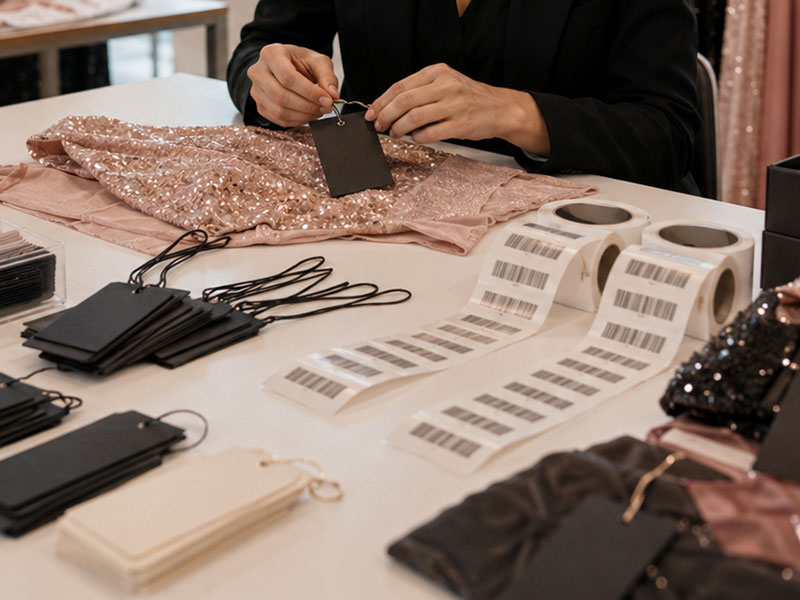
Hangtags Brand Details
- Approve artwork and print proof.
- Confirm string or attachment method.
- Protect satin, chiffon, and lightweight fabrics.
- Separate price or market versions where required.
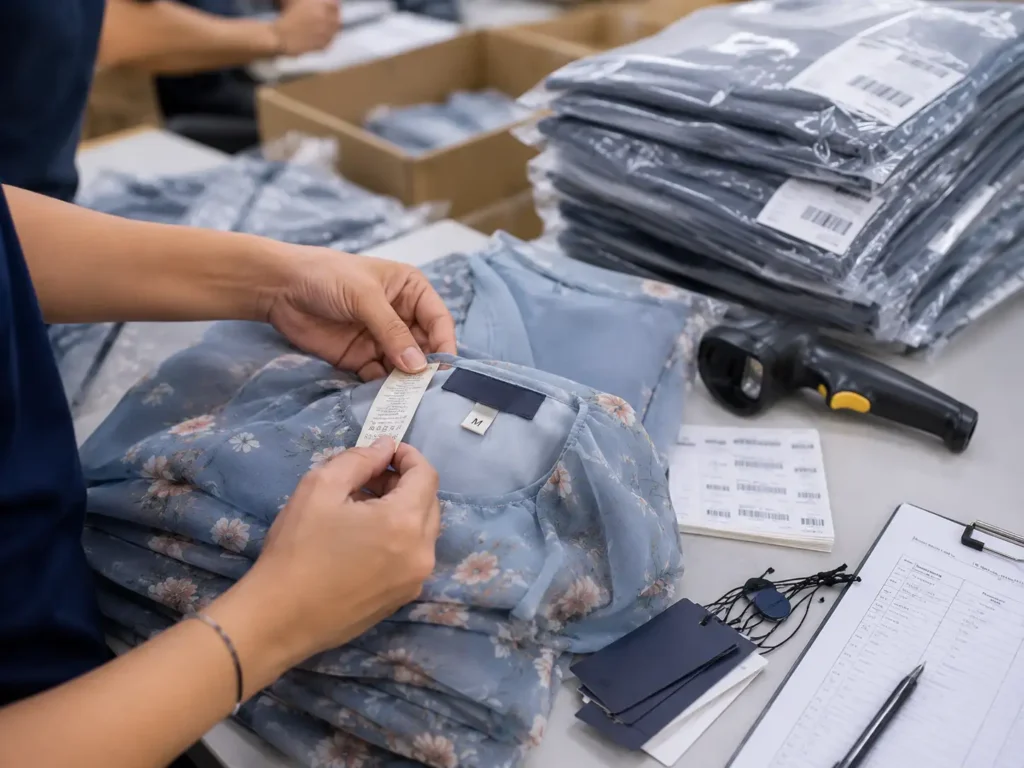
Barcode SKU Labels
- Use a controlled barcode master file.
- Match every label to garment and polybag.
- Verify placement and readability.
- Check carton-level SKU information.
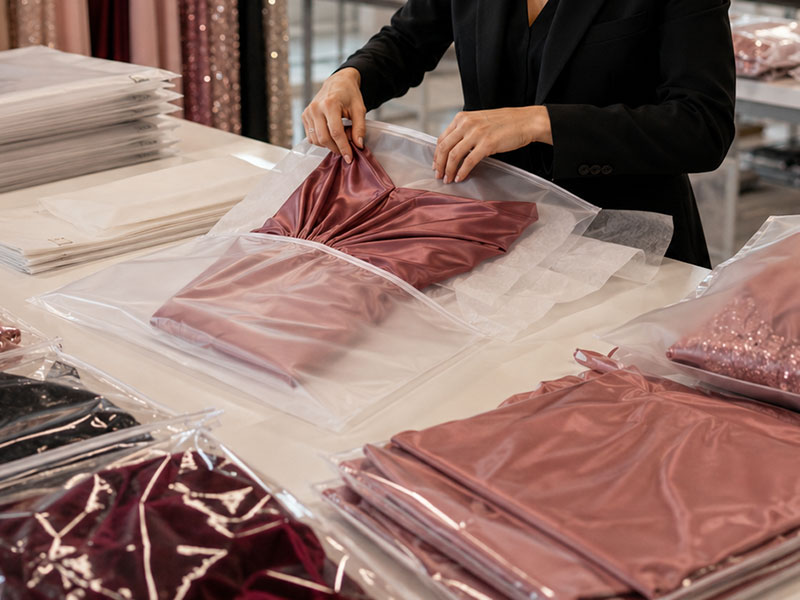
Branded Polybags
- Confirm bag size by garment type.
- Review printing and warning requirements.
- Check independent packaging MOQ.
- Approve final fold and presentation.
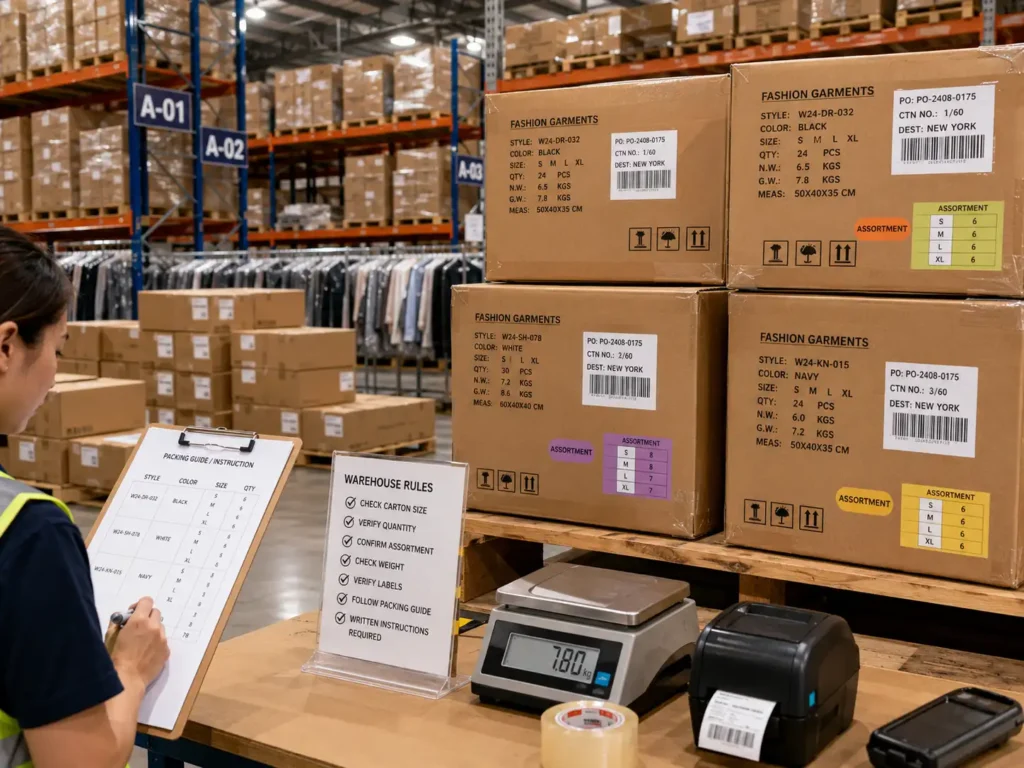
Cartons Warehouse Marks
- Confirm solid or mixed-size packing.
- Match carton marks to the packing list.
- Add warehouse labels by destination requirement.
- Review split-shipment carton numbering.
Work Backward From Your Collection Launch Date
Launch Arrival Date
Freight Route
Final Inspection
Packing Completion
Bulk Production
PP Sample Approval
Revised Samples
First Samples
Material Artwork Approval
Vacation Dress Collection Projects We Can Prove
Printed Resort Collection
A North American fashion label developed 18 vacation dress styles across mini, midi, and maxi lengths with a total bulk order of 36,000 pieces. The range used two printed rayon bases, one lightweight crepe, and three solid colors. Quantities were organized by style and color at commercially workable levels, while hero prints received earlier strike-off and sample priority. The main risks were print scale across different garment lengths, rayon shrinkage, pale-color transparency, and keeping the collection visually coordinated. Artwork dimensions were reviewed against full-size pattern panels, strike-offs were approved on the selected base fabrics, and lining maps were created for pale and wrap styles. Samples were grouped by shared fabric and construction so repeated corrections could be applied consistently. Bulk production was allocated by fabric family. QC focused on print direction, shade groups, shrinkage-sensitive measurements, wrap overlap, maxi hem balance, lining length, barcode accuracy, and carton assortment. The order was packed by style-color-size SKU with brand labels, care labels, hangtags, and warehouse marks. Approved print, pattern, BOM, and packing records were retained for replenishment planning.

Multi-Length Vacation Range

Repeat Seasonal Collection
Built for Confidential and Repeatable Brand Programs
NDA Design Protection
Jinfeng Apparel supports NDA-based cooperation and protects tech packs, line sheets, sketches, reference images, original samples, patterns, size charts, fabric directions, print artwork, trim details, label artwork, packing files, quantities, target prices, launch dates, and unpublished designs.
- Brand names are not published without authorization.
- Unreleased samples and original files remain confidential.
- Public case studies use anonymous market and product descriptions.
- Approved files are shared with relevant development and production teams only.
Compliance Testing Support
- OEKO-TEX, GOTS, organic, GRS, or recycled resources require supplier and certificate-scope verification.
- SGS, Intertek, BV, client inspection, or AQL routes can be discussed by project.
- No claim is made that every fabric or factory automatically carries every certification.
- MOQ, cost, availability, and lead time may change when certified resources are required.
Repeat Seasonal Collections
Patterns, size charts, BOMs, fabric references, color records, trim specifications, sewing instructions, label files, packing methods, QC requirements, and
Golden sample standards can be retained for repeat-order and seasonal development support.
- Restart proven styles with controlled file references.
- Extend approved bodies into new colors, prints, sleeves, or lengths.
- Coordinate replenishment and multi-batch production.
- Preserve brand-level fit and packing standards across seasons.
Vacation Dress Manufacturing Frequently Asked Questions

Discuss Your Next Vacation Dress Collection
Send your collection materials to Kelly for a structured review of style complexity, fabric and print direction, pattern needs, sample priority, MOQ fit, production allocation, private-label packing, quality requirements, and delivery timing.
A clear brief helps the development team identify shared fabrics, long-lead materials, hero styles, and approval points before quotation or sampling.
Please include:
- Line sheet, tech packs, sketches, references, and quantity by style and color
- Size range, fabrics, colors, print artwork, and key trim requirements
- Labels, hangtags, barcodes, polybags, cartons, and private-label files
- Campaign, shipment, warehouse, testing, inspection, and market requirements


