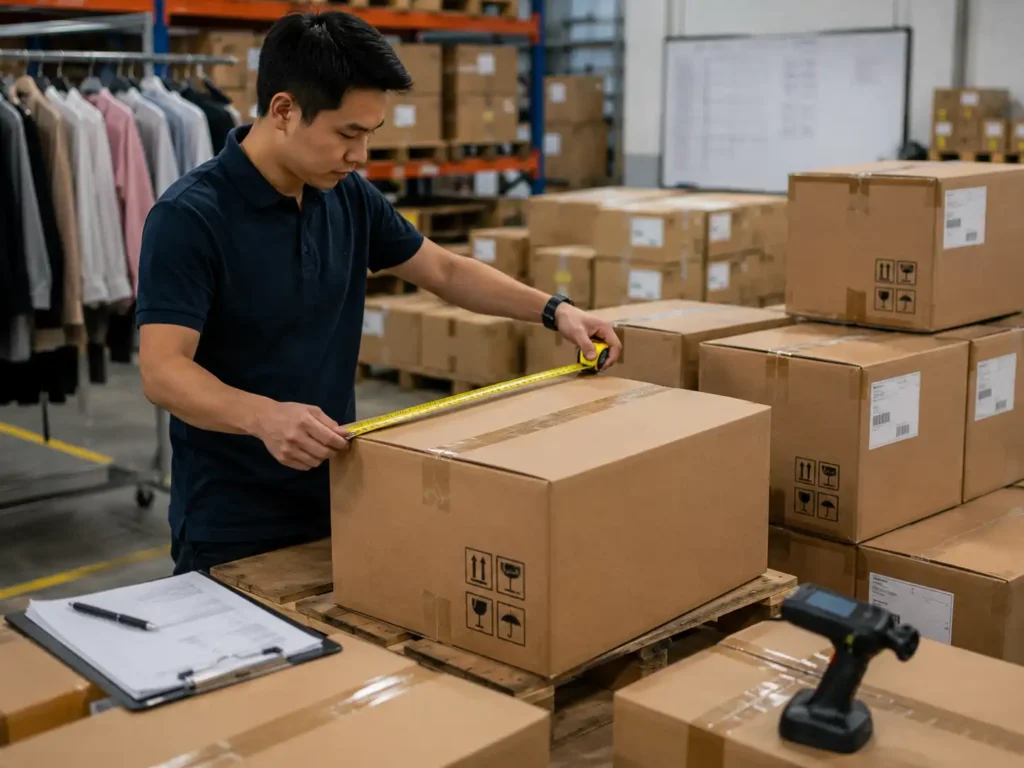
...

Dress Manufacturer for Marketplace Operations Teams

Custom dress development built around assortment accuracy, bulk consistency, branded packing, warehouse handoff and repeat-order continuity.

  • 6 owned factories + 10+ long-term production partners: capacity can be allocated by dress category, fabric type, construction complexity and launch window.
  • 100,000+ pieces monthly capacity: supports multi-style seasonal programs, planned replenishment and multi-batch delivery when product specifications are approved.
  • 2 sample rooms, 7+ senior pattern makers and 20+ sample machinists: fit, fabric behavior and construction risks are reviewed before bulk production.
  • 15+ QC inspectors and 30+ finishing and packing workers: measurement, appearance, labeling, SKU, barcode, polybag and carton checks continue through final shipment.

Jinfeng Apparel supports established fashion brands and large apparel programs from tech pack, original sample or line sheet through fabric sourcing, pattern development, sampling, PP approval, bulk production, quality control, private-label packing and export coordination. Marketplace teams gain one manufacturing partner for dresses that must look correct online, arrive under the right SKU, match the approved size data and remain repeatable across later production batches.

Production Facts Marketplace Teams Can Evaluate

Manufacturing scale matters only when the resources match the product program. The figures below show how Jinfeng Apparel supports development, production control, packing accuracy and repeat orders without relying on vague capacity claims.

6 Owned Factories

Owned women’s fashion factories support woven and knit dresses, skirts, jumpsuits, matching sets and private-label production. Factory allocation follows fabric type, construction difficulty, order quantity, quality requirements and delivery schedule instead of sending every style to one general line.

10+ Production Partners

Long-term satellite production partners provide additional capacity for approved product groups and peak-season schedules. Jinfeng keeps project specifications, PP standards, QC points and packing instructions under the same merchandising control before production is allocated.

100,000+ Monthly Capacity

Combined monthly capacity supports large seasonal programs and replenishment planning. Actual capacity for a program is reviewed by style count, fabric availability, sewing complexity, color split, size range, packing work and the time reserved for final inspection.

18+ Sewing Lines

More than 18 sewing lines allow styles to be grouped by construction rather than mixed without control. Clean woven dresses, stretch bodycon styles, lined occasion dresses and detailed mesh or lace pieces require different operators, workflow and quality checkpoints.

6+ Flexible Lines

Flexible lines help manage smaller production waves inside a larger approved program, priority colors, launch quantities and repeat-order batches. Line availability still depends on material readiness, PP approval, complexity and the agreed shipment plan.

Complete Project Team

Two sample rooms, 7+ senior pattern makers, 20+ sample machinists, 12+ merchandisers, 15+ QC inspectors and 30+ finishing and packing workers connect development decisions with bulk execution and warehouse-ready delivery.

Built for Teams Managing Marketplace Dress Programs

A marketplace dress program passes through several internal functions before stock becomes available for sale. Jinfeng structures production records and approvals so each team receives clearer information instead of solving manufacturing errors after goods reach the warehouse.

Marketplace Operations

Coordinates launch dates, platform availability, fulfillment risks and internal issue resolution. Manufacturing support focuses on approved specifications, production milestones, packing accuracy, shipment documents and clear escalation when fabric, timing or quality conditions change.

Ecommerce Operations

Connects product content, inventory, warehouse flow and post-order experience. Consistent garment measurements, correct care information, reliable color execution and clean individual packing help the physical product stay aligned with the online offer.

Catalog and SKU Teams

Manage style numbers, color names, size options, SKU mappings and barcodes. Jinfeng reviews client-provided mapping files against garment labels, unit packs, carton contents and packing lists before shipment.

Inventory Planning

Balances first-order depth, size ratios, color demand and replenishment timing. Production planning can separate priority styles, core colors, high-demand sizes and later shipment waves when specifications and material supply support the plan.

Fulfillment and Warehouse

Requires identifiable units, scannable barcodes, correct carton marks, accurate pack ratios and consistent shipping documents. Jinfeng follows approved warehouse and packing guides rather than applying one generic packing method to every order.

Sourcing and Merchandising

Owns supplier communication, costing, sample approval, bulk tracking and corrective actions. A 12+ person merchandising team records material, sample, production, QC, packing and shipment status across the program. Discuss Team Requirements

Where Dress Production Creates Marketplace Problems

Operational failures often begin before stock reaches a fulfillment center. Fit drift, wrong variant data, inconsistent materials or weak packing controls can turn a promising dress into returns, negative reviews, unavailable inventory and expensive warehouse correction.

Listing and Bulk Mismatch

A photo-ready sample may use one fabric lot, shine direction, skirt volume or trim while bulk production quietly changes. Online imagery then presents a product different from delivered stock. Jinfeng separates photo samples from PP samples, confirms final materials and construction before bulk, and keeps the approved Golden Sample as a production and inspection reference.

Unstable Dress Sizing

Measurement drift across colors, sewing lines or production batches can increase fit complaints and distort size-level inventory.
Pattern version control, grade-rule review, fabric relaxing, cut-panel checks, in-line measurement and final tolerance review are used to keep the approved size structure through production.

Wrong SKU or Barcode

A correct garment placed in the wrong polybag is still an operational error. Style number, color, size, SKU and barcode must match at unit level and carton level.

Jinfeng checks client mapping files, label content, barcode readability, pack ratios and carton records before sealing.

Packing Instruction Errors

Incorrect folding, missing warning text, wrong size stickers or mixed cartons may create receiving delays and repacking costs. Approved packing instructions are reviewed before production completion, then checked during finishing, individual packing and carton verification.

Missed Launch Windows

Late material approval, unresolved fit comments, incomplete label files or last-minute warehouse instructions can push a program beyond the launch calendar. Jinfeng uses milestone tracking for fabric, sample, PP, bulk, QC, packing and shipment so delays are visible before the final week.

Unstable Repeat Orders

A successful style can lose continuity when the next batch uses a different pattern version, fabric lot, trim, label or packing method. Jinfeng retains approved pattern, measurement, fabric, trim, sewing, packing and QC records, while still rechecking changes before a repeat order begins.

Is Jinfeng the Right Manufacturing Fit?

Clear program fit protects development time on both sides. Jinfeng Apparel is structured for established fashion businesses with defined products, professional sampling requirements and real bulk-production plans.

Strong Program Fit

Jinfeng is well suited to branded dress programs with line sheets, tech packs, reference samples or developed visual direction; multiple styles, colors and sizes; private-label requirements; warehouse or forwarding instructions; planned launches; and repeat-order potential. The standard production MOQ starts from 200 pieces per style and color, subject to fabric, trim, print, dyeing, packaging and scheduling conditions. Larger multi-style programs can be planned by factory allocation, sample priority and shipment wave.

Outside Our Production Model

The manufacturing model is not designed for one-piece fulfillment, ready-stock purchasing, personal custom dresses or 1-50 piece trial runs.

Multiple styles totaling 200 pieces do not meet the standard per-style and per-color structure. Programs driven only by the lowest unit price, without allowance for fabric quality, fit validation, PP approval, QC and branded packing, are also unlikely to match the required process.

Dress Categories for Marketplace Assortments

Marketplace assortments need more than visual variety. Every category carries different fit, fabric, packing and repeat-order risks. Jinfeng develops dress groups around the intended sales occasion, construction and operating requirements.

Mini Dresses

Mini dresses support party, club, date-night and trend-led collections, but short lengths leave little tolerance for waist placement, hem balance and ride-up. Development focuses on body proportion, lining coverage, slit safety, zipper flatness and consistent finished length across the size range. Stretch mini styles also require recovery checks so later production does not become looser or shorter in wear.

Midi Dresses

Midi dresses work across occasion, office-to-evening, brunch and premium everyday programs. Key controls include waist position, skirt sweep, vent or slit height, lining length and hem balance. Crepe, satin, jersey, mesh overlays and structured wovens create different pressing and drape requirements, so fabric approval must happen before the final pattern is locked.

Maxi Dresses

Maxi dresses create strong visual value for resort, wedding-guest, event and seasonal collections. Long panels magnify grain-line mistakes, uneven hems, print-direction errors and fabric stretch. Jinfeng reviews front and back length, waist level, strap length, slit placement, skirt volume, lining coverage and hanging behavior before bulk cutting.

Bodycon Dresses

Bodycon products rely on controlled stretch, recovery and bust-waist-hip proportion. Jersey, rib knit, ponte and power mesh behave differently under tension. Pattern ease, side-seam balance, neckline stability, zipper behavior, lining or support layers and finished garment measurements are checked to reduce twisting, looseness, over-tightness and ride-up.

Corset Dresses

Corset and structured dresses may include cups, boning, underwire, anti-slip tape, mesh panels, internal seams and shaped waist construction. Development verifies support, comfort, cup position, neckline security, waist pressure, closure strength and whether the approved structure can be repeated efficiently across sizes and sewing lines.

Party and Occasion

Party and occasion styles combine visual impact with higher production risk. Satin, sequins, lace, mesh, rhinestones, ruching, asymmetric details and cut-outs affect labor, material loss and inspection. Jinfeng separates appearance-critical points from areas where construction can be simplified, helping brands control cost without weakening brand-level appearance.

Satin and Slip

Satin and slip dresses depend on shine direction, clean seam handling, bias behavior, neckline shape, strap balance and pressing. Fabric lots can appear different under studio lighting, while snagging and hard folds can damage presentation. Bulk fabric direction, color approval, needle handling, seam smoothness and individual packing are managed as connected controls.

Mesh and Lace

Mesh and lace dresses require transparency planning, lining coverage, placement accuracy and protected seam construction. Power mesh may support bodycon shaping, while soft mesh needs gentle handling and stable edges. Lace motifs, scallops and joins must remain balanced across sizes. Packing also protects delicate surfaces from snagging during transport.

Structuring Multi-Style Marketplace Dress Collections

A 10-30 style order becomes manageable when product, material and launch logic are organized before sampling. Jinfeng groups the work so approvals, factory allocation and packing data remain connected across the full collection.

Assortment Architecture Before Sampling

The first review separates hero styles, core commercial dresses, supporting silhouettes and possible repeat-order products. Length, occasion, fabric, construction and target price are compared across the line sheet. A collection containing satin minis, mesh bodycon dresses, lined maxis and knit midis should not follow one identical sample or production route. Style grouping helps the team identify which garments need early fit validation, which need fabric testing, which require special trims and which can move through a more direct development path.

· Hero styles: prioritized for visual impact, photo samples and launch content.

· Core volume styles: reviewed for stable materials, size consistency and repeatability.

· Complex styles: scheduled with additional pattern, trim and sewing validation.

· Replenishment candidates: built around records and material directions that can be sourced again.

Fabric and Construction Grouping

Grouping styles by fabric family reduces uncontrolled variation and improves material planning. Satin styles can share color and shine-direction controls; mesh styles can share transparency and lining decisions; stretch styles can share recovery and measurement methods. Construction grouping also guides factory allocation. Corset structures, hand-applied details and lined evening dresses need different operators from clean jersey or simple woven dresses. Each group receives its own PP reference, critical QC points and packing precautions rather than a generic factory note.

  • Material grouping: composition, weight, color lot, stretch, drape and transparency.
  • Construction grouping: lining, boning, ruching, zipper, lace placement and decoration.
  • QC grouping: measurement points, surface defects, symmetry, seam handling and packing protection.

Launch Priority and Production Waves

Marketplace launches often benefit from a controlled sequence instead of waiting for every style to finish together. Priority styles, campaign colors or core size ranges can be prepared first when the order plan, materials and inspection method support split delivery.

Remaining styles can follow in a planned wave. SKU and carton separation must stay exact, and every shipment needs a matching packing list. A split plan is confirmed before production so rushing one group does not weaken inspection on another.
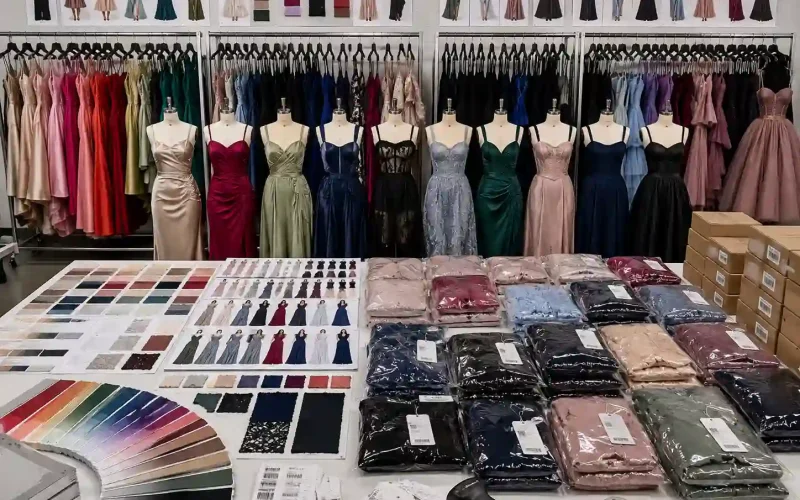
4..

From Dress Brief to Marketplace-Ready Delivery

Every stage has an input, an approval and a manufacturing consequence. Clear gates prevent incomplete specifications from entering production and reduce expensive corrections after garments are packed.

Project Review

Jinfeng reviews references, tech packs, style count, target quantities, size range, fabric direction, private-label requirements, launch window and destination. Missing details are listed before quotation or sampling moves forward.

Assortment Plan

Styles are grouped by product type, complexity, material family and priority. The team identifies photo styles, fit-critical products, volume candidates and designs needing special trims or more development time.

Fabric and Cost

Fabric composition, weight, drape, stretch, transparency, shine, lining, supplier MOQ and lead-time impact are compared. Costing also reflects trims, pattern work, sewing time, finishing, QC, packing and loss allowance.

Pattern Development

Senior pattern makers translate approved information into production-ready patterns. Bust, waist, hip, length, neckline, straps, armholes, slits, lining and support structures are reviewed according to the design.

Sample and Fit

First, fit and revised samples validate structure, appearance and measurement. Comments are recorded in pattern, size, material, sewing and revision files before a PP sample is prepared.

PP and Bulk Plan

Final fabric, trims, measurements, construction, labels, packing and quality standards are confirmed through PP approval. Production orders, BOMs, sewing instructions and critical checkpoints are then released.

QC and Packing

Fabric, cutting, sewing, measurement, appearance, label, barcode, SKU, unit pack and carton checks are completed through the production flow. Problems are corrected and rechecked before shipment release.

Shipment and Records

Commercial invoice, packing list, carton details, marks, warehouse labels and freight instructions are coordinated with the nominated or approved forwarder. Final records support future replenishment and issue review.

Samples That Support Product Launch Decisions

One sample cannot serve every decision. Jinfeng uses defined sample types so fit approval, campaign preparation, sales presentation and bulk authorization do not become mixed or assumed.

First Sample

Tests the initial structure, fabric direction, basic fit and sewing feasibility.

A first sample identifies development issues; it is not automatically the bulk standard and may use provisional material when final fabric is unavailable.

Fit Sample

Focuses on bust, waist, hip, length, straps, armholes, neckline, back coverage, slit height and jumpsuit rise when relevant.
Fit comments and measurements are translated into pattern and size-chart revisions.

Revised Sample

Confirms agreed corrections to pattern, measurements, fabric, trims or construction.

Revision records identify what changed, who approved it and whether another review is needed before PP preparation.

Photo-Ready Sample

Supports campaign photography, ecommerce images, lookbooks and launch preparation. Visual appearance receives priority, but the sample is still distinguished from the final PP standard when materials, internal construction or packing are not fully locked.

Salesman Sample

Used for internal sales meetings, showroom review, wholesale presentation or range decisions.

Quantities and timing are planned separately from bulk so sales samples do not disrupt PP and production-critical work.

PP Sample

Confirms final fabric, trims, pattern, size, construction, label placement, packing direction and approved workmanship before bulk production.

Unresolved changes after PP approval require written review because they can affect price and schedule.

Golden Sample

Acts as the highest-priority physical reference for sewing, final inspection, repeat orders and dispute review.


The approved version is linked to pattern, measurement, material, sewing and packing files.

Timing and Priority

Sample timing is confirmed after style complexity, material availability, trim development, color approval and revision scope are reviewed. Complex corset, lace, sequin, custom-color and custom-trim styles need more development than clean jersey or woven styles. Multi-style programs use priority tiers so campaign and fit-critical samples move first.

Size Control for Lower Marketplace Fit Risk

Size accuracy is built through linked records rather than a final inspection alone. Pattern, fabric behavior, cutting, sewing and measurement checks must all follow the approved size system.

Control Point

What Jinfeng Reviews

Marketplace Operations Value

Base Size

Approved body and garment measurements, intended fit and reference sample.

Establishes one defined fit target before grading.

Grade Rules

Size-to-size progression for bust, waist, hip, length and style-specific points.

Keeps the size range proportionate rather than simply enlarging every area.

Pattern Version

Final pattern identification and revision status before cutting.

Prevents old or unapproved patterns entering a later batch.

Fabric Behavior

Stretch, recovery, shrinkage, drape, weight and relaxing requirement.

Reduces measurement drift caused by material behavior.

Critical Points

Bust, upper bust, under bust, waist, hip, front/back length, strap, armhole, neckline and slit.

Links size data to the areas most likely to affect fit reviews.

Cut-Panel Check

Panel dimensions, grain direction, symmetry and bundle identification.

Finds size and cutting errors before sewing adds value.

In-Line Measurement

Selected key points during sewing and first output from the line.

Allows correction before a complete batch is finished.

Final Tolerance

Finished measurements against the approved, style-specific tolerance.

Creates a clear pass, repair or rejection decision.

Golden Sample

Appearance, proportion, construction and measurement comparison.

Supports consistent QC and future replenishment.

Repeat-Order Review

Pattern, fabric, color, size range and prior QC notes before restart.

Protects continuity while recognizing changes between batches.

Tolerance is confirmed by style, fabric and construction. Stretch bodycon dresses, structured corset styles and bias-cut satin dresses cannot share one generic measurement rule. Jinfeng records the approved method before bulk release and rechecks any fabric or size-range change that can alter fit.

Fabric Risks That Affect Online Dress Performance

Fabric choice changes fit, visual accuracy, durability, packing and repeatability. Jinfeng evaluates commercial appearance together with production behavior before a fabric becomes the bulk standard.

Satin Direction

Satin can appear lighter or darker when panels follow different shine directions. Bulk controls include face-side marking, grain and direction planning, color-lot approval, protected handling and controlled pressing. Clean individual packing reduces hard folds and snagging before photography, warehouse receiving and final sale.

Mesh Transparency

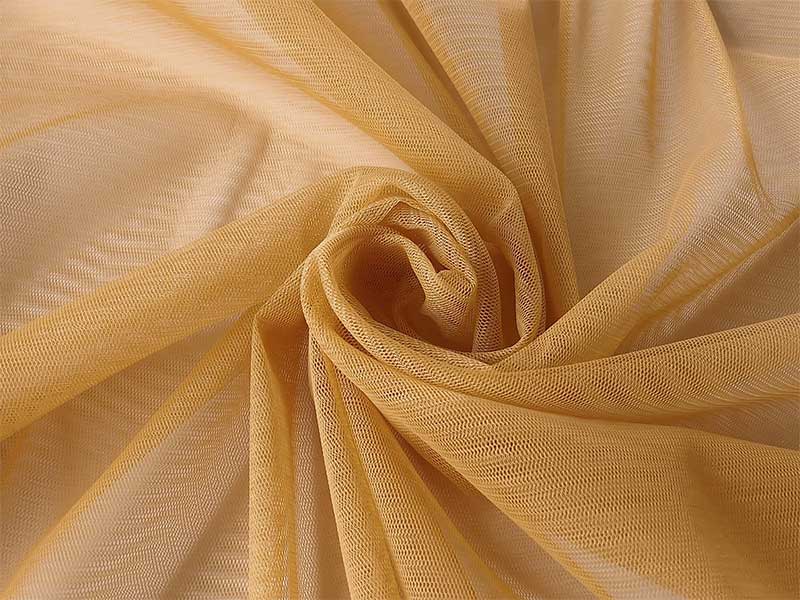
Mesh varies in transparency, stretch, recovery and edge stability. A fabric that looks balanced on a sample can become too sheer under strong lighting or too loose after sewing. Lining coverage, layer count, seam method, power-mesh support and color matching are confirmed through sample review.

Lace Placement

Lace motifs, scalloped edges and visible joins affect garment balance. Pattern placement and cutting loss must be planned before costing and bulk cutting. Symmetry, seam matching, motif continuity, edge finish and lining color are inspected because small placement differences remain visible in product images.

Jersey Recovery

Jersey and rib knits can twist, grow, shrink or lose recovery. Fabric relaxing, stretch-direction control, side-seam balance, neckline stabilization and wash-related measurement review are important for bodycon and fitted dresses. A replacement fabric may require a new pattern or revised sample even when the color appears identical.

Sequin Protection

Sequin fabric adds weight, surface abrasion, needle risk and packing damage. Construction planning considers sequin removal at seam allowances, lining protection, edge comfort, attachment security and transport. Finished garments are checked for loose decoration, sharp areas, missing sections and surface crushing.

Velvet and Pile

Velvet and pile fabrics change appearance with direction and pressure. Cutting must keep pile direction consistent, while pressing and packing avoid flat or shiny marks. Dye-lot variation, seam bulk and zipper handling are reviewed before the material is approved for a repeatable marketplace style.

Construction and Workmanship Built for Repeatability
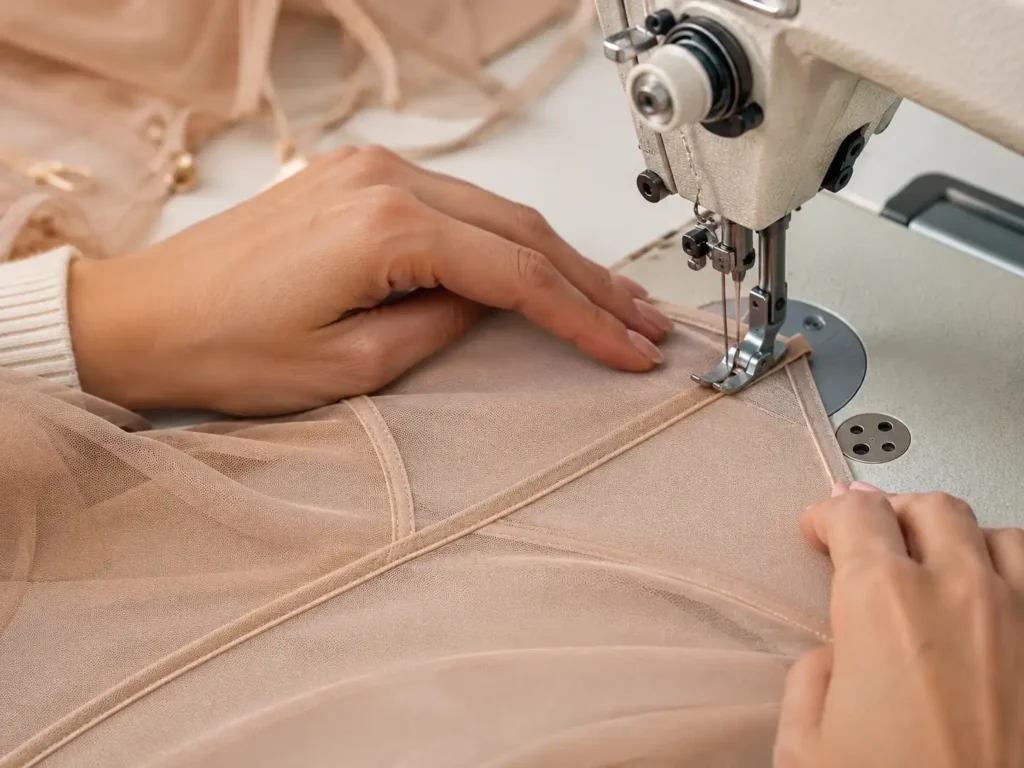
Strong dress workmanship is not defined by decorative language. Seam choice, internal support, finishing method and inspection points must suit the fabric, silhouette and production volume.

Seams and Closures

Seam type is selected according to fabric stretch, transparency, fraying and stress. Invisible zippers require flat insertion and matching tape color; stretch seams require controlled tension; delicate satin needs smooth feeding and needle handling. Closures are checked for function, alignment, puckering, security and comfort before final pressing.

Lining and Support

Lining controls opacity, comfort, shape and garment recovery. Structured dresses may use cups, boning, underwire, elastic, anti-slip tape or internal stabilization. Jinfeng verifies coverage, support position, attachment strength and whether internal components remain comfortable across the approved size range.

Ruching and Draping

Ruching, gathers and draped panels must follow defined placement and distribution. Uneven tension changes waist shape, skirt length and visual balance. Sample approval establishes fold direction, gathering ratio, anchor points and finishing. Bulk checks compare symmetry, fullness and panel position with the approved sample.

Pressing and Finishing

Pressing can improve a dress or permanently damage satin, velvet, mesh and decoration. Temperature, pressure and handling are adapted to the material. Finishing teams remove threads, verify stains and marks, confirm hanger or folded presentation, and protect surfaces before individual packing.

SKU and Variant Accuracy Before Shipment

Marketplace operations depend on a clean match between garment, label, barcode, unit pack, carton and packing list. Jinfeng follows client-provided mapping files and verifies the physical execution before shipment release.

Data Field

Required Input

Factory Verification

Style Number

Approved style code and PO reference.

Matched with garment, label, packing instruction and carton record.

Color

Color name, code and approved swatch or standard.

Checked against garment, size/color sticker and packing list.

Size

Approved size range and size-label artwork.

Verified on garment, unit pack and carton breakdown.

SKU

SKU mapping by style, color and size.

Cross-checked before label application and during carton packing.

Barcode

Approved barcode file and symbology requirement.

Print clarity, content and scan readability checked before use.

Hangtag

Artwork, attachment method and placement.

Content, placement and connection to the correct variant verified.

Polybag

Bag size, warning text, sticker and folding guide.

Garment fit, label visibility and pack cleanliness reviewed.

Pack Ratio

Quantity by color, size and carton.

Physical counts compared with carton breakdown and packing list.

Carton Mark

PO, style, color, size, quantity, destination and mark layout.

Mark content checked before sealing and shipment photos.

Warehouse Label

Client warehouse guide and approved label file.

Placement, legibility and carton association checked by project.

Platform-specific EDI, ASN, SSCC, routing portal or warehouse rules are reviewed by project. Jinfeng does not assume one format fits every channel. The brand provides the current guide, and the team confirms what can be executed before labels or cartons are produced.

Ecommerce-Ready Packing for Branded Dresses
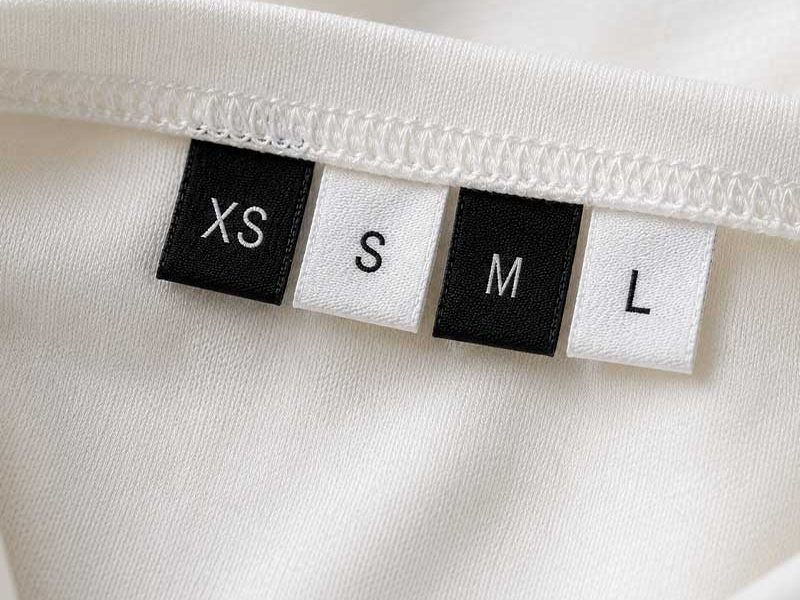
Packing is part of product execution, not a final afterthought. Correct unit identification, clean presentation and carton-level accuracy protect the garment and reduce warehouse correction work.
4.-Size-Labels

Brand and Size Labels

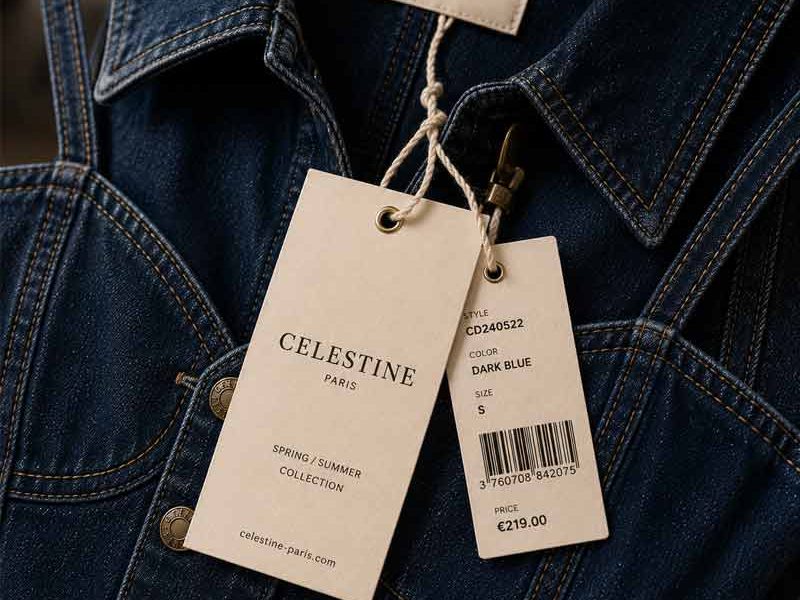
Woven, satin, printed or heat-transfer brand labels can be developed according to approved artwork and placement. Size labels must match the garment and unit pack. Material, edge comfort, color, attachment and supplier MOQ are confirmed before bulk label production.

Care Labels

Care-label content follows client-approved fiber, origin, care and market instructions. Jinfeng checks artwork version, language, print clarity, placement and association with the correct product. Legal content remains the brand’s approved specification and may require market-specific review.
4.-Hangtag

Hangtags

Hangtags, hang strings, stickers and supporting inserts are checked for artwork, paper or material direction, attachment point and variant accuracy. Unreleased brand information and barcode data are protected under project access and NDA-based cooperation.

Barcode and SKU

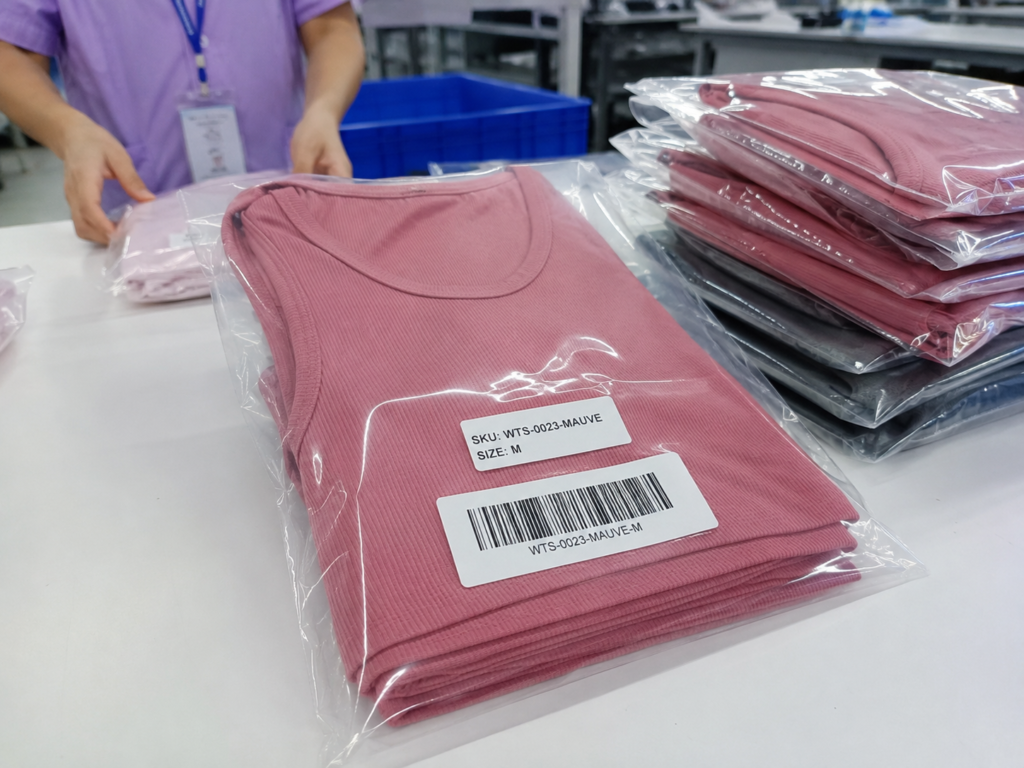
Barcode stickers, SKU labels, size stickers and color stickers are applied according to the approved mapping file. Scan checks and visual checks are completed before cartons are sealed. Labels are not recreated from assumptions when the source file is unclear.

Individual Polybags

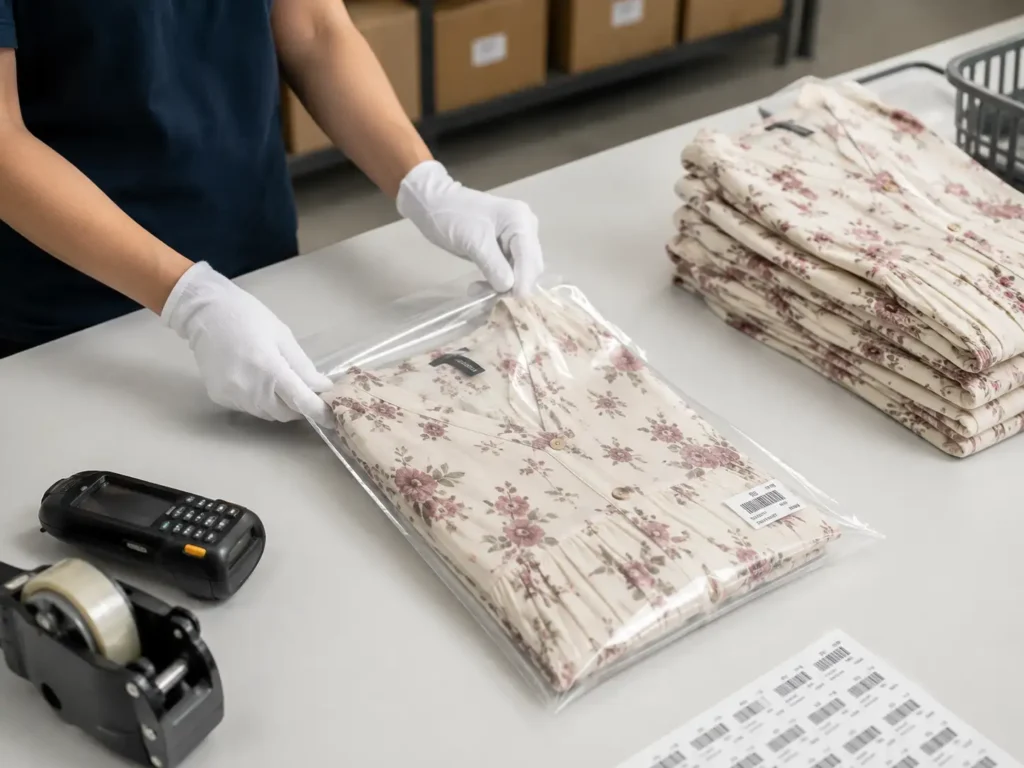
Each garment can be folded, labeled and placed in an individual polybag with approved warning text, sticker position and folding method. Packing checks cover garment cleanliness, correct size and color, readable labels, suitable bag dimensions and protection for delicate surfaces.

Cartons and Warehouse

Carton quantity, SKU, color, size, barcode and carton-mark consistency are verified against the packing plan. Warehouse labels, carton measurements, gross and net weight and shipment documents are coordinated with the brand or nominated forwarder before pickup.

Quality Checks Before Dresses Reach Your Warehouse

Quality control begins before cutting and continues through packing. Jinfeng links material, construction, measurement and variant checks so defects are found at the stage where correction remains possible.

Material and Pre-Production Approval

Bulk production does not begin until the required PP standard, fabric, trims, color, size chart, labels, packing, BOM, production order, sewing instruction and quality points are approved. Fabric inspection reviews visible defects, color lot, width, hand feel and relevant stretch or shrinkage concerns. Trims are checked for type, color, size, function, comfort and bulk availability. Any late change is assessed for cost, schedule, pattern and sample impact before release.

Cutting and Sewing Control

Fabric is relaxed when required, then cutting follows the approved pattern version, grain or shine direction and size marker. Cut panels are checked for identification, symmetry, placement and visible defects. Sewing control begins with first output and in-line review. Critical points include seam method, zipper, lining, support construction, ruching, lace or mesh placement, decoration security, measurement and garment balance. Problems are corrected before the full quantity moves forward.

Final Garment Inspection

Finished garments are reviewed for measurement, workmanship, appearance, pressing, stains, thread ends, closures, lining, decoration, symmetry and comparison with the PP or Golden Sample. AQL inspection can be coordinated according to the agreed project requirement, and brands may arrange their own inspection. Products requiring repair are separated, corrected and rechecked; unresolved issues are not hidden inside packed cartons.

Packing and Shipment Release

Packing QC checks brand label, size label, care label, hangtag, SKU, barcode, sticker, folding, polybag, carton quantity, carton mark and packing-list consistency. Shipment release also requires aligned commercial documents and freight instructions. Testing, compliance documents and special market requirements are reviewed by product, material, destination and the actual factory handling the order; unverified certificates are never treated as automatic coverage.

Managing Multi-Style Dress Production at Scale

Large programs need allocation and control, not a single capacity claim. Jinfeng plans production around product category, material, complexity, quantity, approval status, packing work and required shipment sequence.

Factory Allocation by Product

Six owned women’s fashion factories and more than 10 long-term production partners provide a wider production base, but allocation remains selective. Woven dresses, stretch knit dresses, structured corset styles, lined occasionwear and embellished products require different line experience. Jinfeng reviews the style package and assigns approved groups according to capability, capacity and quality requirements. Satellite partners are not presented as owned factories, and project control remains connected through merchandising, PP standards and QC instructions.

Line Planning and Capacity

lines and 6+ flexible lines support multi-style programs, production waves and repeat-order batches. The combined monthly capacity exceeds 100,000 pieces, while actual program capacity depends on complexity, material supply, color and size splits, line changeover, inspection and packing.

Complex dresses are not calculated at the same output as clean basic styles. Capacity is reserved after the key specifications and launch plan are clear.

Project Tracking and Escalation

A 12+ person merchandising team tracks material, sample, revision, PP, production, QC, packing and shipment milestones. Progress updates are linked to action: late fabric, failed color approval, unresolved fit comments or incomplete barcode files are reported with the effect on the next milestone. Mature programs need transparent constraints more than optimistic promises. Kelly coordinates the initial brief and routes the project to the relevant development, production and logistics functions.

Finishing and Packing Resources

Thirty-plus finishing and packing workers support thread trimming, pressing, appearance review, folding, hangtags, stickers, individual polybags, carton packing and shipment preparation. Packing workload is planned with the order, especially when the program contains many SKUs, multiple warehouse destinations or detailed labels. Final capacity therefore includes the time needed to identify and pack units correctly, not only sewing output.

Repeat Orders Without Rebuilding Every Detail

Replenishment works faster when approved product knowledge remains accessible. Jinfeng retains development and production references while rechecking variables that may change between batches.

Records Retained for Reorders

Pattern files, size charts, grade rules, BOMs, fabric references, color records, trim specifications, sewing instructions, label files, packing requirements, QC notes and Golden Sample references can be retained for approved programs. The records reduce repeated explanation and help new production teams understand the original standard. NDA-based handling protects unreleased designs, quantities, pricing, packaging files and supply-chain information.

Changes That Need Reapproval

A repeat order is not treated as a blind copy when conditions change. A new color, replacement fabric, extended size range, different trim, revised care label, new warehouse guide, changed pack ratio or long gap between orders can affect fit, cost, MOQ and schedule.
Jinfeng identifies the changed variables and confirms whether a fabric swatch, lab dip, revised sample, PP sample or packing sample is required.

Replenishment Priorities

Core colors, priority sizes and high-performing styles can be planned as a distinct production wave when material supply, line availability and inspection capacity support the request. Split shipment may release urgent units by air while the balance moves by sea. SKU and carton separation are planned before packing, and every shipment keeps a matching packing list and destination instruction.

Seasonal Extension

A successful pattern may be extended into a new color, length, fabric or related silhouette, but each extension is reviewed as a product decision rather than a casual copy. Changes in stretch, weight, transparency, shine or lining can alter the pattern and measurement standard. Long-term cooperation therefore combines retained records with disciplined reapproval.

Shipping and Warehouse Handoff Support

Freight decisions affect launch speed, landed cost and inventory availability. Jinfeng supports client-nominated or factory-recommended forwarders and prepares the garment and shipment information required for an organized handoff.
Urgent Air Freight​

Urgent Air Freight

Air freight can support launch quantities, campaign-related stock, priority colors, core sizes or urgent replenishment. The shipment plan confirms which SKUs move first, how cartons are separated and whether the packing list matches the partial quantity. Cost and feasibility depend on destination, volume, chargeable weight, season and flight availability.

Planned Sea Freight

Sea freight suits regular bulk orders and planned replenishment where cost control matters more than immediate arrival. Production, QC and packing dates should be scheduled backward from the required warehouse window. Commercial invoice, packing list, carton measurements, gross and net weight, carton marks and booking instructions are prepared for coordination.

Air and Sea Split

A split plan can move a controlled first wave by air and the main quantity by sea. Hero styles, best-selling colors or priority sizes may be selected, while the remaining assortment follows later.
SKU, carton, document and destination separation must be confirmed before packing so one shipment does not create errors in another.

Forwarder and Documents

Jinfeng can work with a brand-appointed forwarder or provide logistics options for review. Supported documents and information include commercial invoice, packing list, carton details, marks, bill of lading or air waybill coordination, certificate of origin by request, HS-code support, warehouse labels, pickup coordination and shipment tracking. DDP is evaluated by project, destination and cargo conditions.

Dress Programs Managed from Sample to Reorder

The following anonymized programs reflect the 10-30 style and 20,000-80,000 piece order structures commonly handled by established fashion brands. Brand names, original designs, pricing, barcodes and warehouse data remain protected.

18-Style Launch Program

A United States marketplace fashion brand developed 18 dress styles across satin, stretch jersey and mesh categories, totaling 42,600 pieces. The main challenge was connecting photo-sample priorities with bulk readiness while maintaining 126 style-color-size SKU combinations. Jinfeng grouped sampling by fabric and complexity, prioritized six campaign styles, locked separate PP standards, and checked label, barcode and carton data against the approved mapping file. Two production waves supported the launch plan without mixing SKU records.

12-Style Fit Recovery

A mature online womenswear label moved a 12-style, 25,200-piece program after repeated fit variation from a previous source. The range included bodycon minis, corset midis and lined maxis. Jinfeng reviewed base-size measurements, grade rules, pattern versions and stretch behavior, then rebuilt fit and PP references for the most sensitive styles. In-line measurement focused on bust, waist, hip, length, straps and slit height. Final packing used separate color-size ratios and retained measurement and Golden Sample records for replenishment.

27-Style Seasonal Reorder

A multi-channel fashion program placed 27 styles totaling 76,800 pieces across party, occasion and resort categories. Private-label requirements included brand labels, care labels, hangtags, SKU stickers, barcodes, individual polybags, carton marks and two destination instructions. Jinfeng allocated styles by fabric and construction, reserved finishing capacity for the high-SKU packing workload, and separated an air priority wave from the sea-freight balance. Pattern, fabric, trim, packing and QC records were retained for the next seasonal extension.

Frequently Asked Questions for Marketplace Dress Programs

The standard MOQ starts from 200 pieces per style and color. Special fabrics, custom dyeing, printing, trims, certified materials and private-label packaging may have separate supplier MOQs. Multiple styles totaling 200 pieces do not equal the standard production structure.
Yes. Development can begin from tech packs, original samples, line sheets, sketches or reference images. More complete information produces a more accurate structure review, quotation and sample plan. The team still confirms fabric direction, size range, target quantity, label requirements and intended market.
Yes, subject to product mix, material readiness, sample priority, capacity and delivery plan. Styles are grouped by fabric, construction, complexity and launch priority. Each group receives its own approval and production controls instead of being handled as one undifferentiated order.
Timing is quoted after reviewing style complexity, fabric and trim availability, color development, sample type and revision scope. Clean woven or jersey products usually require less development than corset, lace, sequin, custom-color or custom-trim styles. Multi-style projects use agreed sample priorities.
Jinfeng links base-size approval, grade rules, final pattern versions, fabric behavior, cutting checks, in-line measurement, final tolerance and Golden Sample review. Measurement points and tolerances are confirmed by style because stretch, structure and bias-cut fabrics behave differently.
Yes. Jinfeng supports SKU labels, barcode stickers, size and color stickers, hangtags and individual polybags according to approved client files. Barcode readability, label content, variant match and carton breakdown are checked before shipment.
Jinfeng reviews client-provided packing and warehouse instructions before confirming execution. Polybag details, warning text, folding, labels, pack ratios, carton marks and warehouse labels must be supplied in the current approved format. Platform-specific EDI or portal requirements are confirmed separately by project.
Approved pattern, measurement, fabric, color, trim, sewing, packing and QC references can be retained. New colors, fabrics, size ranges, labels, warehouses or long production gaps are rechecked because they may require new approval or sampling.
Yes. Jinfeng can coordinate booking details, cargo information, commercial invoice, packing list, carton marks, carton dimensions, gross and net weight, pickup and shipment photos with a nominated forwarder. Factory-recommended options are also available for review.
Yes. NDA-based cooperation can protect tech packs, original samples, patterns, line sheets, unreleased designs, labels, packaging files, barcode data, pricing, quantities and launch plans. Cases are presented anonymously unless written authorization is provided.

Review Your Marketplace Dress Program

Send Jinfeng Apparel the working files behind your dress program for a structured feasibility review. A clear brief allows the team to assess fabric direction, pattern and sample work, production allocation, MOQ, private-label packing, warehouse requirements and delivery planning before a formal development or quotation route is confirmed.

  • Tech pack, line sheet, original sample or reference images
  • Style count and quantity per style and color
  • Color plan, size range and preferred size ratios
  • Fabric, lining, trim and construction requirements
  • Target launch date and required warehouse window
  • SKU mapping, barcode files and platform or warehouse guide
  • Brand label, care label, hangtag and polybag artwork
  • Destination, forwarder details and expected replenishment plan
Tell Us About Your Dress Project

Share your product details, estimated quantity and development requirements. Our team will review your project and provide practical OEM/ODM production feedback.

Premium Women’s Apparel Production for Fashion Brands

From dress sample development to bulk production, JF Apparel supports fashion brands with confidential OEM/ODM manufacturing, reliable quality control and scalable production support.

START YOUR DRESS PROJECT

Ready to Develop Your Next Dress Collection?

Share your design concept, product requirements or sourcing plans with our team. We’ll review your project and provide practical feedback on development, materials, MOQ and production.

7-10 Days

Sample Development

200 PCS

Starting MOQ

Fast Response

Professional Follow-Up