 Skip to content
Dress Manufacturer for Fit Approval Teams
Pattern corrections, controlled sample revisions and measurable bulk consistency for global womenswear fit and technical design teams.
- 2 dedicated sample rooms support first samples, fit samples, revised samples, PP samples and Golden sample control.
- 7+ senior pattern makers translate fit comments into updated patterns, measurements, grading rules and production-ready records.
- 20+ sample machinists handle structured dresses, stretch styles, satin, mesh, lace, corsetry, lining and movement-sensitive construction.
- 15+ QC inspectors connect approved fit standards with cutting, in-line measurement, finished-garment review and packing release.
Jinfeng Apparel develops custom dresses for brands that require fit decisions to be documented, traceable and repeatable. Technical files are reviewed before pattern work begins, fit feedback is separated into pattern, measurement, fabric and construction actions, and approved standards are carried into PP control and bulk inspection. The objective is not merely to produce a visually similar sample.
The objective is to build a reliable garment standard that can hold across colors, sizes, production batches and repeat orders.
Fit Development Resources Behind Every Dress Sample
Two Sample Rooms
Seven Pattern Specialists
Twenty Sample Machinists
Built for Teams Responsible for Dress Fit Approval
Technical Design Teams
Fit Approval Teams
Fit teams need confidence that pin comments, photographs, marked samples and written observations will become actual pattern actions. Feedback is classified by body area and cause: balance, ease, coverage, support, movement, fabric behavior or workmanship.
Revised samples are checked against the complete comment set before dispatch, reducing the risk of correcting the waist while overlooking a related side seam, lining or hem problem.
Product Development Teams
Development teams balance design intent, material availability, construction feasibility, target cost and launch timing.
Jinfeng Apparel supports style review, fabric direction, trim coordination, sample priority and revision tracking across multi-style collections. A change in fabric weight, stretch or drape is assessed for its effect on fit and pattern, so development decisions do not create hidden size or bulk-production problems later.
Garment Technologists
Quality Assurance Teams
Sourcing and Vendor Teams
What Fit Approval Teams Need From a Manufacturer
Supplier qualification becomes clearer when each technical expectation is matched with visible evidence. The matrix below focuses on the controls that influence dress fit, sample approval and bulk replication, rather than broad factory claims that cannot be connected to a garment decision.
| Evaluation Area | What the Brand Team Should Confirm | Jinfeng Apparel Evidence |
|---|---|---|
| Technical file review | Tech pack, POM, tolerance, construction and reference materials are checked before pattern work. | Requirement review, structure analysis, size chart review and pre-sample clarification. |
| Pattern correction | Fit comments lead to controlled changes in shell, lining and related components. | 7+ senior pattern makers, revised pattern records and pattern-to-sample checks. |
| Sample iteration | First, fit, revised, PP and Golden samples have separate purposes and approval gates. | 2 sample rooms and 20+ sample machinists supporting defined sample stages. |
| Size grading | Base-size approval is followed by grade-rule review and size-set validation where required. | Nested pattern review, critical POM checks and multi-size production controls. |
| Approval lock | Approved fabric, trims, measurements, construction and packing are frozen before bulk. | PP approval record, Golden sample, BOM, sewing instructions and packing requirements. |
| Bulk replication | Production measurements and workmanship are compared with the approved standard. | 15+ QC inspectors, in-line review, garment measurement, final inspection and packing QC. |
Where Dress Fit Approval Commonly Breaks Down
Comments Without Pattern Changes
Base Size Only
Approval in one core size does not prove that the smallest and largest sizes will maintain coverage, balance and movement. Neckline depth, armhole shape, strap position, cup spacing, waist placement, skirt length and slit height do not always respond well to uniform increments.
Grade rules must be reviewed by component and garment type, followed by size-set checks when the range, stretch behavior or structure creates elevated risk.
Different Bulk Fit
An approved sample can still fail in production when fabric relaxation, cutting direction, bundle control, seam allowance, zipper handling, pressing or measurement checks are inconsistent.
Satin may twist, stretch fabric may recover differently, and lining may pull an outer layer upward. Production release therefore requires a locked PP standard, a Golden sample, clear critical dimensions and process checks placed where variation is most likely to occur.
A Controlled Path From Technical Brief to Bulk

Technical Brief Review

Pattern Development

First Fit Sample

Revised Fit Approval

PP And Golden Sample

Bulk Measurement Control
Technical Review Before the First Pattern Is Cut
A strong first sample begins with disciplined review. Pattern work should not start from a reference image alone when fit, material and construction decisions remain unresolved. Jinfeng Apparel combines the available files into one production interpretation and identifies conflicts before fabric is consumed.
Technical File Alignment
The development team reviews the tech pack, measurement chart, reference image, original sample, construction callouts and trim requirements as one set. A measurement may be mathematically possible but visually inconsistent with the reference. A low neckline may conflict with a fixed cup, or an armhole measurement may not allow the requested coverage. Questions are grouped and returned in a structured form so the brand team can make decisions without searching through separate message threads.
POM And Tolerance Logic
Points of measurement need a defined starting point, garment position and method. Dress length may be measured from HPS, center front or waist seam; strap length may be total, exposed or adjustable range; waist may be relaxed, extended or placed at a specific seam. Ambiguity creates false discrepancies even when the garment has not changed. Jinfeng Apparel aligns measurement methods before approval and identifies which tolerances are critical to fit rather than applying one tolerance to every point.
Fit Model And Base Size
A base size must connect to the brand’s block, intended fit model and selling market. When an existing approved block is supplied, pattern work can reference its shoulder, bust, waist, hip and length relationships. When only a sample or image is available,
Jinfeng Apparel records the measurement basis used for development. The size range, target body and ease expectation are discussed early, because a bodycon mini dress and a relaxed resort maxi dress require different base-size logic.
Material Behavior Review
Fabric affects the pattern before the first cut. Stretch percentage alone is not enough; recovery, weight, drape, surface friction, shrinkage and directional stability also change fit. Lining may require different ease, grain or stretch from the shell. Satin can expose seam tension, mesh can distort openings, and jersey can lengthen under garment weight. Material risks are connected to pattern allowances, internal support, seam choice and the need for pre-production testing.
Construction Feasibility
Construction is reviewed for both appearance and repeatability. A deep neckline may need stay tape, cups, mesh support or an altered closure. A corset may require boning channels that do not distort lace placement. A concealed zipper must sit flat without reducing waist ease. Ruching marks, cut-out stabilization, slit reinforcement and lining attachment are considered before sample sewing, allowing the first garment to test a coherent construction rather than a series of improvised details.
Approval Plan
The sample route is defined according to risk. A straightforward woven dress may move from first fit to revised fit and PP approval. A strapless corset dress may require cup review, internal support testing and a separate size-set check before PP.
Multi-style collections are prioritized by launch date, hero SKU, fabric readiness and pattern complexity. The plan states what must be approved at each stage, reducing pressure to treat every sample as final.
Fit Risks Change With Every Dress Structure

Bodycon Dresses

Corset Dresses

Strapless Dresses

Satin Slip Dresses

Maxi Dresses

Jumpsuits
Pattern Corrections That Follow Actual Fit Feedback
Fit comments have value only when the underlying cause is understood. Pulling at a side seam, gaping at a neckline or an uneven hem may originate in another area of the pattern. Jinfeng Apparel evaluates the garment as a connected structure before changing measurements.
Balance And Proportion
Front and back balance control whether a side seam hangs vertically, a waist seam sits level and a hem remains even. A longer front torso may be needed for bust projection, while excess back length can create pooling at the waist. Pattern makers compare shoulder angle, neckline, armhole, bust point, waist position and skirt connection rather than shortening one visible area in isolation. Corrections are checked on the body and against the measurement chart before a revised sample is approved.
Coverage And Support
Coverage depends on more than neckline depth. Cup height, cup spacing, armhole shape, strap position, side seam, lining and internal support determine how secure a dress feels.
Strapless and corset styles may need boning, anti-slip tape or a revised back closure; mesh and cut-out styles may need stabilized edges and carefully placed opaque layers. Pattern actions are recorded for every connected component so the visible design remains consistent after support is improved.
Ease And Movement
A dress can meet flat measurements and still restrict walking, sitting or reaching. Ease must be placed in the correct area and supported by suitable fabric behavior.
Jinfeng Apparel checks hip movement, thigh room, back width, arm lift, slit opening, skirt climb and jumpsuit rise. Corrections may involve pattern shape, seam placement, stretch direction or construction, not only adding circumference. Movement feedback is included before the fit is considered stable.
Length And Visual Line
Dress length influences proportion, sellable styling and size consistency. HPS-to-hem length, waist position, slit height, lining length and hem sweep need a shared measuring method. A change in bodice length can alter the apparent skirt length even when the total garment measurement stays similar. Pattern makers separate visual proportion from measurement compliance, then align both before size grading begins.
Shell And Lining Relationship
Lining can quietly change the outer fit. Insufficient lining ease pulls at the shell, a short lining lifts the hem, and a non-stretch lining can restrict a stretch dress. Jinfeng Apparel reviews shell and lining dimensions, grain, stretch, attachment points and seam allowances together. Revised samples verify whether the lining moves with the garment and remains concealed during standing, walking and sitting.
Revision Control
Every approved correction must point to a current pattern version. Jinfeng Apparel can retain first, revised, PP and bulk-production patterns, including lining, grading and placement information. Revision notes identify what changed and why. When a later order uses a new fabric, longer length or different cup, the original pattern is reviewed against the new condition instead of being reused without technical assessment.
Turning Fit Comments Into Controlled Sample Revisions
Scattered comments create repeated mistakes. Jinfeng Apparel uses a closed revision path so photographs, pinned samples, measurement updates and construction notes become one coordinated sample instruction.
Comment Intake
Fit feedback may arrive as a marked sample, annotated PDF, PLM export, spreadsheet, photographs, video or meeting notes.
Each input is linked to the style number, sample stage, size, color and current pattern version. Comments without a clear reference are clarified before modification. A single source of current instructions prevents an older email or image from being used after the brand team has issued a later decision.
Cause Classification
Comments are classified as pattern, measurement, fabric, trim, construction, workmanship or packing actions. A gaping neckline may require pattern shaping rather than a smaller finished measurement. A twisted side seam may come from cutting direction or fabric torque rather than the seam itself. Classification allows the correct team to act and prevents a sample machinist from making a temporary fix that never reaches the pattern or production file.
Document Updates
Approved actions are transferred to the relevant record: pattern, measurement chart, BOM, fabric approval, trim approval, sewing instruction, QC checklist or packing requirement. Shell and lining changes are linked. Measurement changes identify the affected POM and size. Construction changes include placement and method. Important decisions do not remain only in chat history, where they are difficult to trace during PP preparation and production.
Revised Sample Check
Before dispatch, the revised sample is measured and compared with every open comment. Photographs focus on the areas that changed, while internal review checks whether a correction created a new issue elsewhere.
A shorter strap may improve neckline height but reduce armhole comfort; a tighter waist may alter zipper flatness or skirt balance. The sample is not marked complete until connected effects have been reviewed.
Approval Status
A sample can be approved, approved with conditions or rejected for another revision. Conditional approval records the remaining action and identifies whether another physical sample is needed. Major fit or material changes continue through revised sampling. Minor production corrections may be verified during PP only when the risk is understood and accepted. Clear status prevents a development sample from being mistaken for a final production standard.
Handover To Production
After PP approval, current patterns, measurements, BOM, construction notes, approved trims, label placement and packing requirements are released as one production set. The Golden sample provides the physical reference. Production and QC teams receive the same version, while any later change is reviewed for cost, timing, material and measurement impact before implementation. Version discipline protects the approved fit from being diluted during bulk execution.
Measurement Review Before a Dress Is Approved
Critical measurements vary by silhouette. A fit team should select the dimensions that control coverage, balance, support and movement, then use a consistent measuring method throughout sampling and production. The table below highlights common dress points and the related approval questions.
| Measurement Point | Common Fit Risk | Approval Focus |
| Bust | Compression, gaping, poor cup placement or drag lines | Finished circumference, shaping, coverage and fabric recovery |
| Waist | Wrong visual position, twisting or excessive restriction | Waist seam level, ease, zipper behavior and body proportion |
| Hip | Horizontal pulling, side-seam shift or limited movement | Circumference, shape, stretch response and seated comfort |
| HPS to hem | Uneven visual length or inconsistent size progression | Defined starting point, front/back balance and footwear assumption |
| Strap length | Low neckline, exposed armhole or shoulder pressure | Fixed length or adjustment range, position and stretch |
| Armhole | Gaping, cutting into skin or insufficient coverage | Depth, curve, front/back balance and lining relation |
| Neckline depth | Exposure, collapse or conflict with cups/support | Front/back reference point, stabilization and movement |
| Slit height | Restricted stride, exposure or grading inconsistency | Opening position, reinforcement, lining and size progression |
| Lining length | Visible lining, outer layer lifting or movement restriction | Shell relation, ease, attachment and hem clearance |
| Torso/rise | Jumpsuit pulling, dropped waist or seated discomfort | Front/back torso, crotch depth, hip ease and closure access |
Better Fit Feedback When Teams Work Across Borders
Front View
Side View
Back View
Walking View
Sitting And Arm Lift
Detail Close-Ups
How Fabric Behavior Changes Dress Fit
Fit cannot be separated from material behavior. A pattern approved in one fabric may not remain correct after stretch, weight, drape, transparency, shrinkage or surface friction changes. Material approval therefore carries technical consequences beyond color and hand feel.
Stretch Percentage And Recovery
Two fabrics can share a similar stretch percentage and perform differently after wear. Recovery determines whether a bodycon dress returns to shape or grows at the waist, hip and hem. Power mesh, jersey, ponte and stretch satin also vary by direction. Jinfeng Apparel records stretch behavior, assesses negative ease and reviews whether lining, elastic or seam construction limits the shell. Pattern adjustment follows the approved bulk fabric rather than a generic fabric category.
Weight And Drape
Fabric weight changes how a dress hangs and where stress develops. A heavier skirt can pull a bodice downward, lengthen straps or change neckline position. A lighter satin may reveal seam tension and understructure, while a stiff woven can create volume that was absent in the design reference. Samples evaluate silhouette, seam line, hem movement and internal support. When a replacement fabric is proposed, drape and weight differences are reviewed before reusing the pattern.
Shrinkage And Relaxation
Rayon, viscose, jersey and other materials may change dimension after relaxation, pressing or washing. Stretch fabric can also contract after cutting or grow under hanging weight. Jinfeng Apparel considers fabric relaxation, grain direction and relevant test results before cutting rules are finalized. Pattern dimensions, finished measurements and production tolerances may need adjustment. A size chart alone cannot compensate for uncontrolled material behavior.
Transparency And Lining
Transparency affects more than modesty. Added lining changes stretch, weight, heat, friction and movement. Mesh or light chiffon may need partial coverage, double layers or strategically placed panels. Satin lining under a matte shell can slide differently from knit lining under a stretch dress. Jinfeng Apparel reviews lining composition, ease, attachment, length and color so the support layer does not distort the approved outer fit.
Surface And Seam Behavior
Satin may pucker or show needle marks; sequins may create bulk; lace placement may resist stretching; velvet nap direction can alter appearance and cutting yield. Seam type, needle, thread tension, pressing and reinforcement affect how the garment sits on the body. Sample sewing tests the approved method before production. A pattern correction should not be used to hide a seam or pressing problem that requires process control.
Fabric Change Control
A replacement fabric is compared by composition, weight, width, stretch, recovery, drape, transparency, hand feel, color, MOQ, cost and lead-time effect. The development team then decides whether the pattern, lining, construction or sample must be revised. Approval is documented with a swatch or reference. Bulk material is checked against the approved direction so a later supplier batch does not silently change the garment standard.
Size Grading Beyond the Approved Base Size
A strong base-size sample is only the beginning of a reliable size range. Grade rules must preserve proportion, coverage, support and movement rather than adding the same increment to every pattern edge.
Grade Rule Review
Bust, waist and hip increments are checked against the brand’s approved rules, but secondary points often require independent logic. Neckline depth, armhole, strap position, cup spacing, shoulder width, slit height and bodice length may need smaller or differently distributed changes. Jinfeng Apparel reviews nested patterns for smooth progression and checks whether shell, lining, facing, cups and support components remain aligned across the range.
Smallest And Largest Sizes
Extreme sizes expose grading problems earlier than middle sizes. A neckline may become too narrow in the smallest size or too deep in the largest; a cup may spread too far apart; a slit may rise excessively; a mini dress may lose proportion.
Where the range or structure creates risk, size-set samples focus on the smallest, base and largest sizes. Fit observations are converted into grade-rule or pattern corrections before bulk cutting.
Stretch Styles
Stretch garments require grade rules that consider fabric recovery and intended compression. Uniform circumference increments can create excessive tightness in larger sizes or loose fit in smaller sizes. Bodycon, ruched and mesh styles also react to vertical stretch and garment weight. Jinfeng Apparel reviews negative ease, lining restriction, elastic tension and finished-garment recovery so size progression remains wearable rather than merely numerical.
Structured Bodices
Corset and strapless styles may need separate grading for cups, boning, neckline, under-bust, side height and closure. Internal components cannot simply follow the outer shell.
Cup options, support level and coverage expectations should be confirmed by the brand team. Size-set review checks whether the structure remains secure without creating excessive pressure, and whether back closures or lace-up systems retain an appropriate adjustment range.
Length And Slit Progression
Length grading should reflect garment category and brand proportion. Mini dresses may use limited increments, while maxi styles require careful floor clearance and front-to-back balance. Slit height should be controlled from a defined reference rather than rising automatically with total length changes. Jumpsuit torso and rise need dedicated increments. Jinfeng Apparel documents the agreed method so production measurements remain consistent with the approved grading concept.
Multi-Size Production
After grading approval, size control continues through marker planning, bundle identification, sewing, measurement, size labels and packing.
Bundles are separated by size and style, while critical measurements are sampled during production. Label and barcode checks confirm that the measured garment matches its stated size. Carton breakdown and size ratios are verified before shipment, protecting both fit integrity and warehouse accuracy.
Locking the Approved Standard Before Bulk Production
PP Sample Review
Approval Record
Golden Sample Control
Replicating Approved Fit Across Bulk Production

Fabric Inspection

Fabric Relaxing

Cutting Control

In-Line Sewing Check

Garment Measurement

Final Sample Comparison
One Team Across Development Approval and Production
Project Coordination
Product Development
Pattern Team
Sample Rooms
Merchandising
Quality Control
Fit Approval Across an Eighteen Style Dress Program
An anonymous US private-label womenswear group developed an 18-style dress program with Jinfeng Apparel, totaling 46,800 pieces across satin, stretch mesh, jersey, lace and crepe. The assortment included fitted minis, corset-led party dresses, draped midis, lined mesh styles and occasion maxis. The program required a shared approval system because each material family reacted differently to fit corrections and size grading.

Program Structure
The 18 styles were separated into four technical groups: structured bodices, stretch fitted dresses, fluid woven dresses and layered mesh or lace designs. Each group received a sample route suited to its risk. Structured styles required cup, boning and upper-bust review; stretch styles required recovery and ride-up checks; fluid styles required balance and drape control; layered styles required shell-to-lining coordination. Launch priorities identified six hero SKUs for earlier fit approval and campaign sampling.

Fit Approval Challenges
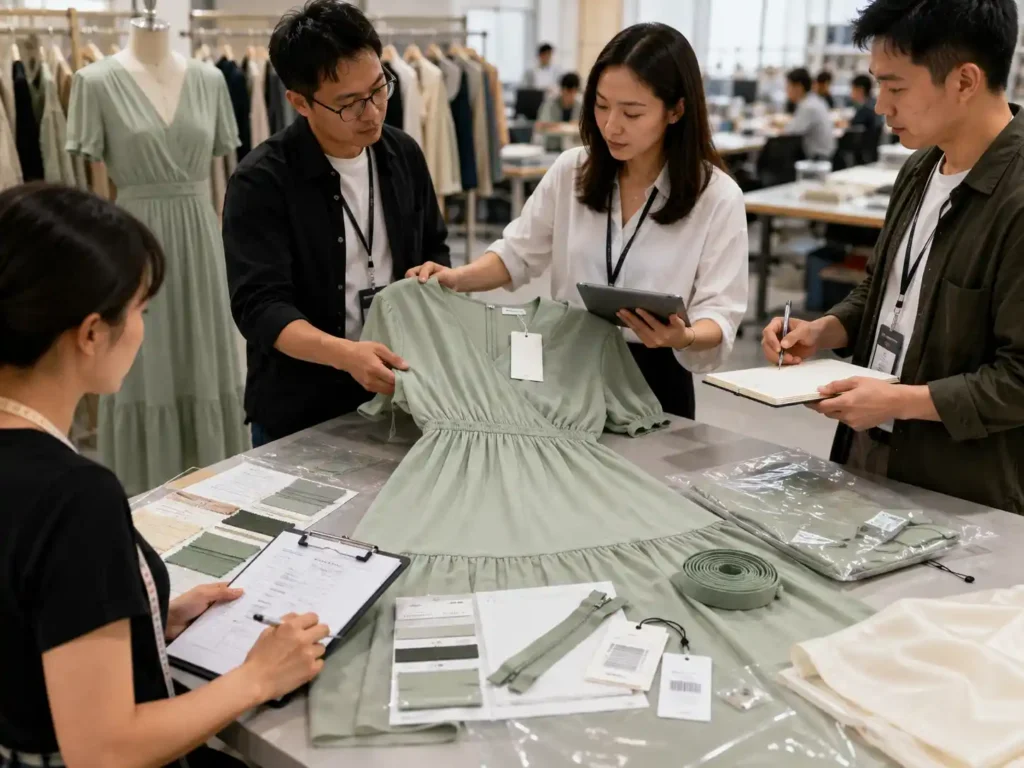
Early samples exposed several connected issues: cup positions varied between two corset shapes, stretch mesh changed waist and hip recovery after wear, satin side seams showed twisting, and a long crepe skirt pulled the bodice downward. A single generic correction would not have solved the collection. Jinfeng Apparel separated material, pattern, construction and workmanship causes, then updated each style’s current pattern, measurement chart and sample record before revised samples were cut.

Revision And Grading
Fit comments were organized by style number and approval stage. Structured bodices received adjusted cup spacing, boning length, upper-edge shape and back closure. Stretch fitted dresses received revised negative ease and lining control. Satin styles received grain and seam-balance corrections. Size grading was reviewed after base-size approval, with smallest and largest size checks on the highest-risk styles. Updated shell, lining and internal support patterns remained linked to the same approval record.
PP And Production Lock
PP approval locked fabric, color, trims, measurements, construction, labels and private-label packing for each style. Golden samples and production files were distributed to the relevant factory and QC teams.
The assortment was allocated according to fabric family and construction complexity rather than order quantity alone. In-line measurement concentrated on bust, waist, hip, length, strap, neckline, slit and lining points selected for each silhouette.
Delivery Management
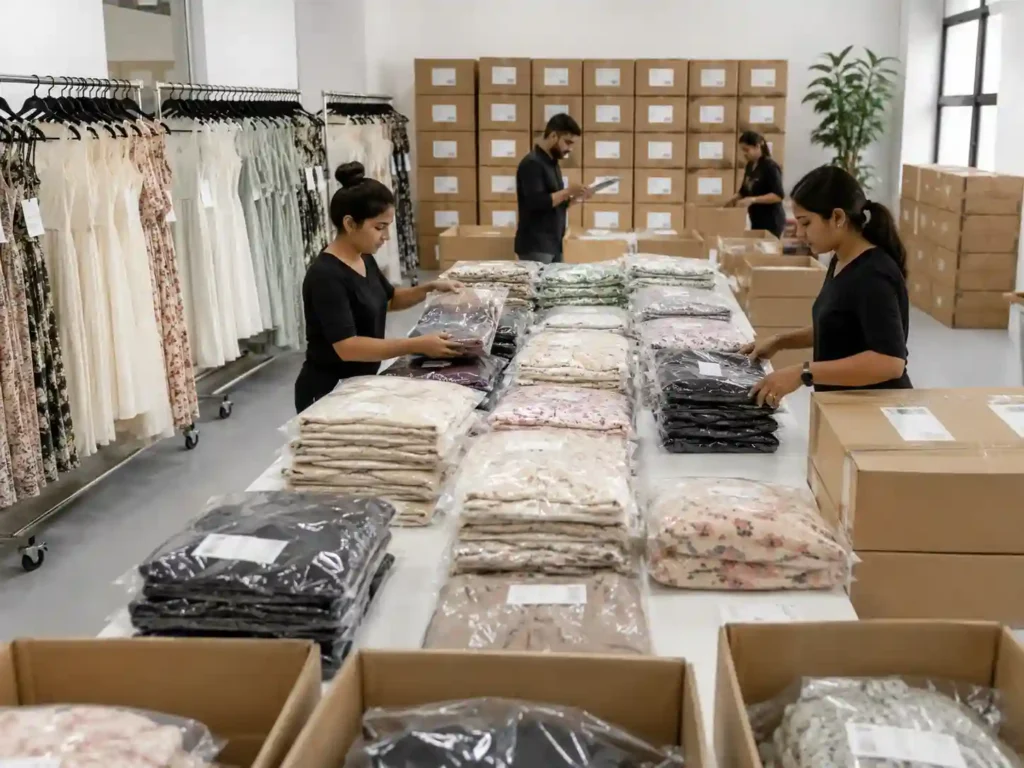
The order was managed in phased production groups so critical launch styles could complete inspection and packing first while later styles remained in controlled production. Fabric, trims, sample status, PP approval, production milestones, QC findings and packing records were tracked by style. Final cartons followed approved size ratios, barcodes, polybags and carton marks. Shipment planning was confirmed after PP approval and material readiness rather than based on an unsupported early promise.

Repeat Order Readiness
After delivery, Jinfeng Apparel retained approved pattern versions, grading information, Golden sample references, fabric and trim records, measurement files, sewing instructions, QC notes and packing requirements. The brand team could develop new colors and related silhouettes without rebuilding the full technical history. Any future fabric or structure change would still receive a fresh fit review, preserving efficiency without assuming that an old pattern remains correct under new conditions.
Project Requirements for a Productive Fit Approval Process
Development Readiness
MOQ And Production Scope
NDA And Design Protection
Frequently Asked Questions About Dress Fit Approval

Send Your Fit Files for Technical Review
A useful technical review begins with the files your team already uses. Jinfeng Apparel can assess the current sample stage, pattern risk, material behavior, size range and approval path before confirming sampling or production. The review is suited to multi-style dress programs, supplier transitions, fit corrections and new-season developments where approved decisions must remain visible from sample to bulk.
- Tech pack, measurement chart or approved block
- Current fit comments, pinned-sample notes or PLM export
- Front, side, back and movement photographs
- Fabric specification, swatch or approved material reference
- Size range, grade rules and size-set requirement
- Style count, quantity per style and color plan
- Current sample stage and required approval milestone
- Launch date, packing requirements and shipment priorities


