Private Label Dress Manufacturer for Australian Brands

Dress-focused development and branded production for Australian eventwear, resortwear, partywear, and premium online fashion collections.

Jinfeng Apparel supports established Australian fashion programs from reference image, original sample, line sheet, or tech pack through fabric sourcing, pattern development, sampling, bulk production, quality control, private label packing, and export delivery.

  • 200 pcs per style and colour:Standard garment MOQ begins at 200 pieces for each style and colour, subject to fabric, trim, construction, packaging, and production planning.
  • 10-30 style collection support:Multi-style programs can be grouped by fabric, silhouette, fit risk, sample priority, and launch sequence instead of being managed as isolated garments.
  • 20,000-80,000 piece order planning:Collection orders in this range can be divided across approved factories, production lines, colour-size ratios, packing groups, and phased shipments.
  • 6 owned factories and 10+ long-term production partners:Capacity is assigned according to product structure, material behaviour, workmanship, schedule, and quality requirements.

Manufacturing Scale Behind Your Australian Dress Program

Private label production depends on more than one sewing line. Jinfeng Apparel combines dress development, production allocation, quality control, branded packing, and export coordination within a structured women’s fashion manufacturing system established since 2008.

6 Owned Factories

Six owned women’s fashion factories provide controlled production resources for dresses, skirts, jumpsuits, matching sets, and private label womenswear. Factory allocation is based on fabric category, silhouette, construction complexity, finishing method, order quantity, and delivery sequence. A satin bias dress, stretch mesh bodycon style, structured corset mini, and lightweight resort maxi do not belong on the same production line merely because all four are dresses. Product-to-factory matching protects workmanship and schedule stability.

10+ Production Partners

More than ten long-term satellite production partners support regular styles, repeat orders, capacity balancing, and multi-batch delivery. These partners are not treated as temporary outsourcing sources. Approved patterns, construction files, measurement standards, label requirements, packing instructions, and QC checkpoints remain under Jinfeng project control. Higher-risk first orders and technically demanding styles are placed with teams suited to the fabric and structure, while established repeat styles can be distributed more efficiently.

100,000+ Monthly Capacity

Regular monthly capacity exceeds 100,000 pieces across the manufacturing network. Capacity is not presented as an unlimited promise for every product. A 24-style collection containing satin, lace, mesh, sequins, boning, and custom packaging requires different planning from a basic woven program. Jinfeng reviews total units, style mix, colour count, size ratio, material arrival dates, PP approvals, finishing requirements, and shipment priority before confirming a production schedule.

2 Sample Rooms

Two sample rooms support parallel development for seasonal collections, campaign samples, fitting rounds, and production approval samples. Sample work is grouped by launch priority, fabric readiness, pattern difficulty, and whether a style is required for photography, sales presentation, or immediate bulk preparation. The aim is not to push every design through at the same speed. Critical launch styles receive clear priority while remaining styles move through a controlled revision schedule.

7+ Pattern Makers

Seven or more senior women’s pattern makers work across mini, midi, maxi, bodycon, corset, slip, halter, strapless, backless, skirt, jumpsuit, and matching-set structures. Pattern review covers bust, upper bust, underbust, waist, high or low waist placement, hip, front and back length, strap length, armhole, neckline depth, slit height, lining, and overall balance. Fit-sensitive styles are developed as structures rather than flat garment shapes.

15+ QC Inspectors

A dedicated team of more than fifteen QC inspectors covers incoming materials, cutting, sewing, in-line measurement, garment appearance, pressing, packing, and pre-shipment review. Quality standards can be aligned with a brand’s measurement tolerance, defect classification, packaging manual, AQL requirement, or third-party inspection plan. Inspection records also support repeat production by identifying earlier risks involving fabric batches, size consistency, trims, finishing, barcodes, and carton data.

Built for Established Australian Fashion Programs

Jinfeng Apparel works best with brands and sourcing teams that have a defined product direction, structured development process, professional sampling requirements, and planned bulk production. Clear project inputs make fit, cost, quality, and timing easier to control.

Brand and Product Fit

The production model is suited to Australian eventwear labels, resort and summer dress brands, partywear collections, premium ecommerce businesses, boutique chains, regional retailers, sourcing offices, and product development teams. Strong projects normally include a clear silhouette direction, target retail position, launch calendar, expected order scale, and an understanding of how private label details must connect with warehouse or retail requirements. Jinfeng can support OEM execution from complete technical files or ODM development from references, commercial direction, and target product positioning.

Project Readiness

Useful starting materials include tech packs, original samples, reference images, line sheets, target quantities, colour plans, size charts, fabric direction, target price, label artwork, packing instructions, and requested delivery windows. A complete file set is not required before the first discussion, but critical decisions should be identified early. Fabric availability, custom colour requirements, special trims, testing, branded packaging, and freight method can change MOQ, cost, development sequence, and launch timing. Early review prevents avoidable changes after sample approval.

Manufacturing Around Australian Fashion Calendars

Australian collections require planning around Southern Hemisphere seasons, climate, event periods, campaign timing, and local warehouse requirements. Jinfeng coordinates development and production from the intended launch date backwards rather than applying one generic calendar to every market.

Reverse-Season Collection Planning

Australian Spring/Summer and resort launches often overlap with Northern Hemisphere Autumn/Winter production pressure. Waiting until a global factory is already committed to another season can create fabric shortages, slower sample revisions, and limited production windows. Jinfeng begins with the intended Australian launch date, campaign shoot, wholesale delivery, or ecommerce drop. The team then maps fabric sourcing, pattern work, sample rounds, PP approval, material arrival, bulk sewing, inspection, packing, and freight booking in reverse order.

For a 10-30 style collection, the entire line should not move as one undifferentiated block. Hero products, photo samples, high-risk constructions, and fabrics with longer development requirements are placed first. Related styles can be grouped by satin base, mesh quality, lace family, knit composition, print base, or shared trims. Grouping reduces repeated material decisions and gives the merchandising team clearer visibility over approvals. The schedule remains dependent on fabric availability, revision speed, testing requirements, and final shipping mode, so every program receives a project-specific timeline.

Climate and Occasion Direction

Australian dress ranges often balance warm-weather comfort with strong visual impact. Resort maxis need airflow, controlled transparency, balanced hems, and packing methods that limit deep creasing. Party and event dresses need secure bust coverage, dependable zippers, stretch recovery, lining comfort, and enough movement for real wear. Wedding guest and occasion collections need colour consistency across satin, chiffon, lace, mesh, and lining layers. Lightweight products still require construction discipline; reducing fabric weight without controlling transparency, seam stability, or recovery can create returns and negative reviews.

Material selection therefore begins with how a garment should look, move, photograph, travel, and perform after several hours of wear. Linen blends may reduce wrinkling compared with pure linen. Rayon or viscose can improve drape but require shrinkage and seam-slippage consideration. Matte stretch mesh can support bodycon products differently from glossy or open-hole mesh. Satin quality must be judged by weight, shine direction, snag risk, colour depth, pressing behaviour, and lining compatibility rather than fibre name alone.

Retail and Ecommerce Readiness

An Australian garment program is not finished when sewing ends. Retail and ecommerce operations may require woven labels, size labels, care labels, hangtags, style numbers, barcodes, SKU stickers, colour stickers, individual polybags, mixed-size carton ratios, warehouse labels, carton marks, packing lists, and PO references. A mistake in one code can affect receiving, inventory accuracy, order fulfilment, and returns even when the garment itself is well made.

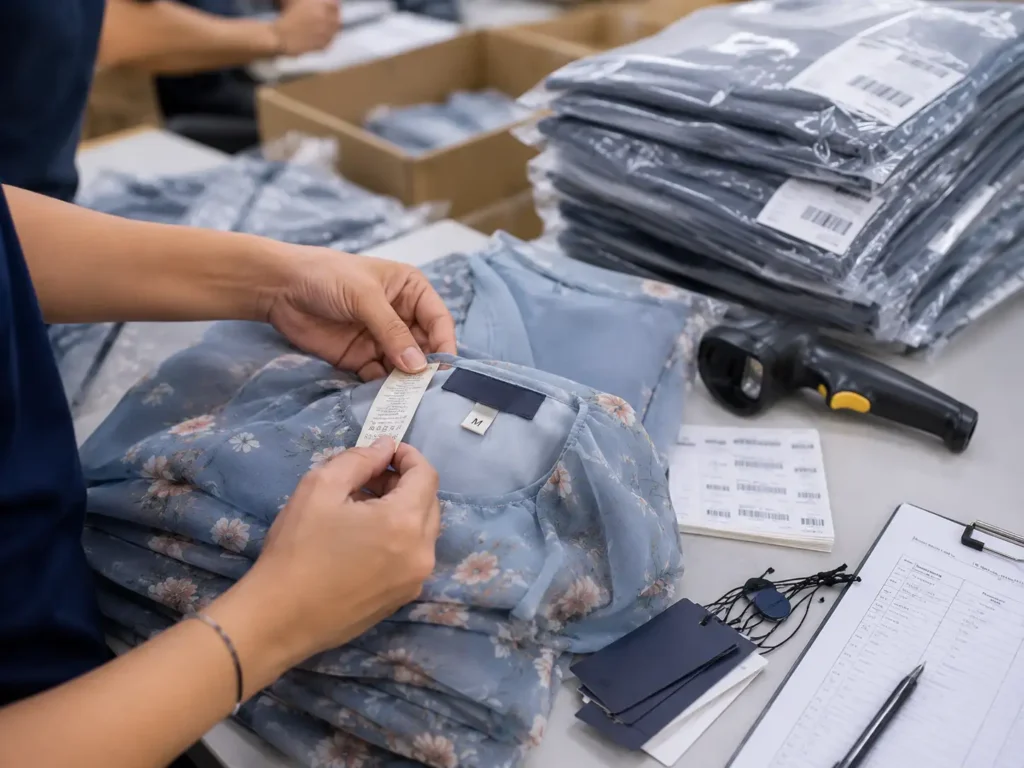
Jinfeng reviews label and packing files before bulk use, checks placement against approved samples, and links garment identity with polybag and carton data. Packing can be arranged by style, colour, size ratio, store group, warehouse, launch priority, or shipment batch. For programs serving both wholesale and direct ecommerce channels, the same garment may need different price tickets, barcode formats, folding methods, or carton configurations. These requirements should be defined before PP approval so the production file reflects the final route to market.

Private Label Dress Categories We Develop

Australian collections need distinct products for resort, party, occasion, wedding guest, summer, and online fashion channels. Each category below is developed around fabric behaviour, fit, construction, bulk risk, and branded delivery rather than treated as a simple style name.

Satin Occasion Dresses

Satin mini, midi, and maxi dresses rely on controlled shine, smooth seams, flat zippers, balanced drape, and clean pressing. Fabric direction must remain consistent across panels because reversed shine can appear as colour variation under studio lighting. Bias-cut styles require careful grain control and enough hanging time before final hem balancing. Lining colour, weight, and stretch must complement the shell without pulling the outer layer. Bulk inspection focuses on snags, shade variation, seam puckering, zipper waves, pressing marks, hem level, and protection during folding and transit.

Resort Maxi Dresses

Resort maxis are developed for movement, warm-weather comfort, photography, and travel. Key decisions include opacity, lining coverage, print placement, strap stability, waist position, skirt volume, hem balance, and how the garment recovers after packing. Chiffon, rayon, viscose, lightweight woven blends, and selected linen blends can create different commercial results. Long hems need stable cutting and measurement control, especially across multiple sizes. Printed panels require direction and placement rules so motifs remain balanced across fronts, backs, seams, and repeat production.

Mesh Bodycon Dresses

Mesh bodycon products combine visual transparency with fit and recovery demands. Jinfeng reviews mesh weight, hole structure, stretch direction, recovery, hand feel, colour depth, lining opacity, and seam behaviour before confirming a material. Bust coverage, cut-out position, side-seam stability, neckline tension, and hem recovery are tested during fitting. Bulk production must control fabric relaxation, cutting direction, seam stretch, thread tension, lining attachment, and measurement tolerance. Packing also needs smooth folding to reduce creasing or snagging around cut-outs and decorative areas.

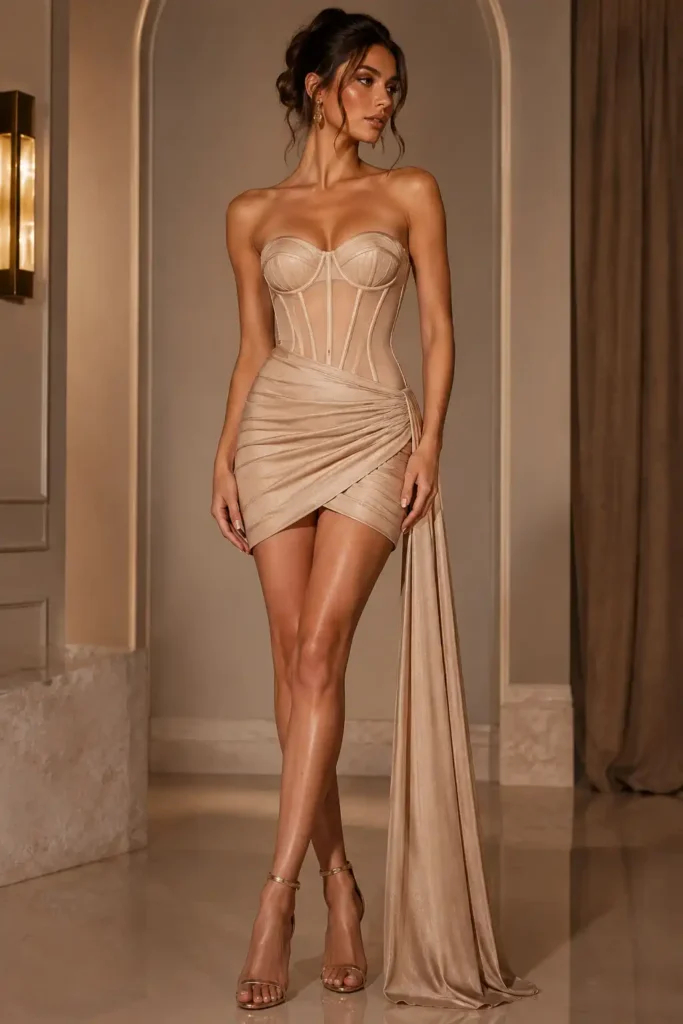
Corset Mini Dresses

Corset minis require a coordinated relationship between outer fabric, lining, boning, cup shape, underbust position, neckline, zipper, anti-slip support, and skirt balance. A visually strong sample can still fail commercially if the cup shape is too narrow, the boning presses against the body, the back opening strains, or the neckline shifts during movement. Pattern work therefore examines upper bust, full bust, underbust, waist, cup placement, torso length, and ease. Bulk checks cover boning length, cup symmetry, seam strength, zipper function, and consistent support across sizes.

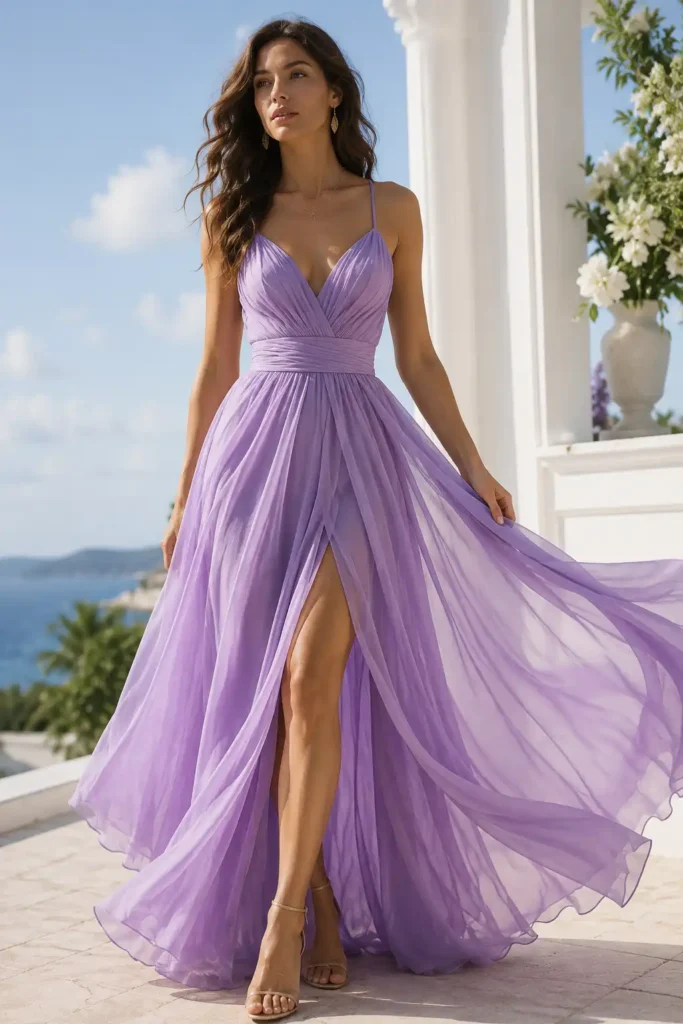
Chiffon Guest Dresses

Chiffon wedding guest and event dresses depend on controlled transparency, flowing layers, balanced hems, stable gathers, and lining that provides coverage without adding stiffness. Cutting requires attention because lightweight fabrics can shift, distort, or grow during handling. Necklines, wrap fronts, sleeves, and tie details must remain secure through movement. Jinfeng reviews shell and lining colour, pleat or gather position, seam finishing, snag resistance, and pressing temperature. Final packing should reduce hard fold lines and protect delicate surfaces from contact with rough trims or carton edges.

Party Sequin Dresses

Sequin party dresses are engineered around appearance, comfort, decoration security, and transport protection. Risks include sequin loss, needle damage, thick seam allowances, rough edges against skin, zipper obstruction, uneven motif direction, and scratching between packed garments. Construction may require clearing decoration from seam areas, reinforcing stress points, adding soft lining, and controlling panel matching. Bulk inspection reviews decoration coverage, seam thickness, loose elements, sharp points, zipper movement, lining protection, and anti-scratch packing. Visual intensity should not compromise wearability or delivery condition.

Summer Woven Dresses

Summer dresses in cotton blends, rayon, viscose, printed wovens, linen blends, or lightweight synthetics require a balance of breathability, opacity, shape retention, and manageable care. Purely lightweight fabric is not automatically suitable. Jinfeng considers shrinkage, seam slippage, print direction, colour fastness, lining needs, pocket support, strap construction, and the effect of repeated sitting or movement. The pattern should preserve neckline coverage and waist position without unnecessary bulk. Bulk checks focus on shrinkage risk, hem balance, seam strength, print placement, stains, and folding recovery.
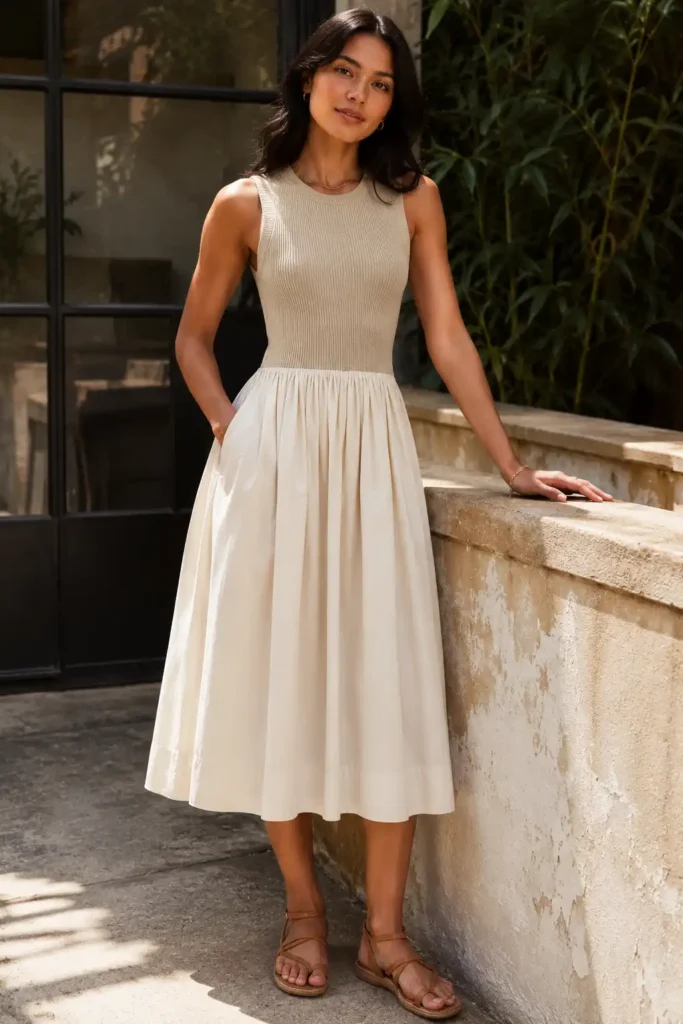
Jersey Knit Dresses

Jersey, rib knit, and ponte dresses require control of stretch, recovery, weight, shrinkage, torque, side-seam stability, neckline shape, and length retention. Bodycon products must recover after fitting rather than growing during wear. A heavier ponte can provide structure for fitted or office-inspired dresses, while lighter jersey may suit casual summer styles if opacity and recovery remain acceptable. Fabric relaxation, cutting direction, needle choice, seam elasticity, and measurement tolerance are central bulk controls. Wash-risk review is especially important when the finished product will be sold through ecommerce channels.

Fabrics Selected for Appearance and Bulk Stability

Fabric decisions determine drape, fit, comfort, photography, production efficiency, packaging, and repeat-order consistency. Jinfeng evaluates commercial appearance together with measurable risks such as shrinkage, stretch recovery, colour variation, snagging, seam slippage, and supplier MOQ.

Satin and Fluid Wovens

Satin is evaluated by weight, width, fibre composition, surface shine, colour depth, snag resistance, drape, crease response, and how the face changes under different lighting.

A satin chosen only from an online photo may look too thin, too glossy, too stiff, or too pale once made into a complete dress. Bias-cut slip dresses need enough fluidity while retaining seam stability.

Corset or structured satin dresses need a quality that can work with lining, interfacing, boning, and zipper construction without showing every internal layer.

Chiffon, georgette, rayon, viscose, and other fluid wovens introduce separate concerns. Lightweight fabrics can shift during cutting, stretch along bias areas, reveal lining edges, or produce uneven hems after hanging.

Rayon and viscose can provide excellent drape for resort and summer styles, but shrinkage and seam strength need review. Print placement must account for motif scale, panel direction, centre-front balance, and matching across selected seams. For repeat orders, fabric reference, colour approval, and batch information are recorded, while new lots still require confirmation because surface and shade can vary.

Material approval should therefore include a physical swatch or approved cutting, colour reference, hand-feel review, opacity assessment, lining combination, and an understanding of bulk availability. Lab dips or colour standards may be needed for custom colours. Bulk fabric inspection reviews shade, width, weight, hand feel, defects, snagging, and colour consistency before cutting. Cost discussions can compare alternative weights or compositions, but substitutions are judged by the final garment result rather than unit price alone.

Mesh, Lace, and Decorative Fabrics

Mesh selection begins with gauge, openness, weight, elasticity, recovery, softness, transparency, colour depth, and seam behaviour. Stretch mesh for a fitted cut-out dress must recover after movement and maintain neckline tension. Non-stretch decorative mesh may suit overlays or sleeves but requires a different pattern and seam finish. Lining can be full, partial, tonal, contrast, or skin-tone, yet every option changes coverage, appearance, comfort, and size tolerance. Mesh direction is marked during cutting because an incorrect stretch direction can distort fit across an entire production batch.

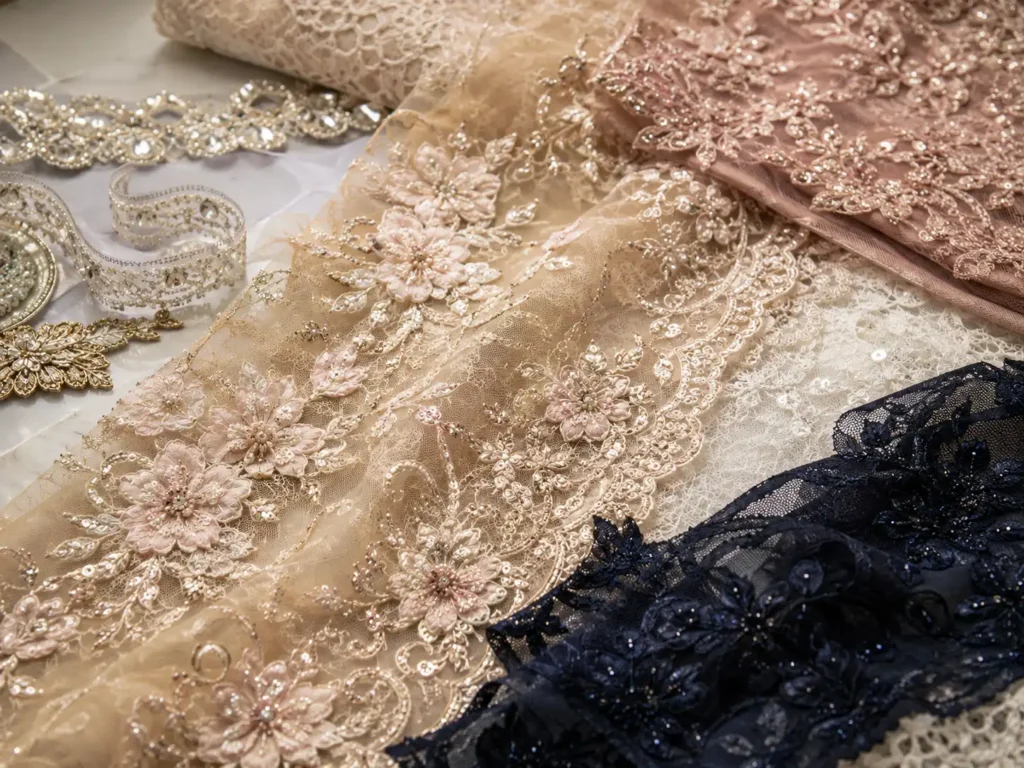
Lace introduces motif placement, scallop use, edge finishing, seam matching, softness, and lining compatibility. A lace panel can appear premium when motifs are balanced and seams are planned around the design; the same material can look irregular when placement varies from piece to piece. Jinfeng reviews whether lace is used as a full shell, insert, trim, appliqué, or contrast layer. Cutting plans account for pattern repeat and wastage. Production checks cover holes, fraying, mismatched motifs, exposed seam allowances, lining visibility, and surface damage.

Sequins, beads, rhinestones, and decorative chains require both visual and mechanical review. Decoration should remain secure through sewing, fitting, packing, and transport. Thick seam areas may need decoration removal or reinforcement. Linings and binding may be added to protect skin. Garments are checked for loose pieces, sharp edges, scratching, uneven decoration density, and zipper obstruction. Packing methods can include tissue, protective sleeves, or garment separation depending on the surface. Decorative impact is preserved without treating comfort and logistics as secondary issues.
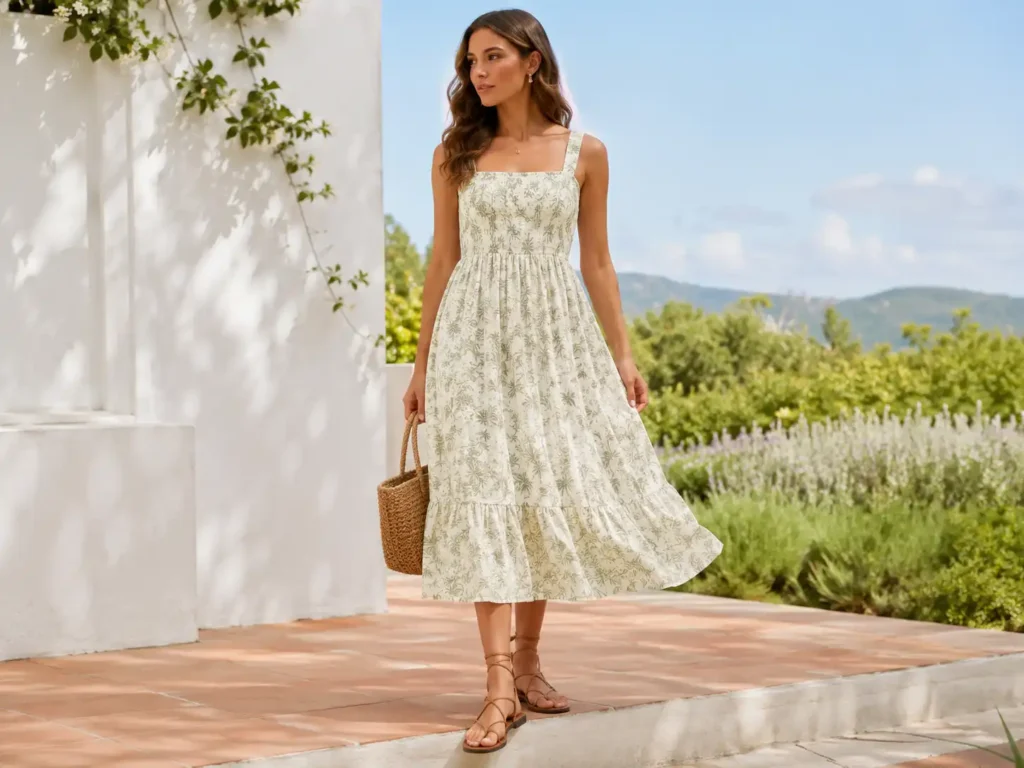
Summer and Stretch Comfort Fabrics

Linen and linen blends suit Australian summer and resort directions, yet pure linen can crease heavily, shift in measurement, and require careful pressing.

Blending with rayon, viscose, cotton, or selected synthetics may improve drape, recovery, and travel performance. The correct choice depends on whether the dress should feel crisp, relaxed, fluid, structured, or photographically polished. Light colours require opacity review, while loose weaves require seam-slippage consideration.

Pre-production testing may include shrinkage, colour fastness, and wash response when requested by the brand or retailer.

Jersey, rib, interlock, and ponte fabrics are reviewed by weight, stretch percentage, recovery, surface appearance, pilling risk, shrinkage, torque, and stability after relaxation. A fabric with high stretch but weak recovery can produce loose necklines, twisted side seams, growing hems, and inconsistent body measurements. Bodycon styles require sufficient support without uncomfortable compression. Ponte dresses need the right balance of thickness and elasticity for the target season and silhouette. Cutting and sewing methods must follow the fabric’s direction and recovery characteristics.

Comfort also depends on linings, elastics, labels, zippers, boning, and internal finishes. A soft shell can still feel uncomfortable when the care label scratches, elastic is too firm, or lining stops at an awkward point. Jinfeng reviews garment contact areas during fitting and bulk inspection. Material records support future reorders, but each new fabric batch is inspected again for shade, weight, hand feel, stretch, width, and visible defects before production proceeds.

Fit Development for Your Australian Size System

Jinfeng develops from the brand’s approved size chart and target wearer rather than applying one generic Australian block. Base-size approval, fit feedback, grade rules, fabric behaviour, and garment measurements must work together before bulk size production begins.

Base Size and Fit Approval

Development starts by confirming the brand’s base size, measurement points, intended ease, target silhouette, and fit reference. An Australian label may use AU 6-16, AU 8-18, XS-XL, numerical boutique sizing, or a proprietary size system. The symbol printed on the size label is less important than the approved body and garment measurements behind it. Jinfeng reviews bust, upper bust, underbust, waist, high or low waist, hip, shoulder, armhole, neckline, strap, front length, back length, skirt length, slit, and lining coverage according to the design.

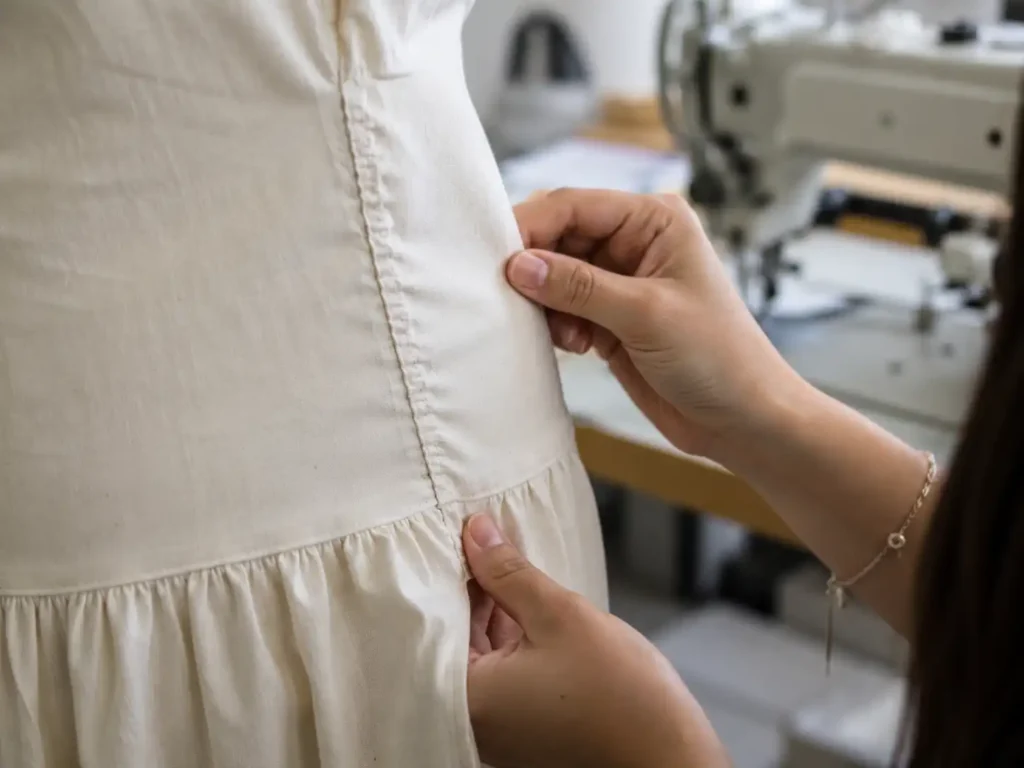
A fit sample tests the relationship between pattern, fabric, construction, and the intended body. Comments should identify measurable changes rather than relying only on broad descriptions such as “too loose” or “not flattering.” Useful feedback may specify neckline depth, bust tension, waist position, hip ease, side-seam direction, strap length, armhole coverage, hem level, or movement restrictions. Revised measurements and pattern changes are recorded so later samples do not return to earlier versions.

Grading Across the Range

A strong base sample does not guarantee consistent fit across every size. Grading from XS to XL, AU numerical sizing, petite, tall, or extended sizes requires agreed grade rules and review of areas that do not change proportionally. Bust shaping, underbust position, strap width, armhole depth, neckline coverage, waist placement, hip ease, slit height, and dress length may need different increments. Corset cups, cut-outs, halter necklines, and low backs often require more than a simple scale-up.

The production file should define measurement points, grade increments, tolerances, and any size-specific construction changes. During bulk production, in-line and finished garment measurements compare actual pieces with the approved size chart. Stretch fabrics also require relaxation and recovery consideration because garment dimensions can change between cutting, sewing, pressing, and final measurement. Size labels, polybag stickers, carton breakdowns, and SKU records must match the same approved size system to avoid warehouse and fulfilment errors.
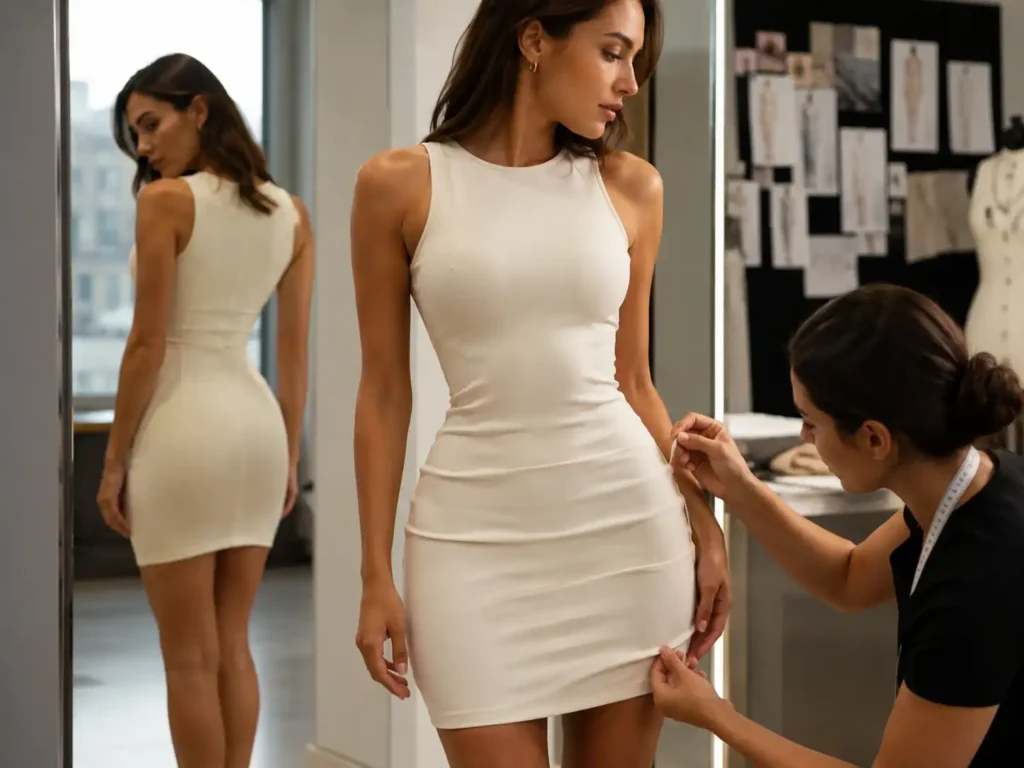
Fit-Sensitive Dress Structures

Bodycon dresses need stable side seams, suitable negative ease, secure necklines, and fabric recovery. Corset dresses need cup placement, underbust balance, torso length, boning position, and closure strength. Strapless styles require upper-bust control, anti-slip support, and movement testing. Backless and low-cut products need coverage, strap stability, and edge control. Maxi dresses require even front and back lengths, wearer-height consideration, and safe movement around slits or trains.

Jinfeng combines pattern review with material testing and sample fitting because a measurement can be correct on paper while the garment behaves incorrectly in wear. The final production standard includes approved pattern version, measurement file, fabric, trims, construction notes, and PP sample. Fit risk is handled before bulk sewing rather than left for final inspection, where structural corrections would be costly and late.

Construction Details That Protect the Final Fit
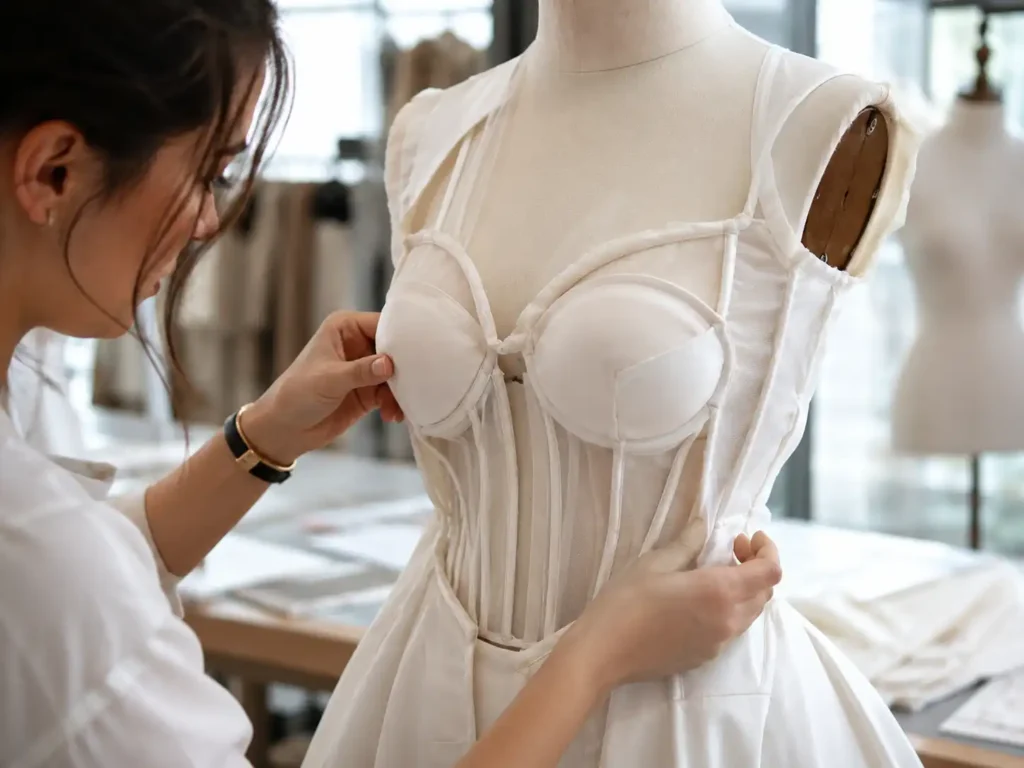
Dress quality becomes visible at the neckline, bust, zipper, lining, seams, gathers, hem, and internal support. Jinfeng controls construction details during pattern work, sampling, PP approval, sewing, pressing, and final inspection so appearance and wearability remain aligned.

Boning and Cups

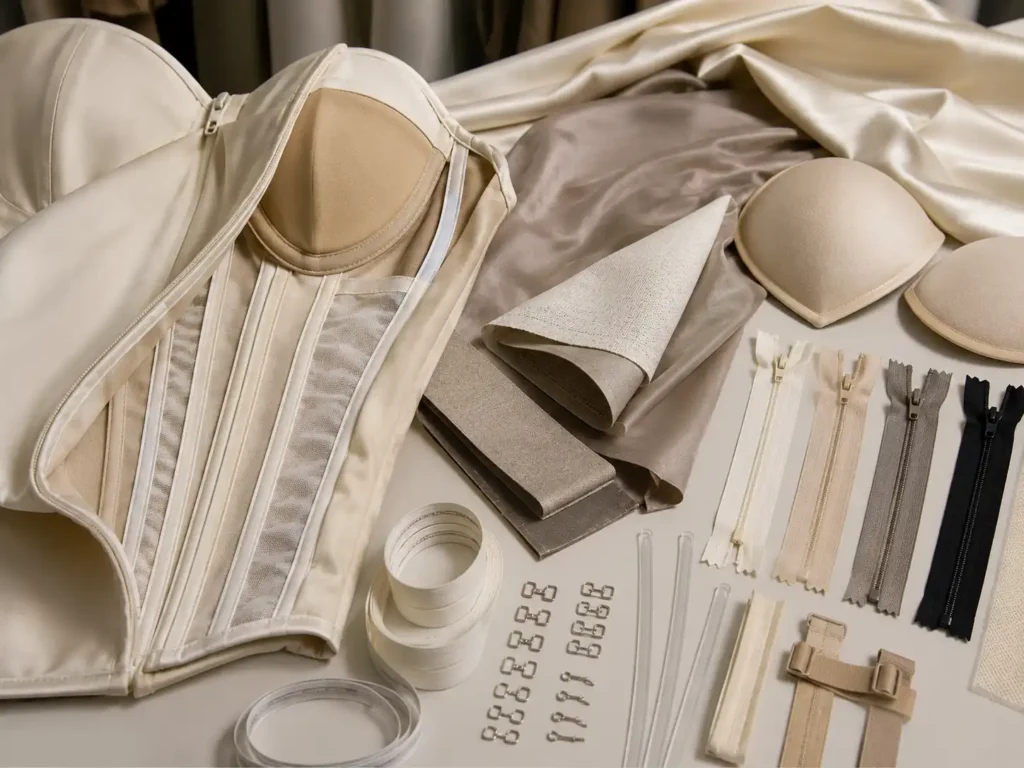
Boning and cups must suit the dress structure rather than being added as generic components. Jinfeng reviews cup shape, cup position, underbust line, boning hardness, boning length, channel placement, seam support, neckline height, and how the structure interacts with the zipper or closure. A corset can look sharp on a hanger yet feel uncomfortable when boning presses into the waist or cup edges cut into the bust. Samples are checked for symmetry, support, movement, and smooth outer appearance before bulk specifications are locked.

Lining and Coverage

Lining controls opacity, comfort, internal cleanliness, shape, and how a dress moves against the body. Satin, chiffon, lace, mesh, sequins, and light-coloured fabrics often need different lining weights or stretch levels. Jinfeng checks lining length, colour, seam attachment, neckline finish, armhole coverage, slit position, cut-out edges, and whether internal layers pull the shell. Partial lining must end at a visually acceptable point. Bulk inspection looks for lining exposure, twisting, bunching, uneven length, and colour mismatch.

Zipper Flatness

Invisible and exposed zippers affect both appearance and fit. A zipper can wave when seam allowance, fabric stability, tension, interfacing, or installation method is unsuitable. Jinfeng reviews zipper length, colour, puller, seam reinforcement, top and bottom stops, alignment, and opening stress during sampling. Bulk checks confirm smooth movement, flat installation, matched waist seams, secure ends, and no trapped lining. Structured corset, fitted satin, and bodycon dresses receive particular attention because zipper distortion is immediately visible.

Ruching and Draping

Ruching, gathers, pleats, and draped panels create shape but can produce inconsistent bulk appearance when placement is not defined. The production file should state start and end points, gather ratio, stitch method, direction, and reference measurements. Jinfeng compares both sides for symmetry where required and checks whether folds support the intended bust, waist, or hip line. Fabric weight and stretch influence the result, so a drape developed in one material cannot always be transferred unchanged to another material.

Seams and Hems

Seam type, allowance, stitch density, edge finish, pressing, and hem method influence strength and visual quality. Lightweight chiffon may require fine finishes that reduce bulk, while stretch jersey needs seams that move without breaking. Satin seams must remain smooth without puckering. Bias-cut hems may need hanging and rebalance before finishing. Maxi, asymmetric, and layered hems are measured at multiple points. Bulk inspection reviews loose threads, skipped stitches, seam grin, twisting, waviness, uneven hem depth, and pressing marks.

Lace and Sequins

Lace and sequin finishing requires placement control, clean seam planning, protection from skin irritation, and secure decoration. Lace scallops may be used at necklines, sleeves, or hems when motif direction permits. Sequin areas may need clearing from seam allowances to reduce thickness and needle damage. Linings or bindings protect contact points. Jinfeng checks motif balance, loose decoration, sharp edges, seam bulk, zipper obstruction, exposed backing, and surface damage. Protective packing is selected according to the decoration and shipment method.

A Complete Private Label System for Dresses

Private label production connects the garment with brand identity, product information, warehouse recognition, and repeat-order records. Every component requires artwork, material, placement, quantity, approval, and bulk verification before shipment.

Brand and Size Labels

Woven, satin, printed, or heat-transfer brand labels can be developed according to approved artwork, material, colour, fold type, dimensions, and placement. Size labels may sit at the back neck, side seam, waist, or another approved location. Fit-sensitive garments require soft materials and comfortable edges so labels do not scratch the wearer. Jinfeng checks logo spelling, colour, orientation, dimensions, placement, stitch security, and the relationship between the garment size, physical label, polybag sticker, barcode, and carton breakdown.

Care and Content Labels

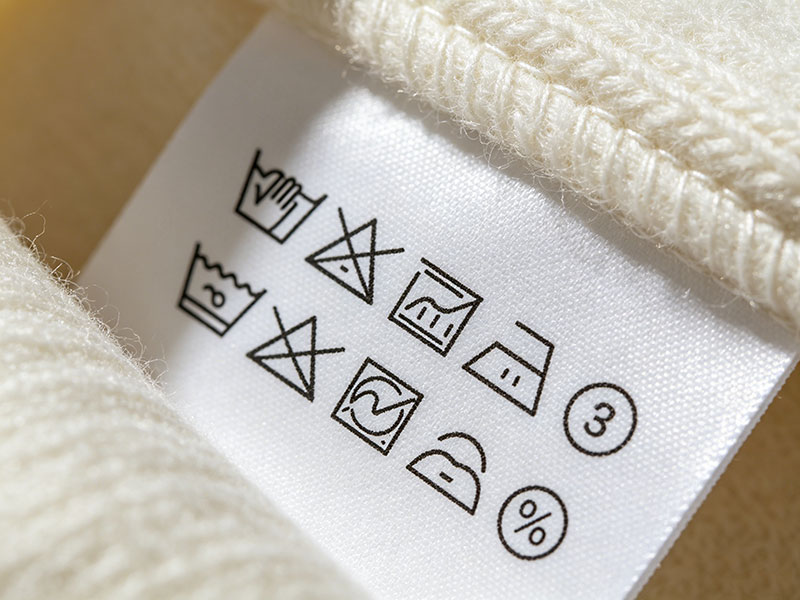
Care labels may include fibre composition, care instructions, size, country of origin, style reference, batch reference, importer information, or market-specific details supplied by the brand. Jinfeng can review artwork dimensions, print clarity, material, fold type, language arrangement, placement, and wash durability. Final wording and legal suitability remain subject to the brand or its local compliance adviser. Bulk inspection checks that the approved label version is installed in the correct garment, orientation, and position without uncomfortable edges.

Hangtags and Hang Strings

Hangtags communicate brand identity, product story, size, price, style number, barcode, sustainability information, or promotional content. Paper weight, finish, colour, hole position, string, seal, and attachment point affect appearance and handling. Jinfeng reviews artwork, dimensions, colour standard, quantity, and placement before ordering. In bulk packing, hangtags are checked for correct style, size, barcode, orientation, attachment security, and surface condition. Retail and ecommerce orders may require different tags or additional tickets for the same garment.

Barcode and SKU Labels

Barcodes and SKU labels connect each garment to inventory, fulfilment, returns, and warehouse receiving. Jinfeng works from the brand’s barcode file, SKU table, style-colour-size breakdown, and placement instructions. Codes can be applied to hangtags, polybags, garment stickers, or carton labels according to the receiving guide. Verification covers code readability, correct style, colour, size, quantity, and consistency across packing levels. A correctly sewn garment with an incorrect barcode can still create receiving delays and inventory errors.

Polybags and Inserts

Individual polybags may include size stickers, colour stickers, barcode labels, warning text, ventilation holes, recycled-content markings, brand printing, or warehouse references according to approved requirements. Branded stickers, tissue, thank-you cards, care cards, or inserts can be added where suitable. Jinfeng reviews bag size, thickness, print artwork, folding method, garment protection, and packing sequence. Decorative, satin, or structured dresses may require different folding or protection from lightweight jersey products.

Cartons and Marks

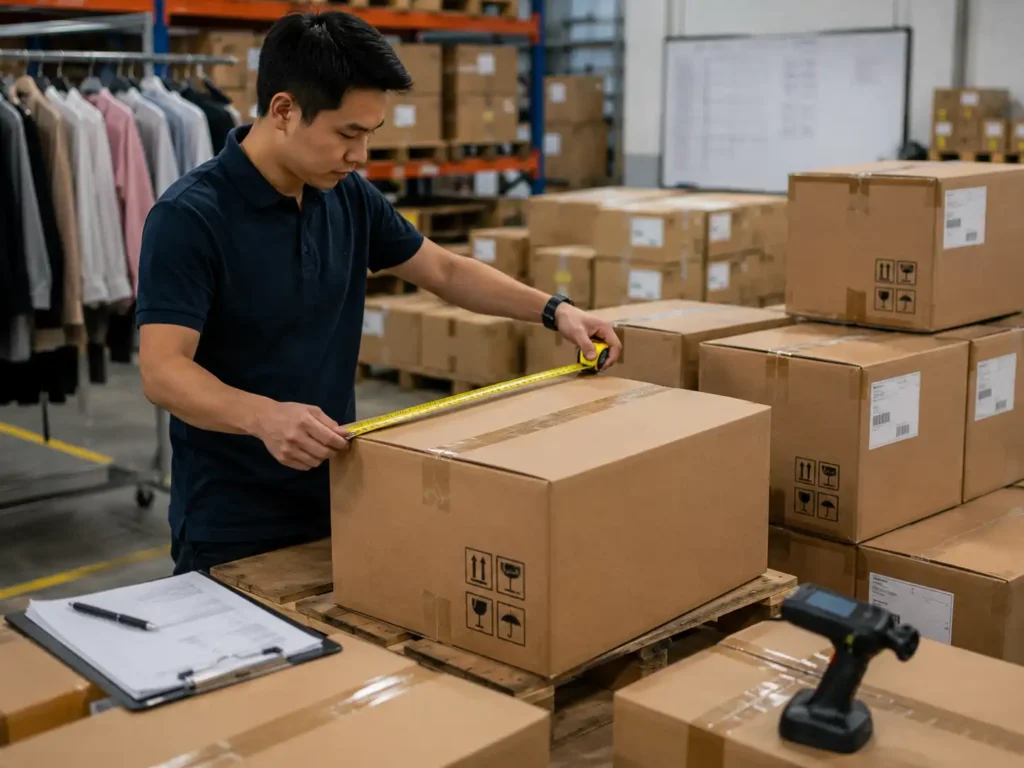
Carton control includes carton dimensions, strength, style-colour-size quantity, mixed-size ratio, gross and net weight, carton number, PO reference, shipping mark, warehouse label, and destination information. Jinfeng prepares packing data from the approved order breakdown and checks carton content against labels and packing lists. Multi-batch or split shipments need separate carton identification and documents so urgent airfreight pieces do not become mixed with sea-freight inventory. Carton marks are treated as part of delivery accuracy, not a final printing task.

From Dress Brief to Branded Bulk Delivery

A controlled private label program moves through defined approval gates. Every stage produces information required by the next stage, reducing the risk of lost revisions, unapproved materials, inconsistent construction, or packing errors.

Project Review

Jinfeng reviews the style list, references, tech packs, target quantities, colours, size range, fabric direction, target price, launch date, testing, labels, packaging, and destination. The initial review identifies missing information, construction risks, material MOQ, development priorities, and whether styles should be grouped. A multi-style project receives an approval tracker so teams can see which designs are awaiting fabric, pattern, fitting, label artwork, PP approval, or production scheduling.

Fabric Direction

Material development compares appearance, hand feel, weight, stretch, recovery, opacity, colour, width, bulk availability, MOQ, and risk. Swatches, lab dips, prints, lace, linings, and trims are confirmed according to the product. Alternatives may be suggested when a requested quality creates excessive MOQ, cost, instability, or lead time. Material decisions are documented before sampling so later revisions can be traced to an approved fabric reference.

Pattern Development

Pattern makers translate the design into garment structure using the approved size chart, base size, fabric behaviour, and construction. Key points include bust, underbust, waist, hip, neckline, armhole, strap, front and back balance, skirt length, slit, lining, cup, boning, and closure. Original samples can be measured and analysed, but the resulting pattern is adjusted for the brand’s own sizing, fabric, construction, and fit goals rather than copied blindly.

First Sample

The first sample checks overall interpretation, silhouette, fabric direction, construction method, proportion, and major fit risks. It is not automatically the final bulk standard. Jinfeng records the sample version and identifies areas requiring brand feedback. Complex styles may need internal evaluation of boning, cup shape, cut-outs, mesh transparency, lining, lace placement, sequin protection, or zipper behaviour before the sample is presented for formal approval.

Fit Revision

Feedback is converted into measurable actions: pattern changes, revised dimensions, construction notes, fabric or trim changes, and updated sample status. Photos, marked images, fit comments, and revised charts can be used together, but the approved production file must contain clear instructions. Multiple styles are tracked separately so comments from one dress do not migrate into another. Revised samples confirm whether earlier issues have been resolved without creating new balance or construction problems.

PP Approval

The pre-production sample establishes the standard before bulk cutting and sewing. Fabric, colour, trims, measurements, construction, label placement, workmanship, pressing, and packing requirements should be locked. Significant design changes after PP approval can affect cost, material ordering, pattern versions, production schedules, and delivery. A Golden sample or approved reference may be retained for production and QC comparison, together with the final size chart, BOM, artwork, packing guide, and inspection requirements.

Bulk Production

Bulk starts after approved materials and production files are ready. Work includes material purchasing, incoming inspection, relaxation where required, marker and cutting preparation, panel checks, bundling, sewing, in-line inspection, measurement, pressing, garment inspection, repair, and packing. Styles are assigned to suitable factories or lines. Production updates focus on material status, cutting, sewing progress, quality findings, packing readiness, and any issue that could affect the agreed shipment plan.

QC and Packing

Quality control continues from fabric arrival through packing. Inspectors review fabric shade and defects, panel direction, stretch direction, seam quality, measurements, zipper flatness, lining, trims, pressing, labels, barcodes, polybags, carton ratios, and marks. Brand quality manuals, tolerance charts, defect lists, AQL requirements, or third-party inspection instructions can be incorporated by project. Packing follows the approved style-colour-size breakdown and warehouse guide.

Export Delivery

After final inspection, Jinfeng coordinates commercial invoice, packing list, carton data, shipping marks, freight handover, and shipment tracking. Express, air freight, sea freight, or split shipment can be arranged through a client-nominated or factory-recommended forwarder. EXW, FOB, CIF, DAP, and DDP by project can be evaluated. Final customs classification, duties, taxes, and market-specific import requirements remain subject to the importer and appointed logistics professionals.

Samples That Establish the Bulk Production Standard

Sampling separates creative development from production approval. Jinfeng distinguishes sample purpose, version, materials, measurements, and approval status so a photography garment, fit sample, and final production reference are not mistaken for the same standard.

Development and Presentation Samples

A first sample evaluates design interpretation, basic structure, material direction, and key fit concerns.

A fit sample focuses on measurement, balance, coverage, movement, and the relationship between garment and target body.

A revised sample confirms documented changes. A photo-ready sample prioritises campaign appearance, colour, styling, and visual finishing, while a salesman sample may support wholesale presentation or line review.

Each sample has a specific purpose, and approval for one purpose does not automatically authorise bulk production.

Sample timing is confirmed after reviewing style complexity, fabric availability, trim development, custom colour, label needs, and the number of styles being developed in parallel.

A straightforward stock-fabric dress follows a different path from a corset, mesh, lace, sequin, custom-print, or heavily draped design. Multi-style collections receive priority groups based on hero SKU, campaign date, fabric readiness, fit risk, and bulk schedule. Sample fees cover development work, pattern preparation, materials, sewing, checking, and communication. Any bulk-order deduction is agreed by project rather than treated as an automatic refund.

PP Sample and Golden Standard

The PP sample confirms the final production direction after pattern, measurement, fabric, trims, colour, construction, label placement, and packing decisions have been resolved. The related file set should include the approved size chart, pattern version, BOM, sewing instructions, trim references, artwork, colour standards, packing requirements, and inspection notes. Major changes after PP approval require a new review because production may already have been planned around the earlier standard.

A Golden sample or sealed reference supports production and QC comparison. Inspectors can compare fabric appearance, seam method, placement, measurements, labels, finishing, and presentation against the approved reference. Golden-sample records also assist repeat orders, but every new fabric batch, custom colour, trim lot, artwork revision, and production schedule must still be reconfirmed. Repeat efficiency comes from controlled records, not from assuming conditions remain unchanged forever.

Version control is essential across 10-30 style programs. Jinfeng tracks sample names, revision rounds, approval status, measurement updates, material changes, and comments by style. Clear records prevent an old neckline, outdated colour, wrong label position, or earlier packing file from reaching bulk production. Approved changes move into the production file instead of remaining only in emails or chat messages.

MOQ and Quotation for Private Label Dress Programs

The standard garment MOQ begins at 200 pieces per style and colour. Final feasibility and pricing depend on fabric, colour, trims, construction, size range, labels, packaging, testing, production schedule, and shipping requirements.

Cost or MOQ FactorStandard Planning BasisConditions Requiring Separate ReviewInformation Needed
Garment quantity200 pcs per style and colourComplex construction, very wide size range, peak-season scheduleStyle-colour-size quantity plan
FabricAvailable stock quality and standard colourCustom weaving, custom dyeing, special lace, sequins, certified material, placement printComposition, weight, hand feel, colour, testing needs
TrimsAvailable zippers, cups, boning, elastics, linings, closuresCustom hardware, logo pullers, special colours, moulds, decorative componentsTrim specification or reference
LabelsApproved standard label constructionCustom woven labels, heat transfer, special folds, multiple market versionsLogo, artwork, dimensions, placement
PackagingStandard polybag and export cartonPrinted polybag, gift box, tissue, dust bag, special warehouse systemPacking guide, barcode file, SKU table
Testing and inspectionInternal QC and agreed final reviewThird-party laboratory tests, retailer protocols, special AQL or audit requirementsTesting list, inspection manual, destination market
FreightQuoted after final packed quantity and routeSplit air-sea shipment, multiple warehouses, DDP evaluationDestination, delivery window, forwarder preference

Production Planning for Multi-Style Dress Collections

Australian seasonal programs often contain 10-30 styles and total orders of 20,000-80,000 pieces. Jinfeng manages collection complexity through grouping, priority, factory allocation, production files, QC checkpoints, packing control, and delivery sequencing.

Collection Grouping and Priority

A line sheet is divided into workable groups instead of treating every style independently. Styles may share a satin base, mesh quality, lace family, print base, zipper, cup, boning, lining, colour palette, or packing method. Grouping helps control material purchasing and reduces duplicated approvals. Styles are also ranked by hero SKU, campaign need, sales presentation, fit risk, material lead time, and planned bulk date. A 24-style program might place six high-risk or campaign-critical dresses in the first sample group, followed by medium-risk extensions and later colour or fabric variations.
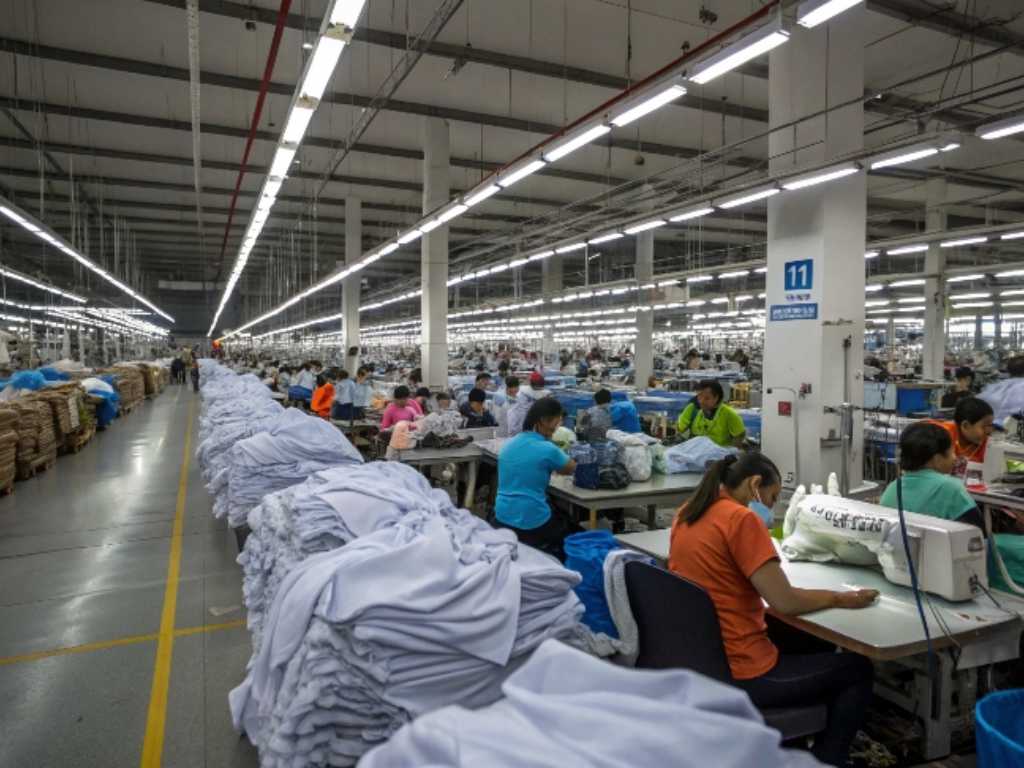
Large garment factory with rows of workers sewing clothing at machines.

Factory and Line Allocation

Jinfeng operates 18+ sewing lines and 6+ flexible production lines across six owned factories, supported by more than ten long-term production partners.Production is not divided only by quantity.Structured corsets, delicate satin, stretch mesh, lace overlays, sequin products, knit dresses, and regular woven styles require different experience and line conditions.

High-risk first orders are assigned to suitable teams, while approved repeat styles or stable constructions can be distributed for scale. Every assigned unit works from the same approved pattern, production file, measurement standard, and QC requirements.

Project Coordination and Packing

More than twelve merchandisers and order-follow-up specialists support communication, material tracking, sample status, production updates, QC feedback, packing confirmation, and shipment planning. Thirty or more finishing and packing workers support pressing, final presentation, labels, barcodes, polybags, carton ratios, and marks. For 20,000-80,000 piece programs, the order can be divided into production batches, launch priorities, style groups, or freight groups. Separate packing lists and carton identifiers protect traceability when stock moves to different warehouses or by different transport modes.

Quality Control Across Every Production Stage

Quality is controlled before and during production, not added at the final inspection. Jinfeng uses product-specific checkpoints for satin, mesh, lace, sequins, bodycon, corset, chiffon, knit, private label packing, and multi-style orders.

Incoming Fabric QC

Incoming inspection reviews colour, shade, width, weight, hand feel, stretch, recovery, shrinkage information, colour-fastness requirements, and visible defects. Product-specific risks include satin shade and snagging, mesh holes and pulls, lace damage, sequin loss, print variation, and lightweight fabric transparency. Approved swatches, colour references, or bulk standards are used where available. Fabric batches and dye lots are identified so mixed shades do not enter the same garment group without review.

Cutting Inspection

Cutting QC confirms the correct pattern version, marker, size ratio, panel quantity, grain, face direction, stretch direction, print placement, stripe or check alignment, and bundling. Satin shine, mesh stretch, bias grain, lace motifs, and printed repeats require marked direction. Incorrect cutting cannot be fully corrected by sewing, so panels are reviewed before they move to the line. Size bundles and style components are identified to reduce mixing across multi-style or multi-colour programs.

First-Piece Review

The first completed production garment is checked against the PP sample, Golden sample, measurement file, construction notes, and label placement before the line continues at full pace. Review points include silhouette, seam method, zipper, lining, cups, boning, straps, ruching, lace, slit, hem, and pressing. Any difference is corrected at line level, and relevant instructions are clarified for operators and inspectors. First-piece control prevents a repeated construction mistake from spreading through an entire batch.

Sewing In-Line QC

In-line inspection reviews stitch density, seam allowance, seam strength, skipped stitches, symmetry, zipper flatness, strap length, neckline, armhole, ruching placement, lace matching, lining attachment, slit height, and decoration security. Inspectors focus on stages where a problem can still be corrected efficiently. Stretch styles receive attention to seam elasticity and side-seam twisting. Satin and lightweight wovens are checked for puckering or handling marks. Structured dresses are checked for support alignment and closure stress.

Measurement Control

Measurements are checked against the approved size chart and tolerances during production and on finished garments. Critical points vary by product: bust, underbust, waist, hip, front and back length, strap, neckline, armhole, slit, hem, and jumpsuit rise where applicable. Stretch garments are measured after suitable relaxation. Size grading is reviewed across selected sizes rather than assuming a good base sample guarantees the whole range. Measurement records help identify line drift before packing begins.

Garment Inspection

Finished garment inspection covers measurements, appearance, fit effect, colour, stains, holes, loose threads, seam quality, zipper function, button or closure strength, lining, pressing, label position, and care-label version. Delicate surfaces are checked under suitable lighting. Corset, bodycon, mesh, lace, satin, sequin, and maxi products receive category-specific checks. Repairs are reinspected before the garment is cleared for packing. Final presentation should meet the approved brand and product standard, not merely be wearable.

Packing Verification

Packing QC verifies hangtags, barcodes, SKU labels, size and colour stickers, polybags, folding, inserts, carton quantities, size ratios, carton dimensions, marks, and warehouse labels. Scannable codes are compared with the style-colour-size breakdown. Garments are checked for stains, pressing damage, or mixed information before sealing. Decorative or structured products receive protective packing according to the approved method. Split shipments are separated by carton number, document set, and freight group.

AQL and Client Inspection

Jinfeng can support internal final inspection, agreed AQL inspection, client inspection, and third-party inspection according to project requirements. AQL does not replace in-line control and is not the same as inspecting every piece. The brand can provide defect classifications, tolerance charts, quality manuals, packing standards, or retailer protocols for review before production. Inspection findings, repairs, rechecks, and release status are documented according to the agreed arrangement before shipment handover.

Compliance Support with Clear Project Boundaries

Australian labels, testing, material documentation, and inspections must be handled with defined responsibilities. Jinfeng supports preparation and execution while avoiding unsupported claims about universal certification or automatic compliance in every market.

Label Information Support

Jinfeng can produce care and content labels from approved artwork and supplied information, including fibre composition, care instructions, size, country of origin, style reference, and other market details. The factory reviews label dimensions, print clarity, material, fold, placement, orientation, and bulk installation. Final wording, legal interpretation, importer details, and Australian market suitability should be confirmed by the brand or an appointed local compliance adviser before production. Any revision must be version-controlled across garments, polybags, and cartons.

Testing and Inspection

Testing may be arranged according to fabric, product, retailer, or destination requirements. Possible areas include fibre composition, colour fastness, shrinkage, dimensional stability, pilling, seam strength, decoration security, restricted substances, or other nominated protocols. Jinfeng can coordinate sample preparation and provide production information needed by a selected laboratory. Client and third-party inspection can also be supported. Test method, laboratory, sample quantity, cost, timing, acceptance criteria, and responsibility should be agreed before the required production stage.

Certified Material Resources

OEKO-TEX, GOTS, GRS, organic, recycled, or other certified material options may be explored through relevant suppliers, but certification must be checked by fabric, colour, batch, supplier, document scope, and current validity. A certificate held by one mill does not automatically cover every fabric or finished garment. Jinfeng can request available documents and align material sourcing with the project brief. Final claims on labels, packaging, marketing, or retailer submissions remain subject to document verification and brand approval.

Plan Production Backward from Your Australian Launch

A reliable launch plan is built from approval gates rather than a single promised production date. The sequence below helps protect campaign timing, material readiness, branded packaging, inspection, and freight decisions.

StageTiming BasisApproval GateDelay Risk to Control
Collection briefBegin from intended launch, campaign, or wholesale delivery dateStyle list, priority, quantity, target marketUnclear priorities and repeated redevelopment
Fabric and trimsConfirm after material review and supplier availabilitySwatch, colour, lining, trim, MOQCustom colour, special lace, print, or trim delay
SamplingQuoted by style complexity and material readinessFit comments and revised patternLate feedback, changing fabric, unclear size chart
PP approvalCompleted before bulk cutting and sewingFinal fabric, colour, measurements, construction, labelsMajor changes after production planning
Private label materialsCommonly 7-20 days after final artwork, depending on item and supplierApproved proof and quantitiesArtwork errors, barcode changes, supplier MOQ
Bulk productionScheduled after PP, material, size, colour, and packing approvalProduction file and QC planMaterial arrival, style mix, peak-season capacity
Inspection and packingPlanned before freight handoverFinal QC, AQL or client release, carton dataRework, wrong labels, incorrect packing ratios
FreightQuoted by route, mode, volume, and warehouse requirementFinal packing list and shipment instructionBooking, port schedule, customs, receiving appointment

Export and Delivery Support for Australian Orders

Jinfeng coordinates samples and bulk garments from the factory to the nominated forwarder, warehouse, office, or approved destination through express, air, sea, or split-shipment planning supported by clear packing and export information.

Freight Planning and Split Delivery

Express courier is generally used for samples, swatches, labels, documents, and urgent development materials. Air freight can support launch-sensitive quantities, selected SKUs, or urgent replenishment. Sea freight is suited to regular bulk programs, larger dress collections, and planned inventory where cost efficiency is more important than speed. LCL or FCL options are reviewed with the forwarder according to volume and route.

For larger programs with a fixed launch window, an air-and-sea split may balance timing and freight cost. A common planning approach is to send approximately 10-30% of urgent units, hero styles, key colours, or priority sizes by air and move the remaining stock by sea. The final percentage depends on sales priority, carton volume, freight rate, warehouse need, and production completion. Every shipment batch requires separate SKU allocation, carton numbers, packing list, invoice information, and receiving instructions.

Jinfeng can work with a client-nominated forwarder or a factory-recommended forwarder. Available commercial terms may include EXW, FOB, CIF, DAP, or DDP by project. DDP feasibility depends on destination, product, value, route, importer arrangement, tax treatment, and the selected logistics provider. Freight proposals are therefore confirmed from actual packed measurements and current route information rather than offered as a universal fixed service.

Export Documents and Warehouse Handover

Shipment support can include commercial invoice, packing list, carton marks, bill of lading, air waybill, certificate of origin by request, gross and net weight, carton dimensions, CBM, consignee details, destination port or airport, and product information for customs declaration. Jinfeng can provide garment category, fibre composition, knitted or woven construction, and other basic information that assists HS code discussion. Final tariff classification and customs treatment should be confirmed by the importer, customs broker, or appointed forwarder.

Warehouse delivery may require appointment references, PO labels, carton labels, store allocation, pallet rules, mixed-size ratios, or electronic data supplied by the brand. Packing and document requirements should be received before cartons are sealed. For multiple warehouses or channels, stock can be separated by region, store group, ecommerce inventory, launch batch, style group, colour group, or size ratio. Shipment photos, carton details, and final quantity records can support handover and later issue review.

After dispatch, Jinfeng follows available shipment information and coordinates with the appointed parties when document clarification, carton data, or factory information is required. Transit time remains controlled by the carrier, route, customs, port conditions, and receiving arrangements. Early freight booking and accurate final packing data provide better delivery predictability than relying on an estimated garment completion date alone.

What Australian Brands Should Compare Before Sourcing

A professional supplier review should look beyond website images and headline pricing. The following six areas reveal whether a manufacturer can move a private label dress collection from sample development into controlled, branded, and traceable bulk delivery.

Dress Specialisation

Ask whether the supplier can explain product-specific risks for satin, chiffon, mesh, lace, sequins, bodycon, corset, strapless, maxi, and knit dresses. Strong evidence includes construction details, material decisions, fit points, sample revisions, bulk controls, and category-specific QC. A broad garment catalogue is not the same as deep dress capability. The manufacturing team should know which styles belong with which pattern makers, sample machinists, production lines, and finishing methods.

Sampling Discipline

A credible process distinguishes first sample, fit sample, revised sample, photo-ready sample, PP sample, and Golden sample. Ask how comments become pattern changes, measurement updates, BOM revisions, and production instructions. Confirm how multiple styles are prioritised and tracked. A factory that begins bulk without PP approval or cannot identify the current sample version creates unnecessary risk. Sample speed matters, but version control and production readiness matter more.

Fit and Grading

Review how the supplier works with the brand’s AU size chart, base size, grade rules, measurement tolerances, and fit-sensitive structures. Ask which points are measured in bulk and how stretch fabrics are relaxed before measurement. Bodycon, corset, low-back, strapless, cut-out, and maxi styles need specific controls. A supplier should explain how bust, waist, hip, neckline, strap, armhole, slit, and length are protected across the size range.

Private Label Control

Private label should cover brand labels, size labels, care labels, hangtags, barcodes, SKU stickers, polybags, carton marks, packing ratios, and warehouse labels. Ask when artwork is approved, how barcodes are checked, and how garment identity connects with polybag and carton data. Request examples of anonymised packing checklists or approval processes. A label error can delay receiving or create inventory issues even when garment workmanship is acceptable.

QC Evidence

Ask for the inspection flow from incoming fabric to cutting, first-piece, in-line sewing, measurement, garment, pressing, packing, and final release. Review whether the manufacturer can work with a brand quality manual, AQL requirement, tolerance chart, or third-party inspection. Quality language should be specific enough to address satin snags, mesh pulls, lace damage, sequin loss, zipper waves, lining exposure, size drift, barcode errors, and carton-ratio mistakes.

Australian Delivery Readiness

Confirm how the supplier supports reverse-season planning, launch priorities, air and sea options, split shipments, packing lists, carton data, warehouse guides, and export documents. Ask whether DDP is evaluated by project rather than promised automatically. Review how urgent hero SKUs can be separated from regular inventory and how carton numbering prevents confusion. Strong logistics coordination begins before packing, because folding method, carton size, and shipment grouping affect freight cost and receiving.

Protecting Designs and Repeat-Order Standards

Long-term private label cooperation depends on confidentiality, controlled production records, and disciplined reapproval. Jinfeng supports NDA-based projects and retains development information that helps future repeats, colour extensions, fabric changes, and seasonal collections.

NDA and Design Protection

Jinfeng can work under NDA to protect tech packs, original samples, patterns, size charts, line sheets, fabric and trim directions, label files, packaging artwork, unpublished designs, quantities, prices, and launch information. Brand names, logos, original technical files, sample photographs, and commercial details are not published without permission. Public cases are anonymised unless written authorisation is provided. Internal access and communication are organised around the information needed for development, production, QC, packing, and delivery.

Production Record Retention

Repeat-order records may include pattern versions, measurement files, fabric references, colour approvals, trim cards, sewing instructions, PP or Golden samples, label artwork, barcode structures, packing instructions, carton marks, and QC notes. Keeping these records reduces the risk of restarting from memory. It also helps identify where a new request differs from the original order, such as a changed lining, new colour, revised size range, updated care label, different warehouse, or alternative freight method.

Repeat and Seasonal Development

Approved products can support same-style repeats, new colourways, fabric extensions, bestseller replenishment, multi-batch orders, and seasonal collection development. Faster restart does not mean skipping review. New fabric batches, dye lots, trim availability, artwork, packaging materials, cost, capacity, and delivery windows must be reconfirmed. A repeat program uses earlier standards as a controlled baseline while recording any new variable. The approach protects continuity without assuming every production condition remains identical.

Frequently Asked Questions for Australian Dress Brands

Yes. Jinfeng Apparel supports Australian fashion labels with dress development, fabric and trim sourcing, pattern making, sampling, bulk production, QC, branded labels, barcode and SKU packing, cartons, export documents, and shipment coordination. Programs can cover eventwear, partywear, resort, summer dresses, occasionwear, premium ecommerce collections, and related women’s fashion categories. Production and delivery are reviewed according to style mix, quantity, materials, size range, packaging, testing, and launch window.
Core categories include mini, midi, maxi, party, cocktail, evening, wedding guest, graduation, resort, bodycon, corset, slip, halter, strapless, backless, satin, chiffon, mesh, lace, sequin, jersey, knit, and printed dresses. Skirts, jumpsuits, matching sets, and fashion tops can extend a coordinated collection. Each category is assessed for fit, material behaviour, construction, sample risk, bulk production method, quality checkpoints, and private label packing.
The standard garment MOQ begins at 200 pieces per style and colour. One style in two colours normally requires 200 pieces for each colour. Several styles cannot be combined to create one 200-piece production unit. Special fabrics, custom dyeing, custom weaving, printing, certified materials, special trims, and customised packaging may have separate supplier MOQ requirements. Final feasibility is confirmed after reviewing the complete quantity and material plan.
Yes. Development can follow the brand’s AU numerical sizing, XS-XL system, proprietary size chart, petite, tall, or extended size requirements. Jinfeng confirms the base size, body and garment measurements, grade rules, tolerances, and fit reference. Critical areas include bust, underbust, waist, hip, neckline, armhole, strap, length, slit, lining, and product-specific structure. Size labels, barcode files, polybag stickers, and carton breakdowns are checked against the approved size system.
Available items include woven labels, satin labels, printed labels, heat-transfer labels, size labels, care labels, hangtags, hang strings, barcode stickers, SKU labels, size and colour stickers, polybags, brand stickers, thank-you cards, inserts, dust bags, cartons, carton marks, and warehouse labels. Materials, artwork, dimensions, colours, placement, quantity, MOQ, proof, and development time are approved before bulk use.
Jinfeng can produce care labels using fibre composition, care instructions, size, country of origin, style reference, importer information, or other content supplied and approved by the brand. The factory can review dimensions, print clarity, material, fold, placement, and installation. Final legal wording and Australian market suitability should be confirmed by the brand or an appointed local compliance adviser before production.
Sampling may include first sample, fit sample, revised sample, photo-ready sample, salesman sample, PP sample, and Golden sample according to the program. Timing is quoted after reviewing style complexity, fabric availability, trims, custom colour, labels, and the number of parallel styles. Feedback is converted into updated patterns, measurements, construction notes, and approval records. Bulk production begins after PP, material, size, colour, construction, label, and packing standards are confirmed.
Yes, by project. Jinfeng can coordinate material or garment samples for nominated laboratory testing and support client or third-party inspections. Test method, laboratory, sample quantity, cost, timing, acceptance criteria, and responsibility should be agreed early. Quality manuals, defect lists, measurement tolerances, packing standards, AQL requirements, and retailer inspection protocols can be reviewed and converted into production and inspection checkpoints.
Jinfeng supports express courier, air freight, sea freight, and air-sea split shipment through client-nominated or factory-recommended forwarders. EXW, FOB, CIF, DAP, and DDP by project can be evaluated. Shipment support may include commercial invoice, packing list, carton marks, carton dimensions, weights, CBM, and forwarder coordination. Transit time, customs clearance, taxes, and final delivery depend on the selected route, carrier, importer arrangement, and receiving warehouse.
Yes. NDA-based cooperation can protect tech packs, original samples, patterns, size charts, line sheets, label artwork, packaging files, unpublished designs, quantities, pricing, and launch information. Client names, logos, technical files, and commercial details are not published without permission. Cases are presented anonymously unless authorisation has been provided. Production records can be retained for repeat orders and seasonal development under the agreed confidentiality arrangement.

Start Your Australian Private Label Dress Program

Send Jinfeng Apparel the information already available for your collection. A complete tech pack is helpful, but an organised line sheet, original sample, reference image, or product brief can also begin the review. Kelly and the development team will assess dress structure, fabric direction, fit risk, sample requirements, garment MOQ, private label materials, bulk production feasibility, QC needs, packaging, and the delivery window.

The reply can identify missing decisions before formal sampling or quotation, helping your team avoid repeated costing and late artwork changes.

Please include as many of the following items as possible:

  • Style list, tech pack, original sample, sketch, or reference images
  • Target quantity for each style and colour
  • Australian size range and approved size chart
  • Fabric composition, weight, stretch, colour, or hand-feel direction
  • Label, hangtag, barcode, SKU, polybag, and carton requirements
  • Testing, inspection, retailer, or warehouse receiving instructions
  • Target price or retail positioning where available
  • Campaign, wholesale, warehouse, or launch delivery date
  • Australian destination, forwarder preference, and shipment priorities

Tell Us About Your Dress Project

Share your product details, estimated quantity and development requirements. Our team will review your project and provide practical OEM/ODM production feedback.

Premium Women’s Apparel Production for Fashion Brands

From dress sample development to bulk production, JF Apparel supports fashion brands with confidential OEM/ODM manufacturing, reliable quality control and scalable production support.

START YOUR DRESS PROJECT

Ready to Develop Your Next Dress Collection?

Share your design concept, product requirements or sourcing plans with our team. We’ll review your project and provide practical feedback on development, materials, MOQ and production.

7-10 Days

Sample Development

200 PCS

Starting MOQ

Fast Response

Professional Follow-Up