Skip to content
Dress Manufacturer for Australian Fashion Brands
Custom dress development and scalable production for Australian labels building occasion, resort, party and premium ecommerce collections.
- Develop 10-30 style dress ranges across satin, mesh, lace, chiffon, sequin, stretch and structured categories.
- Support brand programs commonly planned at 20,000-80,000 total pieces across approved style, colour and size structures.
- MOQ starts from 200 pieces per style and colour, subject to fabric, trims, construction and packaging requirements.
- Manage AU size charts, pattern correction, photo samples, PP approval, bulk QC, private labels, barcodes and export documents.
Jinfeng Apparel is based in Guangdong, China and supports Australian fashion teams from design references or tech packs through sampling, bulk production, private-label packing and shipment coordination. Product decisions are reviewed against fit, fabric behaviour, construction risk, launch timing and repeat-order needs before a production plan is confirmed.
A Manufacturing System Built for Multi-Style Dress Programs
Since 2008
6 Owned Factories
100,000+ Pcs Monthly
2 Sample Rooms
7+ Pattern Makers
15+ QC Inspectors
Built for Established Australian Fashion Operations
Best Fit For
Jinfeng Apparel is suited to Australian occasionwear, eventwear, resortwear, partywear and premium ecommerce labels managing seasonal collections, multi-style drops, repeat orders or retail-ready programs. Strong projects normally include a clear style brief, target quantity by style and colour, size range, fabric direction, launch date and private-label requirements. Sourcing teams, product developers, merchandising teams and production managers can work through one organised manufacturing route from development to delivery.
- 10-30 style seasonal or capsule collections
- 20,000-80,000 piece brand programs
- Multi-colour and multi-size production plans
- Photo sample, PP sample and bulk approval workflows
- Retail or ecommerce labels, barcodes, SKU and packing requirements
Production Model Boundary
The manufacturing model is designed for custom development followed by bulk production and branded delivery. It is not structured around ready-stock purchasing, single-item fulfilment, personal dressmaking or fragmented micro-orders. A project must support material purchasing, pattern development, controlled sewing, inspection and packing as a coherent production unit. Clear boundaries protect sample quality, bulk stability and the delivery standard expected by established fashion operations.
- MOQ starts from 200 pieces per style and colour
- Sample development is charged according to complexity and materials
- Custom colours, prints, trims and packaging may carry separate supplier MOQs
- Final quotation requires confirmed fabric, construction, quantity and packing data
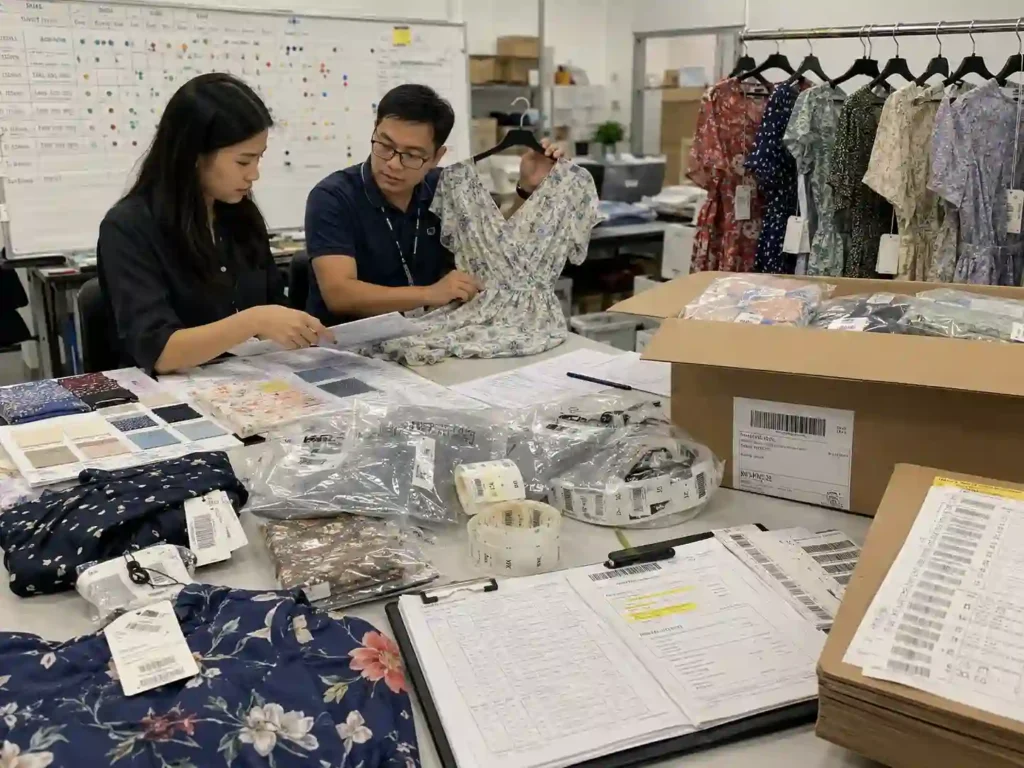
Control the Risks Behind Offshore Dress Production
Sample-Bulk Variation
Fit Instability
Fabric Mismatch
Launch Window Pressure
Return Risk
Communication Gaps
Choose the Right Manufacturing Model for Each Collection
Local production, sourcing companies and direct overseas manufacturers solve different problems. The best model depends on volume, development complexity, speed, margin structure and the level of control required over fabrics, samples, bulk production and delivery.
| Supplier Model | Strongest Advantage | Main Limitation | Best Use |
|---|---|---|---|
| Australian local factory | Close communication, local fitting and Australian-made positioning. | Higher unit cost and more limited capacity for large multi-style programs. | Local capsules, fit-intensive samples and selected premium runs. |
| Australian sourcing company | Local project interface with access to multiple overseas factories. | Factory ownership, margin structure and direct production control may vary. | Brands needing outsourced supplier management and factory matching. |
| General overseas factory | Broad capacity and competitive manufacturing economics. | Dress development, fit judgement and private-label controls can be inconsistent. | Simple garments with complete specifications and lower development risk. |
| Direct dress manufacturer | Pattern, sampling, production, QC and packing can follow one technical route. | Requires disciplined cross-border communication and clear approval records. | Seasonal dress collections, repeat programs and scalable private-label production. |
| Jinfeng Apparel | Direct Guangdong womenswear system with pattern, sample, factory, QC, packing and export support. | Best suited to structured custom programs rather than fragmented micro-orders. | Australian brands building 10-30 style collections and 20,000-80,000 piece programs. |
Dress Categories Developed for Australian Fashion Channels

Event Dresses
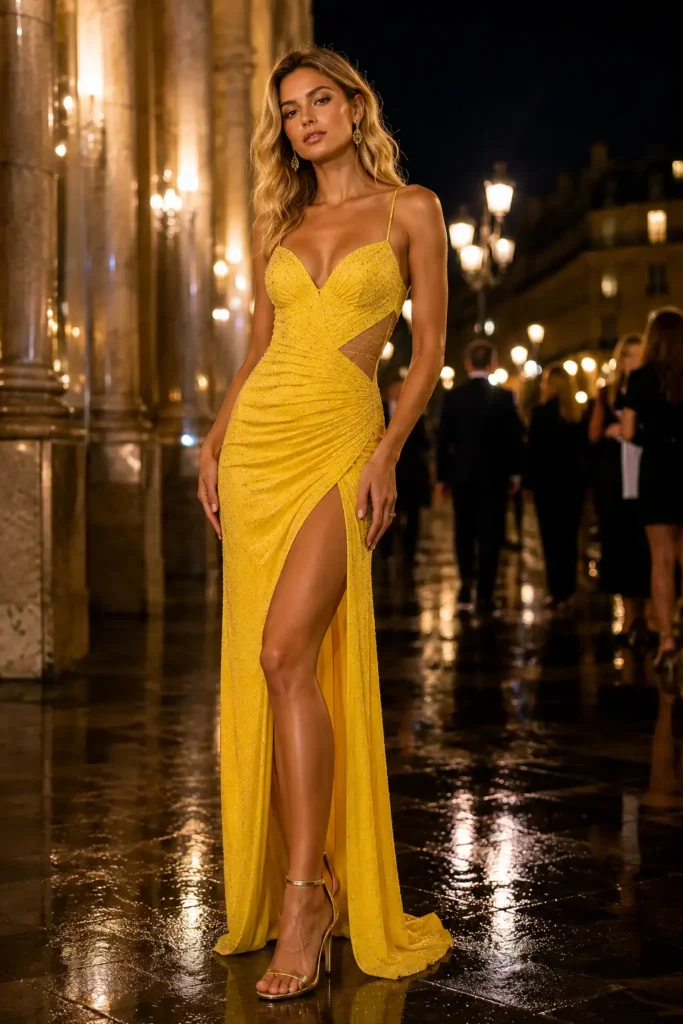
Party Dresses

Resort Dresses

Summer Dresses
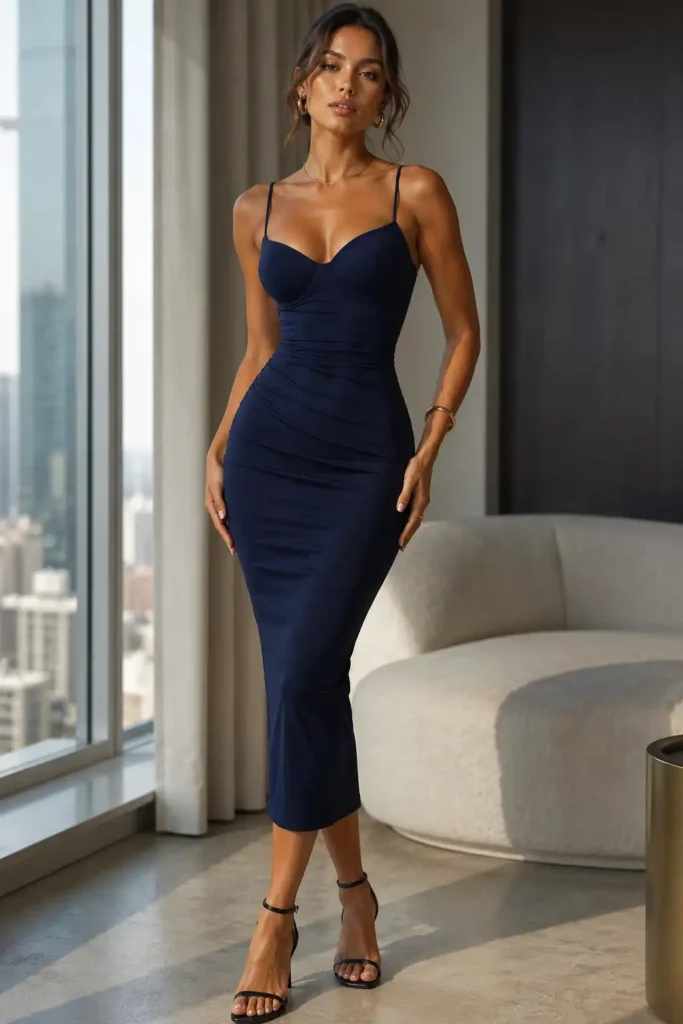
Bodycon Dresses
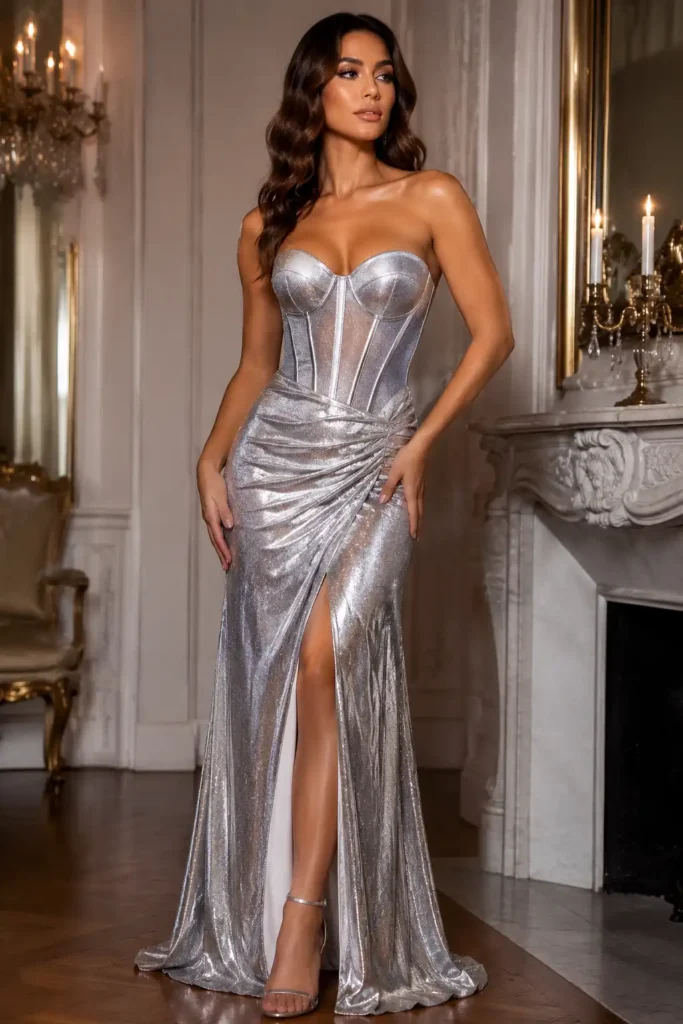
Corset Dresses

Midi and Maxi

Statement Dresses
Collection Programs Aligned With Australian Selling Cycles
Resort Capsule
Occasion Collection
Party Drop
Premium Ecommerce
Trans-Seasonal Range
Multi-Channel Assortment
Fabric Control From Swatch Review to Bulk Cutting
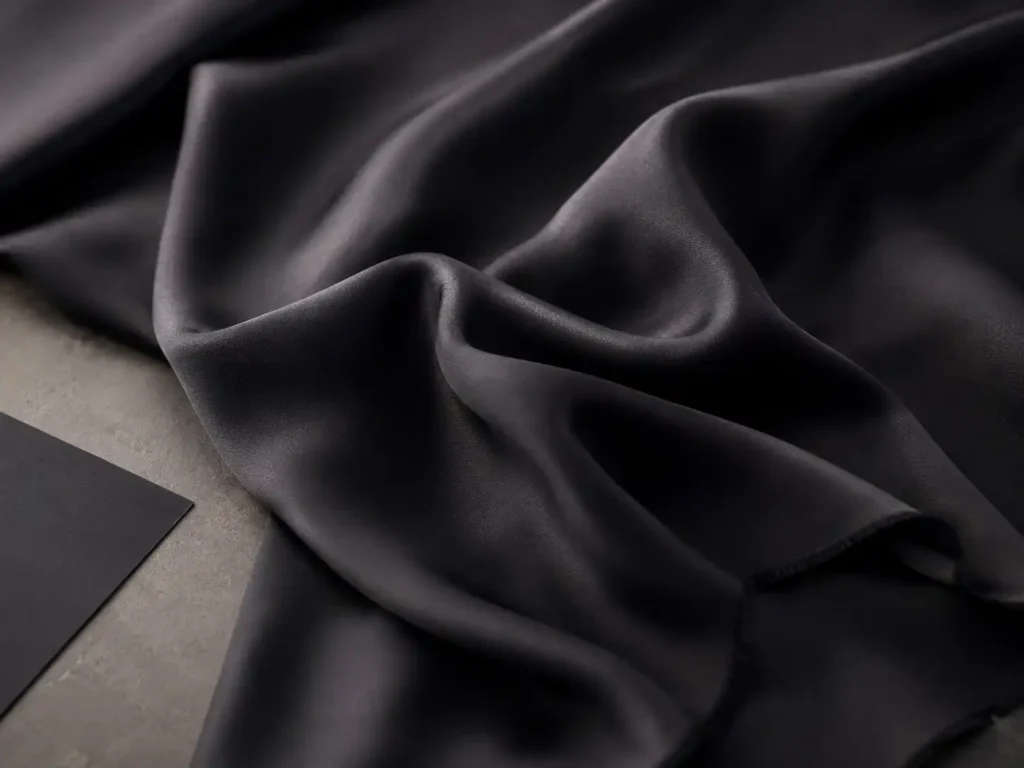
Satin
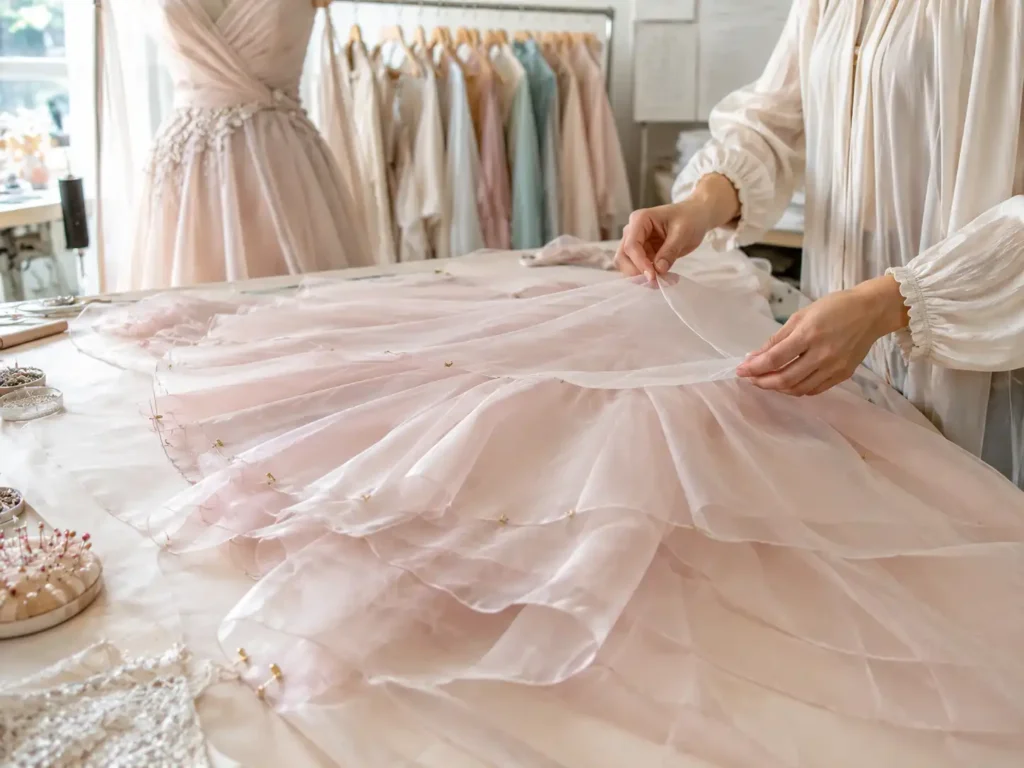
Chiffon
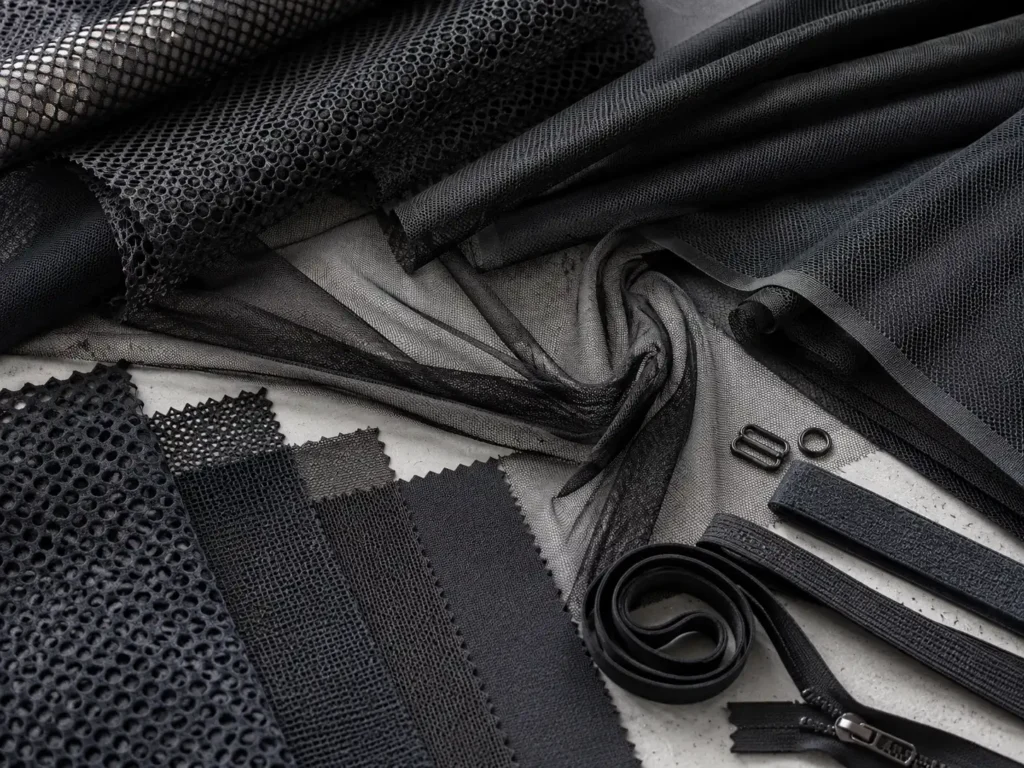
Mesh

Lace

Sequin Fabric
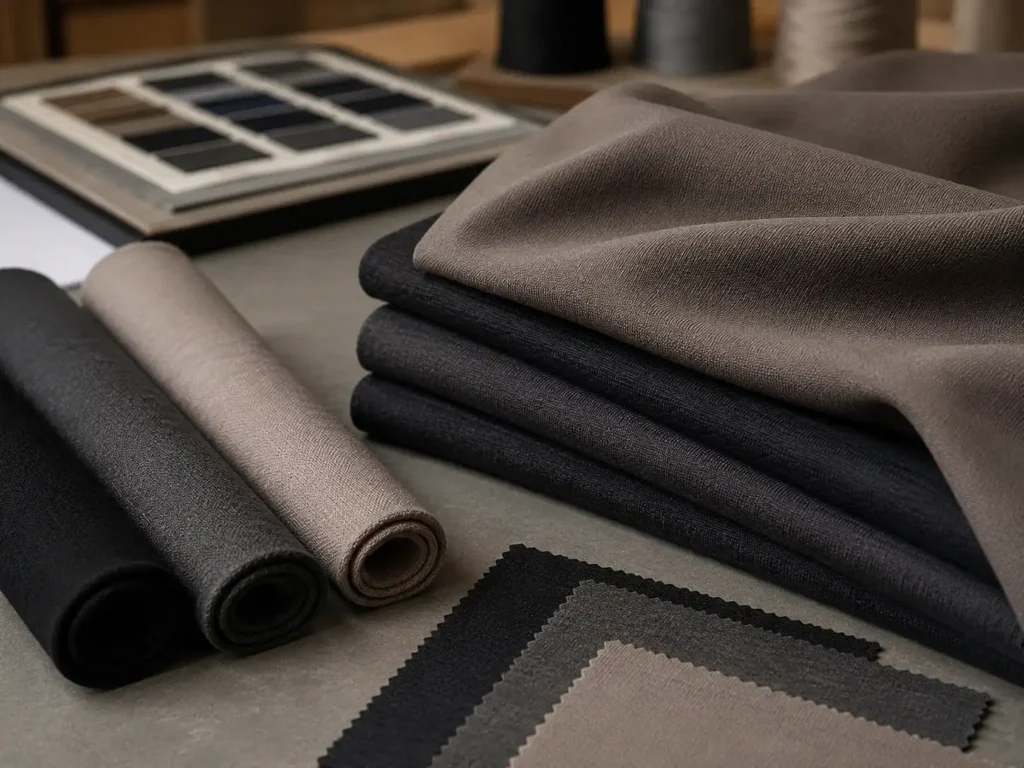
Jersey and Ponte

Rayon and Linen
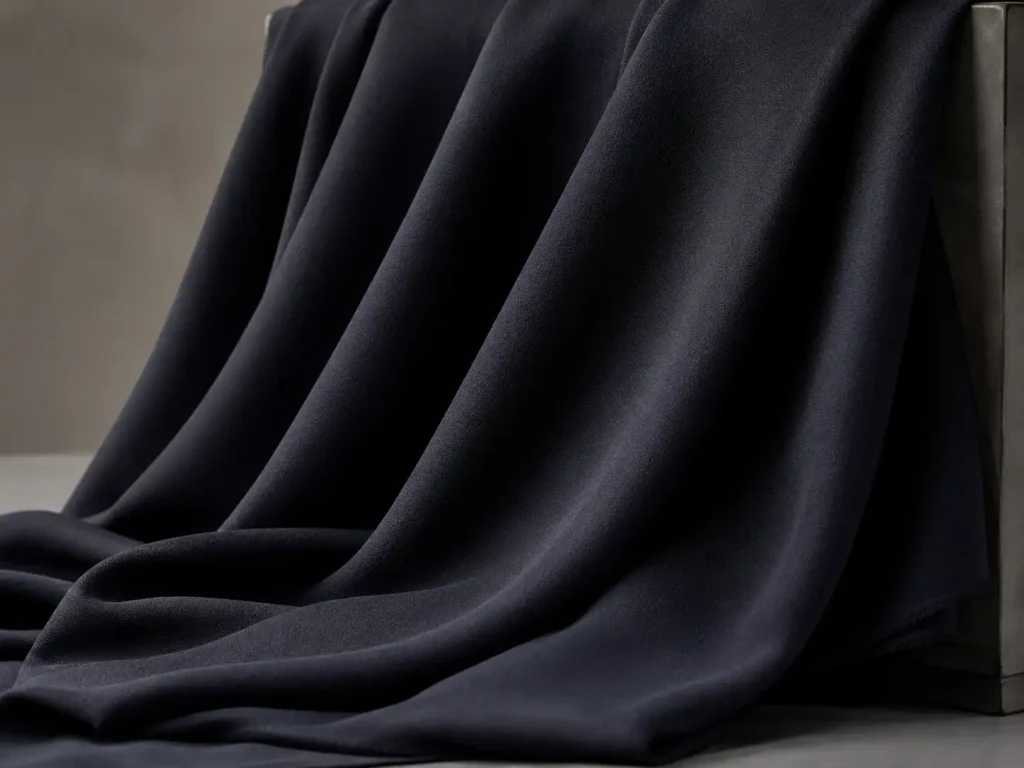
Crepe and Structure
Develop Fit Around Your Australian Size Specification
Jinfeng does not impose one generic size system. Pattern development follows the brand-supplied AU size chart, base size, fit model information, grade rules and product-specific fit comments.
Base Size and Proportion Control
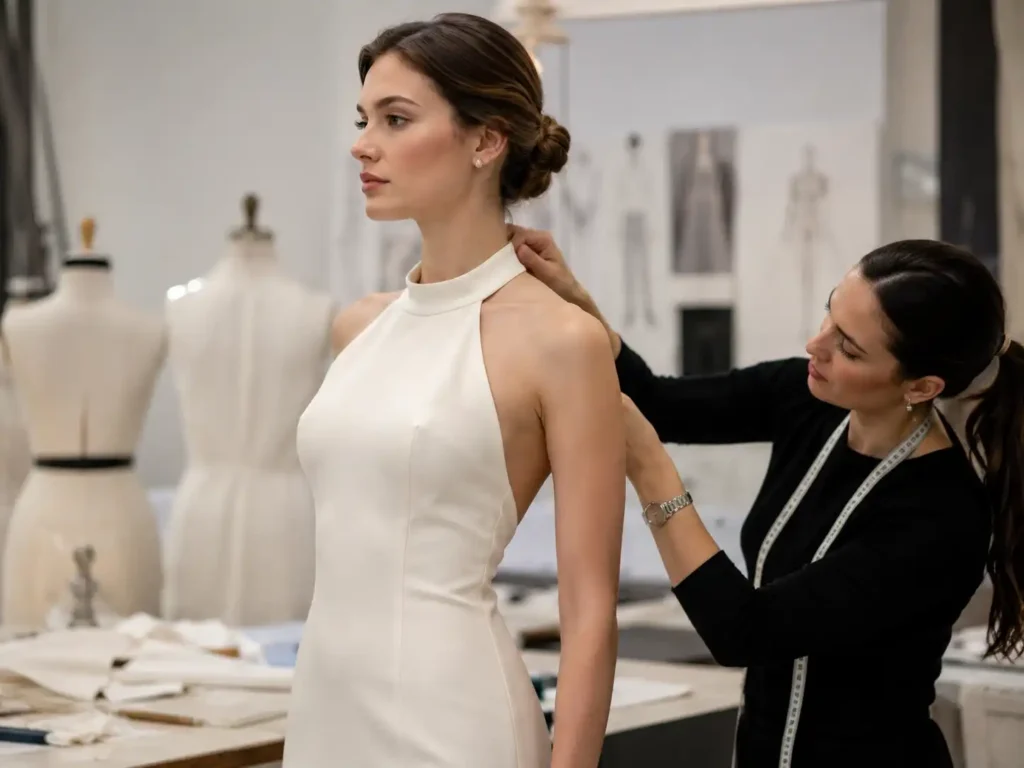
Pattern work begins by confirming which size represents the fit base, whether the range is AU 6-16, AU 8-18 or a proprietary sequence, and which body or garment measurements take priority. The pattern maker reviews bust, upper bust, under bust, waist, high or low waist position, hip, front length, back length and overall dress length. Neckline depth, shoulder or strap position, armhole shape and back coverage are checked against the intended wearing occasion. A party mini and a wedding guest midi may use the same nominal size, yet the acceptable ease, coverage and movement requirements are different. Fit comments are converted into measurable changes rather than broad instructions such as make it tighter or raise the neckline. Photos, pinned adjustments and measurement comparisons are recorded so the next sample reflects a controlled pattern update.
- Core measurements: bust, waist, hip, garment length, front length, back length and hem width.
- Upper-body controls: upper bust, under bust, armhole, neckline depth, strap length and back coverage.
- Lower-body controls: high or low waist, hip ease, slit height, rise for jumpsuits and walking allowance.
Fit Rules by Dress Structure
Different silhouettes require different technical decisions.
Bodycon dresses use controlled negative ease and depend on stretch recovery, so the same reduction cannot be applied to jersey, ponte, rib knit and power mesh.
Corset and strapless dresses require cup placement, under-bust alignment, boning position, waist shaping and anti-slip stability.
Satin slips need balanced bias or straight-grain behaviour, strap length and neckline control without pulling.
Midi and maxi dresses require proportional length grading, slit placement and hem balance.
Jumpsuits add torso length and crotch-rise requirements that cannot be assessed through dress measurements alone.
For each structure, Jinfeng identifies the measurements that are critical to appearance, comfort and production inspection. The approved PP sample, final size chart and grade rules then become the reference for bulk measurement checks.
From Fit Comments to Final Pattern
Sample feedback is useful only when it changes the production record.
Jinfeng reviews written comments, marked photographs, measurement results and fit videos, then classifies each point as a pattern, fabric, construction, trim or workmanship issue.
Pattern changes may include raising the neckline, shortening straps, shifting the waist, adding hip ease, reducing gaping, adjusting lining length or balancing the hem.
A fabric change may require a separate pattern review because stretch, drape and shrinkage can alter fit even when measurements remain unchanged.
Revised samples are produced after the new direction is documented.
Before bulk production, the final pattern, grade rule, measurement chart, approved PP sample and QC measurement points are aligned. This sequence reduces the risk of a factory using an earlier sample version or applying a correction to one size but not the full range.
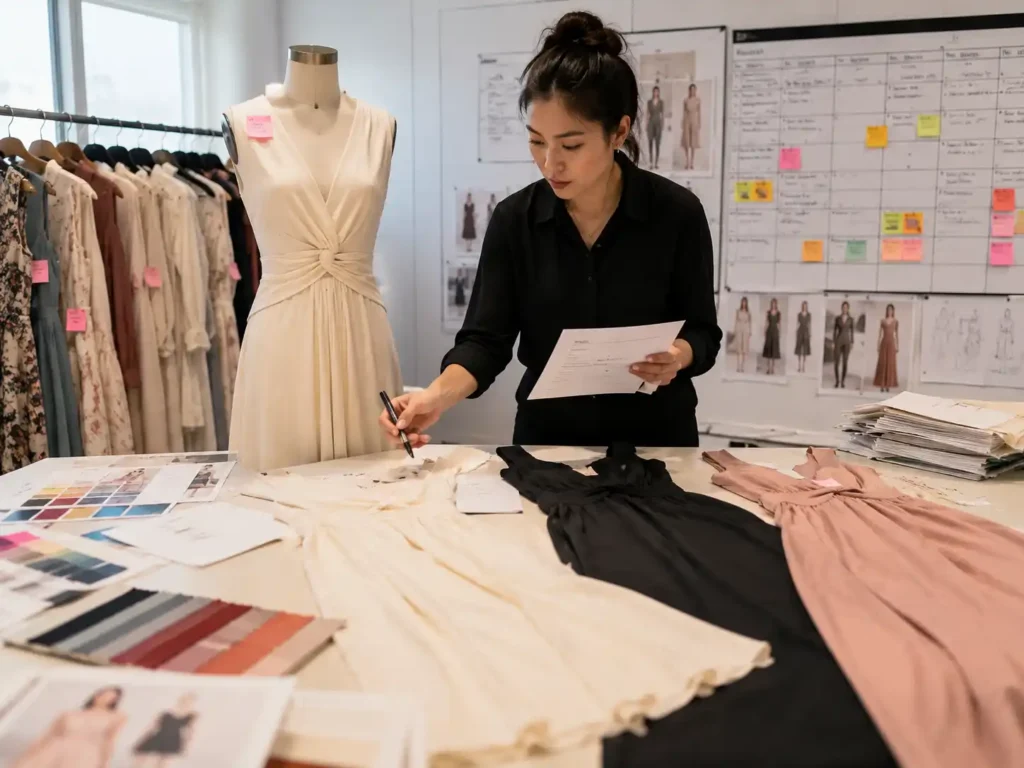
Construction Details That Protect Fit and Brand Finish
Premium dress quality is often decided inside the garment and along high-stress details. Structure, lining, closures, gathering and finishing must work together across samples, sizes and production batches.
Structured Bodices, Cups and Boning
Corset, bustier and strapless styles are developed as connected systems rather than decorative bodices. Cup shape, thickness and position must align with neckline height, under-bust seam and the intended level of support. Boning channels need correct placement, secure ends and enough flexibility for movement without collapsing. The inner lining should cover structural components cleanly and protect the skin. Zipper length and position affect how the bodice closes and whether the back remains smooth. During sampling, the team checks bust coverage, side-bust containment, waist shaping, strapless stability, symmetry and comfort while sitting or moving. Bulk standards include cup pair matching, boning placement, seam-channel width, zipper flatness, neckline shape and secure inner finishing. Small errors are corrected at sample stage because a few millimetres at the cup or neckline can change appearance across every size.
Ruching, Draping and Pleat Control
Ruching and draping create visual value only when the amount, direction and anchor points remain consistent. Excess fabric can add bulk at the waist or hip; insufficient fabric can flatten the intended effect. The pattern and sewing instructions define where gathering starts, where it finishes, how fullness is distributed and which seams secure the shape. Symmetry is checked for paired details, while asymmetric designs still require a fixed reference point. Pleats need agreed depth, direction and pressing level so the sample does not become sharper or softer in production. For stretch dresses, gathering must work with fabric recovery and avoid side-seam distortion. Bulk inspection compares ruching density, left-right balance, seam length and finished measurements against the approved sample. Packing also matters because heavy compression can flatten drape or create unwanted creases before the garment reaches the Australian warehouse.
Cut-Outs, Straps and Open Backs
Cut-out and open-back designs must balance visual exposure with stability. Pattern edges are reviewed for gaping, stretching and movement when the wearer walks, sits or raises an arm. Shoulder straps, halter ties and adjustable hardware are selected according to garment weight and support needs. Strap length must grade appropriately; simply adding the same amount to every size can shift the neckline or armhole. Cut-out edges may require binding, elastic, tape or internal support depending on fabric. Mesh inserts need controlled transparency and seam placement. Backless styles often rely on side seams, waist fit and strap geometry to hold the garment in position. Sample review checks front, side and back views under movement. Bulk QC covers strap security, slider direction, edge flatness, symmetry, opening position and reinforcement at stress points.
Zippers, Linings, Hems and Pressing
Clean finishing depends on the interaction of closure, lining, hem and final pressing. Invisible zippers must sit flat without pulling the side or centre-back seam. Lining length should provide coverage without showing below the shell or restricting movement. Slits need consistent height, reinforcement and smooth internal finishing. Lightweight chiffon hems require balance and controlled handling; satin hems must avoid shine marks and waviness; stretch hems need suitable recovery. Pressing standards vary by material: satin can show pressure marks, velvet can crush, pleats can lose shape and mesh can distort under heat. Before packing, garments are checked for seam impressions, shine, puckering, uneven hems, lining exposure, zipper shape and surface marks. Packaging method is then matched to the fabric so the brand receives a clean, ready-to-present garment rather than a product damaged by the final handling stage.
Sampling Timelines Based on Style Complexity
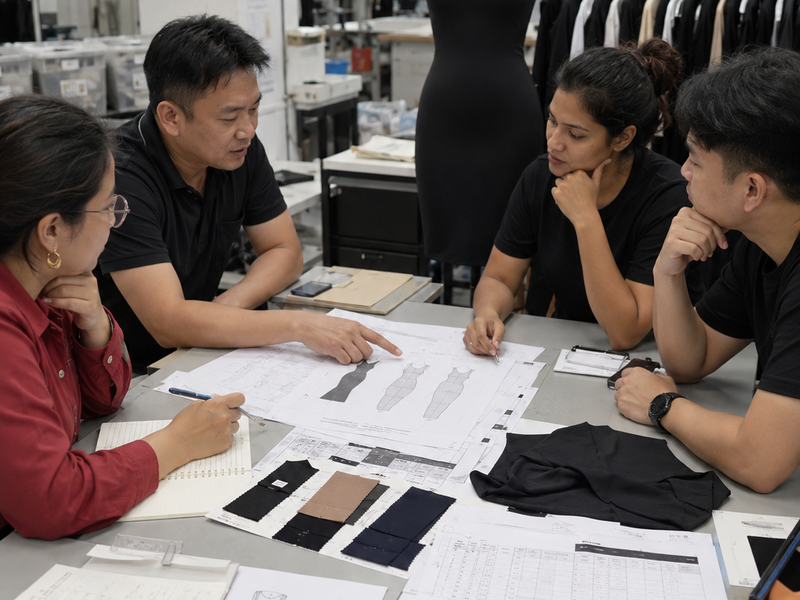
Project Review
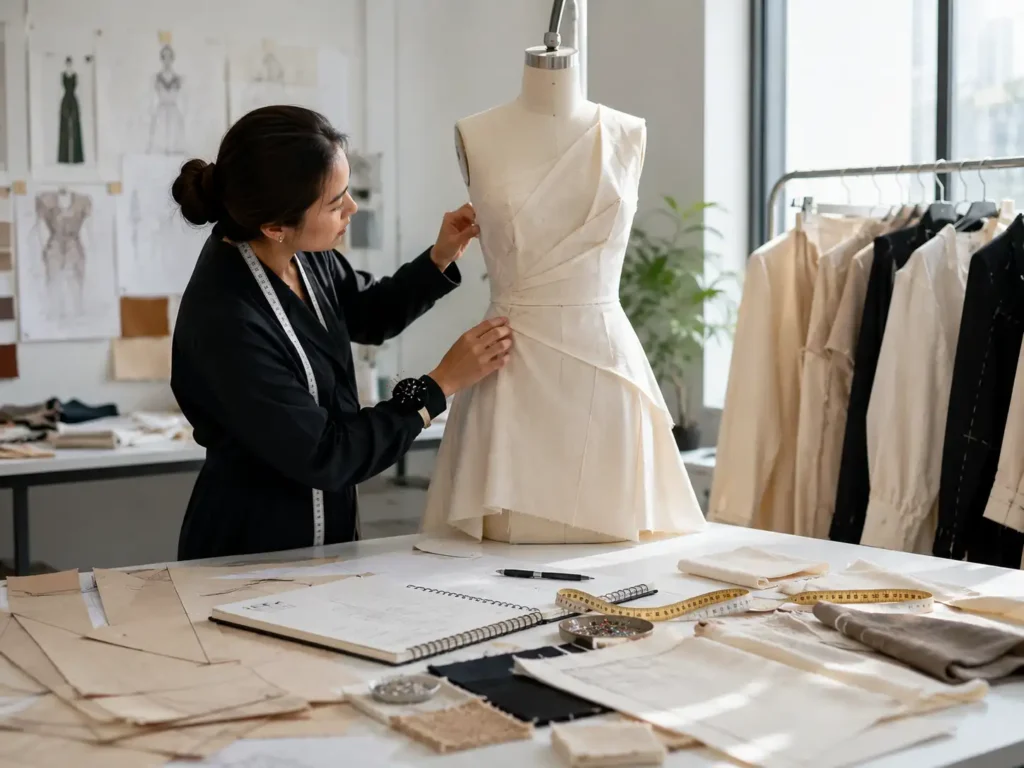
First Sample
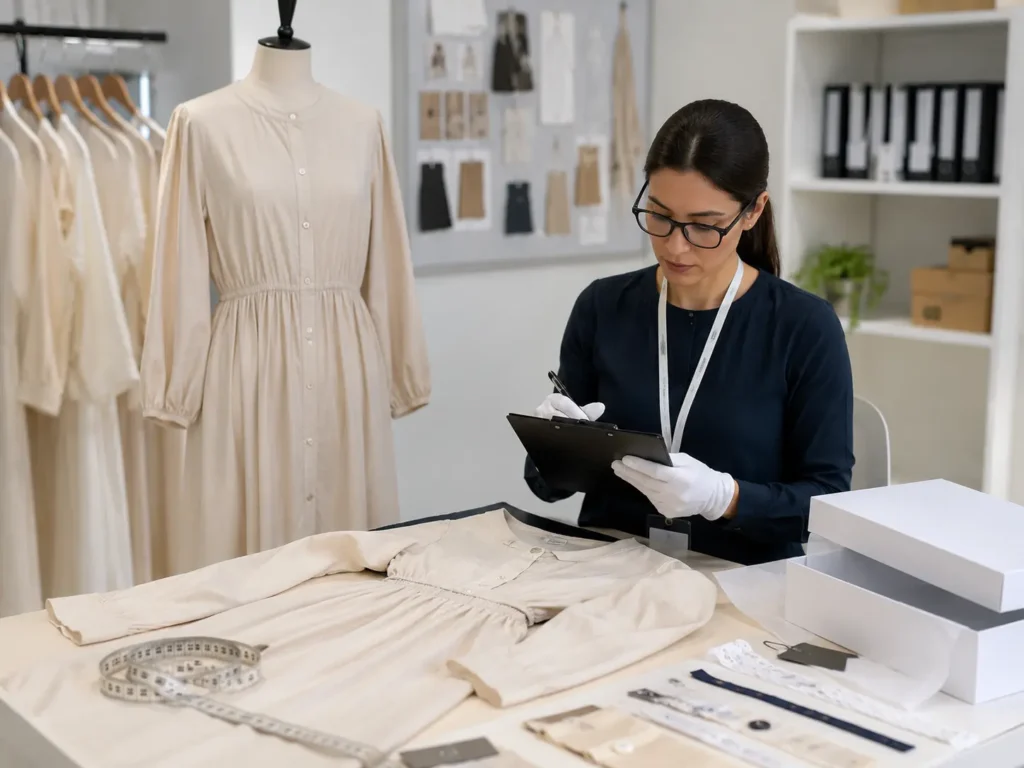
Complex Sample

Fit and Revision

Photo Sample

PP and Golden Sample
Plan MOQ by Style, Colour and Material Route
The standard starting point is 200 pieces per style and colour. Quantity planning must also account for fabric supply, custom dyeing, print development, special trims, size breakdown and private-label packaging.
Order Plan | Total Pieces | Standard Fit | Production Note |
1 style x 1 colour x 200 pcs | 200 | Can be evaluated | Most suitable with available fabric, regular trims and standard private-label packing. |
1 style x 2 colours x 200 pcs each | 400 | Can be evaluated | Each colour meets the 200-piece starting point; dye lots and colour-specific labels are checked separately. |
1 style x 2 colours x 100 pcs each | 200 | Normally not standard | Combined total does not mean each colour meets the production unit. Fabric and line setup remain split. |
4 styles x 50 pcs each | 200 | Not a standard structure | Every style needs separate pattern, cutting, sewing and QC preparation, so the total cannot be pooled. |
Custom dye, print, lace or hardware | Project based | Requires supplier review | Material or trim MOQ may be higher than garment MOQ and can affect cost and timing. |
10-30 style seasonal program | 20,000-80,000 | Strong operating fit | Styles are grouped by fabric, construction, priority, factory allocation and delivery window. |
Factory Allocation Based on Product and Production Risk
Capacity is useful only when the right production unit receives the right product. Jinfeng allocates styles according to fabric behaviour, construction complexity, order volume, timeline, repeat status and inspection requirements.
Owned Factory Core
Jinfeng Apparel operates six owned women’s fashion factories in its Guangdong manufacturing system. The owned-factory core supports dresses, skirts, jumpsuits, matching sets and private-label womenswear, with allocation based on whether the product is woven, stretch, structured, occasion-led or repeatable. First-time high-risk styles are reviewed carefully before line placement. The approved PP sample, final pattern, material record and sewing instructions are transferred into production standards rather than relying on a visual sample alone. Factory allocation also considers colour count, size range, line changeover, pressing needs and packing requirements. A complex corset or sequin style should not be treated as interchangeable with a simple rayon resort dress, even when both share the same order quantity. Product-to-line matching protects both efficiency and workmanship.
Long-Term Satellite Support
More than ten long-term satellite production partners extend the system for seasonal capacity, selected regular styles, repeat orders and staged production. They are not presented as random outsourcing. Production units are matched to categories they handle consistently, while Jinfeng retains the central records for approved samples, patterns, materials, trims, labels, QC and shipment requirements. Complex first-time styles remain prioritised for production units with the relevant structure and fabric experience. Regular or repeated products can be allocated across the wider network when the standards are stable and the delivery plan requires additional capacity. Unified merchandising and inspection checkpoints reduce the risk of different factories interpreting the same brand requirement in different ways.
Multi-Style Program Management
Large Australian programs commonly include 10-30 styles and 20,000-80,000 total pieces. Jinfeng groups the range by fabric family, silhouette, construction risk, trim package, sample priority and launch window. Styles using the same satin, lining or label program can be coordinated to reduce material fragmentation. Hero products, photo samples and complex structures receive earlier review, while regular supporting styles progress in controlled batches. Production status is tracked through material arrival, cutting, sewing, inline inspection, finishing, packing and shipment preparation. The system includes 12+ merchandisers, 15+ QC inspectors and 30+ finishing and packing workers, supporting the transition from sample approval into bulk and multi-batch delivery without depending on one person to remember every detail.
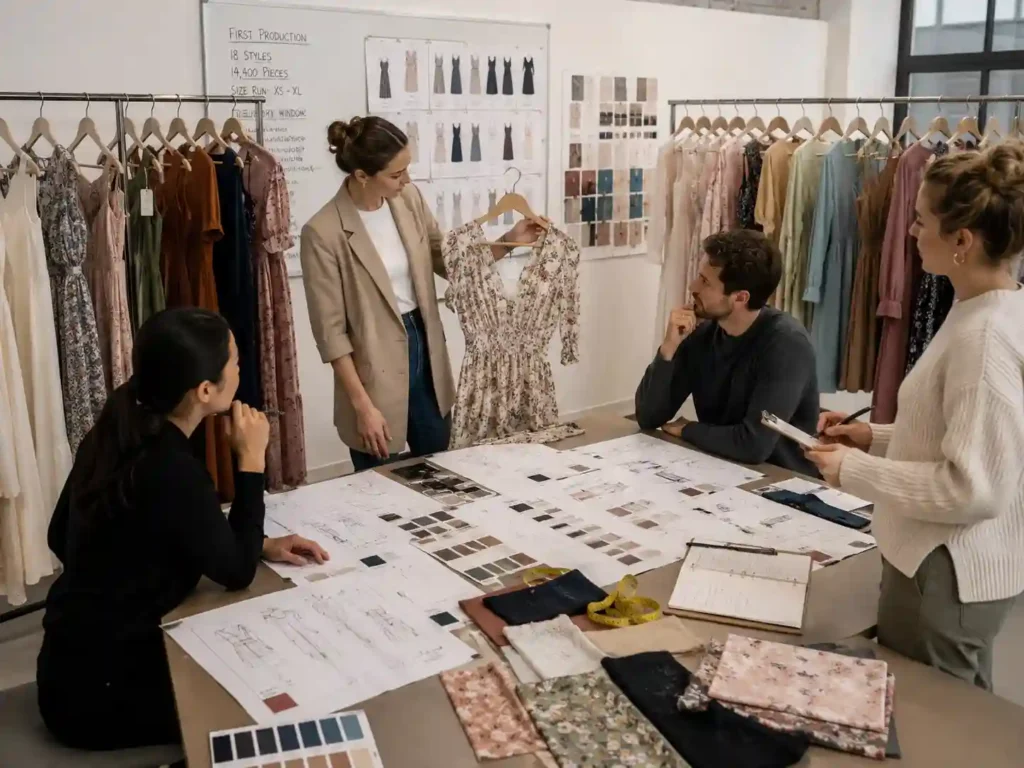
Build Production Backward From the Australian Launch Date
The required warehouse date should drive sample priority, material booking, PP approval, bulk allocation, QC, packing and freight. A credible timeline shows dependencies instead of promising one fixed production speed for every style.
Lock the Critical Dates First
Jinfeng Apparel operates six owned women’s fashion factories in its Guangdong manufacturing system. The owned-factory core supports dresses, skirts, jumpsuits, matching sets and private-label womenswear, with allocation based on whether the product is woven, stretch, structured, occasion-led or repeatable. First-time high-risk styles are reviewed carefully before line placement. The approved PP sample, final pattern, material record and sewing instructions are transferred into production standards rather than relying on a visual sample alone. Factory allocation also considers colour count, size range, line changeover, pressing needs and packing requirements. A complex corset or sequin style should not be treated as interchangeable with a simple rayon resort dress, even when both share the same order quantity. Product-to-line matching protects both efficiency and workmanship.
Protect Bulk and QC Windows
After PP approval, materials, production documents and line allocation are reviewed against the committed receiving plan. Bulk timing depends on order quantity, fabric arrival, colour count, construction complexity, factory capacity, inspection requirements and packaging readiness. Quantity alone does not determine speed: a smaller order with custom dyeing, handwork, multi-layer mesh or special packaging can take longer than a larger order using confirmed stock materials and repeat construction. QC time must remain visible in the schedule. Removing inline checks, final measurements or packing review to recover a late launch can convert a timing problem into a return, rework or warehouse problem. Jinfeng uses milestone updates for key programs so material, cutting, sewing, inspection and packing status can be reviewed before the shipment date becomes critical.
Use Split Delivery With Clear SKU Control
For launch-sensitive programs, selected quantities can be separated for air freight while the main balance moves by sea. A common structure sends 10-30% of urgent goods first, based on hero styles, key colours or priority sizes, then ships the remaining bulk under a lower-cost route. Split delivery works only when SKU, size, colour, carton, invoice and packing-list divisions are agreed before final packing. It cannot repair missing materials or an unapproved PP sample. Jinfeng can coordinate with a client-appointed forwarder or a factory-recommended forwarder, but route, cost, transit reference and customs responsibility are confirmed by destination, season, freight availability and trade terms. The goal is to protect launch timing without losing control of stock records or warehouse receiving.
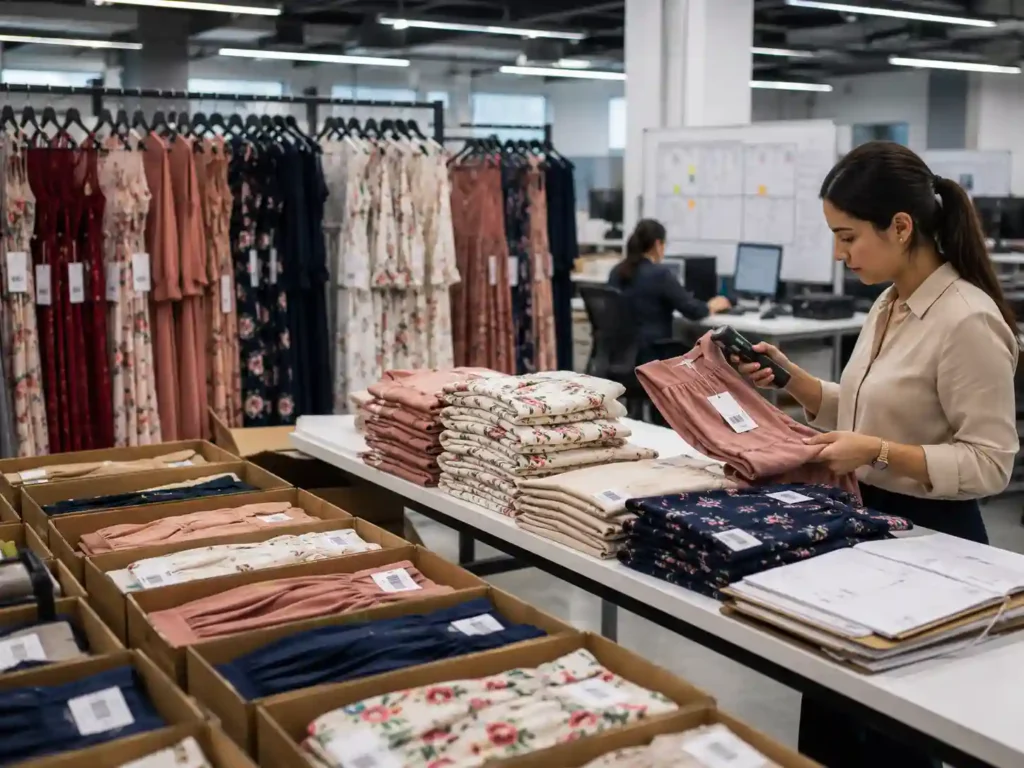
Compliance Support Confirmed by Factory, Material and Batch
Factory Documentation
Fabric and Garment Testing
Labels and Records
Private-Label Packing Ready for Ecommerce and Retail

Garment Labels

Hangtags
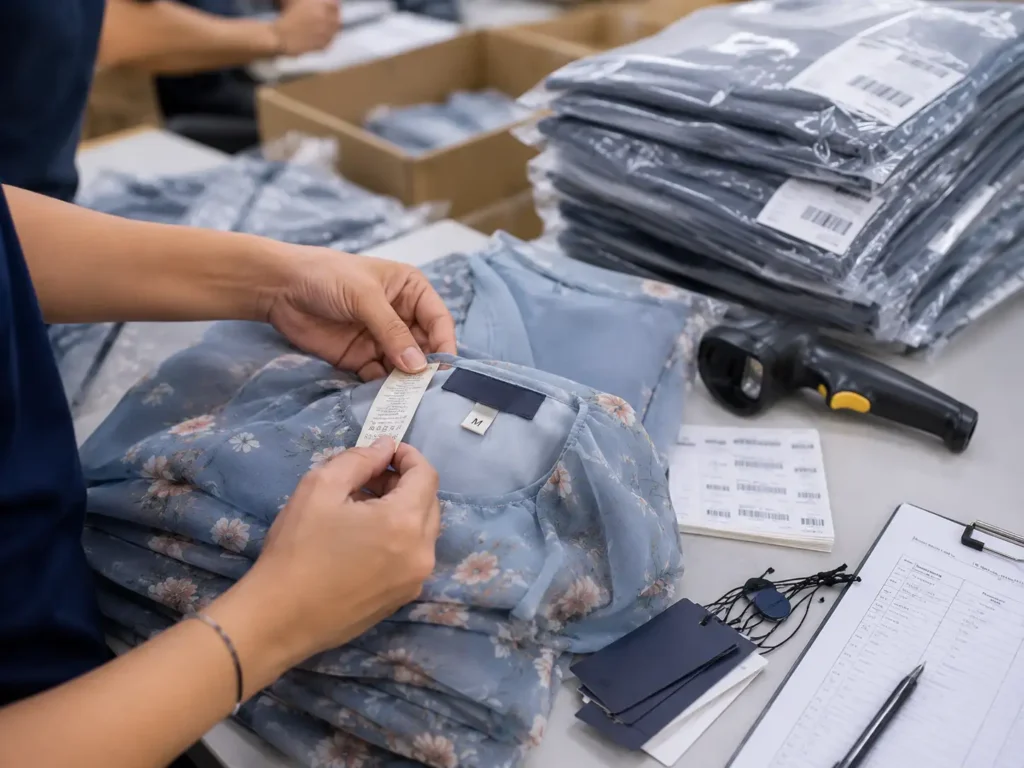
Barcode and SKU
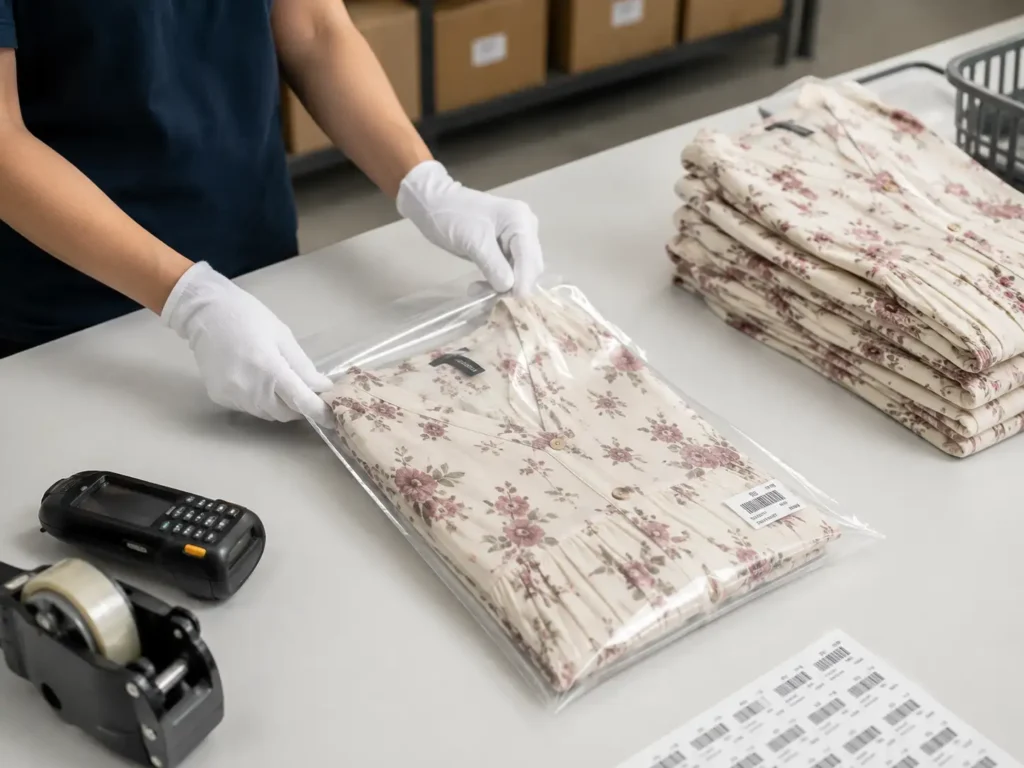
Polybags
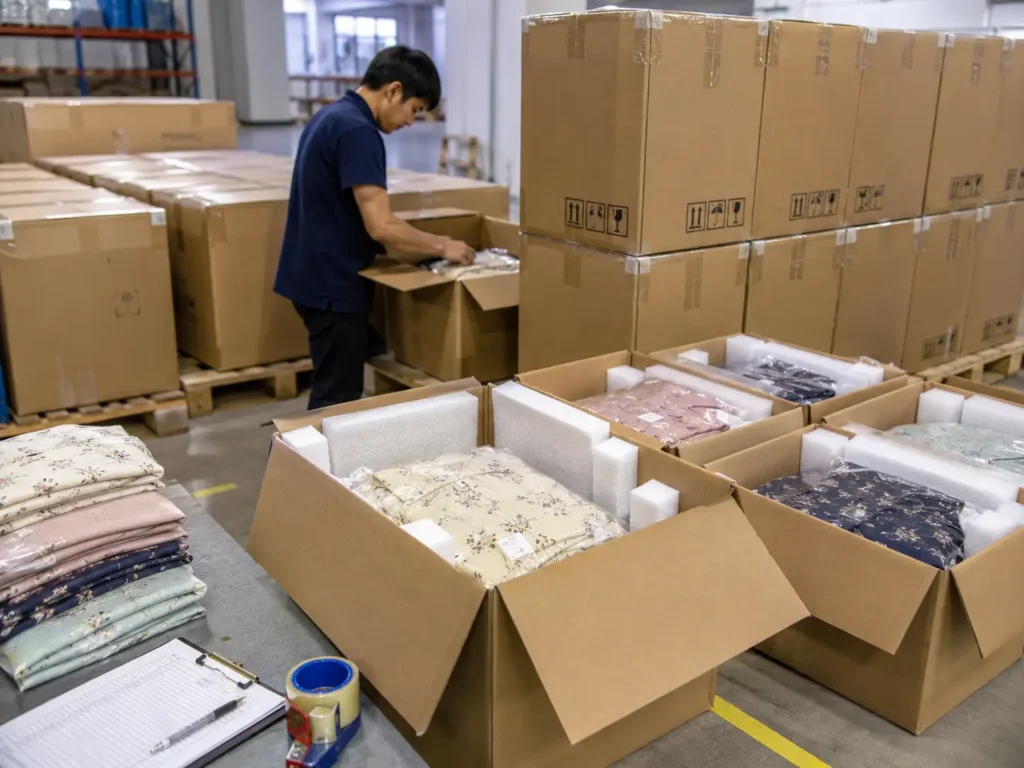
Carton Marks
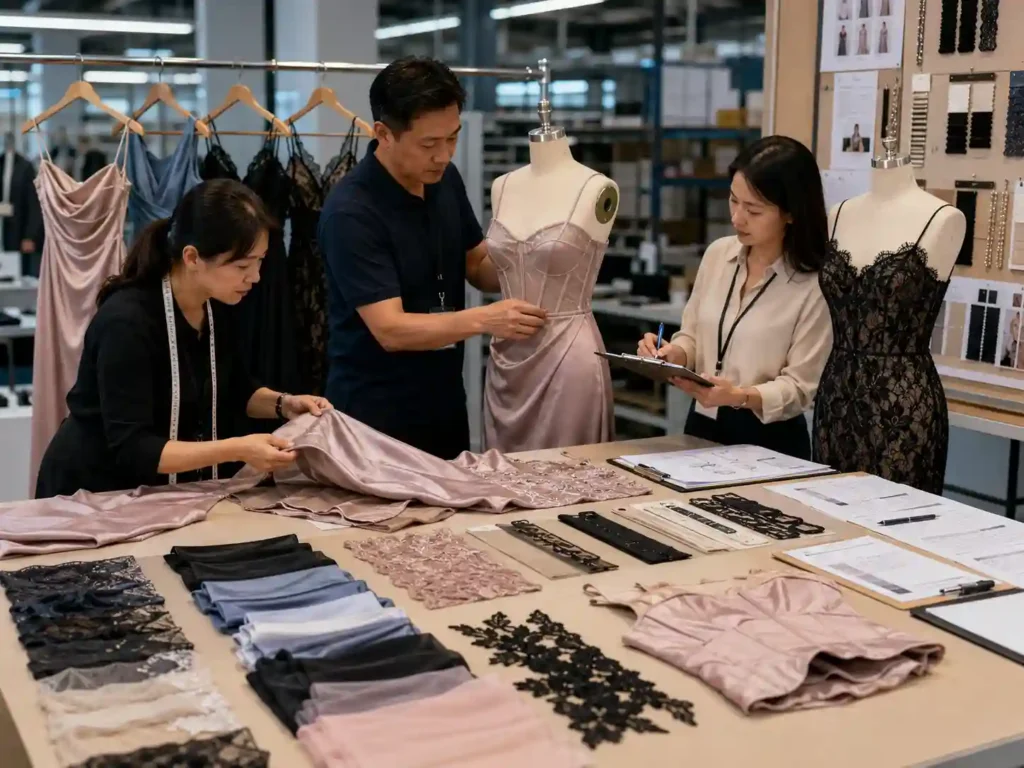
Repeat Records
Shipment Coordination for Australian Warehouses and Forwarders
Freight planning starts with packed quantity, carton data, destination, receiving window, trade terms and warehouse rules. Jinfeng can work with a nominated forwarder or help compare suitable routes without forcing one logistics provider.
Samples and Urgent Goods
Samples, fabric swatches, trim cards, label samples and urgent documents can move by DHL, FedEx, UPS, SF International or another route assessed by destination. The brand may use its own courier account, or Jinfeng can arrange dispatch and provide tracking. Air freight is suited to high-value or time-sensitive bulk, selected launch quantities and urgent replenishment. Freight planning uses carton count, dimensions, gross weight, volume weight, airport or delivery address, customs arrangement and warehouse timing. Air freight is faster than sea freight but carries higher cost and remains subject to flight capacity, peak-season pricing and destination clearance. Final routing is quoted after the packed or estimated cargo data is available.
Sea Freight and Split Shipments
Sea freight is suited to regular bulk orders, large dress collections, repeat programs and cost-controlled delivery. LCL or FCL coordination can follow the brand’s forwarder or a factory-recommended route. Booking requires carton quantity, dimensions, CBM, gross and net weight, commercial invoice, packing list, destination port, consignee and shipping marks. Launch-sensitive programs can use an air-and-sea split, commonly sending 10-30% of urgent quantities first while the remaining balance moves by sea. SKU, colour, size, carton and document splits must be prepared deliberately so the Australian warehouse can receive and reconcile each shipment without stock confusion.
Trade Terms and Export Documents
Jinfeng can support EXW, FOB, CIF, DAP and DDP by project. EXW suits brands whose forwarder collects from the factory. FOB supports established importers with nominated freight and customs arrangements. CIF covers freight and insurance to the destination port. DAP and DDP require route, destination, product and forwarder review because import responsibilities and available solutions vary. Export support can include commercial invoice, packing list, carton marks, bill of lading or air waybill coordination, certificate of origin by request, HS code information support and customs declaration data. The final HS classification should be confirmed by the importer, broker or forwarder using product category, fibre composition and construction details.
Frequently Asked Questions for Australian Fashion Brands

Start Your Australian Dress Manufacturing Program
Send the available project files to Kelly for an initial manufacturing review. A complete brief helps the team evaluate fabric direction, fit risk, sample route, MOQ, quotation inputs, production allocation, private-label needs and delivery planning.
A tech pack is useful but not mandatory at the first stage; line sheets, sketches, reference images or original sample photographs can also support an early assessment when quantity and product direction are clear.
- Tech pack, line sheet, sketch, reference image or original sample photographs
- Target quantity for every style and colour
- AU size range, base size, measurement chart and grade rules
- Fabric, colour, lining, trim and construction preferences
- Woven label, care label, hangtag, barcode, SKU and polybag requirements
- Campaign, launch, warehouse receiving or delivery target
- Australian delivery city, warehouse guide, trade terms or nominated forwarder
- Audit, testing, inspection or documentation requirements