 Skip to content
Dress Manufacturer for UK Fashion Brands
Custom dress development and scalable production for established UK labels, premium ecommerce collections, occasionwear ranges and multi-channel womenswear programs.
Jinfeng Apparel develops and manufactures dresses from Guangdong, China, combining fabric direction, pattern work, sample revision, PP approval, bulk control, private-label packing and export coordination. Collection programs commonly involve 10-30 styles and 20,000-80,000 pieces across a brand order, requiring more than sewing capacity: every style, colour, size, label file and delivery milestone must remain traceable.
- Collection scale: structured management for 10-30 styles and 20,000-80,000 pieces across a brand order.
- Development resources: 2 sample rooms, 7+ senior womenswear pattern makers and 20+ sample machinists.
- Production structure: 6 owned women’s fashion factories and 10+ long-term satellite production partners.
- Commercial baseline: MOQ starts from 200 pcs per style/colour; special fabrics, trims and packaging are reviewed separately.
Manufacturing Facts UK Brands Can Verify
Since 2008
Six Owned Factories
Ten Plus Partners
Two Sample Rooms
Seven Plus Pattern Makers
MOQ 200 Per Colour
Is Jinfeng the Right Manufacturing Fit?
Best Fit For
Different Supply Model
What UK Fashion Brands Need From Manufacturers
Accurate Samples
Reliable Fit
Fabric Judgement
Bulk Consistency
Launch Control
Retail Delivery

A China-Based Dress Partner for UK Brands
Jinfeng Apparel combines dress-focused development with Guangdong’s established fabric, trim and production network. The purpose is not to imitate UK manufacturing, but to provide a clearly managed overseas route for brand-level custom collections.
Dress Specialisation Before Broad Capacity
Jinfeng Apparel’s strongest product field is premium custom womenswear, especially dresses, skirts, jumpsuits, matching sets and related collection pieces. Development experience covers party, occasion, evening, wedding guest, graduation, resort, bodycon, corset, satin, mesh, lace and sequin directions. Product specialisation matters because every dress category carries its own fit and production risks. A power-mesh bodycon dress needs stretch recovery and side-seam control, while a satin slip dress needs grain, drape, zip and pressing control. A corset style depends on cup shape, boning position, upper-bust security and lining construction. A broad garment supplier may list all three products, yet the development method cannot be the same. Jinfeng begins with the intended silhouette, sales setting, fabric behaviour, size structure and retail finish, then builds the pattern, sample and QC route around those requirements.
Development and Production Stay Connected
The manufacturing route covers project review, fabric and trim direction, pattern development, sample making, revision, PP approval, bulk production, inspection, private-label packing and shipment coordination. Each step creates information needed by the next. Fit comments must update the pattern and size chart. A trim change must update the BOM, cost and sewing instruction. A new polybag or barcode requirement must update the packing file and QC checklist. Keeping these links visible reduces the common gap between an attractive sample and inconsistent bulk output. UK product teams also gain a clearer basis for approvals because decisions are recorded against fabric, construction, measurement and packing standards rather than left inside scattered chat messages.
Production Scale Without One-Factory Assumptions
Six owned factories form the core manufacturing base, supported by more than ten long-term satellite partners. The structure is used to match styles with the correct production route, not to suggest that every factory can make every dress. Knit bodycon styles, woven satin dresses, lace occasionwear and embellished evening pieces may require different sewing experience, handling methods and line preparation. For a 10-30 style collection, grouping by fabric family, complexity, colour plan, launch priority and workmanship level is more reliable than releasing all styles at once. Jinfeng coordinates approved specifications, production instructions, progress reporting, inline inspection, finishing and packing across the allocated units while keeping the brand’s files and standards connected to the full order.
Dress Categories for UK Fashion Collections

Occasion Dresses
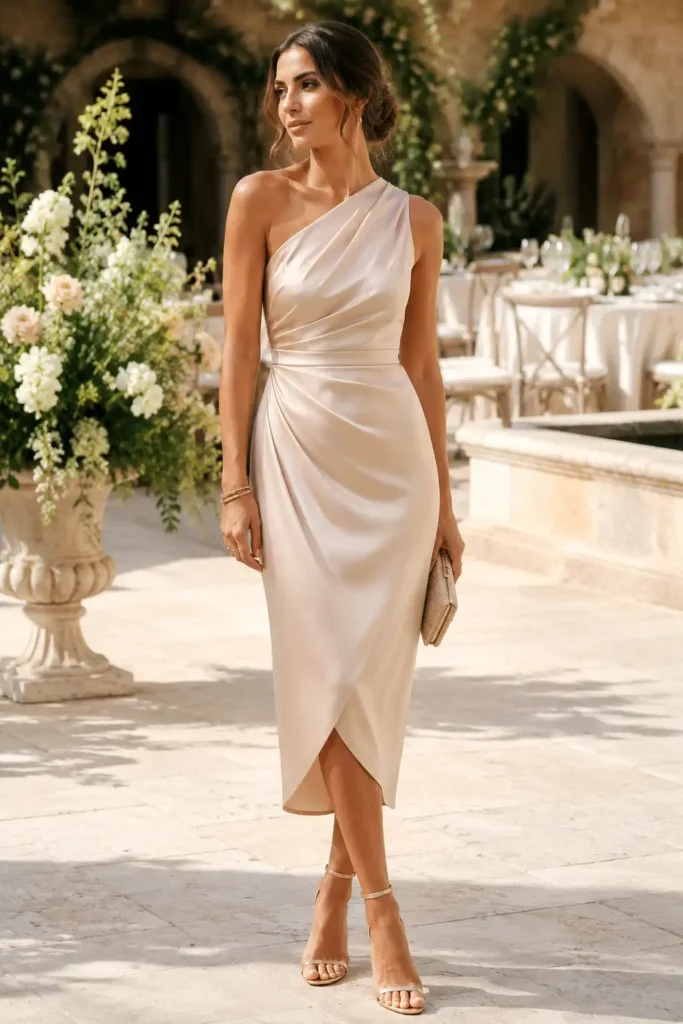
Wedding Guest Dresses
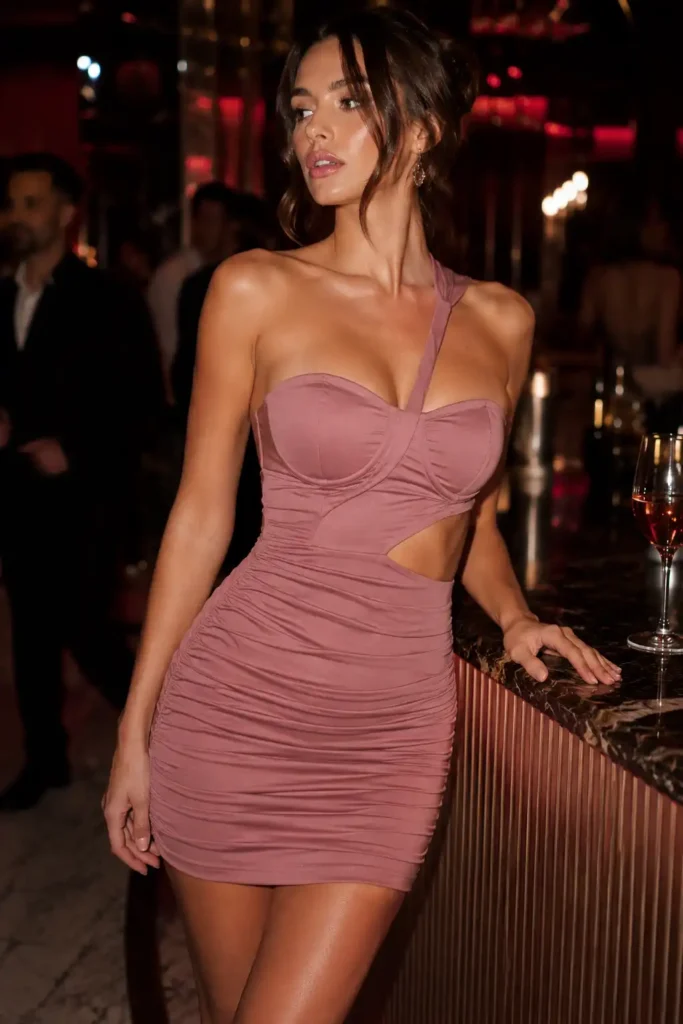
Party Cocktail Dresses

Bodycon Club Dresses
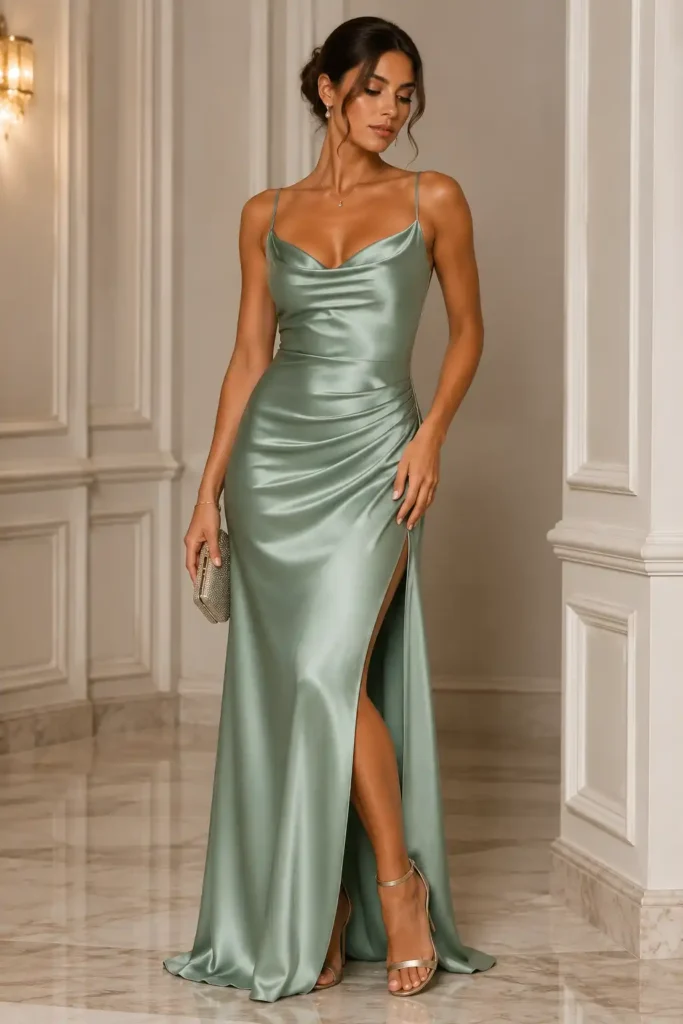
Satin Slip Dresses
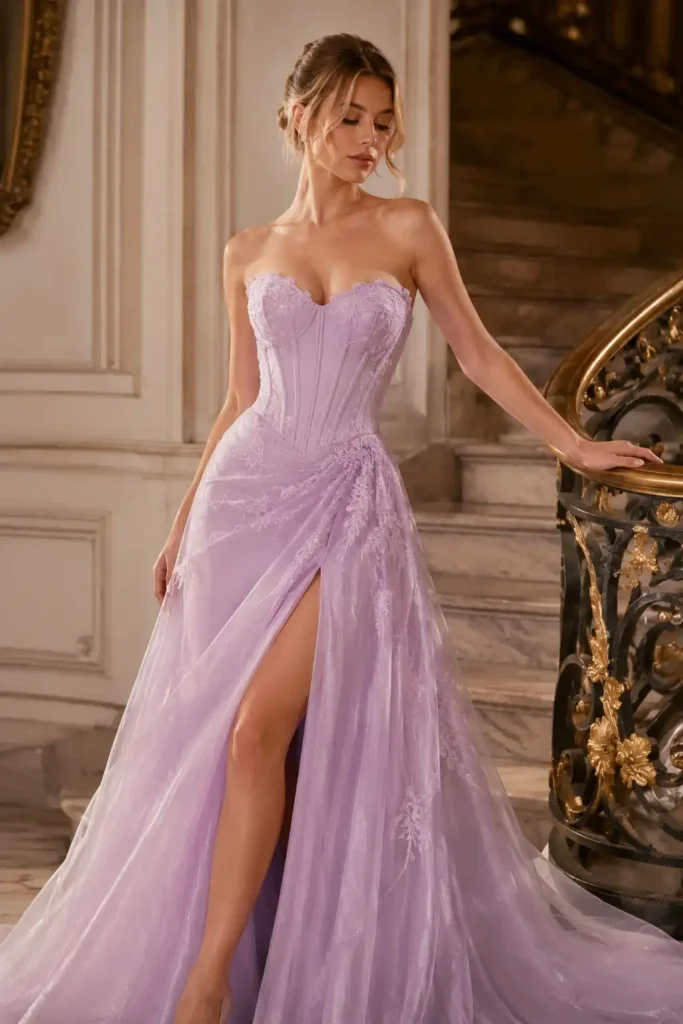
Corset Structured Dresses

Midi Maxi Dresses

Resort Vacation Dresses

Office Evening Dresses
Build Collections Around UK Selling Seasons

Spring Summer
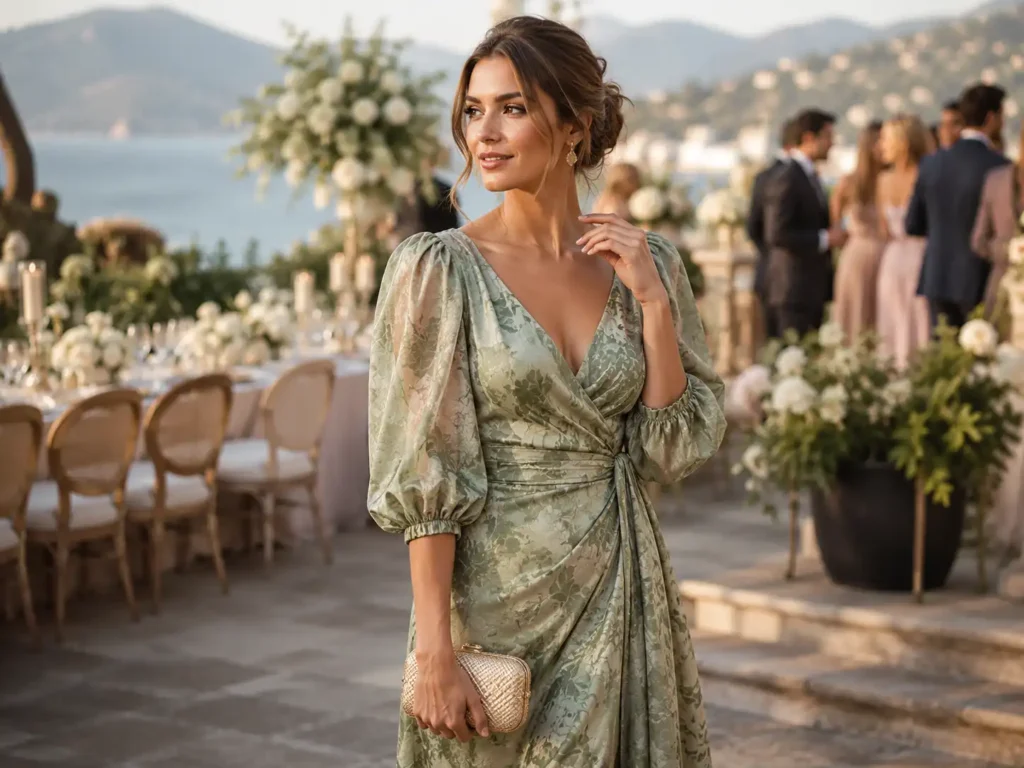
Wedding Occasion

Festival Social
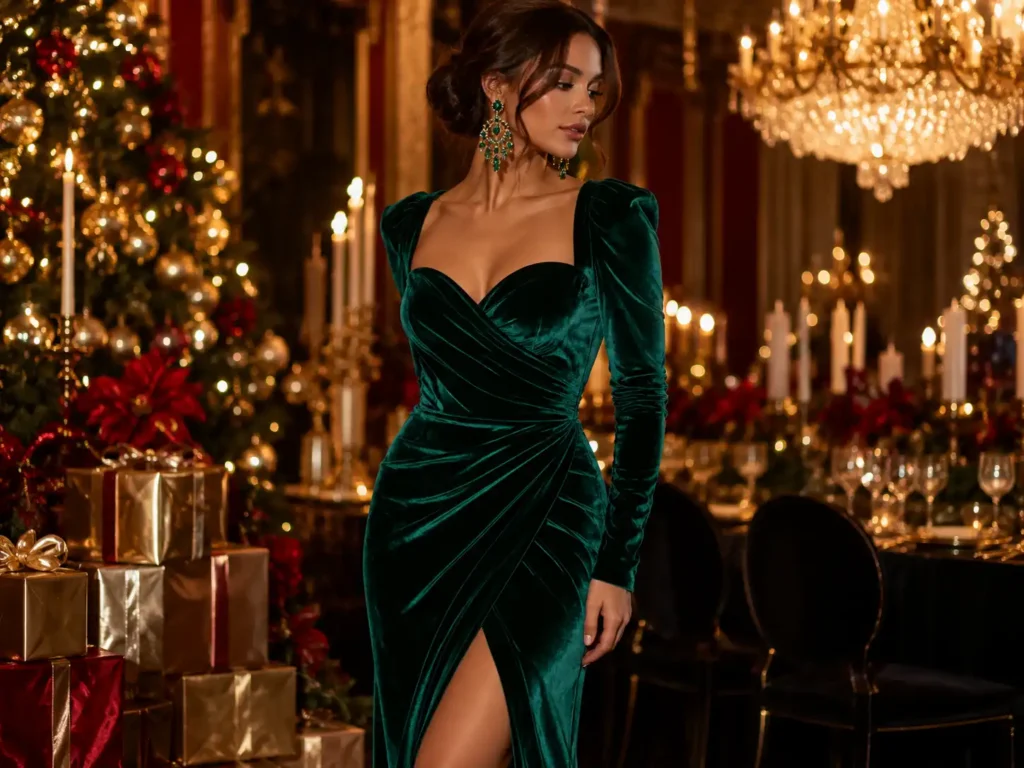
Autumn Holiday
Fabric Directions for UK Dress Programs

Satin Stretch Satin
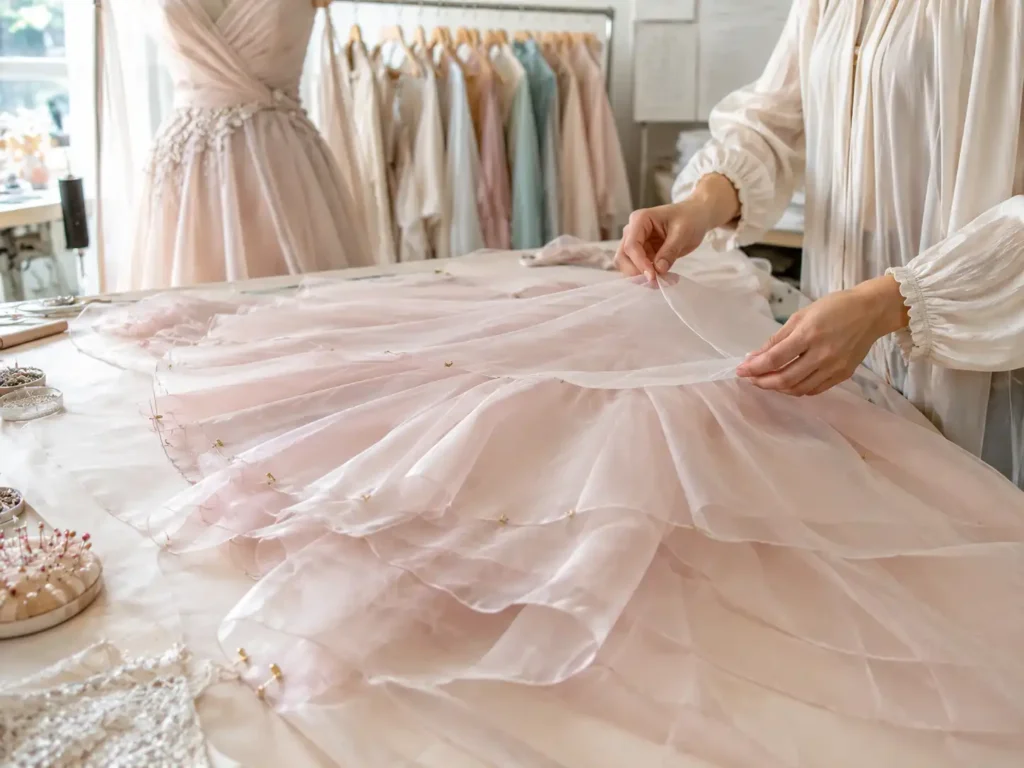
Chiffon
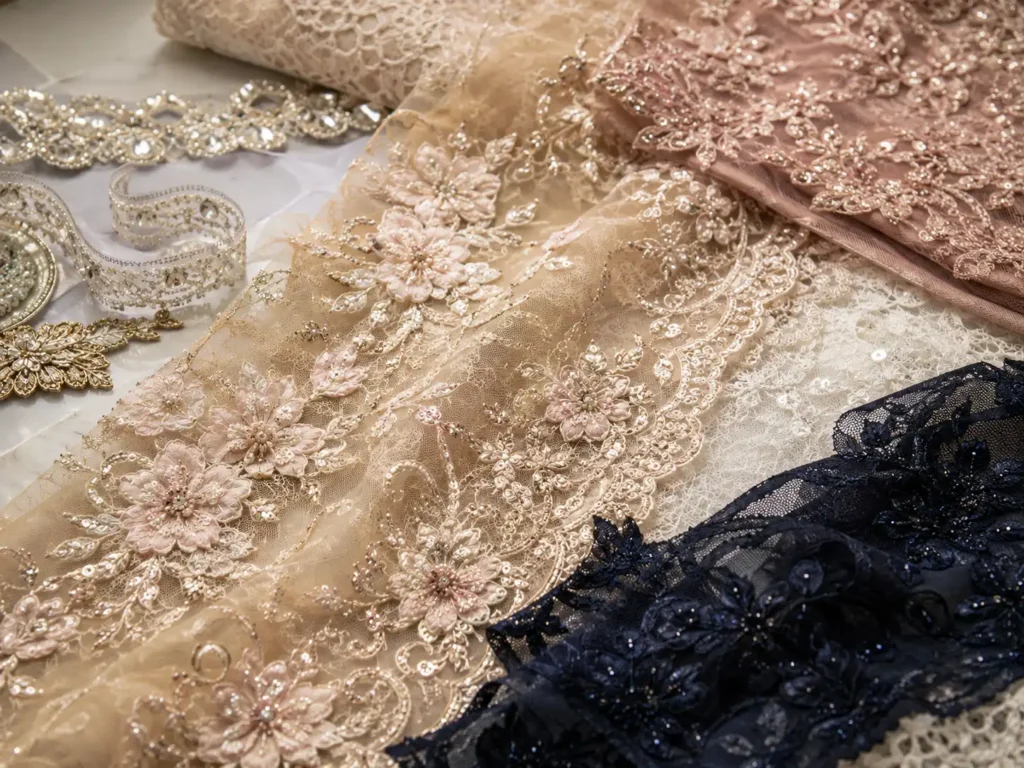
Lace
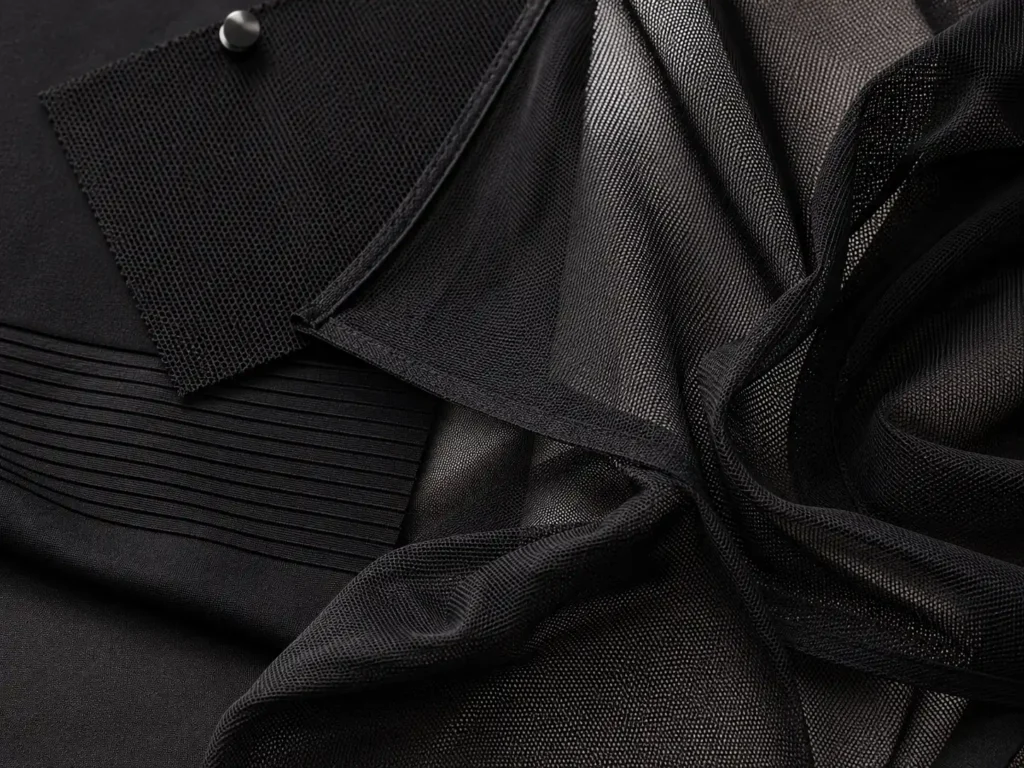
Mesh Power Mesh
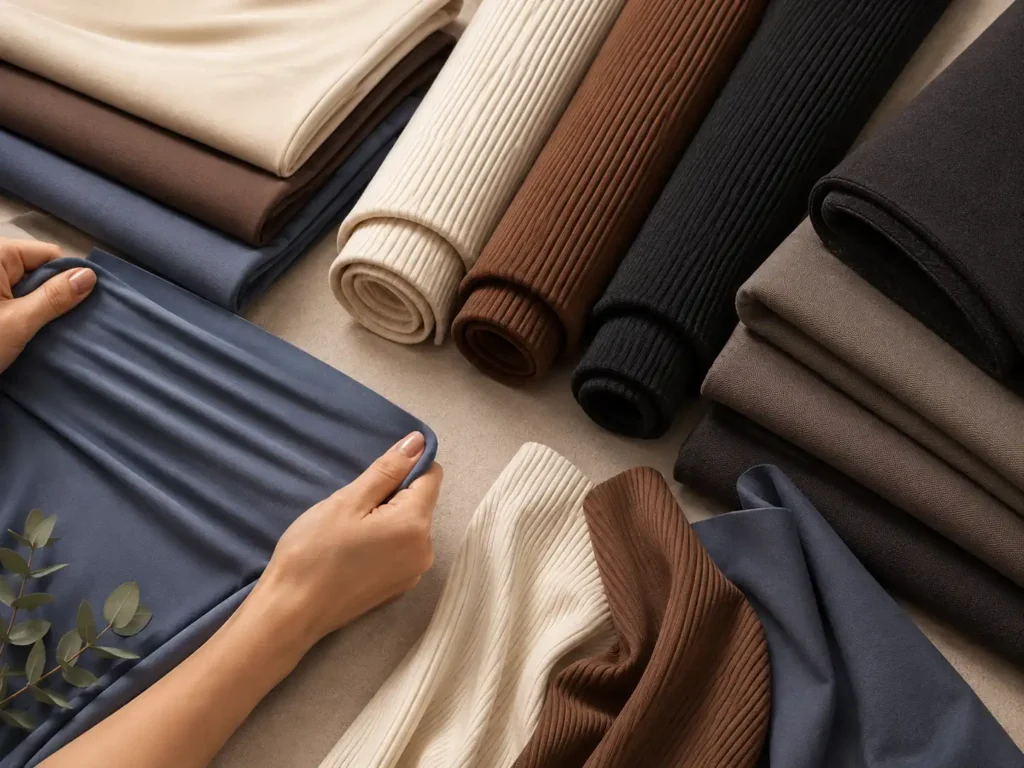
Jersey Rib Knit

Ponte Crepe
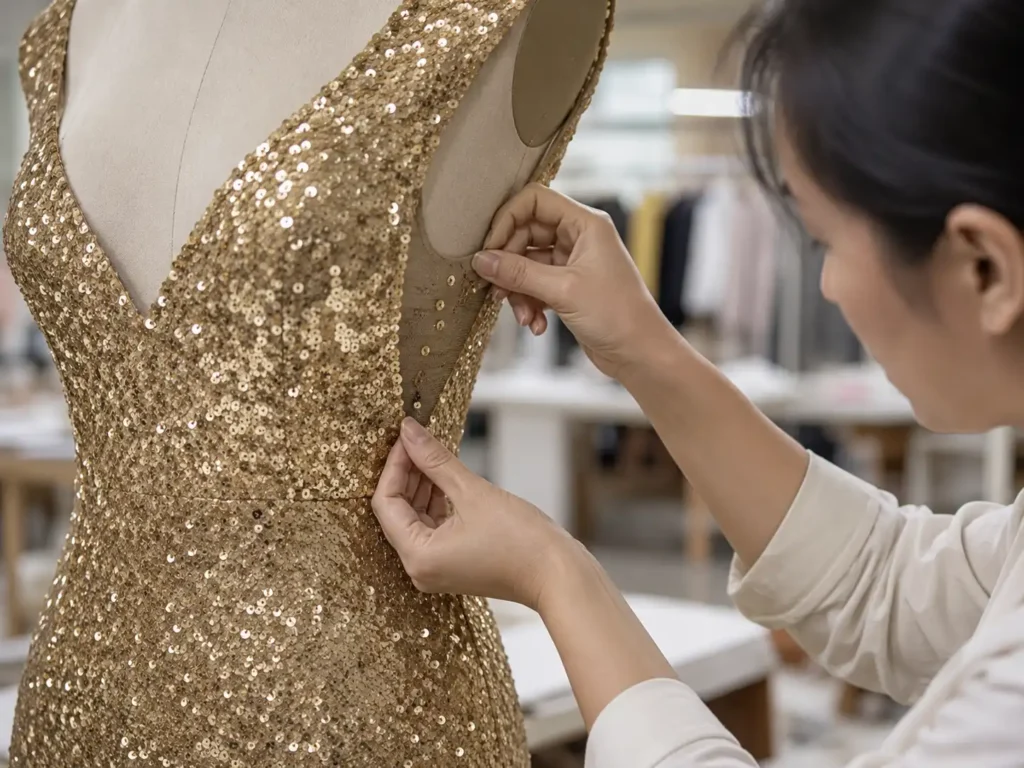
Sequin Fabric
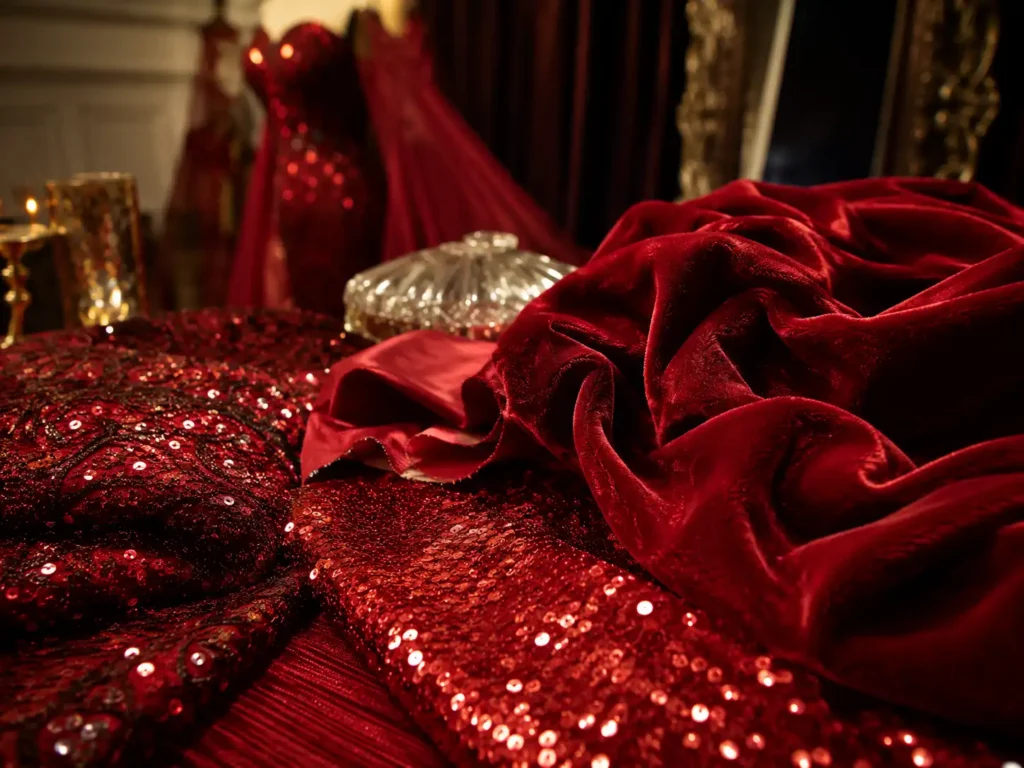
Velvet Organza Tulle
Fit and Construction Control for Dresses
Dress fit is controlled through measurable points, pattern balance and movement, not through a single front photograph. Sample comments are translated into pattern, grade and QC files before bulk production.

Bust, Waist and Hip Balance
Fitted dresses are built around the relationship between upper bust, full bust, under bust, waist, high waist, low waist and hip rather than a single circumference. A bodycon dress may require negative ease, but excessive reduction can pull side seams forward, create horizontal drag lines, distort the neckline or cause the hem to rise. A corset dress needs enough upper-bust security to stay in position while still allowing breathing and movement. A loose satin slip dress may need less shaping, yet cowl depth, back width and strap placement still affect coverage. Jinfeng reviews measurements together with front, side and back fit images. Comments such as “too tight” are converted into specific actions: releasing the waist, reshaping the hip curve, lowering or raising the waist seam, adjusting dart intake, moving the side seam, revising cup position or changing fabric stretch assumptions. Final changes are carried into the pattern, size chart, grade rule and PP sample rather than left as informal notes.
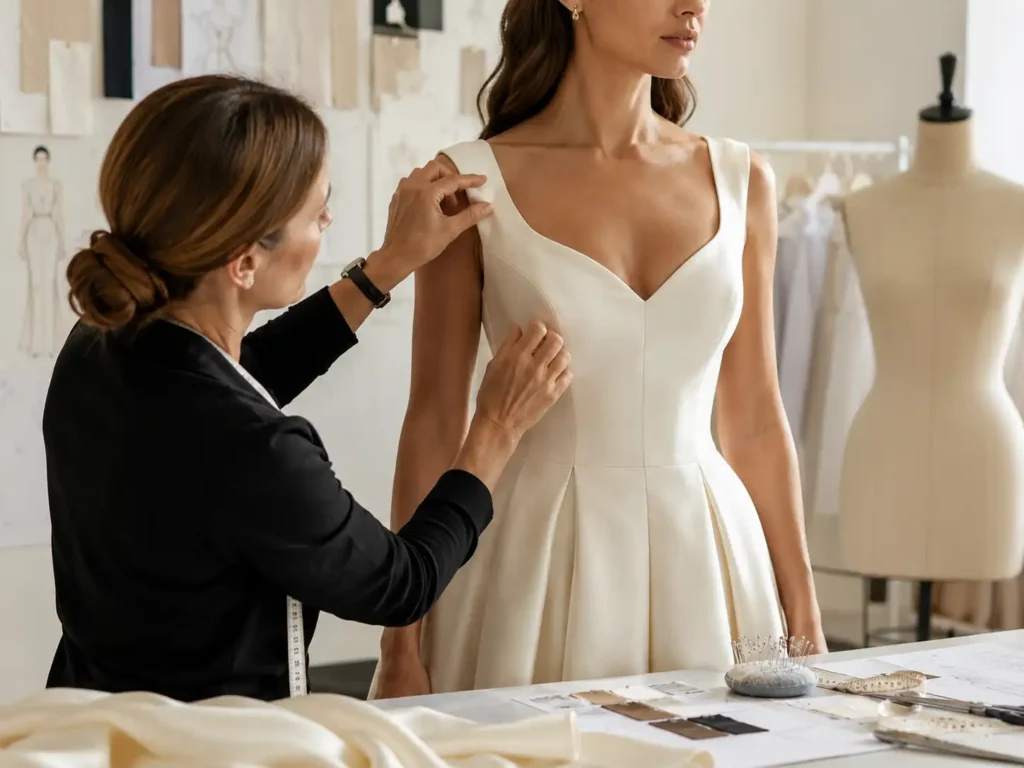
Neckline, Strap and Internal Support
Neckline design affects appearance, wear security and production method. Halter styles must distribute neck pressure and control side-bust coverage. Strapless dresses need upper-bust shaping, support components and grip without forcing the wearer into excessive compression. Deep-V and backless dresses require stable front coverage, side coverage and strap or tape placement. Adjustable straps need correct slider size, elastic or tape strength and repeatable finished length. Corset structures may include bra cups, boning, underwire, waist tape or internal panels, but every component must match the pattern and fabric rather than being added automatically. During development, Jinfeng checks neckline depth, armhole shape, strap position, cup level, boning end points, lining attachment and zip behaviour. Support details are then described in the BOM and sewing instruction so bulk teams reproduce the approved construction instead of interpreting the sample independently.
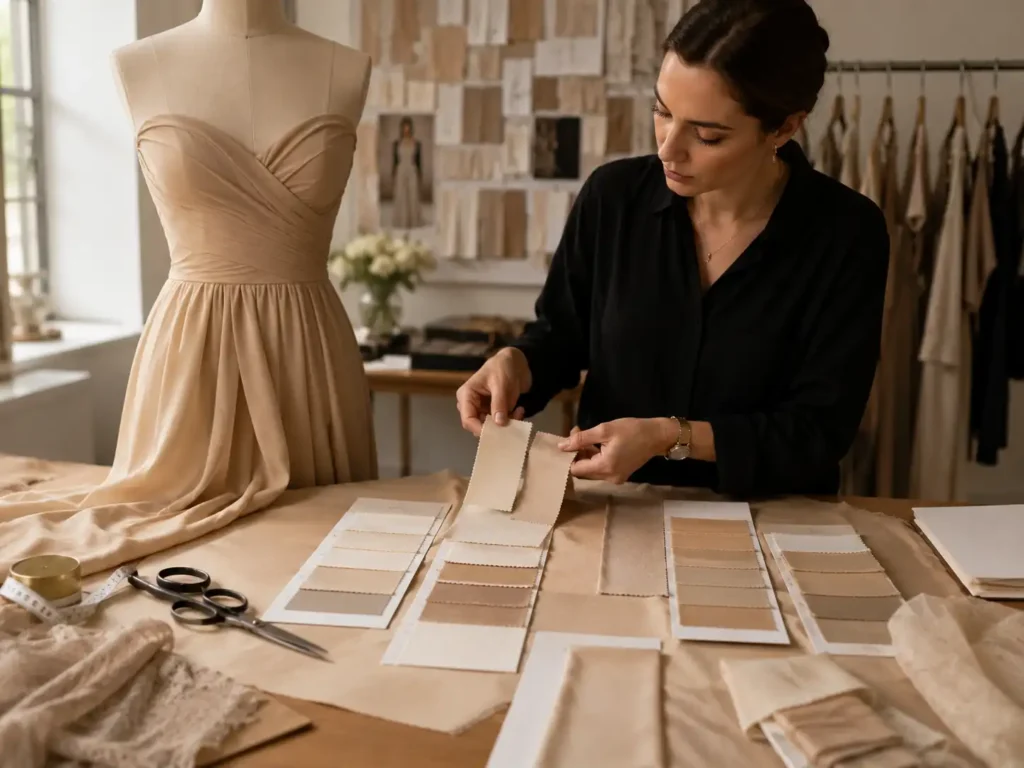
Length, Slits, Lining and Grading
Length decisions influence safety, proportion, return rates and packing. Mini dresses need enough movement allowance and lining coverage to reduce exposure. Midi shapes should preserve the intended leg proportion across sizes, while maxi dresses need balanced front, back and side hems, especially in bias, chiffon or asymmetric styles. Slit height must be measured from a fixed garment point and tested when standing, walking and sitting. Lining can control opacity, support, comfort and seam visibility, but an incorrect lining length may pull the outer fabric or become visible at the hem. Jinfeng can work with brand size charts including XS-XL and wider size structures, yet grading is reviewed according to silhouette. Bust, waist, hip, length, strap, armhole, neckline and slit do not always increase by the same amount. Bulk measurement inspection uses the approved chart and tolerance, while size labels, stickers and carton breakdowns remain connected to the same size ratio.
Trims, Workmanship and Finishing Details
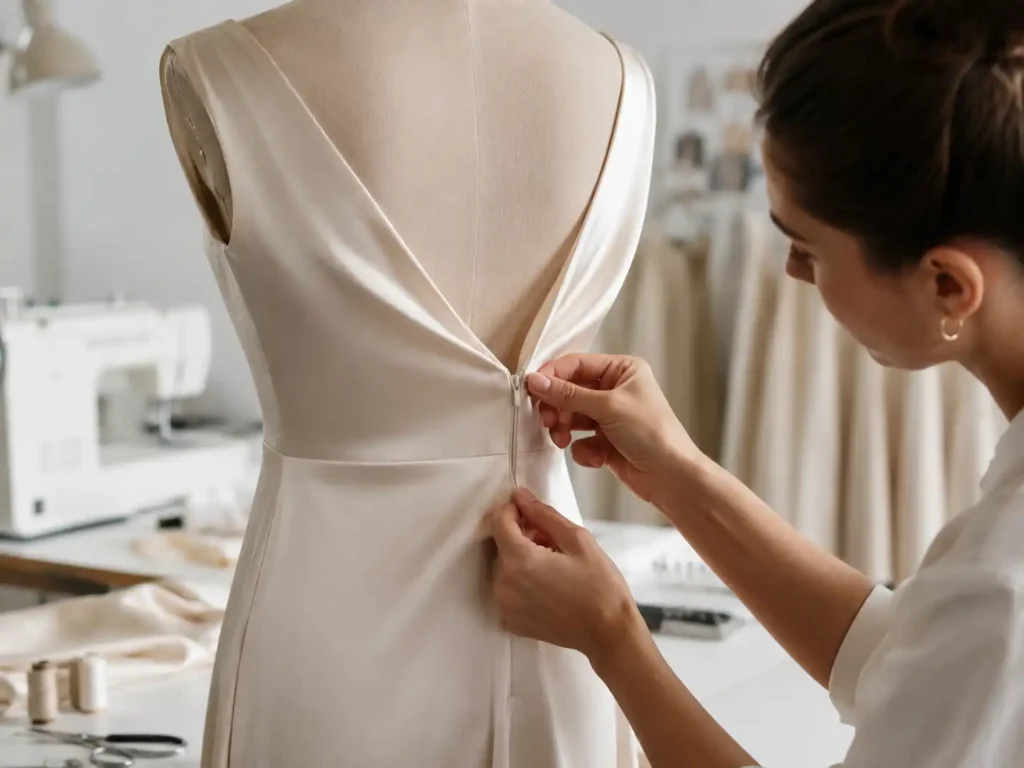
Zippers Closures
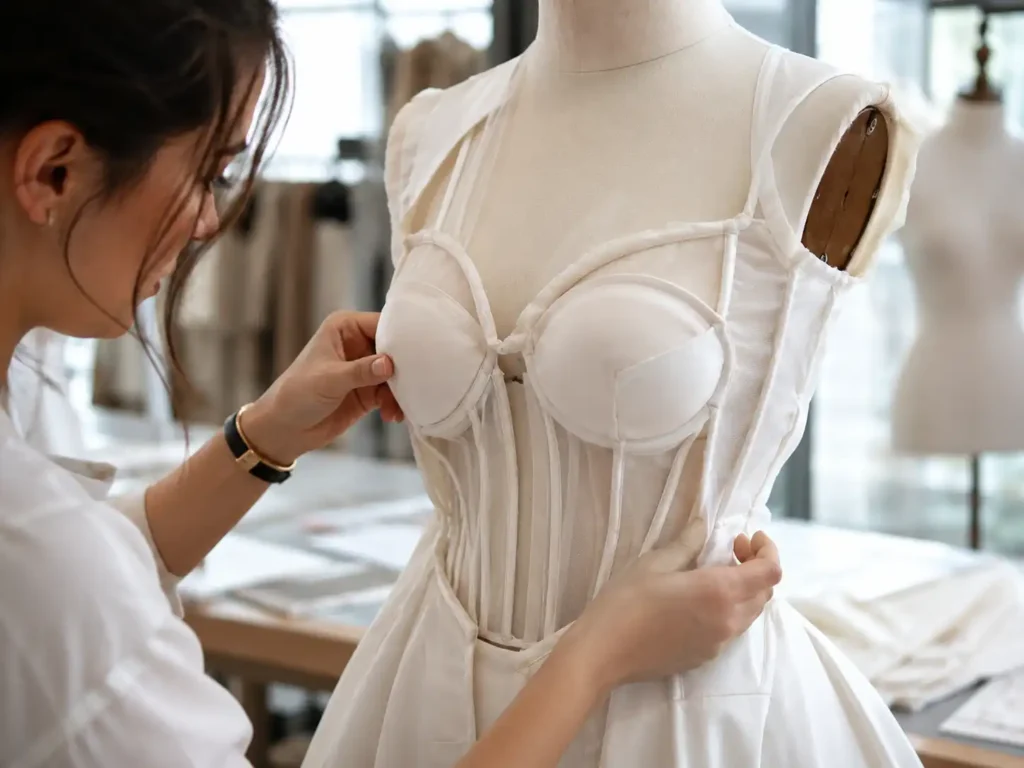
Cups Boning Support
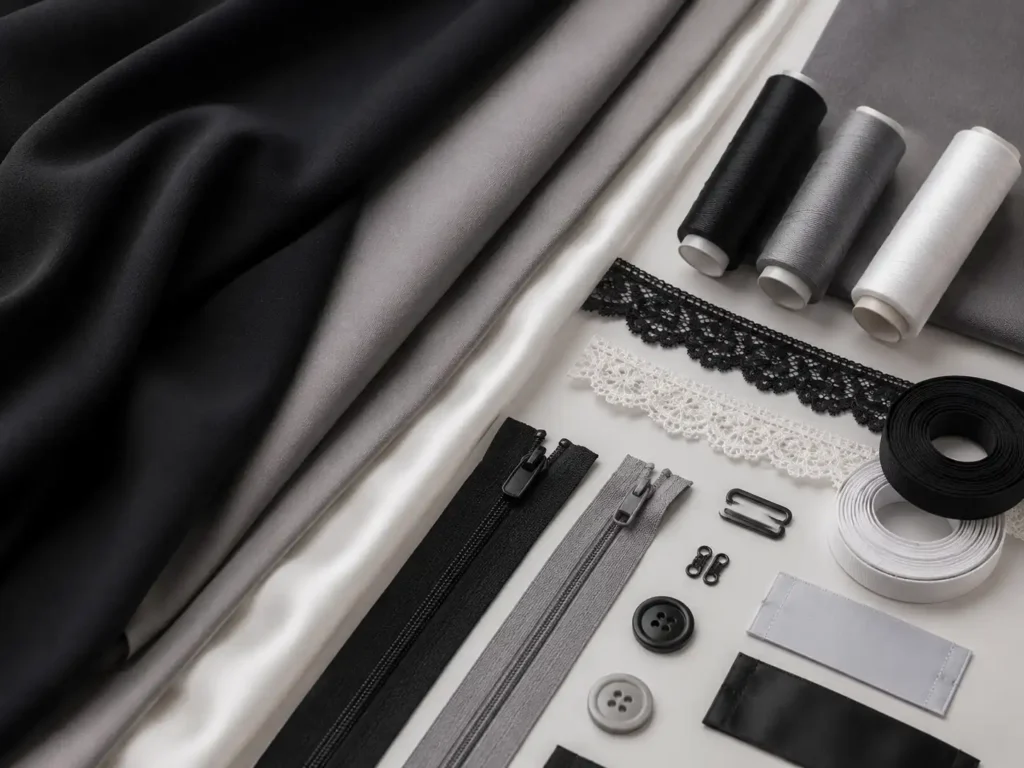
Lining Coverage
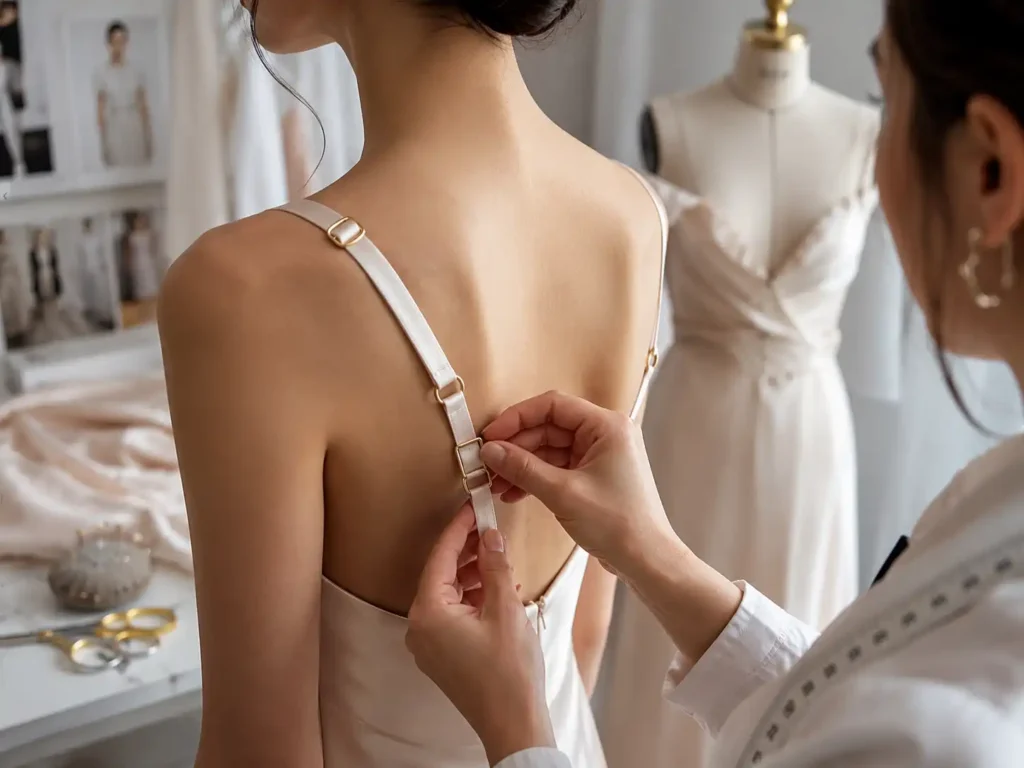
Straps Elastics Sliders
Lace Stones Sequins
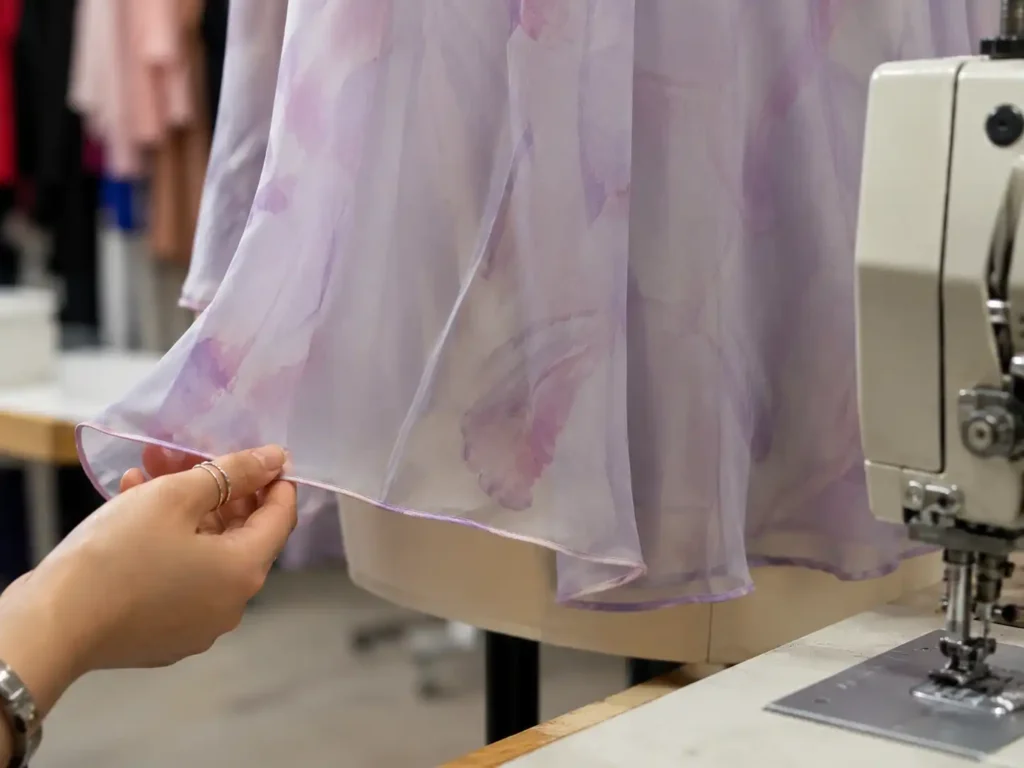
Seams Hems Pressing
From Tech Pack to First Sample
Project Review
Fabric Direction
Trim Direction
Pattern Development
Sample Construction
Internal Review
Sample Revision and PP Approval
A first sample confirms direction; it does not lock bulk production. Revised samples, photo samples, PP samples and Golden samples serve different purposes and should remain clearly separated in the approval record.
Revision Rounds Follow Product Complexity
Simple dresses and skirts commonly move through one first sample and one revised sample when fabric, measurement and construction are already clear. Medium-complexity styles often require one first sample plus one or two revised samples. Corset, strapless, evening, sequin, lace and mesh products may need around two revised samples, depending on structural change and fit feedback. Those figures describe development logic rather than a guaranteed sample calendar. Material readiness, custom trims, feedback speed and the degree of design change all affect timing. A complete change of fabric, silhouette or support construction may require a fresh evaluation instead of being treated as a minor revision. Each review should identify the issue, its cause, the required pattern or construction action, and any effect on cost, MOQ or delivery. The revised output is then checked against the latest approved file, not the original brief alone.
Photo Samples Do Not Replace PP Samples
A photo-ready sample may be prepared for campaign content, ecommerce photography or internal line review, often with extra emphasis on the selected size and visual finish. A PP sample has a different role: it confirms the production-ready combination of fabric, colour, trims, measurements, construction, labels and packing.
Treating a campaign sample as automatic bulk approval can leave unresolved grade, material or packing issues. Before PP approval, Jinfeng checks that style structure, basic fit, fabric, colour, trims, sewing method, label placement, packaging and commercial basis are stable.
Major changes after PP approval can affect purchased materials, patterns, cost, production instructions and line timing, so they must be reviewed as controlled changes rather than informal edits.
Golden Sample and Production Handover
Once the production standard is sealed, the Golden sample supports bulk comparison together with the final pattern, size chart, grade rule, BOM, fabric reference, trim card, sewing instruction, label placement, packing instruction and QC checklist.
No single sample should carry the whole standard without documents because measurements, colour files and packaging details may not be visible on the garment. Production handover connects development decisions with the factory team assigned to the style. Inline inspectors can then compare critical workmanship and measurements before defects spread through the order.
For repeat production, the retained records reduce the risk of colour, trim, fit or packing drift, although current fabric batches and supplier availability still need confirmation for every reorder.

MOQ and Quotation for UK Dress Programs
MOQ is calculated by style and colour, while quotation reflects the approved product structure. Clear quantity, material and packing information allows the cost to be assessed without weakening the intended brand appearance.
Quotation Factor | Production Effect | Information Needed |
Fabric | Changes material cost, consumption, shrinkage, lining, handling and supplier MOQ. | Composition or quality reference, weight/hand feel, colour and preferred finish. |
Construction | Changes pattern work, sewing time, internal support, seam method and QC risk. | Tech pack, reference images, original sample details and construction notes. |
Trims | Changes function, development time, attachment and supplier minimums. | Zip, cup, boning, slider, elastic, lace, stone or hardware specifications. |
Colour Plan | Changes fabric ordering, dyeing, shade control, cutting and SKU management. | Colour names, Pantone or swatch, quantity by colour and lining/trim matching. |
Size Range | Changes grading, size ratio, measurement checks, labels and carton breakdown. | Base-size chart, grade rules if available, size ratio and measurement tolerance. |
Private Label | Changes artwork confirmation, supplier MOQ, packing labour and warehouse readiness. | Woven label, care label, hangtag, barcode, polybag and carton files. |
Timing | Changes material route, sample priority, production allocation and freight choice. | Campaign, PP, ex-factory, shipment and warehouse receiving milestones. |
Plan Bulk Production
Scalable Bulk Production Across Multiple Styles
Collection orders are divided into controllable groups before factory release. Style allocation, material readiness, approval status and launch priority determine how production is organised and monitored.
Style Allocation
Material Readiness
PP Handover
Progress Tracking
Multi Size Control

Protecting Your UK Launch Calendar
Brief Lock
Development Window
PP Approval
Material Arrival
Production QC
Freight Warehouse
Brand-Level Quality Control for Dresses
Fabric Inspection
Cutting Control
Sewing Instruction
Inline Inspection
Measurement Control
Garment Finish
Packing Verification

Compliance, Testing and Design Protection
Testing Scope
Label Coordination
Certificate Review
Factory Documents
NDA Cooperation
Unreleased Styles
Private Label and UK-Ready Packaging

Woven Labels
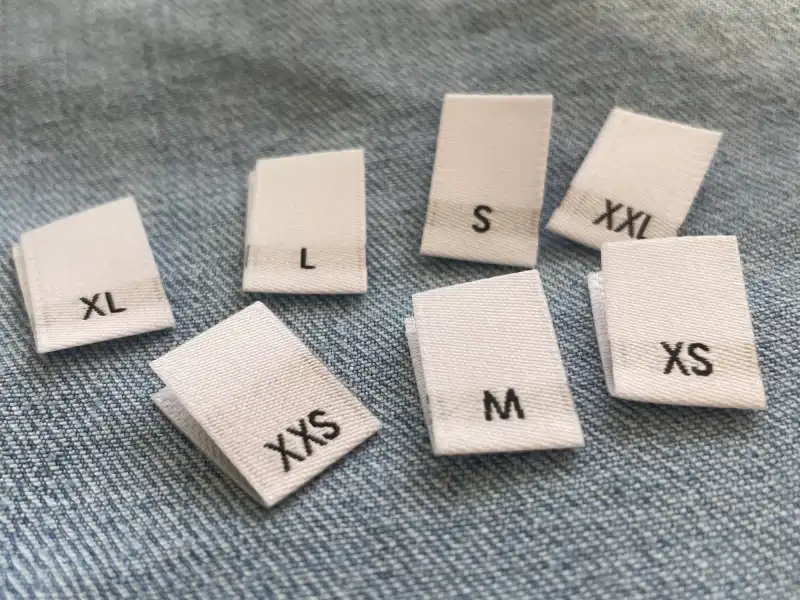
Size Labels
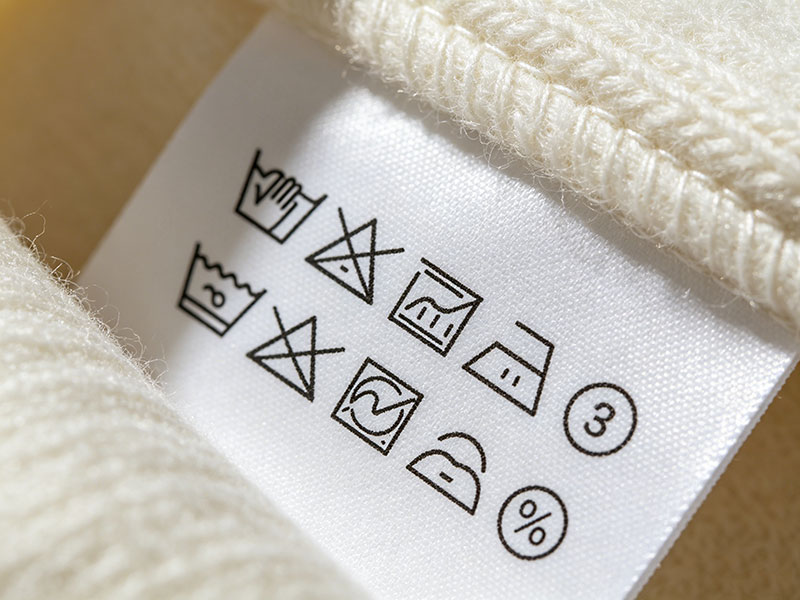
Care Fibre Labels

Hangtags
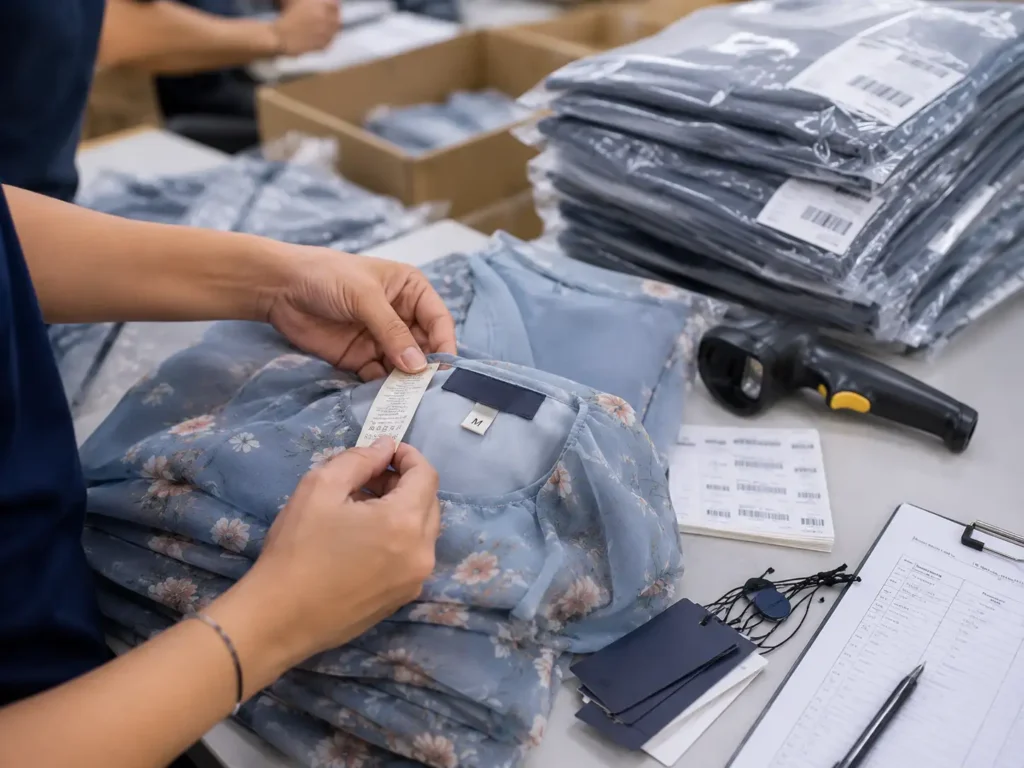
Barcode SKU Labels
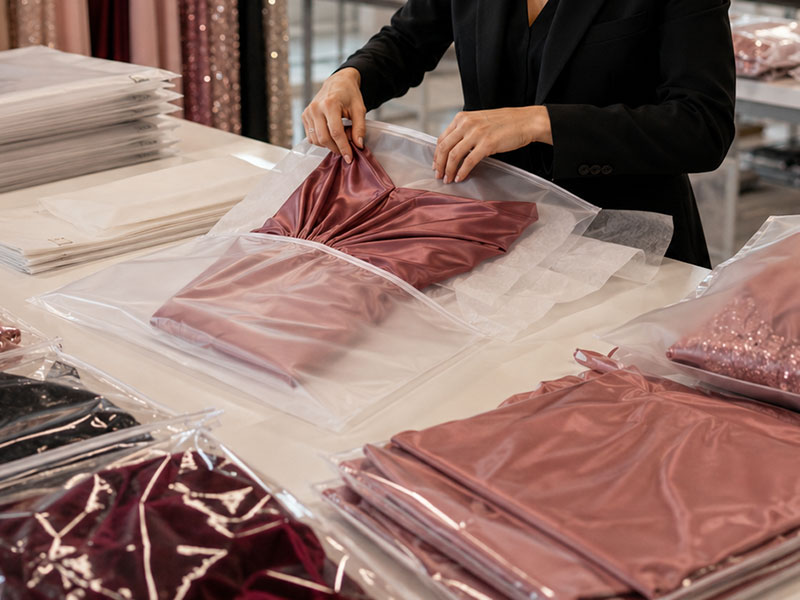
Polybags
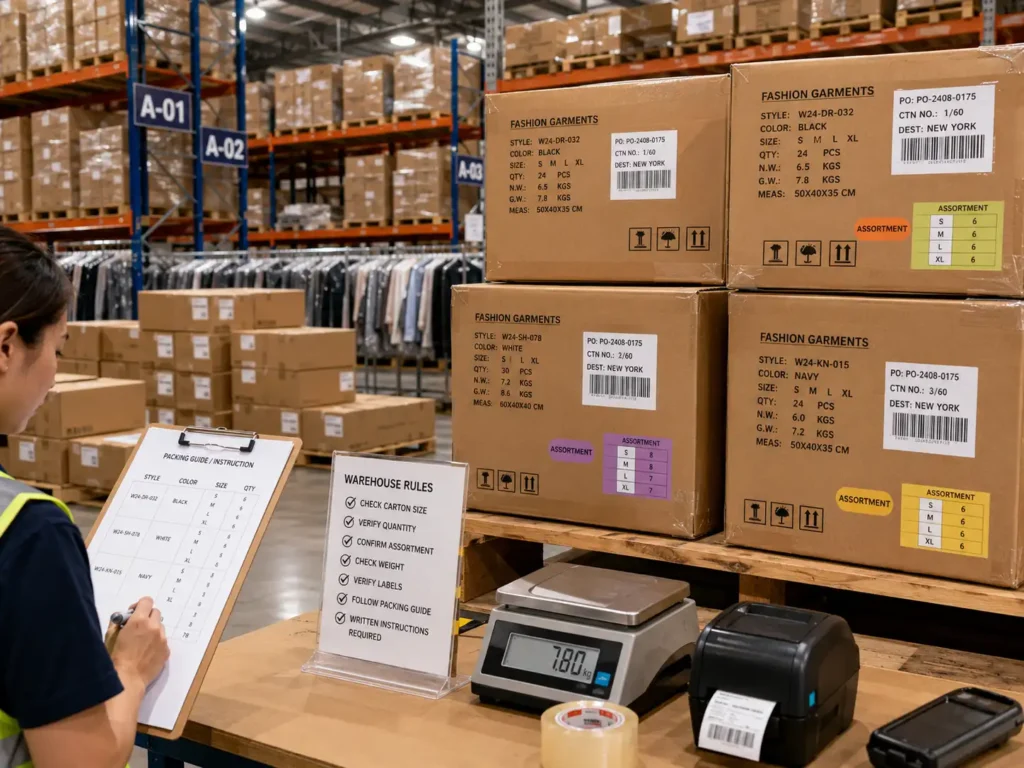
Cartons Marks
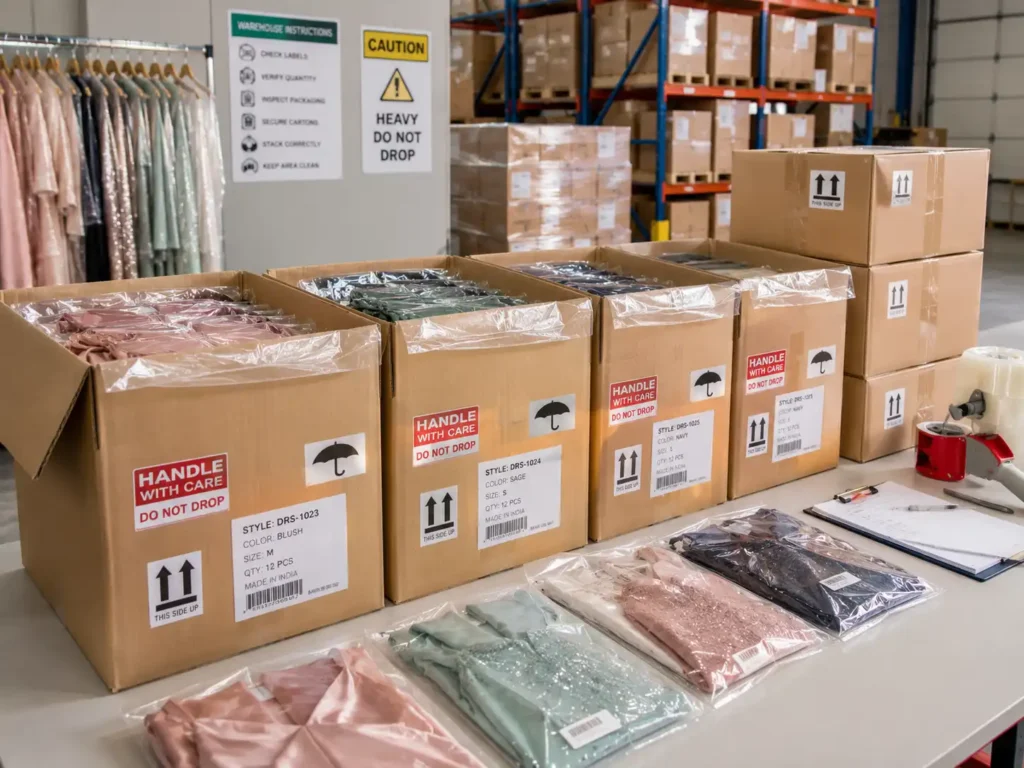
Warehouse Files
Shipping Dresses From China to the UK
Shipment planning considers sample urgency, bulk volume, launch risk, Incoterm, destination and warehouse requirements. Freight cost and timing are confirmed with the selected forwarder for the actual route and booking window.
| Method | Best Use | Planning Considerations | Supported Coordination |
|---|---|---|---|
| Express courier | Samples, swatches, signed documents and urgent small parcels. | Chargeable weight, garment protection, customs information and recipient availability. | Commercial invoice, sample description, packing and tracking support. |
| Air freight | Launch stock, urgent bulk quantities or styles released later than the main order. | Airport route, chargeable weight, security screening, customs and final delivery. | Packing list, invoice, air waybill coordination and forwarder handover. |
| Sea freight | Planned bulk orders with adequate warehouse lead time. | Sailing schedule, cut-off, port route, container or consolidation, customs and inland delivery. | FOB/CIF/DAP support by project, documents and carton marks. |
| Air-sea split | A priority quantity by air with the balance by sea. | Separate packing lists, allocation by style/size, duplicate document control and warehouse receiving. | Split packing plan, shipment identification and coordination with nominated forwarders. |
| Client forwarder | Brands with established freight contracts and UK customs arrangements. | Factory handover point, booking instructions, document deadlines and local charges. | EXW or FOB cooperation, cargo release and shipping-document support. |
| DDP by project | Selected deliveries where route, product, value, destination and service provider allow. | Tax, duty, importer structure, restricted services and final-delivery terms must be confirmed. | Project assessment only; DDP is not presented as an automatic option for every shipment. |
From First Collection to Repeat Orders

UK Occasionwear Collection - 18 Styles, 42,600 Pieces
An established UK occasionwear label planned an 18-style collection across satin, chiffon, lace and mesh, with 42,600 pieces divided among 11 colour directions and an XS-XL size range. The program included midi wedding guest dresses, structured cocktail shapes, halter satin dresses and mesh-panel evening styles. The main risk was not total volume; it was keeping colour, lining, zip tape, fit language and private-label presentation coherent across several product constructions.
Development began by grouping styles into four fabric families. Fit-critical corset and halter pieces were prioritised for first samples, while commercial midi shapes used the same approved body blocks where suitable. The first review identified three recurring issues: upper-bust instability on two strapless styles, visible zip rippling on lightweight satin, and lining exposure on a high-slit chiffon maxi.
Pattern changes, interfacing, zip insertion, lining length and slit construction were revised before PP approval. Bulk production was then allocated by fabric and construction group. Inline inspection focused on upper-bust, zip flatness, lace placement, hem balance and size measurements. Packaging used brand labels, care labels, hangtags, barcode stickers and colour-size carton breakdowns. The first release moved in two batches to protect the launch window, while retained patterns, BOMs, trim records and Golden samples supported later repeat quantities.
- Order profile: 18 styles, 42,600 pieces, 11 colour directions, XS-XL.
- Development focus: strapless stability, satin zip flatness, chiffon lining and slit control.
- Delivery route: production and shipment split by approved style priority.
- Repeat records: final patterns, size charts, fabric references, trims, packing and Golden samples retained.

UK Premium Ecommerce Collection - 27 Styles, 68,400 Pieces
A premium UK ecommerce fashion operator prepared 27 dress styles totalling 68,400 pieces for a sequence of campaign launches. The assortment mixed bodycon jersey, power-mesh mini dresses, satin slips, sequin party styles and structured midi dresses. Each product had its own photography deadline, while the final bulk order required shared barcode, SKU, polybag and carton rules. Jinfeng divided the development into campaign priority, commercial core and later-drop groups. Photo-ready samples were scheduled ahead of the complete PP sequence, but they were not treated as automatic production standards. The bodycon group required fabric-specific pattern review after stretch and recovery comparison. Mesh necklines were stabilised to reduce waviness, and the sequin styles received revised lining and edge protection to avoid scratching. The brand supplied its UK and international size chart, and grade review concentrated on bust, waist, hip, mini length, strap length and neckline depth across XS-XXL. Before bulk release, barcode mapping was checked against style, colour and size data. Production progress was reported by material arrival, cutting, sewing, inline QC, finishing and packing rather than one overall percentage. A priority air quantity covered the first content-led launch, with the larger balance shipped through the brand’s nominated freight route. Repeat orders later used the retained pattern, fabric, trim, size and packing records, with new bulk fabric shades reviewed before approval.
- Order profile: 27 styles, 68,400 pieces, several launch drops, XS-XXL.
- Development focus: stretch recovery, mesh neckline stability, sequin comfort and photo-sample separation.
- Packing focus: barcode-SKU mapping, polybag identification and carton breakdown.
- Launch support: priority air quantity plus planned balance shipment.

UK Partywear & Social Dress Collection - 22 Styles, 51,200 Pieces
A UK fashion brand developed a 22-style partywear collection totaling 51,200 pieces for seasonal social campaigns. The range included bodycon mini dresses, sequin party styles, mesh panel designs and stretch satin silhouettes across UK sizes 6–18.
The main challenge was maintaining fit consistency while managing different stretch levels, decorative materials and fast campaign deadlines.
Development started by separating styles according to fabric performance and construction requirements.
Stretch jersey and mesh styles were reviewed for recovery, transparency and body contouring, while sequin and satin designs focused on surface protection, lining balance and zipper performance.
Sample approval was completed by priority style groups before bulk production.
Production files included approved patterns, BOM details, trim specifications and size grading references. Inline inspections focused on stretch recovery, seam strength, decoration attachment, measurement accuracy and final appearance.
Packing records were organized by style, colour and size to support warehouse receiving and online launch preparation.
- Order profile: 22 styles, 51,200 pieces, UK sizes 6–18.
- Development focus: stretch recovery, sequin stability, mesh coverage and body fit.
- Delivery support: priority styles prepared for campaign launch, remaining quantities shipped through planned production windows.
- Repeat records: approved patterns, fabric references and packaging standards retained for future drops.
Frequently Asked Questions for UK Fashion Brands
Yes. Jinfeng Apparel is a Guangdong-based custom womenswear manufacturer serving established fashion labels, premium ecommerce operators, occasionwear brands, retailers and sourcing teams. Support covers fabric and trim sourcing, pattern making, sampling, revision, PP approval, bulk production, QC, private-label packing and export delivery.
No. Production is based in China through Jinfeng Apparel’s owned factories and selected long-term production partners. The service is designed for UK brands seeking an overseas manufacturing route with dress-focused development, documented approvals, branded packing and shipping support to the UK.
The standard MOQ starts from 200 pieces per style and colour. One style in two colours is normally assessed as 200 pieces in each colour. Custom-dyed or printed fabrics, certified materials, specialist trims, metal hardware and custom packaging may have separate supplier minimums.
Yes. Tech packs can be reviewed together with size charts, BOMs, artwork, fabric references and packing files. Jinfeng can also begin from reference images, sketches, line sheets or an original sample, although clearer technical input improves quotation accuracy and sample control.
A sample calendar is confirmed after style complexity, fabric availability, trims and required sample type are reviewed. Simple styles often need one first sample and one revised sample; medium-complexity styles may need one or two revisions; corset, strapless, lace, mesh, sequin and evening styles can require around two revised samples before PP approval.
Yes. Size development can follow an approved brand chart, including XS-XL and wider structures where agreed. Grading is reviewed by silhouette because bust, waist, hip, length, strap, armhole, neckline and slit do not always increase at the same rate. Bulk measurement checks use the approved chart and tolerance.
Yes. Those materials are core dress directions. Satin work focuses on drape, grain, snagging, zip flatness and pressing; mesh work focuses on transparency, stretch, neckline stability and holes; lace work focuses on motif direction, placement, lining, edges and damage control.
Yes. Jinfeng supports woven labels, size labels, care labels, hangtags, barcode stickers, SKU labels, polybags, cartons, carton marks and warehouse labels using approved files. Fibre, care and legal wording should be reviewed and approved by the brand before bulk printing.
Yes. Jinfeng can cooperate with client-nominated inspectors and third-party inspection providers. Inspection scope, timing, sampling standard and cost should be agreed before production completion. AQL sampling and 100% inspection are different methods and are not presented as the same process.
Yes. Express, air freight, sea freight, air-sea split shipment and client-nominated forwarders can be supported. EXW, FOB, CIF and DAP are available by project, while DDP requires route-specific assessment. Final freight timing and cost are confirmed with the selected forwarder.
Yes. NDA-based cooperation can cover tech packs, original samples, patterns, measurements, fabric and trim files, labels, packaging, quantities, pricing and launch information. Cases remain anonymised unless the brand gives written permission to disclose its identity or products.

Start Your UK Dress Collection
Send a concise project pack to receive a more accurate development and production review. Kelly and the Jinfeng Apparel team can assess style complexity, fabric direction, trim requirements, pattern risk, MOQ structure, sample route, private-label needs and delivery planning before formal sampling begins.
A complete submission reduces repeated questions and helps the team identify which styles should be prioritised for fabric sourcing, first samples, photo samples or fit review.
Technical files are used only for the relevant project workflow and can be handled under NDA-based cooperation. The first reply should establish whether the product direction, quantity plan and launch timing fit the manufacturing model, followed by a clear list of missing information or next actions.
- Tech pack, line sheet, reference images or original sample photos.
- Quantity by style and colour, with the intended size ratio.
- Fabric preference, colour direction and any approved swatches or standards.
- Target market, retail channel and required label or packing format.
- Campaign date, PP deadline, ex-factory target and UK receiving window.
- Inspection, testing, freight or nominated-forwarder requirements.


