 Skip to content
Dress Manufacturer for Design Directors
Turn creative direction into fit-approved, production-ready dress collections without losing the silhouette, material character or brand-level finish.
- 2 sample rooms, 7+ senior pattern makers and 20+ sample machinists support structured dress development and revision.
- Multi-style programs are planned for 10-30 styles, with production orders commonly organized across 20,000-80,000 total pieces.
- First samples are usually planned at 10-15 days for standard dresses; simple styles may take 7-10 days, while corset, lace, mesh, sequin and evening styles commonly require 15-25 days after materials are confirmed.
- 6 owned womenswear factories, 10+ long-term satellite partners and 18+ sewing lines support style-based factory allocation, phased production and repeat orders.
Development Capacity Behind Every Dress
Since 2008
2 Sample Rooms
7+ Pattern Makers
20+ Sample Machinists
15+ QC Inspectors
200 Pcs Style/Color
Built for Design-Led Fashion Teams
Strong Program Fit
Clear Manufacturing Boundaries
Where Strong Dress Concepts Break Down
Silhouette Gets Diluted
Fabric Changes Character
Fit Misses Intent
Revisions Lose Control
Sample And Bulk Diverge
Launch Files Are Exposed
What We Review Before Sampling Begins
Design Reference
Technical File
Fabric Direction
Trim Structure
Quantity Plan
Launch Calendar
From Creative Direction to Bulk Production
Creative Brief
Structure Review
Fabric Direction
Pattern Development
First Sample
Fit Revision
PP Approval
Bulk Production
QC And Delivery
Dress Categories for Design-Led Collections

Structured Dresses

Body-Focused Dresses

Fluid Dresses

Occasion Dresses

Resort Dresses

Collection Extensions
Fabric Direction That Protects Design Intent
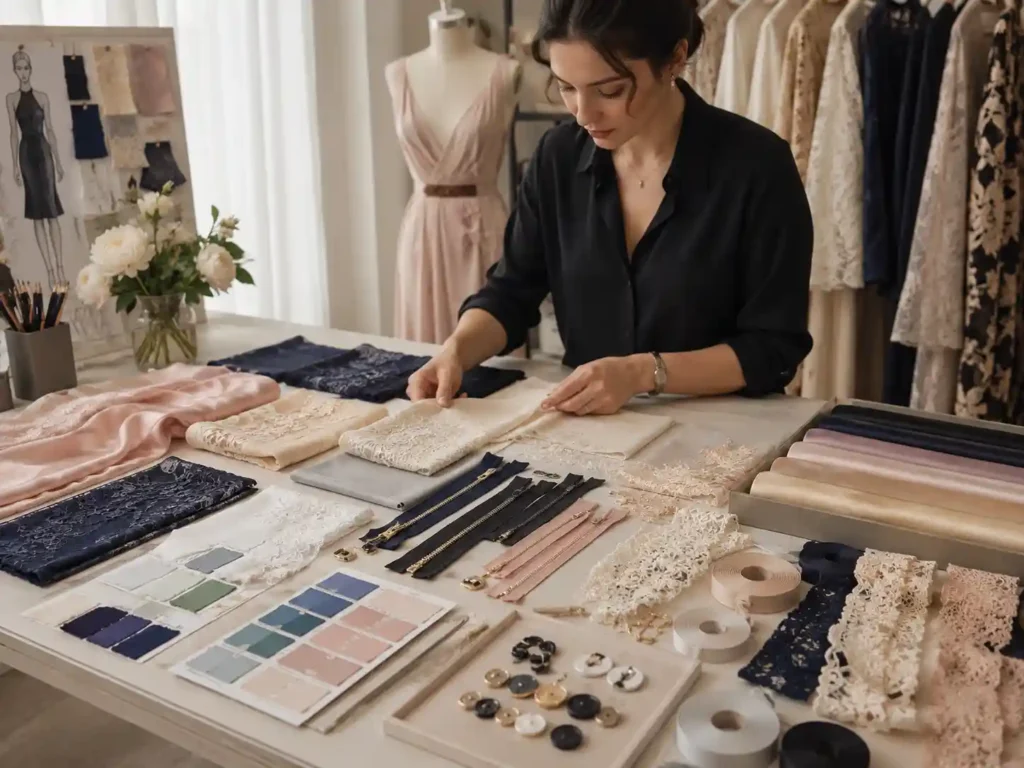
Fabric selection shapes silhouette, fit, photo appearance, production method and final cost. Jinfeng compares material performance with the design objective before sampling, then records the approved reference so later purchasing and bulk checks are based on more than a supplier name or color code.
| Fabric Direction | Typical Weight | Best Use | Design Value | Main Risks | Approval Focus |
|---|---|---|---|---|---|
| Satin | 80-300 gsm | Slip, cocktail, evening, bridesmaid | Shine, drape, clean surface | Snagging, shade difference, zipper rippling, pressing marks | Shine direction, hand feel, drape, color batch, packing method |
| Chiffon | 30-90 gsm | Maxi, resort, layered, ruffle | Airy movement and soft volume | Transparency, fraying, uneven hems, shrinkage | Layer count, lining, print direction, hem method, shrinkage |
| Mesh | 40-120 gsm | Bodycon, cut-out, party, layered | Transparency, stretch, sculpted layering | Holes, edge growth, unstable coverage, recovery loss | Stretch direction, recovery, lining map, seam reinforcement |
| Lace | 60-250 gsm | Occasion, cocktail, wedding guest | Pattern, texture and premium detail | Motif mismatch, holes, fraying, lining exposure | Motif placement, seam position, edge finish, lining color |
| Sequin Fabric | 180-450 gsm | Party, holiday, club, birthday | High visual impact and event relevance | Sequin loss, skin scratch, seam bulk, packing damage | Backing, seam clearance, edge comfort, attachment, protection |
| Jersey / Ponte | 160-420 gsm | Bodycon, day-to-night, structured knit | Stretch comfort, recovery and clean fit | Twisting, poor recovery, dimensional variation | Stretch ratio, recovery, grain, wash stability, size measurements |
| Rayon / Viscose | 100-220 gsm | Resort, floral, relaxed midi and maxi | Drape, softness and summer movement | Shrinkage, wrinkling, colorfastness, shape change | Composition, weight, shrinkage test, print and color approval |
| Crepe / Suiting | 120-320 gsm | Office, cocktail, tailored dresses and sets | Structure, polish and controlled drape | Seam impression, stiffness mismatch, pressing sensitivity | Weight, surface, lining, crease response, tailored fit |
Pattern and Fit Control for Dresses
Bust And Coverage
Waistline Position
Hip And Seat
Straps And Armholes
Length And Slits
Grading And Bulk
Complex Details Engineered for Production
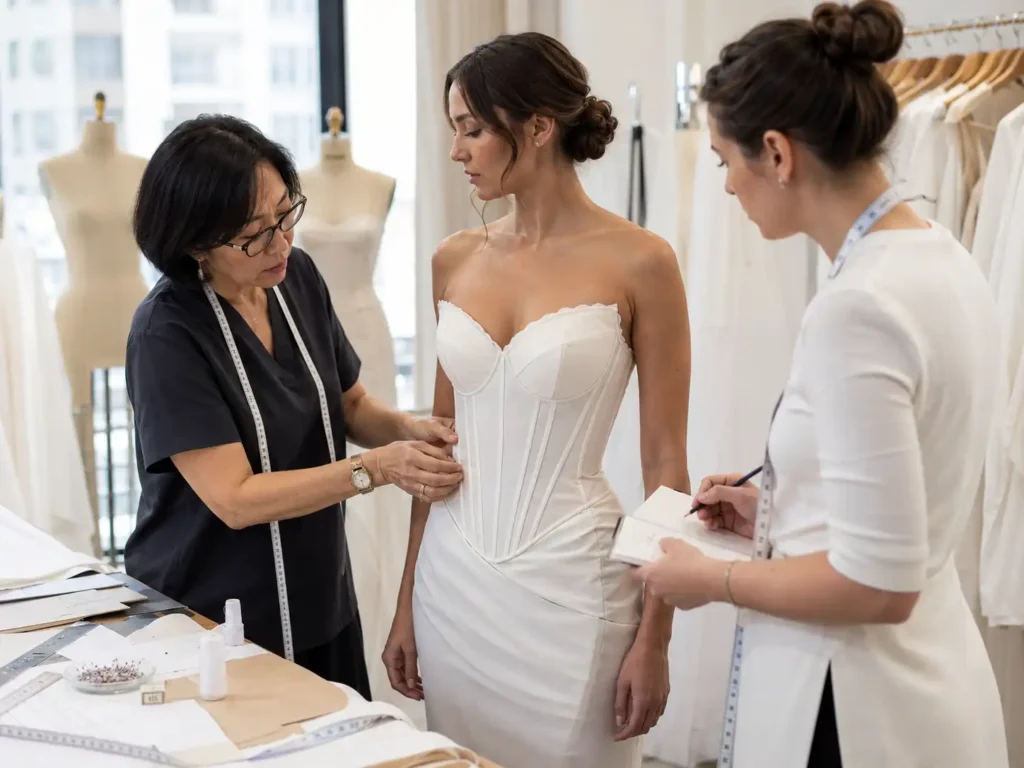
Corset And Boning

Built-In Cups

Strapless Support
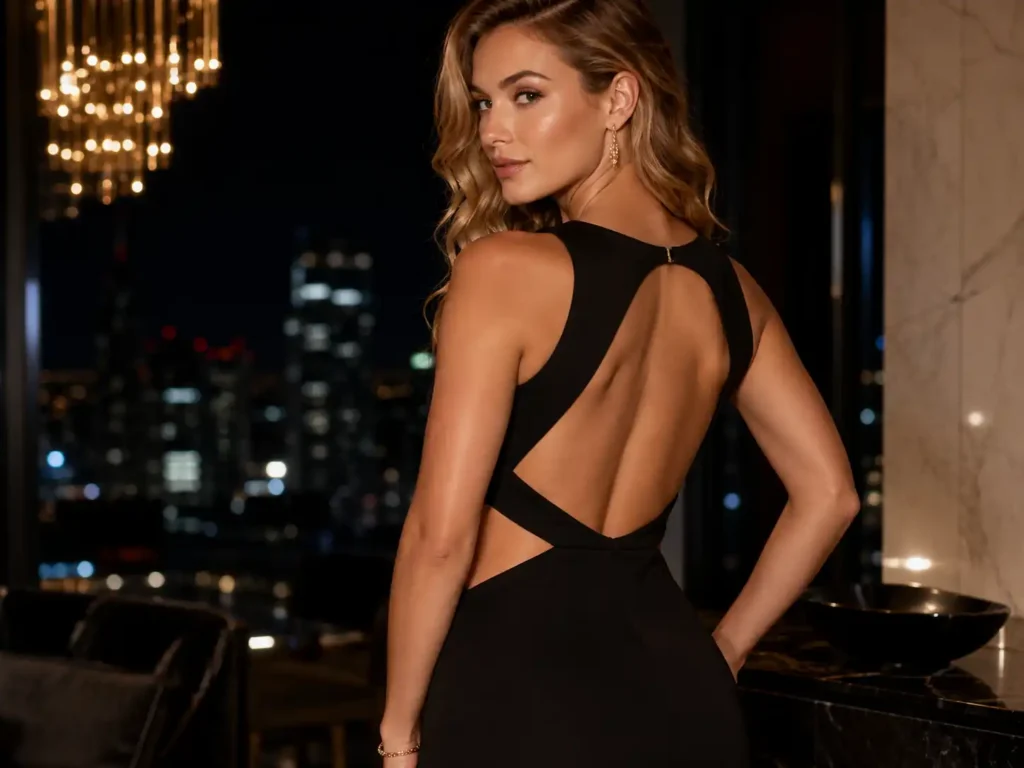
Backless And Cut-Out
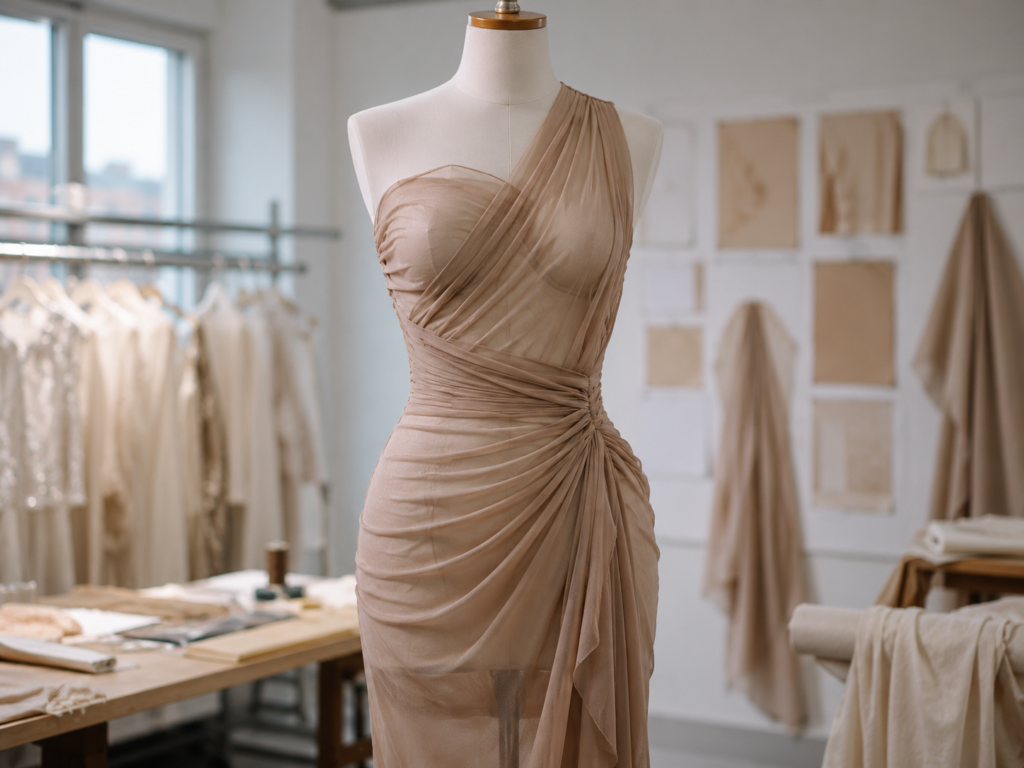
Ruching And Draping

Lace Placement
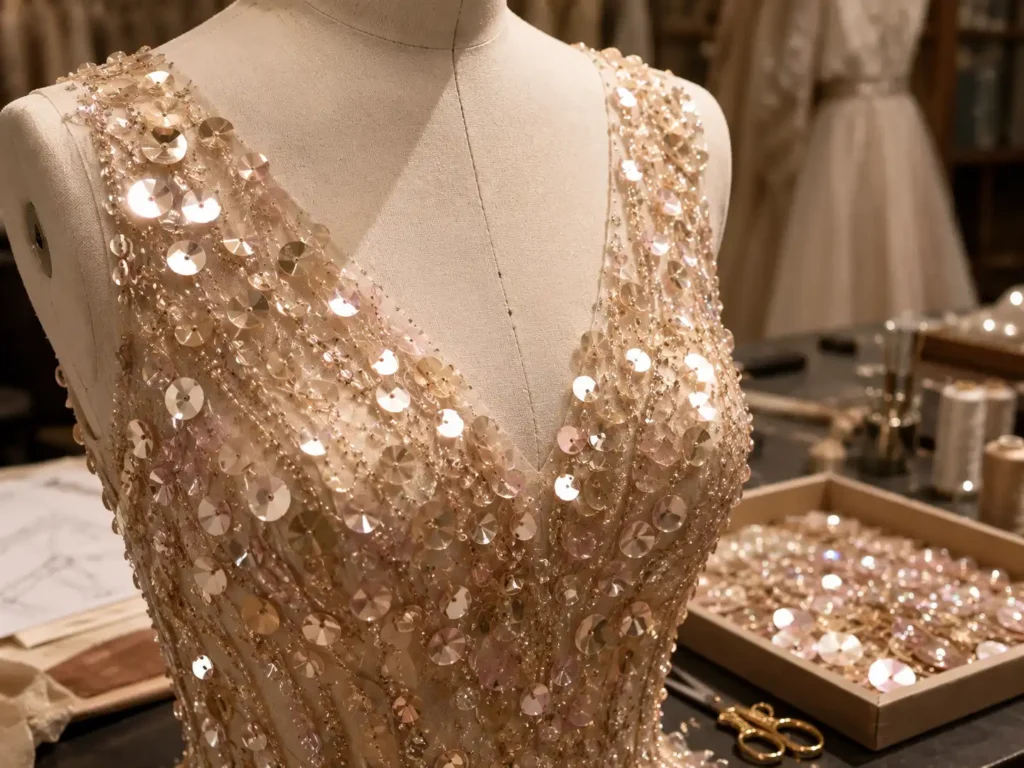
Sequins And Embellishment

Lining And Closures
Structured Sample Review and Revision
First Sample
Fit Sample
Revised Sample
Photo Sample
Salesman Sample
PP Sample
Golden Sample
Revision Record
Managing Multi-Style Seasonal Collections
Style Architecture
Fabric Grouping
Complexity Routing
Approval Dashboard
Production Allocation
Phased Delivery
Clear Collaboration Across Design and Production
One Project Contact
Version Control
Comment Consolidation
Material Approval
Production Handover
Milestone Updates
Cost Engineering Without Diluting the Look
Protect The Signature
Optimize Hidden Cost
Reconfirm Every Change
Bulk Production Matched to Product Complexity
Structured Occasionwear
Satin And Fluid Woven
Stretch And Bodycon
Lace And Sequin
Sets And Jumpsuits
Multi-Batch Programs
Quality Control That Preserves Approved Design
Incoming Materials

Cutting Control

Sewing Instructions

Inline Inspection

Measurement Review
Finished garments are measured at the specified control points, including bust, waist, hip, length, strap, armhole, neckline depth, slit and jumpsuit rise where relevant. Results are compared with the approved size chart and tolerance plan before packing release.

Appearance And Pressing

Private-Label Check
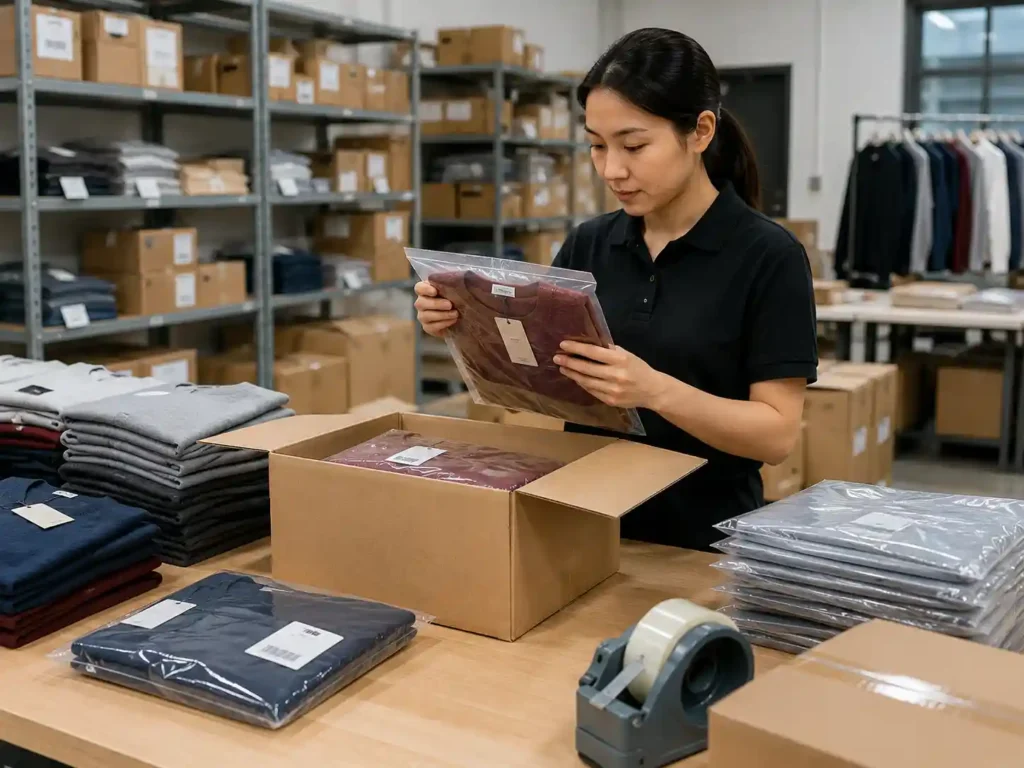
Main labels, size labels, care labels, hangtags, barcodes, SKU stickers and placement are checked against approved artwork and packing instructions. Size, composition, language, barcode and color mistakes can create warehouse or retail problems even when the garment itself is acceptable.
Packing And Release
Private-Label Packing and Export Coordination
Brand Labels
Hangtags And Barcodes
Polybags And Folding
Carton Control
Shipping Documents
Forwarder Coordination
Protecting Designs and Building Repeatable Programs
NDA-Based Design Protection
Repeatable Seasonal Development
Dress Development Cases for Design Teams

US Occasionwear Collection

European Resort Program

Australian Partywear Drop
Frequently Asked Questions for Design Directors

Send Your Collection Brief
A useful development review begins with enough information to understand the dress, the commercial plan and the required launch window. Send a line sheet, tech pack, sketch, reference image or original-sample photos together with the points below. Jinfeng will review style complexity, material direction, pattern and fit risks, trim requirements, MOQ fit, sample approach, production route, packing needs and major timing constraints. Sensitive collections may begin with an NDA request before full files are released.
- Style list or line sheet, including priority hero styles and collection extensions
- Tech packs, sketches, reference images or original-sample photos
- Target quantity by style and color; standard MOQ begins at 200 pcs per style/color
- Preferred fabric, color direction, size range and fit standard
- Target cost position and any non-negotiable design elements
- Photo date, PP approval target, launch date and warehouse delivery requirement
- Private-label files, barcode rules, packing method and shipment preference


