
Dress Manufacturer for US Occasionwear Brands
From photo-ready samples to retail-ready bulk collections, built around fit, fabric control, seasonal timing and repeatable production.
- Collection programs: structured for 10-30 styles and approximately 20,000-80,000 pieces per brand order.
- Development capacity: 2 sample rooms, 7+ senior pattern makers and 20+ sample machinists.
- Sample lead times: 7-10 days for simple styles, 10-15 days for regular dresses and 15-25 days for complex occasionwear.
- Production base: 6 owned women’s fashion factories, 10+ long-term satellite partners and 100,000+ pieces of regular monthly capacity.
- Commercial boundary: MOQ starts from 200 pieces per style and color, subject to fabric, trim, color and packaging requirements.
Jinfeng Apparel at a Glance
Since 2008
6 Owned Factories
10+ Partner Factories
100,000+ Monthly Capacity
12+ Merchandisers
15+ QC Inspectors
Built for Established US Occasionwear Brands
Best Fit For
- Established occasionwear labels, premium ecommerce brands, specialty retailers, fashion groups, sourcing teams and product development departments benefit most from the model. Strong projects normally include a line sheet or reference collection, a defined size range, quantity by style and color, private-label requirements and a target warehouse date.
- The team can support a single hero style, but its deeper value appears in coordinated collections where several fabrics, constructions, colors and delivery priorities must move through one controlled development and production plan.
Project Readiness
- A workable brief may begin with tech packs, reference images, original samples, sketches or a line sheet. Jinfeng reviews structure, material direction, fit risk, trim requirements, sample sequence, MOQ, target price and launch timing before confirming a route forward.
- Clear information does not need to be perfect on day one. The essential point is a real production plan and willingness to lock fabric, fit, PP standards, labeling and packing before bulk manufacture.
What US Occasionwear Brands Need From a Manufacturer
Photo-Ready Fit
Fabric Consistency
Complex Construction
Seasonal Timing
SKU Accuracy
Repeatability
Occasionwear Categories We Develop
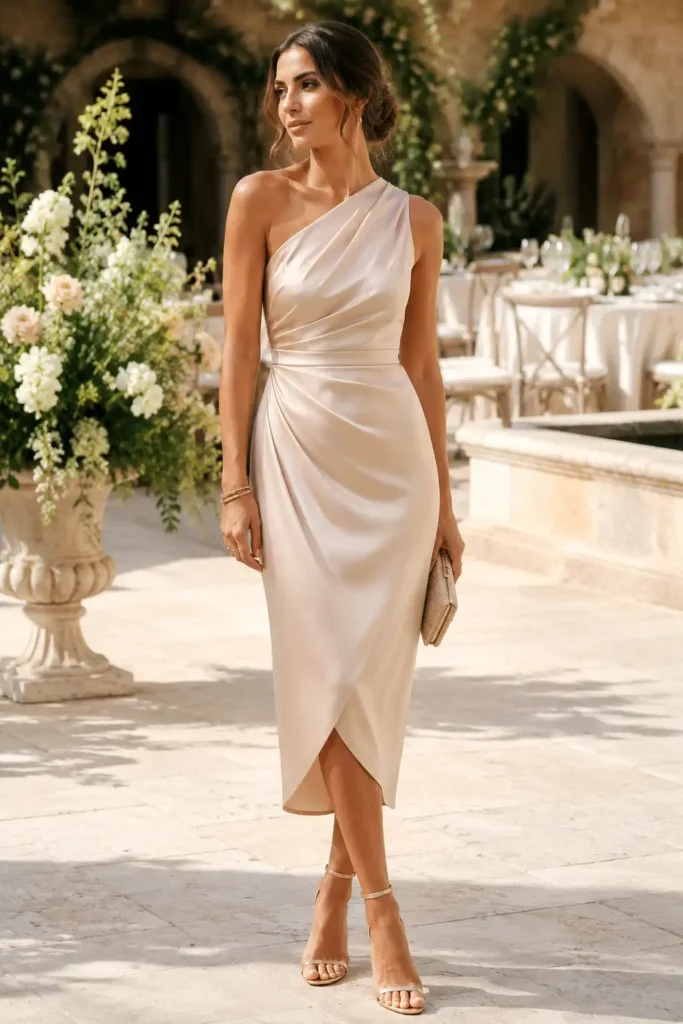
Wedding Guest Dresses
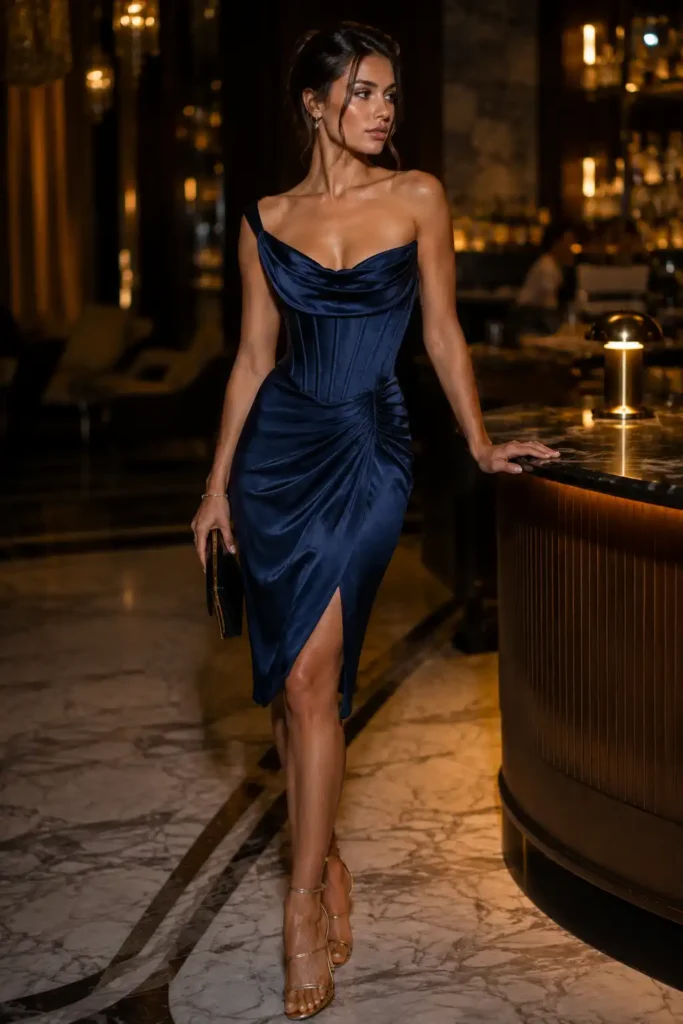
Cocktail Dresses
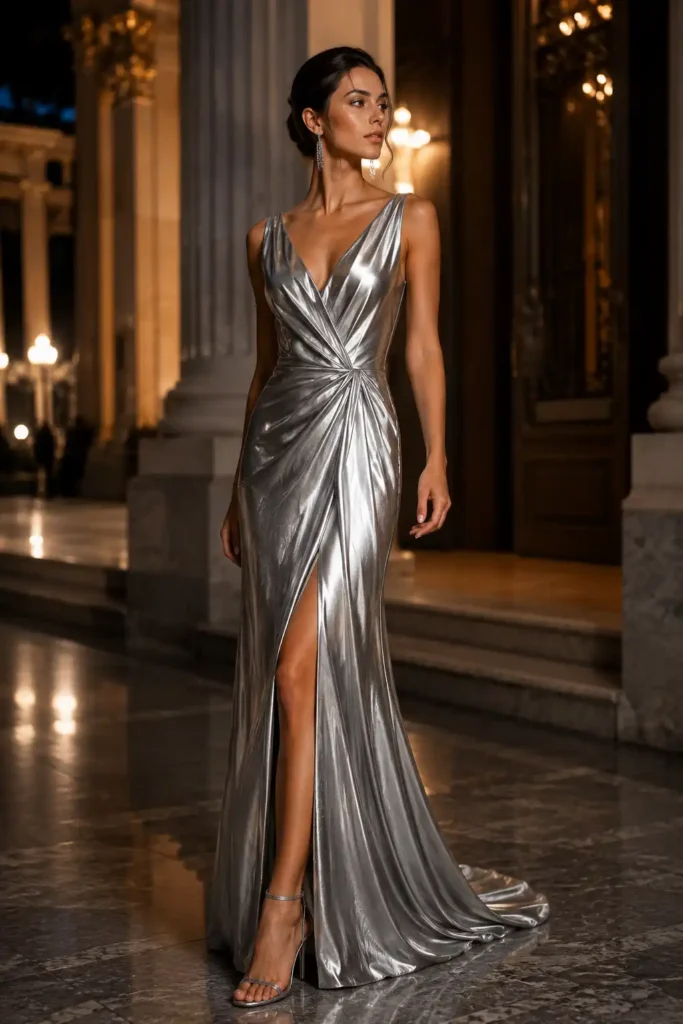
Evening Dresses
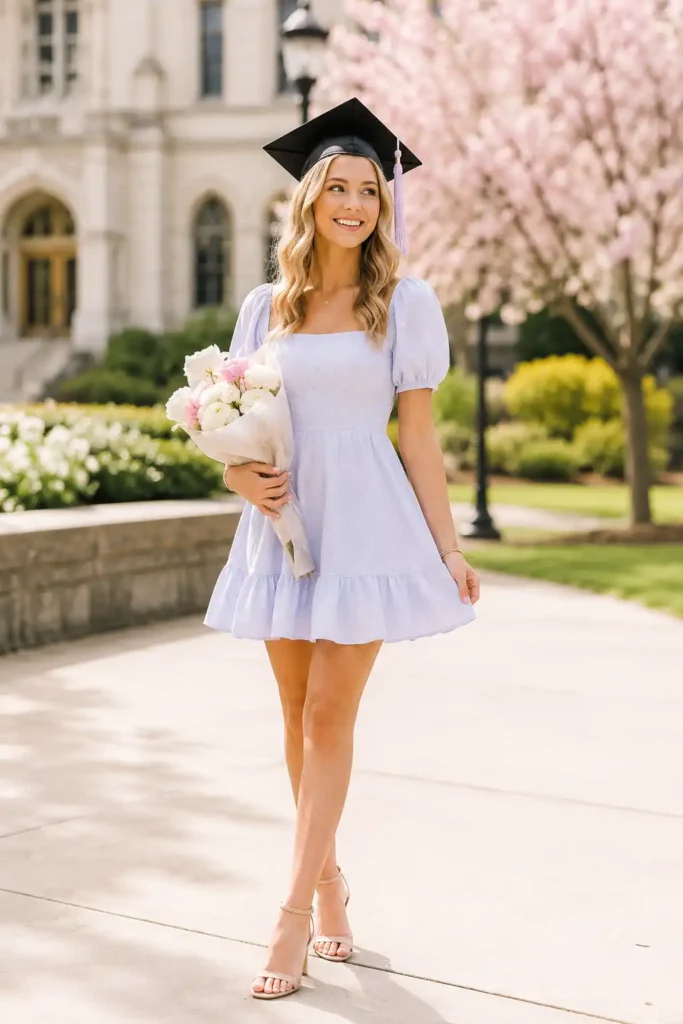
Prom and Graduation
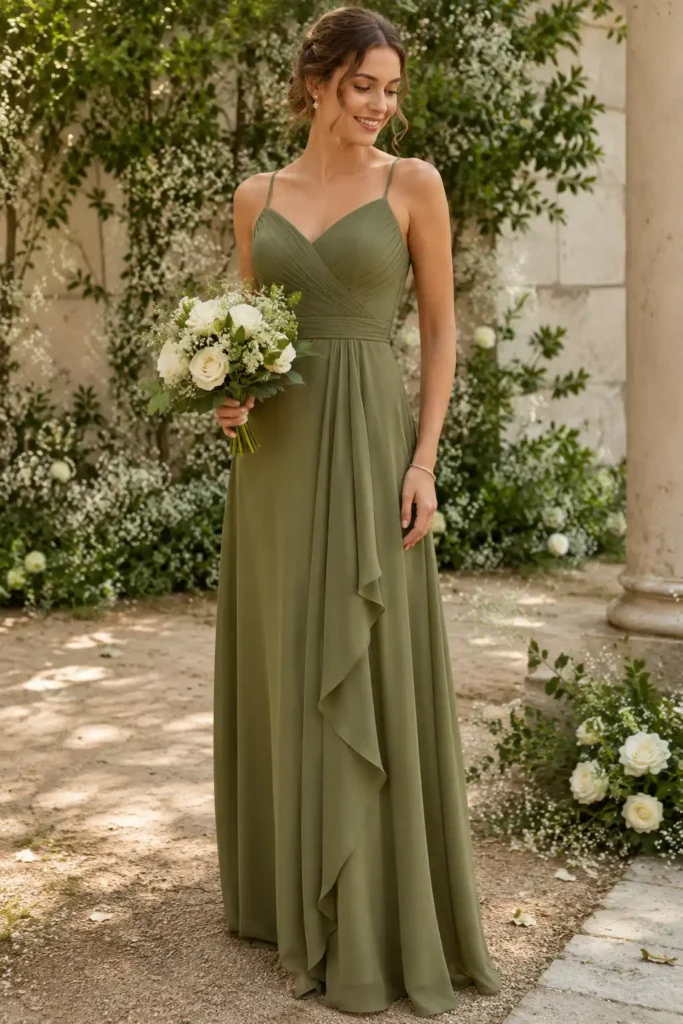
Bridesmaid Programs

Jumpsuits and Sets
Fabric Direction for Occasionwear Collections
Material selection determines shine, movement, transparency, support, comfort, cost and production risk. Jinfeng reviews fabric as part of pattern and construction planning, not as a separate sourcing task.

Satin, Crepe and Draped Wovens
Satin can create the clean shine expected from cocktail, wedding guest and evening styles, yet the same surface reveals every cutting, sewing, pressing and packing weakness. Matte satin, stretch satin and heavier satin differ in drape, recovery, seam appearance and support. Fabric direction must remain consistent because panels cut in opposing shine directions can look like different colors under studio lighting.
Before sampling, the team reviews weight, width, stretch, handfeel, opacity, color, snag risk and intended silhouette. A bias-cut slip dress needs fluid movement and balanced hems, while a corset dress may need a more stable satin plus structured lining. Zipper areas, darts, princess seams and ruching are tested for puckering or pressure marks.
Bulk control includes approved swatches, color references, fabric-lot review, cutting-direction instructions, careful handling and pressing standards. Packing is planned to limit hard fold lines and compression. When the original fabric creates excessive cost or risk, Jinfeng can propose a close alternative, but the alternative must be approved through swatch and sample review because similar shine does not guarantee identical drape or fit.
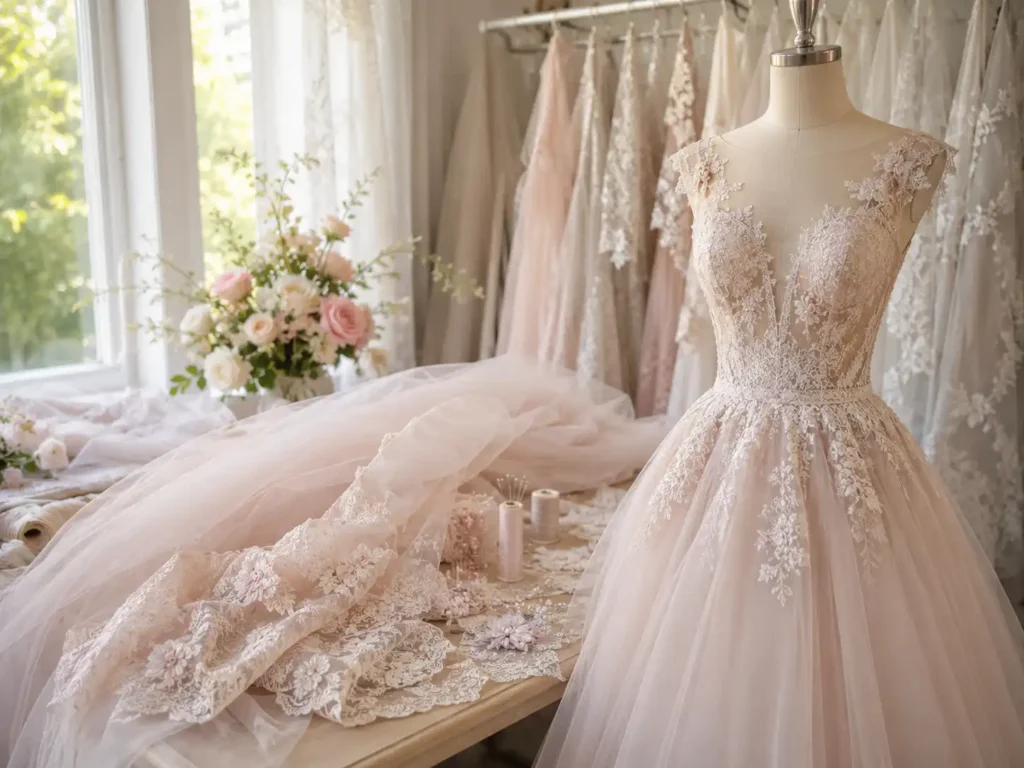
Mesh, Tulle and Transparent Layers
Mesh supports cut-outs, bodycon panels, illusion necklines and layered occasion dresses, but transparency and stretch direction must be engineered with the pattern. Lightweight mesh, stretch mesh and power mesh behave differently around the bust, waist, hips and armholes. A mesh that looks controlled on a flat table may become too transparent or distorted when stretched on the body.
Development starts by defining which zones are intentionally sheer and which require lining, double layers or reinforcement. Lining edges must remain stable during movement, and seams must avoid creating visible ridges. Pattern pieces are marked for stretch direction so left and right panels recover evenly. Cut edges, seam allowances and needle damage are reviewed because tiny holes may enlarge during wear.
For layered tulle or mesh skirts, the team controls layer count, stiffness, hem finish and volume. The goal is a consistent silhouette without unnecessary bulk. Bulk inspection checks holes, runs, recovery, shade, lining coverage and symmetry. Protective packing prevents rhinestones, hooks or sequins from catching adjacent mesh surfaces.

Lace, Sequin and Decorative Fabrics
Lace requires decisions about motif placement, seam position, edge use, lining color and visual continuity. A lace dress may combine full-width lace fabric with separate lace trims, and the two materials should not be treated as interchangeable. Motifs at the neckline, waist and center front are positioned deliberately, especially when a symmetrical appearance is part of the design.
Sequin fabrics add another layer of control. Direction, sequin density, substrate stretch, shedding, needle breakage, seam bulk and skin contact all affect production. High-friction areas may need lining, binding or local sequin removal before stitching. Decorative surfaces are protected during pressing and packing to reduce crushing or abrasion.
Fabric utilization is reviewed before quotation because directional lace, placement motifs and sequins can create higher cutting loss than plain woven fabric. During bulk production, quality checks cover missing decoration, damaged base fabric, sharp edges, loose threads, motif alignment and color consistency. Where hand-applied details are required, quantity, placement and fastening method must be written into the workmanship standard.

Chiffon, Organza and Lightweight Layers
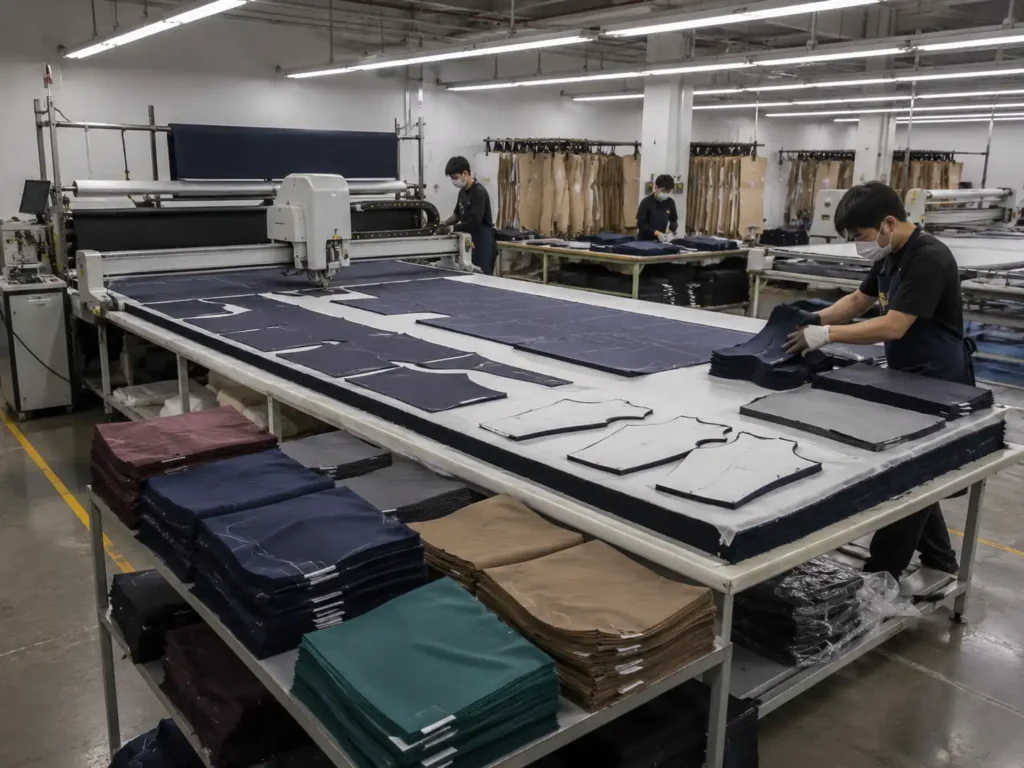
Chiffon and organza are common in bridesmaid, graduation, evening and wedding guest collections because they create movement and volume without heavy weight. Their low stability also increases cutting slippage, transparency, seam distortion and uneven hem risk. Fabric relaxing and controlled cutting are important before sewing begins.
Sample development determines the number of shell and lining layers, hem method, gathering ratio, print direction and seam finish. A long chiffon skirt may require hanging time before final hem balancing because bias areas can drop differently. Organza and tulle layers need consistent length and volume so one panel does not appear fuller than another.
Bulk review covers shade, snags, holes, twisted seams, lining exposure, hem balance and pressing. Lightweight garments are packed with enough support to preserve shape while avoiding hard compression. When a launch includes several pale colors, each shade is reviewed for opacity because the same lining formula may not work equally well for white, blush, yellow and light blue.
Construction Details That Decide the Final Look
Occasionwear quality is created through connected details. Support, balance, comfort and finishing must work together or the final garment may look strong on a hanger but fail during fitting, photography or wear.
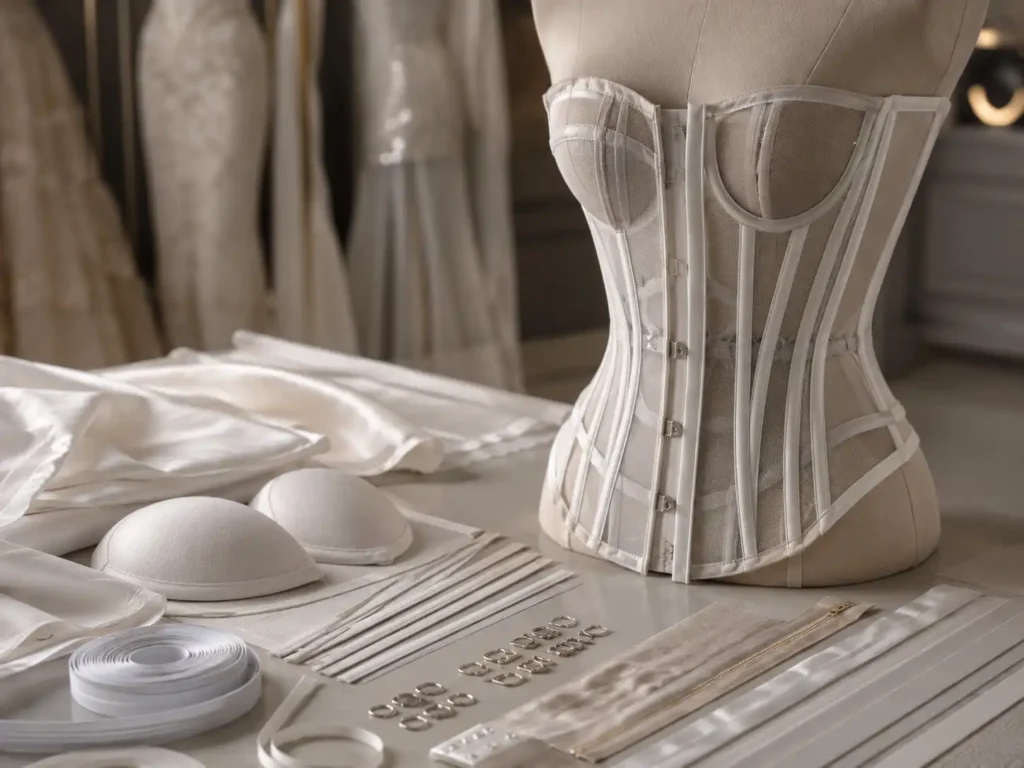
Bust Support and Corset Structure
Corset and bustier styles require more than adding boning to a bodice. Cup shape, under-bust position, front-panel length, waist shaping, neckline pressure and lining support must be developed as one system. Boning type and placement are selected according to the shell fabric, desired stiffness and wearer comfort. The ends must be protected so they do not push through the channel or irritate the skin.
Bra cups are reviewed for size, depth, position and compatibility with the pattern. A cup that is too rigid can create an artificial shape; a cup that is too soft may not hold the neckline. Strapless designs may also require anti-slip tape, stable seam placement and balanced back tension.
During fitting, the team checks standing, sitting and arm movement. Gaping, bust compression, cup movement, waistline distortion and zipper stress are recorded as pattern or construction changes. Before bulk production, cup specification, boning layout, seam allowance, closure method and lining construction are transferred into the BOM and sewing instructions. QC later checks symmetry, support, comfort, neckline stability and zipper function against the Golden sample.
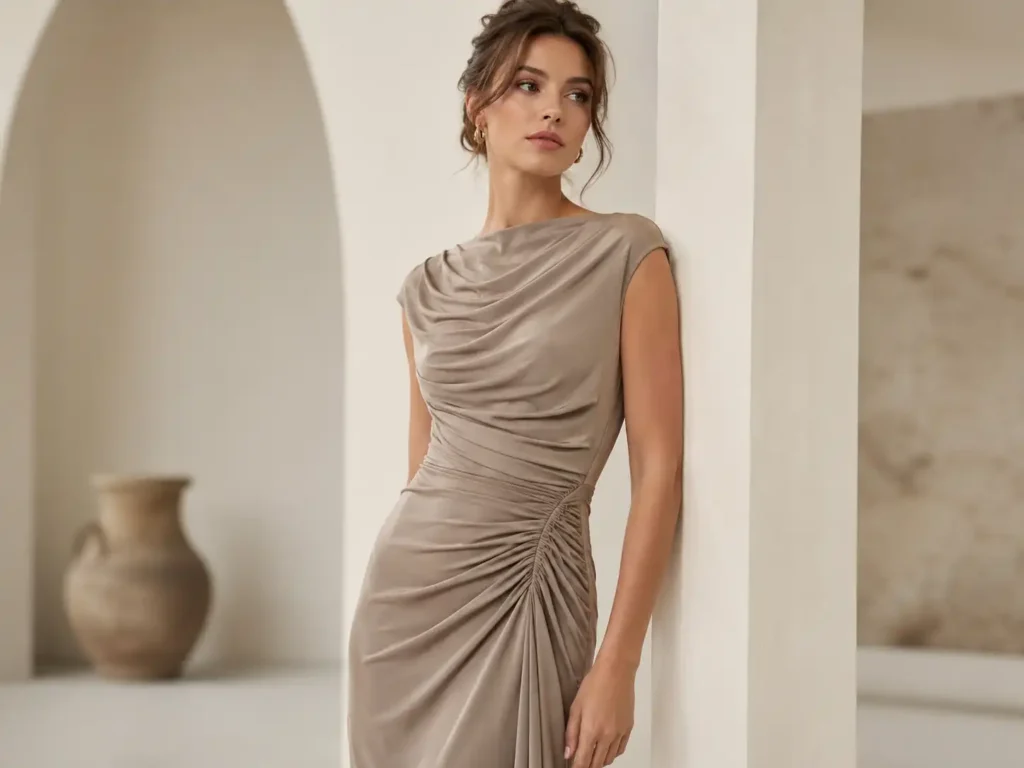
Ruching, Draping and Shape Control
Ruching and draping create visual value only when the fullness appears deliberate. The pattern must define where volume starts and ends, how much fabric is gathered and how the folds sit across the bust, waist or hip. Relying on operator judgment alone can produce uneven bulk appearance, especially across multiple sewing lines.
The sample stage establishes gathering length, stitch position, left-right symmetry and the relationship between the outer layer and lining. Draped panels also need controlled anchor points so the design does not shift when worn. For stretch styles, the team checks whether ruching changes garment recovery or pulls side seams forward.
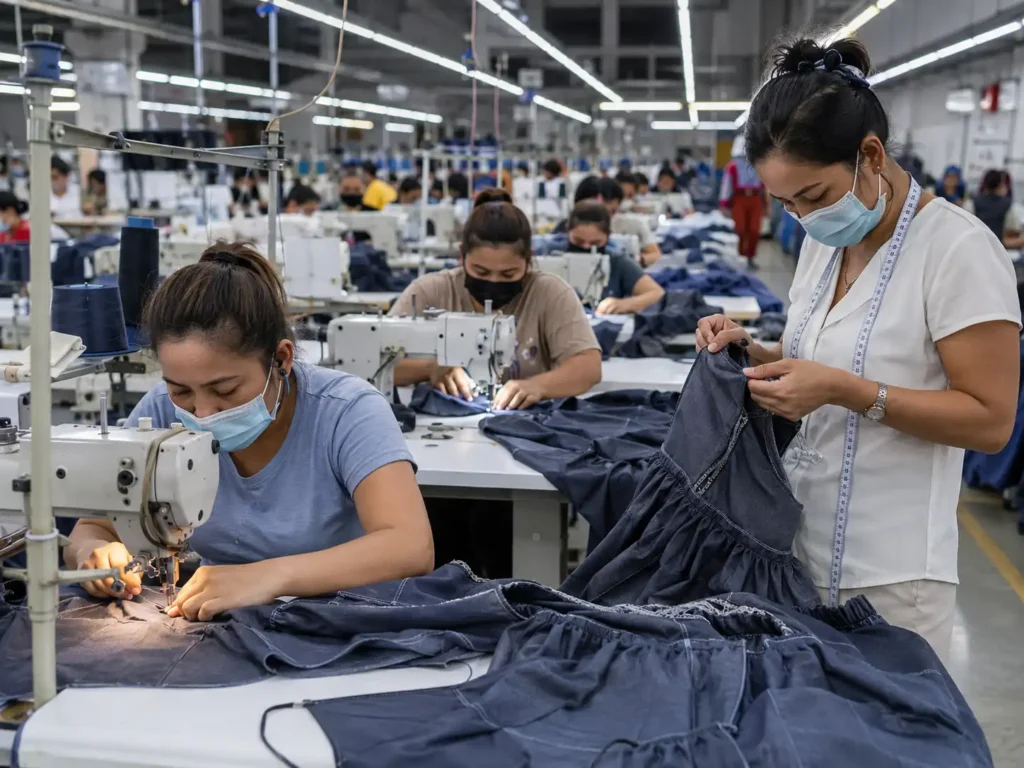
Bulk instructions may include notch alignment, gathering ratios, fold direction, panel overlap and visual reference photos. In-line inspection checks symmetry before the garment reaches final pressing, because major gathering issues are difficult to correct after seams are closed. Final inspection reviews front and back balance, fold direction, bulky seam points and appearance on a hanger or dress form.

Closures, Slits and Wearing Comfort
Invisible zippers, hooks, shoulder straps, sliders, elastic, slits and cut-outs influence both appearance and wearability. A zipper should lie flat without twisting the center back or side seam. Hooks and eyes must support the closure without becoming visible. Adjustable straps need the correct hardware width and enough adjustment range for the size chart.
Slit position is reviewed against dress length, lining length and expected movement. A visually high slit may require an internal support point or revised overlap to prevent opening beyond the approved level. Cut-outs need reinforcement so the shape does not grow during wear. Necklines and armholes are checked for exposure when the wearer moves, not only while standing still.
Hardware color, plating, strength and skin contact are confirmed during sampling. Bulk QC checks zipper smoothness, strap length, slider direction, hook security, slit height and cut-out symmetry. Garments with delicate surfaces may need protective tissue or individual covering around metal parts during packing.

Lining, Hem and Final Pressing
Lining controls opacity, comfort, internal support and the way a garment hangs. Its stretch, weight, color and length must suit the shell. A stable woven lining can restrict a stretch dress, while a lightweight lining may fail to support a corset structure. Pale occasion dresses often need lining selected for both coverage and color neutrality.
Hem construction depends on fabric and silhouette. Chiffon may use a narrow rolled hem; satin may need a clean narrow finish with careful pressing; layered tulle needs consistent length across every layer. Long dresses are checked after hanging so bias drop and panel stretch can settle before final balancing.
Pressing is a manufacturing step rather than a cosmetic final touch. Heat, pressure and steam must suit the shell, lining and decoration. Excess pressure can flatten velvet, mark satin or damage sequins. Final review checks shine marks, seam impressions, fold lines, drape, hem balance and hanger presentation. Packing instructions then preserve the approved appearance during freight and warehouse handling.
US Fit, Grading and Size Consistency
Jinfeng works from the brand’s own size chart, measurement method and target fit. The base pattern is not treated as finished until the fit sample resolves support, mobility and visual proportion, and grading rules protect the design across the planned size range.
| Measurement Area | Common Occasionwear Risk | Development Control | Bulk Verification |
|---|---|---|---|
| Bust / Underbust | Gapping, compression, unstable cups or neckline movement | Fit model review, cup and panel adjustment, support construction | Measurement check plus visual comparison with Golden sample |
| Waist Position | Waistline sits high or low and changes the intended silhouette | Pattern balance, bodice length and seam placement correction | Key-point measurement and seam-position review |
| High Hip / Full Hip | Bodycon distortion, pulling or side seams moving forward | Ease and stretch analysis, panel reshaping, recovery review | Measurement tolerance, side-seam balance and on-form appearance |
| Dress Length | Unsafe mini length, uneven midi line or floor-length imbalance | Measure from agreed reference point and confirm footwear assumptions | Length check by size, hem balance and hanger review |
| Strap Length | Neckline drops, bust support changes or armhole gapes | Fixed or adjustable range confirmed during fitting | Pair measurement, hardware placement and strength check |
| Neckline / Armhole | Exposure, digging or distortion during movement | Depth, curve and binding or lining method corrected in sample | Shape comparison, symmetry and movement review |
| Slit Height | Opening exceeds approved level or lining becomes visible | Slit start point and overlap confirmed against dress length | Measurement, reinforcement and walking check |
| Jumpsuit Torso / Crotch | Pulling, excess length or limited movement | Torso balance, rise and inseam tested together | Key measurements and mobility check across sizes |
From Collection Brief to Feasible Development Plan
What You Send
What We Review
What You Receive
Sampling Built Around Fit and Launch Readiness

First Sample
Simple styles normally require about 7-10 days, regular dresses about 10-15 days and complex corset, lace, sequin, mesh or evening styles about 15-25 days. Special fabrics and trims follow supplier lead times.
Fit Sample
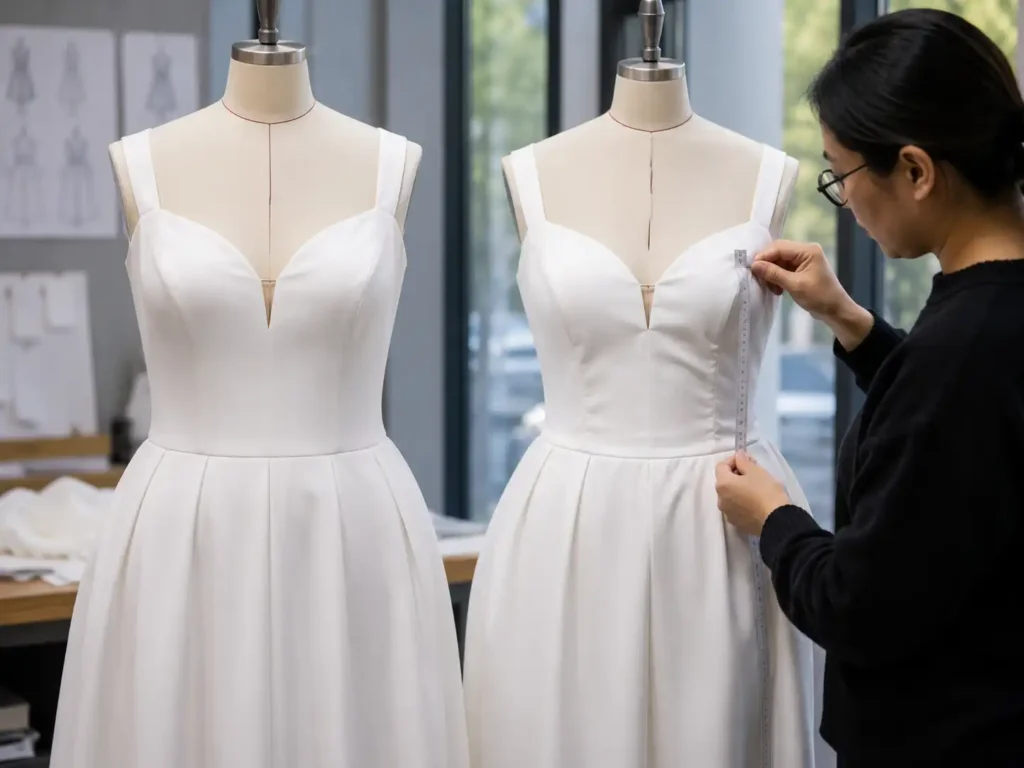
The team converts comments into pattern and size-chart changes, then records whether fabric stretch, lining or construction also contributed to the issue.

Revised Sample
When a new fabric has different drape, stretch or thickness, a revised sample may be necessary even if the design remains visually similar.

Photo Sample
A photo sample is not automatically the PP sample. Final bulk fabric, trims, measurements, labels and packing still need confirmation if the photo sample used development materials or special finishing.

PP Sample
Major structural changes after PP approval can affect material orders, price, production schedule and consistency, so changes are documented and re-evaluated rather than passed informally.

Golden Sample
A new color or fabric may still require confirmation because material lots and behavior can change even when the original pattern remains the same.
How Approved Samples Become Bulk Standards
The transfer from sample room to production determines whether approval remains intact at scale. Jinfeng uses linked physical and written standards so production teams do not rely on memory or isolated chat comments.
Pattern, Measurement and Material Lock
The final pattern version is released with the approved measurement chart and size grading instructions. Fabric references record composition, weight, width, color, stretch, handfeel, drape, transparency and approved supplier information where available. Trim cards define zippers, cups, boning, elastic, hooks, lace trims, decorations and label components.
Any unresolved item remains visible before bulk release. For example, a confirmed silhouette with an unapproved satin shade is not treated as production-ready. The same rule applies to a pending care label, barcode layout or polybag warning. Ke
Workmanship and Visual Standards
Sewing instructions explain seam type, panel sequence, gathering, draping, lining attachment, zipper installation, strap placement, slit reinforcement, decorative application and pressing requirements. Visual references show the approved neckline shape, ruching direction, lace placement or sequin protection where words alone may be interpreted differently.
The Golden sample remains available as the physical benchmark. Production management and QC teams use it to compare shape, balance, workmanship and finishing. Critical risks are also translated into inspection checkpoints, such as satin puckering, mesh holes, cup symmetry, lining exposure, slit height and hem balance.
Label, Packing and Shipment Handover
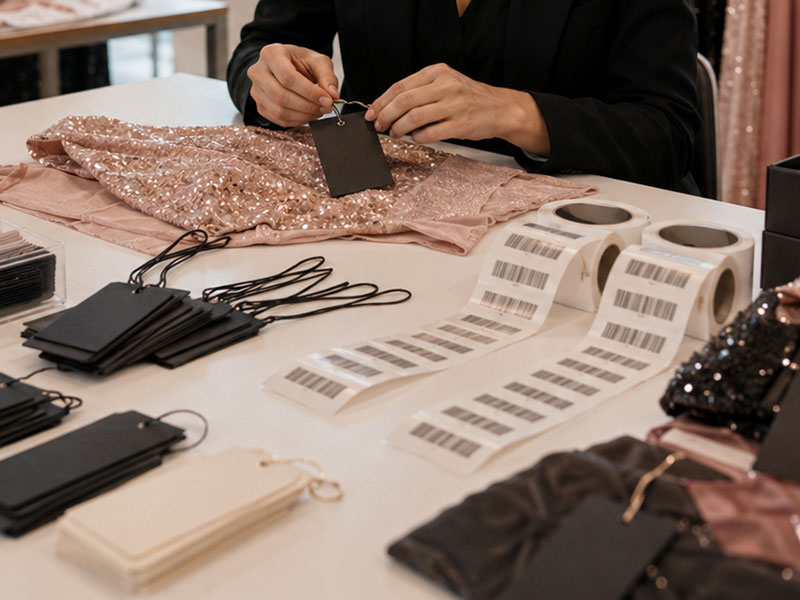
Private-label instructions identify main-label, size-label and care-label placement, hangtag method, barcode and SKU mapping, polybag requirements, carton assortment and shipping marks. Packaging files are reviewed by style, color and size so a correct garment is not released with the wrong retail identity.
Before shipment, packing lists, carton quantities, gross and net weights, carton dimensions and style-color-size breakdowns are checked against the order. For phased delivery, each shipment receives a separate packing structure and documentation set. The handover therefore connects approved product standards with the exact units entering the brand’s warehouse.

A Production Network Matched to Each Style
Style-Based Allocation
Central Project Control
Scalable Collection Capacity
Bulk Production Managed by Clear Checkpoints

Material Approval

Fabric Preparation
Cutting Control
In-Line Sewing Checks

Finishing Review

Packing Release
Quality Control for High-Risk Occasionwear Details
Quality plans are built around the product risks most likely to affect appearance, fit, comfort and retail delivery. The checklist below shows the main control areas for a mixed US occasionwear program.
| Control Area | Primary Risks | Inspection Focus | Reference Used |
|---|---|---|---|
| Fabric and Color | Shade difference, snags, stains, holes, sequin loss | Lot comparison, surface inspection, direction and defect review | Approved swatch and material record |
| Bust and Corset | Cup asymmetry, weak support, boning pressure, neckline gaping | Cup position, support, seam symmetry, comfort and closure stress | PP sample, Golden sample and construction notes |
| Fit and Measurements | Bust, waist, hip, length, strap or slit outside tolerance | Critical measurements by size plus visual balance | Final size chart and measurement method |
| Ruching and Draping | Uneven fullness, twisted panels, left-right mismatch | Gathering position, fold direction, symmetry and anchor points | Visual reference and sewing instruction |
| Lace and Mesh | Motif mismatch, holes, fraying, transparency or lining exposure | Placement, edge finish, damage, recovery and coverage | Approved sample and fabric standard |
| Closures and Trims | Bulging zipper, loose hooks, unstable sliders, sharp decoration | Function, placement, strength, color and skin-contact areas | Trim card and approved sample |
| Finishing and Pressing | Shine marks, crushed surface, seam impressions, uneven hem | Pressing method, drape, hanger presentation and balance | Golden sample and finishing standard |
| Labels and Packing | Wrong size, barcode, SKU, polybag or carton mark | Style-color-size mapping, packing ratio and carton count | Packing instruction, barcode list and PO |
Private Label and Retail-Ready Packing

Garment Labels
Hangtags and Strings
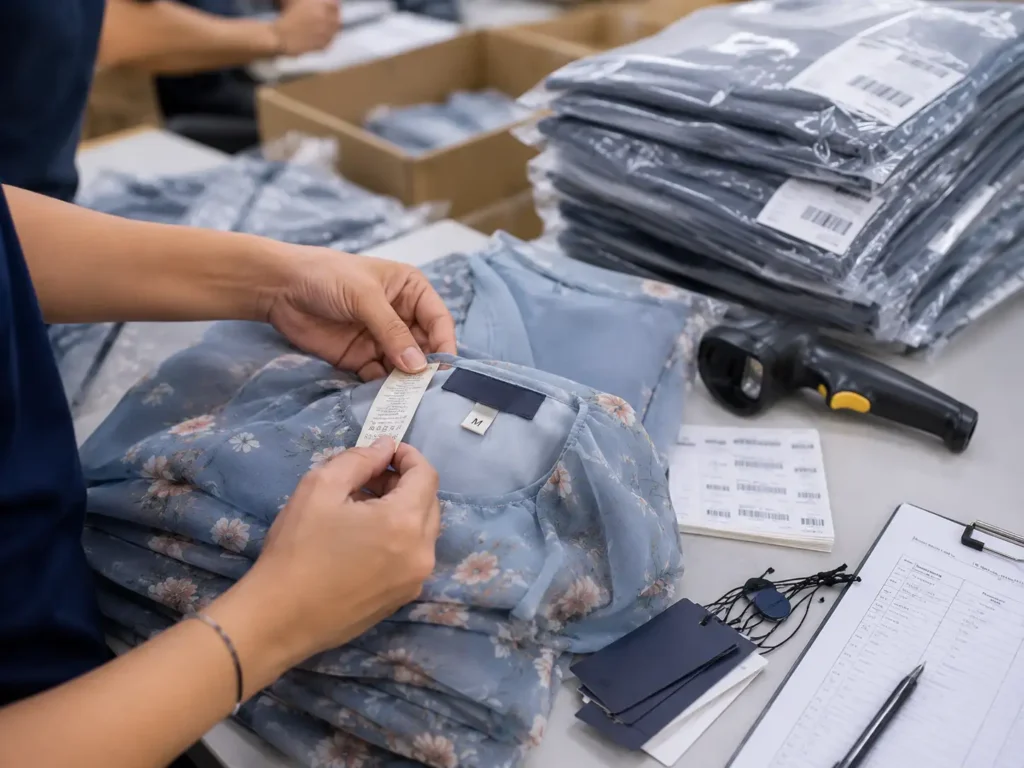
Barcode and SKU
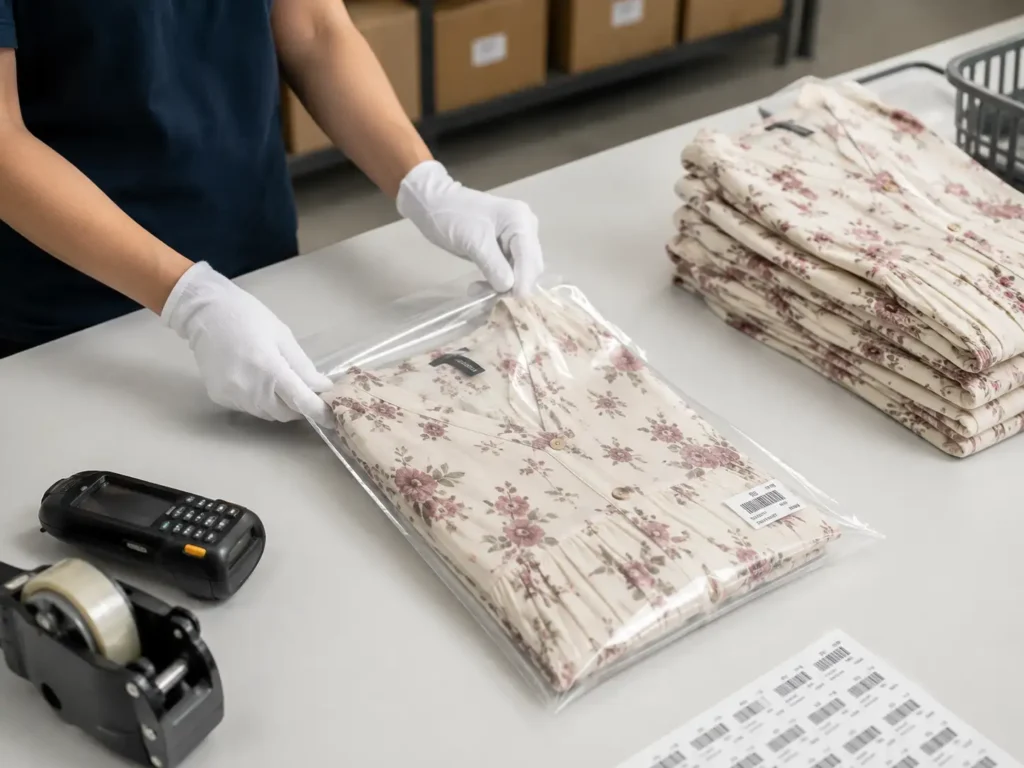
Polybag Requirements
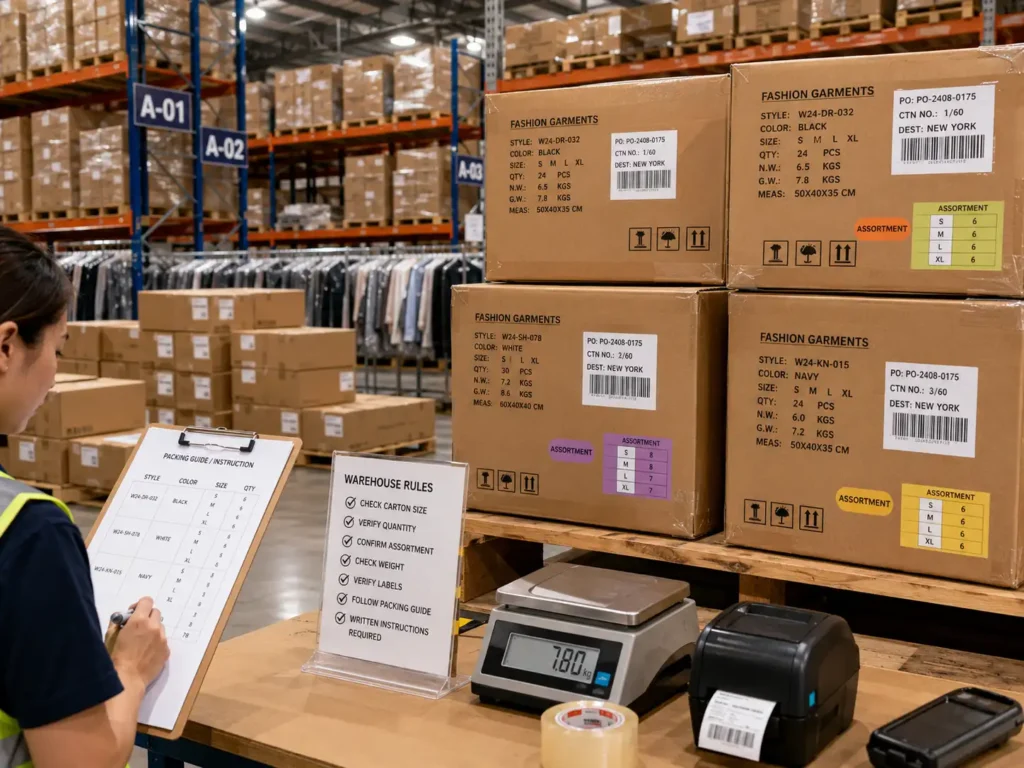
Carton Assortment
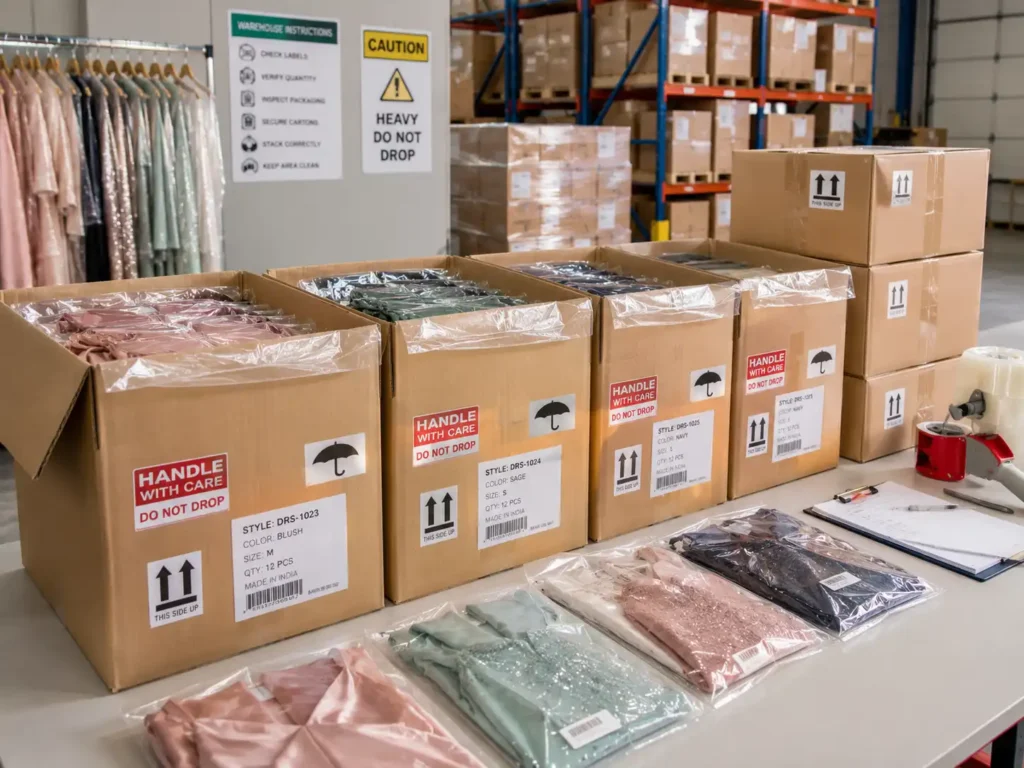
Warehouse Files
Testing, Labeling and US Documentation Support
Product Testing
Label Review
Export Documents
MOQ, Quotation and Cost-Control Logic
How MOQ Is Calculated
MOQ is measured by style and color, not by the combined quantity of unrelated styles. One dress in two colors normally requires the minimum for each color.
Fabric mills, lace suppliers, sequin sources, printed packaging and custom trims may also set separate minimums. A 20-style collection can still be commercially efficient when core colors, shared fabrics, repeat blocks and sensible size ratios are planned together.
The review identifies where material consolidation is possible without forcing unsuitable fabrics across different constructions.
How Price Is Built
Dress cost reflects shell fabric, lining, consumption, width, trims, pattern work, sample development, cutting, sewing time, workmanship complexity, pressing, QC, packing, testing, loss, freight terms and factory margin. Corsetry, hand placement, lace matching, sequins, multi-layer skirts and special packaging affect cost differently from a simple lined dress. Jinfeng controls cost without weakening brand-level appearance through fabric alternatives, construction refinement, trim substitution, cutting-layout improvement, color consolidation, size-ratio planning and split-shipment options. Final price is locked from approved materials, PP standard, quantity and delivery terms.

NDA, Design Protection and Repeat-Order Records
Design Protection
Files are used for project review, pattern development, sample making, bulk production, QC, packing and shipment. Without authorization, unpublished designs and brand-specific files are not presented as public case content or shared with unrelated projects.
Repeat-Order Records
Records do not remove the need for new confirmation. A later fabric lot, new color, changed lining, updated label or expanded size range can alter fit, shade, cost or MOQ, so every reorder receives a controlled review before production release.
Frequently Asked Questions for US Occasionwear Brands

Send Your Occasionwear Collection for Review
A focused review begins with the information already available. Send a tech pack, line sheet, reference image or original sample photos, then add quantity by style and color, preferred fabrics, color plan, size range, target price, private-label needs and the required launch or warehouse date.
Kelly will coordinate an initial review with the relevant development team. The response will identify material direction, structural risks, sample priorities, MOQ conditions, information still required and the basis for quotation. Sensitive files can be shared under NDA and are used only for project evaluation, sampling, bulk production, QC, packing and delivery.
- Tech pack, line sheet, reference images or original sample photos
- Quantity per style and color, plus planned size ratios
- Fabric, trim, color and lining direction
- Main label, care label, hangtag, barcode and packing files
- Target price, launch date and US warehouse requirements
- Preferred freight terms or nominated forwarder details


