 Skip to content
Dress Manufacturer for Product Development Managers
From design reference and fabric direction to fit-approved samples, controlled bulk production, and repeatable dress programs for established fashion teams.
- 2 sample rooms, 7+ senior pattern makers, and 20+ sample machinists support structured dress development.
- Built for seasonal programs containing 10-30 styles, multiple fabrics, several colorways, and planned size ratios.
- 6 owned women’s fashion factories, 10+ long-term production partners, and 100,000+ pieces of monthly capacity support approved programs.
- 12+ merchandisers and 15+ QC inspectors connect development records, PP standards, bulk execution, packing, and delivery.
Development Resources Built Around Dress Programs
2 Sample Rooms
7+ Pattern Makers
20+ Sample Machinists
12+ Merchandisers
15+ QC Inspectors
100,000+ Monthly Capacity
Problems Product Development Managers Need Solved Early
Feasibility Stays Unclear
Samples Take Too Long
Fit Comments Repeat
Versions Become Mixed
Launch Dates Compress
Bulk Drifts From Sample
A Working Model for Established Fashion Teams
Best-Fit Programs
- Seasonal collections with 10-30 styles
- Several fabrics, colors, and size ratios
- Photo, fit, PP, and golden sample requirements
- Planned bulk production from 200 pieces per style and color
- Reorder and multi-batch production needs
Structured Collaboration
- NDA support before file transfer
- English email, WhatsApp, and video meeting support
- Client-appointed inspection and forwarder coordination
- Pattern, fabric, trim, packing, and reorder records
Review First, Develop With Clear Boundaries
Project Review
- Style structure and closure logic
- Fabric and trim direction
- Measurement completeness
- Sample purpose and approval route
- Quantity and timing compatibility
Feasibility Advice
- Fit and coverage risks
- Material behavior and availability
- Construction and finishing risks
- MOQ and cost variables
- Bulk production implications
Sampling Plan
- First-sample objective
- Required material approvals
- Fit and measurement checkpoints
- Revision record method
- PP and golden-sample route
Files That Make Development Faster and More Accurate
Reference Image
Tech Pack
Original Sample
Quantity Plan
Fabric Direction
Size Range
Launch Date
Private Label Files
From Design Brief to Approved Bulk Production
Project Brief
Technical Review
Material Direction
Pattern Development
First Sample
Fit Revision
PP Approval
Bulk Production
Inspection and Delivery
Dress Programs Developed for Different Technical Risks
A development team rarely manages one dress type. Seasonal lines often combine soft drape, stretch fit, structured support, delicate surfaces, long hems, and private-label requirements. Each group below needs a different sampling and bulk-control method.

Fit-Sensitive Dresses

Structured Dresses

Occasion Dresses

Delicate-Fabric Dresses

Seasonal Resort Dresses

Multi-Style Collections
Feasibility Checks Before Pattern Cutting
A style should enter sampling only after the main risk has been named. The review below shows how common dress ideas are translated into specific development questions. Final decisions still depend on the selected fabric, brand measurements, sample purpose, and commercial target.
| Dress Direction | Main Development Risk | Review Before Sampling |
|---|---|---|
| Strapless dress | Slipping, weak bust support, top-edge gaping | Upper-bust fit, cup and boning position, anti-slip method, zipper support |
| Corset dress | Cup shape, pressure points, unstable waist structure | Panel balance, boning channels, lining, cup placement, waist suppression |
| Bodycon dress | Poor recovery, tight hip, twisted side seams | Stretch direction, recovery, negative ease, grain, wash behavior |
| Satin dress | Shade variation, snagging, puckered zipper, pressing marks | Fabric face, shine direction, needle and seam method, lining, packing |
| Mesh dress | Excess transparency, neckline growth, holes, lining movement | Mesh density, stretch, layer count, lining coverage, edge stabilization |
| Maxi dress | Uneven hem, incorrect front-back balance, packing creases | Grain, length balance, lining length, movement, pressing and folding |
Fabric and Trim Decisions That Protect the Design

Fabric Direction
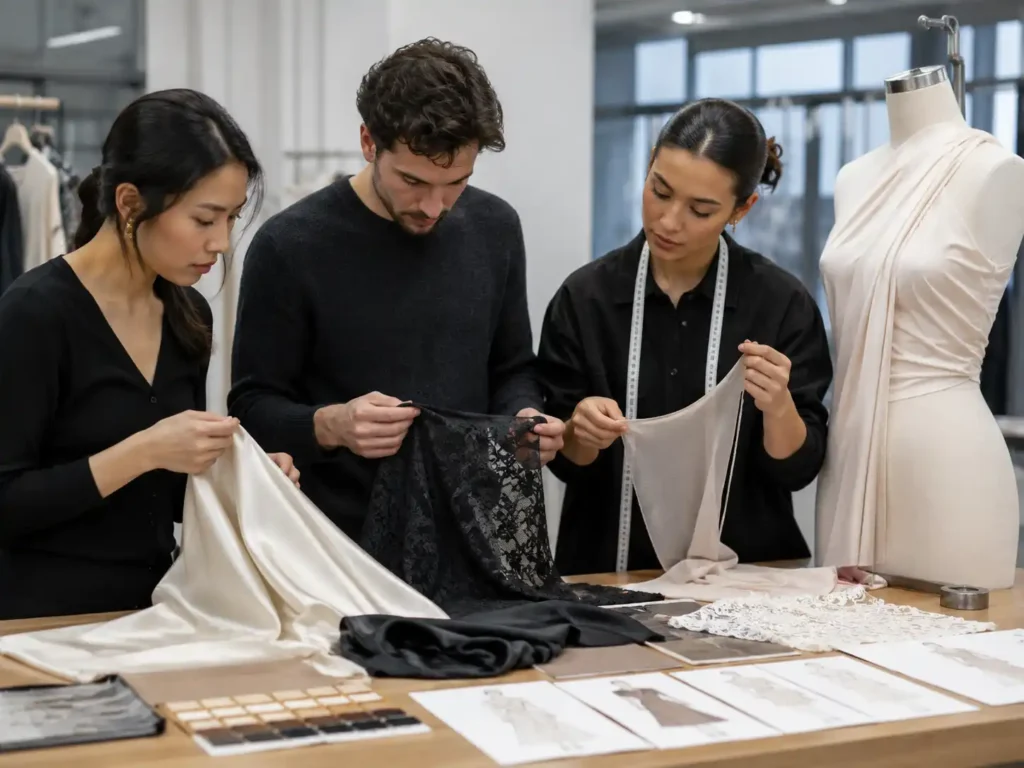
A reference garment may rely on a specific balance of weight, drape, stretch, shine, transparency, and recovery. A lighter satin may collapse around a corset seam, while a heavier satin may lose the fluid movement of a slip dress. Stretch mesh may fit a bodycon style but grow at the neckline without stabilization. Chiffon may create the right movement yet require a different lining length, hem method, and seam finish. Fabric direction therefore considers:
- Fiber and surface character
- Weight and width
- Drape and body
- Two-way or four-way stretch
- Recovery after wear
- Transparency and lining coverage
- Shrinkage and color risk
- Fabric MOQ and color availability
Material Risk Review
Each material family receives a different risk check. Satin needs shade, shine direction, snagging, zipper, pressing, and crease control.
Mesh needs density, stretch direction, hole inspection, recovery, lining, and neckline stability. Lace needs motif placement, edge finish, lining color, seam location, and fraying review. Sequins need attachment stability, seam thickness, anti-scratch protection, needle risk, and packing protection.
Jersey and ponte need recovery, side-seam stability, neckline shape, and wash-size review.
The goal is not to create a longer checklist; it is to focus inspection on the defects most likely to affect the selected dress.

Trim Compatibility
Trims must work with the garment structure and the production method.
Invisible zippers need seam stability and smooth insertion.
Boning needs secure channels and safe ends. Bra cups must match bust shape, neckline depth, and lining.
Elastic should provide recovery without visible tension marks. Metal trims need weight, finish, attachment, and skin-contact review. Labels, hangtags, barcodes, and packing components are checked against brand files before bulk production.
A trim change during sampling can require pattern, BOM, sewing, costing, or timeline updates, so substitutions are not treated as minor cosmetic changes.
Pattern and Fit Control for Commercial Dress Ranges
Fit Architecture
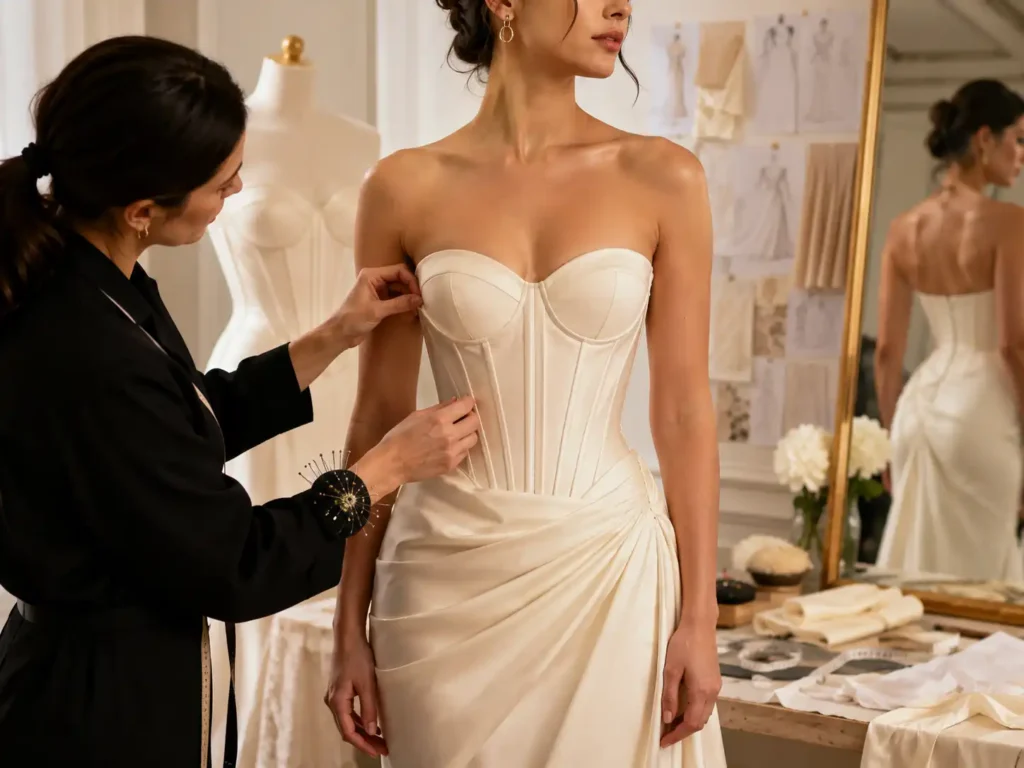
Common corrections include:
- Raising or reshaping a neckline for secure coverage
- Reducing underarm exposure without restricting movement
- Adjusting cup, boning, and waist positions in corset styles
- Balancing front and back lengths on maxi dresses
- Correcting side-seam movement in stretch bodycon styles
- Changing strap length and back height on open-back dresses
- Aligning lining length with slits, mesh panels, or sheer fabrics

Size Translation
A base-size sample must later work across the approved range. Product teams should identify the target market, base size, grade direction, body block, and any known return issues before grading begins. Jinfeng Apparel connects the final pattern, approved size chart, grade rule, PP sample, golden sample, and bulk measurement checks so size development remains traceable.
Key decisions include:
- Which dimensions grade evenly and which need style-specific rules
- Whether cup shape, neckline, slit, and strap placement need separate attention
- How stretch and recovery affect negative ease across sizes
- How long hems, lining, and proportion change through the range
- How size ratios influence cutting and order planning
No universal tolerance is imposed without agreement. Measurement tolerance, checking method, and critical points are confirmed against the brand’s size chart, product type, fabric behavior, and inspection standard.
Samples With a Clear Decision Purpose

First Sample

Fit Sample
A fit sample focuses on body balance, coverage, movement, and measurement.
Bust, waist, hip, neckline, armhole, strap, length, slit, lining, and jumpsuit rise are reviewed against the target market and approved size chart. Fit findings are recorded before another pattern is cut.
Revised Sample
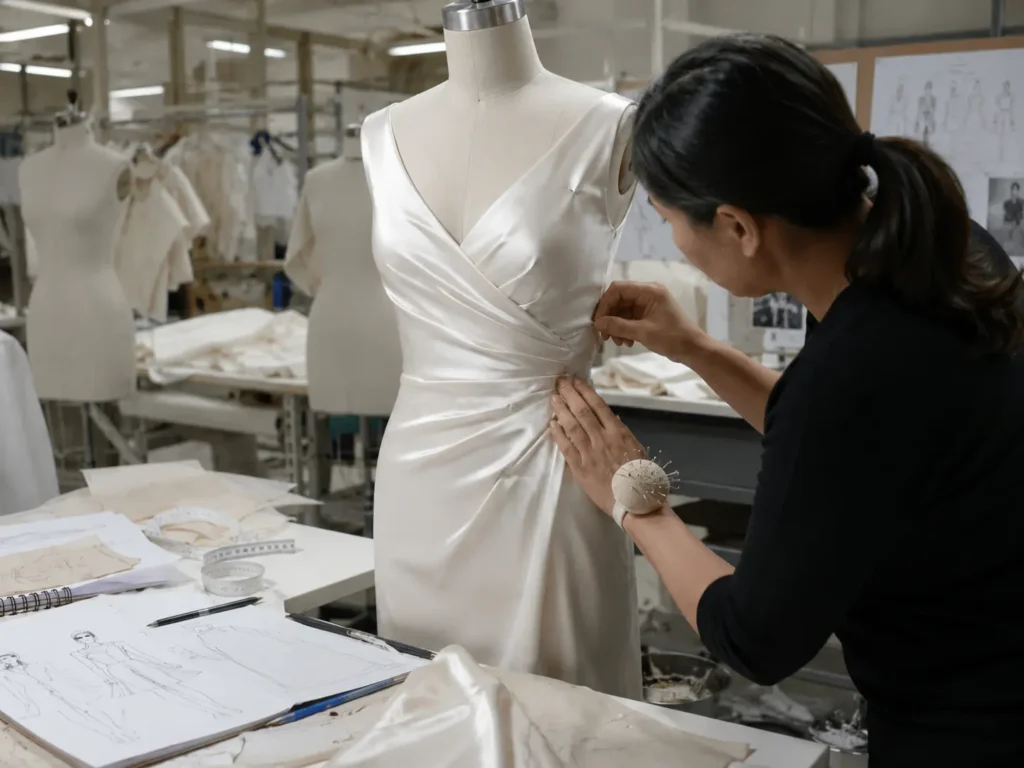
A revised sample verifies whether approved comments were executed correctly.
Pattern, measurement, fabric, trim, lining, or construction changes are checked against the revision record. New changes are separated from previous corrections so approvals do not become mixed.

Photo-Ready Sample

Salesman Sample

PP Sample

Golden Sample

Video Review
Managing 10-30 Styles Without Losing Control
Large seasonal programs need more than a shared spreadsheet. Styles are grouped by fabric, structure, trims, sample purpose, and launch priority so the most important decisions move first. Approval status is connected to the files required for the next stage.
Multi-Style Development Tracker
| Program Field | Working Rule | Decision Signal |
|---|---|---|
| Launch priority | Rank by campaign date, hero SKU, sales meeting, and warehouse need | Critical styles receive material and sample priority |
| Fabric group | Combine styles using the same or related fabric source | Shade, MOQ, and delivery risk can be reviewed together |
| Pattern complexity | Separate basic, fit-sensitive, structured, and long-length styles | Pattern and sample resources match technical difficulty |
| Trim group | Track shared zippers, cups, boning, lace, labels, and hardware | Delayed trims do not block unrelated styles |
| Revision status | Record comments, root cause, file updates, and next sample | No style moves forward with unresolved conflicting notes |
| Approval stage | Mark first, fit, revised, photo, PP, and golden sample status | Bulk starts only from the approved production version |
| Size-color plan | Link color count, size ratio, SKU code, and quantity | Material booking, cutting, packing, and delivery remain aligned |
| Delivery wave | Group urgent launch units and regular inventory | Split shipment can be planned without mixing documents |
Revision Records That Survive Multiple Sample Rounds
Comment Intake
Root-Cause Review
Pattern Update
Material Update
File Synchronization
Approval Closure
Costing, MOQ, and Commercial Production Decisions
Fabric Consumption
Construction Time
Material MOQ
Size-Color Ratio
Cost Optimization
Quote Lock
PP Lock and Production Handover

What Gets Locked
The PP standard confirms the final fabric source, color, lining, trims, measurements, construction, stitch requirements, support structure, zipper, labels, hangtags, barcodes, polybag, carton marks, and packing method. The product development manager should also confirm any acceptable appearance limits, critical measurement points, inspection method, and shipment split.
- A late change may affect:Fabric or trim purchase ordersPattern and grade rulesCutting markers and consumptionSewing method and line planningLabel or packaging productionInspection files and approval samplesEx-factory and shipment timingChanges remain possible when needed, but the effect is assessed before implementation rather than absorbed informally.

What Moves to Production
Production receives the approved sample, final pattern, size chart, grade rule, BOM, fabric reference, trim card, sewing instructions, label placement, packing instruction, and QC checklist.
Merchandising, production, and QC teams use the same version so the sample room does not become disconnected from bulk execution.
- The handover includes:Style and SKU identificationColor-size breakdownCritical construction calloutsMeasurement checkpointsSpecial fabric handlingPressing and finishing requirementsPacking and carton informationInspection and release conditionsCTA Button 1: Review PP Standard CTA Button 2: Prepare Bulk Handover
Bulk Controls Linked to the Approved Sample

Material Inspection

Cutting Control
Sewing Standard

In-Line Inspection

Measurement Check

Finishing Review

Packing QC

Final and AQL Review

Shipment Release
18 Styles, 270 SKUs, One Controlled Launch
Development Challenge
The product team needed photo-ready hero styles first, while supporting styles still required fabric and fit decisions. Satin shade and zipper behavior, mesh transparency and recovery, lace placement, corset support, bodycon side-seam stability, and consistent size grading created different risks across one launch calendar. Barcode, hangtag, polybag, carton, and mixed-size packing files also had to match 270 SKU records.
The planned program ran through a 16-week project calendar:
- Weeks 1-2: technical review, fabric grouping, trim confirmation, and sample priority
- Weeks 3-6: first samples and fit samples for hero and high-risk styles
- Weeks 7-8: revised samples, photo-ready samples, and file updates
- Weeks 9-10: PP samples, golden samples, bulk quotation lock, and production handover
- Weeks 11-14: bulk cutting, sewing, in-line inspection, measurement, and finishing
- Weeks 15-16: final inspection, packing, and two delivery waves
Jinfeng Execution
Styles were divided into five material groups and four technical groups. Hero satin and mesh styles received earlier sample capacity. Pattern comments were recorded against bust, waist, hip, neckline, strap, slit, and length points. Fabric changes triggered pattern and cost review before new samples were cut. Approved files were transferred through final patterns, size charts, BOMs, trim cards, label files, packing instructions, and QC checklists.
Bulk production was released in two waves.
The first wave prioritized campaign and launch quantities; the second carried the remaining inventory after the same PP and golden-sample standards. SKU, barcode, carton mark, and size-ratio checks were completed before shipment release.
Program Result
The 18-style range moved from mixed development risk to a documented production system. The brand retained pattern, fabric, trim, color, measurement, packing, and golden-sample records for reorder evaluation and the next seasonal line. No client identity, unpublished artwork, internal pricing, or proprietary tech-pack content is disclosed.

NDA Protection and Records for Repeat Orders
Development Protection
Tech packs, line sheets, original samples, patterns, measurements, fabric direction, trims, labels, packaging, barcodes, quantities, target prices, launch plans, and unpublished designs are handled for the assigned project.
Client names, original files, campaign images, pricing, and unreleased products are not used publicly without authorization. An NDA can be reviewed before sensitive files are transferred.
- No public use of client logos without approval
- No release of original tech packs or pattern files
- No display of unpublished samples without permission
- Anonymous case descriptions only where appropriate
- Controlled access across development and production teams
Repeat-Order Records
- Seasonal collection extension
- Same style in new colors
- Same block in another fabric
- Multi-batch shipment
- Replenishment and repeat orders
- Quality continuity across production periods
Questions Product Development Managers Ask Before Sampling

Send Your Dress Development Program for Review
Share enough information for a useful first assessment, not only a product photo. Jinfeng Apparel reviews the range from the viewpoint of development feasibility, fit, material behavior, sample sequence, MOQ, bulk execution, quality control, packing, and delivery. Kelly coordinates the initial file review and connects the program with the appropriate development, merchandising, production, and QC resources.
Please include:
- Company and brand information
- Style list, line sheet, tech packs, or reference images
- Original sample photos where available
- Target quantity by style and color
- Size range and expected size ratio
- Fabric and trim direction
- Required sample types
- Photo date, launch date, and warehouse timing
- Label, barcode, packing, and carton requirements
- Inspection and delivery terms

