
Dress Manufacturer for Senior Apparel Buyers
Structured dress development, controlled bulk execution, and clear project visibility for established apparel sourcing teams.
- Since 2008, supporting custom womenswear development from tech pack review and pattern work to bulk production and export delivery.
- 6 owned women’s fashion factories plus 10+ long-term production partners for multi-style, multi-fabric, multi-size, and multi-batch programs.
- 2 sample rooms, 7+ senior pattern makers, 20+ sample machinists, 12+ merchandisers, and 15+ QC inspectors working across development and production.
- 100,000+ pieces of regular monthly capacity, allocated by dress structure, material type, workmanship level, quantity, and confirmed delivery window.
Jinfeng Apparel supports global fashion brands and established apparel organizations that need more than sewing capacity. Each project moves through product review, fabric and trim direction, pattern development, sample approval, production planning, in-line control, final inspection, private-label packing, and shipment preparation. Senior sourcing teams receive a manufacturing partner able to discuss construction risk, commercial feasibility, timeline pressure, and repeat-order control before production commitments are made.
A Manufacturing Structure Senior Sourcing Teams Can Evaluate
Since 2008
6 Owned Factories
10+ Production Partners
2 Sample Rooms
15+ QC Inspectors
100,000+ Pcs Monthly
Built for Experienced Apparel Buying and Sourcing Teams
Global Fashion Brands
Buying Offices
Sourcing Managers
Merchandising Leaders
Product Development Teams
Vendor Management Teams
What Senior Apparel Teams Evaluate Before Supplier Approval
Experienced procurement leaders assess a dress manufacturer across product, commercial, operational, and quality dimensions. Strong samples alone cannot compensate for weak bulk control, unclear costing, or unreliable project management.
Product Development and Technical Fit
A credible dress supplier must understand how a design becomes a repeatable garment. Jinfeng Apparel begins with structure rather than appearance alone. The team reviews neckline depth, bust coverage, waist placement, hip balance, strap stability, back construction, closures, lining, support components, fabric direction, seam placement, and workmanship sequence. Tech packs are checked for missing measurements, unclear construction callouts, conflicting BOM details, or material specifications that may not perform as intended.
Pattern and sample work then verifies fit, wearing stability, movement, visual proportion, and production feasibility. A corset dress may require cup position, boning length, upper-bust grip, zipper behavior, and lining support to be resolved separately. A mesh dress needs transparency, stretch direction, seam recovery, lining coverage, and neckline stability checked before bulk approval. Technical fit means the garment can be sampled, measured, approved, repeated, and inspected using clear production references.
Commercial and Costing Fit
Senior procurement teams need quotations that can survive internal review. Jinfeng Apparel builds cost from fabric, lining, trims, pattern work, sample development, cutting, sewing time, pressing, quality control, packing, expected material loss, testing requirements, logistics conditions, and reasonable factory margin.
A price without confirmed fabric weight, construction, quantity by color, size range, trim specifications, and packaging requirements remains an early estimate rather than a production quotation.
Cost optimization focuses on preserving the selling appearance. Options may include replacing a high-minimum lace with an available quality lace, simplifying hidden internal layers, consolidating colors, adjusting trim construction, improving marker efficiency, or refining the size ratio. The objective is not to strip value from the garment. The objective is to remove cost that does not improve appearance, fit, durability, or retail presentation.
Operational and Timeline Fit
Operational fit measures how easily a sourcing team can manage the supplier. Every project requires confirmed files, responsible contacts, a development path, approval gates, production milestones, quality checkpoints, packing instructions, and shipment preparation. Jinfeng Apparel assigns production according to fabric type and garment structure: stretch styles to suitable knit or elastic-fashion lines, woven dresses to woven lines, and lace, mesh, sequin, corset, or occasionwear styles to teams familiar with complex materials and construction.
For 10-30 style collections, sample priority is normally set by launch date, hero SKU, material readiness, complexity, photo-sample requirement, and bulk risk. A first-sample planning target can often be discussed within 10-18 working days after material and trim direction is confirmed; complex corset, lace, sequin, mesh, custom-color, or highly engineered styles may require 15-25 working days. Final timing is confirmed only after project review and material availability.

Supplier Risks Experienced Sourcing Teams Already Know
Unscalable Samples
Measurement Drift
Material Variation
Cost Changes
Late Visibility
Packing Errors
Is Jinfeng the Right Manufacturing Fit?
Strong Fit for Jinfeng
Jinfeng Apparel is structured for fashion organizations with a defined product direction and a genuine path from sampling to bulk production. Projects normally include a tech pack, line sheet, reference garment, sketch, design image, size chart, BOM, target quantity, material direction, target market, delivery window, or private-label requirement. Seasonal collections, 10-30 style programs, repeat orders, multi-color production, and retail-ready packing can be evaluated through a formal development and production plan.
- MOQ starts from 200 pcs per style/color, subject to fabric, color, trims, construction, packing, and production schedule.
- Suitable for custom dresses, skirts, jumpsuits, matching sets, tops, and private-label womenswear.
- Supports OEM, ODM, sample development, PP approval, bulk production, QC, packing, and export coordination.
- NDA-based cooperation and protection of tech packs, samples, patterns, trims, packaging, and unpublished designs.
A Different Sourcing Model May Fit Better
Ready-stock purchasing, one-piece fulfillment, open-market wholesale, and orders without a product development or bulk production plan require a different supply model.
Jinfeng Apparel does not operate as a stock wholesaler or dropshipping service. Accurate costing also requires more than a reference photo: material direction, construction, color quantity, size range, trims, packing, and delivery conditions affect the final quotation.
Early project screening prevents both sides from investing in a development path that does not match the commercial objective.
- Not designed for ready-stock selection or single-piece dispatch.
- Not positioned around micro orders or price-only sourcing.
- No final bulk quotation without sufficient product and quantity information.
- No bulk release before required sample and production-standard approvals are completed.
Dress Categories Supported for Brand Programs
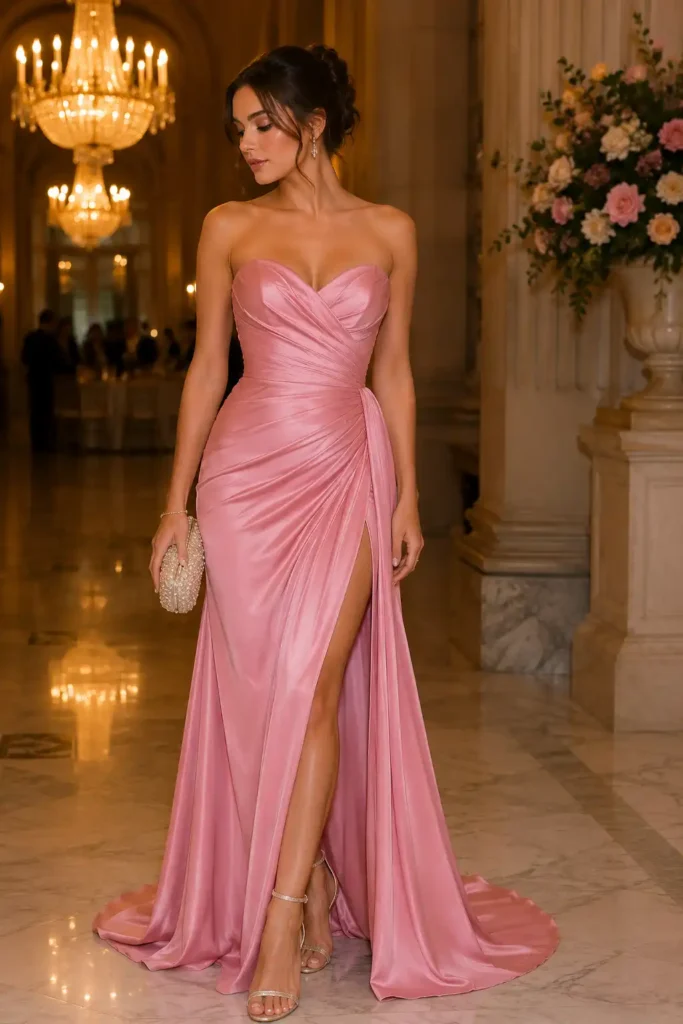
Party and Occasion

Evening and Formal
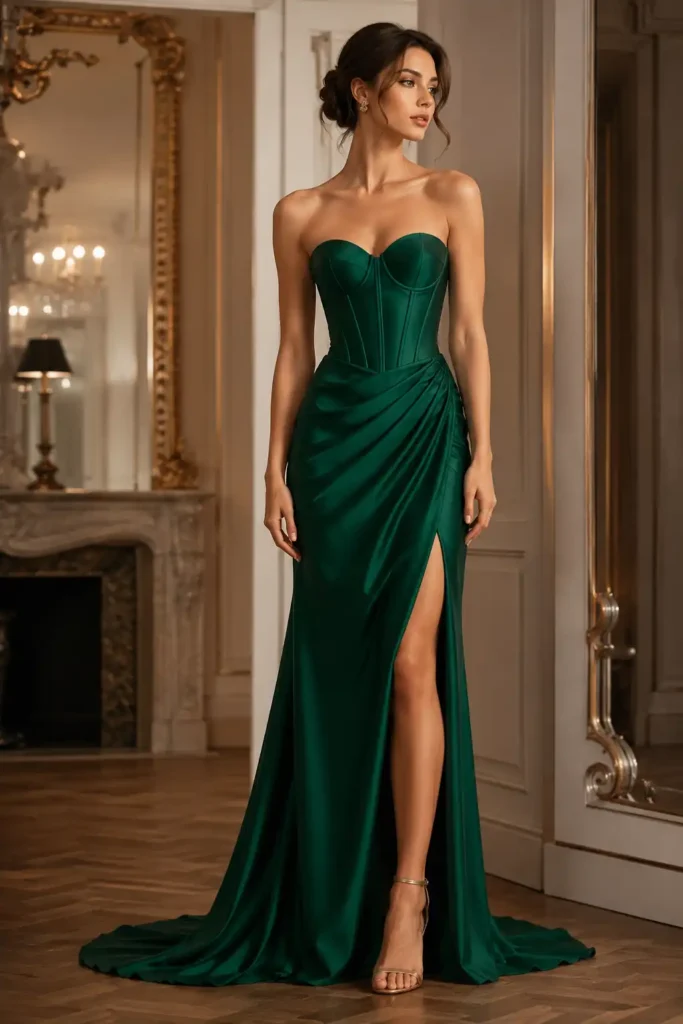
Bodycon and Corset

Satin and Slip

Mesh and Lace

Resort and Printed

Mini Midi Maxi
Length categories are developed around proportion, hem balance, movement, body coverage, size grading, and brand fit. A common base size is not enough; neckline, waistline, slit, strap, and finished length must work together.

Jumpsuits and Sets
Technical Review Before Sampling Begins
A disciplined review before pattern work reduces avoidable revisions, unplanned cost, and bulk-production risk. Jinfeng converts design information into a development brief that can be sampled and later controlled.
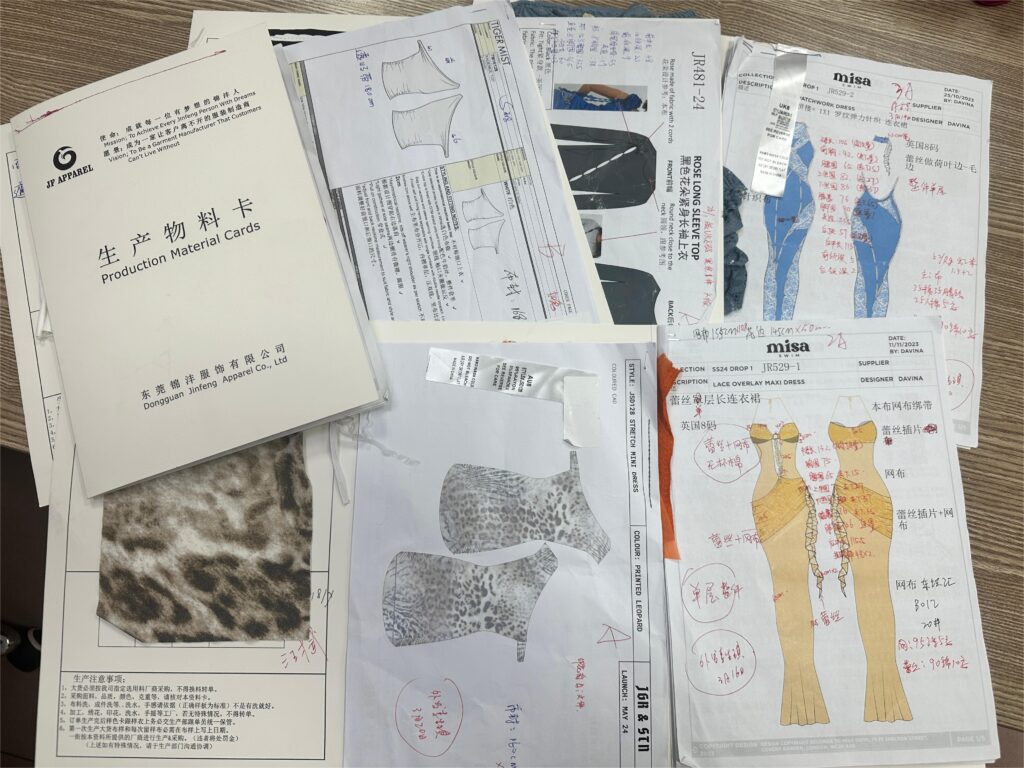
Tech Pack and File Review
The review starts with available project files: tech pack, line sheet, sketch, reference image, original garment, size chart, BOM, fabric standard, trim requirement, color plan, artwork, label files, packing specification, target quantity, and delivery window. Missing or conflicting information is flagged before development. Common gaps include a size chart that does not match the sketch, a fabric callout without weight or stretch direction, a zipper specification without length, or an unlined design that requires coverage for wearability.
A concise clarification list is more efficient than beginning with assumptions. The team identifies what can be confirmed from existing files, what requires a swatch or physical reference, and what needs design approval. Clear inputs allow pattern makers, sample machinists, merchandisers, costing staff, and production managers to work from the same direction.
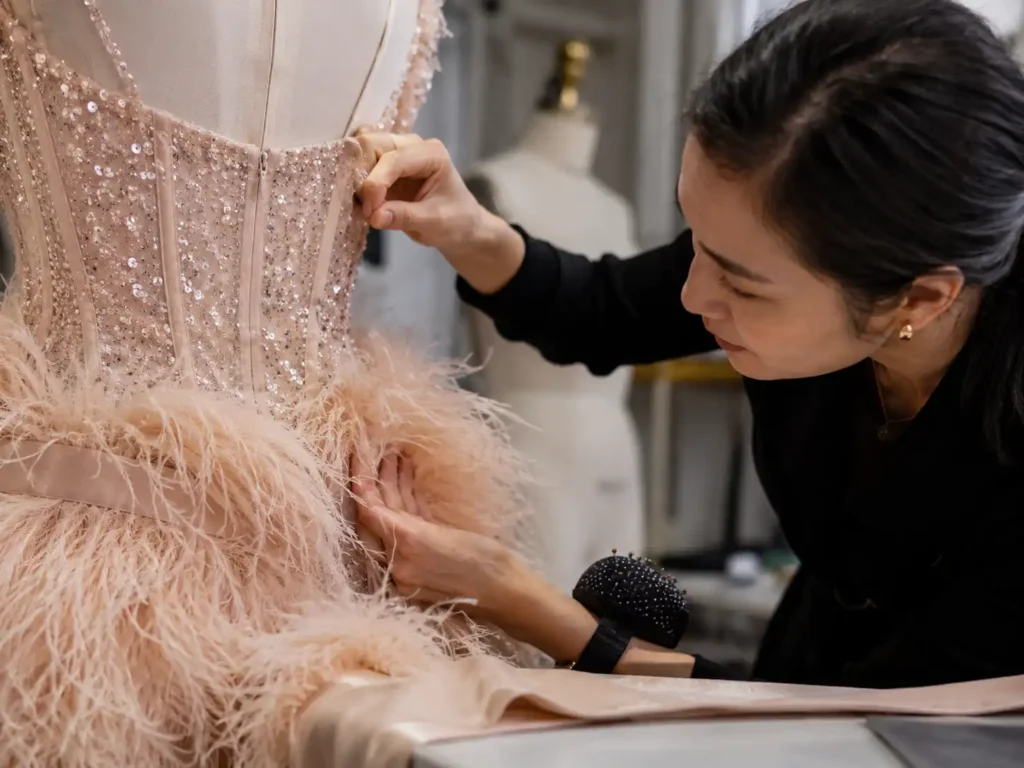
Construction and Workmanship Mapping
Dress construction is broken into functional areas rather than treated as one garment. Bodice support, neckline, bust coverage, waist seam, skirt volume, lining, closure, hem, decoration, and reinforcement are reviewed separately. Difficult operations are identified before they reach the sewing line. A cut-out dress may need stabilizing tape and seam support; a strapless style may require grip tape, boning, cup shaping, and controlled upper-bust measurement; a sequin style may need cleared seam allowances and protected lining.
Workmanship mapping also links visual details to production steps. Pleats, ruching, drape, lace motifs, print placement, and satin direction require markers, not only written notes. The approved method becomes part of the sample record and later informs the workmanship sheet, PP review, and quality checklist.

Material and Trim Compatibility
Fabric and trims must work with the construction. A soft satin may create the right drape but fail to support a corset bodice. A power mesh may recover well but feel too firm for the intended neckline. A decorative zipper may look correct but create bulging on a fitted back. Jinfeng evaluates fabric weight, stretch, recovery, surface, transparency, shrinkage, color availability, trim strength, lining behavior, and sewing compatibility before final material approval.
Alternatives are presented with trade-offs. A substitute may improve MOQ, stability, cost, or delivery, but it is not described as identical. Swatch approval and garment sampling remain necessary whenever material direction changes. Senior sourcing teams gain a clearer view of cost and performance before the project reaches bulk commitment.

Bulk Feasibility and Risk Register
Before sampling begins, major risks can be logged under product, material, fit, workmanship, quality, cost, packing, and timeline. The register does not need to be complicated. A short list may identify eight to twelve points requiring confirmation: custom color availability, lace minimum, boning source, neckline stability, grading risk, pressing method, label placement, and shipment deadline. Each risk receives an owner and an approval stage.
A factory that agrees to every request without explaining the control path creates exposure for both procurement and production teams. Jinfeng prefers to identify difficult points early, confirm which risks can be solved in pattern or sample work, and define which decisions must be locked before PP approval and material booking.
Fabric and Trim Decisions That Protect the Final Garment
Material selection controls drape, fit, opacity, recovery, workmanship, cost, and bulk consistency. Jinfeng evaluates fabrics and trims as production components, not decorative choices alone.
| Dress Structure | Material Direction | Primary Risk | Control Focus |
|---|---|---|---|
| Satin slip or drape | Soft or medium-weight satin selected by drape and shine | Snagging, seam puckering, shade or shine direction | Grain direction, needle and tension trial, pressing and protective packing |
| Bodycon style | Stretch knit, jersey, ponte, or power fabric with recovery | Measurement growth, opacity, seam stress | Stretch direction, recovery test, size chart, seam and pressing control |
| Mesh dress | Soft mesh or power mesh matched to structure and skin feel | Transparency, edge growth, neckline instability | Layering, lining coverage, recovery, binding and seam support |
| Lace dress | Stable lace or stretch lace selected by motif and hand feel | Motif mismatch, edge damage, inconsistent joining | Placement map, cutting direction, seam joining, lining and finish |
| Sequin style | Sequin base selected by weight, density, comfort and recovery | Sequin loss, skin scratch, bulky seams | Cleared seam allowance, lining, reinforcement and packing protection |
| Corset dress | Outer fabric plus stable support and lining components | Collapse, cup distortion, zipper pressure | Boning, cup, fused support, upper-bust fit and closure testing |
Fit Control for Commercial Dress Collections
Fit must work on the intended body profile, remain measurable across sizes, and survive bulk production. Jinfeng links pattern correction, sample review, grading, and measurement inspection to the brand-approved fit standard.

Bust Waist Hip Balance
Dress fit starts with the relationship between bust, waist, and hip rather than isolated measurements. Bodycon, corset, slip, and occasionwear silhouettes react differently to ease and stretch. Too little upper-bust control can cause gaping; excessive waist suppression can pull seams and zippers; incorrect hip ease can force the skirt to rise. Pattern corrections consider garment structure, fabric recovery, lining, closure, and intended wearing ease together.
For alpha sizing, a common development review may use body-measurement increments of roughly 4-5 cm across bust and hip and around 4 cm at waist, but no generic increment replaces the brand chart. Numeric sizing, regional blocks, petite, tall, curve, and extended-size programs require their own approved grading logic. The production size chart remains the controlling document.
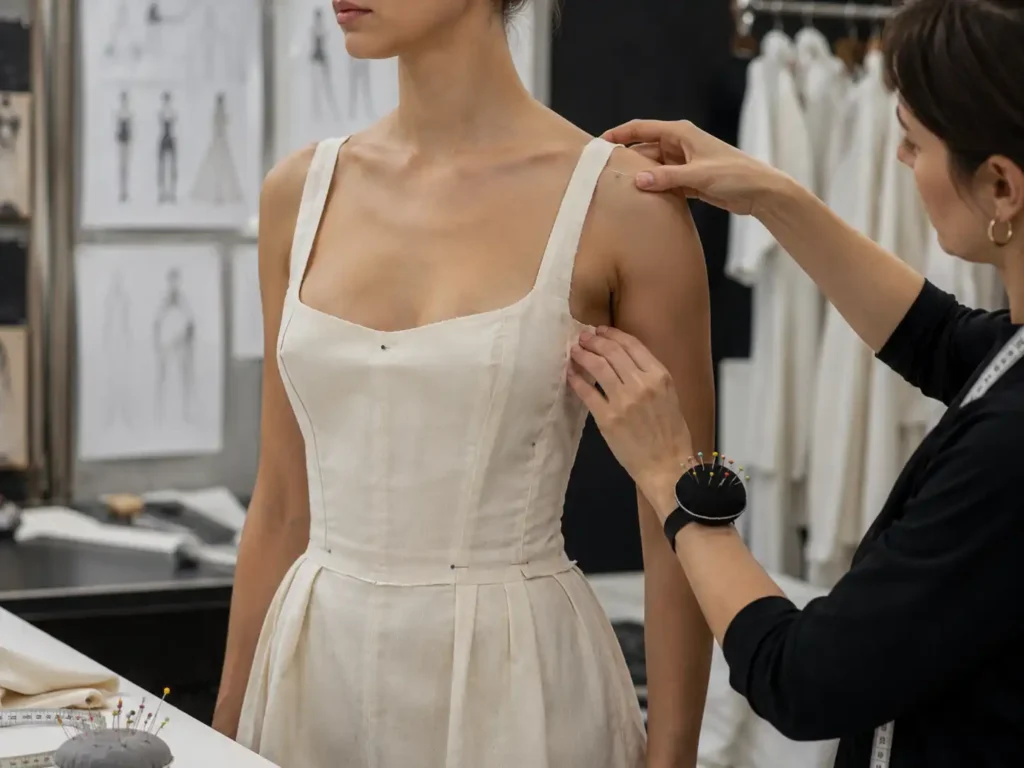
Neckline Straps and Upper-Body Stability
Neckline depth, shoulder placement, strap length, back width, underarm shape, cup position, and upper-bust measurement determine whether a design feels secure. Deep V, halter, one-shoulder, backless, strapless, and cut-out dresses require control of exposure as well as appearance. Stability may come from pattern shape, elastic, grip tape, boning, shoulder tape, cups, lining, or internal support panels.
Sample review checks standing, sitting, walking, arm movement, and closure stress. Adjustments are recorded as pattern and measurement changes, not left as verbal comments. Production inspection then focuses on the same risk points: strap length, neckline symmetry, cup placement, underarm level, back stability, and support-component attachment.

Length Movement and Garment Balance
Mini, midi, maxi, and floor-length styles need proportion and movement control. Finished length interacts with waist placement, skirt volume, slit height, hem weight, footwear assumptions, and fabric drop. Bias-cut or fluid fabrics may grow after hanging or pressing; asymmetric hems require left-right balance; long gowns need enough sweep for movement without excessive twisting. Jumpsuits add torso and rise length to the balance equation.
Measurements are checked at agreed garment points and under a consistent method. Where hanging affects length, the review method and timing should be specified. The approved sample, measurement chart, and inspection instructions must all describe the same finished garment.

Grading and Bulk Measurement Control
Grading converts an approved base-size shape into a size range. The process should preserve neckline proportion, waist placement, cup and dart position, cut-out balance, strap location, slit height, and visual line rather than enlarge every area uniformly. Complex fitted styles may require a size-set review before production, especially when stretch, cups, boning, or high exposure creates additional risk.
Bulk measurement control is planned by product risk and brand tolerance. Key points are checked during production and again at final inspection. Out-of-tolerance findings are evaluated for pattern, cutting, sewing, pressing, or stretch-recovery cause so corrective action addresses the source rather than only re-measuring completed garments.
From First Sample to Approved Production Standard
Sampling is a controlled development sequence. Each sample has a defined purpose, approval responsibility, and record so bulk production begins from a stable standard rather than a collection of informal comments.

First Sample and Construction Validation
The first sample tests the initial pattern, fabric direction, construction, trim function, visual proportion, and workmanship approach. It is not expected to be a final production standard. The review should separate design issues from execution issues: neckline proportion, waist position, skirt volume, sleeve shape, strap placement, lining, closures, support, and decoration are evaluated against the tech pack and intended appearance.
Where materials are not final, substitute sample materials are clearly identified so appearance and performance are not mistaken for bulk approval. An early planning target for a standard dress can often fall within 10-18 working days after files, fabric direction, trims, and development payment are confirmed. Complex corset, lace, mesh, sequin, custom-color, or highly engineered styles may require 15-25 working days. The confirmed schedule follows material readiness and construction review.

Fit Sample and Revision Control
Fit comments should be measurable and traceable. “Too loose” becomes a defined change at upper bust, waist, back width, side seam, or hip.
“Strap is wrong” becomes a new strap length, position, width, attachment, or tension requirement. Comments are transferred into the pattern, measurement chart, BOM, workmanship notes, and revision tracker as needed.
Multiple styles are grouped by material, pattern complexity, trim family, and launch priority. Hero SKUs or photo samples may move first, while styles waiting for custom lace, color, or hardware remain in a separate track.
Version names and approval status prevent the wrong pattern or sample comment from entering production.

PP Sample and Approval Gate
The PP sample is prepared using confirmed production materials, trims, labels, construction, measurements, workmanship, and packing direction as far as the project requires. Its purpose is to confirm the production standard before bulk release. Major design changes after PP approval can affect pattern, materials, cost, schedule, and production planning, so the approval stage should close open technical and commercial decisions.
A PP approval record may include sample photos, signed measurements, fabric and trim references, comments, exceptions, label placement, packing instructions, and approved deviation notes. Production does not rely on memory or a sample alone; the physical reference and written production package work together.

Golden Sample and Bulk Reference
A sealed Golden sample provides the physical reference for bulk workmanship, appearance, key measurements, material direction, labels, trims, and finishing. It supports line briefing, in-line inspection, final garment comparison, and repeat-order preparation. The reference should be protected from handling damage and identified by style, color, size, version, and approval date.
For repeat orders, Jinfeng can retain pattern files, measurement charts, material and trim records, workmanship notes, packing requirements, and historical order information. New bulk materials and production conditions still require confirmation, but a controlled archive shortens the restart path and reduces interpretation risk.
Quotations Built for Real Production Decisions
A production quotation reflects the full garment and order structure. Clear inputs reduce late price movement and allow sourcing teams to compare options on a technically consistent basis.
| Cost Area | Information Needed | Why It Changes Cost |
|---|---|---|
| Fabric and lining | Composition, weight, width, stretch, color, print, finish, source | Consumption, minimums, loss, handling, shade control, testing |
| Trims and support | Zipper, cups, boning, elastic, hooks, labels, decoration | Unit cost, minimums, attachment time, strength and quality risk |
| Construction | Seams, panels, lining, ruching, pleats, cut-outs, corset work | Pattern complexity, sewing minutes, specialist workmanship, rework exposure |
| Quantity plan | Pieces per style, color, and size; total styles and drops | Material buying, cutting efficiency, line allocation, SKU and packing complexity |
| Sampling | Sample type, number of colors and sizes, photo or sales samples | Pattern work, single-piece sewing, material search, revisions and courier preparation |
| Quality and testing | Inspection level, AQL, measurements, third-party tests | QC time, documentation, laboratory and inspection arrangements |
| Private label packing | Labels, tags, barcodes, polybags, inserts, cartons, marks | Material minimums, artwork, packing labor, assortment and warehouse rules |
| Delivery | Required date, split shipment, air or sea, nominated forwarder | Production window, packing priority, documents, freight and handling conditions |
Capacity Planning for Multi-Style Dress Programs
Capacity is valuable only when the right product reaches the right production unit at the right time. Jinfeng plans style allocation, material readiness, sewing-line suitability, QC windows, packing, and shipment as one production calendar.

Production Allocation by Product Type
Jinfeng Apparel operates 6 owned women’s fashion factories and works with 10+ long-term satellite production partners.
The network is not treated as interchangeable capacity. Stretch and body-contoured styles are directed to production units familiar with elastic fabrics; woven dresses move to appropriate woven lines; lace, mesh, sequin, corset, and formal styles require teams experienced in complex materials and construction; established repeat orders can return to stable lines with archived references.
The production management team reviews quantity, construction, fabric, workmanship, delivery, and quality risk before allocation. Multi-factory programs require the same PP references, workmanship instructions, measurement standards, trim approvals, and packing requirements to be transferred across units.

Multi-Style Calendar and Priority
A 10-30 style program is divided into development and production groups. Key launch styles may receive earlier sample priority; material-ready styles can move before items waiting for custom lace or color; similar fabrics or trims can be grouped to improve sourcing and quality control; complex styles are given enough time for pattern and PP review. The calendar includes file confirmation, material approval, sample target, revision return, PP approval, bulk material arrival, cutting, sewing, QC, packing, and shipment preparation.
For early planning, a standard bulk program may reserve roughly 30-45 days after PP approval and full material arrival, while complex occasionwear, custom-dyed fabric, special trims, multi-factory coordination, or intensive packing can require a longer window. Final delivery timing is confirmed after production allocation and material booking, not promised from a generic lead-time statement.

Regular Capacity and Complexity Limits
Regular monthly capacity exceeds 100,000 pieces across the structured production system. The figure does not mean every complex dress can be produced at the same speed or in the same line. A simple knit dress, a boned corset dress, a fully lined lace gown, and a hand-intensive sequin style have different sewing minutes, specialist requirements, inspection points, and material constraints. Capacity review therefore converts total quantity into standard minutes, line suitability, and calendar occupancy.
Senior sourcing teams receive a realistic allocation rather than a blanket promise. Where delivery pressure is high, options may include style prioritization, split shipment, color consolidation, material substitution, or phased production, subject to commercial and quality approval.

Team Coordination Through Production
Production management connects sample approval, merchandising, materials, factories, quality control, finishing, packing, and logistics. Jinfeng has 12+ merchandisers, 15+ QC inspectors, and 30+ finishing and packing workers within the operating structure. Headcount is useful because it supports defined responsibilities: progress follow-up, factory coordination, issue escalation, measurement checks, packing confirmation, and shipment preparation.
Major programs can receive senior project support and a clearer milestone rhythm. The objective is not more messages. The objective is timely information at decision points: material delay, sample revision, PP approval, cutting release, quality issue, packing confirmation, or shipment risk.
Quality Control Built Around Bulk Consistency
Quality is controlled from incoming materials through packing rather than inspected only after garments are complete. Each checkpoint protects the approved sample, measurement standard, workmanship, and retail presentation.

Incoming Materials and Cutting Control
Fabric, lining, trims, labels, and packing materials are reviewed before production.
Fabric checks may cover shade against approved standard, weight, hand feel, usable width, shrinkage, colorfastness by project, defects, batch variation, stretch, recovery, transparency, print direction, and shine direction.
Trims are checked for color, dimensions, function, strength, finish, and compatibility with the garment.
Cutting control verifies fabric direction, print or lace placement, shade separation, marker use, panel count, notches, and visible defects. Satin, velvet, print, lace, mesh, and sequin materials require particular attention to direction and surface. Problems removed before sewing cost less and prevent inconsistent appearance across the finished order.
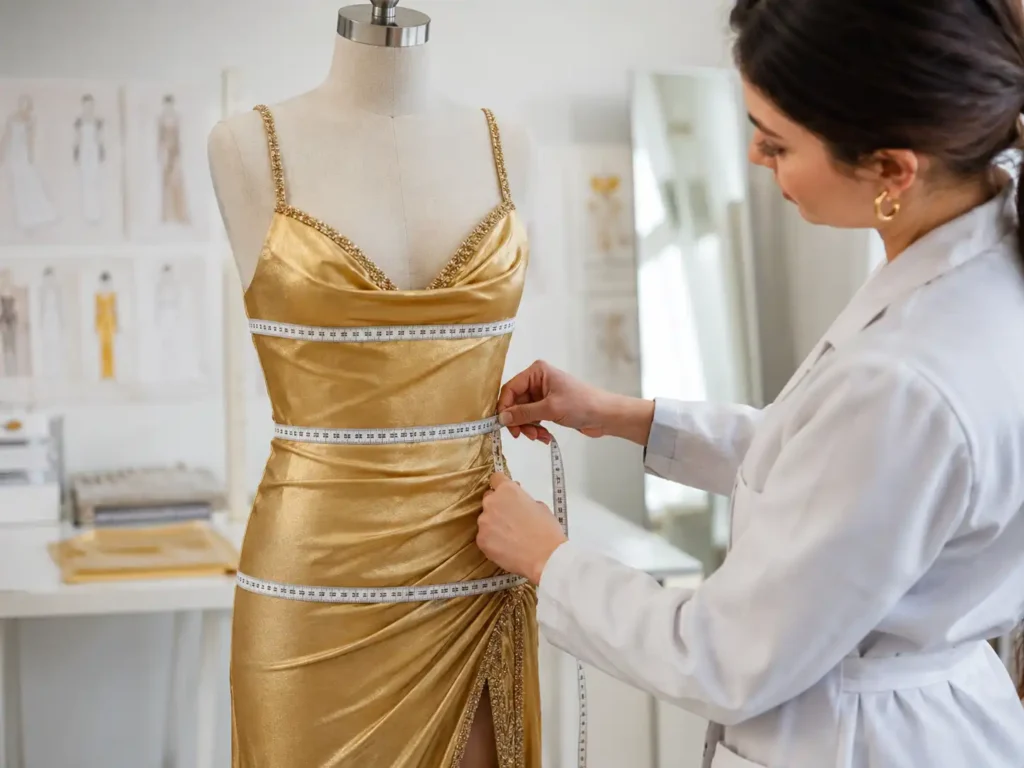
In-Line Workmanship and Measurement Checks
In-line inspection checks operations while corrective action is still possible. The focus follows the style risk: neckline stability, strap attachment, cup and boning position, seam tension, zipper smoothness, ruching direction, pleat symmetry, lace joining, sequin protection, lining coverage, slit reinforcement, and hem balance. Approved workmanship notes and sealed references guide the check.
Measurements are reviewed during production at agreed garment points. Early drift can come from pattern selection, cutting, seam allowance, operator method, pressing, or stretch recovery. Identifying the cause prevents repeated alteration at final inspection. Brand-approved tolerances and measurement methods govern acceptance.

Final Garment and AQL Inspection
Final inspection evaluates appearance, workmanship, measurements, function, cleanliness, pressing, labels, trims, color, and packing readiness. Inspection level and AQL arrangement are confirmed by project. Client-appointed inspectors or third-party agencies can be coordinated where required. The inspection plan should define sample size, defect categories, measurement checks, reporting, and corrective-action expectations before the inspection date.
A completed garment can still fail commercially through puckering, shade inconsistency, exposed lining, loose decoration, zipper distortion, wrong label, poor pressing, or incorrect size sticker. Final review connects garment quality with the approved retail presentation.

Packing QC and Shipment Release
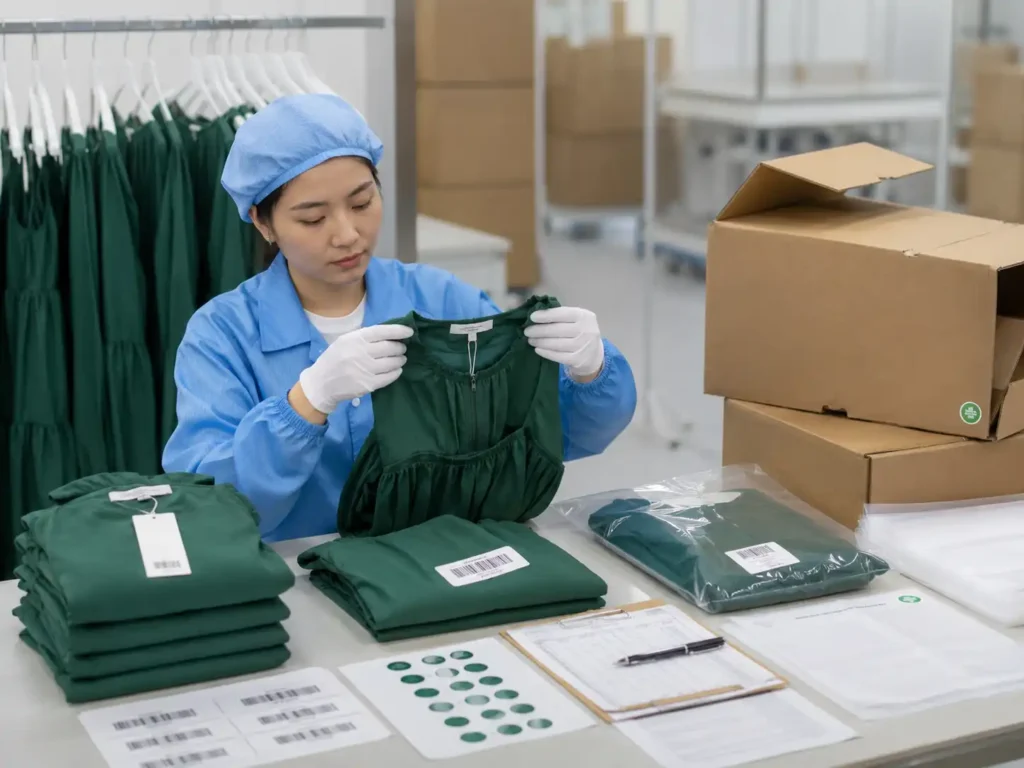
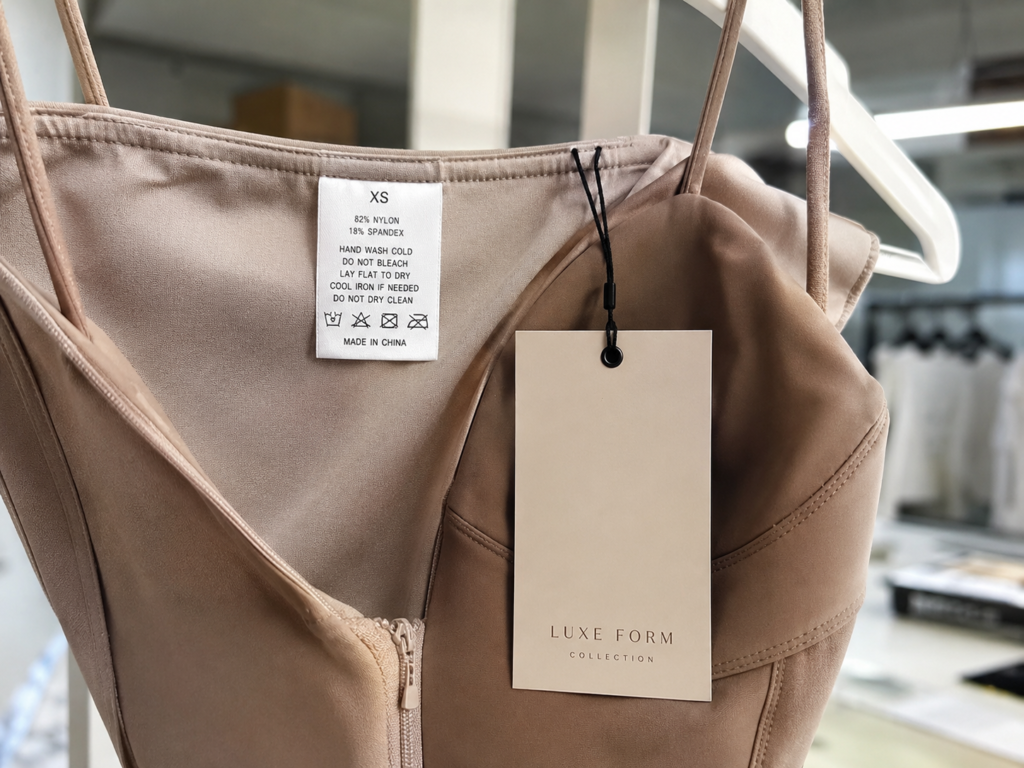
Packing QC verifies woven labels, size labels, care labels, hangtags, barcodes, SKU stickers, polybags, inserts, size-color assortment, carton quantity, carton marks, and requested warehouse information. Packing lists and commercial documents are compared with the order and shipment plan. Protected designs, logos, barcodes, and order details are handled under confidentiality requirements.
Shipment release follows required inspection, corrective action, packing confirmation, and document preparation. Air, sea, split shipment, client-nominated forwarder, and DDP solutions by project can be reviewed according to destination and logistics feasibility.
Vendor Qualification and Compliance Support
Factory Information
Audit Coordination
Material Documents
Inspection Access
NDA Protection
Corrective Actions
Project Visibility From Sample to Shipment
Project Launch
Material Tracking
Sample Tracking
Bulk Updates
Packing Confirmation
Shipment Preparation
Retail-Ready Packing and Export Delivery Support
Brand Labels
Hangtags and Inserts
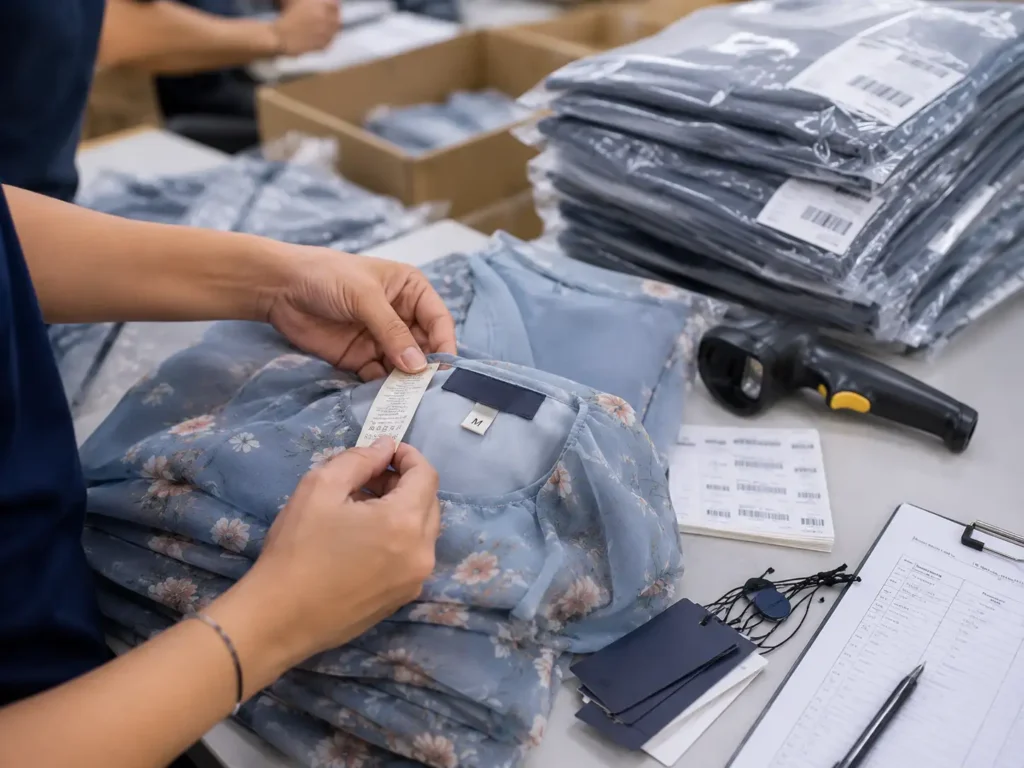
Barcode and SKU
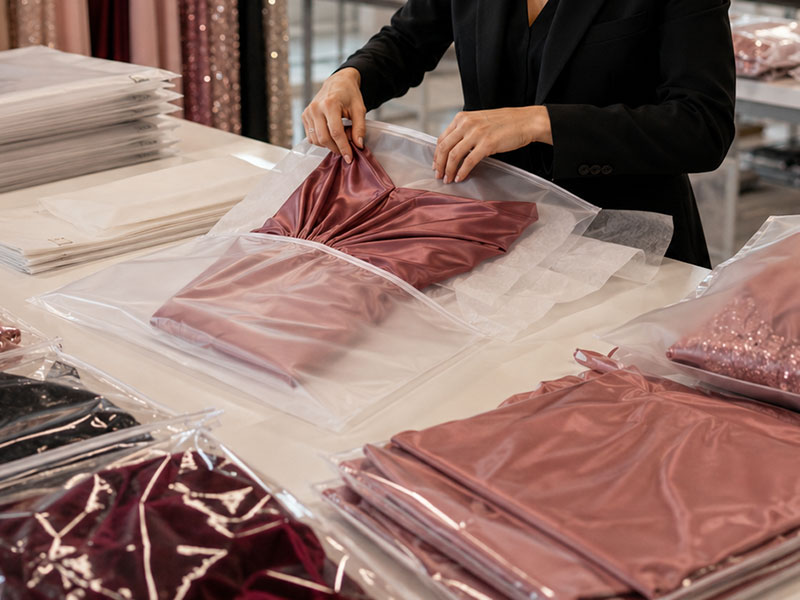
Polybags and Assortment
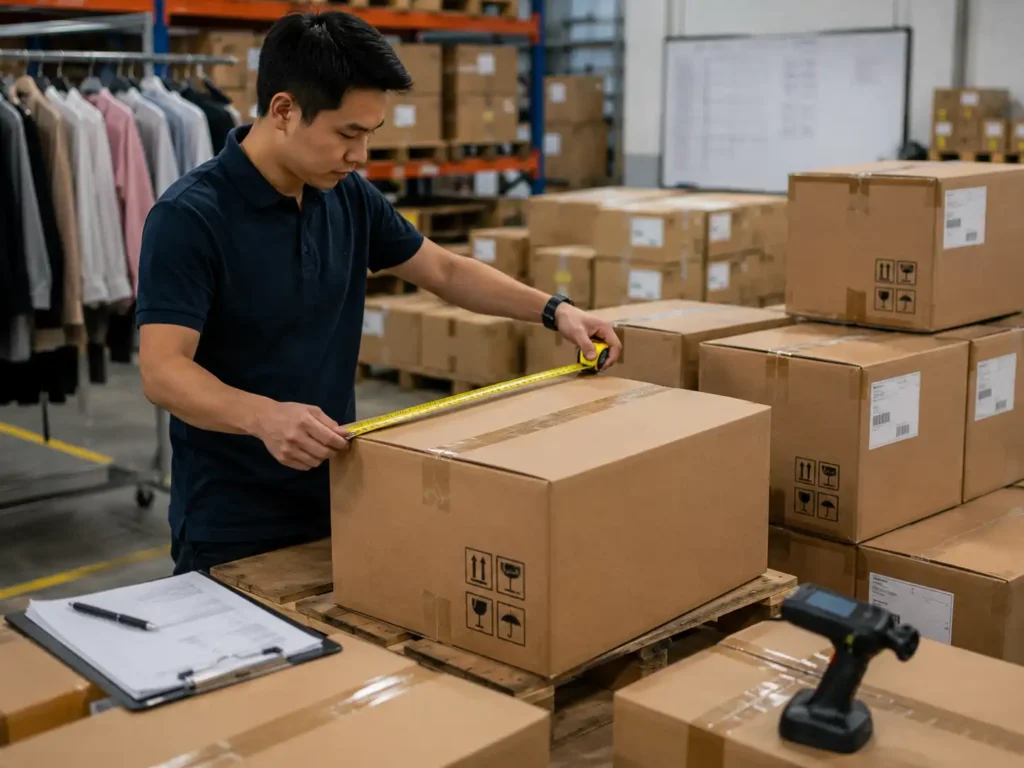
Cartons and Marks

Delivery Coordination
A Supplier Qualification Checklist for Dress Programs
Product Capability
Commercial Clarity
Capacity Planning
Quality System
Project Control
Compliance Fit
Brand Protection
Repeat-Order Readiness
International Apparel Buyer Dress Manufacturing Case Studies
International apparel buyers require more than garment production. Successful programs depend on product development, supplier coordination, quality control, private-label execution, export documentation and repeat-order capability.

Case Study 1: Global Buyer Managing a Seasonal Womenswear Dress Collection
A European apparel buying group managed seasonal womenswear collections for multiple fashion channels.
The buyer team required a manufacturing partner capable of supporting:
- Multiple dress categories
- Seasonal launch schedules
- Private-label production
- Export delivery
Program scope:
- 26 dress styles
- 64,000 pieces
- 5 fabric groups
- XS-XL size range
- Multiple destination markets
Product categories:
- Occasion dresses
- Satin dresses
- Bodycon dresses
- Resort dresses
- Party dresses
Sourcing Challenge
The buyer needed one supplier system that could manage different product requirements.
Different Product Categories
The collection included:
- Stretch jersey dresses
- Delicate lace styles
- Satin occasionwear
- Lightweight resort products
Each category required different:
- Fabric handling
- Pattern control
- Production methods
- QC standards
International Delivery Requirements
The buyer also needed:
- Accurate packing data
- Multiple shipment schedules
- Export documents
- Destination separation
Jinfeng Solution
Jinfeng created a collection-level manufacturing structure.
Product Allocation
Styles were grouped by:
- Fabric behavior
- Construction complexity
- Production risk
- Delivery priority
Result
The buyer achieved:
- 26 styles delivered
- Multiple market shipments completed
- Stable product quality
- Improved seasonal sourcing efficiency
The program developed into a repeat seasonal cooperation model.

Case Study 2: International Sourcing Office Coordinating Multi-Brand Dress Programs
An international sourcing office managed product development and production for several overseas fashion brands.
The sourcing team handled:
- Supplier communication
- Cost evaluation
- Sample approval
- Production tracking
- Quality follow-up
Program scope:
- 30 dress styles
- 80,000 pieces
- 8 color groups
- Multiple brand accounts
Sourcing Challenge
The sourcing office needed clear control across different client programs.
Main challenges:
Multiple Brand Requirements
Each brand had different:
- Fit standards
- Packaging requirements
- Price targets
- Delivery expectations
Information Management
The sourcing team needed visibility across:
- Sample status
- Material progress
- Production updates
- QC results
- Shipment readiness
Jinfeng Solution
Jinfeng established a structured project management system.
Brand-Level Separation
Maintained independent:
- Style codes
- Tech packs
- Size charts
- Labels
- Packing files
Production Tracking
Monitored:
- Fabric arrival
- Sample approval
- PP status
- Bulk progress
- Inspection results
Result
The sourcing office achieved:
- Better supplier visibility
- Reduced communication errors
- More accurate production planning
- Stronger client management
Jinfeng became a reliable manufacturing resource for multiple brand programs.

Case Study 3: Global Fashion Brand Building a Long-Term Manufacturing Partnership
A global womenswear brand wanted to move from project-based purchasing into a stable long-term manufacturing partnership.
The brand required:
- Seasonal collections
- Bestseller replenishment
- New color development
- Continuous product improvement
Program included:
- Occasion dresses
- Partywear
- Resort collections
- Matching sets
Partnership Challenge
The brand previously worked with multiple factories and experienced:
Inconsistent Standards
Problems included:
- Different measurements
- Different fabric interpretation
- Different packing methods
Limited Production Visibility
Challenges included:
- Unclear factory responsibility
- Difficult repeat orders
- Slow product updates
Jinfeng Solution
Jinfeng created a long-term supply structure.
Product Records
Maintained:
- Patterns
- Size charts
- BOM files
- Fabric references
- Trim records
- QC standards
Repeat Order Management
Controlled:
- Bestseller replenishment
- New colors
- Seasonal extensions
- Production scheduling
Supplier Coordination
Managed:
- Factory allocation
- Quality standards
- Delivery planning
- Export preparation
Result
The brand achieved:
- Stable seasonal production
- Faster repeat development
- Consistent quality
- Stronger supply chain confidence
The cooperation developed from individual orders into a strategic manufacturing partnership.
Senior Apparel Buyer Frequently Asked Questions
Send the company and program background, product categories, tech pack or reference images, target quantity per style/color, size range, material direction, target delivery window, private-label requirements, and any audit, testing, or inspection expectations. Early review can identify product fit, MOQ fit, development needs, and major production risks.
Yes. The team can review tech packs, line sheets, size charts, BOMs, fabric standards, trim requirements, reference garments, and images. The review focuses on missing information, conflicting specifications, construction feasibility, material compatibility, fit risk, costing inputs, and the approvals required before sampling or bulk quotation.
MOQ starts from 200 pcs per style/color. A style split across several colors must normally meet the quantity requirement for each color. Fabric minimums, custom dyeing, prints, lace, sequin, special trims, packaging, construction complexity, and production scheduling may increase the applicable MOQ.
Each sample can be identified by style, color, size, sample type, version, date, and approval status. Comments are transferred into the pattern, measurement chart, BOM, workmanship notes, or packing instructions as needed. A revision tracker helps prevent outdated comments or patterns from entering PP approval or bulk production.
A standard dress can often be discussed around a 10-18 working-day first-sample target after files, material direction, trims, and development payment are confirmed. Complex corset, lace, mesh, sequin, custom-color, or highly engineered styles may require 15-25 working days. Final timing depends on material readiness and construction review.
A reliable quotation requires confirmed or clearly assumed fabric, lining, trims, construction, quantity by style/color, size range, sample status, testing, quality requirements, private-label packing, delivery method, and target date. A price based only on a reference image remains an early estimate and may change after technical review.
Bulk production uses the approved PP sample, sealed reference, size chart, BOM, material and trim approvals, workmanship notes, packing instructions, and QC checklist. Incoming materials, cutting, sewing, measurements, pressing, final appearance, labels, barcodes, packing, and shipment preparation are checked as linked control points.
Yes, inspection by a client-appointed or third-party agency can be coordinated by project. The order should confirm inspection timing, AQL level, sample size, defect classification, measurement requirements, reporting format, access, and the corrective-action process before the inspection date.
Yes. Support can include woven labels, size and care labels, hangtags, barcode and SKU stickers, polybags, inserts, carton assortment, carton marks, packing lists, commercial documents, and coordination with the nominated forwarder. Artwork, data, materials, and packing rules must be approved before bulk packing.
Jinfeng can retain pattern files, size charts, approved measurements, fabric references, trim details, workmanship notes, label positions, packing specifications, carton ratios, and historical order information. Repeat orders still require confirmation of material availability, color, quantity, production schedule, quality standard, and delivery requirements.

Evaluate Jinfeng for Your Next Dress Program
Jinfeng Apparel can assess product category, construction complexity, fabric and trim direction, pattern and sample requirements, MOQ fit, bulk quantity, size range, private-label packing, quality expectations, delivery planning, and supplier-qualification needs.
The first response will identify what is clear, what needs confirmation, and whether the project should move into technical review, sampling, quotation, or vendor documentation.
- Tech pack, line sheet, sketch, reference garment, or product images
- Target quantity per style/color and planned size ratio
- Fabric, lining, trims, color, print, or performance requirements
- Target market, launch date, required delivery window, and shipment plan
- Label, hangtag, barcode, polybag, carton, and warehouse requirements
- Audit, testing, NDA, third-party inspection, or compliance requirements
- Company name, contact person, email, WhatsApp, and project background
- Upload fields: PDF, Excel, image files, tech packs, size charts, BOMs, and packing guides


