Skip to content
Dress Manufacturer for International Apparel Buyers
Custom dress development and production built around global sourcing standards, seasonal calendars, retail packaging and repeatable bulk execution.
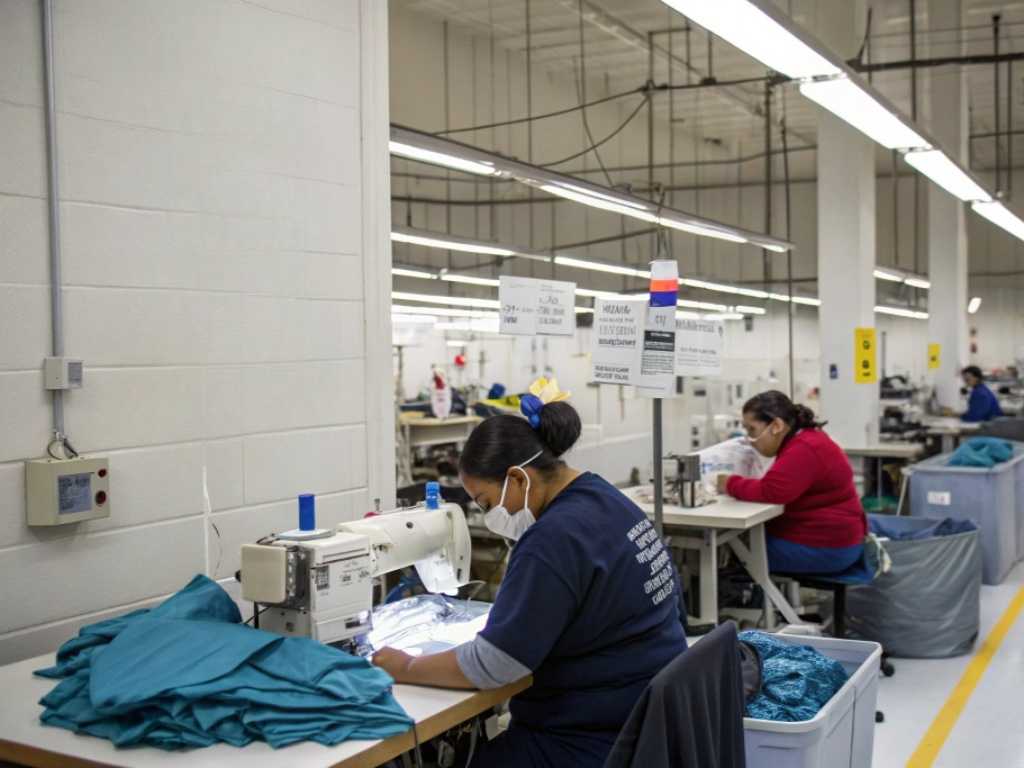
Jinfeng Apparel supports established fashion brands, procurement offices and international apparel groups from design review through export delivery. The manufacturing system is organized for multi-style dress programs rather than isolated sewing orders:
- Programs commonly involve 10-30 styles and total order plans between 20,000 and 80,000 garments.
- Six owned womenswear factories and more than 10 long-term production partners support product-based factory allocation.
- Two sample rooms, 7+ senior pattern makers and 20+ sample machinists support fit, structure and sample-version control.
- 15+ QC inspectors and 30+ finishing and packing workers support measurement, appearance, private-label and carton checks.
Manufacturing Capacity Built for International Dress Programs
Since 2008
Six Owned Factories
10+ Production Partners
100,000+ Monthly Capacity
Two Sample Rooms
15+ QC Inspectors
International Teams Supported Across Dress Sourcing Programs
Global Fashion Brands
Buying Offices
Sourcing Companies
Retail Groups
Product Teams
Ecommerce Brands
Dress Sourcing Risks That Require Early Control
Sample-Bulk Gaps
Fabric Batch Variation
Unstable Fit
Delayed Launch Windows
Packing Data Errors
Unclear Factory Ownership
International Dress Supplier Qualification Checklist
Supplier approval works best when every factory is measured against the same operating criteria. The checklist below covers the areas most likely to affect development accuracy, bulk consistency and international delivery.
| Qualification Area | What Procurement Teams Should Verify | Jinfeng Apparel Evidence |
|---|---|---|
| Product specialization | Recent capability in the required dress categories, fabrics and construction methods. | Focused womenswear system covering party, occasion, bodycon, corset, satin, mesh, lace, sequin, resort and private-label collections. |
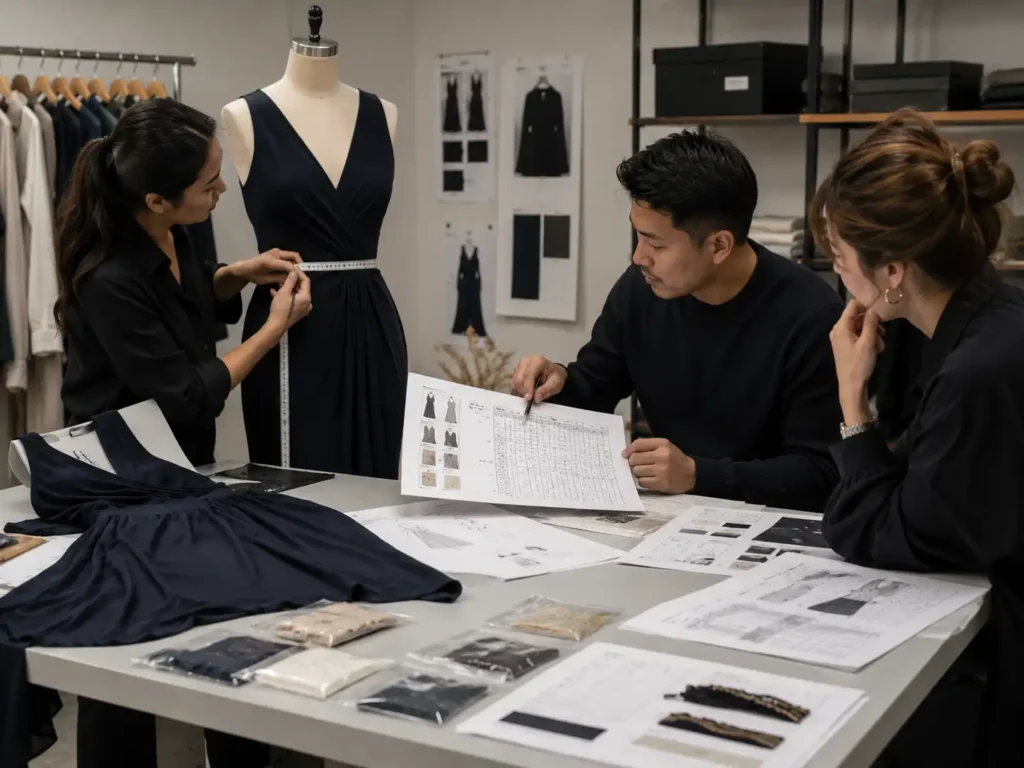
| Development team | Pattern makers, sample resources and technical review before production. | 7+ senior pattern makers, 2 sample rooms and 20+ sample machinists. |
| Factory structure | Named production unit, ownership or partner status, capacity and responsibility. | 6 owned womenswear factories plus 10+ long-term production partners allocated by product and schedule. |
| Sample control | First, fit, revised, PP and golden-reference process with recorded approvals. | Multiple sample types, revision records, measurement review and PP lock before bulk. |
| Quality process | Incoming, cutting, inline, measurement, final and packing checkpoints. | 15+ QC inspectors using product-specific inspection points and documented feedback. |
| Private label | Artwork review, label placement, barcode, polybag, carton and SKU control. | Woven labels, care labels, hangtags, barcode stickers, individual packing and carton marks. |
| Compliance support | Factory records, audit coordination, testing scope and certificate validity. | SMETA/Sedex/BSCI-related document support and testing coordination by actual factory and project. |
| Export readiness | Invoice, packing list, carton data, forwarder coordination and shipping terms. | Express, air, sea, nominated forwarder and export-document support by shipment plan. |
| Confidentiality | NDA process and protection of unpublished styles, files and commercial data. | NDA-based cooperation with controlled use of tech packs, patterns, samples and label files. |
Dress Categories Developed for Global Fashion Markets
Party and Cocktail
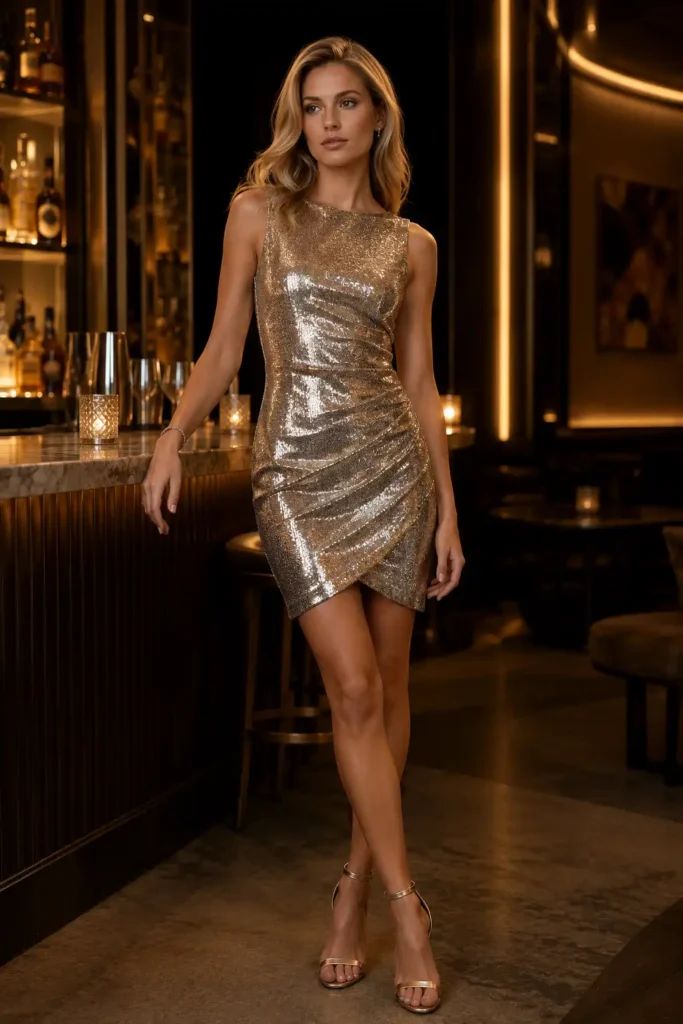
Party and cocktail dresses depend on immediate visual impact without losing wearability. Common directions include mini and midi lengths, ruched jersey, stretch satin, mesh panels, sequins, cut-outs and asymmetric necklines.
Development focuses on bust security, waist definition, hip ease, zipper flatness, lining coverage and the balance between body fit and movement. For photo-driven launches, sample reviews include front, side and back views, close-up details, fabric movement and light reflection.
- QC focus: neckline stability, ruching distribution, sequin attachment, hem balance and pressing marks.
Occasion and Evening
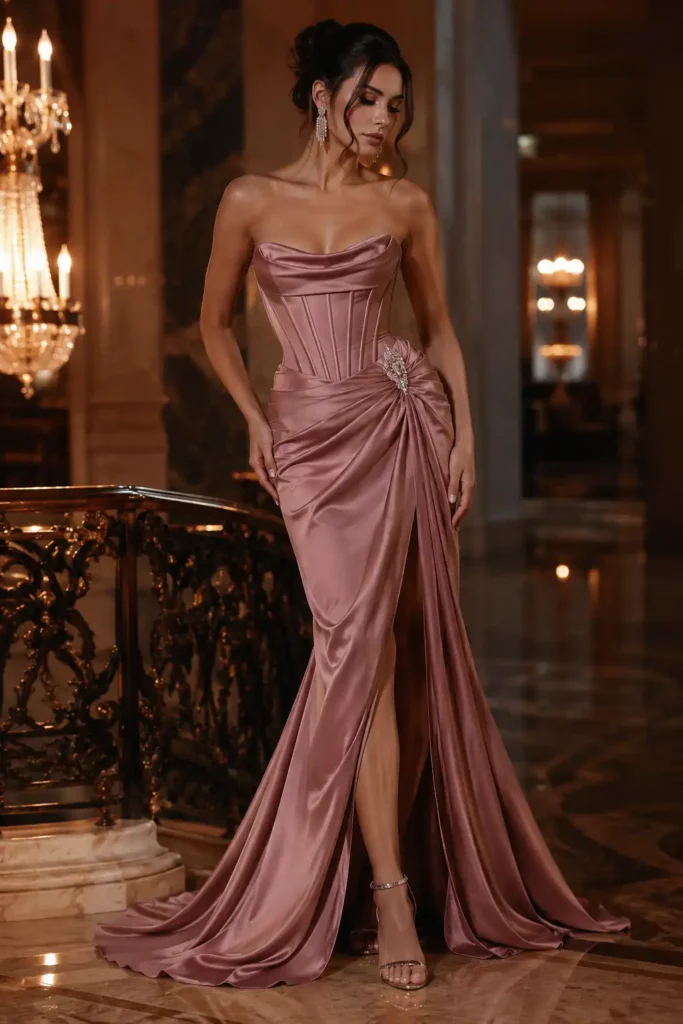
Occasion and evening programs use satin, crepe, chiffon, lace, velvet, tulle and structured linings across midi, maxi and floor-length silhouettes. A premium appearance requires controlled drape, even hems, clean internal finishing and support matched to the neckline.
Long skirts and layered constructions are checked for panel balance, seam direction, lining length and movement. Color approval is especially important for dark satin, jewel tones, pale lining combinations and mixed-material styles.
- QC focus: shade consistency, seam smoothness, long-hem level, lining concealment and embellishment security.

Bodycon and Corset
Bodycon and corset dresses require two different engineering approaches. Stretch silhouettes depend on fabric direction, recovery, negative ease and stable grading. Corset structures depend on cup position, boning channels, panel symmetry, waist shaping, lining strength and closure support.
Fit review covers upper bust, under bust, waist, hip, neckline depth and garment balance on the body. Support must hold the intended shape without creating sharp boning ends, uncomfortable pressure or distortion around the zipper.
- QC focus: measurement tolerance, stretch recovery, cup symmetry, boning position and zipper alignment.

Satin Dresses
Satin reveals small manufacturing defects because light highlights puckering, seam tension, pressing marks, scratches and cutting direction. The fabric is selected by weight, hand feel, gloss, stretch, opacity and intended silhouette rather than color alone.
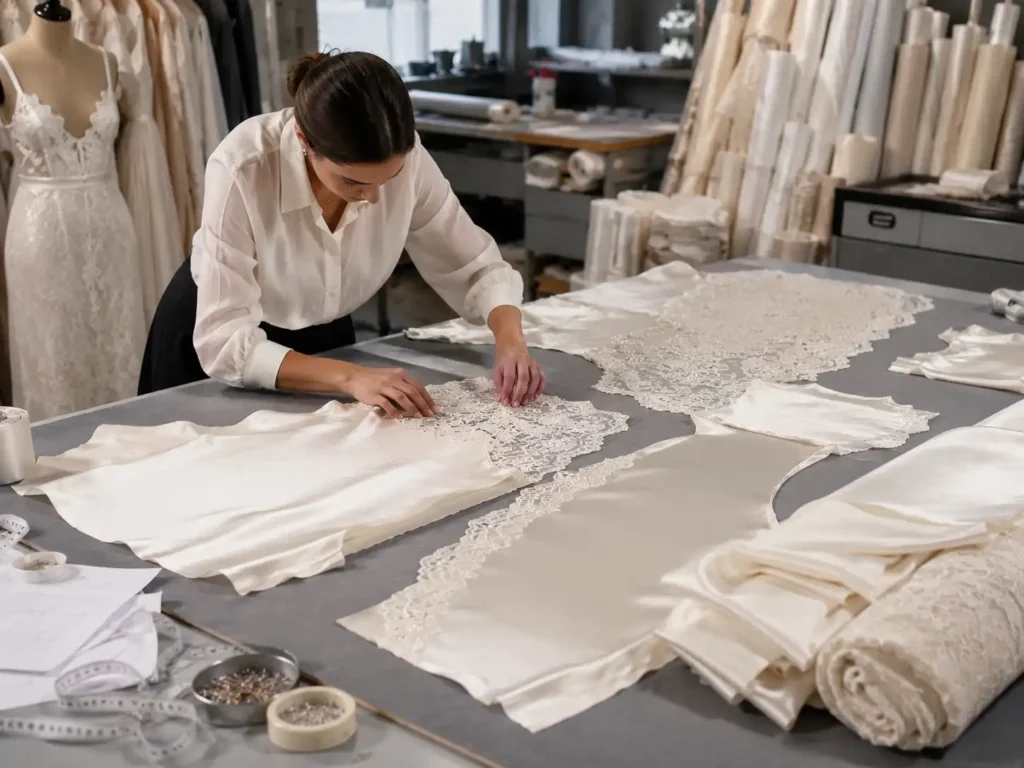
Bias-cut slips, ruched minis and structured satin occasion dresses need different patterns and handling. Bulk control includes shade grouping, one-direction cutting where required, clean machine surfaces, protected handling and careful pressing temperatures.
- QC focus: snagging, shade, seam rippling, shine direction, neckline fall and hem wave.

Mesh and Lace
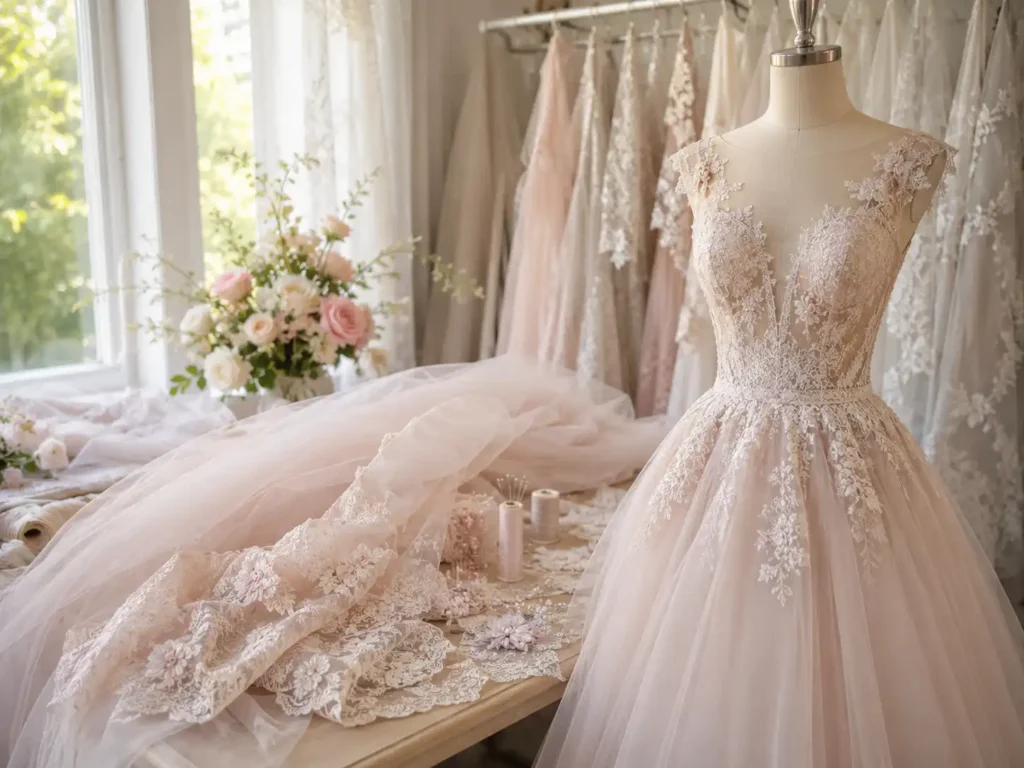
Mesh and lace styles combine visual delicacy with technical risk. Stretch mesh must recover after wear; non-stretch tulle must allow enough movement; lace placement must appear balanced across front panels, necklines and hems.
Lining choice determines coverage, comfort and color depth. Seams are planned around transparency and skin contact, while motifs may require controlled placement or matching. Stretch ratios and lining tension are checked together to prevent twisting or pulling.
- QC focus: transparency, motif balance, seam cleanliness, lining coverage, edge finish and stretch recovery.

Sequin Statement
Sequin dresses need more than decorative fabric sourcing. Cutting may disturb sequins, seam allowances can become bulky, exposed edges may scratch the skin and embellishments can loosen during handling or packing.
Development reviews backing fabric, sequin direction, seam placement, lining, zipper application and areas of body contact. High-friction points such as underarm, side seam and neckline receive added attention. Protective folding and suitable polybags reduce damage in transit.
- QC focus: missing sequins, sharp edges, seam bulk, zipper function, lining and packing protection.

Resort and Printed
Resort dresses require lightweight comfort, strong color presentation and packable construction. Chiffon, rayon, viscose, linen blends and printed woven fabrics are chosen for drape, breathability, wrinkle behavior and opacity.
Placement prints, directional motifs and borders require planned marker layouts. Styles are checked for waist position, strap adjustment, lining length, side-seam balance and hem movement. Packing methods should reduce hard folds on delicate printed surfaces.
- QC focus: print alignment, shrinkage, color consistency, transparency, strap strength and travel creasing.

Mini Midi Maxi
Length changes more than appearance. Mini dresses require controlled coverage when sitting or moving; midi lengths need balanced proportions around the calf; maxi styles require even hems, suitable sweep and safe movement around stairs and footwear.
Pattern review considers front and back length, waist position, slit height, lining length and fabric weight. Size grading must preserve the intended proportion rather than increasing every dimension mechanically.
- QC focus: finished length, side-seam balance, slit security, lining level, hem finish and size-to-size proportion.
Fabric and Trim Sourcing for Commercial Dress Programs
Satin and Crepe
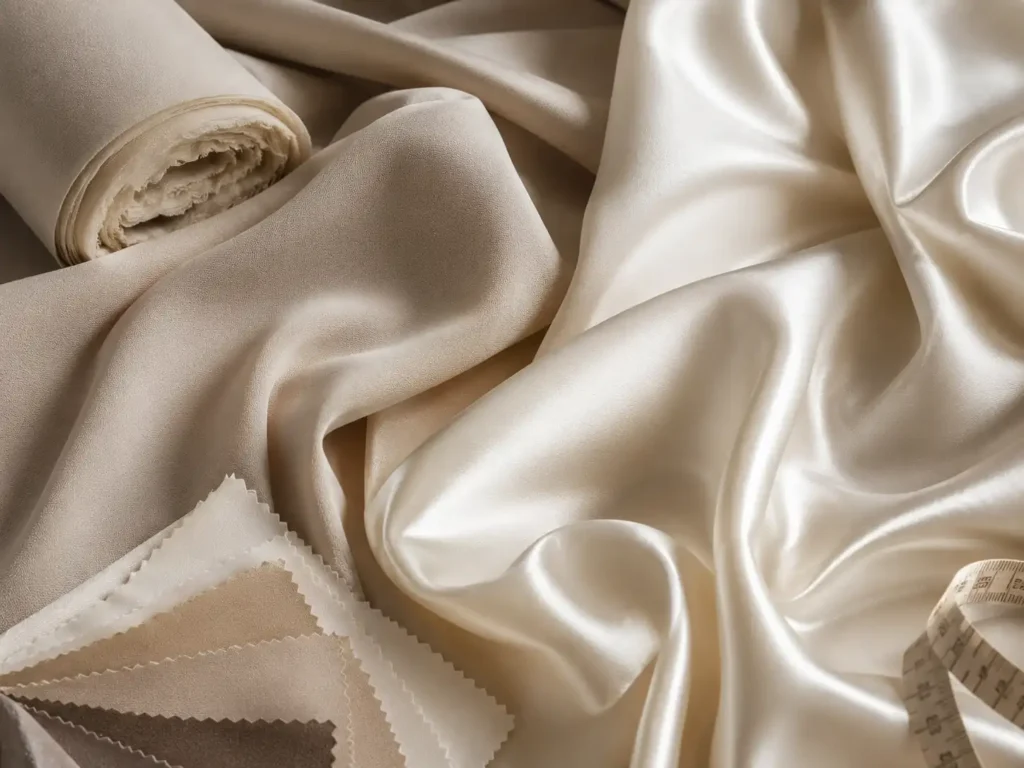
- Confirm: width, GSM or weight class, stretch direction, opacity, shade standard and pressing response.
- Risk controls: snagging, seam puckering, shine direction, dye-lot variation and lining show-through.

Mesh and Jersey
- Confirm: stretch percentage, recovery, transparency, hand feel and lining combination.
- Risk controls: twisting, bagging, seam wave, edge curling, excessive compression and size instability.
Lace and Tulle
- Confirm: usable width, motif repeat, scallop position, color match and skin contact.
- Risk controls: asymmetrical placement, rough edges, distortion, damaged motifs and visible seam allowances.

Chiffon and Rayon
- Confirm: opacity, shrinkage, print stability, drape, width and lining need.
- Risk controls: seam slippage, uneven hems, twisting, excessive shrinkage and travel creasing.

Sequin and Velvet
- Confirm: direction, backing strength, pile or sequin density, width and replacement allowance.
- Risk controls: shade panels, crushed pile, missing embellishment, bulky seams and transit damage.

Linings and Support
- Confirm: lining opacity, zipper length, cup shape, boning position, elastic recovery and trim color.
- Risk controls: lining pull, zipper bulge, cup displacement, exposed boning ends and inconsistent trim batches.
Pattern and Fit Control for Commercial Dress Production
Fit is controlled through measurements, body proportion, fabric behavior and construction. Jinfeng Apparel’s 7+ senior pattern makers work with two sample rooms and 20+ sample machinists to turn approved design intent into production-ready patterns.
Bust, Waist and Hip Balance Across Size Ranges
A dress can match the flat measurement chart and still fit poorly if ease, stretch and vertical balance are wrong. Pattern development starts with the intended market, base size, silhouette and fabric performance. Core points include upper bust, full bust, under bust, waist, high or low waist, hip, front length, back length, armhole, neckline and side-seam position. Bodycon garments may use controlled negative ease, while woven occasion dresses require enough movement without losing shape.
Size development can follow US, UK, EU or AU standards supplied by the brand. Alpha sizing from XS-XL is supported, with extended, plus, petite or tall ranges handled against an approved measurement and grade rule. Grade rules should preserve neckline coverage, strap position, cup location, slit height and skirt proportion rather than increasing every point at the same rate. For mixed stretch and non-stretch panels, each zone is checked separately because a stable lining can restrict a stretch outer layer.
- Measurement control: base size, size range, grade rule and tolerance are confirmed before bulk.
- Fit evidence: garment measurements, mannequin review, model fitting, annotated photos and videos can support corrections.
- Bulk risk: excessive tolerance at bust, waist or hip can change appearance, returns and size consistency across replenishment orders.
Support Structures for Secure and Comfortable Wearing
Strapless, corset, halter, low-back and deep-V dresses need support planned into the pattern, not added after the silhouette is complete. Bra cup shape, cup position, boning channels, under-bust seam, neckline edge, lining strength, elastic, grip tape, shoulder or neck straps and zipper location work as one system. Strong support without pressure distribution can create discomfort, visible ridges or distortion around the bust and waist.
Sample review checks cup volume, neckline coverage, underarm exposure, strap angle, back height, waist placement and movement during sitting, walking and raising the arms. Boning ends require protection; channels must remain straight; cups must stay symmetrical; and closures need enough surrounding strength to avoid pulling. For asymmetrical or one-shoulder designs, internal support must counter uneven tension without changing the intended neckline.
- Wear security: check slipping, gaping, exposure and closure strain during movement.
- Comfort: protect boning ends, avoid hard trim against skin and balance compression around the torso.
- Production control: cup, boning, hook and zipper placement are measured from fixed pattern reference points.
Length, Lining and Movement Through Real Wear
Dress length is measured as part of the complete fit system. Mini styles need adequate back coverage and controlled slit placement; midi styles must maintain proportion around the calf; maxi styles require even hems and enough sweep for movement. Chiffon, satin and bias-cut materials may relax after hanging, so hem confirmation should occur after appropriate settling and pressing rather than immediately after sewing.
Lining length and shape are checked against transparency, slit height and outer-fabric movement. A lining that is too narrow can pull the shell; a lining that is too long can show at the hem; a rigid lining can cancel the stretch of a bodycon fabric. Jumpsuits add crotch length and torso balance to the review. The pattern team also checks front-to-back balance, side-seam position, hem level and strap adjustment so the final garment remains wearable beyond a static photo.
- Mini control: back length, rise during movement, lining and slit security.
- Maxi control: hang time, sweep, panel balance, side-seam length and hem leveling.
- Jumpsuit control: torso length, crotch depth, waist position, hip ease and sitting comfort.

From Tech Pack to Approved Production Sample
Project Brief Review
Style Risk Review
Fabric Trim Direction
Pattern Development
First Sample
Fit and Revision
PP Sample
Golden Reference
Managing Multi-Style Dress Collections Without Losing Control
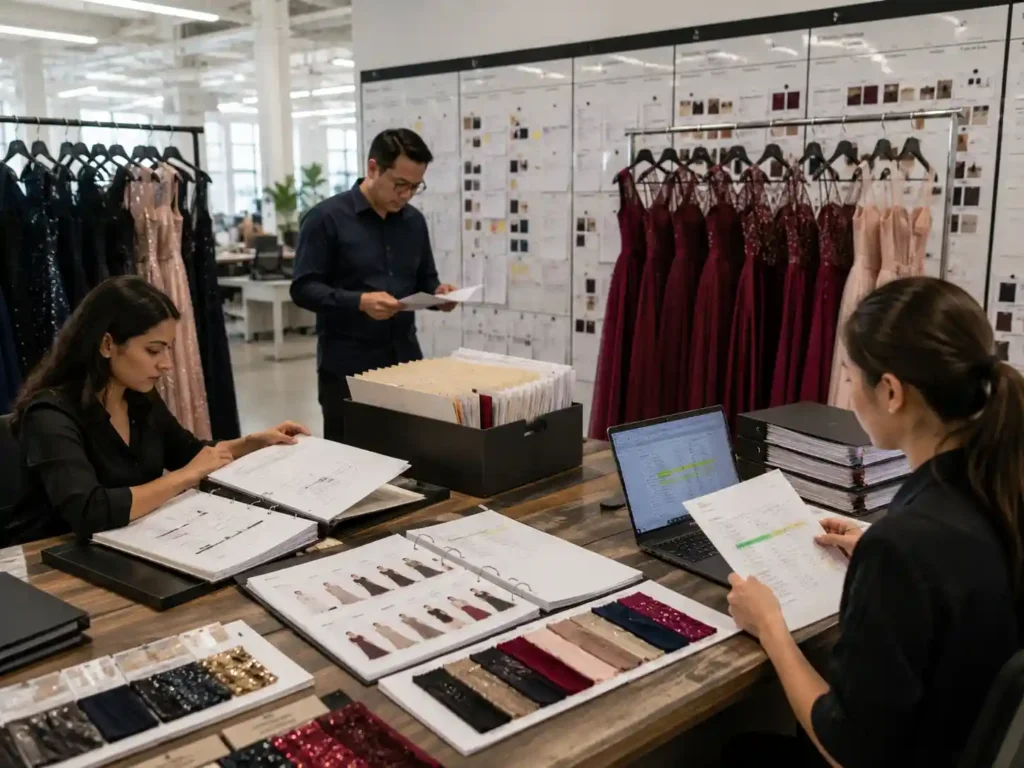
A 10-30 style program can involve several fabrics, color groups, size ranges and launch priorities. Grouping and version control create faster decisions than pushing every style through the same queue.
Group Styles by Fabric, Pattern and Construction Risk
Collection management begins by separating styles into operating groups. Satin and crepe styles may share fabric approval logic but use different patterns; stretch jersey and power-mesh styles can share recovery tests; corset and structured occasion styles need support-trim and symmetry controls; printed resort dresses may require placement or directional cutting. Grouping helps material teams, pattern makers and production units work on related problems without mixing unrelated standards.
Each style receives a unique code linked to fabric, color, size range, trims, sample version, PP status and production unit. Similar silhouettes can reuse a proven block only after checking neckline, length, stretch and design differences. Reusing a pattern without reviewing fabric behavior often creates avoidable fit variation. The grouping plan also supports more accurate consumption, quotation and factory allocation because labor and risk are assessed by construction family.
- Fabric groups: satin/crepe, mesh/lace, jersey/ponte, chiffon/rayon, sequin/velvet.
- Pattern groups: bodycon, corset, slip, A-line, maxi, jumpsuit and matching-set structures.
- Risk groups: transparency, stretch recovery, embellishment, placement cutting, support and long hems.
Set Sample Priority Around Launch and Material Readiness
Mature collections rarely need every sample completed on the same day. Hero styles, campaign pieces, wholesale presentation samples and long-lead materials should move first. Priority can be ranked by launch date, photo shoot, fabric readiness, construction complexity, expected sales volume and bulk lead time. A style with available stock fabric may move ahead, while a custom-dyed lace style remains in material approval without blocking the full assortment.
A shared tracker records first-sample status, comments received, revision responsibility, fabric approval, trim approval, PP status and next action. Weekly updates are most useful when they identify decisions required from both sides rather than only showing percentages. For example, “pattern completed” is less useful than “fit sample ready; neckline depth and hip ease require approval by Friday to protect the bulk window.”
- Priority 1: hero SKUs, photo samples and styles with long material lead times.
- Priority 2: carryover blocks, available fabrics and styles needed for early costing.
- Priority 3: lower-volume extensions that can follow after core fit and material decisions are locked.
Control SKU, Label and Packing Data Before Finishing
Large collections create packing risk when style, color, size, barcode and label data arrive in separate files. SKU information should be consolidated before bulk finishing. Each garment code connects to the approved label artwork, size label, care information, hangtag, barcode, polybag marking, folding method, carton ratio and warehouse instruction. Data revisions need a clear effective date so old files do not remain active on the production floor.
Carton planning follows the shipment structure. A program may separate launch priority, region, warehouse, style group or air-sea split. Each batch needs its own packing list, carton sequence and quantity reconciliation. Final checks compare physical garments against the approved SKU list and carton marks, reducing warehouse rejections caused by mixed sizes, duplicated barcodes or incorrect carton labels.
- Core file: style-color-size SKU matrix with barcode and packing reference.
- Control point: label and packing approval before finishing begins.
- Shipment point: carton quantity, net weight, gross weight, measurements and batch-specific documents.
Factory Allocation for Scalable Dress Production
Production scale is useful only when each style reaches a unit suited to its fabric, structure and workmanship. Jinfeng Apparel combines owned factories with long-term partners under common development files, PP references and inspection requirements.
Match Production Units to Product and Material
Factory allocation begins after reviewing garment type, fabric, seam construction, embellishment, order quantity, color count, size range and delivery timing. Stretch bodycon dresses require teams familiar with recovery, differential feed and measurement control. Satin occasionwear requires clean handling, seam-tension control and pressing discipline. Corset dresses need accurate panel sewing, cup and boning placement, while sequin garments require safe cutting, protected seams and careful packing.
A production unit is not selected only because a sewing line is available. Recent product experience, operator skill, finishing capability and QC familiarity should match the style risk. When several factories participate in one collection, shared standards cover file naming, PP approval, measurement tolerance, workmanship, label placement, packing and issue reporting. Style ownership remains visible to the merchandising and QC teams throughout the order.
- Allocation inputs: fabric, construction, embellishment, volume, size ratio and launch date.
- Approval inputs: named production unit, PP reference, critical measurements and workmanship standard.
- Change control: any unit change after approval requires a documented capability and schedule review.
Plan Capacity From Material Arrival Through Packing
Capacity planning starts with the complete critical path rather than sewing days alone. Fabric and trims must arrive and pass review; PP samples, measurement files and packing artwork must be approved; cutting and first-piece checks require time; inline inspection must occur while correction is still possible; finishing, pressing, final inspection and carton packing follow production. A calendar that ignores one of these windows may appear fast but leaves no recovery time.
Jinfeng Apparel’s combined monthly capacity exceeds 100,000 garments, but the available share for a program depends on style complexity, confirmed materials and production timing.
A 40,000-piece order of straightforward woven dresses does not consume resources in the same way as 40,000 pieces spread across corset, lace, mesh and sequin styles.
Capacity discussions therefore use style-level quantity and construction data rather than total units alone.
- Planning milestone: material-ready date, not purchase-order date alone.
- Production milestone: PP approval and line start by style group.
- Completion milestone: QC, packing and freight cut-off included in the schedule.
Control Owned and Partner Factories Under One Standard
Owned factories provide direct manufacturing resources, while long-term production partners extend capability for selected materials, structures or peak periods. Partner use should remain transparent. The project team identifies the production unit, transfers approved patterns and technical files, aligns the PP reference and assigns merchandising and QC responsibility before cutting. High-risk styles can be reserved for units with the strongest recent experience.
Quality evidence follows the same process regardless of ownership: incoming material review, cutting control, first-piece confirmation, inline inspections, measurement records, final appearance checks and packing reconciliation. Issues are photographed, classified, corrected and rechecked. Consistent records also support repeat orders because future production can return to the approved unit or be transferred with a documented standard rather than relying on memory.
- Transparency: identify the actual production unit for each style group.
- Consistency: use one approved file set, PP reference and inspection logic.
- Accountability: assign named merchandising, production, QC and packing contacts.
Quality Gates From Fabric Inspection to Final Packing

Fabric Inspection

Trim Inspection
Cutting Control
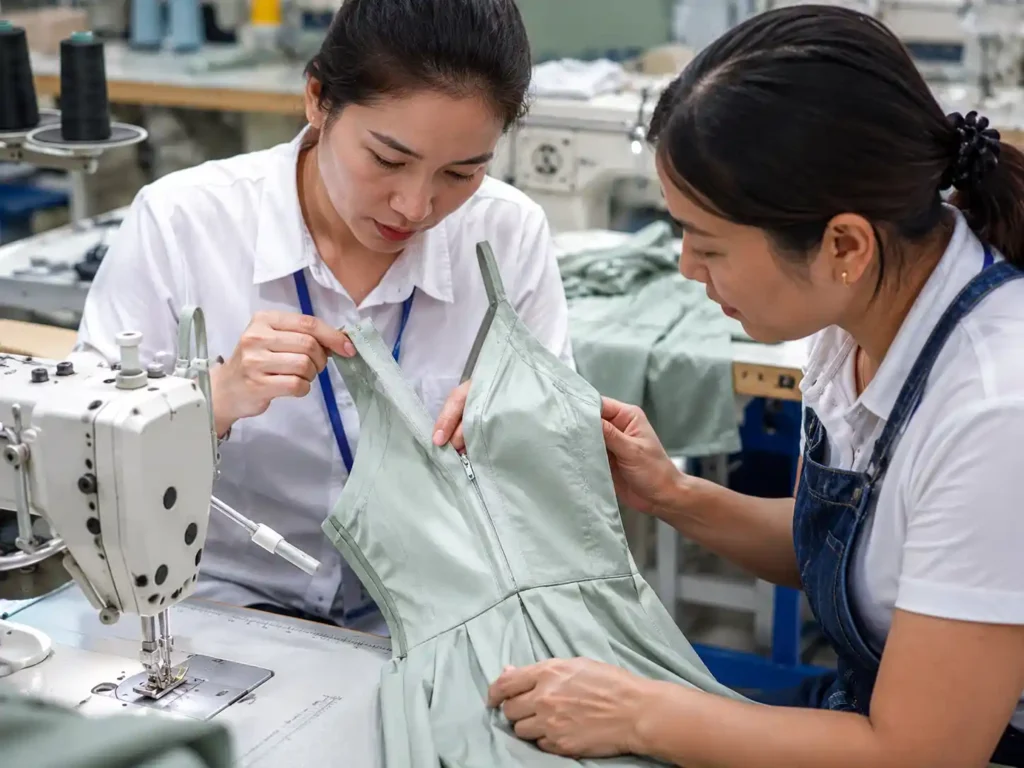
First Piece Review

Inline Sewing Check

Measurement Inspection

Final Garment Check
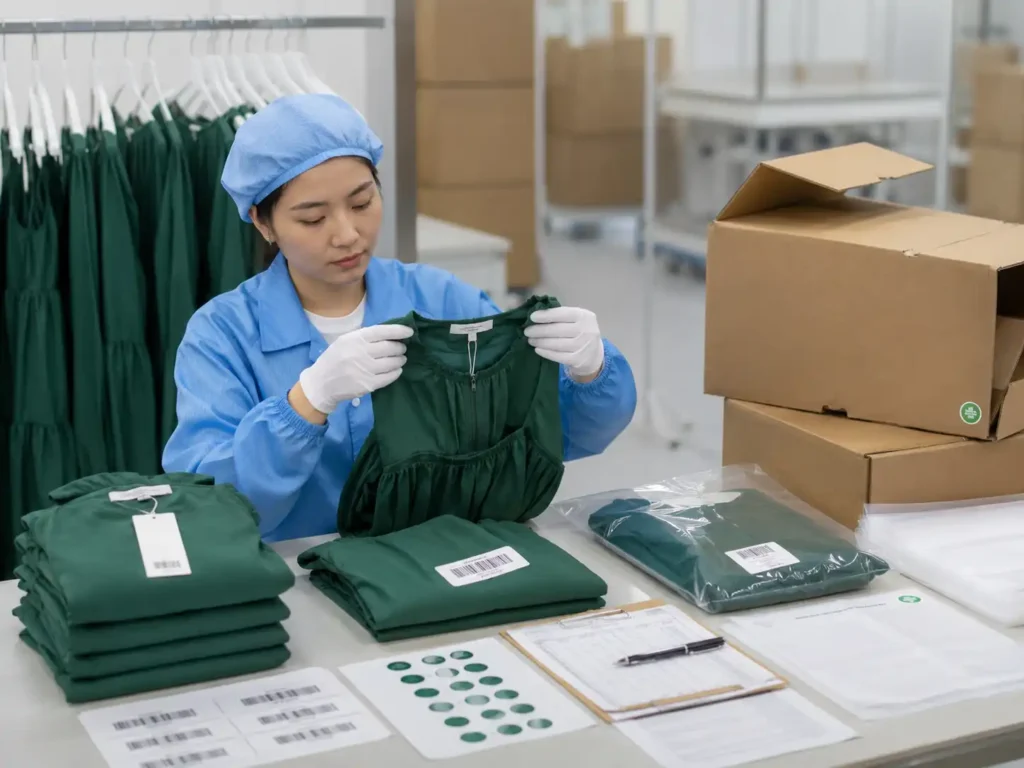
Packing Verification
Compliance and Testing Support for International Programs
Factory Audit Support
Material Documentation
OEKO-TEX, GOTS, organic cotton and GRS-related fabric resources can be reviewed through the supply chain.
Availability depends on fabric type, color, supplier batch, certificate scope, validity, MOQ and lead time. The material team can request available documents and match them to the proposed fabric. Final approval should confirm that the certificate holder, product class and validity period meet the brand’s sourcing policy.
Testing Coordination
Private Label Execution for International Retail Channels

Woven Size Labels
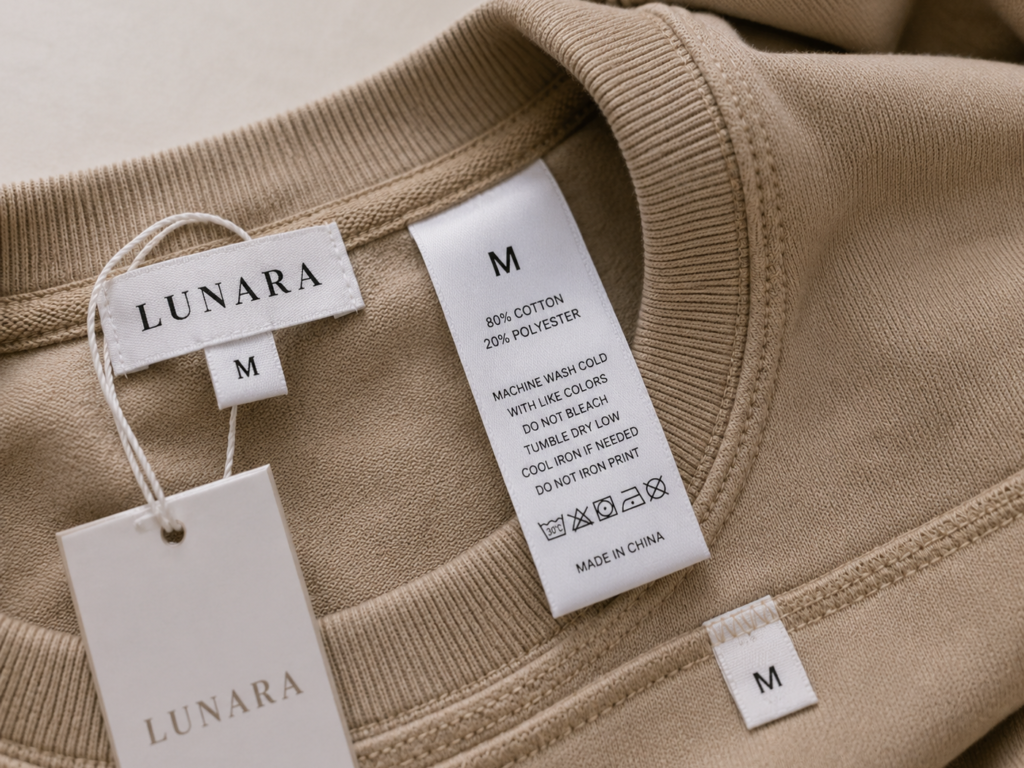
Care Content Labels

Hangtags Brand Trims
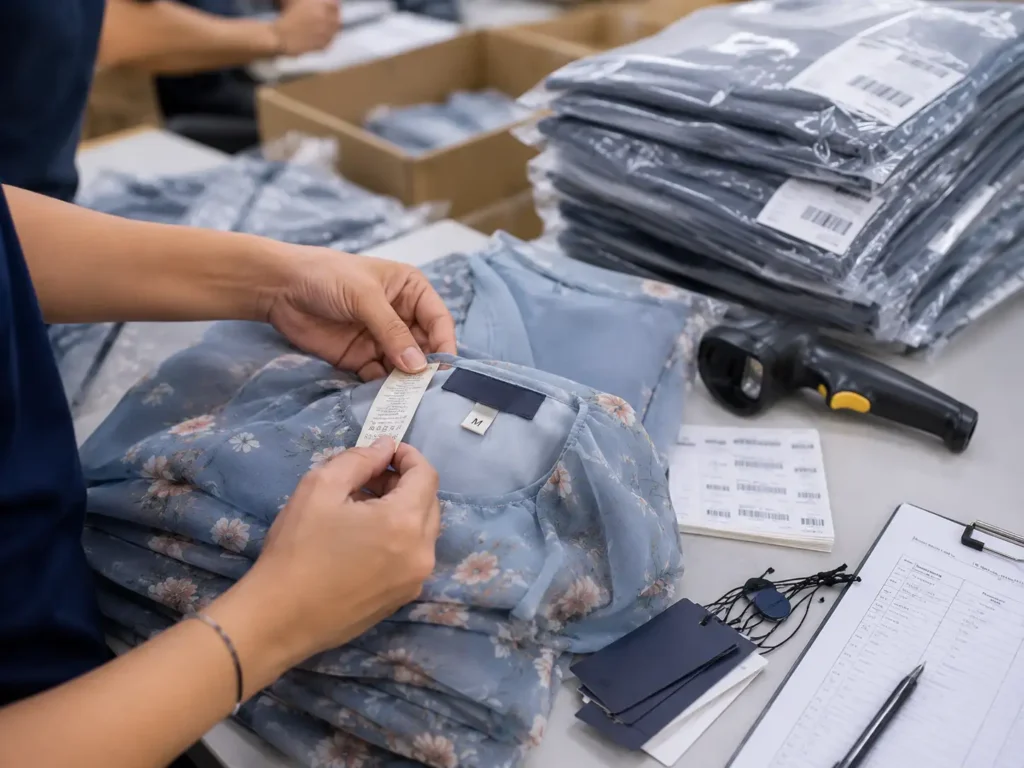
Barcode SKU Labels

Polybags Retail Packing
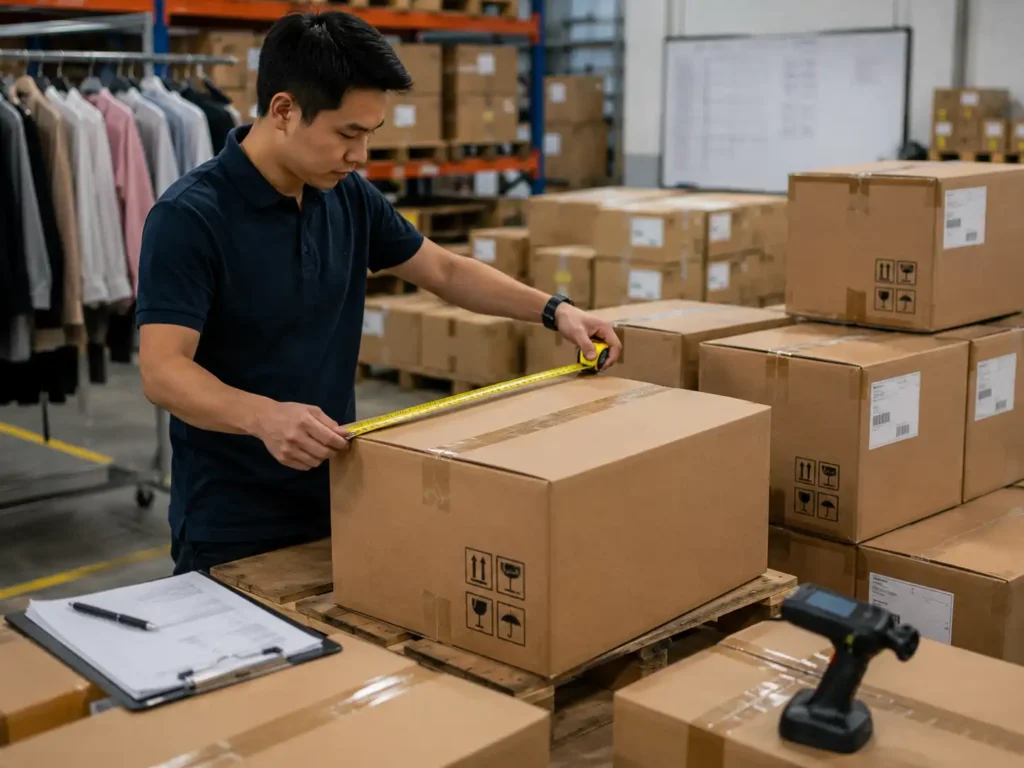
Cartons Warehouse Labels
MOQ and Quotation Logic for International Dress Orders
Jinfeng Apparel’s standard MOQ starts from 200 pieces per style and color. Final feasibility depends on fabric availability, custom color development, trims, construction, packaging and production scheduling. Pricing is built from the complete garment rather than a single sewing rate.
| Order or Cost Factor | Initial Assessment | Commercial Effect |
|---|---|---|
| 1 style, 1 color, 200 pcs | Normally reviewable when fabric and trims are commercially available. | Standard MOQ basis; size quantities can be distributed within the confirmed style/color total. |
| 1 style, 2 colors, 200 pcs each | Normally reviewable after both colors and material availability are confirmed. | Separate color control, cutting and packing; 400 pcs total for the style. |
| 1 style, 2 colors, 100 pcs each | Normally below standard MOQ per color. | Lower cutting and sewing efficiency; material and label supplier MOQs may not be met. |
| Several styles totaling 200 pcs | Not treated as 200 pcs per style/color. | Each pattern, cutting plan, sample and production setup carries separate cost and control requirements. |
| Custom dye or print | Reviewed against fabric supplier MOQ and development schedule. | Adds lab dips, strike-offs, color approval, minimum yardage and longer material lead time. |
| Lace, sequin or custom trim | Reviewed by supplier lot, usable width, placement and replacement allowance. | May increase consumption, labor, waste, QC time and supplier MOQ. |
| Extended size range | Supported against approved measurements and grade rules. | May change consumption, pattern work, ratio planning, packing and fit-validation requirements. |
| Special retail packing | Reviewed from label artwork, barcode matrix, polybag and warehouse guide. | Adds supplier MOQ, packing labor, carton planning and approval steps. |
| Compressed delivery window | Assessed only after material, sample and PP status are known. | May require capacity reservation, air freight or split shipment; speed cannot replace approvals. |
Export Documentation and Delivery Planning for Global Markets
Packing List
Commercial Invoice
Carton Marks
Nominated Forwarder
Air Sea Planning
Warehouse Delivery
International Apparel Buyer Dress Manufacturing Case Studies
International apparel buyers require more than garment production. Successful programs depend on product development, supplier coordination, quality control, private-label execution, export documentation and repeat-order capability.

Case Study 1: Global Buyer Managing a Seasonal Womenswear Dress Collection
A European apparel buying group managed seasonal womenswear collections for multiple fashion channels.
The buyer team required a manufacturing partner capable of supporting:
- Multiple dress categories
- Seasonal launch schedules
- Private-label production
- Export delivery
Program scope:
- 26 dress styles
- 64,000 pieces
- 5 fabric groups
- XS-XL size range
- Multiple destination markets
Product categories:
- Occasion dresses
- Satin dresses
- Bodycon dresses
- Resort dresses
- Party dresses
Sourcing Challenge
The buyer needed one supplier system that could manage different product requirements.
Different Product Categories
The collection included:
- Stretch jersey dresses
- Delicate lace styles
- Satin occasionwear
- Lightweight resort products
Each category required different:
- Fabric handling
- Pattern control
- Production methods
- QC standards
International Delivery Requirements
The buyer also needed:
- Accurate packing data
- Multiple shipment schedules
- Export documents
- Destination separation
Jinfeng Solution
Jinfeng created a collection-level manufacturing structure.
Product Allocation
Styles were grouped by:
- Fabric behavior
- Construction complexity
- Production risk
- Delivery priority
Examples:
- Stretch dresses → recovery and measurement control
- Satin dresses → surface and pressing control
- Lace dresses → placement and finishing control
Result
The buyer achieved:
- 26 styles delivered
- Multiple market shipments completed
- Stable product quality
- Improved seasonal sourcing efficiency
The program developed into a repeat seasonal cooperation model.

Case Study 2: International Sourcing Office Coordinating Multi-Brand Dress Programs
An international sourcing office managed product development and production for several overseas fashion brands.
The sourcing team handled:
- Supplier communication
- Cost evaluation
- Sample approval
- Production tracking
- Quality follow-up
Program scope:
- 30 dress styles
- 80,000 pieces
- 8 color groups
- Multiple brand accounts
Sourcing Challenge
The sourcing office needed clear control across different client programs.
Main challenges:
Multiple Brand Requirements
Each brand had different:
- Fit standards
- Packaging requirements
- Price targets
- Delivery expectations
Information Management
The sourcing team needed visibility across:
- Sample status
- Material progress
- Production updates
- QC results
- Shipment readiness
Jinfeng Solution
Jinfeng established a structured project management system.
Brand-Level Separation
Maintained independent:
- Style codes
- Tech packs
- Size charts
- Labels
- Packing files
Production Tracking
Monitored:
- Fabric arrival
- Sample approval
- PP status
- Bulk progress
- Inspection results
Communication Control
Provided:
- Milestone updates
- Issue tracking
- Action ownership
- Delivery planning
Result
The sourcing office achieved:
- Better supplier visibility
- Reduced communication errors
- More accurate production planning
- Stronger client management
Jinfeng became a reliable manufacturing resource for multiple brand programs.

Case Study 3: Global Fashion Brand Building a Long-Term Manufacturing Partnership
A global womenswear brand wanted to move from project-based purchasing into a stable long-term manufacturing partnership.
The brand required:
- Seasonal collections
- Bestseller replenishment
- New color development
- Continuous product improvement
Program included:
- Occasion dresses
- Partywear
- Resort collections
- Matching sets
Partnership Challenge
The brand previously worked with multiple factories and experienced:
Inconsistent Standards
Problems included:
- Different measurements
- Different fabric interpretation
- Different packing methods
Limited Production Visibility
Challenges included:
- Unclear factory responsibility
- Difficult repeat orders
- Slow product updates
Jinfeng Solution
Jinfeng created a long-term supply structure.
Product Records
Maintained:
- Patterns
- Size charts
- BOM files
- Fabric references
- Trim records
- QC standards
Repeat Order Management
Controlled:
- Bestseller replenishment
- New colors
- Seasonal extensions
- Production scheduling
Supplier Coordination
Managed:
- Factory allocation
- Quality standards
- Delivery planning
- Export preparation
Result
The brand achieved:
- Stable seasonal production
- Faster repeat development
- Consistent quality
- Stronger supply chain confidence
The cooperation developed from individual orders into a strategic manufacturing partnership.
Choose the Manufacturing Model That Fits Your Program
Ready Stock Supply
Trading Coordination
Price Led Factory
Jinfeng Apparel
Frequently Asked Questions for International Apparel Teams
The core range covers mini, midi and maxi dresses; party, cocktail, evening and occasion dresses; wedding guest, graduation and resort dresses; bodycon, corset, satin, mesh, lace and sequin styles; plus jumpsuits, skirts, matching sets and private-label womenswear. Each project is reviewed against fabric, pattern, construction, quantity and production capability.
The standard MOQ starts from 200 pieces per style and color. Size quantities can be distributed within the confirmed style/color total. Custom-dyed, custom-printed, certified, lace, sequin or specially developed materials may require higher quantities according to supplier requirements.
Yes. Development can begin from a tech pack, original sample, reference image, sketch, line sheet, moodboard or fabric swatch. More complete information produces a more accurate feasibility review, quotation and sampling plan. Missing measurements, material requirements or construction details are identified before work proceeds.
Yes. OEM work follows supplied technical and commercial requirements. ODM support can include style analysis, fabric direction, pattern development, sample making, construction suggestions and cost-oriented alternatives. The level of design support depends on the project brief, target market, target price and available development information.
Consistency is managed through approved fabric and trims, controlled pattern files, measurement specifications, PP approval, golden references, first-piece review, inline inspection, final garment checks and packing verification. A reference sample supports comparison but does not replace production-stage quality control.
Factory review and project visits can be coordinated according to the selected production unit, schedule and confidentiality requirements. Remote evidence may include sample photos, videos, production progress, QC findings and packing records. Formal audit scope and documentation should be shared early.
Jinfeng Apparel can coordinate SMETA/Sedex/BSCI-related documentation, client factory audits, third-party testing, AQL inspection, material documents and market-specific label preparation. Availability and validity depend on the actual factory, fabric supplier, certificate scope, product and current project requirements.
Yes. Support includes brand labels, size labels, care labels, hangtags, barcode stickers, individual polybags, SKU packing and carton marks. Artwork, legal wording, barcode data, placement and supplier MOQ must be confirmed before production. Final market compliance text remains subject to brand approval.
Yes. The logistics team can coordinate cargo readiness, carton data, packing lists, invoices, delivery to the nominated facility and shipment information. Express, air, sea, EXW, FOB, CIF, DAP and project-specific DDP can be discussed according to destination and forwarder capability.
Jinfeng Apparel supports NDA-based cooperation and protects tech packs, samples, patterns, measurements, fabric directions, private-label files, unpublished designs, quantities and commercial information. Materials are used for project review, development, production, QC, packing and delivery, not public promotion without authorization.

Send Your Dress Program for Manufacturing Review
Share the information already available for your collection. A complete tech pack is welcome, but an initial review can also begin from a line sheet, original sample photos or clear reference images. Jinfeng Apparel will assess product fit, material direction, pattern and construction risk, MOQ, sample requirements, private-label scope, production allocation and delivery planning before recommending the next step.
Files remain confidential and are used only for project evaluation and approved manufacturing work. Accurate pricing and timing require confirmed fabric, trims, quantities, size range, packaging and PP status; incomplete information receives an initial feasibility response rather than an unsupported fixed quotation.
- Company name, country and contact details
- Product type and number of styles
- Quantity per style and color
- Fabric, lining and trim direction
- Size range and target market
- Private-label and packaging requirements
- Target ex-factory or warehouse date
- Upload: tech pack, line sheet, size chart, BOM, label files or reference images