
Dress Manufacturer for Brands Needing Repeatable Fit
Repeatable fit is not created by copying one approved sample. It comes from controlling the pattern version, fabric behavior, graded measurements, sewing construction, pressing method, quality checkpoints and reorder records as one production standard. Jinfeng Apparel develops custom dresses for established fashion brands that need the approved silhouette to remain stable from fit sample to bulk order and from the first production run to later replenishment.
- Fit scope: approved base size, graded size range, PP sample, bulk production and repeat orders.
- Collection scale: established brand programs commonly include 10-30 styles and 20,000-80,000 pieces per order.
- Development team: 2 sample rooms, 7+ senior pattern makers and 20+ sample machinists.
- Production support: 6 owned womenswear factories, 10+ long-term satellite partners and 100,000+ pcs monthly capacity.
Built for Brands That Cannot Accept Fit Drift
Established Fashion Brands
- Multi-style collection development
- Repeat production by approved version
- Private-label and retail-ready delivery
Product Development Teams
- Tech pack or original sample review
- Fit comment conversion
- Pattern revision tracking
Sourcing and QA Teams
- Material and batch checks
- Size-level measurement control
- Repeat-order quality records

What Repeatable Fit Means in Dress Manufacturing
Repeatable fit means an approved dress silhouette, measurement balance and wearing effect can be reproduced across graded sizes, bulk production batches and later repeat orders within agreed tolerances. The goal is controlled consistency, not an unrealistic promise of zero production variation.
Five Fit Results Must Stay Connected
- Fit sample consistency begins with the approved base size. The pattern must reflect the intended bust shaping, waist position, hip ease, neckline, shoulder balance, body length and hem relationship.
- Size consistency then carries those proportions through the size range with planned grade rules rather than equal increases at every point.
- Bulk consistency requires the production line to follow the final pattern, fabric, trims, seam allowances, sewing sequence and pressing method locked during PP approval.
- Batch consistency adds fabric-lot review and first-piece confirmation whenever production is split across time, color or production units.
- Reorder consistency requires accurate records so a later order starts from the final approved version, not an earlier sample or outdated measurement chart.
Repeatable Fit Is a Controlled Manufacturing Outcome
A good first sample proves only that one garment can be made. A repeatable style needs a documented relationship between pattern, material and workmanship. Stretch recovery influences bodycon measurements. Bias growth influences satin slip dresses. Lining tension influences mesh and lace structures. Boning position influences corset balance. Pressing can change neckline shape, length and seam appearance. Jinfeng therefore reviews fit at product, material and production levels before treating a style as ready for repeat manufacturing.
Where Dress Fit Begins to Drift
Sample-to-Bulk Drift
- Transfer final pattern and construction notes
- Approve first production piece
Weak Size Grading
- Review horizontal and vertical grade rules
- Check representative sizes
Fabric Lot Changes
- Compare bulk fabric to approved reference
- Retest sensitive stretch or shrinkage
Pattern Version Errors
- Assign a final pattern version
- Archive superseded versions
Line-Level Variation
- Use approved workmanship standard
- Measure before full completion
Incomplete Reorder Files
- Keep pattern and BOM records
- Reconfirm changed materials or colors
Six Controls Behind Repeatable Dress Fit
Structure Review
- Tech pack and reference check
- Risk notes by product type
Fabric Assessment
- Approved swatch reference
- Bulk-lot comparison
Base Pattern
- Pattern version control
- Critical point identification
Fit Revision
- Revision tracker
- Approval status
PP Lock
- Golden sample reference
- Production handover file
Bulk and Reorder QC
- Measurement sampling
- Reorder quality notes
Dress Categories Requiring Different Fit Controls
Different dress structures fail in different ways. Jinfeng assigns pattern, sampling and QC attention according to fabric behavior, support structure, body contact and wearing movement rather than applying one generic fit checklist.

Bodycon Dresses
- Stretch and recovery review
- Side-seam and hem balance
- Post-press measurement

Corset Dresses
- Cup and bust alignment
- Boning channel position
- Zipper flatness

Satin Slip Dresses
- Bias growth control
- Strap and neckline balance
- Hanging and pressing check

Mesh and Lace Dresses
- Layer tension matching
- Transparency and coverage
- Placement alignment

Mini and Midi Dresses
- Waist-to-hem proportion
- Slit safety
- Size-level length review

Maxi Occasion Dresses
- Front-back balance
- Skirt weight distribution
- Hem and train control
Fabric Behavior Must Be Controlled Before Pattern Lock
A pattern can only repeat when the production fabric behaves like the material used for approval. Jinfeng evaluates fabric weight, stretch, recovery, shrinkage, drape, transparency, surface friction, bias growth and lining compatibility before releasing a fit standard.
Stretch, Recovery and Shrinkage Change Garment Measurements
Stretch percentage alone is not enough for fitted dresses. Two fabrics may stretch to a similar width but recover differently after wearing, sewing or steaming. Poor recovery can create a loose waist, dropped neckline or longer body after production. Shrinkage affects woven and knit dresses differently and may change after pressing or care testing. Jinfeng compares sample fabric and bulk fabric by hand feel, weight, width, stretch direction, recovery and expected shrinkage before confirming whether the same pattern remains suitable. Bodycon, jersey, ponte and power-mesh products receive closer attention around bust, waist, hip and garment length because material behavior directly changes negative ease.
Drape, Bias Growth and Layer Tension Affect Silhouette
Satin, viscose, rayon and soft crepe can lengthen or shift when cut on the bias. Chiffon, organza and tulle add volume without much weight, while lace and mesh often need a lining or support layer. If outer fabric and lining stretch differently, the finished dress can twist, bubble or pull at the neckline and armhole. Fabric direction, relaxation, hanging time and pressing method are therefore reviewed with the pattern.
A satin slip dress may need a hem-level check after hanging; a mesh dress may need layer-tension adjustment; a corset dress may need a stable lining even when the outer fabric is soft.
Material Lead Time Must Be Included in Fit Planning
Material readiness affects sample and delivery schedules. Standard zippers commonly require about 3-10 days when a matching specification is available.
Metal zippers may require 7-15 days, bra cups about 5-15 days, custom labels about 7-15 days and hangtags about 7-20 days. Special lace edges, rhinestone trims or sequin materials can take 20-45 days depending on color, design and supplier minimums.
Jinfeng groups styles by material readiness so pattern and sample work do not move forward on substitute components that could later change fit or construction.

Building the Approved Base Pattern
The base pattern is the technical source of the approved silhouette. Jinfeng can begin from a tech pack, original sample, existing pattern, measurement chart, reference image or brand fit block, then defines which information controls the final version.
Protect the Brand Fit Block
Brands with established fit standards often have preferred shoulder width, bust shaping, waist placement, hip ease, armhole depth, neckline exposure and garment length.
Jinfeng does not replace those relationships with a generic factory block without review. Pattern makers compare the supplied size chart and original garment, identify construction differences, and clarify whether the goal is exact replication, selective correction or a new silhouette using the brand block. Critical points are marked before sampling so later comments can be traced to a specific pattern area.
Control Pattern Versions Before Approval
A pattern can change several times during development. Each correction needs a defined version, updated measurement chart and matching sample status. Bust shaping, waist suppression, dart position, neckline depth, strap length, zipper length, slit position and lining shape may change independently. Informal edits made directly at the sewing machine are transferred back into the approved pattern before bulk release. Superseded versions are separated from the final file to prevent cutting mistakes. The final pattern is connected to the PP sample, Golden sample and production file rather than stored as an isolated technical drawing.
Use Product-Specific Pattern Logic
Pattern decisions follow garment structure. Stretch bodycon dresses need negative-ease logic and recovery allowance. Corset dresses need cup, boning and waist alignment. Slip dresses need bias behavior and strap balance. Maxi dresses need vertical proportion and hem distribution.
Jumpsuits need torso and crotch balance. Jinfeng assigns development work according to structure and fabric risk, supported by 2 sample rooms, 7+ senior pattern makers and 20+ sample machinists.


Fit Samples Turn Feedback Into Production Standards
A sample is useful only when the review produces clear production actions. Jinfeng separates first samples, fit samples, revised samples, photo-ready samples, PP samples and Golden samples so approval status cannot be confused.
- First Sample: Confirm Structure and Direction
The first sample checks whether the style can be built in the intended fabric and whether the initial pattern produces the expected silhouette. Internal review covers measurements, neckline, bust, waist, hip, shoulder, armhole, body length, opening method, lining, movement and visible workmanship. Photos and measurements can support remote review, while a physical sample remains important for hand feel, stretch, support and wearing balance. The first sample is not treated as the final bulk standard when fit comments, fabric changes or construction corrections remain open.
- Revised Sample: Close Measurable Fit Issues
Fit comments are divided into pattern, measurement, fabric, construction, trim and workmanship actions. A neckline comment may require pattern correction, elastic adjustment or lining support. A waist comment may involve pattern suppression, seam allowance or stretch recovery. A length comment may involve pattern length, bias growth or pressing. Jinfeng records the requested change, the technical action and the sample version so the brand team can confirm whether the issue has been closed. Several styles can be grouped by fabric and pattern family to improve revision efficiency across a 10-30 style collection.
- Photo, PP and Golden Samples Serve Different Decisions
A photo-ready sample supports campaign or ecommerce photography and may prioritize approved visual presentation. A PP sample confirms the final production package: fabric, color, trims, measurements, construction, labels and packing. A Golden sample becomes the physical reference for production and QC when required. Sample and delivery timing is therefore quoted by style group after material readiness, trim development and approval sequence are known. Complex corset, lace, mesh, sequin and evening styles are scheduled separately from simpler knit or woven dresses because the validation work is different.
Size Grading Must Preserve Shape, Not Just Measurements
Grading expands a confirmed base pattern into the planned size range. Good grading protects silhouette, movement and coverage while allowing the measurement increments required by the brand standard. Representative sizes should be reviewed before full-volume cutting on fit-sensitive products.
| Control Area | Grading Review | Risk if Mismanaged | Recommended Check |
|---|---|---|---|
| Bust and waist | Size-to-size growth, cup or dart position, negative ease | Tight bust, loose waist or shifted side seam | Base size plus upper and lower representative sizes |
| Shoulder and armhole | Horizontal growth, armhole depth and movement | Restricted movement, gaping or dropped shoulder | Fit check on fitted and sleeved styles |
| Neckline and straps | Depth, width, strap length and support | Exposure, slipping straps or neckline distortion | Wear test and measurement check |
| Waist position | Vertical grading and torso proportion | Waistline rises or drops across sizes | HPS-to-waist and center-front balance |
| Hip and seat ease | Hip growth, seat shaping and skirt balance | Pulling, sagging or side-seam movement | Bodycon, mini and fitted skirt review |
| Dress length and slit | Length growth, slit position and coverage | Uneven proportion or inconsistent wearing safety | Size-level length and slit verification |
| Lining and support | Graded lining, cup, boning and elastic position | Outer and inner layers pull differently | Layer comparison before PP approval |
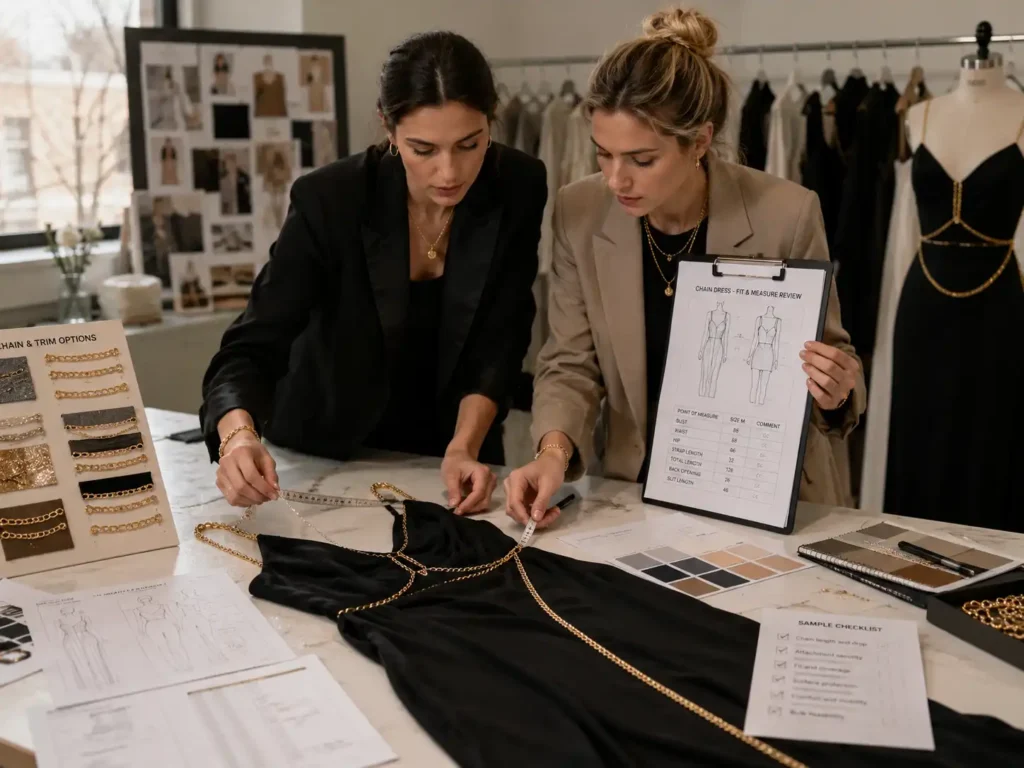
Locking the Standard Before Bulk Production
PP approval closes development decisions and opens controlled production. Jinfeng uses the approved package to align pattern, materials, workmanship, labels, packing and QC before cutting begins.
What the PP Sample Locks
The PP sample confirms final fabric, color, lining, trims, pattern version, measurement chart, grade rules, seam construction, stitch requirement, elastic length, zipper position, label placement, hangtag, polybag, barcode and carton-mark instructions. Any open point is identified before bulk release. A change after PP approval is treated as a controlled change because it can affect material booking, cost, fit, production sequence and delivery planning.
How the Sample Transfers to Production
The production handover links the final pattern file, size chart, BOM, fabric reference, trim card, sewing instruction, special-operation notes, label placement and packing instruction. Production managers, merchandisers and QC inspectors work from the same release information. First-piece review checks whether the production line has interpreted the standard correctly before volume builds. Jinfeng supports coordination through 12+ merchandisers and order follow-up specialists together with 15+ QC inspectors.
Why a Golden Sample Matters for Reorders
A Golden sample provides a physical reference for shape, construction, hand feel, trim placement and finish. It does not replace measurement records, but it helps production and QC compare the complete garment. For later repeat orders, the Golden sample is reviewed together with pattern, fabric, trim and QC records. If the new color or fabric behaves differently, the existing pattern is rechecked rather than assumed to be automatically suitable.
Measurement Points and Tolerances for Repeatable Fit
Measurement control must be tied to a defined method. The same point measured from a different reference can produce different results. Tolerances are confirmed by garment type, fabric behavior, brand standard and production feasibility rather than applied as one universal number.
| Measurement Point | Method Definition | Fit Impact | Control Notes |
|---|---|---|---|
| Bust | Measured at the specified level, usually underarm to underarm on a flat garment | Upper-body ease and side-seam position | Stretch and padding must be considered |
| Waist | Measured at the pattern-defined waistline | Silhouette, comfort and waist placement | Corset and bodycon styles need closer review |
| Hip | Measured at a fixed distance below waist or pattern hip line | Seat ease, movement and skirt balance | Distance below waist must remain consistent |
| Front body length | HPS or another agreed point to waist or hem | Waist position and front balance | Neckline depth and bust shape influence reading |
| Back body length | Center back or HPS to hem | Garment hang and front-back balance | Zipper and shoulder construction affect result |
| Armhole and neckline | Measured along or between defined seam points | Movement, gaping and coverage | Method must match pattern and tech pack |
| Strap length | End-to-end or between attachment points | Bodice and neckline position | Adjustable range should also be checked |
| Slit height | Hem to slit top along the seam | Movement and wearing safety | Review by size and final hem length |
| Hem width | Measured flat at the finished hem | Movement, flare and silhouette | Bias and pressing can change the reading |

Production Controls That Protect the Approved Shape
Pattern accuracy can be lost during bulk production if fabric handling, cutting, sewing and pressing are not controlled. Jinfeng connects production actions to fit-sensitive points before problems spread across the order.
- Fabric Relaxation, Direction and Cutting Accuracy
Stretch knits and fabrics prone to growth may require relaxation before cutting. Satin, velvet, sequins, lace and printed materials also require correct direction, placement or nap control. Marker planning, layer stability, notches, matching points and left-right symmetry are checked against the approved pattern. Cutting bundles are separated by style, color and size so pieces are not mixed. A fit-sensitive dress can be distorted by a small cutting error at the bust curve, waist seam, armhole, neckline or zipper edge even when the overall measurement appears close.
- Sewing Sequence, Seam Allowance and Component Tension
Sewing affects fit through seam allowance, stitch tension, elastic length, gathering ratio, zipper application, cup placement, boning channels, lining attachment and hem method. A zipper set under tension can cause back bulging. Unequal mesh and lining tension can twist a bodice. Excessive stretching during topstitching can open a neckline. Production instructions identify the sensitive operations, and first-piece review checks whether the line has achieved the approved construction before volume continues. In-line measurement catches drift while correction is still possible.
- Pressing and Finishing Can Change Measurements
Steam, temperature, pressure and manual pulling can change length, neckline shape, seam appearance and surface shine. Satin can mark or ripple; stretch fabric can lengthen; bias-cut garments can grow; layered hems can become uneven. Jinfeng reviews pressing method by fabric and structure, then rechecks key measurements after finishing. Final inspection is not limited to visual appearance. Garment balance, zipper flatness, lining position, strap symmetry, slit height and hem level are assessed against the approved reference.
Controlling Fit Across Sizes, Colors and Batches

Size Bundles
- Bundle ticket control
- Size-level piece counts
- Critical panel matching

Color Batches
- Shade and hand-feel review
- Sensitive property recheck
- Separate batch records

First-Piece Approval
- Compare to PP or Golden sample
- Record corrections
- Release only after review

Representative Sizes
- Base-size check
- Upper-size check
- Lower-size check

Production Allocation
- Factory allocation by style
- Common handover format
- Line-level first-piece check

Batch Comparison
- Pattern version confirmation
- Material availability review
- Previous QC note review
Fit-Focused Quality Control From Fabric to Packing
Incoming Material QC
- Compare approved reference
- Separate questionable lots
- Confirm lining and trims
Cutting QC
- Critical panel measurements
- Style-color-size separation
- Cut-part defect marking
First-Piece Review
- Approve or correct line method
- Record first-piece status
- Stop repeated errors early
In-Line Inspection
- Critical-point sampling
- Operation-specific checks
- Correction follow-up
Final Garment QC
- Product-specific checklist
- AQL inspection support
- Client inspection coordination
Packing Verification
- Prevent size identity errors
- Protect retail receiving
- Preserve reorder packing record
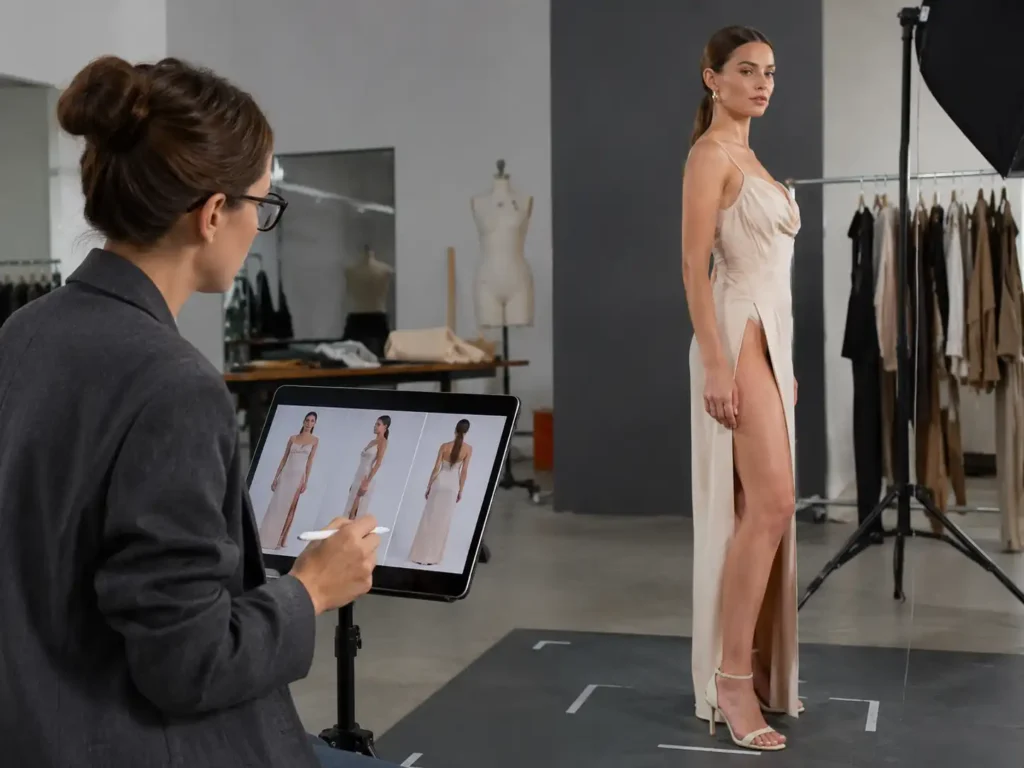
Records That Make Repeat Orders Repeatable
Repeat production begins with the approved technical and production record. Jinfeng keeps the information needed to restart a style, then revalidates materials or conditions that may have changed since the previous order.
- Pattern, Measurement and Approval Records
The final pattern version, approved measurement chart, grading rules, fit comments, PP approval and Golden sample record define the fit standard. The archive identifies which sample was approved and which earlier versions were replaced. Later fit changes receive a new version so an updated style is not confused with the original. Measurement and QC observations from the first order help the next production team focus on sensitive points such as neckline, waist, zipper, slit, strap or hem balance.
- Fabric, Trim and Workmanship Records
Fabric references include material description, color, hand feel, weight, width, stretch direction, lining requirement and supplier information where applicable. Trim records cover zippers, elastic, cups, boning, lace, labels, hangtags and packing components. Sewing and finishing notes record construction details that affect shape. If the original material is unavailable, Jinfeng compares a proposed substitute with the approved performance rather than selecting only by appearance or fiber content.
- Packing and Delivery Records
Private-label delivery requires the correct size label, care label, hangtag, barcode, SKU, polybag, carton ratio and carton mark. Those details are retained with the style because a repeat order can be rejected by a warehouse even when the garment fit is correct. Repeat production planning also reviews prior size ratios, delivery waves, quality notes and after-shipment feedback. The goal is a controlled restart, not an assumption that every later order is identical.
Not Every Repeat Order Is an Exact Repeat
Same Fabric and Color
- Check lot behavior
- Review prior QC notes
- Approve first piece
New Color
- Review new color lot
- Check lining and trims
- Confirm bulk color
New Fabric
- Compare fabric performance
- Make validation sample if needed
- Issue revised approval
Expanded Size Range
- Define new grade rules
- Check vertical proportions
- Update labels and packing
New Production Unit
- Common handover file
- Golden sample comparison
- QC release
Requested Fit Change
- Document change scope
- Approve revised sample
- Archive both versions
From Fit Drift to a Repeatable Production Standard
An anonymized U.S. occasionwear program shows how a multi-style order can be stabilized without reducing every dress to the same fit formula. The project covered 18 styles, 46,800 pieces, sizes XS-3XL, six color directions and five fabric groups, including stretch jersey, satin, mesh, lace and structured woven fabric.

Initial Risk Review and Style Grouping
The brand supplied tech packs, approved reference garments, measurement charts and fit comments from an earlier supplier. Main concerns included unstable waist position in fitted dresses, neckline variation in larger sizes, strap length differences, zipper bulging, satin hem imbalance and inconsistent mesh lining coverage. Jinfeng grouped the 18 styles by pattern family and fabric behavior rather than processing them in one sequence. Hero styles and campaign samples received first priority. Stretch products, satin products and structured corset products followed separate review tracks because the same grading and construction rules could not be applied across all groups.

Three Approval Gates Before Bulk Release
The first gate reviewed base-pattern direction and material suitability. The second gate closed fit comments through revised samples and representative-size checks. The third gate locked PP samples, final measurements, fabrics, trims, labels, packing and QC points. Several comments were resolved through pattern changes; others required layer-tension, zipper or pressing adjustments.
The final production file linked each style to the correct pattern version, fabric reference, size range and packing instruction. No unapproved sample-room correction remained outside the production record.
Three Approval Gates Before Bulk Release
The first gate reviewed base-pattern direction and material suitability. The second gate closed fit comments through revised samples and representative-size checks. The third gate locked PP samples, final measurements, fabrics, trims, labels, packing and QC points. Several comments were resolved through pattern changes; others required layer-tension, zipper or pressing adjustments. The final production file linked each style to the correct pattern version, fabric reference, size range and packing instruction. No unapproved sample-room correction remained outside the production record.

Two Production Waves With Reorder-Ready Records
The 46,800-piece order was allocated in two production waves to protect launch timing and inspection capacity. First-piece approval and in-line measurements focused on the sensitive points identified during sampling. Final packing checks matched size labels, SKU stickers, polybags and carton ratios to the brand file. After shipment preparation, Jinfeng retained pattern, measurement, fabric, trim, packing and QC records by style. The archive allowed future replenishment discussions to begin from the approved standard while still requiring revalidation for new colors or fabric substitutions.
Is Jinfeng the Right Fit for Your Program?
Best Fit For
- Established fashion brands
- Product, sourcing and QA teams
- Bulk and repeat-order programs
Project Boundaries
Jinfeng is not positioned for ready-stock purchasing, one-piece fulfillment or unstructured micro-orders. Fit-sensitive development also requires an approved sample process, material confirmation and realistic decision timing. A price cannot be separated from fabric, construction, size range, quantity, QC, packing and delivery requirements.
- Professional sampling process
- Clear approval responsibility
- Reasonable production planning
Frequently Asked Questions About Repeatable Dress Fit

Send Your Dress Fit Package for Review
- Name and company or brand
- Email and WhatsApp
- Product type and number of styles
- Quantity per style/color
- Size range and grading standard
- Current sample, bulk or reorder concern
- Target launch or delivery date
- Upload tech packs, photos, measurement charts or fit comments


