 Skip to content
Dress Manufacturer for Product Cost Optimization Teams
Cost-led dress development built around margin targets, product value, fit control, and repeatable bulk production.
- MOQ starts from 200 pcs per style/color, allowing cost reviews to connect directly with fabric purchasing, trim preparation, production efficiency, and private-label packing.
- Development resources include 2 sample rooms, 7+ senior pattern makers, and 20+ sample machinists for construction review, fit correction, alternative sampling, and PP approval.
- Production planning can support seasonal programs of 10-30 styles and total order quantities from 20,000 to 80,000 pieces, subject to style mix, materials, and delivery schedule.
- A coordinated system of 6 owned women’s fashion factories, 10+ long-term production partners, 18+ sewing lines, and 15+ QC inspectors supports product-to-factory matching and bulk control.
Cost Decisions Supported by Measurable Manufacturing Capacity
Since 2008
6 Owned Factories
10+ Production Partners
2 Sample Rooms
7+ Pattern Makers
15+ QC Inspectors
Built for Teams Managing Margin Before Production
Cost Optimization Teams
Sourcing Teams
Product Development Teams
Merchandising Teams
Technical Design Teams
Quality Teams
Cost Optimization Protects Product Value, Not Just Price
Disciplined Cost Optimization
Damaging Price Cutting
Blind price reduction usually transfers risk back to the brand. Removing necessary lining can create transparency or poor recovery. Reducing seam security can increase returns.
A cheaper zipper may fail during wear. Lower-grade satin may expose shade variation, snagging, or an unsuitable surface. Skipping a sample can hide fit and construction problems until cutting begins. Unrealistic lead-time pressure may create rush purchases, overtime, air freight, or inconsistent finishing. Jinfeng Apparel does not present a lower number without explaining the specification, assumptions, and product effect behind it.

What Actually Builds a Dress Cost
A dress quotation combines material, development, labor, quality, packing, quantity, and delivery decisions. The cost sheet becomes more useful when every major assumption is visible and connected to the approved product specification.
| Cost Area | Main Cost Drivers | Review Focus |
|---|---|---|
| Main fabric | Fiber, construction, weight, width, finish, color, print, supplier MOQ, and consumption | Check whether the chosen fabric delivers the required look and performance at the planned quantity. |
| Lining and interfacing | Coverage area, layer count, stretch, opacity, support, bonding, and color matching | Keep coverage where modesty, structure, recovery, comfort, or finish requires it. |
| Trims and components | Zippers, buttons, cups, boning, elastic, grip tape, lace, stones, labels, and custom development | Standardize hidden components where possible and protect visible or functional details. |
| Pattern development | Panel count, draping, gathering, corsetry, asymmetry, fit block, and grading complexity | Review shape and fit before removing seams or support. |
| Sample development | Material sourcing, pattern work, sample sewing, fitting, revisions, and courier | Use early samples to prevent expensive changes after bulk preparation. |
| Cutting | Fabric width, marker use, print placement, nap direction, matching, defects, and cutting loss | Reduce avoidable waste without changing grain, placement, symmetry, or garment balance. |
| Sewing labor | Operation count, handling difficulty, stretch control, delicate materials, handwork, and rework risk | Simplify low-value operations while keeping seam strength and finish. |
| Special processes | Pleating, embroidery, printing, bonding, embellishment, washing, and heat setting | Confirm whether each process creates visible selling value or essential performance. |
| Finishing and pressing | Shape setting, satin handling, thread cleaning, stain control, and appearance standard | Avoid savings that leave garments unsuitable for retail presentation. |
| Quality control | Material checks, inline inspection, measurement, final inspection, packing checks, and AQL support | Set inspection depth according to product risk, order size, and brand standard. |
| Private-label packing | Labels, hangtags, barcode, polybag, tissue, hanger, carton, and warehouse instructions | Align pack format with channel needs and avoid unnecessary variation. |
| Order structure | MOQ, number of colors, size ratio, total units, split deliveries, and repeat potential | Plan the range as one program to improve purchasing and production efficiency. |
| Logistics and testing | Courier, air or sea freight, route, testing, certification scope, and inspection company | Compare total delivered cost rather than FOB alone. |
Cost Profiles Across High-Impact Dress Categories

Satin Dresses

Mesh Dresses

Lace Dresses

Sequin Dresses
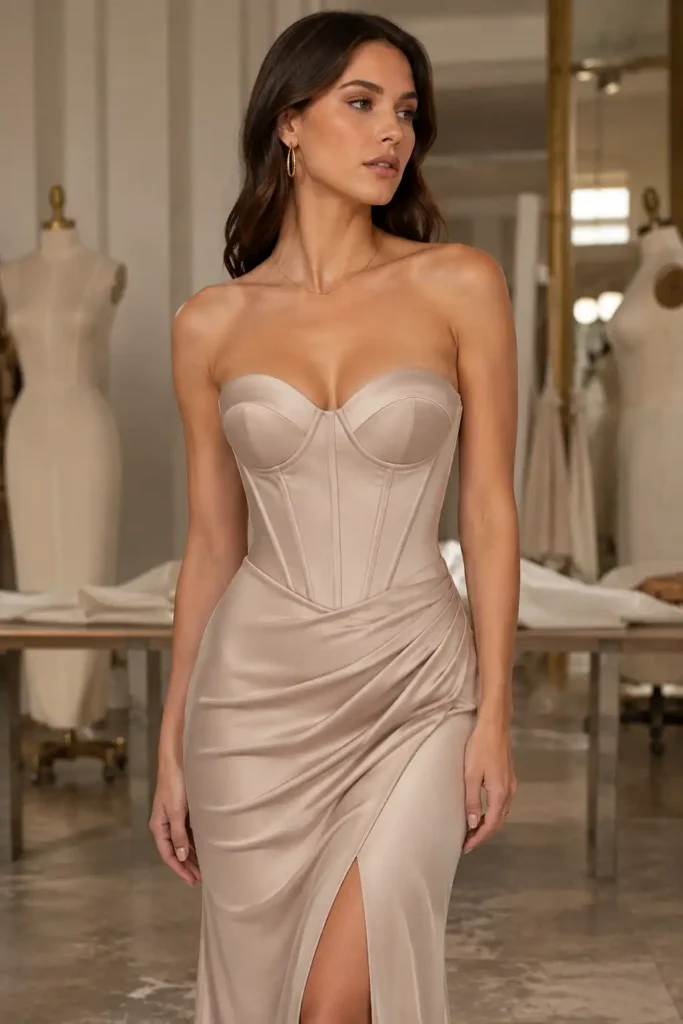
Bodycon and Corset

Jumpsuits and Sets
Fabric Cost Optimization Without Losing the Look
Fabric normally represents the largest single cost area in a dress. A useful alternative must protect the visual brief, fit behavior, care performance, and production reliability rather than match price alone.
Define the Required Fabric Performance Before Sourcing
The review begins with the finished garment, not a mill price list. Jinfeng Apparel records the required drape, hand feel, luster, opacity, stretch, recovery, weight, structure, skin contact, care method, print or color effect, and wearing occasion. A satin evening dress, a mesh bodycon style, and a rayon resort dress may have similar target costs but require completely different material behavior.
Commercial priorities are ranked before alternatives are requested. Visible surface, movement, comfort, recovery, opacity, wrinkle behavior, color saturation, and photo performance can be marked as essential, adjustable, or secondary. Ranking prevents an attractive quotation from replacing the feature that carries the design.
Certified or preferred-material requirements are confirmed by fabric type, supplier, color, certificate scope, MOQ, price, and lead time. OEKO-TEX, GOTS, organic cotton, GRS, and recycled options can be sourced through the material network when required, but availability and documents must be checked for the selected batch.
Control Consumption Through Width, Pattern, and Construction
Fabric price per meter is only one side of the equation. Usable width, shrinkage, defect allowance, print repeat, nap direction, panel direction, motif matching, gathering, ruffles, bias cutting, and size distribution determine actual consumption. A slightly higher-priced fabric with a better usable width may produce a lower garment cost than a narrow or defect-prone alternative.
Pattern makers and cutting teams review whether panel shape, seam position, lining area, facing width, ruffle ratio, or gathering volume creates avoidable consumption. Changes are accepted only when balance, drape, movement, and visual proportions remain intact. Bias-cut and directional satin styles require special care because aggressive marker changes may distort hang or surface consistency.
Extended sizes may require additional fabric, longer zippers, wider support panels, or revised marker planning. The cost sheet should therefore use the intended size ratio rather than one sample size multiplied across the order.
Compare Alternatives Through Swatches and Garment Samples
A fabric option is presented with more than a price. The comparison should state composition, weight, width, stretch, recovery, opacity, surface, color method, MOQ, development requirement, and expected lead-time effect. A suitable option may lower cost, stabilize supply, reduce lining, improve cutting use, or support repeat orders.
Swatches are helpful for early screening, but a garment sample remains necessary when material behavior affects fit or construction. Stretch mesh, power knit, satin, lace, pleated fabric, sequin, and structured woven materials can change neckline stability, seam appearance, bust support, hem balance, and measurement after sewing.
Once an alternative is approved, the exact material reference is added to the BOM and fabric record. Bulk purchasing should follow the approved quality and color, with incoming inspection and batch tracking used to reduce shade, hand-feel, and performance variation.
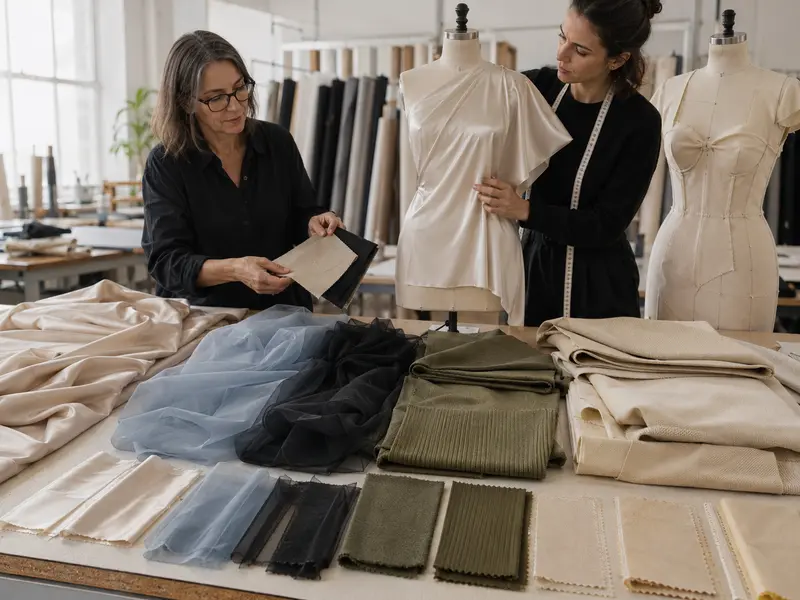
Optimize Trims, Linings, and Support Components
Hidden components can create major cost, MOQ, fit, and lead-time effects. Each trim should have a clear function, approved specification, and compatible production method.
Standardize Hidden Components Where Performance Allows
Invisible zippers, hook-and-eye closures, elastic, thread, cups, boning, grip tape, fusible, shoulder tape, and lining are reviewed by function. When several styles use compatible specifications, shared components can improve purchasing volume, reduce fragmented MOQ, simplify QC, and support faster repeat orders.
Standardization does not mean using one component everywhere. Zipper tape and slider strength must suit garment weight. Cups must match neckline, bust shape, and size grading. Boning length and stiffness must support the bodice without creating discomfort. Elastic and power mesh must provide suitable recovery. Common parts are adopted only after technical approval.
A trim matrix can group components by style family, color, size, supplier, and lead time. Shared black, nude, or clear hidden components may improve efficiency, while visible hardware remains aligned with the brand design.
Use Lining and Support Only Where the Dress Needs It
Full lining can improve opacity, comfort, structure, seam coverage, and finish, but it also adds material, cutting, sewing, pressing, and QC time. Partial lining, self-fabric facing, modesty panels, or localized support may be suitable for selected products. Light-colored satin, chiffon, lace, mesh, sequin, formal dresses, and structured bodices often require more coverage than an opaque casual woven dress.
The decision is made by zone. Bust, waist, hip, skirt, sleeve, neckline, armhole, zipper, and hem may require different solutions. A partial-lining proposal is sampled and checked under normal light, studio light, movement, and stretch before approval.
Support changes also affect pattern and fit. Removing a bodice layer, cup, boning channel, or grip tape can change neckline stability and wearer confidence even when the sample looks acceptable on a hanger.
Control Decorative Trims by Placement and Selling Value
Lace edging, appliqué, rhinestones, beads, chains, bows, flowers, special buttons, and custom hardware should be reviewed by visibility, function, attachment method, repair risk, packing protection, and retail value. A decorative element may justify its cost when it defines the style; another may add labor without improving the overall impression.
Cost alternatives can include reducing density, limiting placement to high-visibility zones, changing the backing method, choosing a standard size, avoiding a new mold, or coordinating one trim across several styles. Every visible change needs design approval and a revised sample or trim mock-up.
Special trims commonly extend development time. Standard trim development often falls within 3-15 days, while custom components may require 10-45 days depending on mold, color, material, supplier MOQ, and approval process. The selected trim plan is therefore linked to both cost and launch schedule.
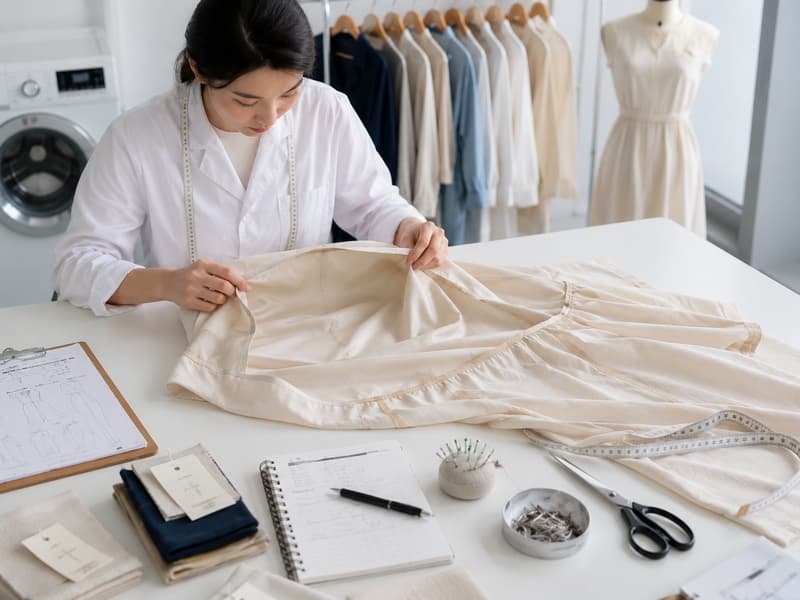
Construction and Pattern Design-to-Cost
Construction decisions determine fabric use, sewing operations, fit risk, sample rounds, and bulk consistency. Pattern review identifies where complexity creates value and where it creates only cost.
Protect the Silhouette Before Simplifying Construction
The team first identifies the silhouette drivers: neckline, bust shape, waist position, hip line, skirt volume, slit, hem, sleeve, back treatment, and movement. Seams, darts, panels, pleats, gathering, draping, and support are then separated into visible design features and hidden engineering features.
A seam may look unnecessary but control fit or grain. A bodice panel may distribute tension. A waist stay may stabilize a strapless style. A lining seam may prevent twisting. Pattern makers assess the role before suggesting a change. Design-to-cost works best when shape is preserved and low-value complexity is removed from hidden areas.
Revised construction is updated in the pattern, measurement chart, BOM, sewing instruction, and sample request. A quotation based on simplified construction is not locked until the revised garment has been checked for fit, movement, finish, and production feasibility.
Reduce Operations Without Creating Rework
Operation count and handling difficulty drive sewing time. Delicate satin, stretch mesh, slippery lining, lace matching, sequin preparation, narrow binding, hand-tacking, multiple ruffle layers, corset channels, and clean internal finishes all increase labor. A lower-cost method must remain stable across operators and sizes.
Possible reviews include replacing a hidden double operation with one secure method, reducing non-visible layers, standardizing seam allowance, coordinating stitch types, simplifying an internal facing, or adjusting a ruffle ratio. Visible topstitch, edge quality, seam strength, and comfort remain protected.
Production teams also consider whether a change reduces rework.
An overly difficult method may appear premium on one sample but cause inconsistent bulk results.
A slightly simpler, controlled construction can improve both unit cost and first-pass quality.
Reuse Approved Blocks and Records Across a Collection
A collection often contains related necklines, bodices, skirts, sleeves, and fit intentions. Reusing an approved fit block, grade rule, cup specification, zipper standard, lining base, or construction library can reduce repeated development work and shorten future review. Reuse is most effective when the style family truly shares fabric behavior and fit.
Jinfeng Apparel keeps pattern, size chart, BOM, fabric, color, trim, sewing, QC, packing, and Golden sample records for repeat orders and long-term programs. Historical records allow cost teams to compare a new style with a known construction instead of beginning from zero.
A reused block still requires review when material stretch, garment length, support, neckline, or target size range changes. Record reuse supports control; it does not replace fit validation.

Validate Every Saving During Sample Development

Cost Brief Review

First Sample

Fit Review
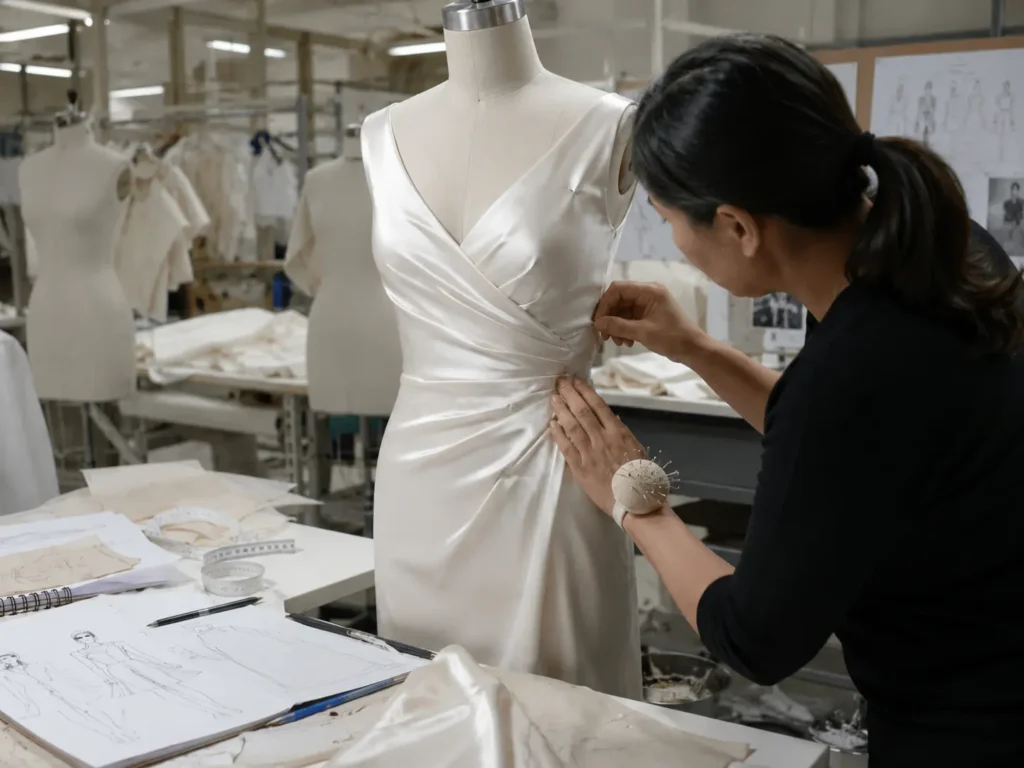
Revised Sample
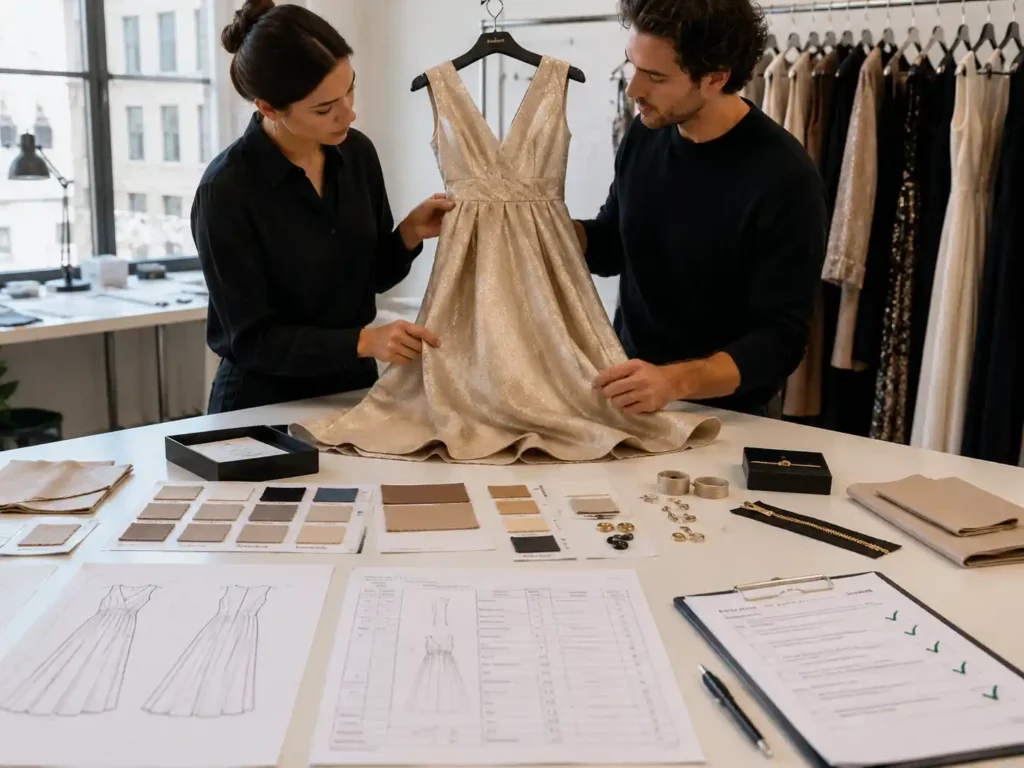
PP Sample
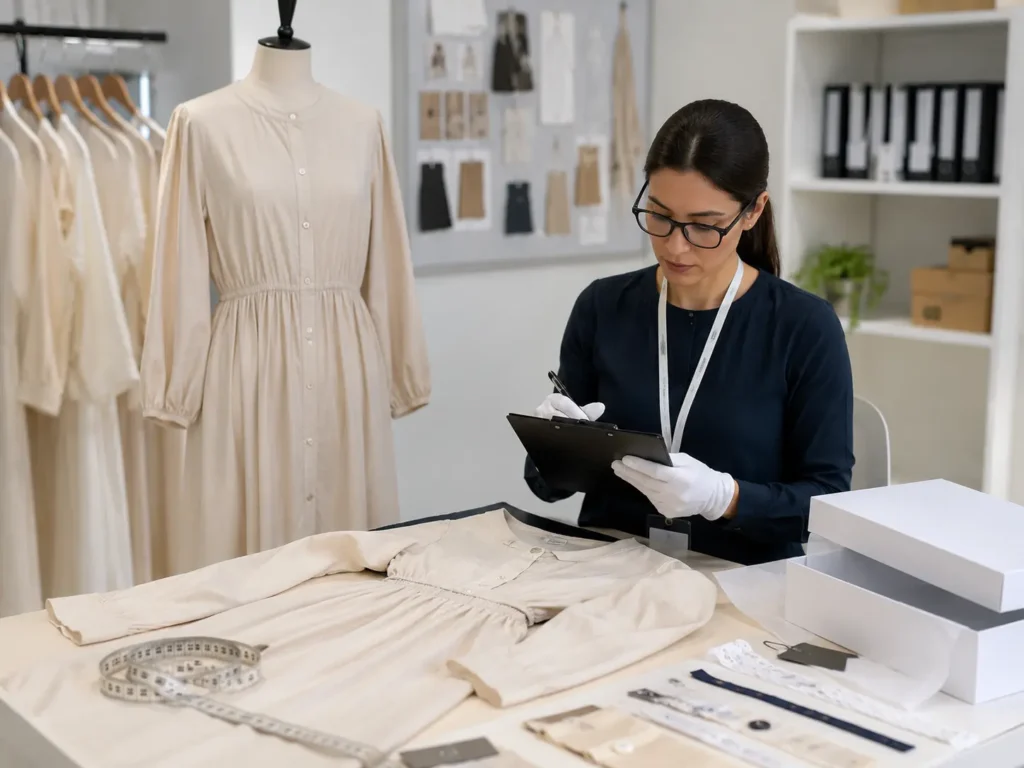
Golden Sample
Plan MOQ, Colors, and Size Ratios Together
MOQ starts from 200 pcs per style/color. The final unit cost depends on how fabric, trims, colors, sizes, labels, packing, and delivery are divided across the full program.
| Order Decision | Typical Cost Effect | Planning Direction |
|---|---|---|
| One style, one color, 200+ pcs | Supports more efficient material purchasing and line preparation than a fragmented split | Use a balanced size ratio based on sales history and approved grading. |
| One style, three colors | MOQ applies per style/color; lab dips, thread, lining, zipper, labels, and cutting plans may multiply | Concentrate depth in core colors and confirm whether hidden trims can be shared. |
| Custom dye or custom print | Mill MOQ, color development, print setup, strike-off, loss, and lead time can raise the project threshold | Compare stock-color, custom-color, and print alternatives before sampling. |
| Special lace, sequin, or trim | Supplier MOQ may exceed garment MOQ and leave unused material | Use the material across related styles or adjust placement, color, or specification. |
| Example five-size run: XS-XL | A balanced ratio supports cutting and packing; actual use depends on sales plan | Confirm measurement chart, grade rules, units by size, and carton requirements. |
| Extended-size program | Larger sizes may increase fabric use, support components, zipper length, marker complexity, and fitting work | Cost from the real size ratio rather than applying one average to every unit. |
| 10-30 style seasonal order | Shared fabrics, trims, labels, packing, and shipment planning can improve program efficiency | Group compatible styles into material and component families without forcing unsuitable standardization. |
| Split delivery | Additional packing, documents, handling, and transport may increase cost, while earlier launch stock can protect sales | Prioritize selected colors or sizes for the first shipment and plan the main volume separately. |
Cutting, Sewing, and Factory Allocation Control
A cost plan must survive the production floor. Material handling, line suitability, operation sequence, workmanship, and inspection points determine whether the approved specification remains efficient at scale.
Match Each Style to the Right Production Unit
Jinfeng Apparel coordinates 6 owned women’s fashion factories, 10+ long-term production partners, 18+ sewing lines, and 6+ flexible production lines. Allocation is based on product type, fabric behavior, construction, operation difficulty, quantity, quality standard, and schedule.
A stretch bodycon style, delicate satin dress, lace occasion dress, and woven jumpsuit do not require the same production setup. Matching a style to a team with relevant handling experience reduces trial time, rework, seam inconsistency, and avoidable overtime.
The selected production unit, critical operations, production documents, QC checkpoints, and timeline are confirmed before bulk preparation. Capacity is not treated as one undifferentiated monthly number.
Control Consumption and Cutting Risk Before Line Input
Incoming material is checked against approved reference, color, width, weight, hand feel, stretch, and visible defects as required. Cutting preparation considers shrinkage, rest time, print repeat, motif placement, nap, panel direction, size ratio, and defect allowance.
Marker use is reviewed together with garment balance. Aggressive nesting cannot change grain, bias hang, print placement, symmetry, or left-right appearance. Lace edges, sequin direction, velvet nap, satin face, and placement prints require extra control.
Cut parts are identified by style, color, size, and bundle. Early cutting checks reduce the risk of discovering wrong direction, shade mixing, missing components, or measurement problems after sewing has started.
Build Workmanship Around Repeatable Operations
Bulk efficiency depends on a stable operation method. The approved PP sample, Golden sample, production order, BOM, size chart, sewing instruction, and QC checklist provide the working standard. Critical operations can include neckline stability, zipper insertion, cup and boning placement, stretch control, lace joining, sequin clearance, gathering balance, slit reinforcement, and hem finish.
Inline checks focus on problems while correction remains manageable. Workmanship is assessed by seam security, stitch balance, symmetry, puckering, edge quality, attachment strength, measurement, pressing, and appearance. A lower-cost construction is useful only when operators can repeat it across the planned quantity and size range.
Production records also support repeat orders. When fabric, color, trim, or construction changes, the new version is confirmed rather than assumed to match the previous order.

Quality Guardrails for Every Cost Decision
Fit and Measurement
Opacity and Coverage
Support and Recovery
Seam and Attachment
Color and Surface
Bulk and Packing
Control Total Cost Beyond the FOB Price
Development Cost
Execution Cost
Delivery Cost
From Target Cost to Approved Bulk Production

Commercial Brief

Technical Review
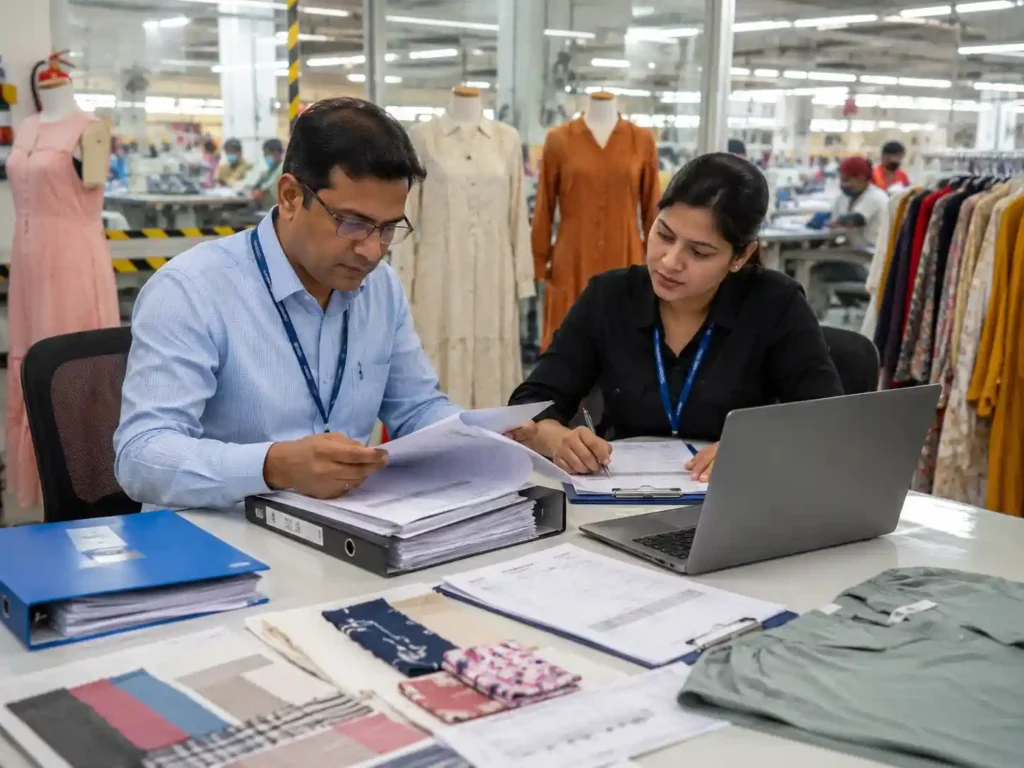
Cost Driver Review

Option Development

Sample Validation
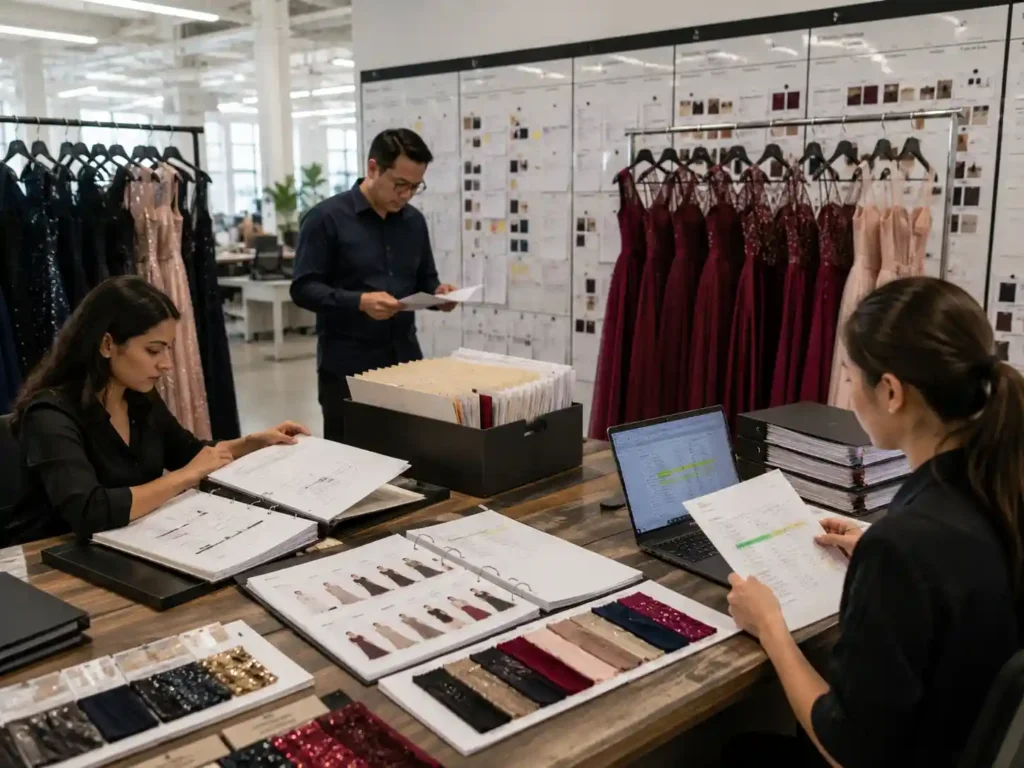
PP Approval
Bulk Control

Delivery and Records
Compare Cost Options Before Approving Changes
Appearance Impact
Fit Impact
Quality Risk
MOQ Impact
Lead-Time Impact
Repeatability
Information Needed for a Useful Cost Review
Tech Pack
Reference Material
Target Cost
Order Quantity
Fabric Direction
Color and Sizes
Private Label Pack
Launch and Delivery
Manufacturing Evidence Behind Our Cost Advice

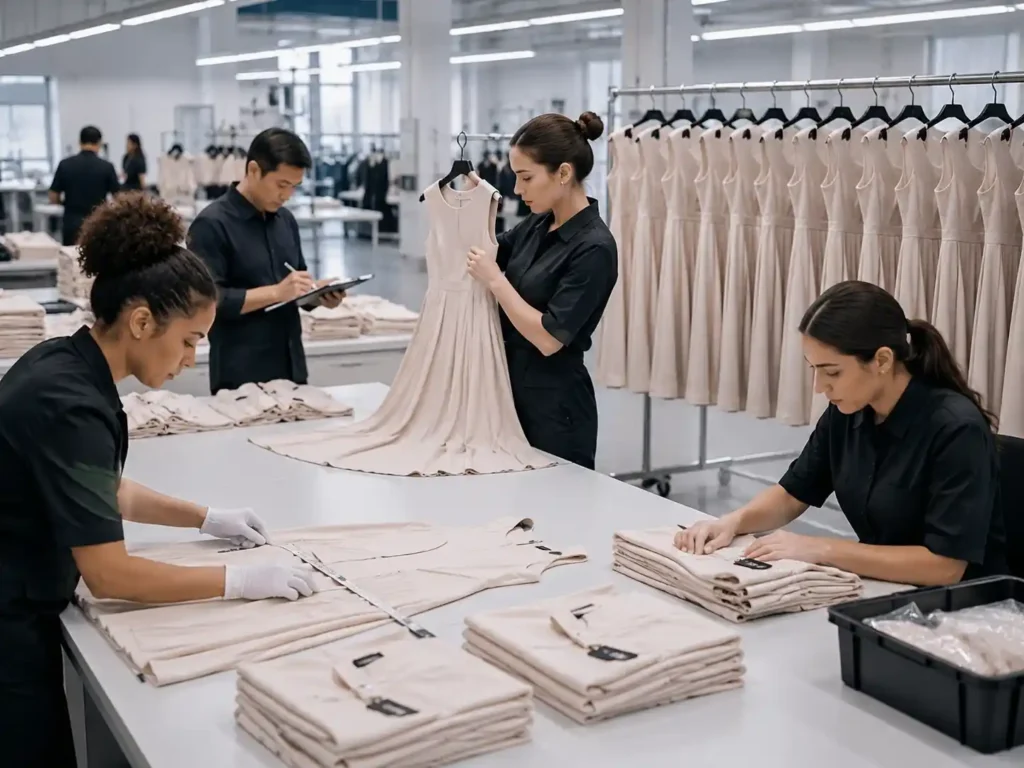
Pattern Development

Sample Development
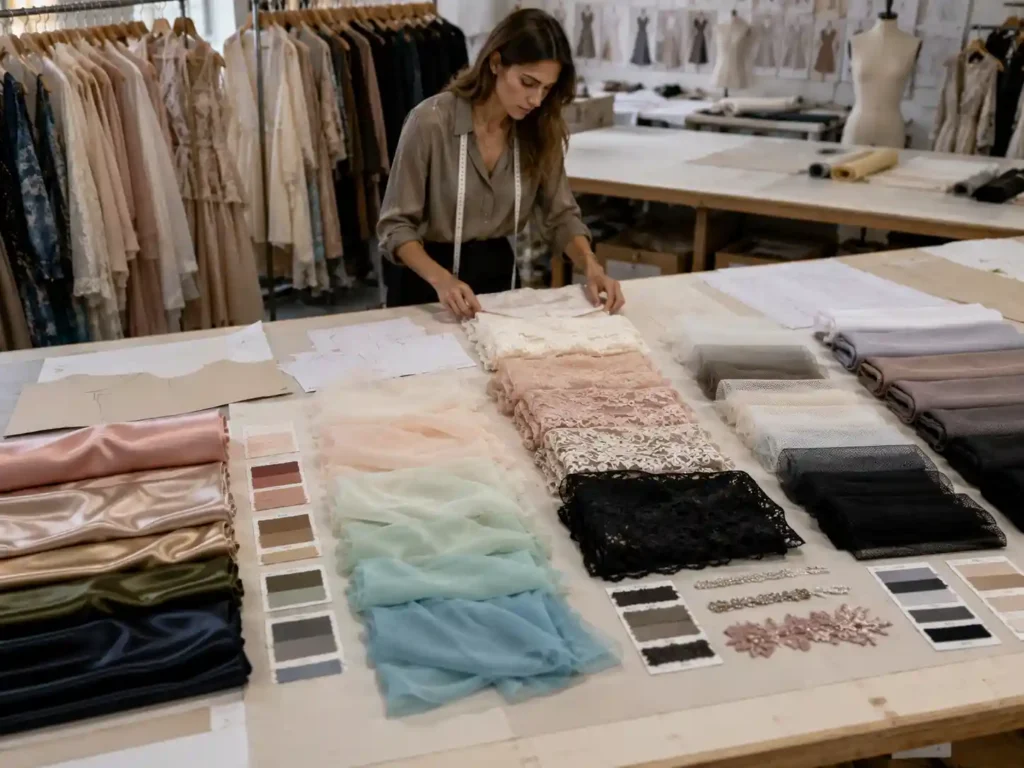
Material Coordination
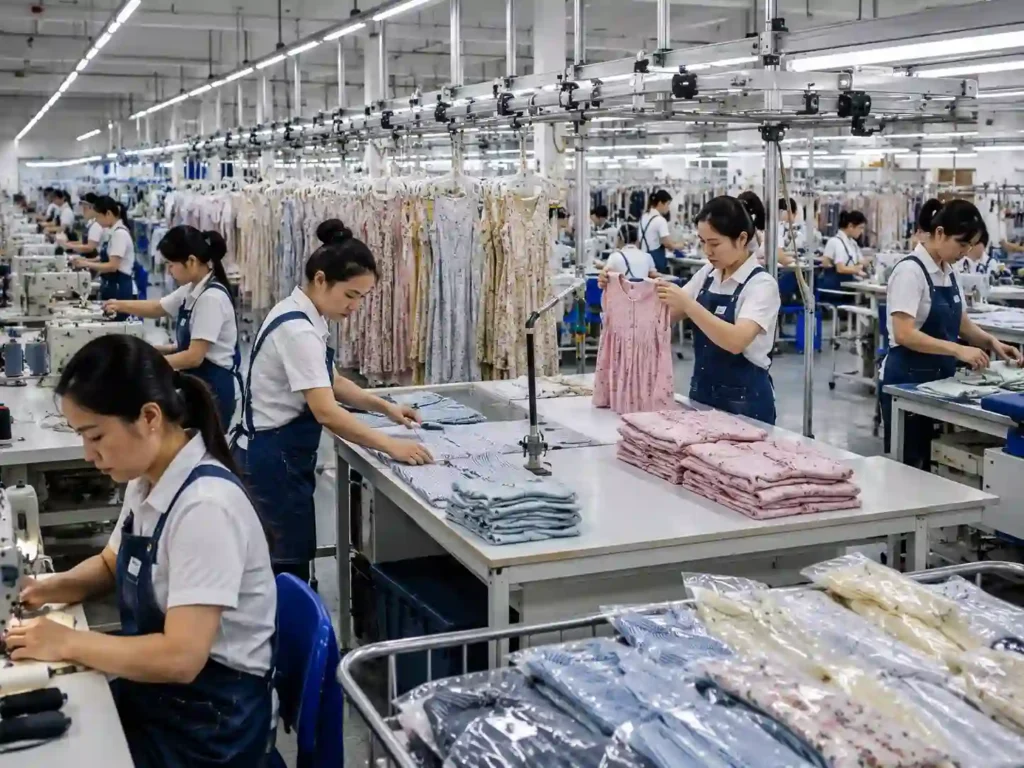
Production System
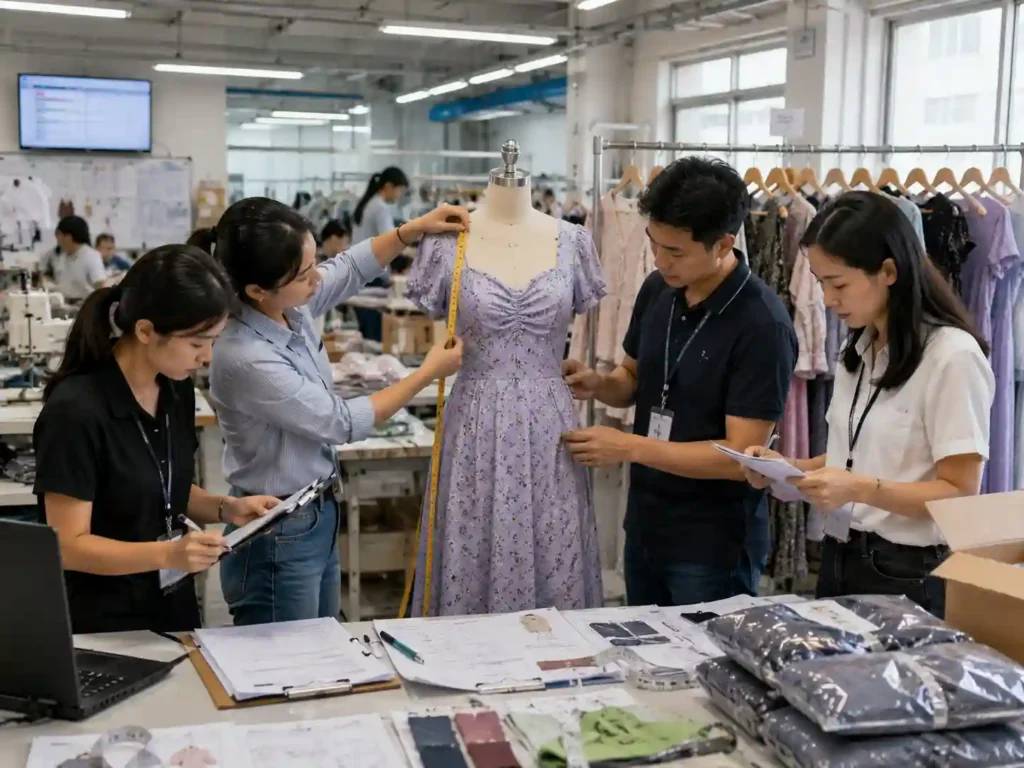
Quality Control
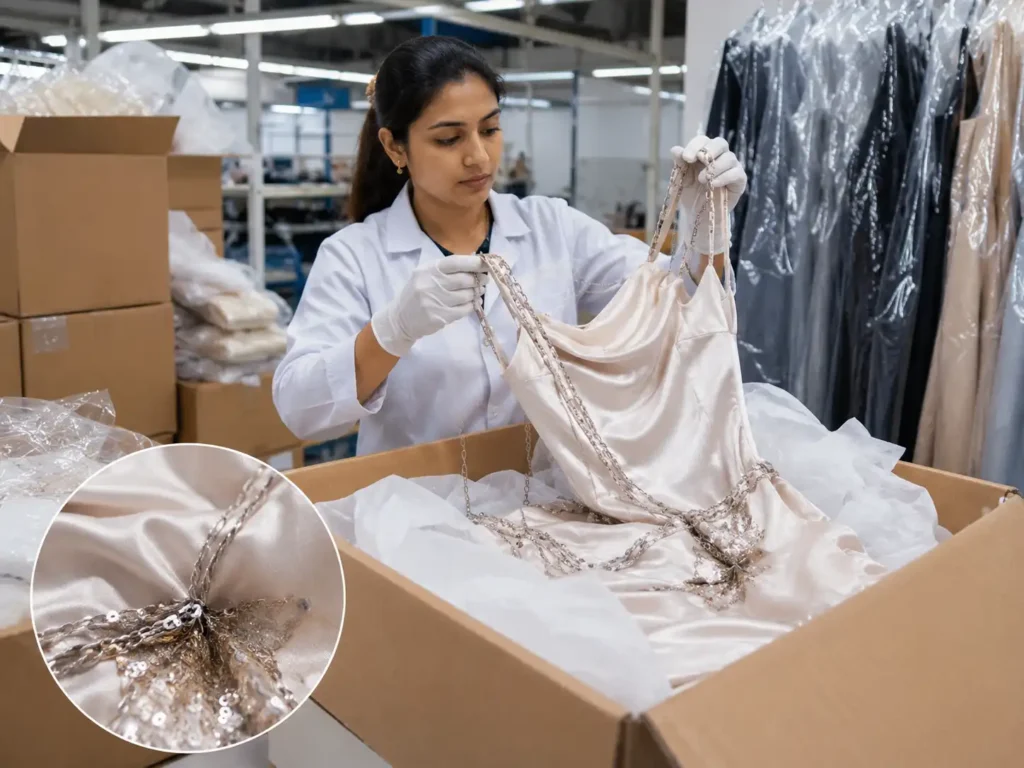
Packing and Delivery
Representative Cost Optimization Programs

US Occasionwear Program

European Partywear Program

US Multi-Channel Collection
Frequently Asked Questions About Dress Cost Optimization
Yes. Share the target FOB, cost range, target retail, or margin objective together with the style, quantity, material, size, packing, and delivery requirements. The team will identify major cost drivers and present options with their product and schedule effects. Reaching a target cannot be guaranteed before the specification and supplier conditions are confirmed.
A tech pack or clear reference, quantity by style and color, size range, fabric direction, trim requirements, target cost, private-label pack, launch date, and destination create the strongest starting point. Open items can remain, but assumptions will be listed separately from confirmed specifications.
Jinfeng Apparel can explain the main areas behind a quotation, including fabric, lining, trims, pattern and sample work, cutting, sewing effort, special processes, finishing, QC, packing, order structure, testing, and logistics. The level of detail depends on the project and confidentiality requirements.
A rough quote is based on available information and stated assumptions. Final pricing requires confirmed fabric, color, trims, construction, quantity, color and size split, labels, packing, QC, testing, delivery terms, and approved PP requirements. Late specification changes may alter cost and schedule.
Yes. Alternatives can be sourced by look, hand feel, drape, weight, width, stretch, recovery, opacity, color, care, MOQ, price, and lead time. Swatch comparison may be enough for screening, while a garment sample is required when material behavior affects fit, support, construction, or finish.
Some hidden operations, lining zones, internal finishes, ruffle ratios, panel details, or trim methods may be adjusted. Pattern makers first assess the role of each feature. Any meaningful construction change is recorded and sampled when fit, movement, support, appearance, or bulk repeatability could change.
MOQ starts from 200 pcs per style/color. Fabric availability, custom dyeing, printing, lace, sequin, trims, special components, packing, construction, and production schedule may require a higher quantity. MOQ is confirmed by the final specification, not the total collection quantity alone.
Yes. Multi-style programs can be reviewed by fabric family, trim family, fit block, color, size ratio, packing, production unit, and delivery sequence. Shared specifications are used only where product performance remains suitable. Each style keeps its own BOM, sample status, production file, QC checklist, and packing instruction.
Yes. Jinfeng Apparel supports NDA-based cooperation and protects tech packs, samples, patterns, trims, target prices, private-label details, packing, unpublished designs, and order information. Client files are shared internally only with teams directly involved in development, production, quality, packing, and delivery.
Testing, AQL or third-party inspection, labels, packing, courier, air freight, sea freight, split delivery, and destination requirements can be reviewed as part of total cost. Certification scope, test method, route, timing, and final charges must be confirmed for the selected project and shipment.

Submit Your Dress Cost Review Brief
Send your tech pack, reference garment or images, target quantity, target cost range, material direction, color and size plan, private-label requirements, and launch date.
Kelly will coordinate an initial project review with the relevant development, sourcing, pattern, sampling, production, and quality teams. The response will separate confirmed information from assumptions, identify the largest cost drivers, and outline which alternatives require fabric confirmation, trim development, pattern work, or a revised sample. For multi-style programs, include a line sheet showing units by style and color so shared fabrics, trims, fit blocks, labels, packing, and delivery sequence can be reviewed across the collection.
Final pricing is confirmed only after the selected specification, materials, quantities, packing, quality requirements, and production conditions are approved.
- Tech pack, line sheet, reference images, or original sample details
- Target FOB or cost range and expected units by style/color
- Fabric, trim, color, size, label, barcode, and packing requirements
- PP approval target, launch date, destination, and delivery priorities

