Skip to content
Dress Manufacturer for Line Sheet Development Teams
Turn a planned dress assortment into approved samples, controlled production files, and retail-ready bulk delivery.
Jinfeng Apparel works with line sheet development, merchandising, sourcing, and product teams that need more than a sewing quotation. We review style identity, colorways, size architecture, fabric direction, construction risk, target cost, quantity, launch timing, and private-label requirements before development moves forward. The result is a clearer route from a commercial line plan to patterns, samples, PP approval, bulk production, quality control, packing, and shipment coordination.
- 10-30 styles:Managed within one collection-level development schedule.
- 200 pcs/style/color:Standard MOQ starting point, subject to materials and construction.
- 2 sample rooms:Supported by 7+ senior pattern makers and 20+ sample machinists.
- Project control:12+ merchandisers coordinate versions, approvals, production, and packing milestones.
Built for Teams Managing Multi-Style Dress Development
Line Sheet Teams
Product Development Teams
Merchandising Teams
Sourcing Teams
Wholesale Operations
Collection Planning Teams
A Manufacturing Fit for Structured Dress Programs
Collection-Level Development
Production-Ready Commitment
What a Line Sheet Starts - and Cannot Replace
A line sheet is a strong commercial starting point, but a sellable assortment still needs technical decisions before fabric booking, pattern cutting, or bulk production. Every file below answers a different question, and Jinfeng links them into one approved manufacturing record.
| File | Primary Role | What Jinfeng Verifies |
|---|---|---|
| Line Sheet | Style identity, images, colorways, size offer, price position, MOQ, delivery window | Whether commercial information matches material, construction, quantity, and schedule reality |
| Line Plan | Assortment balance, category mix, price architecture, launch sequence | Whether style count, fabric groups, complexity, and sample priority can fit one program |
| Tech Pack | Measurements, construction, stitching, trims, artwork, labels | Missing dimensions, conflicting notes, unclear workmanship, and production risks |
| BOM | Fabric, lining, trims, labels, packaging materials | Supplier availability, color matching, minimums, consumption, and cost impact |
| Sample Comments | Fit, appearance, construction, and revision decisions | Which version is current, who approved it, and which files must be updated |
| PP / Golden Sample | Final physical reference for bulk execution | Approved fit, materials, workmanship, details, and production repeatability |
| PO / Packing Files | Final quantities, size ratios, labels, barcodes, cartons, delivery | Alignment between order data, SKU execution, packing list, and shipment preparation |
Six Gaps That Delay Dress Collection Development
Missing Construction
Unlocked Fabric Direction
Conflicting Style Versions
Misaligned Target Cost
Fragmented Color Quantities
Late Delivery Logic
What to Send for a Useful Collection Review

Line Sheet
Style References

Quantity Plan

Fabric Direction

Size Range
Target Cost
A target FOB or ex-factory range helps the development team judge whether fabric, construction, trims, and packing are commercially aligned. Jinfeng treats the figure as a design and sourcing constraint, not as a promise before specifications and materials are confirmed.

Launch Calendar
Label and Packing
How Every Style Is Reviewed Before Sampling
Style Identity
Fabric Behavior
Drape, stretch, recovery, opacity, surface sensitivity, weight, shrinkage risk, color availability, lining need, and supplier minimums are reviewed against the intended silhouette and target price. Fabric performance is treated as part of fit and construction, not a separate purchasing decision.
Construction Logic
Fit Intent
Trim Readiness
Cost Structure
MOQ Structure
Schedule Risk
From Line Sheet to Production-Ready Dress Collection
A controlled collection moves through defined gates. Every gate produces an approved record or physical reference, giving design, merchandising, sourcing, production, QC, and packing teams the same execution basis.
Project Mapping and Gap List
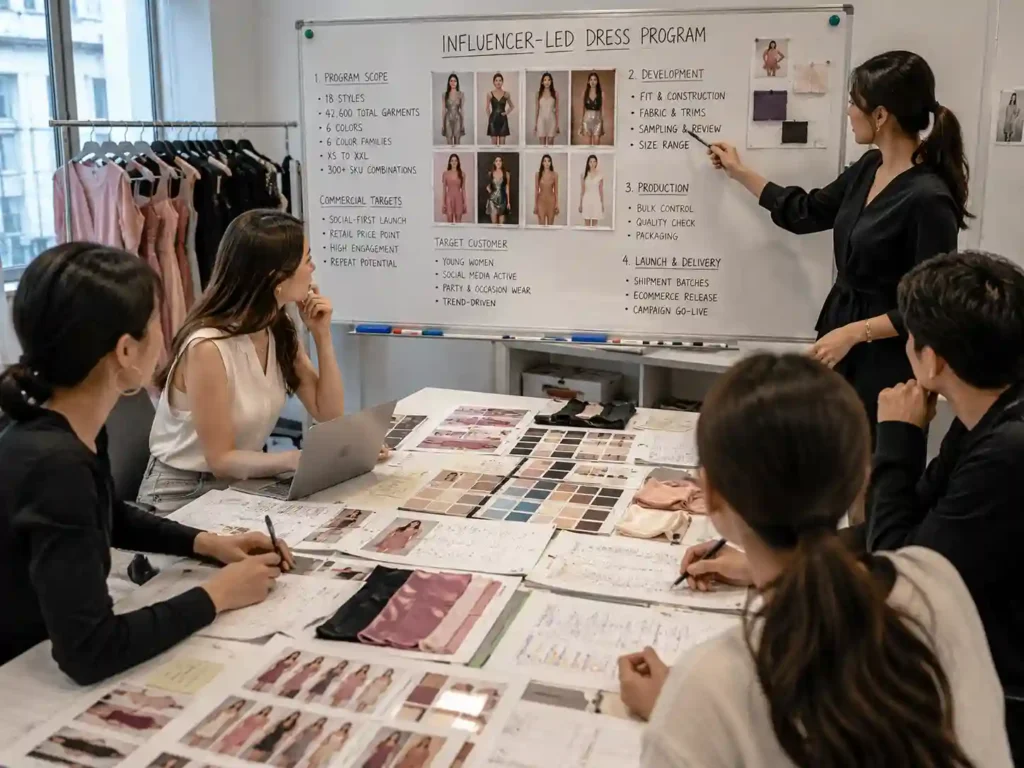
The first stage converts the supplied line sheet into an internal project map. Jinfeng confirms the company profile, target market, product scope, number of styles, quantity by style and color, available technical files, target cost, launch date, private-label needs, testing requirements, freight arrangement, and NDA preference. A collection may contain 10-30 styles, but development is not treated as one undifferentiated group. Each style receives a code, development owner, sample status, material status, and approval path.
An initial document review commonly takes 1-3 business days when the files are organized. The output is not a final quote. It is a gap list covering missing construction decisions, material questions, unclear fit, conflicting versions, MOQ concerns, cost risks, and schedule dependencies. The team can then choose which styles move first, which styles need more design clarification, and which styles require fabric options before sample work begins.
Material and Cost Architecture
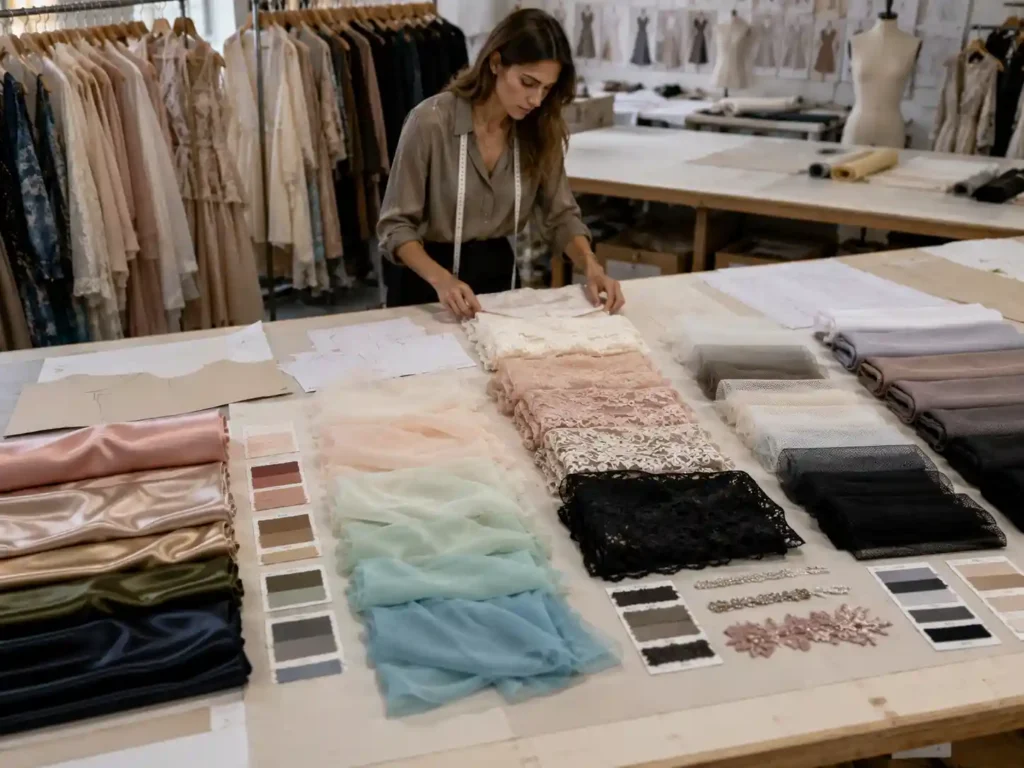
Fabric and trim direction is developed alongside cost and MOQ planning. Jinfeng can source or review satin, chiffon, mesh, lace, jersey, ponte, sequins, printed wovens, linings, zippers, cups, boning, elastic, and decorative components according to the intended dress category. Material options are evaluated for appearance, hand feel, weight, stretch, recovery, transparency, color availability, surface risk, sewing behavior, pressing response, supplier minimum, and delivery window.
Where the original direction exceeds the target cost or timing, alternatives are presented with trade-offs. A lower-cost satin may change drape and shine; a different mesh may improve recovery but alter transparency; a simplified corset channel can reduce labor but change structure. Decisions are recorded before patterns and samples consume material. The aim is cost control without weakening brand-level appearance or creating an unstable bulk specification.
Pattern, Sample, and Approval Gates
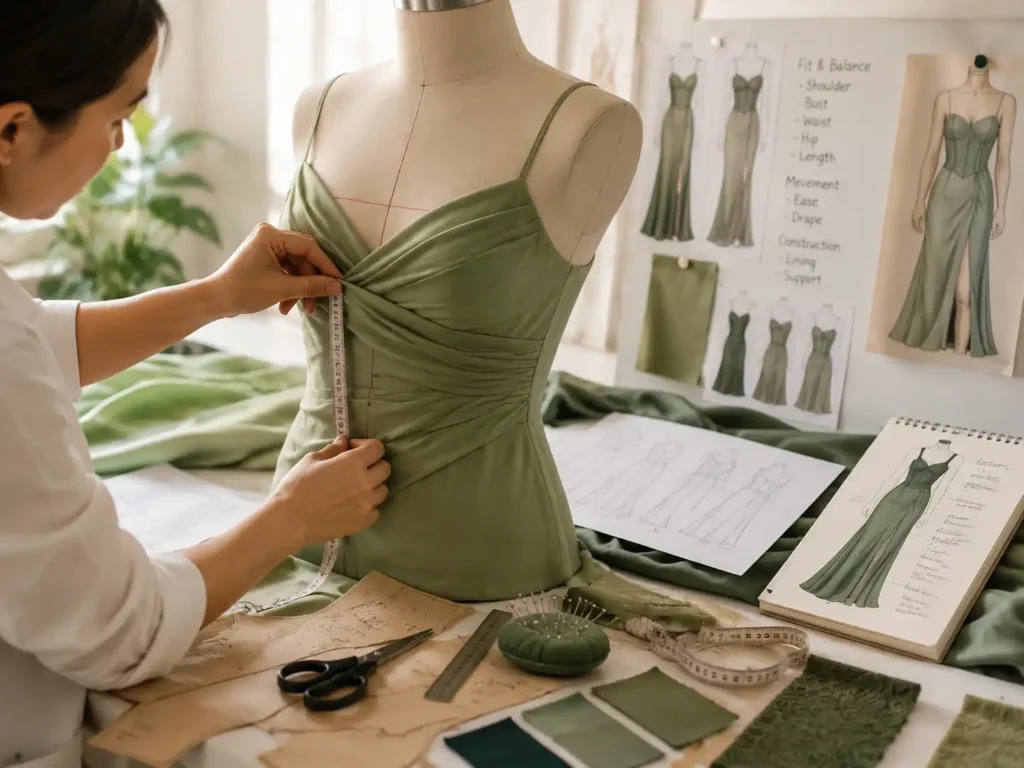
Approved design and material direction enters pattern development through 7+ senior pattern makers, 2 sample rooms, and 20+ sample machinists. The pattern team reviews balance, bust shaping, waist placement, hip fit, neckline stability, strap position, armhole coverage, back coverage, slit height, lining coverage, stretch allowance, and movement. Standard dresses and high-risk styles follow different sample paths.
Sample types can include first sample, fit sample, revised sample, photo-ready sample, salesman sample, PP sample, and Golden sample. Comments are tied to the correct style and version, then reflected in the pattern, measurement file, construction notes, BOM, and visual reference. Bulk production does not begin from an old first sample or an unapproved image. Final PP approval and the agreed production records create the release gate.

Dress Categories Built Around a Commercial Line Plan

Mini Dresses
Midi Dresses
Maxi Dresses

Bodycon Dresses

Corset Dresses

Satin Dresses

Mesh Dresses

Lace Dresses

Sequin Dresses

Party Dresses

Wedding Guest Dresses
Resort Dresses
Fabric Direction That Protects Fit, Cost, and Launch
Fabric selection is not complete when a line sheet says satin, mesh, jersey, or chiffon. Construction, fit, size range, target price, color plan, sample timing, and supplier minimums determine whether the chosen material can support the dress commercially.
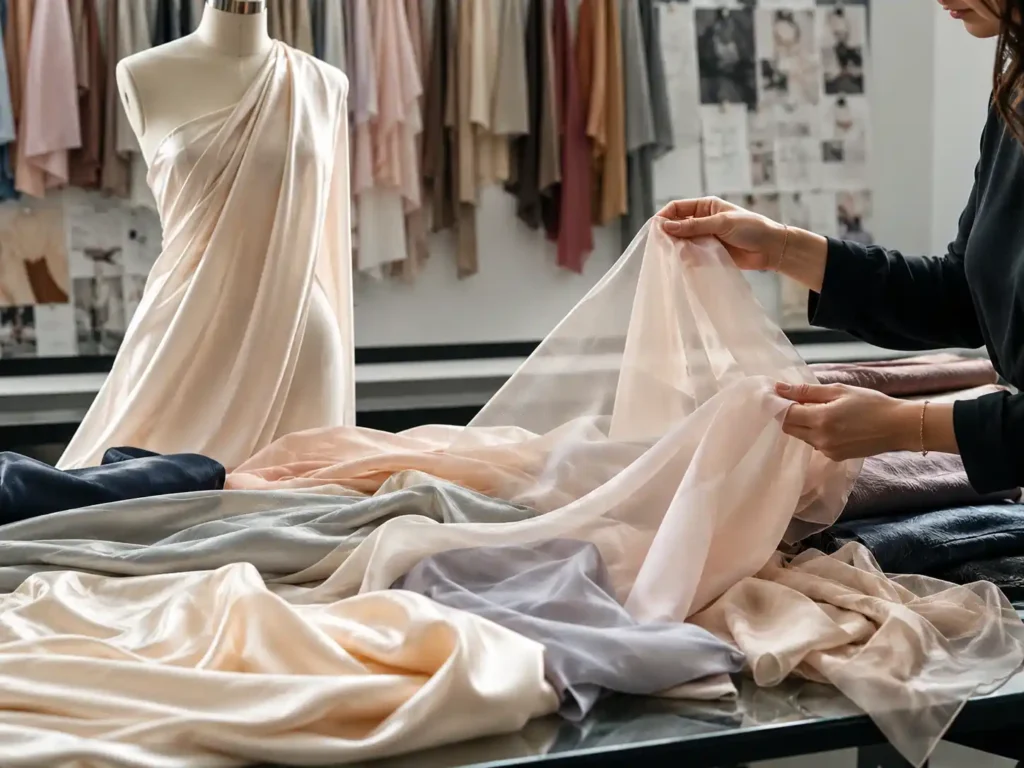
Satin and Silky Wovens
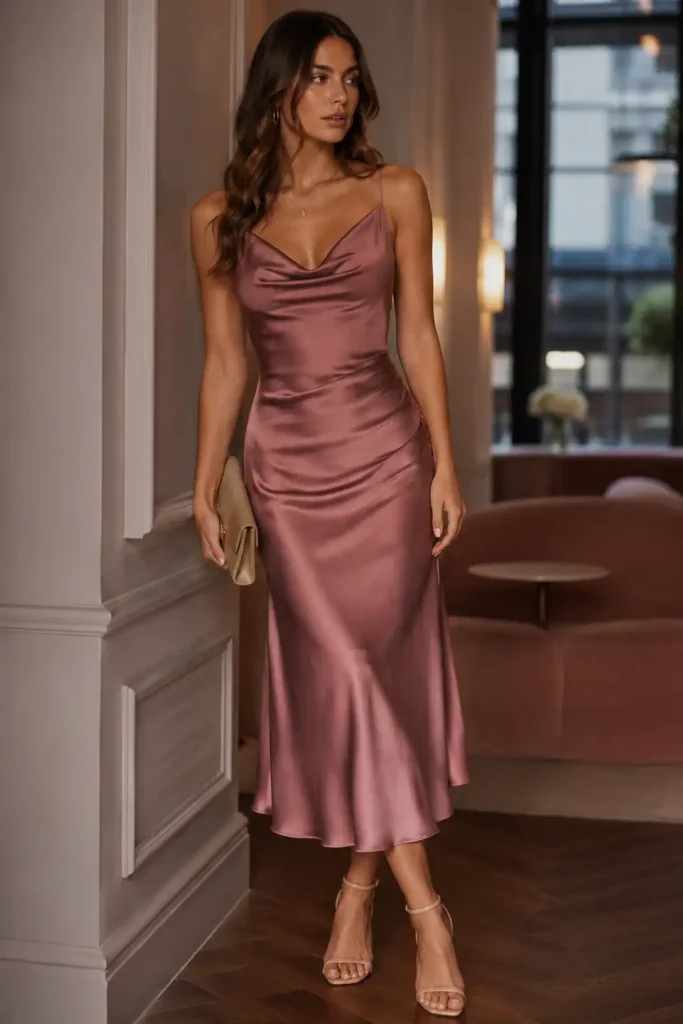
Lightweight woven satin often begins around 80-120 gsm, while stretch or heavier satin directions can move toward 120-180 gsm. Those ranges are development references rather than fixed specifications. Drape, shine, opacity, stretch, seam slippage, snag sensitivity, crease recovery, and pressing response can vary widely at the same weight. Bias-cut slips may need fluidity and controlled seam growth; corset satins need enough body to support panel construction; fitted satin minis may require stretch or a structured lining.
Jinfeng reviews face and reverse appearance, grain direction, lining weight, zipper compatibility, seam puckering, needle marks, color consistency, and packing protection. Dark and pale colorways may need different lining decisions. When the target cost cannot support the original fabric, options are compared by visible result and production risk, not only by price per meter.

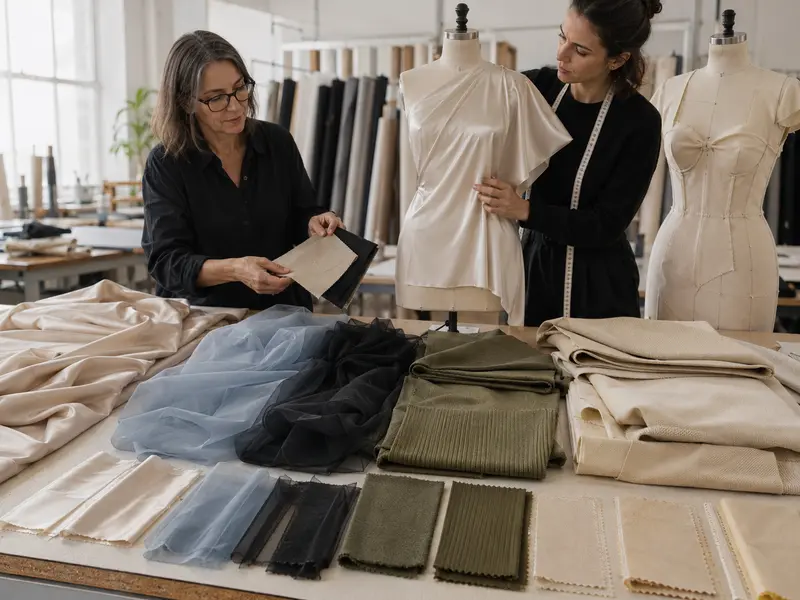
Mesh and Lace Layering
Fine fashion mesh may sit around 30-70 gsm, while firmer stretch or power mesh can fall closer to 80-160 gsm. Lace varies even more because motif density, cord, embroidery, backing, scallop edges, and sequin or bead additions change weight and behavior. A transparent mesh dress may require two different mesh qualities: one for the visual body panel and another for support at the neckline, bust, waist, or cut-out edges.
Jinfeng maps transparency and coverage by garment zone, then confirms lining, seam type, edge finish, stretch direction, recovery, motif placement, and color matching. Lace placement planning can affect consumption by double digits when large motifs require matching. Early review is important because supplier minimums, custom color dyeing, and placement cutting can change both cost and the sample calendar.
Stretch Knits and Bodycon Fabrics
Jersey commonly used for fashion dresses may begin near 180-260 gsm, while ponte and firmer double knits can reach roughly 250-380 gsm. Weight alone does not define performance. Stretch percentage, recovery, opacity, compression, surface finish, pilling risk, shrinkage, and heat response shape the final fit. A fabric with high stretch but weak recovery can produce neckline growth, hem ride-up, or unstable measurements after wear.
Jinfeng reviews stretch in both directions, recovery after extension, seam choice, zipper need, lining compatibility, bust-waist-hip shaping, and grading behavior. For a multi-color bodycon line, the same fabric base is preferable because different color lots or substitute qualities can change fit. Any material change after fit approval requires a risk review rather than a silent substitution.

Chiffon, Prints, and Resort Wovens
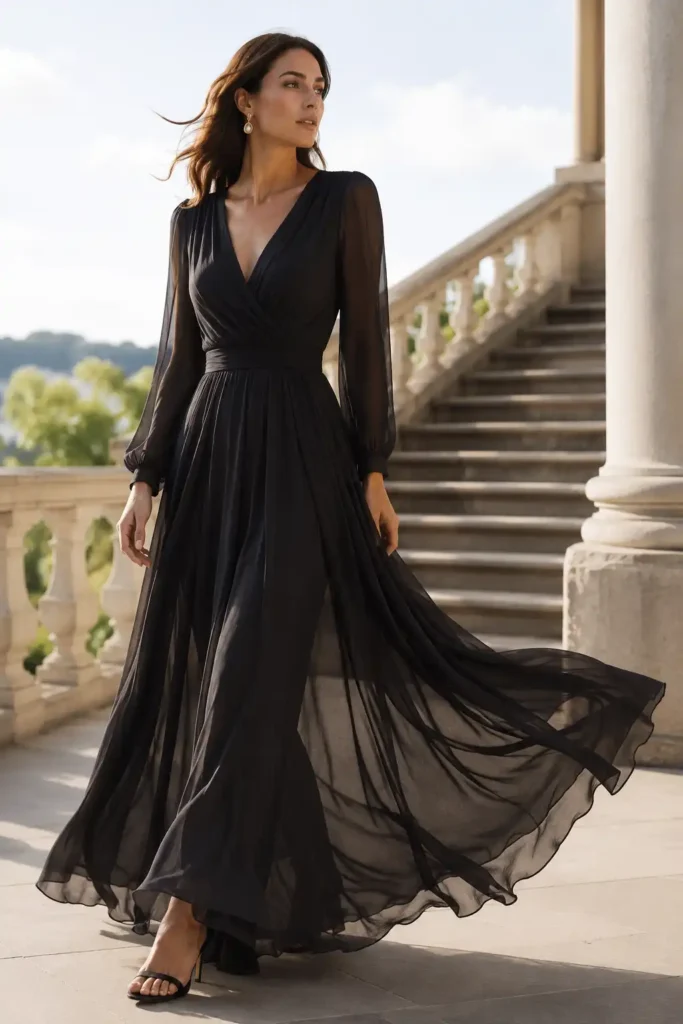
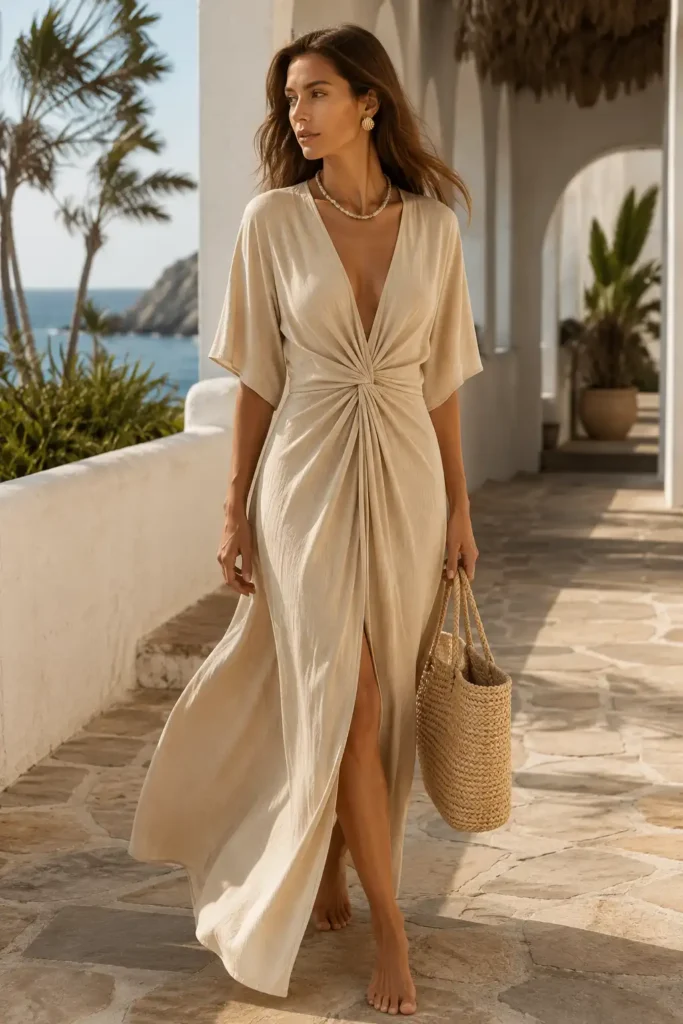
Chiffon and lightweight resort wovens commonly fall near 50-110 gsm, depending on fiber, weave, finish, and opacity. Development decisions include transparency, lining zones, print scale, directional layout, shrinkage, seam appearance, hem method, static, wrinkle recovery, and cutting stability. Large floral prints may need placement control; border prints affect marker planning; very light chiffon can require additional handling time during cutting and sewing.
Jinfeng evaluates whether a shared fabric can support several shapes across the line, which can simplify color control, material booking, and reorder planning. Where prints are custom, artwork repeat, color separation, strike-off approval, supplier minimum, and printing lead time are added to the critical path before launch dates are committed.
Multi-Style Control Without Losing Version Accuracy
Collection-level manufacturing depends on the quality of information flow. Jinfeng uses style-level ownership, grouped development, approval gates, and milestone records so 10-30 styles can move in parallel without losing the details that distinguish one SKU from another.
Style Coding and Master Tracking
Every style is opened with a stable code, current image, product name, color list, size range, quantity plan, target cost, launch requirement, and file status. The master tracker records fabric, trim, pattern, sample version, comments, approval, costing, PP status, bulk allocation, QC, packing, and shipment milestones. A style cannot be marked approved simply because one email contains a positive comment; the approved files and physical reference must agree.
Version control matters most when visual changes appear small. A 1 cm strap adjustment, a revised cup shape, a new slit height, or a renamed color can affect pattern, measurement, BOM, labels, barcode list, photography, and line sheet data. Jinfeng links the change to the required downstream records before production release.
Grouping by Fabric, Pattern, and Trim
A collection is divided into workable development groups. Styles using the same satin base can share color and material review; dresses built from a related body block can share fit learning; styles using the same zipper, cup, boning, lace, or packaging component can be coordinated together. Grouping creates efficiency without pretending all products are identical.
High-risk groups remain separate. A fully boned corset dress, a transparent mesh cut-out style, and a simple jersey bodycon dress should not enter the same sample expectation or factory allocation. Jinfeng uses fabric behavior, pattern complexity, trim dependency, sewing difficulty, QC risk, and launch priority to determine the right path for each group.
Sample Priority and Approval Gates
Not every style needs to move at the same speed. Hero SKUs, campaign samples, wholesale presentation styles, materials with long lead times, and high-risk constructions receive earlier attention. Commercial core styles can follow after shared fabric and fit decisions are stable. The sequence protects the launch rather than creating a crowded sample room where every style waits equally.
Approval gates include design clarification, fabric confirmation, first or fit sample review, revision closure, size and construction confirmation, PP sample, and production release. A change after PP approval is evaluated for material, pattern, cost, schedule, and bulk impact before it is accepted.
Fixed Communication and Escalation
Jinfeng has 12+ merchandisers and order follow-up specialists covering file organization, material confirmation, sample progress, comments, bulk scheduling, QC issues, packing records, and shipment coordination. Key programs receive a fixed commercial contact and defined internal ownership across development, production, QC, packing, and logistics.
Email, WhatsApp, video meetings, Excel trackers, PDF tech packs, annotated photos, sample videos, and progress sheets can be used according to the program. Significant conflicts are escalated instead of being hidden in routine updates. Clear escalation is especially important when a material delay or late approval threatens multiple styles sharing one launch window.
Pattern and Fit Control for Commercial Dress Ranges
Dress fit must hold across size, fabric, and production variation. Jinfeng links silhouette intent with measurable pattern decisions, sample evidence, and approved grading rather than applying one generic block to every style in the line.
Base Size and Fit Block
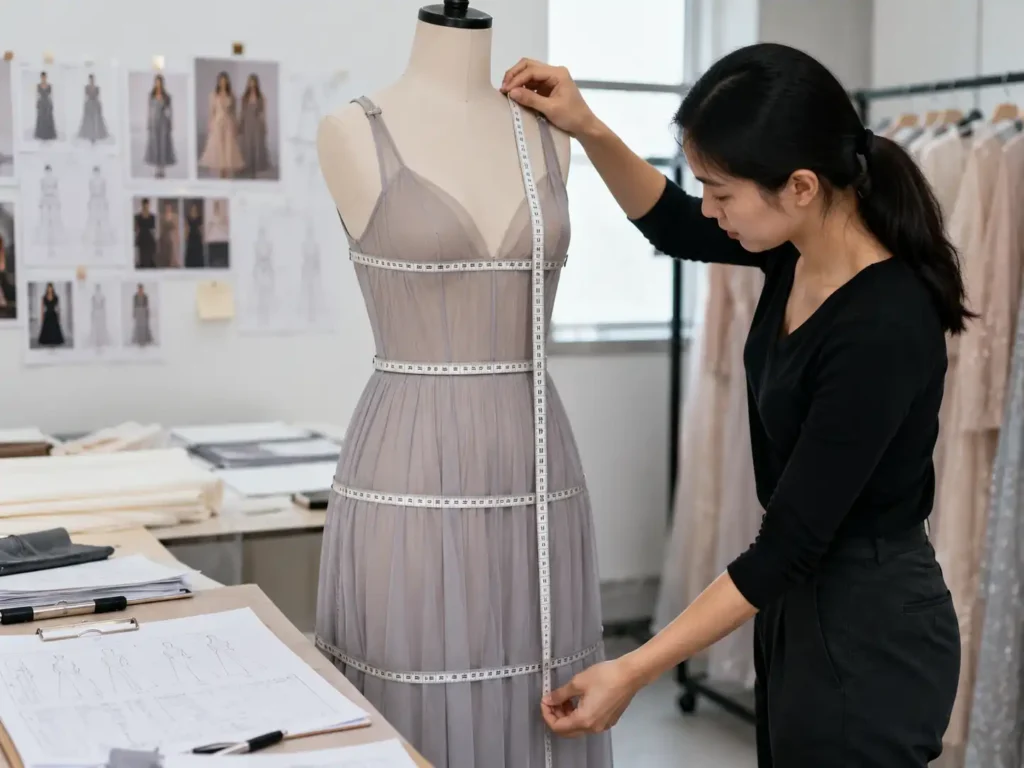
Development begins by confirming the base size, target market, body profile, and intended fit. Many collections use a base size S or M, but the correct choice depends on the brand’s existing block and core sales range. A fitted mini, structured corset dress, relaxed resort maxi, and stretch bodycon dress require different ease, balance, and construction logic even when they share the same labeled size.
Jinfeng can review an existing size chart, original sample, fit model feedback, or approved garment measurements. When no full chart exists, the team identifies the measurements needed to build a controlled sample and avoids assuming that a generic market chart represents the brand.

Bust, Waist, Hip, and Balance
Bust shape, waist placement, hip ease, front-to-back balance, side-seam position, and garment length determine whether a dress looks correct on body. A line sheet image may hide the difference between shaping created by darts, princess seams, stretch, cups, boning, ruching, or drape. Jinfeng defines the construction responsible for the intended effect before the pattern is finalized.
High-risk points include neckline gaping, underarm exposure, zipper bulging, waist twisting, skirt pulling, side-seam rotation, slit opening, and hem ride-up. Fit comments are translated into pattern and measurement changes rather than left as broad statements such as “make it tighter” or “improve the shape.”
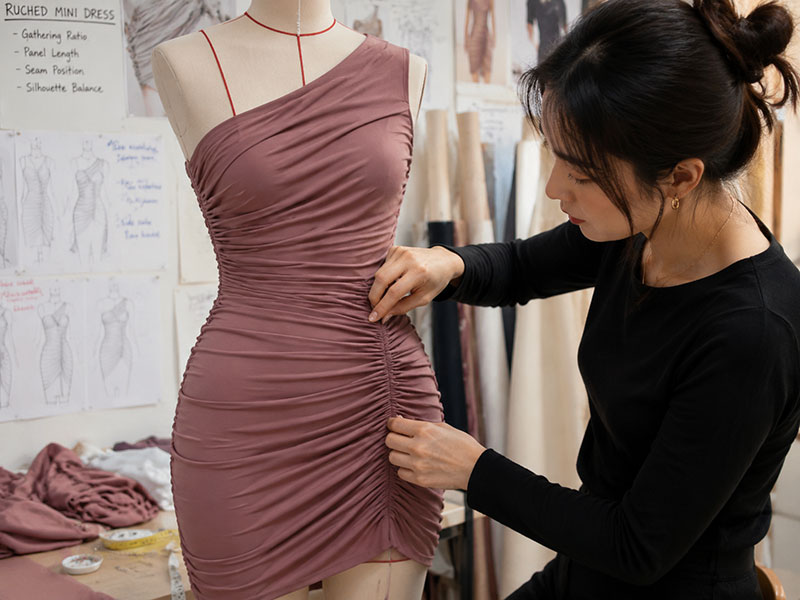
Design Stability and Wearability
Strapless, backless, halter, deep-V, cut-out, corset, and high-slit dresses need security as well as appearance. Jinfeng reviews strap angle, elastic support, boning, cup position, seam reinforcement, lining, grip tape where appropriate, opening length, and movement. The sample stage confirms how the garment behaves when sitting, walking, raising the arms, and moving through normal wear.
Fabric choice remains part of fit control. A material substitution with different stretch, weight, or recovery can change neckline stability, waist compression, and skirt movement. Approved fit cannot be separated from the approved fabric quality.

Grading and Size Architecture
A line may offer six sizes such as XXS-XL, eight sizes such as XXS-3XL, or a brand-specific range. Grading is approved by measurement point rather than applying one uniform increase everywhere. Bust, waist, hip, shoulder, armhole, neckline, strap length, bodice length, slit height, and total length may require different rules according to silhouette and construction.
Jinfeng checks whether the style needs graded cups, revised boning positions, changed strap widths, adjusted slit height, or different internal support in extended sizes. Size ratios also affect bulk cutting, labels, packing, carton mix, and QC selection, so grading decisions remain connected to the order plan.
Sampling Priorities Built Around the Launch Calendar
Sample timing is planned by material readiness, style complexity, fit risk, campaign priority, and approval speed. The ranges below are working estimates for organized programs, not unconditional promises; final timing is confirmed after file, fabric, trim, and schedule review.
Typical Development Windows
An organized document review often takes 1-3 business days. Fabric and trim preparation can take 5-12 business days when suitable stock options are available, while custom dyeing, printing, lace, sequins, hardware, or special packaging may require longer. After materials are ready, a standard first sample commonly needs 7-12 business days. Complex corset, mesh, lace, sequin, evening, or multi-layer styles may need 12-20 business days.
A focused revision commonly requires 5-10 business days after consolidated comments and material availability. A PP sample can require approximately 7-12 business days after the fit, construction, color, and trim direction are closed. Shipping time for physical samples is added separately by destination and courier service.
Sample Types Serve Different Decisions
A first sample evaluates the initial interpretation of design, pattern, fabric, and construction. A fit sample focuses on measurements, balance, movement, and fit-model feedback. A revised sample closes agreed corrections. A photo-ready sample emphasizes campaign appearance; a salesman sample supports wholesale review; a PP sample sets the pre-production standard; a Golden sample preserves the final reference for production and repeat orders.
The names should not be treated as interchangeable. A photo sample can look excellent while still lacking final bulk trims or approved packing details. A first sample should not become the production standard simply because it arrived before a campaign deadline.
Priority Groups Protect Key Dates
Jinfeng divides multi-style programs into priority groups. Priority A commonly includes hero styles, campaign looks, long-lead materials, and high-risk construction. Priority B covers commercial core dresses that need early fit and cost confirmation. Priority C contains lower-risk extensions, additional colors, or styles using approved blocks and materials.
The approach lets the team secure critical decisions before the full line reaches the same bottleneck. A wholesale appointment may require salesman samples earlier than PP samples, while an ecommerce launch may require photo-ready samples before final bulk packaging is complete. Milestones are built around the commercial use of each sample.

Costing and MOQ Planning by Style and Color
A useful quotation explains how commercial choices create cost. Jinfeng evaluates each style and color independently, then looks for collection-level efficiencies that do not weaken the approved appearance, fit, or quality standard.
| Cost Driver | Line Sheet Decision | Manufacturing Review |
|---|---|---|
| Fabric | Material name, color, print, target appearance | Weight, width, consumption, finish, stretch, lining, supplier MOQ, testing, lead time |
| Construction | Silhouette and visible details | Panels, layers, ruching, boning, cups, cut-outs, slits, seam and hem methods |
| Trims | Zippers, lace, hardware, embellishment | Specification, color, custom development, placement, labor, minimums, replacement options |
| Size Range | Offered sizes and expected ratio | Base size, grading, extended-size structure, marker efficiency, labels, QC coverage |
| Color Plan | Number of colorways and units | Dye or print minimums, shared fabric base, color approval, separate production lots |
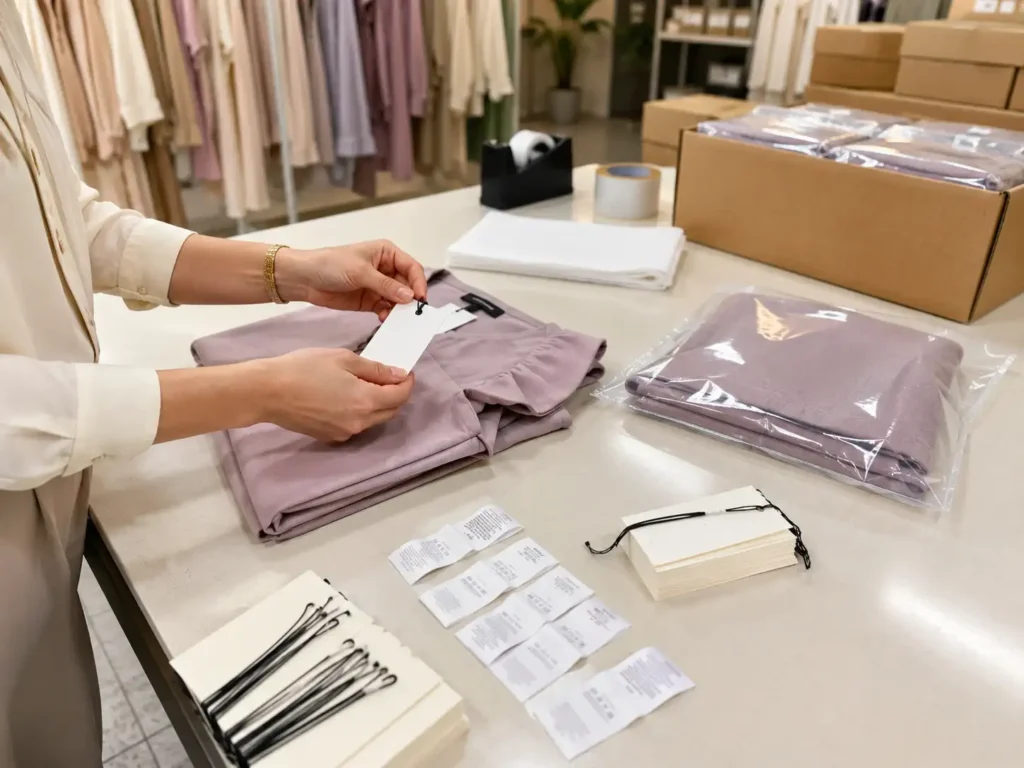
| Packing | Brand presentation and warehouse needs | Labels, barcodes, polybags, inserts, carton ratios, carton marks, warehouse labels |
| Timing | Launch and delivery window | Material booking, sample rounds, PP approval, production loading, QC, packing, freight |
Production Capacity Allocated by Construction Risk
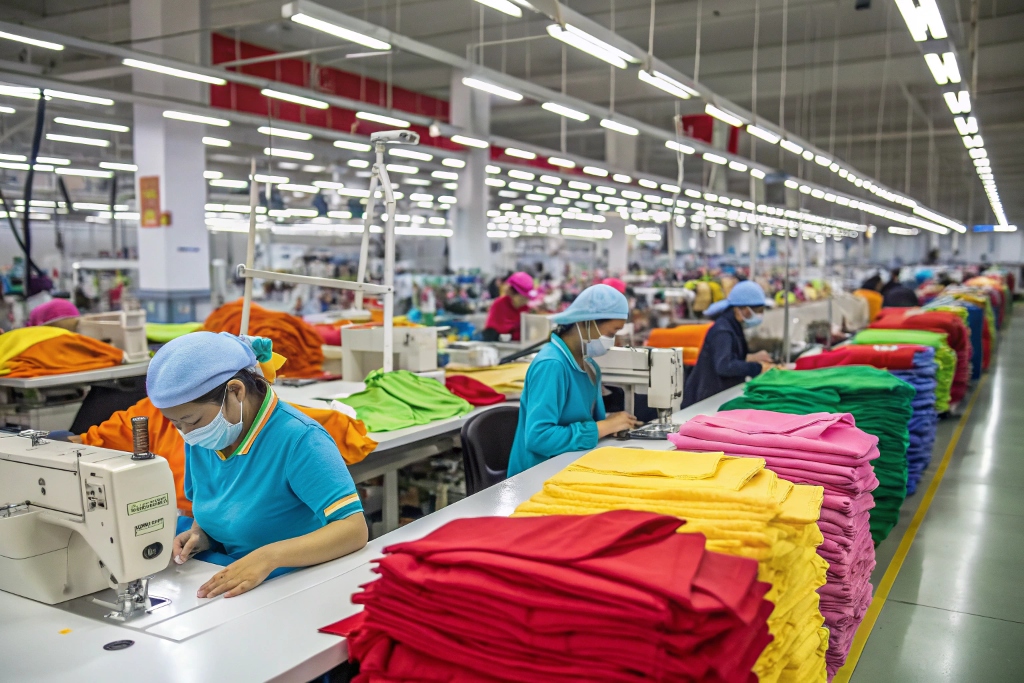
Capacity is useful only when the correct production unit handles the correct product. Jinfeng combines owned factories, long-term production partners, sewing-line specialization, flexible lines, merchandising, QC, and packing support to allocate multi-style dress programs according to their real execution needs.
Factory Allocation by Product Type
Jinfeng operates 6 owned women’s fashion factories and works with 10+ long-term satellite production partners in the Guangdong apparel supply chain. Woven dress units, occasionwear units, knit and stretch units, and complex-fabric units are selected according to silhouette, material, construction, order quantity, and delivery plan. Not every factory is presented as equally suitable for every style.
Complex first-time styles receive priority in production units experienced with the relevant fabric and structure. Regular repeat styles or lower-risk batches can be distributed more broadly after the Golden sample, production files, and QC points are established. Long-term partners support planned expansion and multi-batch delivery under Jinfeng’s project and QC coordination.
Sewing Lines and Flexible Programs
The production system includes 18+ sewing lines and 6+ flexible production lines. Flexible lines are valuable for collections containing multiple fabrics, colors, size ratios, and construction types, but flexibility does not mean unlimited switching. Changeovers, operator learning, special handling, and quality risk are considered in the line plan.
Satin, mesh, lace, sequin, stretch, corset, woven occasion, and private-label styles have different sewing and finishing needs. Production release follows the approved PP sample, pattern, BOM, measurement file, workmanship notes, and QC checklist so line setup is linked to an actual standard.
Material and PP Gates Before Loading
Production capacity is not reserved by quantity alone. Fabric and trim availability, approved colors, shrinkage or test results where required, final pattern, graded size set, PP sample, labels, packing files, and commercial approval must be sufficiently complete. Loading a line before those gates are closed can create more delay than waiting for a controlled release.
Jinfeng coordinates material arrival, factory allocation, cutting schedule, sewing plan, in-line inspection, finishing, packing, and planned ex-factory sequence. Significant programs can be divided by style group or shipment batch when the launch plan benefits from earlier delivery of priority SKUs.

Keeping Line Sheet Data Aligned Through Bulk Production
The approved collection must remain recognizable after hundreds of files, material lots, sample comments, cutting tickets, sewing instructions, labels, cartons, and shipment records are created. Alignment is maintained through one approved information chain from style code to packed carton.
One Approved Master Record
The current line sheet, tech pack, BOM, measurement chart, sample comments, color approval, label files, packing instructions, PO, and barcode list are reconciled before bulk release. A master record identifies the approved version and date for each style. Old files remain archived for traceability but are not used as live production instructions.
When a color name changes, the impact is checked across fabric approval, line sheet, PO, care label where relevant, hangtag, barcode, SKU sticker, packing list, and carton marks. The same logic applies to size range, style name, garment length, or packaging revision.
PP and Golden Sample Standards
The PP sample represents the approved pre-production interpretation of fabric, fit, construction, trims, workmanship, and visual details. A Golden sample can be sealed as the retained reference for production comparison, final inspection, and future repeat orders. The physical reference works together with written files; neither one replaces the other.
Bulk changes after PP approval are controlled. A different lining, zipper, mesh, lace, elastic, or construction method can alter fit and appearance even when the change looks minor. Substitutions require review and approval rather than being introduced silently during production.
QC Across the Production Flow
Jinfeng’s 15+ QC inspectors cover incoming fabric and trims, cutting, sewing, measurements, garment appearance, pressing, packing, and pre-shipment review. High-risk dress points include satin color difference and snagging, mesh holes and transparency, lace placement, sequin loss, zipper bulging, lining exposure, unstable measurements, twisted seams, uneven hems, and incorrect decorative placement.
Inspection results are connected to production correction rather than stored only as a final report. In-line findings can trigger operator guidance, workmanship adjustment, measurement review, or additional checking before the same issue spreads across a larger quantity.

Line Sheet Development Dress Manufacturing Case Studies
A line sheet represents the commercial direction of a collection, but successful production requires connecting style identity, fabric direction, construction details, costing, sampling, bulk production, and delivery planning. Jinfeng Apparel helps fashion teams transform planned assortments into approved samples and retail-ready collections.

Case Study 1: Turning a Line Sheet Into a Complete Seasonal Dress Collection
A womenswear brand prepared a seasonal collection through an internal merchandising team.
The line sheet included:
- Style images
- Color directions
- Product categories
- Target price range
- Launch timing
The brand needed a manufacturing partner to convert the commercial plan into production-ready styles.
Program scope:
- 22 dress styles
- 54,000 pieces
- 5 fabric families
- XS-XL size range
- Private-label packaging
Product categories:
- Satin dresses
- Bodycon dresses
- Occasion dresses
- Resort dresses
- Matching sets
Development Challenge
The line sheet communicated the commercial vision, but production information was incomplete.
Main gaps:
Missing Construction Details
Including:
- Lining structure
- Closure method
- Internal support
- Seam requirements
- Finishing details
Material Uncertainty
Several styles only indicated:
- “Satin”
- “Mesh”
- “Soft fabric”
without confirming:
- Weight
- Stretch
- Supplier availability
- Bulk feasibility
Jinfeng Solution
Jinfeng created a collection development roadmap.
Line Sheet Review
Analyzed:
- Style positioning
- Commercial importance
- Fabric direction
- Quantity plan
- Target pricing
Style Classification
Separated:
Hero Styles
For:
- Campaign focus
- Brand image
Commercial Styles
For:
- Main sales volume
Result
The brand achieved:
- 22 production-ready styles
- Clear technical files
- Controlled sample process
- Retail-ready collection delivery
The line sheet became a repeatable seasonal development framework.
Case Study 2: Building a Wholesale Dress Line From Commercial Planning
A fashion brand prepared a wholesale collection for boutique and retail buyers.
The merchandising team needed a collection that could support:
- Buyer presentations
- Order meetings
- Seasonal deliveries
- Retail inventory planning
Program scope:
- 18 dress styles
- 36,000 pieces
- 4 delivery windows
- Multiple color options
Products included:
- Midi dresses
- Cocktail dresses
- Lace dresses
- Resort styles
Wholesale Challenge
The initial line plan looked commercially attractive but required production validation.
Main issues:
Quantity Planning
The team needed confirmation of:
- Quantity per style
- Quantity per color
- Size ratios
- MOQ feasibility
Delivery Planning
Different styles had different timelines:
- Simple woven styles
- Complex lace styles
- Structured occasion dresses
All needed to fit the same wholesale calendar.
Jinfeng Solution
Jinfeng reviewed the collection from a production perspective.
Commercial Quantity Review
Analyzed:
- Style importance
- Color priority
- Production efficiency
- Material minimums
Development Priority
Grouped styles into:
Early Delivery
Including:
- Ready materials
- Lower-risk constructions
Main Collection
Including:
- Standard development styles
Later Delivery
Including:
- Complex materials
- Special trims
Result
The brand achieved:
- Wholesale-ready collection
- Better quantity planning
- Clear delivery structure
- Reduced production risk
The collection supported buyer meetings and seasonal orders.

Case Study 3: Managing a Multi-Style Fashion Collection With Multiple Teams
A growing fashion company managed a large dress assortment involving:
- Product development team
- Merchandising team
- Sourcing team
- Sales team
The collection included:
- Mini dresses
- Midi dresses
- Maxi dresses
- Party dresses
- Resort styles
Program scope:
- 30 styles
- 78,000 pieces
- Multiple colorways
- Multi-channel sales plan
Collection Challenge
Different departments had different priorities.
Product Team Focus
Needed:
- Design accuracy
- Fit consistency
- Fabric appearance
Merchandising Team Focus
Needed:
- Cost
- Delivery
- SKU planning
Sourcing Team Focus
Needed:
- Factory capability
- MOQ
- Production schedule
Jinfeng Solution
Jinfeng established one collection management system.
Style Master File
Controlled:
- Style codes
- Images
- Fabrics
- Colors
- Size range
- Quantity
- Status
Development Tracking
Managed:
- Sample progress
- Fabric approval
- Revision history
- PP approval
- Production readiness
Production Coordination
Controlled:
- Factory allocation
- QC requirements
- Packing standards
- Shipment sequence
Result
The company achieved:
- 30 styles managed under one system
- Better cross-team communication
- Reduced development conflicts
- Stable bulk delivery
The process became the foundation for future seasonal collections.
Protecting Unreleased Line Sheets and Collection Assets
NDA Project Files
Pattern and Sample Protection
Anonymized Reporting
Line Sheet Development Frequently Asked Questions
Yes. A line sheet can begin the first project review when it includes style images or codes, planned colors, size range, quantities, target positioning, and timing. Jinfeng then identifies the production information still required for fabric, pattern, sample, costing, PP approval, bulk production, QC, and packing.
No. A line sheet communicates the commercial assortment, while a tech pack defines measurements, construction, trims, workmanship, artwork, and technical requirements. Jinfeng can help map missing information and create development records, but bulk production still requires approved technical files and a PP or Golden sample standard.
Jinfeng supports multi-style development commonly structured around 10-30 styles. The program is divided by fabric family, pattern complexity, trim group, sample priority, and launch date. Feasibility also depends on color count, quantity per style and color, material readiness, and the complexity of the assortment.
After materials are ready, standard first samples commonly need about 7-12 business days; complex corset, mesh, lace, sequin, or multi-layer styles may need 12-20 business days. Revisions often require 5-10 business days. Final timing is confirmed after file, fabric, trim, and priority review.
The standard MOQ starts from 200 pieces per style and color. One style in two colors normally requires 200 pieces in each color. Fabric dyeing, printing, specialty lace, sequins, hardware, branded trims, or custom packaging may carry separate supplier minimums.
Yes. Target cost is reviewed against fabric, lining, trims, construction, pattern work, sewing time, handwork, pressing, QC, packaging, testing, logistics, and quantity. Jinfeng can suggest material or construction options while protecting the intended brand-level appearance, fit, and product position.
Yes, when the launch plan requires campaign or wholesale samples earlier. Photo-ready or salesman samples serve different commercial purposes from PP samples. Bulk production still requires final material, fit, construction, and workmanship approval through the agreed PP and production records.
Comments are consolidated by style code and sample version, then connected to pattern, measurements, construction notes, BOM, and visual references. A revised sample begins only after the current comment record is clear. Changes after PP approval are assessed for material, cost, production, QC, and delivery impact.
Yes. Jinfeng supports woven labels, size labels, care labels, hangtags, barcodes, SKU stickers, polybags, size-ratio packing, color-ratio packing, carton marks, and warehouse labels. Style, color, size, barcode, PO, packing list, and carton data are reconciled before shipment preparation.
Yes. NDA-based cooperation is available before line sheets, tech packs, original samples, unreleased designs, pricing, or launch information are shared. Protected files are used only for the agreed project review, development, production, QC, packing, delivery, and repeat-order support.

Send Your Line Sheet for a Structured Review
Send the current line sheet even when several technical decisions are still open. Kelly and the Jinfeng Apparel project team will organize the files, review style scope, identify missing production information, assess material and construction risk, check MOQ alignment, and outline the next development step.
A useful first response may include a gap list, fabric questions, style-priority recommendation, sample route, cost feasibility notes, and an initial timeline framework rather than an unsupported final quotation.
For a faster review, include:
- Company and brand profile
- Line sheet or style list
- Tech packs, sketches, or reference images
- Quantity by style and color
- Fabric direction or swatches
- Base size and full size range
- Target cost range
- Campaign, launch, and delivery dates
- Label, barcode, and packing requirements
- Testing, audit, logistics, or NDA requirements