Skip to content

Approving a dress manufacturer is not a simple “the sample looks good, the price looks fine, let’s place the order” decision. For a serious fashion company, it is closer to risk management. A procurement team has to protect product quality, margin, launch timing, brand reputation, return rate, packing accuracy, and repeat-order stability at the same time. A dress may look simple in a campaign photo, but behind that photo are dozens of approval points: fabric behavior, stretch recovery, lining length, zipper balance, bust fit, waist position, cutting direction, measurement tolerance, label placement, carton marks, and whether bulk production can repeat the approved sample at scale.
Procurement teams approve dress manufacturers by checking category fit, factory capability, sampling accuracy, fabric and trim control, QC process, MOQ, pricing logic, lead time, confidentiality, communication, and repeat-order support. The strongest suppliers prove they can move from sample to bulk production without losing fit, quality, timing, or brand standards.
The painful stories usually start the same way: the first sample looks beautiful, the price looks attractive, and everyone feels relieved. Then bulk production arrives with uneven hems, tight bust measurements, wrong lining color, loose zippers, or delayed shipping. A professional approval process exists to stop that story before it becomes a chargeback, a delayed launch, or a season of unsellable stock.
Jinfeng Apparel is a Guangdong-based premium custom women’s fashion manufacturer serving global fashion brands and mid-to-large custom apparel clients with OEM, ODM, private-label, dress development, sampling, bulk production, quality control, packaging, and export delivery support. The company’s confirmed model includes 6 owned women’s fashion factories, more than 10 long-term satellite production partners, MOQ from 200 pcs per style/color, NDA support, and long-term cooperation for seasonal collections and repeat orders.
What Do Procurement Teams Check First?
Procurement teams first check whether a dress manufacturer fits the project before they compare prices. They review product focus, factory identity, client fit, MOQ policy, sampling process, communication quality, confidentiality, and export readiness. A supplier becomes easier to approve when it can show a clear production model, not just attractive product photos or a low quote.
Core Product Fit
The first screening question is not “Can you make clothing?” It is “Are dresses one of your real core categories?” This distinction matters because dresses are more sensitive than many basic apparel products. A dress is judged by fit, fabric movement, body proportion, seam balance, zipper smoothness, lining, and how it photographs on the customer.
A factory that mainly produces T-shirts, uniforms, or simple basics may struggle with satin slip dresses, mesh party dresses, corset dresses, sequin dresses, occasionwear, or fitted bodycon styles. Procurement teams therefore begin by checking category alignment. A credible dress manufacturer should be able to discuss mini dresses, midi dresses, maxi dresses, cocktail dresses, evening dresses, resort dresses, club dresses, wedding guest dresses, bodycon dresses, corset dresses, mesh dresses, satin dresses, lace dresses, and sequin dresses in practical production language.
More importantly, the manufacturer should understand what can go wrong. A satin dress can reveal seam puckering easily. A mesh dress needs lining and stretch control. A sequin dress requires careful sewing handling and wearer comfort. A bodycon dress needs stable recovery after stretching. These are not minor details. They affect return rates, customer reviews, campaign photography, and repeat sales.
Client and Order Fit
Procurement teams also check whether the manufacturer is built for the buyer’s business model. A mid-to-large fashion brand does not need the same supplier as a stock reseller. A serious custom dress project usually requires development input, sample revisions, material sourcing, bulk production planning, private-label packing, quality control, and export coordination.
This is where supplier positioning becomes important. A manufacturer that says yes to every inquiry may not be the safest option. Procurement teams often prefer suppliers with clear boundaries because boundaries show operational maturity. A factory that openly explains its MOQ, sampling requirements, information needs, and unsuitable order types is usually easier to manage than a supplier that promises everything too quickly.
For custom dress production, the buyer should usually prepare at least one of the following: a tech pack, original sample, reference image, line sheet, sketch, size chart, fabric direction, target quantity, target market, or launch timeline. Without these inputs, accurate approval becomes difficult. A manufacturer can still assist with development, but procurement teams should not expect precise costing or perfect sampling from vague ideas alone.
Jinfeng Apparel is positioned for global fashion brands and mid-to-large custom apparel clients rather than no-MOQ, dropshipping, ready-stock, or micro-order models. Its confirmed MOQ starts from 200 pieces per style/color, depending on fabric, color, trims, construction complexity, and production schedule.
First Document Review
Before approving a manufacturer for sampling or trial production, procurement teams usually request a basic supplier information package. This does not need to become a slow corporate ritual, but it should be specific enough to show whether the supplier operates as a real production partner.
The most useful documents include a company profile, product category list, MOQ policy, sample process, bulk lead time estimate, QC process, private-label capability, packing options, confidentiality policy, contact person, and factory system explanation. For more advanced procurement teams, the first review may also include factory photos, production flow, inspection checklist, fabric sourcing range, export experience, and anonymous case examples.
A weak supplier often responds with only a catalog and a price range. A stronger supplier explains what information is needed, how samples are developed, what must be approved before bulk cutting, how quality is checked, and how changes affect price and lead time.
| First Approval Area | What Procurement Checks | Practical Red Flag | Better Signal |
| Category focus | Dress and womenswear experience | “We make all garments” with no dress detail | Clear dress categories and fabric-specific experience |
| MOQ policy | Per style/color basis | No clear MOQ or unrealistic promise | MOQ explained by fabric, trims, color and schedule |
| Sampling process | Development steps and revision control | Sample promised without clear input | Tech pack, sample, photo or size chart requested |
| QC system | Fabric, cutting, sewing, final check | Only “we check quality” | Specific checkpoints before shipment |
| Confidentiality | NDA and design protection | Publicly shows client designs without permission | Protects tech packs, samples and private-label files |
| Production model | Factory and order management | Unknown outsourcing | Owned factories and managed long-term partners |
Communication Quality
Communication quality is one of the fastest ways to judge whether a manufacturer can be approved. In dress production, unclear communication creates real cost. A small misunderstanding about lining length, zipper color, fabric stretch direction, size tolerance, label placement, or carton marking can delay an entire order.
Procurement teams should pay attention to how the supplier answers early questions. Does the supplier ask for missing details? Does it explain trade-offs? Does it identify risks? Does it confirm details in writing? Does it separate confirmed facts from assumptions? These behaviors matter because bulk production is a long chain of decisions.
A professional reply may not always be the fastest reply, but it should be specific. If the buyer sends a satin halter dress reference, the manufacturer should not only say “yes, we can make it.” A better answer would mention fabric options, lining, neck strap strength, bust fit, zipper position, sample timing, MOQ, and what information is needed before pricing. This kind of reply gives procurement teams confidence that the factory is thinking like a production partner, not just a salesperson.
Which Factory Capabilities Matter Most?
The most important factory capabilities are dress specialization, fabric handling, pattern development, sample-to-bulk control, quality management, and multi-style production capacity. Procurement teams approve manufacturers that can match the right production unit to the right dress type and keep the approved sample consistent during bulk production.
Dress Category Range
A manufacturer’s dress range should match the buyer’s real collection. Procurement teams should not approve a supplier based on one successful sample if the future collection includes very different dress types. A factory may handle simple woven dresses well but struggle with fitted knit dresses, corset dresses, sequin party dresses, or formal satin gowns.
In fast fashion womenswear, many brands do not develop only one dress style. A seasonal order may include mini dresses, midi dresses, maxi dresses, bodycon dresses, party dresses, resort dresses, two-piece dresses, and matching sets in the same launch calendar. That means the manufacturer needs more than one sewing line. It needs category allocation.
For example, stretch bodycon dresses require control over fabric recovery, side seams, neckline stretch, and body measurements. Satin occasion dresses require seam smoothness, pressing control, zipper balance, and lining. Resort maxi dresses need print direction, fabric shrinkage, hem level, and drape. Sequin dresses require careful stitching, lining comfort, and seam bulk management.
Procurement teams should ask suppliers which styles are handled most often, which styles require additional review, and which styles may need longer sample time. A supplier that understands its own strengths and limits is usually safer than one that claims every category is equally easy.
Fabric Handling
Fabric handling can make or break dress production. The same pattern can look completely different in chiffon, satin, mesh, jersey, lace, ponte, velvet, rayon, linen blend, or sequin fabric. Procurement teams should check whether the manufacturer understands fabric behavior before approving it for bulk production.
A common mistake is approving a sample only by silhouette while ignoring material risk. For example, a dress developed in medium-weight stretch fabric may not work in a lighter jersey without pattern adjustment. A chiffon dress may need additional lining or hem control. A lace dress may require placement planning. A satin dress may need special seam and pressing methods to avoid puckering.
The manufacturer should be able to discuss fabric weight, stretch direction, shrinkage, handfeel, transparency, lining compatibility, color approval, dye-lot consistency, and fabric supplier MOQ. These details influence cost, timing, quality, and final customer experience.
Jinfeng Apparel’s confirmed product and material range includes categories such as chiffon dresses, satin dresses, lace dresses, mesh dresses, knit dresses, jersey dresses, ponte dresses, suiting dresses, rayon dresses, linen dresses, denim dresses, velvet dresses, sequin dresses, printed dresses, and floral dresses.
| Dress Type | Common Fabric | Main Production Risk | Procurement Checkpoint |
| Bodycon dress | Jersey, ponte, stretch mesh | Size growth, poor recovery, tight fit | Stretch direction, recovery, bust/waist/hip tolerance |
| Satin dress | Satin, stretch satin, crepe | Seam puckering, pressing marks, zipper waves | Seam test, lining, pressing method |
| Mesh dress | Mesh, stretch mesh, tulle | Transparency, distortion, lining mismatch | Lining coverage, stretch control, color match |
| Lace dress | Lace, mesh lace, bonded lace | Placement, joining, edge finish | Lace layout, seam bulk, lining comfort |
| Sequin dress | Sequin fabric, velvet sequin | Broken sequins, skin irritation, bulky seams | Needle handling, lining, edge finish |
| Resort maxi dress | Chiffon, rayon, linen blend | Hem imbalance, shrinkage, print direction | Shrinkage test, print alignment, hem level |
Production System
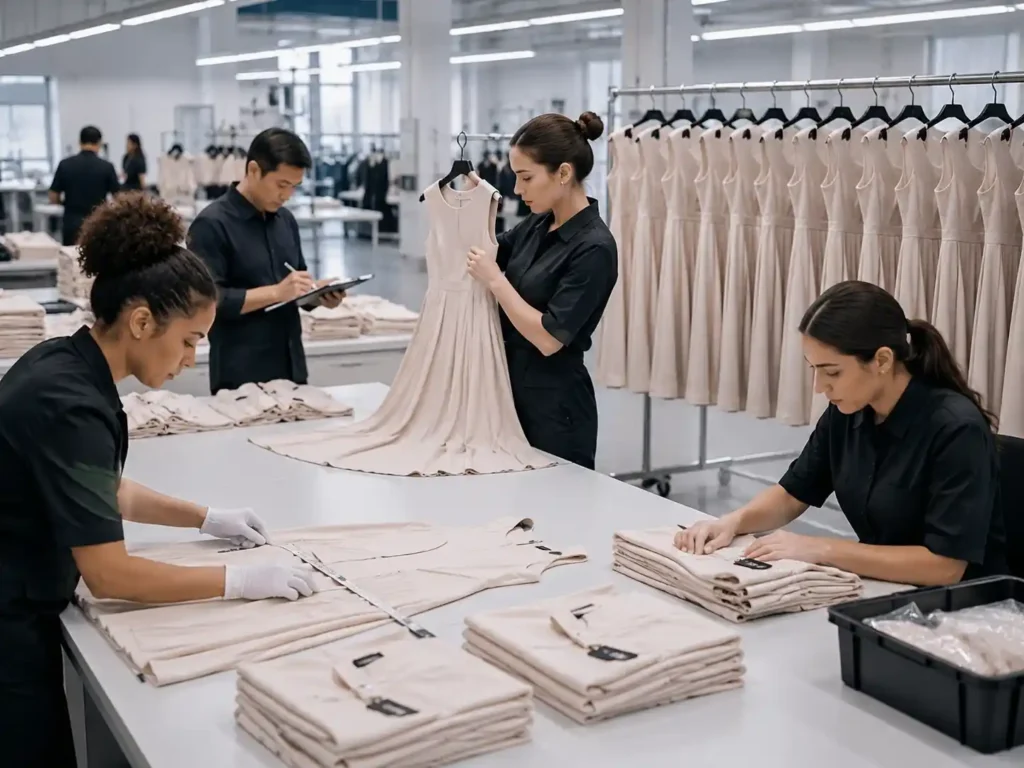
A single sample room can make a beautiful sample. That does not mean the manufacturer can produce bulk orders reliably. Procurement teams need to know how the supplier organizes production when there are multiple styles, colors, sizes, and delivery windows.
A stronger production system usually includes clear roles for sample development, pattern making, fabric sourcing, trim sourcing, cutting, sewing, inline inspection, final inspection, packing, and shipment coordination. For larger clients, the system also needs the ability to handle repeat orders and multi-batch production.
Jinfeng Apparel operates 6 owned women’s fashion factories and works with more than 10 long-term satellite production partners. This structure supports custom dress development, sampling, bulk production, quality control, private-label packaging, and multi-batch delivery for global fashion brands and mid-to-large apparel clients.
For procurement teams, the value of a multi-factory system is not just capacity. It is matching. One production unit may be better for party dresses and occasionwear. Another may be stronger in knit and stretch styles. Another may be more suitable for woven resort dresses, repeat orders, or stable bulk production. Good allocation reduces quality risk because the style goes to the team that understands that product type.
Complex Style Review
Some orders need special review before the manufacturer is approved for production. A regular woven mini dress and a boned corset satin evening dress should not be treated with the same risk level. Procurement teams should flag complex styles early and request extra development control.
Complex styles often include corset construction, boning, deep V necklines, backless shapes, cut-outs, pleats, ruching, ruffles, special lining, high slits, lace placement, sequin fabric, custom prints, custom dyeing, or delicate trims. These details affect sample time, production cost, QC requirements, and bulk consistency.
A practical approval method is to divide styles into risk levels. Low-risk styles may need a standard sample and PP approval. Medium-risk styles may need fabric swatch approval, fit correction, and a size set. High-risk styles may need extra sample rounds, technical review, and closer inline inspection.
This does not slow down the project unnecessarily. It prevents expensive rework later. In dress manufacturing, the cost of identifying risk before cutting is much lower than fixing hundreds or thousands of garments after sewing.
How Is Sampling Approved?
Sampling is approved when the dress proves it can become a bulk-ready product, not just a nice-looking prototype. Procurement teams review fit, measurements, fabric, trims, construction, wearer comfort, cost impact, revision history, and whether the PP sample can be used as the production standard.
Development Input
Sampling starts with the information the buyer provides. A complete tech pack is ideal, but many real fashion projects begin with a reference photo, original sample, sketch, line sheet, moodboard, fabric swatch, or size chart. The manufacturer’s job is to turn that input into a practical development path.
The first sample should not be judged as a final product unless the original input was already detailed. If the buyer gives only a photo, the factory has to interpret fabric, length, fit, seam placement, lining, closure method, and construction details. Some assumptions are unavoidable. This is why procurement teams should separate design inspiration from production specification.
A reliable manufacturer should ask questions before sampling: What is the target market? What size should the first sample be? Is the fit tight, regular, or relaxed? Should the fabric be woven or stretch? Is lining required? What is the target order quantity? Is the dress for ecommerce, retail, eventwear, resortwear, or clubwear?
Jinfeng Apparel can start development from tech packs, reference photos, original samples, sketches, line sheets, size charts, fabric swatches, trim requirements, and brand packaging requirements. This gives procurement teams several realistic ways to begin development even when a project does not start with a complete production file.
Fit Correction
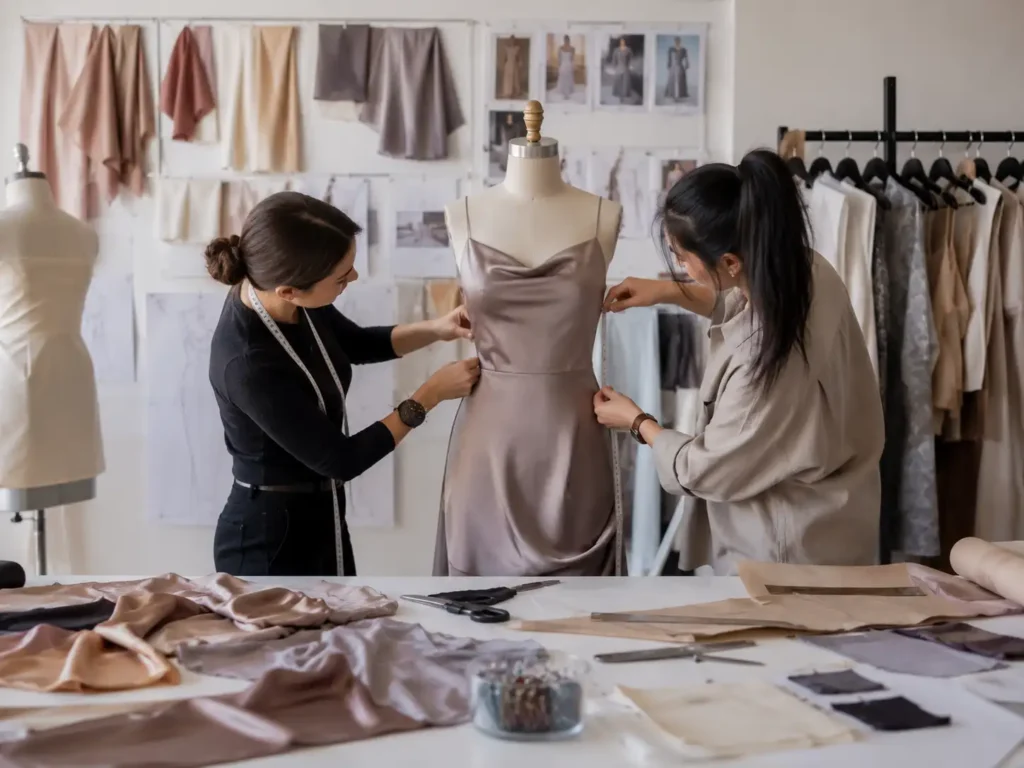
Fit approval is one of the most important steps in dress manufacturing. A dress may look correct on a hanger but fail on the body. Procurement teams should review bust, waist, hip, shoulder, armhole, neckline, sleeve opening, strap length, zipper position, lining length, dress length, and overall body balance.
Small fit issues can create big commercial problems. A neckline that gaps slightly can make a dress feel cheap. A waist seam placed too low can change the whole silhouette. A tight hip can increase return risk. A zipper that waves can ruin product photography. A lining that is too short or too long can affect both comfort and appearance.
Fit comments should be specific. “Make it better” is not a production comment. “Raise waist seam by 2 cm,” “reduce bust ease by 1 cm per side,” “shorten lining by 1.5 cm,” or “change zipper tape to match shell fabric” gives the sample team a clear action.
Experienced procurement teams often approve fit in stages: first silhouette, then measurement, then construction, then final wearer comfort. This avoids mixing design taste with technical correction.
PP Sample Control
The PP sample is the final approved pre-production sample. It is not just another sample. It becomes the standard for bulk production. Before bulk cutting begins, procurement teams should confirm that the PP sample reflects the approved pattern, fabric, trims, measurements, stitching, label placement, pressing, and packing method.
The PP sample should answer one question: can the bulk order follow this exact standard? If there are still unresolved issues, bulk production should wait. Many production failures happen because the buyer approves a nice photo sample but never locks a true PP sample. Once production begins, every unclear detail becomes a factory decision.
A PP sample should be supported by physical and written references. These may include approved fabric swatches, trim cards, measurement charts, label files, packing instructions, carton marks, and final comments. For multi-color orders, each color may need separate material approval. For complex styles, one PP sample may not be enough; size sets or key color samples may be needed.
Revision Records
Sampling becomes risky when revisions are not controlled. In a real buying team, comments may come from design, merchandising, procurement, fit technicians, ecommerce teams, and senior management. If all comments are sent separately, the factory may follow conflicting instructions.
A clean revision record should include sample version, date, sample size, fabric status, measurement status, buyer comments, factory response, approved changes, pending items, and next action. This record helps both sides understand what changed and why.
| Sampling Stage | Buyer Review Focus | Factory Output | Approval Status |
| First sample | Shape, construction, fabric direction | Prototype sample | Concept review |
| Revised sample | Fit, measurement, detail correction | Updated pattern and sample | Technical review |
| Size set | Size grading and tolerance | Key sizes for checking | Size approval |
| PP sample | Final standard before bulk | Final production-ready sample | Bulk approval |
| Production reference | Bulk consistency | Approved sample + files | Factory line standard |
Revision control also protects cost and timing. If a buyer changes fabric, adds lining, modifies neckline, changes length, or adjusts size range, the quote and lead time may change. A professional approval process records these changes clearly, so there are fewer disputes later.
How Do Teams Judge Quality Risk?
Procurement teams judge quality risk by identifying what could fail before bulk production begins. They review fabric behavior, measurement tolerance, workmanship, sample-to-bulk consistency, inspection checkpoints, packing accuracy, and whether the manufacturer has enough discipline to stop problems early instead of hiding them until shipment.
Fabric Risk
Fabric risk starts before cutting. If the fabric is wrong, the whole order is already unstable. Procurement teams should check whether the manufacturer reviews fabric quality, color, shrinkage, stretch, transparency, handfeel, weight, dye lot, print direction, and lining compatibility.
For dress production, fabric risk is very practical. Satin can show puckering and pressing marks. Chiffon can shift during cutting. Mesh can stretch out or reveal lining problems. Lace can look uneven if placement is not controlled. Sequin fabric can create discomfort if the inside finish is not handled well. Knit fabrics can grow after wear if recovery is weak.
Procurement teams should be careful with custom colors and prints. Lab dips, strike-offs, and physical swatches are safer than screen photos. A color may look correct on a phone but differ under studio lighting or retail lighting. If the product campaign depends on a specific shade, physical approval is worth the time.
For bulk orders, fabric rolls should be checked before cutting. Dye-lot separation, visible defects, width variation, and shrinkage should be controlled early. Once fabric is cut, many problems become expensive or impossible to fix.
Measurement Risk
Measurement control is one of the biggest approval points in online womenswear. Customers may accept small styling differences, but they rarely forgive poor fit. Procurement teams should check whether the manufacturer controls measurements from pattern development to final inspection.
The key measurement points depend on the dress type. For fitted dresses, bust, waist, hip, shoulder, side seam, and dress length are critical. For woven dresses, waist placement, armhole, neckline, and hem balance matter. For maxi dresses, length consistency is especially important. For stretch dresses, recovery and garment growth after fitting should be reviewed.
Tolerance should be realistic and written down. A common working tolerance may range from about +/-0.5 cm to +/-1.5 cm depending on measurement point, fabric type, and construction. Tight body areas usually need stricter control than hem width or sweep. Procurement teams should avoid using one tolerance for every point because not all points affect fit equally.
The best factories measure during production, not only at the end. Inline measurement checks allow correction before the whole order is finished. Final inspection is important, but it should not be the first time measurement problems are discovered.
Workmanship Risk
Workmanship is the visible proof of manufacturing quality. Even when measurements are acceptable, poor workmanship can make a dress look low value. Procurement teams usually check seams, hems, zipper insertion, lining, darts, gathers, pleats, ruffles, lace joining, sequin sewing, pressing, thread trimming, label placement, and final appearance.
Different dress types need different workmanship checks. A satin slip dress needs smooth seams and clean pressing. A lace dress needs neat joining and stable edge finishing. A corset dress needs structure, support, and symmetry. A bodycon dress needs seam stretch and recovery. A resort maxi dress needs balanced hem and smooth drape.
Workmanship risk should be reviewed at three stages: sample, inline production, and final inspection. The sample shows whether the construction method is workable. Inline inspection shows whether the sewing line is following the method. Final inspection confirms whether the shipment meets the approved standard.
A manufacturer that catches defects early is much safer than one that only sorts finished garments. Early correction reduces rework, protects delivery time, and keeps the final product cleaner.
Sample-to-Bulk Risk
One of the biggest procurement concerns is whether the bulk order will match the approved sample. Many suppliers can make one good sample, but not all can repeat it across hundreds or thousands of pieces, multiple sizes, and several colors.
Sample-to-bulk risk appears in many forms: fabric handfeel changes, color variation, loosened fit, different zipper quality, uneven stitching, lining mismatch, wrong label placement, or packaging errors. Procurement teams should compare bulk production against the approved PP sample, measurement chart, fabric swatch, trim card, and packing file.
Jinfeng Apparel’s long-term cooperation model includes keeping pattern records, fabric references, trim details, measurement files, and packing requirements for future production. This type of record keeping matters because repeat orders depend on memory being converted into documented standards.
A practical quality-risk review can use the following control logic: fabric should be checked before cutting, measurements should be checked during sewing and final inspection, workmanship should be checked inline before full completion, packing should be checked before carton sealing, and repeat-order details should be compared with historical production files before production starts.
Do Cost, MOQ and Lead Time Fit?
Cost, MOQ, and lead time fit when they reflect the real dress construction, material requirements, quantity, launch calendar, and quality standard. Procurement teams should not approve the lowest quote automatically. A reliable plan explains what the price includes, why MOQ exists, and whether timing is realistic.
Price Logic
A dress price should be judged by construction, not by number alone. Two manufacturers may quote the same reference image differently because they are not pricing the same product. One may include lining, stable fabric, better zipper, pressing, QC, labels, and packing. Another may quote only the simplest version to win the inquiry.
Procurement teams should ask what the price includes. Is the quoted fabric the same weight and handfeel as the sample? Does the price include lining? Are trims included? Is private-label packaging included? Does the style require special workmanship such as ruching, pleats, lace joining, boning, sequin sewing, or narrow hemming? Has fabric consumption been calculated based on the correct size range?
A quote that is too low can create three risks: hidden cost increases later, quality shortcuts, or supplier refusal when production becomes difficult. A good manufacturer should be able to explain cost drivers and offer alternatives. For example, it may suggest a similar fabric with better availability, a simplified internal structure, fewer color splits, or a different trim solution.
The best cost discussion is not “cheapest possible.” It is “what is the best balance between target price, quality, construction, and launch timing?”
MOQ Reality
MOQ is often misunderstood. Buyers may think MOQ is only the factory’s sewing minimum, but in dress production MOQ may come from fabric suppliers, dyeing mills, print mills, trim suppliers, packaging suppliers, or production line efficiency.
A manufacturer may be able to sew 200 pieces per style/color, but a special fabric supplier may require a higher minimum. Custom color dyeing, custom prints, special lace, sequin fabric, custom hardware, and custom packaging can all change MOQ. Procurement teams should therefore ask what the MOQ is based on.
Jinfeng Apparel’s MOQ starts from 200 pieces per style/color, depending on fabric availability, color development, trims, construction complexity, and production schedule. MOQ may increase for custom woven fabric, custom dyeing, custom prints, special lace, special sequin fabric, special trims, custom accessories, custom packaging, too many color splits, or complex formal structures.
This kind of transparency helps buyers avoid unrealistic planning. A brand may choose to reduce colors, adjust fabric, or increase quantity per color to make the order more efficient. MOQ should be treated as a production planning tool, not just a negotiation barrier.
Timeline Planning
Lead time should be reviewed stage by stage. A serious dress project includes development review, sample making, sample fitting, revision, PP sample approval, fabric and trim purchasing, cutting, sewing, inline inspection, final inspection, pressing, packing, and export coordination.
Procurement teams should work backward from the launch date. If a campaign shoot, online launch, retail delivery, or seasonal selling window is fixed, the production plan must include enough buffer for sampling and material preparation. The danger is not only late sewing. The real danger is late approval.
A rushed timeline often causes weak decisions. Teams may approve fabric without enough review, skip a size set, ignore lining concerns, or begin bulk cutting before the PP sample is fully confirmed. These shortcuts may save days at the beginning but cost weeks later.
A practical buyer-side timeline should include internal decision time as well. Many delays are not caused by the factory. They happen because fit comments, fabric approval, label files, or payment confirmation arrive late. Good procurement planning includes both supplier lead time and buyer approval time.
Payment and Change Control
Payment terms and change control are part of commercial approval. Procurement teams should define what must be confirmed before sample payment, before deposit, before material purchase, before bulk cutting, and before shipment.
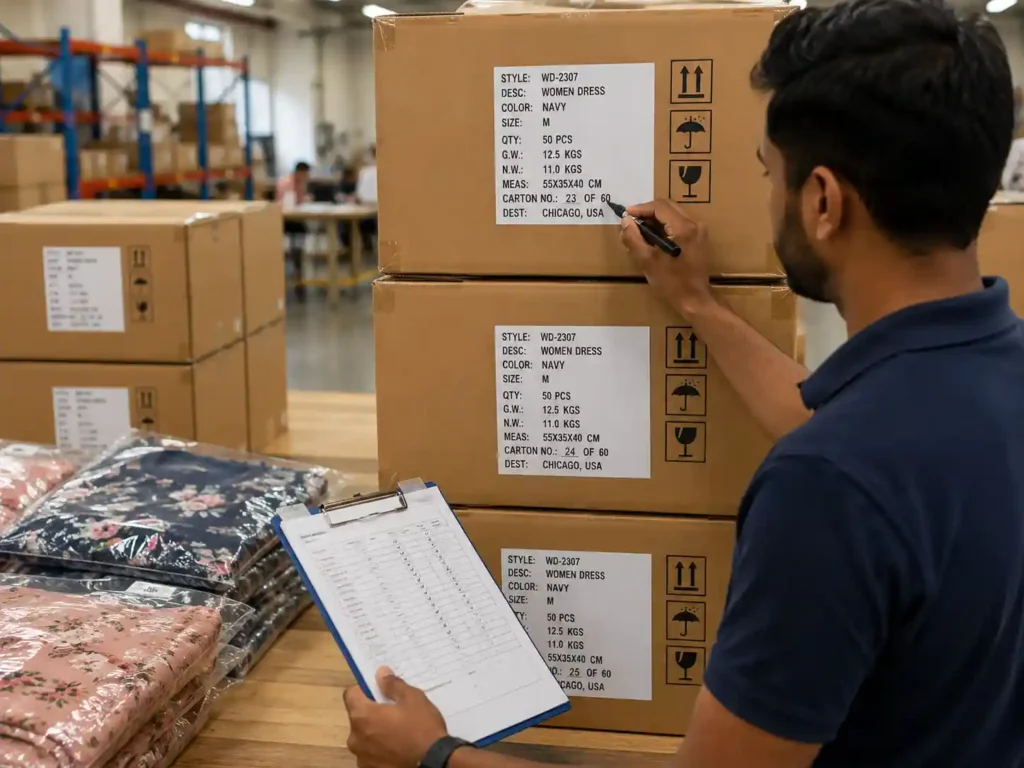
A clear process reduces disputes. Before production begins, both sides should confirm final quote, proforma invoice, fabric, trims, size chart, PP sample, packing details, labels, delivery method, and payment schedule. If the buyer changes key details after approval, the cost or timeline may need to change too.
Common change triggers include fabric change, added lining, new color, expanded size range, changed packaging, adjusted measurement, upgraded trim, or urgent delivery. These are normal in fashion development, but they should be recorded.
Procurement teams approve manufacturers more confidently when the supplier explains these conditions early. A professional manufacturer does not surprise the buyer later with hidden issues. It explains the relationship between design, cost, MOQ, lead time, and risk before the order becomes urgent.
| Commercial Item | Common Range or Basis | What Changes It | Procurement Action |
| MOQ | Often per style/color | Fabric, trims, dyeing, packaging, color split | Confirm MOQ source before sampling |
| Sample time | Varies by complexity | Fabric sourcing, pattern difficulty, revision needs | Separate first sample and revision timing |
| Bulk time | Depends on quantity and style | Fabric arrival, sewing complexity, inspection | Work backward from launch date |
| Price | Based on full construction | Lining, trims, fabric, workmanship, packing | Ask what is included |
| Payment | Deposit and balance structure | Order size, custom materials, shipping terms | Confirm milestones in writing |
| Changes | After approval may affect plan | Design, size, fabric, color, packing | Record version and impact |
Is the Manufacturer Fit for Long-Term Approval?
A manufacturer is fit for long-term approval when it can support repeatable production, seasonal development, record keeping, quality consistency, confidentiality, private-label requirements, and multi-batch delivery. Procurement teams approve long-term suppliers based on evidence from sampling, bulk performance, communication, and post-order stability.
Repeat Order Ability
A one-time supplier may solve a short-term problem, but a long-term dress manufacturer supports the brand’s product rhythm. For fashion brands, repeat orders are often where profit improves. A successful dress may return in new colors, updated fabric, different length, or expanded size range. The supplier must be able to restart production without rebuilding everything from zero.
Procurement teams should ask how the manufacturer handles repeat orders. Does it keep patterns? Does it record fabric references? Does it store measurement files? Does it know the previous trim details? Can it repeat the same packing method? Can it compare new production to the previous approved standard?
Long-term approval is especially important for brands with seasonal collections. A supplier that understands the brand’s fit preference, quality expectations, packaging style, and launch calendar reduces communication time. It also lowers the risk of inconsistent products across batches.
Jinfeng Apparel supports long-term brand cooperation, seasonal collection development, repeat orders, and multi-batch production by keeping pattern records, fabric references, trim details, measurement files, and packing requirements.
Record Keeping
Record keeping may sound boring, but it is one of the strongest signs of a professional manufacturer. Without records, every reorder becomes a new experiment. The same dress may come back with a different fit, wrong zipper, changed lining, slightly different fabric, or inconsistent packaging.
Useful production records include pattern files, size charts, grade rules, fabric swatches, color references, trim cards, label files, PP sample photos, packing instructions, carton marks, inspection comments, and previous order notes. For private-label brands, label and packaging records are especially important because warehouse receiving can be delayed by wrong barcodes, incorrect carton marks, or missing packaging details.
Procurement teams should also check whether the manufacturer keeps revision history. If a waist measurement was changed during sampling, that decision should not disappear. If a lining was shortened after the second sample, the final production file should show it. Good records turn experience into a repeatable system.
For mid-to-large clients, record keeping is not a nice extra. It is part of supply chain continuity.
Brand Protection
Fashion brands often share sensitive information with manufacturers before products are launched. This may include tech packs, samples, prints, custom fabrics, label artwork, packaging files, target prices, launch plans, and order quantities. Procurement teams need to know whether the supplier protects that information.
NDA support is one part of brand protection. Daily behavior is another. A manufacturer should not publish client designs, logos, samples, tech packs, order quantities, or private-label materials without permission. It should be able to discuss its capability through anonymous cases and process descriptions rather than exposing confidential buyer information.
Jinfeng Apparel supports NDA-based cooperation and protects client tech packs, samples, patterns, trims, private-label details, unpublished designs, and order information throughout development and production.
This matters more than many buyers realize. A supplier that casually shares another client’s design may later do the same with yours. Procurement approval should therefore include confidentiality behavior, not just production ability.
Vendor Approval Score
Procurement teams often make better decisions when they turn supplier approval into a scorecard. The purpose is not to make sourcing mechanical. It is to prevent emotional decisions based only on price, a nice sample, or a friendly sales conversation.
A practical scorecard should include category fit, factory system, sampling performance, quality control, cost transparency, MOQ clarity, lead time reliability, communication, confidentiality, and long-term cooperation potential. Each company can adjust the weighting, but the supplier should be judged by evidence.
A useful internal model may score category fit, factory and production system, sampling performance, QC process, cost and MOQ clarity, lead time reliability, communication, documentation, confidentiality, and repeat-order potential. A supplier that performs well in the first sample, explains cost honestly, controls PP approval, protects brand assets, and keeps production records is a stronger candidate for approved vendor status.
In the long run, the right supplier does more than produce dresses. It helps the brand launch collections with fewer surprises, better consistency, and a more stable path from design to repeat order.
Final Decision: How Should Procurement Teams Move Forward?
The safest way to approve a dress manufacturer is to treat approval as a staged process. Start with category fit. Check whether the factory is truly built for dresses and women’s fashion, not just general garment production. Review its client type, product range, market understanding, MOQ policy, and development process. Then move into sampling. Use the sample to test not only appearance, but fit correction, measurement discipline, fabric control, construction logic, communication, and revision handling.
After sampling, judge whether the manufacturer can repeat the approved result in bulk production. Check PP sample control, QC checkpoints, fabric and trim approval, packing accuracy, shipment preparation, and whether the supplier can support future collections. A good dress manufacturer does not only make the first order possible. It makes repeat orders easier, faster, and more consistent.
For procurement teams, the real approval question is simple: Can this manufacturer help us launch sellable dresses with controlled risk, stable quality, reasonable cost, and repeatable production?
If the answer is yes, the manufacturer is no longer just a vendor. It becomes part of the brand’s product engine.
Jinfeng Apparel is built for custom womenswear clients that need dress development, fabric sourcing, pattern making, sampling, bulk production, quality control, private-label packing, and long-term production support. For custom dress manufacturing, seasonal collection development, private-label dress production, or sample-to-bulk cooperation, send your tech pack, reference images, original sample, line sheet, size chart, fabric direction, target quantity, and launch timeline.