
Dress Manufacturer for Online Boutique Chains
Multi-style dress development, controlled bulk production and retail-ready delivery for established online boutique groups and premium ecommerce programs.
- 10-30 styles can be grouped by launch priority, fabric family, fit block and approval status.
- Typical brand programs range from 20,000 to 80,000 pieces across multiple styles, colors and sizes.
- 100,000+ pieces of regular monthly capacity supported by 6 owned factories and 10+ long-term production partners.
- MOQ starts from 200 pieces per style/color, subject to fabric, trims, construction and packing requirements.
Jinfeng Apparel develops custom dresses from line sheet, tech pack, reference image or original sample, then manages pattern development, fabric and trim confirmation, sample revision, PP approval, bulk production, QC, private-label packing and export coordination. The working model is designed for ongoing dress programs where product differentiation, launch timing, online fit performance, SKU accuracy and repeat-order consistency matter as much as unit cost.
Capacity and Teams Behind Multi-Style Dress Programs
Since 2008
6 Owned Factories
10+ Production Partners
2 Sample Rooms
7+ Pattern Makers
15+ QC Inspectors
A Manufacturing Fit for Established Boutique Operations
Best Program Fit
Jinfeng Apparel is well matched with online boutique chains, premium ecommerce dress brands, regional fashion leaders, multi-store retail groups, sourcing offices and private-label programs that manage recurring launches. Strong projects normally include a line sheet or style list, target quantities, size range, market, launch date, preferred fabrics, label requirements and clear approval responsibility.
- Seasonal or monthly dress drops with 10-30 styles
- Multi-color and multi-size bulk production
- Photo samples followed by PP and bulk approval
- Barcode, SKU, label, polybag and carton requirements
- Repeat orders, color extensions and bestseller replenishment
Program Readiness
A project becomes production-ready when design inputs, commercial targets and approval rules are aligned. Jinfeng reviews style complexity, fabric direction, trim requirements, quantities, size ratio, packing details and delivery timing before confirming the development plan. Clear inputs reduce rework, prevent unapproved substitutions and make launch milestones easier to control.
- Reference image, tech pack, sample or line sheet
- Quantity per style/color and planned size ratio
- Target fabric character and price position
- Required labels, barcodes and warehouse marks
- Campaign, launch and receiving dates

Where Online Boutique Dress Programs Lose Control
Repeated Market Styles
- Exclusive design direction
- Controlled fabric and trim choices
- Private-label presentation
Multi-Style Confusion
- Style and fabric grouping
- Revision and approval tracker
- Separate BOM and packing files
Sample-Bulk Gaps
- PP sample lock
- Golden sample reference
- Production handover checklist
Fit-Driven Returns
- Measured fit sample
- Grade-rule review
- Bulk measurement control
SKU Packing Errors
- SKU-to-garment verification
- Packing matrix control
- Carton breakdown review
Replenishment Delays
- Pattern and BOM records
- Material availability check
- Priority reorder planning
What to Verify Before Approving a Dress Manufacturer
Supplier comparison becomes more reliable when each claim is connected to a file, process, sample or production record. The checklist below focuses on evidence relevant to online boutique chains.
| Evaluation Area | Evidence to Request | Jinfeng Program Support |
|---|---|---|
| Dress specialization | Similar silhouettes, fabrics and construction methods | Mini, midi, maxi, party, occasion, bodycon, corset, satin, mesh, lace, sequin and resort programs |
| Development resources | Pattern, sample and revision capacity | 2 sample rooms, 7+ senior pattern makers and 20+ sample machinists |
| Multi-style control | Separate style records and approval tracking | Style groups, fabric groups, revision tracker, BOM, PP approval and packing matrix |
| Production scale | Owned capacity plus controlled flexibility | 6 owned factories, 10+ long-term partners and 100,000+ pcs regular monthly capacity |
| Fit control | Measured sample and size-grade review | Bust, waist, hip, length, strap, armhole, neckline, slit, hem and jumpsuit rise control |
| Bulk consistency | Transfer from PP sample into production | Final pattern, size chart, fabric reference, trim card, sewing instruction and QC checklist |
| Private-label readiness | Label and warehouse identification accuracy | Woven label, care label, size label, hangtag, barcode, SKU, polybag and carton marks |
| Repeat-order support | Records retained for future production | Pattern, BOM, fabric, color, trim, packing, QC notes and Golden sample references |
Dress Categories Built for Online Boutique Assortments

Going-Out Dresses
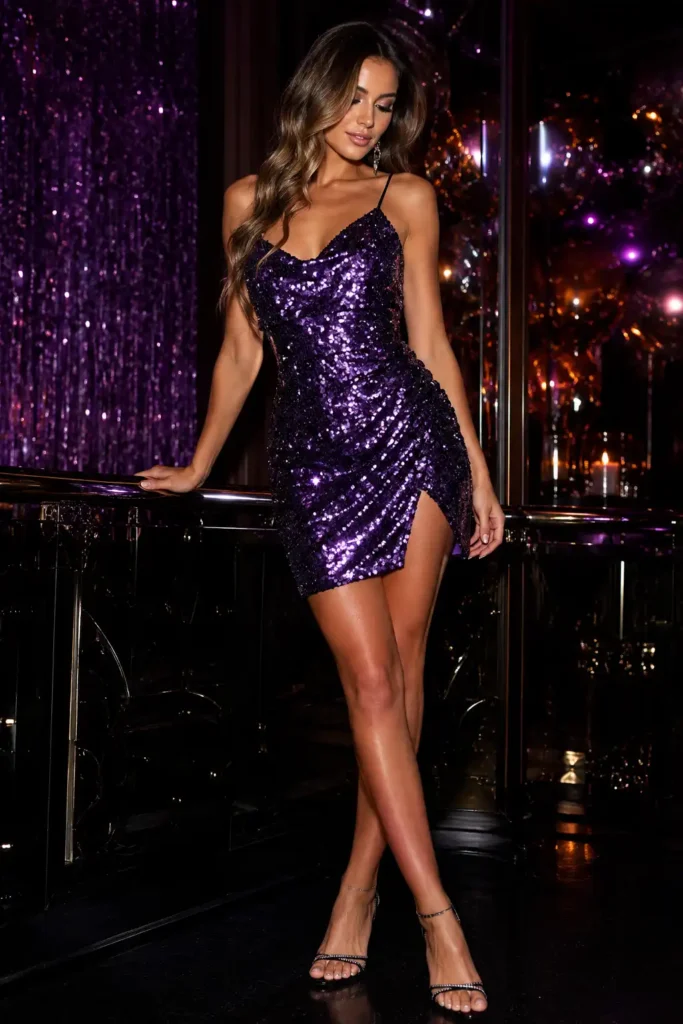
Party and Birthday
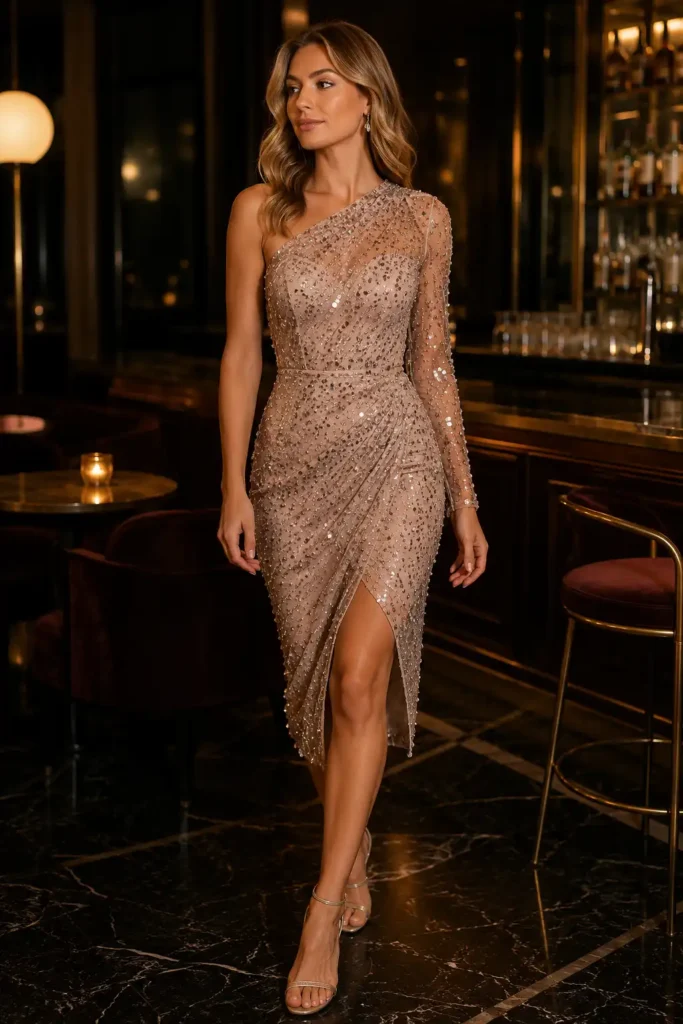
Cocktail and Occasion

Bodycon Collections
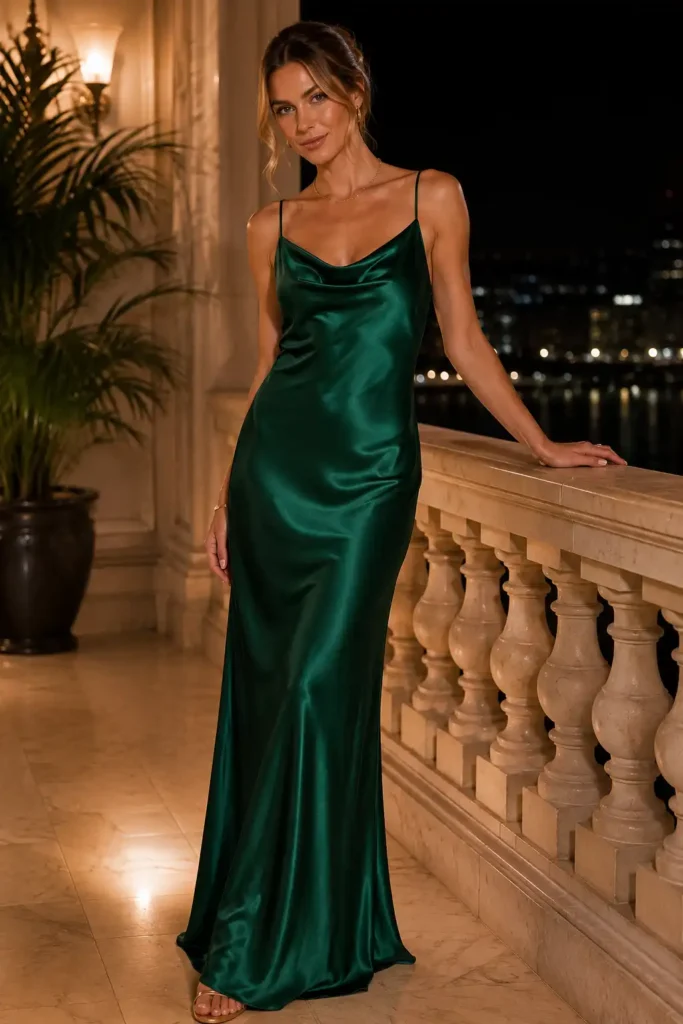
Satin and Slip

Mesh and Lace

Maxi and Resort

Jumpsuits and Sets
How We Control Multi-SKU Dress Collection Development
Large collections are managed as connected commercial programs, not as a pile of unrelated samples. Every style carries its own product, approval, production and packing information.
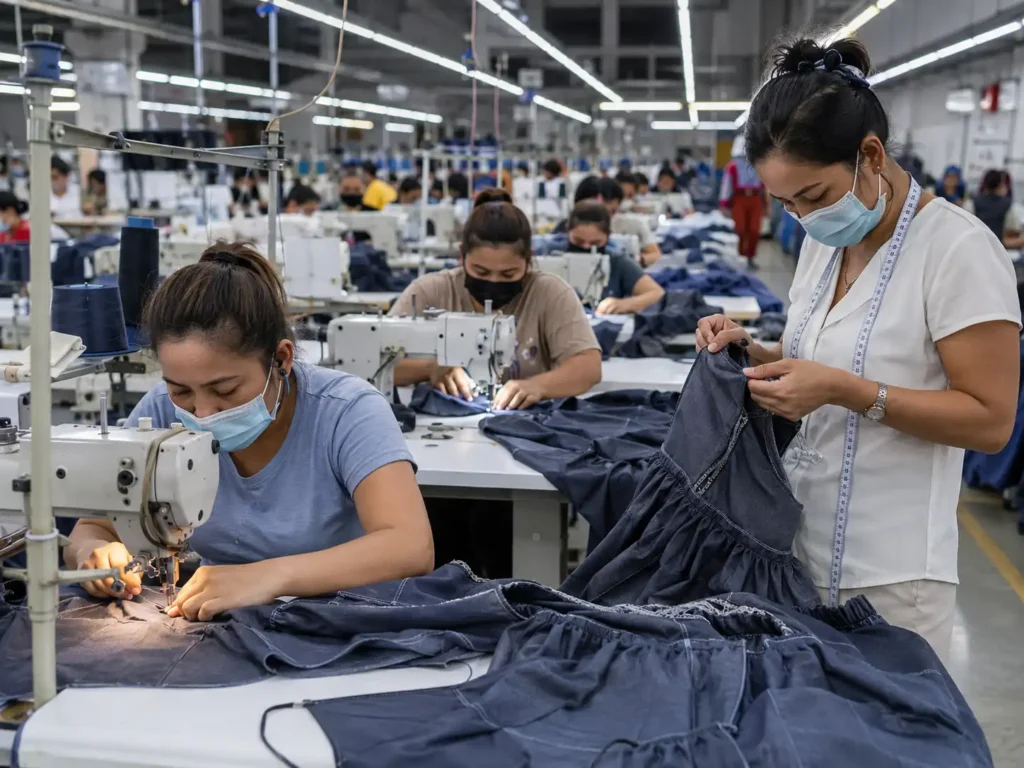
Line Sheet Architecture Before Sampling Begins
A line sheet becomes the control center for the collection. Jinfeng separates every style by style number, silhouette, fabric, color, size range, quantity, sample purpose and launch priority. Related products are then grouped to reduce unnecessary variation without mixing approvals. A satin slip dress group may share a fabric base and lining direction, while bodycon styles may share a fit block and stretch requirement. Lace, sequin and corset styles remain under separate complexity groups because their pattern, trim, sewing and inspection risks are different. Each group receives a clear development route: fabric swatch review, pattern work, first sample, fit or photo review, revision and PP approval. The structure helps merchandising teams see which styles are ready, which are waiting for material, and which need a decision. It also protects style-level cost and timeline accuracy. A change to one style is recorded against that style rather than being passed through chat messages where it can be confused with another SKU. For a 10-30 style program, this separation is essential to prevent duplicate sampling, wrong fabrics, mismatched size charts or late discovery of missing trims.

Sample Priority Follows the Launch Calendar
Not every style needs to be completed on the same day. Hero SKUs, campaign dresses and products required for model photography normally move first. Styles with confirmed fabric and simple trims can advance while custom-dyed, printed, lace or decorative styles remain in material development. Jinfeng builds a sample priority sequence around launch date, photo date, fabric readiness, construction complexity and bulk timing. For planning, a standard dress first sample may be scheduled within about 7-15 working days after fabric direction and development instructions are confirmed; complex corset, lace, sequin, custom-print or heavily structured styles may require 12-20 working days. These ranges are planning references rather than fixed promises, because missing measurements, late fabric approval or structural changes can reset the schedule. Staged priority gives the brand earlier access to key campaign samples while the remaining assortment continues through development. It also avoids filling the sample room with equal-priority requests that do not support the actual sales calendar.
Revision Records Protect Every Approval Decision
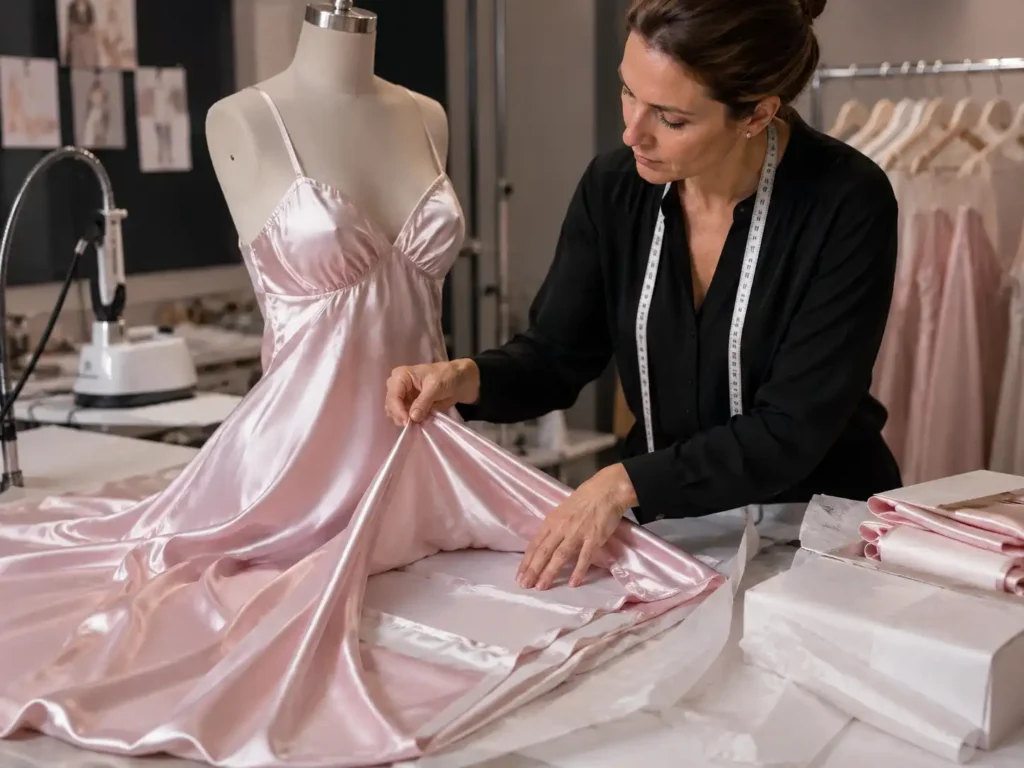
Each sample version should answer a defined question. The first sample tests the interpretation of the design, fabric direction and pattern balance. A fit sample tests body proportion, movement and measurements. A photo-ready sample prioritizes the visual finish required for campaign content. A revised sample confirms recorded corrections. The PP sample locks the bulk standard. Jinfeng records pattern changes, measurement changes, fabric replacement, trim adjustment, sewing method, label position, packing requirement and approval status. Comments are converted into updated files rather than being left as informal notes. The revision record also identifies cost and lead-time effects before the next step. Replacing a 120 gsm satin with a heavier fabric, for example, may change drape, lining, pattern balance, pressing and unit cost. Moving a slit or lowering a neckline may affect wear safety and grading. Clear version control prevents an old sample comment from being used after a newer approval and provides a defensible history when several teams review the same collection.

Production and Packing Are Allocated by Style Group
After PP approval, styles are assigned according to product type and production risk. Woven dresses enter woven-fashion lines; stretch products enter knit or elastic-fabric lines; structured occasionwear is assigned to teams experienced with lining, boning and clean finishing; mesh, lace and sequin products are routed to complex-fabric units. The same grouping continues into QC and packing. Every style has its own BOM, size chart, sewing instruction, measurement points, label details, barcode list, polybag requirement and carton breakdown. A program may also be split by launch priority, market, warehouse or transport method. One group can move by air for an early release while the balance moves by sea, provided each batch carries independent packing lists and carton data. The result is controlled flexibility: several factories or lines can support one program without losing style identity, PP standards or private-label accuracy.
Fabric Decisions That Protect Fit, Photography and Reorders
Fabric selection is evaluated against silhouette, product photography, comfort, price position, MOQ, production risk and repeat-order availability. Visual similarity alone is not enough.

Satin Direction for Slip and Occasion Dresses
Satin used for online boutique programs normally ranges from approximately 80-220 gsm, while stretch satin commonly falls around 120-250 gsm. Weight alone does not determine quality. Surface shine, yarn density, drape, snag resistance, crease behavior and color consistency affect both campaign photography and bulk performance. A light satin may create a fluid cowl neck but expose seam allowance or body lines. A heavier satin may support a corset or cocktail silhouette but require pattern and pressing changes. Jinfeng reviews the front and reverse surface, stretch direction, lining need, seam puckering, zipper behavior and press marks during sampling. Dark and high-shine colors receive extra attention because batch variation and light reflection become more visible online. When a brand requests a new color after the first bulk order, the original fabric reference remains useful, but lab dip, bulk shade and trim color still need fresh confirmation. Satin should be approved by physical swatch or sample under relevant lighting rather than by a digital screen alone.

Stretch Fabrics for Bodycon and Fitted Products
Jersey usually falls around 140-240 gsm, rib knit around 180-320 gsm, and ponte around 250-420 gsm. Different weights and constructions produce very different results even when the fiber composition appears similar. Bodycon development must evaluate stretch percentage, recovery, opacity, surface quality, shrinkage and torque. Strong initial stretch with weak recovery can produce bagging at the waist or seat after wear. Lightweight fabric may photograph well from the front but reveal undergarment lines or lose structure in larger sizes. Jinfeng checks stretch direction before pattern cutting, allows fabric relaxation where required, reviews bust-waist-hip grading and monitors side-seam stability. Sample measurements are assessed before and after wearing or handling, and wash testing can be arranged according to product and market requirements. Bulk QC compares key measurements and visual balance against the approved standard instead of relying only on flat garment width.

Lightweight Wovens for Resort and Printed Dresses
Chiffon commonly ranges from 30-90 gsm, rayon around 100-180 gsm and viscose around 100-220 gsm. Lightweight fabrics create movement and strong seasonal imagery, but they introduce transparency, shrinkage, print direction and hem-balance risks. A maxi dress can appear uneven when the fabric relaxes differently across bias areas. Printed fabric can reverse direction or shift motif placement when cutting instructions are not clear. Jinfeng confirms shell and lining length, print repeat, directional cutting, shrinkage expectations, seam type and packing method before bulk. Rayon and viscose styles are reviewed for dimensional change and crease behavior, especially when products will be folded for international shipment. Lining color should support the shell without changing its apparent tone under studio lighting. Printed resort programs also benefit from keeping fabric and color records, since a bestseller repeat may require the same print scale and base-cloth character even when the original batch is no longer available.

Lace, Mesh and Sequin Need Separate Control Plans
Lace generally ranges from 60-250 gsm, mesh around 40-120 gsm, power mesh around 100-250 gsm and sequin fabrics around 180-450 gsm. These materials cannot share one generic sewing and QC method. Lace requires motif positioning, seam joining and edge decisions. Mesh requires transparency, stretch, neckline binding and hole inspection. Power mesh may be used for support, but excessive tension can distort armholes or side seams. Sequin fabric requires directional cutting, seam-clearance treatment, protection from skin contact and packaging that avoids crushing or abrasion. Jinfeng confirms lining coverage, motif placement, zipper compatibility, trim comfort, pressing restrictions and defect standards during sampling. Bulk inspection focuses on holes, missing sequins, loose decoration, scratch points, mismatched lace, exposed lining and surface damage. Special fabrics may also carry separate supplier MOQs and longer replenishment lead times, so the material plan should be approved before final quantity allocation.
Fit Engineering for Lower Online Return Risk
A dress can match the sketch and still fail on the body. Pattern review connects silhouette, fabric behavior, target market and graded measurements before bulk production begins.

Bust, Neckline and Strap Security
The upper body controls visual confidence and wear safety. Jinfeng reviews bust, upper bust, under bust, neckline depth, armhole, shoulder width and strap length according to silhouette and fabric. Strapless and corset styles may require boning, bra cups, underwire, anti-slip tape or stronger internal support. Slip dresses need stable strap positioning and cowl depth. Deep-V and halter dresses need enough support and side coverage to prevent exposure. Sample review should include front, side and back views rather than a single posed image. Changes are converted into pattern measurements and construction instructions before the next sample. Larger sizes may need different support, strap width or neckline stabilization rather than a simple proportional enlargement. Bulk QC then checks critical upper-body measurements, strap attachment, neckline symmetry and internal support against the approved PP sample.

Waist, Hip and Length Proportion
Online fit complaints often come from the relationship between waist placement, hip ease and dress length. A waist seam positioned 15-20 mm too high or low can alter the entire silhouette. Tight hip grading can cause bodycon dresses to ride upward, while excessive ease can flatten the intended shape. Mini dresses require separate front and back length review for movement safety. Midi styles need a controlled relationship between waist, slit and hem. Maxi dresses need balanced front, side and back lengths after the fabric hangs. Jinfeng reviews waist, high-waist or low-waist position, hip level, side-seam balance, slit height and hem sweep during fitting. Measurements are compared with the approved size chart and recorded tolerance. Any correction that affects the base size is reviewed again through grading so the issue does not multiply across the full range.

Size Grading Must Follow Fabric and Structure
Size grading is not only a mathematical increase. Stretch jersey, rigid satin, lace panels, corset support and lined woven dresses each require a different approach. A fixed increment may work for one area and fail at another. Jinfeng reviews grade rules for bust, waist, hip, length, armhole, strap, neckline and slit position. Structured bodices may require support components to scale differently from the outer shell. Larger sizes may need extra coverage or internal reinforcement, while smaller sizes may need shorter straps and reduced neckline depth. A size-set sample can be arranged when the range or fit risk warrants it. During bulk production, measurement checks are taken at defined points and compared with tolerance rather than being judged by appearance alone. The objective is consistent brand fit across the approved range, not identical garment dimensions across different fabrics.

Jumpsuits and Sets Need Component-Level Fit
Jumpsuits combine upper-body, waist, hip and rise measurements in one garment, so a small pattern error can affect comfort when sitting or moving. Crotch length, front rise, back rise, torso length and leg opening must be reviewed together. Matching sets introduce another challenge: top and skirt or trouser components must fit their own size charts while presenting a coordinated silhouette. Jinfeng controls waistband, closure, component color, label, size pairing and set packing. Sample comments are recorded separately for each component, and packing instructions specify whether pieces are packed together or as linked SKUs. Bulk inspection checks component matching, color consistency and correct size combinations before final packing.
Three Clear Routes Into Sample Development
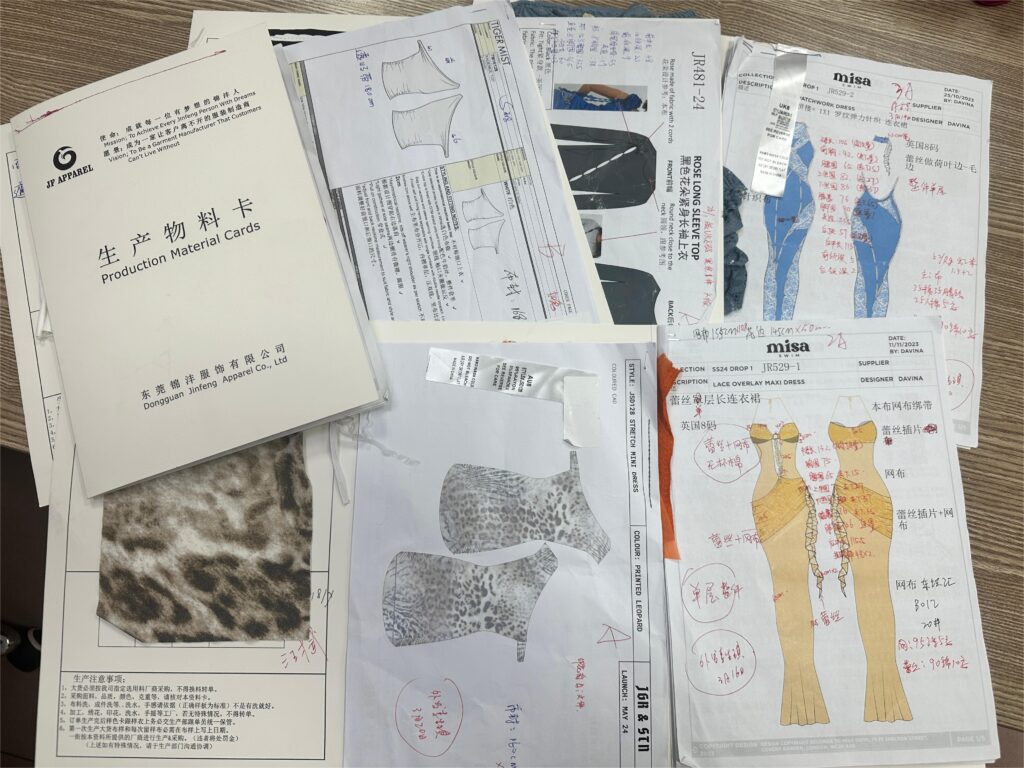
Tech Pack Development
- Best for precise OEM execution
- Flags missing or conflicting details
- Creates a clear quotation basis

Original Sample Review
- Best for fit or quality upgrades
- Changes documented before remaking
- Brand and sample confidentiality protected

Reference Image Development
- Best for ODM or visual concepts
- Requires measurement and fit direction
- Risk points confirmed before sampling
From Photo-Ready Sample to Production-Ready Approval
Different sample types answer different commercial and manufacturing questions. Treating every sample as final creates avoidable bulk risk.
Photo Samples Prioritize Visual Presentation
A photo-ready sample supports campaign photography, model content and early merchandising review. Surface finish, drape, color, silhouette and styling details receive close attention. A photo sample may be produced in a campaign size and may use an approved development fabric if the exact bulk material is still under final confirmation. Because it is built for visual use, it should not automatically be treated as the final production standard. Any difference in fabric lot, lining, labels, measurements, support components or packing must be identified. Jinfeng records the purpose of the sample so the production team knows which features are visual references and which are already approved for bulk. Where launch timing requires it, hero styles can receive photo-sample priority while other styles continue through fit and material confirmation.
Fit and Revised Samples Resolve Wear Issues
Fit samples are measured and reviewed against the target body, size chart, reference garment and brand fit comments. The review covers bust, waist, hip, dress length, strap, armhole, neckline, slit, hem and movement. Revised samples are produced when pattern, fabric, structure or important details have changed. Every revision should state the problem, cause, corrective action and effect on cost or timing. A fabric change may require a new pattern balance; a lower neckline may require support; a heavier trim may alter drape. Written records prevent the same issue from returning during PP or bulk production. Clear feedback with marked photos and measured comments speeds the revision cycle more effectively than general statements such as “make it fit better.”
PP Approval Locks the Bulk Standard
The PP sample is the production reference. Fabric, color, lining, trims, measurements, construction, labels, hangtags, barcode position, polybag and carton requirements should be confirmed before release. Jinfeng prepares the supporting files: final pattern, size chart, BOM, fabric reference, trim card, sewing instruction, label placement, packing instruction and QC checklist. Once PP approval is given, later changes require written review because they may affect material orders, production sequence, cost and shipment timing. For complex or long-running programs, a Golden sample reference can be sealed for line, QC and repeat-order comparison. Bulk production should not begin from an attractive photo sample alone when the production details remain open.

Production Allocation by Product and Material Complexity
Woven Dress Lines
- Woven pattern balance
- Seam and zipper control
- Hem and lining accuracy
Stretch Fashion Lines
- Recovery and shrinkage
- Side-seam stability
- Bulk measurement checks
Occasionwear Units
- Lining and support
- Slit and neckline safety
- Pressing and final finish
Corset Structures
- Support placement
- Bust and waist balance
- Comfort and symmetry
Complex Fabric Units
Mesh, lace, sequin and velvet require separate cutting, handling, needle, seam and packing methods.
- Surface protection
- Motif or direction control
- Special defect standards
Repeat-Order Lines
Approved commercial styles can be placed on stable production lines after material, color, quantity, packing and schedule are reconfirmed.
- Record retrieval
- Material reapproval
- Priority production plan
How Approved Samples Transfer Into Bulk Production
Sample approval only creates value when the approved standard reaches cutting, sewing, QC and packing without information loss.
Final Pattern and Size Files Control the Shape
The final pattern version and approved size chart are released together. Pattern names, revision dates and base-size references reduce the risk of using an earlier file. Grade rules are reviewed for key measurements and fit-sensitive points. Production markers follow fabric width, stretch or print direction, while cutting instructions identify directional nap, lace placement, bias areas and matching requirements. Cutting QC checks layer alignment, notches, piece count and obvious material defects before bundles move to sewing. For long dresses and fluid materials, relaxation and hanging behavior may also be considered before final hem control.
BOM and Trim Cards Protect Construction Accuracy
A BOM identifies shell, lining, zipper, buttons, bra cups, boning, lace, decorative trims, labels, hangtags, polybags and other components. The trim card records color, size, material, placement and approved supplier reference. Production cannot rely on a general description such as “matching zipper” when several similar colors exist. Jinfeng confirms material arrival and approved references before production. Any substitution requires review because a new zipper, lining or support component can alter fit, appearance, comfort and cost. The sewing instruction translates the sample into operation details, including seam type, stitch, reinforcement, edge finish, zipper application, lining attachment and pressing restrictions.
PP Standards Become QC Checkpoints
The QC checklist is built from the approved garment, not from generic inspection language. A satin slip dress may focus on snagging, seam puckering, cowl symmetry and strap length. A corset dress adds boning placement, cup alignment and support. A mesh dress adds holes, transparency, binding and lining coverage. Measurement points and tolerance are listed by style. Inspectors use the PP or Golden sample as the visual reference during inline and final review. Issues are classified, corrected and rechecked rather than being accepted because the overall garment “looks fine.”

Quality Control From Fabric Receipt to Final Packing
Incoming Materials
- Shade and surface review
- Trim color and specification
- Material discrepancy record
Pre-Production Review
- PP standard briefing
- Critical construction points
- Label and packing confirmation
Cutting Control
- Marker and direction
- Bundle identification
- Cut-piece defect checks
Inline Sewing Check
- Seam and zipper quality
- Support and lining position
- Key measurement checks
Finished Garment Inspection
Completed garments are checked for measurements, symmetry, construction, stains, pressing, trim security and appearance against the approved standard.
- Measurement tolerance
- Visual and functional checks
- Repair and reinspection
Packing Verification
Style, color, size, label, barcode, polybag and carton information are matched before shipment. Packing errors are treated as delivery defects, not administrative details.
- SKU verification
- Carton ratio and marks
- Pre-shipment records
Private-Label Packing for Ecommerce and Retail Delivery

Brand and Size Labels
- Woven main label
- Size label
- Placement confirmation
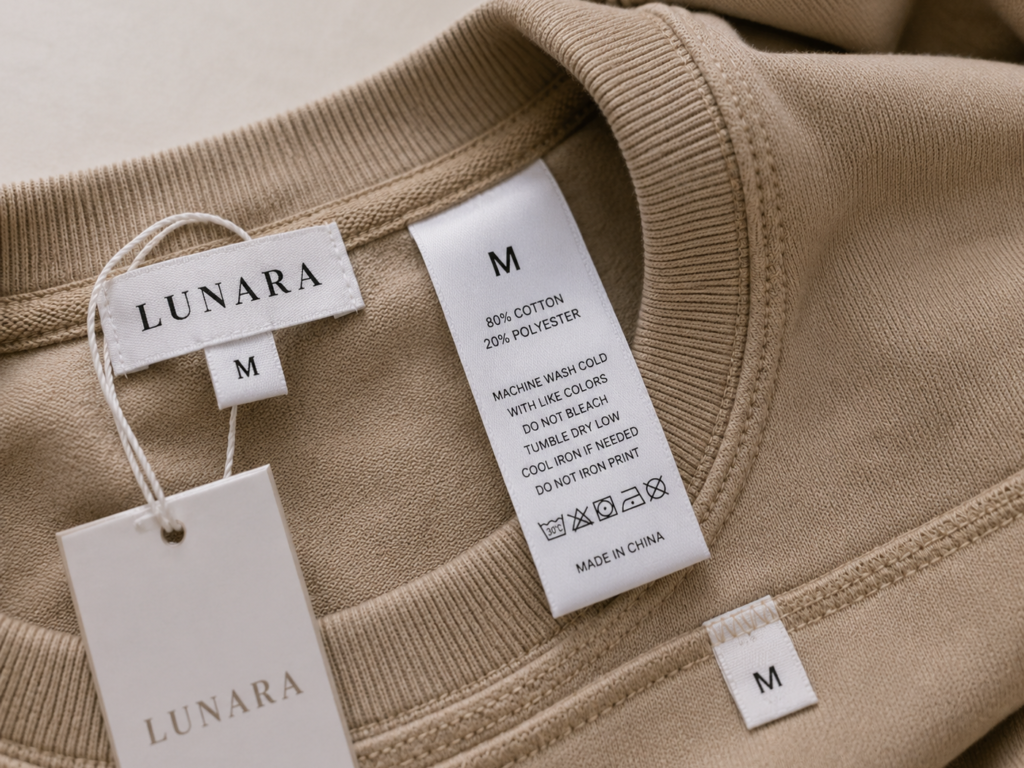
Care and Composition
- Fiber content
- Care symbols and text
- Country and market review
Hangtags and Tickets
- Brand hangtag
- Price or campaign ticket
- Attachment method
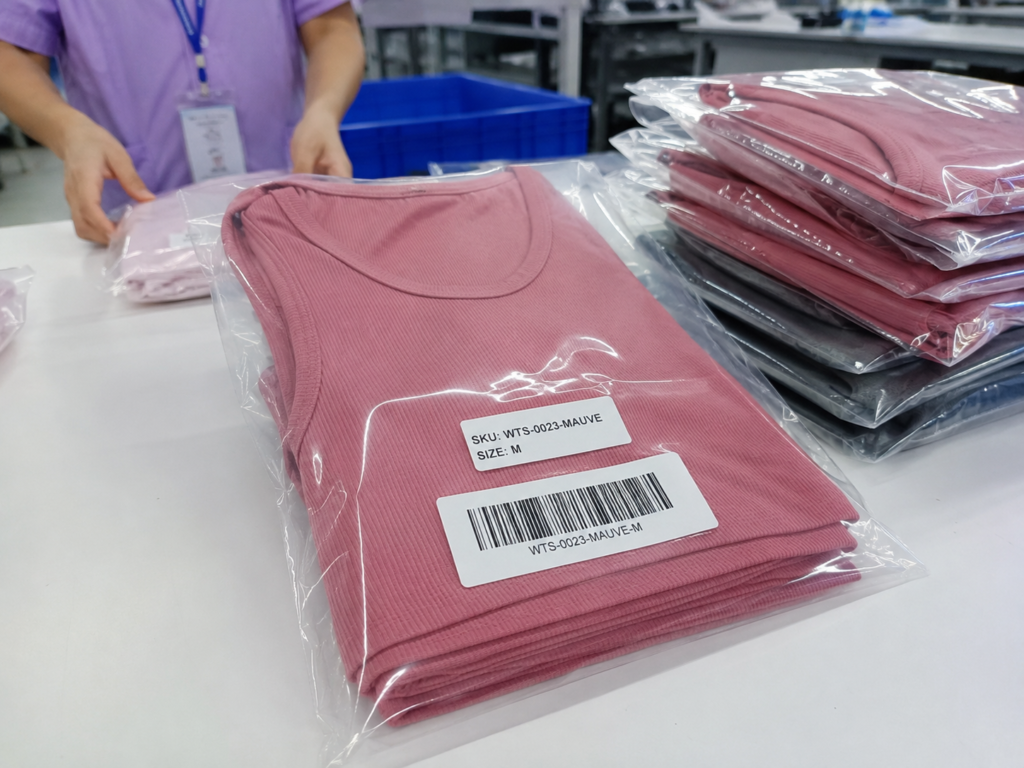
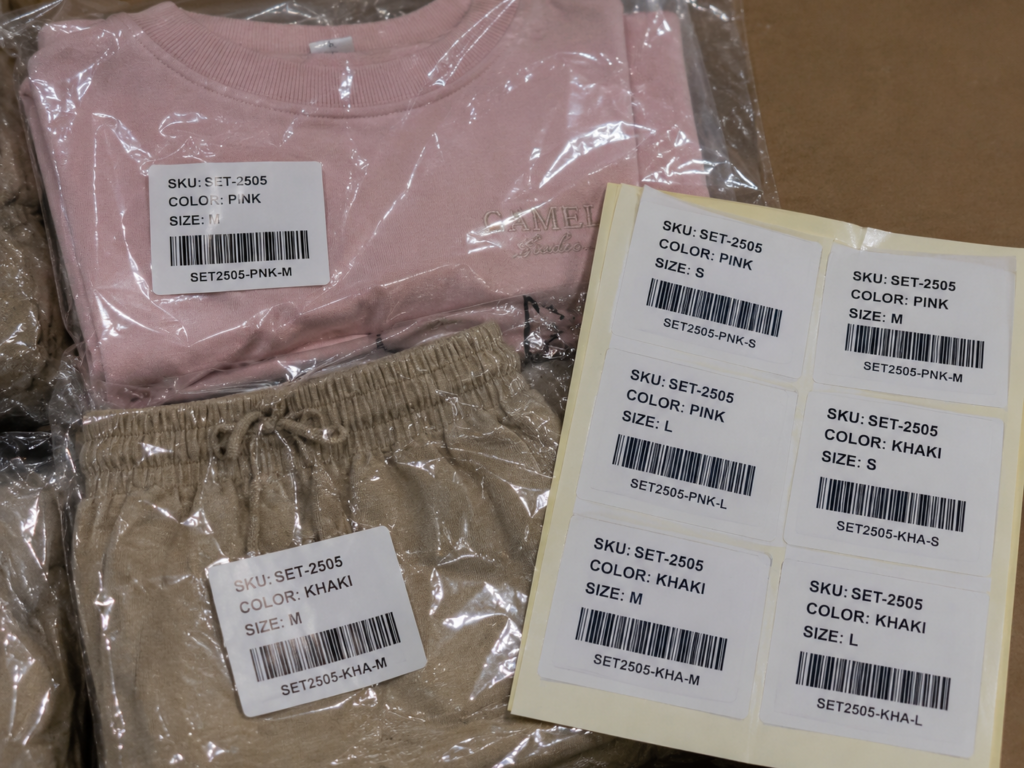
Barcode and SKU
- Style-color-size match
- Barcode position
- SKU list control
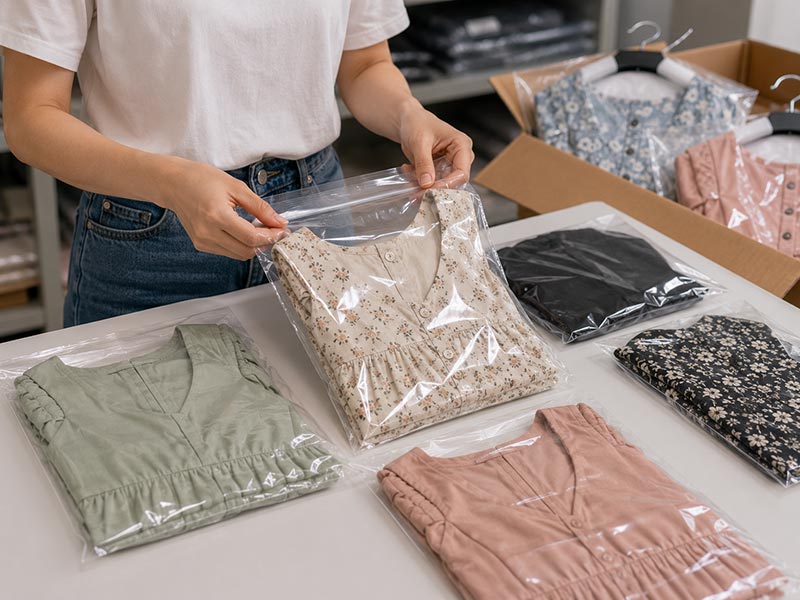
Polybag and Stickers
- Fold method
- Bag and sticker details
- Set or single-piece packing
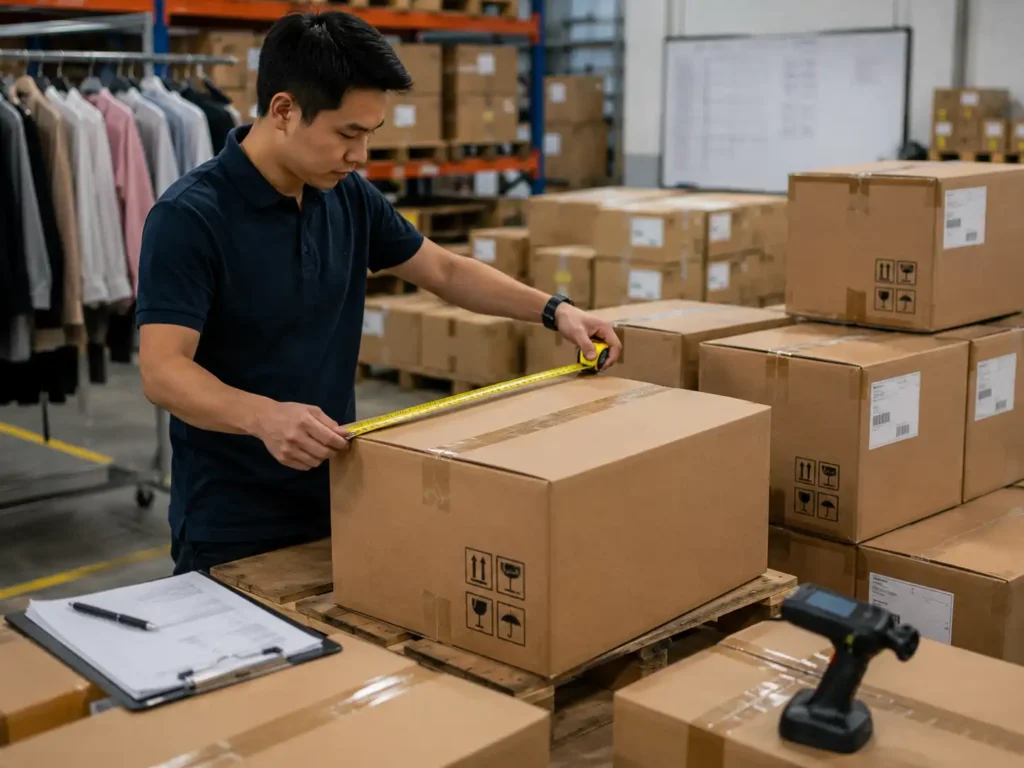
Cartons and Marks
- Carton breakdown
- Warehouse identification
- Packing list support
MOQ and Cost Planning for Multi-Style Collections
MOQ starts from 200 pieces per style/color. Final quantity and price depend on fabric source, color development, trims, construction, size ratio, packing and production timing.
| Order Structure | Planning View | Main Cost and MOQ Checks |
|---|---|---|
| 1 style / 1 color / 200 pcs | Normally aligned with the standard starting MOQ when regular materials and construction are available | Fabric stock, size ratio, labels and schedule |
| 1 style / 2 colors / 200 pcs each | Suitable for color expansion with separate color approval | Color batch, lining, zipper, thread, barcode and carton split |
| 10 styles / 2,000 pcs each | 20,000-piece collection suited to a structured multi-style program | Sample priority, factory allocation, PP sequence and shipment groups |
| 20 styles / 2,500 pcs each | 50,000-piece program requiring coordinated capacity and material booking | Shared fabrics, trim groups, QC resources and packing matrix |
| 30 styles / mixed quantities | Evaluated by style complexity and quantity per style/color | Hero SKU priority, complex-material capacity and staggered completion |
| Custom-dyed or printed fabrics | May require higher fabric MOQ and longer development | Lab dip, strike-off, mill MOQ, color approval and bulk batch |
| Lace, sequin or special trims | Supplier MOQ may be higher than garment MOQ | Motif, width, loss, custom color, decoration and replacement risk |
| Private-label materials | Labels, hangtags and printed bags can have separate supplier MOQs | Artwork, material, print method, quantity and lead time |
US Online Boutique Chain Dress Program
The following anonymized program reflects the scale and control points common in ongoing boutique-chain development while protecting brand identity, designs, labels and commercial files.

Program Snapshot: 18 Styles and 46,800 Pieces
An established United States online boutique chain planned an 18-style dress launch totaling 46,800 pieces across party, bodycon, satin, mesh, wedding-guest and resort directions. Quantities ranged from 1,600 to 4,200 pieces per style across two to four colors and a graded size range.
The program required early photo samples for six hero SKUs, revised fit samples for eight fit-sensitive styles and PP samples for every production style. Private-label requirements included woven labels, size labels, care labels, hangtags, barcode stickers, polybags, color-size stickers, carton marks and two warehouse destinations.
The launch sequence placed campaign styles first, commercial core styles second and complex lace/sequin products third. Brand name, artwork, product images and exact SKU information remain confidential.

Development Risks and Sample Decisions
The first review identified four major risk groups. Satin styles needed weight and shine alignment so campaign photos and bulk garments would present the same color depth. Bodycon styles needed stronger recovery and adjusted hip grading to reduce ride-up. Mesh dresses required separate transparency and lining rules by color. Lace and sequin styles required motif direction, comfort and protective packing. Jinfeng grouped the 18 styles by fabric and fit block, then issued a sample priority tracker. Six photo samples moved first for content production. Fit revisions focused on bust coverage, waist position, hip ease, strap length, slit height and maxi hem balance. Standard first samples were planned within 7-15 working days after material and instructions were confirmed, while complex styles received 12-20 working-day windows. Each change was recorded in the pattern, size chart, BOM and approval status rather than left in message threads.
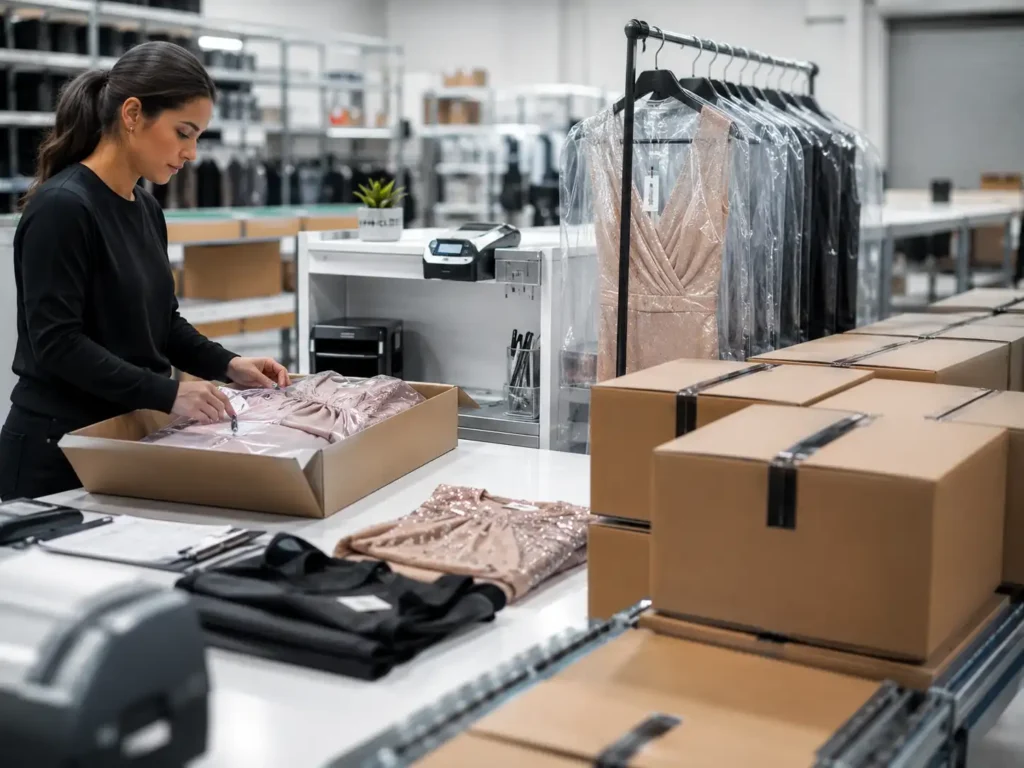
Bulk Control and Two-Stage Delivery
After PP approval, the collection was allocated across woven, stretch and complex-fabric production units.
The production handover included 18 final patterns, style-specific size charts, BOMs, fabric and trim cards, sewing instructions, label positions, barcode lists, packing instructions and QC checklists. Inline review concentrated on satin seam puckering, bodycon measurements, mesh holes and transparency, lace placement, sequin loss, zipper flatness and lining exposure.
Packing QC matched garment, label, barcode, polybag and carton data by style-color-size.
The first shipment contained 17,600 pieces covering the six campaign styles and selected replenishable colors; the remaining 29,200 pieces followed in the second stage. Independent packing lists and carton data were prepared for each warehouse and shipment method.
Frequently Asked Questions for Online Boutique Chains

Send Your Boutique Dress Program for Review
Send your line sheet, tech packs, reference images or original samples to Kelly for a structured project review. Jinfeng Apparel will assess product category, construction complexity, fabric direction, trim requirements, pattern and fit priorities, sample sequence, MOQ, bulk quantity, private-label packing and delivery planning.
A complete brief allows the team to identify risk before sampling and prepare a clearer development and quotation route. For a multi-style program, include the following information so styles can be grouped and prioritized correctly:
- Company name, website and target market
- Line sheet or list of styles with style numbers
- Tech packs, reference images or original samples
- Quantity per style/color and intended size range
- Preferred fabrics, colors, trims and target price level
- Photo sample, fit sample and PP sample requirements
- Woven labels, care labels, hangtags, barcodes and packing files
- Campaign date, launch date, warehouse date and shipment preference

