 Skip to content
Dress Manufacturer for TikTok-Driven Fashion Brands
Turn fast-moving dress concepts into photo-ready samples, controlled bulk production, and repeatable replenishment for established social-first fashion brands.
- Built for scaled programs: Typical collection projects involve 10-30 styles and total order plans from 20,000 to 80,000 garments, managed by style, color, size, packing instruction, and launch priority.
- Development depth: 2 sample rooms, 7+ senior pattern makers, and 20+ sample machinists support structured sampling, fit correction, photo-sample preparation, and PP approval.
- Production network: 6 owned women’s fashion factories, 10+ long-term production partners, 18+ sewing lines, and 100,000+ pieces of regular monthly capacity support planned scale-up.
- Brand-ready control: MOQ starts from 200 pieces per style/color, with private-label packing, QC checkpoints, repeat-order records, and export coordination built into the production plan.
Capacity Built Around Fast-Moving Dress Programs
Since 2008
6 Owned Factories
10+ Production Partners
2 Sample Rooms
15+ QC Inspectors
100,000+ Monthly
Built for Established Social-First Fashion Operations
Best Fit For
- Tech packs, line sheets, original samples, reference images, target prices, color plans, size ratios, private-label requirements, and warehouse instructions.
- Monthly or seasonal drops, photo-sample development, influencer seeding, launch campaigns, multi-SKU packing, repeat orders, and style extensions.
- Pattern retention, BOM records, fabric and trim references, QC standards, packing files, and repeat-order history create a more stable supply program over multiple seasons.
Not Designed For
Jinfeng Apparel is not positioned for ready-stock purchasing, dropshipping, single-piece fulfillment, personal tailoring, or fragmented micro orders. MOQ starts from 200 pieces per style/color because professional development requires coordinated materials, patterns, cutting, sewing, QC, labeling, packing, and production scheduling. Very small quantities often prevent stable fabric sourcing, color control, size planning, and repeatable workmanship.
Poor project fit:
- One-off samples without a bulk plan, 1-50 piece orders, no sample budget, no product direction, or requests based only on the lowest unit price.
Why the boundary matters:
- A clear production threshold protects fabric consistency, sample accuracy, QC coverage, and delivery reliability for serious brand programs.
Evaluation route:
- Projects near the MOQ boundary can still be reviewed when product direction, materials, size ratio, and long-term production potential are clear.
What Fast-Growth Dress Programs Need From Manufacturing
Trend-to-Product
Photo-Ready Samples
Fit-Led Development
Launch Control
Scalable Production
Repeatable Restocks
Start With a Structured Dress Project Review
Accurate development begins with enough information to judge structure, material, quantity, and schedule. Jinfeng reviews the project before quoting or sampling, then defines the most efficient route toward a production-ready dress.
What Brand Teams Should Send
A complete tech pack is helpful, but experienced fashion teams may enter development with different document levels. Jinfeng can review a tech pack, line sheet, original sample, reference image, sketch, moodboard, size chart, BOM, color plan, or private-label artwork. Stronger input produces faster and more accurate technical decisions.
Product definition: Style name, product category, front and back views, key design details, intended wearing occasion, and target retail positioning.
Fit information: Base size, size range, grade rule, target market, fit preference, body coverage requirements, and available fit-model feedback.
Material direction: Preferred fabric, composition, weight, stretch, color, print, lining, trims, and any certification or testing requirement.
Commercial plan: Estimated quantity per style/color, launch date, target price, sales market, order priority, and expected replenishment model.
Brand delivery: Labels, hangtags, barcode files, SKU structure, polybag, carton marks, warehouse rules, and nominated forwarder details when available.
What Jinfeng Reviews Before Sampling
The first review focuses on feasibility rather than a fast yes. Product developers and merchandisers identify the elements most likely to affect appearance, cost, sample timing, MOQ, or bulk stability. A corset mini with cups, boning, satin, and a low back requires a different plan from a stretch jersey bodycon dress or printed rayon maxi.
Structure risk: Pattern complexity, closure, bust support, lining, cut-outs, slit, ruffles, ruching, seam placement, and movement requirements.
Fabric risk: Drape, stretch direction, transparency, shine, shrinkage, shade variation, snagging, print direction, and bulk availability.
Production risk: Sewing sequence, difficult curves, symmetry, fabric handling, pressing, trim placement, and workmanship repeatability.
Commercial risk: MOQ per style/color, supplier material minimums, private-label minimums, color count, size breakdown, and proposed delivery window.
Approval route: Required sample types, likely revision points, photo-sample need, PP approval, testing, and pre-shipment inspection plan.
What the Review Produces
A qualified project review should leave the brand team with a clear next step. Jinfeng organizes an initial development brief covering the recommended material direction, missing technical information, sample route, quantity fit, cost drivers, risk points, and expected approval sequence. Precise pricing follows confirmed materials, construction, size range, quantity, packing, and testing scope.
Development recommendation: Proceed as submitted, adjust structure, test a fabric alternative, simplify a risk point, or clarify missing specifications.
Sample plan: First sample, fit sample, revised sample, photo-ready sample, salesman sample, PP sample, or golden sample as required.
Quotation basis: Fabric, trims, construction, pattern work, sewing time, pressing, QC, packing, wastage, logistics, and testing assumptions.
Timeline basis: Material readiness, sample complexity, approval speed, production slot, QC scope, packing preparation, and transport route.
Project ownership: Main contact, merchandiser, development owner, sample owner, production owner, QC owner, and logistics coordination route.

From Trend Direction to Repeatable Bulk Production
Project Launch
Feasibility Review
Fabric Direction
Pattern Development
First Sample
Fit and Revision
PP Approval
Bulk and QC
Delivery and Repeat
Dress Categories Built for Strong Visual Merchandising
TikTok-driven fashion operations often rely on clear silhouettes, movement, surface detail, and recognizable styling. Jinfeng focuses on dress categories where fabric choice, fit, construction, and bulk consistency directly affect content performance and sell-through.

Bodycon Dresses

Corset Dresses

Satin Dresses

Mesh Dresses

Sequin Dresses

Mini Dresses

Party Dresses
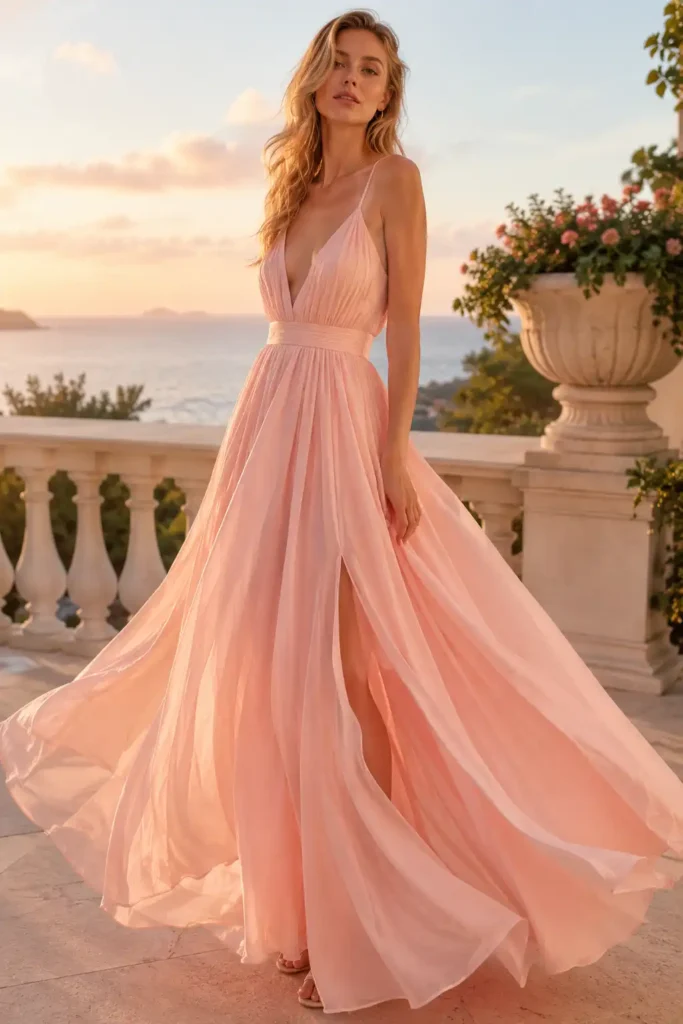
Maxi Dresses

Resort Dresses
Engineer Dresses for Camera, Movement, and Real Wear
Strong content begins with a garment that behaves well from every angle. Jinfeng develops visual details alongside fit, movement, comfort, and repeatability so content samples remain realistic standards for production.
Silhouette Must Hold Across Angles
Front-view styling alone is not enough for short-form video.
A fitted waist can appear clean from the front while side seams twist, the back neckline gaps, a zipper lifts, or an armhole exposes too much during movement. Pattern review considers front, back, side, seated, walking, and turning positions according to the garment’s intended use.
Upper body: Neckline depth, bust support, armhole coverage, strap angle, back height, cup position, boning, and closure stability.
Mid body: Waist placement, torso length, ruching distribution, cut-out position, side-seam balance, and lining tension.
Lower body: Hip ease, skirt length, slit height, hem sweep, lining length, movement allowance, and sitting coverage.
Size continuity: Base-size approval is followed by grade-rule review so visual proportion does not collapse in smaller or extended sizes.
Fabric influence: Stretch, recovery, drape, weight, surface shine, and transparency can change how the same pattern looks in motion.
Fabric Must Read Correctly On Camera
Camera lighting can exaggerate transparency, shine, wrinkles, surface texture, and color shifts. Satin may appear lighter or darker as the grain direction changes. White chiffon or pale mesh may look acceptable indoors yet reveal lining gaps under studio lighting. Sequins and metallic surfaces can create strong highlights while also showing missing pieces, seam lines, or packing marks.
Lighting review: Natural light, indoor light, flash, and studio light may produce different color and transparency readings.
Movement review: Drape, skirt flow, stretch recovery, fringe movement, ruffle balance, and hem behavior should match the content concept.
Surface review: Snags, pressing shine, puckering, pile direction, sequin loss, print alignment, and texture changes become visible in close-up content.
Lining review: Coverage, tone, length, seam visibility, and contrast with the shell fabric affect both appearance and comfort.
Color approval: Pantone references, physical swatches, lab dips, bulk dye lots, and approved lighting conditions reduce avoidable shade disputes.
Photo Samples Need Production Logic
A photo-ready sample may prioritize campaign timing, but it must not create an impossible production standard. Hand pinning, temporary tape, unapproved trims, unavailable fabrics, hidden fit corrections, or special one-off handling should never be mistaken for a repeatable bulk method. Jinfeng records approved construction, pattern revisions, materials, measurements, and workmanship before the PP stage.
Sample integrity: Any temporary content adjustment should be disclosed and translated into a real construction solution before bulk approval.
Material continuity: Photo-sample fabric and trims should be checked for bulk availability, color continuity, MOQ, and lead time.
Fit continuity: Pins, clips, or styling tricks cannot replace an approved pattern correction.
Workmanship continuity: One-off hand finishing must be evaluated for repeatable labor time, quality control, and cost.
Approval separation: Photo-ready, salesman, PP, and golden samples serve different purposes and should be identified clearly in project records.

Fabric Systems for Trend-Led Dress Collections
Stretch Jersey
Ponte and Roma
Satin Families
Mesh and Lace
Chiffon and Rayon
Sequin and Velvet
Pattern and Fit Control Across Markets and Sizes
Jinfeng develops US, UK, EU, AU, and alpha-size womenswear from the brand’s own size chart, base size, grade rules, fabric stretch, target market, and fit preference. Generic sizing is not substituted for a defined fit standard.
Base Size Establishes the Product
The base size is where silhouette, balance, coverage, and construction are first proven. Development begins by confirming the measurement chart and point-of-measure definitions, then comparing garment structure with the chosen material. A bodycon dress, corset dress, slip dress, and loose resort maxi need different ease and balance even when the nominal size is identical.
Core measurements: Bust, underbust, waist, high hip, full hip, shoulder, armhole, neckline drop, garment length, strap length, slit height, and lining length as required.
Fit conditions: Target body shape, intended support, movement, preferred ease, bra compatibility, coverage, and wearing occasion.
Fabric conditions: Stretch direction, recovery, drape, weight, thickness, shrinkage, transparency, and lining behavior.
Construction conditions: Boning, cups, elastic, anti-slip tape, zipper, ruching, cut-outs, panels, darts, princess seams, and seam placement.
Approval evidence: Measurement records, front/back/side photos, fit comments, revised pattern notes, and approved sample version.
Grade Rules Protect Proportion
Grading is not a simple percentage enlargement. Bust support, neckline depth, strap position, waist height, hip shaping, skirt length, slit placement, and cut-out exposure may need controlled increments by size. A fixed visual detail can become too small, too large, or incorrectly positioned when grading rules are applied without product review.
Alpha sizes: XS, S, M, L, and XL can be developed against the approved brand chart and market standard.
Numeric systems: US, UK, EU, and AU sizing can be supported when the client supplies measurements and grade expectations.
Extended sizes: Plus size, petite, and tall programs require dedicated evaluation rather than proportional enlargement.
High-risk details: Cup position, boning, strap spacing, armhole, waist seam, hip curve, slit height, and hem sweep should be reviewed across the size set.
Packing connection: Size labels, polybag stickers, SKU tables, carton breakdowns, and warehouse files must match the final size range exactly.
Extended Sizes Require Structural Review
Extended sizes may need changes in support, coverage, comfort, and fabric performance. Larger sizes can require wider straps, stronger lining, revised cup and boning placement, adjusted armhole coverage, additional hip room, different skirt balance, and better recovery from stretch materials. Petite and tall versions can require torso, strap, waist, rise, and length changes rather than only a shorter or longer hem.
Support: Bust structure, cup volume, neckline stability, shoulder or strap load, and back coverage.
Proportion: Torso length, waist placement, hip position, skirt balance, slit position, and overall silhouette.
Comfort: Armhole exposure, lining feel, seam bulk, boning pressure, sitting ease, and movement.
Fabric recovery: Stretch and recovery must remain sufficient across the planned size range.
Validation: Fit-model feedback and approved measurement tolerances should be confirmed before bulk size grading is released.
Tolerance Follows the Approved Standard
Bulk garments need a defined measurement tolerance because fabric behavior and garment construction create controlled variation. The client’s approved tolerance remains the primary standard. Critical points such as bust, waist, hip, strap length, neckline, garment length, slit height, and inseam are reviewed according to product type, material stretch, and fit sensitivity. Zero-tolerance promises are neither realistic nor responsible.
Tighter control areas: Fitted bust, waist, hip, cup placement, strap length, corset panels, zipper position, mini length, and cut-out placement.
Material-sensitive areas: Stretch knits, bias-cut satin, rayon, chiffon, mesh, and garments affected by hanging or shrinkage.
Measurement method: Point of measure, garment position, tension, fastening condition, and sample reference should be consistent.
Out-of-tolerance action: Isolate the issue, confirm the pattern and sewing cause, remeasure affected lots, repair when feasible, and record corrective action.
Size records: Measurement reports, grade rules, tolerance files, and approved sample data remain part of the repeat-order standard.
Sample Types Used Before Dress Bulk Production
Different samples answer different questions. Clear sample naming prevents a campaign sample, fitting sample, or sales sample from being treated as the final production standard before materials, measurements, construction, labels, and packing are fully approved.
| Sample Type | Main Purpose | Key Approval Points | Next Step |
|---|---|---|---|
| First Sample | Translate the design into a physical garment | Structure, fabric direction, pattern balance, initial measurements, construction feasibility | Fit review and revision list |
| Fit Sample | Evaluate wear, proportion, and movement | Bust, waist, hip, neckline, straps, armhole, length, slit, lining, comfort | Pattern correction |
| Revised Sample | Confirm approved corrections | Updated pattern, measurements, construction, material, and detail changes | Further revision or next approval stage |
| Photo-Ready Sample | Support campaign, ecommerce, or creator content | Camera-facing fit, color, movement, surface detail, back view, styling stability | Content use; not automatic bulk approval |
| Salesman Sample | Support internal sales or range presentation | Appearance, commercial fabric, color, fit, and presentation standard | Range selection or order planning |
| Size Set Sample | Review grading across selected sizes | Grade rules, proportion, fit continuity, key measurements, size-specific construction | Approve size range |
| PP Sample | Lock the production standard | Bulk fabric, color, trims, measurements, construction, labels, packing, workmanship | Release bulk production |
| Golden Sample | Keep the approved physical benchmark | Final approved appearance and construction reference | Bulk comparison and repeat-order reference |
Manage Ten to Thirty Styles Without Sample Confusion
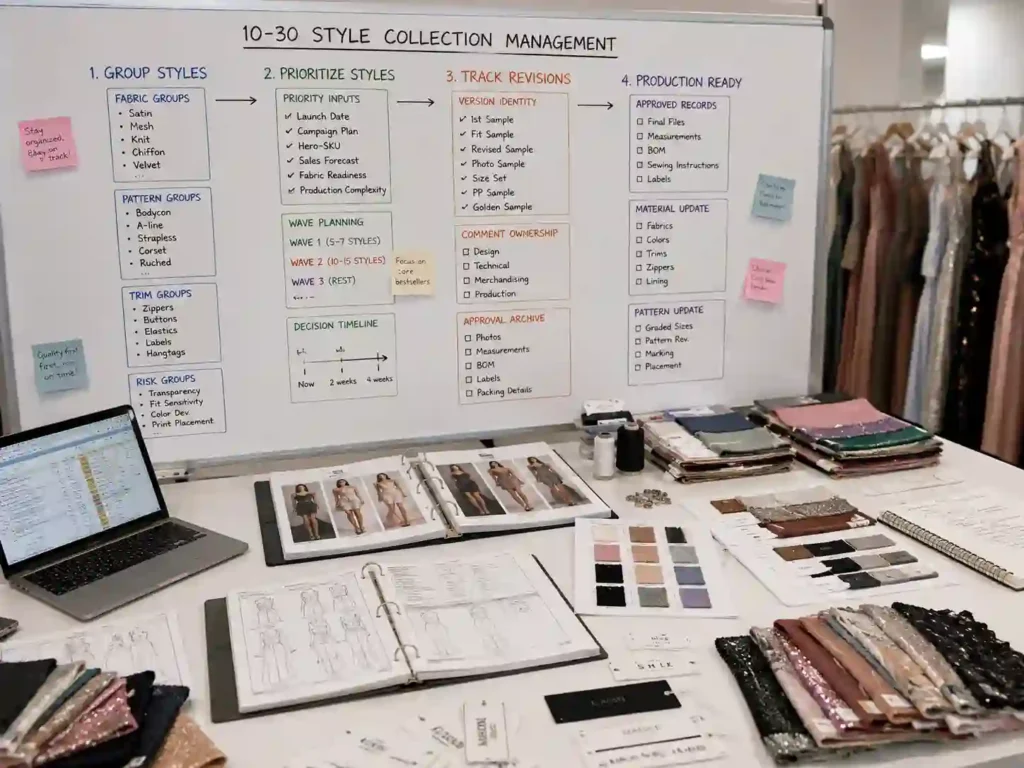
Mature social-first brands often develop 10-30 styles within one collection. A controlled sampling system groups related products, assigns priorities, records revisions, and keeps approved versions visible to design, merchandising, production, and QC teams.
Group Styles Before They Enter Sampling
A large assortment should not enter the sample room as a flat list. Jinfeng groups styles by fabric family, silhouette, construction, trim set, and launch priority. Shared materials can be reviewed together, while high-risk structures receive separate attention. Grouping improves fabric sourcing, pattern planning, fitting logic, and revision tracking without forcing every style into the same sequence.
Fabric groups: Satin, stretch knit, mesh, lace, chiffon, rayon, sequin, velvet, and printed woven families.
Pattern groups: Bodycon, corset, slip, A-line, halter, strapless, backless, ruched, and cut-out structures.
Trim groups: Shared zippers, cups, boning, sliders, elastics, labels, hangtags, packaging, and color standards.
Risk groups: Transparency, surface damage, fit sensitivity, color development, print placement, and complex workmanship.
Launch groups: Hero styles, supporting styles, content-first samples, sales samples, seasonal priorities, and later extensions.
Prioritize Styles by Commercial Importance
Priority does not mean rushing every step. It means deciding which styles must reach fitting, photography, PP approval, and production first to protect the launch. A hero mini dress for a campaign may need earlier photo-sample approval, while supporting colors or lower-priority silhouettes can follow after core materials and fit standards are confirmed.
Priority inputs: Launch date, campaign date, hero-SKU status, sales forecast, fabric readiness, pattern complexity, and production route.
Wave planning: A 15-style collection can be divided into three sample waves of five styles, or grouped by shared fabrics and pattern families.
Approval discipline: Each style carries a version name, revision list, approval status, and remaining action.
Material discipline: Unconfirmed color, print, lace, or trims are flagged separately so pattern work and material approval do not become mixed.
Decision timing: Delayed comments, changed references, or new details are recorded with their effect on cost and schedule.
Track Every Revision as a Version
Multi-style development fails when comments remain in chats, photos, and separate spreadsheets without one approved record. Jinfeng organizes revision comments by style number, sample version, measurement change, pattern change, material change, trim change, workmanship change, and approval status. Brand comments are converted into production language before the next sample is made.
Version identity: First sample, fit sample, revised sample, photo sample, size set, PP sample, and golden sample are named clearly.
Comment ownership: Design, technical, merchandising, and production comments are consolidated to prevent conflicting instructions.
Pattern update: Approved fit comments are reflected in the pattern and revision notes, not only corrected manually on one garment.
Material update: New fabric, color, lining, zipper, cup, boning, or trim choices are recorded with MOQ, cost, and lead-time effects.
Approval archive: Final files, photos, measurements, BOM, sewing instructions, labels, and packing details support bulk and repeat orders.
Plan Sampling, Bulk, and Delivery From Launch Date
A launch calendar should run backward from the required selling date. Material preparation, sample approval, production, inspection, packing, and transport all consume separate time, and late design changes usually affect more than one stage.
Use Planning Bands, Not Empty Speed Claims
Initial scheduling can use working ranges for planning, but every date remains subject to product review and material readiness. A straightforward dress using available fabric may reach a first sample in roughly 7-12 working days. Structured corset, lace, sequin, custom-color, print-placement, or special-trim styles may require about 12-20 working days or more. Revisions commonly need another 5-10 working days depending on the changes and material availability.
Technical review: Usually 2-4 working days for complete files; missing specifications extend the review.
Fabric and trim confirmation: Available materials move faster; lab dips, custom colors, special lace, prints, or molded trims add supplier lead time.
First sample: Planning range depends on pattern complexity, material readiness, workmanship, and sample-room priority.
Revision: Simple measurement or detail changes differ from a new fabric, rebuilt neckline, revised cup, or redesigned corset structure.
PP approval: Bulk should not begin until production fabric, color, trims, measurements, construction, labels, and packing are confirmed.
Planning ranges are not guaranteed promises. The confirmed schedule is issued after the style list, material route, sample sequence, approval responsibilities, production slot, and shipping plan are defined.
Bulk Production Begins After PP Approval
For many fashion dress programs, a planning band of roughly 30-50 days after PP approval and material readiness can be used for initial discussion.
Simple styles, repeat orders, and ready materials may move faster.
Large multi-style orders, custom fabrics, complex workmanship, extensive size ranges, special packing, testing, or high-volume production can require a longer window.
Before production: Fabric and trim arrival, bulk color approval, production documents, size breakdown, PP standard, and pre-production meeting.
During production: Cutting, sewing, in-line QC, measurement checks, finishing, pressing, label checks, packing checks, and corrective action.
Order scale: Programs of 20,000-80,000 pieces require style-by-style allocation, material flow, line planning, QC coverage, and shipment grouping.
Approval speed: Late comments, new colors, changed size ratios, or packing updates can alter production and delivery dates.
Repeat orders: Historical patterns and files shorten preparation only when fabric, color, trims, fit, and packing remain compatible.
Balance Launch Speed and Freight Cost
Launch-sensitive orders can use split delivery when the commercial benefit justifies added packing and document control. Selected hero styles, priority colors, or core sizes may move by express or air while the remaining bulk moves by sea. A common planning approach is to air-ship approximately 10-30% of urgent units and move the balance by sea, subject to freight cost, destination, warehouse rules, and sales priorities.
Express or air: Useful for photo samples, urgent launch units, top-selling colors, priority sizes, or replenishment needed before the main shipment.
Sea freight: Suitable for regular bulk, larger collections, planned seasonal inventory, and cost-controlled replenishment.
Split control: Separate packing lists, invoices, carton marks, SKU quantities, and warehouse instructions are required for each shipment.
Forwarder choice: Jinfeng can coordinate with a client-nominated forwarder or a factory-recommended forwarder.
Final timing: Transit time depends on destination, route, carrier, customs, warehouse appointment, and current logistics conditions.
Plan MOQ by Style, Color, Size, and Material
Jinfeng Apparel’s base MOQ starts from 200 pieces per style/color. Garment MOQ, fabric MOQ, color MOQ, trim MOQ, and private-label MOQ are related but not always identical, so quantity planning should begin before final quotation.
| Quantity Structure | Initial Assessment | Reason | Recommended Action |
|---|---|---|---|
| 1 style, 1 color, 200 pcs | Suitable for evaluation | Meets the base garment MOQ when fabric, trims, and packing are compatible | Submit size ratio and material direction |
| 1 style, 2 colors, 200 pcs each | Suitable for evaluation | Each color meets the base MOQ; color and material availability still require confirmation | Confirm color standards and per-color size ratio |
| 1 style, 2 colors, 100 pcs each | Usually below base MOQ | Each color creates separate material, cutting, SKU, QC, and packing work | Consolidate colors or increase per-color quantity |
| 4 styles, 50 pcs each | Not a regular structure | Each style requires separate pattern, cutting, sewing, QC, and production setup | Reduce style count or revise quantities |
| 10-30 style collection | Supported with planning | Each style/color normally follows MOQ, while shared fabrics and production groups can be evaluated together | Send line sheet, quantities, fabric groups, and priorities |
| Special lace, sequin, print, or custom color | Project-based MOQ | Supplier minimums, dye lots, print runs, width, loss, and color availability may exceed garment MOQ | Confirm supplier options before sample and quotation |
| XS-XL within one style/color | Supported with ratio control | Sizes can be divided within the MOQ, but over-fragmented ratios affect cutting, QC, labeling, and packing | Provide a realistic size breakdown |
| Private-label materials | Separate minimums may apply | Woven labels, hangtags, printed polybags, boxes, and special trims can have independent supplier MOQs | Confirm artwork, quantity, and supplier minimums |
Scale Dress Production Without Losing Product Control
Production capacity is only useful when styles are assigned to the right teams, approved standards remain visible, and materials, sizes, QC, packing, and delivery are coordinated by one project structure.
Match Each Style to the Right Team
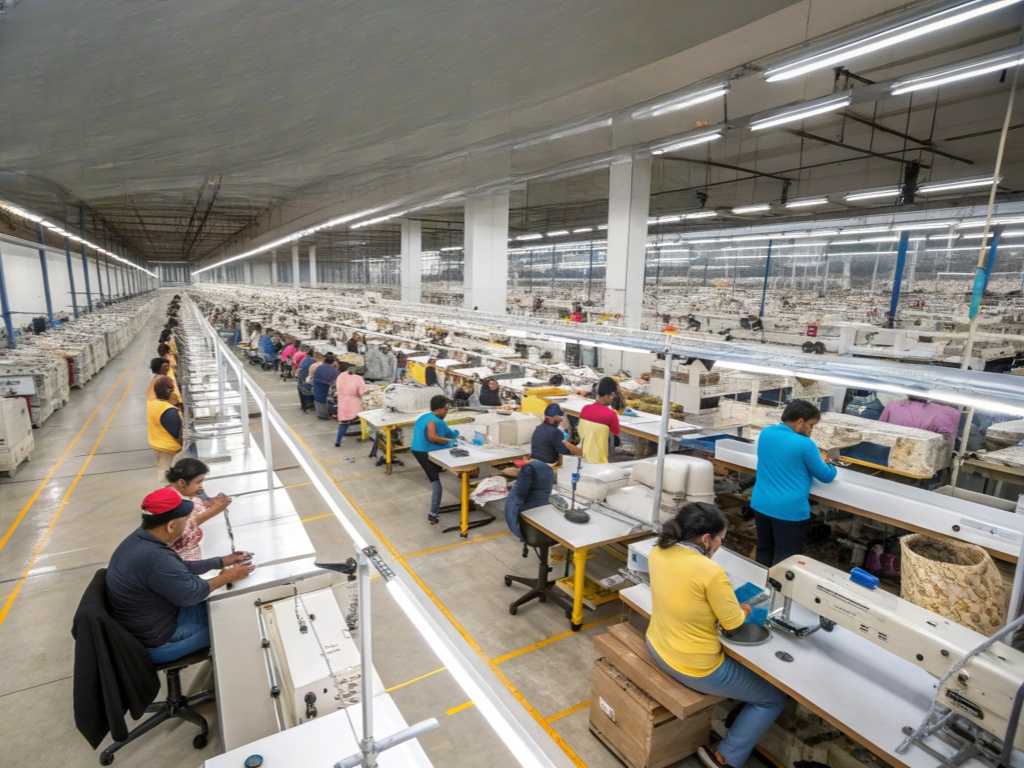
Jinfeng operates 6 owned women’s fashion factories and works with more than 10 long-term production partners. Allocation follows product type, fabric behavior, workmanship, order quantity, delivery timing, and QC requirements. Capacity is not distributed randomly, and a specialized product should not be placed on a line without the required handling experience.
Structured styles: Corset, strapless, evening, and formal dresses need teams familiar with cups, boning, lining, zippers, support, and pressing.
Stretch styles: Bodycon, ruched, mesh, and jersey dresses need stable seam stretch, recovery, measurement, and handling control.
Delicate fabrics: Satin, chiffon, lace, sequins, and velvet require surface protection, direction control, careful cutting, sewing, pressing, and packing.
Multi-style programs: Styles can be grouped by fabric, pattern family, construction, delivery priority, and production readiness.
Capacity confirmation: Line allocation follows approved samples, material arrival, production calendar, quantity, size ratio, QC scope, and shipment plan.
Control Bulk Through Production Documents
A production-ready style needs more than an approved garment on a hanger. Jinfeng converts approvals into working documents for pattern, measurements, BOM, sewing, trims, labels, packing, and QC. These files create one reference for merchandising, cutting, sewing, finishing, inspection, and repeat-order teams.
Pattern files: Approved shell, lining, interfacing, cup, boning, strap, slit, cut-out, and grading information.
Material files: Fabric reference, color standard, lining, zipper, cups, boning, elastic, lace, sequins, labels, and packing materials.
Construction files: Seam types, stitch requirements, attachment positions, reinforcement, finishing, pressing, and workmanship notes.
Measurement files: Size chart, base size, grade rule, tolerance, key points of measure, and size-set approval.
Packing files: Folding, polybag, sticker, barcode, SKU, size marking, carton ratio, carton mark, and warehouse instructions.
Use Flexible Capacity for Priority Styles
Jinfeng has 18+ sewing lines and 6+ flexible production lines within the broader production system. Flexible capacity can support prioritized styles, repeat-order coordination, or selected batches when materials and technical files are ready. It does not remove the need for PP approval, line setup, material continuity, or QC planning.
Hero-style priority: Key products can be scheduled earlier when approved files, materials, and production space align.
Repeat-order priority: Archived patterns and BOM records can reduce preparation time when the product remains technically compatible.
Batch planning: Large orders may be released by style group, color group, size ratio, production completion, or shipment priority.
Risk protection: Complex styles are not rushed into bulk before critical fit, material, and construction points are approved.
Communication: Weekly progress can cover materials, samples, revisions, production, QC, packing, risks, and next actions for long-running programs.

Workmanship Controls for High-Impact Dress Construction
Visual styles expose workmanship quickly. Seam shape, symmetry, support, fabric handling, edge finishing, pressing, and lining must be repeatable across every color and size rather than corrected only on the approved sample.
Corset, Cup, and Boning Construction
Corset dresses and structured bodices depend on internal architecture. Cup shape, boning placement, seam direction, lining, interfacing, waist tension, anti-slip support, and closure behavior determine whether the garment stays secure while preserving the intended silhouette. Small positioning errors can create gaping, pressure points, uneven bust shape, zipper lift, or asymmetry.
Cup position: Cup center, underbust line, neckline edge, and body coverage are checked against the approved pattern and size chart.
Boning position: Bone length, casing, end protection, seam alignment, and pressure against the body require controlled workmanship.
Closure: Zipper type, zipper length, hook-and-eye placement, back seam, and waist tension are reviewed together.
Support materials: Interfacing, lining, cups, anti-slip tape, elastic, and seam reinforcement should suit fabric weight and wearing conditions.
Size grading: Cup, boning, neckline, strap, and back proportions require size-specific review, not only overall enlargement.
Ruching, Cut-Outs, and Symmetry
Ruching and cut-outs create strong visual identity while adding production variation. Gather length, distribution, anchoring, seam tension, elastic length, and panel shape must remain controlled. Cut-out edges need stable finishing so the opening holds its intended shape without stretching, rolling, or exposing more than the approved sample.
Ruching control: Mark start and end points, gather ratio, direction, density, symmetry, and attachment method.
Cut-out control: Confirm edge shape, position, reinforcement, facing or binding, stretch direction, and body coverage.
Left-right balance: Necklines, straps, cups, ruching, slits, panels, and decorative details are compared for symmetry.
Seam tension: Stretch fabrics and mesh require balanced tension to avoid waviness, popping, distortion, or uneven gathering.
Bulk reference: Approved sample photos, pattern marks, and workmanship instructions remain visible during sewing and inspection.
Satin, Chiffon, Lace, and Mesh Handling
Delicate fabrics need control before sewing begins. Direction, relaxation, surface protection, cutting accuracy, seam choice, pressing, and packing influence the final appearance. Satin shows puckering and handling marks. Chiffon shifts and snags. Lace can tear or lose pattern alignment. Mesh can stretch, roll, or become uncomfortable at edges.
Cutting: Fabric direction, nap or shine, print or lace placement, layer stability, defect marking, and cut-panel identification.
Seaming: Needle choice, seam type, seam allowance, reinforcement, edge finishing, and compatibility with stretch or transparency.
Lining: Color, coverage, length, attachment, comfort, and visibility through the shell fabric.
Pressing: Temperature, pressure, protective cloth, seam shaping, and avoidance of shine, marks, or surface damage.
Packing: Controlled folding, tissue or protection where needed, hanger requirements, and reduced compression for sensitive surfaces.
Sequins, Trim, and Surface Details
Sequins, rhinestones, lace trims, chains, metal parts, and decorative attachments need separate workmanship controls. Strong visual details can become return drivers when they scratch skin, detach, catch on the fabric, damage packaging, or vary in position. Bulk production should define attachment method, placement reference, comfort protection, and inspection criteria.
Sequin handling: Direction, seam allowance clearing, thread security, replacement of missing pieces, lining protection, and zipper clearance.
Decorative placement: Use pattern marks, templates, or approved measurements for consistent location and symmetry.
Skin comfort: Internal backing, lining, seam finishing, trim edges, and contact points are reviewed for scratching or pressure.
Attachment strength: Buttons, hooks, sliders, stones, chains, bows, and appliques are checked according to product use and project requirements.
Packing protection: Surface details may need separate wrapping, reduced compression, or controlled folding to prevent abrasion and imprinting.
Quality Control From Fabric Arrival to Packed Cartons
Quality control follows the product through material inspection, cutting, sewing, measurement, finishing, labels, packing, and shipment preparation. Risk points change by fabric and silhouette, so inspection plans are linked to the approved style standard.
Incoming Materials and Cutting Control
Bulk quality can fail before sewing starts. Fabric shade, width, surface defects, stretch, shrinkage, print direction, lace placement, sequin direction, and quantity are checked against approved references. Trims, labels, and packing materials are reviewed for color, size, quality, quantity, comfort, and compatibility.
Fabric inspection: Shade, dye lot, handfeel, weight, width, defects, stretch, recovery, transparency, print, direction, and approved color reference.
Trim inspection: Zippers, cups, boning, elastic, sliders, buttons, lace, sequins, labels, hangtags, stickers, and packaging.
Cutting checks: Pattern version, fabric direction, grain, nap, print placement, panel count, size identification, defect avoidance, and bundle control.
Color separation: Different dye lots or visually different shades are identified and managed to avoid mixed panels within one garment.
Preparation records: Issues are documented before production so replacement, sorting, or corrective action occurs before sewing value is added.
Sewing and In-Line Inspection
In-line inspection catches construction drift while repair remains manageable. Inspectors review seam shape, measurements at key operations, symmetry, zipper, lining, support, ruching, cut-outs, straps, neckline, decorative placement, and fabric handling. The focus is not only defect detection but also identifying the process that creates repeated defects.
Operation checks: High-risk stages are reviewed before the next construction step hides or locks the issue.
Measurement checks: Critical points are measured against the approved spec and tolerance during production, not only at final inspection.
Workmanship checks: Puckering, skipped stitches, seam wave, twisting, asymmetry, exposed lining, zipper bulging, loose threads, and surface damage.
Corrective action: Affected bundles can be isolated, operators re-briefed, patterns or guides reviewed, and repaired pieces rechecked.
Version control: Only approved production files, pattern versions, trim standards, and packing instructions should remain on the line.
Final Garment and Measurement Review
Finished garments are reviewed for appearance, construction, measurements, fit-sensitive details, pressing, cleanliness, labels, and packing readiness. Product-specific risk determines the inspection emphasis: satin for snags and shine direction, mesh for holes and transparency, bodycon for recovery and measurements, corset for support and symmetry, sequins for surface loss and comfort.
Appearance: Color, shade, silhouette, symmetry, drape, ruching, trim placement, hem balance, pressing, and cleanliness.
Construction: Seams, reinforcement, zipper, closure, lining, cups, boning, straps, slit, cut-outs, labels, and decorative attachments.
Measurements: Bust, waist, hip, length, strap, armhole, neckline, slit, lining, and other approved points of measure.
Function: Zippers, hooks, adjustable straps, stretch recovery, closure security, movement, and product-specific wearing functions.
Repair control: Repaired garments are re-inspected so corrective work does not introduce new damage or measurement change.
Packing QC and Inspection Support
Packing errors can create warehouse rejection, wrong-SKU shipments, delayed launches, and consumer complaints even when the garment is correct. Jinfeng checks size labels, care labels, hangtags, barcode stickers, SKU labels, polybags, folding, quantity, carton ratios, carton marks, and packing-list consistency. AQL, client inspection, or third-party inspection can be supported by project.
Unit packing: Correct garment, size, color, labels, barcode, polybag, sticker, folding, and any inserts.
Carton packing: Correct style/color/size breakdown, pieces per carton, carton number, carton mark, and warehouse label.
Document match: Packing list, commercial invoice, carton data, gross and net weight, carton dimensions, and shipment instructions.
Inspection support: AQL or project-specific inspection standards, inspection space, sample selection, issue review, and corrective follow-up.
Confidential evidence: Measurement, label, barcode, carton, and shipment photos can be shared within the project while protecting brand identity and order data.
Build a Faster and Safer Bestseller Replenishment System
A viral sales spike creates pressure to replenish quickly, but repeating an old PO without checking materials, sizes, and changes can create a second problem. Jinfeng combines archived standards with a fresh compatibility review before restart.
Keep the Full Product Record
Replenishment begins with reliable records. Jinfeng retains style number, approved sample photos, patterns, grade rules, size chart, measurement tolerance, fabric and color references, trim records, BOM, sewing instructions, QC checklist, labels, packing instructions, carton marks, SKU data, order quantity, delivery history, and improvement notes.
Pattern records: First, revised, PP, bulk, lining, grading, cup, boning, strap, slit, cut-out, and hem information as applicable.
Material records: Fabric composition, supplier reference, color, dye lot, lining, trims, labels, packaging, and approved substitutions.
Production records: Sewing instructions, risk points, QC findings, repairs, pressing, and packing method.
Commercial records: Previous quantities, size ratios, colors, delivery method, warehouse rules, and brand feedback.
Approval records: PP or golden sample, approved photos, measurement reports, label files, barcode files, and packing approval.
Recheck Every Changed Variable
Historical files are valuable only when the reorder remains compatible. A new fabric, stretch level, weight, lining, color, cup, boning, neckline, strap, skirt length, slit, cut-out, or packing requirement can change fit and construction. New dye lots and replacement trims also need confirmation before the old pattern is released.
Same style, same materials: Confirm availability, color continuity, quantity, size ratio, schedule, and whether a PP or color sample is required.
New color: Review color standard, dye lot, shade risk, lining match, surface shine, and supplier MOQ.
New fabric: Reassess stretch, recovery, drape, shrinkage, opacity, weight, pattern balance, and measurement behavior.
Fit update: Revise pattern and grade rules when neckline, length, strap, bust, waist, hip, slit, or coverage changes.
Packing update: Confirm new labels, barcodes, SKU structure, cartons, warehouse address, and shipment split before production.
Extend Winners Into New Revenue
Repeat-order records also support controlled product expansion. A proven silhouette can be developed into new colors, seasonal fabrics, longer or shorter lengths, coordinated sets, or related styles. The original pattern and performance data provide a starting point, but each extension is reviewed for material behavior, fit, workmanship, and market use.
Color extension: Add seasonal colors after the original fit, material family, and sales performance are stable.
Fabric extension: Move a silhouette from jersey to ponte, satin, mesh, lace, or velvet only after pattern and construction compatibility review.
Length extension: Convert mini to midi or maxi with revised proportion, slit, lining, sweep, and movement rather than only adding length.
Collection extension: Build matching skirts, tops, jumpsuits, or related dresses using a consistent design language and private-label system.
Seasonal planning: Use repeat-order history to reserve fabrics, forecast hero sizes, plan colors, and schedule production earlier for key selling periods.

Private-Label Packing Ready for Ecommerce Operations
Woven Labels
Care Labels
Hangtags and Strings
Barcode and SKU
Polybags and Inserts
Cartons and Warehouse
Compliance and Inspection Support by Project
Factory Review Support
- Before approval: Confirm the brand’s audit protocol, required document list, accepted validity period, factory scope, and inspection schedule.
- During review: Provide available records, production information, QC process, packing process, and responsible contacts.
- Boundary: No claim is made that every factory or every order automatically carries every audit or certification.
Fabric and Testing Support
- Material check: Supplier name, certificate number, scope, validity, product class, fabric type, color, batch, and MOQ.
- Testing check: Fiber content, color fastness, shrinkage, seam performance, restricted substances, labeling, or other destination-specific requirements.
- Boundary: Final compliance approval remains with the brand, importer, laboratory, or qualified compliance adviser.
Inspection and Labeling
- Inspection basis: Approved PP sample, measurement chart, tolerance, workmanship standard, packing instruction, and defect classification.
- Label basis: Brand-provided or adviser-approved wording, size system, composition, country of origin, and market requirements.
- Boundary: No universal compliance guarantee is given for all products and all markets without a defined project review.
Protect Unreleased Styles, Campaigns, and Product Files
Protected Development Files
- Not published: Unreleased style images, technical files, order quantities, target prices, launch dates, and private-label details are not used publicly without authorization.
- Not transferred: Project files are not distributed outside the teams and suppliers required for approved development and production.
- Controlled archive: Records are retained to support bulk and repeat orders while protecting brand identity and confidential content.
Protected Samples and Images
- Private review: Front, back, side, detail, measurement, fabric, trim, QC, packing, and shipment photos can support approvals.
- Public boundary: No client logo, unreleased garment, order number, barcode, warehouse address, or campaign information is exposed without authorization.
- Case-study use: Anonymous process descriptions may be used only when brand identity and confidential details remain protected.
Protected Production Access
- Before sampling: Confirm NDA, image-use permission, sample return or archive expectations, and access restrictions.
- During production: Use style numbers, controlled files, approved suppliers, and project-specific communication.
- After shipment: Retain production records for repeat orders while keeping brand identity and unpublished details confidential.
Anonymous Dress Programs Managed at Commercial Scale
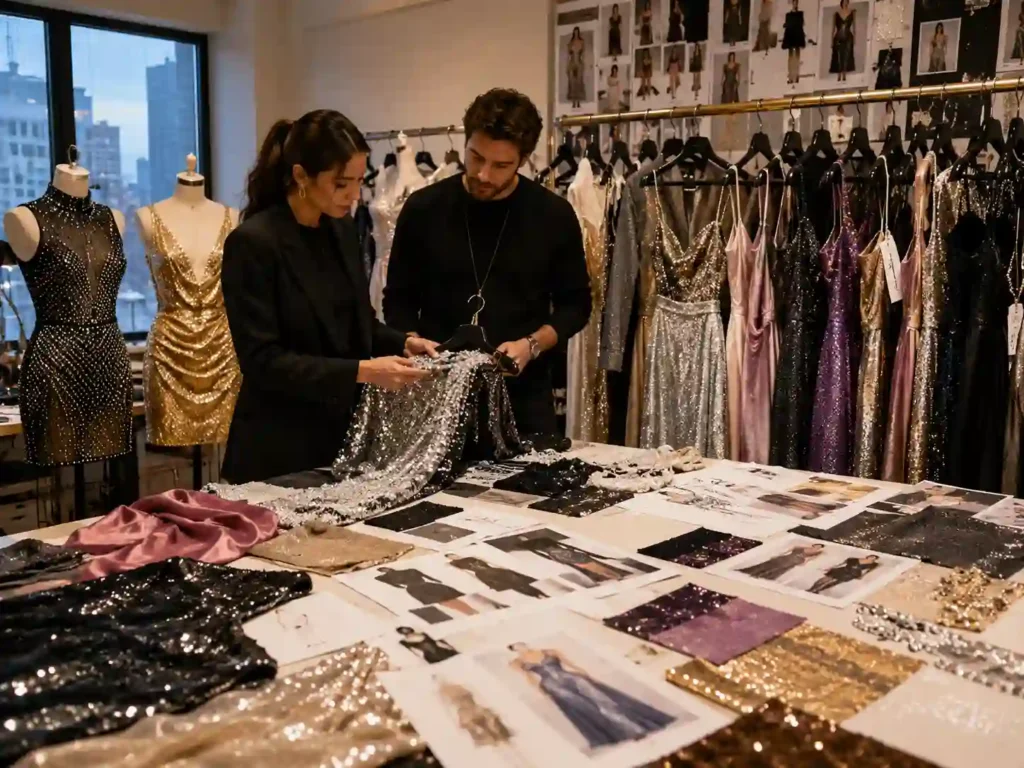
Partywear Launch Program
A US social-commerce fashion brand developed a 16-style partywear assortment covering corset minis, satin bodycon dresses, mesh-panel styles, sequin dresses, and cut-out silhouettes.
The planned order totaled 32,400 pieces across 5 core colors and an XS-XL size range. Launch timing required photo samples before the final bulk packing system was fully released.
- Development challenge: Corset fit, mesh transparency, sequin comfort, satin color direction, and mini-length safety varied by style.
- Sample plan: Three priority waves were used: 6 hero styles, 5 supporting styles, and 5 later-release styles. Hero styles received photo-ready samples before PP approval.
- Production control: Styles were allocated by fabric and structure. Approved patterns, BOM files, workmanship notes, measurements, labels, and packing instructions were released by style.
- QC focus: Bust support, cut-out position, ruching symmetry, mesh damage, sequin loss, satin snags, zipper flatness, and size-label accuracy.
- Delivery plan: Approximately 20% of launch-priority units moved by air, while the remaining bulk moved by sea with separate SKU and carton documentation.
- Verified project outcome: all 16 styles moved through structured sample, PP, production, QC, and split-shipment stages. Final commercial performance remains confidential.

Monthly Drop Collection
- Development challenge: Many styles shared visual direction but required different stretch, recovery, lining, and fit rules. Extended sizes could not use simple proportional grading.
- Sample plan: Styles were grouped into stretch knit, structured knit, mesh, and satin families. Sample priority followed campaign schedule, material readiness, and hero-SKU forecast.
- Fit control: Bust-waist-hip balance, strap angle, neckline depth, mini length, ruching distribution, and recovery were reviewed by material family.
- Production control: Separate size ratios, labels, barcode files, polybag stickers, carton breakdowns, and warehouse instructions were maintained by SKU.
- QC focus: Measurement consistency, seam wave, twisting, mesh transparency, satin puckering, label matching, barcode accuracy, and packed-carton reconciliation.
- Verified project outcome: 24 styles were managed through grouped development and production files, reducing cross-style confusion and supporting a structured monthly release. Sales data remains confidential.

Bestseller Replenishment Program
- Reorder challenge: Original patterns were available, but new satin colors, replacement mesh, revised labels, and updated warehouse rules changed the production basis.
- Record review: Patterns, grade rules, BOM, sewing instructions, approved samples, QC notes, size ratios, labels, packing files, and previous delivery records were retrieved.
- Compatibility check: New material stretch, shine, color, lining match, cup position, and zipper behavior were reviewed before old patterns were released.
- Production control: Original styles and updated variants were separated in production documents and QC checklists to prevent mixed standards.
- Delivery plan: Priority colors and top sizes moved in an earlier batch, followed by the main replenishment shipment with independent packing lists and carton marks.
- Verified project outcome: the repeat program used archived standards while treating changed materials, colors, labels, and warehouse rules as controlled updates. Brand identity and commercial results remain confidential.
Frequently Asked Questions


Send a Production-Ready Dress Project Brief
Jinfeng Apparel helps established TikTok-driven and social-first fashion brands move from dress concepts to photo-ready samples, approved production standards, stable bulk orders, private-label packing, and repeatable replenishment. A clear brief allows Kelly and the development team to evaluate structure, fabric, MOQ, sample route, cost drivers, production risk, and launch timing before recommending the next step.
Prepare the following information for a focused project review:
- Brand and market: Company name, website or social channel, target country, sales channel, and intended launch period.
- Product scope: Tech pack, line sheet, reference image, original sample photos, style count, and priority styles.
- Quantity plan: Estimated pieces per style/color, size range, size ratio, color plan, and expected repeat-order potential.
- Materials: Fabric direction, composition, weight, stretch, color, print, lining, trims, and any certification or test request.
- Fit standard: Base size, size chart, grade rule, tolerance, target market, and fit preference.
- Brand delivery: Woven labels, care labels, hangtags, barcodes, SKU files, polybags, cartons, warehouse labels, and packing instructions.
- Timeline and logistics: Photo date, launch date, target delivery, nominated forwarder, preferred shipping route, and warehouse requirements.
- Confidentiality: NDA requirement, image-use restrictions, unreleased-product controls, and file-access expectations.

