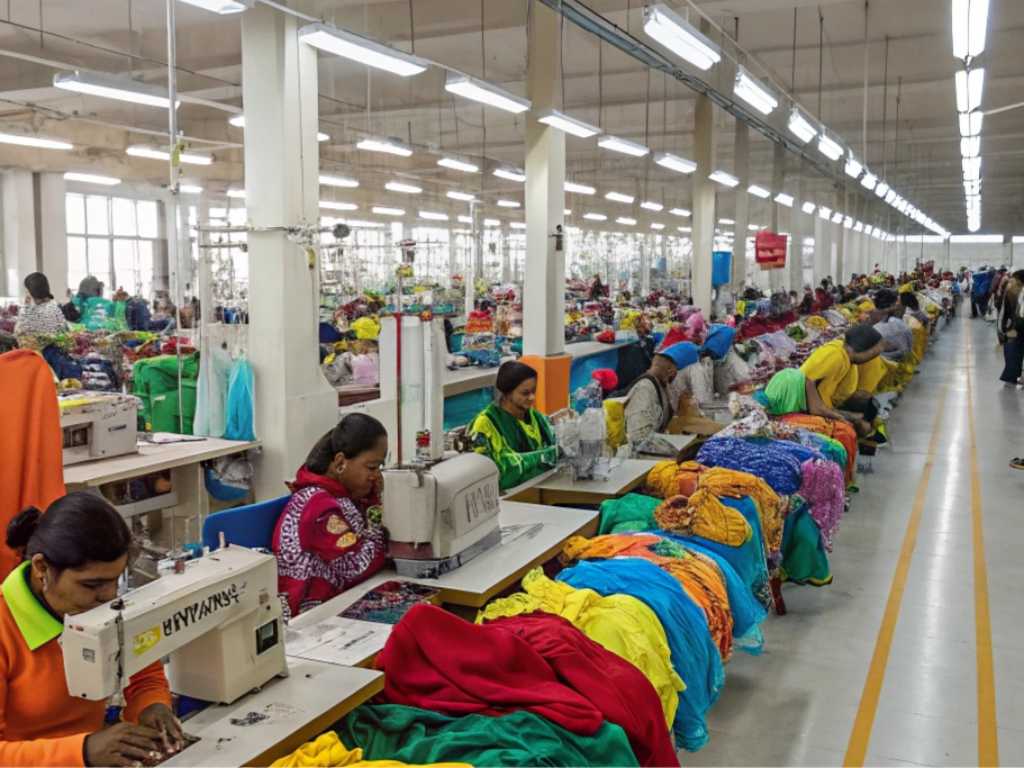
Dress Manufacturer for Collection-Driven Fashion Brands
Multi-style dress development built around one collection plan, one approval system and one coordinated launch calendar.
Jinfeng Apparel supports established fashion brands that develop seasonal assortments, capsule collections and repeatable womenswear programs rather than isolated single styles.
- Collection programs commonly involve 10-30 stylesand total order plans of 20,000-80,000 pieces.
- 2 sample rooms, 7+ senior pattern makers and 20+ sample machinistssupport parallel development and revision control.
- 6 owned women’s fashion factories, 10+ long-term production partners and 18+ sewing linesprovide product-specific bulk allocation.
- 12+ merchandisers and 15+ QC inspectorsconnect line sheets, samples, PP approvals, production records, packing files and repeat orders.
Development Capacity Built for Multi-Style Collections
2 Sample Rooms
7+ Pattern Makers
20+ Sample Machinists
12+ Merchandisers
6+ Flexible Lines
15+ QC Inspectors
One Manufacturing System for the Entire Collection
Collection Planning
Fabric Sourcing
Pattern Development
Parallel Sampling
Bulk Allocation
Quality Control
Private Label Delivery
Repeat-Order Support
Built for Brands With a Real Collection Plan
Best Fit For
- Multi-style dress and womenswear collections
- Seasonal, capsule and event-led launches
- Product development and sourcing teams
- Established ecommerce and retail programs
- Brands requiring private-label delivery
- Programs with repeat-order potential
Different Supply Models
- Ready-made inventory purchasing
- One-piece direct fulfillment
- Personal or event-only tailoring
- Extremely fragmented quantities by style and color
- Projects without sample or bulk plans
- Quotations without defined product information
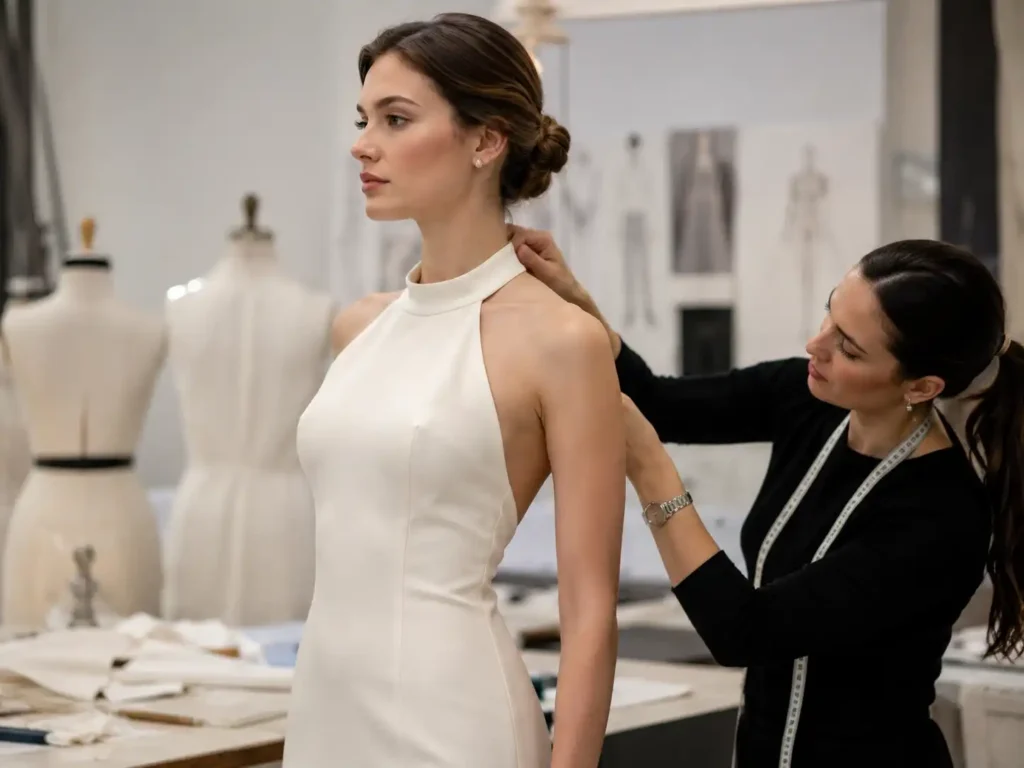
Collection Manufacturing Requires More Than Single-Style Execution
Assortment Coordination
Parallel Development
One Launch Calendar
Six Risks That Disrupt Multi-Style Dress Programs
Most collection failures begin before bulk sewing. Weak material planning, unclear sample priorities and uncontrolled revisions create avoidable cost, timing and quality problems that become harder to correct once fabric is purchased and production is assigned.
Disconnected Styles
Sampling Bottlenecks
Fabric Fragmentation
Revision Confusion
Bulk Inconsistency
Launch Delays
Product Architecture for a Commercial Dress Collection

Hero Occasion Styles
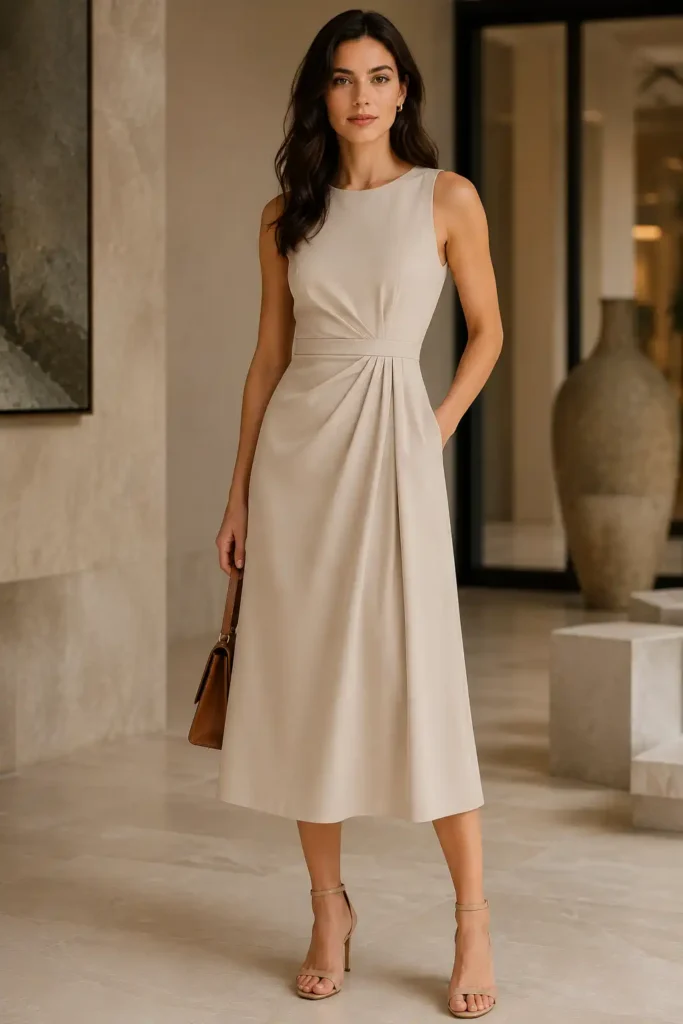
Commercial Midi Dresses
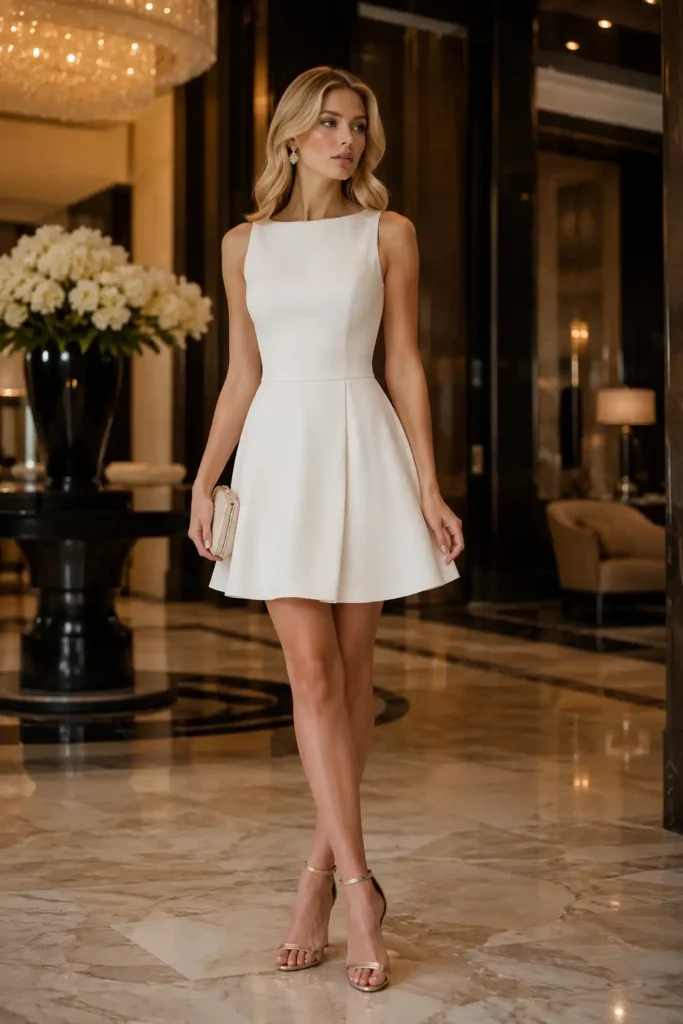
Social Mini Dresses
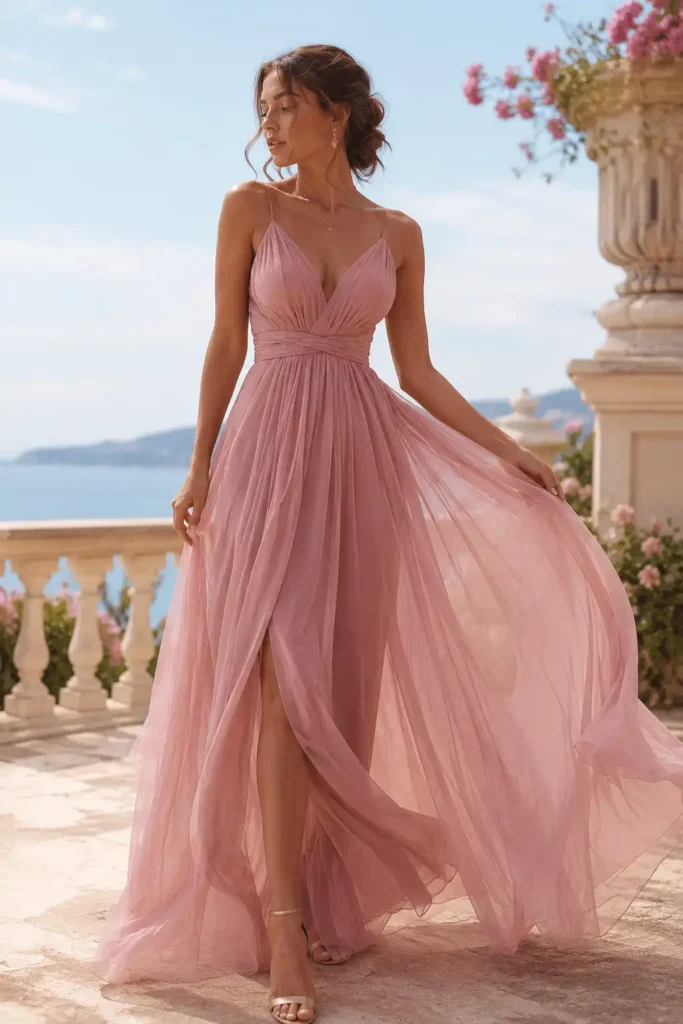
Resort Maxi Dresses

Jumpsuits and Sets

Skirts and Coordinated Tops
Files Needed for an Accurate Collection Review
Accurate planning begins with enough information to evaluate style structure, material risk, quantity, size, branding and timing. A complete tech pack is ideal, but a line sheet and clear references can support an initial review before technical files are finalized.
| Project File | What Jinfeng Apparel Reviews |
|---|---|
| Line sheet | Style count, assortment structure, product groups and development priority |
| Tech packs | Measurements, POM, construction, BOM, trims, labels and packing instructions |
| Reference images | Silhouette, proportion, design details, likely fabric direction and production risk |
| Original samples | Fit, measurements, construction, material behavior and finishing standard |
| Quantity plan | MOQ fit, color split, size ratio, factory allocation and costing basis |
| Fabric direction | Composition, weight, stretch, drape, transparency, color and supplier lead time |
| Color plan | Stock colors, custom dye requirements, lab dips, lining and trim coordination |
| Size range | Base size, grade rules, market-specific size chart and fit approval method |
| Launch date | Sample priority, PP deadline, production window, freight and warehouse milestones |
| Label and packing files | Branding, barcode, SKU, polybag, inserts, carton marks and warehouse instructions |
Collection-Level Project Management Keeps Every Style Traceable
A line sheet becomes production-ready only after hundreds of small decisions are recorded and connected. Jinfeng Apparel uses dedicated merchandising and order follow-up resources to keep style status, material approvals, sample versions and production milestones visible across programs commonly containing 10-30 styles.
Style Development Tracker
Each style receives a clear identifier and current status rather than being managed only by product name or reference image. The tracker can record style number, category, priority, assigned material group, pattern status, sample version, measurement review, client comments, approval state, PP readiness, bulk quantity and required delivery sequence.
A 20-style assortment may contain several development paths at once. Five hero styles could need photo samples before the remaining commercial products; six styles may share one satin family; four stretch products may require a separate fit review; and selected pieces may wait for custom trims. A style tracker makes those dependencies visible before they become delays.
Status language should remain specific. “In sampling” is too broad for a large program. Useful status points include pattern in progress, material pending, first sample sewing, measurement review, comments received, revised sample required, PP materials pending, PP approved and ready for bulk. Clear wording allows the brand team and factory team to discuss the same stage without interpretation.
Material Approval Tracker
Fabric and trim approvals are managed separately from garment approvals because a visually acceptable sample may still use substitute material. The material tracker records supplier, composition, weight, width, stretch, hand feel, transparency, color, dye lot, MOQ, lead time, approval photo and physical swatch reference where available.
Trims and packaging require the same control. Zippers, hooks, strap sliders, bra cups, boning, anti-slip tape, lace trims, sequins, woven labels, care labels, hangtags, barcode stickers, polybags and cartons can each affect cost, lead time and bulk consistency. Approval status must show whether an item is temporary for sampling or locked for production.
Material grouping also supports commercial decisions. Shared fabrics can reduce fragmented purchasing, while hero materials may remain exclusive to statement products. A substitution is never treated as a simple name change; differences in weight, stretch, drape or width may require pattern correction, revised costing and another sample.
Sample Version Control
Every sample round should answer a defined question. A first sample checks design direction, structure and material behavior. A fit or revised sample resolves pattern, measurements, trims or sewing details. A photo sample serves visual or campaign needs. A PP sample confirms the final production combination. A Golden sample becomes the sealed reference for bulk comparison.
Revision records capture pattern changes, measurement changes, material replacements, trim adjustments, sewing methods, client comments and approval status. Marked images are linked to written instructions so a comment such as “raise neckline” becomes a measurable adjustment rather than an open interpretation.
Version control prevents old comments from returning after a newer approval. The final pattern, size chart, BOM, trim card and PP comments must carry the same revision date before production instructions are released.
Production and Delivery Schedule
The production schedule starts from material readiness and PP approval, not from the first inquiry date. Milestones include fabric booking, lab dip or print approval where required, bulk fabric arrival, trim readiness, final pattern release, production unit allocation, cutting, inline inspection, finishing, packing, pre-shipment inspection and freight handover.
Launch-critical styles can be separated from later extensions. Priority sizes or colors may be planned for a first shipment, while the remaining bulk follows through a lower-cost route. Split shipment planning requires exact SKU separation, carton marks and packing lists so speed does not create warehouse confusion.
Schedule changes are recorded against the affected styles and materials. Moving one PP approval may change cutting and delivery dates for only part of the assortment; a visible schedule makes the impact easier to assess without unnecessarily delaying products already ready for production.
Fabric, Color and Trim Planning Across the Collection
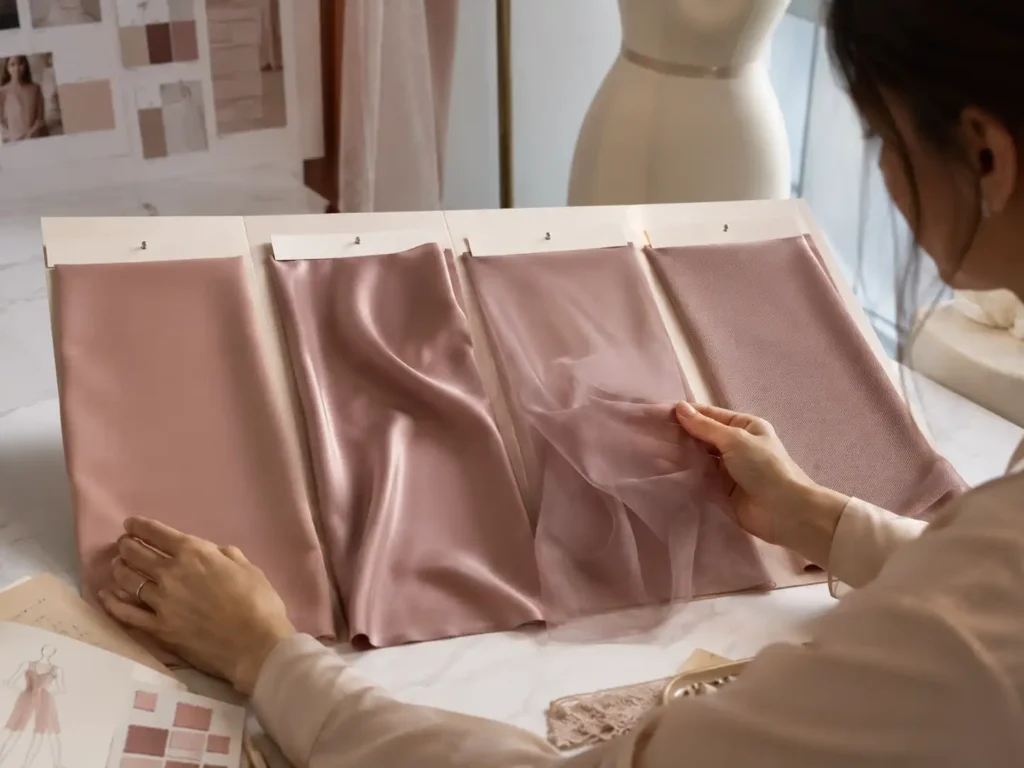
Shared Base Fabrics

Hero Style Materials

Color Control

Lining Coordination

Shared Trim Families

Private Label Materials
Parallel Sampling With Priority, Timing and Revision Control
Jinfeng Apparel uses 2 sample rooms, 7+ senior pattern makers and 20+ sample machinists to organize multi-style sampling by commercial priority and technical readiness. Speed is measured by how reliably key products reach approval, not by rushing every style into the same queue.
Priority Rules for Key Styles
Sampling priority is set around launch date, hero SKU status, photography requirements, fabric readiness, construction complexity and expected bulk lead time. A campaign dress with custom lace may start before a simpler extension even when both appear on the same line sheet. A core commercial style may also move early when its order quantity or repeat potential makes it critical to the launch.
The priority list is agreed before sample work becomes congested. Brands can identify products needed for campaign photography, sales meetings, fit sessions or wholesale appointments. Jinfeng Apparel then maps pattern, fabric and sample-room requirements around those deadlines while keeping the rest of the assortment visible.
Priority does not remove technical steps. A key style still needs structure review, measurement control and material confirmation. The purpose is to allocate attention in the right order, not to skip development safeguards.
Sampling Groups and Parallel Work
Styles can be grouped by shared fabric, silhouette, trim family, sewing method or pattern complexity. Satin dresses may form one material group; bodycon and jersey styles can share stretch-fit review; corset and strapless products may use a support-structure group; skirts and coordinated tops can be developed as paired products.
Grouping helps pattern makers and sample machinists compare related construction points while reducing repeated sourcing work. It also reveals conflicts early. Two styles may appear to share fabric but require different stretch, weight or lining performance. Parallel work remains controlled because each style keeps its own pattern, measurements, comments and approval record.
A 10-30 style program is therefore managed as several connected workstreams rather than one oversized sample request.
Reference Sample Timelines
Sample timing depends on material availability, pattern difficulty, trims and feedback speed. Internal reference periods are:
- Simple first sample: 7-10 days
- Standard dress first sample: 10-15 days
- Medium-complexity dress, set or jumpsuit: 12-18 days
- Corset, strapless, lace, mesh or sequin style: 15-25 days
- Custom fabric or special trim sample: 20-35 days, or according to supplier lead time
- Revised sample: usually 7-15 days, depending on the changes
- PP sample: usually 7-15 daysafter final materials are ready
Timelines are planned per style group. A complex hero product should not create a false expectation that every commercial style will follow the same duration, and a fast simple sample should not be used to promise an unrealistic schedule for custom materials.
Revision and Approval Control
Simple dresses often require a first sample and one revised sample. Medium-complexity products may need one or two revisions.
Corset, strapless, evening, sequin, lace and mesh styles commonly require around two revision rounds, depending on structure and design changes.
Each round records fit comments, measurements, pattern changes, material changes, trim adjustments and sewing updates. A style moves toward PP only after structure, measurements, fabric, color, trims, construction and bulk feasibility are sufficiently clear.
Major design changes after PP approval are treated as controlled changes because they can affect patterns, materials, cost, production instructions and delivery. Keeping approvals disciplined protects both the launch date and the quality of the final assortment.
Fit Standards That Stay Consistent Across Styles
Shared Fit Language
The approved base size, measurement method and grade rules establish the collection fit language. Bust, waist, hip, dress length, strap length, armhole, neckline depth, slit height, hem width and jumpsuit inseam are reviewed according to product type. A program with 18 styles and five sizes already creates 90 style-size combinations before colors are added, making clear measurement files essential.
- Base size and target market confirmed
- POM definitions aligned
- Measuring method recorded
- Tolerances linked to bulk QC
- Grade rules reviewed by style type
Style-Specific Structure
Bodycon dresses depend on stretch and recovery; corset styles depend on cup, boning and waist structure; strapless products need upper-bust stability and anti-slip control; backless products need front security and side coverage; maxi dresses need hem balance; jumpsuits need torso and crotch length. Shared fit direction remains useful, but each structure receives its own risk review.
- Support and coverage
- Movement and comfort
- Fabric behavior
- Closure position
- Lining interaction
Grading and Bulk Measurement
- Final pattern version locked
- Size chart updated
- Grade rules documented
- PP sample measured
- Bulk checkpoints defined
How Approved Samples Become Reliable Bulk Standards
A good sample only creates value when every approved decision is translated into production files. Jinfeng Apparel connects final patterns, material records, construction instructions, measurements, branding and packing requirements before bulk work begins.
PP Lock Before Production
The PP sample confirms the final combination of fabric, color, trims, measurements, construction, labels and packing direction. Approval is not a ceremonial step. It marks the point where development decisions are converted into a production standard that cutting, sewing, QC and packing teams can follow.
Before PP approval, temporary sample materials are identified, unresolved comments remain visible and bulk cost assumptions are checked. After approval, changes require a documented review because even a small adjustment can affect pattern shape, fabric use, trim ordering, sewing sequence, measurement tolerance or delivery timing.
A photo sample is not automatically a PP sample. Campaign samples may prioritize appearance or use available materials, while a PP sample must represent the production combination closely enough to guide bulk execution.
Production File Package
The production package can include the final pattern, size chart, grade rules, BOM, fabric reference, trim card, sewing instruction, label placement, packing instruction, PP comments and QC checklist. Style numbers and revision dates must match across files.
BOM control is especially important for collection programs. Similar dresses may use different zipper lengths, lining coverage, cup types, boning, hook placement or label positions. A generic instruction creates room for substitution and inconsistency; a style-specific BOM keeps the approved product clear.
Where a Golden sample is sealed, it becomes a visual and construction reference alongside the written files. QC should never rely on appearance alone, so measurements, material records and sewing instructions remain part of the standard.
Pre-Production Review
Before cutting, merchandising, production and QC teams review material status, pattern release, key construction points, measurement checkpoints, labels and packing requirements. Complex products receive focused notes on satin direction, lace placement, mesh transparency, sequin protection, corset support, slit position, lining and pressing.
The review also confirms whether styles share materials, whether any approved substitute is being used and whether shipment priorities affect packing. A production unit should not receive incomplete files simply because fabric has arrived.
Pre-production alignment reduces the common gap between a sample-room result and line execution. Problems are cheaper to prevent before cutting than to repair after hundreds or thousands of garments are sewn.
Controlled Change Management
Changes after PP approval are assessed for their effect on pattern, fabric, trims, cost, production timing, QC and packing.
A new color may require lining and trim confirmation. A fabric substitution may alter drape, stretch or shrinkage.
A longer hem may change consumption and carton volume. A revised label may affect lead time and barcode files.
Approved changes are updated into the relevant records rather than left in a message thread.
Production starts only from the current release, protecting the brand from old revisions reappearing during bulk work.
Production Allocation by Product and Material Risk
Jinfeng Apparel operates 6 owned women’s fashion factories and works with 10+ long-term satellite production partners. Allocation is based on product structure, fabric, sewing difficulty, quantity, readiness and delivery sequence, while approved files and QC standards remain controlled across the program.
| Product Group | Main Production Risks | Allocation Focus | Key QC Points |
|---|---|---|---|
| Soft woven dresses | Fabric slippage, grain direction, hem balance, lining length | Units experienced with chiffon, rayon, crepe and lightweight woven products | Grain, seam puckering, zipper flatness, hem level and pressing |
| Satin and occasionwear | Shine direction, snagging, support, lining and surface marks | Lines familiar with satin handling and structured dress construction | Shade, shine, bust structure, seam impression, pressing and packing |
| Lace and mesh styles | Placement, transparency, tearing, stretch and edge finishing | Teams suited to delicate materials and detailed placement work | Motif position, lining coverage, broken mesh, seam stability and symmetry |
| Sequin and embellished styles | Sequin loss, scratching, broken needles, weight and packing damage | Controlled sewing and finishing flow with protective handling | Embellishment security, skin contact, lining, surface damage and packing |
| Bodycon and stretch products | Recovery, side seams, measurement drift and transparency | Lines experienced with stretch fabrics and close-fit construction | Stretch direction, recovery, bust-waist-hip, seam balance and length |
| Corset and strapless dresses | Cup, boning, anti-slip, zipper and upper-bust stability | Structured sample and production teams with detailed instructions | Cup position, boning, support, neckline stability, zipper and comfort |
| Jumpsuits and matching sets | Torso length, crotch, size pairing, color matching and SKU control | Units able to coordinate multiple components and paired packing | Waist, inseam, movement, paired colors, size matching and packaging |
Collection-Level Quality Control From Fabric to Packing
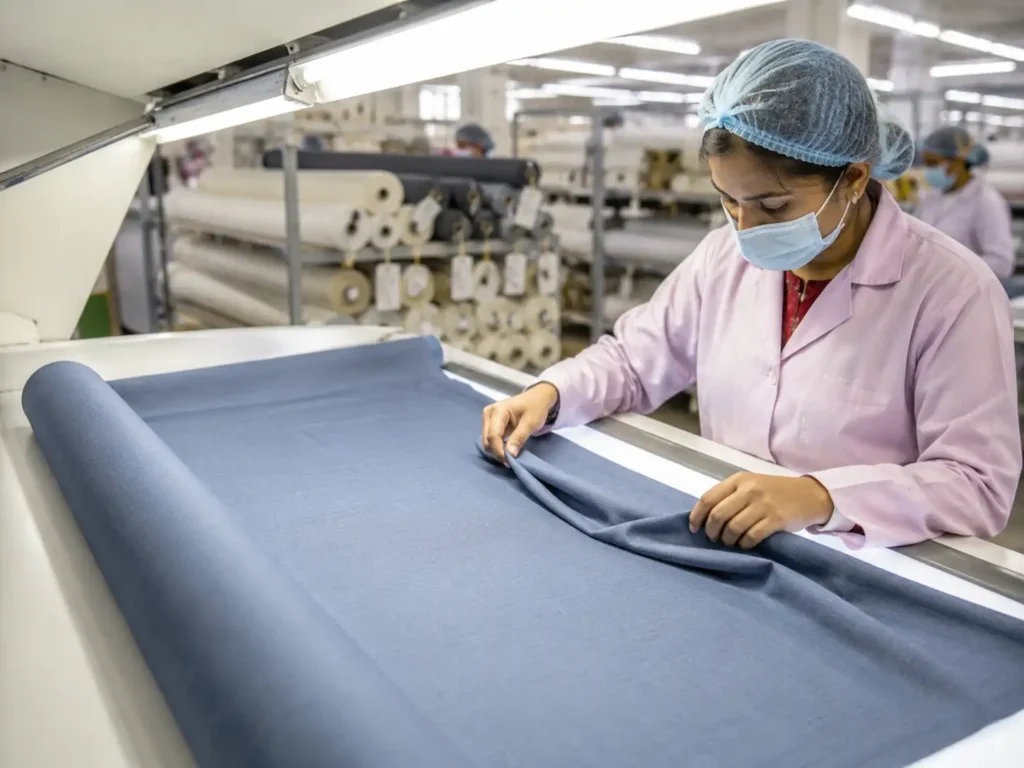
Fabric Inspection

Cutting Control

Inline Sewing Check

Measurement Control

Finished Garment Review
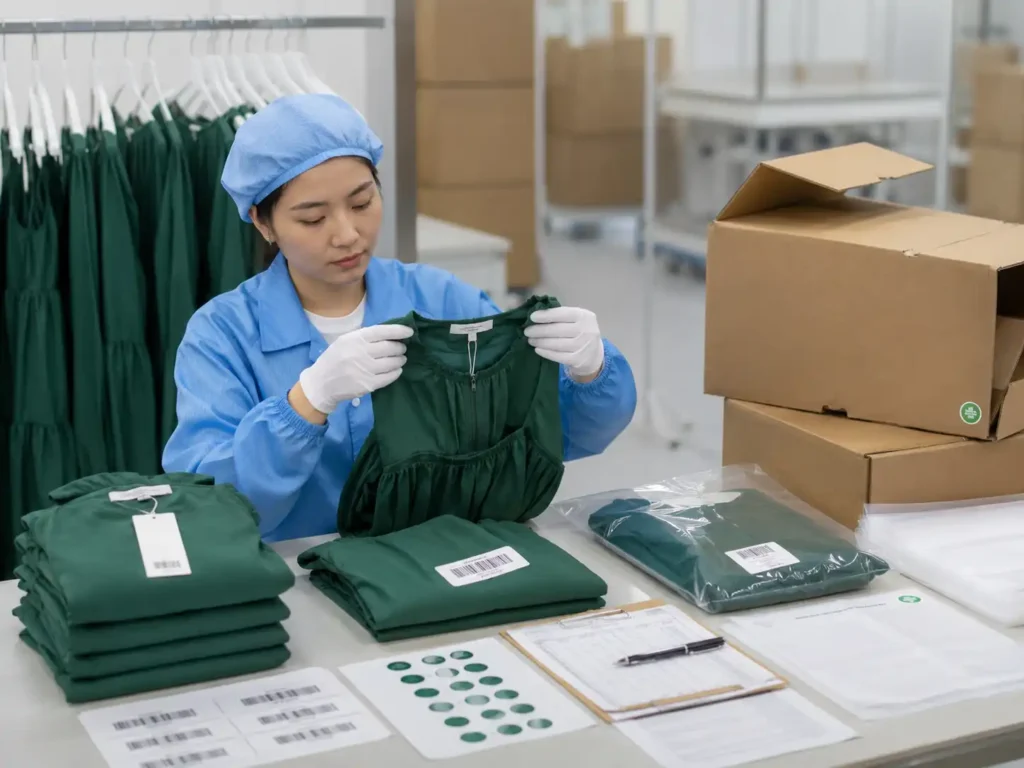
Packing and AQL
Private Label Packing for Multi-SKU Collections

Main Labels

Size and Care Labels

Hangtags
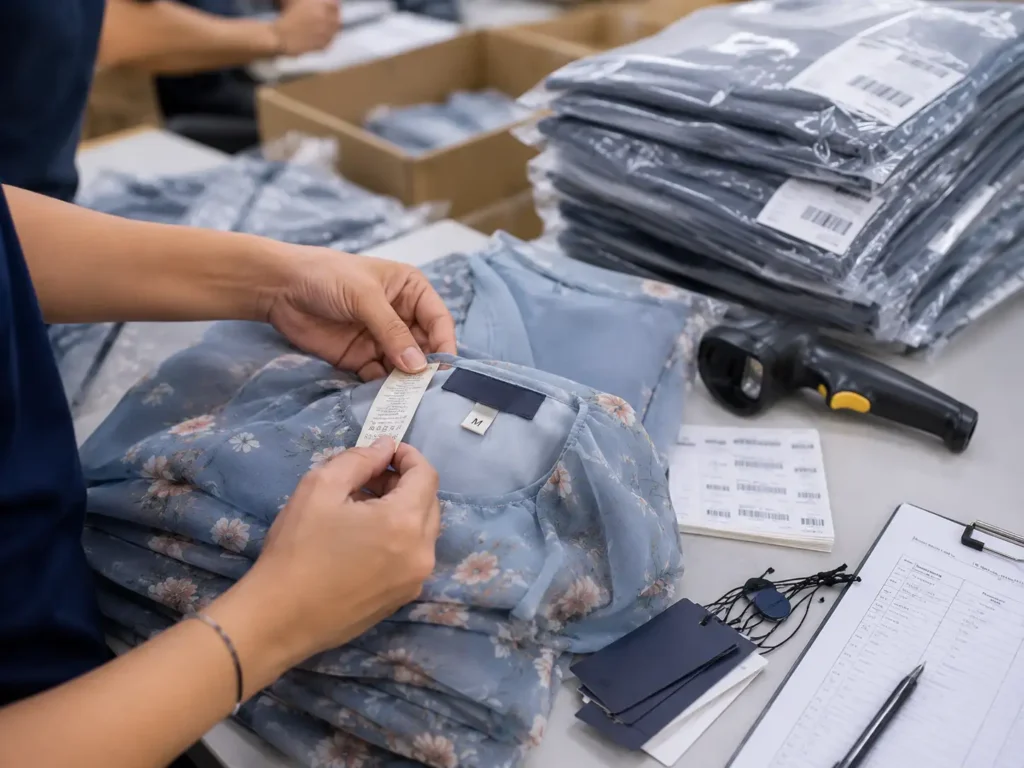
Barcode and SKU

Polybags and Inserts
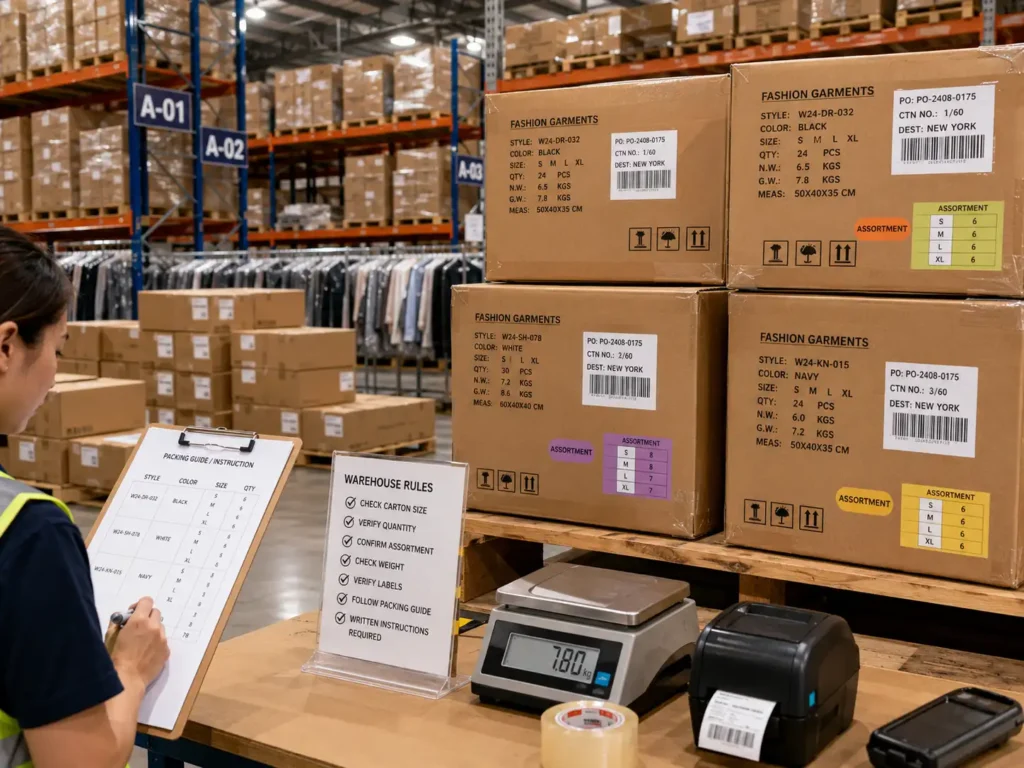
Carton Marks and Lists
Launch-Calendar Planning From Sampling to Warehouse Receipt
Development Window
Production Window
Delivery Window
Repeat Orders Built on Controlled Product Records
Collection-driven brands create value through continuity: successful products return, colors expand, materials evolve and proven shapes support later seasons. Jinfeng Apparel retains approved records so repeat orders begin with knowledge rather than rebuilding the product from memory.
Test, Launch and Repeat
The commercial path often moves from sample development to launch, market feedback, bestseller identification, replenishment, new colors, new materials and related style extensions. Jinfeng Apparel supports the sequence Test -> Launch -> Repeat by connecting order history with current material and production conditions.
A repeat order is not assumed to be identical without verification. Fabric stock, dye lot, trim availability, packaging artwork, quantities and delivery priorities are checked again. When the same approved inputs remain available, the retained files can shorten preparation and reduce repeated communication.
Bestseller replenishment may also use priority production or split shipment planning, depending on material readiness and the required stock date.
Records Kept for Continuity
Relevant records can include style number, approved sample photos, first and revised patterns, PP pattern, size chart, grade rules, fabric supplier and swatch, color and dye-lot notes, trim record, BOM, sewing instruction, QC checklist, packing instruction, carton marks, SKU table and Golden sample.
After-shipment feedback is also useful. Fit comments, packaging issues, construction improvements or warehouse requirements can be added to the next production release rather than rediscovered during another inspection.
Collection-level records help brands extend successful ideas into new colors, related lengths, matching separates or seasonal variations while preserving the approved design language.
Changes Still Require Revalidation
A new fabric can change weight, stretch, drape, shrinkage and fit. A new color may require lining, zipper and trim confirmation. A revised neckline, length, cup, boning, strap or slit affects the pattern. Updated barcode or packaging files affect packing.
For those reasons, repeat production still uses material review, PP or color confirmation where needed, production files and QC. Record retention makes the process faster and more reliable; it does not remove technical judgment.

Collection-Driven Fashion Brand Manufacturing Case Studies
Collection-driven brands need a manufacturing partner that can manage more than individual styles. Jinfeng Apparel supports complete dress collections through coordinated planning, fabric sourcing, pattern development, sampling, bulk production, quality control and repeat-order management.

Case Study 1: Seasonal Womenswear Collection Launch With 24 Coordinated Styles
A womenswear brand planned a seasonal collection focused on occasionwear, social fashion and elevated everyday dresses.
The collection needed to create a complete seasonal story rather than isolated products.
Program scope:
- 24 styles
- 62,000 pieces
- Multiple fabric groups
- XS-XL size range
- Private-label packaging
Product categories included:
- Satin dresses
- Mesh party dresses
- Bodycon styles
- Resort maxi dresses
- Matching sets
Development Challenge
The brand needed multiple products to launch together while maintaining one consistent collection identity.
Main challenges:
Different Product Structures
The collection included:
- Soft woven dresses
- Stretch bodycon products
- Structured occasion styles
- Lightweight resort pieces
Each required different:
- Fabric behavior
- Pattern logic
- Sewing methods
- QC standards
One Launch Calendar
The brand needed:
- Campaign samples
- Website launch products
- Sales team samples
- Bulk inventory
within one seasonal timeline.
Result
The brand achieved:
- 24 coordinated styles developed
- 62,000 pieces produced
- Unified fit and quality standards
- Complete retail-ready delivery
The approved collection system supported future seasonal launches.

Case Study 2: Capsule Collection Development for a Growing Fashion Brand
A growing fashion brand wanted to create a smaller capsule collection focused on stronger product identity and faster market testing.
The capsule included:
- Statement dresses
- Signature silhouettes
- Matching separates
- Limited seasonal colors
Program scope:
- 12 styles
- 28,000 pieces
- 5 core colors
- Premium private-label packaging
Development Challenge
The brand wanted strong visual differentiation but needed production feasibility.
Main challenges:
Balancing Creativity and Manufacturing
Some concepts included:
- Corset structures
- Draped details
- Special necklines
- Unique fabric combinations
The challenge was converting creative ideas into repeatable production.
Controlling Development Cost
The brand needed:
- Premium appearance
- Controlled sampling rounds
- Realistic production cost
Jinfeng Solution
Jinfeng supported ODM-style development.
Design Evaluation
Reviewed:
- Silhouette feasibility
- Fabric suitability
- Construction methods
- Production risks
Result
The brand successfully launched:
- 12 differentiated styles
- Stable production standards
- Premium visual presentation
- Repeatable manufacturing process
The capsule collection became the foundation for future seasonal expansion.

Case Study 3: Bestseller Styles Expanded Into New Seasonal Collections
An established womenswear brand wanted to extend successful dress styles into future collections.
The goal was:
- New colors
- New fabrics
- Seasonal updates
- Faster replenishment
Existing products included:
- Satin slip dresses
- Bodycon dresses
- Occasion midi dresses
Development Challenge
The brand experienced common repeat-order problems:
- Different fabric batches
- Changing fit between seasons
- Packaging inconsistency
- Slow product restart
The brand needed manufacturing continuity.
Jinfeng Solution
Jinfeng created a product record system.
Style Records
Maintained:
- Final patterns
- Size charts
- Grade rules
- BOM files
- Fabric references
- Trim details
Repeat Production Control
Reviewed:
- New fabric batches
- Color consistency
- Updated quantities
- Production capacity
Collection Extension
Supported:
- New colors
- New lengths
- Related silhouettes
- Matching sets
Result
The brand achieved:
- Faster repeat development
- Consistent product quality
- Reduced communication time
- Stronger seasonal continuity
Successful styles became long-term collection assets.
Frequently Asked Questions for Collection Manufacturing

Send Us Your Collection Plan
A useful project review starts with the commercial and technical information already available. Send Kelly your line sheet, tech packs, reference images or original sample photos together with the expected number of styles, quantity by style and color, size range, fabric direction and target launch date.
Jinfeng Apparel will organize the information into a workable development review covering style complexity, material availability, sample priority, MOQ, private-label requirements, production fit and delivery planning.
For more accurate feedback, include:
- Line sheet or style list
- Tech packs, sketches or reference images
- Quantity by style and color
- Base size, size chart and grade rules
- Fabric, color and trim direction
- Photo-sample or sales-sample deadlines
- Target PP approval date
- Target warehouse or launch date
- Main label, care label and hangtag files
- Barcode, SKU, polybag and carton requirements
- Preferred freight method or nominated forwarder