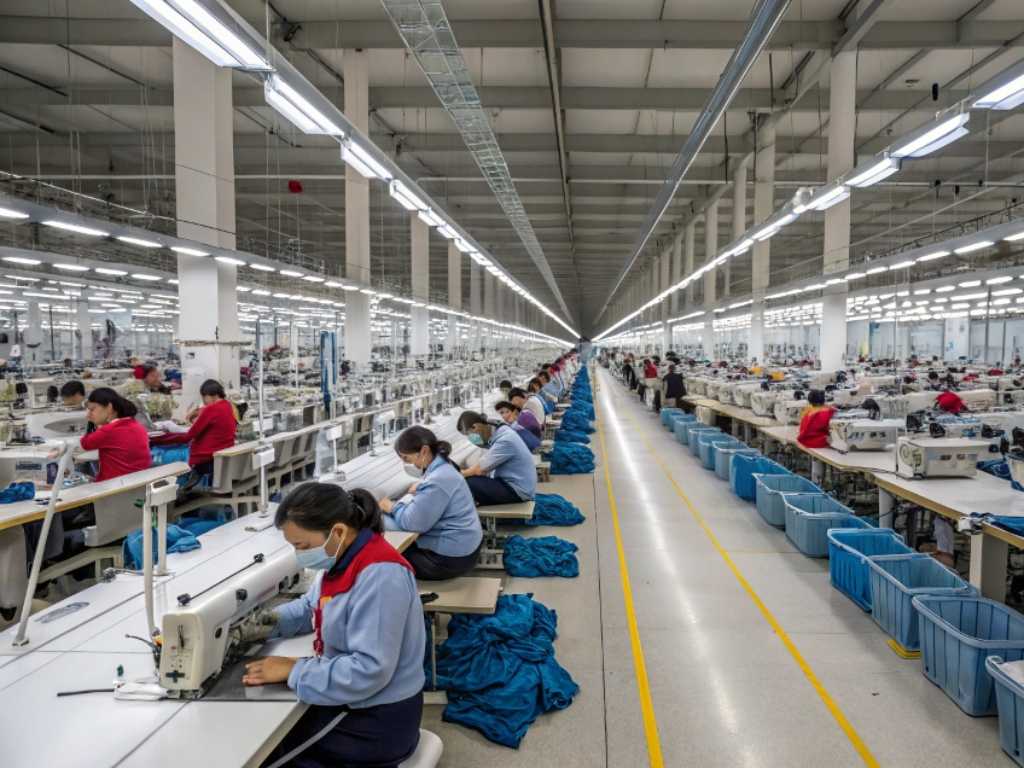
Dress Manufacturer for Fashion Buying Offices
A structured dress development and production partner for buying houses, sourcing offices, and multi-client fashion programs.
- Multi-style program readiness: Structured for line sheets containing 10-30 styles and collection orders commonly ranging from 20,000 to 80,000 pieces per brand program.
- Dedicated development capacity: Two sample rooms, 7+ senior pattern makers, and 20+ sample machinists support first samples, fit revisions, PP samples, and approval records.
- Manufacturing coordination: Six owned women’s fashion factories, 10+ long-term production partners, 18+ sewing lines, and 6+ flexible lines allow style allocation by fabric, structure, quantity, and schedule.
Controlled execution: 12+ merchandisers and order follow-up specialists coordinate quotations, approvals, production files, while 15+ QC inspectors cover material, sewing, measurement, finishing, and packing checks.
Capacity Built for Multi-Client Dress Programs
Since 2008
6 Owned Factories
10+ Production Partners
2 Sample Rooms
15+ QC Inspectors
100,000+ Pcs Monthly
Built for Buying Offices Managing Real Production Programs
Best Program Fit
- Program structure: One or several end-brand projects with clear ownership and approval flow.
- Commercial scale: MOQ from 200 pieces per style and color, with larger collection quantities planned by style group.
- Development discipline: Paid sampling, documented revisions, PP approval, and production files before bulk cutting.
- Long-term value: Seasonal collections, repeat orders, new colors, replenishment, or multi-batch delivery.
Clear Operating Boundaries
- Not supported: Dropshipping, ready-stock wholesale, or one-piece order fulfillment.
- MOQ basis: Calculated per style and per color, not by combining unrelated styles.
- Project readiness: A real production plan, product direction, sampling budget, and approval responsibility are required.
- Cost discipline: Pricing follows confirmed materials, workmanship, quantities, size ratios, labels, packing, testing, and delivery terms.
Production Problems Buying Offices Cannot Afford
Incomplete Quotations
- Control point: Cost sheets identify fabric, trims, construction, labels, packing, quantity, and unresolved items.
- Result: Fewer late-stage price changes after development begins.
Blind Sample Promises
- Control point: Risk review covers bust, waist, hip, neckline, armhole, slit, lining, zipper, and fabric behavior.
- Result: Development decisions are made before expensive bulk commitments.
Version Confusion
- Control point: Sample records connect comments with measurements, materials, and approved construction.
- Result: Factories, sourcing teams, and inspection teams refer to the same standard.
Material Substitution
- Control point: Substitutions are assessed for appearance, hand feel, structure, MOQ, cost, and bulk consistency.
- Result: Commercial decisions remain visible to the buying office.
Weak Project Tracking
- Control point: Project identifiers separate client code, style, color, version, factory, production status, and shipment.
- Result: Updates remain concise even when many styles are active.
Packing File Errors
- Control point: Artwork and data are approved before bulk packing, then checked against finished cartons.
- Result: Lower risk of relabeling, repacking, or warehouse rejection.
A Manufacturing Partner Behind Your Buying Office
Buying offices retain account ownership and commercial direction. Jinfeng Apparel provides the manufacturing structure needed to turn approved product information into samples, bulk garments, private-label packs, and export-ready orders.

Your Client-Facing Role Stays Protected
Fashion buying offices often manage end-brand communication, merchandising decisions, quotation presentation, compliance direction, inspection policy, and delivery planning. Manufacturing support should strengthen that role rather than create competing communication. Jinfeng can work through a designated project contact, receive documents through the buying office, return quotations in the requested structure, and direct technical questions through agreed channels. End-brand names, pricing information, launch schedules, labels, barcodes, packaging artwork, and unpublished designs are treated as project information rather than marketing material.
- Communication route: Project questions, approvals, quotations, and changes follow the designated buying-office contact unless written authorization states otherwise.
- Document ownership: Tech packs, line sheets, original samples, patterns, size charts, BOM files, packaging files, and inspection standards remain associated with the approved project.
- Case-study boundary: Public examples use anonymous descriptions and desensitized process details unless formal permission allows broader disclosure.
- Commercial clarity: Factory quotations can be structured by project, style, color, size ratio, packing level, trade term, and delivery scenario for easier internal comparison.

Our Manufacturing Role Remains Accountable
Jinfeng coordinates the production-side work required after a buying office issues a product brief.
The work can begin with technical review and fabric direction, move through pattern development and sample revisions, and continue into PP approval, material preparation, factory allocation, production, QC, packing, and shipment documentation.
Each stage has different evidence. A sample room proves development ability; a production file proves bulk readiness; inspection records prove control; packing data proves retail and warehouse readiness. Mature sourcing programs need all four.
- Development responsibility: Clarify construction, fit points, fabric behavior, trims, and missing specifications before sampling.
- Production responsibility: Translate approved sample information into material, cutting, sewing, finishing, label, packing, and QC instructions.
- Issue escalation: Report material, fit, quality, timing, or packing risks with options and consequences rather than hiding problems until final inspection.
- Delivery responsibility: Provide cargo details, commercial invoice, packing list, carton measurements, carton marks, and forwarder coordination according to the confirmed trade arrangement.
Dress Categories for Multi-Brand Fashion Portfolios
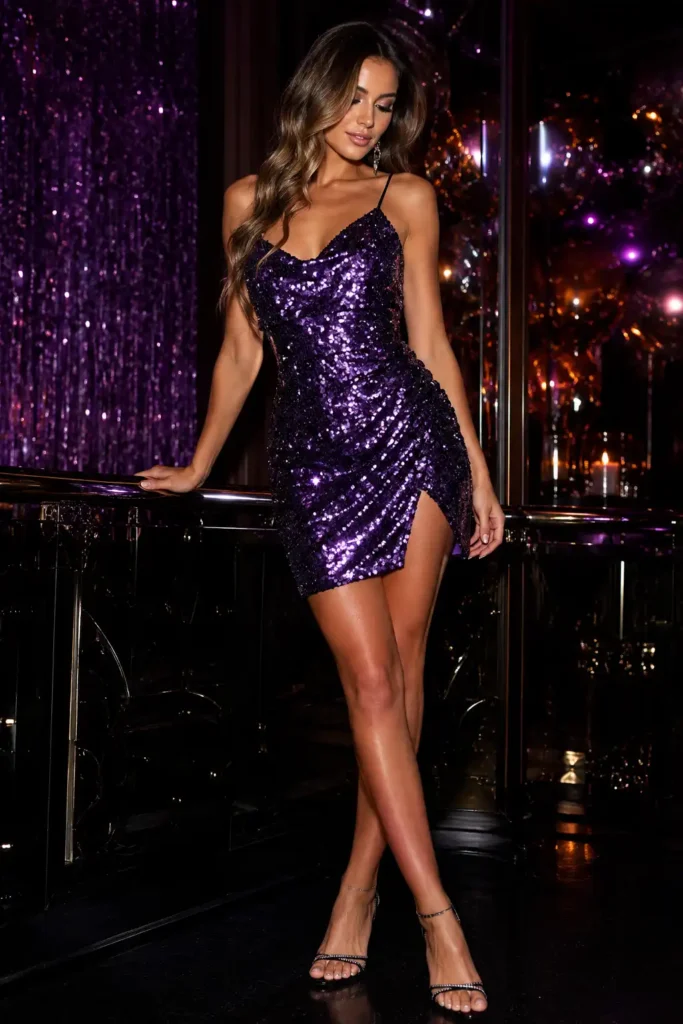
Party Occasion Dresses
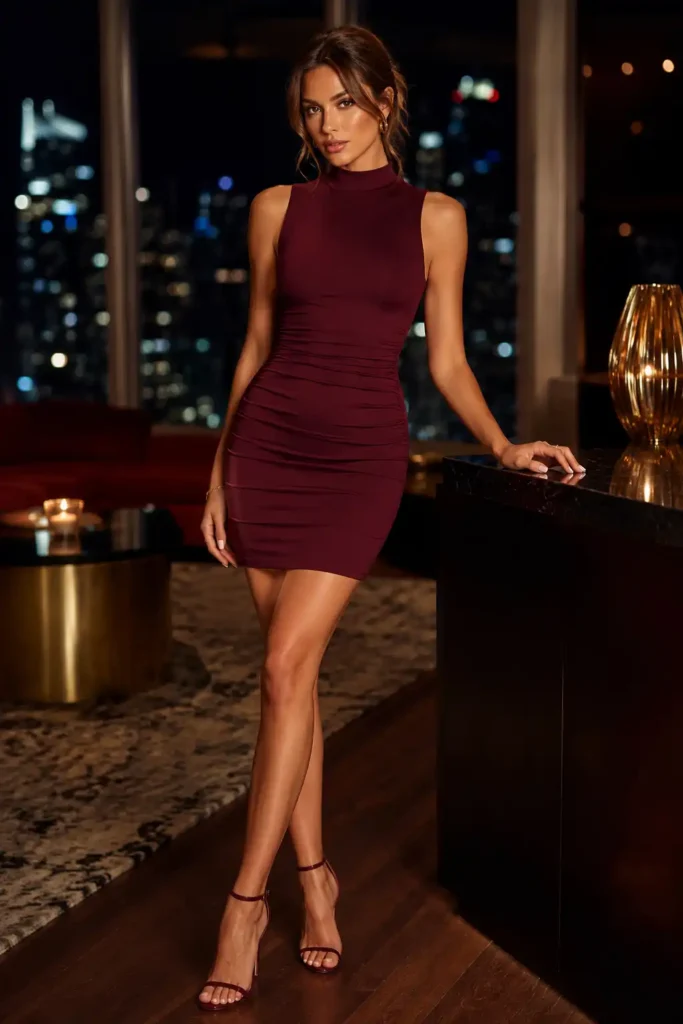
Bodycon Club Dresses
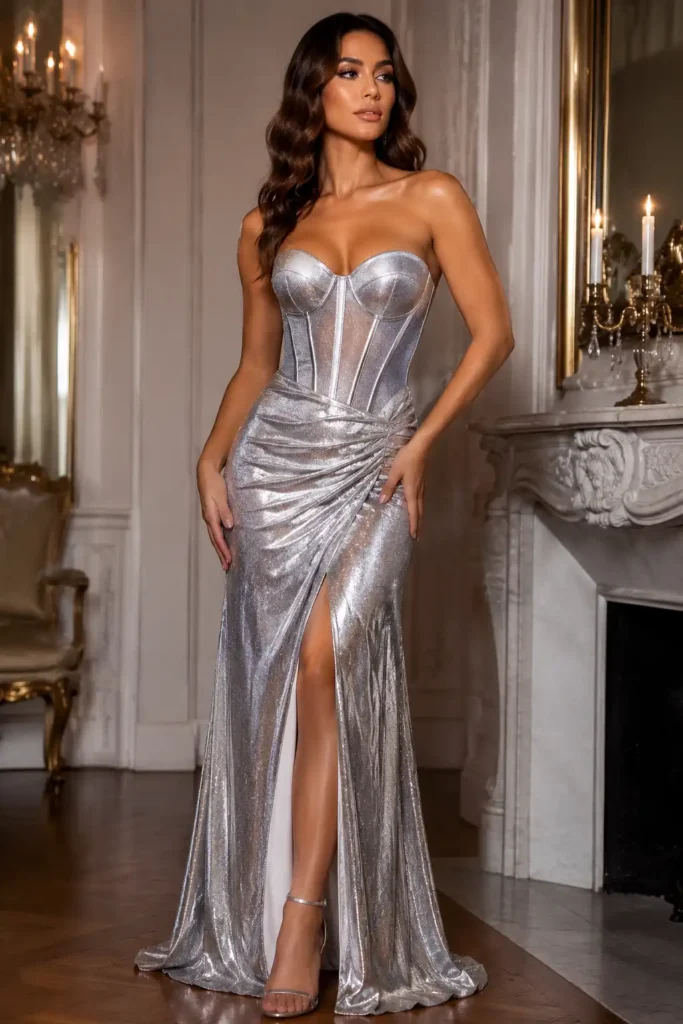
Corset Structured Dresses

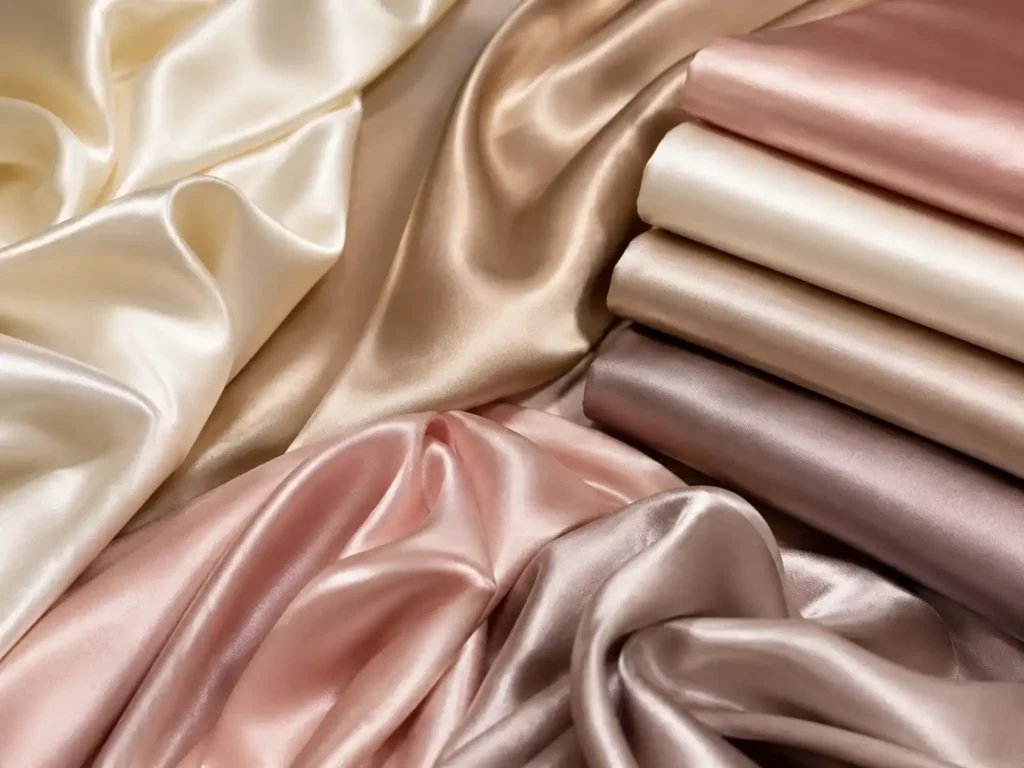
Satin Slip Dresses

Mesh Lace Dresses

Sequin Embellished Dresses
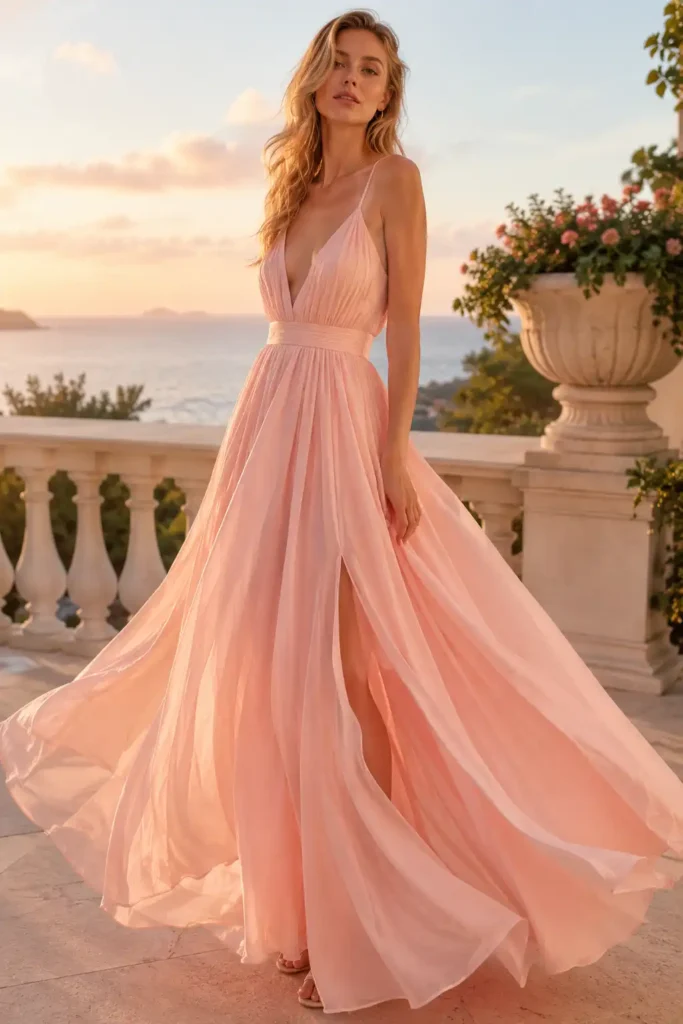
Resort Maxi Dresses

Jumpsuits Matching Sets
Complex Fabric Risks Controlled Before Bulk Cutting
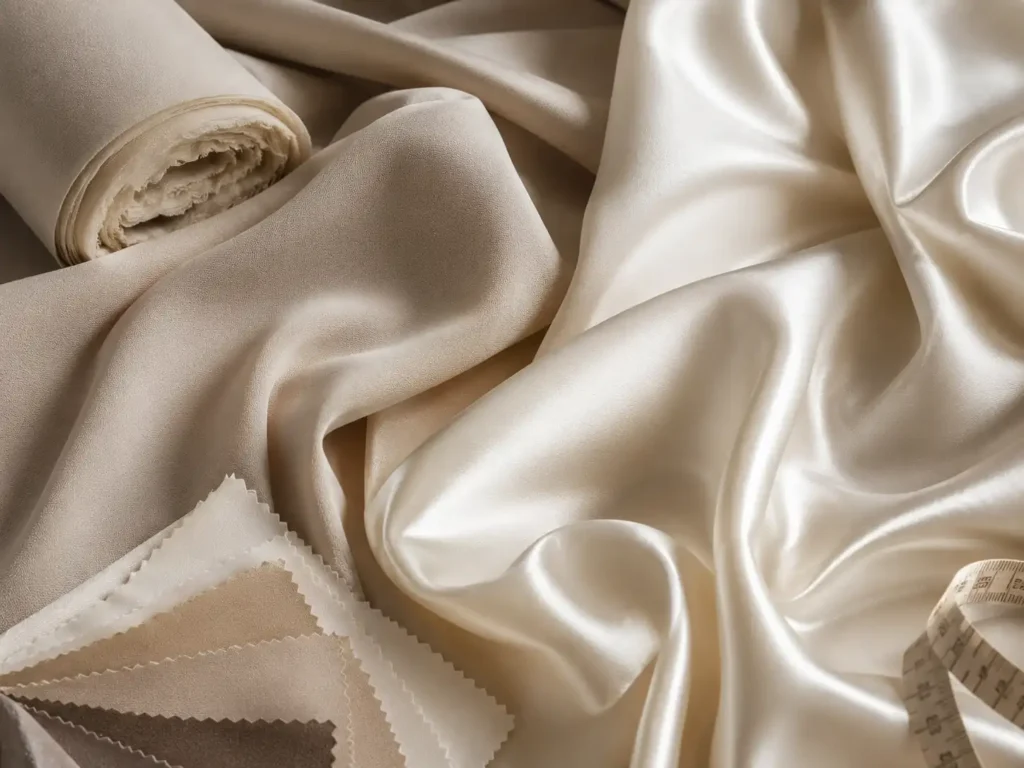
Satin Direction
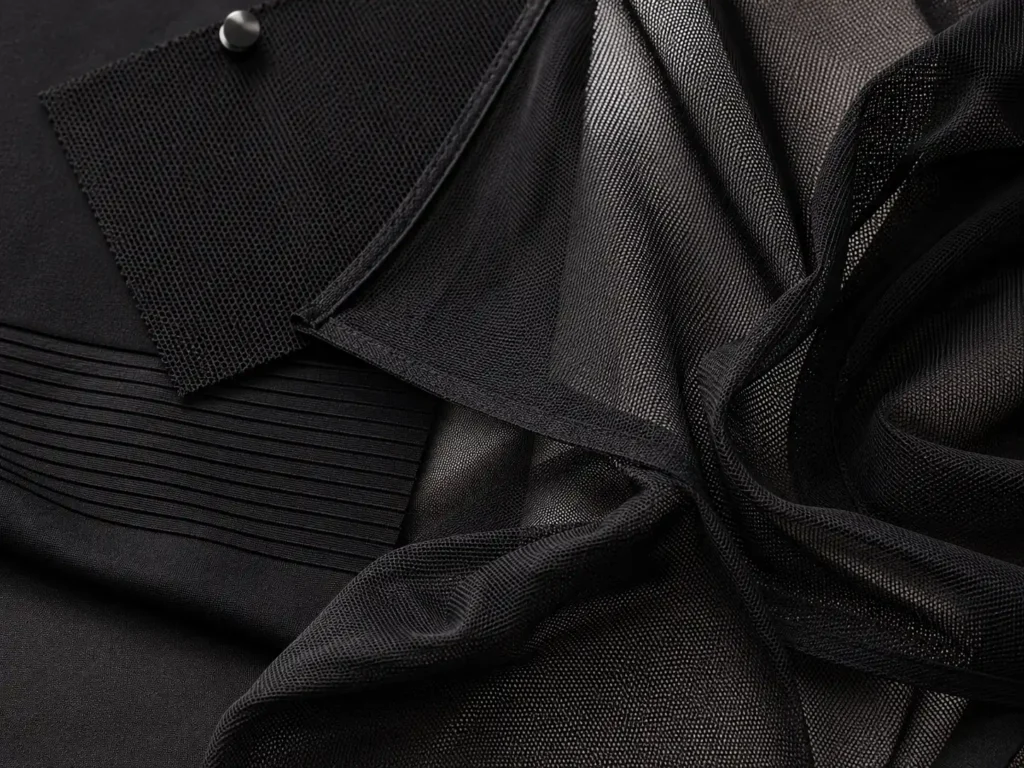
Mesh Transparency
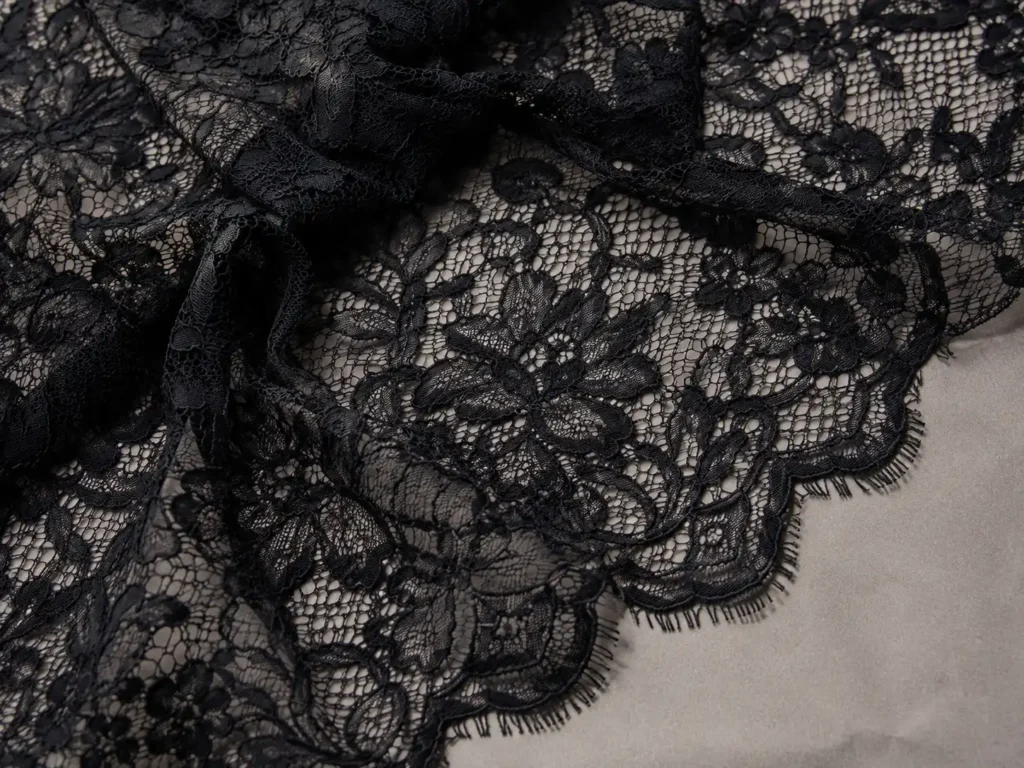
Lace Placement

Sequin Protection
Stretch Recovery
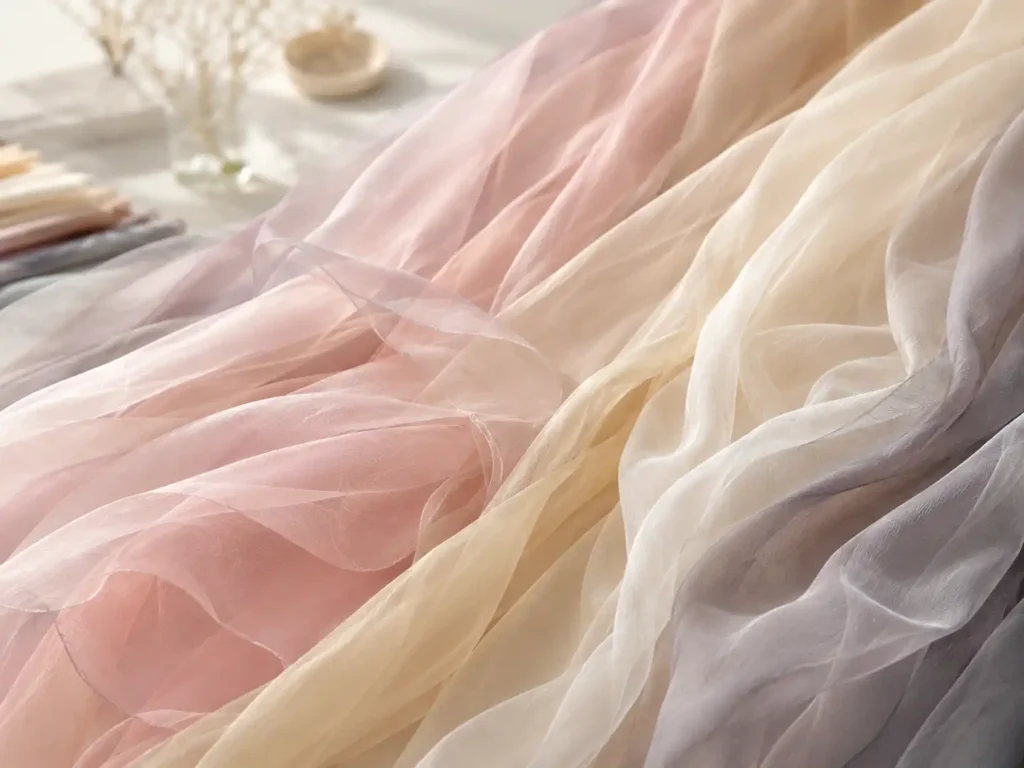
Chiffon Handling
Fit and Design Details Locked Through Sampling

Bust Support
- Check: Bust width, under-bust, cup position, neckline security, support component length.
- Bulk focus: Symmetry, component placement, zipper flatness, wearer comfort.
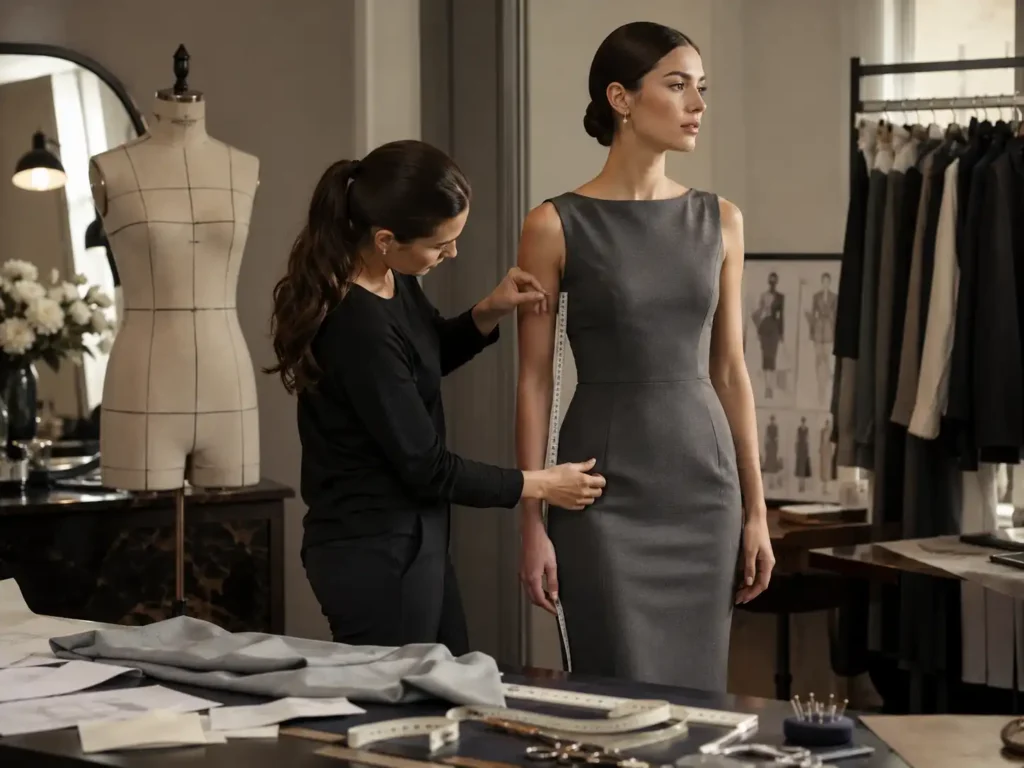
Waist Hip Balance
- Check: Waist placement, high hip, full hip, back rise, side seams, ruching tension.
- Bulk focus: Size consistency, relaxed measurements, twisting, seam movement, recovery.
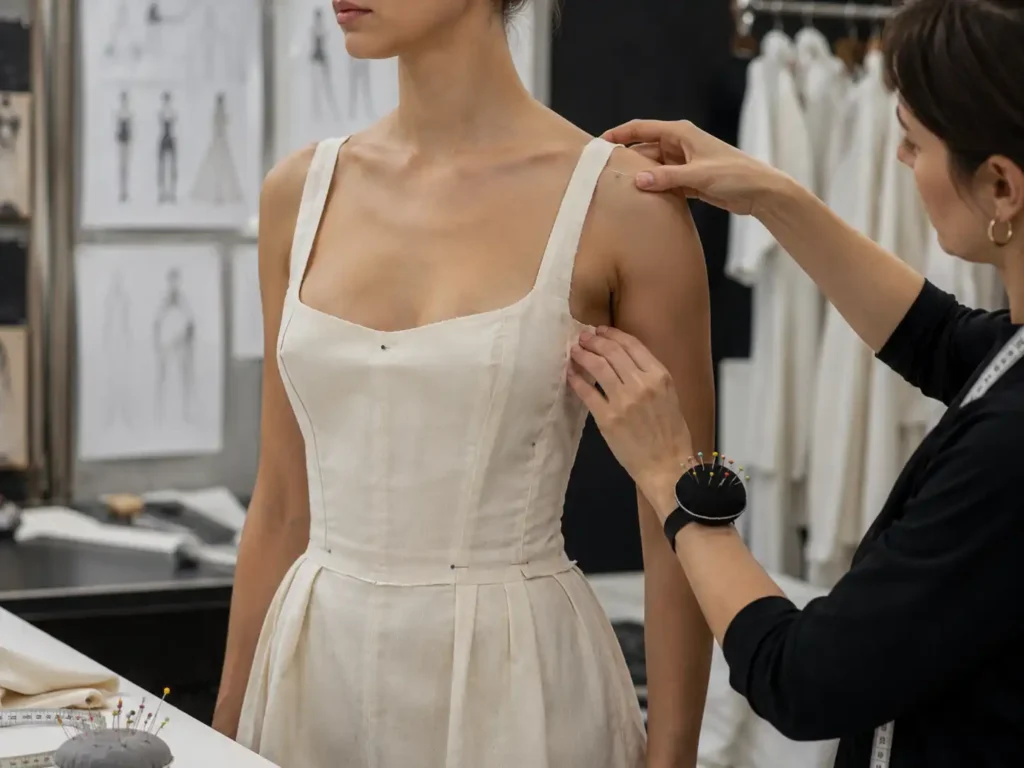
Straps Necklines
- Check: Strap length, strap position, neckline width and depth, armhole, shoulder balance.
- Bulk focus: Left-right consistency, gaping, twisting, seam visibility, attachment strength.

Slits Hemlines
- Check: Front and back length, slit start, hem sweep, lining length, movement clearance.
- Bulk focus: Hem balance, seam reinforcement, symmetry, no lining exposure.

Ruching Draping
- Check: Gathering length, anchor position, fold direction, side-seam alignment, size grading.
- Bulk focus: Consistent fullness, symmetry, length, no trapped lining.

Jumpsuit Proportion
- Check: Back waist length, rise, crotch length, hip, thigh, inseam, opening clearance.
- Bulk focus: Size grading, balance, movement, zipper or button function.
From Multi-Style RFQ to Manufacturing Review
Accurate sourcing begins with separating commercial direction from confirmed production information. Jinfeng organizes incoming style portfolios so open risks are visible before sampling, costing, and scheduling decisions are made.
Portfolio Intake and Style Prioritization
Buying offices can submit a complete line sheet or divide a collection into priority groups. A useful intake package includes reference images or tech packs, target quantity per style and color, fabric direction, color plan, size range, target market, target cost, private-label requirements, inspection standard, and requested delivery window. When 10-30 styles arrive together, the first task is not to quote every image at once. Styles are grouped by fabric family, construction type, fit risk, embellishment level, and production route. Hero styles, photo-sample priorities, and long-lead materials can then move first.
- Priority group A: Launch-critical styles, campaign samples, or products with custom fabric and trim lead times.
- Priority group B: Commercial core styles using confirmed fabric directions and repeatable construction.
- Priority group C: Extensions, secondary colors, or styles awaiting final design decisions.
- Early warning list: Missing measurements, unclear lining, unconfirmed trim, difficult fabric, unrealistic target price, or delivery conflict.
Preliminary Review Before Final Costing
A preliminary review answers whether a style is technically and commercially suitable for development. It may identify a workable fabric family, likely construction, sample complexity, expected MOQ constraints, and information still needed. Final bulk costing should follow confirmed fabric, trims, workmanship, quantity, color and size ratio, private-label materials, packing, testing, trade terms, and production timing. Where a target cost is under pressure, options can be compared without weakening brand-level appearance: alternative fabric weight, simpler lining, revised seam structure, reduced handwork, trim replacement, optimized cutting, color consolidation, or split delivery.
- Rough quotation: Supports range planning when several specifications remain open; assumptions are written beside the price.
- Development quotation: Covers sample work, pattern making, materials, trims, and expected revision complexity.
- Final bulk quotation: Locked after product, material, quantity, packing, quality, and delivery conditions are confirmed.
- Change control: Later changes are reviewed for cost, MOQ, sample, production, QC, and schedule impact before acceptance.
Transparent Costing and MOQ Boundaries
Dress quotations become reliable when the material, construction, quantity, size, private-label, inspection, packing, and delivery assumptions are visible. MOQ is calculated per style and per color.
| Cost Area | What Must Be Confirmed | Common Cost or MOQ Effect |
|---|---|---|
| Fabric | Composition, weight, width, finish, stretch, stock status, dyeing or print, lining | Custom dyeing, printing, certified, lace, sequin, recycled, or organic fabrics may carry supplier MOQ and longer preparation. |
| Trims | Zipper, cup, boning, elastic, anti-slip tape, buttons, hooks, rhinestones, lace trim | Custom colors, molds, decoration, or specialized components may have separate MOQ and development cost. |
| Construction | Layers, lining, ruching, corset structure, draping, cut-outs, slit, handwork | More operations, difficult assembly, and hand finishing increase sewing time and inspection points. |
| Size and Color | Size range, grading, ratio, color count, units per color | MOQ starts from 200 pcs per style/color. Sizes may be distributed within the confirmed color quantity. |
| Private Label | Main label, care label, size label, hangtag, barcode, SKU sticker | Packaging and label suppliers may apply separate MOQ, plate, printing, or setup charges. |
| Packing | Folding, polybag, tissue, hanger, carton ratio, carton mark, warehouse label | Special presentation or warehouse programs affect materials, labor, carton size, and packing checks. |
| Inspection and Testing | AQL plan, client QA, third-party inspection, fabric or garment test | Third-party services and certified material documents are priced and confirmed by project. |
| Delivery | EXW, FOB, CIF, DAP, DDP review, nominated forwarder, split shipment | Freight, route, destination, cargo volume, urgency, and trade responsibilities change landed cost. |
Sample Development With Clear Version Control
Sampling converts design information into a production standard. Each sample type has a different purpose, and approval records prevent comments from being lost between sourcing, pattern, factory, QC, and packing teams.

Sample Types and Expected Decisions
A first sample tests the initial interpretation of shape, fabric, construction, and measurements. A fit sample focuses on proportion, comfort, balance, and movement. A revised sample closes the agreed correction list. A photo sample prioritizes visual presentation for campaign or ecommerce use but does not automatically replace a PP sample. The PP sample confirms materials, color, construction, measurements, labels, and packing details for bulk production. A Golden Sample becomes the retained reference for production and inspection where required.
- Standard dress sample reference: Often 10-15 days after materials and complete specifications are ready.
- Complex style reference: Corset, sequin, lace, mesh, embellished, or difficult construction often requires 15-25 days or project confirmation.
- Revision timing: Depends on the change scope, material replacement, new pattern work, trim availability, and fitting feedback.
- Production release: Bulk work begins only after the required PP information and production file are approved.

Version Records for Multi-Style Portfolios
Each active style should have a visible identity and status. A controlled record can include end-client code, style number, sample type, revision number, sample date, fabric and trim reference, base size, requested changes, completed changes, measurement status, photo status, approval status, and next action. When a buying office manages 15 or 20 styles, small labels such as V1, V2, PP, and approved date prevent major confusion. Comments are converted into an actionable list rather than left only inside email or chat threads.
- Fit comments: Bust, waist, hip, length, strap, neckline, armhole, slit, lining, rise, and movement.
- Material comments: Fabric quality, color, stretch, transparency, lining, zipper, cup, boning, and decoration.
- Construction comments: Seam, stitch, gathering, draping, reinforcement, closure, edge finish, and internal clean finish.
- Approval record: Approved, approved with notes, revision required, hold for material, or cancelled.
Sample Resources for Parallel Development Work
2 Sample Rooms
7+ Pattern Makers
20+ Sample Machinists
Structured Tracking for Multiple Client Programs
One consolidated status view helps buying offices understand what is waiting for information, moving through development, approved for production, under inspection, packed, or ready for shipment.
| Field | Example Status | Control Purpose |
|---|---|---|
| Client Code | US-OF-03 | Separates end-brand information and prevents cross-project use. |
| Style / Color | DR-218 / Burgundy | Links quotation, sample, BOM, pattern, QC, label, and packing records. |
| Sample Version | Fit V2 – comments closed | Shows the current physical standard and remaining actions. |
| Material Status | Satin approved; lining pending | Prevents cutting or costing from relying on unapproved inputs. |
| PP Approval | Approved 18 Aug | Records the production-release reference and approval date. |
| Factory / Line | Factory 2 / Line 6 | Connects product type and schedule with the assigned production resource. |
| Bulk Status | Sewing 62% | Provides measurable progress rather than vague statements. |
| QC Status | Inline passed; final pending | Shows completed and remaining quality gates. |
| Packing Status | Barcode files approved | Links label and warehouse requirements with finished-goods preparation. |
| Shipment Status | FOB booking requested | Connects cargo readiness, cut-off date, forwarder, and documents. |
Factory Allocation Based on Product and Schedule
A dress portfolio should not be placed on one production route by default. Allocation decisions consider fabric behavior, fit sensitivity, construction, quantity, workmanship, production window, quality checkpoints, and repeat potential.

Owned Factories Provide the Core Production Base
Six owned women’s fashion factories provide the central manufacturing structure for custom dresses, skirts, jumpsuits, matching sets, tops, and private-label womenswear. Factory assignment is based on the actual product route. Woven satin and chiffon dresses require different cutting, sewing, pressing, and hemming control from stretch bodycon programs. Corset and occasionwear styles require teams familiar with cups, boning, lining, support, decoration, and structured assembly. Jumpsuits add torso and crotch-fit requirements. Before allocation, the approved sample, BOM, operation sequence, size range, color plan, quantity, packing, and delivery schedule are reviewed together.
- 18+ sewing lines: Support multi-style scheduling and line assignment according to operation content and order volume.
- 6+ flexible lines: Useful for approved fashion programs requiring shorter runs, more style changes, or responsive replenishment.
- 100,000+ pieces regular monthly capacity: Supports larger consolidated programs while still requiring project-based line and material planning.
- Factory confirmation: The responsible production route is confirmed according to the approved product, schedule, and quality requirements.

Long-Term Partners Extend Category and Capacity Options
More than 10 long-term satellite production partners extend capacity and specialized category coverage. The model should not be confused with uncontrolled subcontracting. A partner is considered according to product capability, construction, material, schedule, and quality requirements.
The approved standard, production file, material specification, QC points, private-label files, and packing instructions remain under project control. Buying offices can request clarity on the proposed production route, inspection plan, and shipment responsibility before bulk release.
- When partners add value: Peak-season capacity, specialized construction, suitable fabric handling, or planned production balancing.
- What remains controlled: Approved sample, BOM, measurements, construction, labels, packing, QC checklist, and shipment data.
- What is not promised blindly: Unlimited peak capacity, any urgent delivery, or identical lead time for simple and complex styles.
- Advance planning: Custom fabrics, lace, sequins, corset components, special labels, and launch-critical orders need earlier booking.
From PP Approval to Shipment Release
PP Sample Lock
Production Files
Material Preparation
Cutting Control
Sewing Control
Finishing Control
Packing Control
Shipment Release
Workmanship Controls for Fashion Dress Construction
Brand-level appearance comes from controlled internal construction, seam behavior, symmetry, support, finishing, and pressing. Workmanship requirements change by product instead of relying on one general sewing checklist.
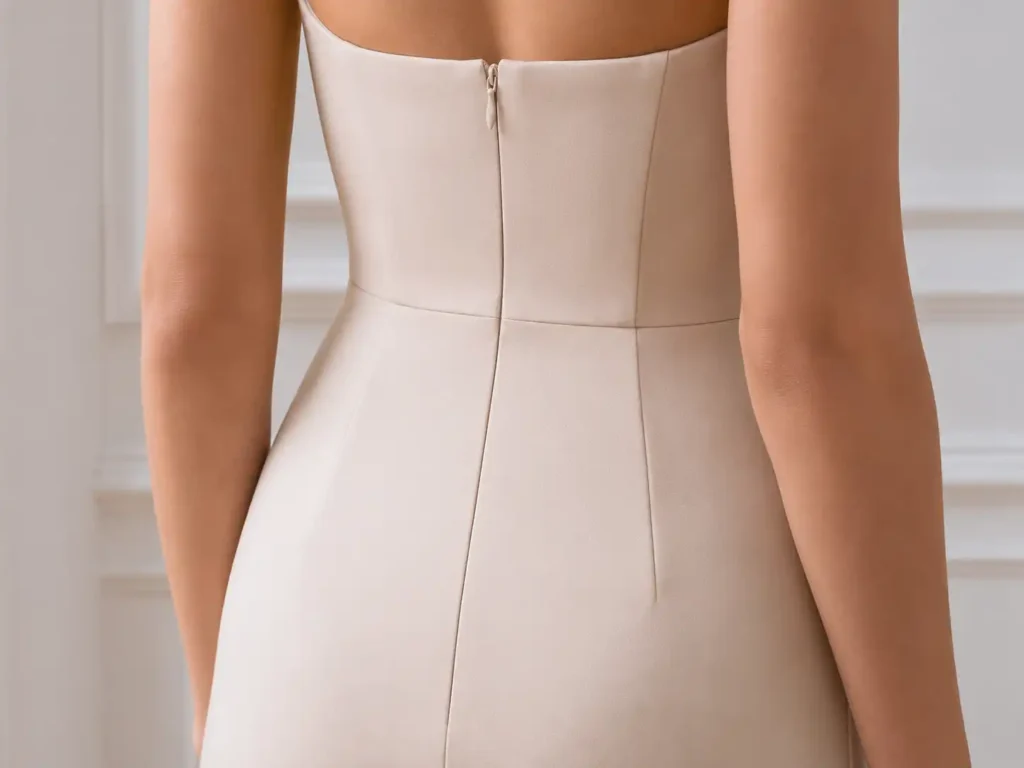
Zipper Flatness
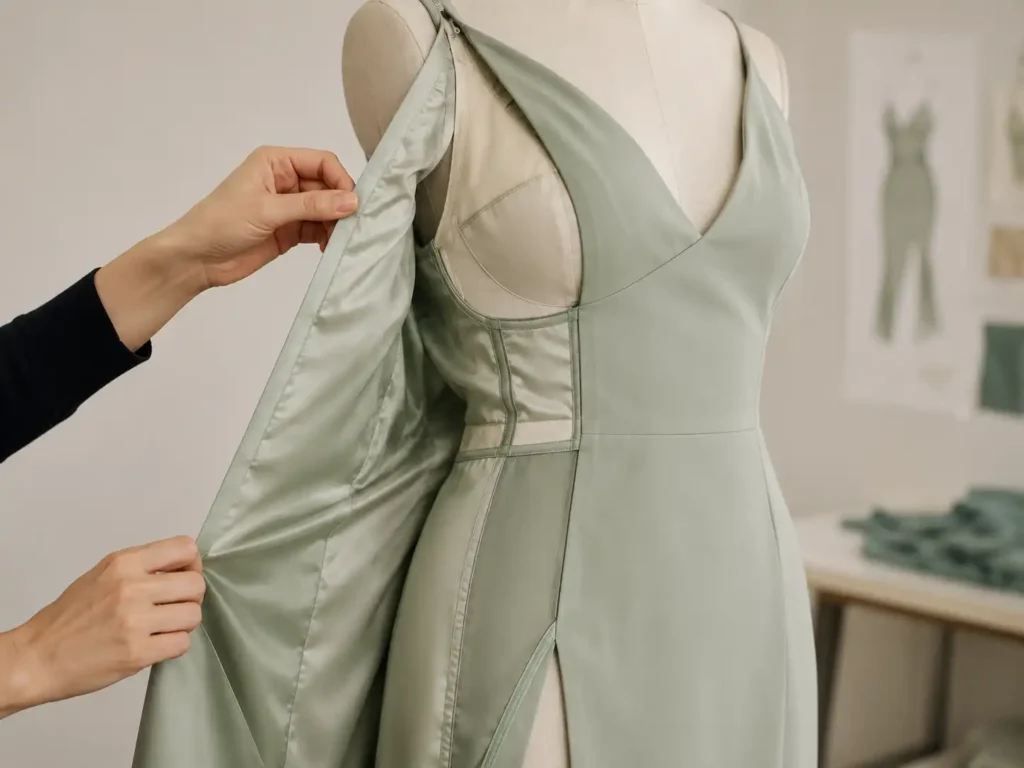
Lining Coverage

Ruching Symmetry
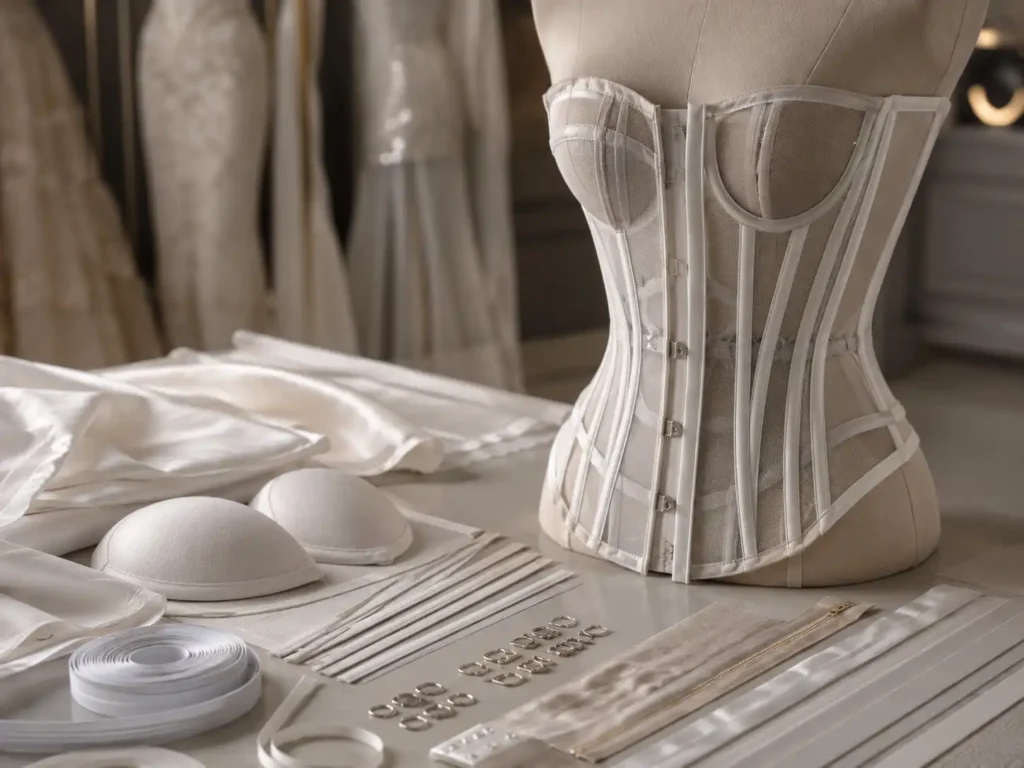
Corset Assembly
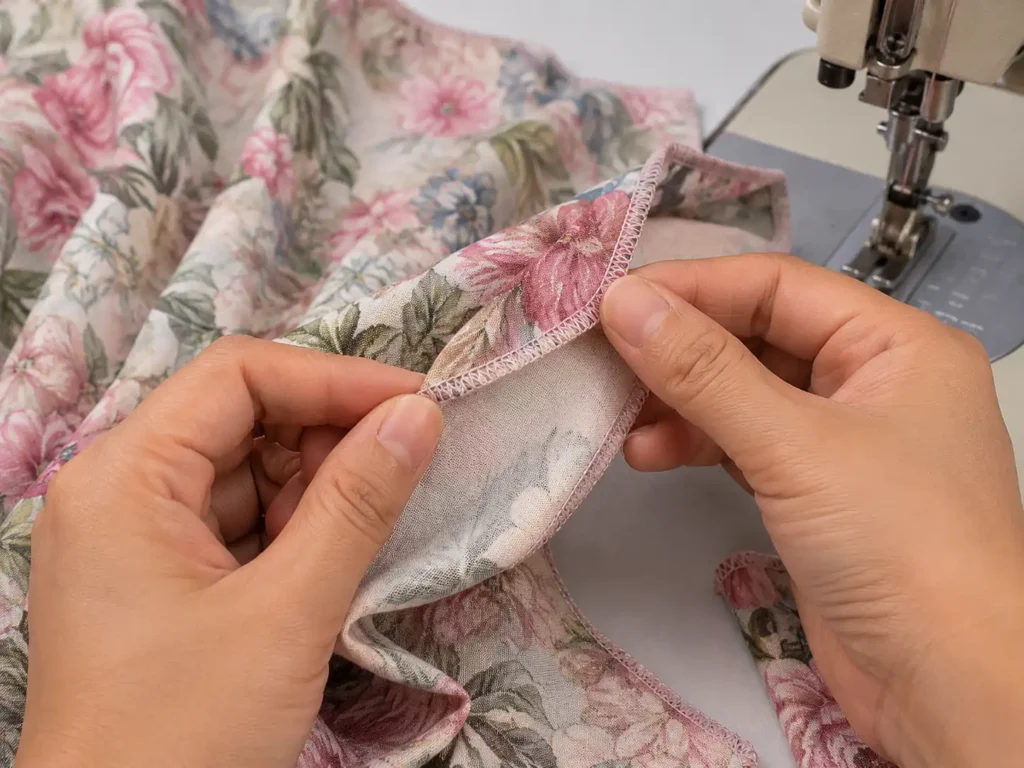
Lace Mesh Edges

Pressing Presentation
Quality Control From Materials to Packed Cartons
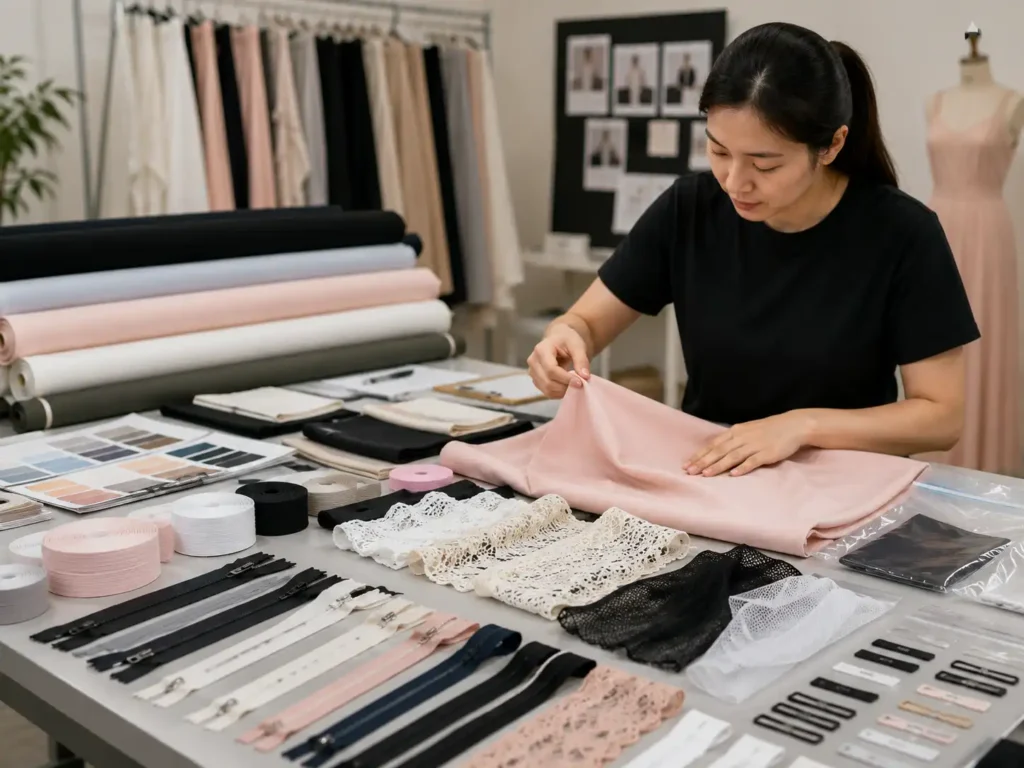
Material Inspection
- Examples: Satin snagging and shade; mesh holes and stretch; lace motif and damage; sequin loss and backing.
- Decision: Accept, segregate, replace, test, or hold before cutting.
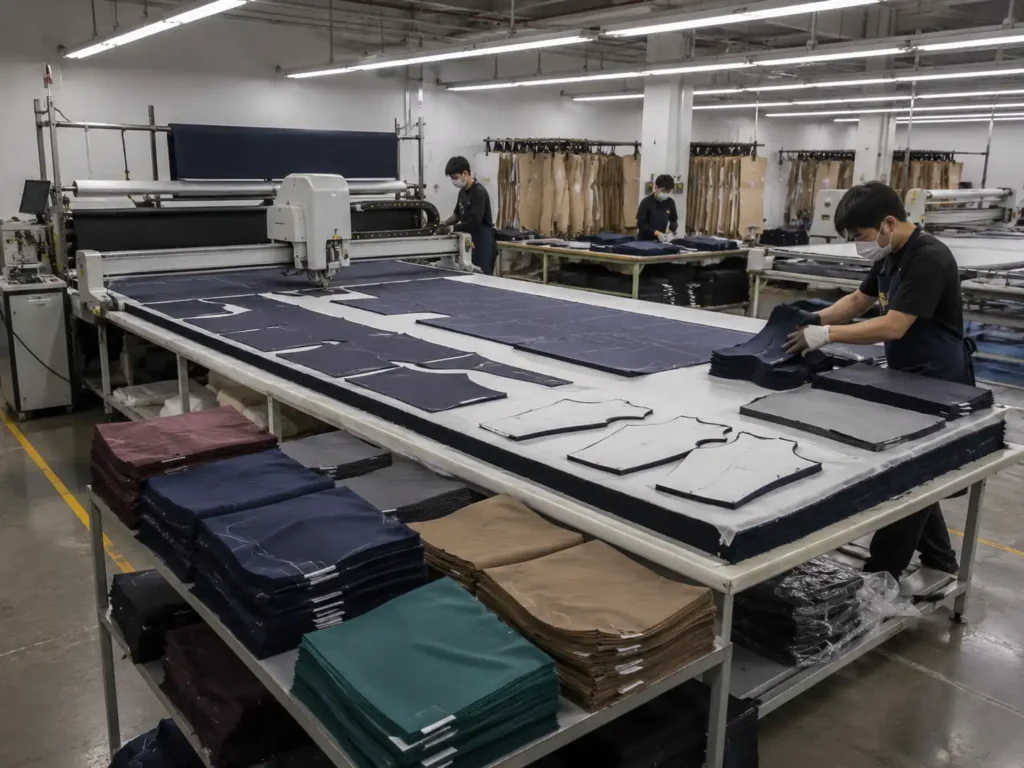
Cutting Inspection
- Examples: Satin face direction, bodycon stretch direction, lace placement, printed panel alignment.
- Decision: Release bundle, recut, segregate defect, or correct marker and instructions.
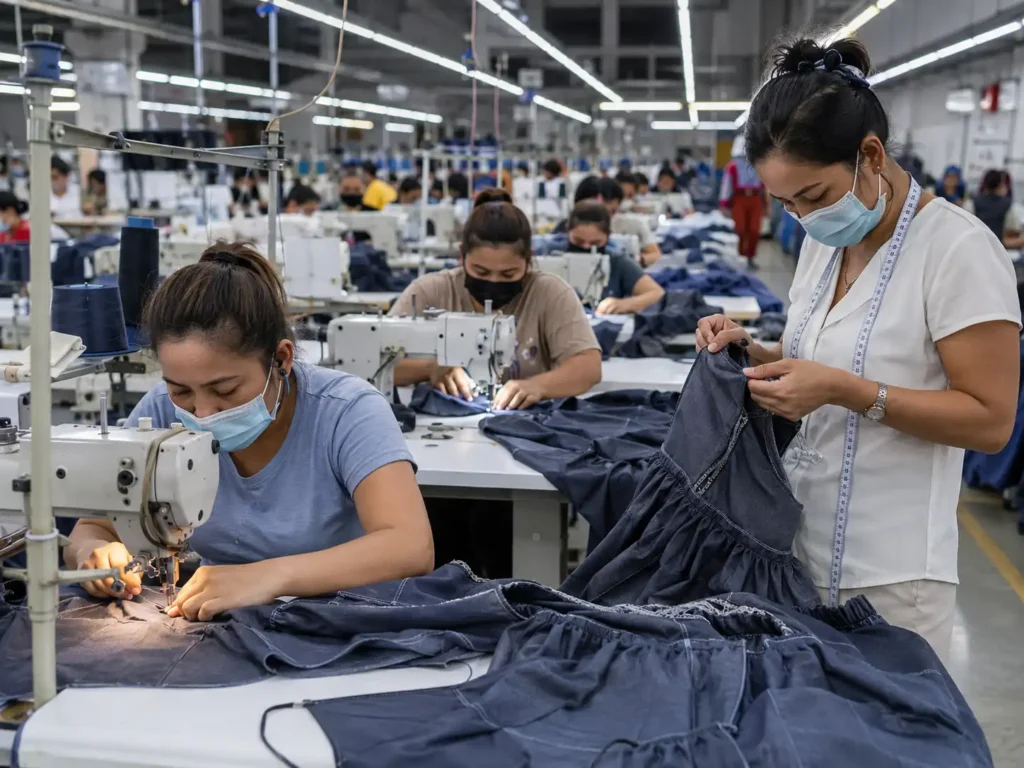
Inline Sewing Check
- Examples: Zipper waves, exposed lining, asymmetric ruching, loose cups, mesh damage.
- Decision: Correct operation, retrain, repair work in progress, or adjust method with approval.

Measurement Review
- Examples: Base-size verification, graded-size checks, relaxed stretch measurements.
- Decision: Pass, repair, segregate, remeasure, or escalate pattern and production issue.

Final Garment Check
- Examples: Sequin loss, lace damage, satin marks, hem imbalance, zipper function.
- Decision: Pass, repair and reinspect, sort, or hold shipment pending corrective action.

Packing Inspection
- Examples: Wrong barcode, mixed sizes, incorrect carton mark, missing hangtag, damaged presentation.
- Decision: Repack, relabel, recount, rescan, or release after verification.
Vendor Onboarding and Compliance Support
Factory Profile
Process Records
Audit Coordination
Material Documents
Testing Support
Label Information
Private Label and Retail-Ready Packing Control
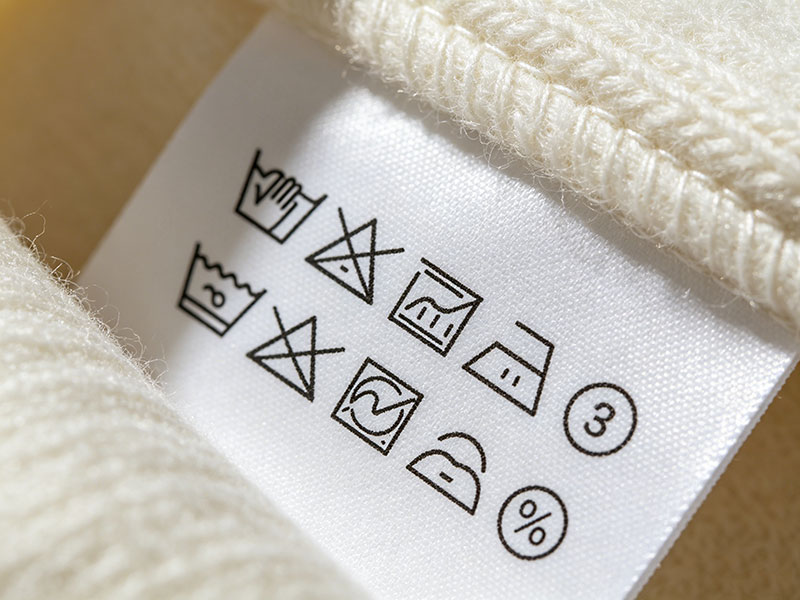
Garment Labels

Hangtags Details
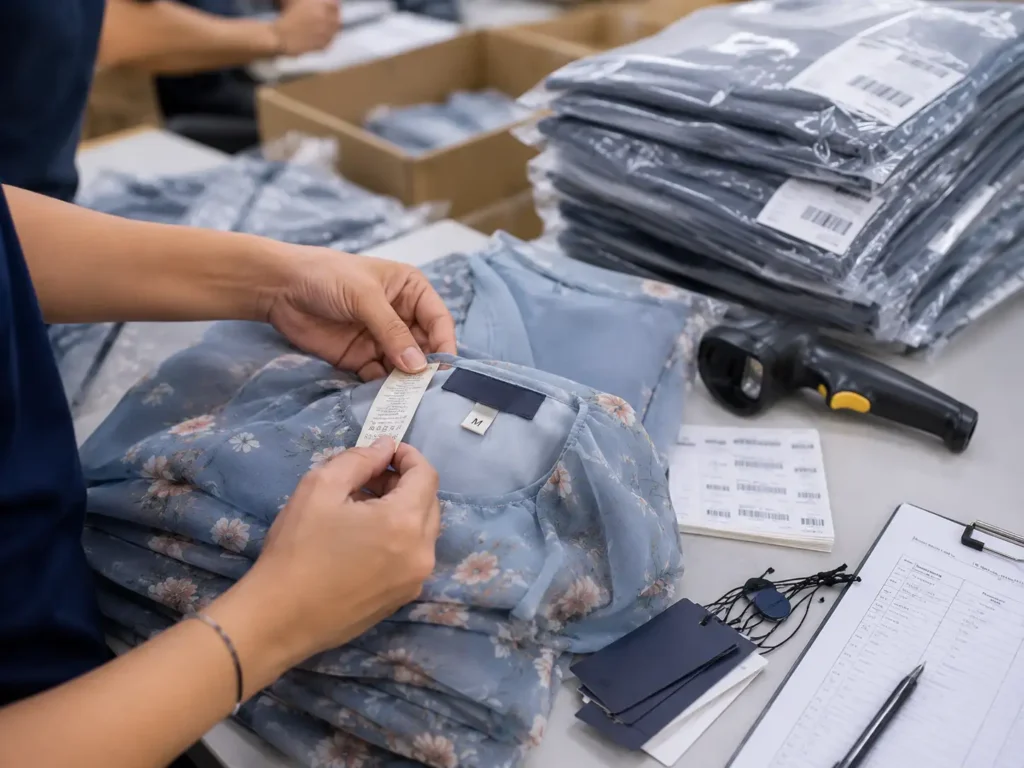
Barcode SKU Data
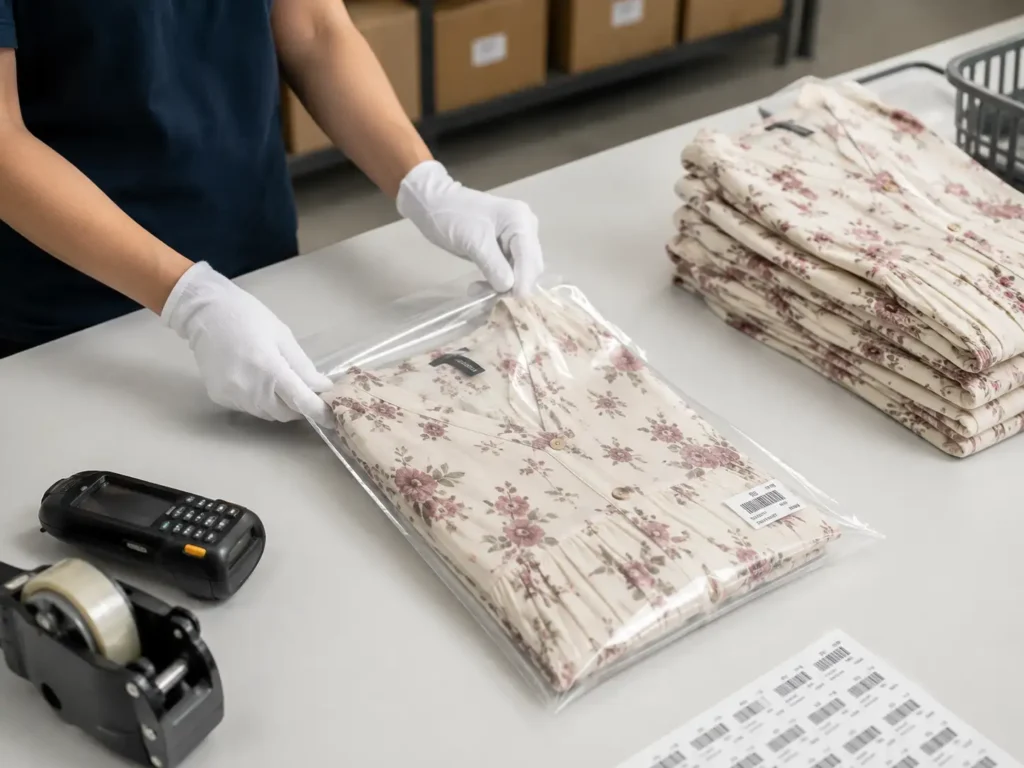
Polybag Presentation

Carton Packing
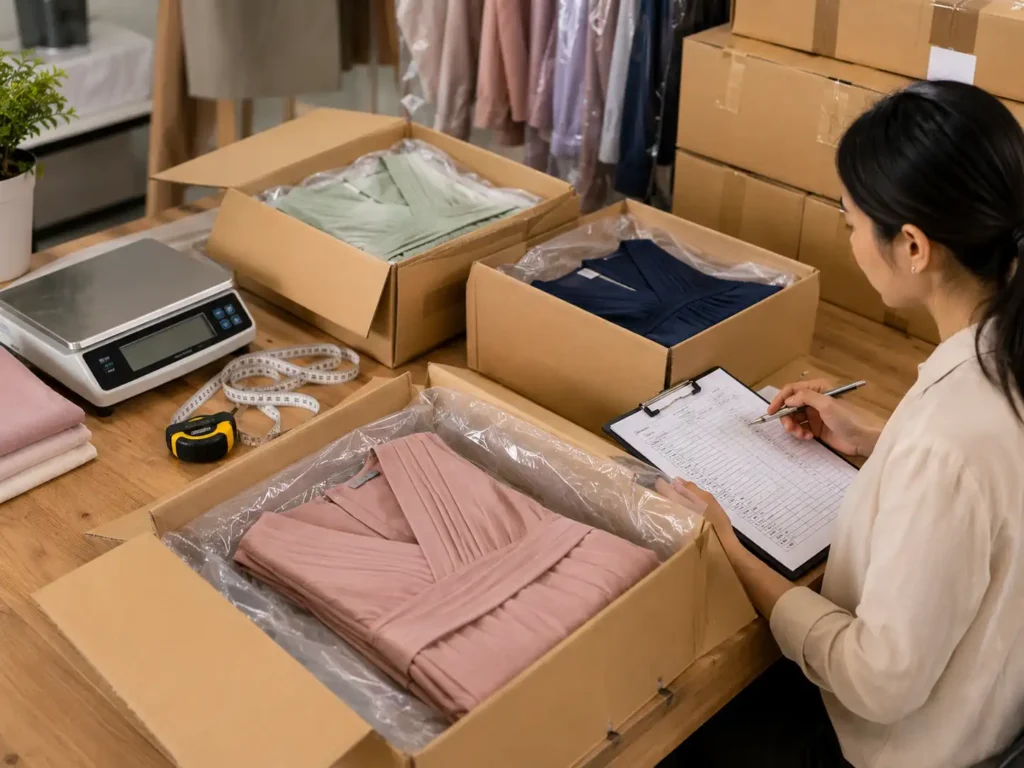
Carton Marks
Export Documents and Flexible Freight Coordination
Nominated Forwarder
Express Samples
Air Freight
Sea Freight
Split Shipment
Trade Documents
Fashion Buying Office Dress Manufacturing Case Studies
Fashion buying offices need manufacturing partners that can manage multiple client programs, separate brand requirements, controlled sampling, accurate costing, bulk production and export delivery. Jinfeng Apparel supports sourcing teams with structured development and production systems.
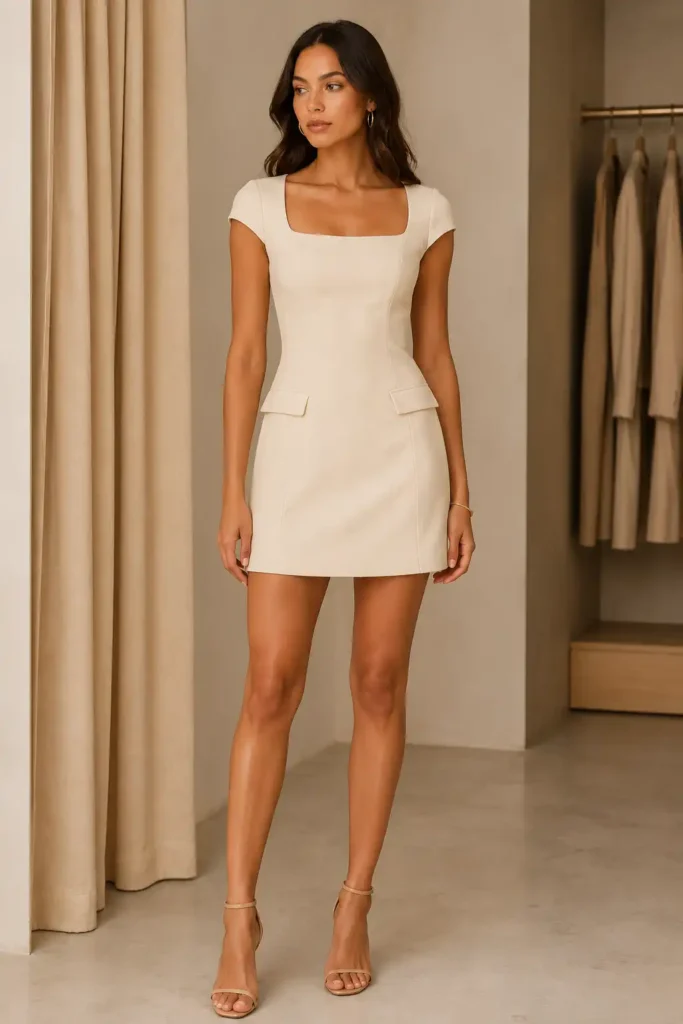
Case Study 1: US Fashion Buying Office Managing Multiple Brand Dress Programs
Client Background
A US fashion buying office managed several womenswear brands across occasionwear, partywear and contemporary fashion categories.
The buying office handled:
- Product development
- Client communication
- Cost evaluation
- Vendor management
- Delivery coordination
The manufacturing requirement was to support multiple end-brand programs while maintaining separate product standards.
Program scope:
- 22 dress styles
- 68,000 pieces total
- 3 end-brand collections
- XS-XXL size range
- Multiple delivery locations
Development Challenge
The buying office needed one manufacturing partner that could support different brand requirements without mixing standards.
Main challenges:
Different Brand Positioning
Brand A:
- Premium occasion dresses
- Satin and lace
- Higher finishing requirements
Brand B:
- Young partywear
- Mesh and bodycon styles
- Strong visual impact
Brand C:
- Resort dresses
- Lightweight fabrics
- Seasonal delivery
Result
The program achieved:
- 22 styles completed
- 68,000 pieces produced
- Multiple brand standards maintained
- Separate packing and shipment successfully completed
The buying office continued using the same manufacturing system for seasonal collections.
Case Study 2: European Buying House Developing Seasonal Womenswear Collections
Client Background
A European fashion buying house supplied several boutique and ecommerce brands with seasonal womenswear collections.
The buying team required:
- Fast sample development
- Accurate costing
- Flexible style adjustments
- Stable repeat production
The collection focused on:
- Party dresses
- Midi dresses
- Jumpsuits
- Matching sets
Development Challenge
The buying house often received incomplete design information from different clients.
Some projects started from:
- Reference images
- Trend boards
- Sketches
- Existing samples
The main difficulties were:
- Converting ideas into production files
- Selecting suitable fabrics
- Controlling target costs
- Confirming realistic delivery dates
Jinfeng Solution
Jinfeng supported the buying house from initial review.
Product Evaluation
Reviewed:
- Construction feasibility
- Fabric suitability
- Production difficulty
- Cost impact
Result
The buying house gained:
- Faster quotation response
- Clearer production planning
- More accurate client communication
- Stable seasonal production support
The cooperation expanded from individual orders into ongoing collection development.

Case Study 3: New Buying Office Building a Reliable Manufacturing Network
Client Background
A newly established fashion buying office wanted to build a stable China manufacturing supply chain for overseas womenswear brands.
The buying office needed more than product pricing.
It required:
- Reliable factory communication
- Sample capability
- Quality management
- Export support
Development Challenge
Before cooperation, the buying office faced several supplier issues:
- Different factories using different standards
- Unclear sample revisions
- Difficult production tracking
- Packaging mistakes
- Limited technical support
Jinfeng Solution
Jinfeng created a standardized cooperation process.
Vendor Setup
Provided:
- Factory introduction
- Product capability review
- Production workflow
- Quality process
Development Management
Controlled:
- Sample versions
- Fit comments
- Material approvals
- Production files
Order Management
Supported:
- Bulk production
- QC inspection
- Packing verification
- Shipment documents
Result
The buying office successfully established:
- Stable manufacturing partnership
- Standardized product development process
- Reliable production communication
- Repeat seasonal order capability
The relationship developed from supplier evaluation into long-term cooperation.
Frequently Asked Questions for Buying Offices

Send Your Dress Program for Vendor Review
A useful first review begins with enough information to assess style complexity, material direction, MOQ structure, sample priorities, production route, private-label work, inspection needs, and delivery planning. Send a line sheet, tech pack, original sample information, or reference images together with the quantity per style and color.
Kelly will coordinate the initial review with the development and production teams. Early feedback will identify missing specifications, likely fabric or trim risks, sample requirements, and the information needed for a more accurate quotation.
- Company and program: Buying-office name, target market, end-brand code if used, product category, number of styles, and launch season.
- Product files: Line sheet, tech pack, reference images, original sample details, measurements, construction notes, and priority styles.
- Commercial plan: Quantity per style/color, size range and ratio, target cost, required delivery window, and expected repeat or seasonal plan.
- Materials and branding: Fabric direction, color plan, trims, labels, hangtags, barcodes, polybags, cartons, and warehouse requirements.
- Quality and delivery: Inspection standard, client QA or third-party needs, trade term, nominated forwarder, destination, and split-shipment requirements.
- File upload fields: Name, Tel/WhatsApp, Email Address, Message, and Upload Your Files.