...

Womenswear Manufacturer for High-Volume Style Programs​

Structured development, scalable production and controlled delivery for established fashion brands running multi-style womenswear collections.

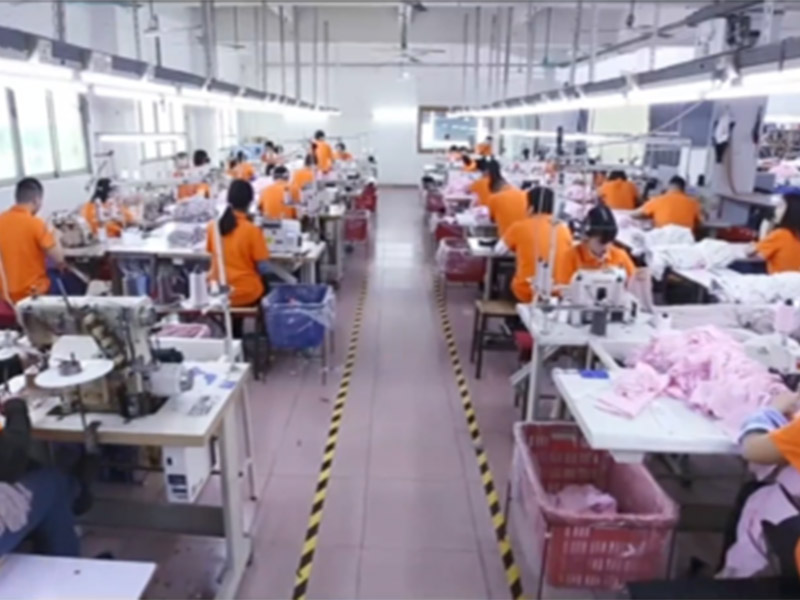
  • 6 owned women’s fashion factories plus 10+ long-term satellite production partners for program-level capacity planning.
  • 100,000+ pieces of regular monthly production capacity supported by 18+ sewing lines and 6+ flexible production lines.
  • 2 sample rooms, 7+ senior pattern makers and 20+ sample machinists for parallel style development and revision control.
  • 15+ QC inspectors covering materials, cutting, sewing, measurements, finished garments, packing and pre-shipment review.

Jinfeng Apparel coordinates dresses, skirts, jumpsuits, matching sets, fashion tops and private-label collections from line-sheet review and fabric grouping through pattern development, samples, PP approval, bulk allocation, quality control, branded packing and multi-batch delivery. The focus is not only output volume. Every style, color, size, fabric and packing instruction must remain traceable as the program moves from development into production.

Production Scale Built Around Multi-Style Programs

Large programs require more than a single output number. Jinfeng Apparel combines owned factories, long-term production partners, dedicated development resources and project teams so capacity can be assigned by garment structure, fabric behavior, sewing complexity, order quantity and delivery window.

6 Owned Factories

Owned production units support dresses, skirts, jumpsuits, matching sets and private-label womenswear. New or technically sensitive styles are assigned according to construction skill, fabric risk and approved production standards rather than sent to the first available line.

10+ Partner Factories

Long-term satellite partners provide planned capacity for repeat orders, regular styles, peak-season expansion and selected production batches. They operate within the same document, PP sample, QC and packing requirements used across the wider program.

100,000+ Monthly Pieces

Regular monthly capacity gives established brands room to plan seasonal collections, staggered drops and replenishment. Capacity is confirmed against style mix and line availability because 30,000 simple knit pieces and 30,000 structured occasion dresses require different production resources.

18+ Sewing Lines

Sewing lines are matched to woven dresses, stretch styles, occasionwear, skirts, sets, jumpsuits and repeat programs. Line planning begins after construction, operation sequence, fabric handling and PP standards are understood.

6+ Flexible Lines

Flexible lines support mixed-style programs where quantities are distributed across several designs, colors and sizes. They are useful for collection launches, rolling production and controlled replenishment without treating every style as a single large basic item.

12+ Merchandisers

Dedicated merchandising follow-up connects fabric, trims, samples, PP approvals, production schedules, QC, packing and shipment preparation. Key programs receive one-to-one coordination and structured status reporting.

What Defines a High-Volume Womenswear Style Program?

A high-volume womenswear program combines multiple styles, colors, sizes and production batches under one coordinated launch or replenishment plan. The challenge is not only unit count. Development files, materials, pattern versions, PP approvals, line allocation, inspection standards and SKU packing must stay synchronized across the entire assortment.

Program DimensionTypical RequirementCommon RiskControl Method
Style CountUsually multiple designs developed in parallelConfused versions, missed revisions and uneven sample priorityStyle register, grouping and approval status
Aggregate VolumeLarge total quantity spread across several stylesCapacity appears sufficient overall but key lines become overloadedStyle-level line allocation and material readiness
Color and Size MixSeveral colors and a broad size ratio per styleIncorrect cut ratios, mixed labels and packing errorsApproved ratio sheets, size breakdowns and SKU checks
Fabric MixWoven, stretch, satin, mesh, lace, knit or sequin within one collectionWrong factory or sewing method assigned to a sensitive materialFabric grouping, risk review and production-unit matching
Launch WindowsOne launch date or several phased dropsLate styles delay photography, retail intake or campaign timingBackward planning from shipment and launch dates
Repeat PotentialTop-selling styles return in later batchesSecond batch differs in fit, shade, trims or packingPattern, fabric, trim, QC and packing records

Built for Established Fashion Programs

Jinfeng Apparel is structured for brands with defined product direction, professional development files and real bulk plans. The strongest fit is a seasonal collection, private-label range, recurring style program or high-volume launch requiring coordinated samples, production, QC and branded delivery.

Best Program Fit

Strong-fit projects include established fashion labels, premium ecommerce operations, fashion retailers, sourcing offices, brand groups and product teams managing 10–30 styles per order cycle. A clear line sheet, target quantity, size plan, fabric direction, packing standard and delivery window allow the manufacturing team to build a reliable development and production plan.
  • Seasonal or monthly collection launches
  • Multi-style dress and womenswear programs
  • Private-label retail or ecommerce delivery
  • Repeat orders and bestseller replenishment
  • Multi-color and multi-size production plans

Program Entry Standard

Each project begins with product and capacity review. MOQ starts from 200 pieces per style/color and can change when custom dyeing, prints, special lace, sequin fabrics, custom hardware, complex structures or detailed packing create higher material minimums. Accurate review depends on style-level quantities rather than one total order number.
  • Tech packs, reference samples or developed sketches
  • Professional sample and revision budget
  • Confirmed or realistic launch calendar
  • Brand-level quality and packing requirements
  • Bulk production and long-term cooperation potential
Check Program Fit

Where Large Multi-Style Programs Lose Control

A large assortment can fail even when total factory capacity looks sufficient. Most losses begin at handover points: incomplete development files, unclear sample priority, material delays, mismatched line allocation or inconsistent standards across several production units.

Development Bottlenecks

When every style is marked urgent, sample rooms become blocked and hero products miss photography or sales-review dates. Jinfeng Apparel ranks styles by launch date, material readiness, technical risk and commercial priority, then tracks first sample, fit revision, PP approval and pending comments separately.

Production Imbalance

A 20-style order may contain simple jersey dresses, structured corset styles, lined satin pieces and embellished mesh designs. Equal unit quantities do not mean equal workload. Production is balanced by operation time, fabric handling, technical skill, material arrival and inspection intensity.

Cross-Style Inconsistency

Multiple lines can create different seam appearance, pressing results, measurement control or label placement unless standards are transferred clearly. Final patterns, approved materials, sewing notes, Golden samples, QC checklists and packing instructions provide a common reference across the program.

Womenswear Categories Managed Within One Program

A high-volume collection often combines several garment structures rather than repeating one basic style. Jinfeng Apparel focuses on premium fashion womenswear and assigns each category according to pattern complexity, fabric behavior, sewing operations, finishing requirements and delivery priority.

Fashion Dresses

Mini, midi and maxi dresses can be developed across party, occasion, cocktail, wedding guest, graduation, resort and evening directions. Program control covers neckline, bust, waist, hip, length, lining, slit position, zipper, drape, pressing and size balance so visually different dresses still follow one brand standard.

Structured Dresses

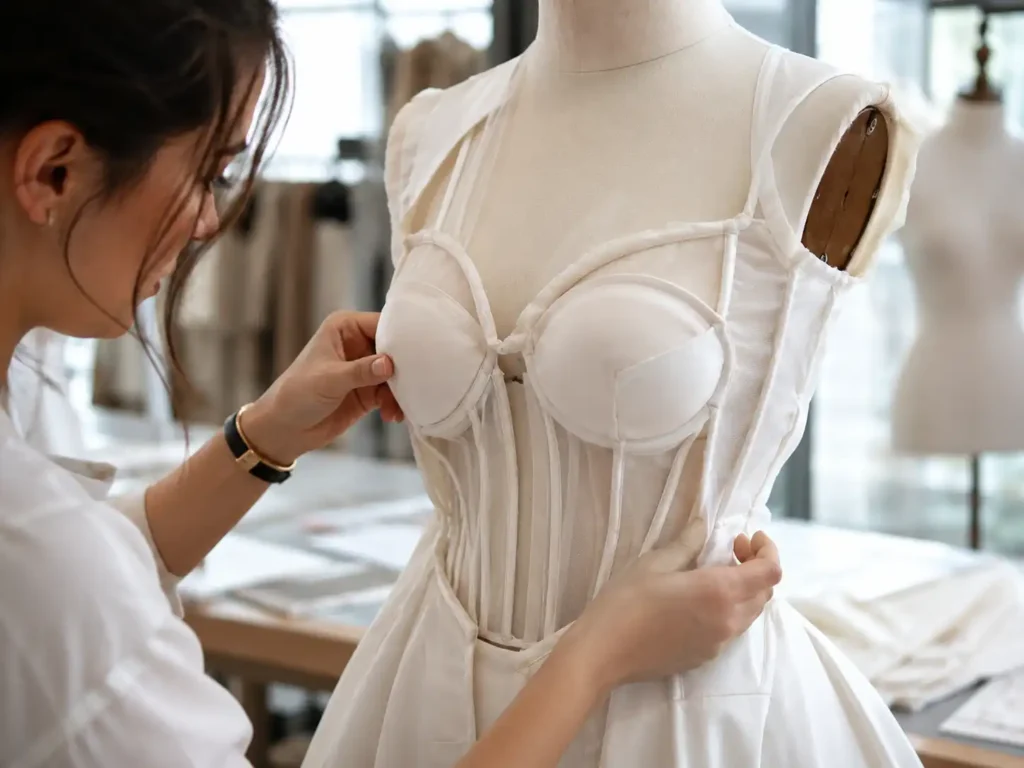
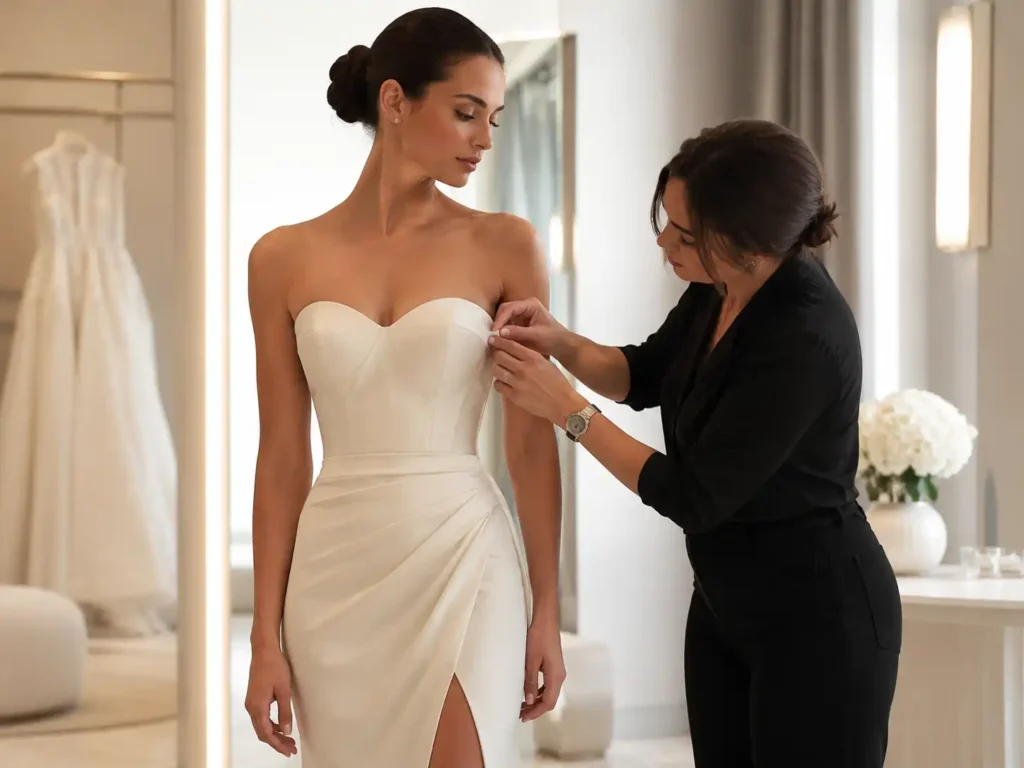
Corset, bustier, strapless and fitted styles require more than additional seams. Pattern teams review cup shape, upper-bust coverage, boning position, anti-slip control, lining support, waist shaping and closure stability. High-risk structures are sampled and locked before line allocation.

Skirts and Bottoms

Mini, midi, maxi, low-waist, pleated, ruched and fitted skirts require stable waist placement, hip ease, hem balance, lining coverage and closure control. Size ratios and cut quantities are managed carefully because skirt programs often contain many colors and repeated fabric groups.

Jumpsuits and Rompers

Jumpsuits add waistline, rise, torso length, hip ease and movement requirements to standard dress development. Pattern correction checks front and back length, crotch comfort, strap or sleeve balance, closure access and leg shape before grading moves into bulk sizes.

Matching Sets

Two-piece programs require coordinated fabric, color, size ratios, construction and packing. Top and bottom components must stay paired through cutting, sewing, inspection, labeling and final packing. SKU structure is confirmed early to prevent mismatched sets at warehouse intake.

Fashion Tops

Corset tops, crop tops, halters, off-shoulder styles, mesh tops and occasion tops can extend a dress collection into a wider assortment. Shared fabrics and trims may improve material planning, but each top still needs its own fit, support, coverage and labeling standard.

Information Needed for a Reliable Program Review

Clear source files shorten evaluation and reduce avoidable revision loops. A program brief does not need to be perfect, but each style should have enough commercial and technical information for material, sample, capacity, quotation, QC and delivery planning.

Line Sheet

A line sheet creates the master style register. Product names, reference images, style codes and category groupings help the team identify shared materials, common constructions, priority items and potential factory allocation before development starts.

Tech Packs

Tech packs define measurements, construction, stitching, trims, labels and finishing. When details are still developing, Jinfeng Apparel records open points so unresolved decisions do not disappear inside emails or chat messages.

Style Priority

Hero SKUs, campaign samples, sales-meeting pieces and technically risky styles should be identified early. Priority status guides pattern work, sample-room scheduling, fabric confirmation and approval sequencing.

Quantity Breakdown

Total order quantity alone is not enough. Units must be separated by style, color and size so fabric requirements, MOQ fit, cutting ratios, line capacity, QC workload and packing volume can be calculated.

Fabric Direction

Fabric references, swatches, composition requirements, target weight, stretch, hand feel, drape, transparency and color direction help prevent attractive reference images from being developed in unsuitable materials.

Size Plan

Size range, base size, grade rules, target market and quantity ratios influence pattern work, size-set approval, cutting plans and measurement QC. Petite, tall or extended-size blocks need separate review rather than simple length changes.

Packing Standard

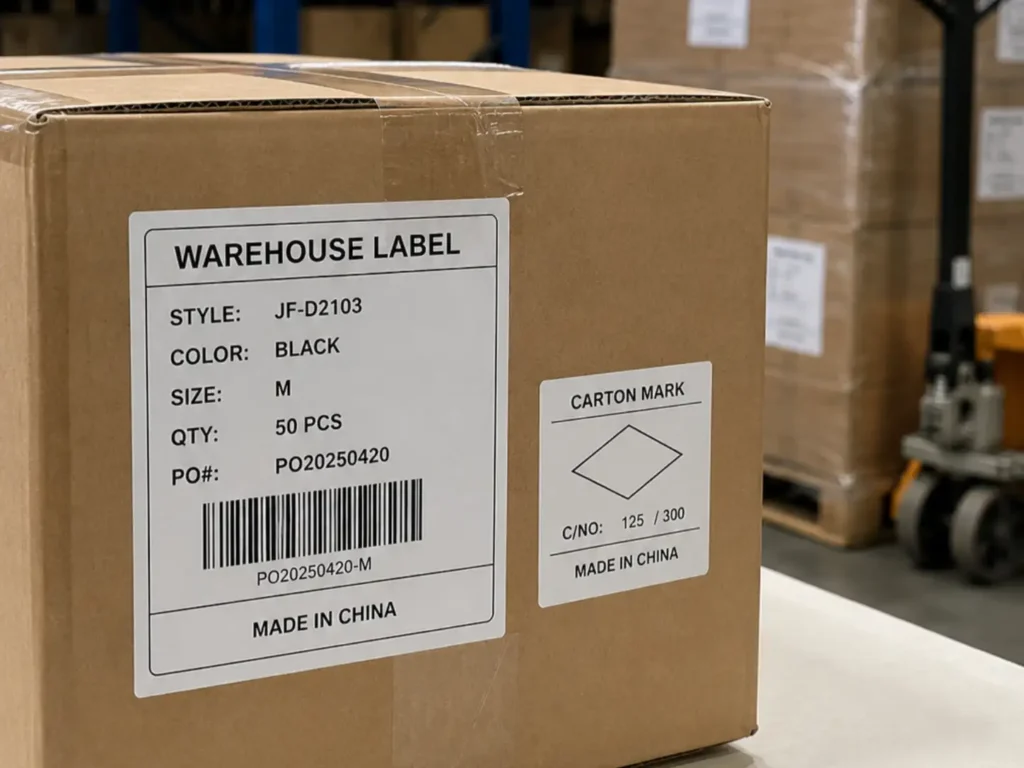
Woven labels, care labels, hangtags, barcodes, SKU stickers, polybags, carton marks, warehouse labels and folding rules should be supplied early enough to align artwork, lead times and inspection points.

Delivery Window

Launch, warehouse and shipment dates allow backward planning for sample approval, material booking, PP lock, cutting, sewing, QC, packing and freight. Several delivery windows can be planned when the assortment launches in phases.

How Multi-Style Collections Are Structured

Program control begins by breaking a broad assortment into manageable groups. Grouping is based on the work required, not only visual similarity. The method improves sample flow, material planning, production allocation and approval visibility across 10–30 style collections.

Style Grouping

Dresses, skirts, jumpsuits, sets and tops are separated by construction family. A corset satin mini and a simple satin slip may share fabric but need different pattern, support, sewing and inspection standards.

Fabric Grouping

Styles using compatible satin, mesh, lace, chiffon, jersey, ponte, crepe or lining directions are grouped for swatch review, color approval, material booking and dye-lot control. Shared materials are used only when hand feel, weight, stretch and visual result fit every design.

Trim Grouping

Zippers, cups, boning, elastic, sliders, hooks, lace trims, sequins, labels and packaging materials are organized by specification and lead time. Custom items are flagged because their MOQ and development time can control the full calendar.

Priority Grouping

Styles are ranked by launch date, campaign importance, fabric readiness, technical risk and photo-sample need. Early approval goes to styles that unlock sales activity or require the longest material and production path.

Factory Grouping

Production units are selected according to woven or stretch construction, complex fabric handling, corset skill, embellishment level, order quantity and timing. Not every style is assigned to every factory.

Approval Grouping

First sample, fit sample, revised sample, PP sample and Golden sample status is recorded by style. Approval waves keep ready styles moving while unresolved designs remain outside bulk production.

Capacity Allocation Across the Factory Network

Jinfeng Apparel uses 6 owned women’s fashion factories and 10+ long-term satellite production partners as a coordinated manufacturing system. Capacity is not assigned by empty space alone. Product structure, material risk, sample maturity, line skill, order quantity and QC requirements determine the production route.
jinfengapparel

Owned Factory Control

New developments, complex structures and high-risk materials are placed with production units suited to the garment. Owned factories support direct coordination between pattern, sample, merchandising, production and QC teams, helping the approved standard move into bulk without losing technical detail.

Partner Capacity Support

Long-term satellite partners are used for selected regular styles, repeat programs, peak-season expansion and planned multi-batch delivery. They are not treated as uncontrolled temporary subcontractors. Each batch follows confirmed documents, approved references, inspection requirements and packing instructions.

Flexible Line Planning

Eighteen-plus sewing lines and six-plus flexible lines allow style groups to be scheduled according to operation time and launch sequence. Complex items may remain on specialist lines while repeat or lower-risk styles move through stable bulk lines, protecting both speed and workmanship.

Parallel Sampling Without Losing Version Control

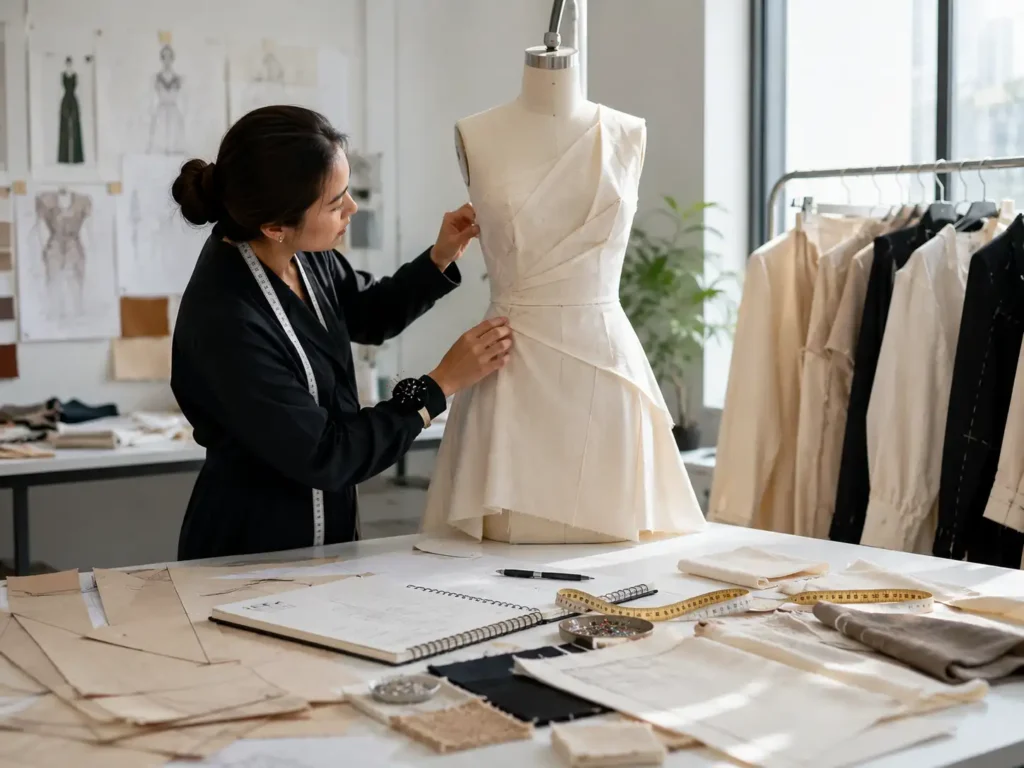
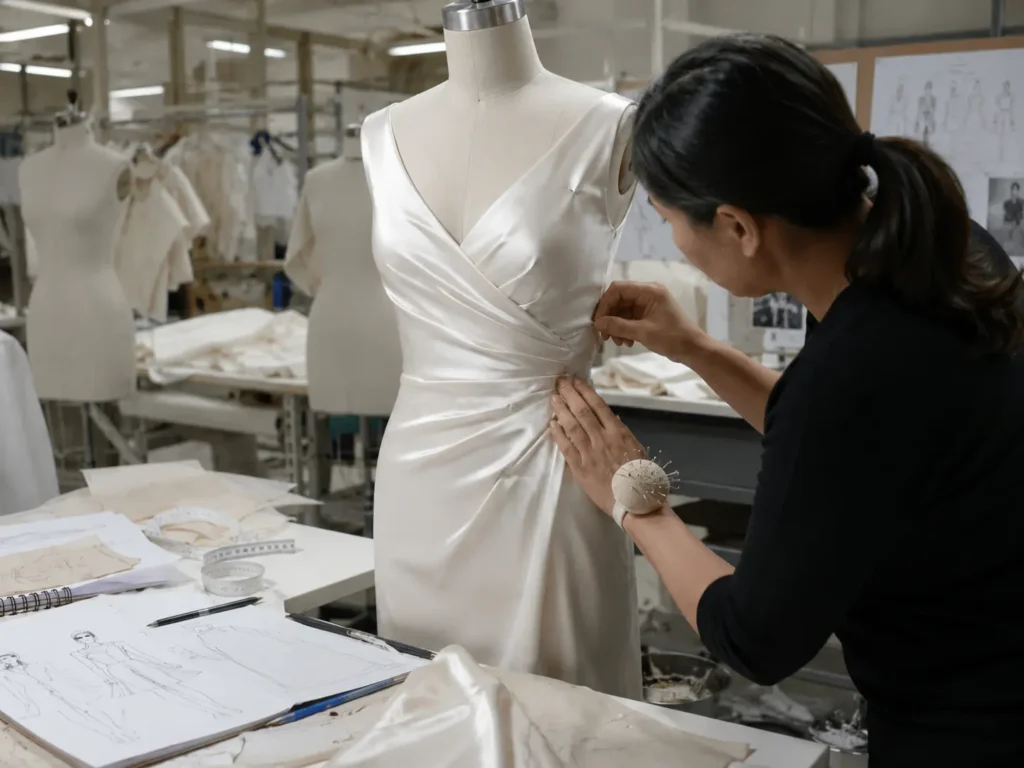
Two sample rooms, 7+ senior pattern makers and 20+ sample machinists support multi-style development. The goal is not to push every style through at once. Each sample must verify the right decisions before the collection reaches PP approval and bulk allocation.
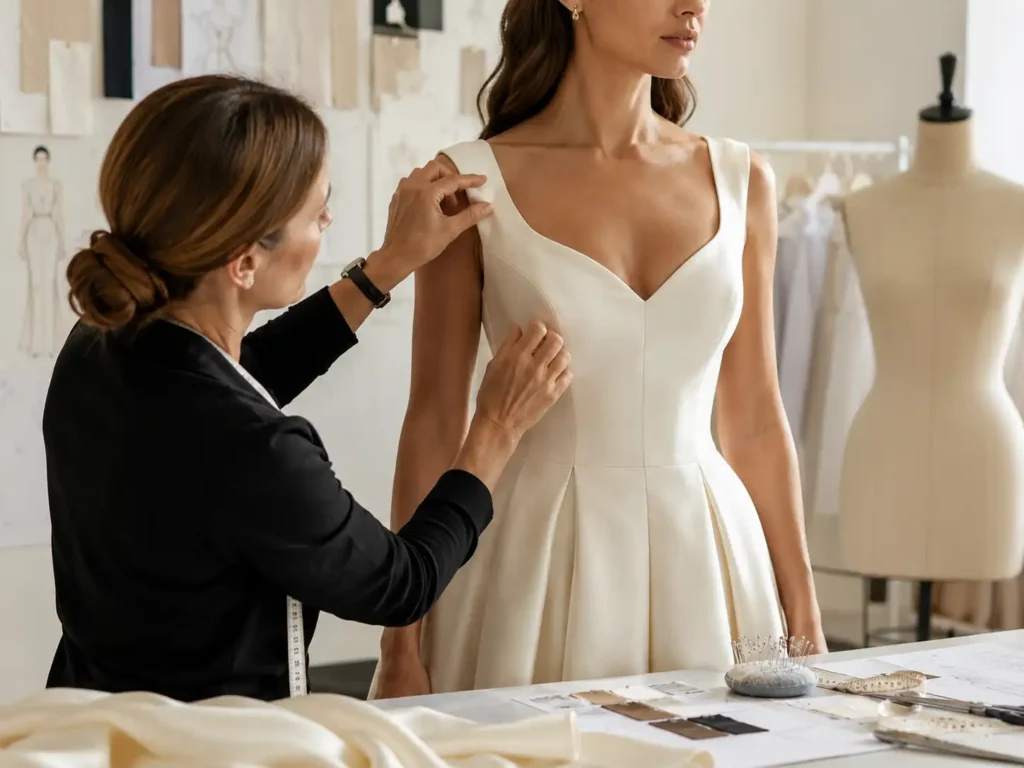
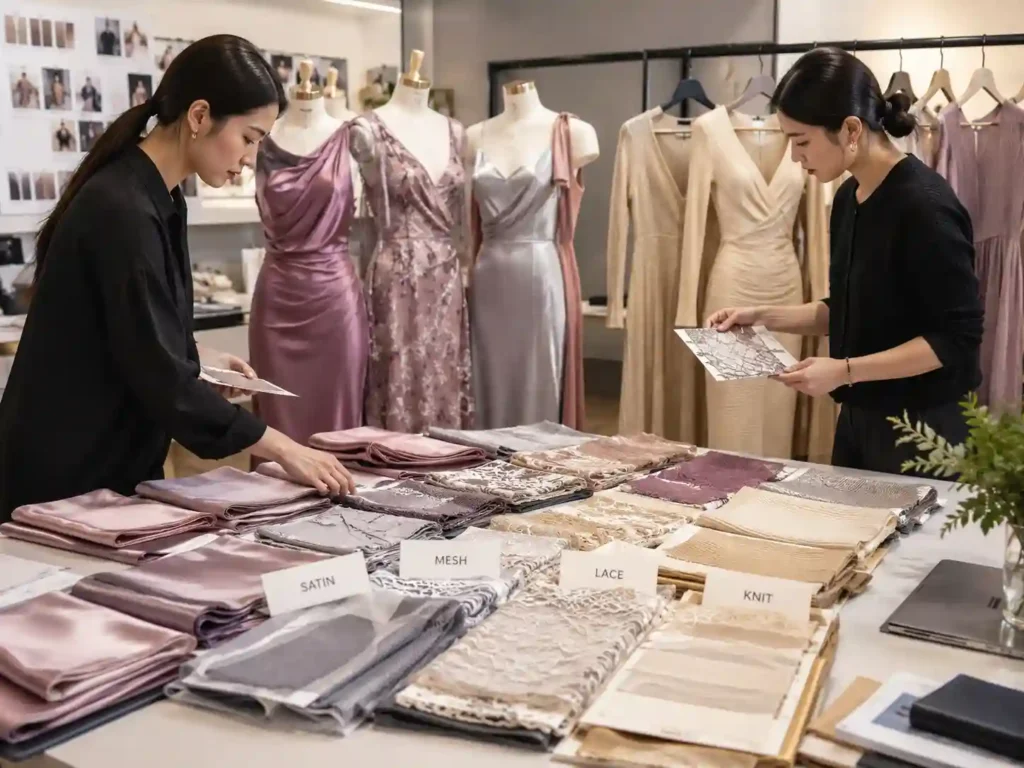
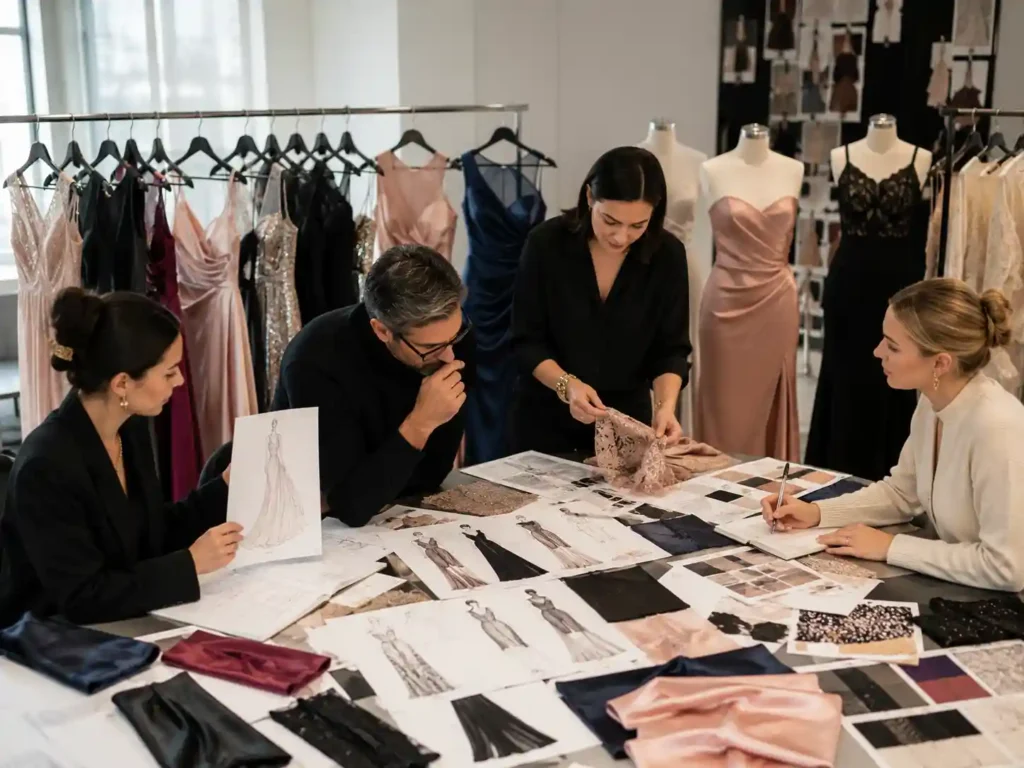
A professional fashion design team discussing custom dress development with fabric swatches, sketches, mood boards, and a dress sample on a mannequin.

Development Review

Reference images, tech packs, original samples or sketches are reviewed for silhouette, fabric direction, trims, fit risk, construction difficulty and production feasibility. Open questions are listed before pattern work begins.

First Sample

The first sample turns drawings and specifications into a physical garment. It tests proportion, fabric behavior, lining, closure, support, construction sequence and cost logic. A first sample is a development tool, not automatically the final bulk standard.

Fit Sample

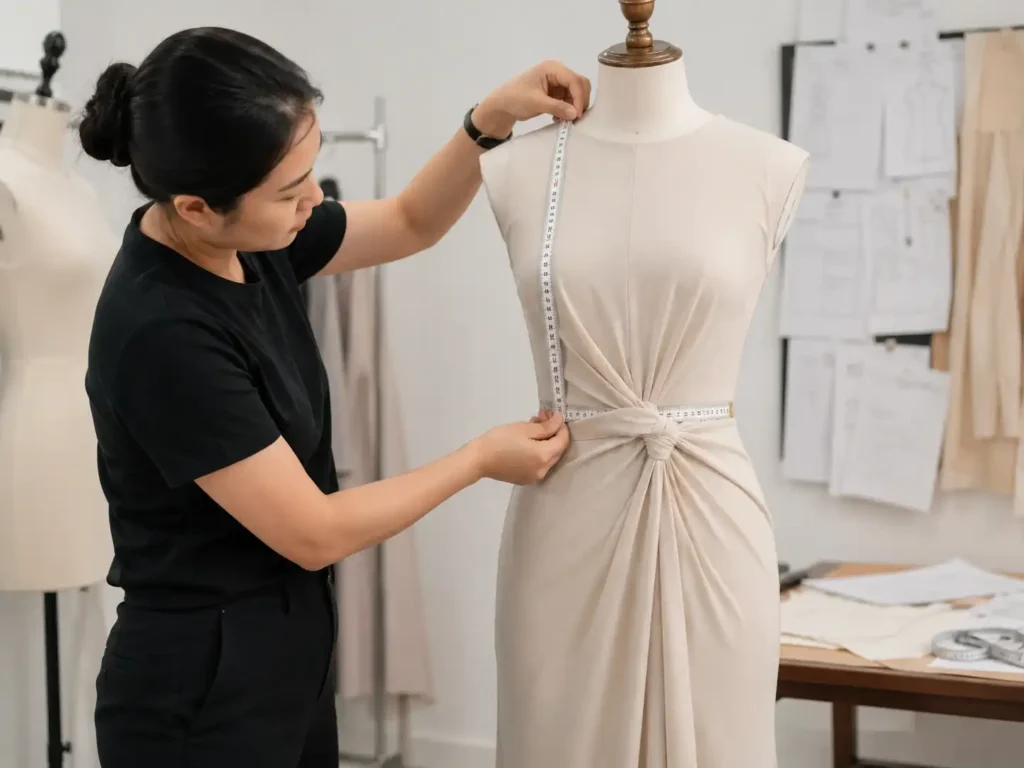
Fit review focuses on bust, upper bust, under bust, waistline, hip, strap length, armhole, neckline depth, garment length, slit height, lining coverage and jumpsuit rise. Comments are converted into measurable corrections.

Revised Sample

Pattern changes, material changes and workmanship corrections are recorded before the revised sample is made. Version identification prevents an earlier file or unapproved detail from returning later in the program.

PP Sample

The pre-production sample confirms final pattern, measurements, fabric, color, trims, lining, construction, labels, packing and allowable tolerances. Styles should not enter standardized bulk production while major development points remain open.

Golden Sample

The approved Golden sample supports pre-production meetings, line reference, inline inspection, final inspection, third-party inspection, packing confirmation and future repeat orders. Any later material or construction change requires renewed confirmation.

Pattern and Fit Control Across the Size Range

Strong sales volume cannot compensate for poor fit. Jinfeng Apparel develops and corrects women’s patterns around real garment behavior, not only flat measurements. Fit decisions are documented before grading and bulk cutting so the approved silhouette remains stable across colors, fabrics and production batches.

Bust and Support

Strapless, corset, deep-V and fitted styles need controlled upper-bust coverage, cup shape, under-bust position, neckline depth and support components. Bra cups, boning, underwire, anti-slip tape and lining must work with the pattern rather than being added after fit problems appear.

Waist Placement

High waist, natural waist and low waist positions change the whole body proportion. Pattern review checks front and back balance, waist shaping, seam placement and the relationship between bodice length and skirt or trouser rise.

Hip and Ease

Bodycon dresses, skirts and jumpsuits require accurate negative ease or wearing ease based on fabric stretch and recovery. Side-seam twisting, pulling, riding up and pocket or zipper distortion are reviewed during fit and fabric testing.

Neckline and Armhole

Halter, off-shoulder, sleeveless, backless and deep-neck styles can expose underarm areas or shift during movement. Neckline stability, armhole coverage, strap position, elastic support and lining shape are checked together.

Length and Balance

Mini safety, midi proportion, maxi hem level, slit height, front-back balance and heel allowance affect appearance and movement. Lightweight or bias-cut fabrics may require hanging or settling review before final hem decisions.

Jumpsuit Proportion

Jumpsuits require torso length, waist position, front and back rise, hip ease, leg shape and closure access to work as one system. A correct waist measurement alone cannot prevent an uncomfortable crotch or restricted movement.

Fabric Strategy for Scalable Womenswear Production
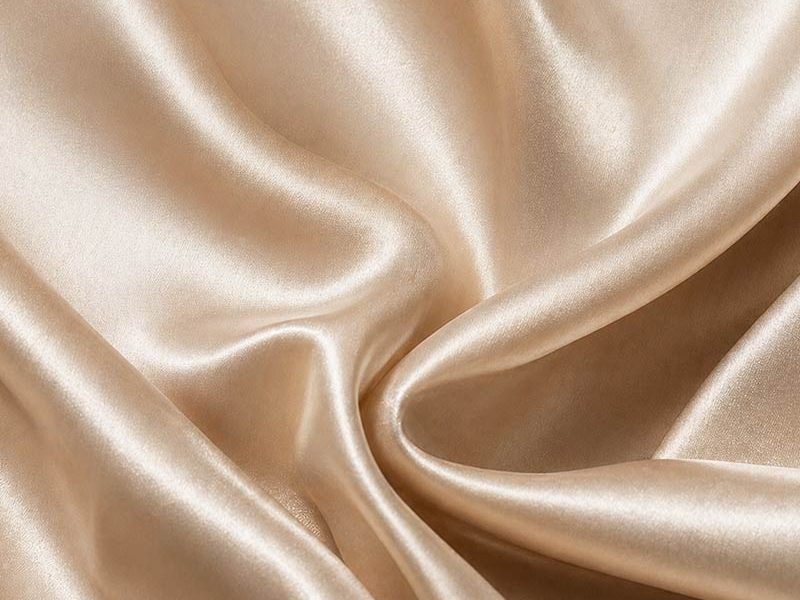
Material selection affects fit, sewing efficiency, bulk consistency, price, packing and delivery. Jinfeng Apparel reviews composition, weight, width, stretch, recovery, hand feel, drape, transparency, shrinkage, wrinkle behavior, shade risk, MOQ and lead-time impact before a fabric enters the production plan.
5. Satin Fabrics

Satin Programs

Matte satin, stretch satin and heavier satin create different drape, fit and pressing results. Control points include shine direction, shade variation, snagging, seam impression, puckering, zipper behavior, pressing temperature and anti-crease packing. Every color and dye lot requires visual review under consistent light.
7. Power Mesh

Mesh Programs

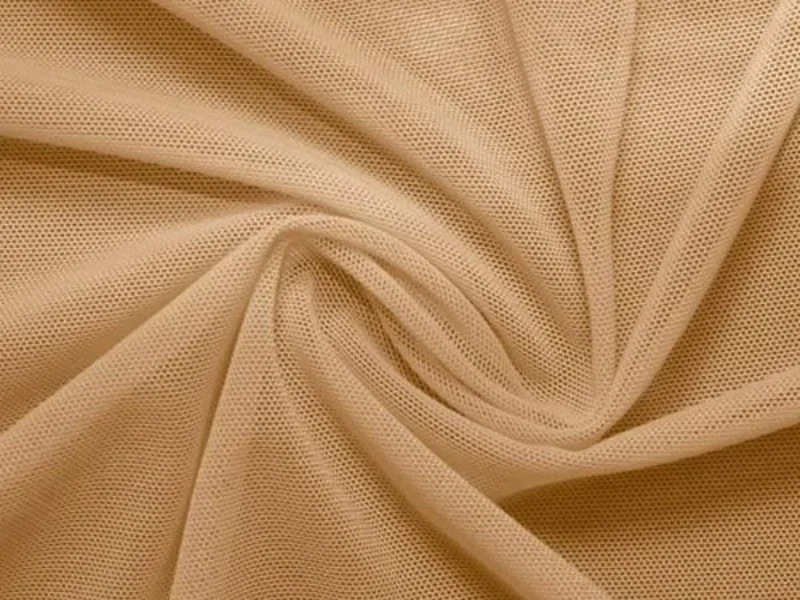
Regular mesh, stretch mesh, power mesh, printed mesh and double-layer mesh vary in density, recovery and transparency. Lining coverage, stretch direction, neckline stabilization, hole inspection, printed placement and edge finishing are confirmed before bulk cutting.

Lace Programs

Lace ranges commonly between 60–250 gsm and usually needs lining. Motif direction, placement, seam position, edge finishing, color matching, hole inspection and fraying control affect both appearance and sewing time. Lace fabric and lace trim are managed as separate materials.

Chiffon Programs

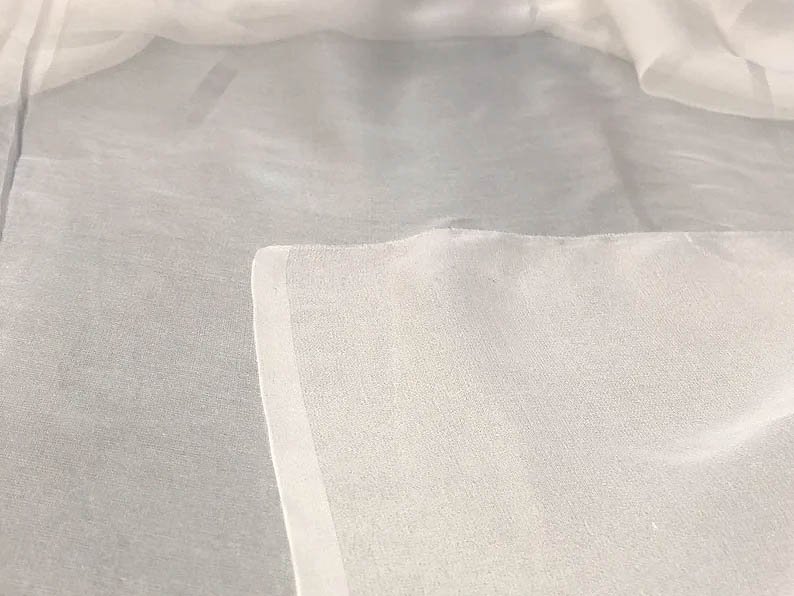
Chiffon brings movement but increases risks around transparency, grain control, slipping layers, seam puckering, rolled hems, static and shade variation. Cutting, lining, gathering, print direction and packing need standards that protect the light visual effect.

Knit and Jersey

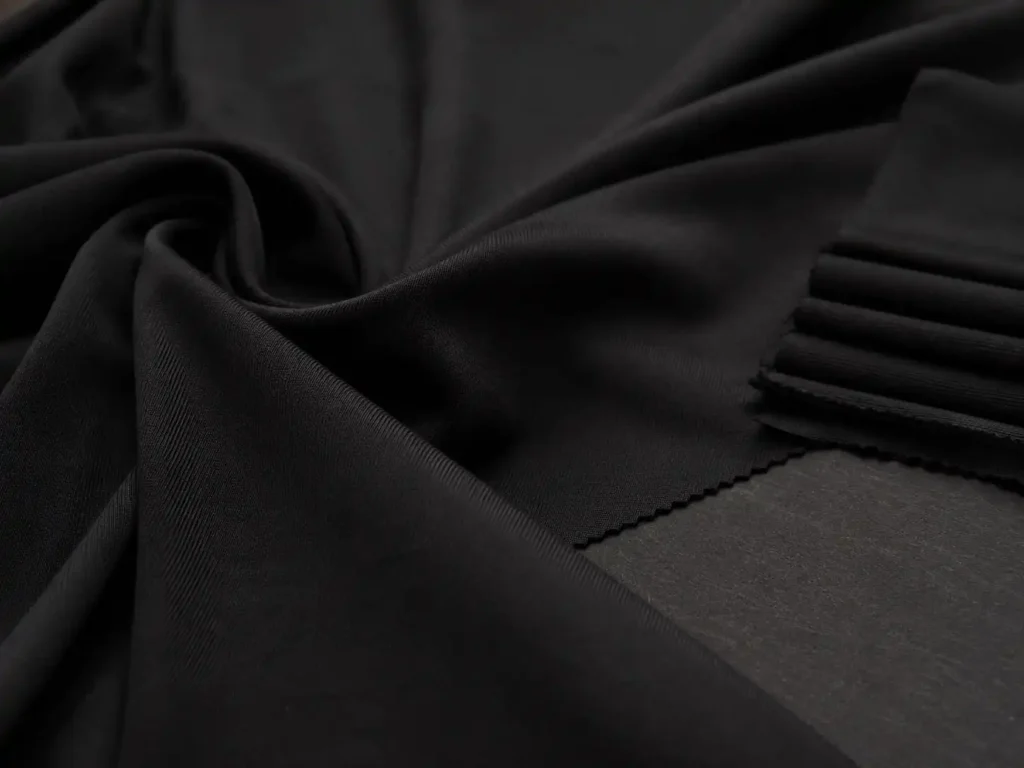
Jersey, rib knit, ponte and stretch constructions are evaluated for weight, stretch, recovery, shrinkage, relaxation, twisting and post-wash stability. Pattern measurements, cutting direction and tolerances change when a fabric stretches differently across body zones.

Sequin Materials

Sequin fabrics require review of base fabric, sequin density, direction, shedding, skin contact, seam bulk, needle risk and packing protection. Areas touching the body may need lining or seam shielding, while placement and trimming affect final symmetry.

Crepe and Wovens

Crepe, rayon, linen blends and other woven fabrics vary in drape, wrinkle recovery, shrinkage and surface texture. Fabric width and marker efficiency influence cost, while grain direction and pre-production testing influence garment balance.

Color and Dye Lots

Lab dips, color swatches, bulk approval, shade bands, lining color and trim matching become more important as style count rises. Dye lots are separated and recorded so garments from different batches do not create visible color inconsistency within one SKU.

Trim and Structural Component Control

A large womenswear program can contain hundreds of trim decisions. Closures, adjustment parts, support components, decoration and branding items are reviewed for specification, color, strength, comfort, MOQ, development time, cost impact and inspection method.

Zippers and Closures

Invisible, regular and metal zippers must match garment weight, seam structure and wearing use. Length, tape color, slider finish, smooth operation, seam flatness and top-stop position are checked in samples and bulk. Hooks, buttons and snaps follow the same specification control.

Cups and Boning

Corset and structured styles require cup shape, cup position, boning type, channel placement, end protection and lining comfort to align with the pattern. Support components must improve stability without creating visible ridges, pressure points or uneven seams.

Straps and Adjusters

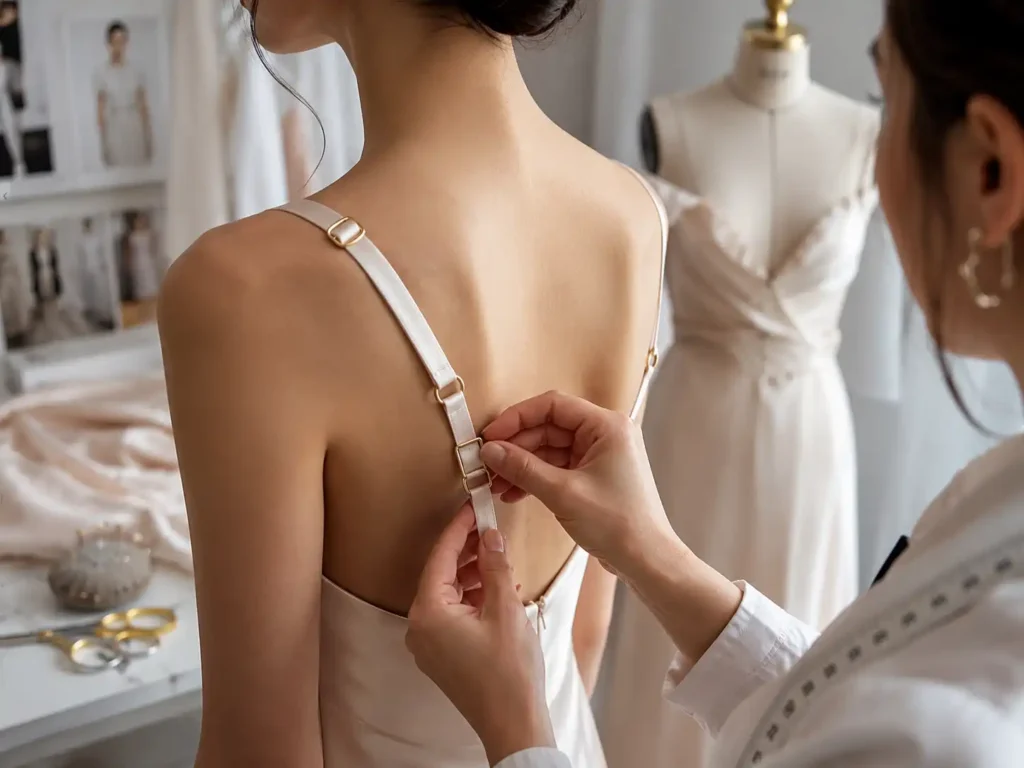
Shoulder straps, sliders, rings, elastic and tapes affect fit and durability. Width, stretch, color, metal finish, adjustment range, attachment strength and left-right symmetry are specified before bulk so strap length does not vary across sizes or batches.

Linings and Coverage

Lining is selected for opacity, hand feel, static control, stretch compatibility and color. Length, neckline shape, slit coverage, attachment points and seam allowance are reviewed because lining exposure or restriction can ruin an otherwise correct outer garment.

Decorative Components

Lace trims, rhinestones, bead chains, sequins and embellishments require placement, attachment strength, skin-contact review and packing protection. Hand-applied details also affect production time and inspection intensity.

Branding Materials

Woven labels, size labels, care labels, hangtags, hang strings, barcode stickers and SKU labels are treated as controlled materials. Artwork, language, composition data, color, size, position and quantity must be approved before packing.

Design Details That Must Survive Bulk Production

Fashion impact often depends on a few visible details. Large orders expose small inconsistencies quickly, so each feature needs a measurable construction and inspection standard rather than a visual instruction such as “make it similar.”

Ruching Control

Ruching length, gathering ratio, placement, direction and left-right symmetry are defined against pattern notches or measurements. Uneven gathering changes waist and hip appearance, while excess tension can twist side seams or shorten the garment.

Pleats and Darts

Pleat width, depth, direction and pressing must remain consistent from sample through bulk. Darts require correct point position, length and pressing so they shape the garment without creating bubbles or sharp ends.

Cut-Out Stability

Cut-out designs need stable edge finishing, reinforcement, lining or facing support, balanced tension and sufficient coverage during movement. Stretch fabrics and mesh may require different stabilization methods than woven satin or crepe.

Lace Placement

Motif position, mirror symmetry, seam matching and edge use determine whether lace looks deliberate or random. Placement standards are especially important across bust panels, necklines, sleeves, waist seams and center-front areas.

Sequin Protection

Sequin direction, density, seam clearing, lining, edge finishing and packaging protection reduce shedding, scratching and bulky seams. Garments are checked for missing areas, sharp contact points and visual breaks around zippers or darts.

Strapless Construction

A strapless garment depends on upper-bust fit, support structure, anti-slip control, neckline stability and closure position. Bulk inspection must verify the same support height and cup balance across sizes.

Slits and Hems

Slit height, overlap, reinforcement, hem width and front-back balance affect movement and coverage. Mini, midi and maxi products require different controls, particularly in satin, chiffon, bias-cut or stretch fabrics.

Pressing and Finish

Pressing is part of garment construction, not a cosmetic final step. Temperature, steam, pressure, seam opening, shine protection, crease control and cooling influence how satin, lace, mesh, knit and structured garments arrive at packing.

How Approved Samples Transfer Into Bulk Production

The transition from sample room to production line is a major risk point. Jinfeng Apparel converts approved decisions into a controlled handover package so pattern, material, construction, quality and packing requirements remain available to every production and inspection team.

Final Pattern File

All approved fit changes are reflected in the final pattern version. Earlier patterns are separated from the active bulk file, and grade rules are reviewed before size production.

Size Chart and Tolerance

Point-of-measure definitions, approved measurements, grade increments and allowable tolerances are issued for cutting, inline measurement and final garment inspection.

Fabric Reference

Approved fabric name, composition, weight, stretch, hand feel, drape, color and dye-lot information form the material reference for bulk receipt and repeat-order records.

Trim and BOM Record

Every zipper, button, cup, boning, elastic, label and packaging component is listed by specification, color, size, position and approved supplier or reference.

Sewing Instruction

Construction sequence, seam type, seam allowance, stitch appearance, reinforcement, lining attachment, detail placement, pressing and finishing instructions are transferred to production.

QC and Packing Guide

Critical measurements, defect risks, inspection points, folding, polybag, barcode, SKU, carton ratio, carton mark and warehouse requirements are connected to the same style record.

Indicative Program Timeline After File Review

Large programs need a style-level calendar, not one blanket lead time. The ranges below are planning references for an established 10–30 style program and are confirmed only after line-sheet review, material availability, sample complexity, approval speed, quantity breakdown and freight requirements.

StageIndicative WindowPlanning Note
Program review and grouping2–4 working daysLine sheet, quantities, style priority and delivery window received
Fabric and trim direction5–15 working daysStock, custom color, print, lace, embellishment and packaging lead times vary
First sample wave10–20 working daysStarts after material direction and technical points are sufficiently clear
Fit and revised samples7–15 working days per waveDepends on comment quality, pattern changes and material replacement
PP and Golden sample lock5–10 working daysMajor design, fabric, trim and packing changes should already be resolved
Bulk production35–55 calendar daysVaries by style mix, quantity, complexity, material arrival and line allocation
QC, packing and shipment release5–10 calendar daysIncludes final checks, SKU packing, carton verification and shipment files

Size Grading and Measurement Consistency

A base-size sample can look correct while smaller or larger sizes fail. Grading is treated as a pattern system covering body proportion, support, coverage, movement and length. Size plans are reviewed against the target market, fabric behavior and commercial size ratio before bulk cutting.

Base Size Approval

The approved base size establishes silhouette, fit balance, key measurements and construction before grading. Fit comments must be converted into the final pattern and size chart rather than left only in email or annotated photos.

Grade Rule Review

Bust, waist, hip, shoulder, armhole, neckline, strap, garment length, slit height and jumpsuit rise may not increase at the same rate. Grade rules are checked against product structure and intended size range.

Stretch Size Control

Bodycon, jersey, rib, ponte, stretch satin and stretch mesh require grade rules that reflect stretch and recovery. Fabric relaxation, cutting direction and measurement conditions must remain consistent.

Petite and Tall

Petite or tall development may require changes to waist placement, bodice length, strap length, armhole, slit position, hem length and jumpsuit rise. Simply shortening or lengthening the hem can distort the intended proportion.

Extended Sizes

Extended-size products may need adjusted cup support, strap width, armhole coverage, waist placement, hip ease, lining coverage and slit safety. Proportion and comfort are reviewed rather than applying uniform enlargement.

Bulk Measurement

Cutting QC, inline checks and finished-garment measurement compare production against approved points of measure and tolerances. Measurement records help identify line drift before the full quantity is completed.

Quality Control Across Styles, Lines and Batches

Quality control begins before sewing and continues through packing. Fifteen-plus QC inspectors work with production, merchandising and finishing teams to detect material, measurement, workmanship and SKU risks while correction is still possible.

Incoming Fabric QC

Color, weight, hand feel, width, stretch, recovery, shrinkage, shade, defects, holes, snagging and embellishment condition are reviewed according to the material. Sensitive dye lots are separated and recorded.

Trim Verification

Zippers, buttons, cups, boning, elastic, labels and packing materials are checked against approved specification, color, size, artwork and quantity before they reach the line.

Cutting Inspection

Pattern version, grain direction, stretch direction, print or lace placement, shade grouping, size bundle and cut quantity are checked. Fabric relaxing is controlled where stretch or shrinkage can affect dimensions.

Inline Sewing Check

Stitching, seam allowance, symmetry, zipper flatness, strap length, ruching, pleats, lace matching, lining attachment, slit height and support structure are reviewed during production, not only after completion.

Measurement Control

Key points such as bust, waist, hip, length, strap, armhole, neckline and rise are measured against the approved chart and tolerance. Trends are corrected before they become full-batch deviations.

Finished Garment Review

Appearance, fit balance, color, stains, holes, thread ends, closure function, button security, embellishment, pressing, label position and workmanship are checked before packing release.

Packing QC

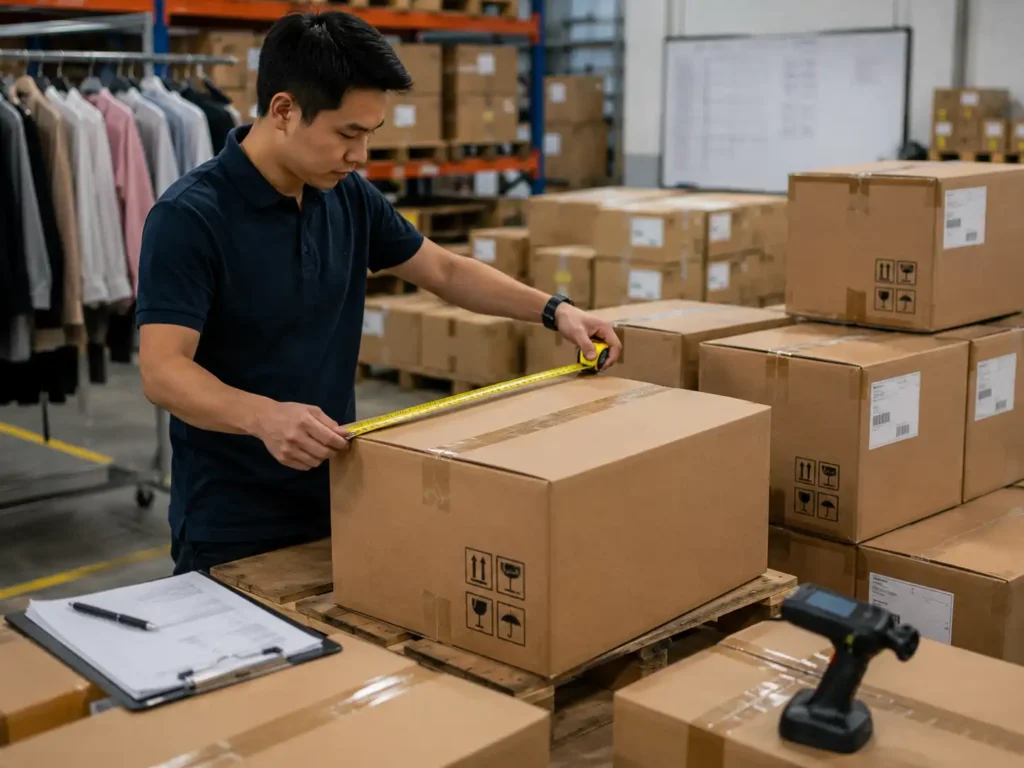
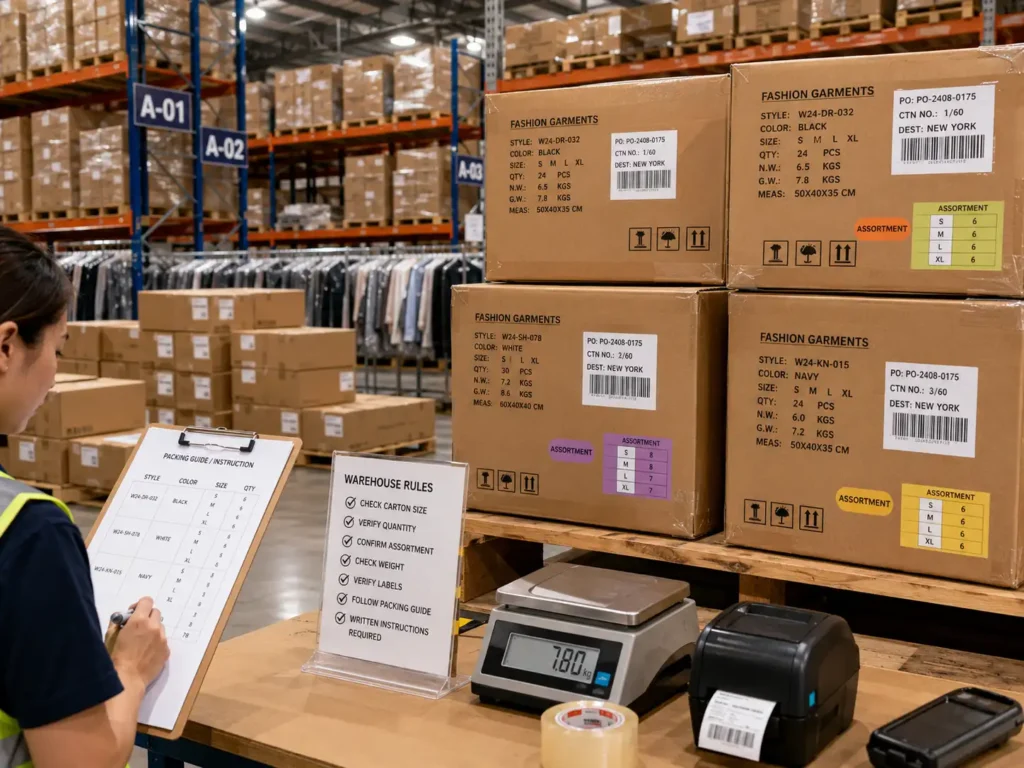
Hangtags, barcodes, size stickers, SKU labels, polybags, folding, carton ratio, carton marks, carton dimensions and weight are verified against the warehouse or brand instruction.

Pre-Shipment Review

AQL inspection, client-appointed inspection or third-party inspection can be coordinated according to the project. Final records and corrective actions are linked to shipment release and repeat-order reference.

Private-Label Packing for High-SKU Programs

Multi-style orders create packing risk long after garments are finished. Brand labels, care information, barcodes, SKU stickers, size ratios and carton marks must match the correct style, color and size so warehouse intake and ecommerce fulfillment are not disrupted.

Brand Labels

Woven labels, size labels and care labels are checked for artwork, wording, composition, language, color, dimensions and position. Label placement is approved during sample or PP review rather than decided at the packing table.

Hangtags and Barcodes

Hangtags, hang strings, barcode stickers, price labels and SKU labels are matched to the style-color-size record. Scan requirements or warehouse templates should be provided before mass printing.

Polybags and Folding

Polybag size, thickness, print, warning text, closure and sticker position are confirmed with the folding method. Structured, sequin or wrinkle-sensitive garments may need different protection from basic knit pieces.

Carton Ratios

Solid-size, assorted-size and assorted-color cartons require a clear ratio sheet. Packing teams verify piece count, size mix, color mix, carton number and destination before sealing.

Warehouse Labels

Carton marks, warehouse labels, purchase-order information and destination codes are checked against packing lists. Special retailer or ecommerce guides are connected to the packing instruction.

Packing Traceability

Style, color, size, carton number, gross weight, net weight and quantity records support shipment documents and later reconciliation. Packing photos can be provided for key confirmation points where required.

Multi-Batch Delivery and Repeat-Order Support

High-volume programs often launch in phases, replenish winners or ship to more than one destination. Jinfeng Apparel coordinates packing, shipment files and production records so each batch can move without losing the standard approved for the original collection.

Phased Shipment Planning

Selected styles can be grouped by readiness, launch priority or destination. Air, sea and air-and-sea split options are reviewed against value, timing and volume. Shipment terms may include EXW, FOB, CIF, DAP or DDP by project.

Export Documentation

Support can include commercial invoice, packing list, bill of lading, air waybill, certificate of origin by request, HS code information, carton marks, label details, customs declaration data and warehouse-label coordination.

Repeat-Order Records

Patterns, measurement files, fabric references, trim details, sewing instructions, packing requirements and QC notes are retained for future production. New colors, new fabrics or changed material batches still require fresh confirmation.

Representative High-Volume Program Profiles
The following anonymized profiles reflect common order structures handled by established womenswear brands. Names, artwork and unpublished product details remain confidential. Figures are presented as representative program data for evaluating style count, material mix, approval flow and delivery planning.

U.S. Occasionwear Program

An 18-style occasionwear program totaled 42,600 pieces across satin, mesh, lace and structured woven categories. Six color stories and an XS–XL size range created 410+ active style-color-size combinations. Styles were divided into three sample waves: campaign priorities, structured fit styles and lower-risk repeat constructions. PP approvals were released in stages, production was allocated across specialist and regular lines, and the final order used sea freight with a smaller air shipment for priority launch styles.

European Resort Collection

A 24-style resort and vacation collection totaled 68,400 pieces, combining printed woven dresses, lightweight sets, skirts, jumpsuits and fashion tops. Five fabric groups and eight color or print stories were managed through shared-material review, print-direction control and staged size-set approval. Bulk production ran in two shipment windows so the first 11 styles could support campaign and wholesale timing while the remaining assortment completed full QC and branded warehouse packing.

UK–Australia Partywear Range

A 12-style partywear range totaled 27,600 pieces in stretch satin, double-layer mesh, lace and sequin materials. Development concentrated on bust support, waist shaping, transparency, lining coverage, sequin protection and hem balance. Three sample rounds were used for the most technical styles, while lower-risk styles moved to PP earlier. Golden samples, material cards and QC notes were issued to production, and the program shipped in color-balanced cartons for two regional destinations.

Vendor Qualification, Confidentiality and Compliance Support

Established brands need more than product samples. Supplier review also covers company structure, production control, confidentiality, quality documentation, material sources, testing, inspection and export readiness. Jinfeng Apparel provides project-specific information according to the actual factory, fabric source and order requirements.

NDA and Design Protection

Tech packs, line sheets, samples, patterns, measurements, material plans, private-label artwork, barcodes, order quantities and launch schedules can be protected under NDA-based cooperation. Unreleased designs and brand details are not published without authorization.

Audit and Testing Support

Quality systems, social-responsibility review materials, certified fabric resources and third-party testing can be coordinated according to the production unit, material source, certificate validity and brand standard. Claims are confirmed against the actual project rather than presented as universal coverage.

Inspection and Records

Client-appointed inspection and third-party inspection support can be integrated with PP samples, Golden samples, measurement charts, defect classification, packing guides and shipment release. Corrective actions are recorded when deviations are found.

Frequently Asked Questions for High-Volume Programs

Jinfeng Apparel is suited to multi-style collections and commonly structures programs in the 10–30 style range. Final capacity depends on garment categories, sample complexity, fabric groups, color count, size range, total units, line availability and delivery windows. A style-level review is required before confirming the program plan.
MOQ starts from 200 pieces per style/color. Custom-dyed fabric, custom prints, special lace, sequin materials, custom hardware, complex structures and branded packing can increase the required quantity because material and accessory suppliers may have their own minimums.
Yes. Two sample rooms, 7+ senior pattern makers and 20+ sample machinists support parallel development. Styles are grouped and prioritized by launch date, material readiness, technical risk, campaign importance and PP timing rather than treated as equally urgent.
Each production unit receives the approved pattern, measurement chart, fabric reference, trim record, sewing instruction, PP or Golden sample, QC checklist and packing guide. Merchandising, production management and QC teams coordinate the transfer and monitor execution.
Yes. Jinfeng Apparel develops satin, mesh, lace, sequin, bodycon, corset, strapless, backless and structured womenswear. Complex items require sample validation for support, transparency, fit, lining, embellishment, seam construction, pressing and packing before bulk approval.
A fixed lead time cannot be confirmed from total quantity alone. A 10–30 style program is planned by stage: material direction, first samples, fit revisions, PP lock, material arrival, cutting, sewing, QC, packing and freight. Complex materials or custom components extend the schedule.
Yes. Multi-batch delivery can be evaluated by style readiness, launch priority, destination and freight method. Air, sea and air-and-sea split arrangements may be used when selected styles need earlier market arrival.
Control starts with final patterns, size charts and grade rules, then continues through fabric relaxation, cutting QC, inline measurement, finished-garment measurement and tolerance review. Stretch, petite, tall and extended-size programs receive structure-specific evaluation.
Yes. Jinfeng Apparel supports woven labels, care labels, hangtags, barcode stickers, SKU labels, polybags, folding rules, carton ratios, carton marks and warehouse labels. Files should be supplied early enough for artwork approval and material production.
Yes. NDA-based cooperation can protect tech packs, line sheets, samples, patterns, material plans, private-label details, unpublished designs, quantities and launch information. Client materials are not used publicly without permission.

Start Your High-Volume Womenswear Program Review

Send Jinfeng Apparel the working files for your next collection and receive a structured review of product scope, sample priorities, material risks, production allocation and delivery planning. A useful first submission includes the line sheet, tech packs or reference images, target quantity by style and color, size range, fabric direction, launch date, packing guide and shipping destination. Kelly will coordinate the initial review with the development, merchandising and production teams. Clear files allow faster identification of styles that can share materials, styles needing specialist pattern or sewing support, items requiring custom components and dates that need phased approval or shipment. The review is designed to establish realistic boundaries before sampling and bulk commitments are made.

  • Line sheet with style codes and priority ranking
  • Tech packs, original samples or reference images
  • Quantity by style, color and size
  • Fabric, trim and construction requirements
  • Label, barcode, polybag and carton standards
  • Launch date, delivery window and destination

Tell Us About Your Dress Project

Share your product details, estimated quantity and development requirements. Our team will review your project and provide practical OEM/ODM production feedback.

Premium Women’s Apparel Production for Fashion Brands

From dress sample development to bulk production, JF Apparel supports fashion brands with confidential OEM/ODM manufacturing, reliable quality control and scalable production support.

START YOUR DRESS PROJECT

Ready to Develop Your Next Dress Collection?

Share your design concept, product requirements or sourcing plans with our team. We’ll review your project and provide practical feedback on development, materials, MOQ and production.

7-10 Days

Sample Development

200 PCS

Starting MOQ

Fast Response

Professional Follow-Up