 Skip to content
Metallic Dress Manufacturer
Metallic Dress Development Built for High-Impact Fashion Collections
Jinfeng Apparel develops metallic dresses for partywear, occasionwear, clubwear, holiday and premium ecommerce collections, moving each style from fabric direction and pattern engineering to approved samples, controlled bulk production and retail-ready delivery.
- 6 metallic surface routes reviewed: foil or coated jersey, metallic woven, Lurex knit, sequin fabric, metallic mesh and high-shine satin.
- First samples usually require 10-15 days; complex corset, sequin, mesh or coated constructions commonly require 15-25 days.
- MOQ starts from 200 pcs per style/color, subject to metallic fabric availability, custom color requirements, trims and construction complexity.
- Development support covers US, UK, EU, AU and alpha sizing based on the brand’s own size chart and grade rules.
Metallic Dress Manufacturing Backed by Real Capacity
Since 2008
Six Owned Factories
Ten Plus Partners
Two Sample Rooms
Fifteen Plus QC
Brand-Level MOQ
Built for Established Metallic Dress Programs
Partywear Brands
Occasionwear Labels
Premium Ecommerce Brands
Clubwear Collections
Retail Fashion Teams
Sourcing Offices
Production Risks Behind a Strong Metallic Finish
Wrong Material Route
Surface Scratching
Skin Irritation
Shine Variation
Fit Distortion
Bulk Inconsistency

What Metallic Dress Means in Manufacturing
Clear material classification helps prevent incorrect quotations, unsuitable patterns and disappointing samples.
Textile-Based Metallic Effects
Most commercial metallic dresses use a textile base enhanced by foil, coating, metallic yarn, sequins, reflective layers or high-shine construction. The underlying base controls stretch, drape, opacity and sewing behavior. A foil jersey bodycon dress therefore requires a different pattern and QC plan from a metallic woven corset mini or sequin maxi.
- Foil or coated knit: liquid shine, close fit and strong visual impact.
- Metallic woven: firmer structure for minis, corsets and shaped silhouettes.
- Lurex knit: softer sparkle with knit recovery and potential skin-contact concerns.
- Sequin base: high reflection with added weight, surface loss and lining requirements.
- Metallic mesh: transparent shine suited to overlays, cut-outs and layered designs.
- High-shine satin: smooth reflection without a true metallic coating.
Real-Metal Construction Boundaries
Chainmail, linked metal discs, aluminum panels or heavy metal components fall outside ordinary cut-and-sew assumptions. Such concepts require separate assessment of weight, edge safety, connection method, corrosion risk, comfort, packaging and suitable production resources. Jinfeng does not classify every metal-look reference as a standard textile dress and will confirm feasibility before sampling.
Finish Selection by Silhouette
Material choice should follow the intended shape. Stretch foil can support bodycon and ruched styles; metallic woven can hold an A-line or structured mini; Lurex knit works for fitted or draped knit dresses; sequin fabric creates high-impact party and evening pieces; metallic mesh works best with controlled layering and edge finishing.
Commercial Approval Criteria
A metallic option is commercially suitable only when appearance, movement, comfort, repeatability and cost work together. Evaluation covers surface strength, stretch, recovery, weight, opacity, lining need, sewing response, pressing limits, color consistency, MOQ and bulk availability. A beautiful swatch with unstable supply or poor wearability is not a production-ready choice.
Compare Metallic Fabric Routes Before Sampling
The table below separates major metallic routes by appearance, construction behavior and approval priorities. Final selection still depends on the exact dress, target market, price level and launch plan.
| Metallic Route | Visual and Handfeel | Best-Fit Styles | Main Manufacturing Risks | Approval Priorities |
|---|---|---|---|---|
| Foil or Coated Jersey | Liquid shine, smooth face, medium to high stretch | Bodycon, ruched mini, fitted midi, cut-out styles | Foil lifting, cracking, needle marks, heat sensitivity, weak recovery | Stretch and recovery, rub response, seam appearance, pressing limit, batch continuity |
| Metallic Woven | Structured reflection, low stretch, cleaner shape | Corset mini, A-line, strapless, sculpted cocktail styles | Creasing, seam stress, fraying, panel shade variation | Grain and shine direction, lining, seam allowance, shape retention, fold recovery |
| Lurex or Metallic Knit | Soft sparkle, knit handfeel, medium stretch | Fitted knit dress, draped midi, long-sleeve party style | Scratchy yarn, snagging, transparency, dimensional change | Skin contact, yarn recovery, opacity, wash response, neckline and armhole finish |
| Sequin Fabric | Strong sparkle, higher weight, varied base stretch | Party mini, evening gown, column dress, statement sleeve | Sequin loss, broken needles, skin scratch, bulky seams, uneven placement | Sequin direction, backing fabric, lining, seam cleaning, attachment and packing |
| Metallic Mesh | Transparent shine, light structure, low to medium stretch | Overlay dress, panelled bodycon, cut-out, layered maxi | Holes, edge curl, scratchiness, seam visibility, transparency variation | Layer count, lining color, edge finish, placement, stretch direction and coverage |
| High-Shine Satin | Smooth reflected light, soft or structured drape | Slip, cowl, draped midi, bias-cut maxi, cocktail dress | Snagging, shine-direction error, puckering, pressing marks | Fabric direction, color under light, seam smoothness, drape, lining and packing |
Metallic Dress Styles for Commercial Collections

Metallic Mini Dress

Metallic Bodycon Dress
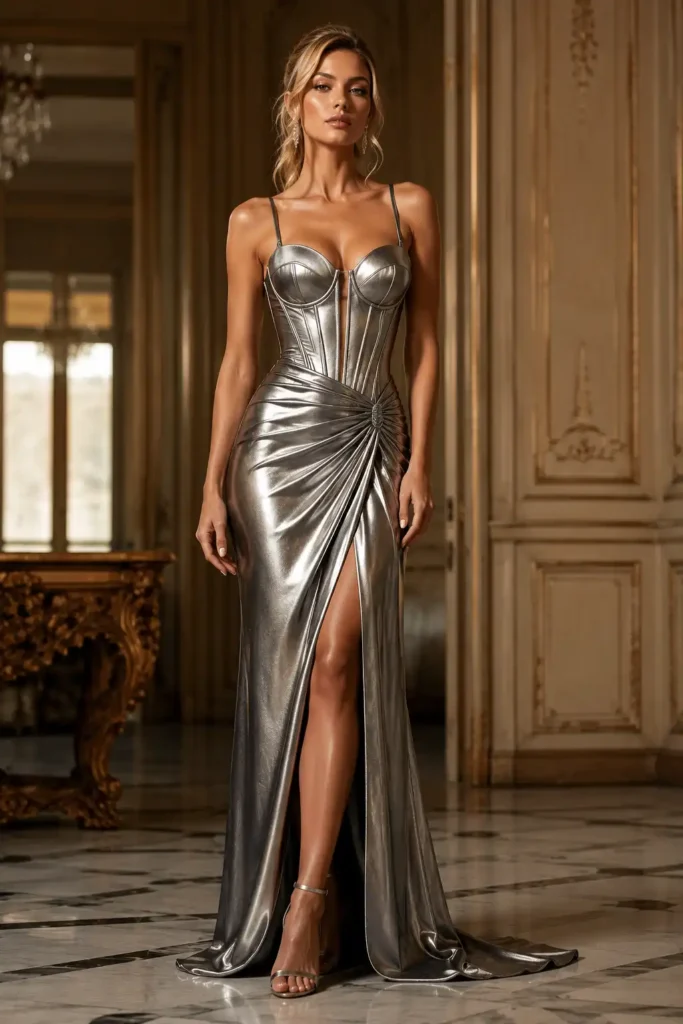
Metallic Corset Dress

Metallic Slip Dress
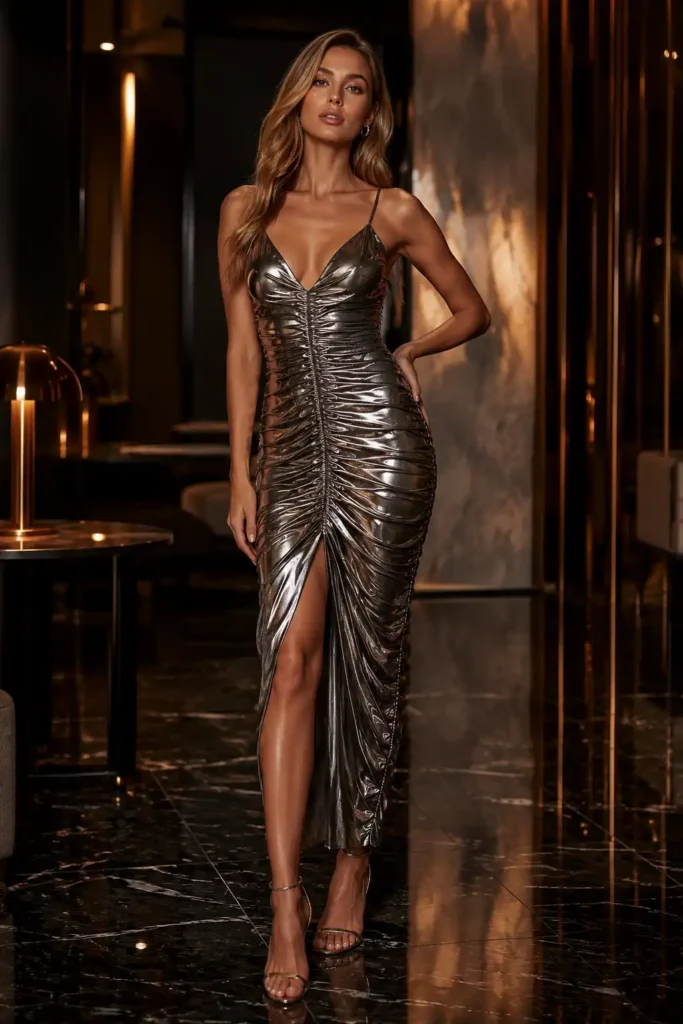
Ruched Metallic Dress
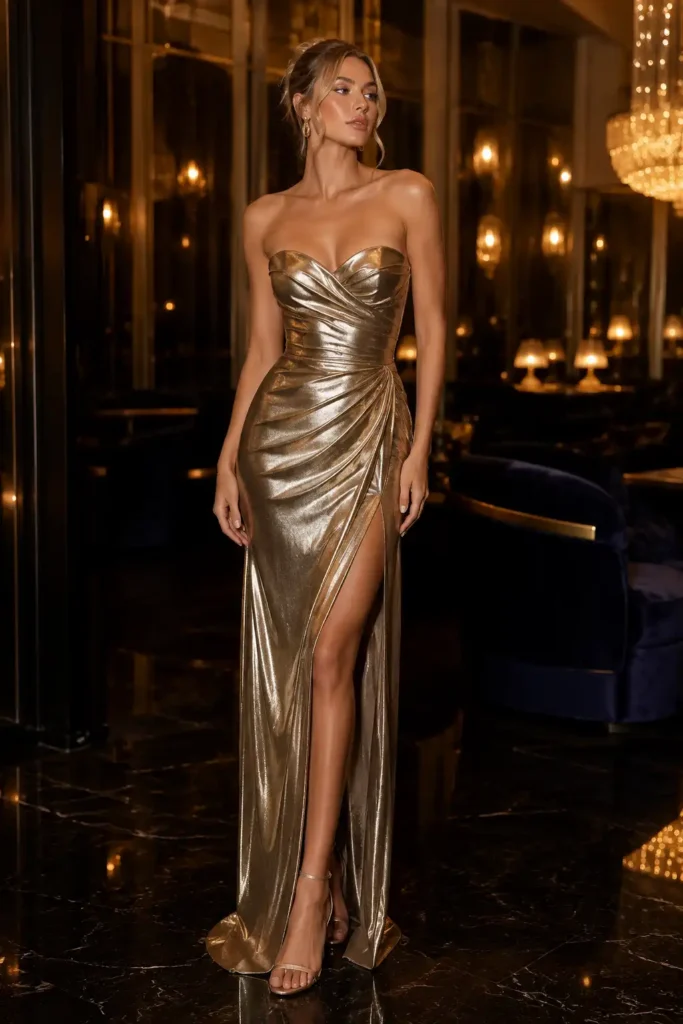
Strapless Metallic Dress

Halter Metallic Dress

One-Shoulder Dress
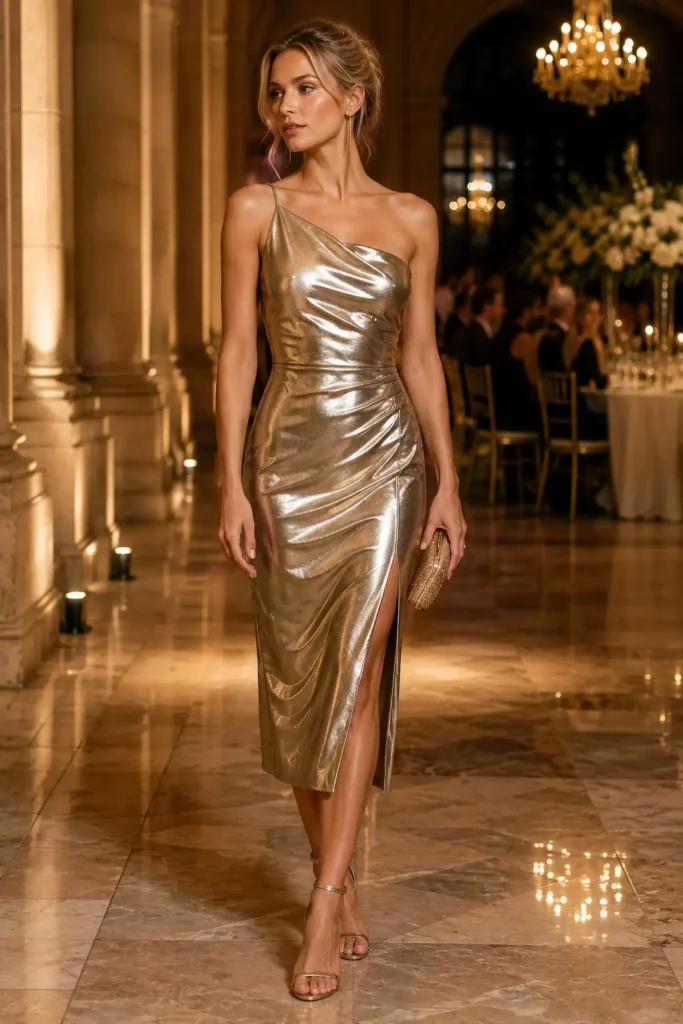
Metallic Midi Dress
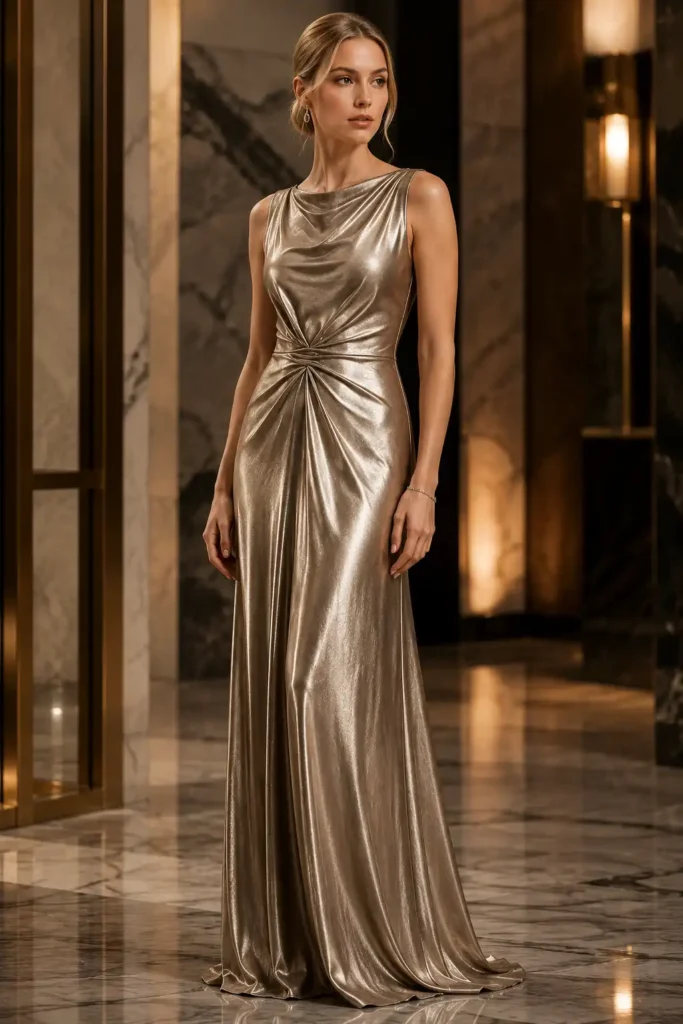
Metallic Maxi Dress
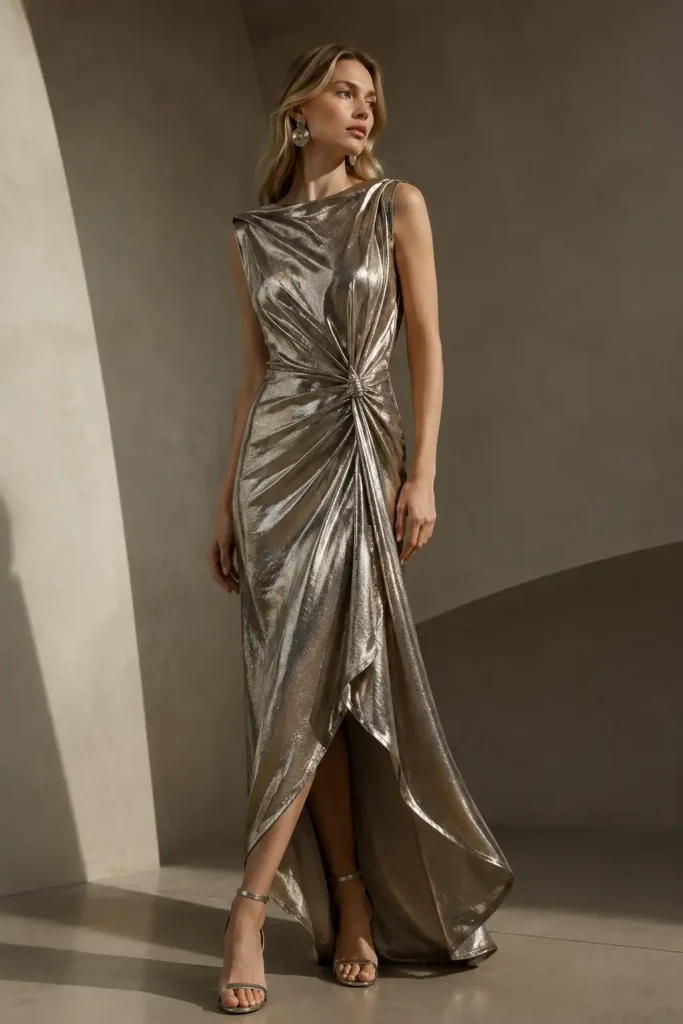
Draped Metallic Dress
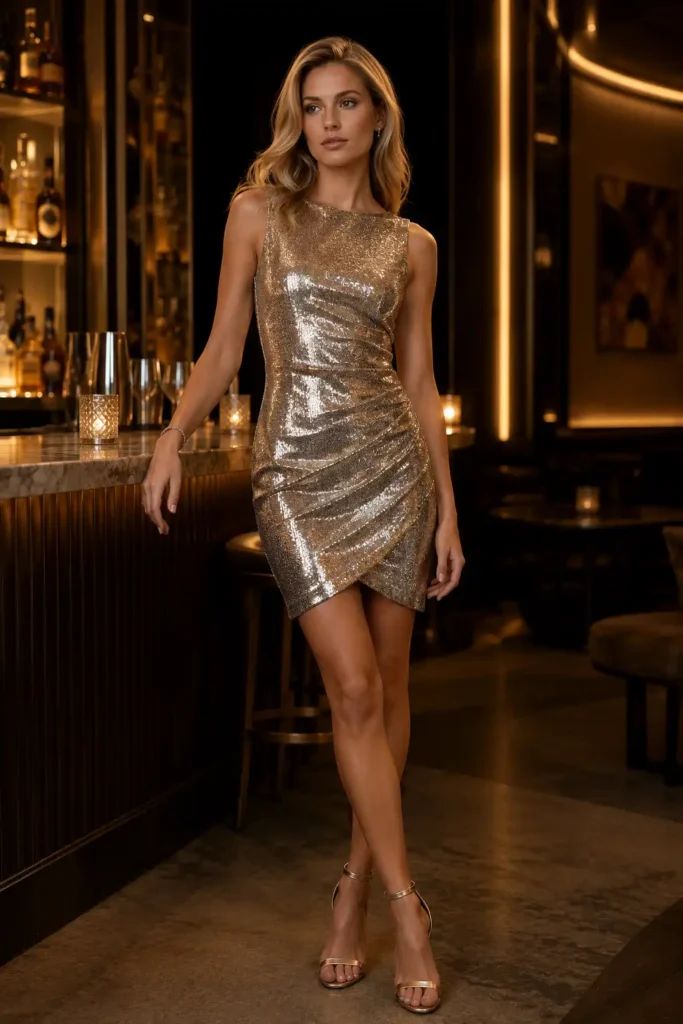
Metallic Cocktail Dress
Metallic Dresses Planned Around Launch Moments

Holiday Drop
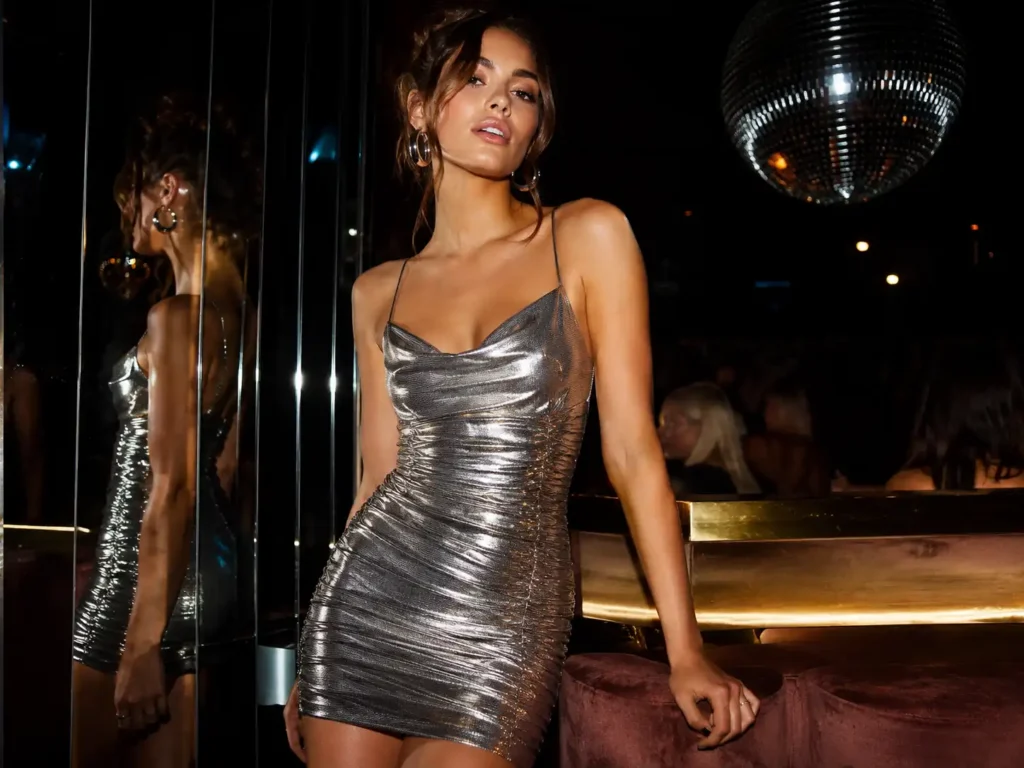
Party and Club
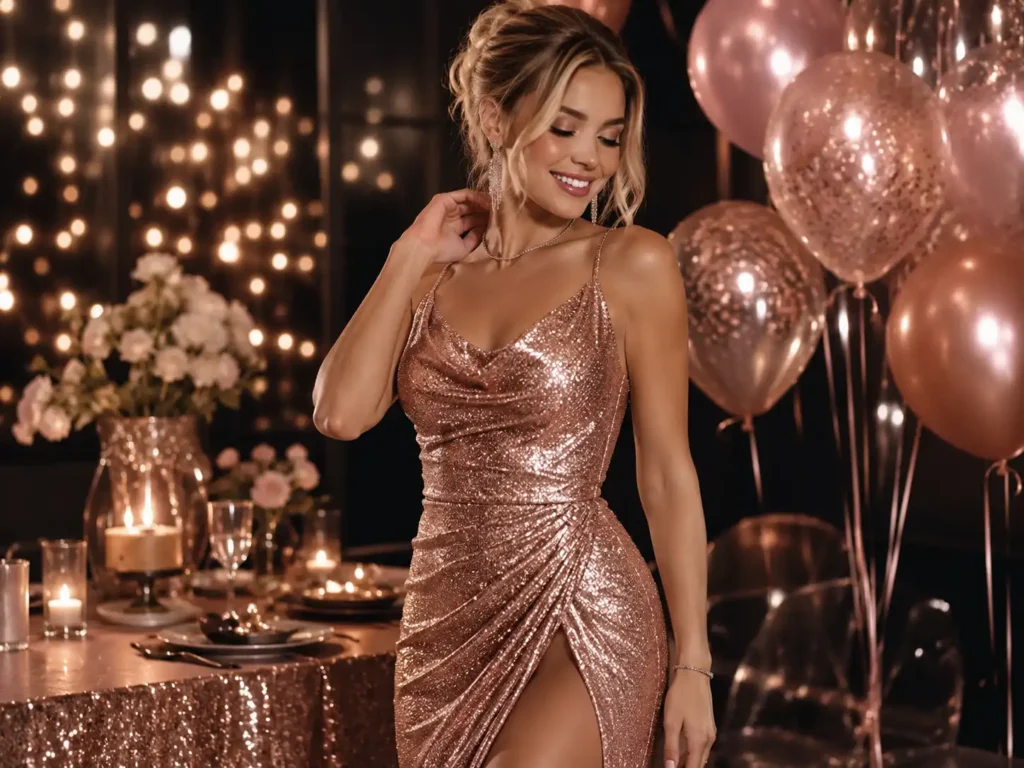
Birthday Collection

Festival Range

Prom and Graduation

Evening and Cocktail
Engineering Metallic Dresses Beyond Surface Shine
Strong reflection attracts attention, but commercial success depends on body balance, movement, support and repeatable measurements. Pattern and structure decisions therefore start from the approved material rather than an ordinary dress block.

Stretch Bodycon Construction
Stretch metallic dresses require measured fabric data before negative ease is set. The development team reviews stretch direction, usable extension, recovery, weight and surface response after tension. Bust, waist and hip measurements are adjusted against the brand’s base size and fit preference instead of applying one universal bodycon ratio.
- Side seams are checked for twisting and visual waviness.
- Ruching positions are anchored to defined pattern points.
- Zipper use is assessed against stretch, thickness and entry comfort.
- Lining is tested for compatible stretch so the shell does not pull against a rigid inner layer.
- Hem finish is selected to avoid rolling, tunneling or visible pressure marks.
US, UK, EU, AU and alpha-size ranges can be developed from the supplied size chart. Extended sizes require independent review of bust support, armhole coverage, waist-hip balance, strap width, back coverage and fabric recovery rather than simple proportional enlargement.

Corset and Strapless Support
Metallic corset and strapless dresses expose structural weaknesses immediately. Cups, boning, anti-slip support, lining, neckline shape, zipper position and waist reduction must work together. A stiff metallic woven can hold a sculpted line but may create seam stress; a stretch metallic base can improve movement but may need stronger internal stabilization.
- Cup shape and position are confirmed on the fit sample.
- Boning channels follow support lines without creating visible ridges.
- Boning ends are protected to prevent pressure against the skin.
- The top edge is checked for gaping, rolling or downward movement.
- Back height and closure tension are balanced against bust support.
- Internal layers are kept as smooth as possible to protect the reflective shell.
The goal is not maximum tightness. A successful corset dress holds the intended shape while allowing breathing, sitting and normal movement through the target occasion.

Fluid Slip and Draped Styles
Metallic slip and draped dresses depend on grain direction, controlled bias, neckline shape and balanced hanging length. High-shine surfaces make puckered seams, uneven folds and twisting highly visible. Pattern development maps drape anchor points, cowl depth, strap angle, front-to-back balance and skirt sweep before the sample is approved.
- Bias-cut panels are allowed to settle before final length evaluation.
- Strap length and attachment angle are tested on body, not only measured flat.
- Neckline facing or lining is selected to prevent rolling.
- Side seams are checked after hanging because bias movement can change length.
- Draped folds receive defined placement references for bulk consistency.
- Pressing methods are limited according to surface sensitivity.
A photo-ready sample should be viewed from front, side and back under relevant lighting. Reflection can hide shape problems in one angle and exaggerate them in another.
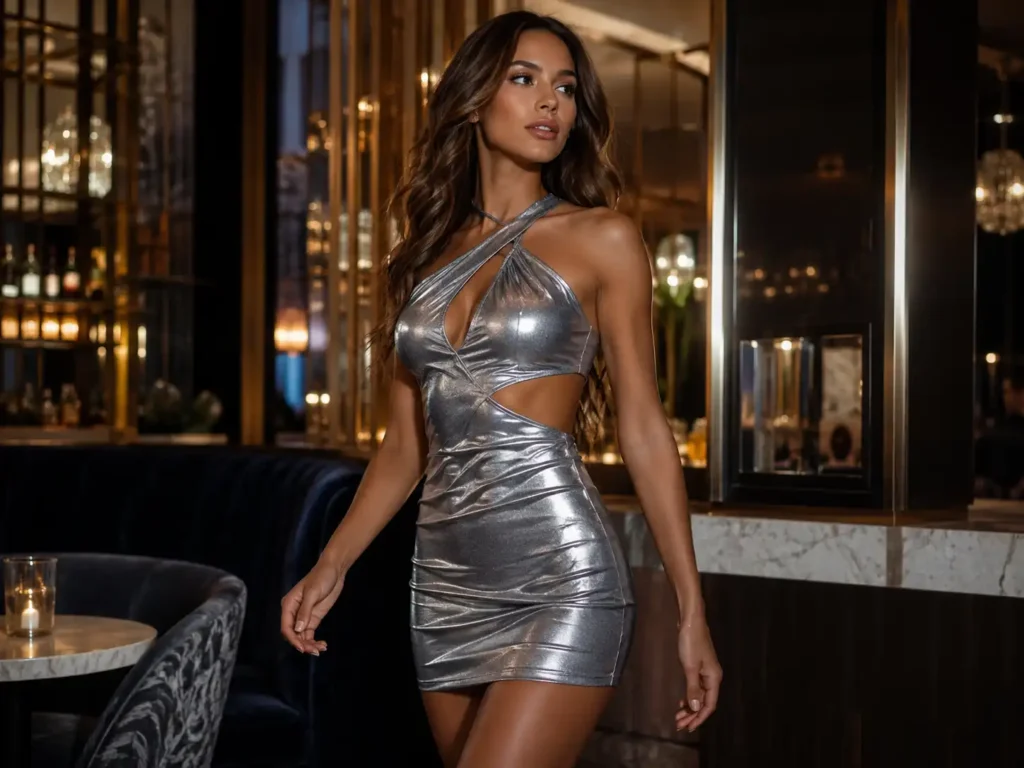
Mini and Cut-Out Safety
Metallic minis and cut-out dresses often carry the highest visual energy in a collection, yet they also create fit and exposure risks. Pattern work reviews hem length, hip movement, cut-out position, chest coverage, armhole shape and seam tension across the target size range.
- Mini length is checked while standing, sitting and walking.
- Cut-outs are positioned away from unstable seam intersections where possible.
- Elastic or binding tension is adjusted to sit flat without digging into the body.
- Lining edges are kept away from visible openings.
- Metallic mesh or foil around cut-outs receives clean edge protection.
- Grade rules are reviewed so exposure does not increase unpredictably in larger sizes.
These controls reduce returns caused by slipping, rolling, gaping, excessive tightness or unexpected exposure while preserving the intended fashion direction.
Metallic Design Details Built for Wear and Scale
Design details create differentiation, but each addition changes weight, comfort, sewing sequence, cost and inspection. Development should define how a feature works in the sample and how it will be repeated across thousands of garments.
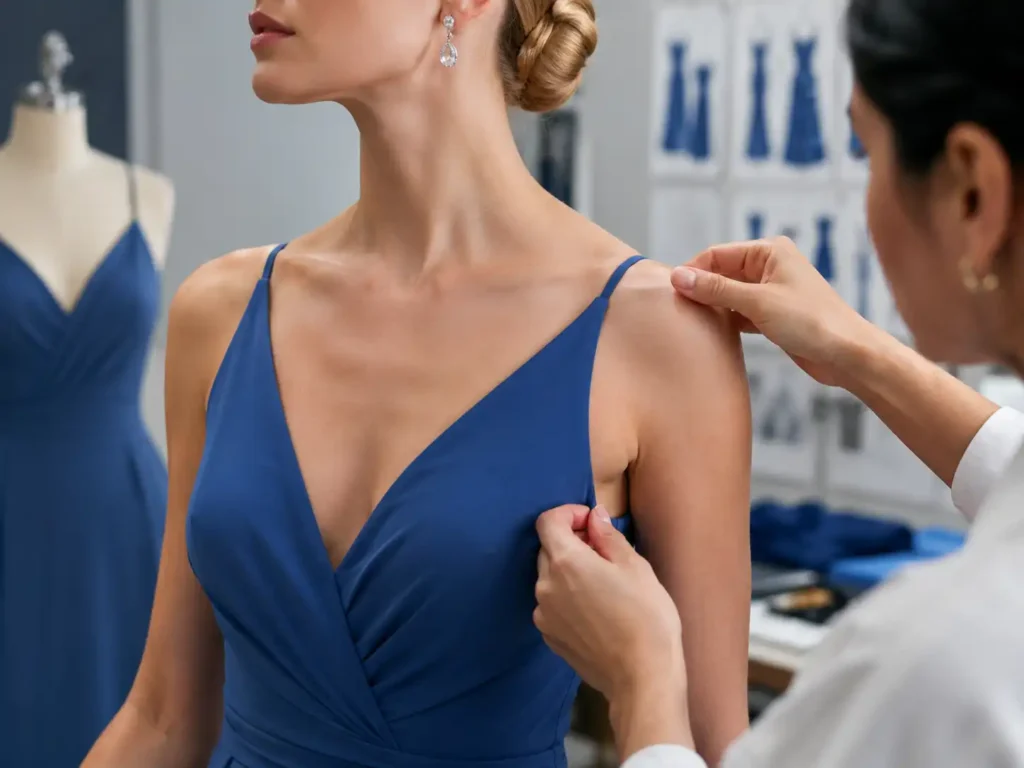
Necklines, Straps and Open Backs
Metallic surfaces draw attention to every neckline and strap line. Deep V, cowl, halter, spaghetti strap, one-shoulder, strapless and open-back shapes require specific support and finishing. Strap length, strap angle, slider placement, armhole exposure and neckline depth are reviewed against the fabric’s weight and stretch.
For heavy sequin or metallic woven dresses, narrow straps may not distribute weight comfortably. For slippery high-shine satin, a low back may need internal support to prevent neckline movement. For stretch foil, binding tension must not distort the surface. Adjustable sliders, hooks, anti-slip tape or hidden elastic are selected only when they improve function without weakening the visual concept.
Bulk instructions record strap specification, attachment position, topstitch or bartack requirement, neckline measurement and acceptable symmetry. These records reduce variation between operators and production batches.
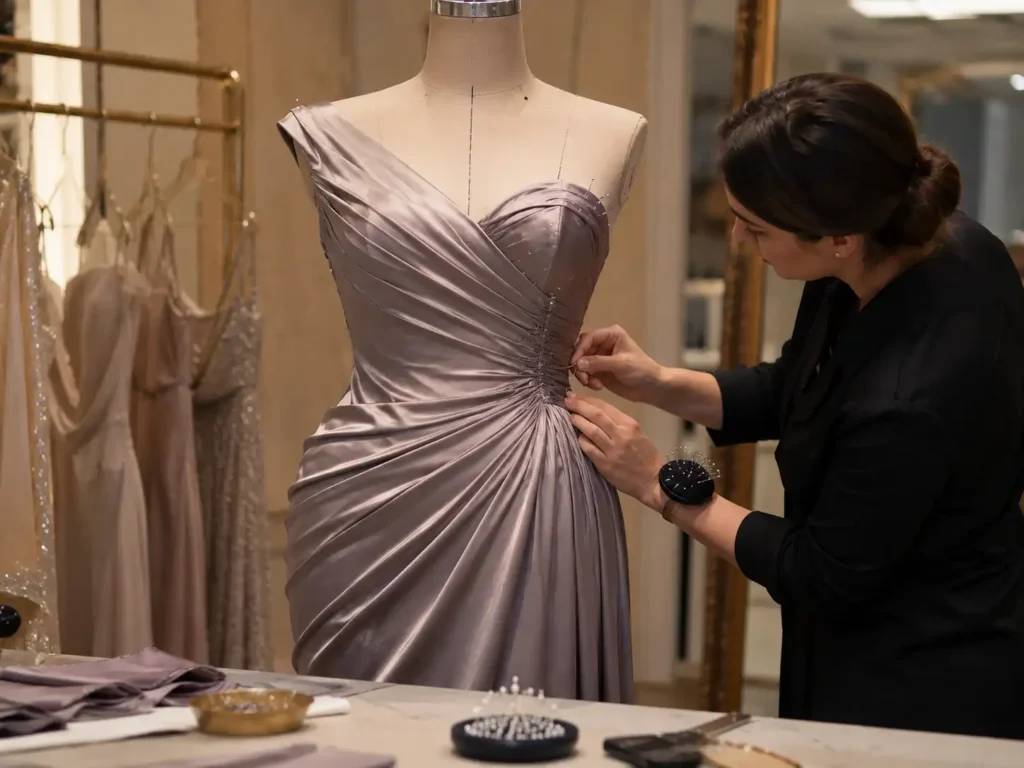
Ruching, Draping and Twist Details
Ruching, draping and twist fronts can make metallic fabric more dynamic by changing how light moves across the body. The same features can also create inconsistent measurements, bulky seams or asymmetry when the gathering ratio and anchor points are not controlled.
Development sets the panel width, gathering ratio, direction, elastic length, drawcord channel or fixed stitch points. Twist-front styles are reviewed for bust coverage, seam bulk and left-right balance. Draped side seams are checked for pressure on zippers and for uneven hem pull. The approved sample becomes a physical reference for fold placement, while the sewing instruction defines the repeatable method behind the appearance.
When a style uses stretch foil, repeated needle penetration in a gathered area is minimized to reduce surface damage. Sequin materials may require cleared seam allowances so thick decorative layers do not create hard ridges against the body.
Slits, Cut-Outs and Sheer Panels
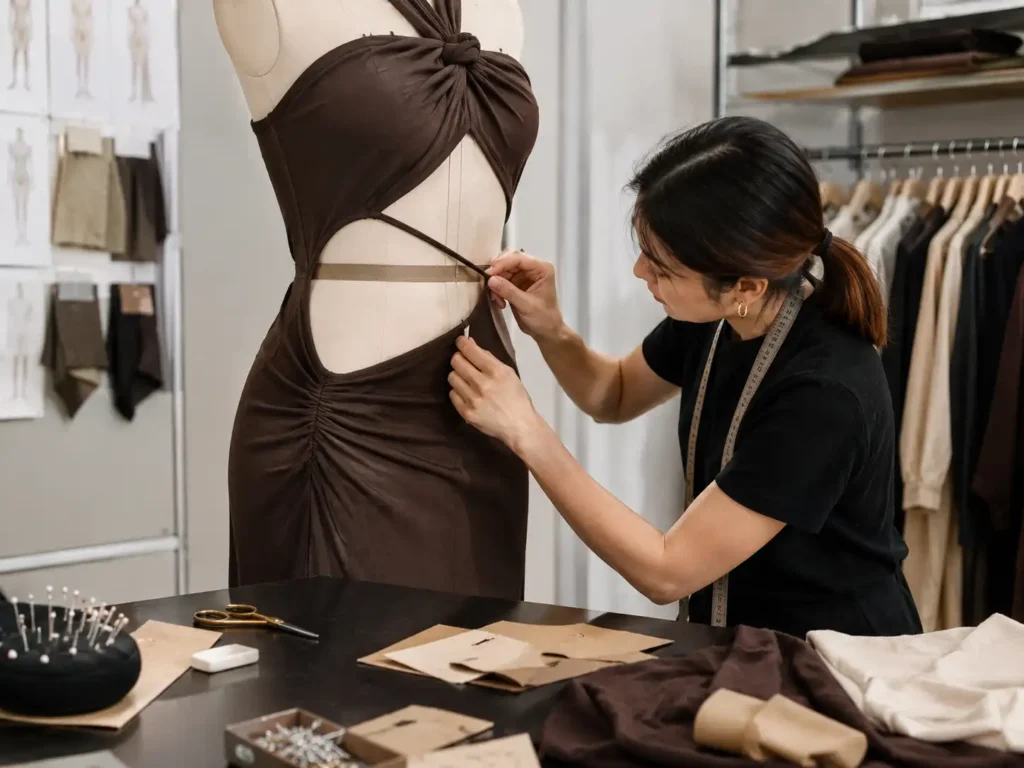
Slits and cut-outs affect movement, exposure and structural strength. Metallic mesh panels add another layer of risk because transparency changes under lighting and tension. The design team reviews slit height, opening position, seam reinforcement, lining boundaries and the relationship between shell and inner layer.
- Slits are measured from a fixed reference point rather than judged only by appearance.
- Cut-out edges receive stable finishing suited to the base material.
- Sheer panels are tested at normal stretch and under flash photography.
- Lining colors are selected to support the desired contrast or concealment.
- High-stress corners receive reinforcement without creating visible bulk.
- Grade rules are adjusted so opening proportions remain intentional across sizes.
The final result should hold its shape during movement and maintain the planned level of coverage through the target selling market.
Rhinestones, Sequins and Metallic Trims
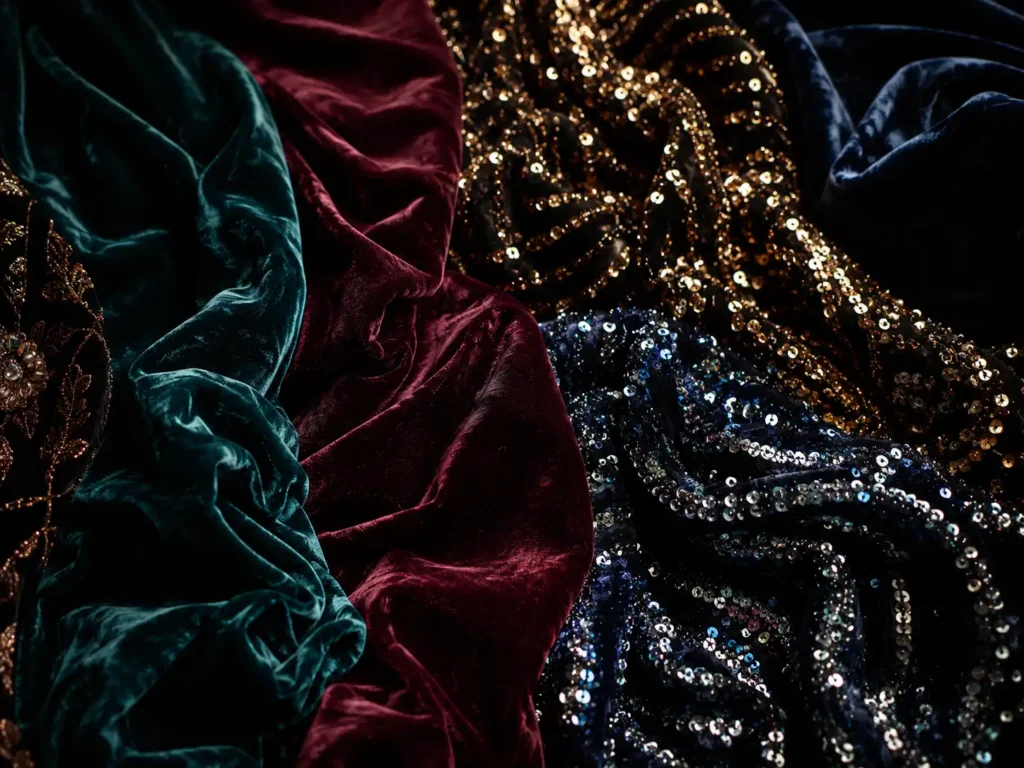
Rhinestones, sequins, bead chains and metallic trims can elevate a hero style, but they also increase weight, handling time and packing risk. Trim selection considers attachment method, edge shape, color stability, supplier MOQ, lead time, garment care and contact with skin.
Decorative placement is mapped against seams, darts, zippers and stretch zones. Dense trims should not block necessary fabric recovery or make alterations impossible. Underarm, neckline and sitting areas receive special comfort review. Sample checks include left-right symmetry, attachment security, missing pieces, sharp edges and surface reaction after normal handling.
For bulk production, placement references, approved trim cards and inspection limits are documented. Packing may require tissue, protective film, reversed folding or individual separation so hard trims do not scratch adjacent garments.
Approving Metallic Color and Shine Before Production
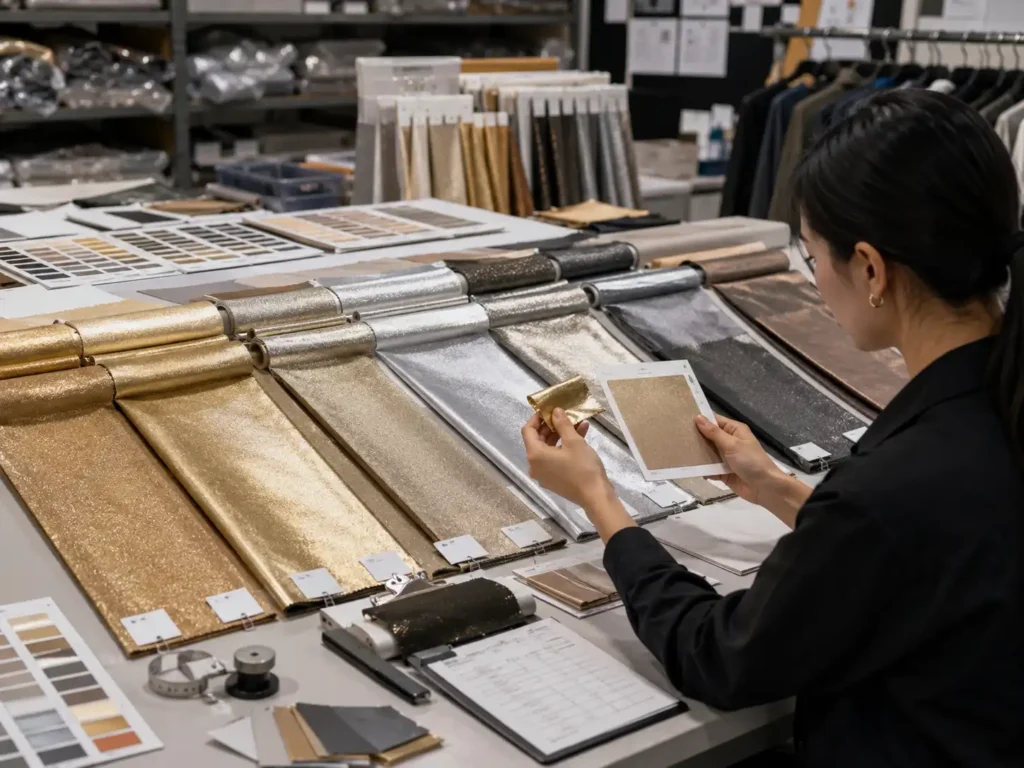
Metallic color cannot be approved from a screen alone. Physical surface, light direction, fabric batch and lining all influence how gold, silver, bronze or gunmetal appears on the finished garment.
Physical Swatch Approval
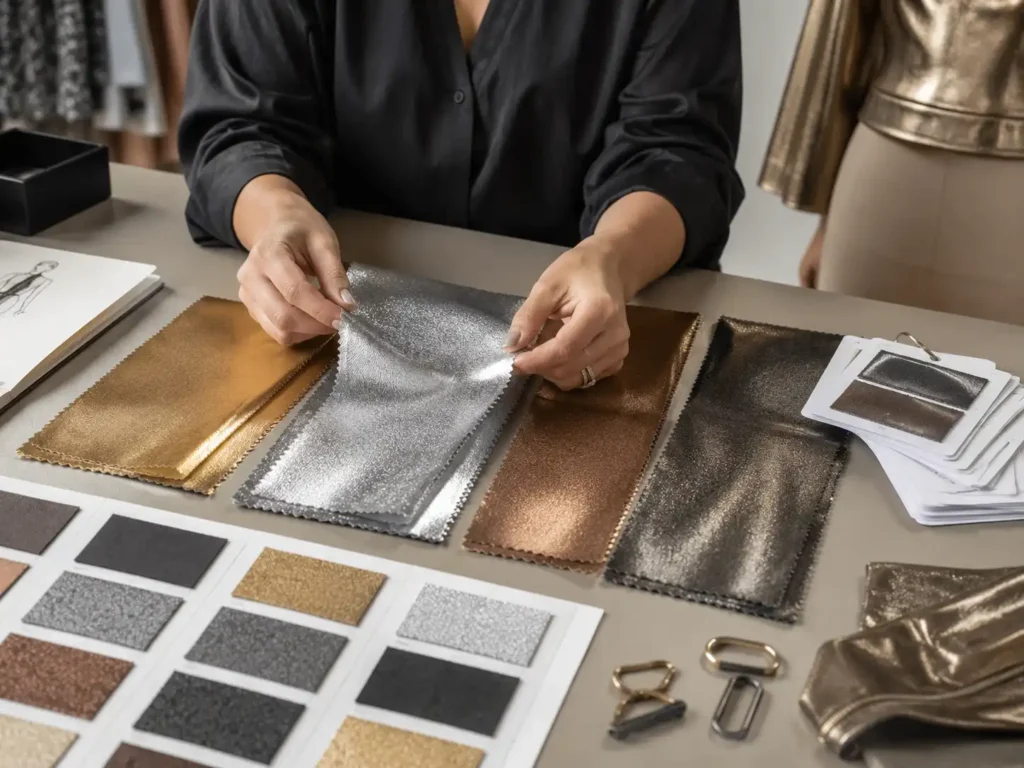
A physical swatch provides information a digital image cannot supply: handfeel, stretch, opacity, surface stability, face direction and color movement under light. Initial review can use photographs or video, but formal approval should reference a named fabric option or confirmed swatch before pattern and quotation details are locked.
The swatch record should include composition when available, weight or supplier specification, width, stretch direction, finish description, stock status, color code and supplier batch. For sequins or metallic mesh, the base fabric color is recorded separately from the decorative surface because both affect the final tone.
Light and Viewing Angle
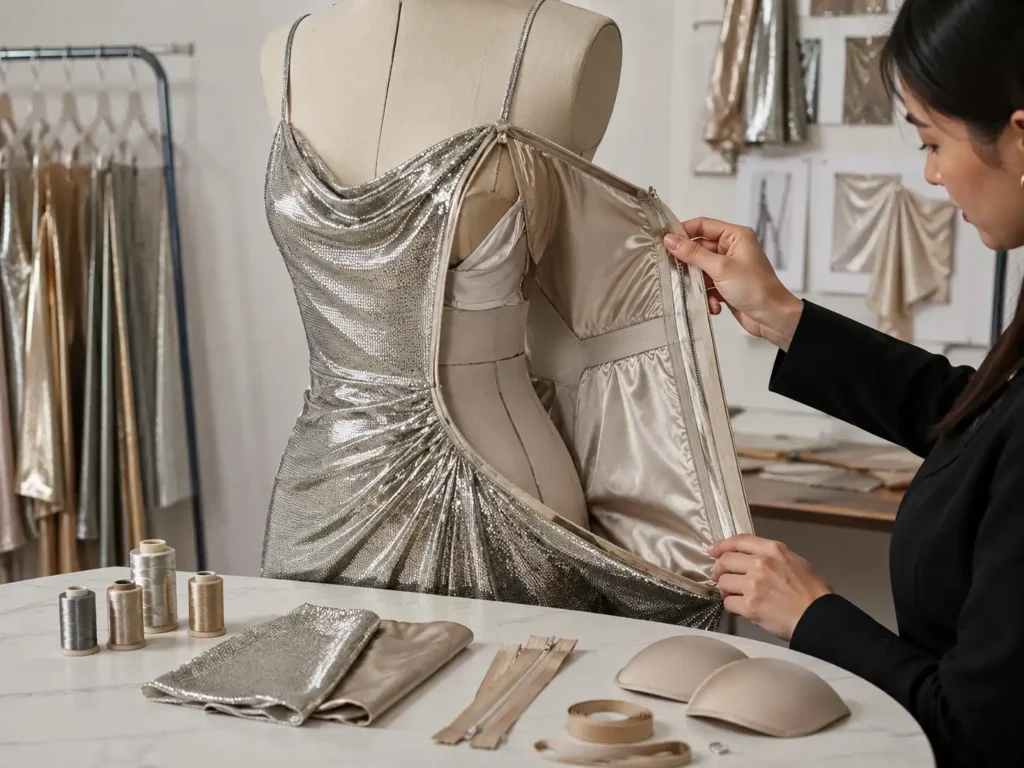
Gold or silver can appear warmer, cooler, darker or brighter under daylight, studio light, warm retail light and phone flash. Approval photos should therefore include more than one condition. Panels should also be viewed at consistent orientation because reversing metallic woven, satin or sequin direction can create visible shade blocks.
For campaign-driven ranges, the material should be considered in relation to photography. A finish that looks refined in person may overexpose under flash; another may appear flat without direct light. Sample review can balance retail appearance with campaign impact instead of optimizing for only one environment.

Custom Color and Batch Control
Custom metallic color may require coating development, yarn selection, dyeing, lab dips or supplier-specific minimums. The route depends on the material. A Pantone number can guide communication, but it does not fully define reflective depth or surface character.
Bulk material should be checked against the approved reference before cutting. When several rolls or lots are used, batch separation and panel consistency become important. Mixing noticeably different lots within one garment should be avoided. If a repeat order uses a new material batch, renewed comparison is required even when the color name remains unchanged.
Lining and Component Color
Lining can change the appearance of metallic mesh, sheer Lurex knit and lighter coated materials. A nude, black, silver or matching-color lining creates a different result under the same shell. Zippers, elastic, thread, cups and binding may also become visible through reflective or transparent surfaces.
Component approval should therefore consider the complete garment rather than isolated shell fabric. The team records lining color, zipper tape, sewing thread and visible internal elements alongside the main surface. Such coordination reduces unexpected contrast, show-through and mismatch during bulk production.
From Reference Material to Production-Ready Samples
Sampling verifies material behavior, body shape, internal support, sewing method, visual finish and cost logic before bulk commitment. More complete project files lead to faster, more accurate decisions.
Project and Material Review
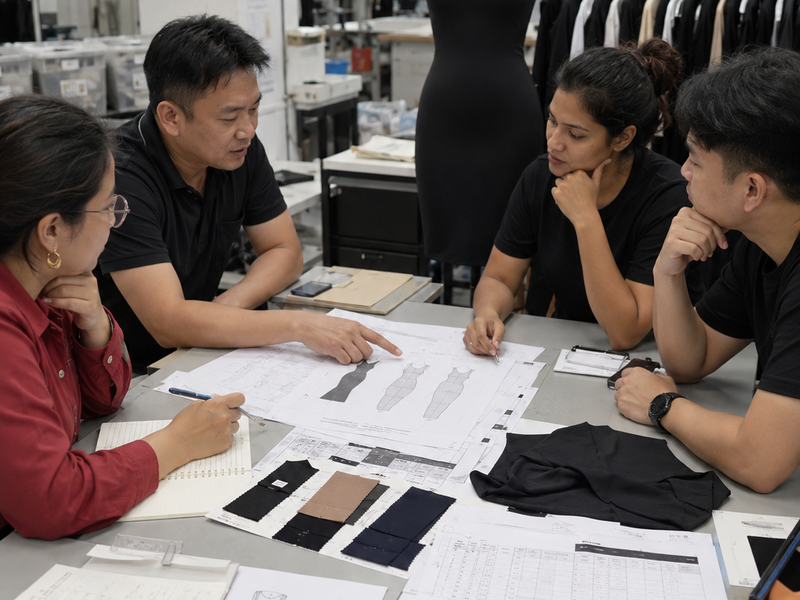
Development can begin from a tech pack, original sample, sketch, reference image or line sheet. The first review identifies silhouette, material direction, lining, trims, structure, size range, quantity, color plan and launch date. A reference image alone can support initial analysis, but final quotation and production planning require confirmed details.
Metallic concepts receive an early feasibility check covering surface route, stretch, drape, skin contact, pressing limits, available colors, material MOQ and expected loss. When the requested effect cannot meet the intended price or wearability, the team can propose a related route rather than forcing an unstable option into development.

Pattern and First Sample
Once material direction and basic measurements are confirmed, the pattern team develops the base pattern around the approved size chart. First-sample timing is usually 10-15 days for a regular dress. Simpler structures may require about 7-10 days, while corset, strapless, lace, mesh, sequin, evening or complex metallic constructions commonly require 15-25 days.
The first sample validates shape, proportion, construction sequence, material response and initial workmanship. It is not treated as automatic permission for bulk production. Internal review checks measurements, symmetry, surface condition, lining, support, closures and overall wearability before photographs, video or shipment are arranged.

Fit Review and Revision
Fit feedback can include measurement comments, body photographs, fit-model notes and marked sample images. Pattern makers convert the feedback into specific corrections rather than vague instructions such as “make it tighter” or “improve the shape.” Bust, waist, hip, strap, neckline, armhole, slit and hem changes are recorded by version.
Material-driven problems are separated from pattern problems. A dress may feel tight because recovery is weak, not because the pattern is wrong; a seam may wave because of handling or tension rather than measurement. Revision decisions therefore consider both structure and fabric behavior.
Photo, Salesman and PP Samples
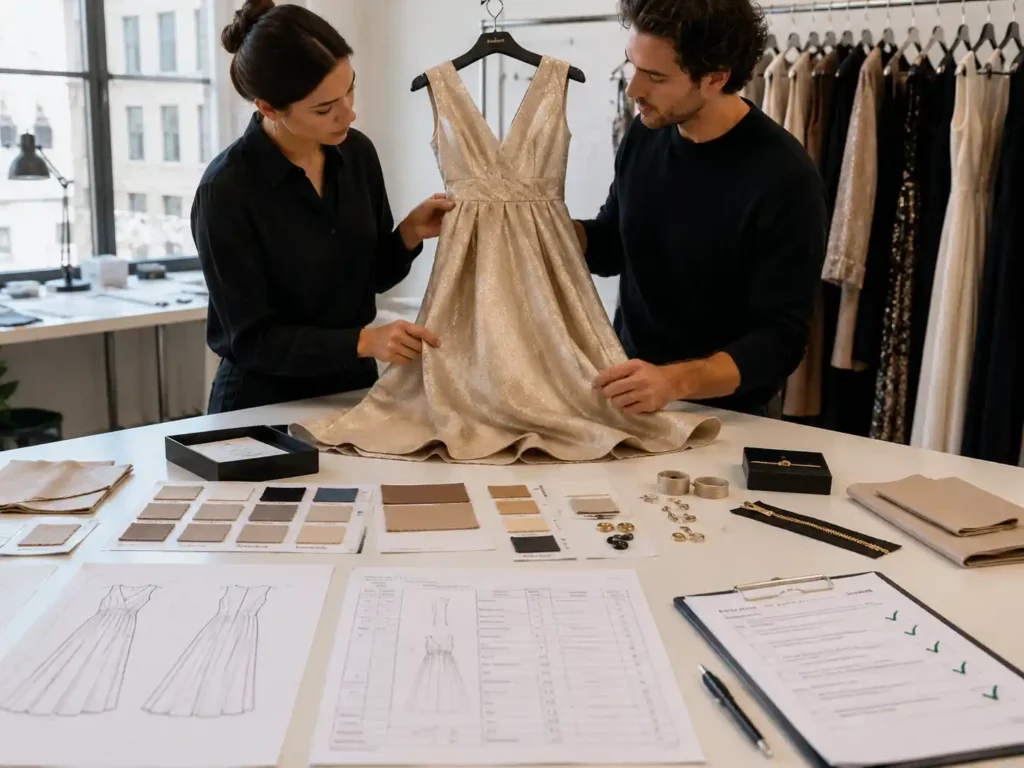
Depending on the program, a brand may require photo-ready, salesman, fit, revised or PP samples. Photo samples prioritize campaign appearance while remaining aligned with intended production materials. Salesman samples support range presentation. PP samples lock fabric, color, trims, measurements, construction, labels and packing before bulk starts.
A golden sample may be retained as the physical reference for production, QC and repeat orders. Each sample type should have a defined purpose so teams do not confuse a visually adjusted campaign sample with a fully approved production standard.
Locking the Approved Standard Before Bulk Production

Final Pattern Lock
- Final base-size pattern confirmed
- Grade rule confirmed
- Measurement tolerance confirmed
- Fit comments closed or documented
- Approved pattern version identified

Material and Trim Lock
- Shell and lining references
- Face direction and color lot
- Trim specification and placement
- Care-content requirements
- Material-specific handling notes

PP Sample Approval
- Construction and fit accepted
- Surface appearance accepted
- Label positions accepted
- Packing method accepted
- Bulk QC points identified

Golden Sample Reference
- Production comparison standard
- Final inspection reference
- Repeat-order record
- Multi-batch consistency support
- Change history traceability
Transferring Metallic Standards into Bulk Production
Fabric Approval
Trim Approval
Pattern Release
Cutting Control
Sewing Instruction
Inline Inspection
Final Inspection
Packing Release
Multi-Style Metallic Collections Managed as One Program
Established fashion programs often develop 10-30 styles at one time. Jinfeng organizes metallic ranges by material family, pattern difficulty, trim readiness, sample priority and launch sequence so several styles can move forward without losing version control.
Style and Material Grouping
A line sheet is divided into workable groups rather than treated as one undifferentiated order. Foil jersey bodycon styles can share stretch and sewing references; metallic woven corset styles form a separate structural group; sequin and embellished garments receive their own handling and QC path. Grouping improves material comparison, pattern allocation, costing and production planning.
Color stories are also reviewed across the range. Gold, silver, gunmetal, bronze, rose gold and black metallic options may come from different suppliers or finish routes. Consolidating related fabrics where commercially suitable can reduce unnecessary material fragmentation while preserving visual variety.
Sample Priority and Version Tracking
Not every style needs the same priority. Hero campaign pieces, early photography samples and high-risk constructions normally enter development first. Simpler supporting styles can follow after the material family and fit direction are clearer. Each version is identified as first, revised, photo, salesman, PP or approved reference.
A revision tracker records changes to measurements, fabric, trims, construction and appearance. Such records reduce confusion when product, design, merchandising and sourcing teams comment at different times. Comments are closed through an approved version rather than remaining scattered across messages.
Production Allocation and Timeline Planning
Factory allocation considers fabric type, construction, order quantity, delivery sequence and team familiarity. Six owned factories and more than 10 long-term satellite partners allow the program to be divided by suitable capability, while merchandising and QC standards remain coordinated by Jinfeng.
Complex first orders, corset structures, heavy sequins and sensitive coated fabrics require earlier material booking and stronger approval control. Repeat or lower-risk groups may support later batches. Delivery planning can also divide orders by launch priority, market, warehouse or transport route when the confirmed commercial plan requires it.
Project Communication for Larger Orders
Twelve-plus merchandisers support project coordination across development, materials, production, QC, packing and shipment preparation. Larger programs benefit from a named timeline, defined responsibilities, progress updates and documented approval points. Key information includes style status, fabric readiness, sample version, PP approval, bulk stage, inspection status and packing readiness.
Brands can communicate by email, WhatsApp, phone, video meeting and shared PDF, Excel or image files. Clear records are especially important for metallic programs because one change in surface, lining or trim can affect several styles and their cost or delivery plan.
Workmanship Controls for Clean Metallic Garments
Reflective surfaces magnify puckering, uneven seams, pressure marks and poor internal finishing. Workmanship standards therefore need to protect both the visible shell and the wearer’s comfort.
Cutting Direction and Panel Matching
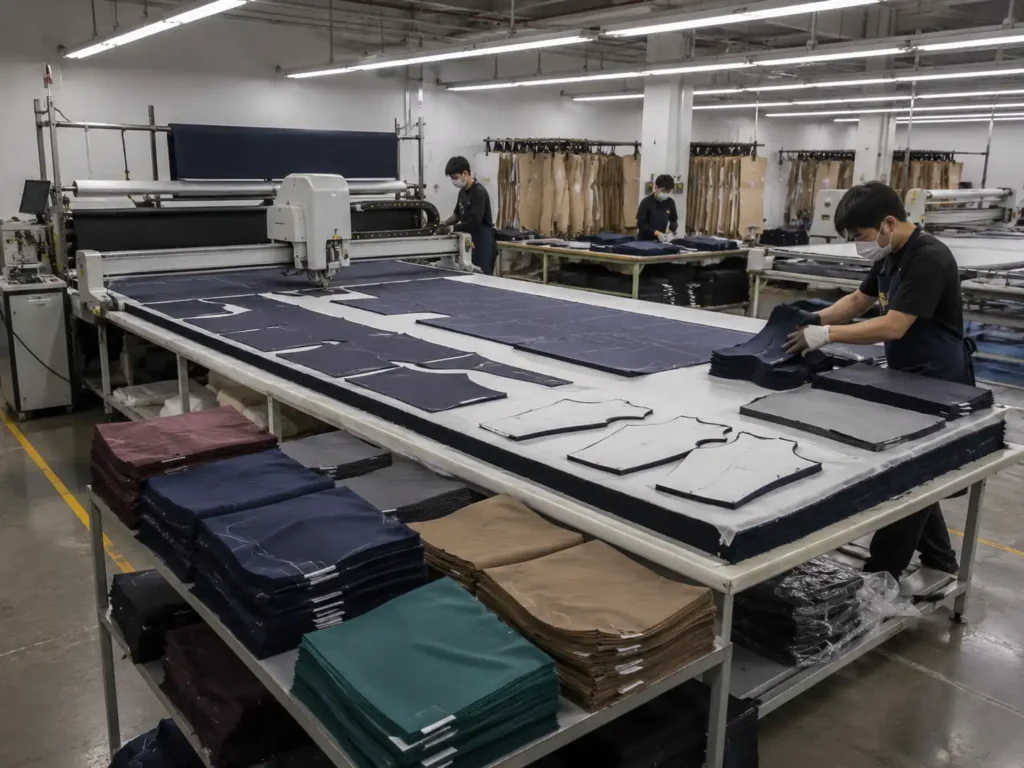
Metallic woven, satin, sequin and directional surfaces can look mismatched when panels are reversed. Before cutting, fabric face, grain, nap or sequin direction is identified. Marker planning considers one-way use, placement and visible panel relationships. Front bodice, skirt panels, sleeves and waist sections are checked for consistent shine direction.
Defect mapping is important for coated fabric and sequins. Scratches, coating gaps, missing sequins, holes and hard creases should be identified before panels are cut. Material loss is included in costing because forcing defective areas into production creates a larger quality problem later.
Seam Quality and Surface Protection
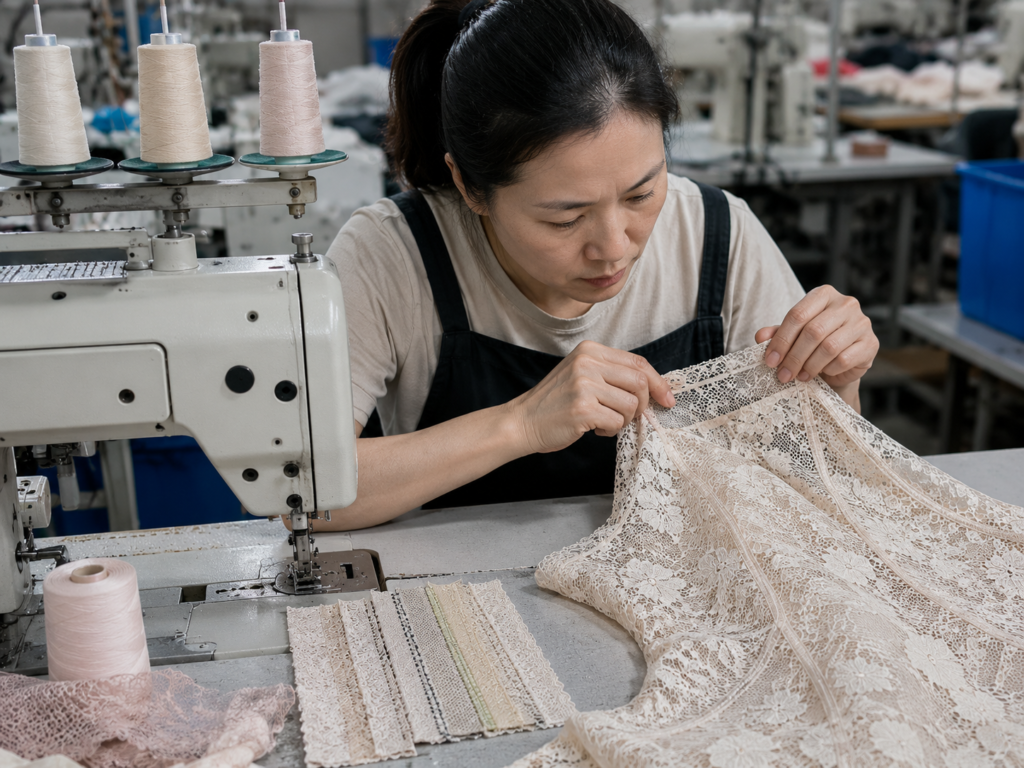
Seam method depends on stretch, weight, coating and lining. Incorrect tension can wave a stretch foil seam or pucker high-shine satin. Repeated needle penetration may leave permanent marks in coated material. Dense sequins can create bulky seam allowances unless decorative pieces are cleared from the sewing line and secured at the edge.
Work instructions define stitch appearance, allowance, reinforcement and pressing limits. Garments are handled on clean surfaces, and finished panels are separated when the face is sensitive. The aim is a smooth outside appearance with enough internal strength for intended wear and care.

Internal Finishing and Skin Comfort
A metallic dress may look polished externally while feeling rough inside. Lining coverage, seam allowance control, binding and trim edges are reviewed at neckline, armhole, underarm, side seam, waist and sitting areas. Lurex yarn, sequins, mesh and rhinestones need particular attention where skin contact is likely.
Soft lining should support the shell without fighting its stretch or drape. Corset structures require protected boning ends and smooth cup or underwire placement. Labels are positioned to avoid unnecessary irritation. Comfort comments from fit review are converted into construction changes before PP approval.

Pressing, Finishing and Appearance
Heat and pressure can alter coating, flatten sequins, create shine marks or leave permanent creases. Finishing methods are selected after testing the actual material. Pressing temperature, contact surface, steam and dwell time are limited according to the approved result.
Final appearance review checks hem balance, seam smoothness, drape, closure function, trim placement and surface condition. Loose threads, adhesive marks, lint, stains and pressure lines are removed or corrected before packing. Metallic garments require clean handling through the final stage because damage can occur after sewing is complete.
Specialized QC for Metallic Surfaces and Construction
Fabric Surface Check
Shade and Shine Check
Coating and Foil Check
Cutting Direction Check
Sewing Damage Check
Fit and Measurement Check
Trim Retention Check
Packing Protection Check
Private Label Packing Built Around Surface Protection

Brand and Care Labels
- Main label and size label placement
- Care and fiber-content information
- Label color and thread match
- Attachment method and seam comfort
- Approved artwork and version control
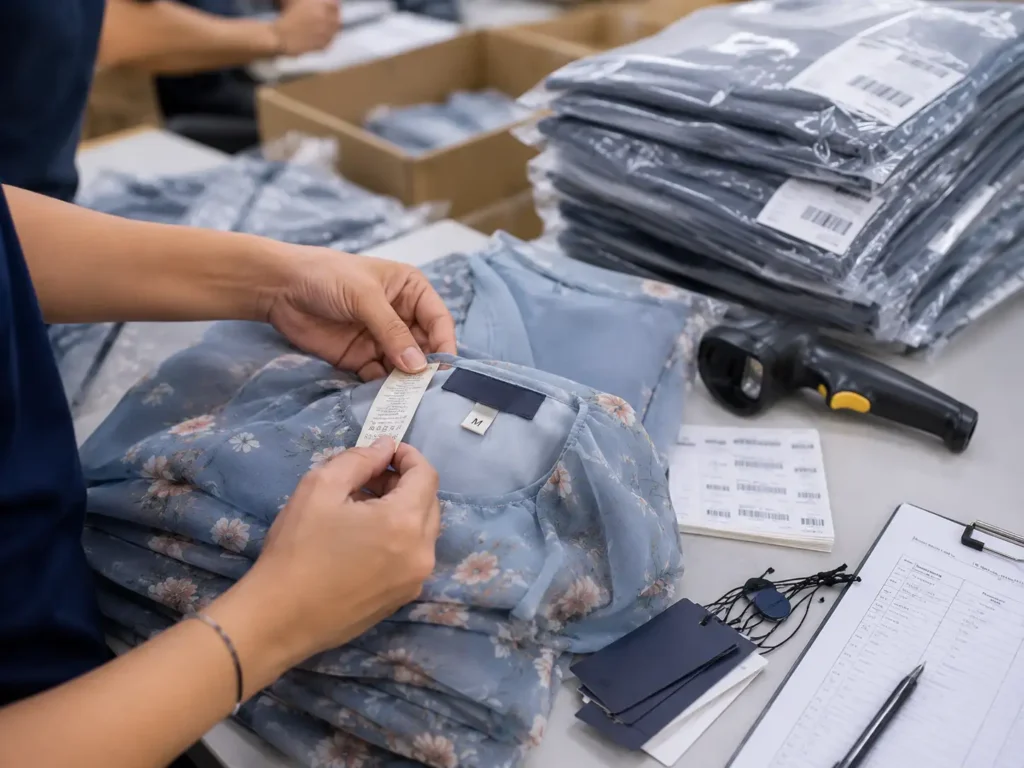
Barcode and SKU Packing
- Barcode readability and placement
- Style-color-size match
- Price ticket or hangtag position
- Warehouse or retailer labeling rules
- Carton assortment and quantity confirmation
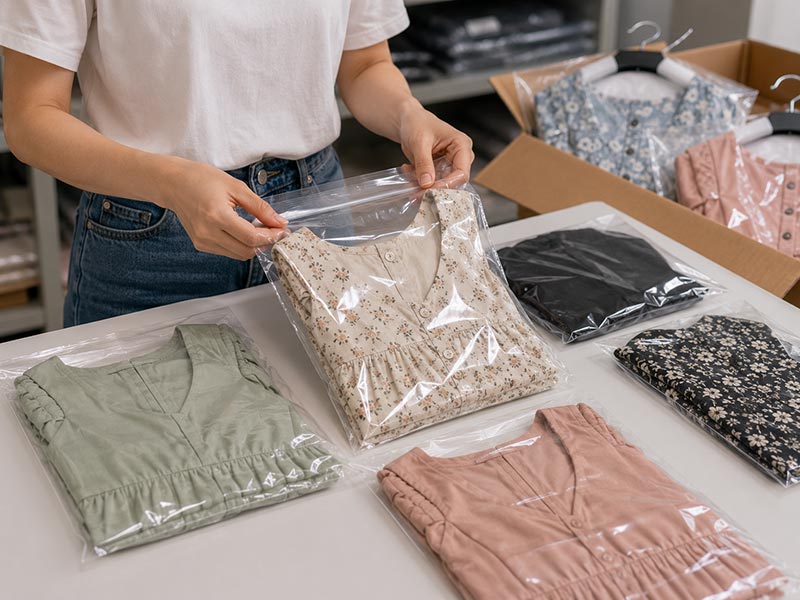
Protective Folding Methods
- Protect the main visible panel
- Avoid hard fold lines through coated areas
- Separate abrasive trims
- Control polybag size and trapped pressure
- Recheck appearance after a packing trial

Export and Warehouse Coordination
- Carton marks and packing list
- Commercial invoice support
- Forwarder coordination
- Multi-batch or split-shipment planning
- Warehouse instructions and delivery window
Metallic Dress MOQ, Timing and Cost Drivers
MOQ starts from 200 pcs per style/color. Final cost and schedule depend on material availability, finish route, construction, trims, size-color planning, private-label requirements and PP approval status.
| Project Factor | Effect on MOQ, Cost or Timing | Planning Guidance |
|---|---|---|
| Stock metallic fabric | Usually easier to sample and organize at the standard MOQ, subject to available color, lot and quantity | Confirm stock by style, color and required meterage before quotation is locked |
| Custom coating or foil | May require supplier minimums, development time and surface testing | Provide target effect, color reference, expected quantity and launch date early |
| Custom metallic color | Can involve lab dips, coating trials, yarn selection or dyeing minimums | Approve physical samples and plan one or two core colors before expanding |
| Sequin or rhinestone surface | Adds material loss, seam preparation, labor, lining and inspection | Map placement, skin-contact zones and packing protection during sampling |
| Corset or strapless structure | Adds pattern work, cups, boning, lining, support and fit review | Allow 15-25 days for complex first-sample development depending on readiness |
| Multiple colors | MOQ is assessed per style/color rather than by total order alone | Submit a color list and quantity for every style-color combination |
| Multiple sizes | XS-XL and extended ranges can be developed, but size ratio and grading must be defined | Provide base size, grade rule, tolerance, target market and size breakdown |
| Private-label packing | Labels, hangtags, barcodes, polybags and cartons add approvals and supplier minimums | Submit artwork, SKU list and warehouse rules before PP sample approval |
| Urgent delivery window | Material readiness, PP status, available capacity, QC time and shipping route must all align | Work backward from warehouse date and identify hero styles for priority handling |
| Repeat order | Retained patterns, materials, trims, measurements and packing records support faster restart | Reconfirm new fabric lots, colors, quantities and delivery requirements before release |
Brand Protection, Verification and Repeat-Order Support

NDA and Design Protection
- Files used only for project review and execution
- Controlled access to development information
- Anonymous or desensitized project presentation
- Brand-specific patterns and packaging protected
- No unauthorized disclosure of launch plans

Material Document Review
- Confirm requested market and test standard
- Identify shell, lining and trim scope
- Check supplier and batch relationship
- Review MOQ and lead-time effect
- Keep documents with project records

Third-Party Inspection Support
- Pre-production or material review where requested
- Inline or final inspection access
- Measurement and workmanship standards
- Corrective-action tracking
- Packing and carton verification

Repeat-Order Records
- Faster project restart
- Same-style new-color support
- Same-pattern new-fabric review
- Multi-batch consistency reference
- Change history for future seasons
Representative Metallic Collection Program for North America
The following anonymized planning case uses a representative order profile drawn from current multi-style brand programs. It shows how a metallic collection can be organized without exposing any brand name, original design or private commercial file.
Collection Scope and Commercial Plan
A North American party and occasionwear program was structured around 18 styles and 42,600 garments across sizes XS-XL. The assortment included 12 hero dresses and 6 supporting styles, with an average volume of 2,367 pieces per style before color and size allocation. The launch plan covered holiday party, birthday, cocktail and evening use rather than relying on one narrow occasion.
Three material families were used to balance impact, cost and production risk: stretch foil jersey for bodycon and ruched pieces, high-shine woven or satin routes for slip and cocktail shapes, and sequin or metallic mesh surfaces for selected hero products. Gold, silver, gunmetal, rose gold and black metallic tones were distributed by style instead of forcing every material into every color.
Sample Grouping and Priority
The 18 styles were divided into four development groups. Corset and strapless dresses entered first because cups, boning, neckline stability and surface stress needed the longest review. Stretch bodycon and ruched styles formed a second group using shared fabric-recovery tests. Slip and draped styles formed a third group focused on grain, seam smoothness and hanging balance. Sequin and mesh hero pieces formed a separate group for lining, edge and packing evaluation.
First samples followed the normal 10-15 day range for regular dresses, while complex corset, sequin and metallic mesh constructions were planned within a 15-25 day development window after material readiness. Two structured fit-and-construction review rounds were scheduled for key styles before PP samples. Sample priorities followed campaign photography, material risk and order volume rather than style number.
Fit, Surface and Production Controls
The size range used the brand’s own XS-XL chart, base size and grade rules. Bodycon styles received focused bust-waist-hip and recovery checks. Strapless products were reviewed for cups, boning, back height and anti-slip support. Slip and draped dresses were assessed after hanging so bias movement and hem balance could be corrected before final approval.
Bulk handover recorded final patterns, approved metallic swatches, shine direction, lining, trims, sewing instructions, measurement tolerances and packing rules. Surface-sensitive styles were allocated according to material and construction experience. Inline inspection focused on coating damage, seam waviness, reversed panels, uneven ruching, missing sequins, exposed lining and unstable measurements before output increased.
Packing, Delivery and Repeat Records
Foil and high-shine garments used protected folding intended to keep the main visible panel away from hard creases. Sequin and rhinestone styles received local separation so decorative surfaces did not scratch adjacent garments. Barcode, style, color and size information were checked against the packing list, and shipment groups were planned around launch priority and warehouse requirements.
The project file retained pattern versions, material references, trim cards, measurements, sewing notes, label positions, packing instructions and QC comments for future replenishment. Repeat production would still require confirmation of new fabric lots, color continuity, quantities and delivery dates, but retained records would shorten the restart process and reduce avoidable interpretation differences.
Metallic Dress Manufacturing Case Studies
The following anonymized cases represent different metallic dress development programs, covering partywear collections, premium occasionwear projects and large private-label seasonal productions. Brand identities, original designs and commercial information remain confidential.
Case 1: Metallic Partywear and Clubwear Collection
Project Scope
A premium ecommerce fashion brand developed a metallic dress collection focused on partywear, nightlife and social-event markets.
- Collection size: 18 dress styles
- Product categories: metallic bodycon dresses, foil jersey minis, ruched metallic dresses, cut-out styles and fitted party silhouettes
- Materials: foil-coated jersey, metallic stretch fabric, Lurex knit, power mesh and stretch lining
- Construction details: body shaping, ruching, cut-outs, asymmetric necklines and fitted structures
- Requirement: strong visual impact with comfortable movement and repeatable bulk quality
Development Challenges
The collection required precise control because metallic surfaces change during body movement.
Key challenges included:
- Metallic surface whitening under stretch
- Recovery loss after wearing
- Seam distortion on fitted areas
- Transparency around mesh panels
- Lining restriction affecting comfort
Manufacturing Approach
The development team focused on fabric behavior and fit engineering.
Key controls included:
- Testing stretch direction and recovery
- Adjusting negative ease according to fabric performance
- Reviewing bust-waist-hip balance
- Testing cut-out reinforcement
- Confirming lining compatibility
Additional attention was given to:
- Side seam stability
- Hem security
- Neckline support
- Zipper flatness
- On-body fitting review
Manufacturing Value
The collection achieved a high-impact metallic fashion appearance while maintaining comfort, stable fit and commercial production consistency.
Case 2: Metallic Evening and Occasionwear Collection
Project Scope
A premium occasionwear brand developed a metallic collection for cocktail events, prom, wedding guest and evening markets.
- Collection size: 20 dress styles
- Product categories: metallic satin slip dresses, metallic mesh gowns, Lurex knit dresses, sequin evening dresses and corset occasion styles
- Materials: high-shine satin, metallic woven fabric, metallic mesh, sequins, tulle and structured lining
- Construction details: corset bodices, draped skirts, fitted waists, layered panels and formal silhouettes
- Requirement: refined metallic appearance with premium finishing
Development Challenges
The main challenge was balancing shine, elegance and production stability.
Key risks included:
- Metallic reflection appearing different under lighting
- Satin shine-direction inconsistency
- Heavy decoration affecting garment balance
- Mesh transparency problems
- Internal support showing through reflective fabrics
Manufacturing Approach
The project focused on premium construction control.
Key controls included:
- Physical metallic swatch approval
- Lighting comparison before fabric confirmation
- Shell and lining coordination
- Corset support development
- Decoration placement mapping
Additional attention was given to:
- Cup and boning position
- Draping balance
- Zipper construction
- Hem control
- Protective finishing
Manufacturing Value
The collection delivered a sophisticated metallic occasionwear range by combining material control, pattern engineering and premium workmanship.
Case 3: Large Private Label Metallic Dress Program
Project Scope
An established fashion brand required a complete metallic seasonal collection covering multiple metallic effects and retail categories.
- Collection size: 30 dress styles
- Production scale: 80,000+ pieces
- Product categories: metallic mini dresses, midi dresses, maxi dresses, bodycon dresses, corset dresses, sequin dresses and evening gowns
- Materials: foil jersey, metallic woven, Lurex knit, sequin fabric, metallic mesh and high-shine satin
- Requirement: consistent quality across multiple SKUs, sizes and delivery batches
Development Challenges
The program required coordination across different metallic surface routes.
Major challenges included:
- Maintaining visual consistency between different metallic materials
- Controlling different stretch behaviors
- Managing surface protection during production
- Coordinating multiple lining systems
- Preventing packing damage
Manufacturing Approach
The collection was divided according to material and construction risk.
Metallic Stretch Group
Focused on:
- Foil jersey
- Lurex knit
- Bodycon silhouettes
- Recovery control
Metallic Surface Group
Focused on:
- Sequin fabric
- Metallic mesh
- Decoration security
- Surface inspection
Manufacturing Value
The program demonstrated that large metallic dress collections require both production capacity and detailed control of surface effect, fit, comfort, quality and retail delivery.
Frequently Asked Questions About Metallic Dress Manufacturing
Metallic effects can come from foil or coated jersey, metallic woven fabric, Lurex knit, sequin fabric, metallic mesh or high-shine satin. The correct route depends on silhouette, stretch, drape, comfort, price, color and bulk availability. Real-metal or chainmail concepts require separate feasibility review.
A reference image can guide the visual direction, but accurate matching requires physical fabric review. Jinfeng compares surface type, color, reflection, stretch, drape and handfeel, then proposes available or developable options. Screen color alone cannot lock a metallic finish for bulk production.
Real-metal, linked-disc or chainmail garments are not treated as standard textile dresses. Feasibility depends on weight, edge safety, connection method, comfort, corrosion risk, packing and available production resources. Send the construction reference for a project-specific review before sampling.
Control begins with material selection and handling tests. Cutting direction, clean work surfaces, limited needle penetration, suitable seam methods, controlled pressing and protective packing are defined for the approved fabric. Incoming, inline, final and post-packing checks look for lifting, cracking, transfer, scratches and pressure marks.
The team reviews underarms, necklines, side seams, waist, sitting areas and trim edges. Soft lining, binding, cleared sequin allowances, protected boning ends and adjusted trim direction can improve comfort. Fit samples should be worn and moved in, because flat inspection cannot reveal every contact issue.
MOQ starts from 200 pcs per style/color. Stock fabric and standard trims are generally easier to organize. Custom coating, custom color, exclusive metallic yarn, special sequins, complex trims or highly divided color plans can raise the material or production minimum.
A regular dress first sample usually takes about 10-15 days after key materials and measurements are confirmed. Simpler styles may take 7-10 days. Corset, strapless, lace, mesh, sequin, evening or complex metallic constructions commonly require 15-25 days, depending on material readiness.
Yes. Patterns can follow US, UK, EU, AU and alpha sizes such as XS-XL, plus extended ranges based on the supplied size chart. Development requires a base size, grade rules, tolerance, target market, fabric stretch and fit preference. Plus-size work is not simple proportional enlargement.
Yes. Support covers main labels, size labels, care labels, hangtags, barcodes, polybags, carton marks and project-specific packing. NDA cooperation can protect tech packs, samples, patterns, trims, packaging, unpublished designs, quantities and launch information throughout development and production.
Send a tech pack or reference image, target quantity per style/color, preferred metallic effect, color plan, size range, target market, labels, packing requirements, delivery window and destination. Incomplete information may support an initial range review, while final pricing follows confirmed materials, construction and packaging.

Start Your Metallic Dress Project with Jinfeng Apparel
Send your metallic dress concept to Kelly for an initial project review. The development team will examine the silhouette, metallic surface route, lining, support structure, trims, size plan, quantity, private-label requirements and launch timing before recommending the next step.
A tech pack gives the clearest starting point, although a reference image, original sample photo, sketch or line sheet can also support early evaluation. Quotation accuracy improves after fabric, color, construction, size breakdown and packing are confirmed. Complex coated, sequin, mesh or corset styles receive a feasibility review before formal sampling so major surface, comfort, MOQ and bulk-production risks are visible from the beginning.
Files are used for project assessment and manufacturing coordination and can be protected through NDA-based cooperation.
Please provide:
- Reference image, tech pack, sketch, line sheet or original sample photos
- Target quantity for every style and color
- Preferred metallic effect, color and fabric direction
- Size range, base size, grade rules and target market
- Required lining, cups, boning, zippers, rhinestones or other trims
- Main label, care label, hangtag, barcode and packing requirements
- Planned launch date, required warehouse date and destination country
- Existing swatches, test requirements or inspection instructions


