
Dress Manufacturing Partner for Test-to-Repeat Programs
Build a controlled first production run, read market performance, and repeat winning dresses with retained standards and scalable manufacturing support.Since 2008, with 6 owned women’s fashion factories and more than 10 long-term production partners in Guangdong.
- Commercial production starts from 200 pcs per style/color, subject to fabric, trim, construction, color and packing requirements.
- Two sample rooms, 7+ senior pattern makers and 20+ sample machinists support parallel dress development before production.
- 100,000+ pieces of monthly capacity and 15+ QC inspectors support repeat orders, replenishment and multi-batch delivery.
Capacity Built for Testing and Repeat Growth
Since 2008
Six Owned Factories
Ten Plus Partners
Two Sample Rooms
Monthly Capacity
Commercial MOQ
Is Jinfeng Right for Your Program?
Best Fit Programs
- Commercial first production from 200 pcs per style/color
- Multi-style programs with 10 to 30 styles
- Seasonal collections and frequent product drops
- Party, occasion, bodycon, corset, satin, mesh, lace and sequin dresses
- Repeat orders, replenishment and new-color extensions
- Private-label, retail-ready or ecommerce-ready packing
- Long-term records for patterns, materials, trims and packing
Outside the Model
- No-MOQ requests
- One to fifty piece orders
- Stock dress wholesale
- Single-item fulfillment
- Personal occasion dresses
- Free development without approved materials
- High-end appearance at an unsupported construction cost
A Commercial Test Is Not Just a Sample
Test the Product
- Approved pattern and measurement file
- Confirmed fabric and lining
- Confirmed trims and construction
- Defined size and color ratio
- Private-label artwork approval
- Packing and carton instructions
- Delivery window linked to launch
Read the Results
- Winning and slow-moving colors
- Fastest-selling sizes
- Fit-related return comments
- Fabric or comfort feedback
- Packing or warehouse issues
- Repeat quantity by SKU
- Required delivery date
Repeat with Control
- Same-style repeat
- Bestseller replenishment
- New-color extension
- Same-pattern new fabric
- Expanded size range
- Multi-batch shipment
- Seasonal carryover
From Program Brief to Repeat Production

Program Brief

Style Risk Review

Material Direction

Pattern and Sample

Approval Pack

First Production

Sales Feedback

Repeat Launch
Dress Categories Ready for Repeat Programs
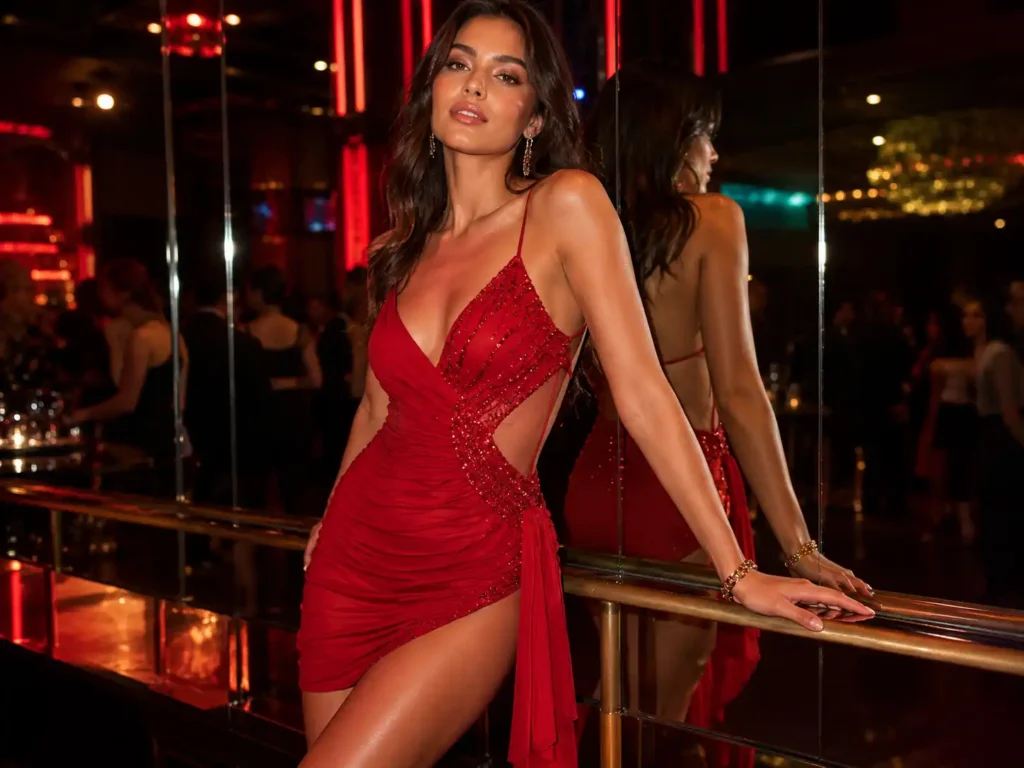
Party and Club
- Bodycon and mini silhouettes
- Ruched and cut-out structures
- Mesh and power-mesh panels
- Sequin and rhinestone details
- Protective lining and packing

Occasion and Wedding
- Midi and maxi lengths
- Satin, chiffon, lace and crepe
- Multi-color seasonal stories
- Lining and coverage control
- Pressing and anti-crease packing

Satin and Slip
- Satin and stretch satin
- Bias-cut or straight-grain options
- Adjustable straps
- Invisible zipper control
- Snag-resistant handling

Bodycon and Ruched
- Bust-waist-hip balance
- Stretch and recovery review
- Ruching position and symmetry
- Lining or double-layer coverage
- Wash and dimension awareness

Corset and Strapless
- Bra cups and cup placement
- Boning type and position
- Anti-slip support
- Structured lining
- Secure closures

Resort and Printed
- Maxi, midi and mini resort shapes
- Printed woven and light drape fabrics
- Opacity and lining decisions
- Shrinkage and skew control
- Travel-friendly packing
Fabric Planning Before the First Production
Fabric decisions determine whether a winning dress can be repeated without losing its hand feel, color, fit or margin. Jinfeng Apparel reviews material performance and supply conditions before sampling, then records the approved direction for production and later replenishment.
Choose a Material Route That Can Survive Commercial Production
A successful sample can still fail as a repeat program when the selected fabric is available only in a small lot, changes between batches or creates production problems at larger quantities. Material planning therefore begins with silhouette, hand feel, drape, stretch, transparency, lining requirement, shrinkage, wrinkle behavior, surface sensitivity, target price and expected repeat potential.
Common directions include chiffon, satin, stretch satin, lace, mesh, power mesh, jersey, rib knit, ponte, crepe, velvet, sequin fabric, organza, tulle, rayon, viscose, linen, denim, suiting fabrics and blended materials. Each fabric family needs different validation. Satin requires shade, shine direction, snagging and pressing control. Mesh requires stretch, transparency and edge stability. Lace requires flower placement, joining and lining color. Jersey and rib knit require stretch recovery, shrinkage and side-seam stability. Sequin fabric requires skin protection, seam handling and secure packing.
For a commercial first run, a stable stock fabric may shorten preparation when enough matching yardage exists. Stock status alone is not enough. Width, GSM, composition, color, hand feel, supplier batch and usable quantity must still be confirmed. Custom dyeing, printing, weaving or certified materials may fit a larger long-term program, but separate supplier MOQ and longer lead time should be built into the launch plan.
Lock the Fabric Standard Before Cutting Begins
An approved fabric record should contain enough information for another production team to recognize the intended standard. A simple name such as “black satin” is not sufficient. Jinfeng Apparel records available supplier information, composition, weight or target weight, width, stretch direction, hand feel, drape, transparency, approved color reference, lining choice, shrinkage findings, care direction and sample approval status.
Color control may include a Pantone reference, lab dip, physical swatch or approved garment. Lighting matters because satin, velvet and sequins can look different under studio light, daylight and indoor retail lighting. Lining color also changes the appearance of mesh, lace, chiffon and light-colored satin. Before bulk, the selected fabric lot is checked against the approved reference. When several colors are produced, each shade receives its own approval path rather than relying on the first approved color.
Fabric inspection also supports cutting and sewing decisions. Directional shine, nap, print placement, stretch direction and lace flower orientation must be marked before marker planning. A material that requires one-way cutting may increase consumption. A heavily embellished fabric may require protective handling and extra seam preparation.
Clear material standards make cost, workmanship and repeat planning more predictable.
Reconfirm Supply Before Every Repeat Order
Repeat speed depends on what remains available after the first production. Jinfeng Apparel can retain fabric references and supplier records, but material inventory is not permanent. Before a repeat order is promised, the team checks current stock, available color, dye lot, minimum yardage, supplier lead time, width, hand feel and visible batch difference. When the original fabric is unavailable, an alternative is not approved by name alone; drape, stretch, opacity, surface and fit impact must be reviewed.
New colors require separate shade approval. The same style in a new fabric may require a fit or PP sample because changed stretch, stiffness or weight can alter neckline position, waist shape, ruching, skirt volume or hem balance. Larger repeats may also require a planned material booking or custom production route. Complex seasonal programs benefit from early color and quantity forecasts, allowing fabric discussions to start before the selling window becomes urgent.
A repeat plan should therefore identify three material paths: original fabric available, original fabric available with batch reapproval, or approved alternative required. The classification gives merchandising and sourcing teams a clearer view of schedule and risk before purchase orders are finalized.

Fit and Size Standards for Repeatable Dresses
Strong sell-through can be weakened by inconsistent fit in later runs. Jinfeng Apparel connects pattern development, grading, approved measurements, garment tolerances, labels and packing records so size identity remains visible from sample approval through repeat production.
Build the Base Fit Around the Dress Structure
The base pattern must reflect the garment’s real structure rather than only the front image. Development begins by confirming the intended fit: fitted, close, semi-fitted, relaxed or flowing. Key measurement points vary by style. A bodycon dress may prioritize bust, waist, hip, body length and stretch allowance. A strapless or corset dress adds upper bust, under bust, cup position and neckline level. A slip dress adds strap length and front neck drop. A maxi dress requires front and back length, slit position and hem balance.
The first sample is evaluated for visual proportion, movement, coverage and construction stability. Comments such as “make it tighter” are converted into measurable changes. Pattern revisions identify the affected area, measurement change and construction consequence. When fabric stretch or weight changes, pattern adjustment may be necessary even when the design remains visually similar.
Fit records should also capture approved components that influence shape, including bra cups, boning, elastic, anti-slip tape, lining, zipper type and seam placement. A repeat order can then begin from a complete base rather than from isolated measurements.
Grade Sizes from the Approved Brand Chart
Jinfeng Apparel can work with brand-defined size charts covering alpha sizing, US, UK, EU, AU or other systems. The approved range may include XS-XL, broader extended sizes, petite or tall directions when the style and project requirements support them. No universal grading rule is applied blindly. Grade increments depend on garment type, fabric stretch, fit intent, body area and brand history.
Critical areas need style-specific attention. Bust and cup-related grades are important for corset, strapless and deep-neck styles. Waist and hip grades are central to bodycon dresses, skirts and jumpsuits. Armhole and sleeve grades matter for fitted woven dresses. Dress length may follow a fixed increment or a separate brand rule. Slit height, neckline depth and strap position should not grow in a way that creates exposure or proportion problems in larger sizes.
Before bulk, the confirmed measurement chart becomes part of the approval pack. Size labels, polybag stickers and carton size breakdowns must match the same chart and purchase order. A fit standard loses value when production and packing identify sizes differently.
Protect Fit Through Measurement and Version Control
Repeat production uses the latest approved pattern and measurement version. Old files are not mixed with revised files. Jinfeng Apparel retains revision notes, approved measurements and relevant QC comments so the team can identify which version produced the accepted result. When a brand changes a size ratio without changing the range, the pattern may remain valid. When the size range expands, new grading and sample confirmation may be needed.
Bulk measurement control focuses on key points rather than treating every point as equally critical. Tolerances should reflect fabric behavior and construction. Stretch garments need relaxed measurement consistency and controlled recovery. Woven dresses need seam, neckline, zipper and hem balance checks. Structured bodices require cup, boning and upper-bust review. Findings during inline and final inspection are compared with the approved specification.
After launch, size-related return data can improve the next run. Repeated feedback around bust, strap length, waist or dress length is reviewed before the pattern is changed. Commercial feedback is translated into a controlled revision, followed by a new approval record, preventing undocumented changes from entering bulk production.

Sample and Approval Timing by Dress Complexity
Sample time depends on material readiness, construction, trim development and the quality of the information supplied. Clear tech packs, approved references and timely comments reduce avoidable delays, while complex structures require enough time to prove fit and workmanship.
| Development Stage | Typical Timing or Rule | Main Approval Purpose |
|---|---|---|
| Simple first sample | About 7-10 days | Confirm basic silhouette, measurements, material direction and construction |
| Standard dress first sample | About 10-15 days | Review fit, workmanship, fabric, lining, trims and visual balance |
| Complex first sample | About 15-25 days or project confirmation | Prove corset, strapless, lace, mesh, sequin, evening or multi-layer construction |
| Revised or fit sample | Based on revision scope and material readiness | Confirm recorded pattern and fit changes |
| Photo or salesman sample | Scheduled after required fit and material approvals | Support photography, sales review or line presentation |
| PP sample | Required before bulk when specified | Lock bulk construction, materials, labels, measurements and packing |
| Golden Sample | Sealed by project when appropriate | Preserve the approved reference for bulk and repeat comparison |
The Approval Pack Behind Every Repeat Order

Pattern and Measurements
- Approved base pattern
- Grade rule or size chart
- Measurement tolerances
- Fit revision history
- Critical construction points
- Approved sample reference

Fabric and Color
- Fabric and lining references
- Color standard or lab dip
- Stretch and drape notes
- Shrinkage or wash findings
- Batch and shade approval
- Alternative material status

Trims and Workmanship
- Trim specifications
- Placement and attachment
- Comfort and safety checks
- Sewing construction notes
- Finishing and pressing rules
- Approved replacement limits
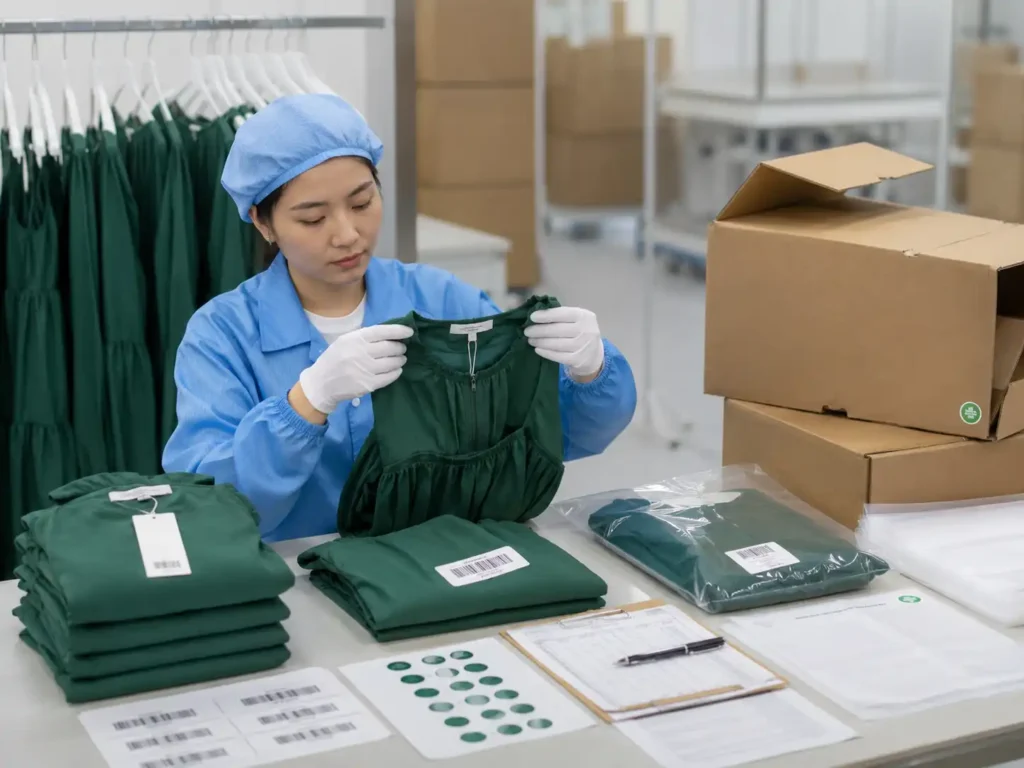
Labels and Packing
- Woven and size labels
- Care label artwork
- Hangtags and barcodes
- Polybags and stickers
- Carton marks and ratios
- Packing inspection checklist
Scaling Production Without Losing the Approved Standard
A larger repeat changes material demand, line planning, inspection volume and delivery risk. Jinfeng Apparel reviews the production route again before scaling, using the approved first-run standard as the reference rather than assuming quantity is the only variable.
Match Production Resources to Construction and Volume
Production allocation begins with garment type and risk. Stretch jersey dresses, lined woven dresses, corset styles, lace garments, satin gowns and sequin pieces need different handling and workmanship. Jinfeng Apparel uses owned factories and long-term production partners to match programs with suitable resources, while merchandising files and QC checkpoints remain centralized.
A first commercial run may use one production unit. A larger repeat may remain in the same unit or move to a different suitable unit when quantity, schedule or product mix changes. Transfer is controlled through approved patterns, measurements, fabric references, trim details, workmanship notes, PP or Golden Sample references and packing standards. A production unit should not reinterpret the design from photographs.
Multi-style collections are grouped carefully. Styles sharing the same fabric or trims may benefit from coordinated material booking, while highly complex pieces may need separate lines and longer finishing windows. Allocation also considers delivery sequence. A hero style needed first may be produced and inspected ahead of supporting styles rather than waiting for the whole collection.
Book Materials, Capacity and QC as One Schedule
A repeat production date is only meaningful when fabric, trims, labels, packing materials, line capacity and inspection windows are aligned. Larger quantities may require additional fabric production, custom dyeing or print preparation. Custom labels and printed polybags can carry separate lead times. Peak seasons increase competition for both material and production capacity.
Jinfeng Apparel builds the schedule backward from the required ship date and launch plan.
Key milestones include material approval, material arrival, cutting, first-piece review, inline inspection, finishing, packing, final inspection and shipment handover. Split shipment can be evaluated when part of the quantity is needed earlier, but the cost and operational effect must be confirmed.
QC capacity also scales. A 30,000-piece repeat cannot rely on the same informal review used for a tiny sample batch. Inspection points, measurement sampling, shade control, packing checks and final inspection plans are defined in advance. Client or nominated third-party inspection can be coordinated when required.
Revalidate Every Change Before the Repeat Starts
A repeat order is fastest when the product remains stable, yet every change has a consequence. New color can affect fabric MOQ, dye-lot timing, lining color and zipper matching. New fabric can alter fit, drape, opacity and sewing. Expanded sizes can require grading and fit review. Larger quantities can change material sourcing and production allocation. New packaging can change lead time and carton volume.
The repeat review therefore classifies each element as unchanged, rechecked or newly approved. Unchanged pattern files may be released quickly. Fabric stock and shade are rechecked. Changed trims receive samples or photos. Updated artwork receives version approval. New size ranges move through grading and fit confirmation. Delivery is quoted after the full change list is visible.
A controlled review may appear slower than an immediate promise, but it protects the repeat from hidden resets. Brands gain a schedule based on actual conditions rather than optimistic assumptions.
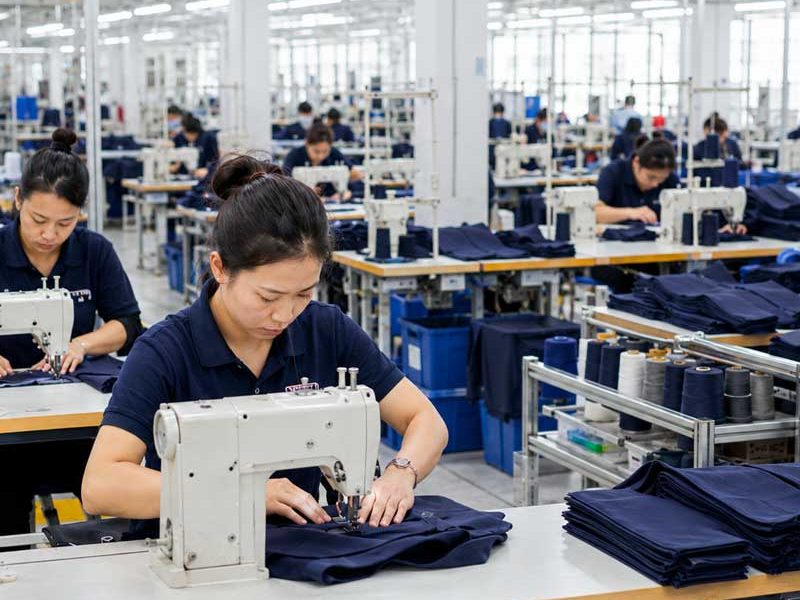
Eight Quality Gates from Fabric to Carton

Incoming Fabric

Shade and Batch

Cutting Control

First Piece

Inline Inspection

Measurement Review

Finishing Review

Packing and Final
Records That Make Repeat Orders Faster
Pattern Record
- Base pattern version
- Grade information
- Revision date
- Fit comment history
- Critical construction notes
Measurement Record
- Approved size chart
- Critical POM list
- Tolerance rules
- Size-range version
- Measurement QC notes
Fabric Record
- Supplier reference
- Color approval
- Lining match
- Stretch and drape
- Batch review status
Trim Record
- Trim specification
- Color and size
- Placement
- Attachment method
- Approved alternative
Workmanship Record
- Sewing construction
- Detail photos
- Finishing method
- Pressing notes
- Defect watch list
Packing Record
- Artwork versions
- Label positions
- SKU and barcode
- Polybag and folding
- Carton assortment
Repeat Orders That Still Need New Approval
New Color or Dye Lot
- Color standard
- Lab dip or swatch
- Lining and trim match
- Bulk shade check
- Lighting review
New Fabric Direction
- Stretch comparison
- Drape and weight
- Opacity and lining
- Shrinkage
- Fit and construction impact
New Scale or Structure
- Expanded size range
- Major quantity increase
- Changed construction
- New trims
- New packing or delivery route
Cost and MOQ Decisions Across the Program
Commercial first production and repeat production may use different quantities, but price still follows the approved fabric, trims, construction, labor, finishing, QC, packing and logistics. Scale can improve efficiency without removing the cost of brand-level appearance.
| Cost or MOQ Variable | First Production Effect | Repeat Production Effect | Required Decision |
|---|---|---|---|
| Basic MOQ | Starts from 200 pcs per style/color | Reconfirmed by style and color | Quantity and color breakdown |
| Stock fabric | May support faster preparation | Availability and batch must be rechecked | Reserve, reorder or approve alternative |
| Custom color | Separate dyeing MOQ and lab dip time | New lot may need shade approval | Pantone, quantity and delivery timing |
| Special trims | Supplier MOQ and development time | Original trim may be reordered or substituted | Specification and approved alternative |
| Construction | Corset, lace, mesh, sequin and evening work raises labor and QC | Same construction remains unless revised | Lock workmanship standard |
| Size range | Grading and sampling depend on the range | New sizes require fresh grading review | Confirm sizes and ratio |
| Private-label packing | Artwork, label and printed packing MOQ may apply | Existing files help, but changed data needs approval | Confirm label, barcode and carton files |
| Testing and inspection | Depends on market, material and program requirements | Repeated or new tests may be required by project | Confirm test protocol and inspection party |
| Logistics | Based on volume, carton plan and delivery date | Larger repeat may suit sea, split or combined shipment | Confirm ship window and forwarder |
Private Label Details That Stay Consistent
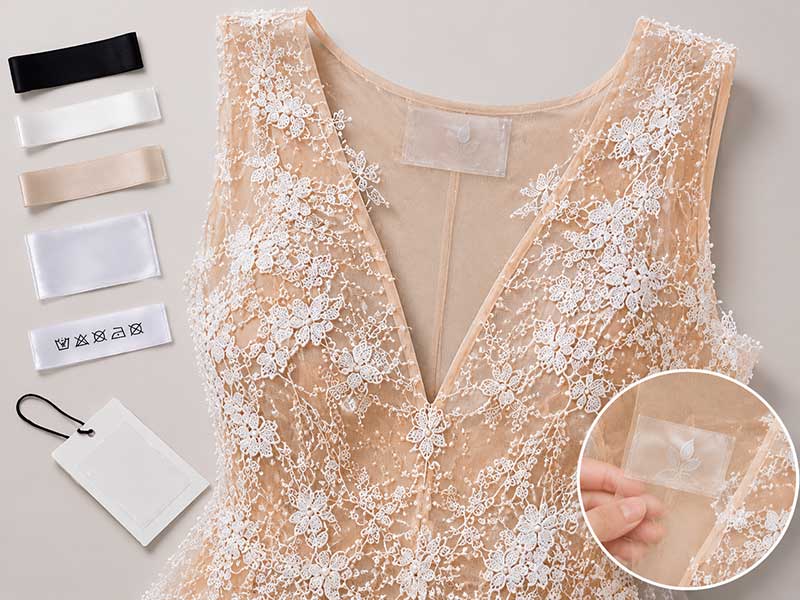
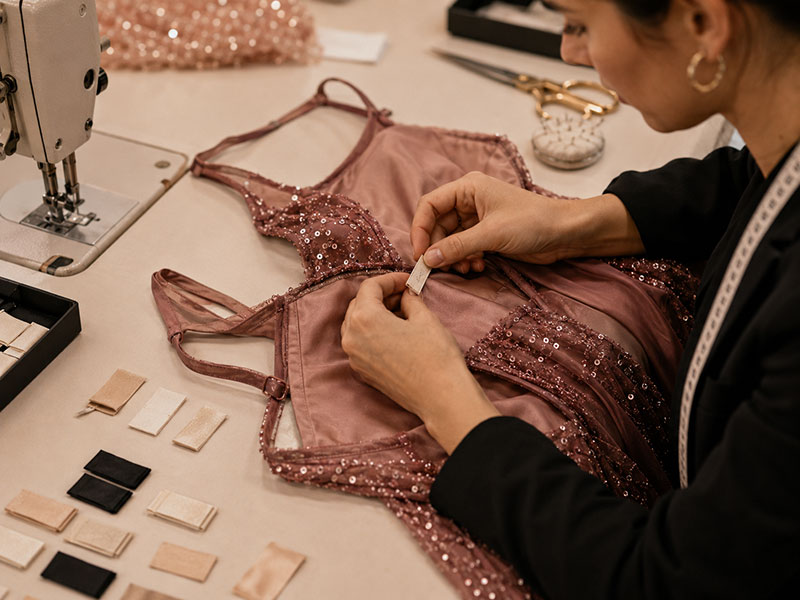
Woven Brand Labels
- Label artwork
- Fold and size
- Color
- Placement
- Edge comfort
Size and Care Labels
- Size-system accuracy
- Fiber composition
- Care symbols and text
- Origin information
- Batch reference

Hangtags and Barcodes
- Hangtag artwork
- Barcode and SKU
- Attachment method
- Seasonal updates
- Scanning check
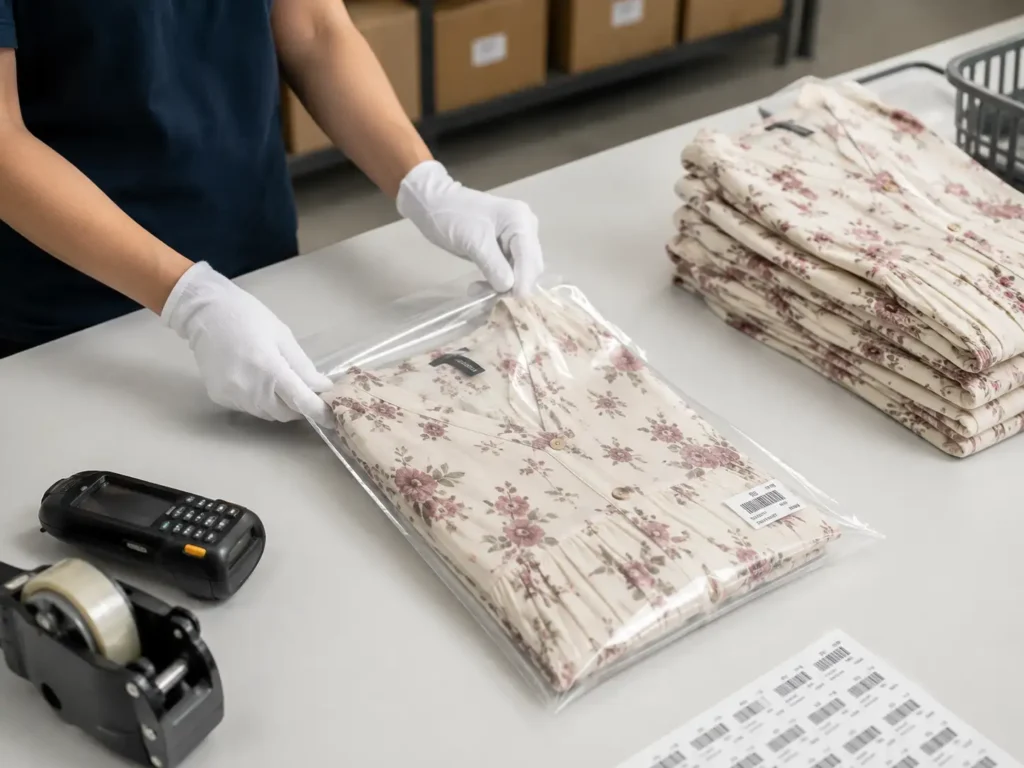
Polybags and Stickers
- Bag dimensions
- Thickness
- Printed warning
- Size and barcode stickers
- Protective folding
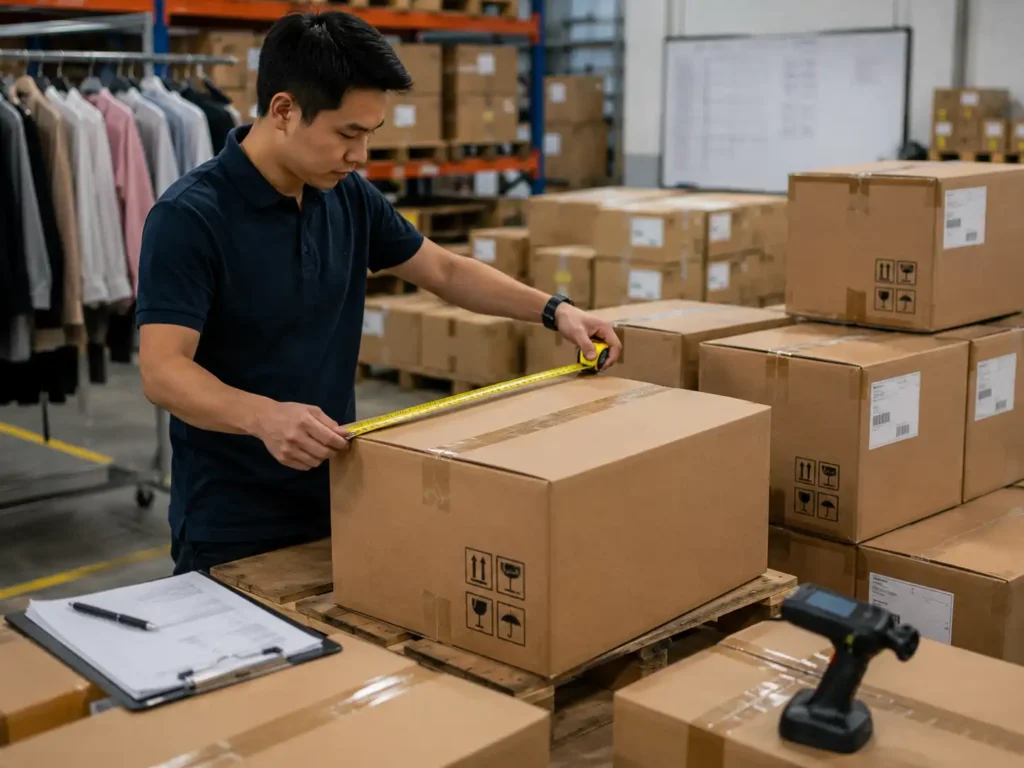
Cartons and Marks
- Carton dimensions
- Assortment
- Weight
- Shipping marks
- Warehouse labels

Packing Verification
- Garment-SKU match
- Label placement
- Barcode check
- Carton ratio
- Final packing photos
Replenishment and Multi-Batch Delivery Planning
Backward Launch Planning
Split Shipment Review
Freight and Handover
Multi-Batch Records
Anonymized Test-to-Repeat Dress Program
The operating example below uses a realistic range from ongoing brand programs: 10 to 30 styles and 20,000 to 80,000 total pieces. Brand identity, price, artwork and unpublished product details remain confidential.
First Production - 18 Styles and 14,400 Pieces

A premium online fashion label prepared an 18-style seasonal dress program covering party, occasion, bodycon, satin, mesh and corset directions. The commercial first production totaled 14,400 pieces across one or two colors per style, with sizes XS-XL based on the brand’s approved chart. Individual style quantities were planned above the standard 200 pcs per style/color threshold, with larger allocations assigned to established silhouettes.
Development was prioritized by risk. Corset, strapless and sequin styles entered sampling earlier than simpler stretch dresses. Shared black linings, invisible zippers, labels and packing materials were consolidated where suitable. Each style moved through pattern review, sample comments, material approval and PP confirmation. The first production used approved private-label files, barcode mapping and carton assortment rules.
The program did not treat every style equally. Higher-risk styles received additional first-piece and inline attention. Satin shades were separated by lot, mesh coverage was checked against lining, and bodycon measurements were reviewed by size. Commercial first production therefore generated sell-through evidence from garments built under production conditions rather than from showroom samples alone.
Repeat Production - 7 Winners and 28,400 Pieces

After launch, seven dresses produced the strongest sales and replenishment demand. The repeat production totaled 28,400 pieces. Four styles returned in approved original colors, two received new color extensions, and one strong bodycon shape moved into a related fabric direction. The repeat was not released as a simple copy order.
Original patterns, measurement files, fabric references, trim records, QC notes and packing files were retrieved first. Current fabric stock and dye lots were rechecked. The two new colors moved through shade and trim matching.
The new fabric direction received stretch, opacity, fit and PP review because the original pattern could not be assumed to perform identically. Updated quantity and size ratios were used for material booking and production allocation.
The combined first and repeat program reached 42,800 pieces. Larger repeat quantities required a revised inspection plan, expanded carton counts and a new delivery sequence. The strongest styles were scheduled first, while color extensions followed their approvals. Controlled revalidation protected the speed advantage without weakening fit or brand presentation.
Records Turned Sales Data into Production Decisions

The program gained value from the connection between commercial and manufacturing information.
Sell-through identified the winning styles. Size performance changed the repeat ratio for selected SKUs. Return comments were reviewed against measurements and construction rather than translated into unrecorded pattern changes. Fabric availability influenced the color schedule.
Packing records reduced artwork and warehouse setup work.
The production team retained the approved pattern, size chart, fabric and lining references, trim specifications, sewing details, label artwork, barcode mapping, folding and carton instructions.
New approvals were added as separate versions. The repeat therefore began from a controlled baseline, while every change remained visible to merchandising, production and QC teams.
The example reflects the operating scale Jinfeng Apparel is structured to support: multi-style programs, commercial first production, selective replenishment, new-color growth and total brand orders commonly ranging from 20,000 to 80,000 pieces.
Confidentiality and Supplier Review Support
NDA Cooperation
Design Protection
Factory Document Review
Inspection Coordination
From Order Factory to Program Manufacturing Partner
Transaction-Only Production
Program-Based Manufacturing
Frequently Asked Questions About Test-to-Repeat Programs

Build a Repeatable Dress Program with Jinfeng
A useful program review starts with enough information to identify product risk, sample priorities, material requirements and the likely repeat path. Send tech packs, line sheets, reference images or original sample details together with quantity by style and color. Include the intended size range, fabric direction, color story, private-label requirements, destination and target delivery window.
For multi-style collections, mark hero styles, higher-risk constructions and expected replenishment candidates. Jinfeng Apparel can then review sampling, material availability, production allocation, QC checkpoints, packing preparation and repeat-order conditions. Early visibility also separates styles suited to available fabrics from styles requiring custom color, print, lace, embellishment or special trims.
Please provide:
- Reference images, tech packs, original samples or line sheets
- Quantity by style, color and production stage
- Fabric, lining and trim preferences
- Size range and measurement chart
- Label, hangtag and packing requirements
- Target delivery date and destination


