Skip to content

A polished sample, an attractive quotation, and a confident sales presentation can make almost any clothing supplier look capable. The real test begins later, when the same dress must be reproduced across several colors, multiple sizes, hundreds or thousands of units, and a fixed launch calendar. That is where differences in pattern accuracy, fabric control, production discipline, and project management become expensive. A dress that appears acceptable in one sample can still fail commercially if the neckline changes across sizes, the bulk satin has weaker recovery, the lining restricts movement, or the factory cannot keep shade, measurements, labels, and packing consistent across the full order.
A reliable custom dress manufacturer should demonstrate relevant dress-category experience, structured product development, controlled fabric and trim sourcing, accurate pattern and fit management, documented quality checks, realistic capacity, transparent costing, design protection, and repeat-order support. Buyers should verify these capabilities through samples, technical records, factory evidence, and a clearly defined sample-to-bulk process before placing production.
Price still matters, but it is not the most useful starting point. A slightly lower unit cost can be wiped out by inconsistent sizing, fabric substitution, visible shade variation, missed delivery windows, rework, markdowns, or avoidable returns. Supplier selection is closer to fitting a corset dress than buying a commodity: the outside may look simple, but the hidden structure determines whether everything stays in place. The following framework helps you inspect that structure before your collection enters production.
What Dress Expertise Should You Verify?
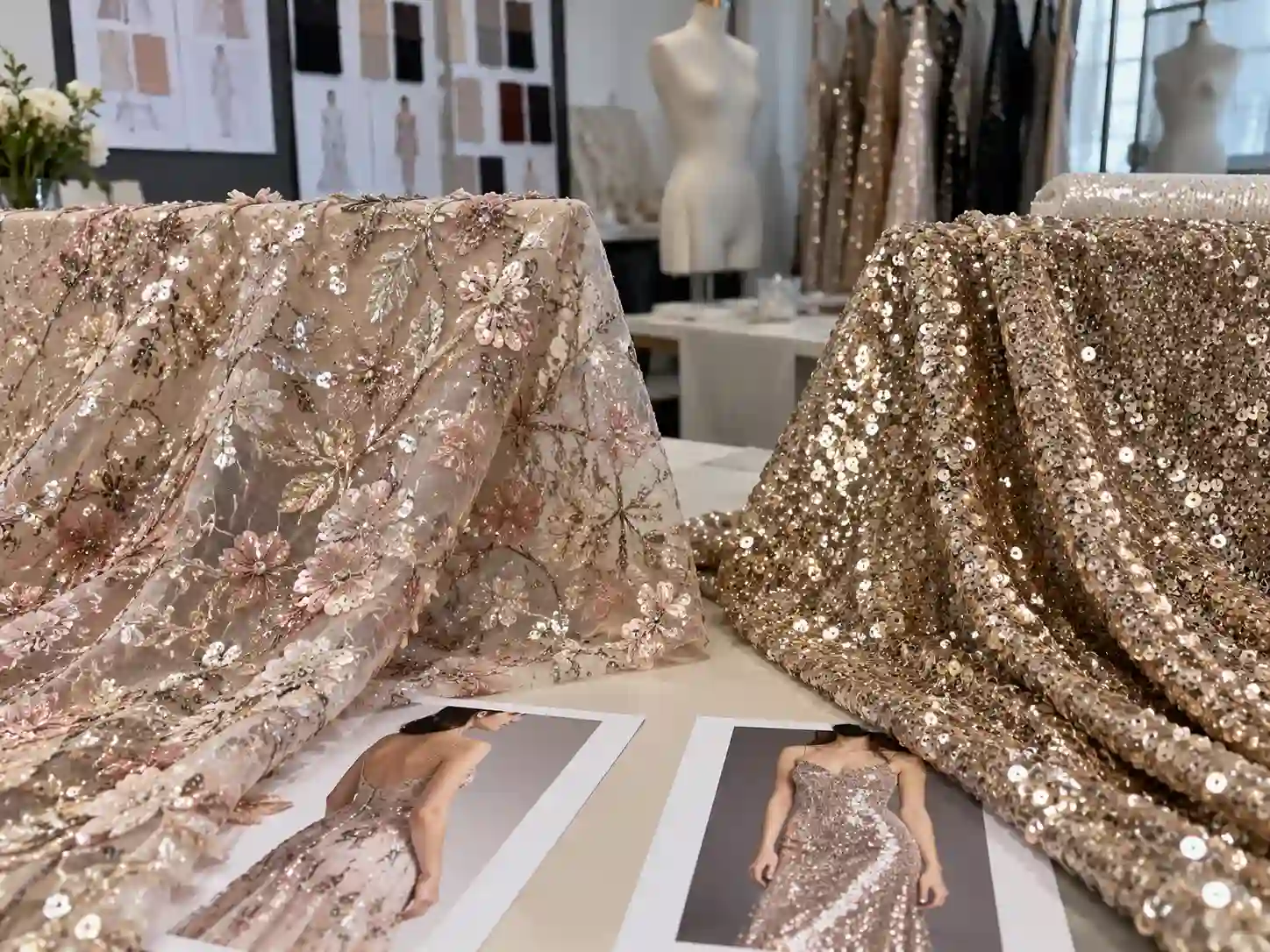
Editorial documentary photograph inside a modern Guangdong women’s fashion factory. A pattern maker, sample machinist, and merchandiser review corset, satin, lace, mesh, and sequin dress samples on mannequins and worktables. Include close-up construction details, natural factory lighting, authentic tools and patterns, premium B2B manufacturing atmosphere, horizontal 16:9 composition, no logos, no text overlay.
Verify the manufacturer’s experience with your exact dress category, fabric, construction level, fit profile, and target market. General sewing ability is not enough. Relevant samples, technical explanations, production records, and inside-construction details provide stronger evidence than a broad product gallery or a promise that the factory can make every style.
Which Dress Categories Does the Factory Specialize In?
Ask what the manufacturer produces repeatedly, not what it says it can make when a new inquiry arrives. Repeated production builds practical knowledge: operators become familiar with difficult seams, pattern teams recognize recurring fit problems, and inspectors know where defects normally appear. A supplier that regularly produces basic jersey dresses may not be equipped for corsetry, bias-cut satin, lace placement, or embellished occasionwear.
Dress production includes technically different categories. A bodycon dress depends on stretch, recovery, seam elasticity, and controlled negative ease. A corset dress depends on cup shape, boning position, neckline stability, lining, and bust support. A bias-cut slip dress requires precise grain control, hanging time, and careful hemming. A floor-length occasion dress introduces skirt balance, zipper stress, lining length, pressing, and transport-related creasing.
A practical supplier review should separate experience by the following factors:
- Silhouette: fitted, A-line, flared, bias-cut, structured, draped, or relaxed.
- Length: mini, midi, maxi, or floor-length.
- Occasion: casual, resort, party, cocktail, evening, prom, or wedding guest.
- Material: satin, chiffon, jersey, mesh, lace, velvet, sequins, or printed wovens.
- Structure: lined, boned, cupped, ruched, pleated, layered, or embellished.
- Fit: relaxed, close-fitting, compression-based, supportive, or adjustable.
The manufacturer should explain how production changes between these groups. A supplier that treats every dress as the same product category may underestimate development time, material behavior, operator skill, and inspection requirements. A smaller portfolio of technically relevant examples is more useful than hundreds of unrelated product photos.
| Dress Type | Main Production Risk | Practical Control Reference |
| Corset or strapless dress | Weak support, neckline gaping, cup misplacement | Confirm the boning map, cup position, top-edge measurement, lining, and closure on the fit sample. |
| Bias-cut satin dress | Twisting, uneven hem, seam rippling | Control grain direction and allow the garment to hang about 12-24 hours before final hemming. |
| Bodycon jersey dress | Growth, poor recovery, distorted side seams | Test stretch in both directions and remeasure after the garment has rested. |
| Mesh or lace dress | Transparency, holes, motif mismatch | Approve lining coverage, seam type, panel placement, and motif alignment before cutting. |
| Sequin dress | Loose embellishment, scratching, bulky seams | Clear sequins from critical seam allowances where construction permits and inspect skin-contact areas. |
| Maxi or evening dress | Uneven floor line, zipper strain, poor drape | Check full-length balance on a dress form or fit model after pressing and relaxation. |
Can It Handle Complex Fabrics and Construction?
Complexity does not come only from the number of seams. It comes from the relationship between fabric behavior, pattern shape, internal support, sewing sequence, and final fit. A factory may sew ordinary woven dresses well and still struggle with stretch mesh, delicate lace, slippery satin, heavy sequins, or structured bodices.
Satin exposes small errors. Uneven feed creates rippling, the wrong needle can leave permanent marks, and inconsistent cutting direction can create visible shade differences. Mesh stretches easily and may become longer after sewing. Lace requires attention to motif placement, joins, scalloped edges, lining, and transparency. Sequins increase seam bulk, slow production, and may scratch the wearer. Stretch jersey appears simple, but weak recovery can change the bust, waist, hip, and total length after wear or washing.
Ask how the factory will control the actual risks in your design:
- Fabric relaxation before cutting and recovery before final measurement.
- Grain, nap, print, and shade direction.
- Needle, thread, seam, and stitch selection.
- Stabilization at necklines, zippers, straps, and stress points.
- Lining compatibility, opacity, stretch, and length.
- Ruching distribution, lace placement, and embellishment handling.
- Pressing temperature and protection against shine or distortion.
- A planned construction sequence for cups, boning, lining, zippers, and outer shells.
A capable team will not simply say a design is possible. It will explain what must be approved, which areas carry risk, and how those risks affect sampling time, cost, and bulk speed. That technical honesty is a stronger signal than a fast yes.
Does Its Portfolio Match Your Market?
A beautiful sample is not automatically relevant to your brand. The important question is whether the supplier has produced dresses with a similar customer, retail position, fit expectation, and sales channel. A premium occasionwear brand may require internal support, full lining, clean binding, controlled drape, refined pressing, and presentation-ready packing. An online trend-led label may prioritize photo-ready samples, stable grading, rapid color development, and repeat-order flexibility.
When reviewing previous work, compare the following:
- Product category, fabric, and construction complexity.
- Inside workmanship rather than campaign photography alone.
- Target ex-factory and retail price levels.
- Customer market, sizing system, and expected fit.
- Private-label, barcode, packaging, and warehouse requirements.
- Inspection standard, delivery window, and repeat-order frequency.
Ask for inside seam views, lining, zippers, hems, cups, boning channels, embellishment attachment, and pressing details. Styled photography can hide many weaknesses. A close-up of a zipper seam or inner bodice often reveals more about production ability than a polished model image.
It is also worth asking what the factory actually completed. Some suppliers may have handled sewing only while another party developed the pattern, sourced the fabric, or managed inspection. Clarifying responsibility prevents a portfolio from being interpreted too broadly.
Can the Team Explain Production Risks?
One of the clearest signs of expertise is the ability to identify problems before sampling begins. Experienced teams do not agree with every request automatically. They question fabric choice, construction, fit, cost, and timing when the original plan is likely to create trouble.
A development team may warn that:
- A very light satin will not support a structured corset shape.
- A deep neckline needs stabilization or internal support.
- A heavy skirt may pull a strapless bodice downward.
- A narrow hem may not remain flat on a strong curve.
- A rigid zipper may distort lightweight stretch mesh.
- A low target price conflicts with hand-applied embellishment.
- The proposed delivery date leaves no room for custom dyeing or revisions.
These are not signs that the factory is being difficult. They show that the team understands production consequences. During evaluation, present one or two technically challenging styles and ask the manufacturer to identify the three biggest risks. A useful answer should discuss pattern adjustment, fabric alternatives, support, workmanship, sample stages, and inspection – not just reassurance.
How Strong Is Product Development?
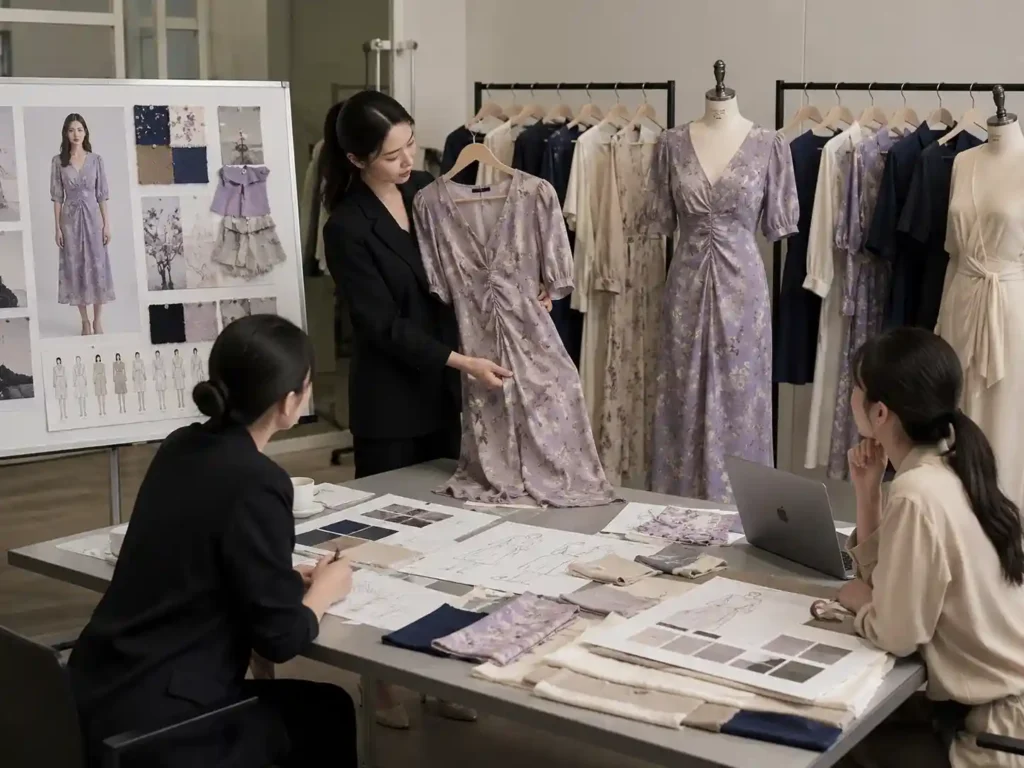
High-detail editorial image of a women’s dress development meeting. A pattern maker marks a paper pattern while a fit technician measures a dress on a mannequin and a merchandiser reviews a tech pack, fabric swatches, size chart, and sample revision notes. Modern sample room, authentic tools, neutral natural light, horizontal 16:9, premium fashion manufacturing documentary style, no visible logos or tex
Strong product development converts a creative idea into measurable, repeatable production instructions. Evaluate how the manufacturer reviews technical files, develops patterns, corrects fit, selects materials, controls sample versions, and approves the final production standard before bulk fabric is purchased or cut.
What Files Are Needed Before Sampling?
A custom dress can be developed from a tech pack, sketch, reference image, line sheet, original sample, or a combination of these materials. However, the accuracy of the first sample depends heavily on the information supplied. A reference image communicates appearance, but rarely reveals internal construction, exact fabric, seam allowance, lining, measurements, or support.
A controlled development package normally includes:
- Front, back, and detail drawings.
- Base-size measurements and points of measurement.
- Grade rules when available.
- Fabric composition, weight, stretch, and color direction.
- Lining requirements and bill of materials.
- Zipper, cup, boning, button, elastic, and trim details.
- Label, barcode, packaging, and carton instructions.
- Target market, expected fit, planned quantity, and launch date.
A tech pack reduces ambiguity, but it should still be reviewed rather than accepted without question. Common contradictions include a zipper that is too short for the opening, a waist measurement that conflicts with the drawing, a lining with less stretch than the shell, or a requested fabric that cannot create the illustrated structure.
Pay attention to the questions the supplier asks. Detailed questions about fit intent, support, opacity, movement, target cost, and end use usually indicate that the team is thinking about the finished product rather than only producing a visual copy.
How Are Patterns, Fit, and Grading Managed?
Pattern making determines whether a dress works on the body, not merely on a hanger. A sample may resemble the sketch and still fail because the neckline opens, the waist sits too high, the side seam moves forward, the armhole cuts into the wearer, or the back hem rises.
Ask which size is used as the development base and why. The base size should reflect the brand’s customer and grading system, not simply the factory’s default block. The team should also understand the intended fit: close, body-skimming, relaxed, supportive, or oversized.
Important pattern considerations include:
- Bust shaping, cup position, and neckline stability.
- Waist position, torso length, and hip ease.
- Shoulder angle, armhole shape, and strap placement.
- Skirt balance, slit height, hem sweep, and lining length.
- Stretch percentage, recovery, and negative ease.
- Grade rules for critical fit and design details.
A fabric with 25% crosswise stretch and strong recovery may need different finished measurements from a visually similar fabric with 40% stretch and weak recovery. Negative ease must therefore be based on the approved material, not a general knitwear rule.
Grading also requires judgment. Adding the same amount at every seam can distort the silhouette. Cup position, strap width, neckline depth, slit height, and decorative placement may need controlled adjustment across sizes. Pattern versions, measurement charts, and revision records should be updated together so production and QC do not work from conflicting information.
Are Fit, PP, and Golden Samples Required?
Sample names are often used loosely, but each stage should answer a specific question. Not every project needs every sample type, yet the brand must know which decisions remain open before production.
| Sample Type | Main Purpose | Typical Decisions | Common Planning Range* |
| First sample | Tests the initial design interpretation | Silhouette, construction, fabric direction, obvious fit issues | 7-15 business days |
| Fit sample | Reviews on-body performance | Bust, waist, hip, balance, comfort, support, length | 5-10 business days |
| Revised sample | Confirms corrections | Pattern, measurements, construction, material updates | 5-10 business days |
| Photo sample | Supports photography or presentation | Visual finish, color, camera appearance | Depends on materials |
| Size set | Checks grading in selected sizes | Proportion, critical measurements, placements | 5-10 business days |
| PP sample | Confirms the production-ready standard | Bulk fabric, trims, labels, construction, measurements, packaging | 5-10 business days |
| Golden sample | Provides a physical bulk reference | Final workmanship and appearance comparison | Approved before or at production start |
*Planning ranges vary with material sourcing, construction complexity, revision volume, and seasonal workload.
A first sample is not automatically the bulk standard. It may use substitute fabric, temporary trims, unfinished labels, or an early pattern. A photo sample may be visually polished but still differ from the final production specification. The PP sample should represent the agreed bulk material, trims, measurements, workmanship, labels, and construction as closely as possible.
The golden sample should be clearly identified and protected from alteration. Ideally, the brand and manufacturer each retain an approved reference supported by signed specifications and dated files. The purpose is not to create more samples; it is to close important decisions before bulk risk expands.
How Are Revisions Controlled?
Sample development becomes slow and expensive when comments are vague, scattered across messages, or applied to the garment without updating the technical documents. A useful revision record identifies the style number, sample version, date, comment location, current measurement, requested measurement, pattern change, construction change, material change, responsible person, and approval status.
Comments such as “make the waist better” or “improve the bust” are difficult to execute consistently. More useful instructions describe the change: reduce the finished waist by 2 cm, raise the neckline by 1.5 cm, move the strap inward by 1 cm, or add stabilization at the side bust.
Use annotated photos for visual issues and a measurement table for dimensional changes. Separate confirmed changes from open questions. Avoid sending a second comment list while the first revision is already being made unless the factory confirms how the new information will be managed.
The supplier should also explain how revisions affect cost and timing. Adding lining, replacing a zipper, changing fabric, revising cups, or altering the pattern after PP approval may affect materials already purchased and work already completed. Controlled revision does not reduce communication; it makes every conversation usable by the next department.
Which Fabric and Fit Controls Matter?
Premium editorial flat-lay and factory inspection scene showing satin, stretch jersey, mesh, lace, chiffon, and sequin swatches beside a digital scale, measuring tape, stretch ruler, color standard, zipper, lining, and dress fit notes. Include a fitted dress on a mannequin in the background, precise textile detail, clean studio-factory lighting, horizontal 16:9, no logos or text overlay.
Fabric and fit must be approved together because material behavior directly affects measurements, support, drape, comfort, and appearance. Buyers should verify composition, weight, stretch, recovery, opacity, shrinkage, color, lining, trims, measurement methods, and size grading before bulk production.
How Are Fabrics and Trims Approved?
A commercial fabric name is not a complete specification. Two suppliers may both offer “stretch satin,” yet the materials can differ in weight, shine, stretch direction, recovery, snag resistance, drape, opacity, width, and price. Approval should therefore cover measurable and visual characteristics.
A fabric approval should normally record:
- Fiber composition, finished width, and weight in grams per square meter.
- Stretch direction, stretch percentage, and recovery.
- Hand feel, drape, surface shine, texture, and opacity.
- Color, dye lot, shrinkage risk, and care method.
- Wrinkle behavior, pilling, snagging, and seam-performance risk.
- Compatibility with lining, interfacing, cups, boning, and trims.
Whenever possible, approve a physical swatch or a production-quality cutting. Screen colors and small supplier photos are not reliable for subtle shades, shine, texture, or transparency.
Trims deserve equal attention. A zipper affects the appearance of a fitted seam. A lining can restrict stretch. Boning can be too rigid or too soft. Cups can change bust shape. Elastics can lose recovery. Metal hardware can add weight or cause discoloration. The approval record should connect each item to a style, color, supplier code, and sample version.
A strong manufacturer should suggest alternatives when the original material creates problems. The alternative should be compared by performance as well as price. A cheaper satin that wrinkles, snags, or loses shape can create more returns than it saves in production cost.
Which Tests Reduce Material Risk?
Testing should be selected by risk, not added as a generic checklist. A lightweight chiffon dress and a high-stretch jersey bodycon style do not need identical priorities. The following figures are common commercial references rather than universal pass standards; final limits should reflect the product, retailer, care label, and target market.
| Risk Area | Useful Test or Check | Practical Commercial Reference |
| Dimensional change | Wash or care-cycle shrinkage test | Stable fabrics are often targeted around 3% or less, but fabric type may require a different limit. |
| Color transfer | Dry and wet crocking | Grade 4 is often preferred for dry rubbing; wet results may be lower depending on color and material. |
| Color durability | Wash or perspiration colorfastness | Grade 4 or above is a common target for many retail programs. |
| Pilling | Abrasion or pilling test | Grade 3-4 or above is commonly requested, depending on product positioning. |
| Stretch recovery | Extend, release, rest, and remeasure | Compare immediate recovery and recovery after about 30 minutes. |
| Fabric weight | GSM verification | Many programs define a purchase tolerance around +/-5%, subject to fabric type. |
| Seam stability | Seam slippage or seam opening check | Prioritize close-fitting woven dresses and delicate fabrics. |
| Embellishment | Pull, rub, or wear check | Define the method by bead, sequin, rhinestone, or attachment type. |
| Opacity | Visual review under strong light | Check the shell and lining together in the intended construction. |
Testing must happen early enough to influence decisions. Finding high shrinkage after every garment is packed does not protect the order. High-risk materials should be checked before cutting, and material changes should trigger a new review.
The response to failure is as important as the test. The supplier should define whether the material will be rejected, replaced, reprocessed, retested, or used only with written approval. A test report without a decision process does not reduce commercial risk.
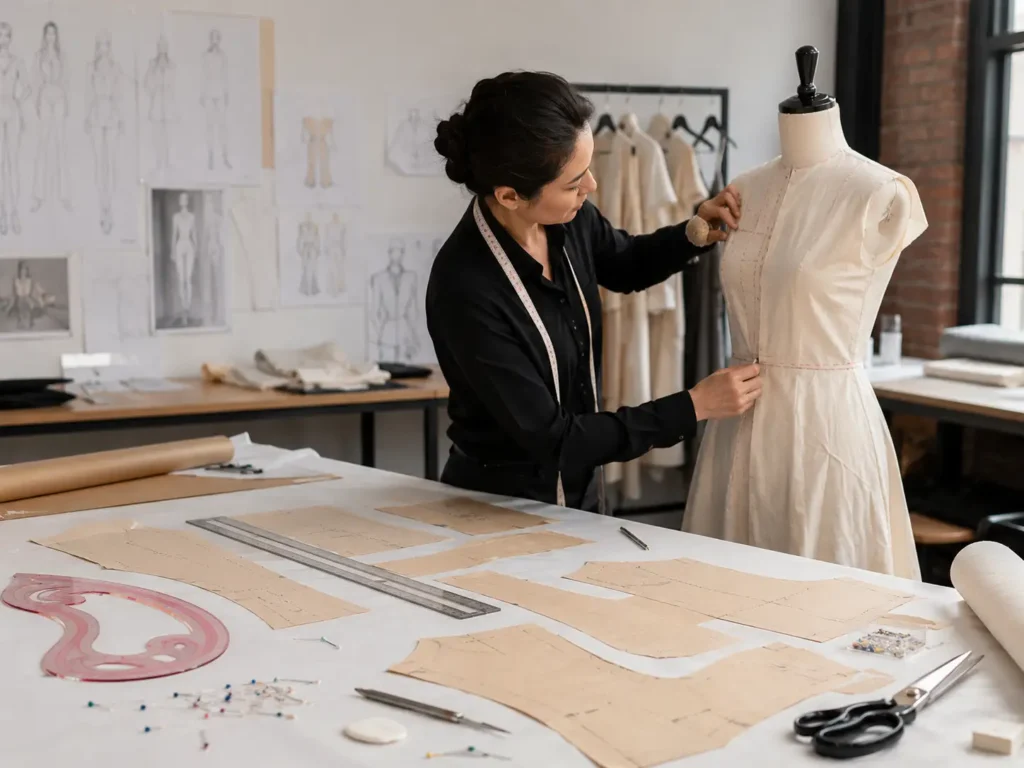
How Are Measurements and Tolerances Set?
A size chart must explain where and how the garment is measured. “Bust,” “waist,” and “length” sound simple until different people measure them in different ways. Each point of measurement should state the garment position, starting and ending points, straight or curved method, relaxed or stretched condition, closed or open zipper, and whether the figure is a half measurement or full circumference.
A bodycon garment should rest before final measurement because sewing can temporarily stretch the fabric. A bias-cut dress may need hanging time before length is assessed. A gathered waist should be measured with the elastic or drawstring in a defined condition. An asymmetric neckline may require a diagram rather than words alone.
Tolerance should reflect fit sensitivity. A small variation at the bust or waist may matter more than the same variation at the hem sweep. Strap length, cup position, neckline depth, slit height, and total dress length often need close control because they affect comfort, exposure, or balance.
Measurement compliance is not the same as acceptable fit. A garment may fall within tolerance and still hang poorly because the fabric changed, the side seam twisted, or the pattern balance was disturbed. Fit review, measurements, and material approval must support one another.
How Does Fit Change Across Sizes?
Grading is not simply increasing every dimension by a fixed amount. The body changes proportionally, and the design must remain visually balanced across the size range. For close-fitting, structured, or high-risk dresses, review at least one smaller and one larger graded size in addition to the base size.
Areas that commonly need size-specific attention include:
- Cup position, bust depth, and neckline coverage.
- Armhole shape, shoulder width, and strap placement.
- Waist position, hip curve, and torso length.
- Slit height, pocket position, and hem proportion.
- Ruching length, cut-out dimensions, and decorative placement.
A neckline that is secure in the base size may become too wide in a larger size. A fixed cup may not provide suitable coverage across the full range. A slit graded only from the hem may become too high relative to the wearer’s body. Decorative details may appear crowded or widely separated after proportional changes.
Size-set approval is especially useful for bodycon, corset, strapless, cut-out, and fitted occasion dresses. Any size-specific correction should be recorded in the pattern and grading file, not applied informally on the sewing line.
How Is Bulk Quality Controlled?
Documentary-style image of a quality control team inspecting custom dresses across a factory production line. Show fabric inspection, cutting bundles, in-line seam checks, garment measurement, zipper inspection, pressing, barcode verification, and packed cartons. Authentic women’s fashion manufacturing environment, clear workflow, natural industrial lighting, horizontal 16:9, premium and realistic, no logos or text.
Bulk quality should be managed through planned checkpoints from incoming fabric to packed cartons. A reliable system verifies materials, cutting, sewing, measurements, appearance, function, pressing, labels, packaging, and final shipment readiness while production is still active.
What QC Checks Cover Each Stage?
Quality control begins before the first seam is sewn. Incoming fabric should be compared with the approved standard for color, hand feel, width, weight, stretch, surface defects, and shade variation. Trims should be checked for size, color, function, and quantity. Early controls prevent incorrect materials from becoming finished garments.
| Production Stage | Main Checks | Useful Record |
| Incoming materials | Fabric color, width, weight, stretch, surface defects, trims | Material inspection report and shade record |
| Fabric preparation | Relaxation, shrinkage, grain, nap, and print direction | Relaxation and spreading record |
| Cutting | Pattern version, marker, panel direction, notches, and size bundles | Cutting checklist and first-panel approval |
| Sewing start | First pieces, seam type, stitch quality, and construction sequence | First-piece or pilot approval |
| In-line production | Critical measurements, workmanship, and repeated defects | In-line QC report by operation |
| Finishing | Pressing, shape, stains, threads, and embellishment | Finished-garment inspection |
| Packing | Labels, barcode, size sticker, polybag, and carton ratio | Packing checklist and carton audit |
| Final inspection | Quantity, workmanship, measurements, and packaging | Final report or agreed AQL inspection |
Early inspection is more effective than final sorting. If the first 20 pieces show the same zipper ripple, stopping and correcting the method is better than repairing several hundred completed dresses.
The manufacturer should assign responsibility at each stage. Operators should not be the only people judging their own work. Production supervisors, in-line inspectors, final QC, and packing teams should work from the same approved standard.
A complete bulk process may include PP approval, material confirmation, fabric inspection, relaxation, cutting checks, pilot pieces, in-line inspection, pressing review, garment inspection, packing inspection, final sampling, client or third-party inspection, and shipment documentation.
How Is Sample-to-Bulk Consistency Verified?
The approved sample must be converted into a controlled production package. Simply placing it in the sewing room with a note saying “follow this sample” leaves too much room for interpretation.
The final package should contain:
- Approved pattern version, tech pack, size chart, and grade rules.
- Approved bulk fabric, color, lining, and bill of materials.
- Trim specifications, seam and stitch requirements, and construction notes.
- Label placement, barcode, packaging, and carton instructions.
- PP or golden sample and the final QC checklist.
A pre-production meeting is valuable for complex or multi-style orders. Merchandising, pattern, cutting, sewing, QC, finishing, and packing teams can review the same requirements before the line begins.
Bulk fabric must also be compared with sample material. A new dye lot may have different stretch, weight, shine, or drape. Even when the pattern is unchanged, these differences can alter measurements and appearance. The first production pieces should be reviewed before the line reaches full speed, with special attention to bust fit, zipper flatness, lining, ruching, hem balance, label placement, and packed presentation.
Consistency does not mean every garment will be mathematically identical. It means that normal variation remains inside the approved measurement, workmanship, appearance, material, and packing standards.
How Are Defects and Rework Managed?
Every production system encounters defects. The important question is whether the manufacturer identifies patterns, contains affected goods, corrects the cause, and prevents recurrence. Defects should be separated into material issues, shade variation, cutting errors, measurement deviation, sewing defects, fit problems, trim failure, pressing damage, stains, labeling errors, and packing mistakes.
Suppose a fitted satin dress shows rippling beside the zipper. The root cause may be fabric instability, zipper tape, seam tension, pressing temperature, operator handling, or incorrect pattern length. Removing and reinserting the zipper without addressing the cause may damage the fabric and still fail to solve the problem.
A corrective-action record should show:
- Defect type and affected quantity.
- Production line, operation, and root cause.
- Immediate correction and rework method.
- Reinspection result and preventive action.
- Final disposition: repaired, replaced, allowed, or rejected.
Rework must be evaluated by fabric type. Satin may retain needle holes, mesh can distort after unpicking, lace motifs may be damaged, and sequins may detach. A repaired garment should be reinspected for both the original issue and repair-related damage. Repair, replacement, allowance, rejection, and shipment-release responsibilities should be agreed before bulk production.
What Should Final Inspection Confirm?
Final inspection should confirm that the order is correct, complete, commercially usable, and packed according to the agreed delivery requirements. It should cover workmanship, measurements, shade, fabric defects, garment function, zippers, buttons, hooks, straps, embellishments, labels, size identification, barcodes, packing, carton assortment, carton marks, quantity, and documentation.
AQL sampling may be used when agreed, but it is not the same as inspecting every garment. The contract should identify the inspection level, defect categories, and acceptance limits. A frequently used commercial reference is AQL 2.5 for major defects and 4.0 for minor defects, although the appropriate standard depends on the product, customer, and risk level.
High-risk details may require additional checks outside a general AQL sample. A brand may request broader verification of barcodes, critical measurements, embellishment security, metal detection, or a specific dress feature.
Final inspection should occur when the goods are fully finished and mostly packed, while enough time remains for corrective action. Inspecting too early can miss packing errors; inspecting too late leaves little room to solve problems before shipment.
Are Capacity, Costs, and Lead Times Clear?
Professional sourcing meeting in a custom dress factory. A production planner, merchandiser, and buyer review a cost sheet, fabric lead-time calendar, multi-style production board, size-color matrix, packaging samples, and dress collection rack. Authentic business environment, subtle factory background, realistic documents without readable confidential text, horizontal 16:9, natural lighting, no logos.
A dependable supplier should explain MOQ, price construction, material commitments, available production capacity, sample timing, bulk scheduling, and delivery dependencies in clear terms. Quotations and timelines must be based on the actual dress, fabrics, trims, colors, sizes, packaging, testing, and order volume.
What Do MOQ and Pricing Include?
MOQ is rarely a single factory-wide figure. The sewing factory, fabric mill, dye house, print supplier, lace maker, zipper supplier, and packaging vendor may each have separate minimums. Clarify whether the requirement applies by style, color, fabric, print, trim, label, packaging item, or total purchase order.
For Jinfeng Apparel, the standard starting MOQ is 200 pieces per style and color, subject to fabric availability, custom color development, trims, construction complexity, packaging, and production scheduling. Special weaving, dyeing, printing, lace, embellishment, hardware, or custom packaging may create higher supplier minimums.
A professional quotation should state whether it includes:
- Pattern development and sampling.
- Shell fabric, lining, interfacing, and trims.
- Cutting, sewing, embellishment, pressing, and quality control.
- Labels, barcodes, polybags, cartons, and packing labor.
- Testing, inspection, freight, duties, taxes, and payment-related charges.
Do not compare quotations until specifications are aligned. One supplier may quote unlined construction, stock fabric, generic packing, and basic inspection, while another includes custom color, lining, private labels, and tighter controls.
Cost optimization is still possible. Useful options may include a different fabric width, alternative lining, simplified internal construction, consolidated colors, more efficient trim selection, or improved marker utilization. The goal is to remove cost that the customer cannot see or value – not to remove the support, workmanship, or stability that makes the dress sellable.
How Are Capacity and Lead Times Verified?
Do not rely only on a factory’s total monthly output. Capacity must be matched to the product. A factory producing large volumes of basic knit garments may have limited weekly capacity for structured satin occasionwear, corsetry, or hand embellishment.
Ask the supplier to build the schedule from the actual project:
- Technical review, fabric sourcing, color approval, and trim development.
- Pattern making, first sample, fit revision, and PP approval.
- Bulk material preparation, inspection, relaxation, and cutting.
- Sewing, finishing, final inspection, packing, and shipment booking.
For many custom dress projects, a first sample may require about 7-15 business days after specifications and materials are available. Complex corsetry, custom lace, hand embellishment, special dyeing, or multiple revisions may take longer. Bulk production usually requires several weeks after all materials and approvals are ready, but a reliable date must be based on line availability and product complexity rather than a generic promise.
Questions that expose real capacity include:
- Which production unit will make the order?
- Which operations are likely to become bottlenecks?
- Can several styles run at the same time?
- When must PP approval be received to protect delivery?
- Are inspection, packing, and shipment booking included?
- How is peak-season loading or delayed fabric handled?
A supplier that promises an unusually fast delivery before reviewing these details is not necessarily more efficient. It may simply be postponing the difficult conversation.
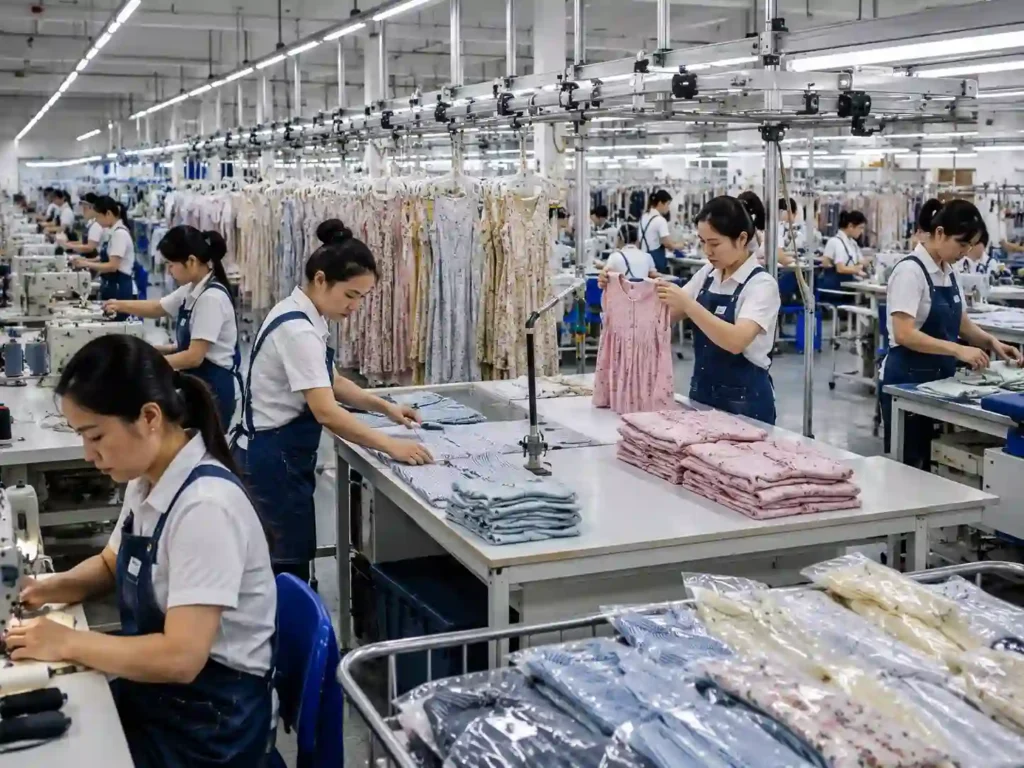
Can the Factory Manage Multi-Style Orders?
A collection containing 15 styles, four colors, and six sizes can create hundreds of style-color-size combinations. Each combination needs the correct fabric, trims, measurements, labels, barcodes, polybags, and carton allocation.
The manufacturer should manage:
- Style and SKU codes.
- Sample and PP approval status.
- Fabric, color, trim, and material arrival status.
- Production allocation and size ratios.
- Barcode, label, packaging, and carton files.
- Inspection status, split shipments, and repeat-order records.
Version control becomes especially important because first samples, revisions, photo samples, and PP samples may exist at the same time. The team should be able to show which file and pattern version is approved for every style.
Shared materials also require planning. Several dresses may use the same lining, zipper, or label while their shell fabrics differ. Combining purchases can improve efficiency, but incorrect allocation can leave one style short of material.
Multi-factory production requires central control. The primary supplier should remain responsible for technical files, quality standards, progress reporting, inspection, packaging, and final delivery. A live status document should make it possible to see what is approved, delayed, in production, under inspection, or ready to ship.
Which Questions Expose Hidden Risk?
A few direct questions can reveal whether a quotation and schedule are realistic. Ask whether the price is based on the proposed or approved fabric, whether lining and visible trims are included, whether custom color, labels, packaging, and testing are included, and whether MOQ applies by style and color.
Also ask which factory will produce the order, whether the line is reserved, what approvals are required before bulk, what could change the price, what could delay delivery, who is responsible for failed materials, and whether final inspection is included in the schedule.
Record important answers in writing. Verbal assumptions about fabrics, packaging, testing, freight, or delivery terms often become expensive later. The safest quotation is not always the longest document; it is the one that clearly connects price to an agreed specification and identifies the variables that remain open.
Healthy supplier communication includes uncertainty. A manufacturer should be able to say that a cost is provisional until a fabric is approved or that a delivery date depends on PP confirmation. A quotation that pretends every variable is already fixed may hide more risk than it removes.
What Proves Long-Term Reliability?
Editorial documentary image of an established women’s fashion manufacturing operation. Show a factory manager, pattern team, QC lead, and merchandiser reviewing approved samples, archived patterns, production records, NDA-protected design files, packed private-label dresses, and repeat-order planning. Clean organized environment, authentic evidence-based mood, horizontal 16:9, natural lighting, no logos or text overlay.
Long-term reliability is proven through verifiable production structure, clear responsibility, protected client information, documented quality and delivery systems, realistic compliance claims, and retained production records. A dependable manufacturer should reproduce an approved dress months later without rebuilding every decision from memory.
Is the Factory Structure Verifiable?
A professional website does not prove who develops patterns, makes samples, sources materials, manages production, inspects garments, or handles packing. The supplier should be able to explain who performs each part of the project and how responsibilities move between departments and production sites.
Useful verification can include:
- A live factory or sample-room video.
- Discussion with pattern, merchandising, and QC personnel.
- Current work-in-progress and inside-construction examples.
- Anonymized technical files, inspection forms, and production records.
- Clear explanation of owned-factory and partner-factory responsibilities.
Jinfeng Apparel has operated in women’s fashion manufacturing since 2008. Its documented production system includes six owned women’s fashion factories and more than ten long-term satellite production partners. The structure is designed to support custom dress development, sampling, bulk production, quality control, private-label packing, repeat orders, and multi-batch delivery.
Factory size alone does not prove suitability. A smaller specialized unit may perform better on a complex style than a large general factory. The buyer should understand how patterns are approved, files are updated, materials are followed, inspections are reported, and partner factories are controlled. Responsibility should remain clear at every handover.
Do NDA and Design Protection Apply?
Confidentiality matters before a dress reaches the market. Tech packs, patterns, original samples, custom prints, trim concepts, labels, packaging, quantities, target prices, and launch dates can reveal commercial strategy.
An NDA and operating process should cover:
- Technical files, patterns, samples, and unreleased designs.
- Fabric developments, colors, prints, embroidery, and trim concepts.
- Labels, packaging, prices, quantities, launch plans, and customer information.
- Access control for employees and partner factories.
- Photography, portfolio use, storage, return, and disposal of samples.
A signed document is useful, but internal behavior matters as much as the wording. Ask who can access files, how physical samples are stored, whether partner factories are covered, and whether photographs may be taken on the production floor.
Jinfeng Apparel supports NDA-based cooperation and protection for client tech packs, original samples, patterns, size charts, fabric and trim solutions, private-label information, packaging files, unpublished designs, and order details. Client names or confidential project information should not be published without authorization.
Ownership should also be clarified. Confidentiality prevents disclosure; ownership determines who may use newly developed patterns, artwork, molds, print screens, embroidery files, and other paid development assets.
Are Compliance and Delivery Capabilities Documented?
Compliance should be verified for the actual legal entity, factory, product, material, market, and validity period. A certificate displayed online may belong to another facility, cover a limited scope, or have expired.
When documentation is required, check:
- Issuing organization, named company, and factory address.
- Report number, issue date, expiry date, and scope.
- Applicable product, material, market, and production site.
- Whether a test or audit must be arranged specifically for the project.
A responsible supplier should not claim to hold every certification unless it can provide current evidence. It is more trustworthy to explain that a particular test or audit must be arranged than to give a vague universal assurance.
Delivery capability also extends beyond sewing and packing. International orders may require commercial invoices, packing lists, carton marks, country-of-origin details, barcode or warehouse labels, forwarder coordination, shipment booking, customs-related documents, and tracking information.
Confirm the agreed Incoterm and delivery point. EXW, FOB, CIF, and DDP create different responsibilities and costs. Packing accuracy is part of delivery quality: a well-made dress with the wrong SKU label, barcode, or carton ratio may be unusable at the destination warehouse.
Can the Manufacturer Support Repeat Orders?
Repeat orders show whether the manufacturer has a real production system or depends on individual memory. A reliable supplier retains the approved pattern, measurement chart, grade rules, fabric reference, color standard, trim specifications, construction notes, label files, packaging requirements, carton ratio, QC standard, and inspection history.
These records shorten preparation time and help prevent differences between seasons. They also allow the team to use lessons from the previous production. If a certain operation created repeated defects, the next plan should include stronger controls there.
A repeat order should still be reconfirmed. Fabric availability may change, dye lots may differ, trims may be updated, regulations may change, and the brand may revise fit or packaging. The supplier should identify which details remain unchanged and which require new approval.
Long-term reliability becomes visible when the supplier can manage:
- Replenishment and urgent repeat orders.
- Seasonal collections and new color additions.
- Fabric replacement and updated labels or packaging.
- Expanded size ranges and multi-batch production.
- Split shipments and increased order volume.
Jinfeng Apparel retains pattern, measurement, fabric, color, trim, workmanship, packing, and historical-order records to support repeat orders, replenishment, seasonal collections, and multi-batch production. Warning signs include lost patterns, undocumented substitutions, inconsistent answers, missing PP standards, and repeated claims that the previous order cannot be reproduced.
A Practical Final Decision
Selecting a custom dress manufacturer is ultimately an exercise in risk control. Relevant category experience reduces design risk. Structured sampling reduces interpretation risk. Fabric approval reduces material risk. Pattern, grading, and measurement controls reduce fit risk. In-line quality checks reduce bulk risk. Transparent costing reduces commercial surprises. NDA protection, production records, and repeat-order systems reduce long-term supply risk.
The safest supplier is rarely the one that says yes fastest or quotes the lowest headline price. It is the one that can explain what is possible, what needs to change, what remains uncertain, which evidence is required, and how approved standards will be carried from development into production.
Jinfeng Apparel is a Guangdong-based custom women’s fashion manufacturer supporting global fashion brands and mid-to-large apparel clients with OEM, ODM, private-label production, pattern development, fabric and trim sourcing, sampling, bulk manufacturing, quality control, branded packaging, and export-delivery coordination. Its dress capabilities include party, occasion, evening, bodycon, corset, satin, mesh, lace, sequin, mini, midi, maxi, resort, and related women’s fashion collections.
For a project review and quotation, share your tech pack, reference images, original sample, size chart, fabric direction, planned quantity, target market, packaging requirements, and expected delivery schedule. The team can assess material options, development risks, MOQ conditions, sample requirements, production feasibility, and the information needed for an accurate quotation.