Skip to content

A skirt may look simple on a product page, but producing one consistently across several colors, sizes, and thousands of units is rarely simple. A waistband that sits 1 cm too low can change the entire silhouette. A fabric with slightly different stretch can distort the hip measurement. An invisible zipper inserted with uneven tension can create rippling that becomes obvious in studio photography. For fashion brands, successful skirt manufacturing depends less on copying a visual reference and more on controlling dozens of connected technical decisions.
Custom skirts are manufactured by converting a design, tech pack, reference garment, or concept into an approved pattern and sample. After fabric and trims are confirmed, the factory grades the pattern, prepares cutting markers, cuts the material, assembles the garment, checks measurements and workmanship, finishes the skirt, applies private labels, packs each SKU, and completes final inspection before shipment.
The real work happens between those visible stages. Pattern corrections must be recorded, fabric behavior must be tested, pleats must be repeatable, waistbands must remain stable, and the approved sample must become a practical production standard. One attractive prototype is not enough. The factory must recreate its fit and appearance across the full size range and every production batch. That is where a sketch becomes a product – and where a seemingly minor skirt can reveal whether a manufacturing partner truly understands women’s fashion.
What Is Custom Skirt Manufacturing?
Custom skirt manufacturing is the process of turning a brand’s design, measurements, fabric direction, construction details, labels, and packaging requirements into an approved sample and repeatable bulk product. It includes technical development, pattern making, material sourcing, fit correction, size grading, cutting, sewing, inspection, finishing, private labeling, packing, and delivery.
Which Skirt Types Can Be Customized?
Almost every commercial skirt category can be customized, but different silhouettes require different development methods. A fitted mini skirt is mainly controlled through waist-to-hip shaping, stretch recovery, zipper installation, and finished length. A pleated midi skirt depends more heavily on pleat depth, spacing, fabric stability, and pressing. A flowing maxi skirt requires careful grain control, drape evaluation, lining balance, and hem leveling.
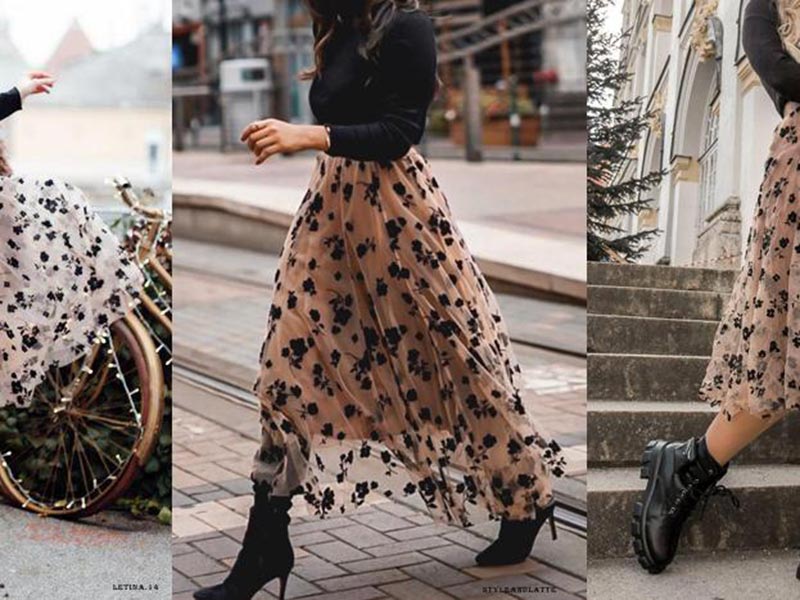
Common custom categories include mini, midi, maxi, pencil, A-line, skater, pleated, wrap, tiered, cargo, asymmetric, bodycon, denim, satin, lace, mesh, and sequin skirts. Skirts developed for matching sets also need to coordinate with the corresponding top in fabric lot, color, proportion, trim selection, and brand presentation.
Customization goes beyond changing color or adding a logo. A brand may specify waistband height, rise position, hip ease, skirt length, slit placement, pocket structure, pleat direction, lining coverage, closure type, hem finish, labels, barcodes, folding method, and carton assortment.
The technical difficulty is not always obvious from the product image. A clean satin slip skirt may contain fewer visible seams than a cargo skirt, yet it can be harder to manufacture because satin highlights puckering, grain distortion, needle marks, pressing shine, and uneven hems. The most successful development decisions begin with the intended fit and customer experience rather than visual appearance alone.
How Is Custom Production Different From Ready Stock?
Ready-stock purchasing starts with an existing garment. The buyer usually selects from available styles, fabrics, colors, and sizes, with limited control over pattern, construction, fit, or material quality. Custom production starts with the brand’s own product requirements and creates a skirt specifically for that collection.
A custom project may begin with a complete tech pack, a physical sample, a sketch, a line sheet, reference photographs, a measurement chart, or a combination of these materials. The factory must interpret the design, identify missing information, assess construction feasibility, source suitable fabrics and trims, create a pattern, produce a sample, and make corrections before bulk production.
This greater control also creates more decisions. A brand must approve the fit, fabric, color, trims, labels, packaging, measurements, and construction standard. When one element changes, other parts of the product may also need review. Replacing a stable woven fabric with a stretch fabric can change waist ease, hip shaping, seam behavior, zipper performance, and grading rules.
Custom manufacturing is most valuable when a brand needs a distinct fit, specific market positioning, consistent seasonal development, private-label presentation, or reliable repeat production. It is less suitable when the only objective is to purchase an existing low-cost style as quickly as possible.
What Makes Skirt Construction Technical?
A skirt may contain fewer components than a dress or jacket, but small errors are often more visible. The waistband creates a strong horizontal reference around the body. If it is uneven, stretched, twisted, or positioned incorrectly, the entire garment looks unbalanced.
The main technical control points usually include waist circumference, high hip, full hip, waist-to-hip depth, center-front length, center-back length, sweep, slit height, waistband width, zipper position, lining length, and finished hem level. Fitted skirts also need sufficient movement for walking and sitting, while loose skirts must distribute volume without adding unnecessary bulk at the waist.
- Whether the skirt is high-rise, mid-rise, or low-rise
- How much ease is allowed at the waist and hip
- Whether the fabric requires positive or negative ease
- How the front and back lengths balance on the body
- Whether the waistband needs interfacing, elastic, stay tape, or facing
- How the lining behaves during movement
- Whether the slit remains secure when sitting or walking
- How pleats, gathers, darts, or panel seams shape the silhouette
Critical measurements often need tighter control than decorative details. Many production teams work with garment-specific tolerances such as approximately +/-0.5 cm at important waist points and around +/-1.0 cm for longer length measurements, but the exact tolerance should always be agreed in the approved specification.
Which Details Affect Commercial Performance?
Manufacturing decisions influence more than appearance. They affect return rates, customer reviews, photography quality, comfort, durability, packing efficiency, and reorder stability.
A waistband that looks clean on a hanger may still roll during wear. A skirt that fits the sample model may become too tight in larger sizes if the grading rules are not reviewed. A decorative slit may appear correct while standing but open excessively when sitting. A lining may provide enough opacity indoors but become transparent under bright daylight or studio lighting.
For ecommerce brands, product photography exposes construction problems quickly. Uneven hems, zipper rippling, twisted side seams, inconsistent pleats, and puckered satin become obvious in high-resolution images. For retail brands, hanger presentation and pressing quality also influence the customer’s first impression.
The strongest skirt products balance five areas at the same time: silhouette, comfort, material behavior, production repeatability, and target cost. Protecting only the visual concept can create a garment that is difficult to manufacture. Protecting only production efficiency can remove the details that make the style commercially attractive.
What Does a Factory Need Before Sampling?
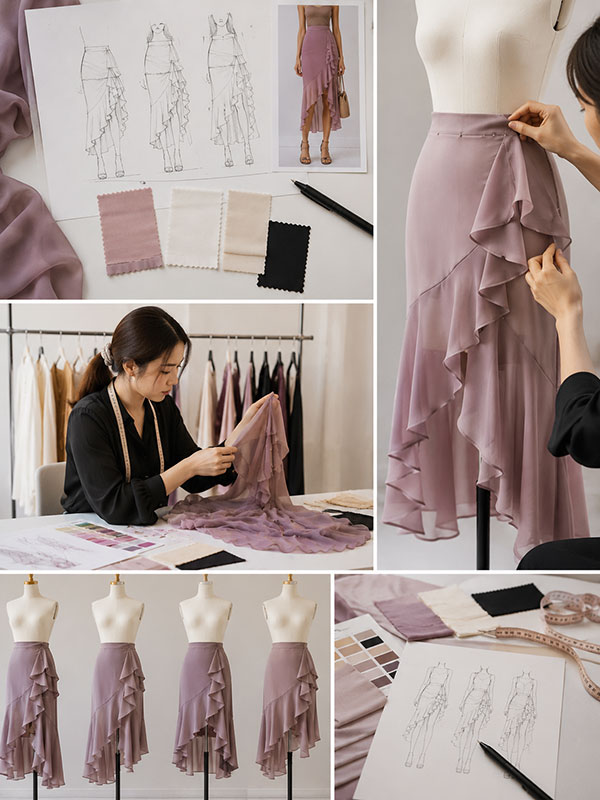
Before sampling, a factory needs enough information to define the skirt’s appearance, fit, materials, construction, quantity, and commercial requirements. A strong starting package includes design views, measurements, fabric direction, trim details, size range, order estimate, target market, labeling requirements, packaging instructions, and the expected launch or delivery schedule.
Which Design Files Should Brands Provide?
The most efficient development process starts with clear visual and technical information. A complete tech pack is useful, but it is not the only way to begin. Factories can also work from an original garment, detailed sketch, line sheet, reference image, mood board, fabric swatch, or measurement chart.
The information should answer several practical questions:
- What should the skirt look like from the front, back, and side?
- Where should the waist sit on the body?
- How should the skirt fit through the hip?
- What should the finished length be?
- Which fabric qualities are essential?
- Which construction details are functional rather than decorative?
- Which sizes and colors are planned?
- How will the product be labeled and packed?
Reference images should be supported by written notes. A photograph cannot confirm fabric composition, lining, seam allowances, zipper length, pocket depth, inner finishing, waistband construction, or exact measurements. When information is incomplete, the factory should record assumptions before making the sample. Unrecorded assumptions often become disputes later because the brand and factory may believe they approved different products.
| Development Item | Practical Information to Provide | Common Risk When Missing |
| Design views | Front, back, side and close-up details | Hidden construction is interpreted incorrectly |
| Measurement chart | Waist, hip, length, sweep, slit and waistband | Fit cannot be measured objectively |
| Fabric direction | Composition, weight, stretch, drape and color | Sample silhouette differs from the concept |
| Trim details | Zipper, buttons, hook, elastic and lining | Cost and lead time change later |
| Construction notes | Pleats, darts, gathers, pockets and seams | Operators follow inconsistent methods |
| Size range | Base size and planned graded sizes | Grading cannot be evaluated early |
| Quantity plan | Units by style, color and size | Material and production planning remain inaccurate |
| Branding files | Labels, hangtags, barcode and polybag | Packing errors delay shipment |
How Are Skirt Specifications Defined?
Specifications convert the design into measurable production instructions. A useful specification includes both dimensions and construction details.
For a fitted skirt, the measurement chart may include waist circumference, high hip, full hip, waist-to-hip depth, center-front length, center-back length, bottom opening, slit height, waistband width, zipper length, and lining length. For a pleated skirt, it may also include pleat count, pleat depth, finished pleat width, pleat direction, and spacing.
The specification should also identify the measurement method. A waist measurement taken along the top edge can differ from one measured along the waistband seam. A curved waistband can produce different results depending on whether it is measured flat, relaxed, or along the curve.
Descriptions should be precise. ‘Make the waist fitted’ is subjective. ‘Finished waist measures 72 cm with a tolerance of +/-0.5 cm’ is measurable. ‘Make the skirt flowy’ is vague. ‘Use a lightweight woven fabric with soft drape and full lining to 5 cm above the outer hem’ gives the development team clearer direction.
The final approved measurement chart must match the approved sample. If a comment changes the sample but the chart is not updated, the cutting and quality teams may follow outdated data.
How Is Production Feasibility Reviewed?
A feasibility review determines whether the proposed design can be produced reliably at the intended quantity, price level, and delivery schedule. It should happen before the factory commits to final costing or production dates.
The review normally covers fabric availability, supplier minimums, custom color requirements, printing, trims, sewing complexity, size range, packaging, quality standards, and production capacity. It also considers whether the design can be manufactured consistently across the full order.
Some styles contain hidden production risks. A sharp asymmetric hem may become unstable in a loosely woven fabric. A deep pleat may create excessive thickness at the waistband. A low-rise fitted skirt may gap at the back unless the waistband shape is carefully developed. A delicate invisible zipper may be unsuitable for a heavy embellished fabric.
- Features that are technically impossible or unsafe
- Features that are possible but costly or difficult to repeat
- Features that can be simplified without changing the product identity
The goal is not to remove every complex detail. It is to preserve the features customers notice and value while making the internal construction reliable enough for bulk production.
What Should Be Confirmed Before Costing?
Accurate costing requires more than a product photograph. Fabric consumption, lining, interfacing, trims, number of panels, sewing operations, pleating, embellishment, labels, packaging, and order quantity all affect the final price.
- Expected quantity per style and color
- Planned size distribution
- Target fabric or material direction
- Required lining
- Custom color, print, or wash requirements
- Closure and hardware details
- Branding and packaging requirements
- Quality or testing requirements
- Target delivery location and schedule
A rough estimate may be possible from a reference image, but it should not be treated as a final production price. Small design details can change cost significantly. Adding a full lining, custom pleating, concealed pockets, lace placement, or special packaging increases material, labor, and handling requirements.
Price targets are useful when shared honestly. They allow the factory to recommend practical alternatives, such as adjusting fabric weight, changing an internal finish, reducing unnecessary panel seams, or replacing a custom trim with a reliable standard option. Cost optimization should protect fit, appearance, comfort, and durability.
How Are Fabrics and Samples Developed?
Fabric and sample development test whether the proposed skirt can achieve the intended fit, drape, opacity, comfort, and retail appearance. The factory selects or develops suitable materials, creates the first pattern, makes a sample, evaluates fit and construction, records corrections, updates the technical files, grades the approved pattern, and prepares a pre-production standard.
Which Fabrics Suit Each Skirt Style?
Fabric should be selected according to silhouette, fit, movement, season, and selling price rather than appearance alone. Weight, stretch, recovery, thickness, surface finish, transparency, and drape can change the result even when two fabrics look similar in a photograph.
Bodycon and pencil skirts often perform well in ponte, jersey, rib knit, stretch woven, or polyester-spandex blends because these fabrics support close fit and movement. Satin slip skirts need controlled drape and smooth sewing behavior. Tailored skirts usually require suiting, twill, denim, or another structured woven fabric. Pleated skirts need materials that can hold or recover a crease without becoming bulky.
| Skirt Style | Common Fabric Range | Practical Control Points |
| Bodycon | 220-350 gsm ponte, jersey or stretch knit | Recovery, opacity, hip fit and seam stretching |
| Satin slip | 90-180 gsm satin or charmeuse | Puckering, shine, grain and bias movement |
| Pleated midi | 80-220 gsm polyester woven, crepe or chiffon | Pleat retention, heat response and transparency |
| Tailored pencil | 180-320 gsm suiting, twill or stretch woven | Pressing, waistband stability and dart shape |
| Flowing maxi | 70-180 gsm chiffon, rayon or viscose | Drape, lining, grain and hem leveling |
| Denim mini | 250-420 gsm denim or cotton twill | Bulk, wash shrinkage and topstitching |
| Occasion skirt | Lace, mesh, sequin, satin or velvet | Lining, comfort, embellishment and handling |
These ranges are common production references rather than fixed rules. A fabric’s construction and finish can matter as much as its weight. Before approval, the team should evaluate hand feel, opacity, stretch, recovery, shrinkage, color, surface, print alignment, wash behavior, and availability. A fabric that looks excellent in one sample but cannot be reordered consistently is risky for a seasonal program.
How Is the First Pattern Made?
The pattern maker converts the design and measurement requirements into individual garment pieces. These may include front and back panels, waistband, facing, lining, pocket bags, yokes, flounces, ruffles, overlays, belt pieces, and reinforcement sections.
Pattern development must balance design appearance with fit and production practicality. The pattern maker considers body shape, waist position, hip curve, fabric stretch, grain direction, seam placement, ease, and movement.
A flat sketch may not show how the garment behaves on the body. The pattern maker must anticipate issues such as back-waist gaping, hip pulling, front-hem lifting, side-seam twisting, excessive slit opening, or distortion along bias areas.
For stretch fabrics, the pattern may include negative ease so the finished garment is smaller than the body measurement. The amount depends on stretch percentage, recovery, fabric weight, lining, and desired compression. For non-stretch fabrics, positive ease is required for comfort and movement.
The first pattern is a working version. It should not be treated as final until it has been cut in an appropriate material, sewn, measured, fitted, photographed, and reviewed.
How Is a Fit Sample Evaluated?
A fit sample should be measured against the specification and reviewed on a suitable model or dress form. Measurement approval alone is not enough because two garments with the same waist and hip measurements can hang differently due to pattern shape, grain, fabric behavior, or construction.
- Waist position and comfort
- Back-waist gaping
- Hip tension or looseness
- Side-seam direction
- Front and back length balance
- Waistband rolling or stretching
- Zipper flatness and function
- Pleat or gather symmetry
- Slit opening during movement
- Lining visibility
- Hem level and overall silhouette
Fit comments should be measurable. ‘Too loose at the hip’ is less useful than ‘remove 1.5 cm total from the full hip, blending to zero at the waist and hem.’ Specific comments allow the pattern maker to reproduce the intended correction.
The team should also identify the source of each issue. A fit problem may come from the pattern, sewing, incorrect fabric, cutting distortion, measurement method, or a change in design direction. Correct diagnosis prevents unnecessary pattern changes.
Why Are Grading and PP Samples Required?
Grading creates the full size range from the approved base pattern. It does not mean adding the same amount to every edge. Waist, hip, length, waistband, pocket position, slit height, and decorative details may require different grade rules.
The smallest and largest sizes deserve special review because design proportions can change. A slit that looks balanced in a medium size may appear too high in a smaller size. A pocket may sit too close to the side seam in a larger size. Pleat quantity may stay fixed while pleat width changes, or the factory may preserve pleat width and adjust the side panels.
The pre-production sample confirms the final combination of pattern, fabric, trims, construction, measurements, labels, and finishing. It should be close enough to the intended bulk product to serve as the production reference.
Bulk cutting should not begin while major fit, fabric, or construction questions remain open. Starting early may appear to save time, but an unresolved waistband, zipper, pleat, lining, or measurement issue can affect every unit in the order.
The approved sample, measurement chart, bill of materials, construction file, and label instructions should all reflect the same version before production is released.
How Are Custom Skirts Cut and Sewn?
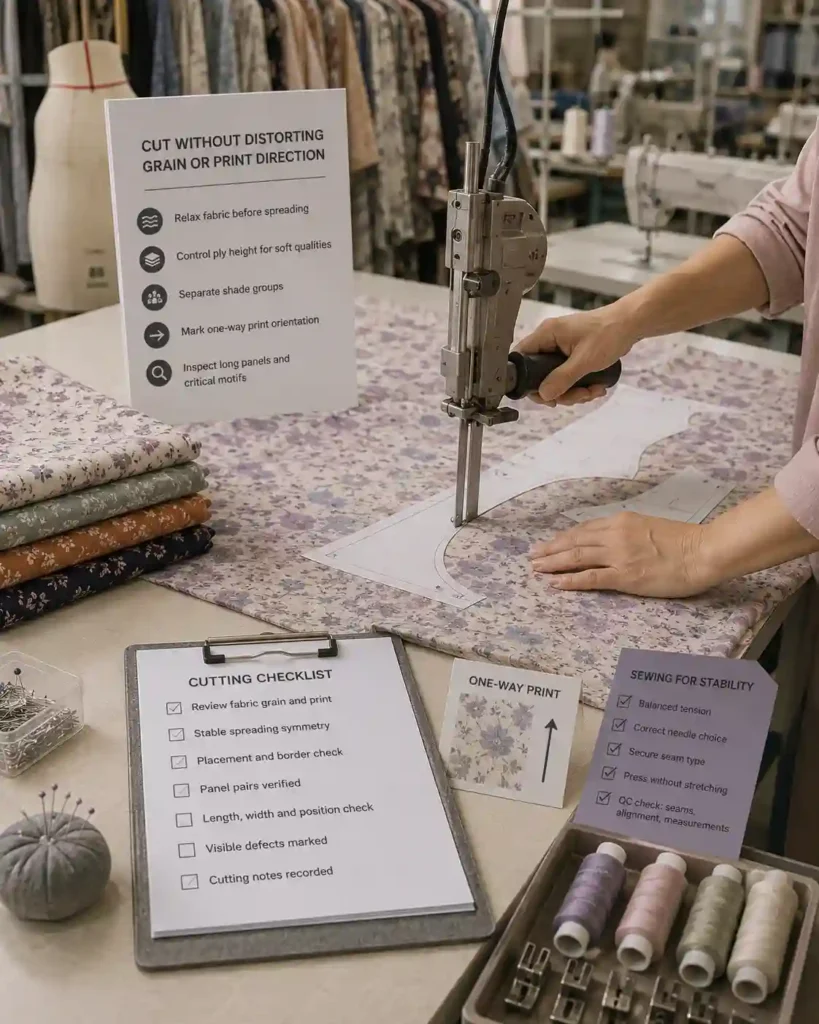
Custom skirts are cut and sewn by converting the approved pattern, fabric standard, and pre-production sample into controlled bulk operations. The material is inspected, shade-grouped, relaxed when required, spread, marked, and cut. Components are bundled by size and color, assembled in a defined sequence, pressed, measured, and inspected throughout production.
How Are Markers and Fabric Layers Prepared?
A marker arranges the pattern pieces within the usable fabric width. The objective is to control material consumption without ignoring grain direction, print placement, shade, nap, shine, or stretch.
Before spreading, the cutting team should confirm roll number, dye lot, usable width, surface defects, shade, stretch direction, print orientation, shrinkage information, and required quantity.
Some fabrics require one-way cutting. Velvet, brushed fabrics, directional prints, many satins, and fabrics with visible shine can look different when pattern pieces face opposite directions. Turning pieces to save material may create obvious panel-to-panel color variation.
Layer height should match the fabric. Stable cotton twill can usually be spread in higher lays than slippery satin, stretch mesh, chiffon, or loose knit. Excessive layer height can cause the lower layers to shift, creating differences between the top and bottom cut panels.
Fabric relaxation is important for many knits and stretch materials. If the material is cut immediately after being tightly rolled or transported, it may contract later and reduce garment measurements. Shade grouping is equally important. Front and back panels from different dye lots may appear acceptable individually but visibly different when sewn together.
How Are Skirt Components Cut?
A simple skirt may contain only front, back, waistband, and facing pieces. A fashion skirt may contain more than a dozen components, including lining, pocket bags, belt loops, ruffles, overlays, slit facings, yokes, contrast panels, and reinforcement pieces.
Each component should carry accurate notches, balance marks, drill points, and size identification. These marks guide darts, pleats, pockets, zipper placement, seam matching, and panel alignment.
- Pattern version
- Fabric face direction
- Grain line
- Size and color
- Shade group
- Pairing of mirrored pieces
- Print or stripe placement
- Lace or sequin position
- Notch accuracy
- Quantity reconciliation
Cutting errors are difficult to repair through sewing. An incorrectly shaped waistband, distorted satin panel, misplaced pocket, or inaccurate pleat line will continue to create problems during assembly.
For engineered prints, stripes, checks, lace scallops, or large motifs, visual placement should be established during sampling. Production operators should not be expected to decide motif placement independently during bulk cutting.
How Are Waistbands, Pleats and Zippers Sewn?
The sewing sequence normally moves from shaping and panel preparation to seam assembly, closure installation, waistband attachment, lining, hem, and final finishing. The exact order depends on the construction.
Waistbands require controlled stability. Depending on the style, the factory may use fusible interfacing, elastic, stay tape, facing, hook-and-eye fastening, or topstitching. The waistband should support the garment without becoming stiff, stretched, or uncomfortable.
Pleats need accurate marking and folding. Small differences multiply across the garment. If ten pleats are each only 3 mm too wide, the total waist can change by 3 cm. Pleat direction, depth, spacing, and pressing should therefore be checked before the waistband is attached.
Invisible zipper problems often include rippling, exposed zipper tape, uneven top edges, fabric caught in the slider, mismatched waistband seams, or weak reinforcement at the zipper base.
| Construction Area | Common Working Control | What Happens When It Is Inconsistent |
| Waistband join | Seam alignment within about 2-3 mm | Top edge looks uneven |
| Pleat spacing | Repeated spacing checked before waistband | Waist measurement changes |
| Side seams | Front and back notches matched | Hem twists or panels shift |
| Invisible zipper | Flat installation without feeding stretch | Rippling and poor closure |
| Slit reinforcement | Secure backtack or approved reinforcement | Slit opens under movement |
| Lining length | Usually shorter than outer shell | Lining becomes visible |
| Hem level | Checked after pressing or hanging | Finished skirt looks unbalanced |
These are general working references. The approved product specification remains the final standard.
How Are Hems and Linings Finished?
The hem finish should suit the fabric, silhouette, and price position. Lightweight chiffon may require a narrow rolled hem. Tailored suiting may use a wider blind hem. Stretch knit may need coverstitching or another flexible finish. Lace may use its natural scalloped edge.
Some fabrics need time to settle before the final hem is leveled. Circular skirts, bias-cut panels, rayon, satin, and lightweight woven fabrics can drop unevenly after assembly. If the hem is completed too early, the front, back, or side may become longer after hanging.
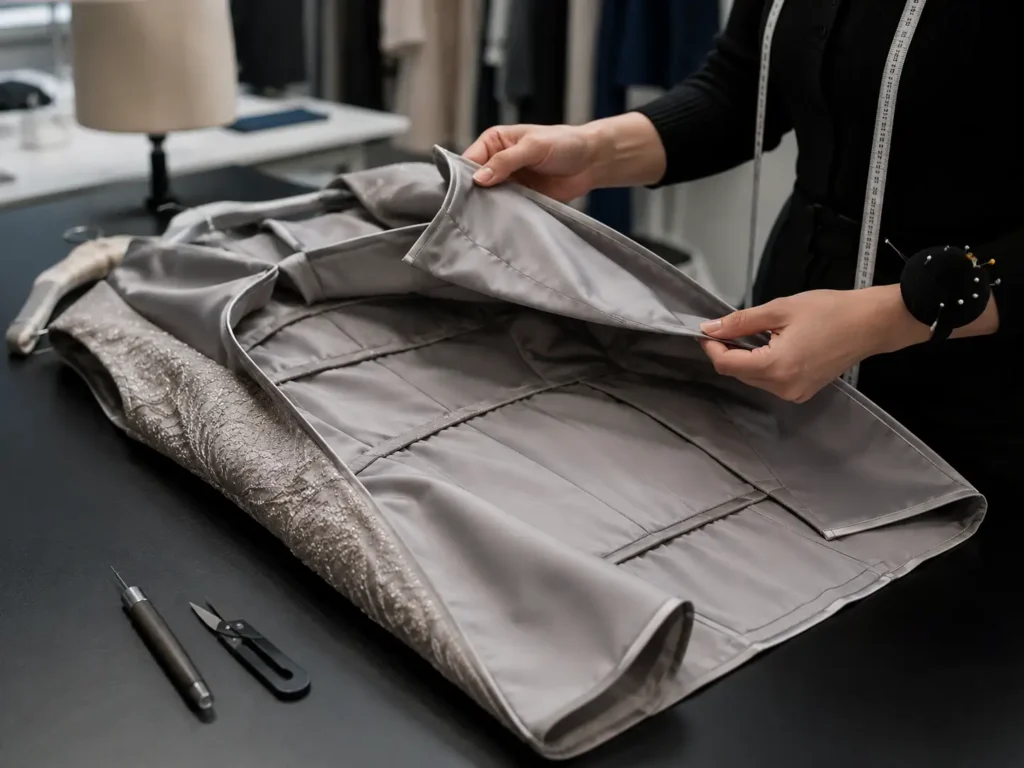
The lining should improve opacity, comfort, and internal appearance without changing the outer silhouette. It should remain hidden while walking, sitting, and moving. It must not twist, pull the outer fabric upward, interfere with the slit, or create bulk at the waistband.
Internal finishing also affects customer perception. Exposed scratchy seams, loose threads, bulky seam allowances, and twisted linings make a product feel inexpensive even when the outer fabric looks attractive.
Pressing is part of construction, not only presentation. Darts, pleats, waistbands, seams, and hems often need pressing at specific stages. Excessive heat can damage elastic, create satin shine, flatten textured fabric, or distort synthetic materials, so pressing conditions should match the approved fabric.
How Is Skirt Quality Controlled?
Skirt quality is controlled through several inspection stages rather than one final check. Materials are reviewed before cutting, cut components are checked before sewing, workmanship and measurements are monitored during assembly, and finished garments are inspected after pressing. Labels, barcodes, sizes, folding, polybags, carton assortments, and shipment quantities are also verified.
What Is Checked Before Bulk Cutting?
Pre-cutting inspection confirms that the bulk material matches the approved standard and remains suitable for the pattern. Once the fabric is cut, many material problems become expensive or impossible to correct.
The team should review fabric width, shade, surface, stretch, recovery, shrinkage, opacity, print direction, bowing, skewing, holes, stains, pulls, and dye-lot consistency. Linings and trims should also be checked for color compatibility and function.
The latest pattern and marker must be confirmed before cutting. Using an outdated pattern version can affect the entire order even when every sewing operation is performed correctly.
Material issues should be assessed according to product risk. A slight stretch variation may be critical for a bodycon skirt but less important for a full gathered skirt. Small shade differences may be hidden inside a waistband but unacceptable at the center front. A light fabric may pass an indoor opacity check but fail under daylight or studio lighting.
Shrinkage allowance should be based on testing rather than assumption. Even a 2% change can alter a 75 cm skirt length by 1.5 cm. For close-fitting styles, relatively small changes in waist or hip measurement may also affect comfort and customer returns.
How Is Inline Inspection Performed?
Inline inspection takes place while the skirts are being sewn. Its purpose is to stop repeated problems before the entire order reaches finishing.
Inspectors may check the first completed pieces from each operation, review measurements during production, and compare workmanship against the approved sample. Attention should focus on high-risk operations such as pleats, darts, waistbands, zippers, pocket placement, slit reinforcement, lining attachment, and hems.
| Stage | Main Inspection Points | Typical Risk |
| Incoming material | Shade, width, defects, stretch and trims | Wrong or inconsistent material |
| Cutting | Pattern, grain, size, notches and quantity | Incorrect component shape |
| Early sewing | Darts, pleats, pockets and panel matching | Repeated assembly errors |
| Main assembly | Waist, hip, zipper and side seams | Fit and appearance problems |
| Finishing | Hem, pressing, stains and threads | Poor presentation |
| Packing | Label, size, barcode, SKU and carton | Fulfillment and warehouse errors |
Measurements should be taken using the agreed method. Stretch garments should be allowed to relax before measuring. Waistbands should not be pulled during measurement. Curved or asymmetric hems need clearly defined measurement points.
When repeated defects appear, the team should investigate the process rather than only repair finished garments. Zipper rippling, for example, may come from machine tension, fabric feeding, zipper type, seam stabilization, operator method, or pressing.
Which Skirt Defects Cause Rework?
Rework is commonly caused by measurement, balance, construction, appearance, or packing problems.
- Waist outside tolerance
- Hip pulling or excessive looseness
- Back-waist gaping
- Uneven waistband height
- Twisted side seams
- Wavy or uneven hems
- Incorrect slit height
- Weak slit reinforcement
- Misaligned pleats or uneven gathers
- Zipper rippling or jamming
- Lining visible below the outer skirt
- Seam puckering or incorrect pocket position
- Panel shade differences
- Oil, chalk or handling marks
- Loose threads and poor pressing
The response should depend on the cause. Loose threads can be removed. A small measurement issue may sometimes be corrected through seam allowance. A distorted pattern, major shade problem, incorrect pleat distribution, or damaged fabric may require panel replacement or garment remake.
Isolated and systematic defects should be separated. One uneven hem may result from individual workmanship. Dozens of uneven hems may indicate an incorrect leveling method, pattern imbalance, spreading problem, or uncontrolled sewing operation.
Rework also affects schedule and cost. Repairing a zipper or waistband often requires opening several connected operations. That is why early detection is more efficient than depending on final inspection alone.
How Is Final Inspection Completed?
Final inspection takes place after garments are fully sewn, pressed, cleaned, labeled, and prepared for packing. It confirms that the finished product matches the approved sample, measurement chart, construction file, order details, and packaging requirements.
- Overall silhouette and appearance
- Fabric and approved color
- Waist, hip, length, sweep and slit measurements
- Waistband shape
- Stitching and seam quality
- Zipper and fastening function
- Pleat or gather consistency
- Pocket position and security
- Lining and opacity
- Hem level and pressing quality
- Cleanliness
- Main label, care label, size, color, barcode and SKU
- Polybag, folding and carton assortment
Inspection should be recorded by style, color, size, and batch. This makes it easier to identify whether an issue is isolated or linked to a particular production line, fabric lot, operator group, or size.
A credible quality system does not depend on claiming that defects never occur. It depends on clear standards, staged inspection, traceable correction, and the willingness to stop production when repeated problems are found.
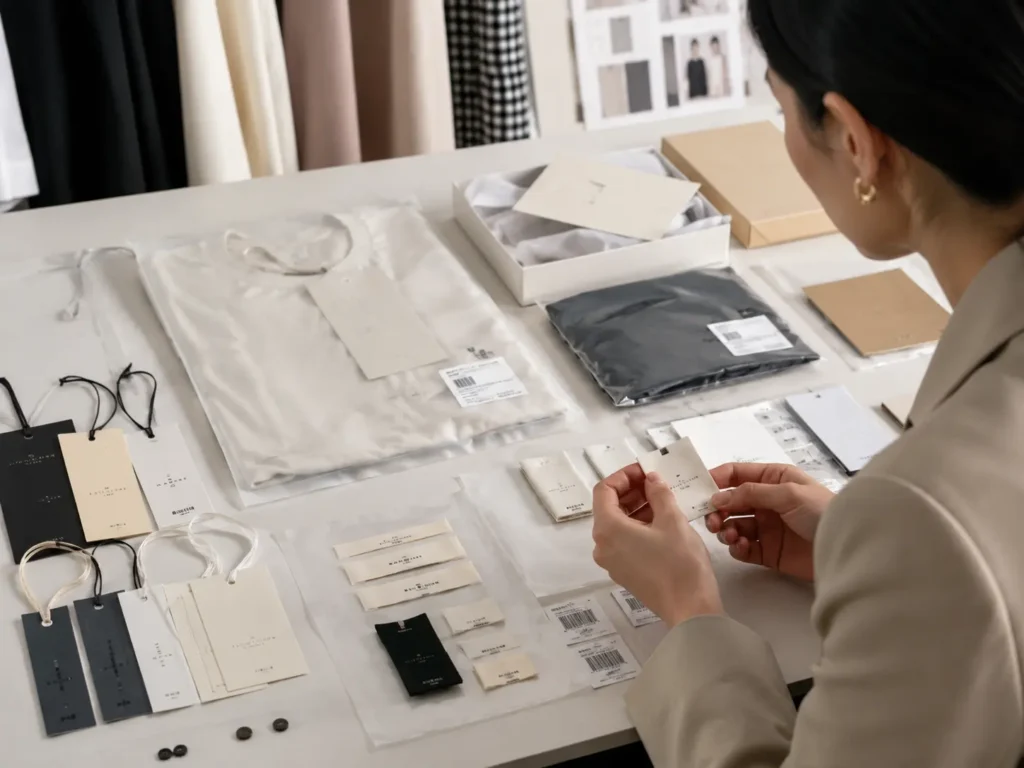
How Are Bulk Orders Packed and Delivered?
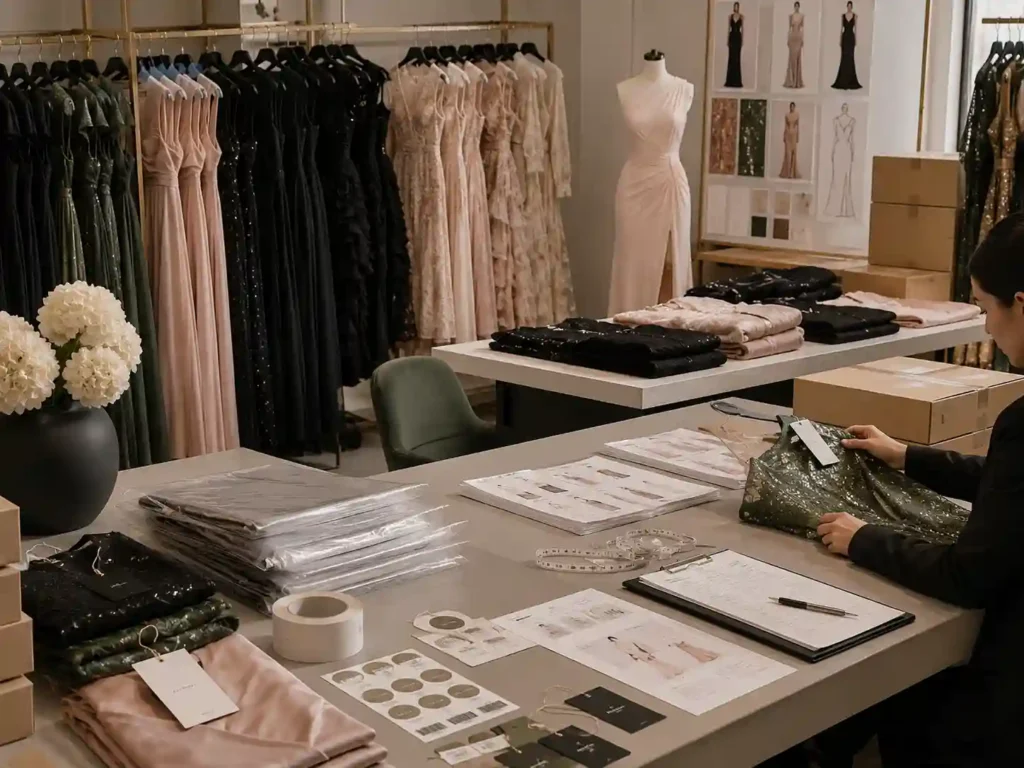
Bulk skirt orders are packed by applying approved brand labels and retail information, folding each garment according to the packing standard, confirming the correct size and SKU, placing it in the specified individual package, and packing cartons according to the approved assortment. Delivery planning then coordinates inspection, documents, freight method, destination requirements, and launch timing.
How Are Private Labels Applied?
Private-label development should begin before bulk sewing is complete. Labels, hangtags, barcodes, and packaging often require artwork approval, color confirmation, production lead time, and supplier minimum quantities.
Common private-label elements include woven labels, printed labels, satin labels, heat-transfer labels, size labels, care labels, hangtags, hang strings, barcode stickers, SKU labels, color stickers, branded polybags, tissue paper, carton marks, and warehouse labels.
Label material and placement should suit the garment. A stiff label sewn into a fitted waistband can irritate the wearer. A large care label can become visible through lightweight fabric. A heat-transfer label may not be suitable for fabric that is sensitive to temperature or pressure.
The packing team should verify that the garment, size label, care label, hangtag, barcode, color sticker, SKU, polybag, and carton information all match. A well-made skirt with an incorrect barcode can still be rejected by a retailer or shipped to the wrong customer.
For international orders, care labels and country-of-origin information should be prepared according to the destination market and confirmed by the brand’s compliance team where necessary.
What Affects MOQ and Unit Cost?
Minimum quantity and unit cost are influenced by fabric suppliers, dye houses, print mills, trim manufacturers, label suppliers, packaging vendors, and factory production efficiency.
- Fabric consumption and cutting waste
- Lining and interfacing
- Custom color or print
- Fabric supplier minimums
- Zippers, buttons, hooks and hardware
- Number of pattern pieces
- Pleats, ruffles, gathering, smocking or embellishment
- Lace, mesh, sequins and special handling
- Sample development and revisions
- Size and color distribution
- Measurement and inspection requirements
- Labels and packaging
- Split shipments or urgent production
A skirt with low fabric consumption is not automatically inexpensive. A short pleated skirt can require considerable labor, pressing, and measurement control. A simple maxi skirt may use more fabric but fewer sewing operations.
Material minimums often determine whether a custom color or fabric can be used at the planned order quantity. If a mill requires a larger dye lot than the brand needs, the options may include increasing the order, using an available color, selecting a stock fabric, or carrying excess material for a repeat order.
For Jinfeng Apparel projects, the basic MOQ starts from 200 pieces per style and color. Special fabrics, custom dyeing, custom weaving, printing, certified material requests, special trims, and custom packaging may have separate minimum requirements. Cost reduction should not remove the elements that affect fit, opacity, closure function, or durability.
How Is Production Lead Time Planned?
Production lead time includes development and preparation, not only sewing. Fabric sourcing, color approval, custom printing, trim production, sample revisions, PP approval, production-line booking, cutting, sewing, finishing, inspection, packing, and shipment preparation all affect the schedule.
- Requirement review and initial costing
- Fabric and trim sourcing
- Pattern and first sample
- Sample comments and revision
- Size grading and PP sample approval
- Bulk material preparation
- Cutting and sewing
- Finishing, pressing and final inspection
- Label and packing verification
- Carton packing and freight booking
Complexity often matters more than the product category. A basic skirt made from available fabric can move faster than a fully lined, printed, pleated skirt with custom hardware and branded packaging.
Client approval time must also be included. Delayed comments on fabric, fit, labels, or packaging can move the production schedule even when the factory is ready. Both sides should agree on decision deadlines and identify which approvals are required before materials are purchased or bulk cutting begins.
A reliable factory should review material availability and capacity before confirming the delivery date rather than promising an unrealistic schedule at the inquiry stage.
How Are Repeat Orders Kept Consistent?
Repeat-order consistency depends on accurate records and controlled approval, not memory. The production file should retain the final pattern, grading rules, approved measurement chart, fabric details, color standard, trims, zipper reference, label artwork, construction notes, PP comments, quality checklist, folding method, barcode structure, and carton assortment.
Before a repeat order begins, the new materials should still be compared with the previous approved standard. Fabric suppliers may change batches, finishes, colors, widths, or availability. Zippers and trims may be discontinued. Care-label or packaging requirements may also have changed.
- Whether the pattern version remains current
- Whether the fabric matches the previous weight and hand feel
- Whether the color remains within the approved standard
- Whether trims are identical or need approval
- Whether measurements or grading have changed
- Whether the destination market requires new labels
- Whether carton or warehouse instructions have been updated
Long-term records reduce communication time and improve reorder speed, but they do not remove the need for verification. The strongest repeat-order process combines archived information with a fresh material and order review.
Jinfeng Apparel has focused on custom women’s fashion manufacturing since 2008. Its production system includes six owned women’s fashion factories, more than ten long-term satellite production partners, 18+ sewing lines, six flexible production lines, two sample rooms, seven senior pattern makers, 20+ sample machinists, 15+ QC inspectors, 12+ merchandisers and order-follow-up specialists, and 30+ finishing and packing workers. The company supports OEM, ODM, private-label production, NDA-based cooperation, seasonal collection development, repeat orders, multi-batch production, retail-ready packing, and export coordination for brands with clear development and bulk-production plans.
Brands requesting a production quotation should provide the tech pack or reference style, measurement chart, planned quantities, colors, size range, target fabric, labeling requirements, packaging needs, destination market, and expected delivery window. This gives the development team enough information to review feasibility, identify risks, and prepare a practical sampling and bulk-production plan.