Skip to content

Fashion sampling used to follow one familiar route: make a paper pattern, cut the fabric, sew a garment, ship it to the brand, collect comments, and start again. Today, 3D dress sampling can move part of that process onto a screen. A designer may review silhouette, length, seam placement, colorways, prints, and proportions before the first piece of fabric is cut. That sounds faster and cleaner, but speed alone does not make a sample production-ready.
Fashion brands should use 3D dress samples for early visual decisions and rapid design revisions, while physical samples remain essential for confirming real fabric behavior, fit, comfort, construction, workmanship, trims, and bulk-production standards. For most commercial dress programs, the safest approach is a hybrid workflow: resolve avoidable design questions digitally, then use selected physical samples to validate what software cannot fully prove.
The real question is therefore not, “Which sample is better?” It is, “Which decision are we trying to make?”
A 3D image may convince a buying team that a satin midi dress looks balanced. The first sewn sample may reveal that the neckline opens when the wearer moves, the bias-cut skirt grows after hanging, and the chosen lining changes the drape. One sample creates confidence in the concept; the other exposes the consequences. The brands that sample well know exactly when to trust each one.

What Are Physical and 3D Dress Samples?
A physical dress sample is a sewn garment made from real fabric, trims, patterns, and construction methods. A 3D dress sample is a digital garment assembled from virtual patterns and displayed on an avatar. Physical samples prove how the product behaves in real life, while 3D samples help teams review design, proportion, color, and early pattern decisions before fabric is cut.
Physical Sample Roles
A physical sample is not simply a miniature production order. Each sample should answer a defined question. The first development sample checks whether the manufacturer has interpreted the design correctly. A fit sample tests measurements, balance, ease, movement, and body proportions. A revised sample confirms that requested corrections have been made. A pre-production sample establishes the approved standard for bulk manufacturing.
Because a physical sample uses real materials, it reveals issues that drawings and digital models may not show. A lightweight satin may wrinkle around a concealed zipper. A stretch lining may recover more slowly than the shell fabric. A lace edge may become bulky when folded into a narrow seam. Boning may improve support but create pressure near the underarm.
Physical samples are also important for evaluating workmanship. Buyers can inspect stitch consistency, seam puckering, hem quality, lining attachment, zipper installation, trim security, pressing, and garment symmetry. These details directly affect customer satisfaction, return risk, and the ability to reproduce the style consistently across several hundred or several thousand units.
The value of a physical sample depends on how professionally it is reviewed. Vague comments such as “the fit feels wrong” often create unnecessary revision rounds. Useful feedback identifies the exact area, the visible problem, the required correction, and any measurement involved. A sample becomes commercially valuable when it converts design intent into controlled production information.
3D Sample Roles
A 3D dress sample is created by sewing digital pattern pieces together in virtual space. The garment is placed on an avatar, and digital materials are applied to simulate color, print, texture, stretch, weight, and drape.
Its main advantage is speed during early development. A team can compare three neckline depths, two sleeve volumes, several lengths, or multiple print placements without making a separate sewn garment for every option. This is especially useful when a brand is narrowing a larger concept range into a smaller group of styles for physical sampling.
A 3D sample can also improve communication. Designers, buyers, merchandisers, technical teams, and manufacturers can review the same garment from front, back, side, and close-up views. Comments can be made before expensive fabrics, custom trims, or special color developments are ordered.
However, a polished render is not the same as a production-ready garment. The result depends heavily on the digital pattern, avatar measurements, fabric data, and operator experience. If the selected material has not been physically tested, the digital garment may look convincing while behaving differently in real life. 3D sampling works best as a decision tool rather than a replacement for all physical evidence.
How the Processes Differ
The two workflows use different forms of proof. A 3D workflow usually begins with a digital pattern or a pattern created from the design specification. The garment is assembled on an avatar, fabric settings are applied, and the team reviews silhouette, balance, tension, seam placement, length, and color. Changes can be made to the pattern and visual details without recutting fabric.
A physical workflow includes pattern preparation, fabric and trim selection, cutting, sewing, pressing, measurement, fitting, comment review, and revision. It takes longer because each change must be translated into an actual garment.
| Development Question | 3D Sample | Physical Sample |
| Is the silhouette commercially suitable? | Strong early indication | Reliable confirmation |
| Is the skirt length visually balanced? | Easy to compare several options | Confirms real drape and movement |
| Does the actual fabric feel right? | Cannot confirm hand feel | Can be touched and worn |
| Is the neckline secure during movement? | Limited indication | Can be tested on a fit model |
| Does the zipper lie flat? | Visual approximation | Real construction evidence |
| Are seams, hems, and trims acceptable? | Placement can be reviewed | Workmanship can be inspected |
| Is the style ready for bulk production? | Not sufficient alone | PP approval provides the standard |
One Design, Different Evidence
A digital sample and a physical sample may show the same dress, but they do not prove the same things. Consider a bias-cut satin midi dress. The 3D version may help the design team compare neckline depth, strap width, side-seam position, and overall length. The physical version may reveal that the satin grows after hanging, the neckline stretches during wear, or the lining restricts the intended drape.
For a bodycon mesh dress, the digital sample may show panel placement and transparency zones. The physical sample is needed to confirm recovery, coverage, seam tension, and comfort. For a corset dress, 3D can communicate external structure. Only a real garment can show whether the cups, boning, underwire, lining, zipper, and anti-slip tape work together.
The most efficient brands do not ask one sample to answer every question. They identify which decisions can be made digitally and which ones require a sewn garment.
Which Sample Gives Better Fit and Accuracy?
Neither sample is automatically more accurate in every situation. A 3D sample can be highly useful for pattern relationships, proportion, visual balance, and early fit review when the avatar and fabric data are reliable. A physical sample remains more dependable for confirming real-body movement, fabric response, comfort, support, construction, and workmanship.
Digital Fit Accuracy
3D fit simulation can reveal several useful warning signs before a garment is sewn. It may show excessive tension at the bust or hip, an uneven hem, insufficient ease, a distorted armhole, or a waist seam that sits too high or too low.
The accuracy of these findings depends on four inputs: the pattern, the avatar, the material data, and the way the garment is virtually assembled. The avatar must represent the target fit model rather than an idealized body unrelated to the brand’s customer. Bust shape, shoulder angle, torso length, hip projection, and posture can affect how a dress appears. Two people with the same bust, waist, and hip measurements may still require different pattern adjustments.
The digital pattern must also match the intended sewing pattern. Seam allowances, turnbacks, interfacing, gathering ratios, lining structure, and construction adjustments can change the finished garment. A model built from simplified shapes may look clean on screen but provide limited production information.
Fabric data is equally important. A general “satin” preset does not represent every satin. Weight, thickness, stretch, bending behavior, surface friction, and recovery all affect fit. Digital simulation becomes more useful when actual fabric test data is available, but it should still be treated as a prediction rather than a final wearing test.
Real-Body Fit
Physical fitting adds information that a static digital pose cannot fully reproduce. A person breathes, walks, sits, bends, reaches, and changes posture. These movements affect neckline security, slit exposure, armhole comfort, waist pressure, strap stability, and skirt movement.
A practical dress fitting should include more than a front-facing visual check. The fit model should raise both arms, sit, take several steps, turn, and bend slightly. A fitted garment should be reviewed after it has been worn for several minutes because some fabrics relax under body heat and tension.
Key points commonly checked include bust coverage, waist position, hip ease, side-seam direction, center-front balance, center-back balance, armhole comfort, strap placement, neckline stability, zipper stress, slit exposure, and hem level.
Measurements are important, but measurements alone do not define good fit. A dress may match the specification and still look unbalanced. A bodice may measure correctly across the bust but create an unwanted gap at the neckline. A skirt may meet the waist and hip measurements but twist because the grain direction or side-seam balance is wrong. The strongest fit approval combines measurement data, visual assessment, movement testing, and wearer feedback.
Material Accuracy
Real materials create some of the largest differences between digital and physical results. Stretch fabrics should be checked in both length and width directions. A fabric described as having 20% stretch may not recover well after extension. Poor recovery can make a fitted dress grow at the waist, seat, or knees after wear.
Lightweight fabrics may behave differently after lining is added. A fluid shell can become stiff if the lining is too heavy. A sheer mesh may lose elasticity when combined with a non-stretch underlayer. A satin bodice may show seam impressions after pressing. A lace dress may require motif placement that changes cutting efficiency and seam construction.
| Control Point | Practical Development Check |
| Key bust, waist, and hip measurements | Often reviewed within approximately ±0.5 cm to ±1.0 cm, depending on garment type |
| Full dress length | Commonly controlled more tightly on short fitted styles than on long flowing styles |
| Stretch direction | Confirmed separately for width, length, and bias behavior |
| Fabric recovery | Checked after stretching, resting, wearing, and sometimes washing |
| Shrinkage | Tested before final pattern and bulk cutting when risk exists |
| Sheerness | Reviewed under normal light, strong light, and body tension |
| Hem balance | Checked after hanging, especially for bias-cut or long dresses |
| Color appearance | Reviewed under more than one lighting condition when shade sensitivity matters |
These are working development checks rather than universal tolerances. The acceptable range must reflect the dress type, material, size, fit intent, construction, and the brand’s approved specification.
Construction Accuracy
Construction can change fit even when the pattern appears correct. Boning adds stiffness and may shorten the effective length of a bodice. Interfacing can improve support but reduce softness. A concealed zipper can cause rippling if the seam is stretched during sewing. Thick seam allowances can create pressure in fitted garments. Elastic tape can stabilize a neckline but may also cause gathering if the tension is incorrect.
Complex dress development should therefore evaluate the interaction between components, not just the outer shape. A corset dress may contain cups, underwires, boning, interfacing, lining, elastic, anti-slip tape, hooks, and a zipper. Each component has its own size, position, hardness, and sewing requirement. A failure in one component can affect the whole garment.
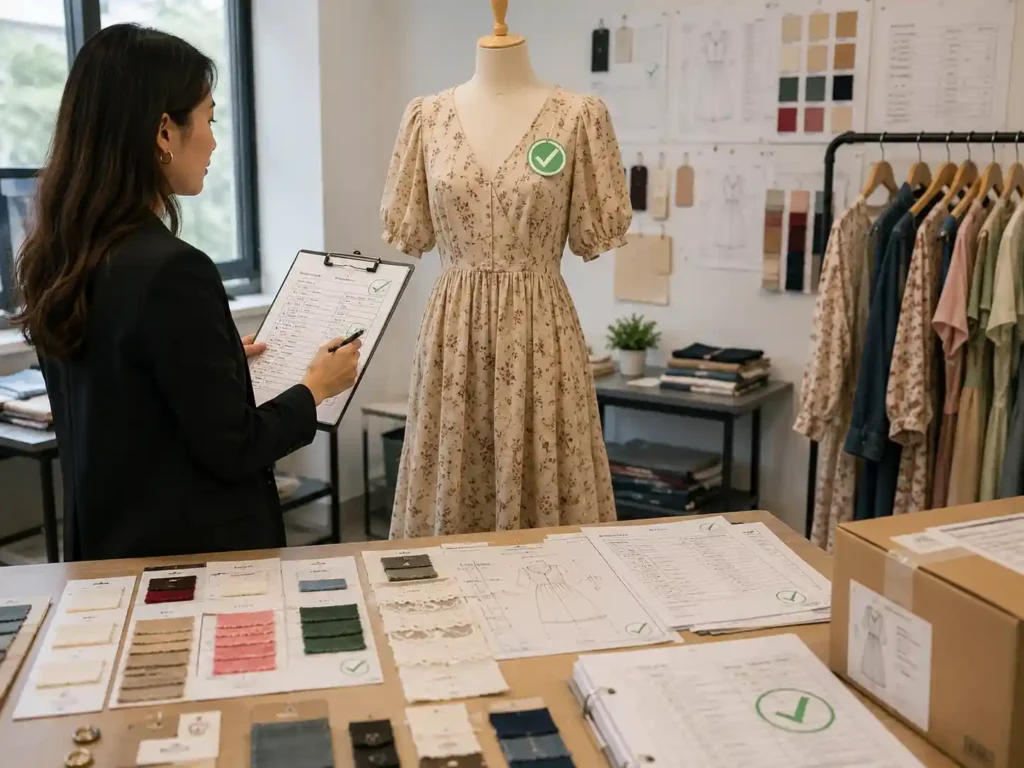
A high-quality sample review asks three separate questions. Does the design look correct? Does the garment fit and function correctly? Can the construction be reproduced consistently in bulk? Only the third question turns a successful sample into a reliable production standard.
How Do Cost, Speed, and Waste Compare?
3D sampling can reduce early sewing rounds, material consumption, and courier delays. Physical sampling requires more labor and real materials but provides stronger evidence for final fit and production. The most cost-effective workflow is not the one with the fewest samples; it is the one that resolves costly risks before fabric booking, cutting, and bulk sewing begin.
Revision Speed
Once a reliable digital pattern, avatar, and fabric setup exist, many visual changes can be reviewed quickly. Colorways, print scale, hem length, neckline depth, sleeve volume, and seam placement may be adjusted without cutting another garment.
A simple digital revision may be reviewed within the same working day. A more involved pattern correction, new fabric setup, or complex layered garment may require several working days. The speed advantage is greatest when the team is comparing options rather than trying to approve final construction.
Physical revisions take longer because the pattern must be updated, material prepared, pieces cut, the garment sewn, measurements checked, and the sample pressed. If the brand and manufacturer are in different countries, shipping and internal review can add several more days.
Common working ranges vary widely, but a straightforward physical sample may take around one to two weeks after all materials and instructions are ready. Complex corset, embellished, lace, or occasion dresses can take longer. International shipping can add approximately two to seven business days, depending on destination, courier service, and customs. These ranges are planning references, not guaranteed lead times.
Speed is lost when the design is still changing after physical sampling begins. A brand may request a new neckline, fabric, sleeve, length, and trim in one revision. At that point, the team is no longer correcting a sample; it is developing a substantially different product.
Total Development Cost
The quoted sample fee is only one part of development cost. Physical sampling may involve pattern work, fabric, lining, trims, cutting, sewing, special processes, pressing, measurement, fitting, photography, packaging, and shipping. Complex materials can increase both labor and wastage. Lace placement, sequin removal from seam allowances, hand-applied trims, and corset construction require more time than a simple unlined woven dress.
Digital sampling also has costs. Patterns must be digitized or created, avatars prepared, materials configured, garments assembled, and files rendered. Skilled operators and appropriate software are required. When the actual fabric data is unavailable, the digital result may still need substantial physical verification.
Brands should compare five types of cost: creation cost, revision cost, communication cost, delay cost, and failure cost. Failure cost usually creates the greatest commercial risk. Correcting a sample before production may feel expensive, but correcting thousands of finished garments is far more serious.
Shipping and Approval Delays
A courier journey is only one part of sample lead time. Samples may wait for pickup, customs clearance, internal distribution, fitting schedules, photography, management review, and consolidated comments.
Digital review can remove some of this waiting, but only when decision-making is organized. A 3D sample can still sit unresolved while design, technical, merchandising, and buying teams provide conflicting feedback.
Clear ownership improves both workflows. Design should approve visual direction. Technical design should approve measurements and fit intent. Sourcing should confirm fabric and trim availability. Merchandising should protect cost and calendar requirements. Production should confirm manufacturability. One project owner should issue the final consolidated comments.
Comments need to be measurable. “Make the skirt more flattering” is open to interpretation. “Reduce the front volume by 15% while keeping the side-seam length unchanged” creates a testable instruction. It is also important to freeze decisions. Once the team approves the neckline, color direction, and garment length, those points should not be casually reopened during PP approval unless a genuine fit or production problem appears.
Material Waste
3D development can reduce the number of early prototypes made from real fabric. This is valuable when a brand begins with many concepts but expects only a smaller group to reach production. Waste reduction is most meaningful when digital work replaces unnecessary physical iterations. Adding 3D rounds while producing the same number of physical samples does not create the same benefit.
Physical sampling generates fabric offcuts, test pieces, rejected trims, packaging materials, and courier shipments. Some of this is necessary because real construction must be tested. The goal is not to eliminate every physical sample, but to make each one purposeful.
A lower-waste workflow narrows visual choices digitally, confirms the material direction early, checks stock or minimum order requirements before sample approval, and avoids repeated physical samples caused by unclear comments. Brands should also consider production waste. An unresolved print placement, incorrect fabric width, unstable stretch material, or unsuitable lining can create far more waste in bulk production than several well-planned development samples.

Can 3D Samples Replace Physical Samples?
3D samples can replace some early visual prototypes and reduce unnecessary physical revisions, but they should not replace every sewn sample. Final fit, material behavior, comfort, support, construction, workmanship, trims, pressing, labeling, and production standards require physical evidence. Replacement decisions should be based on the risk of the garment and the type of approval being made.
Digital Approval Limits
Digital approval is strongest when the decision is visual, comparative, and easy to record. Silhouette, garment length, waistline position, sleeve shape, panel proportions, seam placement, color combinations, print scale, and general styling can often be reviewed effectively in 3D. These decisions are especially suitable for digital comparison because several options can be viewed side by side.
The team should still connect the approved digital version to controlled production files. If a neckline depth is approved on screen, the pattern and measurement specification must show the same change. If a print position is approved, the artwork file and placement dimensions must be updated.
Digital approval becomes weaker when the decision depends on touch, pressure, movement, sewing, or human perception. A 3D sample may show where a zipper is located, but it cannot confirm whether the zipper tape is too stiff for the fabric. It may show a strapless neckline, but it cannot prove that the garment will remain secure during movement.
Before accepting a digital approval, the team should ask whether the remaining uncertainty could affect fit, comfort, quality, cost, or production consistency. If the answer is yes, a physical validation stage is still needed.
Physical Approval Needs
Physical testing is necessary when the garment must be touched, worn, stretched, fastened, washed, pressed, packed, or moved. Hand feel cannot be approved through a screen. Neither can scratchiness, pressure, stiffness, heat retention, or skin comfort. Stretch and recovery must be tested using the actual fabric. Closures must be opened and closed. Straps should be adjusted. Slits should be reviewed while walking and sitting.
Workmanship also requires real inspection. Seam puckering, skipped stitches, raw edges, loose threads, uneven hems, distorted zippers, poor pressing, and trim damage may not appear in a digital model.
The need for a physical sample increases when the style includes multiple layers, structural support, stretch, transparency, embellishment, or close body fit. A physical sample review should cover measurements, balance, fit, movement, shell fabric, lining, trims, construction, workmanship, pressing, labels, and packaging compatibility. Any issue that can affect bulk production should be recorded and closed before final approval.
Fit, PP, and Golden Samples
Fit, PP, and Golden samples serve different purposes. The fit sample confirms how the garment relates to the body. It checks ease, balance, proportions, measurements, movement, neckline security, and comfort. Depending on the project, substitute fabric may sometimes be used, but large differences in weight, stretch, or drape can reduce the value of the fitting.
The pre-production sample confirms the final manufacturing standard. By this stage, the brand should have approved the actual fabric, color, lining, trims, pattern, measurements, construction, workmanship, labels, and packaging. A PP sample should not be treated as the first serious opportunity to check fit.
The Golden sample is the sealed reference kept for bulk production and quality control. It helps align the brand, merchandiser, pattern team, production line, and inspectors. When written instructions are interpreted differently, the approved sample provides a physical reference.
| Sample Stage | Main Decision | Suitable for Digital Replacement? |
| Early concept sample | Silhouette and visual direction | Often partly replaceable |
| Colorway review | Color and print comparison | Often replaceable |
| First fit sample | Body fit and measurement balance | Usually not fully replaceable |
| Revised fit sample | Confirmation of major corrections | Sometimes reducible, not automatically removable |
| Photo sample | Campaign appearance | Depends on whether real photography is required |
| PP sample | Final production standard | Should remain physical |
| Golden sample | Bulk and QC reference | Should remain physical |
Hybrid Workflow
A hybrid workflow combines the speed of 3D development with the evidence of physical sampling. The process may begin with reference images, sketches, or a tech pack. A base pattern is prepared, and 3D is used to review silhouette, length, proportion, and color direction. Once the design direction is selected, the team confirms actual materials and makes the first physical sample.
The physical garment is then measured, fitted, worn, and inspected. Comments are converted into pattern, measurement, material, and construction updates. A revised sample is made when changes are substantial. The final PP sample confirms the exact production standard, and a Golden sample is sealed for bulk reference.
The number of physical rounds should depend on risk rather than a fixed promise. A simple unlined woven dress may require fewer stages than a corset dress with cups, boning, lace, and a shaped neckline. A repeat style using an approved pattern and known fabric may need less development than a new fabric with different stretch and recovery. The goal is not “zero physical samples.” The goal is fewer avoidable samples and stronger final approvals.
Which Sample Is Best for Each Dress Type?
The correct sampling method depends on the dress’s risk profile. Simple visual changes can often be reviewed digitally, while bodycon, corset, bias-cut, occasion, layered, sheer, satin, lace, velvet, and sequin dresses require stronger physical validation. The more a style depends on stretch, support, drape, skin comfort, or complex construction, the more important the sewn sample becomes.
Bodycon Dresses
3D samples are useful for reviewing the outline of a bodycon dress, including length, neckline, panel placement, seam direction, waist emphasis, and overall proportion. They may also identify areas where the digital garment appears excessively tight or loose.
The main challenge is material behavior. Bodycon garments often use negative ease, meaning the finished garment is smaller than the body and relies on stretch to fit. The amount of acceptable negative ease depends on fabric stretch, recovery, weight, opacity, and intended compression.
Two fabrics with similar fiber content may perform very differently. A heavy ponte may provide strong shaping and recovery. A lightweight jersey may stretch easily but show underwear lines or become transparent. Stretch mesh may fit the body but require a lining with compatible extension.
Physical sampling should check bust, waist, and hip compression, side-seam direction, hem growth, neckline recovery, armhole stability, seam extension, and comfort while sitting and walking. The dress should also be observed after wear. Some materials look correct when first fitted but relax after 15 to 30 minutes. Recovery should therefore be evaluated after extension and rest, not only during the first fitting.
Corset Dresses
Corset dresses require physical sampling because their performance depends on structure and pressure. A 3D sample can show panel lines, cup placement, neckline shape, waist proportion, and external styling. It cannot fully confirm whether the cups support the bust, whether the boning is comfortable, or whether the neckline remains secure when the wearer moves.
The physical sample should test cup shape, cup spacing, underwire position, boning length, boning hardness, interfacing, lining, back height, zipper strength, hook placement, and anti-slip tape. A minor change to one component may affect several other areas.
For example, harder boning may improve support but cause discomfort at the waist. A wider underwire may improve cup coverage but require a pattern change. A heavier lining may strengthen the bodice but reduce flexibility. A shorter zipper may make dressing difficult even when the garment looks correct.
Corset samples should be reviewed while standing, sitting, walking, and raising the arms. Pressure points near the underarm, waist, and zipper should be noted. Cup position, center-front length, side-seam length, back height, neckline drop, and waist measurement should be recorded rather than approved only from photographs.
Occasion Dresses
Occasion dresses often combine appearance, movement, support, and complex finishing. A long satin dress with a structured bodice and high slit may contain several separate risks even when the design looks simple.
3D development can help teams compare skirt volume, train length, neckline shape, slit position, sleeve options, and color direction. Physical samples are necessary to assess weight distribution, movement, support, underlayer visibility, hem balance, and the way the garment photographs under real light.
Floor-length garments should be checked at the center front, sides, and center back after hanging. Bias-cut or loosely woven fabrics may grow unevenly. A high slit should be tested while standing, walking, sitting, and climbing steps. A draped neckline should be reviewed for coverage and stability.
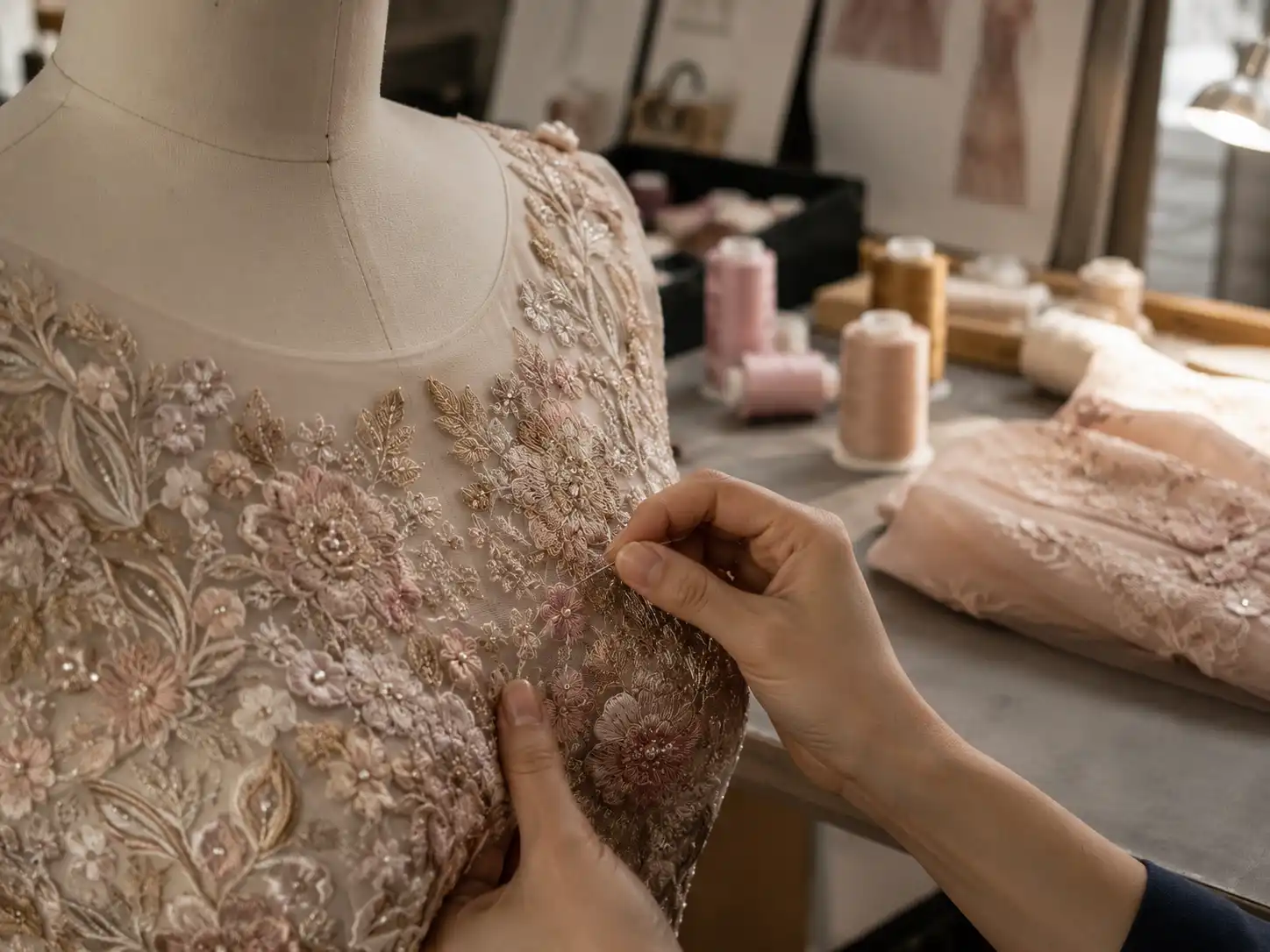
Embellished dresses require additional checks. Sequins may add weight, catch on other areas of the garment, irritate the skin, or create thick seam allowances. Beading can change the hang of a panel. Lace motifs may need controlled placement across several sizes. A photo sample may be adjusted carefully for a campaign shoot. The PP sample must prove that the style can be produced repeatedly without special handling that cannot be maintained in bulk.
Complex Fabrics
Different fabrics require different evidence. Mesh should be checked for transparency, stretch direction, recovery, snagging, edge stability, and lining compatibility. Lace requires motif placement, seam planning, edge treatment, and sometimes hand application. Satin requires careful cutting direction, needle selection, seam control, pressing, and shade review.
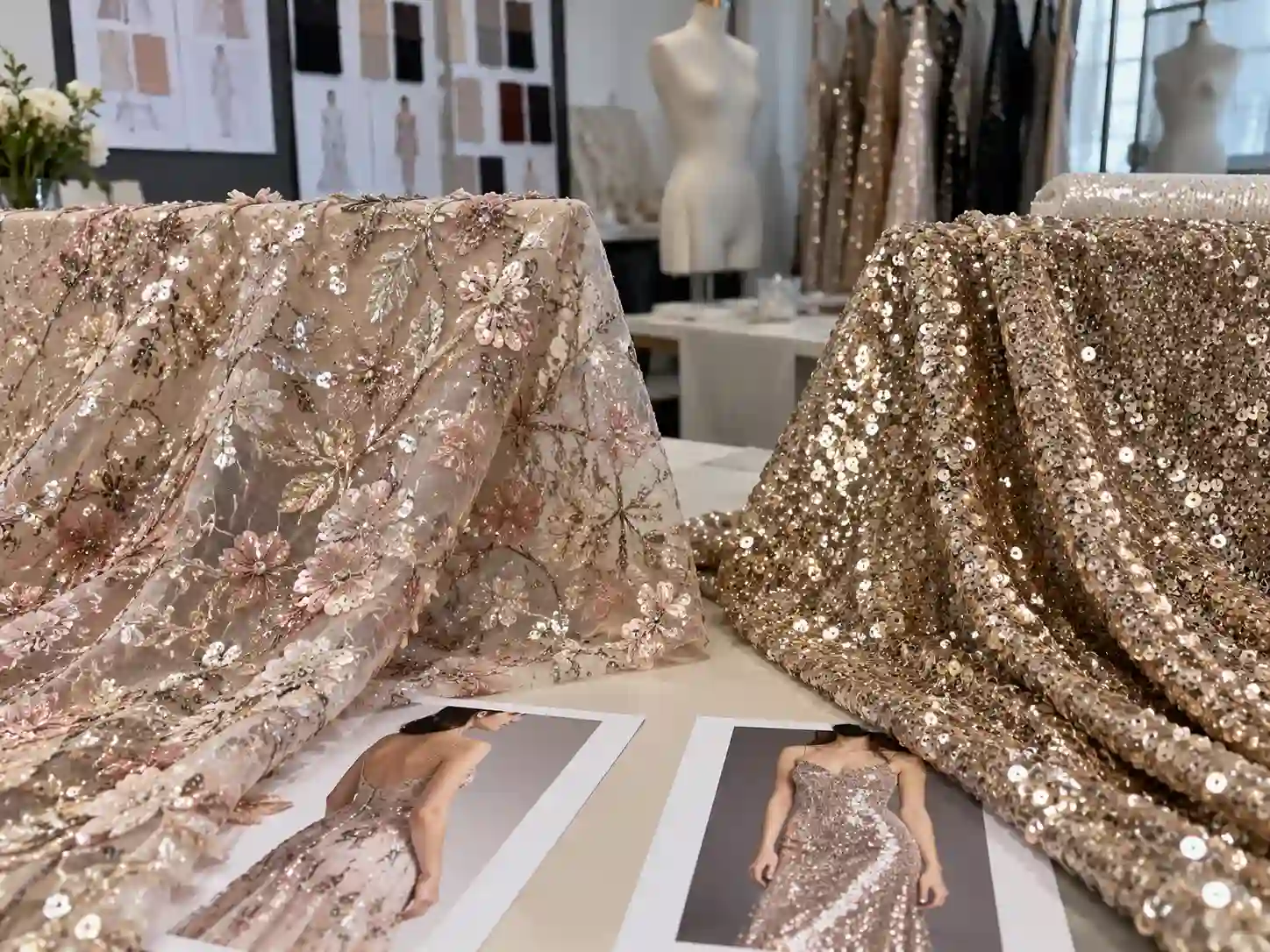
Chiffon needs testing for sheerness, seam distortion, static, hem quality, and movement. Velvet requires pile-direction control and low-pressure finishing. Sequin fabrics require checks for shedding, seam thickness, broken needles, skin irritation, and packaging protection.
| Dress or Material | Main 3D Value | Main Physical Risk | Physical Sample Priority |
| Simple woven shift dress | Proportion and length | Ease, zipper, fabric hand | Medium |
| Bodycon knit dress | Silhouette and panel lines | Stretch, recovery, opacity | High |
| Bias satin slip dress | Neckline and visual drape | Growth, seam puckering, hem balance | High |
| Corset dress | External structure | Support, pressure, cups, boning | Very high |
| Lace occasion dress | Motif and panel placement | Matching, seam bulk, edge finish | Very high |
| Sequin party dress | Color and overall appearance | Weight, scratching, shedding | Very high |
| Chiffon maxi dress | Volume and silhouette | Sheerness, movement, hem quality | High |
| Repeat style in approved fabric | Color or print updates | Change control and consistency | Low to medium |
A fabric approval should record composition, width, weight, color reference, stretch, recovery, drape, transparency, shrinkage risk, surface behavior, lining requirement, minimum order quantity, availability, cost impact, and lead-time impact.
How Should Brands Choose a Sampling Workflow?
Brands should choose a sampling workflow by matching each stage to a specific commercial risk. Use digital tools for visual comparison and early pattern decisions, physical samples for fit and material proof, and a final PP sample for production approval. The process should become more controlled as spending and production commitment increase.
Required Files
A clear development package reduces interpretation errors and unnecessary sample rounds. The most useful starting point is a complete tech pack containing front and back drawings, measurements, construction details, materials, trims, color information, labels, and packaging requirements. When a full tech pack is not available, development may begin from sketches, reference images, an original garment, a line sheet, or a mood board, but more decisions will need to be clarified during sampling.
The brand should provide the base size, intended size range, target market, quantity, fabric direction, target cost, and required delivery date. These factors affect pattern decisions, sourcing, construction, and development time.
Print artwork should include file dimensions, repeat information, color references, and placement requirements. Trim references should identify size, finish, function, and color. Measurement charts should state whether values are full or half measurements and whether they refer to finished garments or body measurements.
The team should also identify the purpose of each sample. A design sample, fit sample, photo sample, and PP sample are not reviewed in the same way. When every department expects one sample to answer a different question, comments become inconsistent and development slows.
Sample Stages
Not every project needs every possible stage, but every project needs clear approval gates. A new complex style may require an early 3D review, first physical sample, fit sample, revised sample, photo sample, PP sample, and Golden sample. A repeat order in an approved fabric may require only controlled material confirmation and a refreshed PP sample.
Skipping a stage is reasonable only when its risk has been covered elsewhere. A digital color review may replace multiple sewn color samples. A physical fit sample should not be removed simply because the render looks clean.
The sampling plan should consider the novelty of the pattern, the familiarity of the fabric, the complexity of the construction, the number of sizes, the importance of the launch date, and the financial risk of failure.
A style using an approved block, known fabric, standard zipper, and familiar sewing method requires less discovery than a new corset shape in an unfamiliar stretch satin. Treating both projects the same creates either unnecessary cost or unnecessary risk.
Feedback Control
Sample comments should become controlled technical records. Each comment should identify the location, problem, required change, and measurement where relevant. Photographs are useful, but they should be annotated and supported by written instructions. Camera angle, pinning, and posture can make a problem appear larger or smaller than it is.
Good comments are specific. “Improve the waist” is subjective. “Reduce the half-waist measurement by 1 cm and raise the side waist seam by 8 mm” can be checked.
Comments affecting production should update all related files. A fabric change may require a pattern adjustment, revised lining, different needle, updated cost, and new shrinkage review. A neckline change may affect straps, facing, interfacing, and grading.
Teams should use version control. The pattern, measurement chart, bill of materials, construction sheet, and sample comments should carry matching dates or revision numbers. Old versions should not remain active after approval. Approval status also needs to be clear. “Reviewed” is not the same as “approved.” A comment sheet should state whether each point is accepted, rejected, pending, or requiring another sample.
Manufacturer Evaluation
A manufacturer should be evaluated by more than the appearance of one sample. Pattern capability is essential. The team should be able to explain why a dress pulls, twists, gaps, or loses balance rather than simply making random adjustments. Fabric knowledge matters because pattern and construction decisions must reflect stretch, drape, weight, transparency, and recovery.
The sample room should be able to handle the relevant category. A factory experienced mainly in basic woven dresses may not be the right choice for corsetry, stretch mesh, lace placement, or heavily embellished occasionwear.
Communication should be technical but understandable. A reliable partner explains what can be changed, what the change will affect, whether another sample is required, and how the decision may influence cost or delivery.
The manufacturer should also demonstrate control beyond sampling. Pattern records, measurement files, approved materials, trim references, PP samples, quality checkpoints, and packaging instructions must be transferred accurately into bulk production. Useful evaluation questions include whether the manufacturer maintains dedicated pattern and sampling resources, how revisions are recorded, how PP samples are approved, how bulk consistency is checked, and how repeat-order information is retained.
The strongest partner is not the one that agrees to every request immediately. It is the one that identifies production risks early, proposes workable alternatives, and protects the approved result through bulk manufacturing.
Plan the Right Sample Before You Commit to Bulk
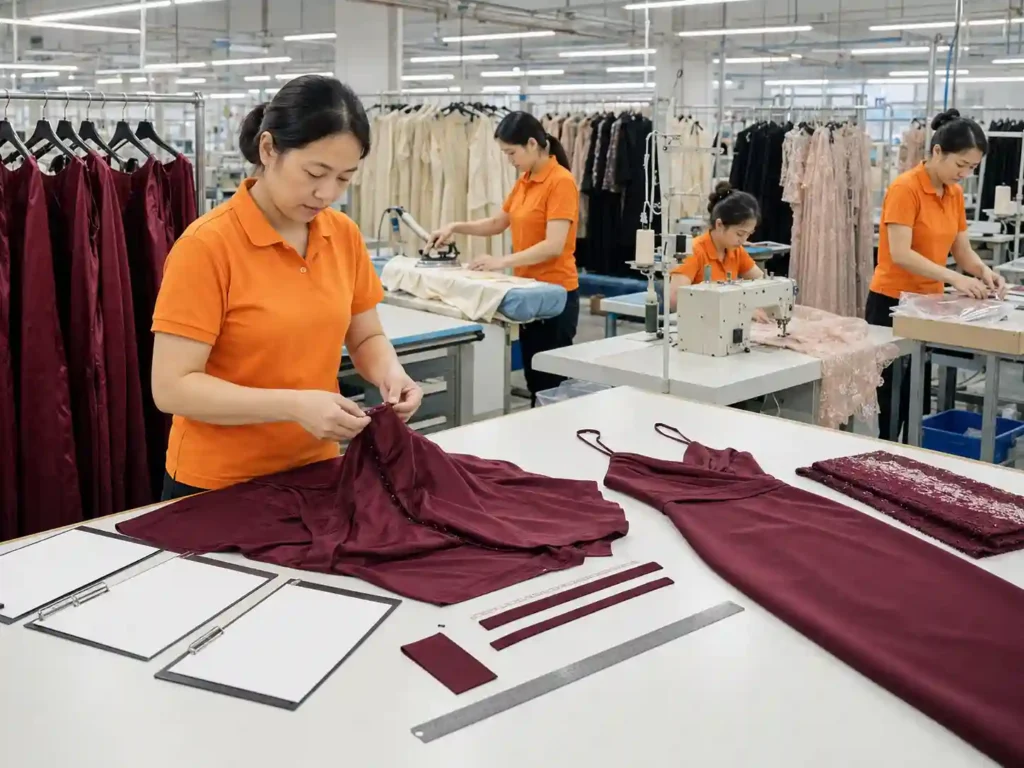
The best sampling plan is rarely “all digital” or “all physical.” It is a controlled sequence in which every sample earns its place by answering a specific question. Use 3D sampling to compare ideas, identify early pattern issues, and avoid unnecessary sewn iterations. Use physical samples to prove fit, fabric, support, comfort, construction, workmanship, and production readiness. Then preserve every approved decision in documents that can guide bulk manufacturing.
For a custom dress project, Jinfeng Apparel can review your tech pack, reference images, original sample, size chart, fabric direction, trims, quantity plan, target market, and launch schedule. The company supports pattern development, physical sample making, fit correction, revised samples, PP approval, Golden sample control, bulk production, private-label packaging, quality control, and export coordination for established fashion brands and mid-to-large apparel clients.
Jinfeng Apparel has focused on custom womenswear manufacturing since 2008. Its documented development resources include 7+ senior womenswear pattern makers, 2 sample rooms, and 20+ sample machinists. The standard MOQ starts from 200 pieces per style and color, subject to fabric availability, color development, trims, construction complexity, packaging requirements, and production scheduling.