
Sage Green Dress Manufacturer
Color-engineered dress development for fashion, occasionwear and bridal collections, from approved sage standards to repeatable private-label production.
- 6 commercial dress families developed across satin, chiffon, crepe, mesh, lace and stretch constructions.
- 3 color-control stages: target shade definition, fabric-specific approval and bulk-lot verification before cutting.
- MOQ starts from 200 pcs per style/color, subject to fabric availability, custom dyeing, trims and construction complexity.
- 2 sample rooms, 7+ senior pattern makers, 20+ sample machinists and 15+ QC inspectors support development through bulk approval.
Jinfeng Apparel helps established fashion teams convert a sage green direction into production-ready dresses with controlled shade, suitable fabric behavior, stable fit, documented sampling, bulk inspection, private-label packing and repeat-order records. Send a tech pack, physical swatch, Pantone reference, original sample or collection brief for a structured project review.
Built for Multi-Style Sage Dress Programs
Since 2008
6 Owned Factories
2 Sample Rooms
7+ Pattern Makers
15+ QC Inspectors
100,000+ Monthly
A Manufacturing Match for Established Fashion Programs
Best Program Fit
Working Framework
Strong cooperation begins with clear approvals. Fabric swatches, lab dips where needed, fit comments, revised samples, pre-production standards, label files and packing instructions are confirmed before bulk release. Jinfeng Apparel can advise on production feasibility, fabric substitution, structure risk and quantity planning, while final decisions remain linked to the brand’s product strategy, target market and signed specifications.
Where Sage Green Dress Production Commonly Fails
Shade Drift
Fabric Response
Repeat Consistency
A first order can use one fabric lot; a replenishment may rely on a new dye batch months later. Exact visual duplication cannot be assumed without stored references and renewed comparison. Jinfeng Apparel keeps pattern files, measurement records, approved fabric references, trim details and packing requirements for repeat orders. New lots are compared with retained standards, and differences are reviewed before production rather than discovered after packed garments reach the warehouse.
Commercial Sage Green Dress Categories
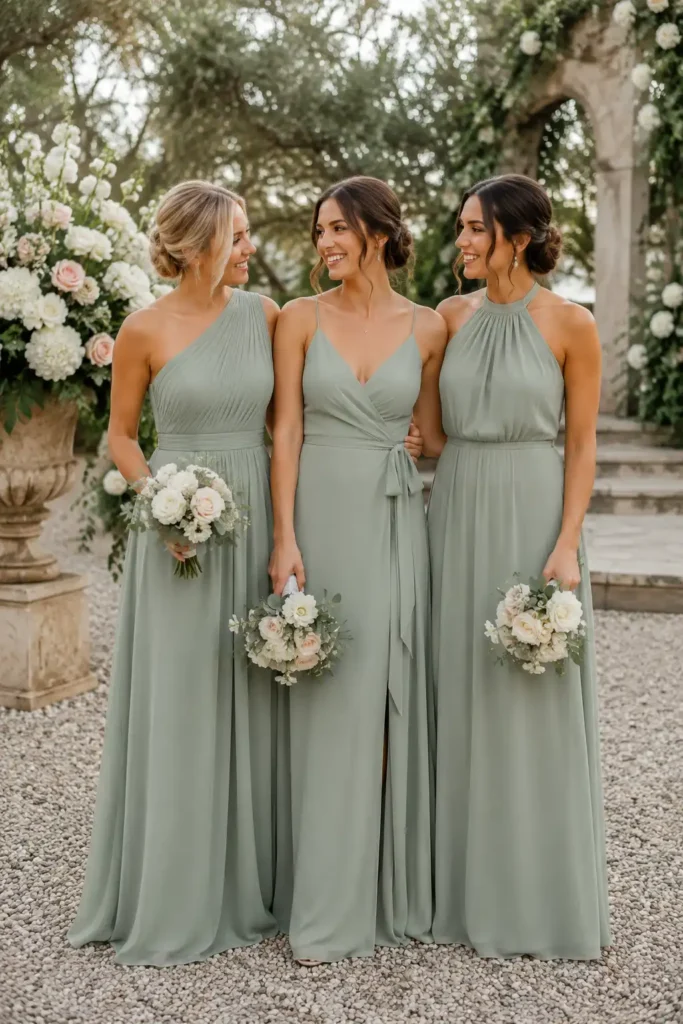
Bridesmaid Dresses
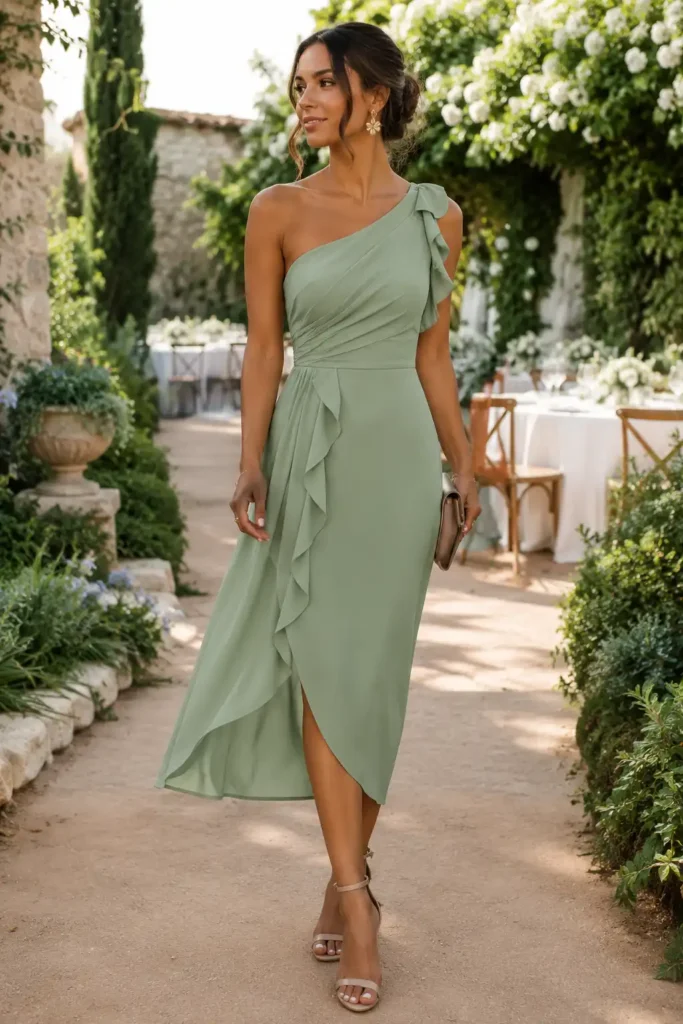
Wedding Guest Dresses
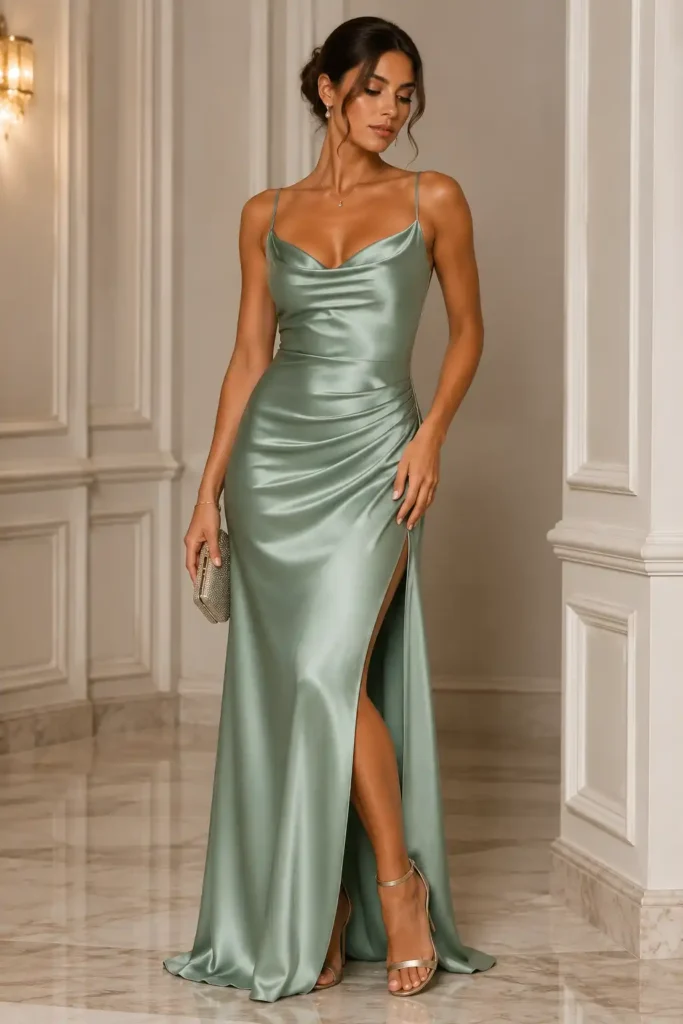
Satin Occasion Dresses
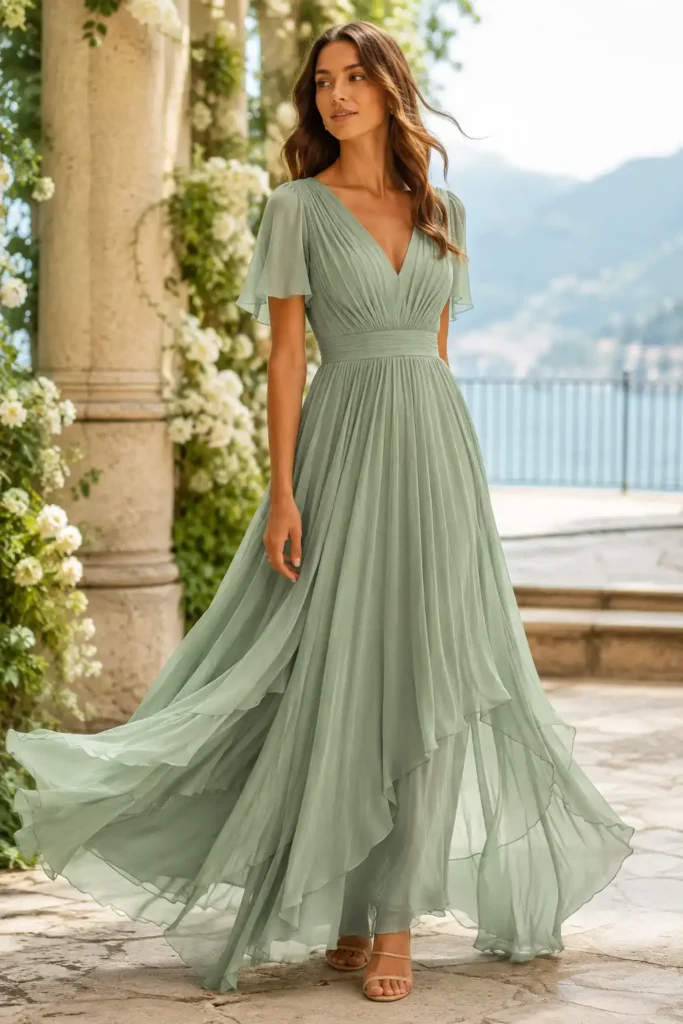
Chiffon Maxi Dresses
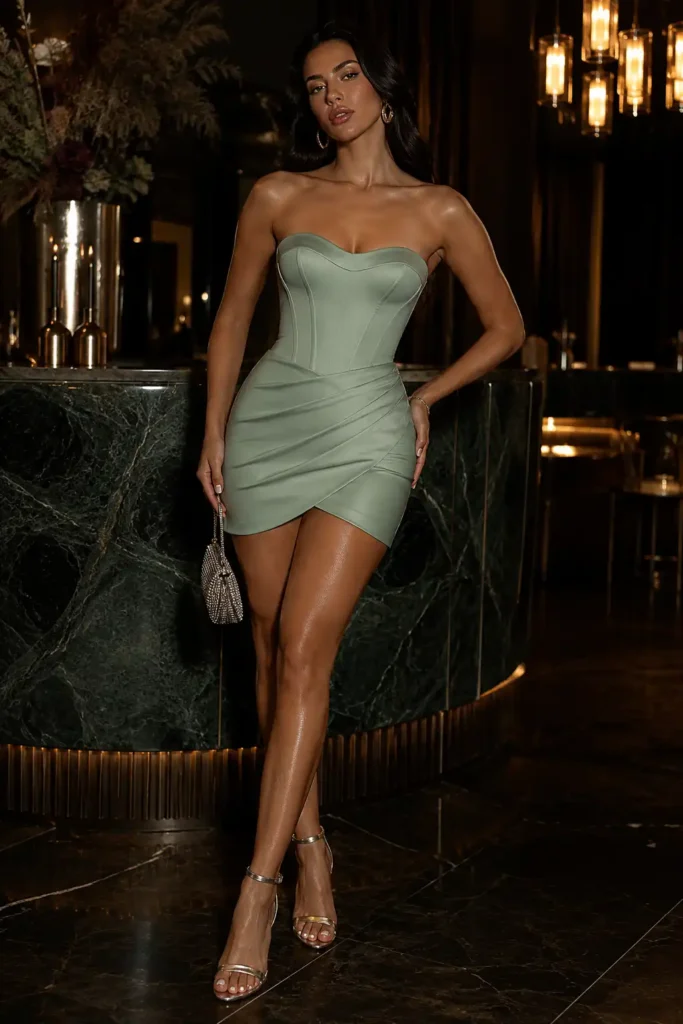
Structured Mini Dresses
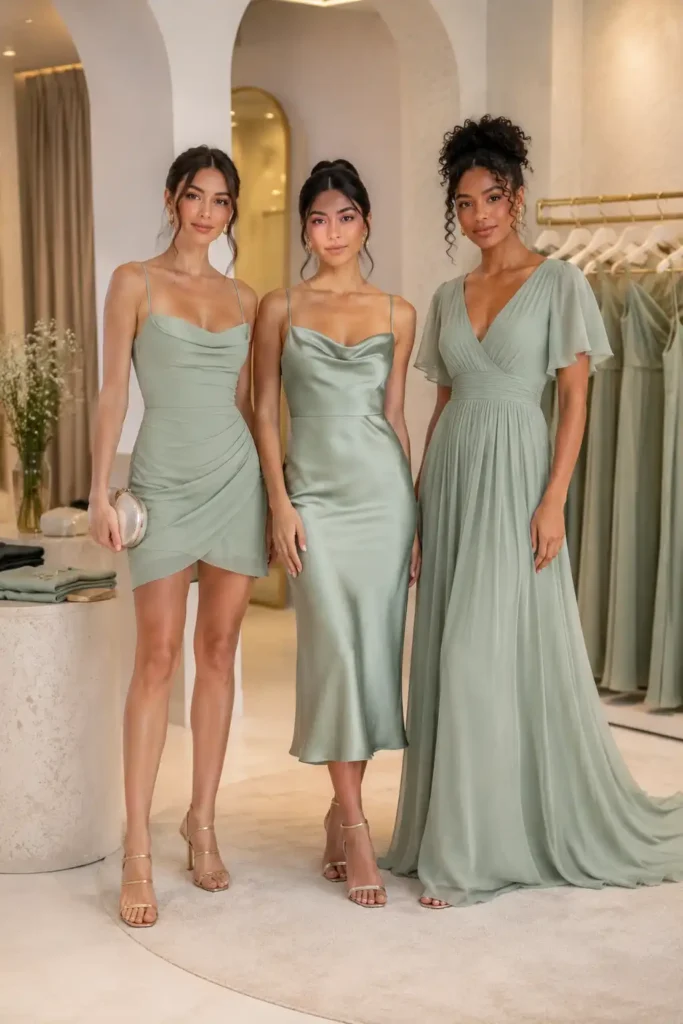
Retail Collections
Defining a Production-Ready Sage Green
Color names create direction, not an enforceable bulk standard. Production begins when the target shade is translated into a physical, fabric-specific reference that can be checked under agreed conditions.
Start with a Reliable Reference
A brand may submit a Pantone TCX code, a fabric cutting, a garment, an approved lab dip or a commercially available reference item. Physical fabric is often more useful than a screen image because sage green reacts strongly to surface texture and light. The development team records whether the target should feel greyed, warm, cool, blue-based, olive-based or softly pastel. Any intended relationship with complementary colors – ivory lining, champagne hardware, tonal thread or contrast lace – is clarified before material sourcing. A Pantone code can guide the mill, yet the approved dyed fabric remains the controlling standard for bulk production. When several materials appear in one dress, each receives its own visual approval because equal dye formulas do not create equal visible color on satin, chiffon, mesh or lace.
Review Color under Controlled Light
Sage green should be checked under more than one relevant light condition because a shade may look balanced in daylight and noticeably warmer under store lighting. The review can include daylight-equivalent illumination and retail-style fluorescent or LED conditions according to the program. Fabric is assessed flat, folded and against the intended lining. Satin is viewed from different directions to reveal shine variation, while chiffon is checked in the actual layer count. Mesh is reviewed on the lining or skin-tone base planned for the garment. Comments such as “slightly less yellow” or “closer to the physical swatch” are recorded against a labeled option rather than left in informal chat. Clear approval language reduces the chance of an unapproved interpretation reaching bulk dyeing.
Create a Usable Bulk Standard
The approved shade reference is linked to fabric name, supplier, composition, weight, lot information and the relevant style group. Matching thread, zipper tape, lining, elastic, bra cups and labels are reviewed where visible. For programs using several sage fabrics, the goal is coordinated appearance rather than forcing physically different textiles to look mathematically identical. A flatter crepe may appear slightly deeper than a reflective satin while still belonging to the same collection. Acceptable relationships are documented before PP sample approval. Bulk lots are then compared with the approved references before cutting, and any lot outside the approved visual range is isolated for review. The process creates a traceable decision path from color brief to packed garment.
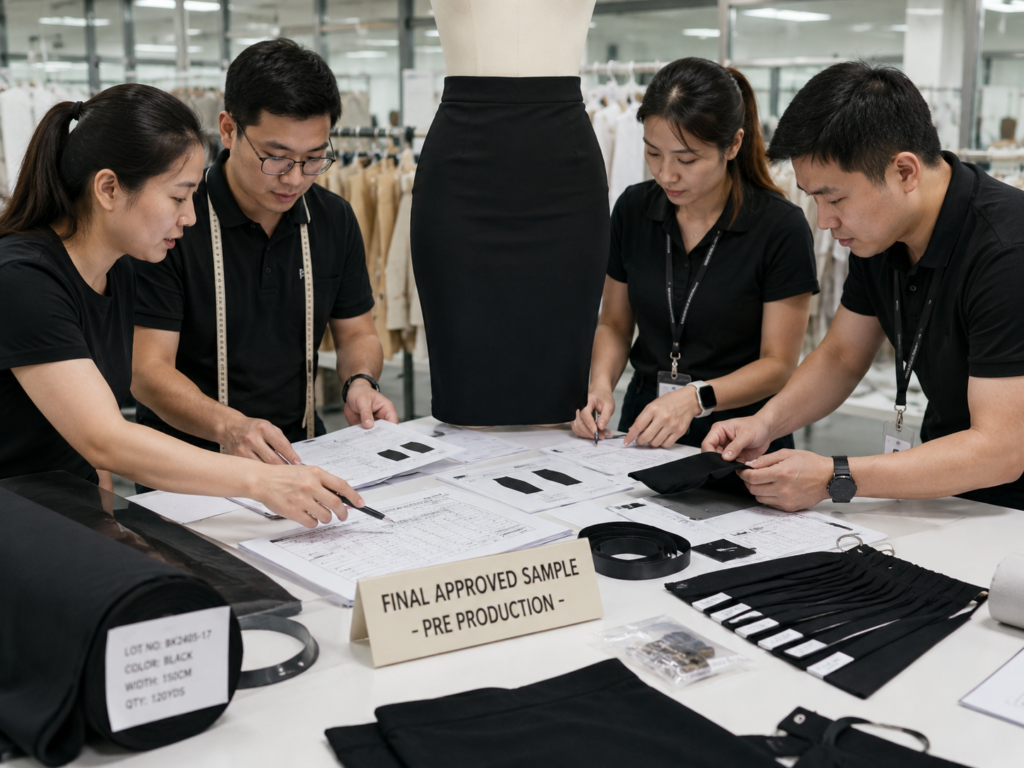
How Fabrics Change Sage Green
Fabric construction controls brightness, depth, transparency, movement and surface risk. Material selection should follow the intended silhouette, price position, wearing occasion and color behavior rather than color alone.
| Fabric | Typical Weight | Visual Effect | Best Uses | Main Controls |
|---|---|---|---|---|
| Satin | 90-220 gsm | Luminous; may read cooler or brighter | Slip, draped, occasion, bridesmaid | Shine direction, snagging, seam tension, pressing, packing |
| Stretch Satin | 120-250 gsm | Smooth with body-hugging depth | Corset, bodycon, fitted mini | Stretch direction, recovery, cup support, zipper flatness |
| Chiffon | 55-100 gsm | Soft and translucent; deepens in layers | Maxi, ruffle, bridesmaid, formal | Layer count, lining, cutting stability, hem balance |
| Crepe | 110-260 gsm | Matte, refined and visually stable | Midi, wedding guest, formal daywear | Drape, surface texture, seam appearance, shrinkage |
| Mesh | 60-180 gsm | Changes against skin or lining | Panel, ruched, bodycon, party | Transparency, stretch recovery, lining placement, seam strength |
| Lace | 80-220 gsm | Depth varies with motif density | Occasion, overlay, sleeve, panel | Base color, motif placement, joining, lining relationship |
| Jersey/Ponte | 160-350 gsm | Even, softer or more structured by knit | Bodycon, ruched, office-to-evening | Recovery, twist, measurement, wash stability |
Stock Fabric and Custom Dyeing Routes
A reliable sourcing plan separates immediate stock opportunities from custom color development. Each route affects MOQ, timing, shade continuity, replenishment and commercial risk in a different way.
Stock Sage Fabric
Stock fabric can shorten early development when the available tone, quantity and quality match the collection. The sourcing team checks supplier stock, lot number, usable width, composition, weight, handfeel, stretch, transparency and expected replenishment. A stock shade should still be reviewed against the brand reference because “sage” labels vary widely between mills. Available yardage must cover samples, bulk cutting, reasonable loss and potential replacements. When the same collection uses several fabrics, stock options are assessed together so one material does not appear disconnected from the others. Stock availability may support the standard MOQ of 200 pcs per style/color, but the final production structure depends on style consumption, size ratio, fabric lot and supplier terms.
Custom-Dyed Sage Fabric
Custom dyeing is appropriate when a brand requires a proprietary tone, a strict seasonal palette or long-term continuity across a collection. Development begins with selected greige or base fabric, followed by lab dip options. Two or three controlled options per round often provide a workable comparison, although the mill and fabric type determine the actual process. Approval comments address hue, depth and undertone rather than vague preference alone. Custom dyeing can introduce separate minimum meter requirements, color surcharges and additional calendar time. The schedule should allow for lab dip review, bulk dyeing, shade-band assessment and replacement planning before cutting. Certified or specialty fabric requests may carry additional supplier and certificate conditions by composition, color and batch.
Bulk Lots and Reorders
Bulk dyeing is not complete when fabric leaves the dye house. Each lot is identified and compared with the approved standard before style allocation. Large programs may separate lots by style or delivery group to reduce visible mixing. Face fabric, lining, zipper tape, thread and elastic are checked as a coordinated set. For later replenishment, retained references and production records guide a fresh comparison; an old formula alone cannot guarantee an identical appearance because raw material, process and lot conditions change. When a reorder cannot match within the approved visual range, the difference is raised before cutting so the brand can decide whether to accept, adjust, regroup or redye. Early disclosure protects launch planning better than hiding a variation until final inspection.

Sage Dresses for Wedding-Led Collections
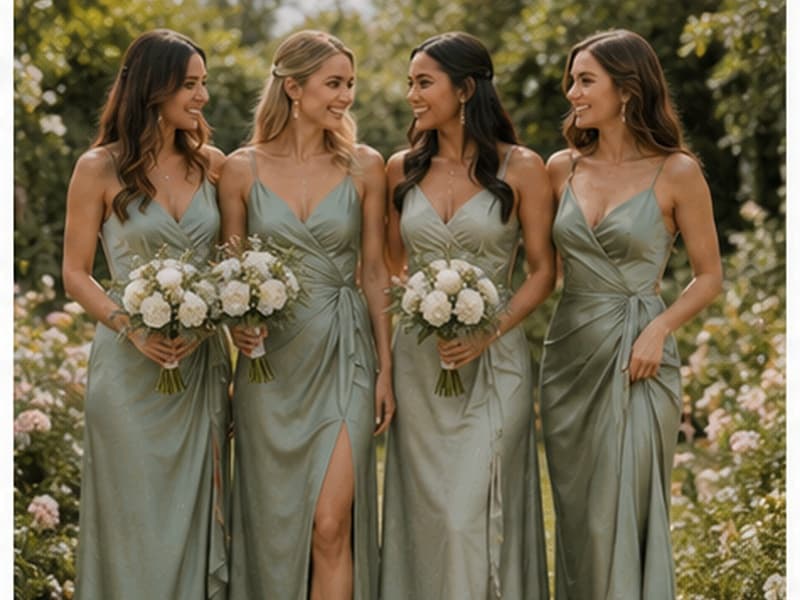
Bridesmaid Programs
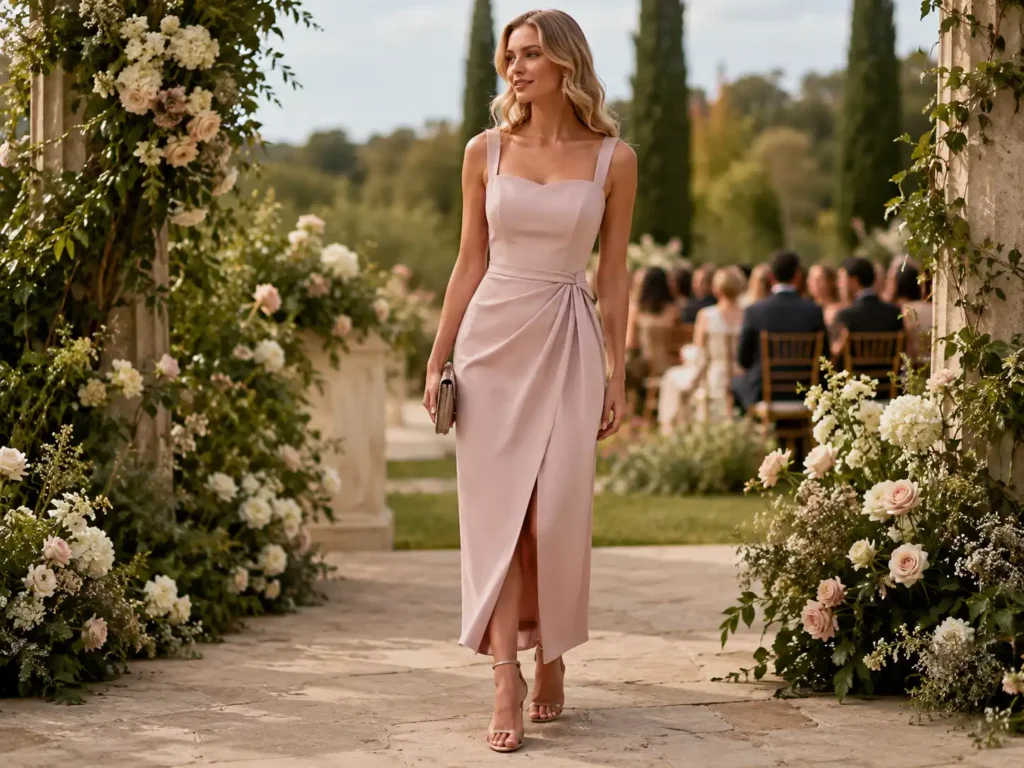
Wedding Guest Collections
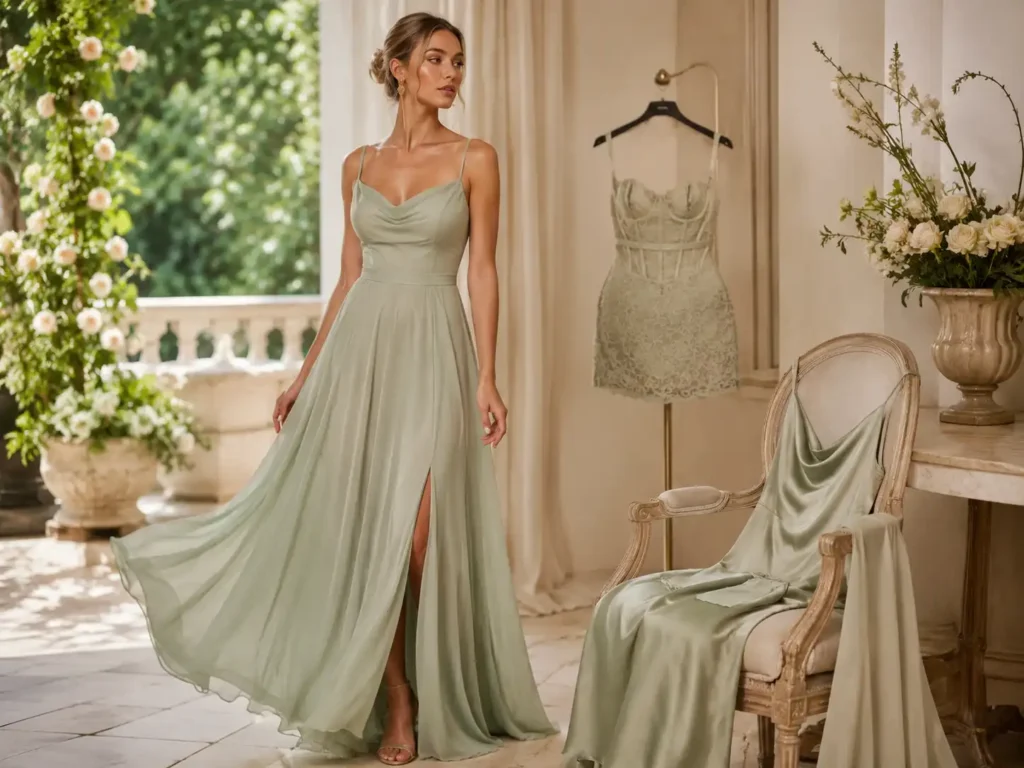
Occasion Satin Styles
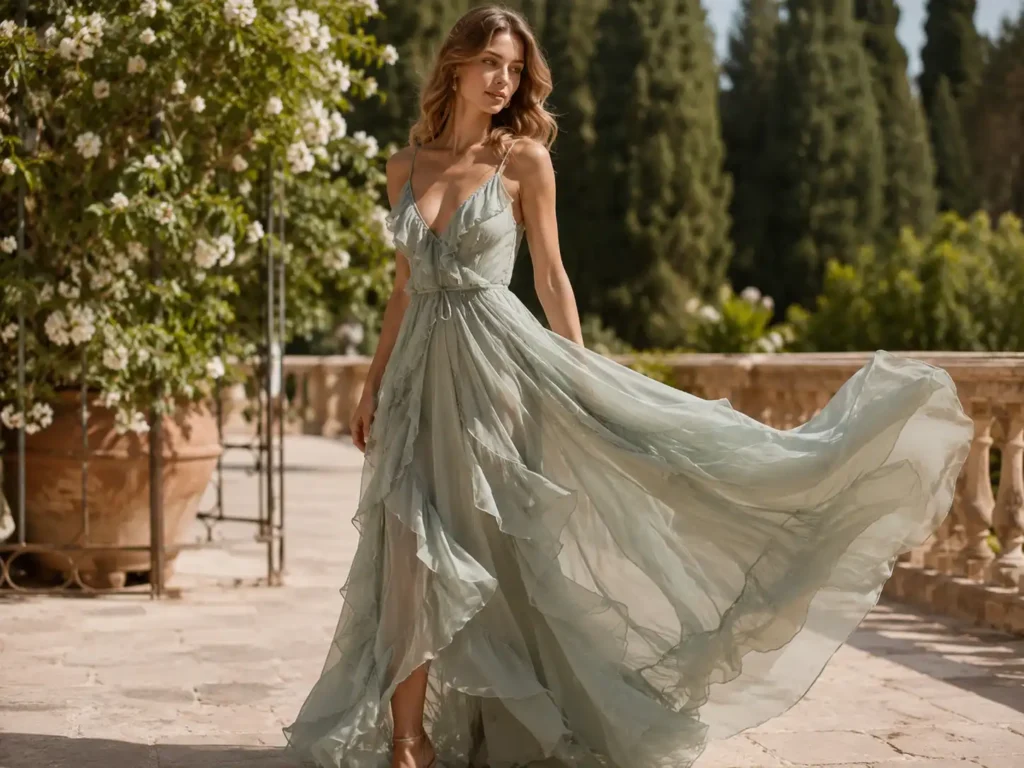
Formal Chiffon Styles
Build a Complete Sage Green Collection

Hero Maxi

Commercial Midi

Social Mini

Satin Slip
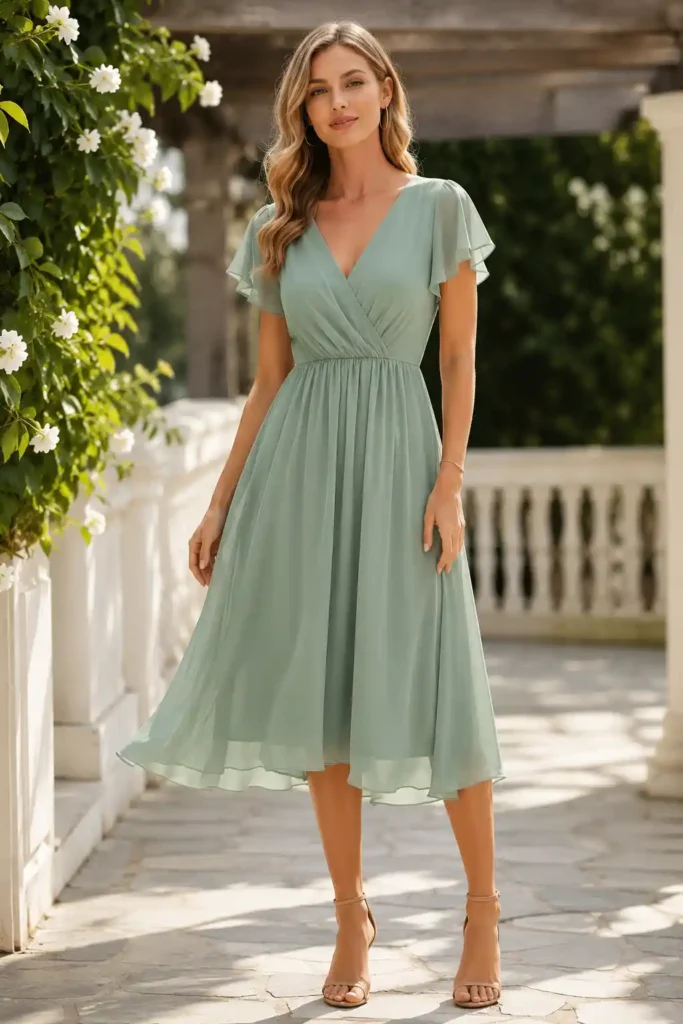
Chiffon Drape

Crepe Repeat
Fit Engineering for Sage Green Dresses
Color attracts attention, while fit determines wearability, returns and reorder confidence. Pattern review links silhouette, fabric behavior, support structure and the intended size range before bulk grading is released.
Bust, Neckline and Support
Slip, halter, deep-V, strapless and corset styles require different bust-control methods. Pattern makers review upper bust, full bust, under-bust, cup position, neckline depth, armhole, side coverage and strap angle.
Satin may pull a neckline lower through drape, while mesh or jersey may stretch beyond the flat measurement. Corset structures add bra cups, boning, lining and zipper load, so comfort and support are checked together. During fitting, comments identify whether the neckline gaps, cups sit too high or low, straps slip, side coverage exposes too much or the underarm cuts into the body. Adjustments are transferred into pattern and measurement records rather than applied only by hand to one sample. Critical construction points are then added to the PP and inline checklists.
Waist, Hip and Movement
Waist placement controls the overall proportion of a dress. A natural waist may suit classic occasionwear, while a raised waist can lengthen the visual leg line and a corset waist requires stronger structure. Hip allowance depends on silhouette and fabric recovery. Bodycon styles need controlled negative ease and stable stretch; slip dresses require enough movement without twisting; A-line and chiffon styles need balanced fullness rather than excess bulk. Walking, sitting and stair movement are considered for slits, wrap overlap and maxi lengths. Measurement tolerances are agreed by project. A specification may use around +/-1.0 cm at critical bust and waist points and a wider allowance on long measures, but the signed tolerance sheet governs every order. Bulk QC follows the approved method, not a generic factory limit.
Length and Size Grading
Mini, midi, maxi and floor lengths create different fit risks. Mini dresses require hem coverage and hip movement.
Midi styles need a proportion that remains flattering across sizes. Maxi and floor-length styles require even hems, controlled inner lining and planned shoe allowance where relevant. Size grading should not simply enlarge every area equally. Neckline depth, strap length, armhole, waist position, slit height and skirt sweep may require separate rules. Jinfeng Apparel can develop ranges such as XS-XXL or a brand-specific size system, subject to the supplied chart and fit approval. The approved base sample, graded nest and measurement file form the bulk reference.
Size-set or selected-size checks can be arranged according to program complexity before full production proceeds.

Construction Details Behind a Clean Finish
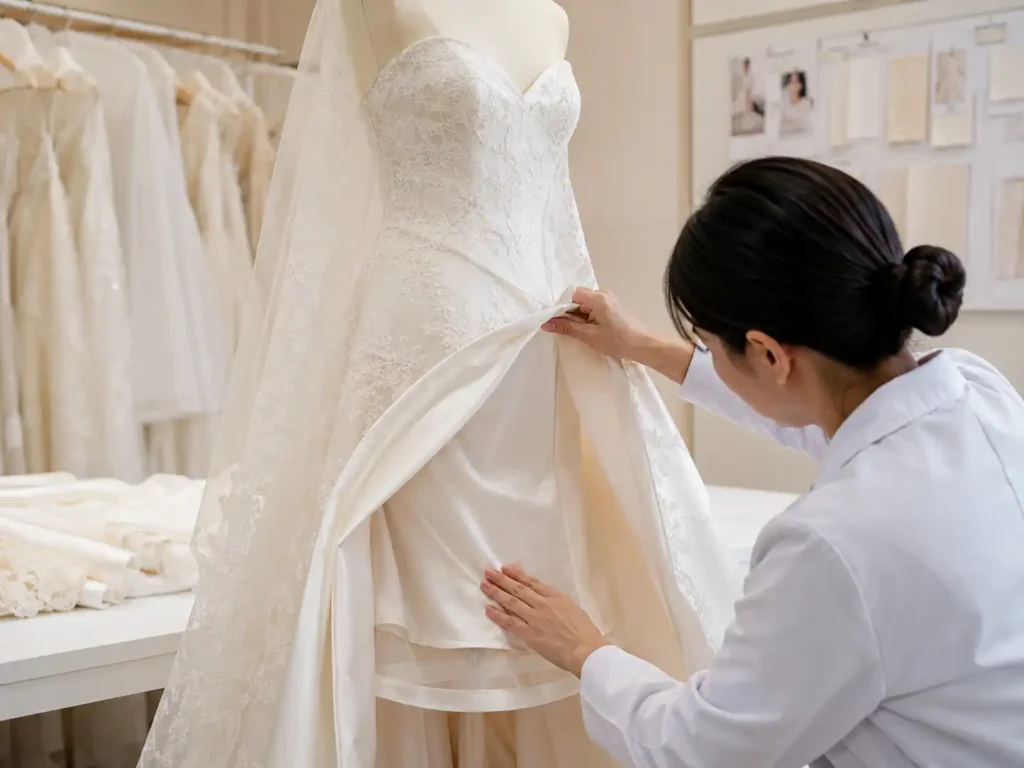
Lining Control
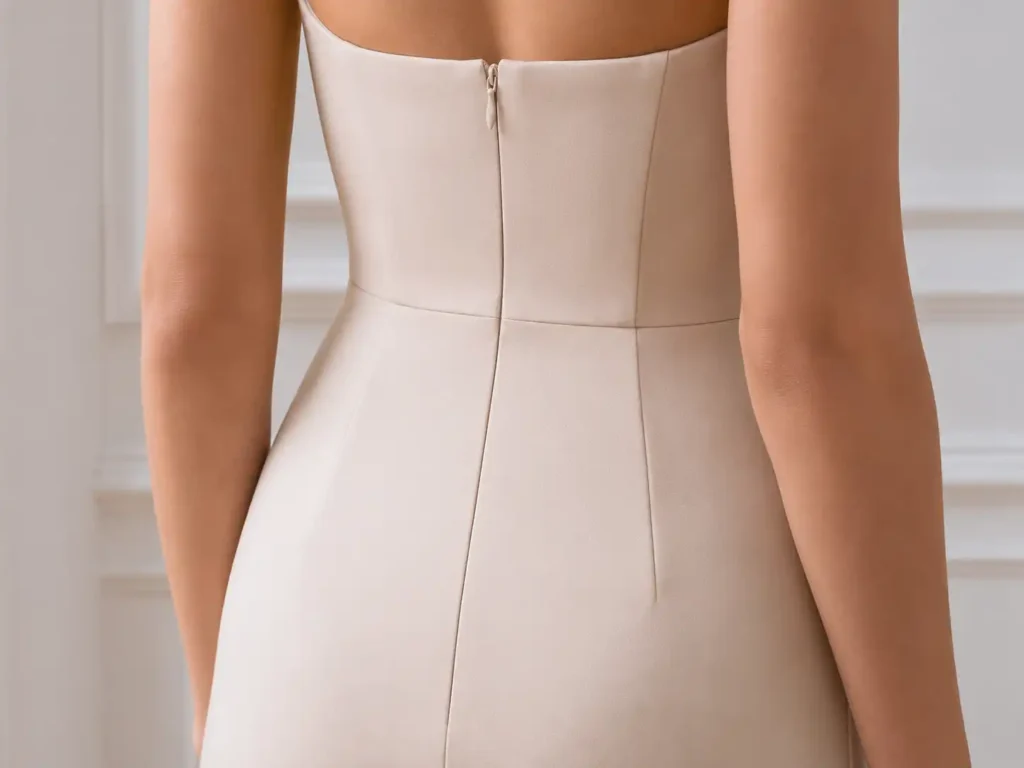
Zipper Flatness
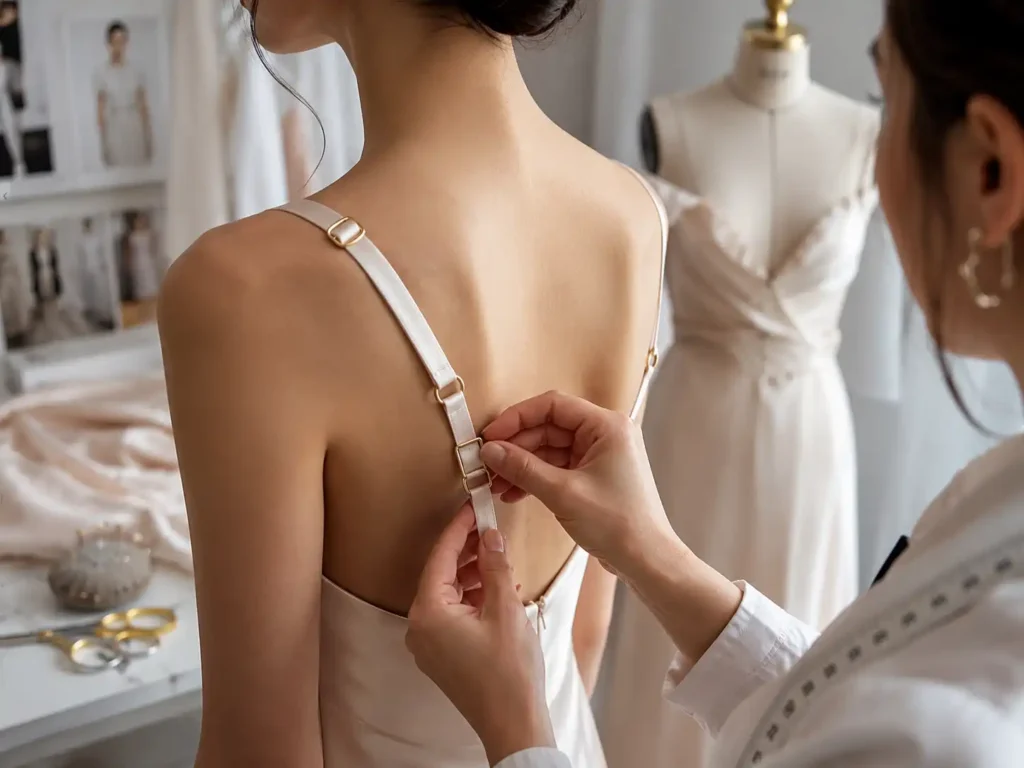
Straps and Support

Decorative Trims
From Design Brief to Approved Bulk Standard
Project Review
Fabric Direction
Color Standard
Pattern Development
First Sample
Revision Control
PP Approval
Bulk Production
Final Delivery
Production Matching by Fabric and Structure
Soft Woven Dresses
Structured Occasionwear
Stretch and Mesh Styles
Sample-to-Bulk Shade Consistency Control
Approved color has value only when it survives fabric receipt, cutting, sewing, finishing, packing and later replenishment. Control points are built around material identity and visible comparison.
Before Cutting
Incoming fabric is checked against the approved reference and separated by supplier lot or dye lot. Rolls are reviewed for visible shade change, stains, width, surface damage and other project requirements.
Satin is checked from consistent directions because light reflection can mimic color difference. Chiffon is compared in the intended layer count, while mesh and lace are viewed with the approved lining or base. Lot identity is carried into the cutting plan so panels from visibly different groups are not mixed in one garment. Thread, zipper tape, lining, elastic and support materials are staged by approved color group. Any uncertain lot is held for review before cutting, when correction is still possible without creating finished-garment loss.
During Sewing and Finishing
First pieces confirm shade relationship, cutting direction, seam appearance and visible accessories. Operators and line inspectors receive approved references for the relevant style group. Components are kept within identified lots, especially on satin panels, layered chiffon or large skirts where variation is easier to see. Inline inspection monitors panel mismatch, lining exposure, thread contrast, pressing marks, stains and surface abrasion. Finishing areas use controlled handling to reduce snagging and contamination on muted light colors. Garments are grouped by style, size and color before labeling. When multiple sage shades or nearby green colorways exist in one order, color stickers, SKU references and separate work-in-process containers reduce accidental mixing.
Repeat Orders
Repeat production begins by retrieving the original pattern, measurement file, fabric record, trim list, production notes, label files and packing instructions.
A new fabric lot is compared with the retained approval rather than accepted from its name or dye formula alone. If the original fabric is unavailable, alternative swatches are reviewed for composition, weight, drape, stretch, transparency and color relationship. Pattern or lining changes are assessed when the material changes.
New shade approval is documented before replenishment cutting. The process preserves the commercial identity of the style while acknowledging that textile batches vary. Early comparison also allows sales and operations teams to make informed decisions about timing, color tolerance or assortment grouping before warehouse delivery is affected.

Sage Green Dress Quality Control Matrix
Quality inspection follows the approved style, fabric, measurement and packing files. Sage green programs add dedicated checks for shade, transparency, surface marks and color-SKU separation.
| Stage | Core Checks | Sage-Specific Risk | Release Decision |
|---|---|---|---|
| Fabric Receipt | Composition reference, width, weight, stains, damage, shrinkage plan | Lot variation, satin direction, chiffon depth, lining mismatch | Approve, segregate or hold lot |
| Cutting | Marker, grain, size count, notches, panel identity | Mixed lots, reversed shine, lace/mesh placement | Release bundles by lot and style |
| First Piece | Construction, measurements, seam method, trims | Thread/zip mismatch, visible lining, shade relationship | Approve line standard or correct |
| Inline Sewing | Seam quality, symmetry, fit points, operation security | Snagging, panel mismatch, puckering, stretched mesh | Continue, rework or stop operation |
| Final Garment | Measurements, appearance, function, pressing, cleanliness | Shade grouping, transparency, surface marks, hem balance | Pass, repair, sort or reject |
| Packing | Labels, barcode, size/color sticker, polybag, carton mark | Mixed greens, wrong SKU, wrong size-color ratio | Release cartons and packing list |
Private Label and Retail-Ready Packing

Woven Labels
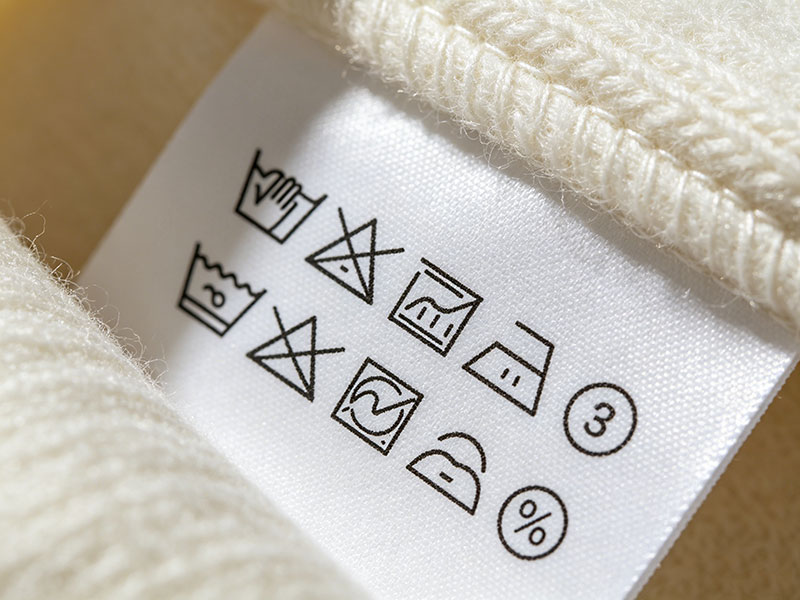
Care Labels

Hangtags and SKUs
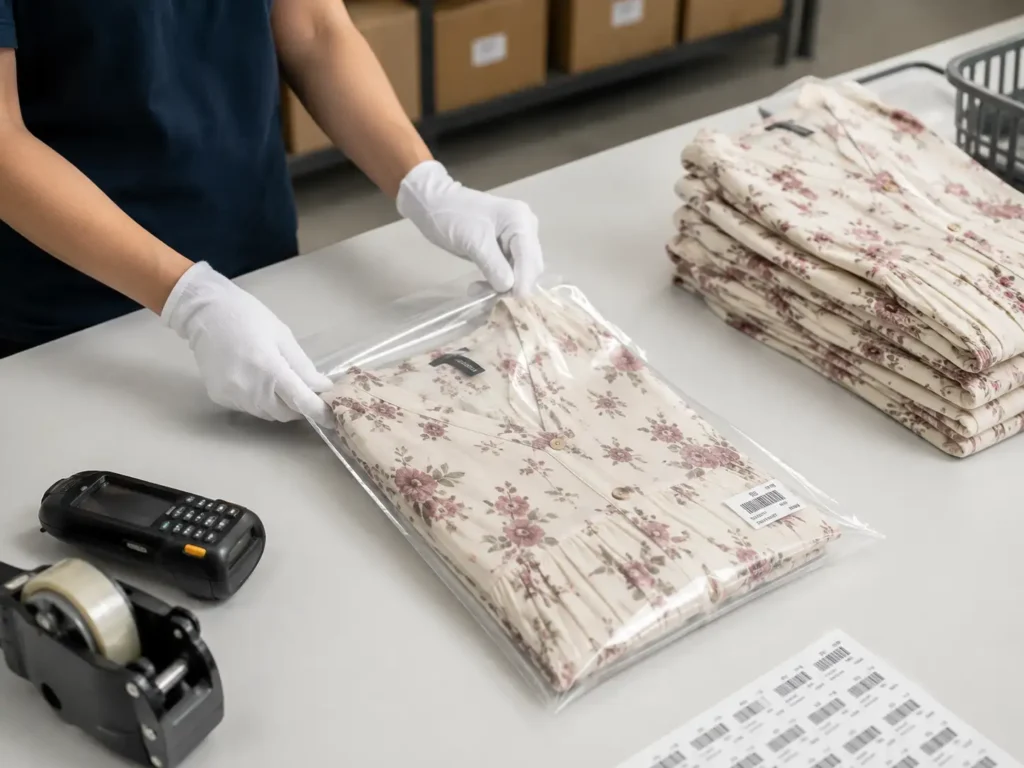
Polybags
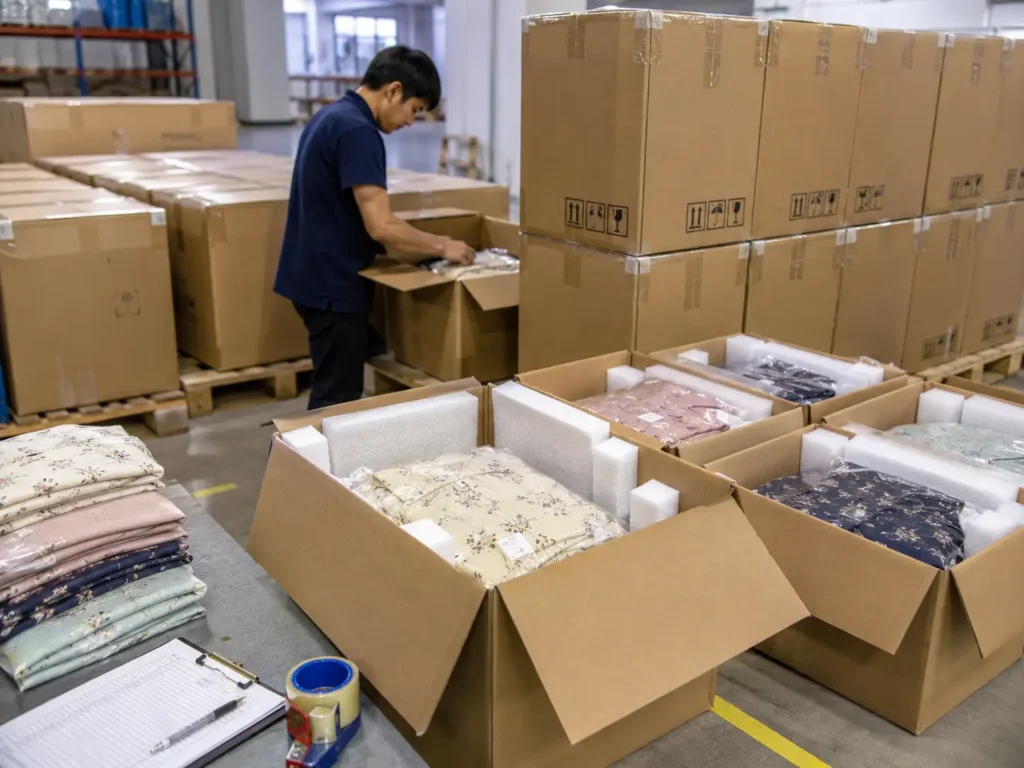
Carton Control

Packing Team
MOQ and Production Planning Boundaries

MOQ Structure

Custom Color Factors

Sample Calendar

Bulk Calendar
Sage Green Dress Manufacturing Case Studies
The following anonymized cases represent different sage green dress development programs, covering bridal collections, contemporary fashion projects and large private-label seasonal productions. Brand identities, original designs and commercial information remain confidential.
Case 1: Sage Green Bridesmaid and Wedding Collection
Project Scope
A bridal-adjacent fashion brand developed a sage green collection for bridesmaid, wedding guest and romantic occasion markets.
- Collection size: 20 dress styles
- Product categories: sage chiffon bridesmaid dresses, satin slip dresses, crepe midi dresses, lace occasion dresses and flowing maxi styles
- Materials: chiffon, satin, crepe, lace, mesh and lightweight lining systems
- Construction details: A-line silhouettes, wrap dresses, halter styles, one-shoulder designs and draped occasionwear
- Requirement: unified sage color direction across different fabrics and silhouettes
Development Challenges
The main challenge was maintaining a consistent sage identity across soft and reflective fabrics.
Key challenges included:
- Sage shifting toward grey, yellow or olive depending on fabric
- Chiffon becoming lighter after layering
- Satin reflecting different tones under lighting
- Lace appearance changing with lining color
- Maintaining length and proportion across multiple sizes
Manufacturing Approach
The development team created a fabric-specific sage approval process.
Key controls included:
- Physical sage color reference approval
- Fabric swatch comparison
- Lining and shell coordination
- Layered transparency review
- PP sample approval before bulk production
Additional attention was given to:
- Waist placement
- Bust coverage
- Hem balance
- Adjustable straps
- Multi-size grading
Manufacturing Value
The collection achieved a coordinated sage green wedding-event appearance while allowing each fabric to maintain its intended texture and commercial positioning.
Case 2: Sage Green Party and Contemporary Fashion Collection
Project Scope
A premium ecommerce fashion brand developed a sage green collection focused on modern silhouettes, social occasions and elevated fashion positioning.
- Collection size: 18 dress styles
- Product categories: sage bodycon dresses, corset mini dresses, ruched midi dresses, satin party dresses and mesh styles
- Materials: stretch satin, jersey, ponte, power mesh, lace and structured lining
- Construction details: body shaping, ruching, cut-outs, corset panels and fitted silhouettes
- Requirement: strong visual appeal with reliable commercial fit
Development Challenges
The collection required balancing fashion impact with production stability.
Key risks included:
- Stretch changing the visual sage tone
- Mesh transparency under body tension
- Uneven ruching distribution
- Corset support affecting comfort
- Internal components showing through light fabrics
Manufacturing Approach
The project focused on fit engineering and material performance.
Key controls included:
- Testing stretch direction and recovery
- Reviewing bust-waist-hip balance
- Adjusting negative ease by fabric behavior
- Confirming mesh and lining combinations
- Testing corset support structures
Production controls included:
- Measurement inspection
- Seam stability checks
- Zipper flatness review
- Ruching consistency checks
- Final appearance inspection
Manufacturing Value
The collection delivered a modern sage fashion direction while maintaining stable fit, repeatable production and ecommerce-ready presentation.
Case 3: Large Private Label Sage Green Collection Program
Project Scope
An established fashion brand required a complete sage green seasonal collection covering multiple silhouettes, fabrics and retail occasions.
- Collection size: 30 dress styles
- Production scale: 80,000+ pieces
- Product categories: sage mini dresses, midi dresses, maxi dresses, slip dresses, corset dresses, wedding guest dresses and resort styles
- Materials: satin, chiffon, crepe, mesh, lace, jersey, ponte and stretch fabrics
- Requirement: consistent quality across multiple SKUs, sizes and delivery batches
Development Challenges
The program required coordination across different sage fabric systems.
Major challenges included:
- Managing greyed, warm and olive-based sage directions
- Maintaining shade relationships between materials
- Controlling different lining requirements
- Managing multiple size ranges
- Coordinating private-label packing
Manufacturing Approach
The collection was divided according to fabric family and production risk.
Soft Sage Occasion Group
Focused on:
- Chiffon and lace dresses
- Bridesmaid silhouettes
- Transparency control
- Lining coordination
Structured Sage Fashion Group
Focused on:
- Corset construction
- Bodycon fitting
- Support systems
- Internal finishing
Manufacturing Value
The program demonstrated that large sage green collections require both production capacity and detailed control of shade, fabric behavior, fit, workmanship and retail delivery.
Protected Development and Repeat-Order Records
Design Protection
Production Records
Repeat Support
Frequently Asked Questions About Sage Green Dresses
Sage green is a muted green family rather than one universal color. It may lean grey, yellow, blue or olive. A production project should define the target through a Pantone TCX reference, physical fabric swatch, approved garment or lab dip. The approved dyed fabric becomes the controlling bulk reference.
Yes. A physical fabric cutting or approved garment can guide sourcing and dyeing. The team also records fabric type, light behavior and intended lining because the same visual reference changes on satin, chiffon, crepe, mesh and lace. Final approval is made on the selected material.
They can be coordinated closely, but exact visual identity is rarely realistic because satin reflects light while chiffon transmits light and changes with layer count. Separate fabric-specific approvals create a harmonious collection. The acceptable relationship is confirmed before PP approval and bulk dyeing.
Lab dips can be arranged for custom-dyed fabric when required by the project. The mill, fabric composition, color depth and minimum meter conditions determine the process. Two or three options per round may be prepared, followed by written approval comments and a retained master for bulk comparison.
MOQ starts from 200 pcs per style/color. Fabric supplier requirements, custom dyeing, special lace, sequins, certified materials, custom trims and packaging can raise the effective minimum. A quantity plan should list each style, each color, size ratio and target delivery rather than only the total order volume.
A common initial-sample plan is around 7-15 working days after key fabric and trims are ready. Corset structures, lace placement, embellishment, custom dyeing or a large multi-style range may follow a different schedule. Revision timing depends on the confirmed comment list and material status.
Approved references are linked to supplier and lot records. Incoming fabric is compared before cutting, lots are separated, first pieces confirm visible relationships, and inline inspection checks panel shade, lining, thread, zipper and surface condition. Packing controls prevent similar green colorways or SKU labels from being mixed.
Yes, subject to the brand size chart and fit approval. Pattern grading covers bust, waist, hip, neckline, armhole, strap, slit, lining and length rules rather than scaling every dimension equally. Size-set or selected-size samples can be arranged where the style risk justifies them.
Yes. Private-label production can include woven labels, size labels, care labels, hangtags, barcode stickers, SKU labels, polybags, carton marks and warehouse receiving requirements. Artwork, data format, placement and packing ratios must be approved before bulk application.
Repeat orders use retained fabric references and production records, but a new dye lot must still be compared because textile batches vary. When the original material is unavailable, replacement swatches are reviewed for color, weight, drape, stretch, transparency and pattern impact before approval.

Send Your Sage Green Dress Brief
Share the information needed to evaluate shade development, fabric direction, pattern complexity, MOQ, sampling and bulk feasibility. A complete brief allows Kelly and the Jinfeng Apparel development team to return focused questions and a structured next-step plan. Reference images are useful for visual direction, while tech packs, original garments, physical swatches and size charts provide stronger production standards.
For custom color projects, identify the target sage source and whether exact cross-fabric coordination is required. Include the intended market, launch window and delivery destination so material approvals, production planning, private-label work and freight preparation can be assessed together.
Files are reviewed before a sampling or quotation plan is confirmed.
- Company name, contact person, email and WhatsApp
- Reference images, tech pack, original sample or line sheet
- Pantone TCX, physical swatch or approved color reference
- Style count and quantity per style/color
- Target fabric, composition, weight or handfeel direction
- Size range, measurement chart and fit sample size
- Private-label, barcode, polybag and carton requirements
- Target PP approval, launch date and delivery destination


