Skip to content

A fashion brand can understand its customer, identify a promising dress trend and build a strong launch plan, yet still struggle to turn a visual idea into a garment that can be manufactured consistently. A reference image does not define fabric weight. A moodboard does not explain bust support. A target retail price does not automatically produce a workable pattern, stable measurements or a reliable bulk-production method. Those gaps are where an experienced ODM dress manufacturer becomes valuable.
An ODM dress manufacturer helps a fashion brand develop, sample and produce dresses from a design direction rather than requiring every technical detail in advance. The manufacturer may support structure review, fabric and trim sourcing, pattern development, fit correction, sampling, bulk production, quality control and private-label packaging, while the brand approves the product, price and final production standard.
The important word is not simply ODM; it is development. Some suppliers use the term for lightly relabeled catalog styles, while others can translate a brand brief into a new pattern, an approved sample and a repeatable production file. Send the same inspiration image to two factories and the difference appears quickly: one sends a price, while the other asks about the wearer, market, fit, fabric, lining, target margin and launch date. That second conversation is where a real ODM project begins.
What Is an ODM Dress Manufacturer?
An ODM dress manufacturer helps a brand convert a market direction, reference image, sample, sketch or partial specification into a dress that can be sampled and produced at scale. The supplier contributes to material selection, pattern development, fit, construction and production planning, while the brand controls positioning, product approval, pricing and commercial decisions.
What ODM Really Means
ODM stands for Original Design Manufacturer, but the term is used loosely in apparel sourcing. Some suppliers call themselves ODM manufacturers because they offer a catalog of existing garments. Others provide genuine development support and can turn a brand’s incomplete direction into measurable product specifications.
A brand may begin with a reference photo, moodboard, sketch, original sample, line sheet, desired category, target price or partial tech pack. The manufacturer then helps define fabric weight, stretch, lining, seam placement, neckline depth, dress length, closure type, internal support and grading logic. These decisions determine whether a dress is merely attractive in a photograph or technically ready for repeatable production.
Consider a request for a fitted satin midi dress with a corset-inspired bodice. The idea sounds clear, yet the team must still decide whether the satin should stretch, whether cups and boning are required, how the lining affects ease, whether a back vent is needed and how the waist should grade across sizes. ODM is the shared process of solving those questions before bulk production.
What the Manufacturer Handles
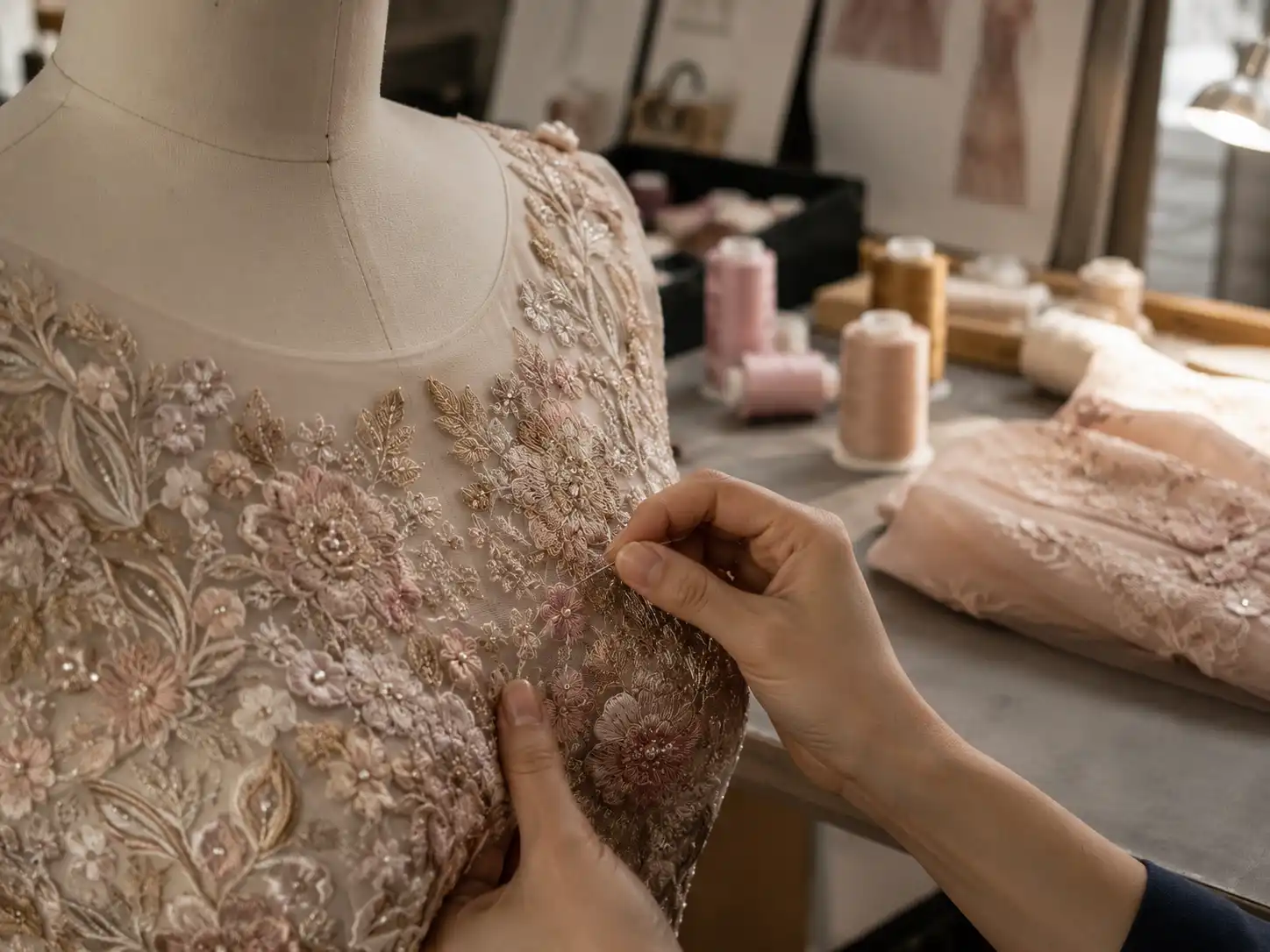
A capable ODM partner manages more than sewing. Its work can include product brief review, style-risk assessment, fabric sourcing, trim development, pattern making, sample sewing, fit correction, pre-production confirmation, bulk material coordination, manufacturing, inspection and private-label packing.
The strongest evidence is a connected process. If a proposed fabric has less stretch than the sample fabric, the pattern may need correction. If boning is added, lining, seam allowance, sewing operations and cost may change. If the skirt sweep increases, consumption and cutting efficiency change. An experienced team explains these trade-offs early instead of treating each decision as an isolated option.
For development-led projects, Jinfeng Apparel can work from tech packs, reference photos, original samples, sketches and line sheets. Its confirmed development resources include 7+ senior pattern makers, 2 sample rooms and 20+ sample machinists, supported by 12+ merchandisers and order-follow-up specialists. Those roles matter because a successful sample requires coordination between product, pattern, material, production and commercial teams.
ODM Is Not Ready Stock
ODM is often confused with ready-stock, white-label or simple relabeling. A ready-stock supplier sells garments that already exist. A brand may add a label, choose an available color or change packaging, but the pattern, material and construction usually remain fixed.
A development-led ODM project works differently. The process may begin with a reference, but the manufacturer can create or revise the pattern, source a suitable material, adjust measurements, modify construction and produce approval samples before bulk production. That distinction is particularly important for dresses because small visual changes often create large technical effects.
Lowering a neckline may require additional support. Changing from woven satin to stretch satin may alter the pattern and zipper behavior. Adding a lining may improve opacity but change fit and seam bulk. True ODM development considers the complete garment instead of offering a list of cosmetic changes.
Different ODM Models
Catalog-based ODM starts with an existing factory style and usually allows limited changes to color, labels or minor details. It is fast, but the same base design may be available to other customers. Adaptation-based ODM starts with a known structure or reference and allows wider changes to fabric, length, fit, sleeves, neckline and detailing.
Development-led ODM begins with a brand brief, moodboard, sketch, sample or product direction. The manufacturer contributes more heavily to structure review, pattern creation, material selection and fit development. It takes more communication than catalog sourcing, but it is more suitable for brands that need a distinctive, scalable product rather than a lightly modified stock style.
Before development starts, the brand should ask whether the base pattern is exclusive, who owns revisions, whether the supplier may reuse the style and what records will be retained. These questions reveal the real commercial model more clearly than the ODM label alone.
How Does ODM Dress Manufacturing Work?
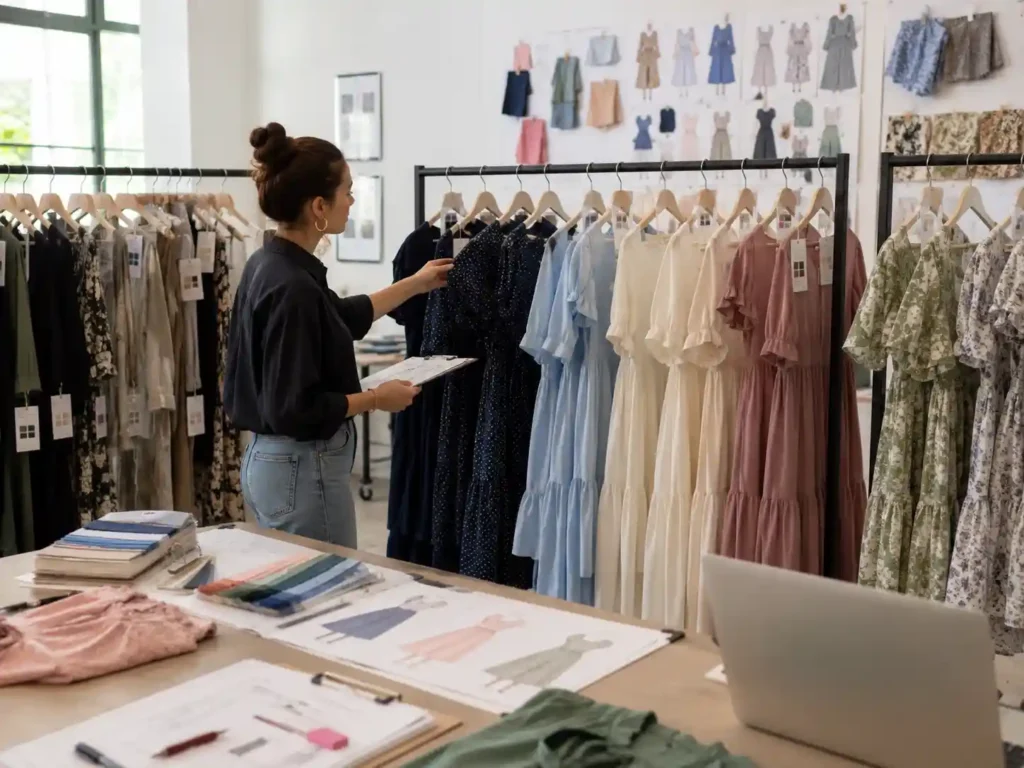
ODM dress manufacturing follows a controlled sequence: brief review, feasibility assessment, material sourcing, pattern development, sampling, fit correction, pre-production approval, bulk production and inspection. Each stage converts creative preferences into measurable standards that can be reproduced across sizes, colors and production batches.
Starting with a Clear Brief
A good ODM project begins with a commercial brief rather than a single inspiration image. The manufacturer needs to know who will wear the dress, where it will be sold, how it should fit, what quality and price level it must support and when it needs to reach the market.
Useful information includes the product category, target customer, selling region, size range, preferred silhouette, fabric direction, colors, estimated quantity, target production cost, launch date and packaging requirements. The target market matters: a stretch club dress, a resort maxi dress and a wedding guest dress may all be described as fashion dresses, but their expectations for coverage, drape, structure, photography, movement and fit are very different.
The brief should also identify fixed and flexible details. A brand may insist on an asymmetric neckline, open back and fitted waist while allowing the manufacturer to recommend the lining, closure and internal support. This gives the technical team room to improve cost and production stability without diluting the design identity.
Reviewing Feasibility
Before creating a pattern, the manufacturer should assess silhouette, support, coverage, movement, fabric behavior, sewing complexity, grading risk, expected order quantity and target cost. This is especially important for corset, strapless, bodycon, cut-out, draped, satin, mesh, lace and sequin styles.
A reference photo rarely shows the internal structure. The technical team must decide whether cups, boning, elastic, interfacing, anti-slip tape or reinforcement are needed. It must also consider whether the wearer can sit, walk and raise her arms comfortably and whether the design remains balanced when graded into larger or smaller sizes.
A sample machinist may be able to achieve a difficult detail once through experience, but bulk production requires repeatable operations. The ODM team should identify processes that depend too heavily on individual judgment and replace them with measurable seams, templates, notches, construction sequences or inspection points. This is where manufacturing experience protects both product quality and delivery timing.
Developing Materials and Samples
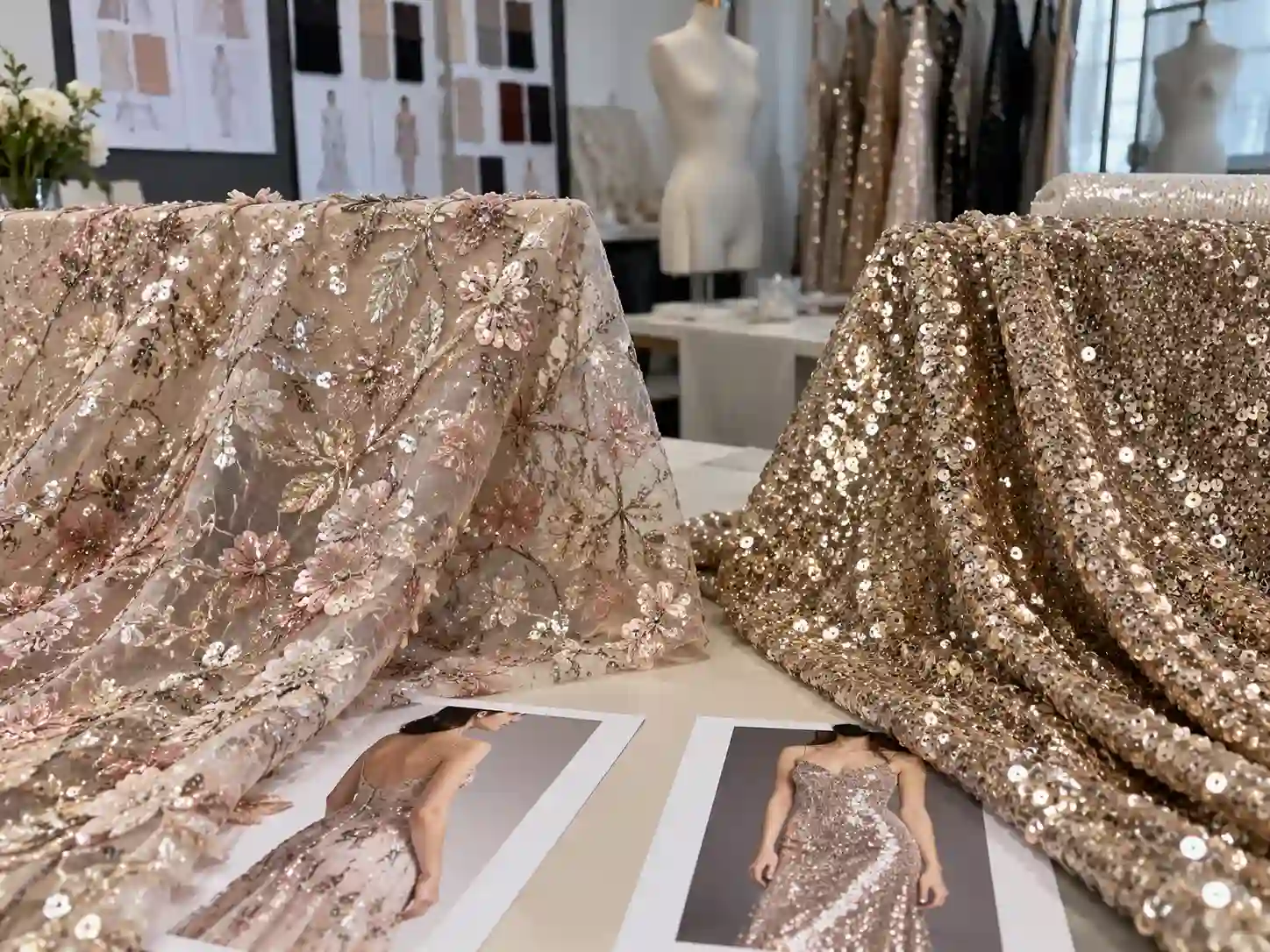
Fabric sourcing and pattern development should move together because the material determines how the pattern behaves. A non-stretch woven dress needs movement ease. A stretch bodycon dress depends on controlled negative ease and recovery. Bias-cut satin reacts differently from straight-grain construction, while lace may require placement planning and a separate lining pattern.
The first sample tests the concept; it is not automatically the production standard. Feedback should be specific and measurable. “Raise the neckline by 1.5 cm” is actionable. “Make it more elegant” is not. Photos can explain the visual problem, but measurements and construction notes should control the revision.
| Stage | Common Planning Range | Main Output |
| Brief and feasibility review | 1-3 business days | Confirmed development direction |
| Fabric and trim sourcing | 3-10 business days | Swatches and material options |
| First sample | 7-15 business days | Initial fit and construction sample |
| Sample revision | 5-10 business days per round | Corrected sample and updated comments |
| Pre-production sample | 5-10 business days | Bulk-production reference |
| Bulk production | 20-45 days | Finished and packed garments |
These ranges are practical planning references, not universal promises. Custom dyeing, printing, special lace, embellishment, fabric-mill minimums, approval delays and peak-season capacity can extend the schedule. The most reliable timeline is built after the factory reviews the actual style, materials, quantities and required approvals.
Moving into Bulk Production
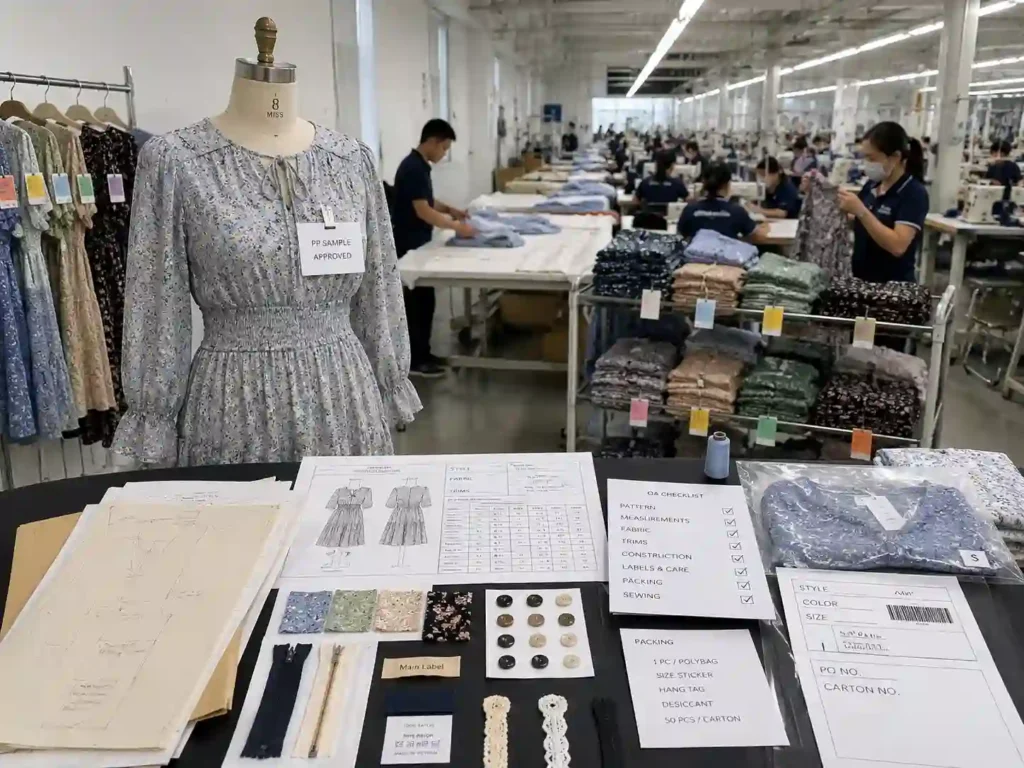
Bulk production should begin only after the approved sample has been translated into a controlled production standard. The production team needs confirmed bulk fabric, approved color, trim references, graded patterns, measurement specifications, construction notes, labels, packing instructions and inspection criteria.
A pre-production sample or Golden sample is commonly used to confirm that bulk materials and production methods match the approved development result. The handover from sample room to sewing line is a major risk point because the development sample may have been made by one highly experienced machinist, while bulk production involves many operators.
Before cutting, the factory should confirm shrinkage, shade groups, grain direction, print placement, size ratios and pattern version. During sewing, fit-critical points such as neckline shape, strap length, cup position, waist measurement, zipper alignment, slit height and dress length require in-line checks. The goal is not to copy one attractive sample; it is to reproduce the approved product across every size, color and batch.
How Is ODM Different from OEM and Private Label?
ODM involves manufacturer-supported product development, while OEM normally follows a more complete specification supplied by the brand. Private label describes the brand identity applied to the garment and packaging. These models can overlap: a dress may be developed through ODM, controlled by OEM-style specifications and delivered with private-label branding.
Design Responsibility
In a conventional OEM project, the brand usually provides the core design and a more complete technical package: tech pack, measurement chart, material specification, construction notes, artwork, approved sample and packaging requirements. The factory focuses on execution, production engineering and quality control.
In ODM, the brand may begin with a style direction, reference image, moodboard, sketch, partial specification or original sample. The manufacturer contributes more heavily to pattern development, material choice, structure and fit. Many real projects sit between pure OEM and pure ODM: the brand may own the creative concept while the supplier develops the pattern and production method.
The important questions are practical. Who approves changes? Who owns the final pattern? Which elements were pre-existing? Can the manufacturer reuse the base design? Which data must be returned if the relationship ends? Responsibilities should be agreed before sampling, not after a successful product becomes commercially valuable.
Technical Documentation
ODM does not remove the need for technical documents. It changes who helps create them. A mature OEM package may already include technical flats, bill of materials, measurement points, tolerances, grading rules, stitch details, label files and packing instructions. In ODM, part of this documentation is built during development.
After sample approval, the factory should have a controlled record of the final garment: approved sample, pattern version, measurement chart, fabric reference, trim card, construction details, color approval and packaging standard. Without these records, repeat orders depend on memory and can drift when staff, materials or production units change.
The approved dress should exist in two forms: a physical reference and a written production record. A photograph alone cannot communicate stretch, internal support, seam allowance or measurement tolerances. A document alone may not show the exact drape or finishing. Reliable production uses both.
Comparing the Models
| Model | Starting Point | Factory Development Input | Brand Control | Common Use |
| Ready-stock private label | Existing finished garment | Low | Low to medium | Fast branding and range filling |
| Catalog-based ODM | Existing manufacturer style | Medium | Medium | Quick collection extension |
| Development-led ODM | Brand brief, reference or sample | High | Medium to high | Brands needing technical support |
| OEM | Complete brand specification | Low to medium | High | Established product teams |
| Private label | Can sit on top of ODM or OEM | Depends on base model | High for branding | Retail-ready presentation |
Private label is not a direct alternative to OEM or ODM. It is the branding layer applied to the product. A brand can use ODM to develop the dress and private-label services to control the main label, size label, care label, hangtag, barcode, SKU sticker, polybag and carton marks.
Suppliers often use these terms differently, so the service description is more important than the name. Ask what information is required to start, what the factory will develop, what can be changed, what is exclusive and which approval documents will exist before bulk production.
Exclusivity and Ownership
OEM can provide a clearer path to exclusivity when the brand owns the design, pattern and technical package, but confidentiality still needs formal controls. ODM can also support exclusive development, provided the agreement separates the supplier’s pre-existing assets from the client-specific work.
A manufacturer may retain standard blocks, general construction knowledge or nonexclusive base patterns. The brand may own original sketches, print artwork, logos, proprietary measurements, exclusive details and paid development outputs when agreed. The final pattern may be owned by one party or licensed under defined conditions.
An NDA protects confidential information, but it does not automatically define every design right. Pattern ownership, regional or channel exclusivity, sample photography, showroom display and reuse of modified styles should be written into the commercial agreement. Jinfeng Apparel supports NDA-based cooperation and does not publish client names, tech packs, samples, patterns, labels, packaging, unpublished styles, order quantities or prices without authorization.
What Can Brands Customize in ODM Dresses?
Brands can customize an ODM dress’s silhouette, fabric, color, measurements, fit, construction, trims, labels and packaging. The feasible level depends on pattern changes, material availability, supplier minimums, order quantity, target cost and production complexity. Valuable customization should improve brand identity, customer fit or product performance rather than add complexity without a commercial purpose.
Shape and Design Details
Most visible dress details can be changed, including neckline, sleeve shape, strap width, waist position, back coverage, hem length, slit height, cut-outs, ruching, ruffles, draping and skirt volume. The important question is not whether a detail can be changed, but what else the change affects.
Raising a neckline may alter strap length and armhole balance. Increasing skirt sweep raises fabric consumption and can require a different lining. Moving the waist seam changes bodice length, hip shaping and overall proportion. A high slit may need size-specific control to maintain coverage across the range.
Brands should separate signature elements from adjustable details. A distinctive neckline, corset seam or drape may deserve more development time because it defines the product. A hidden seam or noncritical trim may be simplified if it does not affect fit, durability or customer perception. This prioritization keeps the design recognizable while protecting cost and manufacturability.
Fabrics and Colors
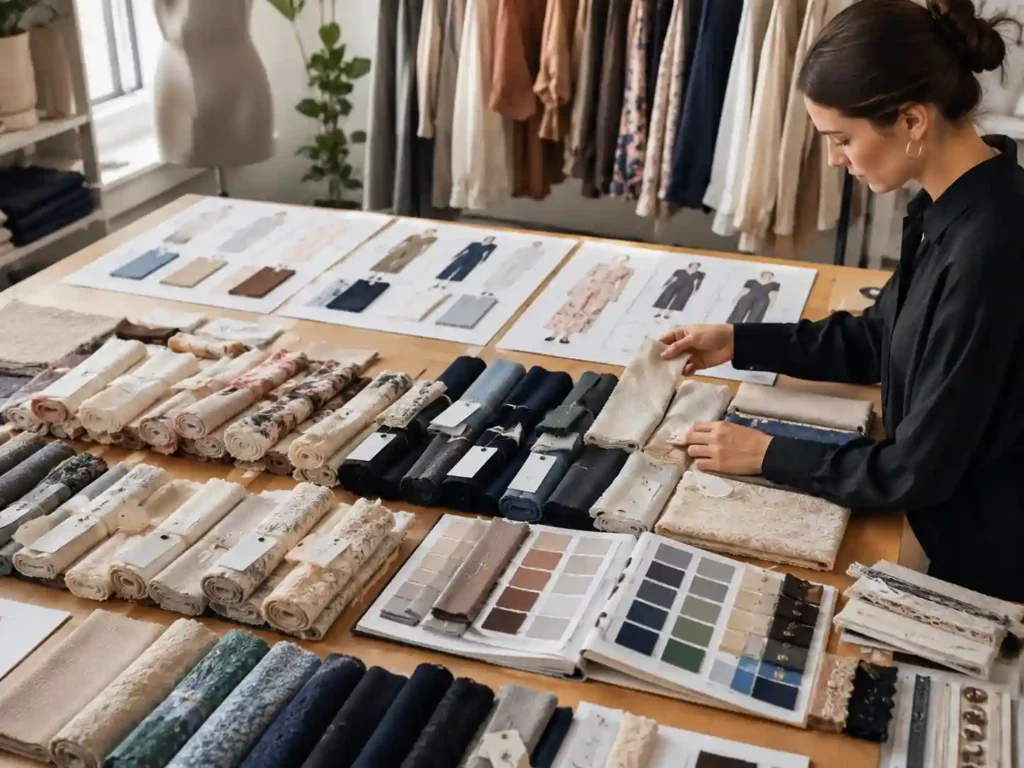
Fabric customization can range from choosing an available supplier quality to custom dyeing, printing or developing a special material. The fabric should be evaluated by performance rather than composition alone. Two polyester satins may differ greatly in weight, shine, stretch, recovery, drape, opacity and wrinkle behavior.
A useful approval record includes composition, width, weight, stretch direction, recovery, hand feel, opacity, shrinkage risk, color reference, supplier availability and required lining. Color approval should consider the whole garment because the main fabric, lining, thread, lace, zipper tape and trims may reflect light differently.
Custom dyeing, printing and special lace often carry material minimums that are separate from the garment MOQ. A brand should ask whether excess fabric must be purchased, how dye-lot differences will be controlled and whether a repeat order can match the first run. For replenishment programs, fabric batch records, approved swatches and color references become valuable production assets.
Fit and Construction
Fit is one of the most commercially valuable forms of customization because it influences conversion, comfort, reviews and returns. The manufacturer can adjust bust, waist, hip, shoulder width, torso length, armhole depth, neckline position, strap length, sleeve width, ease and overall length.
A size chart alone does not define fit. The same measurements can feel different in a rigid woven, stretch mesh, ponte knit or lined satin because material behavior and internal structure change the relationship between body and garment. The base size should be approved before grading, and critical points should have style-specific tolerances.
| Customization | Main Benefit | Technical Effect | Likely Cost Direction |
| Full lining | Opacity, comfort and cleaner finish | Changes ease, seam bulk and zipper installation | Moderate increase |
| Cups and boning | Bust support and shape | Adds internal components and placement control | Moderate to high increase |
| Stretch fabric | Closer fit and movement | Requires stretch, recovery and pattern review | Low to moderate change |
| Wider skirt sweep | Movement and drape | Raises fabric consumption and cutting area | Moderate increase |
| Custom-dyed color | Stronger color consistency | Adds lab-dip approval and mill minimums | Moderate to high increase |
| Lace or sequin placement | Higher visual impact | Requires placement control and protective packing | High increase |
Construction options include cups, underwire, boning, elastic, anti-slip tape, interfacing, full or partial lining, facings, bindings and specialized seam finishes. Cost optimization should protect the function of the garment. Removing a lining, replacing structural boning or changing a zipper can save money, but it may also create transparency, weak support or seam distortion.
Labels and Packaging
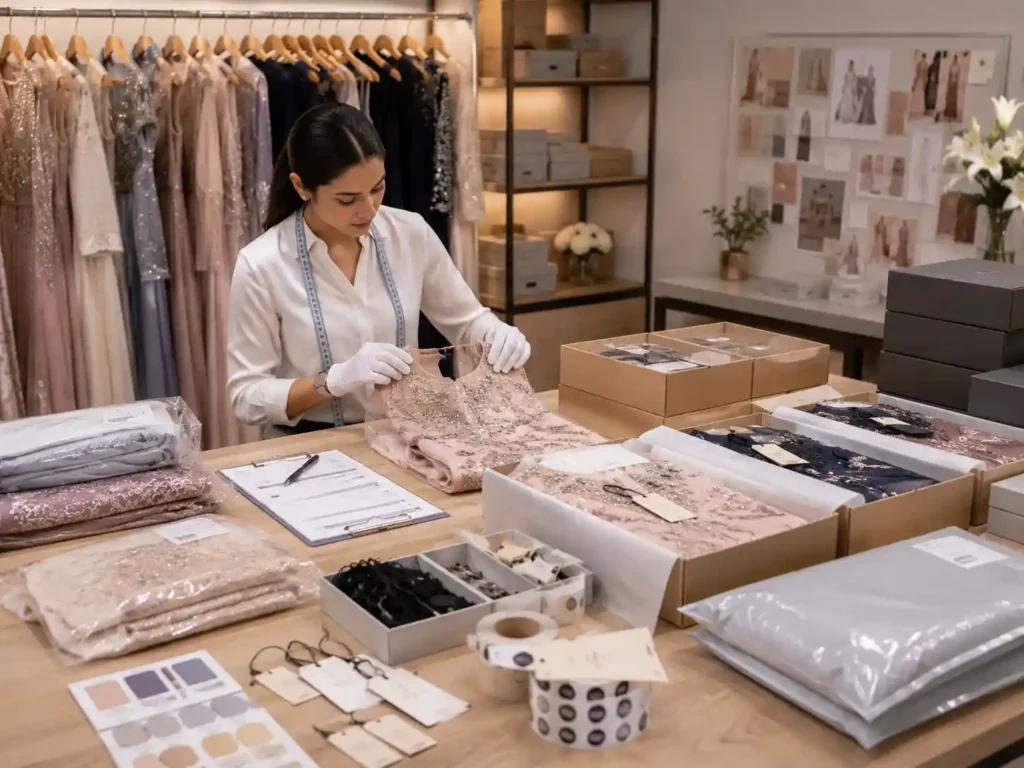
Private-label execution may include woven main labels, size labels, care labels, hangtags, hang strings, barcode stickers, SKU labels, branded polybags, tissue, insert cards, cartons, carton marks and warehouse labels. Artwork should be checked for size, color, readability and consistency with the confirmed fiber content and care method.
Packaging must also suit the garment. Satin can crease, structured cups can collapse, sequins can snag adjacent pieces and long dresses can develop permanent folds. Protective tissue, bag size, folding method and carton density should be defined before final packing, not improvised at the end of production.
Packaging is part of operational quality. Incorrect barcodes can delay warehouse receiving. Poor size-ratio packing can create inventory problems. Oversized polybags raise shipping volume, while overfilled cartons can damage structured products. Jinfeng Apparel supports private-label packing from garment labels through ecommerce and warehouse identifiers, with the exact specification confirmed by project.
Is ODM Right for Your Dress Brand?
ODM is suitable for brands that understand their customer, market and product direction but need technical help with materials, patterns, fit, sampling and production planning. It can reduce internal development workload and identify manufacturing risks earlier. It is less suitable when the business has no clear product brief, realistic budget or bulk-production plan.
Who Benefits Most
ODM works well for established ecommerce brands, DTC labels, boutique groups, retailers, occasionwear companies, sourcing offices and fashion businesses expanding into a new dress category. These clients often understand what their customer wants but do not maintain a complete internal pattern room, fabric team and sample department.
A retailer may know that its market wants satin wedding guest dresses but need support with corset construction and fit. A resortwear brand may have strong prints and silhouettes but need help sourcing drapey fabrics and controlling long-dress balance. A trend-driven online brand may need rapid sample development while still protecting measurement consistency and private-label presentation.
ODM works best when the brand brings commercial clarity: target wearer, market, price position, sales channel, quality expectations and launch timing. The manufacturer can fill technical gaps, but it cannot decide the brand’s customer or build a commercial strategy from nothing.
Time and Resource Savings
An integrated ODM process can reduce the number of separate suppliers the brand must coordinate. Instead of managing an independent pattern maker, sample room, fabric agent, trim supplier, sewing factory and packing company, the project can move through one connected manufacturing system.
The biggest saving often comes from early feasibility feedback. A factory can identify that a fabric lacks support, a custom trim has an impractical minimum or a proposed detail is difficult to standardize before the brand spends weeks refining the wrong version. This reduces avoidable samples and protects the launch calendar.
Repeat orders can also become faster when the supplier retains pattern versions, measurement charts, material references, trim cards, Golden samples and packing records. Jinfeng Apparel’s long-term cooperation model includes record retention for patterns, fabrics, trims, construction and packaging. However, ODM does not remove the need for disciplined approvals; vague feedback and uncontrolled changes can make any development model slow.
Risks to Manage
The main risks are limited differentiation, unclear ownership, dependence on supplier records, cost drift, material substitution and weak transfer from sample to bulk. Catalog-based ODM may produce styles that are too similar to products offered elsewhere. Development-led ODM provides more differentiation but requires clearer agreements and more structured approvals.
Cost can drift when a simple concept accumulates lining, cups, boning, custom dyeing, special trims and premium packaging. Each choice may be valid, but together they may exceed the target. The project should review cost after major design and material changes instead of waiting until the final sample.
Material substitution is another critical risk. If the sampled fabric becomes unavailable, a replacement with different stretch, weight or shrinkage can change fit and appearance. The substitute should be reapproved and, when necessary, resampled. Version-controlled comments, written material approvals, measurement records, PP samples and NDAs turn these risks into manageable project decisions.
When OEM Is Better
OEM is usually the better choice when the brand already has a mature product-development function and wants the factory to follow a precisely defined specification. This includes projects with an approved pattern, complete tech pack, fixed materials, established fit standard, grading rules and controlled construction.
OEM may also be preferable when the brand needs to move production between factories. Complete technical records improve supplier portability and reduce dependence on one development partner. Signature products with proprietary fit often benefit from tighter OEM control.
Many mature businesses use both models. Core products may follow OEM specifications, while seasonal extensions, new materials or secondary categories use ODM support. The decision can be made style by style. The right model is the one that matches the brand’s internal capability, ownership requirements, launch timing and acceptable level of manufacturer input.
How Do You Choose an ODM Dress Manufacturer?
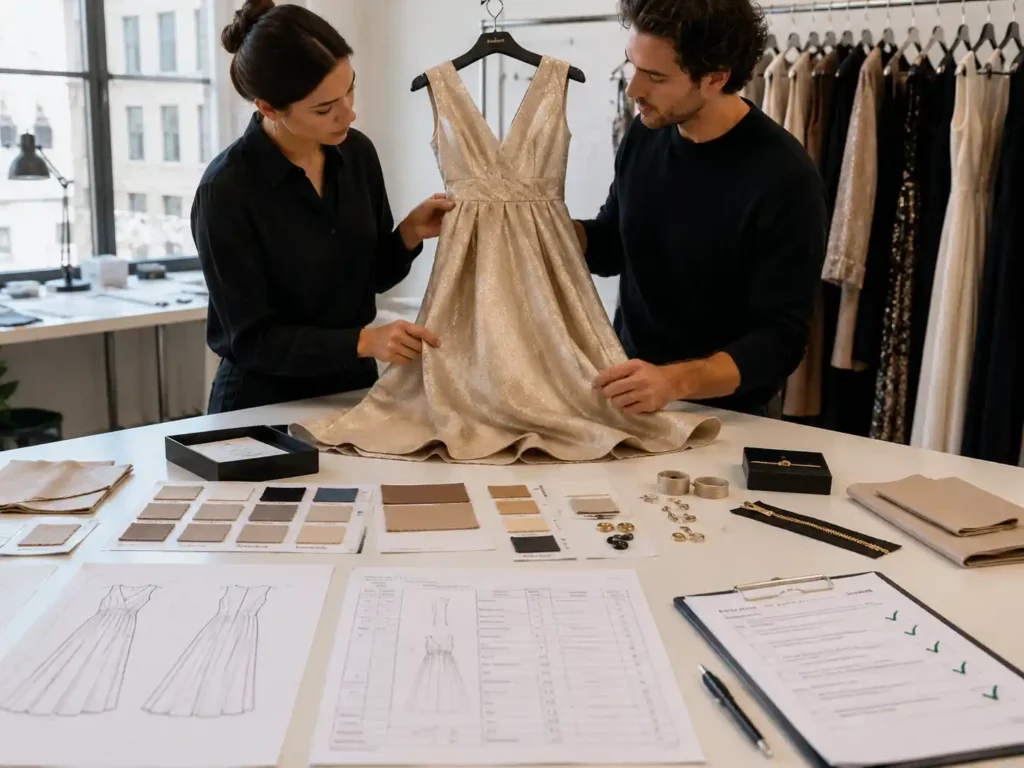
Choose an ODM dress manufacturer by assessing category experience, pattern and fit capability, material knowledge, sample discipline, realistic MOQ, production structure, quality controls, confidentiality and communication. A credible supplier should explain how a concept becomes an approved bulk standard. Attractive photographs and a low quotation do not prove development capability.
Product and Pattern Capability
Start by confirming that the manufacturer regularly works with the dress categories, fabrics and structures in your collection. A factory that performs well with basic woven dresses may not be suitable for corset construction, fitted stretch styles, bias satin, lace placement or sequin garments.
Ask who creates the first pattern, who conducts fit reviews, how comments are recorded and whether revised patterns are version-controlled. The team should be able to explain bust, waist, hip, shoulder, torso and length adjustments and understand how stretch, lining, cups and boning affect the pattern.
Jinfeng Apparel’s confirmed system includes 7+ senior pattern makers, 2 sample rooms and 20+ sample machinists. Its main product focus covers custom dresses, occasionwear, party dresses, bodycon, corset, satin, mesh, lace, sequin and resort styles, alongside skirts, jumpsuits and matching sets. The relevance of these capabilities should still be evaluated against the specific style being developed.
MOQ and Production Planning
MOQ should be discussed at garment, style, color, fabric, trim and packaging levels. A reasonable garment minimum may still be affected by a larger custom-dye, print, lace, zipper or packaging minimum. Brands should ask whether unused material must be purchased and how quantities are split across colors and sizes.
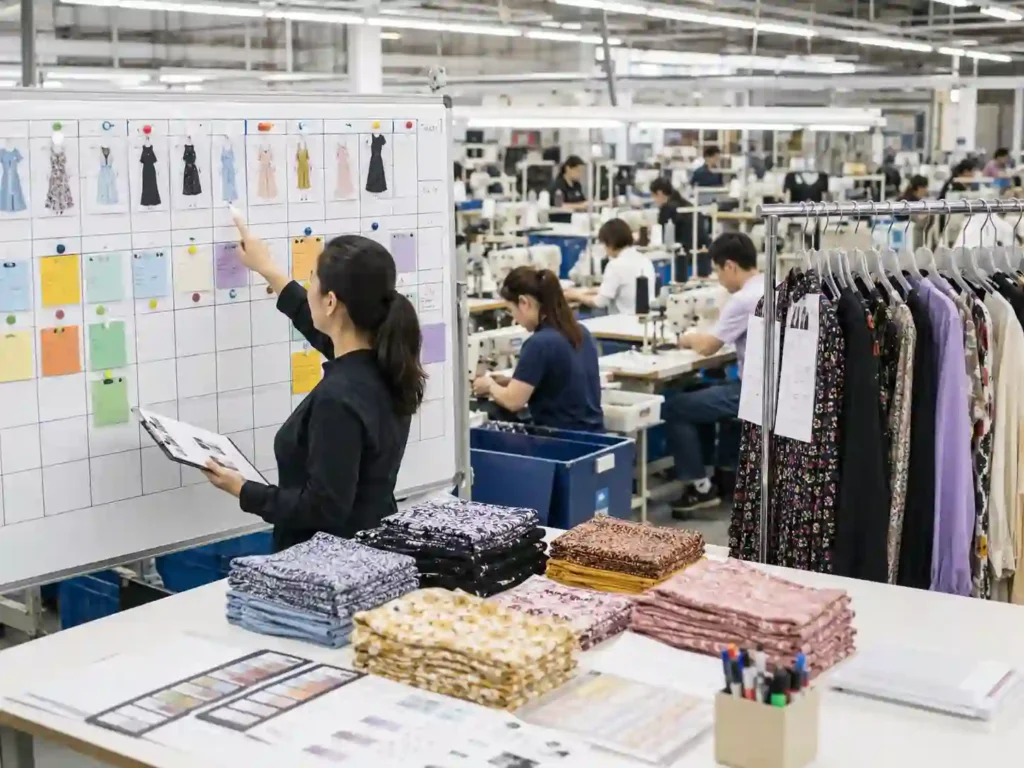
Jinfeng Apparel’s standard MOQ starts from 200 pieces per style and color, depending on fabric availability, color development, trims, construction complexity, packaging and production scheduling. It is not a no-MOQ, dropshipping or ready-stock model. The confirmed production network includes 6 owned women’s fashion factories, 10+ long-term satellite production partners, 18+ sewing lines and 6+ flexible production lines, with regular monthly capacity stated at 100,000+ pieces.
Capacity should be evaluated by product type, not only by total pieces. Available sewing space does not automatically mean available capacity for corsetry, hand embellishment or delicate materials. Ask where the order will run, how styles will be allocated, what technical documents partner units receive and who retains final responsibility for quality and delivery.
Quality and Compliance
Quality control should cover incoming materials, cutting, sewing, in-line inspection, garment measurements, finished appearance, pressing, packing and shipment sampling. Final inspection alone cannot correct defects already built into the fabric, cutting or construction.
For dresses, the checklist should be style-specific. Satin requires surface and seam review. Corset dresses need symmetry, cup, boning and closure checks. Maxi dresses need length and hem-balance control. Mesh, lace and sequin garments require inspection for holes, placement, snagging and protective packing.
| Evaluation Area | Evidence to Request | Warning Sign |
| Dress experience | Similar products, materials and construction examples | Only unrelated basic garments |
| Pattern capability | Pattern team, fit process and revision records | Fit managed informally by sewing staff |
| Material control | Approved swatches, batch records and supplier references | Unapproved substitutions |
| Sample process | Written comments, measurements and version control | Approval based only on photos |
| Bulk QC | Incoming, cutting, in-line, garment and packing checks | Final inspection only |
| Design protection | NDA process and file-access controls | Samples displayed without permission |
| Capacity planning | Order allocation and production schedule | Vague capacity promises |
| Communication | Named project owner and approval trail | Different answers from different contacts |
Jinfeng Apparel’s confirmed QC structure includes 15+ QC inspectors and covers incoming material QC, cutting QC, sewing QC, in-line inspection, garment inspection, pressing review, packing QC, AQL inspection, client inspection support and repeat-order quality records. Compliance or certification requirements should always be checked against current documents, the actual production unit, fabric supplier and order scope.
Questions Before Sampling
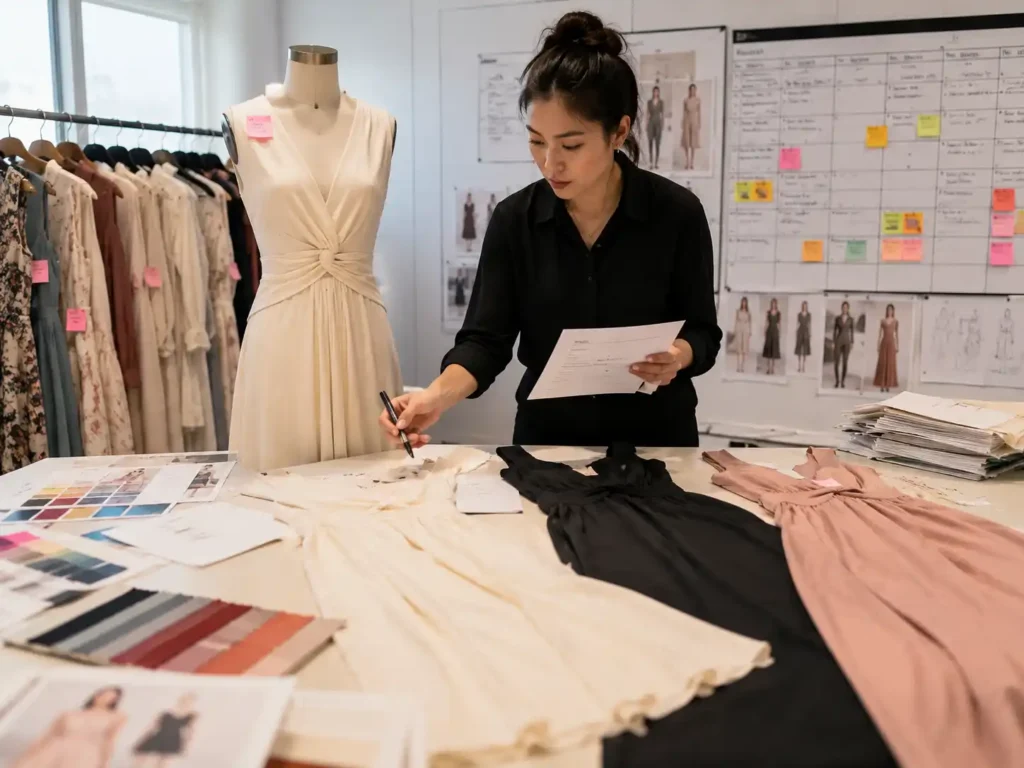
Sampling is the best stage for testing how the supplier thinks. Ask whether the first pattern will be created from scratch or adapted from a block, what the sample fee includes, how revision charges work, which material will be used and whether that material is available for bulk.
- What information is required before development starts?
- Will the style use a new pattern or an existing base block?
- Which design elements are exclusive and which may be reused?
- How will fabrics, colors and trims be presented and approved?
- What does the sample fee include, and how are revisions charged?
- Which measurements and tolerances will be recorded?
- Will a PP sample or Golden sample be required before bulk production?
- What is the MOQ per style and color, and are there separate material minimums?
- Which QC checkpoints and inspection records will be used?
- How are patterns, samples, artwork and unpublished styles protected?
A reliable manufacturer should also ask the brand detailed questions. Immediate pricing without understanding fabric, construction, quantity, size range, packaging and target delivery is usually pricing an assumption rather than the real garment. The best ODM relationship begins with careful questions on both sides.