Skip to content
Emerald Green Dress Manufacturer
Custom emerald green dress development for established fashion brands, occasionwear labels, premium ecommerce programs, and multi-style private-label collections.
- 4-stage color approval: Pantone or physical swatch, lab dip, approved fabric swatch, and bulk shade confirmation.
- 6 core fabric directions: satin, chiffon, mesh, lace, velvet, and sequin, each reviewed for shade, surface, lining, and production risk.
- 5 coordinated color components: shell fabric, lining, contrast layer, zipper tape, and sewing thread.
- MOQ starts from 200 pcs per style/color, with material-specific requirements confirmed before sampling.
Jinfeng Apparel develops emerald green mini, midi, maxi, bodycon, corset, slip, cocktail, wedding guest, prom, evening, and party dresses from reference images, original samples, line sheets, or tech packs. Pattern development, fabric sourcing, sample revision, PP approval, bulk production, QC, private-label packing, and export coordination are managed within one structured womenswear manufacturing system.
Manufacturing Capacity for Emerald Dress Programs
Since 2008
6 Owned Factories
10+ Production Partners
100,000+ Monthly Capacity
2 Sample Rooms
15+ QC Inspectors
Built for Established Fashion and Occasionwear Brands
Occasionwear Labels
Premium Ecommerce Programs
Sourcing and Brand Teams
Emerald Green Dress Styles We Develop
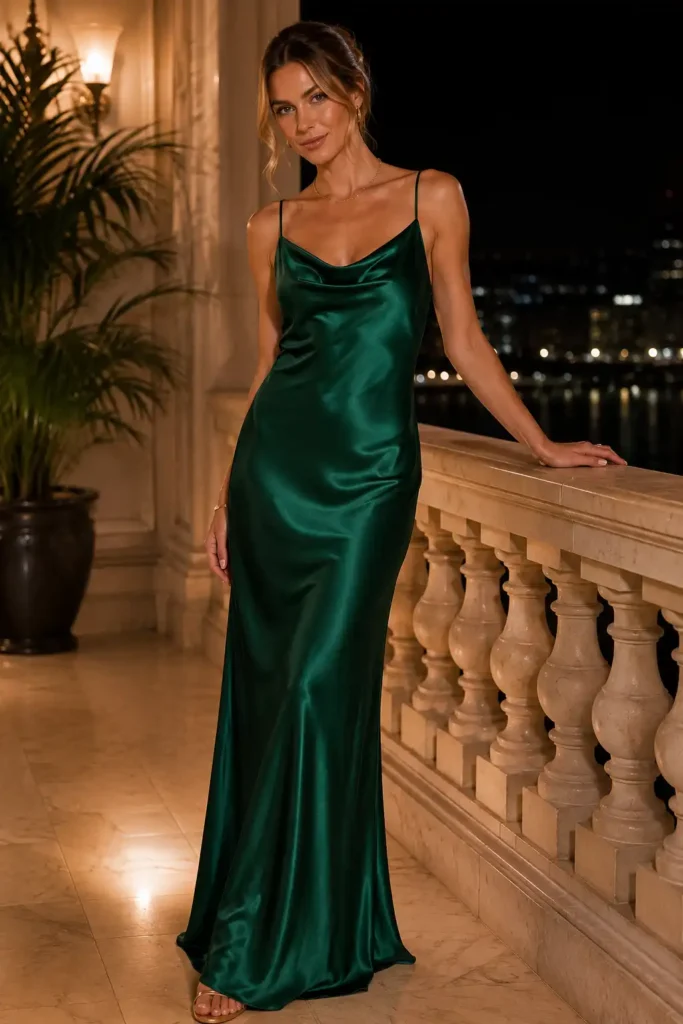
Satin Slip Dresses
- Best for cocktail, date night, wedding guest, and premium resort collections.
- Key controls: shine direction, snagging, neckline, strap adjustment, lining coverage, hem balance.
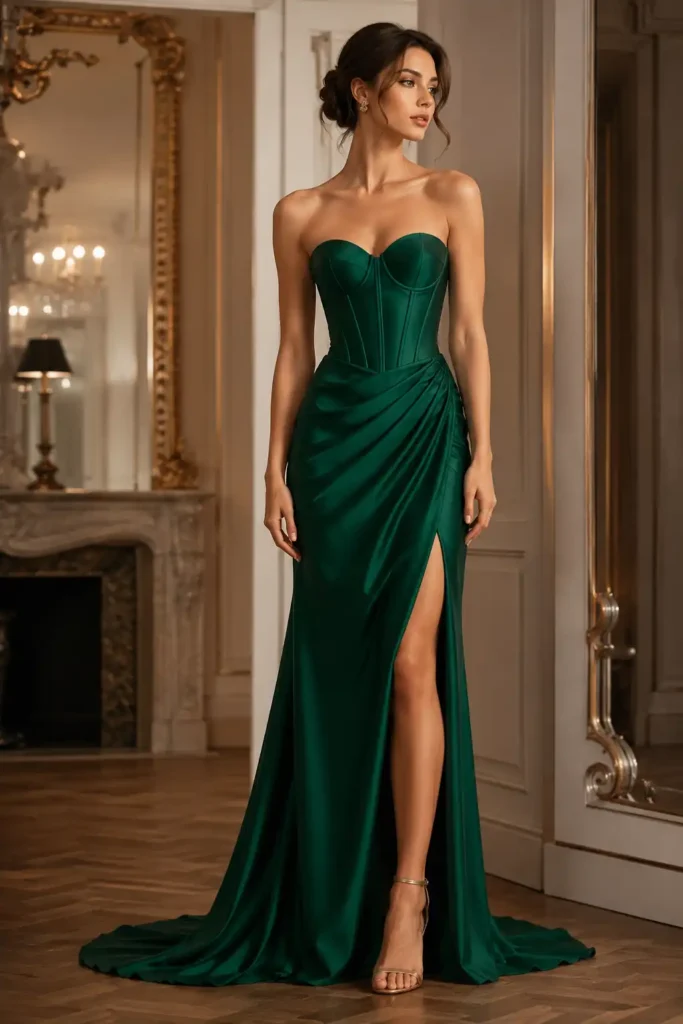
Corset Dresses
- Best for prom, evening, party, and statement occasionwear.
- Key controls: cup fit, boning, bust support, waistline, comfort, seam symmetry.

Bodycon Dresses
- Best for club, party, date night, and going-out ranges.
- Key controls: recovery, hip fit, hem rise, side seams, lining, wash stability.
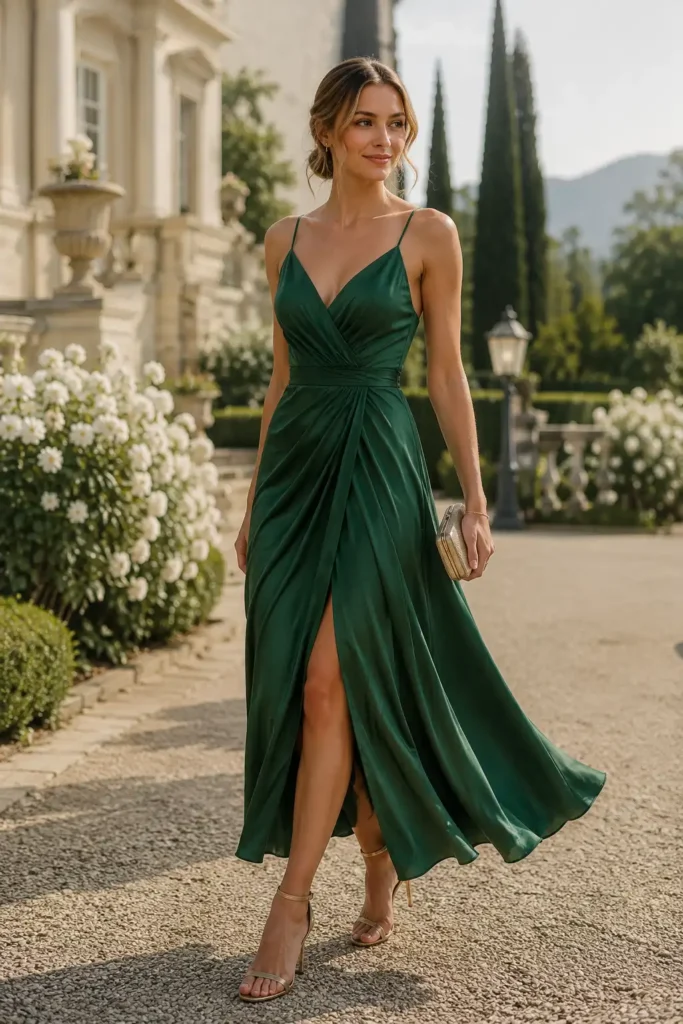
Wedding Guest Dresses
- Best for spring weddings, fall weddings, formal dinners, and bridal-adjacent retail.
- Key controls: shade consistency, lining length, drape, grading, multi-batch color control.
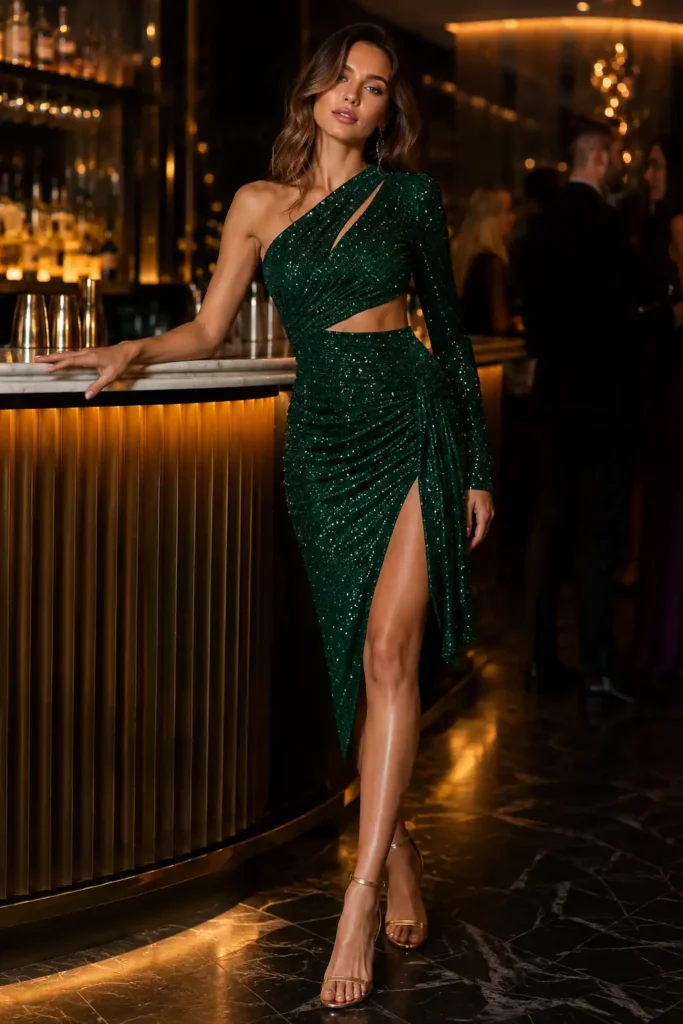
Party and Cocktail Dresses
- Best for holiday, birthday, cocktail, festival, and nightlife collections.
- Key controls: exposure, stretch, decoration security, comfort, packing protection.
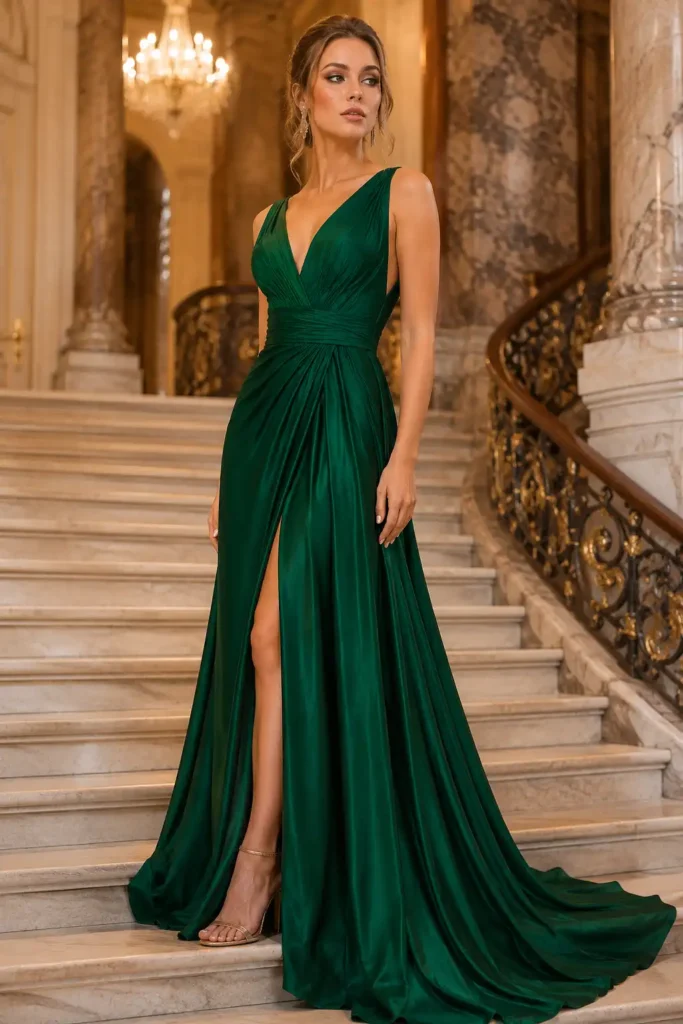
Maxi and Evening Dresses
- Best for evening, formal, gala, destination wedding, and premium occasionwear.
- Key controls: drape, hem level, train, slit, lining, anti-crease packing.
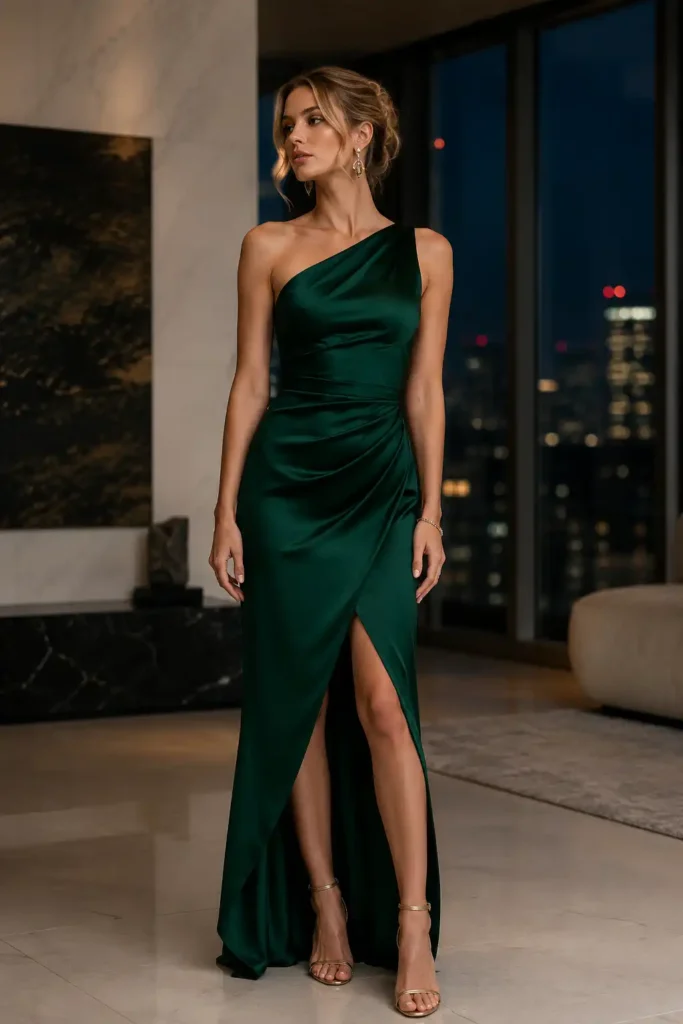
One-Shoulder Dresses
- Best for cocktail, evening, party, and modern formalwear.
- Key controls: shoulder tension, neckline stability, symmetry, armhole coverage, side seam.
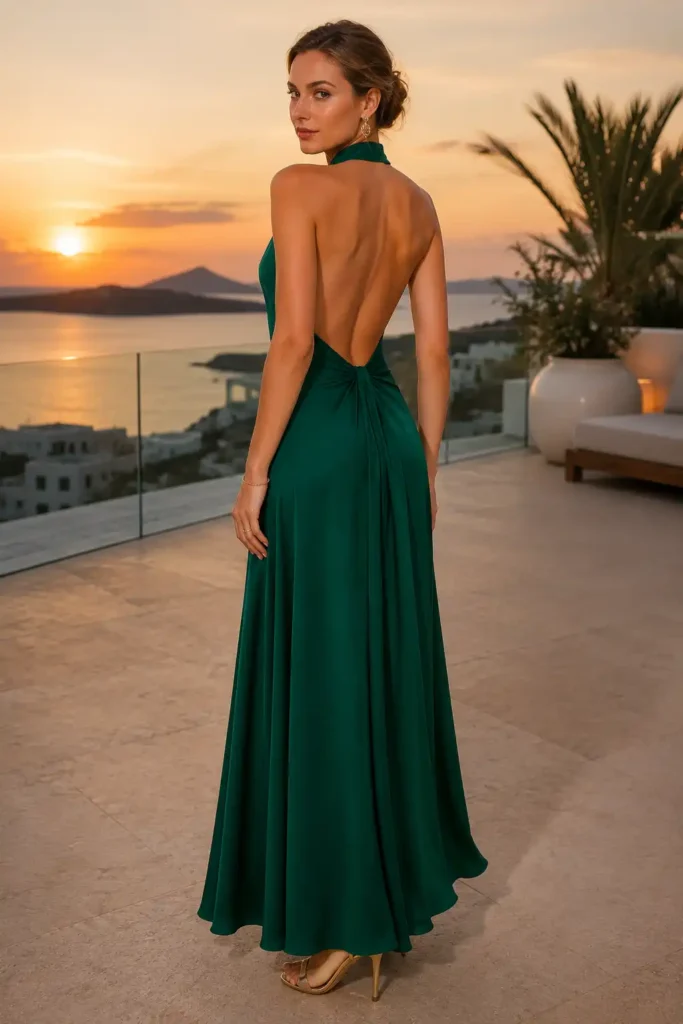
Halter and Backless Dresses
- Best for resort, party, date night, holiday, and destination occasionwear.
- Key controls: bust stability, neck comfort, side coverage, back shape, strap strength.
Fabric Options for Emerald Green Dresses

Matte Satin
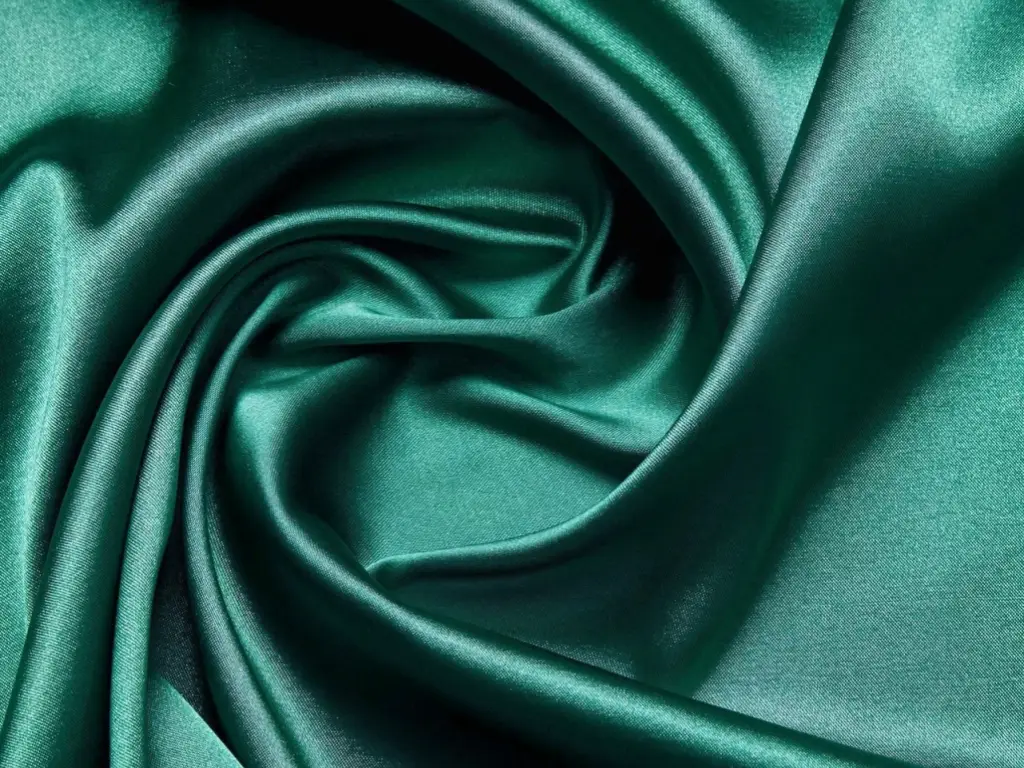
Stretch Satin

Chiffon
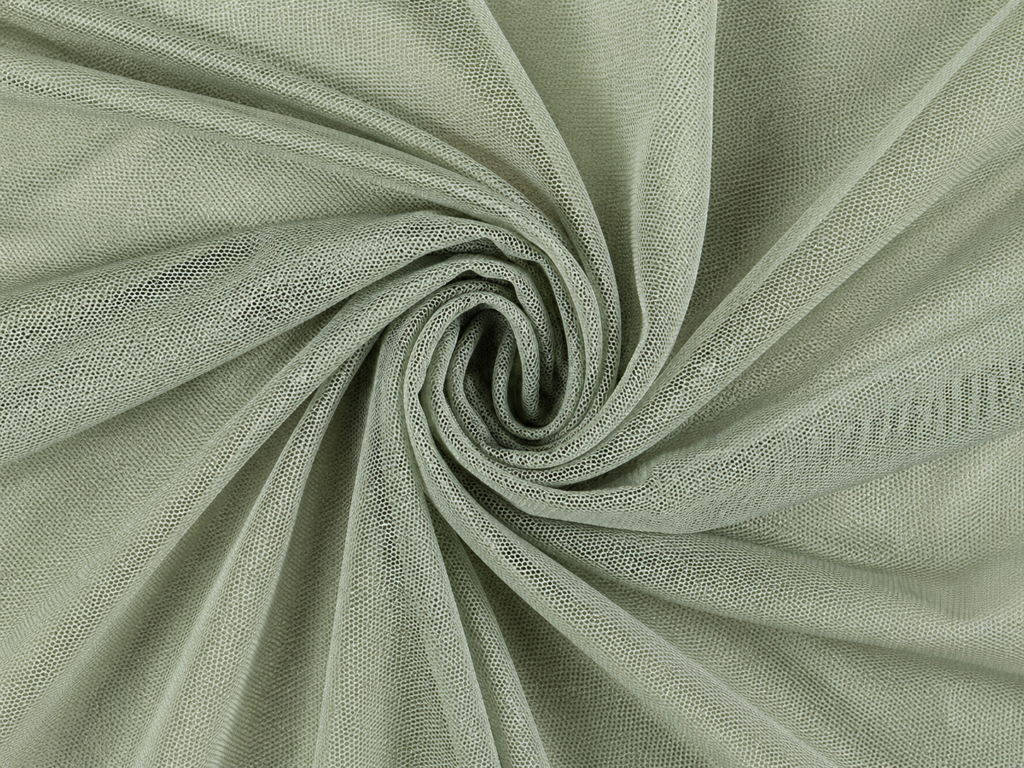
Stretch Mesh
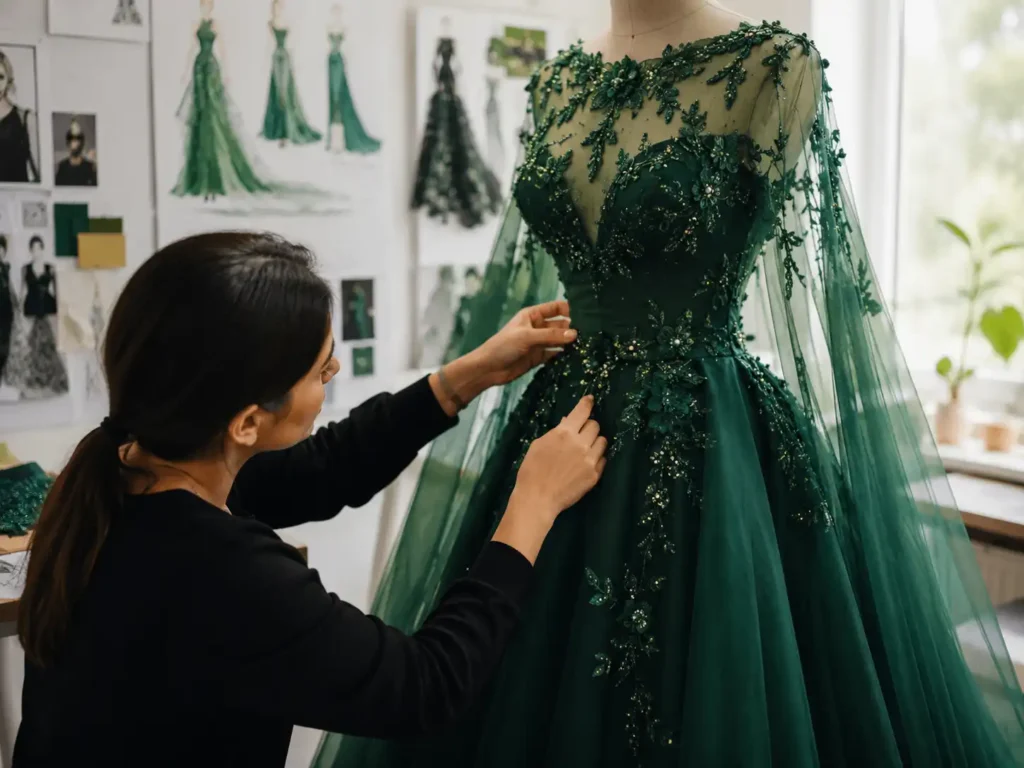
Lace

Velvet
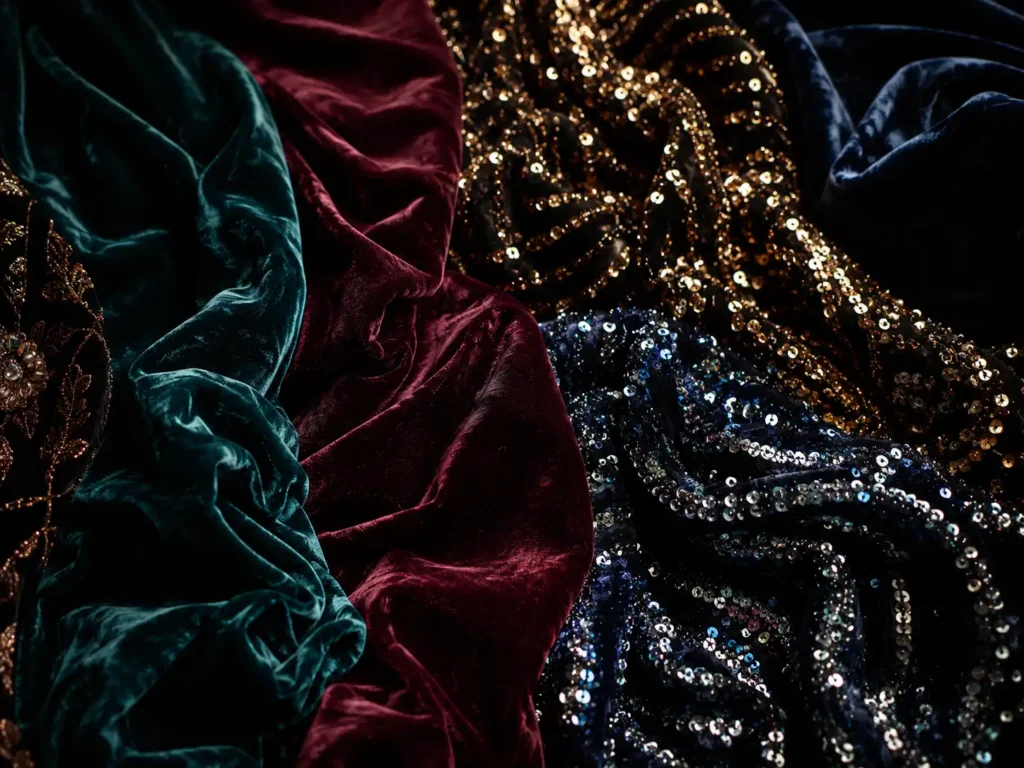
Sequin Fabric

Crepe and Ponte

How Emerald Green Color Approval Is Controlled
Emerald green can shift toward blue, yellow, grey, or black depending on dye, fiber, finish, lighting, and camera settings. Color approval needs physical references and recorded decisions, especially when a collection mixes reflective, sheer, textured, and pile fabrics.
From Color Direction to Approved Bulk Shade
- Reference standard: The project begins with a Pantone reference, an original garment, a physical swatch, or another approved color standard. Digital screens can support discussion but are not treated as the only color authority because brightness, display calibration, and image processing can change the apparent shade.
- Fabric route: Available stock colors are reviewed first when they meet the product direction and quantity plan. A custom dye route may be evaluated when the required emerald tone is not available, but dye-house minimums, fabric composition, lead time, and expected shade tolerance must be confirmed before commitment.
- Lab dip review: Lab dips are checked against the agreed standard under consistent lighting conditions. Approval notes should identify whether the sample appears too blue, too yellow, too dark, too grey, or too bright. A simple “looks fine” response is not enough for a color with strong commercial identity.
- Fabric-specific approval: Satin, chiffon, mesh, lace, velvet, lining, and elastic components may need separate approval because the same dye target produces different visual depth on each surface. Where exact matching is physically unrealistic, an agreed coordinated color family is established instead of forcing every material to appear identical.
- Bulk shade confirmation: Bulk fabric is compared with the approved lab dip or swatch before cutting. Dye-lot variation, edge-to-center difference, pile direction, shine direction, and layered transparency are reviewed according to the product risk. Cutting is held when the bulk shade falls outside the approved direction.
Color Decisions Recorded for Production
A controlled color file can include the approved Pantone or physical standard, supplier swatches, lab dip approval date, bulk shade reference, lining selection, zipper and thread color, photography notes, and any agreed shade band. The same records support repeat orders and new color extensions, while still requiring a new check when the fabric batch, supplier, composition, or finish changes.
Emerald is especially sensitive in satin, velvet, mesh, and lace because light does not reflect evenly from these surfaces. Production teams therefore need both color information and fabric-direction instructions. Shade approval without direction control can still produce panels that look different in the finished dress.
Coordinating Emerald Across Fabrics and Trims
One dress can contain five or more green components. Exact visual matching is not always possible across different fibers and surfaces, so the goal is a controlled, intentional relationship that remains consistent through sampling and bulk production.
Component | Main Risk | Approval Focus | Bulk Control |
Shell satin or crepe | Dye-lot and shine variation | Pantone or swatch, lab dip, face direction | Bulk shade, roll grouping, panel direction |
Chiffon or mesh layer | Transparency changes color depth | Layer count, stretched appearance, lining interaction | Ply consistency, direction, hole and damage checks |
Lace overlay | Motif and yarn absorb dye differently | Motif color, lining relationship, edge tone | Lot consistency, placement, damage inspection |
Lining | Wrong undertone changes shell appearance | Coverage, opacity, blue/yellow balance | Color record, length, exposure, SKU separation |
Zipper tape | Visible color break at center back | Tape, teeth, puller, seam allowance | Trim card, lot check, zipper flatness |
Thread and binding | Contrast under tension or close-up photography | Stitch visibility, binding edge, bar tack color | Approved trim card, line-side verification |
Boning and elastic channels | Show-through on fitted or light areas | Channel placement and covering | Panel test, seam pressure, lining support |
Labels and packaging | SKU or color naming errors | Color name, barcode, SKU, carton mark | Packing file, scanner check, carton audit |
Design Details Engineered for Stable Production
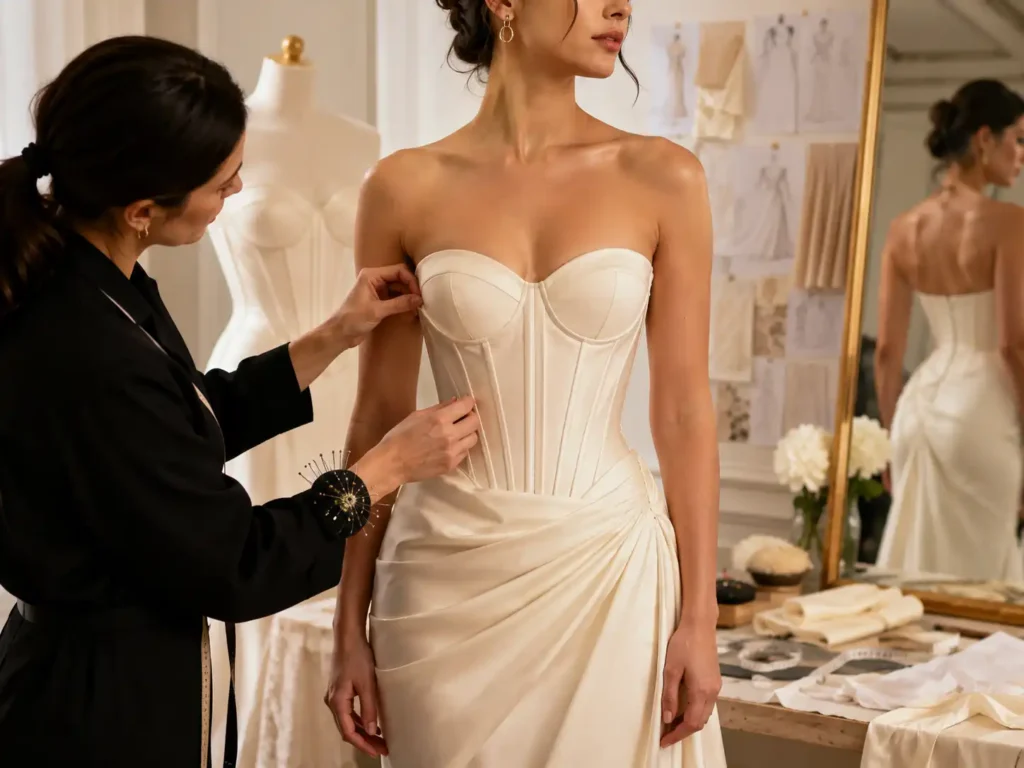
Corset Support

Ruched Construction

Cut-Out Stability
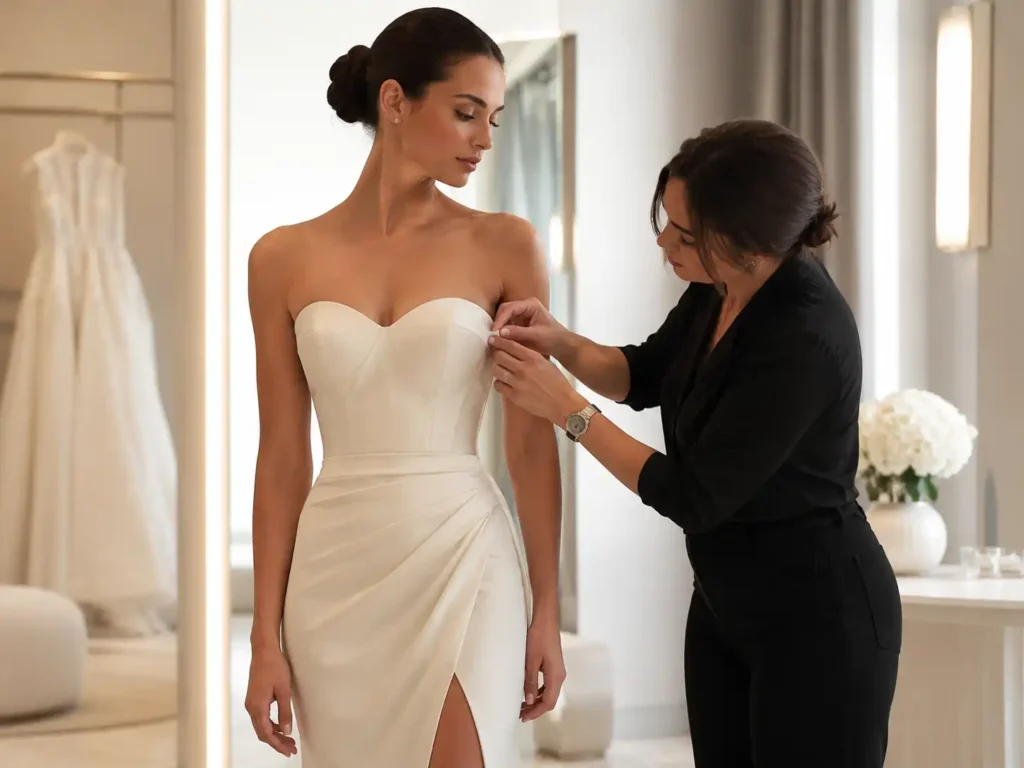
Strapless Security
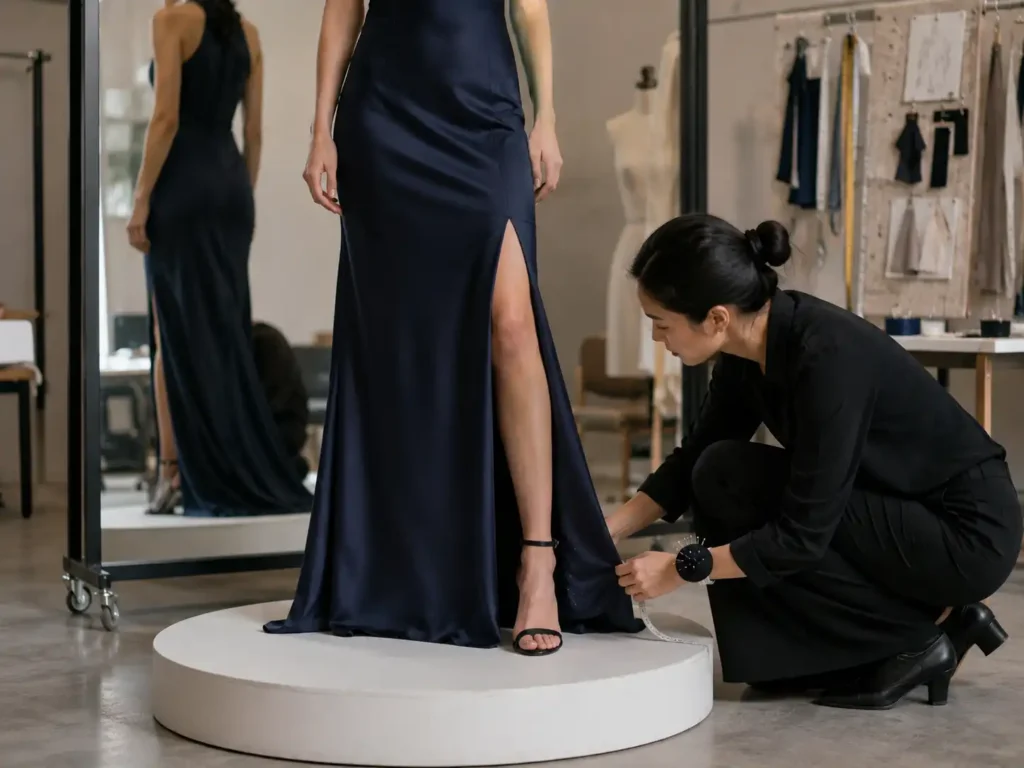
Slits and Hems
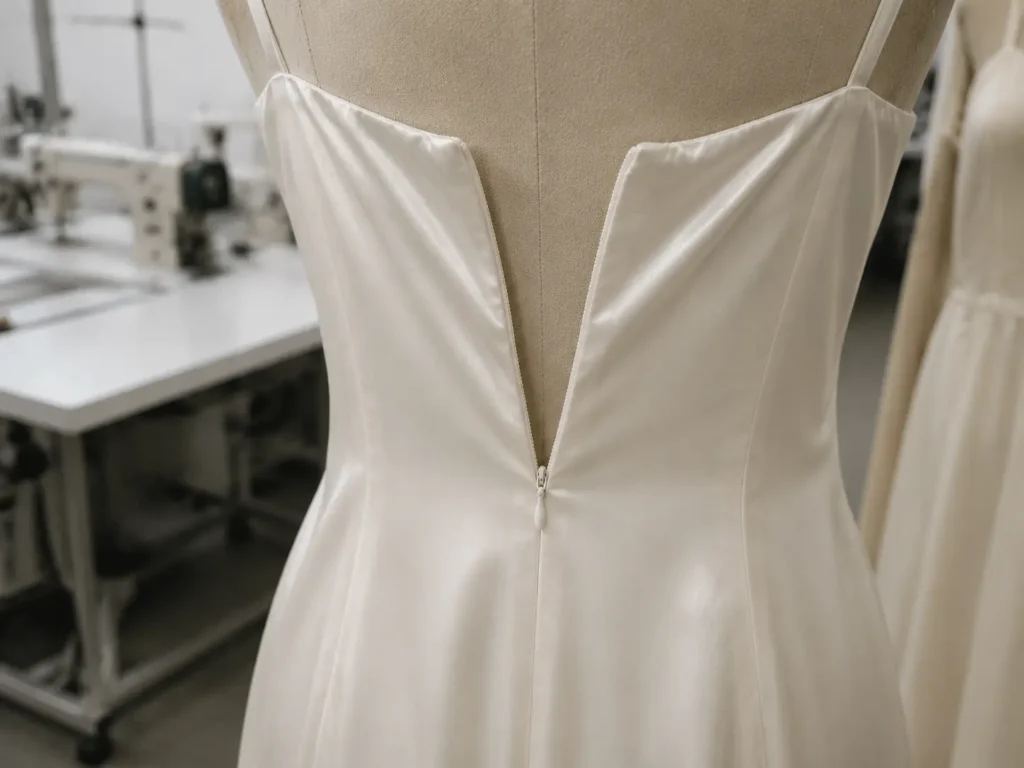
Invisible Zippers
Pattern, Fit, and Size Development
A successful sample size is only the starting point. Commercial production requires controlled grading, repeatable measurement, and fit decisions that remain valid across different silhouettes, fabrics, and size groups.
Fit Points That Define the Dress
Jinfeng Apparel reviews bust, upper bust, under bust, waist, high or low waist position, hip, front length, back length, dress length, shoulder width, strap length, armhole, neckline depth, slit height, lining length, and hem width. Corset, strapless, bodycon, backless, and maxi styles each require a different priority order.
With 7+ senior pattern makers, 2 sample rooms, and 20+ sample machinists, pattern revisions are based on fit photos, mannequin views, measurements, movement, and the intended market proportion. A visually attractive sample is not approved for bulk when the neckline gaps, straps slip, side seams twist, lining shows, the slit rises too high, or the hem loses balance.
From Sample Size to Size Range
Size grading can support XS-XL, extended sizes, or a client-specific range when a complete size chart and grade rules are supplied or developed. Bust, waist, and hip increments cannot be applied blindly to every point. Neckline depth, strap length, armhole coverage, slit height, corset cup shape, and hem proportion often require separate control.
For fitted emerald dresses, measurement review is combined with fabric stretch and recovery. A bodycon size chart made for ponte cannot automatically be used for stretch satin or mesh. For woven occasionwear, ease and lining behavior become more important. For petite, tall, or plus-size groups, proportion, support, length, and movement may require separate sample evaluation.
Measurement Records for Bulk QC
The approved size chart, measurement method, tolerance, pattern version, and sample comments are transferred into the production file.
Bulk measurements are checked at defined stages rather than only after final packing.
Out-of-tolerance findings are reviewed for pattern, cutting, sewing, pressing, or fabric-relaxation causes before correction.
Fit control protects more than appearance.
It influences product reviews, return risk, size confidence, photography, repeat orders, and the ability to extend one successful emerald style into new colors or fabrics without losing the original silhouette.
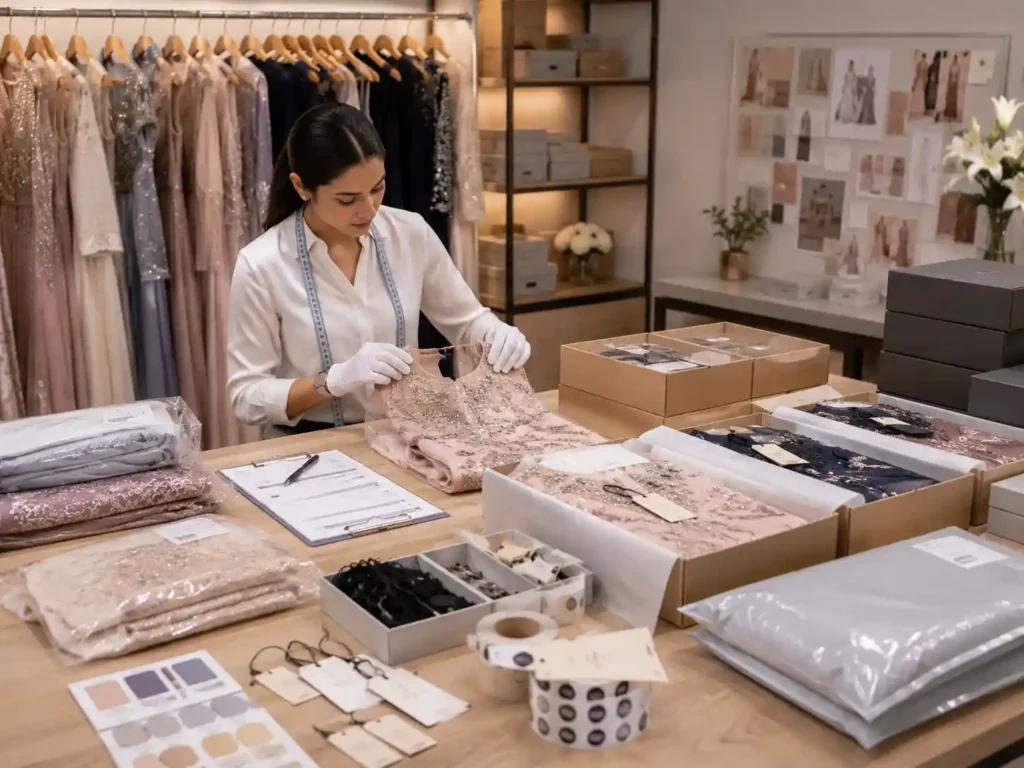
Workmanship Standards Behind Emerald Dresses
Clean workmanship becomes more visible on deep, saturated colors. Emerald satin reveals puckering and pressing marks; velvet reveals crushed pile; mesh reveals uneven seam allowances; lace reveals poor motif placement; sequins expose rough edges and missing decoration.
Cutting and Panel Direction
Fabric is checked before cutting for color, defects, width, hand feel, stretch, transparency, nap, shine, and lot variation. Satin and velvet panels need direction control. Chiffon and mesh require relaxed, stable spreading to reduce distortion. Lace motifs may need position planning before marker finalization. Cut parts are checked for shade grouping and obvious damage before sewing.
Seam and Edge Control
Seam type depends on fabric and product structure. Lightweight chiffon needs fine, controlled edges; stretch mesh needs secure but flexible stitching; satin requires smooth seams without tension marks; velvet needs reduced surface pressure; sequin fabric may require local sequin removal from seam allowances and reinforcement after sewing. Necklines, armholes, cut-outs, and slits receive additional stability where needed.
Internal Support
Premium appearance often depends on hidden construction. Linings, bra cups, boning, anti-slip tape, elastic, facings, fusible support, binding, hooks, and zipper guards are matched to the style. Internal materials are reviewed for color, bulk, comfort, durability, and whether they show through the shell under photography or movement.
Symmetry and Balance
One-shoulder lines, corset panels, ruching, lace motifs, pleats, ruffles, straps, and slits are checked for intended symmetry or controlled asymmetry.
Measurements alone do not capture visual balance, so front, back, and side views are compared with the approved sample and construction references.
Pressing and Surface Protection
Pressing settings must suit the fabric face. Satin can develop shine marks or seam impressions; velvet can crush; chiffon can distort; sequins can deform; coated or embellished surfaces can react to heat. Pressing review is paired with cooling, hanging, and surface inspection before packing. Fold lines and packaging pressure are considered during packing trials.
Packing-Safe Finishing
Loose threads, lint, chalk, surface dust, snag points, exposed sequin edges, zipper movement, hooks, labels, and final measurements are reviewed before folding.
Tissue, protective layers, shaped folding, hanger packing, or adjusted carton density may be selected according to the dress surface and delivery route.
Sampling and Approval Before Bulk Production
Project Review
Fabric and Color Direction
First Sample
Fit and Revision
PP Sample Approval
Golden Sample Sealing
Bulk Production With Shade and Style Control
Emerald dress production cannot rely on a single approved sample alone. Bulk execution requires controlled transfer of pattern files, material references, color approvals, size charts, sewing instructions, packing requirements, and inspection checkpoints.
Production Handover and Material Release
Before production, the team confirms the final pattern, size specification, approved emerald standard, shell fabric, lining, trims, construction, labels, packaging, and order breakdown. Bulk materials are inspected before cutting. Fabric concerns such as shade variation, width, stretch, damage, transparency, shine direction, or pile direction are resolved before line release.
Styles are allocated according to construction and fabric needs. Satin slip dresses, stretch bodycon dresses, corset dresses, lace occasionwear, and sequin party dresses do not follow one identical production route. Factory and line matching considers sewing skill, material handling, volume, timeline, and required inspection intensity.
Shade Grouping and Line Control
Bulk rolls are identified and grouped to reduce visible dye-lot mixing within the same garment or packed SKU. Satin and velvet direction is marked. Mesh and chiffon layers are controlled by ply and orientation. Lining, zipper tape, thread, binding, elastic, and decorative materials are checked against the approved trim card.
In-line inspection focuses on product-specific risks: zipper waves on satin, stretched necklines on mesh, motif misalignment on lace, dropped sequins, uneven ruching, corset panel asymmetry, slit height, lining exposure, bodycon side-seam twist, and maxi hem balance. Findings are corrected while production is running rather than accumulated until final inspection.
Final Garment and Packing Release
Finished garments are reviewed for measurement, appearance, workmanship, shade, pressing, surface condition, labels, barcode or SKU information, and packing method.
Project-based AQL inspection or client-appointed inspection can be coordinated when required.
Shipment release follows packing confirmation and export-document preparation.
Production lead time is confirmed after PP approval, material readiness, quantity, style mix, factory allocation, and delivery window are known.
Rush handling is evaluated against fabric availability and QC risk; faster delivery is not accepted when it would weaken the approved construction or color standard.

Quality Control for Emerald Green Dresses
Incoming Fabric QC
Trim and Lining QC
Cutting QC
Sewing and In-Line QC
Measurement QC
Garment Appearance QC
Packing QC
Final and AQL Review
MOQ, Sample Timing, and Delivery Planning
| Item | Standard Working Reference | Main Variables |
|---|---|---|
| MOQ | From 200 pcs per style/color | Fabric stock, custom dye, trims, printing, packaging, production schedule |
| Standard dress sample | Commonly 10-15 days | Confirmed fabric, clear tech pack, pattern complexity, revision scope |
| Complex dress sample | Commonly 15-25 days | Corset, lace, mesh, sequins, special trims, custom color, multiple layers |
| Size breakdown | Commonly XS-XL or client-defined | Grade rules, size ratio, extended sizes, petite/tall, fit-sensitive construction |
| Bulk lead time | Confirmed after PP approval | Material readiness, quantity, style mix, factory allocation, QC and packing |
| Express sample delivery | Quoted by destination and courier | Address, weight, customs, client courier account |
| Air freight | Used for launch-sensitive quantities | Chargeable weight, route, destination, cargo readiness |
| Sea freight | Used for planned bulk volumes | LCL/FCL, port schedule, CBM, customs, warehouse appointment |
| Split shipment | Air for urgent SKUs, sea for balance | SKU priority, size ratio, separate invoices, packing lists and carton marks |
Private Label and Retail-Ready Delivery

Woven Brand Labels

Hangtags and Strings
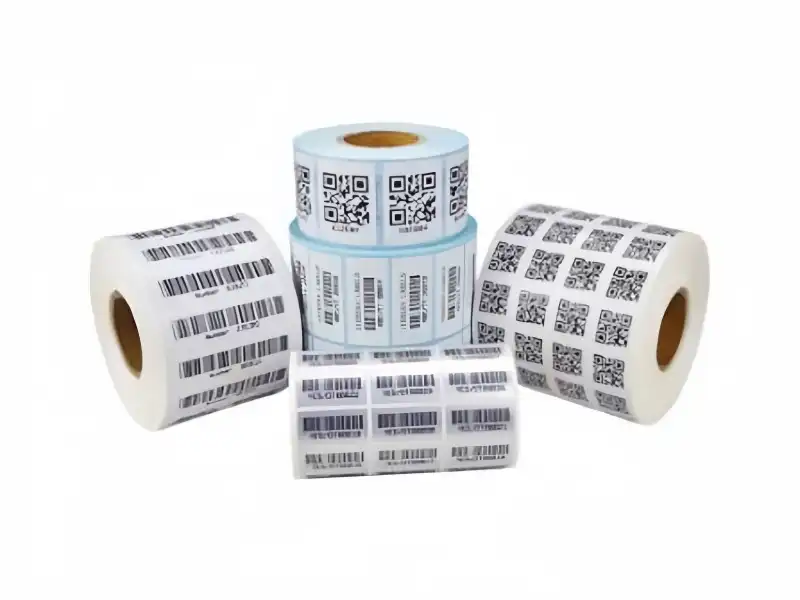
Barcode and SKU Labels
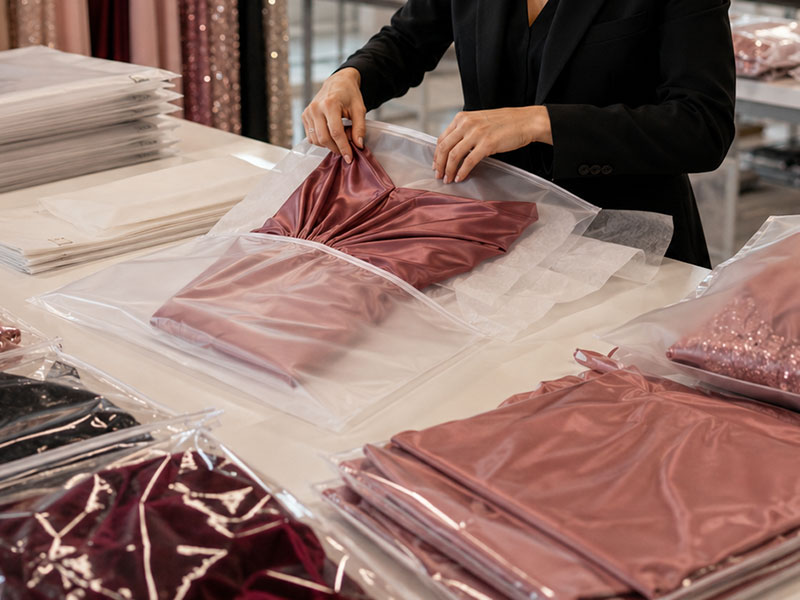
Polybags and Protection
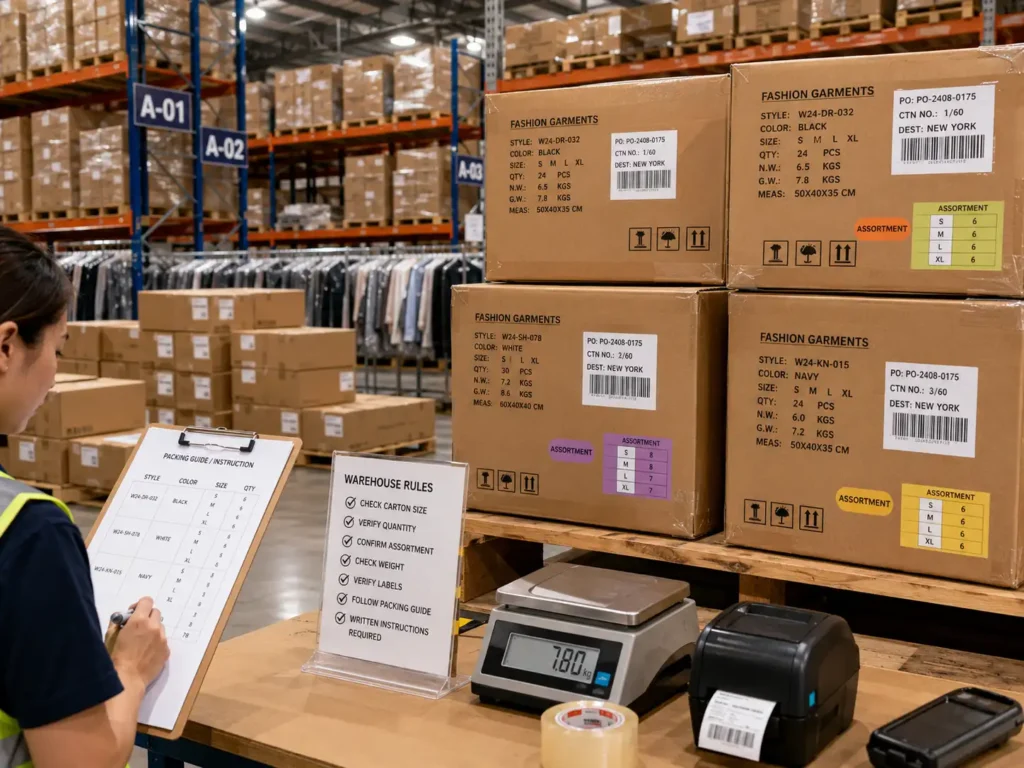
Carton and Warehouse Marks

Export Coordination
Production Management for Multi-Style Collections
Development Team
Order Management Team
Production and QC System
Emerald Green Dress Manufacturing Case Studies
The following anonymized cases represent different emerald green dress development programs, covering occasionwear collections, statement fashion projects and large private-label seasonal productions. Brand identities, original designs and commercial information remain confidential.
Case 1: Emerald Green Occasionwear and Wedding Guest Collection
Project Scope
A premium occasionwear brand developed an emerald green dress collection for wedding guest, formal dinner, cocktail and evening markets.
- Collection size: 20 dress styles
- Product categories: emerald satin dresses, chiffon maxi dresses, lace cocktail dresses, velvet evening dresses and elegant midi styles
- Materials: matte satin, stretch satin, chiffon, lace, velvet and structured lining
- Construction details: slip dresses, draped midis, one-shoulder styles, fitted waists and flowing evening silhouettes
- Requirement: rich emerald color with consistent appearance across multiple fabrics
Development Challenges
Emerald green requires strict color control because different surfaces create different visual effects.
Key challenges included:
- Maintaining emerald tone between satin, chiffon, lace and velvet
- Preventing lining from shifting the final green direction
- Controlling satin reflection under photography lighting
- Managing velvet pile direction
- Maintaining elegant proportions across sizes
Manufacturing Approach
The development team created a fabric-specific emerald approval system.
Key controls included:
- Physical emerald color reference approval
- Lab dip confirmation when required
- Fabric-specific shade comparison
- Shell and lining coordination
- PP sample approval before bulk production
Additional attention was given to:
- Draped neckline stability
- Hem balance
- Lace motif placement
- Velvet handling
- Protective packing
Manufacturing Value
The collection achieved a premium emerald occasionwear identity by combining color control, fabric selection, pattern development and refined finishing.
Case 2: Emerald Green Partywear and Statement Fashion Collection
Project Scope
A fashion brand developed a high-impact emerald collection focused on partywear, social events and premium ecommerce launches.
- Collection size: 16 dress styles
- Product categories: emerald bodycon dresses, mesh dresses, corset minis, sequin party dresses and fitted satin styles
- Materials: stretch mesh, power mesh, stretch satin, jersey, lace and sequin fabrics
- Construction details: ruching, cut-outs, corset panels, asymmetric designs and fitted silhouettes
- Requirement: strong visual impact with reliable commercial production
Development Challenges
The main challenge was balancing dramatic design with stable wearability.
Key risks included:
- Mesh transparency changing under stretch
- Stretch fabric recovery affecting fit
- Sequin surfaces increasing production difficulty
- Corset structures showing internal shadows
- Cut-outs losing stability during movement
Manufacturing Approach
The project focused on body-fit engineering and detail control.
Key controls included:
- Testing stretch direction and recovery
- Reviewing bust-waist-hip balance
- Confirming mesh coverage under tension
- Developing corset support systems
- Mapping decoration placement before production
Production controls included:
- Seam stability checks
- Zipper flatness inspection
- Ruching consistency review
- Sequin attachment inspection
- Surface protection during packing
Manufacturing Value
The collection delivered a bold emerald fashion direction while maintaining fit consistency, production stability and retail-ready quality.
Case 3: Large Private Label Emerald Green Dress Program
Project Scope
An established fashion brand required a complete emerald green dress assortment covering multiple silhouettes, fabrics and delivery stages.
- Collection size: 30 dress styles
- Production scale: 80,000+ pieces
- Product categories: emerald mini dresses, midi dresses, maxi dresses, bodycon dresses, corset dresses, wedding guest dresses and evening gowns
- Materials: satin, chiffon, mesh, lace, velvet, sequin fabric, crepe and ponte
- Requirement: consistent quality across multiple SKUs, sizes and shipment batches
Development Challenges
The program required coordination across different emerald fabric systems.
Major challenges included:
- Maintaining emerald consistency across six fabric categories
- Managing different surface reflections
- Controlling multiple lining requirements
- Maintaining size grading across silhouettes
- Coordinating private-label packing and delivery schedules
Manufacturing Approach
The collection was divided according to product structure and production risk.
Emerald Satin and Evening Group
Focused on:
- Satin slip dresses
- Corset evening styles
- Surface reflection control
- Pressing protection
Emerald Soft Occasion Group
Focused on:
- Chiffon and lace dresses
- Wedding guest styles
- Lining coordination
- Transparency control
Manufacturing Value
The program demonstrated that large emerald green dress collections require both manufacturing capacity and detailed control of color, fabric, fit, quality and retail delivery.
Repeat Orders and Emerald Color Extensions
Bestseller Reorders
Same Style, New Color
Same Pattern, New Fabric
When Jinfeng Apparel Fits Your Program
Strong Project Fit
Project Boundaries
MOQ starts from 200 pcs per style/color and is calculated by style and color rather than by total mixed quantity. Custom dyeing, special lace, sequins, trims, printing, and packaging can have separate supplier minimums. Jinfeng Apparel is not structured for ready-stock purchasing, single-piece fulfillment, dropshipping, personal dressmaking, or projects based only on the lowest unit price.
Clear project review does not mean automatic acceptance. Fabric availability, color feasibility, construction, sample cost, production schedule, compliance documents, and delivery route are evaluated before quotation and sampling. This process protects design quality and reduces late-stage changes.
Emerald Green Dress Frequently Asked Questions
Yes. Color direction can be based on a Pantone reference, physical swatch, original garment, or approved fabric standard. Stock fabric colors are reviewed first; custom dyeing may be evaluated when needed. Lab dip, fabric swatch, lining, trim, and bulk shade approvals are recorded before production. Digital images alone are not treated as the final color authority.
Common options include matte satin, stretch satin, chiffon, mesh, lace, velvet, sequin fabric, crepe, jersey, and ponte. Selection depends on silhouette, occasion, drape, stretch, transparency, support, care, price level, and order quantity. Each fabric shows emerald differently, so swatch comparison should happen before final design approval.
MOQ starts from 200 pcs per style/color. One style in two colors generally requires the MOQ for each color rather than 200 pieces combined. Custom-dyed fabric, special trims, exclusive lace, sequins, printing, certified materials, or custom packaging may carry separate supplier minimums.
A standard dress sample commonly takes around 10-15 days after fabric, construction, measurements, and development details are confirmed. Complex corset, lace, mesh, sequin, layered, or evening styles commonly take 15-25 days or require project-specific timing. Custom dyeing and special trims can extend the schedule.
Yes. Development can begin from a reference image, original sample, sketch, line sheet, or tech pack. A reference image still needs interpretation for fabric, construction, measurements, lining, trims, and fit. The team reviews feasibility before pattern and sample work begins rather than copying visible appearance without technical evaluation.
Yes, a client-defined size range can be supported when the size chart and grade rules are clear or developed through the project. XS-XL and extended size groups require control of bust, waist, hip, length, straps, armholes, neckline, slit, lining, and style-specific support. Plus, petite, or tall ranges may require separate fit review.
Bulk color control includes approved standards, lab dip or swatch records, dye-lot identification, roll grouping, bulk shade comparison, lining and trim checks, fabric-direction control, in-line review, and final garment comparison. Satin, velvet, mesh, lace, and chiffon receive different inspection focus because surface and transparency affect perceived color.
Yes. Private-label support can include woven labels, size labels, care labels, hangtags, barcode stickers, SKU labels, polybags, tissue, hangers, cartons, carton marks, warehouse labels, and packing lists. Artwork, placement, material, color, and data files are confirmed before bulk packing.
Yes. Multi-style programs are reviewed by style group, fabric group, sample priority, factory allocation, quantity, color, size ratio, QC risk, packaging, and delivery schedule. Each style and color still follows the applicable MOQ and material requirements. A line sheet and priority calendar help keep development and production controlled.
Send the tech pack or reference images, line sheet, target quantity by style and color, fabric preference, size range and ratio, construction details, label and packaging requirements, target launch date, delivery destination, and any required testing or audit documents. More complete information produces a more reliable feasibility review and quotation.

Start Your Emerald Green Dress Program
Share the product direction, and Jinfeng Apparel will review the style structure, emerald color route, fabric options, pattern risk, sample requirements, MOQ, private-label details, bulk production plan, QC points, and delivery window.
A complete brief helps the team identify issues before pattern work begins and avoids inaccurate quotations based on appearance alone.
Please include:
- Reference images, sketches, original sample photos, tech packs, or line sheet.
- Target quantity for each style and each color.
- Emerald reference: Pantone, physical swatch, garment, or preferred fabric image.
- Fabric preference, lining requirements, trims, and construction notes.
- Size range, sample size, grade rules, and planned size ratio.
- Main label, care label, hangtag, barcode, SKU, polybag, and carton requirements.
- Target sample date, photography date, bulk delivery window, and destination.
- Testing, audit documentation, inspection, or freight requirements that apply to the program.