Skip to content
Chocolate Dress Manufacturer
Custom deep-brown dress development for fashion brands requiring refined color, reliable fit, controlled bulk production, and retail-ready delivery.
- 5 commercial shade directions:chocolate, espresso, cocoa, mocha, and coffee brown, developed from an approved color reference rather than a color name alone.
- 8 core fabric families:satin, mesh, lace, chiffon, jersey, ponte, velvet, and sequin fabrics, each reviewed for undertone, reflection, transparency, and lining compatibility.
- 7-25 day sample windows:simple styles normally require 7-10 days, standard dresses 10-15 days, and complex corset, mesh, lace, or sequin styles 15-25 days.
- MOQ from 200 pcs per style/color:final quantity depends on fabric availability, custom dyeing, trims, construction, packaging, and production scheduling.
Built for Color-Led Dress Collections
Fashion Collection Teams
Occasionwear Specialists
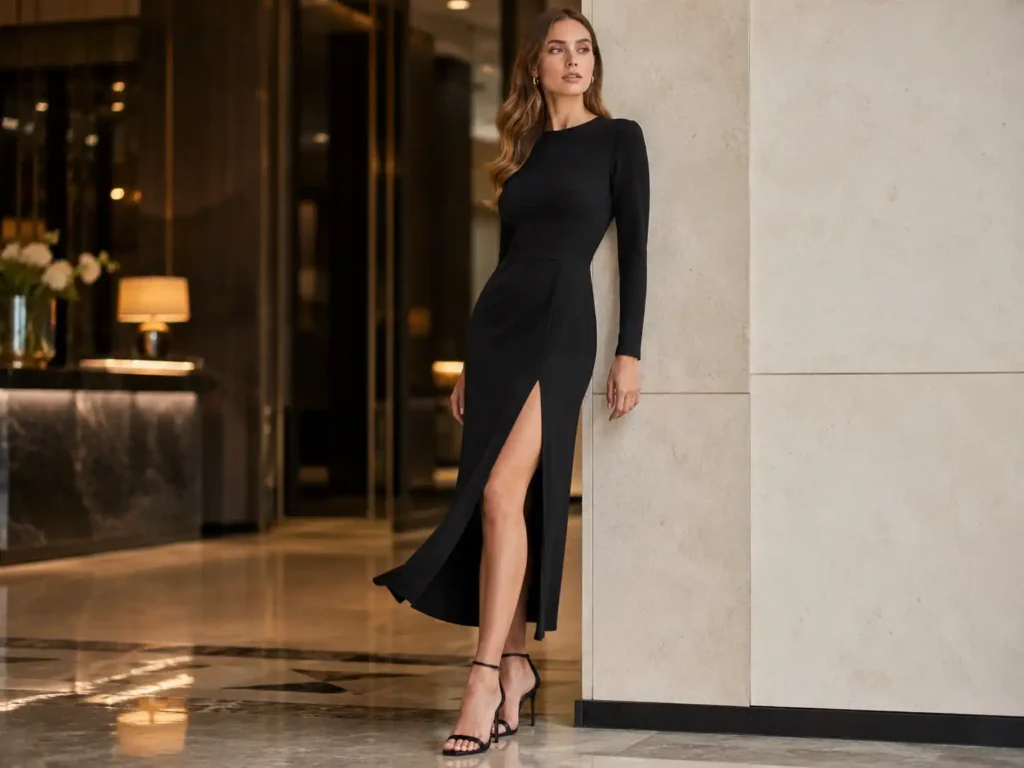
Chocolate and espresso shades work especially well in wedding guest, bridesmaid, cocktail, party, evening, and formal collections. These categories require more than a visually attractive color. Satin must drape without seam puckering, corset structures must support the upper body, mesh must balance transparency with coverage, and lining must coordinate with the shell fabric under photography and event lighting. Jinfeng Apparel reviews structure, fabric behavior, lining, zipper application, neckline security, slit height, pressing, and final appearance before a style becomes a production standard.
Retail and Ecommerce Programs
Chocolate, Espresso, Mocha, and Dark Brown Explained
Color names are useful for merchandising, but production requires a more exact reference. A shade called espresso by one brand may look like near-black brown, while another label may use espresso for a warm coffee tone. Fabric surface, lighting, lining, and finishing can shift the final appearance.
| Shade Family | Visual Character | Common Undertone | Suitable Dress Categories | Main Production Risk |
|---|---|---|---|---|
| Chocolate Brown | Rich medium-to-dark brown with visible warmth | Warm, red, or neutral | Satin party dresses, bodycon dresses, corset minis, cocktail midis | Can appear too red under warm lighting or too flat on matte fabric |
| Espresso Brown | Very deep brown, often close to black | Neutral or cool | Evening dresses, formal maxis, bridesmaid dresses, structured occasionwear | Can photograph as black in low light and lose the intended brown identity |
| Cocoa Brown | Softer, muted brown with less visual density | Warm or neutral | Jersey dresses, casual midis, resort dresses, soft draped silhouettes | Can look washed out when the fabric lacks weight or depth |
| Mocha Brown | Lighter brown with beige or creamy influence | Warm | Chiffon, rayon, linen-blend, resort, and spring collections | Shell fabric and lining may create different visible shades |
| Coffee Brown | Broad commercial brown covering several depths | Variable | Multi-category dress capsules and commercial seasonal ranges | Name alone is too broad for accurate dyeing or repeat-order control |
| Dark Brown | Generic deep-brown description | Variable | Basic color grouping across dress categories | May create disagreement unless supported by a swatch, Pantone direction, or approved fabric sample |
Chocolate and Espresso Dress Styles We Manufacture
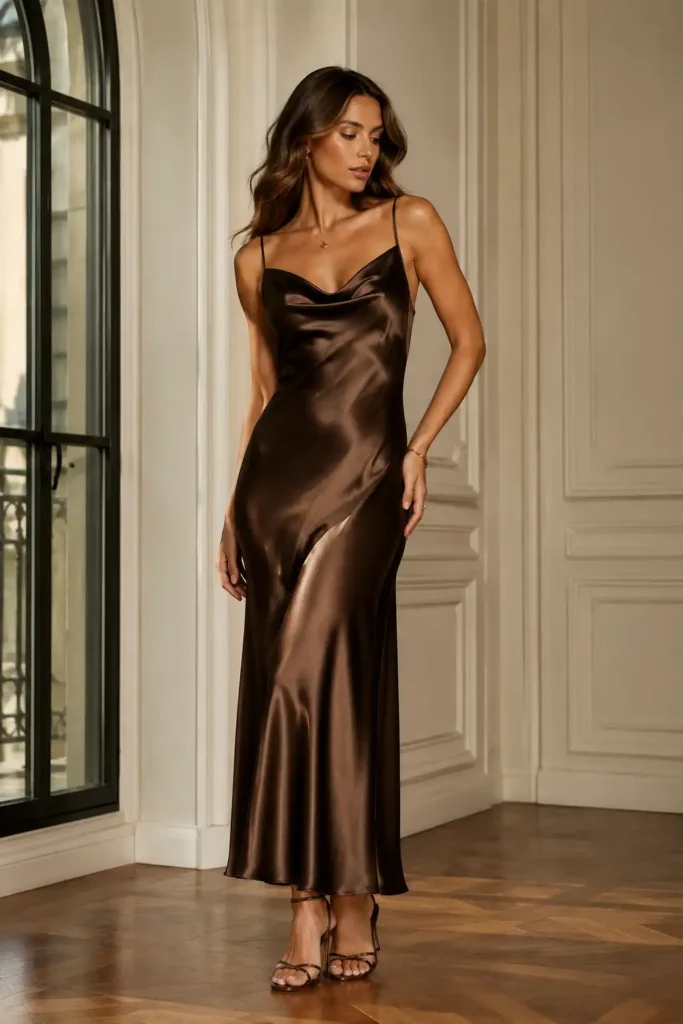
Satin Slip Dresses
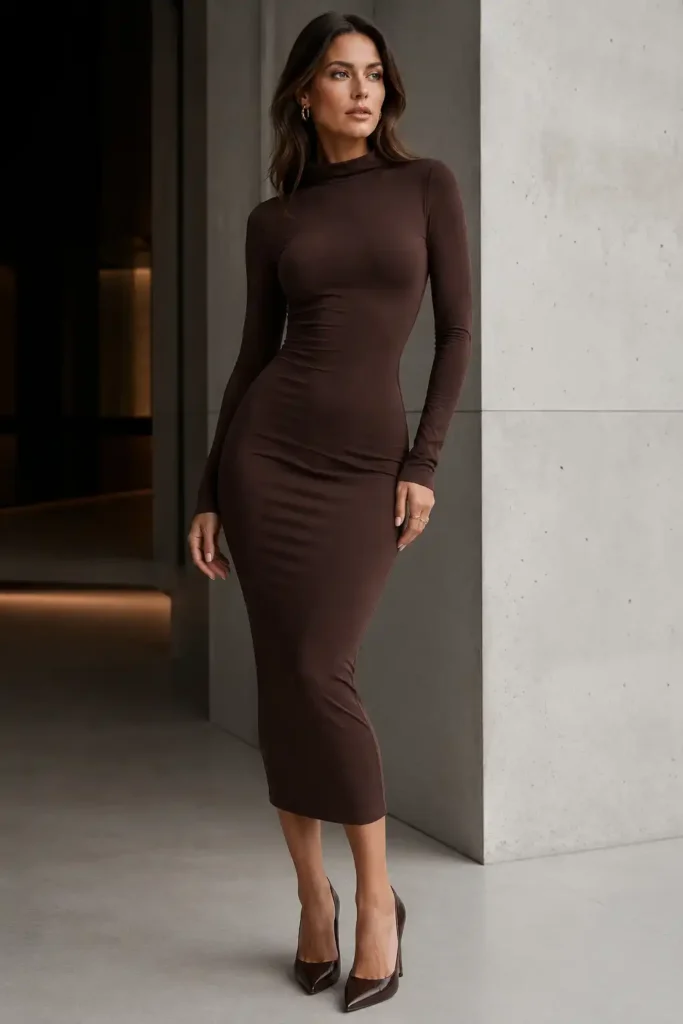
Bodycon Dresses
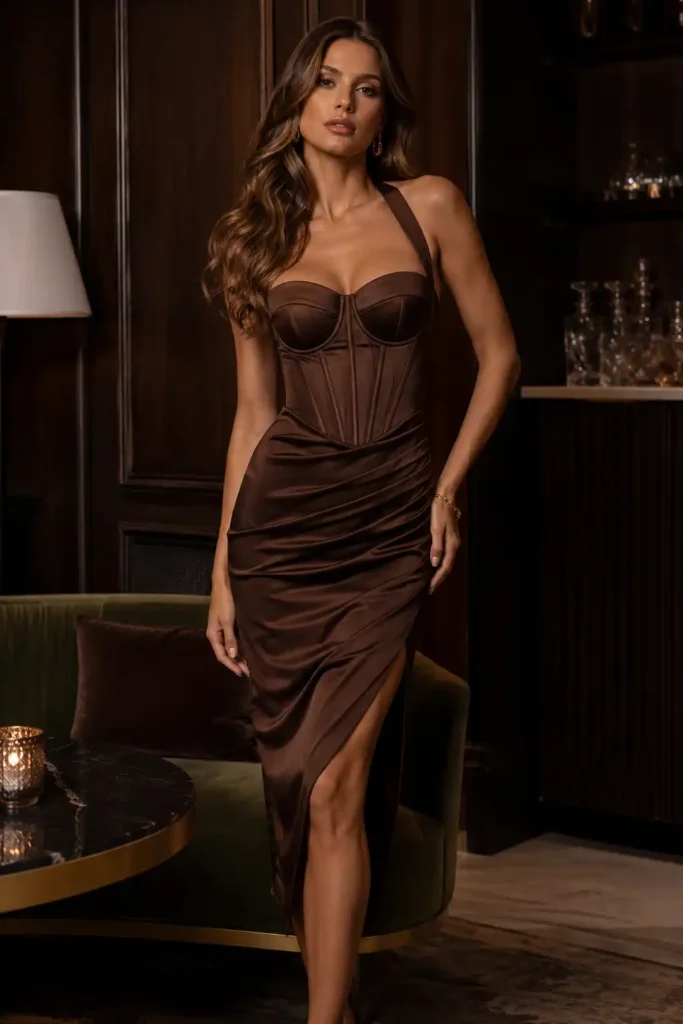
Corset Dresses
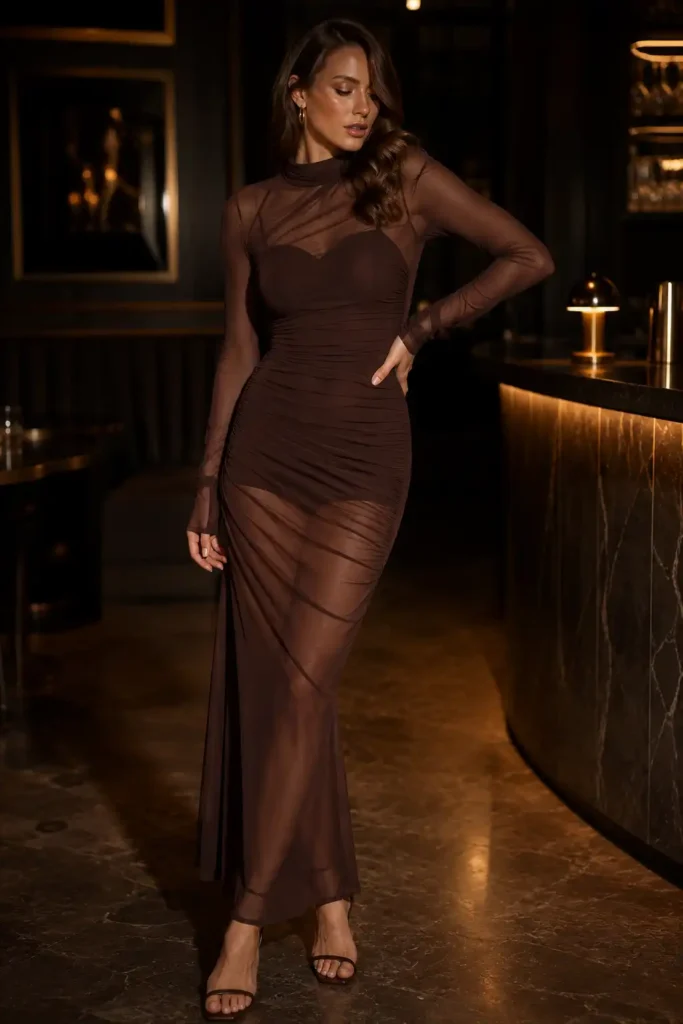
Mesh Dresses
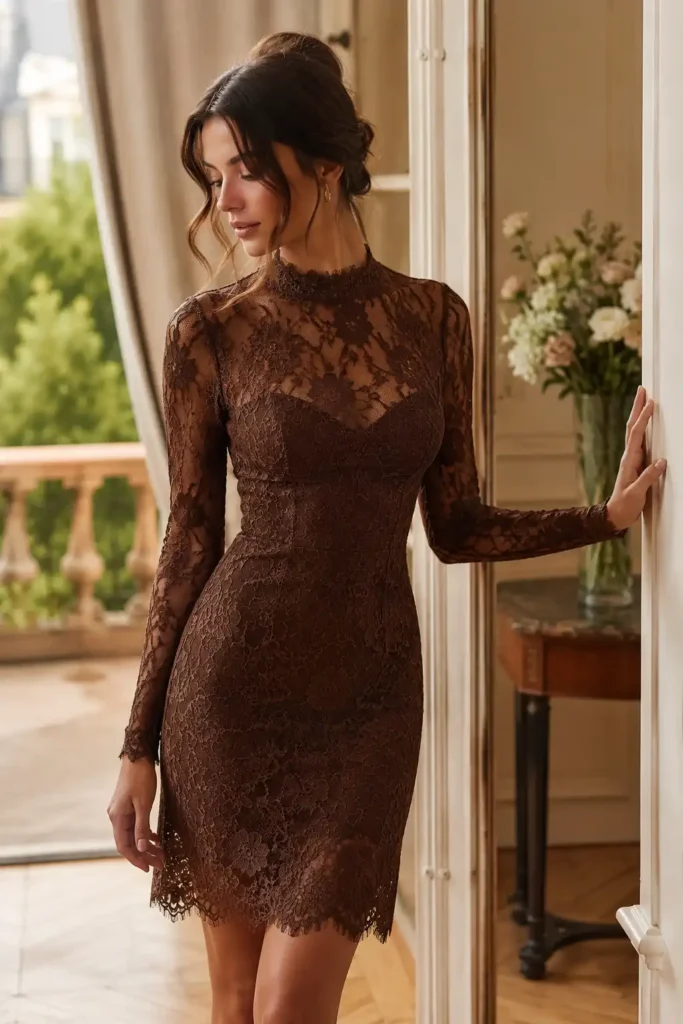
Lace Dresses
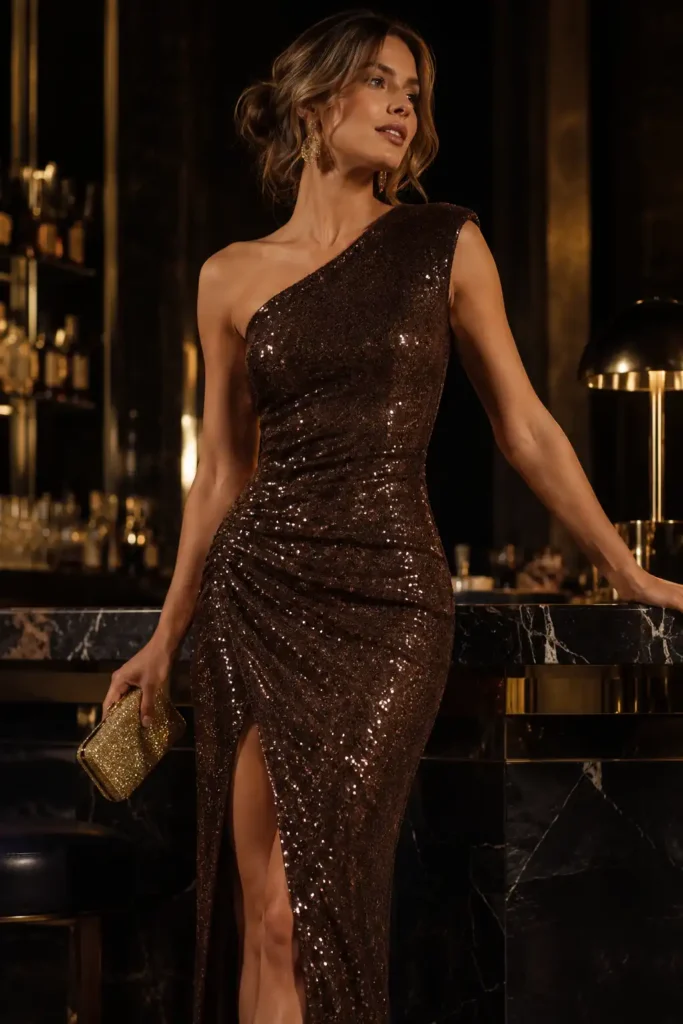
Sequin Dresses
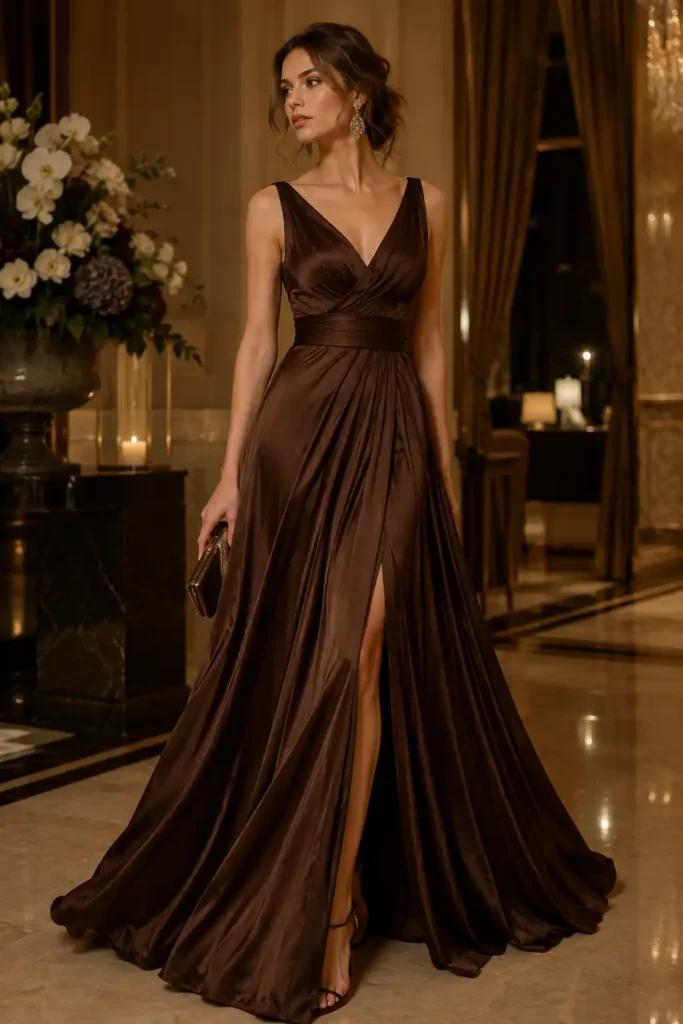
Occasion Maxi Dresses
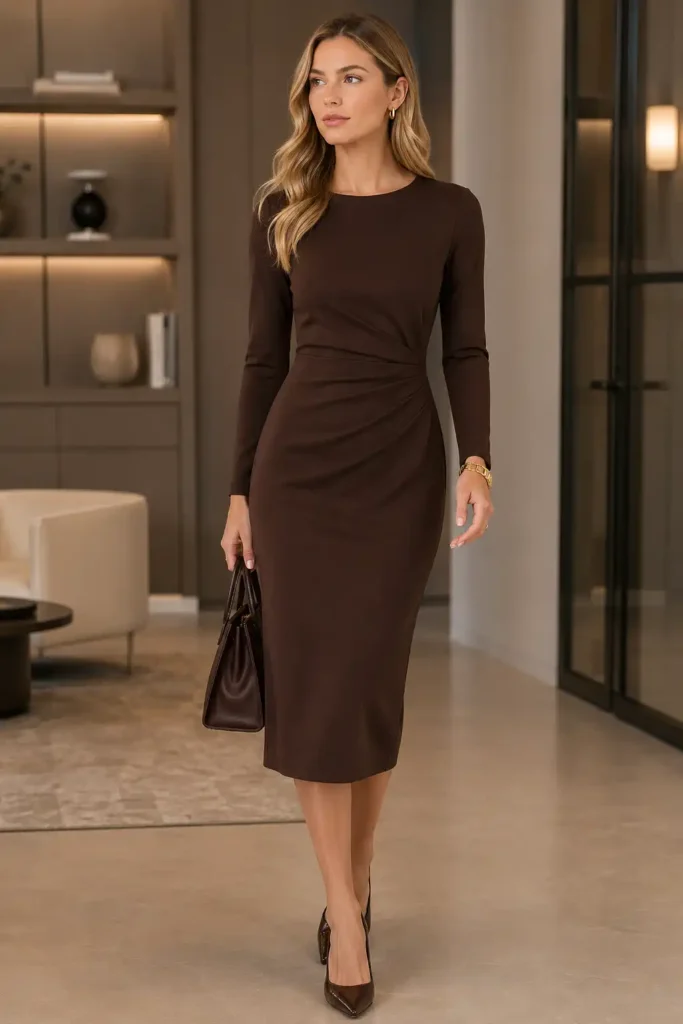
Jersey and Ponte Dresses
Deep Brown Dresses for High-Value Fashion Categories

Party and Night-Out

Wedding Guest

Bridesmaid Collections

Cocktail and Evening

Resort and Vacation

Ecommerce Capsules
Develop the Right Chocolate or Espresso Shade
Color development begins before sewing. A strong deep-brown dress program connects the commercial color name with a physical standard, the selected fabric, the intended lighting environment, and the final product structure. Jinfeng Apparel treats color approval as a controlled development stage rather than a visual guess from a screen.
Start with a Reliable Color Reference
A color name is useful for communication but insufficient for production. Chocolate can range from reddish brown to neutral dark brown, while espresso may range from cool near-black to warm roasted coffee. Jinfeng Apparel begins with the strongest available reference: a Pantone direction, original garment, fabric swatch, approved supplier color card, lab dip, or previously approved material. Reference photos can support the discussion, but monitor settings, photography, editing, and ambient light can change the visible shade.
The development brief records the intended shade family, undertone, depth, fabric surface, end use, and target market. A satin evening dress may need a deeper and cleaner espresso than a soft jersey resort dress. A chocolate bridesmaid program may need coordinated satin and chiffon rather than one exact optical match. The aim is a controlled family of materials that reads consistently when worn together.
When a physical swatch is available, Jinfeng Apparel compares shell fabric, lining, zipper tape, sewing thread, elastic, lace, mesh, and decorative trims against the approved direction. A shade is not complete when the shell alone looks correct; contrast from the lining or zipper can change the entire garment.
Evaluate Color on the Actual Fabric
The same dye direction behaves differently across fiber composition, weave, knit structure, pile, transparency, and surface reflection. Satin reflects light and can shift from warm brown to golden brown. Matte jersey absorbs light and may look flatter. Mesh becomes lighter over skin or lining. Velvet changes with pile direction. Sequins create highlights that may hide or exaggerate the base color.
Jinfeng Apparel reviews the shade on the intended fabric instead of relying on a generic brown card. Evaluation covers front and back surfaces, natural light, indoor light, folded layers, stretched fabric, and the relationship with lining. Stretch fabrics also need review in a stretched state because color and opacity can change across the bust, waist, or hip.
For layered styles, development considers the final stack: mesh over lining, lace over satin, chiffon over lining, or sequin fabric over a soft inner layer. One material may need to be slightly lighter or warmer to achieve the intended finished appearance after layering. Sample sewing confirms whether seams, darts, ruching, folds, and gathered areas create unwanted dark or light bands.
Coordinate Shell, Lining, and Trims
A deep-brown dress can fail visually even when the shell fabric is approved.
Common problems include a black zipper inside an espresso dress, a red-brown lining under neutral chocolate lace, a pale elastic edge visible through mesh, or bright thread along a dark satin seam. Jinfeng Apparel therefore builds a color package around the garment rather than the shell alone.
The package may include shell, lining, mesh, lace, zipper tape, thread, elastic, hook-and-eye, bra cups, boning casing, anti-slip tape, labels, and decorative elements. Visible trims require the closest coordination. Hidden trims must still avoid show-through, staining, or color transfer. Satin and transparent fabrics receive particular attention because small color differences are easier to notice.
Approved information moves into the BOM, trim record, production order, sewing instruction, QC checklist, and packing data. Color names used in labels, barcodes, SKU files, and cartons should match the brand’s commercial naming system. Production teams should not create new names during packing.
Approve Color Before Bulk Production
Bulk production should not start from an unconfirmed screen image or an informal message. Color approval should be connected to the approved fabric article, sample version, and production documents. Jinfeng Apparel confirms color during fabric review, sample development, revised sample work, and PP sample approval. The Golden sample provides a retained physical reference for production, final inspection, repeat orders, and dispute review.
Bulk material is checked for shade, surface faults, and lot differences before cutting. Materials from different dye lots require separation and evaluation. Shell and lining combinations are reviewed again when bulk materials arrive because supplier lots can vary from early sample yardage. Cutting, sewing, and finishing teams follow the approved lot and production file.
For repeat orders, Jinfeng Apparel keeps color references, fabric records, trim details, size charts, packaging requirements, QC findings, and Golden sample information. Exact repeatability still depends on material availability and new dye lots, but retained records provide a stronger starting point than rebuilding the shade from memory.
How Deep Brown Performs Across Dress Fabrics
Fabric changes the visible shade, hand feel, drape, opacity, structure, and production risk. A chocolate color that works on satin may need adjustment on lace or jersey. Material approval should consider the finished garment, not only the flat swatch.
| Fabric | Deep-Brown Appearance | Best Uses | Main Risks | Key Manufacturing Controls |
|---|---|---|---|---|
| Satin / Stretch Satin | Rich, reflective, dimensional; undertone changes with light | Slip, draped, party, bridesmaid, evening, corset dresses | Shading, seam puckering, snagging, water marks, near-black photography | Grain direction, needle and seam control, lining match, zipper flatness, pressing, surface inspection |
| Mesh / Power Mesh | Lighter, transparent, layered; shade changes over skin or lining | Bodycon, ruched, sleeve, cut-out, layered and printed dresses | Excess transparency, weak recovery, neckline distortion, holes, lining mismatch | Stretch direction, layer count, lining approval, edge finishing, hole inspection, measurement after stretch |
| Lace | Pattern and ground alter perceived shade; lining strongly affects tone | Occasion, cocktail, corset, midi and evening dresses | Motif mismatch, scallop waste, ground/embroidery difference, visible seams | Motif placement, panel matching, lining coordination, edge planning, zipper-area reinforcement |
| Chiffon | Soft, semi-transparent, usually appears lighter in one layer | Bridesmaid, draped, resort, sleeve and maxi dresses | Layer inconsistency, transparency, seam show-through, static, uneven hem | Layer count, lining depth, fine seam finishing, hem leveling, shade review when layered |
| Jersey / Rib Knit | Matte and commercially stable when weight is suitable | Bodycon, casual midi, long-sleeve, ruched and repeat programs | Flat appearance, weak recovery, twisting, opacity loss, size growth | GSM, stretch and recovery, shrinkage, relaxation, cutting direction, finished measurements |
| Ponte / Roma | Dense, structured, often reads darker than the swatch | Structured midi, office-to-evening, fitted and panel dresses | Espresso may look black, excess thickness, limited drape, seam bulk | Fabric weight, stretch balance, seam construction, pressing, silhouette review |
| Velvet | Deep, luxurious, highly affected by pile direction | Evening, holiday, formal and fitted dresses | Shade reversal, crushing, pressure marks, seam visibility | Nap direction, one-way cutting, careful pressing, hanging and protective packing |
| Sequin Fabric | Reflective, moving, variable under flash; base cloth influences depth | Party, holiday, mini, evening and statement dresses | Missing sequins, scratching, thick seams, zipper obstruction, packing damage | Direction control, seam clearing, soft lining, underarm protection, missing-sequin inspection, protective packing |
From Shade Reference to Bulk Color Approval
Receive Color Direction
Select the Fabric Base
Review Shade Options
Build the Sample
Confirm the PP Standard
Control Bulk Lots
Pattern, Fit, and Structure for Deep Brown Dresses
A strong shade cannot compensate for weak fit. Chocolate and espresso dresses often sit in fitted, occasion, corset, draped, or formal categories where bust shape, waist position, hip balance, neckline security, hem level, and internal support determine whether the garment looks premium on the body.
Control Bust, Waist, Hip, and Length
Jinfeng Apparel develops patterns around the brand’s size chart, base size, grade rules, fit preference, fabric behavior, and target market. Core measurements include bust, upper bust, underbust, waist, high waist, low waist, hip, front length, back length, skirt length, shoulder strap, armhole, neckline depth, slit height, and jumpsuit rise where relevant.
A bodycon espresso midi in power mesh needs a different reduction and recovery strategy from a structured chocolate ponte dress. A satin slip needs controlled drape and bias behavior, while a lace corset dress needs stable panel shaping and internal support. Pattern work therefore follows product structure rather than applying one standard ease rule.
During fitting, Jinfeng Apparel reviews common problems such as gaping at the bust, low neckline exposure, tight waist, loose waist, restricted hip, flat shaping, uneven hem, long straps, large armholes, poor back fit, strapless slippage, high slit, or fabric riding upward. Comments are converted into updated patterns, size charts, sewing instructions, BOM details, and QC checkpoints.
The development team includes 7+ senior pattern makers, 2 sample rooms, and 20+ sample machinists. Their role is not limited to producing a first sample; the team tests whether the proposed fit and structure can be repeated consistently in bulk production.
Build Secure Necklines and Bodices
Chocolate and espresso collections often use cowl necks, deep V fronts, halter necks, strapless bodices, asymmetric necklines, corset cups, and open backs. Each design creates a different risk around coverage, support, movement, and visual balance.
Strapless and corset styles may require boning, bra cups, underwire, anti-slip tape, reinforced seams, shaped panels, or internal elastic. Deep V and cut-out designs need controlled neckline depth, stable edges, and enough body coverage for the target market. Halter styles require balanced neck pressure and secure closure. Backless styles need careful tension across the waist and side seams so the garment stays in position.
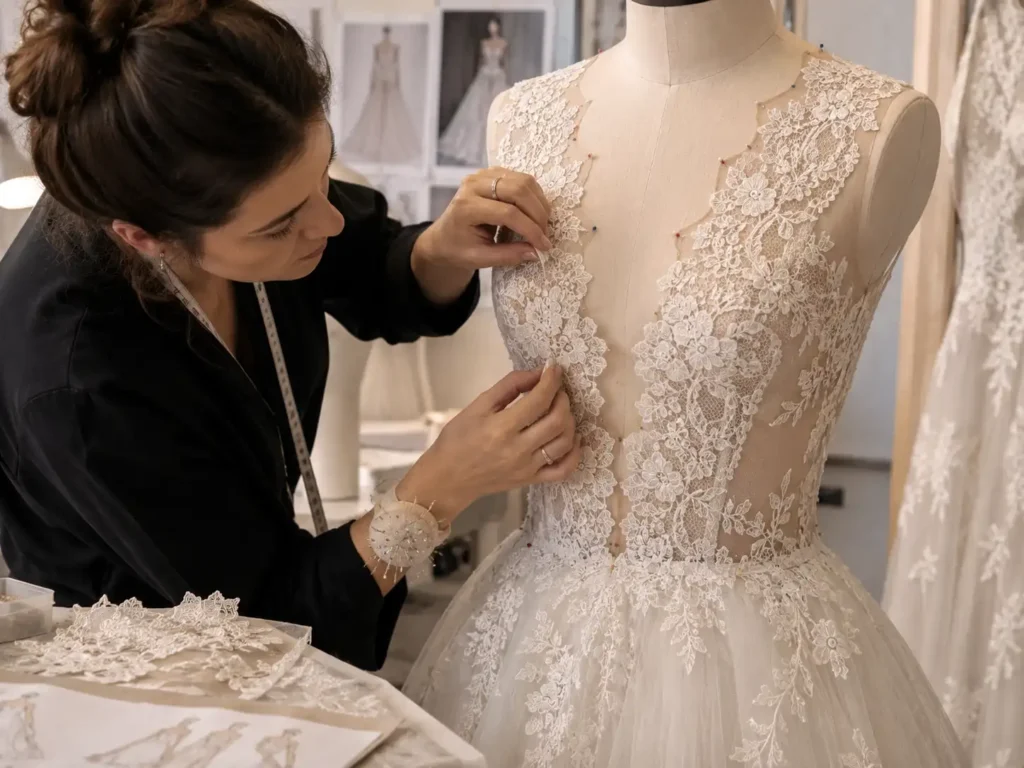
Sample development checks the relationship between outer fabric and internal structure. Soft satin may need hidden reinforcement without creating visible stiffness. Mesh may require clean lining edges and stretch-compatible support. Lace placement must align with bodice seams and cups. Ponte can provide structure but may become bulky if seam allowances and lining are not planned correctly.
Approved construction details enter the sewing instruction and QC checklist. Production teams receive clear information about cup position, boning length, anti-slip tape, neckline finishing, seam allowance, zipper installation, lining fixation, and pressing.
Manage Stretch, Drape, and Transparency
Deep-brown dresses span materials with opposite behaviors. Jersey stretches and recovers, satin drapes and reflects, mesh stretches and reveals, lace has pattern and limited recovery, chiffon layers softly, and velvet changes with pile direction. Fit must respond to the chosen material rather than forcing the material into an unsuitable pattern.
Jinfeng Apparel evaluates stretch direction, stretch percentage, recovery, GSM, shrinkage, transparency, lining, seam stability, and finished measurements. A bodycon style is checked after stretching, sewing, and relaxation. A satin dress is reviewed for grain behavior, drape, side-seam balance, and hem. A mesh dress is reviewed over the selected lining or intended skin-tone effect. A velvet dress is developed with one-way cutting and controlled pressure.
Transparency is especially important in cocoa, mocha, and lighter chocolate shades. The shell may appear opaque on a table but become transparent across the bust or hip. Lining depth, color, stretch, coverage, and edge placement are confirmed during sampling. Dark espresso can also reveal light-colored inner components through mesh or lace if the trim package is not coordinated.
Grade for Commercial Size Runs
Bulk production can include multiple sizes within the confirmed quantity for each style and color. Jinfeng Apparel follows the supplied size chart and grade rules, reviewing whether key proportions remain balanced across the range. Bust position, waistline, hip shaping, neckline depth, strap length, armhole, slit height, and total length may need controlled grade behavior rather than equal increases at every point.
The production file records base size, grade rule, measurement chart, tolerance, pattern version, PP sample version, and product-specific checkpoints. Cutting QC confirms pattern, size, direction, and quantity. Sewing and finished-garment QC measure critical points against the approved chart. The Golden sample supports comparison for appearance and construction.
For deep-brown collections with 10-30 styles, size-control discipline becomes especially important because each style may use a different fabric and fit. A satin slip, mesh bodycon, corset mini, and ponte midi cannot share the same tolerance priorities. Jinfeng Apparel creates style-specific measurement and QC records to support multi-style production.
Design Details That Define a Deep Brown Collection
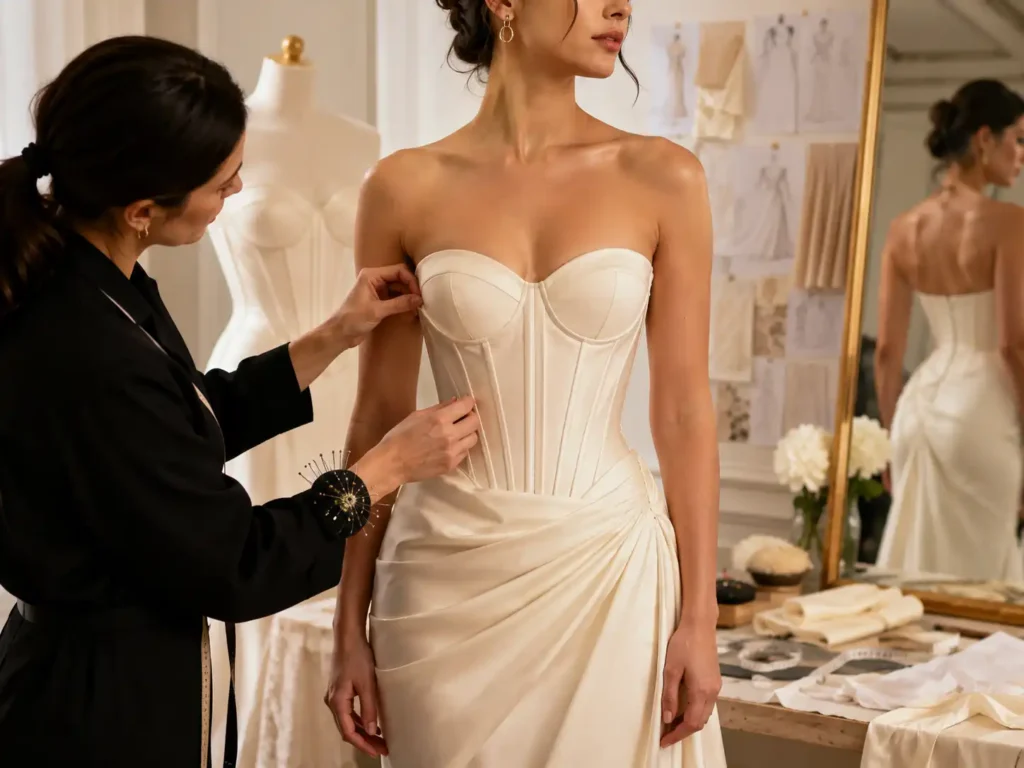
Corset Paneling
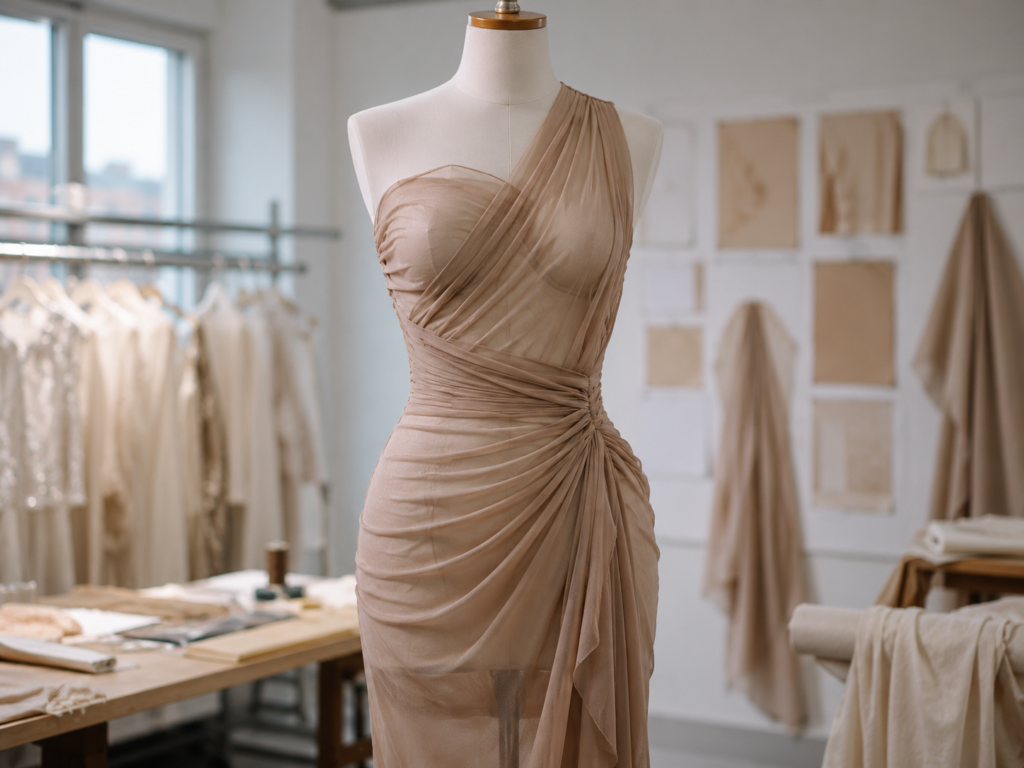
Ruching and Draping

Cut-Out Placement
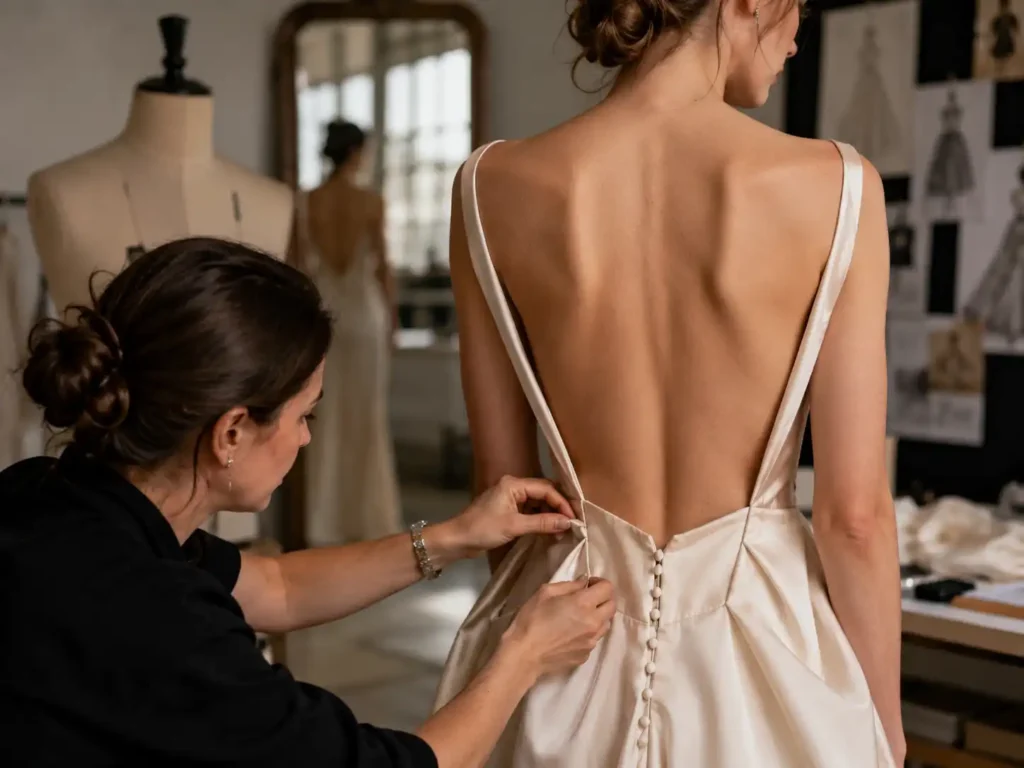
Backless Construction
Slits and Hemlines
Lace and Mesh Placement

Straps and Necklines

Surface Embellishment
Workmanship Built Around Fabric and Structure
Premium appearance comes from many controlled decisions: seam type, stitch balance, lining, zipper, edge finishing, pressing, panel alignment, surface protection, and final inspection. Jinfeng Apparel converts the approved sample into a production instruction so the factory is not relying on memory or a reference photo.
Clean Seams, Linings, and Zippers
Seam construction is selected according to fabric and product structure. Fine satin requires smooth feeding, controlled tension, suitable needles, clean seam allowance, and careful pressing. Stretch jersey and mesh need seams that move with the garment without breaking or waving. Lace may require motif planning and narrow clean finishing. Sequin fabric often needs cleared seam allowance and protection from sharp edges.
Lining is treated as a working component rather than a hidden afterthought. The lining must support opacity, comfort, structure, movement, and color coordination. A poor lining can pull the outer shell, show below the hem, create static, expose a contrasting tone, or restrict stretch. Lining attachment points, hem length, neckline, armhole, zipper area, and slit are recorded in the sewing instruction.
Zipper quality and installation are especially visible on fitted dark dresses. The zipper should follow the seam without rippling, twisting, catching lining, or creating a bulky top edge. Zipper tape color is reviewed against the shell, and reinforcement is added where corset, sequin, or heavy fabrics create stress.
Bulk QC checks seam smoothness, skipped stitches, broken stitches, tension, seam allowance, zipper action, lining exposure, and construction against the Golden sample. Problems are corrected during sewing and in-line inspection rather than waiting for final packing.
Control Satin, Mesh, Lace, and Sequin Finishing
Satin finishing focuses on snag prevention, seam puckering, grain direction, pressure marks, water marks, shine changes, and hem balance. Pressing must improve the silhouette without flattening drape or creating visible gloss. Garments are handled to reduce surface damage between sewing, finishing, inspection, and packing.
Mesh finishing focuses on edge stability, transparency, stretch recovery, seam softness, and hole prevention. Necklines and armholes need reinforcement that does not look heavy. Layered mesh requires consistent gathering and alignment. Printed mesh needs placement control where the design depends on motif position.
Lace finishing focuses on motif placement, scallop edges, seam appearance, lining boundaries, loose threads, damaged embroidery, and surface cleanliness. The production file should define where motifs align and where seams may be concealed or balanced.
Sequin finishing focuses on missing pieces, sharp edges, thick seams, zipper obstruction, underarm comfort, lining, and packing protection. Sequin direction changes light reflection, so cutting and sewing must follow the approved orientation. Finished garments may need protective tissue, controlled folding, or separate packing methods depending on the design.
Press for Shape Without Damaging the Surface
Pressing changes the final appearance of a dress as much as sewing. Dark satin can develop shine, water marks, or flattened texture when temperature and pressure are poorly controlled. Velvet can crush or reverse pile. Ponte can show seam ridges. Lace and mesh can distort under excessive heat. Sequin fabric may melt, bend, or transfer marks.
Jinfeng Apparel records product-specific pressing requirements in the production instruction. The aim is a clean neckline, smooth zipper, shaped seams, balanced hem, and refined silhouette without damaging the fabric. Pressing review is part of the QC system before packing.
Finished garments are inspected under suitable lighting for shade, stains, shine marks, seam impressions, puckering, and surface faults. Deep brown often hides light dust but makes oil, chalk, pressing, and abrasion marks visible. Handling and cleaning methods therefore matter throughout production.
Convert the Sample into a Repeatable Standard
Complex dresses cannot be produced reliably from photos alone. Jinfeng Apparel builds production orders and sewing instructions covering fabric, lining, trims, pattern version, PP sample, seam method, seam allowance, stitch requirements, zipper installation, neckline, armhole, hem, slit, lining fixation, boning, bra cups, anti-slip tape, ruching, lace, mesh, sequins, pressing, folding, and key QC points.
The Golden sample remains a physical standard for appearance and construction. The BOM controls materials. The size chart controls measurements. The QC checklist controls inspection. Packing instructions control labels, barcodes, polybags, carton marks, and size ratios.
When a collection includes 10-30 styles, each style receives separate records. A chocolate satin slip and an espresso sequin mini cannot share one generic instruction. Style-specific documentation reduces production drift, supports issue tracing, and makes repeat orders more efficient.
Sampling from First Prototype to Golden Sample
Development Review
First Sample
Fit and Measurement Review
Revised Sample
PP Sample Approval
Golden Sample Control
Bulk Production Managed by Clear Project Gates

Pre-Production Confirmation
Material Procurement and Inspection
Relaxation, Cutting, and Panels
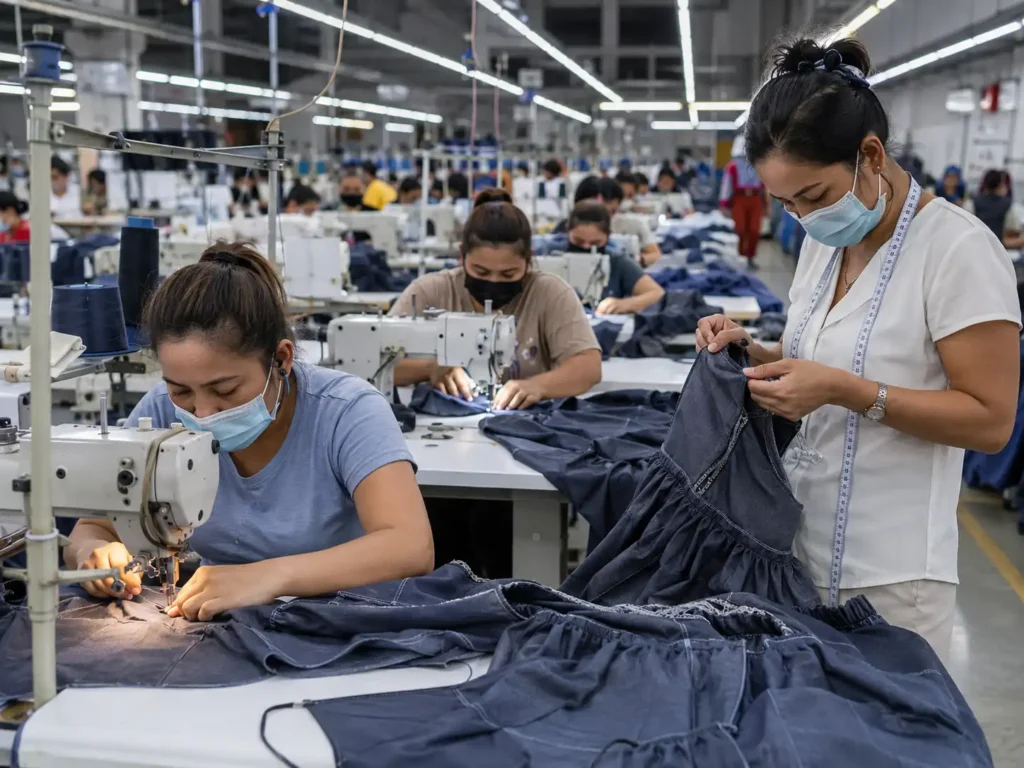
Sewing and In-Line Control
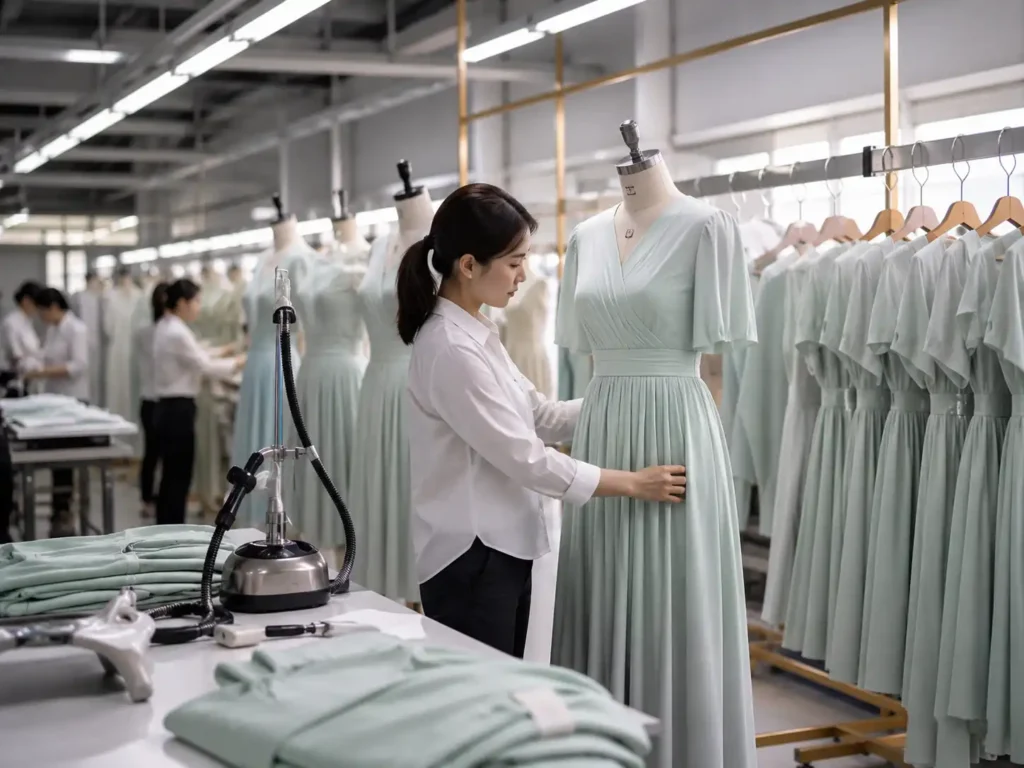
Finishing and Garment Inspection

Packing, AQL, and Shipment
Color-Specific Quality Control from Fabric to Packing
Deep-brown dresses require more than a general final inspection. Color, fabric surface, lining, trims, fit, construction, pressing, labels, and lot records must remain connected from incoming materials through cutting, sewing, finishing, packing, and repeat production.
Incoming Material and Dye-Lot Control
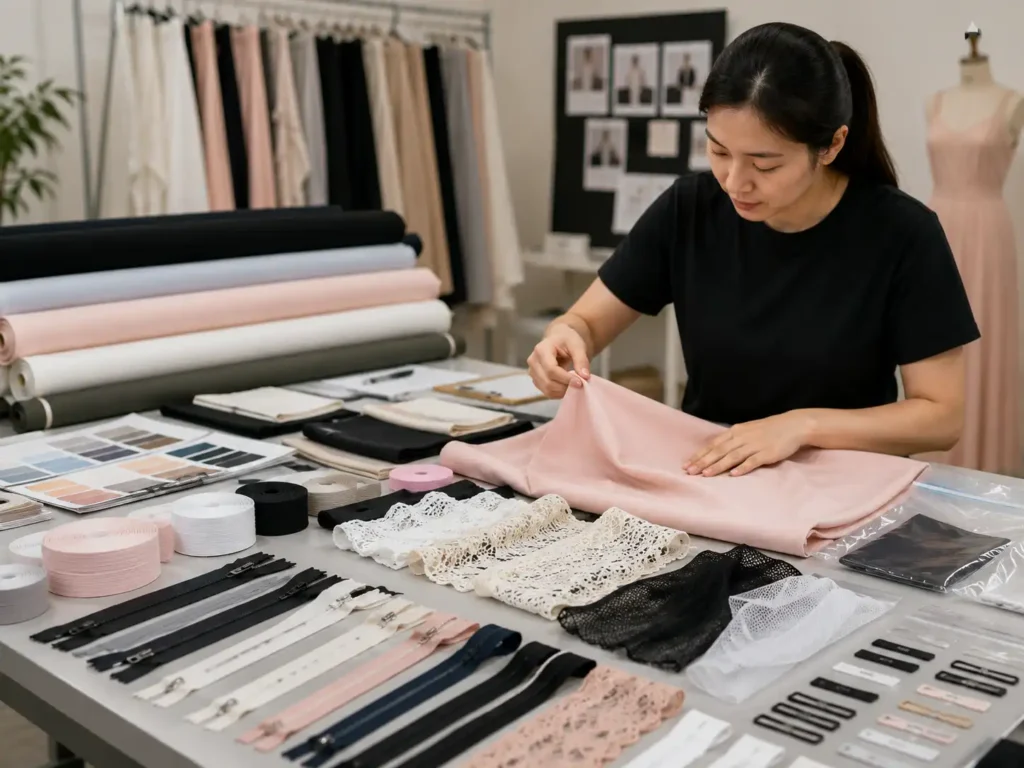
Incoming QC checks shell fabric, lining, lace, mesh, sequins, zippers, thread, elastic, labels, and packaging against the approved specification.
For chocolate and espresso fabrics, inspection focuses on undertone, depth, lot difference, surface marks, shade variation across the roll, stretch, transparency, pile direction, and compatibility with the approved sample.
Materials from different dye lots are identified and managed separately when visual difference exists.
Mixing lots within one garment, one size group, or one retail delivery can create noticeable inconsistency. Shell and lining are viewed together because a lining can shift the finished shade, especially under mesh, lace, chiffon, or lighter chocolate fabric.
Satin is checked for snags, weaving marks, streaks, and pressure sensitivity. Mesh is checked for holes, recovery, and transparency. Lace is checked for motif damage and ground shade. Sequin fabric is checked for missing pieces, base-cloth color, direction, and surface security. Velvet is checked for pile direction and crushing.
Material approval is recorded before cutting. When bulk material differs materially from the sample yardage, the team reviews the impact on color, fit, construction, cost, and delivery before continuing.
Cutting, Sewing, and Measurement Control
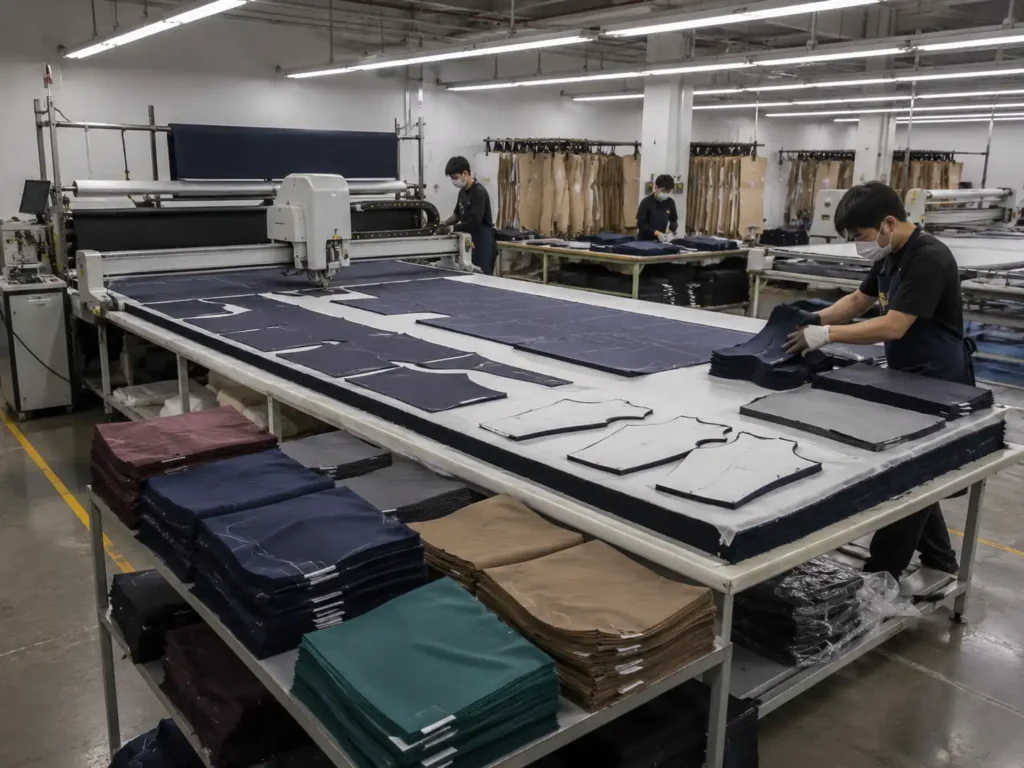
Cutting QC checks pattern version, size, grain, stretch direction, nap, motif, lot, panel count, and fabric faults. One-way fabrics such as velvet require consistent orientation. Satin requires controlled direction to avoid visible shade variation. Lace and printed mesh require placement planning. Stretch fabrics require correct direction to protect fit and recovery.
Sewing QC covers stitch balance, seam allowance, zipper, lining, boning, cups, straps, neckline, armhole, slit, ruching, lace placement, mesh edges, sequins, and thread color. Dark garments can hide minor thread but expose puckering, shine, uneven seams, and dust under strong lighting. In-line checks reduce large-scale rework by identifying problems while production is still active.
Measurement control compares critical points with the approved size chart and tolerance. Product-specific points may include bust, underbust, waist, hip, total length, strap length, armhole, neckline depth, slit height, and hem sweep. Stretch garments are reviewed after sewing and relaxation, not only immediately after construction.
The Golden sample provides a visual and construction reference, while the size chart and QC checklist provide measurable standards. Both are required because appearance alone cannot verify fit, and measurement alone cannot verify workmanship.
Finished Garment and Pressing Review
Finished-garment QC checks color, silhouette, measurement, symmetry, seam appearance, zipper function, lining, coverage, surface quality, decorative details, labels, and cleanliness. Chocolate and espresso shades are reviewed under suitable lighting so near-black espresso does not conceal faults and warm chocolate does not shift unexpectedly between garments.
Pressing review checks shine, water marks, pressure marks, seam impressions, crushed pile, distorted mesh, damaged sequins, and uneven hems. Satin and velvet require careful handling. Dark garments also reveal chalk, oil, lint, dust, and light abrasion. Cleaning methods should not create new marks or color changes.
Fit-sensitive styles receive additional focus. Corset dresses are checked for cup symmetry, boning, neckline, zipper, and support. Bodycon dresses are checked for side-seam balance, stretch recovery, opacity, and measurements. Mesh dresses are checked for holes, transparency, lining, and neckline stability. Lace dresses are checked for motif, loose threads, damage, and lining boundaries.
Repair results are rechecked before garments move to packing. QC feedback can include photos, videos, marked issue images, measurement tables, checklists, AQL reports when required, and before-and-after repair evidence.
Packing, SKU, and Repeat-Order Records
Packing QC protects both product quality and retail accuracy. Each garment is checked for the correct main label, size label, care label, hangtag, barcode, color sticker, size sticker, polybag, folding method, and SKU. Cartons are checked for style, color name, size ratio, quantity, carton mark, PO data, and warehouse instructions.
Color naming requires discipline. A brand may use “Espresso 215,” “Dark Chocolate,” or “Mocha Brown” as the commercial name.
The approved name should appear consistently in SKU files, labels, packing lists, and carton records.
Informal renaming during production can create warehouse, ecommerce, and replenishment errors.
Jinfeng Apparel keeps pattern, measurement, fabric, color, trim, sewing, packing, QC, and Golden sample records for repeat orders.
New material lots still require approval, but historical records reduce development time and help identify whether a repeat shade, lining, zipper, or packing component has changed.
Order Planning, Size Control, and Lead-Time Logic
MOQ and Color Planning
MOQ starts from 200 pcs per style/color.
The quantity is calculated by style and color, not by combining several designs into one total.
Multiple sizes can be distributed within the confirmed quantity.
Custom-dyed fabric, custom print, exclusive lace, sequin material, certified fabric, special trims, or branded packaging may have separate supplier MOQ.
Concentrating volume in fewer approved brown shades can improve fabric planning, cutting efficiency, and repeatability across a collection.
Size and Fit Control
Each style follows an approved size chart, base size, grade rule, pattern version, measurement tolerance, and PP sample.
Multi-size orders are planned by color-size ratio.
Fit checkpoints vary by product: bust, underbust, waist, hip, length, strap, neckline, armhole, slit, and hem are selected according to the design.
A 20-style collection may contain several fit families, so bodycon, corset, satin slip, mesh, and structured dresses receive separate measurement priorities.
Timeline and Delivery Planning
Sample timing is based on complexity and material readiness: 7-10 days for simple styles, 10-15 days for standard dresses, and 15-25 days for complex corset, strapless, lace, mesh, or sequin styles.
Revised and PP samples normally require 7-15 days after materials and comments are confirmed.
Bulk timing is issued after PP approval, material availability, order quantity, color-size breakdown, packaging, QC, and shipment method are confirmed.
Project schedules include fabric approval, sample dates, bulk material arrival, cutting, sewing, in-line QC, finishing, packing, inspection, shipment, and estimated arrival.
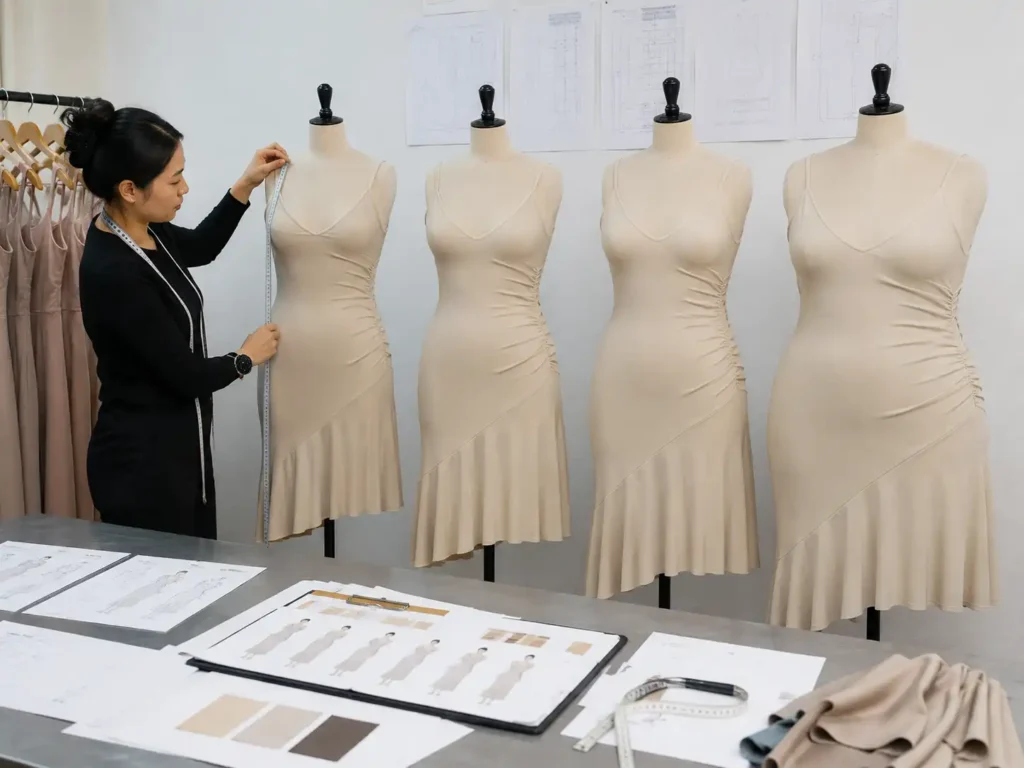
Private Label and Retail-Ready Dress Delivery
Brand Labels
Hangtags and Hang Strings
Barcode and SKU Control
Individual Garment Packing
Color-Size Cartons
Repeat-Order Packaging Records
Manufacturing Resources for Multi-Style Dress Programs
Six Owned Factories
Ten-Plus Satellite Partners
Two Sample Rooms
Development Team
Quality Team
Project Coordination
Chocolate and Espresso Collection Cases
The following anonymous production profiles reflect the scale and complexity commonly managed for established fashion programs. Brand identity, original tech packs, prices, and unpublished designs remain protected.
US Occasionwear Collection - 18 Styles, 42,600 Pieces
A US occasionwear label planned an autumn deep-brown collection across 18 styles and 42,600 garments. The range combined chocolate satin corset minis, espresso mesh bodycon midis, dark-brown wedding guest maxis, cocoa jersey dresses, and lace occasion styles. Sizes were distributed from the brand’s approved chart, with style-level ratios aligned to sales forecasts.
The first development challenge involved color identity across different materials. Espresso satin appeared warmer than the approved direction under studio lighting, while power mesh became lighter over the selected lining. Jinfeng Apparel separated the project into coordinated shade groups rather than forcing every material toward one flat optical match. Shell, lining, zipper tape, thread, mesh, lace ground, and label color were reviewed against the approved merchandising direction.
Fit development focused on corset cup position, strapless security, mesh recovery, bodycon side seams, slit height, and maxi hem balance. Photo-ready samples were prepared for campaign work, while final PP samples confirmed production materials, measurements, construction, labels, and packing. Each style received separate pattern, size chart, BOM, sewing instruction, QC checklist, and Golden sample.
Bulk production was divided by fabric and construction family. Incoming color and lot checks were completed before cutting. Satin, mesh, lace, and jersey styles followed separate in-line QC points. Packing used brand labels, care labels, hangtags, barcodes, individual polybags, and color-size cartons. The project moved in planned shipment batches to support the launch calendar and warehouse intake.
Project focus: coordinated brown shade family, 18 style files, multi-fabric development, campaign samples, size control, and retail-ready packing.
UK Premium Ecommerce Range - 12 Styles, 24,800 Pieces
A UK online fashion label developed 12 chocolate and espresso dresses totaling 24,800 pieces. The assortment emphasized fast-moving occasion and night-out silhouettes: satin slips, ruched mesh midis, corset minis, one-shoulder ponte dresses, and sequin party styles. The commercial goal was a recognizable brown capsule that photographed clearly as brown instead of black.
Sampling placed unusual emphasis on studio appearance. Satin reflection, mesh layering, sequin flash response, and lining tone were reviewed under several lighting conditions. Two espresso materials looked similar as flat swatches but produced different results after sewing; one became nearly black, while the other showed a red cast. The approved fabric package was selected according to the final garment rather than the loose swatch.
Fit work focused on bust coverage, waist shaping, hip recovery, neckline stability, strap length, cut-out placement, and hem level. Complex styles moved through revised samples before PP approval. Sample comments were transferred into updated patterns, measurement charts, sewing instructions, and QC points.
Ecommerce packing required individual polybags, SKU stickers, barcodes, color labels, size labels, and carton records. The color name was locked in the SKU file so website, garment, polybag, and carton terminology remained aligned. Repeat-order records retained approved fabric, color, fit, trims, labels, and packing instructions for later replenishment.
Project focus: photo-ready color, online SKU accuracy, 12 commercial silhouettes, material-specific fit, and repeat-order preparation.
Multi-Market Retail Program - 26 Styles, 76,200 Pieces
A multi-market retail program used 26 dress styles and 76,200 pieces across chocolate, espresso, and mocha directions. Products included structured midis, wedding guest dresses, satin maxis, lace cocktail dresses, jersey day-to-evening styles, and velvet holiday pieces. The order required coordinated development, multi-size planning, branded packing, and phased delivery.
The largest risk was administrative as well as technical. Twenty-six styles created separate fabrics, linings, trims, patterns, sample versions, size charts, labels, barcodes, packing ratios, and shipment records. Jinfeng Apparel organized the project by style-color-size file, with separate production orders, sewing instructions, QC checklists, and packing instructions. A consolidated timeline tracked fabric approvals, sample approvals, material arrival, cutting, sewing, inspection, packing, and shipment.
Color control separated chocolate, espresso, and mocha into approved commercial groups. Velvet pile direction, satin reflection, lace lining, jersey GSM, and ponte density were reviewed individually. Fit priorities also differed by style family.
Structured midis focused on waist and hip balance, satin maxis on drape and hem, lace dresses on motif and lining, and velvet styles on nap and pressing.
Packing used retail labels, care labels, hangtags, barcode stickers, size stickers, color stickers, polybags, carton marks, and warehouse receiving labels. Final QC checked garment quality and carton-level accuracy. Historical records were retained for replenishment and future seasonal extensions.
Project focus: 26 parallel styles, three brown shade groups, cross-fabric quality control, retail packing, phased shipment, and long-term data retention.
Repeat Orders and Seasonal Brown Collections
Repeat the Approved Style
Extend the Collection
Support Seasonal Programs
Frequently Asked Questions
MOQ starts from 200 pcs per style/color. The quantity is calculated for each style and each color, not by combining several designs into one total. Custom dyeing, exclusive lace, sequin fabrics, certified materials, special trims, or branded packaging may carry separate supplier MOQ.
Yes, provided each color meets the required quantity and the fabric supplier can support both shades. Chocolate and espresso are developed and approved separately because undertone, depth, lining, zipper, thread, and photography can differ. Each color receives its own production and packing records.
Jinfeng Apparel can develop from a Pantone direction, physical swatch, original garment, supplier card, lab dip, or approved sample. A screen image can support communication but should not be the only production standard. Final approval is linked to the actual fabric and approved sample.
Satin reflects light, while mesh is transparent and influenced by skin or lining. Fiber, surface, stretch, layer count, and lighting change the visible shade. Jinfeng Apparel evaluates color on the intended fabric and finished garment rather than assuming one swatch will look identical across all materials.
Simple styles normally require 7-10 days, standard dresses 10-15 days, and complex corset, strapless, lace, mesh, or sequin styles 15-25 days. Revised and PP samples normally require 7-15 days after comments and final materials are confirmed. Custom materials may follow supplier timelines.
Yes. Development can begin from reference images, sketches, original samples, line sheets, size charts, fabric swatches, or trim cards. More complete files improve quotation accuracy, sample accuracy, and timeline control. Product type, quantity, color, fabric preference, size range, target price, and launch date should be provided.
Color control includes approved swatches or lab dips, fabric article records, dye-lot identification, incoming inspection, lot separation, lining coordination, zipper and thread matching, bulk color review, production files, and Golden sample comparison. New repeat-order lots are reviewed again rather than assumed identical.
Jinfeng Apparel uses the approved PP sample, Golden sample, pattern, size chart, BOM, fabric approval, trim approval, production order, sewing instruction, QC checklist, and packing instruction. Changes after PP approval require written review because they may affect cost, timing, and production risk.
Yes. Support can include brand labels, size labels, care labels, hangtags, barcode stickers, SKU labels, color stickers, polybags, folding methods, carton marks, color-size packing, PO data, and warehouse labels. Artwork and files must be confirmed before production.
Yes. Multi-style programs are separated by style, color, size, fabric, trim, sample version, BOM, production order, QC checklist, packing instruction, and shipment plan. A project timeline tracks sample approval, materials, cutting, sewing, inspection, packing, and delivery milestones for each group.
Yes. Jinfeng Apparel retains approved pattern, measurement, fabric, color, trim, construction, packing, QC, and Golden sample records. Repeat orders can move more efficiently, while new material lots, new colors, new fabrics, and revised packaging still require confirmation.
Please provide product type, reference image or tech pack, quantity by style and color, fabric preference, size chart or size range, target price if available, launch date, private-label requirements, shipping destination, and any testing or warehouse instructions. Original samples, swatches, BOM, labels, barcodes, and packing files improve accuracy.

Start Your Chocolate or Espresso Dress Project
Send Jinfeng Apparel the design direction and production requirements for an initial technical and commercial review.
Kelly and the development team will evaluate product structure, color reference, fabric options, fit requirements, sample route, MOQ, private-label needs, production risks, and proposed launch timing before quotation or sample development begins.
For a more accurate review, include:
- Tech pack, reference image, sketch, line sheet, or original sample
- Preferred color name plus Pantone direction, physical swatch, or approved garment reference
- Fabric preference, composition, weight, stretch, transparency, or hand-feel requirements
- Quantity by style and color, with expected size range or size chart
- Target launch date, photo-sample deadline, and required delivery window
- Label artwork, care-label content, hangtag, barcode, SKU, polybag, and carton requirements
- Destination market, testing needs, warehouse guide, shipping destination, and preferred Incoterms