Skip to content
Green Dress Manufacturer
Custom Green Dress Development for Global Fashion Brands
Jinfeng Apparel develops green dresses from approved color references, selected fabrics and production-ready patterns through sampling, bulk manufacturing, quality control and private-label packing.
- 8 commercial green directions:emerald, sage, olive, mint, lime, forest, bottle and Kelly green can be developed across satin, chiffon, mesh, lace, sequin, jersey, crepe and velvet.
- 3-stage color approval:color reference or Pantone review, lab dip or fabric swatch approval, then bulk shade and dye-lot control before cutting.
- 200 pcs per style/color:the standard starting MOQ applies to suitable stock-fabric programs; custom dyeing, exclusive lace and special trims are evaluated separately.
- 10-30 style collection programs:established brand orders commonly combine multiple silhouettes, fabrics and green shades within total order structures of 20,000-80,000 garments.
Green Dress Manufacturing Backed by Real Production Resources
Since 2008
Six Owned Factories
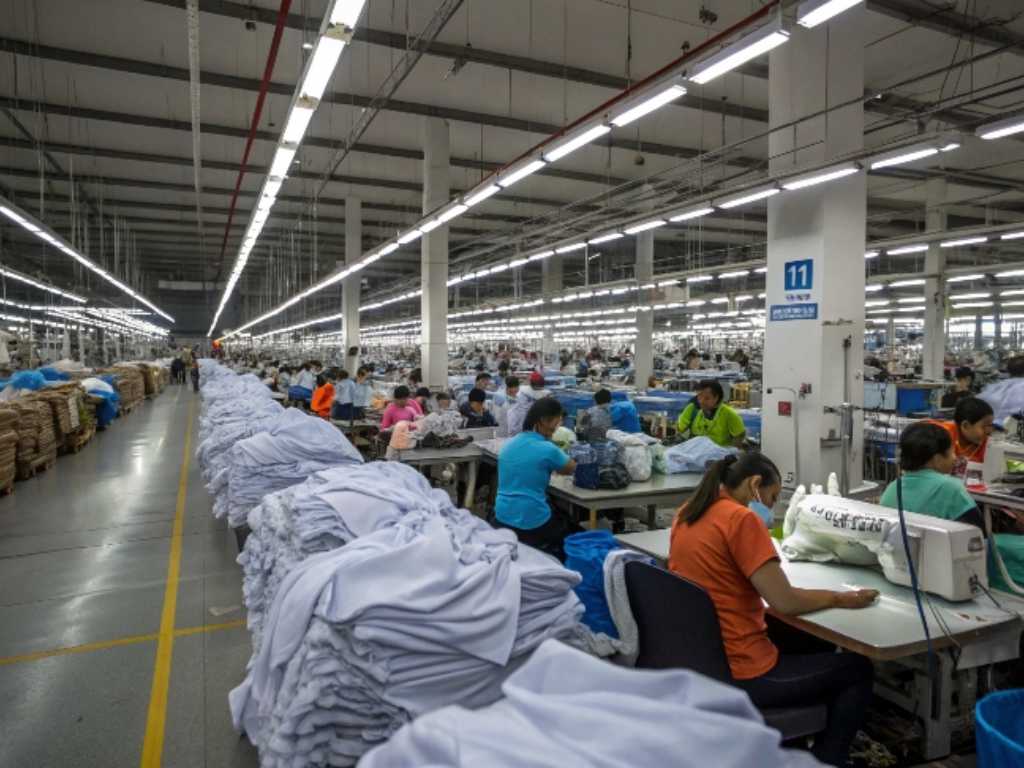
Six owned women’s fashion factories support woven dresses, knit dresses, occasionwear, partywear, skirts, jumpsuits, matching sets and private-label womenswear. Production is assigned according to fabric type, construction difficulty, order volume and required finish rather than forcing every green style through one production unit.
Ten-Plus Partners
Two Sample Rooms
Pattern and Sample Teams
Production Capacity
Regular women’s fashion capacity exceeds 100,000 pieces per month across owned factories and coordinated production resources. Capacity varies with garment complexity, fabric handling, embellishment, size range and order structure, so production planning is confirmed style by style after material and PP sample approval.
Built for Established Fashion Brands and Sourcing Teams
Brand Collection Programs
Best suited to global and regional fashion brands, occasionwear labels, partywear specialists, premium ecommerce retailers, sourcing offices and product development teams managing structured seasonal programs.
Strong project fit normally includes a design reference or tech pack, target fabric direction, expected quantity, size range, private-label requirements and a planned launch window.
- Seasonal collections with 10-30 coordinated styles
- Multi-color and multi-size dress orders
- Photo samples, sales samples and PP samples
- Private labels, barcodes and retail packing
- Repeat orders and multi-batch delivery
Structured Manufacturing Projects
Projects move most efficiently when design, color, material and production information can be reviewed before quotation. A single image may begin the discussion, but accurate costing and planning require quantity, fabric, construction, size and packaging details. Kelly coordinates the initial review and routes technical questions to product development, fabric, pattern, sampling, merchandising and QC teams.
- OEM development from complete technical files
- ODM support from references and commercial direction
- Private-label production and export coordination
- NDA-based handling of unpublished designs
- Long-term pattern, fabric and packing records
What a Green Dress Manufacturer Actually Provides
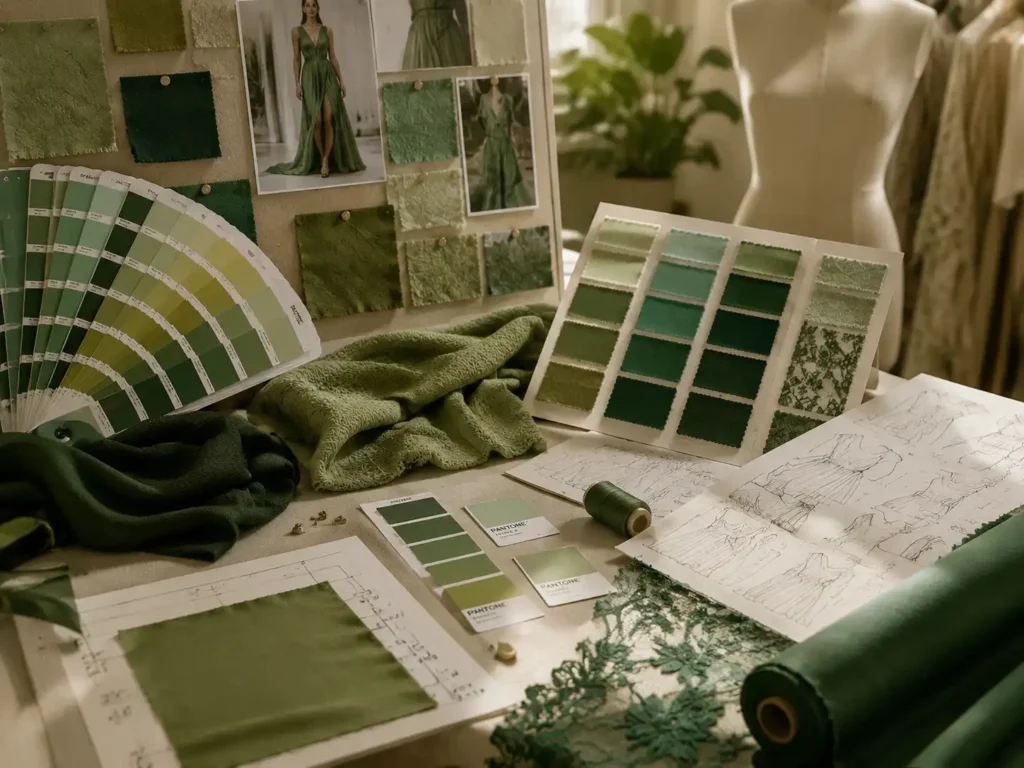
A green dress manufacturer develops and produces women’s dresses in approved green color directions using suitable stock materials or custom-dyed fabrics. Work may include color matching, fabric sourcing, trim selection, pattern development, sampling, fit correction, pre-production approval, bulk production, quality control, private-label packing and export delivery.
Color Is a Production Specification
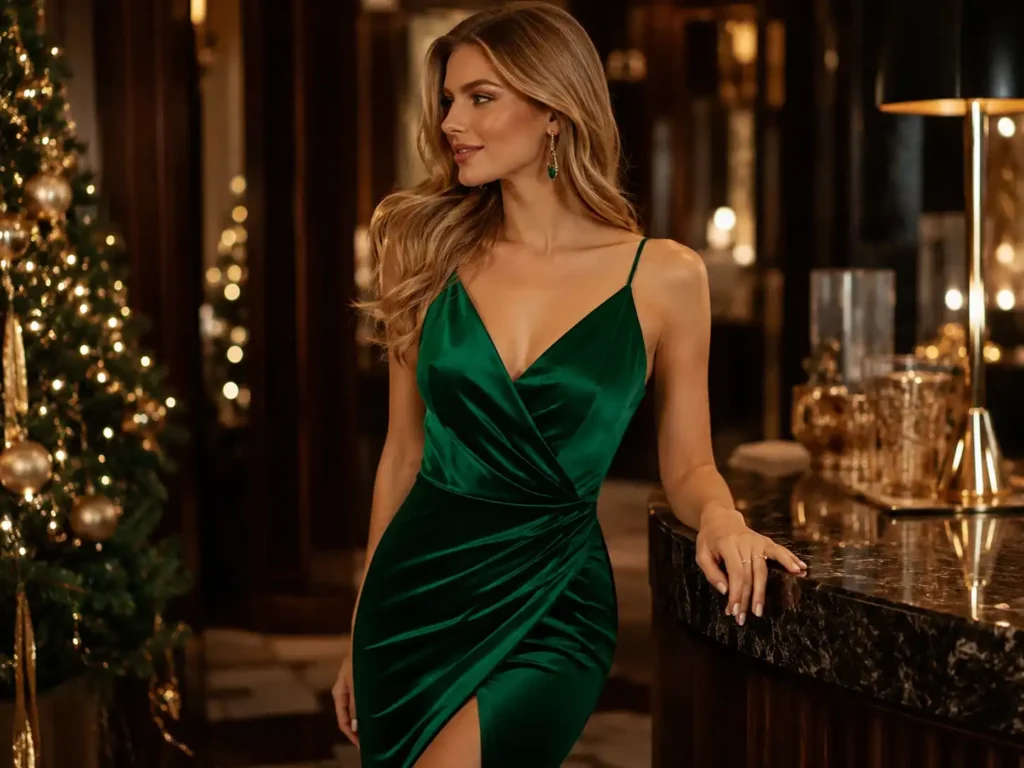
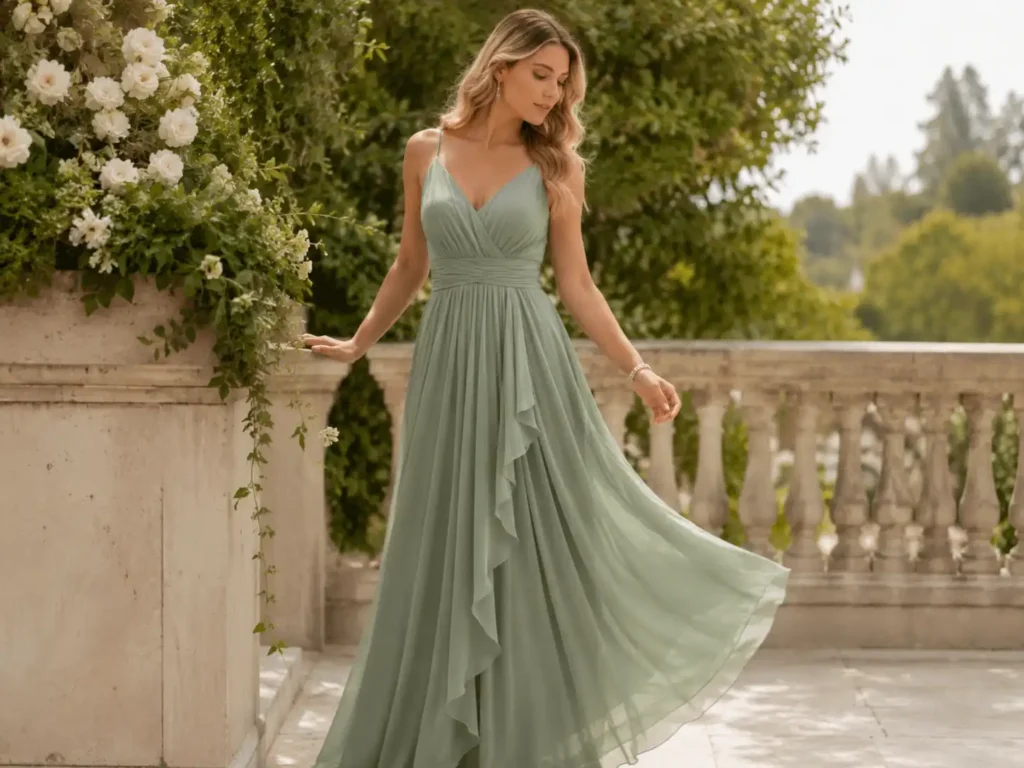
“Green” describes a broad commercial color family rather than one fixed shade. Emerald may appear blue-based and jewel-like, while sage carries more grey, olive more yellow or brown, and lime stronger brightness. Fiber content, surface shine, pile direction, transparency, lining and lighting can shift the visual result even when two fabrics begin from a similar reference.
For reliable development, the color brief should include the intended shade, garment category, fabric preference, market season and visual goal. A Pantone reference is useful, but physical swatches often provide better judgment for satin shine, lace depth, mesh transparency and sequin reflection. Color approval therefore becomes a material-specific decision, not a screen-based promise.
Green also does not automatically mean environmentally preferred production. Organic, recycled or certified materials can be sourced when required, but certificate scope, batch availability, supplier MOQ, price and lead time must be confirmed for each fabric program.
Green Color Directions for Commercial Dress Collections
Emerald Green
Sage Green
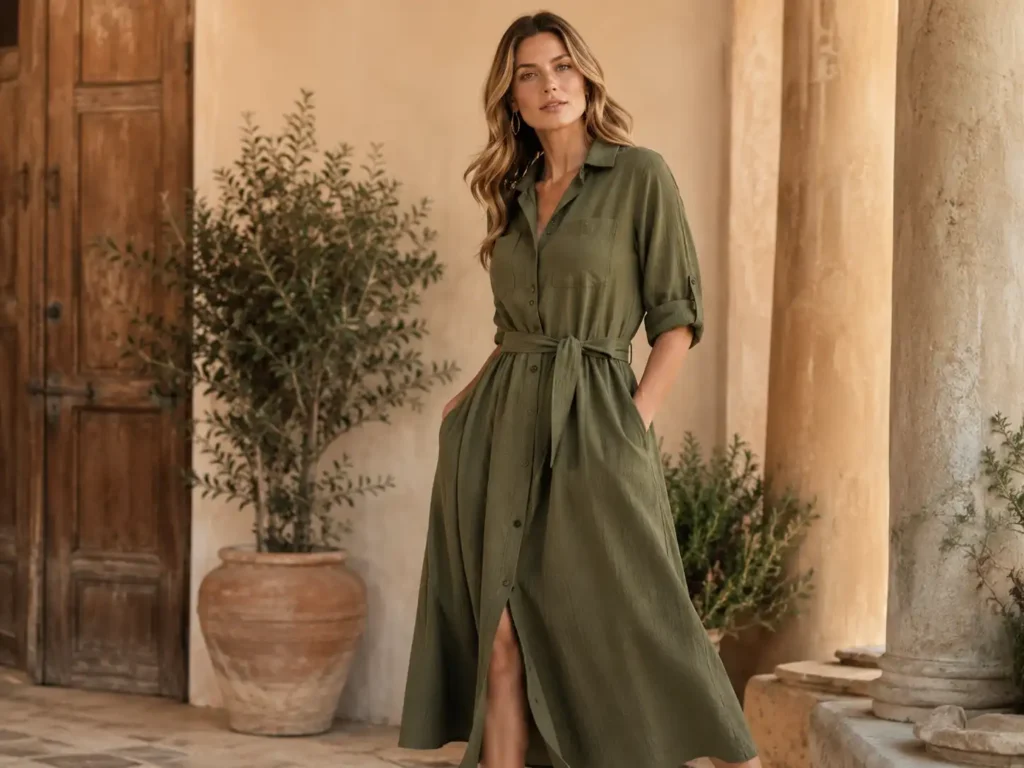
Olive Green
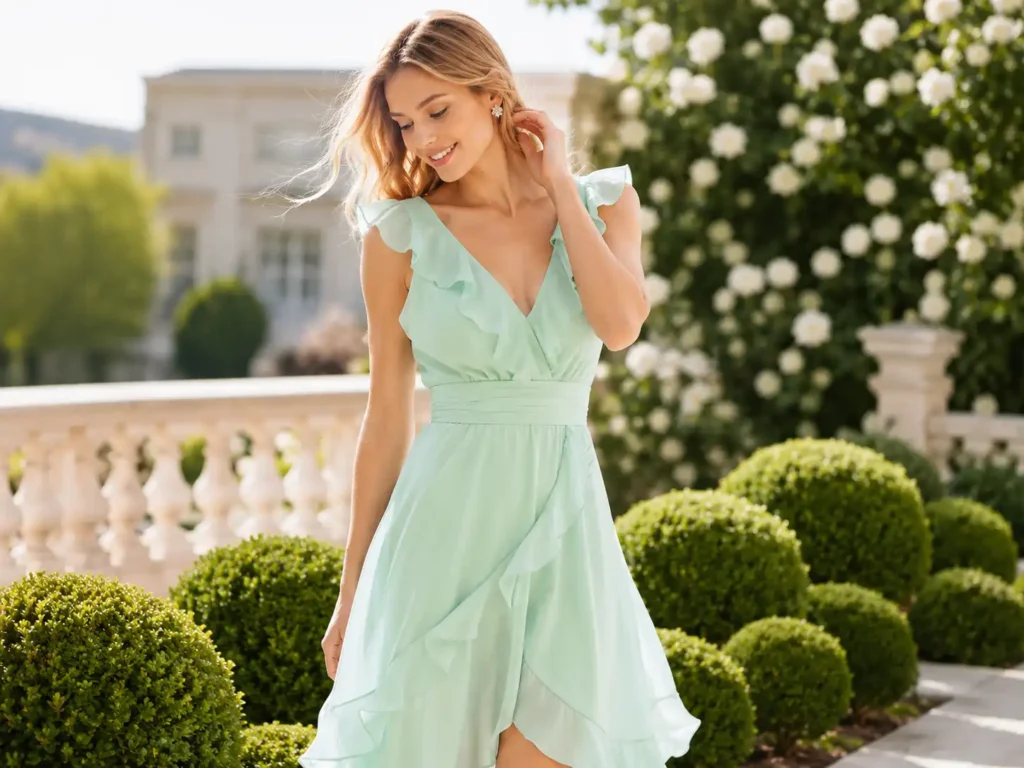
Mint Green
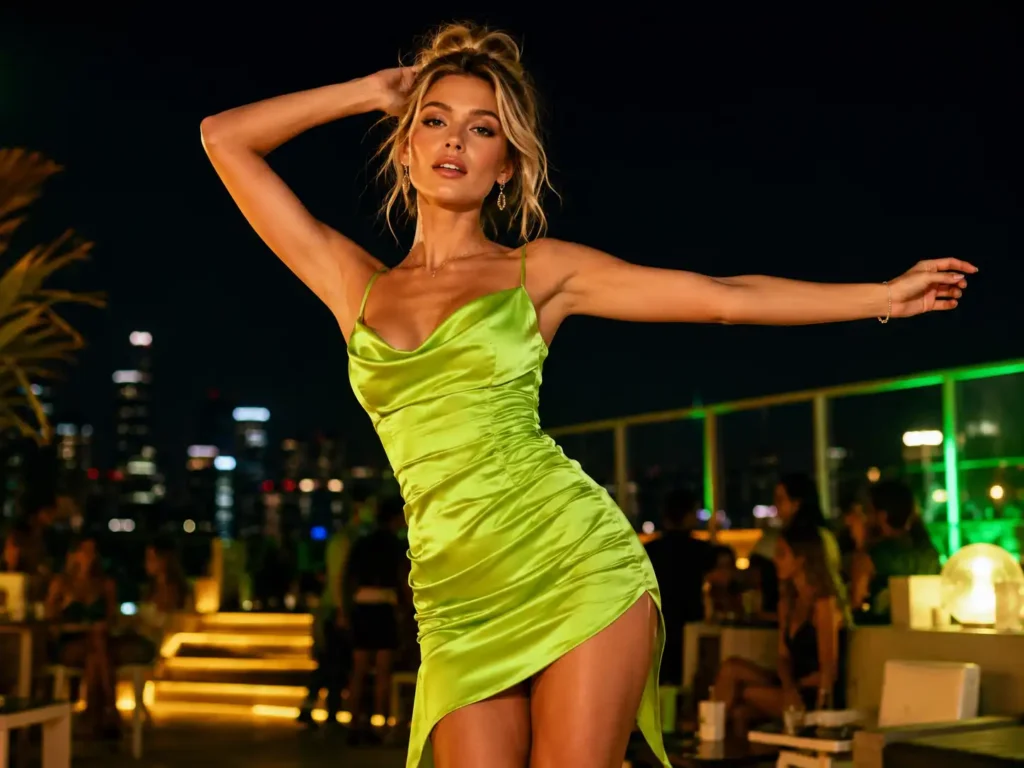
Lime Green
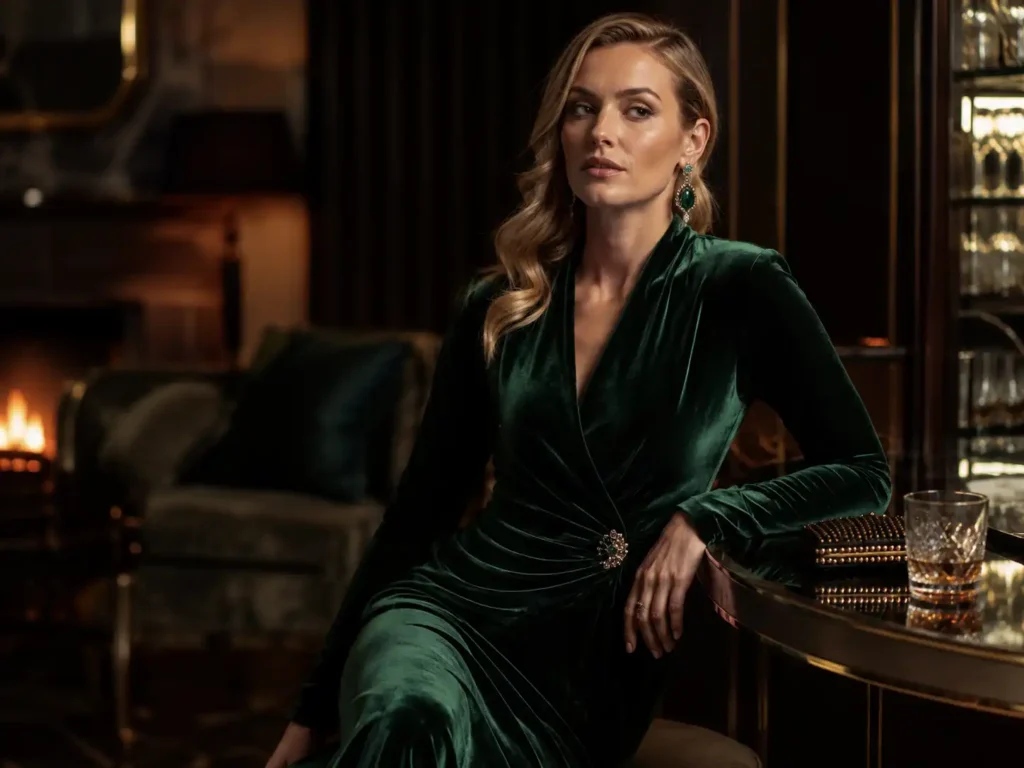
Forest Green
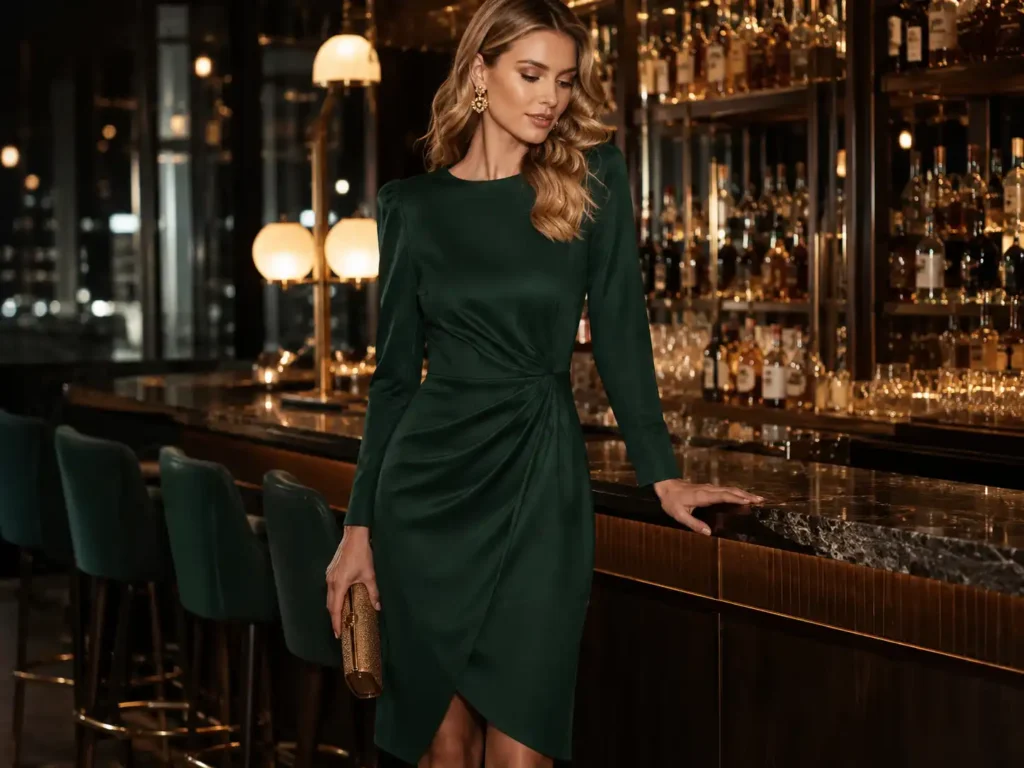
Bottle Green
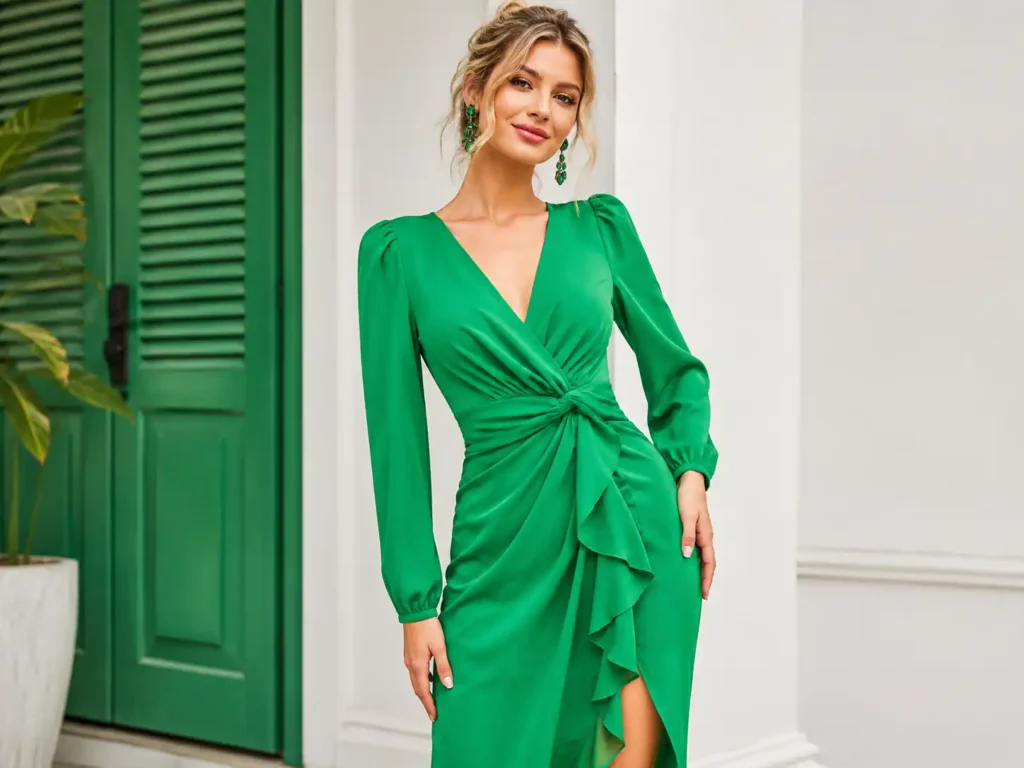
Kelly Green
Green Dress Styles Developed for Fashion Brands
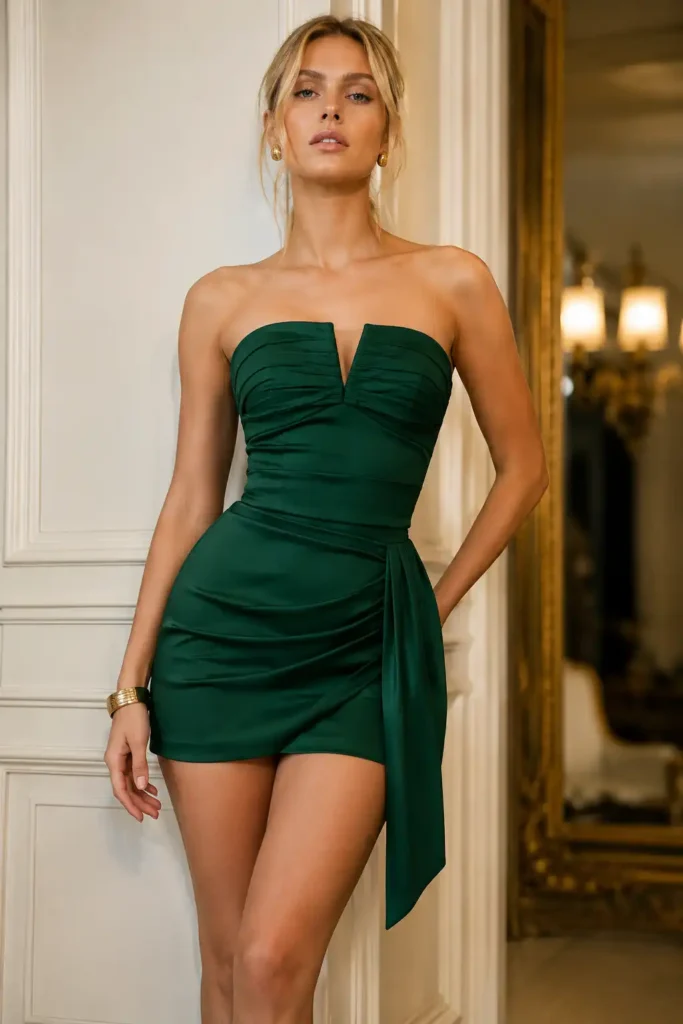
Green Mini Dresses
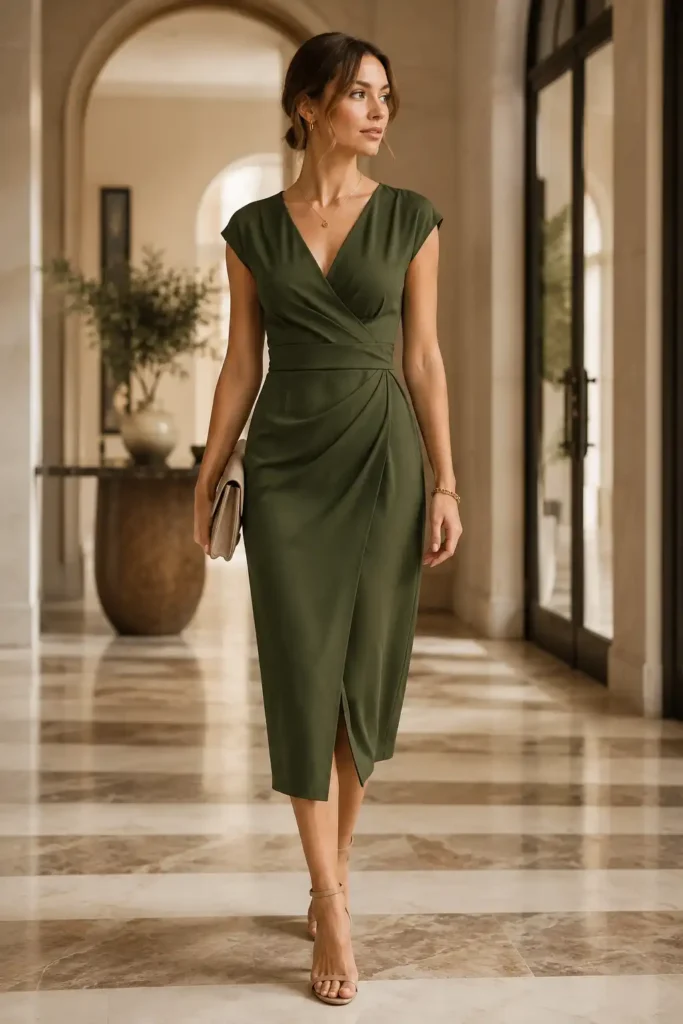
Green Midi Dresses
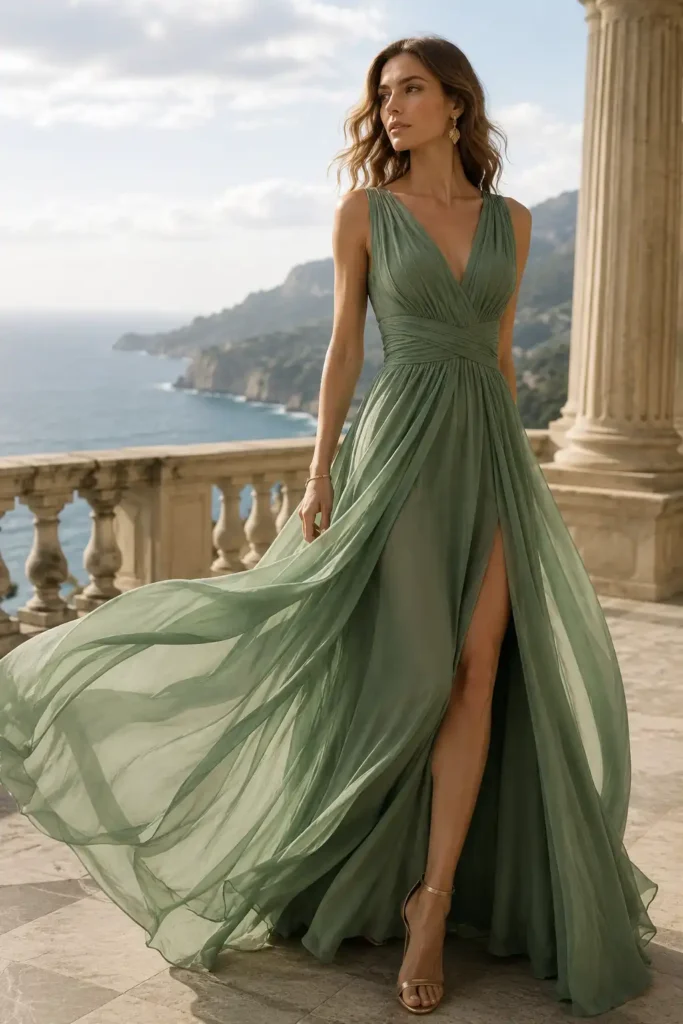
Green Maxi Dresses
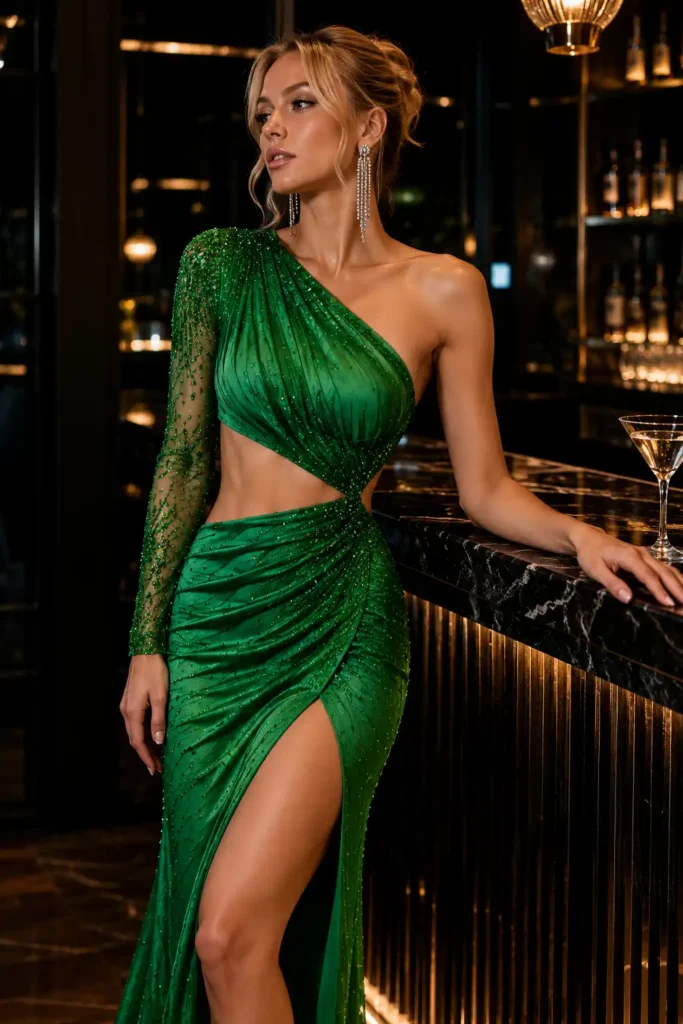
Green Party Dresses
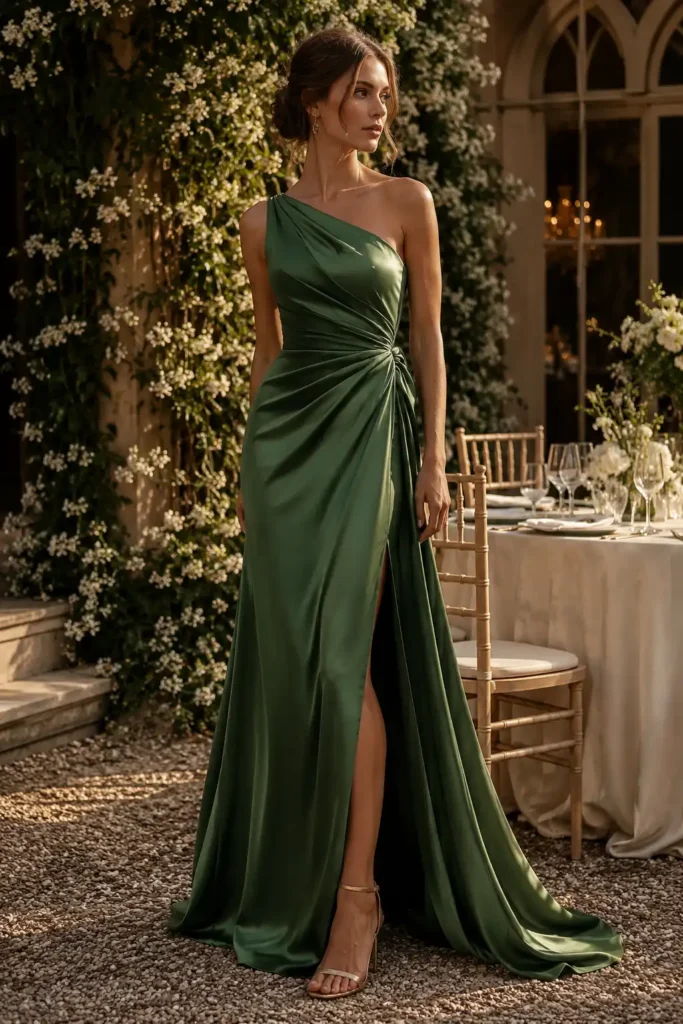
Green Occasion Dresses
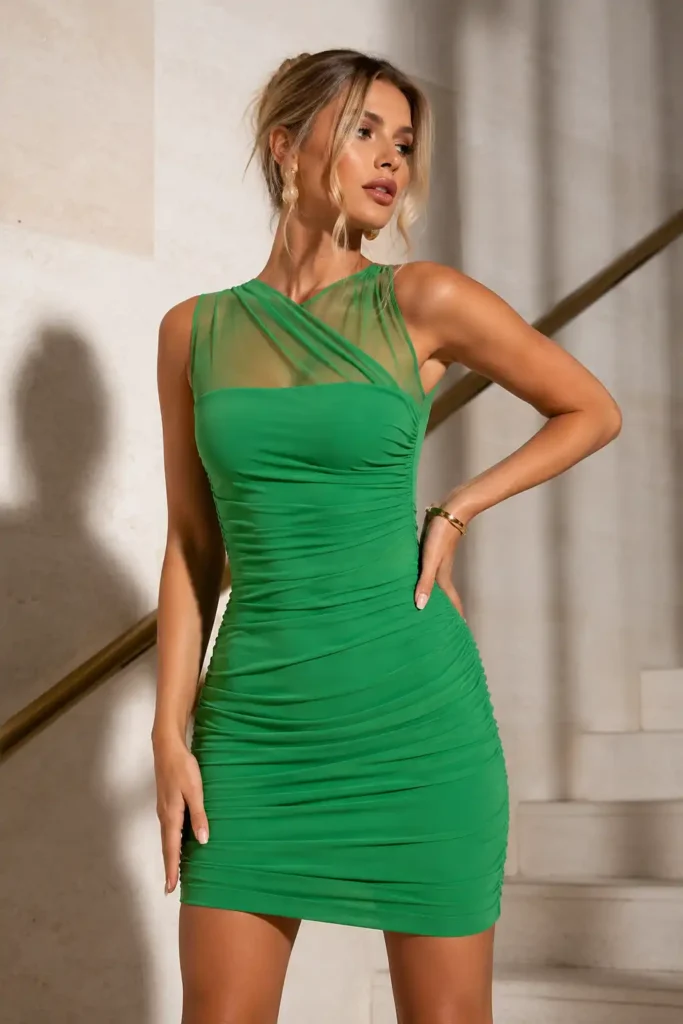
Green Bodycon Dresses
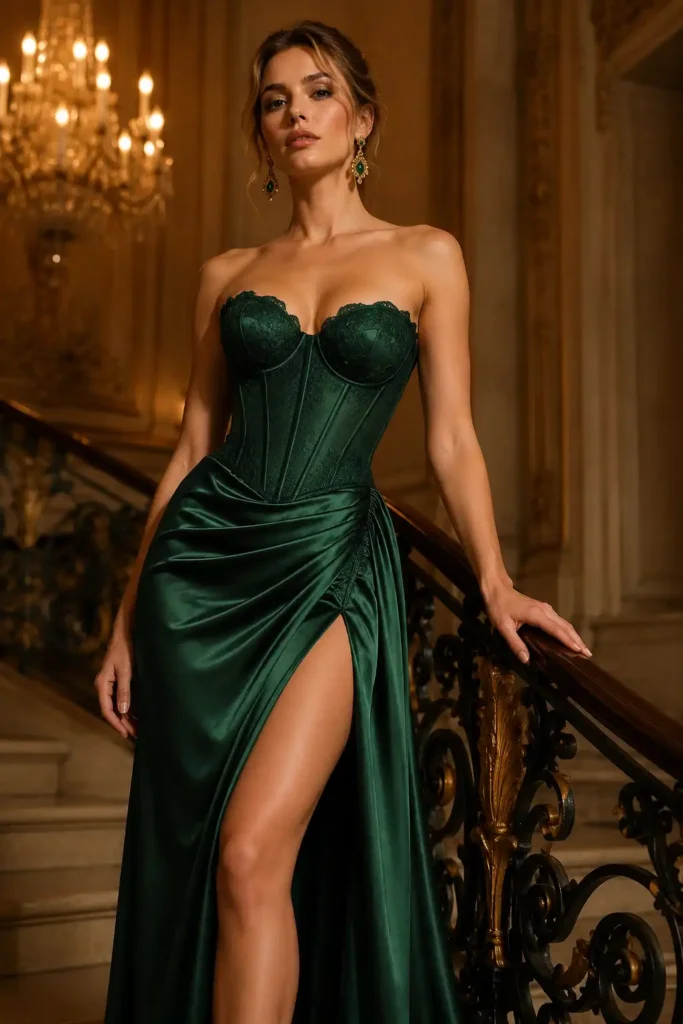
Green Corset Dresses
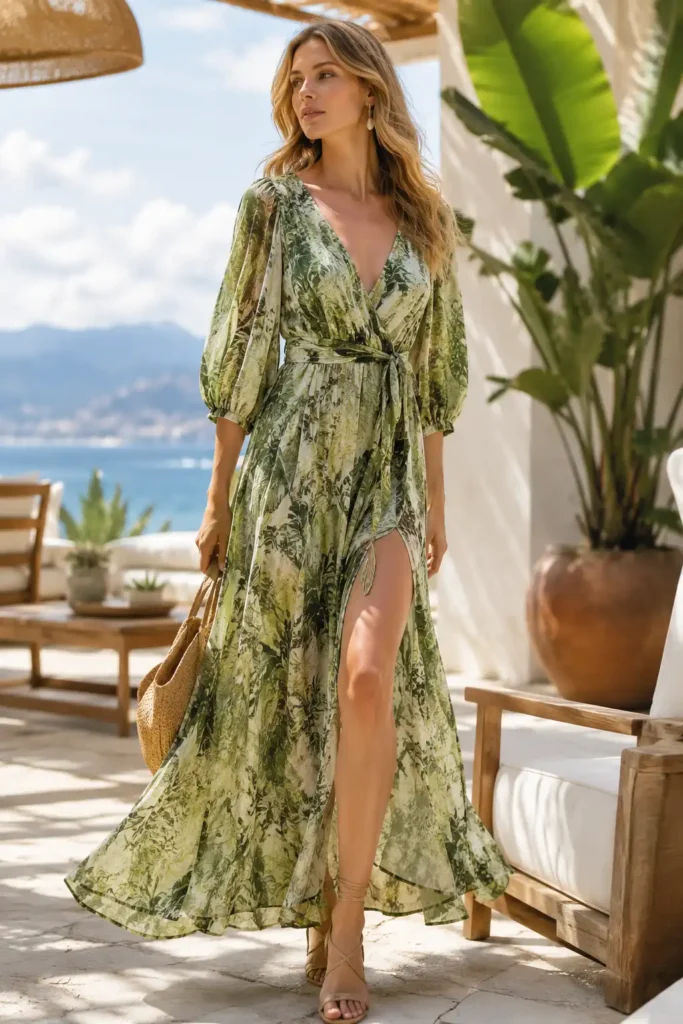
Green Resort Dresses
How Fabrics Change the Appearance of Green
The same green reference can look deeper, lighter, warmer or cooler after it moves onto a specific fabric. Surface reflection, fiber absorption, transparency, texture and stretch all influence the result. Material approval should therefore combine color, hand feel, structure and garment use.
| Fabric | Typical Green Appearance | Suitable Dress Uses | Primary Production Controls |
|---|---|---|---|
| Satin | Glossy, deeper in shadow, brighter on highlights | Slip, party, evening, corset | Face direction, snagging, seam impression, pressing |
| Chiffon | Lighter and more transparent | Maxi, bridesmaid, layered occasion | Shell-lining match, layer count, hem balance |
| Mesh | Tone changes with skin or lining beneath | Bodycon, ruched party, sleeve panels | Transparency, stretch, recovery, edge finish |
| Lace | Depth changes with motif density | Cocktail, occasion, corset overlays | Motif placement, dye variation, lining color |
| Sequin | Highly reflective and lighting-sensitive | Party, holiday, statement evening | Sequin direction, base cloth, loss, anti-scratch lining |
| Jersey | Usually matte with visible stretch response | Bodycon, casual, draped midi | Weight, stretch, recovery, seam waviness |
| Crepe | Stable soft-matte surface | Midi, occasion, wrap, structured drape | Shrinkage, drape, surface marks, pressing |
| Velvet | Deep, directional and rich | Winter evening, formal, fitted styles | Pile direction, crushing, shade variation, packing |
From Pantone Reference to Approved Bulk Green Color
Color approval is managed as a sequence of recorded decisions. Each step reduces uncertainty before fabric is cut, while allowing the brand team to judge the shade on the material intended for production.
Establish the Color Standard Before Development
The strongest brief combines a Pantone reference, physical swatch or approved garment with a description of the desired effect. “Dark green” or “sage” alone leaves too much room for interpretation. Development teams also need to know whether the shade will be used on satin, mesh, lace, chiffon, jersey or several fabrics within one collection.
A digital image can begin discussion, but monitors, camera settings and platform compression alter color. Physical references are preferred for sensitive programs. When no physical sample exists, Pantone plus reference images and a clear warm/cool direction can establish a workable starting point. The fabric team then checks stock materials or arranges lab dips for custom dyeing.
- Confirm color name and Pantone reference
- Identify shell, lining and contrast materials
- Record intended lighting and selling occasion
- Note companion styles that must coordinate
- Confirm whether repeat-order continuity is required
Approve Lab Dips and Material Swatches
Lab dips are reviewed on the intended fiber and construction because dye response changes between polyester, nylon, viscose, cotton and blended materials. A visually acceptable lab dip on matte crepe does not automatically approve satin or mesh. For transparent fabrics, the shell should be assessed with the proposed lining. For lace and sequins, motif density and reflective surface must be included.
Brand feedback should be specific: more blue, less yellow, deeper, cleaner, greyer or less saturated. Vague comments such as “not right” slow development and create avoidable repeat submissions.
Approved swatches are recorded by style and material. Zipper tape, thread, elastic, bra cups, boning channels and decorative components are coordinated after the main fabric direction is stable.
- Review under daylight and standard indoor light
- Compare shell and lining together
- Photograph for internal records, not as the sole approval
- Label approved version and date
- Record acceptable shade tolerance when relevant
Control Bulk Dye Lots Before Cutting
Bulk fabric is inspected against the approved standard when it arrives. Rolls are identified by dye lot, checked for shade consistency and separated when mixing could create visible garment differences. Directional materials such as satin and velvet receive additional cutting controls because face or pile direction changes perceived color.
A bulk shade or strike-off approval can be arranged before full cutting when the project requires tighter color management. Production orders, fabric records and QC checklists identify approved versions. Repeat orders reference retained swatches, supplier information and previous fabric records, while acknowledging that a new dye lot may still require fresh approval.
- Record supplier, composition, color and lot number
- Separate visibly different dye lots
- Match lining, zipper and thread to bulk fabric
- Approve bulk shade before cutting sensitive programs
- Retain reference records for replenishment
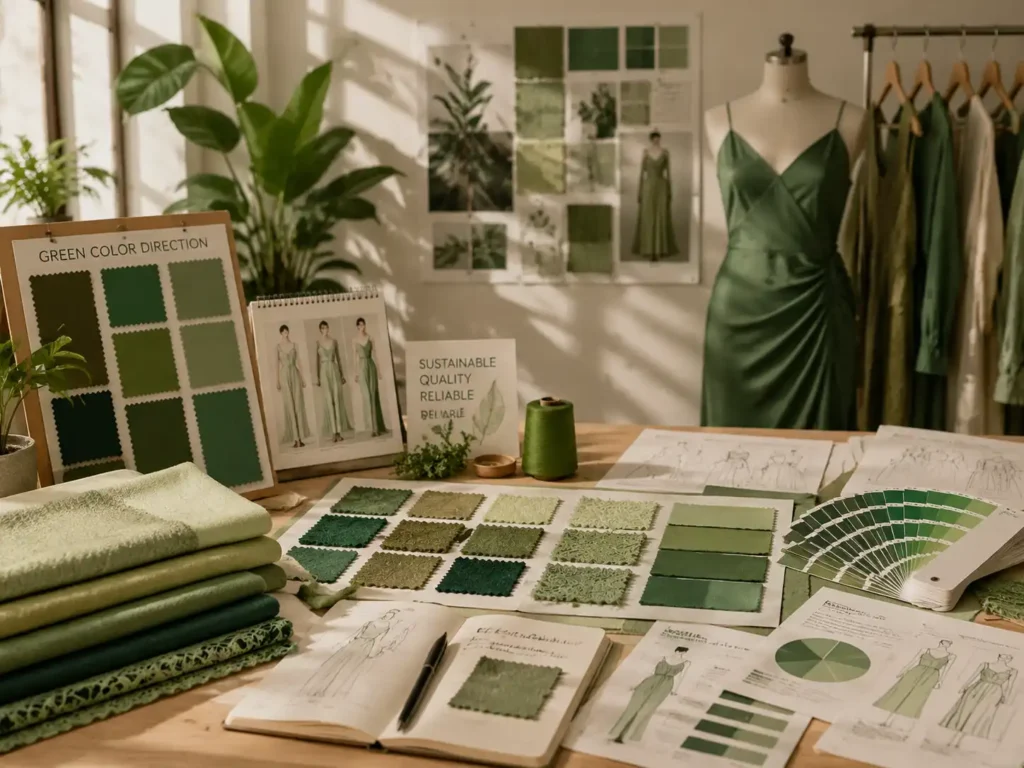
Stock Green Fabrics Versus Custom-Dyed Development
Stock Green Fabrics
- Faster initial material selection
- Easier comparison of hand feel and drape
- Lower development risk for confirmed stock
- Possible dye-lot variation between repeat orders
- Inventory must be reserved before bulk production
Custom-Dyed Green
Custom dyeing supports proprietary green directions, coordinated color stories and shades not available in stock. Development normally includes lab dips, material-specific approval, bulk dyeing and shade-band review. Supplier minimum meterage, dye-vat size, testing, wastage and repeat-order requirements may increase quantity, cost and calendar needs.
- Better control of exclusive color direction
- Lab dip approval before bulk dyeing
- MOQ varies by fiber, fabric and dye supplier
- New dye lots require fresh review
- Longer planning window for seasonal launches
Pattern and Fit Control Across Green Dress Silhouettes
Color attracts attention, but fit determines wearability, return risk and repeat-order value. Jinfeng Apparel develops patterns according to the selected fabric, target market, base size, grade rules and garment structure rather than applying one block to unrelated dress categories.
Bodycon Fit and Stretch Recovery
A bodycon pattern must be built around fabric stretch in both directions, recovery, weight and opacity. Chest, waist and hip reduction cannot be copied from another material without review. Green shades may expose stress zones where fabric becomes lighter across the bust, seat or thigh, especially in bright lime, mint or thin jersey.
Fit review covers neckline stability, armhole shape, side-seam position, waist placement, hem movement and comfort during sitting or walking. Mesh overlays, power mesh linings and ruched panels are assessed as a layered system. Grade rules should preserve compression and coverage across XS-XL or an approved extended range instead of enlarging every point evenly.
- Confirm stretch percentage and recovery
- Review transparency at maximum wear stretch
- Check seam waviness and thread elasticity
- Measure after handling and recovery time
- Lock fabric before final pattern grading
Corset Structure and Bust Support
Corset dresses depend on internal engineering that remains largely invisible in product photography. Cup shape, bra pad position, boning length, waist contour, zipper support, lining and top-edge tension must work together. A satin corset and a mesh corset may require different seam construction even when the outside silhouette appears similar.
Green fabric adds coordination work across shell, lining, bra cups, boning channels and zipper tape. Light mint may reveal internal components, while deep emerald satin can highlight every seam and pressing mark. Sample review includes bust coverage, cleavage line, side-cup containment, waist suppression, underarm comfort and sitting movement.
- Confirm cup shape and size allocation
- Map boning away from pressure points
- Stabilize neckline and zipper areas
- Review shell-to-lining color effect
- Approve internal construction in the PP sample
Slip Balance and Bias Behavior
Slip dresses appear simple but can be difficult to control. Bias-cut fabric grows and shifts after cutting, narrow straps affect neckline position, and satin magnifies seam puckering. The pattern must balance front and back necklines, bust shaping, waist ease, hip movement and hem level after the garment hangs.
For green satin, all panels should follow the approved face direction. A panel rotated during cutting may look darker or lighter under the same light. Strap hardware, thread and zipper must coordinate without creating a visible near-match. Lining can stabilize the garment but may also change drape, so construction is confirmed during sampling.
- Allow controlled hanging before final hemming
- Keep face direction consistent
- Check neckline gaping and strap length
- Review hip movement and side-seam twist
- Press with protection against shine and marks
Maxi Proportion and Hem Control
Maxi dresses require accurate length planning for target height, footwear and selling occasion. The pattern must preserve waist position, skirt balance and sweep across the size range. Chiffon layers, mesh godets, bias satin and gathered skirts each behave differently during hanging, pressing and packing.
Fit review includes front and back hem levels, train length, lining exposure, walking clearance and staircase movement where relevant. Extended sizes may need adjusted skirt distribution rather than simple horizontal enlargement. Color consistency is reviewed across wide panels because shade or direction differences become more visible over a large surface.
- Confirm finished length by size chart
- Check shell and lining hem relationship
- Control directional fabric placement
- Balance gathers or pleats by size
- Protect long hems during packing
Structured Occasionwear and Mobility
Structured occasion dresses combine appearance with movement requirements. Shoulder position, bust shape, waist placement, sleeve mobility, skirt volume and internal support must be assessed on the body. Crepe, taffeta, satin, lace and velvet require different seam, interfacing and pressing methods.
Dark forest and bottle greens can appear premium but reveal lint, crushing or pressing shine. Light sage and mint expose seam shadow and lining mismatch. Sample review therefore covers both fit and finish. The PP sample records final pattern, materials, construction, measurements and pressing expectations before bulk production.
- Review movement in arms, waist and hips
- Confirm internal support and interfacing
- Check symmetry of pleats and drapes
- Set measurement tolerances by critical point
- Approve final pressing standard
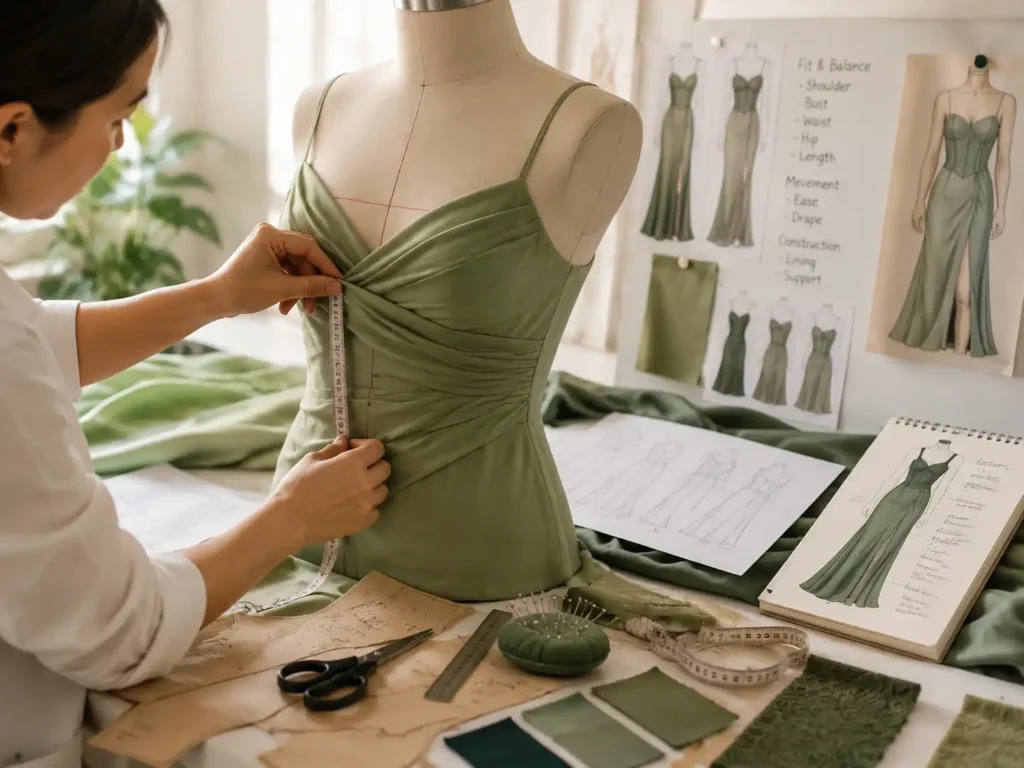
Matching Linings, Trims and Construction Details with Green
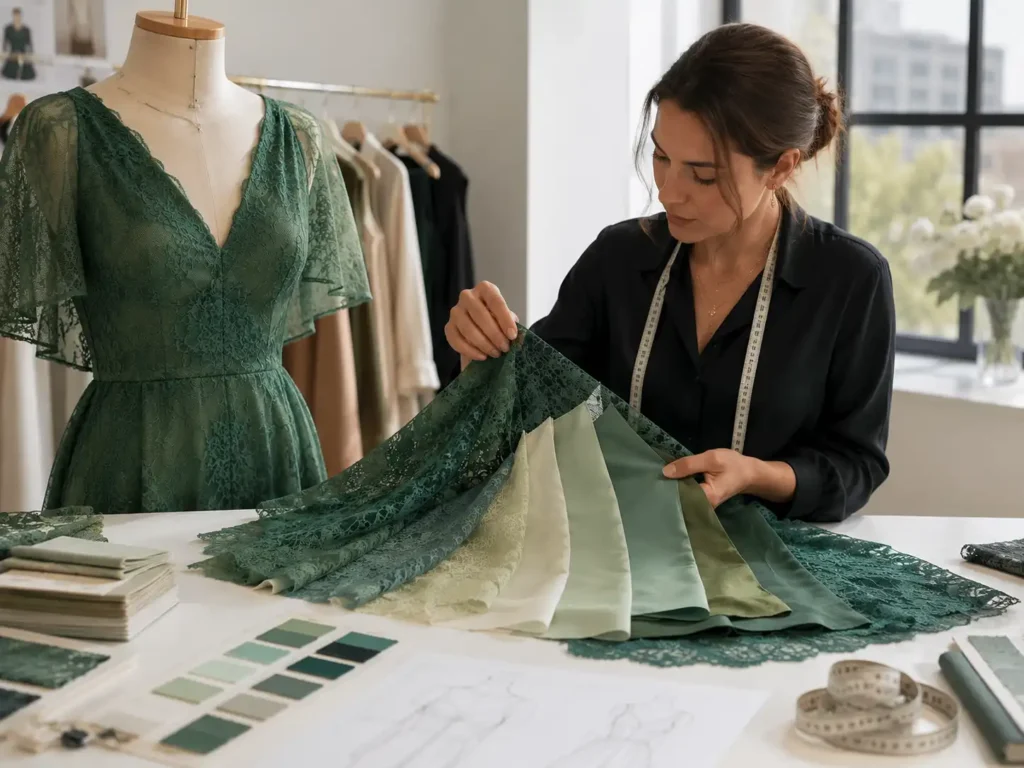
Lining Color
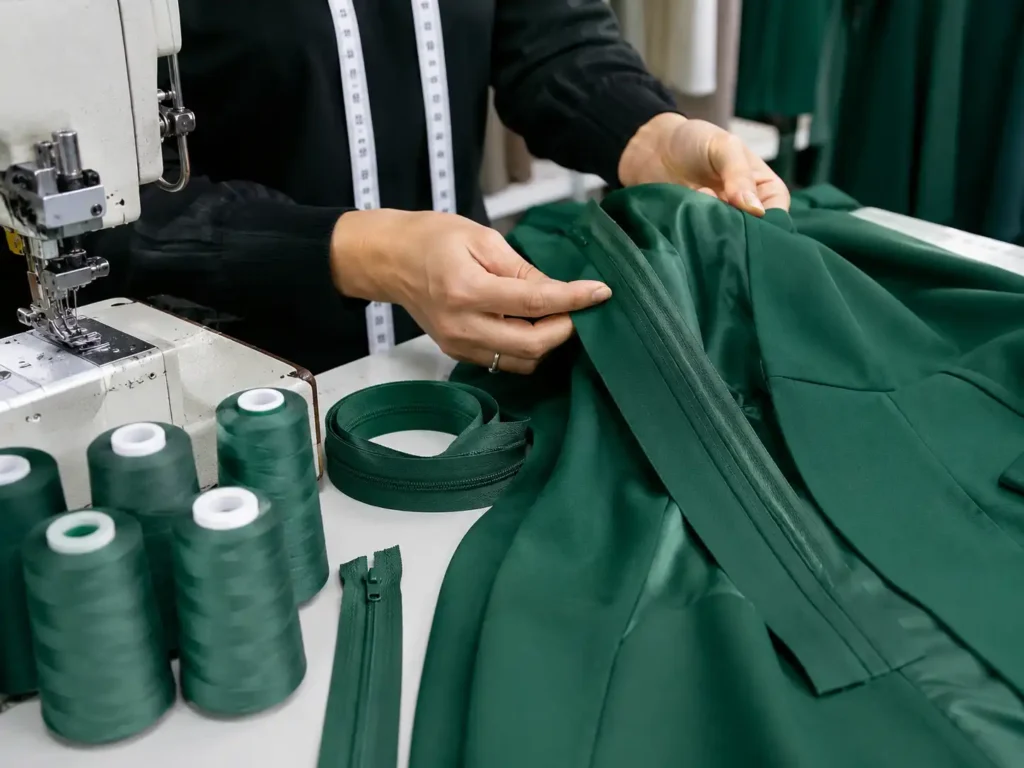
Zippers and Thread
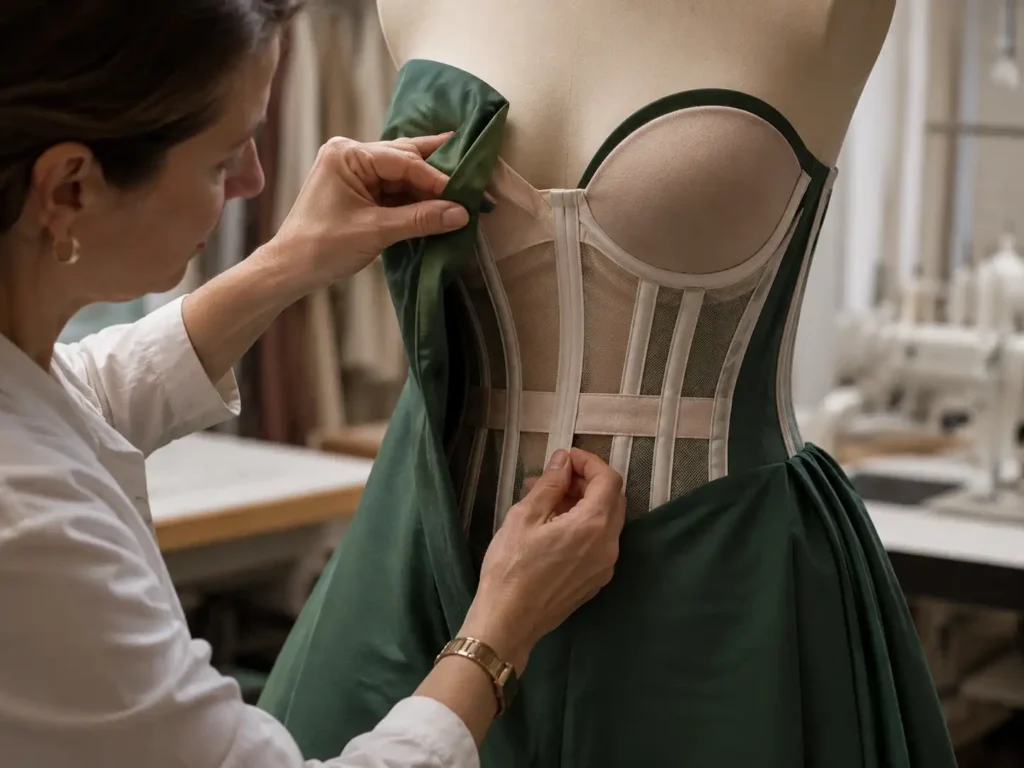
Cups and Boning
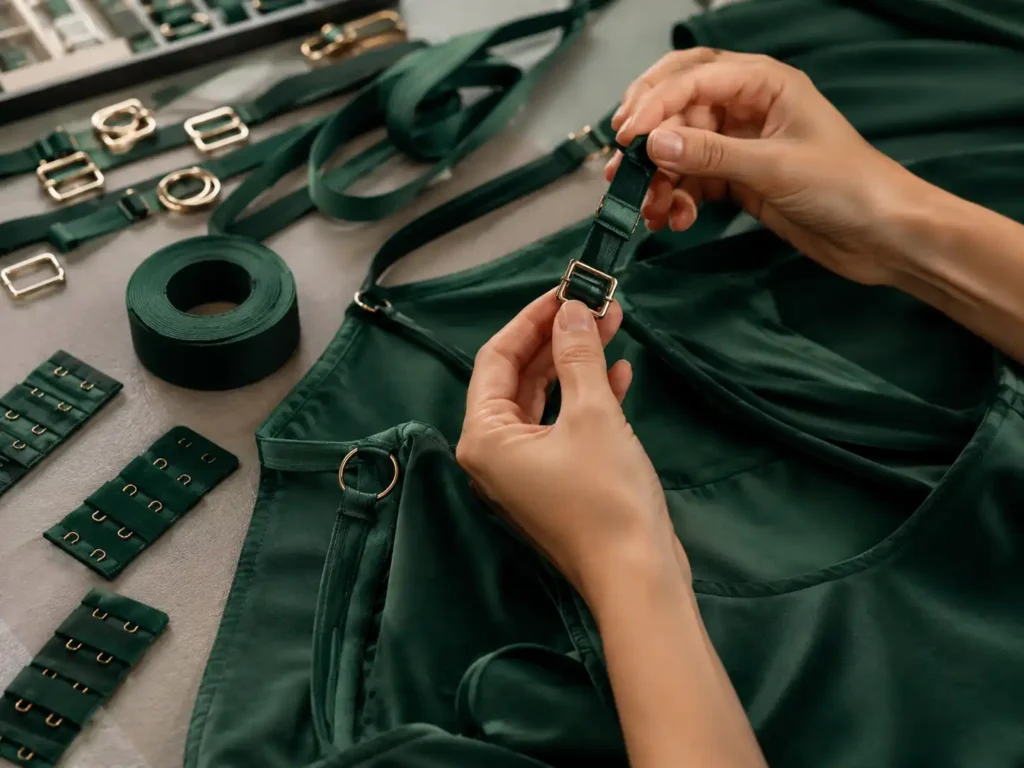
Elastic and Hardware
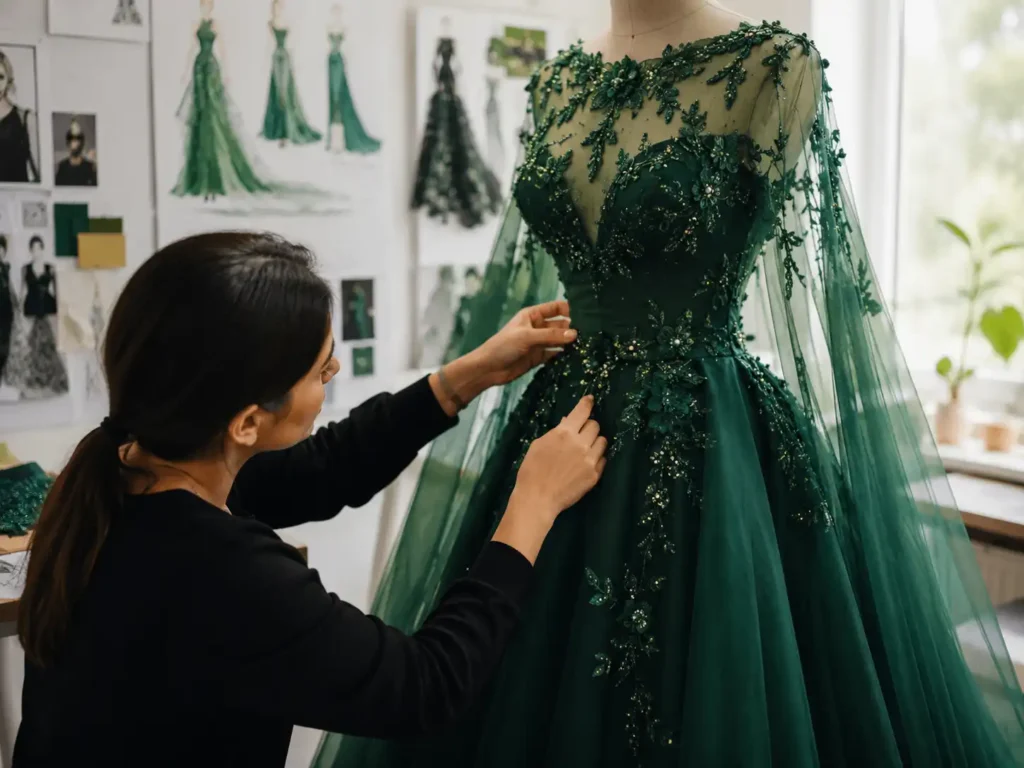
Lace and Embellishment
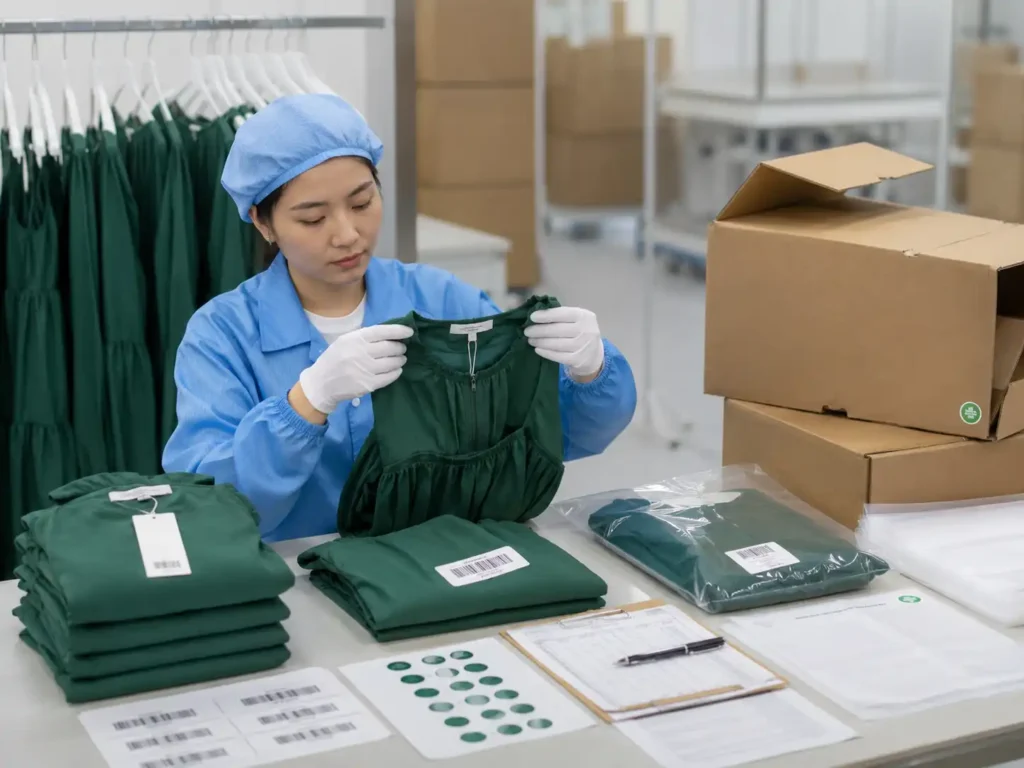
Labels and Packing
Sampling Green Dresses Before Bulk Production
First Sample
Fit Sample
Revised Sample
Photo-Ready Sample
PP Sample
Golden Sample
Developing a Commercial Green Dress Color Story
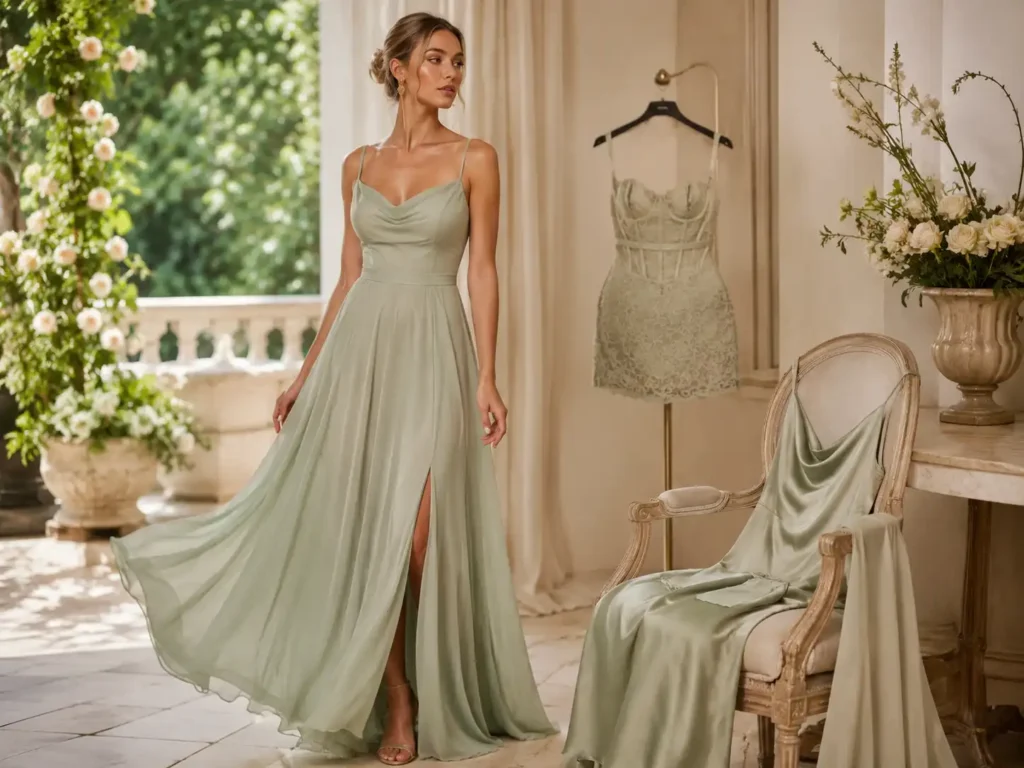
Soft Sage Occasion
- Sage chiffon maxi
- Matte satin cowl midi
- Lace corset mini
- Tonal lining and zipper plan
- Event and wedding-guest positioning
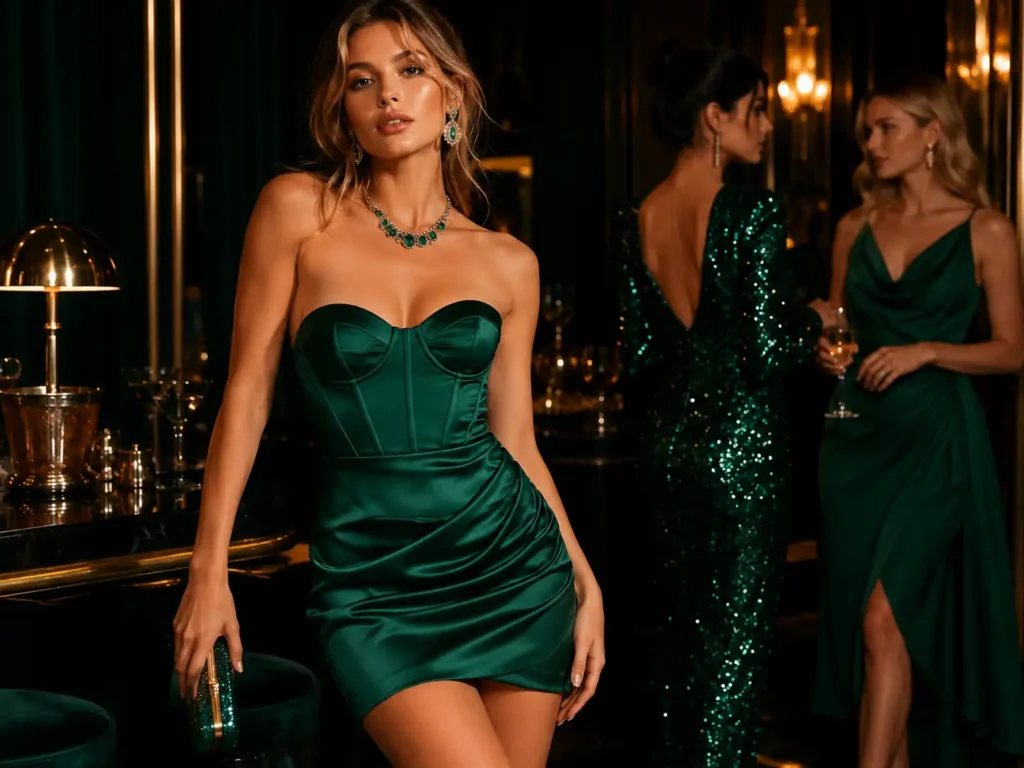
Emerald Party Range
- Emerald satin corset
- Sequin statement dress
- Draped crepe midi
- Coordinated hardware and labels
- Holiday and evening positioning
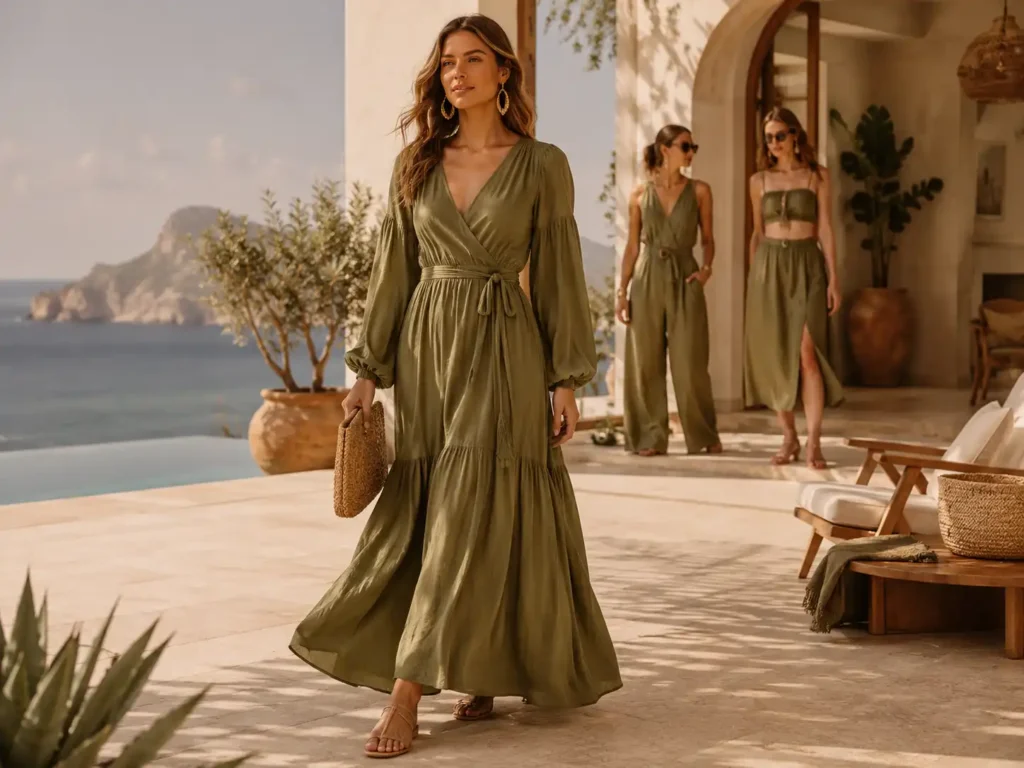
Olive Resort Capsule
- Olive rayon maxi
- Linen-blend midi
- Matching skirt and top
- Warm tonal accessories
- Resort and summer positioning
Bulk Production for Multi-Style Green Dress Orders
Large collection programs are managed by style, material, color, size, sample version, BOM, production order, QC checklist, packing instruction and shipment plan. Clear separation prevents one green shade, zipper, lining or pattern version from being used on the wrong SKU.
Production Readiness Before Cutting
Bulk preparation begins after PP sample, fabric, color, trims, size chart, labels, packing, production order and sewing instructions are approved. The material team confirms arrival dates and lot information. Pattern and merchandising teams verify final versions. Production allocation is selected according to construction and fabric handling rather than only quantity.
A collection with satin slips, mesh bodycon dresses, chiffon maxis and corset minis may move through different production units because sewing methods, pressing, inspection and skill requirements differ. Central project records keep style numbers, color codes and delivery priorities aligned across the program.
- PP and golden sample reference
- Final pattern and grade rule
- Approved fabric and dye lot
- Complete BOM and trim card
- Packing and barcode instructions
Cutting, Sewing and In-Line Control
Fabric is inspected before cutting for shade, damage, width, stretch, shrinkage risk and directional surface. Satin and velvet face direction is marked. Lace motif placement and sequin direction are controlled. Dye lots are separated when visual mixing may occur. Cut panels are checked before sewing begins.
In-line inspection focuses on high-risk points for each style: neckline stability, zipper installation, corset support, ruched symmetry, side-seam alignment, mesh edge finish, lace placement, sequin security and measurement checkpoints. Problems are corrected during production rather than left for final inspection.
- Roll and dye-lot identification
- Directional cutting markers
- Cut-panel checking
- In-line measurement control
- Workmanship correction records
Finishing, Packing and Shipment Release
Pressing and finishing standards vary by fabric. Satin requires protection from shine and water marks; velvet requires pile care; chiffon needs balanced hems; sequins need anti-scratch handling. Finished garments are checked for measurements, appearance, function, labels, barcodes and packing before carton release.
Shipment may be arranged in one batch or planned across approved delivery windows when launch timing, SKU priority or logistics strategy requires separation. Export documents and tracking coordination follow the confirmed Incoterm and freight plan. Production timing is issued after PP approval, material confirmation and order structure review rather than offered as one generic number.
- Final inspection and AQL coordination
- Size, color and SKU verification
- Folding and polybag confirmation
- Carton mark and assortment check
- Shipment document coordination
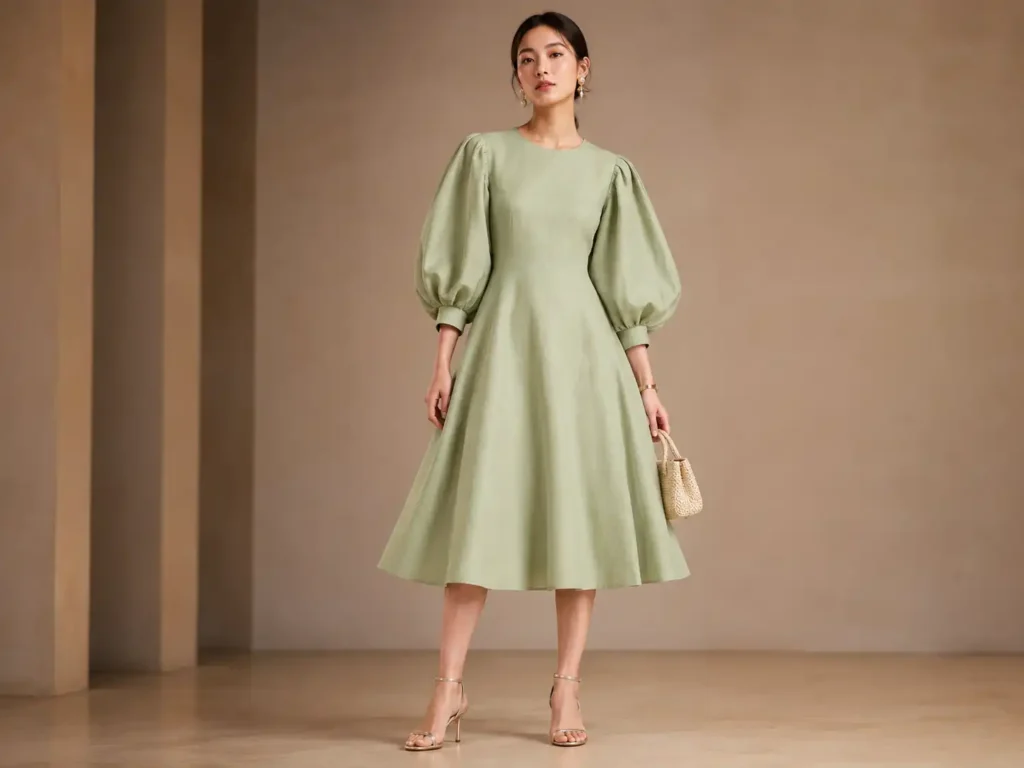
Quality Control for Color, Fit and Bulk Consistency
Fabric Inspection
Dye-Lot Separation
Cutting Control
In-Line Measurement
Workmanship Review
Packing Verification
Private-Label Green Dresses Ready for Retail Delivery

Main Labels
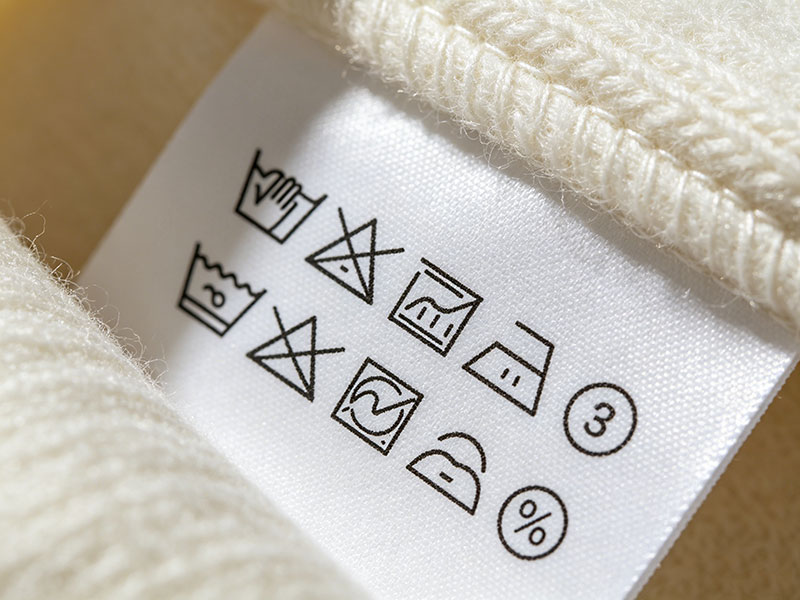
Care and Size Labels
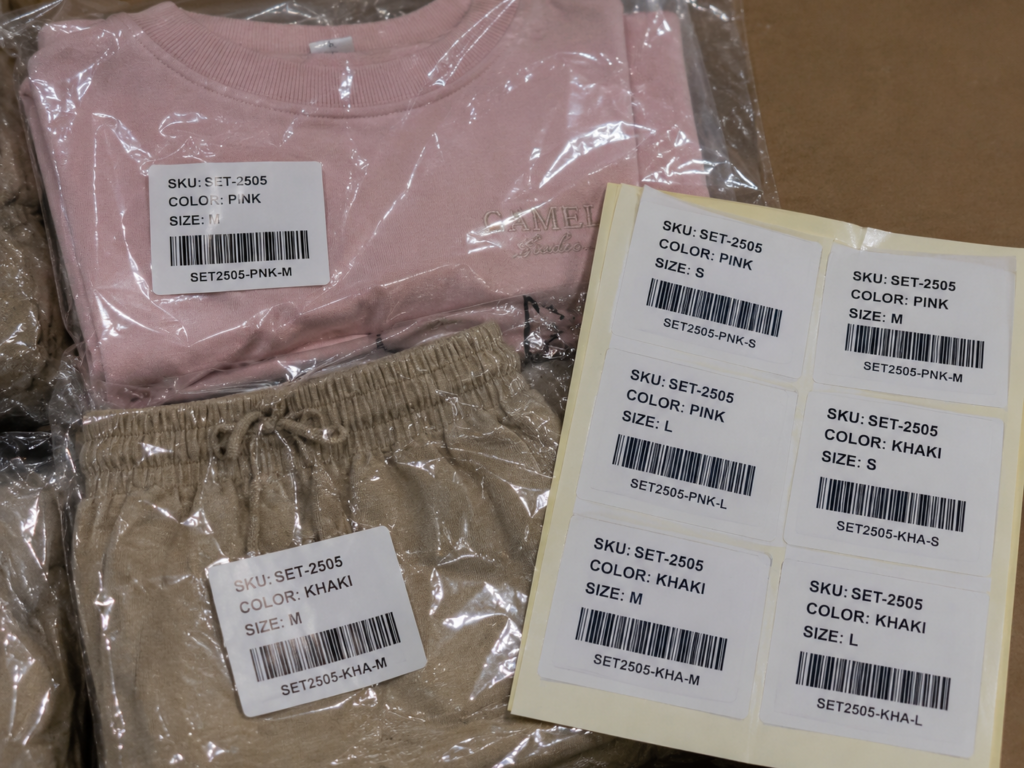
Hangtags and Barcodes
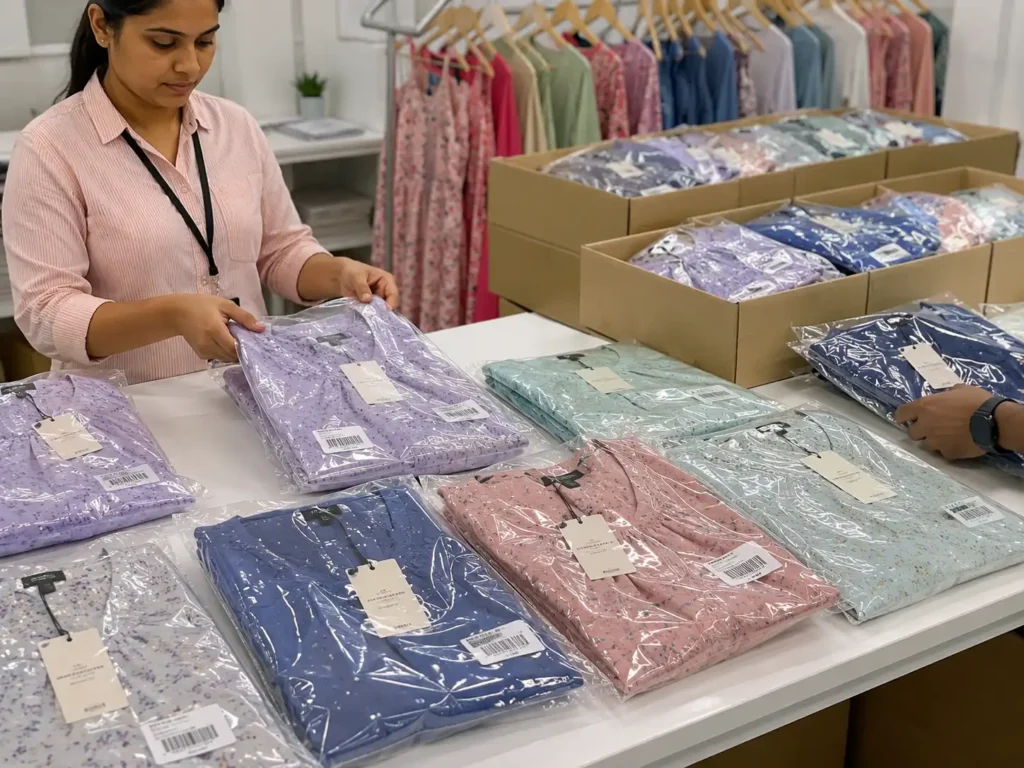
Individual Packing
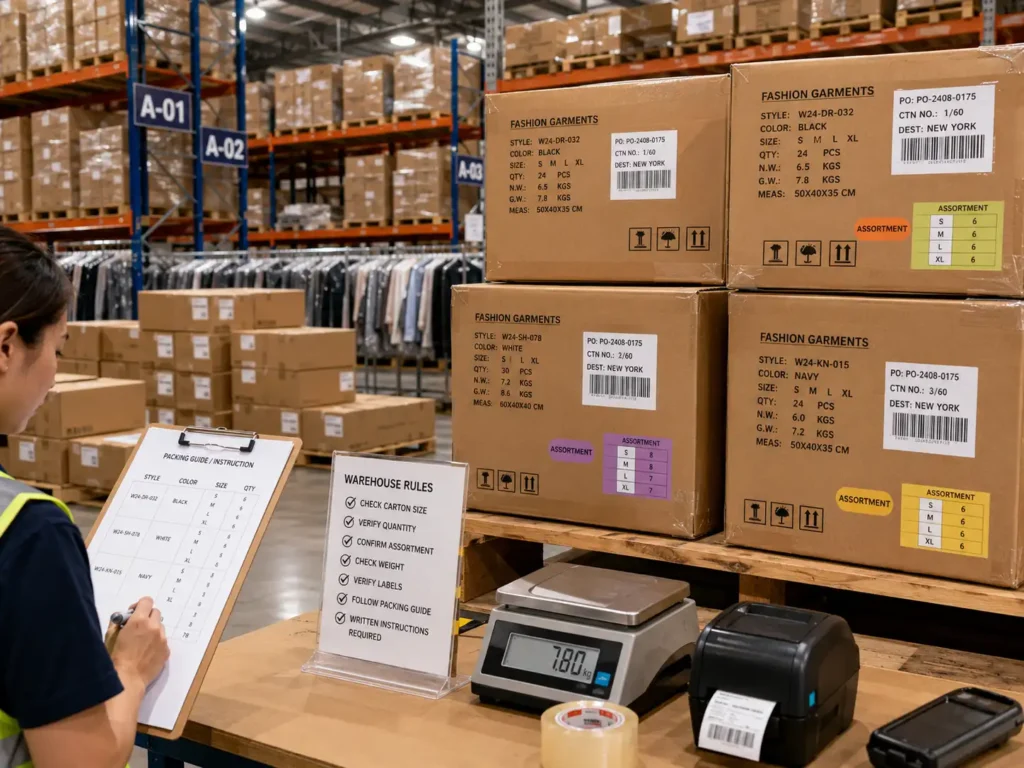
Carton Planning
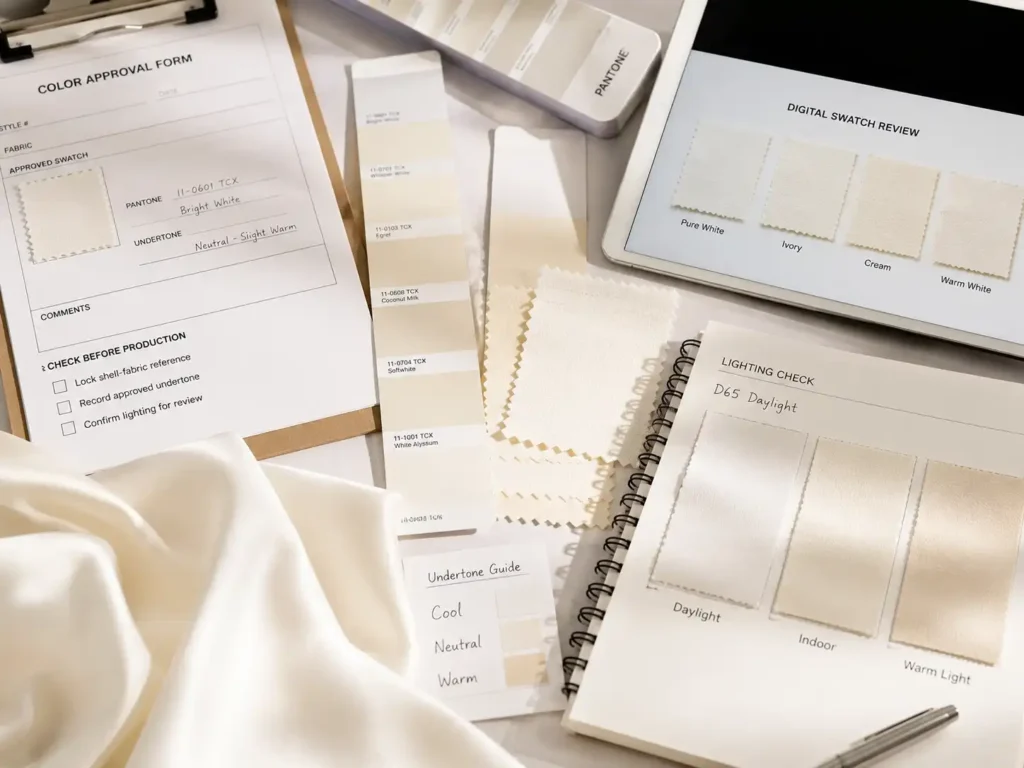
NDA Protection
MOQ and Cost Factors for Custom Green Dresses
The standard starting MOQ is 200 pieces per style/color. Final feasibility depends on fabric availability, custom dyeing, trim requirements, construction, color count, size breakdown, packaging and production scheduling. A total collection quantity does not automatically replace the MOQ required for each style and color.
| Order Structure | Initial Manufacturing Assessment | Main Variables to Confirm |
|---|---|---|
| 1 style x 1 stock green x 200 pcs | Can be evaluated under the standard starting MOQ | Fabric stock, size ratio, construction, labels |
| 1 style x 2 stock greens x 200 pcs each | Can be evaluated as two style/color units | Dye lots, trim colors, packing and SKU files |
| 1 style x 2 custom greens x 100 pcs each | Normally below the standard per-color structure | Dye-supplier MOQ, lab dips, fabric meterage |
| 10 styles x 2,000 pcs average | Suitable for collection-level production planning | Factory allocation, material calendar, delivery priorities |
| Custom lace or sequin green dress | MOQ confirmed after material sourcing | Supplier minimums, color development, wastage |
| Multi-style total of 200 pcs | Does not automatically meet production MOQ | Each pattern, fabric, color and setup is separate |
Managing Development Around the Brand Launch Calendar
A reliable launch plan works backward from the required warehouse or campaign date. Color development, fabric availability, sample complexity, revision speed, PP approval, bulk production, inspection, packing and freight are mapped as connected milestones.
Sample Calendar by Garment Complexity
Simple styles may require approximately 7-10 days for an initial sample when standard materials are available. Standard dresses commonly require 10-15 days. Complex corset, lace, sequin, multi-layer or special-trim styles may require 15-25 days. Material development, lab dips and external trims follow supplier timing and can extend the schedule.
Feedback speed strongly affects calendar control. Consolidated comments with updated measurements, reference photos and marked technical files allow the pattern and sample teams to revise efficiently. Changing fabric, color or structure after a fit is approved may require another sample because garment behavior can change.
Production Calendar After PP Approval
Bulk timing is confirmed after PP approval, material availability, order quantity, size range, packing and QC requirements are known. A production schedule normally identifies material arrival, cutting, sewing, in-line inspection, finishing, final inspection, packing and shipment release. Complex collection programs may use different production windows by style group.
No responsible manufacturer can guarantee one fixed production period for every green dress. A stock crepe midi, custom-dyed satin corset and hand-embellished sequin mini have different material and labor requirements. Jinfeng Apparel issues a project-specific calendar rather than applying one headline promise to all garments.
Repeat Orders and Multi-Batch Delivery
Repeat orders can move faster when pattern, measurement, fabric, color, trim, label and packing records remain current. New dye lots still require review, and substituted materials require fresh approval. Multi-batch delivery can be arranged when some SKUs support an earlier launch or when air and sea freight are combined.
Long-term programs benefit from retained production files and clear change control. New seasons may extend an approved silhouette into another green, fabric or length, but every change is reviewed for pattern, cost, MOQ, timing and QC impact before production begins.
Green Dress Programs with Controlled Commercial Scale
Case 1: Green Occasionwear and Evening Dress Collection
Project Scope
A premium occasionwear brand developed a green dress collection for wedding guest, cocktail, formal events and seasonal eveningwear markets.
- Collection size: 22 dress styles
- Product categories: emerald satin dresses, sage chiffon dresses, bottle-green evening dresses, lace occasion dresses and corset styles
- Materials: satin, chiffon, lace, crepe, mesh and structured lining systems
- Construction details: fitted bodices, flowing skirts, corset structures and elegant evening silhouettes
- Requirement: premium color appearance with consistent fabric and finishing quality
Development Challenges
Green occasionwear requires strict control because the same color name can appear differently across materials.
Key challenges included:
- Matching emerald, sage and bottle-green tones across fabrics
- Preventing lining from changing the final shade
- Maintaining satin shine consistency
- Controlling lace and mesh transparency
- Protecting pressing quality on premium fabrics
Manufacturing Approach
The development team created a material-specific green approval process.
Key controls included:
- Pantone and physical color reference review
- Fabric-based shade approval
- Lab dip confirmation when required
- Shell, lining and trim color matching
- PP sample approval before production
Additional attention was given to:
- Corset support
- Bust shaping
- Lace placement
- Zipper stability
- Final garment presentation
Manufacturing Value
The collection achieved a refined green occasionwear appearance by combining color management, fabric selection, pattern engineering and controlled finishing.
Case 2: Green Resort and Summer Dress Collection
Project Scope
A resortwear brand developed a lightweight green dress collection for vacation, spring and summer markets.
- Collection size: 15 dress styles
- Product categories: sage maxi dresses, olive resort dresses, mint chiffon dresses, relaxed midi dresses and vacation styles
- Materials: chiffon, rayon, linen blends, cotton blends and lightweight woven fabrics
- Construction details: flowing silhouettes, halter styles, relaxed fits and breathable designs
- Requirement: lightweight appearance with comfortable coverage and travel-friendly packing
Development Challenges
The collection needed to balance natural movement with commercial reliability.
Main challenges included:
- Controlling transparency in light green fabrics
- Maintaining soft drape after lining
- Preventing wrinkles during transportation
- Managing natural fabric variation
- Keeping color consistent under outdoor lighting
Manufacturing Approach
The project focused on lightweight fabric and resort-specific construction.
Key controls included:
- Selecting lining based on fabric weight and transparency
- Reviewing green shades under daylight conditions
- Adjusting shell and lining length
- Testing hem balance after hanging
- Confirming folding and packing methods
Additional production controls:
- Shrinkage review
- Fabric batch inspection
- Clean handling standards
- Travel packaging protection
Manufacturing Value
The collection maintained a relaxed resort aesthetic while achieving stable coverage, comfortable wearability and export-ready presentation.
Case 3: Large Private Label Green Dress Collection Program
Project Scope
An established fashion brand required a complete seasonal green dress assortment covering multiple shades, fabrics and retail occasions.
- Collection size: 30 dress styles
- Production scale: 60,000+ pieces
- Product categories: green mini dresses, midi dresses, maxi dresses, bodycon dresses, corset dresses and evening styles
- Materials: satin, chiffon, mesh, lace, jersey, crepe, velvet and sequin fabrics
- Requirement: consistent quality across multiple SKUs, colors and delivery batches
Development Challenges
The program required coordination across different green shades and garment structures.
Major challenges included:
- Managing emerald, sage, olive, mint and forest tones
- Maintaining shade consistency across fabrics
- Controlling different lining requirements
- Keeping size grading consistent
- Coordinating private-label packing and shipment
Manufacturing Approach
The collection was divided according to product structure and risk level.
Premium Evening Group
Focused on:
- Emerald and forest-green shades
- Satin and velvet surface control
- Corset construction
- Pressing protection
Lightweight Resort Group
Focused on:
- Sage and olive tones
- Chiffon and linen-blend selection
- Transparency control
- Travel-friendly packing
Manufacturing Value
The program demonstrated that large green dress collections require both manufacturing capacity and detailed control of color, fabric, fit, quality and retail delivery.
How to Evaluate a Green Dress Manufacturer
Dress Category Depth
Color Approval System
Sampling Discipline
Bulk Control
Brand Delivery
Repeat-Order Records
Green Dress Manufacturing Frequently Asked Questions
The standard starting MOQ is 200 pieces per style/color. Fabric availability, custom dyeing, special lace, sequins, trims, packaging and production scheduling may increase the required quantity. A collection total does not automatically replace the MOQ needed for each style and color.
Yes, Pantone can establish the color direction. Final approval is made on the intended fabric because fiber, shine, texture and transparency affect appearance. Physical swatches, lab dips and shell-lining combinations may be reviewed before bulk dyeing.
Lab dips can be arranged for custom-dyed materials. The number of submissions, supplier timing and cost depend on fabric and color requirements. Approved versions are recorded before bulk dyeing, followed by bulk shade review when required.
Yes. Stock satin, chiffon, mesh, lace, crepe, jersey and other materials can be reviewed through the fabric network. Inventory, dye lot, width, composition, weight and bulk availability must be reconfirmed before production.
Often, yes. Dye suppliers may set minimum meterage according to fiber, construction, dye-vat size and color process. Custom dyeing also adds lab dip, bulk shade and material-calendar requirements. MOQ is confirmed after fabric sourcing.
Not exactly. Satin reflection, chiffon transparency, mesh layering, lace motif density, velvet pile and sequin angle change perceived color. Coordinated swatches can create a consistent collection story, but different materials will retain distinct visual behavior.
Jinfeng Apparel develops mini, midi, maxi, party, occasion, bodycon, corset, slip, resort, wedding-guest and evening dresses, along with skirts, jumpsuits and matching sets. Final feasibility depends on design, fabric and construction.
Yes. Services can include main labels, size labels, care labels, hangtags, barcodes, SKU stickers, polybags, folding instructions, carton marks and retail-ready packing. Artwork, placement and packing files are approved before bulk execution.
Controls can include approved lab dips or swatches, incoming fabric inspection, dye-lot records, roll separation, shell-lining matching, zipper and thread coordination, directional cutting and bulk shade approval before sensitive programs are cut.
Yes. Tech packs, patterns, samples, materials, labels, packaging files, quantities and unpublished designs can be managed under NDA. Pattern, fabric, color, trim and packing records support repeat orders, subject to fresh material and dye-lot approval.

Start Your Custom Green Dress Project
Send the available project files to Kelly for an initial manufacturing review. A complete quotation and schedule depend on product structure, approved material direction, quantity, color, size range, labels and packing.
Early review can begin from a tech pack, reference garment, sketch or clear image, while more detailed information improves fabric selection, costing and production planning.
Please include:
- Reference images, sketches, original samples or tech packs
- Preferred green shade, Pantone number or physical color reference
- Fabric preference, composition or target hand feel
- Quantity by style and color
- Size range, base size and measurement chart
- Label, hangtag, barcode and packing requirements
- Target market and required launch or delivery date
- Testing, inspection or documentation requirements