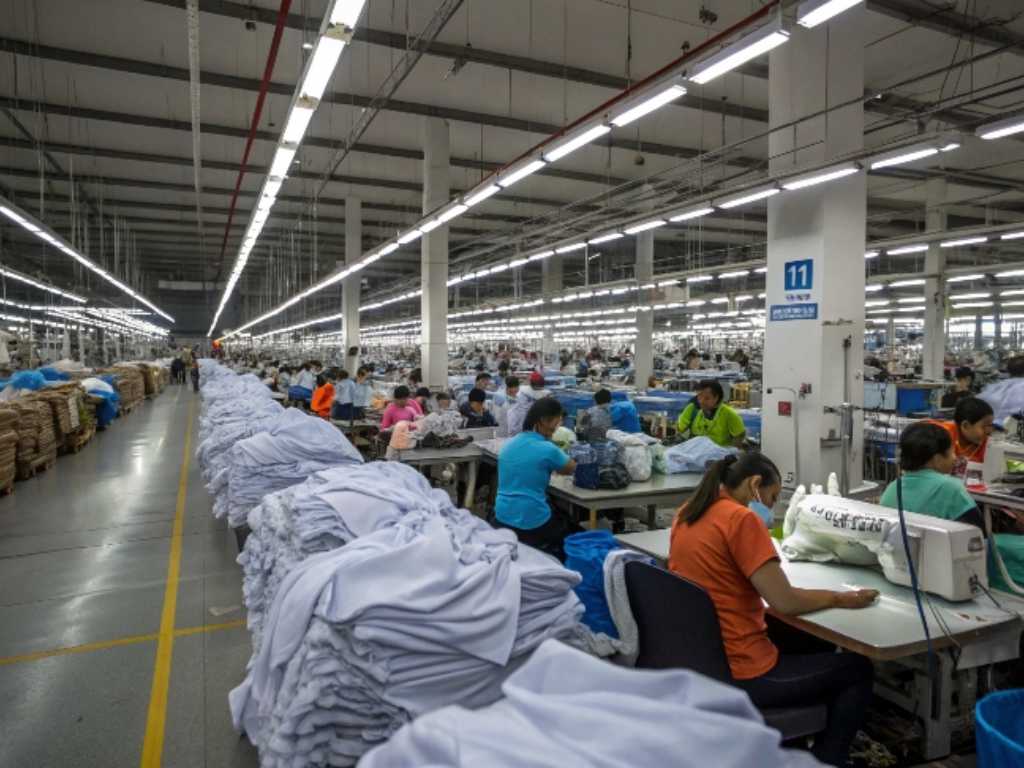
Knit and Mesh Dress Manufacturer
Custom stretch-knit, sheer-mesh and hybrid dress development for global fashion brands with controlled fit, coverage and bulk consistency.
- MOQ starts from 200 pieces per style and color, subject to fabric, trim, construction and production scheduling.
- Two sample rooms, 7+ senior pattern makers and 20+ sample machinists support fit-led development and revision.
- Five technical areas are reviewed before production: stretch direction, recovery, transparency, lining coverage and seam stability.
- Six owned womenswear factories and 10+ long-term production partners support multi-style seasonal programs and repeat orders.
Manufacturing Capacity for Structured Dress Programs
Since 2008
Six Owned Factories
Two Sample Rooms
Seven Pattern Makers
Twenty Sample Machinists
Fifteen QC Inspectors
A Production Model Built for Brand Collections
Best Program Fit
Jinfeng Apparel is structured for fashion brands, product development teams, sourcing offices and private-label programs that need more than basic sewing. Strong projects normally arrive with a tech pack, reference sample, measurement chart, line sheet or clear visual direction.
- Multi-style seasonal dress collections
- Knit, mesh and hybrid-material development
- Photo, fit and PP sample requirements
- Defined size, color and packaging plans
- Repeat-order or replenishment potential
Project Readiness
- Reference image or design file
- Planned quantity by style and color
- Intended size range
- Fabric and transparency expectations
- Branding and packing requirements
Three Knit and Mesh Manufacturing Scopes
Custom Knit Dresses
Custom Mesh Dresses
Hybrid Dress Construction
Knit and Mesh Dress Categories We Develop
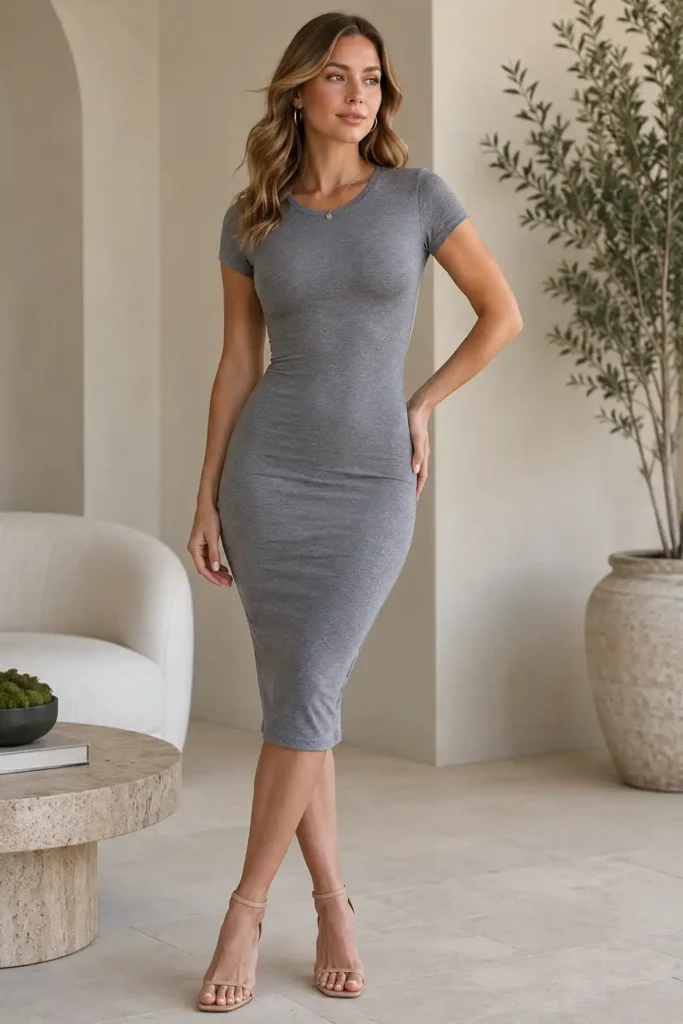
Jersey Bodycon Dress
- Best for fitted mini and midi styles
- Key risk: relaxation and size drift
- QC focus: side seams, hem and body measurements

Rib Knit Dress
- Best for bodycon and casual-premium silhouettes
- Key risk: uneven rib opening
- QC focus: symmetry, neckline and side seams
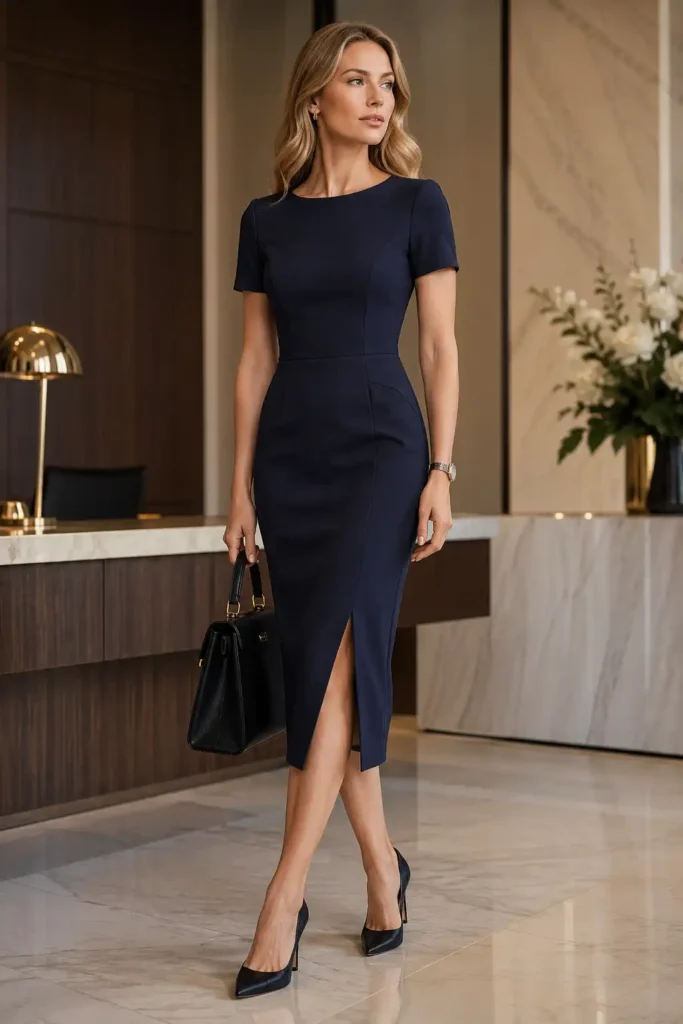
Ponte Structure Dress
- Best for structured midi and fitted workwear
- Key risk: incorrect weight-to-silhouette match
- QC focus: flat seams and dimensional stability
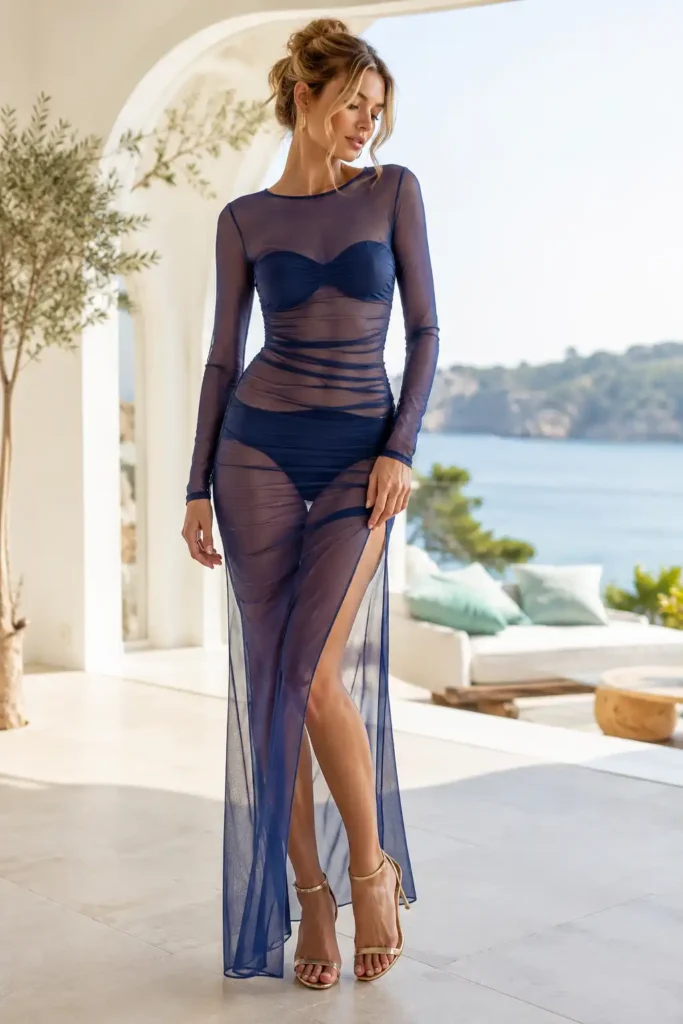
Sheer Mesh Dress
- Best for party, occasion and layered looks
- Key risk: inconsistent coverage
- QC focus: holes, transparency and edge finish
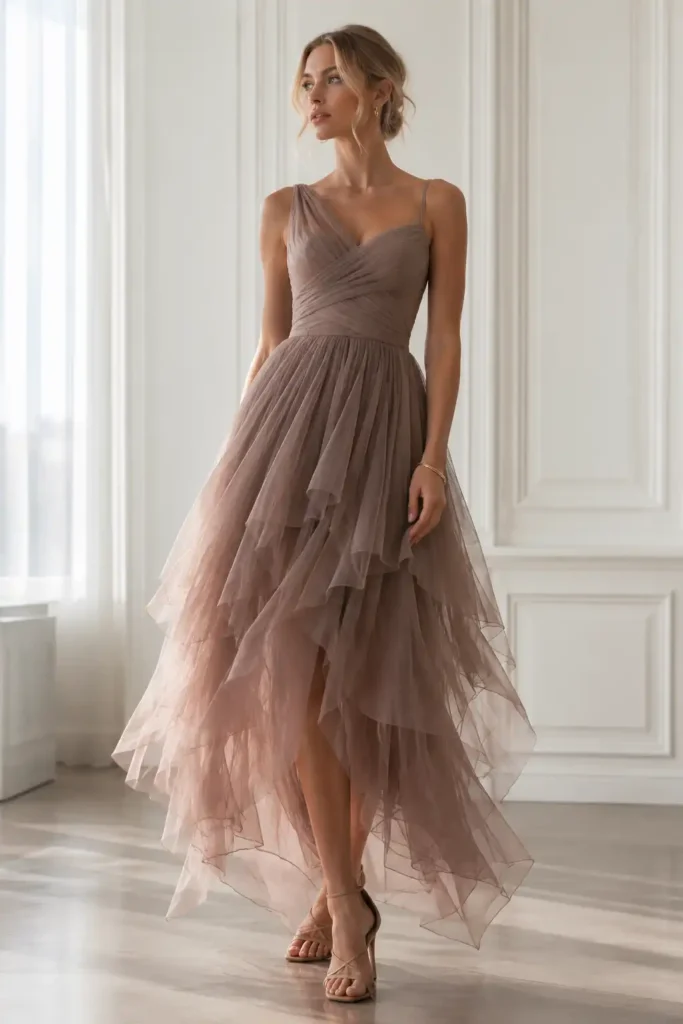
Layered Mesh Dress
- Best for ruched, draped and occasion styles
- Key risk: layer movement and hem imbalance
- QC focus: alignment and layer length
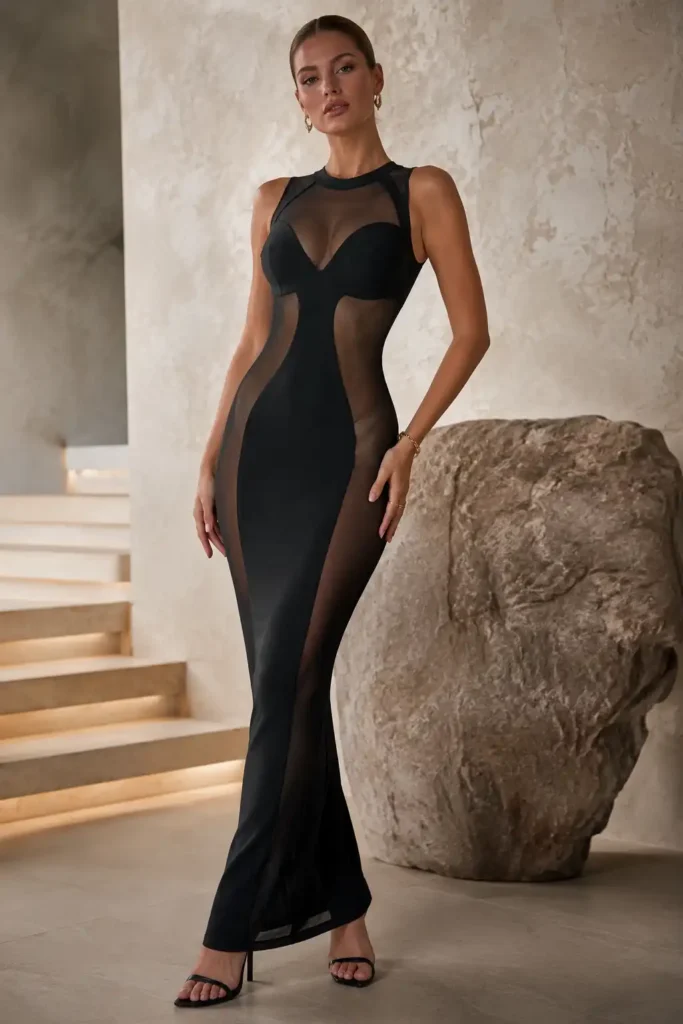
Knit Mesh Panel Dress
- Best for cut-out, bodycon and party collections
- Key risk: tension mismatch
- QC focus: panel placement and seam recovery
Knit Fabric Selection for Shape and Recovery
Knit fabric selection begins with the intended silhouette, wearing pressure and visual finish. Fiber content alone cannot predict how a dress will fit or recover.
Match Stretch to Silhouette
Stretch direction: A fabric may stretch mainly across the body, in both directions, or only slightly despite being knitted. Bodycon dresses normally need controlled crosswise stretch and reliable recovery, while a cleaner ponte silhouette may need lower stretch with stronger structure. The pattern is reviewed against the usable stretch, not the supplier description alone.
Recovery and relaxation: A fabric can extend easily yet fail to return to its original width. Poor recovery creates loose waistlines, bagged hips, widened necklines and dresses that feel different after several hours of wear. Fabric swatches are handled, stretched and compared before the pattern is finalized.
Weight and opacity: Lightweight jersey can provide softness but may show underwear lines, seam allowances or body contouring beyond the intended look. Heavier fabrics add support but can pull a long dress downward or make a summer program feel too dense. Lining, double layers or local reinforcement are considered only where the silhouette requires them.
Drape and surface: Smooth jersey, rib knit, ponte and open-knit structures respond differently to ruching, cut-outs, gathers and fitted seams. A reference image is translated into measurable fabric requirements: surface texture, hand feel, stretch, recovery, weight, opacity and drape.
Control Fabric Before Cutting
Fabric identification: The approved material record includes composition, weight, usable width, stretch direction, color, hand feel, transparency, shrinkage risk and supplier reference. A visual match without technical comparison is not enough for repeat production.
Relaxation before cutting: Stretch fabrics may arrive under tension from rolling and transport. Allowing suitable relaxation before marker placement helps reduce side-seam twisting, length change and post-cut distortion. The required handling depends on fabric behavior and production schedule.
Color and batch control: Deep colors, neutrals and seasonal shades can vary between dye lots. Main fabric, lining, thread and zipper colors are reviewed as a coordinated garment system. Reorders use preserved material records, while substitute fabrics are compared for stretch, weight and hand feel before reuse of the original pattern.
Size impact: A change in fabric recovery can alter fit across the entire size range. The same base pattern should not be transferred blindly from jersey to ponte, or from a dense rib to a lighter knit. Pattern adjustment and a revised sample may be required when fabric behavior changes.
Mesh Fabric Selection for Coverage and Stability
Mesh choice affects transparency, stretch, softness, print clarity and edge behavior. The correct direction depends on both visual intent and wearing security.
Choose the Right Mesh Type
Regular mesh: Suitable for light overlays, soft sleeves and decorative panels where strong compression is unnecessary. Openness, softness and snag resistance vary widely, so the approved swatch must represent the intended bulk quality.
Stretch mesh: Used when the mesh must follow a fitted silhouette or move with the body. Stretch direction and recovery must work with the base fabric. A mesh panel with weaker recovery than the knit body can sag, ripple or distort after wear.
Power mesh: Provides stronger support for internal control panels, fitted sections and structured fashion applications. It can improve stability but may feel firm against the skin. Position, seam allowance and edge treatment need careful review.
Printed mesh: Print scale, placement, color penetration and distortion under stretch are checked during sampling. A print that looks correct when flat can open, pale or shift when worn. Placement-sensitive motifs require controlled cutting direction and pattern alignment.
Double-layer mesh: Two layers can improve coverage, color depth and surface richness without replacing the mesh character. Layer direction, seam bulk and edge alignment must be planned so one layer does not torque against the other.
Plan Transparency Before Sampling
Coverage map: Sheer areas should be defined by garment zone – bust, waist, hip, side panel, back, sleeve, neckline or skirt. A clear coverage plan prevents late revisions after the sample has already been constructed.
Lining relationship: Lining can be full length, partial, localized or designed as a separate underdress. Color selection changes the final look: tonal lining softens transparency, contrast lining emphasizes pattern, and skin-tone lining creates illusion effects.
Edge stability: Necklines, armholes, cut-outs and raw-looking edges can stretch during sewing or wear. Binding, turning, elastic reinforcement, clean finishing or hidden construction is selected according to the design.
Damage inspection: Small holes, pulled yarns and snags can expand under tension. Incoming rolls, cut panels and finished garments are checked at different stages rather than relying on final inspection alone.
Skin contact: Mesh used at the underarm, neckline, side seam or fitted body panels must be reviewed for scratchiness and seam comfort, especially when the style is intended for long event wear.
Engineering Knit and Mesh in One Dress
Hybrid construction succeeds when the two materials behave as one garment. Pattern shape, seam tension and layer weight must be balanced before bulk production.
Balance Tension Across Materials
Stretch compatibility: Knit and mesh should be compared at the exact joining direction. A four-way stretch knit joined to a lower-recovery mesh may cause the mesh to pull, the knit to wave or the seam to migrate. The pattern and seam method are selected after observing both materials together.
Weight difference: Dense ponte, rib knit or double-layer jersey can drag lightweight mesh downward. Mesh skirts, sleeves and overlays need enough support at the joining seam without creating a rigid ridge. Waist seams, yokes and panel joins are reviewed for both visual smoothness and load distribution.
Panel geometry: Illusion panels, cut-outs and curved inserts depend on accurate seam shape. Even a small shift can change coverage, symmetry and body contouring. Notches, placement references and sewing sequence are recorded so the effect can be repeated across sizes.
Seam recovery: The joining seam must stretch with the garment and return without puckering. Thread, stitch formation, seam allowance and reinforcement are selected according to the pressure on the area. A decorative panel at the shoulder requires a different solution from a fitted waist or hip insert.
Pressing limits: Knit and mesh can react differently to heat and pressure. Finishing methods must preserve surface texture, avoid shine and prevent the lighter layer from flattening or shrinking.
Build a Repeatable Construction Sequence
Prototype the join: Sampling tests the actual material combination, not a substitute seam on spare fabric alone. Difficult joins may be sewn in several methods before the most stable option is selected.
Lock internal layers: Lining, power mesh, elastic, facing and outer mesh should meet at controlled points. Internal components that float or twist can change neckline height, cut-out position and waist fit even when the outside looks correct on a hanger.
Transfer approved details: Final pattern files, seam allowances, notch positions, sewing instructions, stitch references and inspection points move from the approved sample into production documents. The goal is to prevent the sample room from holding knowledge that the production line never receives.
Check movement, not only appearance: Fit review should include standing, sitting, walking, arm movement and light stretching where relevant. Hybrid dresses often look correct when static but reveal pulling, gaping or mesh distortion during movement.
Protect consistency across sizes: Panel width, neckline depth, cut-out position and coverage cannot be enlarged by simple percentage. Size grading is reviewed so the visual design and wearing security remain balanced from the smallest to the largest approved size.
Knit and Mesh Fabric Selection Matrix
The matrix links common fabric directions with silhouette, coverage and production risk. Final specifications are confirmed from approved swatches and garment requirements.
| Fabric Direction | Typical Use | Stretch / Structure | Coverage | Main Production Risk | Primary QC Focus |
|---|---|---|---|---|---|
| Lightweight jersey | Soft bodycon, mini, ruched dress | High stretch; low to medium structure | May require lining or double layer | Relaxation, cling, side-seam twisting | Recovery, length, bust-waist-hip measurements |
| Rib knit | Fitted mini, midi, tank dress | Visible texture; medium to high stretch | Varies with rib opening | Uneven rib expansion over curves | Symmetry, rib direction, neckline stability |
| Ponte / roma | Structured midi, office, cocktail | Medium stretch; stronger body | Usually higher opacity | Excess bulk or insufficient recovery | Flat seams, zipper area, dimension stability |
| Open knit | Layered fashion dress, resort styling | Open structure; variable stretch | Requires coverage planning | Snagging, growth, unstable openings | Hole consistency, length, lining relationship |
| Regular mesh | Sleeves, overlays, light panels | Soft; low to moderate support | High transparency | Snags, holes, stretched edges | Surface damage, edge finish, transparency |
| Stretch mesh | Body panels, fitted overlays | Medium to high stretch | Sheer to semi-sheer | Recovery mismatch with base knit | Panel placement, seam recovery, size consistency |
| Power mesh | Support panels, fitted inner sections | Firm stretch and support | Semi-sheer | Excess firmness or skin discomfort | Position, seam comfort, support balance |
| Printed mesh | Statement overlays and party styles | Depends on base mesh | Print changes under stretch | Print distortion and placement shift | Print position, color, panel direction |
Commercial Dress Styles for Seasonal Collections

Bodycon Mini Dress
- Core fit: bust, waist and hip
- Key detail: cut-outs or mesh panels
- Production focus: recovery and zipper flatness

Ruched Mesh Dress
- Core fit: waist and hip placement
- Key detail: balanced gathering
- Production focus: symmetry and layer alignment
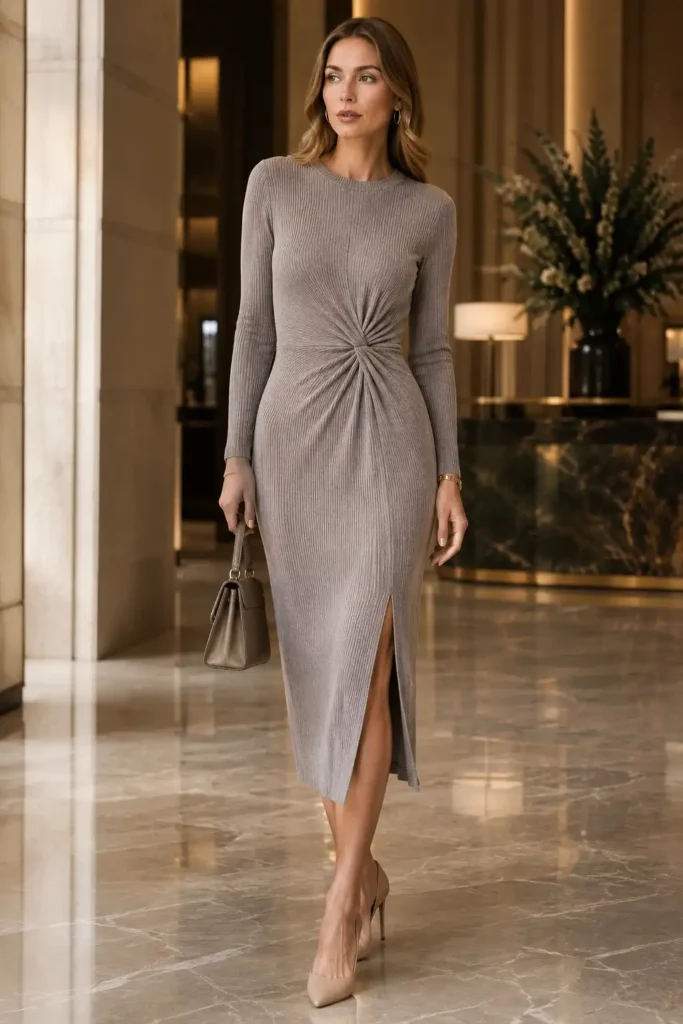
Knit Midi Dress
- Core fit: torso length and hip ease
- Key detail: slit or clean hem
- Production focus: length stability and pressing
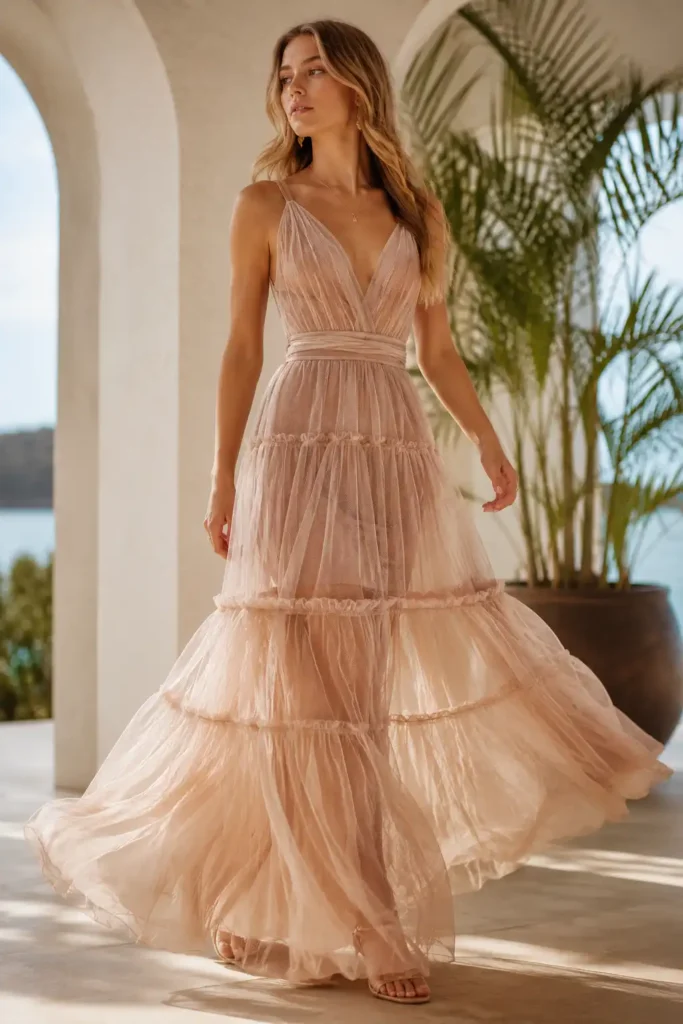
Layered Mesh Maxi
- Core fit: waist and torso anchor
- Key detail: layered skirt movement
- Production focus: hem balance and packing protection
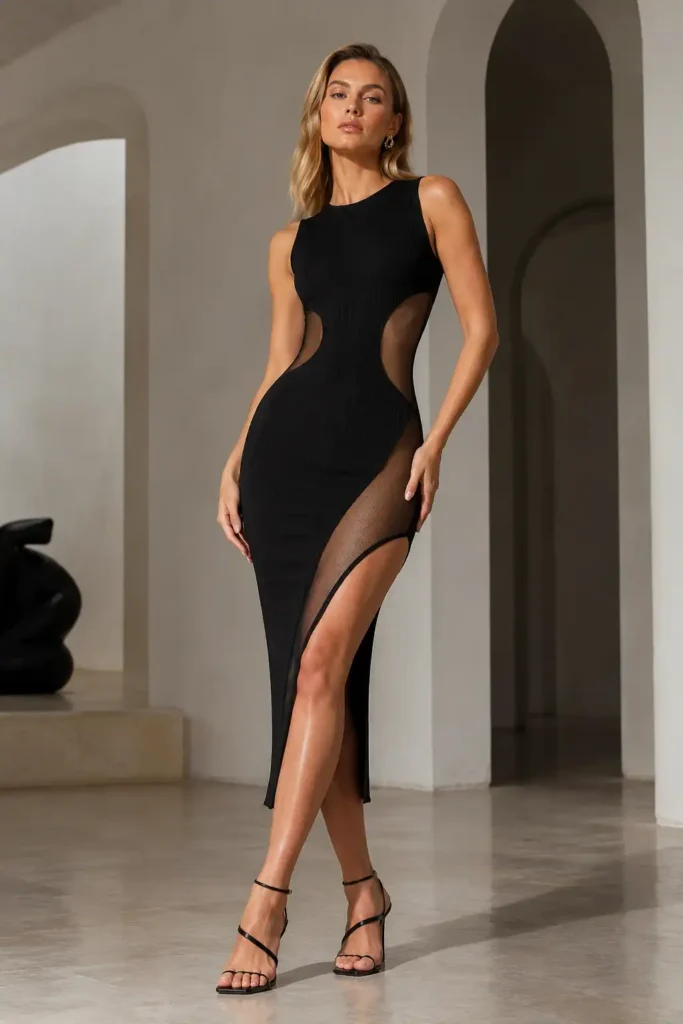
Cut-Out Panel Dress
- Core fit: panel tension and body contour
- Key detail: illusion connection
- Production focus: seam recovery and coverage

Knit Mesh Set
- Core fit: consistent sizing across pieces
- Key detail: shared fabric story
- Production focus: color batch and SKU control
Pattern and Fit Control for Stretch Dresses
Fit is developed from garment purpose, fabric behavior and size strategy. Knit and mesh patterns require more than copying a woven dress block.
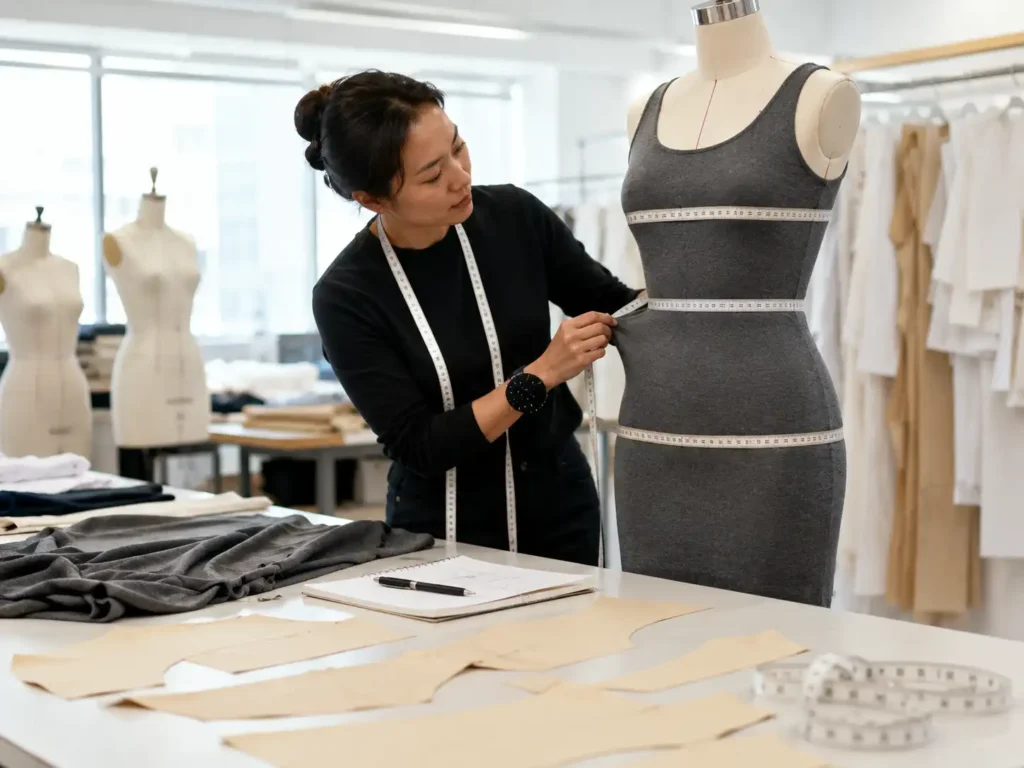
Develop the Base Size Around Fabric Behavior
Negative ease: Fitted knit dresses are often smaller than body measurements, but the reduction must match the fabric recovery and desired compression. Too much negative ease creates pulling, visible seam strain and unstable hemlines. Too little produces loose waists, bagging and poor body contour.
Bust-waist-hip balance: A garment can meet isolated measurements yet still fit poorly when the vertical spacing between bust, waist and hip is wrong. Pattern review includes torso length, waist position, hip level and curve distribution, especially for bodycon and cut-out styles.
Neckline and armhole: Stretch edges can widen during sewing and wear. Neck drop, shoulder angle, strap placement and armhole exposure are reviewed together with binding or reinforcement. Mesh at these areas needs enough stability to preserve coverage.
Dress length: Knit dresses may shorten when stretched across the body or grow under fabric weight. Mini lengths require wearing-security review, while midi and maxi styles need hem balance and movement assessment.
Sample measurement: Finished samples are checked against the size chart at key points including bust, waist, hip, dress length, strap length, armhole and neckline depth. Visual approval alone is not sufficient for production standardization.
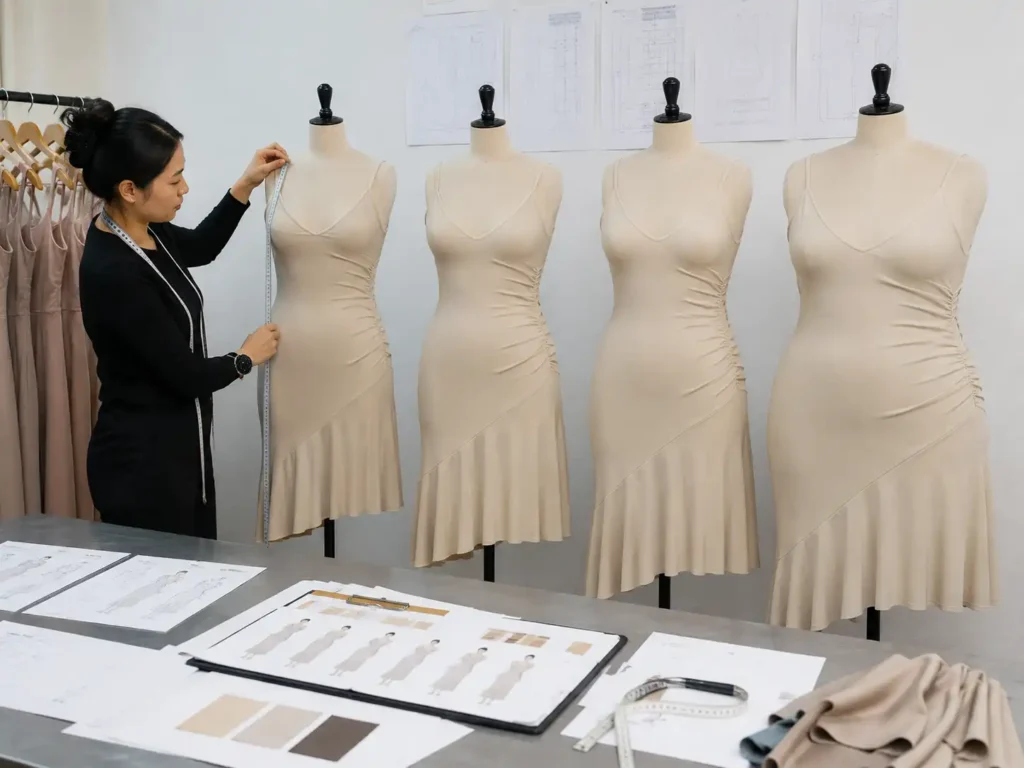
Grade Sizes Without Losing the Design
Size increments: Each measurement point is graded according to garment shape and target market. Bust, waist and hip increments do not automatically apply to panel width, cut-out position, neckline depth or mesh coverage.
Panel placement: Mesh inserts should remain visually balanced across sizes. A panel that looks elegant in the base size can become too narrow, too wide or misplaced when enlarged mechanically. Grading rules are reviewed for the intended effect and wearing security.
Strap and shoulder control: Strap length, attachment angle and shoulder width affect neckline height and bust coverage.
Adjustable hardware can provide flexibility, but the pattern still needs a stable starting position.
Lining grade: Lining should follow the outer garment without creating drag, excess fullness or exposure. Partial lining and bodysuit-style internal layers need separate grading logic.
Fit feedback conversion: Front, side and back photos, movement images and written comments are converted into pattern revisions and measurement updates.
Every approved change is recorded before PP sampling, rather than left in scattered messages.
Transparency, Lining and Coverage Design Details
Transparent styling must be engineered with clear coverage boundaries. Lining choice changes color, fit, comfort, retail suitability and manufacturing cost.
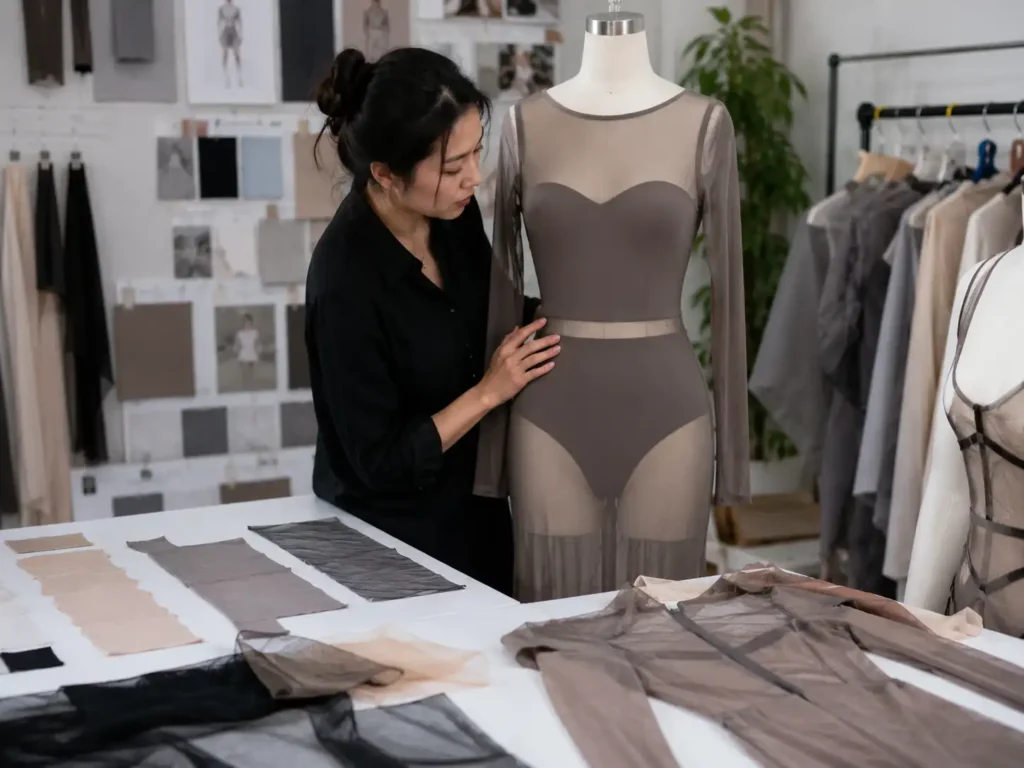
Design Coverage as Part of the Garment
Full lining: Suitable when the outer mesh supplies texture, print or movement but the dress needs complete opacity. The lining should stretch and recover with the outer layer without restricting wear.
Partial lining: Common for mesh sleeves, yokes, upper backs, side panels and layered skirts. The lining edge becomes part of the visual design, so its height, curve and seam finish must be deliberate.
Localized coverage: Bust cups, briefs, bodysuit panels or strategic double layers can protect key areas while preserving the sheer concept. Position is checked during fit review because small changes in torso length can expose the lining edge.
Separate underdress: Useful for layered mesh styles where the outer garment needs independent movement. Strap position, neckline, length and color must coordinate with the mesh dress so the two pieces read as one product.
Double-layer mesh: Two mesh layers can soften transparency without introducing a conventional lining. Direction and color interaction need review, especially when the layers are gathered or stretched.
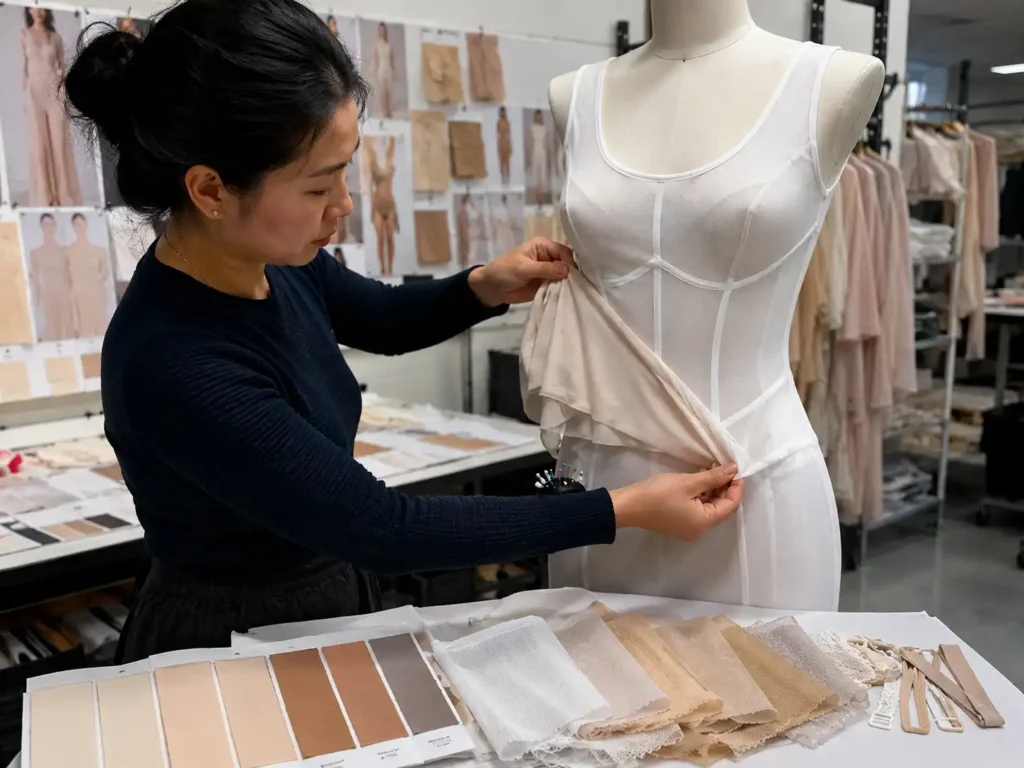
Coordinate Color, Comfort and Construction
Color relationship: Tonal lining creates a refined surface, contrast lining highlights mesh patterns, and skin-tone lining produces an illusion effect. A single nude shade does not suit every market or brand direction, so color approval should use physical swatches under relevant lighting.
Seam visibility: Transparent materials expose seam allowances, labels, elastic and internal construction. Clean placement and controlled seam width are essential because the inside can remain visible from the outside.
Comfort: Underarm edges, side seams, necklines and fitted power-mesh panels require skin-contact review. Scratchy thread, bulky joins or stiff binding can reduce wearability even when the garment looks strong in photos.
Stretch compatibility: Lining that stretches less than the outer layer can restrict movement, distort the mesh or pull the hem upward. The two materials are tested together during sampling.
Retail and occasion use: A stage-inspired mesh dress and a broad-market event dress may need different coverage. The final plan should reflect intended channel, age range, styling expectations and return-risk tolerance.
Workmanship Details That Protect Shape and Appearance
Clean workmanship on stretch and transparent dresses is created through compatible seams, controlled tension and careful finishing rather than decorative language.
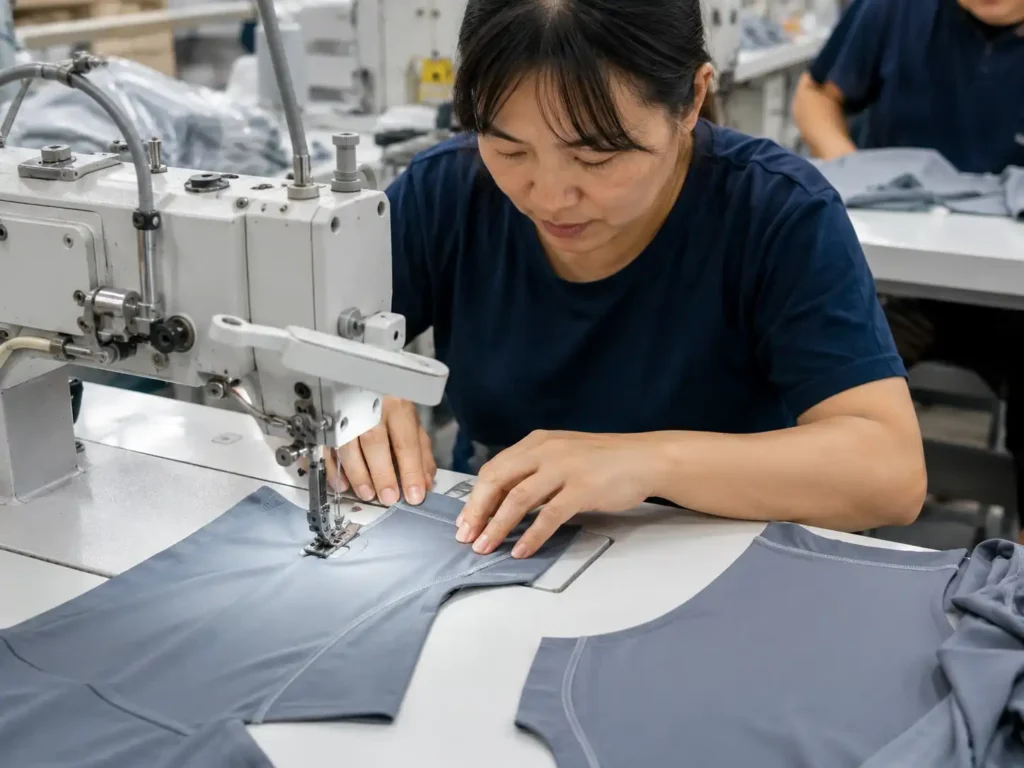
Sew Stretch Fabrics Without Distortion
Seam tension: Excess tension creates roping, waviness and restricted stretch. Insufficient control can produce loose stitches and unstable joins. Stitch formation is selected according to fabric recovery, seam pressure and visual requirement.
Neckline finishing: Binding, facing, elastic reinforcement or clean turning can be used depending on design. The finish should preserve the neckline shape without creating a thick ridge or causing the opening to flare.
Side seams: Side-seam twisting often begins with fabric relaxation, cutting direction or uneven feed. Pattern placement, panel alignment and in-line checks help keep the seam straight on the body.
Zipper areas: Fitted knit or hybrid dresses can bulge around an invisible zipper when the surrounding fabric stretches differently. Stabilization, seam allowance and zipper length are reviewed during sampling.
Hem finish: Lightweight jersey may wave, dense knit may create bulk, and mesh may require narrow or clean edges. Hem method is chosen to protect drape, stretch and visual proportion.
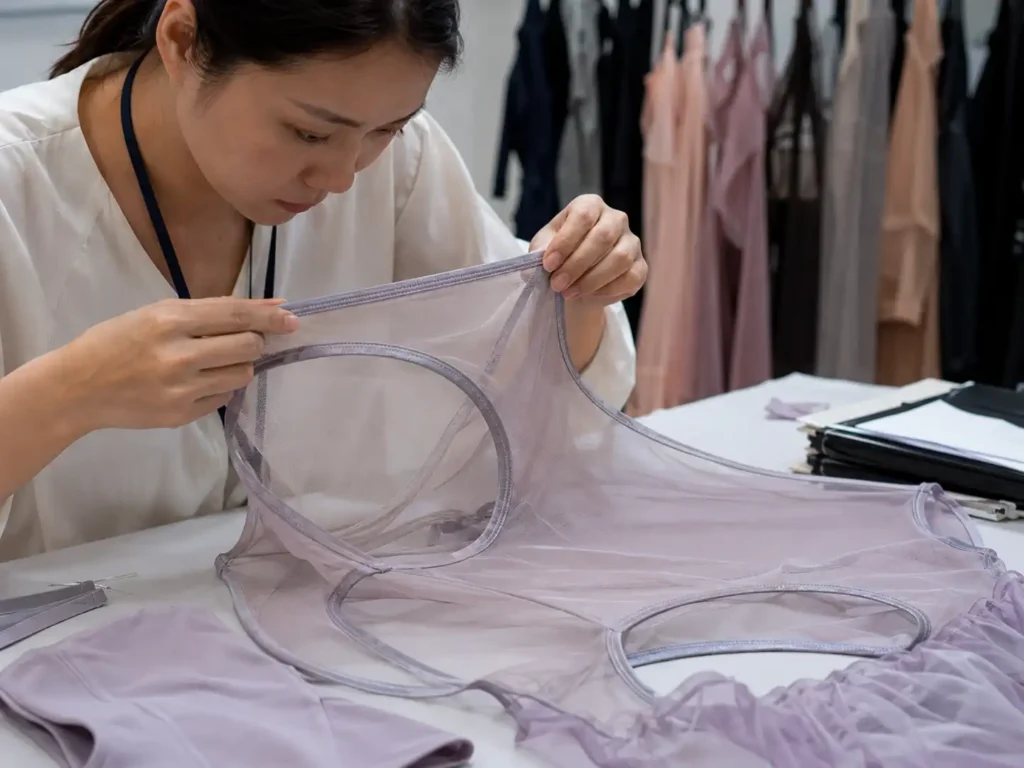
Finish Mesh Without Creating Weak Points
Panel joining: Curved mesh inserts need precise notches and sewing sequence. Uneven feeding can shift the panel and change symmetry. Operators follow approved alignment points rather than adjusting by eye.
Edge treatment: Mesh edges may be enclosed, bound, turned, reinforced or intentionally clean-finished according to design. High-stress areas such as armholes and cut-outs often need additional support.
Ruching and gathering: Gathering ratio, elastic length and attachment points are recorded. Uneven ruching changes the fit and becomes obvious in product photography.
Internal cleanliness: Transparent fabric makes loose threads, wide seam allowances and mismatched thread colors visible. Internal finishing is treated as part of the external appearance.
Pressing and handling: Mesh and stretch fabrics require controlled finishing to avoid shine, flattening, distortion or heat damage. Finished garments are handled and packed to reduce snagging and compression before shipment.
From Design Review to Approved Production Sample
Project Review
Fabric Direction
Pattern Development
First Sample
Revision Record

Quality Control for Knit and Mesh Dresses
| Control Stage | Knit Checks | Mesh Checks | Construction Checks | Record / Action |
|---|---|---|---|---|
| Incoming material | Weight, width, stretch, recovery, color, shrinkage risk | Transparency, softness, holes, snags, stretch, print quality | Compatibility of main fabric, lining and trims | Approve, isolate or replace material |
| Fabric preparation | Relaxation, grain and roll tension | Layer direction and surface protection | Approved dye lot and bundle plan | Preparation and cutting note |
| Cutting | Stretch direction, panel accuracy, size separation | Panel orientation, print position, damage check | Notches, cut-out geometry, lining pieces | Cut-panel inspection |
| Sewing start | Seam elasticity, neckline and side-seam behavior | Edge finish, panel feed and seam visibility | Zipper area, ruching ratio, reinforcement | First-piece review and correction |
| In-line inspection | Bust-waist-hip measurements, hem and twisting | Panel position, holes, stretched edges | Symmetry, lining position, workmanship | Correct process before volume grows |
| Finished garment | Recovery, shape, measurements, clean surface | Transparency, snags, layer balance | Zipper, neckline, seams, labels | Garment inspection report |
| Pressing and finishing | Avoid shine, stretch and flattened texture | Avoid heat damage and crushed layers | Final silhouette and thread cleaning | Finishing approval |
| Packing | Fold without distortion; correct size and SKU | Protect surface from snagging | Hangtag, barcode, polybag and carton marks | Packing QC and shipment records |
OEM, ODM and Private Label Dress Production
OEM Production
- Tech pack or original sample
- Measurement chart and grading direction
- Fabric, trim and color requirements
- Label, packaging and carton instructions
- QC and inspection requirements
ODM Development
- Structure and feasibility review
- Fabric and lining recommendations
- Pattern and fit development
- Detail and cost-impact advice
- Sample revision before PP approval
Private Label Delivery
- Woven, satin, printed or heat-transfer labels
- Size and care labels
- Hangtags and barcode stickers
- Individual polybags and size labels
- Carton marks and repeat-order packing records
Material Compliance and Sourcing Documentation
Verified Fabric Records
Certified Material Options
Testing Coordination
Knit and Mesh Collection Cases
The following programs reflect the scale and structure of brand-level orders while protecting names, designs, prices and unpublished product information.
Case 1: Bodycon Knit and Mesh Partywear Collection
Project Scope
A fashion brand developed a fitted partywear collection combining stretch knit bases with mesh panels and transparent design details.
- Collection size: 16 dress styles
- Product categories: bodycon mini dresses, ruched dresses, cut-out dresses and fitted party styles
- Materials: jersey knit, stretch mesh, power mesh and stretch lining
- Construction details: mesh sleeves, illusion panels, waist inserts and body-contouring silhouettes
- Requirement: strong fit with stable recovery and consistent sizing
Development Challenges
The collection focused on maintaining a close fit without losing comfort.
Main challenges included:
- Different recovery between knit and mesh
- Seam distortion around fitted areas
- Mesh transparency after stretching
- Lining movement during wear
- Size grading affecting body proportion
Manufacturing Approach
The development team treated knit and mesh as one integrated garment system.
Key controls included:
- Testing stretch direction and recovery
- Adjusting negative ease based on fabric behavior
- Reviewing bust-waist-hip balance
- Testing mesh panel placement
- Confirming lining compatibility
Additional production controls:
- Side seam stability checks
- Neckline recovery inspection
- Ruching ratio confirmation
- Finished measurement control
Manufacturing Value
The collection achieved stable body fit and repeatable sizing by combining fabric testing, pattern engineering and production control.
Case 2: Hybrid Knit Mesh Occasionwear Collection
Project Scope
A premium occasionwear brand developed hybrid dresses combining structured knit fabrics with decorative mesh elements.
- Collection size: 22 dress styles
- Product categories: cocktail dresses, evening dresses, wedding guest dresses and premium ecommerce styles
- Materials: ponte knit, rib knit, soft mesh, embroidered mesh and lining fabrics
- Construction details: mesh overlays, illusion necklines, transparent sleeves and panel inserts
- Requirement: elegant appearance with reliable commercial production
Development Challenges
The main challenge was balancing structure and softness.
Key risks included:
- Heavy knit pulling lightweight mesh layers
- Uneven tension at joining seams
- Incorrect transparency levels
- Visible lining edges
- Loss of shape after wear
Manufacturing Approach
The team developed separate standards for each material combination.
Key controls included:
- Knit and mesh compatibility testing
- Panel geometry adjustment
- Seam recovery evaluation
- Lining coverage planning
- Transparency review under different lighting
Special attention was given to:
- Neckline reinforcement
- Armhole finishing
- Mesh edge stability
- Zipper construction
- Pressing protection
Manufacturing Value
The program achieved a premium hybrid appearance while maintaining comfort, durability and production consistency.
Case 3: Large Seasonal Knit and Mesh Dress Program
Project Scope
An established fashion brand required a complete seasonal collection combining multiple knit and mesh dress categories.
- Collection size: 28 dress styles
- Production scale: 70,000+ pieces
- Product categories: jersey bodycon dresses, rib knit midi dresses, layered mesh dresses, hybrid panel dresses and occasion styles
- Materials: jersey, rib knit, ponte, stretch mesh, power mesh and lining systems
- Requirement: consistent quality across multiple SKUs, colors and delivery batches
Development Challenges
The collection required different technical solutions within one production program.
Major challenges included:
- Multiple fabric behaviors
- Different fit requirements between styles
- Separate lining structures
- Size range consistency
- Coordinating production and packing schedules
Manufacturing Approach
The collection was divided by construction logic.
Knit Fitted Group
Focused on:
- Negative ease control
- Recovery testing
- Bust-waist-hip grading
- Side seam stability
Mesh Layered Group
Focused on:
- Transparency control
- Layer balance
- Hem stability
- Surface protection
Manufacturing Value
The program demonstrated that large knit and mesh collections require both manufacturing capacity and detailed product-level control.
MOQ, Cost and Production Planning Factors
MOQ Structure
- One style, one color: from 200 pieces
- One style, two colors: normally 200 per color
- Repeat orders: reviewed by original material availability
- New fabric or new color: supplier conditions reconfirmed
Cost Drivers
- Fabric substitution with matched behavior
- Construction simplification where invisible
- Color consolidation and size-ratio planning
- Cutting-layout and material-use review
Schedule Planning
- Confirm launch and warehouse dates early
- Reserve time for sample review and changes
- Lock materials before production
- Plan air, sea or split shipment by program
Knit and Mesh Dress Frequently Asked Questions
Yes. Jinfeng Apparel develops knit dresses, mesh dresses and garments that combine stretch knit with mesh panels, sleeves, overlays, yokes or skirts. Fabric behavior, pattern shape, seam recovery, lining and coverage are reviewed as one construction system.
Common directions include jersey, rib knit, ponte, roma, stretch knit and selected open-knit structures. Final selection depends on silhouette, stretch, recovery, weight, opacity, drape, hand feel, color availability and intended market.
Projects may use regular mesh, stretch mesh, power mesh, printed mesh or double-layer mesh. The correct option depends on transparency, softness, support, recovery, print effect, lining plan and skin-contact requirements.
Transparency is planned through mesh openness, color, layer count, lining position and body coverage. Options include full lining, partial lining, localized coverage, double mesh or a separate underdress. The final arrangement is verified on the sample.
Complex corset, strapless, lace, mesh or sequin first samples commonly require 15-25 days. Revised samples and PP samples commonly require 7-15 days each. Material development and the speed of feedback can extend the schedule.
Pattern work is based on fabric stretch and recovery rather than body measurements alone. Bust, waist, hip, torso length, neckline, armhole and dress length are checked on the sample and recorded before size grading and PP approval.
Not automatically. A fabric change can alter stretch, recovery, weight, drape, transparency, shrinkage, seam behavior and finished measurements. The original pattern is reviewed, and a revised sample may be required before production.
MOQ starts from 200 pieces per style and color, subject to fabric availability, color development, trims, construction, packaging and production schedule. Special mesh, prints, dyeing and certified materials may require higher supplier quantities.
Yes. Available support includes brand labels, size labels, care labels, hangtags, barcode stickers, SKU labels, individual polybags, size stickers, carton marks and repeat-order packing records. Artwork and placement are confirmed before production.
Yes. Jinfeng Apparel supports NDA-based cooperation and protects tech packs, samples, patterns, trims, private-label details, unpublished designs, quantities and launch information throughout development and production.

Start Your Knit and Mesh Dress Project
Send a reference image, tech pack, original sample or line sheet together with the planned quantity, colors, size range, preferred fabric direction and launch date. Include any expectations for stretch, compression, transparency, lining, cut-outs, ruching, labels, barcodes, polybags or warehouse packing.
The more complete the project information, the more accurately Jinfeng Apparel can review fabric availability, construction risk, sample timing, MOQ, costing and production scheduling. Kelly will coordinate the initial review with the development team and identify any points that need clarification before sampling. Files can include artwork, measurement charts, grading rules, fabric references, trim artwork and packing instructions.
For confidential or unpublished styles, NDA-based cooperation and design protection are available throughout development and production.
- Reference image, tech pack, sample or line sheet
- Quantity by style and color
- Size range and grading direction
- Knit, mesh, lining and trim preferences
- Private-label and packing requirements
- Launch date and delivery destination