...

Rayon Dress Manufacturer

Custom rayon and viscose dress development for global fashion brands, from fabric selection and fit review to bulk delivery.

Jinfeng Apparel develops and manufactures rayon and viscose dresses for established fashion programs that require reliable drape, controlled shrinkage, clear print execution and stable multi-size production.

  • Rayon and viscose fabrics commonly reviewed from 100-220 gsm, selected according to silhouette, transparency, print method and wash performance.
  • MOQ starts from 200 pcs per style/color; custom dyeing, printing, certified materials and special packaging follow supplier-specific minimums.
  • 6 owned women’s fashion factories, 10+ long-term satellite production partners and 100,000+ pcs monthly capacity support multi-style and repeat-order programs.
  • 2 sample rooms, 7+ senior pattern makers, 20+ sample machinists and 15+ QC inspectors manage development and bulk control.
  • Rayon-focused checks cover fabric relaxation, shrinkage, print direction, shade consistency, lining coverage, hem balance and wash-care instructions.

Rayon Dress Manufacturing at a Glance

A sourcing team should be able to judge development depth, production scale and project fit without relying on vague claims. The figures below describe the manufacturing structure behind Jinfeng Apparel.

Since 2008

Long-term women’s fashion manufacturing experience supports pattern correction, fabric matching, sample revision and repeat-order control across dresses, skirts, jumpsuits and matching sets.

Six Owned Factories

Owned production units are matched by dress construction and fabric behavior, including woven rayon, viscose crepe, printed woven and rayon-blend styles.

Ten Plus Partners

Long-term satellite production partners add scalable capacity for seasonal calendars, multi-style orders and phased delivery without treating every design as the same production task.

Two Sample Rooms

Dedicated sample development supports first samples, fit revisions, photo-ready samples, PP samples and controlled handover into bulk production.

Fifteen Plus QC

Quality inspectors work across material receiving, cutting, sewing, finished-garment checks, measurement review, pressing and packing verification.

MOQ 200 Pieces

The standard starting point is 200 pcs per style/color. Quantity planning must also account for fabric, color, print, trim and packaging minimums.

Built for Established Fashion Programs

Rayon dress projects work best when design direction, launch timing, quantity planning and quality expectations are already defined. Jinfeng Apparel is structured for organized development and bulk programs.

Fashion Brands

Suitable for brands building seasonal or year-round dress ranges with clear styling, target pricing, size ratios and repeat-order plans.

Resortwear Labels

Strong alignment with printed maxi dresses, soft midi dresses, wrap styles, tiered silhouettes and lightweight vacation collections.

Ecommerce Programs

Supports photo-ready samples, measurement consistency, SKU labeling, individual packing and repeat-order records for online apparel operations.

Sourcing Teams

Provides structured review of fabric risk, pattern feasibility, MOQ, costing variables, production allocation and delivery milestones.

Product Developers

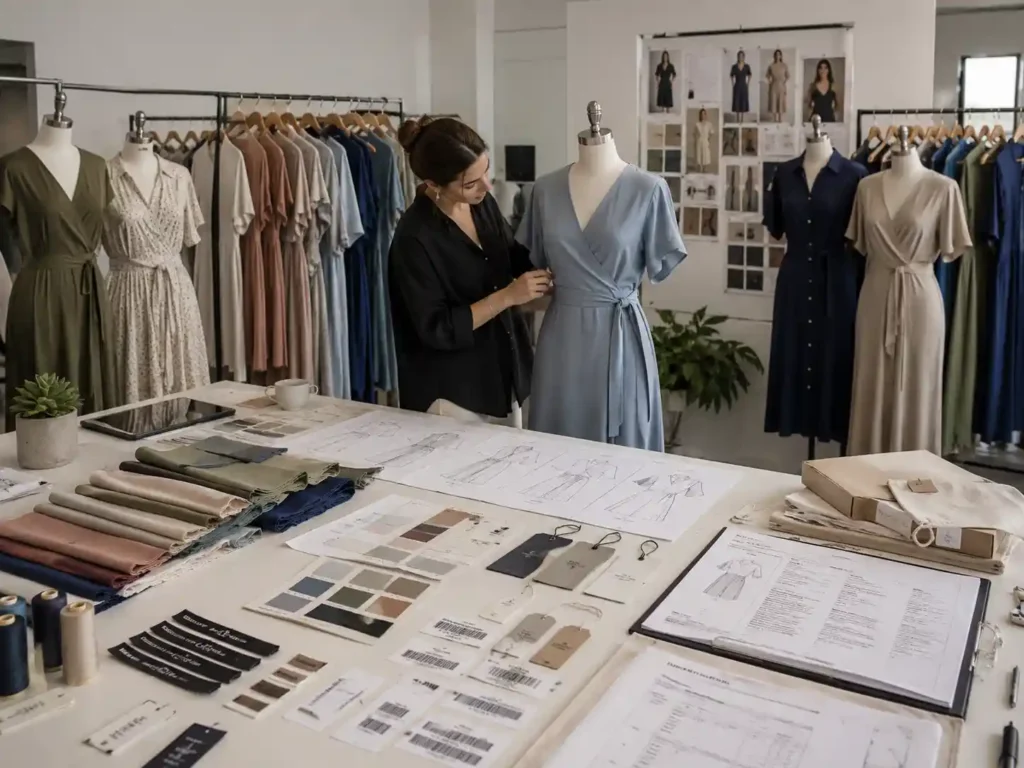
Supports development from tech packs, original samples, sketches, reference images or line sheets, followed by documented revisions.

Private Label Lines

Coordinates woven labels, care labels, size labels, hangtags, barcodes, polybags, carton marks and retail-ready packing details.

Why Rayon Dress Projects Commonly Fail

Rayon offers softness and movement, yet poor material control can turn an attractive sample into unstable bulk production. Early risk review protects fit, appearance and return rates.

Uncontrolled Shrinkage

A fabric may look correct before washing but shorten, narrow or distort afterward. Skirt length, bust width, waist position and hem balance can all move outside the approved specification.

Wrong Drape

Two rayon fabrics with the same fiber content can create very different silhouettes. Weight, weave, finish and surface softness determine whether a design hangs cleanly or collapses.

Print Misalignment

Directional florals, borders and placement motifs require cutting rules. Incorrect orientation creates mismatched panels, uneven fronts and inconsistent visual balance across sizes.

Visible Transparency

Light colors and low-weight constructions may become transparent under daylight, studio lighting or movement. Lining length and color need sample-stage confirmation.

Wavy Seams

Soft woven fabric can shift or stretch during cutting and sewing. Uncontrolled feed, pressing or seam handling can produce rippling, puckering and uneven hems.

Packing Creases

Rayon may arrive with strong fold lines when garment dimensions, pressing, folding pressure and carton loading are not planned around fabric behavior.

From Fabric Direction to Export Delivery

A controlled rayon dress program moves through defined approval points. Each stage produces information required by the next team, reducing interpretation gaps between development and production.

Project Review

Style, quantity, target market, launch date and reference materials are reviewed before fabric or sample commitments are made.

Fabric Direction

Rayon type, weight, weave, color, print, transparency, shrinkage and supplier minimums are assessed against the design.

Pattern Development

The pattern team translates visual proportions and measurements into a production-ready structure.

First Sample

The first garment validates silhouette, drape, construction, sewing feasibility, lining and expected cost direction.

Fit Revision

Comments, measurements and photographs are converted into pattern, construction and specification updates.

PP Approval

Fabric, color, measurements, trims, labels, workmanship and packing are locked before bulk starts.

Bulk Production

Material receiving, relaxation, cutting, sewing, pressing and finishing follow the approved production file.

Quality Control

Rayon-specific checks cover shrinkage risk, print orientation, shade, dimensions, seams, hem balance and packing.

Packing and Delivery

Private-label components, SKU details, carton marks, shipment documents and delivery arrangements are checked against confirmed instructions.

Start with a Focused Project Review

Useful feedback depends on useful input. A structured project review clarifies fabric feasibility, sample workload, MOQ boundaries and likely production risks before formal development begins.

Send Product Information

Provide a tech pack, line sheet, original garment, sketch or clear front-and-back references. Include target quantity, color plan, size range, desired fabric, target market, private-label requirements and launch date.
  • Reference image or technical file
  • Quantity by style and color
  • Size chart or target size range
  • Fabric and print preference
  • Label and packaging requirements
  • Required delivery window

Receive a Feasibility Review

Jinfeng Apparel reviews construction complexity, rayon or viscose suitability, lining needs, print direction, sample approach, fabric minimums and major cost drivers. Formal quotation follows once material and construction assumptions are sufficiently clear.
  • Fabric direction and alternatives
  • Potential shrinkage or transparency risks
  • Sample type and revision path
  • MOQ and supplier minimums
  • Key QC points
  • Information still required
CTA Buttons: Send Project Files | Ask Kelly

Rayon Dress Styles We Manufacture

Rayon and viscose are most effective when the silhouette uses softness, movement and surface flow. Each style below requires a different balance of pattern control, lining, seam stability and fabric weight.

Rayon Mini Dress

Short lengths demand stable hem balance, controlled transparency and secure neckline or strap construction. Light fabrics often need lining or double-layer coverage.

Rayon Midi Dress

Midi proportions depend on waist placement, skirt sweep and fabric weight. The hem should move naturally without looking heavy or uneven.

Rayon Maxi Dress

Long skirts amplify shrinkage, grain direction and packing issues. Panel balance, hem leveling and print orientation require special attention.

Rayon Wrap Dress

Wrap overlap, tie position, neckline security and movement coverage are checked through fitting rather than judged from flat measurements alone.

Rayon Shirt Dress

Collar shape, placket stability, button spacing and soft tailoring need a rayon quality with enough body to hold clean lines.

Tiered Rayon Dress

Gathering ratios, seam strength and tier lengths must remain even. Excess volume can create weight and distortion after washing.

Smocked Rayon Dress

Elastic tension, recovery, bust comfort and size grading determine whether smocking feels secure without compressing or stretching out.

Resort Rayon Dress

Printed, relaxed and travel-oriented styles need coordinated control of drape, opacity, colorfastness, wrinkle behavior and packing presentation.

Lengths and Silhouettes for Rayon Collections

Style selection should connect commercial use with fabric behavior. The matrix below gives a development starting point; final construction still depends on weight, weave, print direction, lining and target fit.

Style DirectionRecommended Rayon FormKey Development ControlCommon Risk
Mini / ShortChallis, light crepe, rayon blendOpacity, neckline security, hem balanceTransparency and hem flipping
Midi A-lineViscose crepe, challis, twillWaist position, skirt sweep, side seam balanceUneven drape or length loss
MaxiSoft viscose, printed rayon, medium crepeGrain direction, panel length, packing methodShrinkage and wavy hem
WrapFluid viscose or rayon crepeOverlap, tie placement, movement coverageOpening at bust or thigh
Shirt DressRayon twill, viscose blend, soft wovenCollar, placket, button spacingPlacket distortion
Tiered / RuffleRayon challis, printed viscoseGather ratio, seam support, tier measurementExcess weight and uneven gathering
SmockedRayon or rayon-spandexElastic tension, recovery, gradingOverstretch or inconsistent fit
Slip / Bias LookViscose satin or fluid crepeDrape, neckline, strap and seam handlingTwisting and seam rippling

Rayon Dresses for Commercial Selling Scenarios

Fabric, fit and visual details should reflect where the garment will be worn and how it will be sold. Scenario-led development improves product coherence and reduces late design changes.

Resort Collections

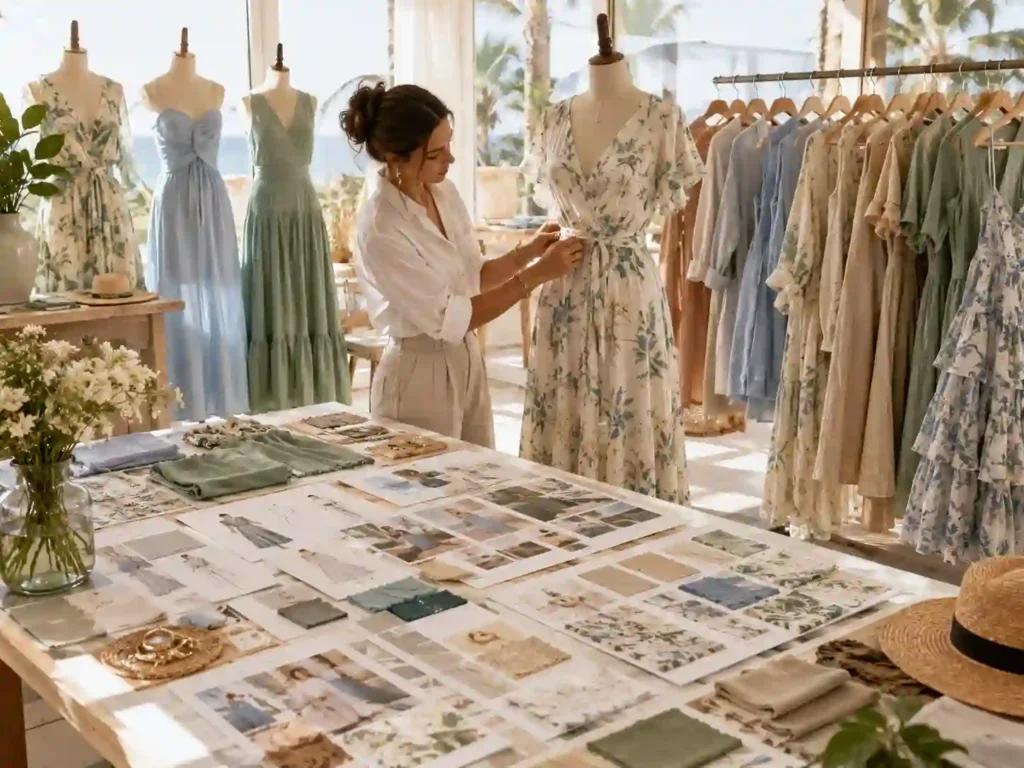
Fluid maxi and midi silhouettes, botanical prints, airy sleeves and travel-aware packing suit resort launches. Transparency and wrinkle recovery deserve early review.

Vacation Drops

Bright prints, relaxed shapes and lightweight hand feel support vacation assortments. Wash-care clarity and colorfastness help protect repeat wear.

Summer Dresses

Breathable hand feel, comfortable lining and non-restrictive fit matter for warm-weather use. Low weights still need adequate coverage.

Brunch Styles

Wrap, floral midi and softly structured dresses require polished fit without heavy construction. Waist position and neckline control are important.

Casual Ecommerce

Photo-ready drape, consistent length, clear size ratios and individual packing support online presentation and warehouse handling.

Beach to Dinner

Versatile silhouettes need comfortable movement, sufficient coverage and a finish level that works beyond beachwear. Prints and accessories should not look overly casual.

Rayon and Viscose Fabric Options

The most suitable material depends on garment shape, target hand feel, print method, required coverage and wash expectations. The figures below are normal development ranges, not fixed standards for every mill.

Fabric OptionCommon WeightBest UseMain Control PointsRisk Level
Rayon Challis100-150 gsmFloral dresses, tiered dresses, vacation stylesShrinkage, print clarity, seam stability, liningMedium-High
Rayon Voile70-120 gsmLayered summer dresses, sleeves, overlaysTransparency, tearing, lining, seam strengthHigh
Viscose Crepe120-200 gsmMidi, wrap, day-to-evening dressesDrape, surface consistency, shrinkage, pressingMedium
Rayon Twill150-220 gsmShirt dresses, soft tailoring, structured casual stylesWeight, collar support, color consistencyMedium
Rayon Jersey160-240 gsmSoft fitted dresses, casual knit stylesStretch, recovery, twisting, growthMedium-High
Rayon-Spandex180-260 gsmSmocked, fitted or comfort-led dressesStretch direction, recovery, measurement toleranceMedium-High
Rayon-Linen Blend130-220 gsmResort, brunch and natural-texture collectionsWrinkle, shrinkage, shade and hand-feel variationMedium-High
Rayon-Cotton Blend120-200 gsmCasual dresses and printed daywearShrinkage, softness, print absorption and colorfastnessMedium


Choosing Drape, Weight and Hand Feel

A successful rayon dress begins with fabric behavior that supports the silhouette. Selection should be made on full garment performance, not a composition name or attractive swatch alone.

Drape Must Match the Pattern Architecture

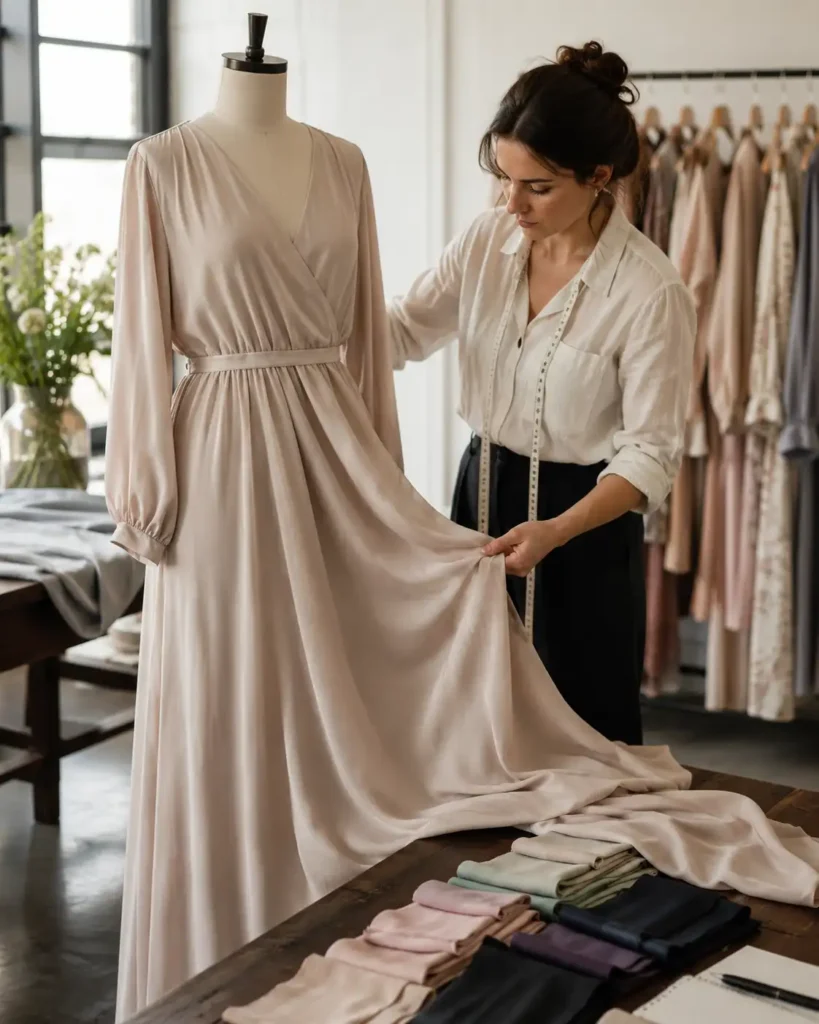
Drape controls how rayon falls from the bust, waist, hip and gathered seams. A highly fluid fabric can create elegant movement in a maxi or wrap dress, yet the same quality may collapse at a shirt collar, twist at an asymmetric seam or reveal every construction line. During material review, the development team checks where the pattern needs support and where softness adds value. Bias-looking shapes, long skirts and wide hems require close attention to grain direction and hanging behavior. Samples are rested before final hem review because soft fabric can drop unevenly after cutting and sewing. A heavier viscose may improve opacity and hang, but it also increases tier weight and seam load. The correct choice balances visual flow with pattern stability.

  • Review movement on a full garment
  • Compare warp and weft behavior
  • Check hem drop after resting
  • Assess gathered seam load
  • Confirm opacity under light

Weight and Finish Change Commercial Perception

A light rayon can feel airy and accessible, while a medium viscose crepe often appears more polished and less transparent. Weight also changes fabric consumption, shipping volume, lining need and retail season. Surface finish influences softness, shine, pilling risk and print appearance. Jinfeng Apparel compares options by weight, width, hand feel, texture, transparency, wash response and expected price level. When a nominated material is unavailable or exceeds the planned minimum, alternatives are presented as comparable directions rather than exact matches. Swatches and sample garments are used to confirm whether the substitution keeps the desired movement and visual level. A lower-cost fabric that changes the silhouette is not treated as a genuine saving.

Custom Prints and Color Development​

Rayon and viscose accept strong floral, geometric and resort print directions, but print development must connect artwork, fabric construction, cutting rules and bulk shade control.

Artwork Scale, Repeat and Placement

A print should be reviewed at garment scale rather than only on screen. Small florals may read differently across mini and maxi lengths, while large motifs can land awkwardly at bust seams, waist joins or center fronts. The print repeat, usable fabric width and panel layout affect consumption and cost. Directional designs require a one-way cutting plan, increasing material usage compared with non-directional prints. Border prints and engineered placement designs need exact pattern alignment before bulk fabric is ordered. Jinfeng Apparel reviews artwork dimensions, repeat structure, color count, intended orientation and critical placement areas, then connects the approved print to the cutting file and sample record.

  • Confirm artwork scale in centimeters
  • Define one-way or two-way direction
  • Identify critical motif positions
  • Check repeat against fabric width
  • Allow consumption for matching or placement

Color Approval and Bulk Print Control

Screen color is not a fabric approval standard. Ground color, ink absorption, fabric finish and production batch can alter the printed result.

A strike-off, lab dip or printed sample should be reviewed according to the print route. Approval needs a physical reference, color comments and tolerance expectations. Bulk fabric receiving checks compare shade, print clarity, registration, color balance and repeat consistency. Panels should not be mixed across noticeably different shade groups.

Dark grounds and high-contrast prints also need rubbing, washing or perspiration tests when relevant to use and destination requirements.

Custom print minimums, development lead time and color quantity depend on the selected mill and process, so planning begins before the sample calendar is locked.

Transparency and Lining Decisions

Opacity should be evaluated under wear conditions, not only on a cutting table. Light colors, thin fabrics and strong studio lighting can expose more than expected.

Light Color Coverage

White, ivory, pale pink, yellow and light printed grounds often require lining even when the base fabric appears acceptable indoors. The team checks front, back and side views under daylight and strong light.

Lining Length Balance

Lining must protect coverage without appearing below the outer hem, interfering with a slit or changing the skirt movement. Maxi and high-slit styles require measured relationships between shell, lining and opening position.

Comfort and Static

Lining fiber, stretch, softness and surface friction affect comfort. A mismatched lining can cling, restrict movement or make the outer layer ride upward. Sample fitting confirms the final combination.

Wrinkle Behavior and Travel-Ready Packing

Wrinkles cannot be removed from rayon as a product reality, but fabric selection, finishing, pressing and packing can prevent avoidable presentation problems.

Define the Acceptable Surface Before Approval

Some resort and natural-look ranges accept a relaxed surface, while polished ecommerce collections require a cleaner appearance. The fabric should be reviewed after handling, sitting, folding and steaming so the approved standard reflects real use. A finish that feels exceptionally soft may wrinkle more easily than a slightly firmer alternative. Jinfeng Apparel compares appearance after sample making and identifies areas where seams, waist ties, plackets or gathered sections may trap creases. Pressing temperature and pressure are selected carefully because excessive heat can create shine, distortion or flattened texture.

  • Agree the intended surface character
  • Check recovery after steaming
  • Review high-crease areas
  • Control pressing temperature
  • Use an approved garment reference

Pack Around Garment Length and Fabric Recovery

Long rayon dresses should not be forced into overly small polybags. Fold lines, strap tangling and concentrated carton pressure can damage arrival presentation. Packing trials consider garment length, lining, sleeves, embellishment, belt or tie placement and polybag size. Tissue, card support or hanger packing may be considered when presentation requirements justify the added cost and volume. Carton quantity must balance freight efficiency with garment pressure. For phased shipments, the same folding method, label position and carton breakdown are recorded so later batches remain consistent. Warehouse and retail requirements should be submitted before packing materials are ordered.
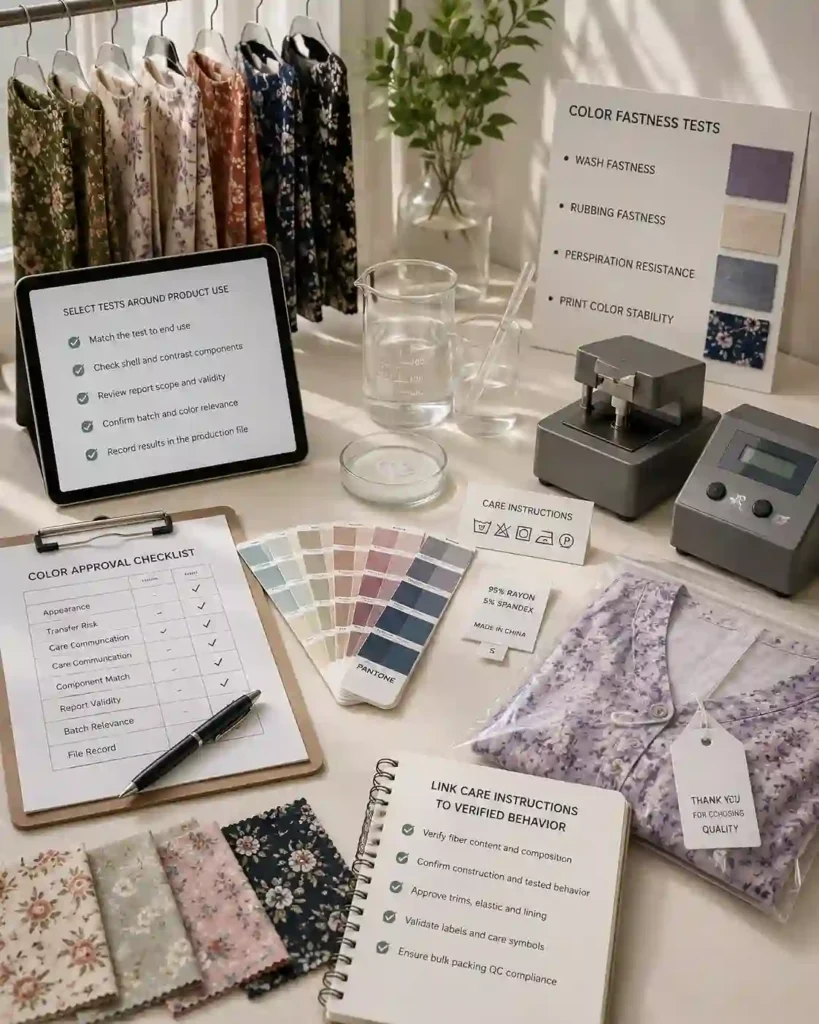
Color Fastness and Wash-Care Validation

Dark grounds, saturated prints and contrast combinations need project-specific testing. Color approval should cover appearance, transfer risk and care communication.

Select Tests Around Product Use

Relevant checks may include washing fastness, dry and wet rubbing, perspiration resistance and print color stability. The need depends on color depth, print route, fabric finish, skin contact and market requirements. A dark navy rayon wrap dress has different transfer risk from a pale floral maxi. Contrast lining, labels, trims and light-color accessories can reveal staining that is not visible on the shell alone. Jinfeng Apparel coordinates testing or third-party support by project and reviews available reports against the exact supplier, fabric, color and batch. A certificate from a different quality or outdated scope is not treated as automatic coverage.

  • Match the test to end use
  • Check shell and contrast components
  • Review report scope and validity
  • Confirm batch and color relevance
  • Record results in the production file

Link Care Instructions to Verified Behavior

Care wording should reflect fabric composition, construction and tested behavior. Delicate trims, elastic smocking, lining and print can change the safest care route. Labels may include fiber content, care symbols or text, size, country of origin and other brand-required information. Jinfeng Apparel can produce care labels from approved artwork and content, but final wording should be confirmed by the brand or its compliance adviser for the destination market. Bulk packing QC checks label content, position and attachment against the approved file. Incorrect care communication can create avoidable complaints even when manufacturing quality is acceptable.

Traceable and Lower-Impact Viscose Options

Material claims require supplier, batch and certificate verification. Jinfeng Apparel can source project-specific options and provide available documentation for review before order confirmation.

Supplier Verification

Traceable viscose, branded cellulosic fibers, recycled blends or other lower-impact directions are reviewed according to the nominated supplier, composition, color availability, minimum quantity, lead time and current documentation.

Certificate Scope

Documentation should match the material, supplier, certificate holder, product scope and validity period. A general logo or old certificate is not enough for a new color or batch.

Commercial Planning

Special material programs may increase fabric minimums, sampling time and cost. Early planning helps preserve the launch calendar and prevents late substitution after design approval.

From Design Reference to Production Feasibility

Development can begin from several input formats. The review method changes according to how much construction, measurement and material information is already available.

Tech Pack Development

A technical package provides measurements, construction, artwork, trims and labeling direction. The team checks missing details, conflicts, material feasibility and production risk before pattern work begins.

Reference Image Development

Images reveal visual direction but not hidden construction, exact dimensions or fabric properties. Jinfeng Apparel proposes assumptions and requests confirmation before formal sampling.

Original Sample Review

A physical garment allows measurement, construction and sewing review. Protected or branded elements are handled under confidentiality, and requested changes are documented rather than copied blindly.

Construction Details That Shape the Final Dress

Small construction decisions determine whether a rayon dress looks fluid and refined or unstable and inexpensive. Each detail must connect design intent with bulk repeatability.

Smocking

Elastic thread tension, row spacing, recovery and panel measurement are checked so the bodice remains secure and comfortable across the size range.

Gathering

Gather ratio, distribution marks and seam support keep fullness even. Heavy gathering on soft rayon can distort waist seams or add unnecessary bulk.

Ruffles

Ruffle width, edge finish, grain direction and attachment tension affect movement. Uneven feeding can create twisting or inconsistent volume.

Tiered Seams

Tier lengths, panel circumference and joining notches maintain balance. Seam load increases toward the upper body and must be considered during construction.

Slits

Opening height, reinforcement, lining relationship and movement coverage are confirmed through fitting, especially on midi and maxi lengths.

Wrap Closures

Inside ties, outer ties, snaps or hooks may be used according to design. Overlap and attachment strength are checked for movement security.

Trims, Closures and Supporting Components

Rayon may feel soft, but the finished garment still depends on stable closures, comfortable components and accurate private-label placement.

Invisible Zippers

Tape weight, color, seam allowance and pressing affect zipper flatness. Soft fabric may need controlled support to prevent bulging.

Buttons and Loops

Button size, spacing, loop length and reinforcement are reviewed against placket stability and opening requirements.

Waist Ties

Tie length, width, grain direction and attachment point influence drape, knot volume and packing.

Elastic Components

Width, tension, recovery and seam joining are matched to smocking, waist channels, sleeve openings or back panels.

Strap Hardware

Sliders and rings require the correct size, finish and load capacity. Strap length ranges are checked during fitting.

Linings and Labels

Lining behavior, care-label comfort, woven-label position and size-label accuracy are reviewed as part of the garment, not after production.

Rayon Dress Sampling Workflow

Sampling is a sequence of decisions, not a single garment. Each sample type answers a different question and moves the style toward a controlled bulk standard.

Project Assessment

Reference files, fabric direction, target quantity, size range, labels and launch timing are checked before sample planning.

First Sample

Validates silhouette, construction, fabric behavior, lining, trims and initial cost assumptions. It is not automatically the bulk standard.

Fit Sample

Focuses on measurements, proportion, movement, neckline security, waist placement, skirt balance and size-chart alignment.

Revised Sample

Confirms documented changes to pattern, fabric, construction, trims or details after review.

Photo Sample

Prepared for campaign or ecommerce use when requested. Appearance requirements may differ from final PP confirmation.

PP Sample

Locks approved fabric, color, measurements, workmanship, labels and packing before bulk production.

Sample Revisions and PP Sample Lock

The strongest sample process turns comments into controlled production information. Every approved change must reach the pattern, specification, material record and QC checklist.

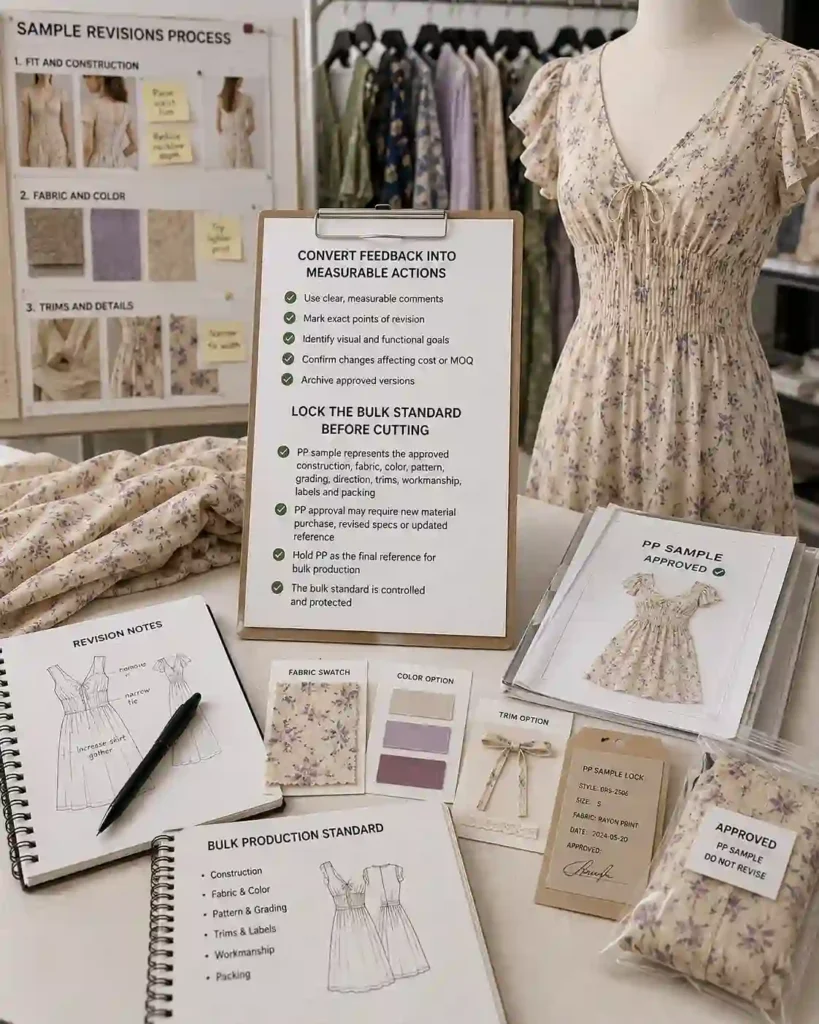
Convert Feedback into Measurable Actions

Fit comments may come through a marked sample, measurement sheet, fitting photographs, video call or written notes. The development team classifies each point as pattern, measurement, fabric, construction, trim, color, print, lining or packing. A request to lower a neckline, move a waist seam or add skirt volume can affect several measurements and consumption. Comments are reviewed for conflicts before a new sample is made. Updated pattern files, measurement charts and construction notes replace earlier versions so the production team does not work from mixed instructions. Sample fees are charged separately because pattern work, material preparation, sewing, checking and revision require dedicated resources.

  • Use one consolidated comment file
  • Mark exact points of measure
  • Identify visual and functional goals
  • Confirm changes affecting cost or MOQ
  • Archive superseded versions

Lock the Bulk Standard Before Cutting

The PP sample represents the approved combination of fabric, color, pattern, grading direction, trims, workmanship, labels and packing. Bulk production should not begin without approval of the required files and components. Late changes after PP approval may require new material, pattern updates, revised costing or schedule changes. A golden sample or sealed reference can be retained for production and inspection. Jinfeng Apparel transfers the final pattern, size chart, grade rule, fabric reference, trim card, sewing instruction, print direction, label placement, packing method and QC points into the bulk file. The goal is not an unrealistic claim of perfect identity; the goal is controlled production within approved tolerances and appearance standards.

MOQ, Pricing and Cost Drivers

A reliable quotation is built from the actual garment, material route and order structure. One headline price cannot represent every rayon dress.

MOQ Is Calculated by Style and Color

Jinfeng Apparel’s MOQ starts from 200 pcs per style/color. Two hundred pieces divided across several styles does not meet the standard minimum. A style in two colors normally requires 200 pieces per color, while sizes can be distributed within the confirmed color quantity according to an approved ratio. Custom-dyed, custom-printed, certified or specially finished fabric may carry a higher mill minimum. Woven labels, hangtags, printed polybags and special boxes can also have separate supplier requirements. For multi-style collections, line sheets are reviewed by fabric group, color group, construction and launch priority to create a workable order plan.

Price Reflects Material, Labor and Control

Quotation components include fabric cost, fabric width and consumption, lining, trims, print or dyeing, pattern work, sample development, cutting, sewing time, pressing, wastage, QC, packing, testing or documentation and logistics terms. A wide maxi skirt consumes more fabric than a fitted mini. One-way prints, border placement and motif matching increase consumption. Smocking, ruffles, tier seams, buttons, lining and special finishing increase sewing time. Cost optimization may involve a different rayon quality, simplified construction, alternative trim, improved marker layout, fewer opening colors, a cleaner size ratio or split shipment. Any change should preserve the intended brand-level appearance and fit rather than reduce cost at the expense of the product.

Rayon Dress Bulk Production Process

Bulk production follows the approved PP standard and production file. Rayon requires controlled material handling from receiving through packing.

Bulk Fabric Approval

Approved quality, color, print, composition and supplier references are confirmed before purchasing or release.

Incoming Inspection

Fabric is checked for shade, print clarity, width, visible faults and consistency against approved references.

Fabric Relaxation

Rolled material is allowed to release tension as required before cutting, reducing dimensional distortion.

Marker and Cutting

Grain direction, one-way print, motif placement, panel length and size ratio are built into the cutting plan.

Cut-Part Control

Bundles, shade groups, size identification and critical placement points are checked before sewing.

Sewing and Inline QC

Seam stability, gathering, zipper flatness, lining, measurements and workmanship are reviewed during production.

Pressing and Finishing

Temperature, pressure, thread cleaning, shape and wrinkle presentation are controlled according to fabric behavior.

Final Inspection

Appearance, measurements, labels, print direction, hem balance and packing details are checked against the order file.

Packing and Shipment

SKU, size, barcode, polybag, carton ratio, marks and shipping documents are verified before release.

Cutting and Sewing Lightweight Rayon Fabrics

Soft woven rayon moves easily during production. Clean bulk results depend on grain control, stable handling, suitable seam methods and patient finishing.

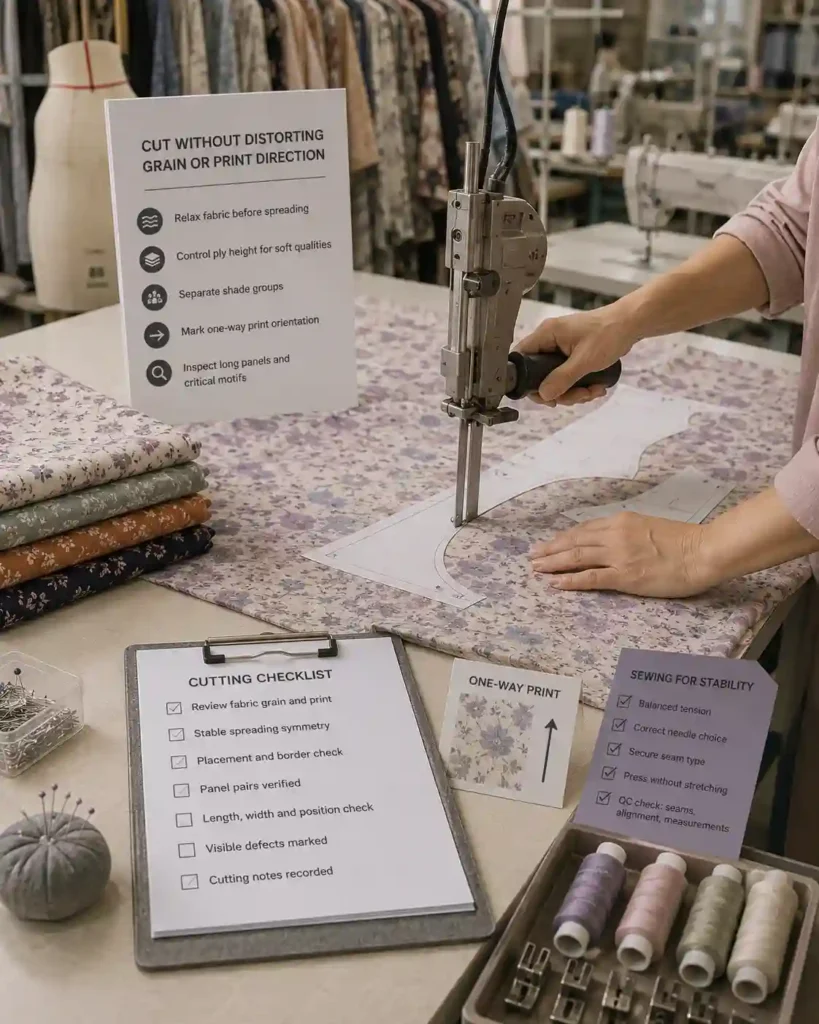
Cut Without Distorting Grain or Print Direction

Fabric is reviewed for bowing, skew, shade and print direction before marker approval. One-way prints require every panel to face the approved orientation. Long maxi panels and bias-looking designs can shift when stacked too high or handled under tension. Relaxation, controlled spreading and accurate bundling help preserve size and symmetry. Shade groups should remain separated when visible variation exists. Placement motifs, borders and center-front designs require pattern-specific marks rather than operator judgment. Cut-part checks verify notches, panel pairs, length, print position and visible defects before sewing begins. A cutting error on fluid rayon is difficult to correct later because seams and pressing cannot restore the original grain.

  • Relax fabric before spreading when required
  • Control ply height for soft qualities
  • Separate shade groups
  • Mark one-way print orientation
  • Inspect long panels and critical motifs

Sew for Stability Without Making the Dress Rigid

Seam type, needle choice, thread, feed and pressing are selected around fabric weight and construction. Excess tension can pucker a seam; insufficient support can allow stretching, zipper bulging or opening at stress points. Curved necklines, wrap edges, armholes and bias sections may need stabilization that remains invisible in the finished garment. Gathered seams require even distribution and secure joining. Long hems are allowed to settle before leveling, especially where several panels meet. Pressing should shape the garment without flattening crepe texture or creating shine. Inline QC checks seam appearance, stitch security, alignment, measurements and component placement while correction is still efficient.

Rayon-Specific Quality Control

Quality standards must reflect the fabric and silhouette. Rayon dress inspection focuses on dimensions, visual flow, print, seams, lining and arrival presentation.

Fabric Shade

Panels are checked for visible shade variation and kept within approved grouping.

Print Direction

Fronts, backs, sleeves, ties and tiers follow approved orientation and placement rules.

Measurements

Critical points include bust, waist, hip, length, strap, sleeve, slit and tier dimensions.

Seam Stability

Puckering, slippage, skipped stitches, distortion and stress-point reinforcement are reviewed.

Lining Coverage

Opacity, lining length, slit relationship, comfort and static behavior are checked on the finished garment.

Hem Balance

Long and circular hems are reviewed for leveling, twisting and uneven panel drop.

Pressing Finish

Shine, flattened texture, hard crease lines and distortion are avoided through fabric-aware pressing.

Packing Accuracy

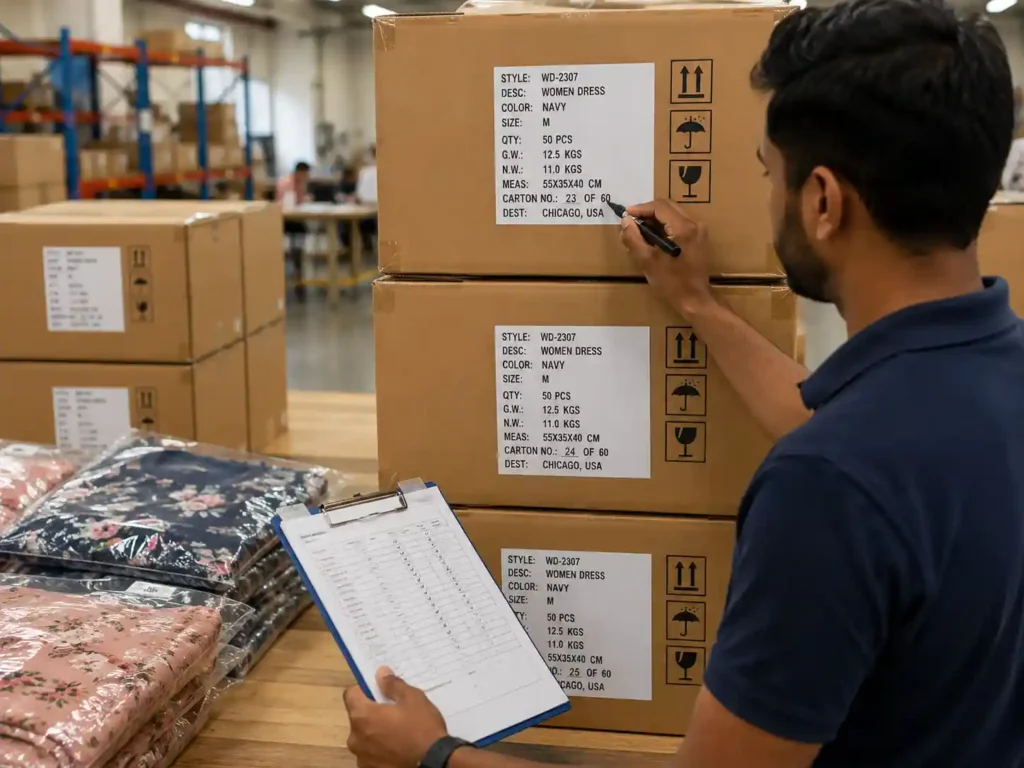
Labels, barcodes, size stickers, folding, polybag and carton breakdown are verified before shipment.

Capacity, Multi-Style Scheduling and Delivery

Capacity alone does not protect a launch. Multi-style programs need allocation by fabric, construction, complexity, sample status and material readiness.

Production Allocation

Six owned factories and 10+ long-term satellite partners allow woven dresses, complex occasionwear and flexible fashion programs to be matched with suitable production units. Rayon and viscose woven dresses are primarily allocated according to silhouette, print, construction and order timing.

Parallel Style Management

Six-plus flexible production lines support multi-style work, while 12+ merchandisers coordinate material, sample, approval, production and packing information. Styles do not move at the same speed; long-lead prints and complex constructions are flagged early.

Milestone Scheduling

Lead time is confirmed by project after reviewing fabric readiness, print development, sample approvals, quantity, packing and production load. A working calendar normally covers material confirmation, sample review, PP lock, bulk start, inline QC, final inspection and shipment preparation.

Phased Delivery

Large programs may use approved multi-batch or split-shipment arrangements when launch priorities, warehouse needs or material readiness justify the plan. Each batch follows the same production and packing records.

Repeat Orders

Pattern files, measurements, fabric references, trims, workmanship notes, QC records and packing instructions are kept to reduce redevelopment and protect consistency.

Progress Communication

Status updates focus on meaningful milestones, approvals, risks and actions rather than generic messages. Early escalation gives sourcing teams time to decide.

Private Label Packaging for Rayon Dresses
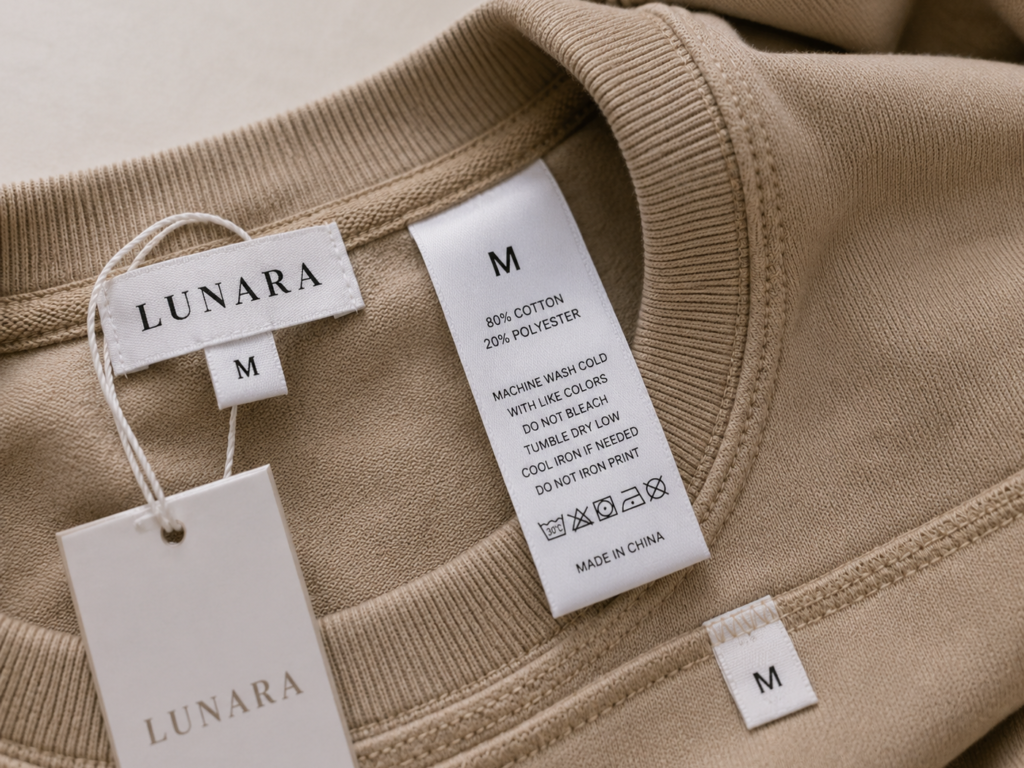
Packaging protects product presentation and supports warehouse accuracy. Rayon requires particular attention to fold pressure, garment length and wrinkle recovery. CTA Buttons: Review Packaging | Send Label Files

Woven Labels

Material, fold type, size, color, edge comfort and placement are checked against approved artwork.

Care Labels

Composition, care, size, origin and other approved information are produced from confirmed brand files.

Hangtags

Tag size, string, attachment position, barcode and price-field requirements are coordinated before bulk packing.
5.-Barcode-SKU-Sticker

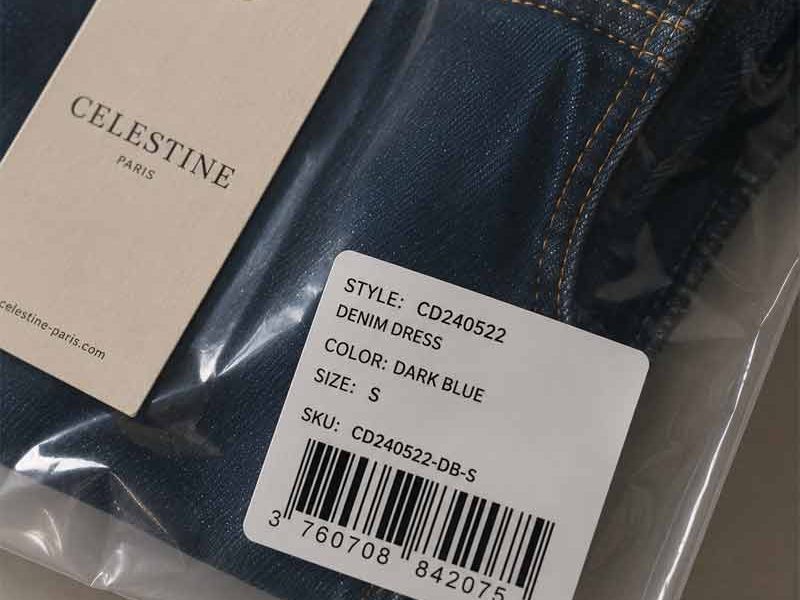
Barcode and SKU

Style, color, size and barcode data are matched across garment labels, polybag stickers and carton breakdown.

Polybags and Folding

Bag dimensions and folding method are selected to reduce hard creases, strap tangling and excessive compression.

Carton Marks

Carton quantity, ratio, dimensions, shipping marks and warehouse instructions are verified against the packing list.

Compliance, Labeling and Design Protection

International programs require accurate documents, approved labeling and controlled access to unreleased designs. Support is provided according to the actual factory, supplier and material scope.

Fiber and Care Labels

Jinfeng Apparel can produce labels containing approved fiber composition, care instructions, size, country of origin, RN or importer details and batch references. Final content should be confirmed by the brand or its compliance adviser for the destination market.

Project Documents

Available material certificates, supplier reports, testing support and audit-related documents are reviewed by project. Validity, scope, color, batch, factory and MOQ must be confirmed before claims are made.

NDA and IP Protection

Tech packs, original samples, patterns, labels, packaging, pricing, order information and unpublished designs are protected through NDA-based cooperation and controlled internal communication.

Why Fashion Brands Choose Jinfeng Apparel

The value lies in turning a soft, risk-sensitive material into a repeatable commercial dress program, not simply confirming that rayon can be sewn.

Dress Specialization

Development centers on women’s dresses, skirts, jumpsuits, matching sets and related fashion collections rather than a generic apparel mix.

Fabric Judgment

Rayon quality is reviewed through weight, drape, transparency, shrinkage, wrinkle, print and wash-care considerations.

Pattern Correction

Fit feedback is converted into final patterns, measurements, grade rules and PP standards before bulk production.

Sample-to-Bulk Control

Approved fabric, trims, workmanship, labels and packing are transferred through a documented production file.

Multi-Style Management

10-30 style programs can be grouped by fabric, print, complexity, launch priority and production status.

Private Label Delivery

Branding, SKU identification, individual packing, carton marks, inspection support and export coordination are managed as one workflow.

Rayon and Viscose Dress Project Cases

The following anonymized programs show how rayon, viscose and printed woven dresses are managed across style count, order scale, quality risk and delivery planning. Brand identities and unreleased files remain protected.

European Resortwear Collection

Market: Europe. Program: 15 styles and approximately 32,000 pieces across chiffon, rayon and printed maxi dresses. The main risks were light-color transparency, print direction, rayon shrinkage, long hem balance and packing creases. Jinfeng Apparel grouped styles by fabric and print, confirmed lining length through samples, reviewed shrinkage before PP approval and used one-way cutting instructions for directional artwork. Long garments received a dedicated fold and polybag review. Production followed fabric receiving, relaxation, cutting, inline checks, finished measurements and phased packing. The range moved into bulk with approved material and pattern records retained for later print extensions.

US Private Label Program

Market: United States. Program: 18 styles and approximately 48,000 pieces, including rayon midi dresses, wrap dresses, casual woven styles and matching private-label packaging. Coordination covered multi-size ratios, woven labels, care labels, hangtags, barcode stickers, polybags, carton marks and client inspection support. The main challenge was keeping SKU information aligned across numerous style-color-size combinations. A master order file connected garment specifications, label artwork, barcode data and packing ratios. Production and packing checkpoints were separated, and phased shipment planning supported the client’s launch calendar.

Australian Vacation Drop

Market: Australia. Program: 12 styles and approximately 26,000 pieces across floral viscose, rayon-linen blends and relaxed vacation silhouettes. Fabric character varied between soft printed viscose and natural-texture blends, creating different shrinkage, wrinkle and pressing requirements. Jinfeng Apparel used separate material approval and care-label review for each fabric group, adjusted patterns where drape changed and verified slit, overlap and lining coverage through fitting. Color and print approvals were recorded before bulk purchasing. Repeat-order records preserved patterns, measurements, fabric references and packaging details for a later seasonal extension.

Rayon Dress Manufacturing Frequently Asked Questions

Viscose is commonly used as a rayon fiber description, but fabric performance depends on weave, weight, finish and blend. Supplier composition and technical information should be confirmed for labeling and production.
MOQ starts from 200 pcs per style/color. Sizes may be distributed within the confirmed quantity. Custom print, dyeing, certified materials, trims and packaging may carry separate minimums.
Yes. Artwork scale, repeat, color, direction, fabric width, placement and print route are reviewed before strike-off or sample approval. Mill minimums and lead time are confirmed by project.
Fabric relaxation, pre-production testing, wash-change review, pattern decisions, measurement tolerances and care-label instructions are connected before PP approval and bulk cutting.
Many light colors or low-weight fabrics require full, partial or double-layer coverage. Opacity is checked under strong light and movement during sampling.
Sampling time is confirmed after reviewing construction, fabric availability, print development and trims. First, revised, photo and PP samples have different purposes and schedules.
Yes. Bulk orders can include multiple sizes according to the approved size chart and size ratio. Measurement points and grade rules are carried into QC.
Yes. Woven labels, size labels, care labels, hangtags, barcodes, polybags and cartons can be arranged, subject to approved files and supplier minimums.
Project-specific options can be reviewed according to supplier, composition, color, certificate scope, validity, MOQ and lead time. Availability is not universal across every fabric or color.
Send a tech pack or reference, target quantity by style/color, size range, fabric preference, color or print plan, label and packaging needs, target market and delivery window.

Start Your Rayon Dress Collection

Send Jinfeng Apparel the information already available for your rayon or viscose dress program. A complete tech pack is helpful, but a clear line sheet, original sample or detailed reference can also begin the review. Kelly and the development team will assess fabric direction, print requirements, lining, pattern complexity, size range, MOQ, sample needs, private-label details and production timing before a formal quotation is prepared.
For faster evaluation, include the planned quantity for every style and color, intended launch market, target delivery window and any required material or testing documents. Files can include PDF tech packs, AI or vector artwork, measurement charts, print files, label layouts, packing instructions and reference photographs.

  • Tech pack, line sheet, original sample or clear reference images
  • Target quantity by style and color
  • Fabric composition, weight or hand-feel preference
  • Print artwork, color standards or lab-dip requirements
  • Size chart and planned size ratio
  • Woven label, care label, hangtag and packing requirements
  • Destination market and target delivery window

Tell Us About Your Dress Project

Share your product details, estimated quantity and development requirements. Our team will review your project and provide practical OEM/ODM production feedback.

Premium Women’s Apparel Production for Fashion Brands

From dress sample development to bulk production, JF Apparel supports fashion brands with confidential OEM/ODM manufacturing, reliable quality control and scalable production support.

START YOUR DRESS PROJECT

Ready to Develop Your Next Dress Collection?

Share your design concept, product requirements or sourcing plans with our team. We’ll review your project and provide practical feedback on development, materials, MOQ and production.

7-10 Days

Sample Development

200 PCS

Starting MOQ

Fast Response

Professional Follow-Up