 Skip to content
Linen Dress Manufacturer
Custom linen and linen-blend dress development for global fashion brands, seasonal collections, private labels and multi-style production programs.
Jinfeng Apparel develops linen dresses from fabric direction and pattern engineering through sampling, PP approval, bulk production, quality control and retail-ready packing. Linen programs receive fabric-specific control over shrinkage, transparency, wrinkle behavior, dye-lot variation, seam stability and wash response before approved standards move into production.
- MOQ starts from 200 pcs per style/color, subject to fabric, trim, dyeing and packaging requirements.
- 2 sample rooms, 7+ senior pattern makers and 20+ sample machinists support first samples, revised samples, PP samples and Golden Samples.
- Multi-style programs commonly cover 10-30 styles and 20,000-80,000 garments across one brand order cycle.
- 6 owned women’s fashion factories and 10+ long-term production partners support woven dress allocation, repeat orders and multi-batch delivery.
Manufacturing Facts for Linen Dress Programs
Since 2008
6 Owned Factories
10+ Production Partners
2 Sample Rooms
7+ Pattern Makers
15+ QC Inspectors
A Complete Linen Dress Manufacturing Workflow
OEM Development
ODM Support
Fabric Sourcing
Pattern Making
Sample Development
Bulk Production
Private Label
Quality Control
Export Delivery
Built for Structured Fashion Programs
Best Project Fit
- Seasonal linen dress collections
- Resort and vacationwear programs
- Premium ecommerce assortments
- Private-label retail collections
- Sourcing office and brand-group projects
Required Starting Inputs
- Reference image, sketch or tech pack
- Quantity per style and color
- Target size range and fit market
- Preferred composition and hand feel
- Lining, washing and packing requirements
Control Linen Risks Before They Reach Bulk
Unverified Shrinkage
Hidden Transparency
Wrong Fabric Weight
Poor Seam Stability
Dye-Lot Variation
Packing Crease Damage
Linen Dress Styles Developed for Fashion Brands

Linen Mini Dress
- Fit focus: bust, waist and hem balance
- Common options: fitted, A-line, shift
- QC focus: symmetry and length consistency

Linen Midi Dress
- Fit focus: waist position and skirt balance
- Common options: wrap, shirt, A-line
- QC focus: hem level and side seam hang

Linen Maxi Dress
- Fit focus: body length and floor clearance
- Common options: column, tiered, full sweep
- QC focus: hem balance and twist

Linen Shirt Dress
- Fit focus: shoulder and upper body ease
- Common options: belted, oversized, fitted
- QC focus: placket, collar and button alignment

Linen Wrap Dress
- Fit focus: overlap and neckline safety
- Common options: short sleeve, sleeveless, maxi
- QC focus: tie placement and front symmetry

Linen Slip Dress
- Fit focus: neckline, straps and hip ease
- Common options: straight, flared, low back
- QC focus: grain, strap length and seam smoothness

Linen Resort Dress
- Fit focus: comfort and movement
- Common options: tiered, kaftan, cut-out
- QC focus: gathers, wash effect and packing

Linen Occasion Dress
- Fit focus: shaped bodice and waist
- Common options: corset-inspired, pleated, tailored
- QC focus: structure, pressing and finish
Build Linen Collections Around Selling Seasons

Spring Collection

Summer Collection

Resort Collection

Natural Fiber Capsule

Premium Casual Range

Repeat Color Program
Linen Fabric Options Matched to Dress Structure
Composition alone does not predict performance. Two linen fabrics with the same fiber label can behave differently because of yarn size, weave, finish, weight, width and washing. Selection begins with the intended dress result.

100% Linen
- Best for: relaxed, resort and natural-fiber styles
- Watch: shrinkage, transparency and shade variation

Linen Cotton
- Best for: shirt dresses, structured casual styles
- Watch: wash shrinkage and stiffness after finishing

Linen Viscose
- Best for: draped, gathered and flowing silhouettes
- Watch: shrinkage, seam growth and pressing

Linen Rayon
- Best for: summer prints and soft dresses
- Watch: distortion and batch continuity

Linen Polyester
- Best for: travel-oriented and retail-volume styles
- Watch: hand feel and fiber-positioning claims

Stretch Linen Blend
- Best for: fitted minis and tailored silhouettes
- Watch: recovery, growth and measurement tolerance
Select Linen by Weight, Drape and Coverage
Fabric weight ranges guide early development but do not replace physical review. Weave density, finish, color and silhouette can change opacity, drape and sewing behavior even at similar weights.
| Fabric Direction | Reference Weight | Drape | Coverage Risk | Suitable Styles | Development Focus |
| Light pure linen | 110-145 gsm | Light to crisp | High in pale colors | Loose minis, beach layers | Lining, seam show, shrinkage |
| Medium pure linen | 145-190 gsm | Balanced | Medium | Midi, shirt, wrap, A-line | Ease, pockets, pressing |
| Heavy pure linen | 190-250 gsm | Structured | Low to medium | Tailored minis, pinafores | Bulk, seam thickness, heat |
| Linen-cotton | 130-210 gsm | Crisp to balanced | Medium | Shirt, casual midi, utility | Wash response, collar support |
| Linen-viscose | 120-190 gsm | Soft and fluid | Medium to high | Wrap, gathered, maxi | Growth, shrinkage, seam stability |
| Linen-polyester | 130-210 gsm | Controlled | Low to medium | Travel, retail-volume dresses | Hand feel, composition claims |
| Stretch linen blend | 160-240 gsm | Structured with give | Low to medium | Fitted mini, shaped midi | Recovery, relaxation, grading |

Fabric Sourcing Before Pattern Commitment
A linen dress can change shape, cost and production risk when fabric changes. Fabric direction should be confirmed before final pattern approval whenever possible.
Start With the Silhouette
A fitted mini, fluid wrap dress and oversized shirt dress should not begin from the same fabric assumption. Jinfeng Apparel reviews the intended body line, required ease, drape, pocket structure, closure, lining and finish before sourcing options.
Reference photos are interpreted as visual goals rather than exact material specifications. A fabric may look similar in a photograph while behaving differently in weight, stretch, wash response or opacity.
- Confirm target composition and price position
- Set preferred hand feel and wrinkle character
- Identify lining and garment-wash requirements
- Record fabric MOQ and replenishment risk
Approve Physical Standards
Fabric cards, cuttings, natural-light images, movement videos and supplier specifications can support early comparison. Final approval should record composition, weight, width, color, hand feel, drape, transparency, stretch, shrinkage expectation, MOQ and lead-time impact.
Any fabric replacement after sample review triggers a pattern and costing check. A softer fabric may need altered support, a heavier fabric may need less fullness, and a different shrinkage result may change finished measurements.
- Approved swatch becomes the material reference
- Bulk lot is checked against approved direction
- Substitutions require written confirmation
- Pattern impact is reviewed before remake or bulk
Choose Lining by Coverage, Comfort and Drape
Unlined Construction
- Best for: opaque relaxed linen
- Check: seam visibility and pocket bags
- Risk: internal finish becomes fully visible
Partial Lining
- Best for: light midi and fitted bodices
- Check: lining length and anchoring
- Risk: differential shrinkage
Full Lining
- Best for: pale occasion and tailored styles
- Check: movement, hem and static
- Risk: reduced breathability or shell distortion

Control Wrinkles Without Removing Linen Character
Natural creasing belongs to linen. Deep press marks, twisted seams, shiny iron patches and hard packing folds are production faults rather than material character.
Finishing Standard
Pressing temperature, moisture, pressure and contact surface are adjusted around fabric color and blend. Dark colors can show shine; pale colors can reveal water marks; viscose-rich blends may grow under steam. Operators need a reference garment rather than a generic press setting.
Collars, plackets, darts, waist seams, pockets, zippers and hems receive targeted review. Over-pressing can flatten natural texture, while under-pressing can leave sewing distortion unresolved.
- Approve surface appearance on PP sample
- Use protective cloth where needed
- Check seam puckering after pressing
- Avoid glossy marks on dark colors
Packing Standard
Folding should avoid heavy pressure across structured collars, shaped bust seams, wide waist ties and statement sleeves. Bag dimensions need enough space to prevent permanent compression while remaining efficient for carton planning.
For retail or ecommerce delivery, fold lines, tissue placement, desiccant requirements, barcode position and carton compression can be reviewed before packing begins.
- Confirm fold method before bulk packing
- Use size-appropriate polybags
- Limit carton pressure on textured fabric
- Check opening presentation after packed storage
Color Approval Across Linen Fabric Batches
Stock Colors
- Approve a physical swatch
- Confirm available bulk quantity
- Record dye-lot or batch information
Custom Dyeing
- Review multiple lab-dip options
- Confirm color under agreed lighting
- Include fabric MOQ in order planning
Bulk Shade Control
- Use approved bulk shade standard
- Group rolls by shade where required
- Check packed SKU color identification

Pattern Development for Linen Dress Silhouettes
Good fit in linen depends on controlled ease, grain, shaping and post-finish measurements. A relaxed silhouette still needs a deliberate pattern rather than a larger generic block.
Upper-Body Balance
Shoulder slope, neckline depth, bust shaping, armhole position and sleeve mobility determine whether a dress sits cleanly or collapses around the upper body. Low-stretch linen often requires enough movement allowance without creating excess fabric at the bust or underarm.
Wrap fronts, low backs, square necklines and button plackets receive additional stability review. Facings, stay tape, interlining or inner fastenings may be added where the shell cannot hold shape alone.
- Review upper bust and full bust separately
- Set neckline and underarm coverage
- Check shoulder and sleeve movement
- Control placket or wrap-front opening
Waist, Hip and Hem
Waist placement influences proportion and comfort. Hip ease must reflect silhouette, pocket bags and fabric stiffness. Long skirts need front, back and side length balance, especially after fabric relaxation or washing.
Wide sweeps, bias-inspired panels, tiers and curved hems can grow differently. Sample hanging time and measurement review help expose imbalance before pattern release.
- Confirm natural, high or low waist position
- Add movement ease around hip and thigh
- Check slit height and overlap safety
- Balance hem after fabric relaxation
Construction Details That Protect Fit and Finish

Neckline Stability
- Check curve smoothness
- Check edge roll
- Check recovery after hanging

Bust Shaping
- Check dart position
- Check seam show-through
- Check left-right symmetry

Waist Control
- Check seam level
- Check tie length
- Check elastic recovery

Pocket Structure
- Check pocket visibility
- Check opening strength
- Check side-seam hang

Zipper Flatness
- Check zipper wave
- Check top alignment
- Check smooth operation

Slit Safety
- Check opening height
- Check reinforcement
- Check walking movement

Hem Balance
- Check after relaxation
- Check side lengths
- Check stitch consistency

Inside Finish
- Check fraying control
- Check seam bulk
- Check care-label placement
Trims Chosen for Linen Weight and Structure
Invisible Zippers
Buttons
Interlining
Waist Ties
Elastic
Lining
Labels
Hangtags and Barcodes
From Design Files to Production-Ready Samples
CTA Button 1: Start Sample Development | CTA Button 2: Review Existing Sample
Project Review
Fabric Direction
Pattern Development
First Sample
Fit Review
Revised Sample
PP Sample
Golden Sample
Sample Timing Based on Fabric and Complexity
First Sample Timing
- Simple structures: 7-10 days
- Standard dresses: 10-15 days
- Medium complexity: 12-18 days
Complex Development
- Complex dress samples: 15-25 days
- Custom fabric or trims: 20-35 days
- Material arrival affects start date
Revision and PP
- Consolidate comments before revision
- Confirm material changes in writing
- Lock PP details before bulk
Photo and Sales Samples
- Prioritize hero styles first
- Confirm image-ready finishing
- Separate photo sample from PP purpose
Sample Fee Scope
- Charged by complexity and materials
- May be offset by qualifying bulk order
- Not an unconditional cash refund
Faster Review Inputs
- Provide front, back and detail views
- Mark critical fit points
- State target launch date
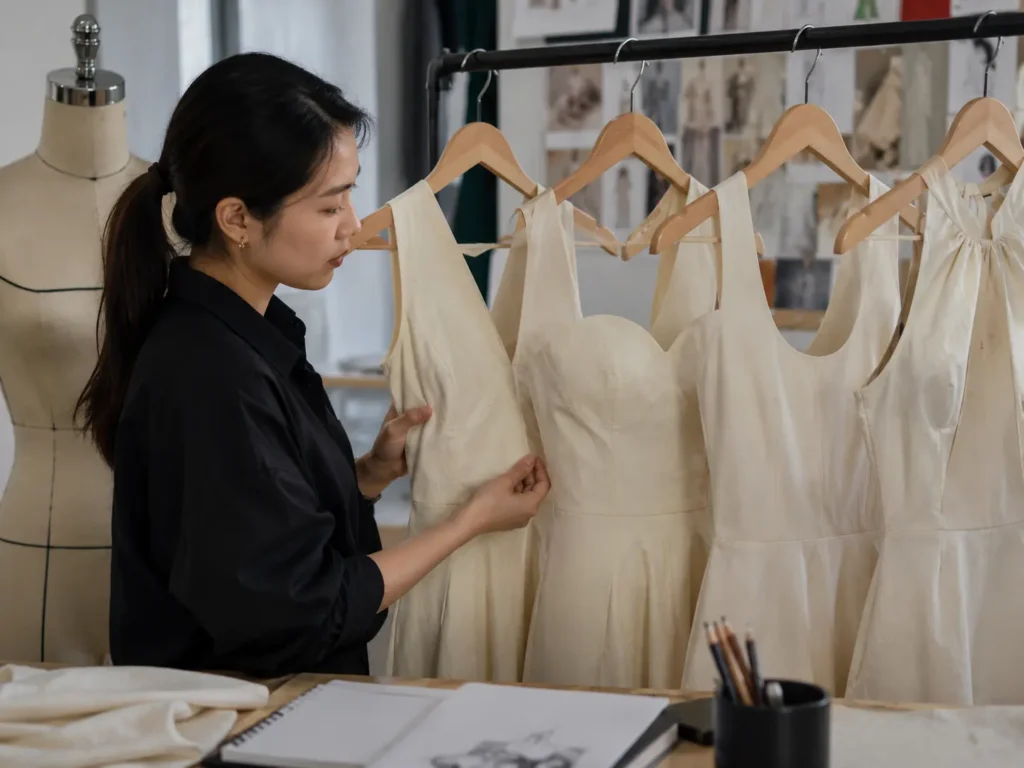
Manage 10-30 Styles Without Losing Control
Multi-style linen collections need grouping, priority and approval tracking. Sending every style into development at once can hide fabric conflicts and delay key launch pieces.
Group Before Sampling
Styles are grouped by fabric family, fit block, trim family, complexity and launch priority. A shirt dress group may share one fabric direction and collar standard, while a fluid wrap group may require different weights and shrinkage controls.
Hero SKUs, campaign pieces and high-risk structures receive earlier attention. Shared fabrics are reviewed together so color, hand feel and supply decisions support the whole assortment.
- Fabric group and color family
- Pattern block and fit risk
- Trim group and packaging route
- Photo deadline and launch priority
Track Every Approval
Each style needs a current sample version, pattern version, measurement chart, fabric approval, trim approval, comment status and next action. Important revisions should never remain only in chat messages.
A collection tracker separates first sample, revised sample, PP approval and bulk-ready status. Changes affecting cost or delivery are flagged before new commitments are made.
- Use style-specific version records
- Consolidate comments by deadline
- Mark blocked materials early
- Release bulk only after approval
Transfer Approved Samples Into Bulk Files
Production Handover
- Lock pattern and measurements
- Lock fabric and trim references
- Issue construction and packing files
- Assign QC checkpoints
Change Control
- Record change source and version
- Reconfirm affected materials
- Update files before production
- Repeat sample approval when required
Workmanship Standards for Woven Linen Dresses
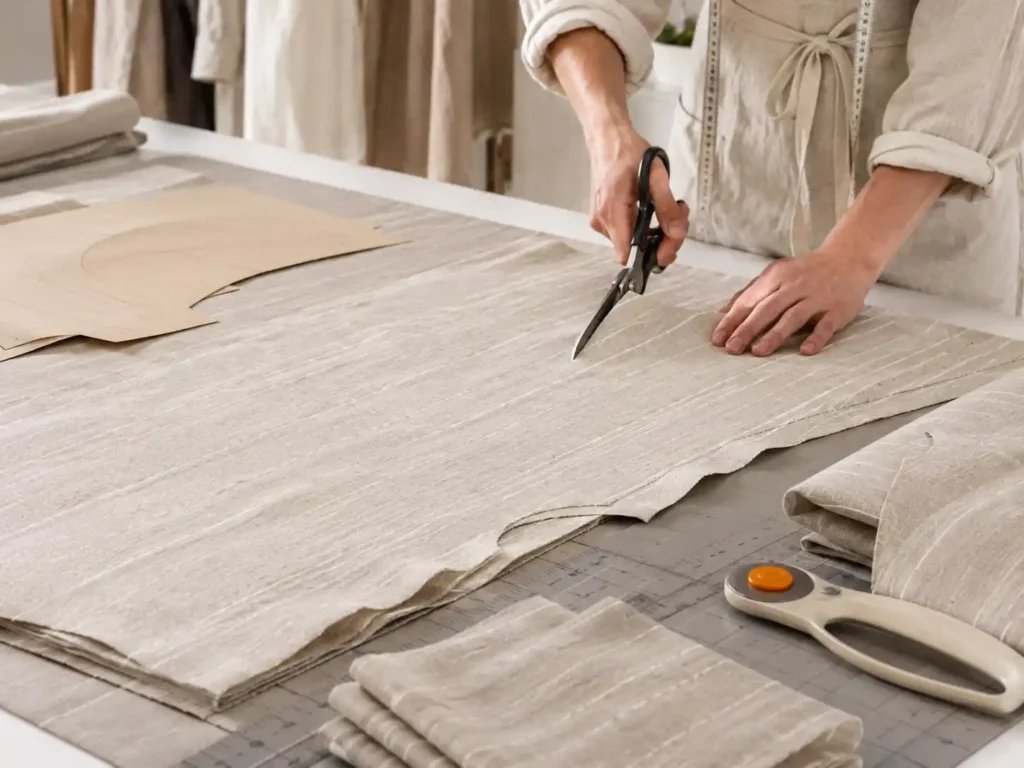
Cutting Direction

Seam Preparation

Stitch Balance

Pocket Execution

Closure Installation

Gather Distribution

Pressing Control

Inside Cleanliness
Linen Dress Bulk Production Workflow
Material Booking
Incoming Inspection
Fabric Preparation
Cutting Release
Panel Inspection
Sewing Production
Inline Review
Finishing
Packing and Release
Capacity for Multi-Style Linen Collections
6 Owned Factories
10+ Long-Term Partners
18+ Sewing Lines
6+ Flexible Lines
12+ Merchandisers
100,000+ Monthly Capacity
Quality Control Built Around Linen Dress Risks
Fabric Shade
- Reference: approved swatch
- Method: lot grouping
- Risk: mixed-shade panels
Fabric Defects
- Reference: defect standard
- Method: incoming review
- Risk: visible panel faults
Shrinkage
- Reference: test record
- Method: pre/post review
- Risk: short length or tight fit
Transparency
- Reference: approved sample
- Method: light check
- Risk: unexpected show-through
Seam Stability
- Reference: sewing instruction
- Method: inline inspection
- Risk: distortion or opening
Measurements
- Reference: size chart
- Method: finished measurement
- Risk: inconsistent fit
Pressing
- Reference: Golden Sample
- Method: visual review
- Risk: poor retail appearance
Labels and SKU
- Reference: label approval
- Method: packing QC
- Risk: warehouse rejection
Final Packing
- Reference: packing instruction
- Method: final inspection
- Risk: assortment errors
Linen Dress Inspection Matrix Before Shipment
| Stage | Checkpoint | Common Risk | Control Reference |
|---|---|---|---|
| Incoming fabric | Color, weight, width, defects, transparency | Bulk differs from sample | Approved swatch and specification |
| Preparation | Relaxation, shrinkage, lot grouping | Post-finish distortion | Test record and process plan |
| Cutting | Grain, direction, shade, panel accuracy | Twist or mixed shade | Marker and cutting instruction |
| Sewing | Seams, zipper, pockets, neckline, waist | Puckering or instability | PP sample and sewing instruction |
| Inline measurement | Key dimensions by size | Fit drift during production | Approved size chart and tolerance |
| Finishing | Pressing, hem, thread cleaning, wash effect | Shine, creases or uneven hang | Golden Sample |
| Final garment | Appearance, measurements, workmanship | Unapproved variation | QC checklist |
| Packing | Labels, barcode, ratio, folding, carton mark | SKU or warehouse error | Packing instruction |
| Shipment release | Quantity, AQL, client inspection, documents | Short shipment or delayed release | Inspection and shipping files |
Private Label Linen Dresses Ready for Delivery
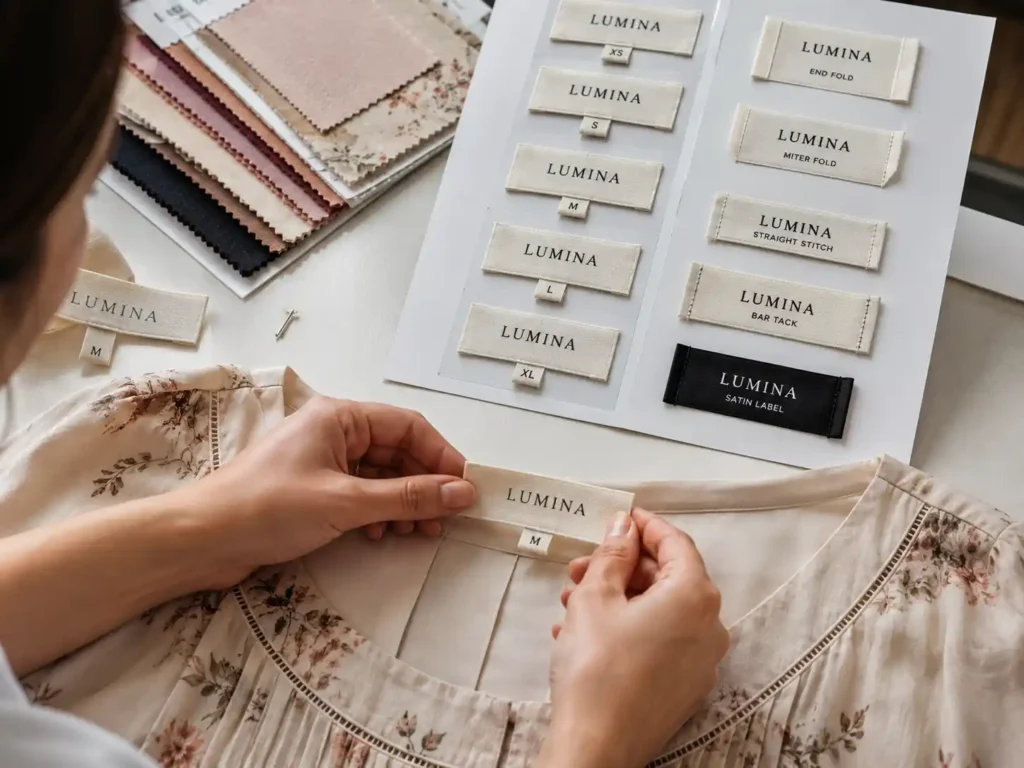
Woven Main Labels

Size Labels

Care Labels

Hangtags
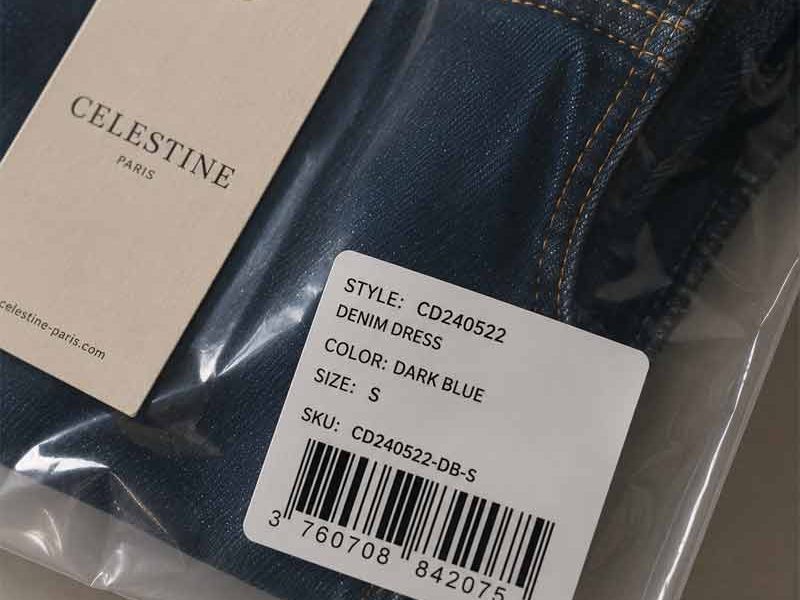
Barcode and SKU

Polybags and Cartons
MOQ, Cost and Timing for Linen Dress Programs
MOQ Structure
- One style in two colors normally requires 200 pcs per color
- Multiple styles cannot be combined into one standard MOQ
- Final MOQ follows material and process review
Cost Drivers
- Lining and washing change cost
- More colors increase material management
- Complex pockets, collars and closures add labor
Production Timing
- Lock PP details before material release
- Reserve fabric and labels early
- Allow separate QC and packing windows
Representative Linen Dress Program Profiles

US Ecommerce Program
- Style count: 18
- Program quantity: 42,600 pcs
- Sample route: first, revised, PP, Golden Sample
- Delivery model: multi-batch packing release

Australian Resort Program
- Style count: 13
- Program quantity: 28,400 pcs
- Core products: maxi, wrap, tiered, shirt dresses
- Control focus: shrinkage, print and packing

European Private Label
- Style count: 24
- Program quantity: 61,800 pcs
- Markets: multi-country European distribution
- Control focus: files, labels and phased delivery
Protect Designs and Support Repeat Orders
Design Protection
- No public brand identification without approval
- No display of unreleased styles or original tech packs
- Controlled use of production images
Repeat-Order Records
- Reconfirm fabric availability and shade
- Reconfirm material prices and supplier MOQ
- Review new color or fabric impact before production
How to Qualify a Linen Dress Manufacturer
Factory System
Linen Knowledge
Pattern Team
Sample Process
Bulk Handover
Quality Evidence
Private Label Control
MOQ Clarity
Confidentiality
Frequently Asked Questions About Linen Dress Manufacturing

Start Your Linen Dress Project
Jinfeng Apparel reviews linen dress programs for established fashion labels, sourcing teams, retail groups and private-label collections. An initial assessment can identify likely fabric options, pattern risk, sample type, material minimums, private-label requirements and the information still needed for a reliable quotation. Kelly coordinates new project files with the relevant development and production teams.
- Reference image, sketch, tech pack or original sample details
- Quantity per style and color, plus planned size range
- Preferred linen composition, weight, hand feel and color direction
- Lining, garment-wash, pocket, zipper and trim requirements
- Woven label, care label, hangtag, barcode and packing files
- Target sample date, launch date, delivery market and shipment plan


