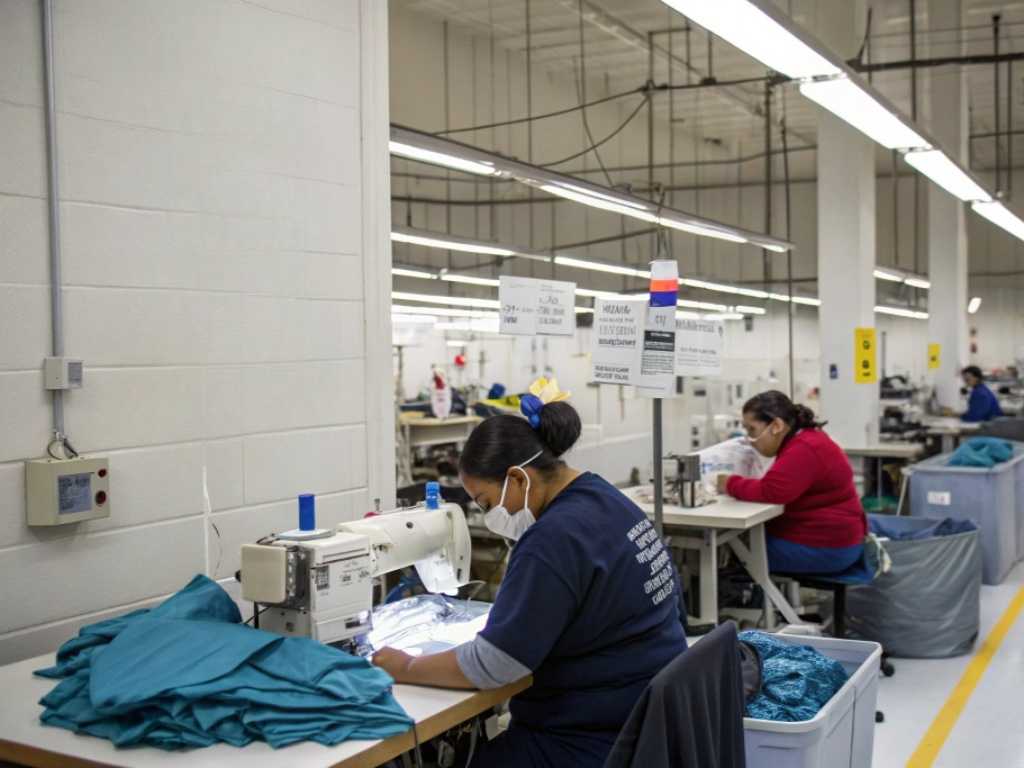
Mesh and Lining Dress Manufacturer
Develop custom mesh dresses with controlled transparency, stable lining coverage, accurate fit, repeatable construction and private-label delivery.
- Complex mesh and lining samples normally require 15-25 days after fabric, structure and trim direction are confirmed.
- MOQ starts from 200 pcs per style/color, subject to mesh availability, lining color, trim development and production planning.
- Development support includes 2 sample rooms, 7+ senior pattern makers and 20+ sample machinists.
- Quality control is handled by 15+ inspectors across fabric, cutting, sewing, finished garments and packing.
Jinfeng Apparel develops lined mesh dresses for global fashion brands, occasionwear labels, partywear programs and large custom womenswear collections. Our team reviews mesh stretch, lining recovery, coverage position, seam construction and size grading before PP sample approval. Projects can begin from a tech pack, reference image, original sample or line sheet, then move through fabric sourcing, pattern development, sampling, bulk production, private-label packing and export delivery.
Development Capacity for Complex Mesh Dress Programs
Product Development System
Coordinated Production Network
Inspection and Order Control
Built for Established Fashion and Occasionwear Programs
Best Project Fit
Jinfeng Apparel is suited to global fashion labels, occasionwear and partywear brands, premium ecommerce programs, fashion retailers, sourcing teams and product development departments managing seasonal collections.
Strong projects usually include a tech pack, line sheet, original sample, reference image, target quantity or launch calendar. Multi-style orders, repeat styles, private-label programs and planned replenishment can be managed through retained patterns, approved material references, size charts, packaging files and Golden sample records.
Production Model Boundaries
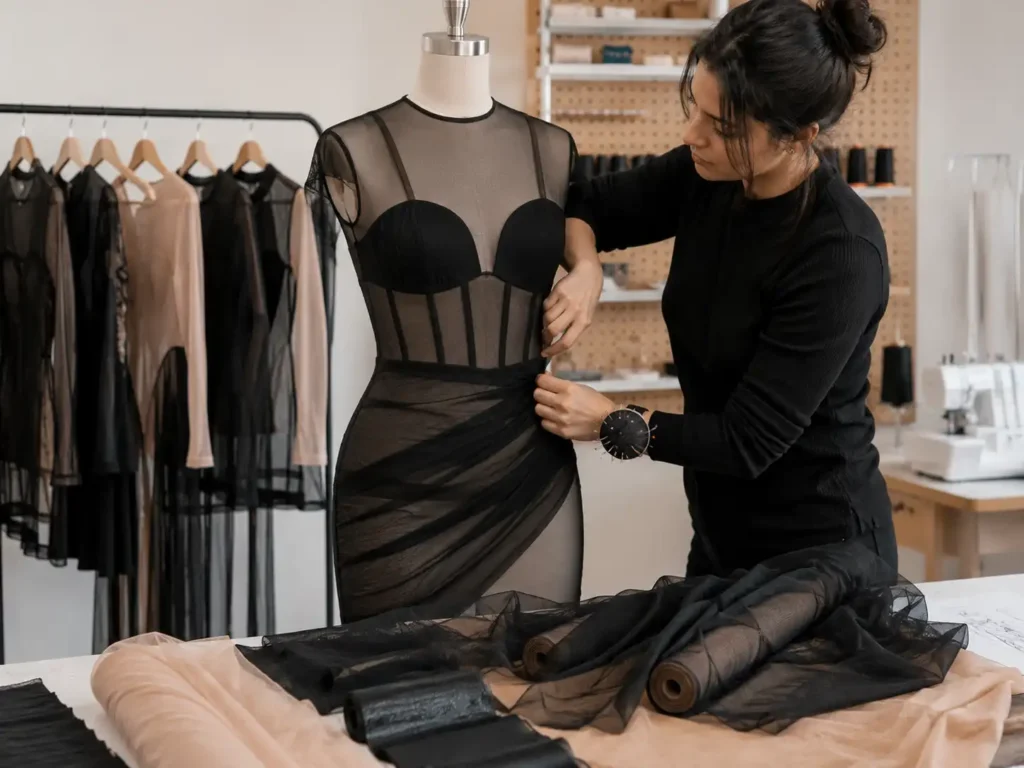
Mesh and Lining Failures We Prevent Early
Excessive Transparency
Lining Ride-Up
Uneven Layer Stretch
Wavy Seam Lines
Visible Lining Edges
Bulk Lot Variation
Information Needed for an Accurate Project Review
Design and Fit Files
- Tech pack or line sheet
- Reference image or original sample
- Base size and size range
- Fit comments or model measurements
- Intended sheer and covered areas
Material and Trim Direction
- Mesh composition or swatch
- Lining composition or coverage plan
- Color standard or Pantone reference
- Trim card or hardware artwork
- Label and packaging files
Quantity and Launch Plan
- Quantity by style/color
- Size ratio and market
- Target launch date
- Required delivery terms
- Repeat-order expectations
Mesh Dress Categories Developed for Fashion Brands
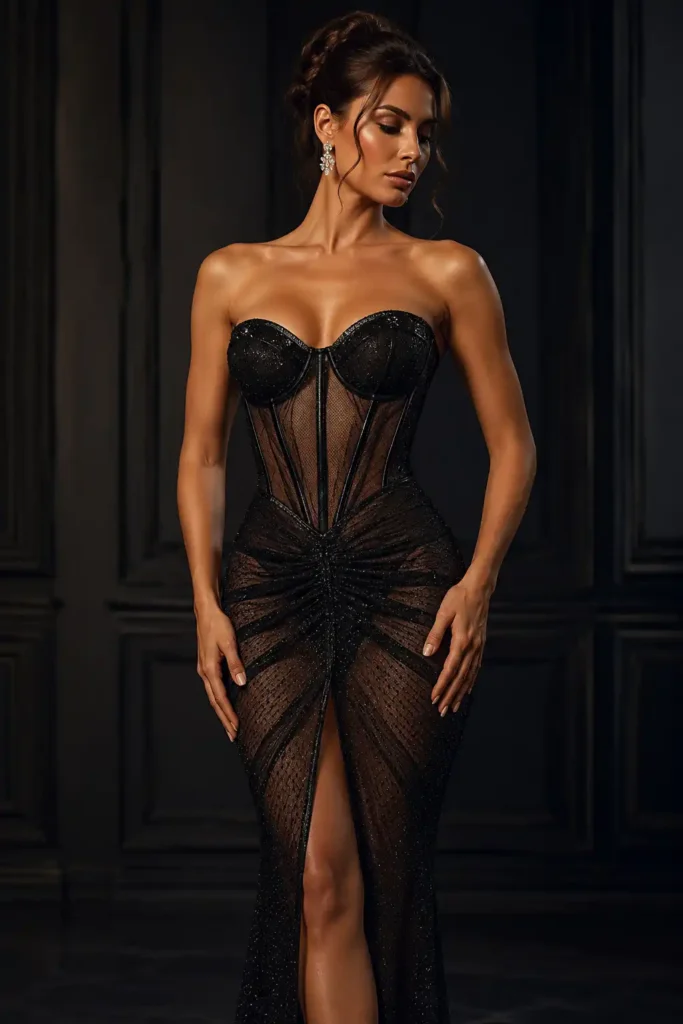
Mesh Bodycon Dresses
- Key fabrics: stretch mesh, flocked mesh, printed mesh
- Common lining: stretch jersey or tricot
- Critical checks: recovery, hip fit, side seams, ride-up
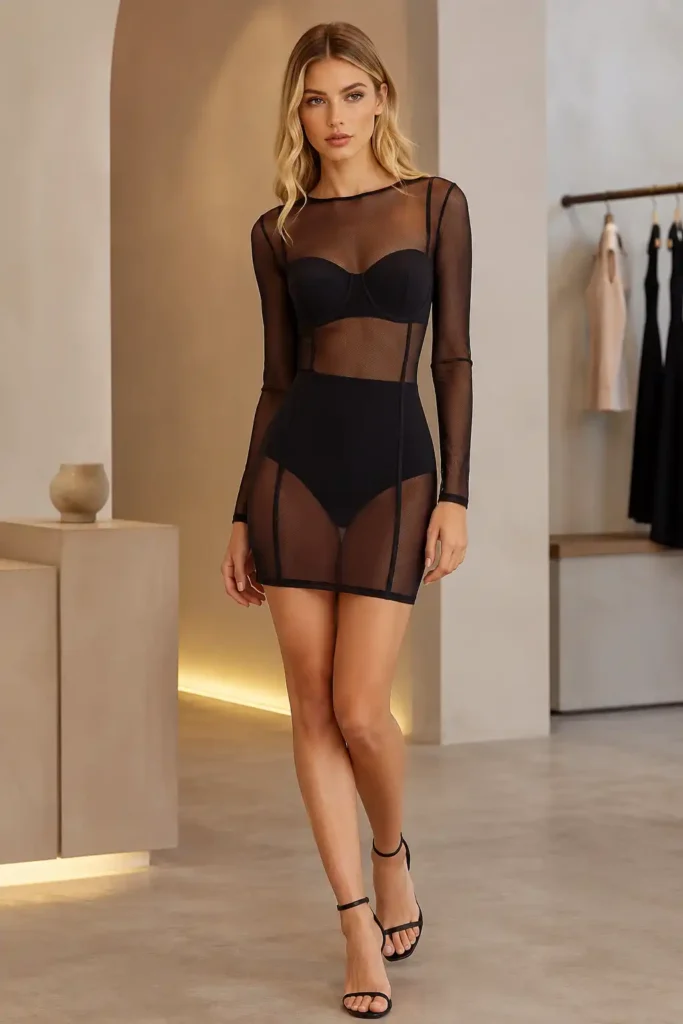
Ruched Mesh Mini Dresses
- Key details: drawstrings, elastic channels, side ruching
- Coverage focus: seat, upper thigh, high slit
- Bulk risk: uneven gathers between left and right sides

Layered Mesh Midi Dresses
- Key fabrics: soft mesh, fine tulle, printed mesh
- Common lining: lightweight knit or woven lining by silhouette
- Critical checks: drape, hem balance, waist bulk, zipper flatness
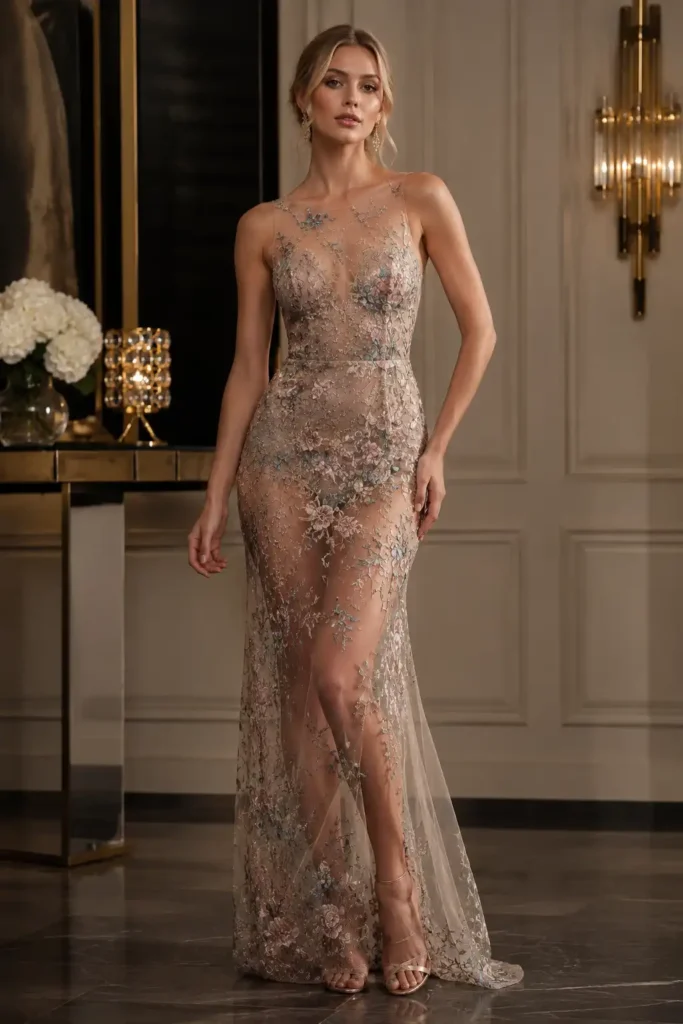
Mesh Corset Dresses
- Support components: cups, boning, power mesh, elastic
- Fit focus: bust shape, waist compression, upper-edge security
- Bulk risk: visible internal structure through fine mesh
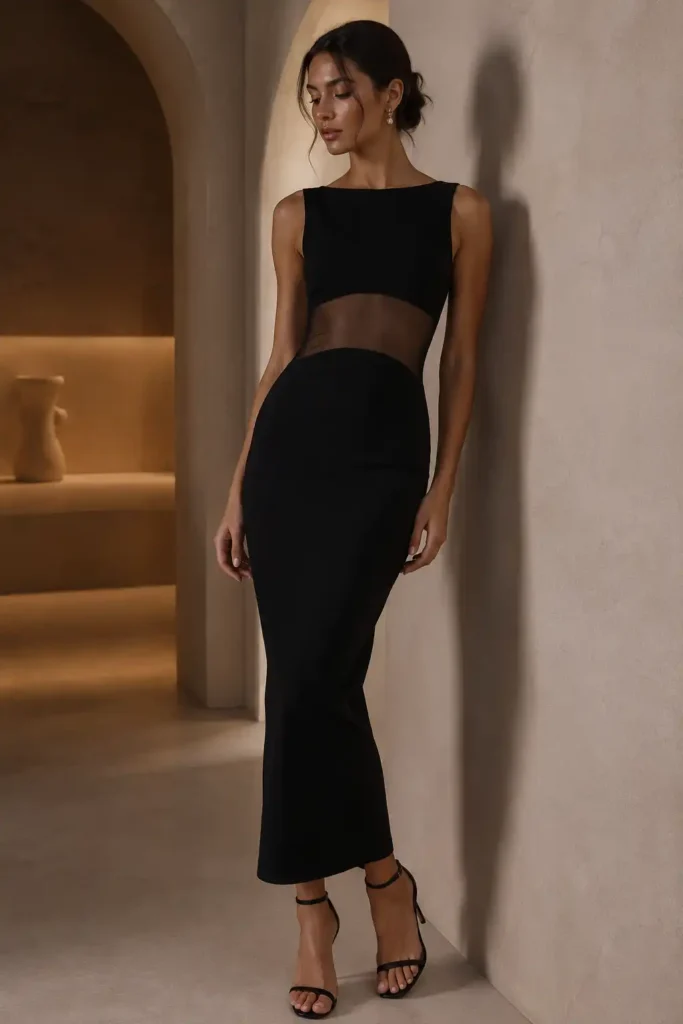
Sheer Panel Party Dresses
- Common placements: neckline, waist, back, side body, slit
- Key control: panel position after grading
- Wear test: sitting, walking, arm movement and photography
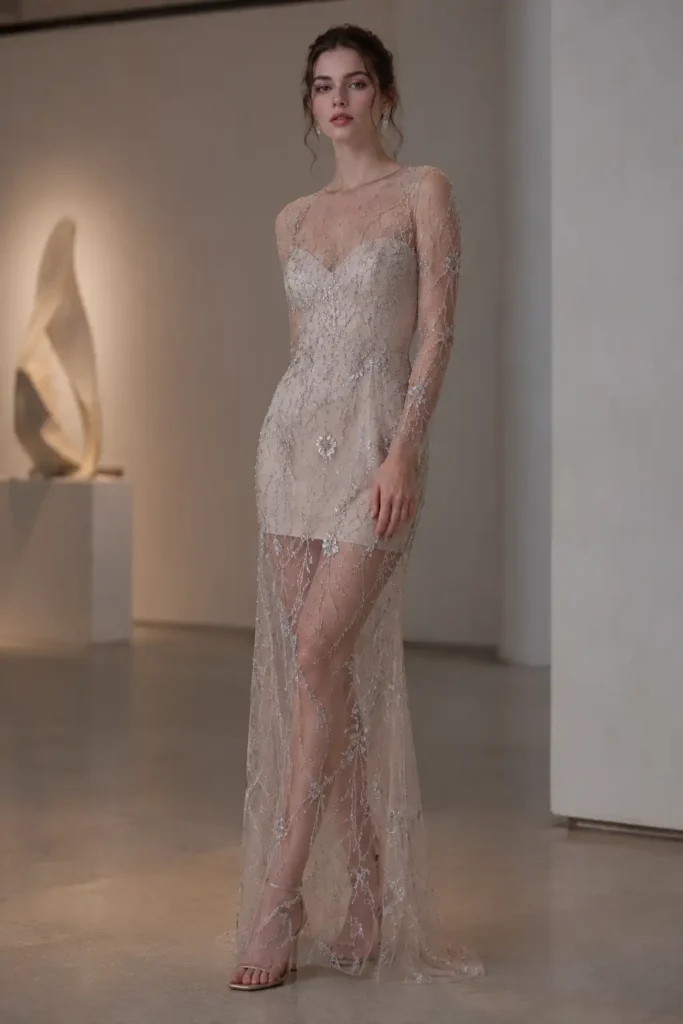
Mesh Occasion Dresses
- Common applications: eventwear, evening, graduation, wedding guest
- Key control: weight distribution, layer balance, clean finishing
- Packing focus: snag protection, crease control and shape recovery
Mesh Fabrics Selected by Structure and End Use

Soft Fashion Mesh
- Suitable for: overlays, sleeves, layered midi and maxi dresses
- Review points: drape, openness, snagging, hem growth
- Common risk: outer layer becoming longer than the lining
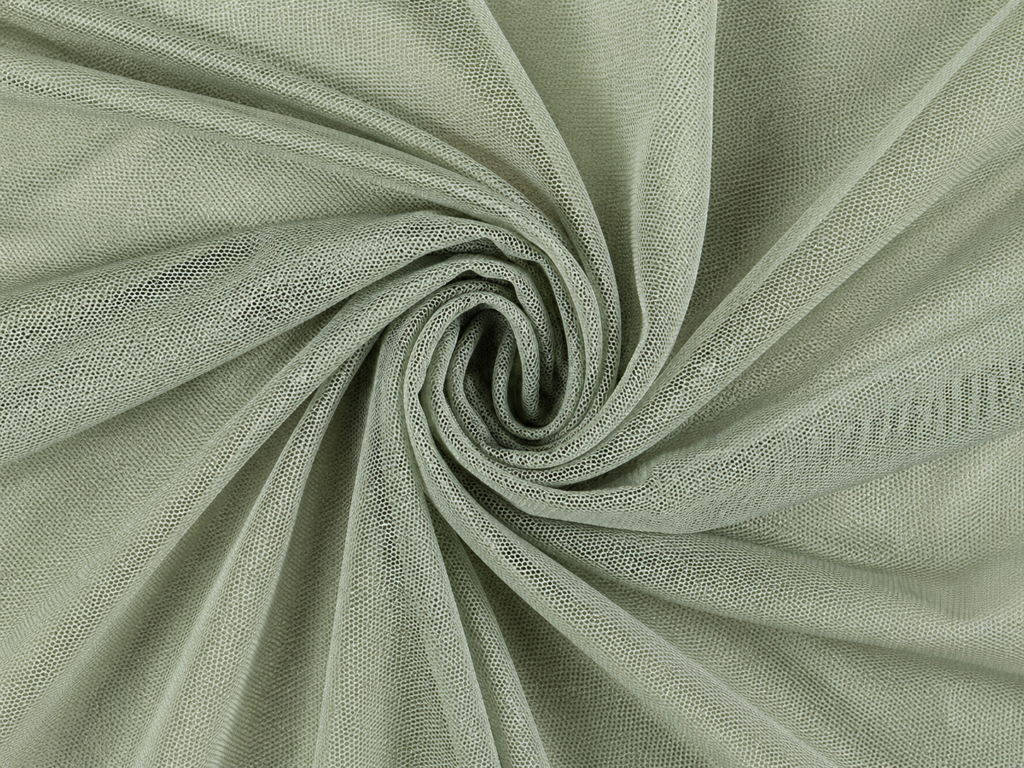
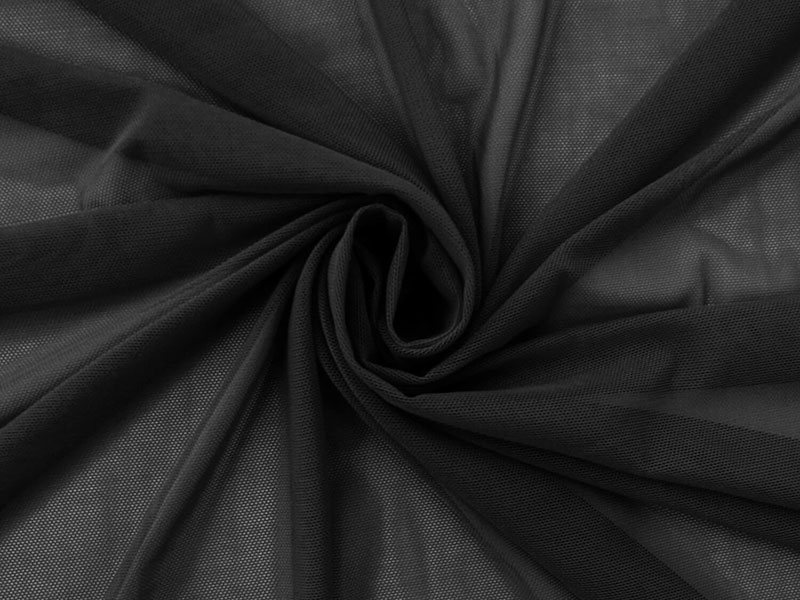
Stretch Mesh
- Suitable for: bodycon, ruched, sheer-panel and club dresses
- Review points: width stretch, length stretch, recovery, opacity
- Common risk: lining and outer layer pulling in opposite directions
Power Mesh
- Suitable for: corset interiors, support panels, shaping zones
- Review points: modulus, recovery, comfort, edge pressure
- Common risk: over-compression and distorted fit
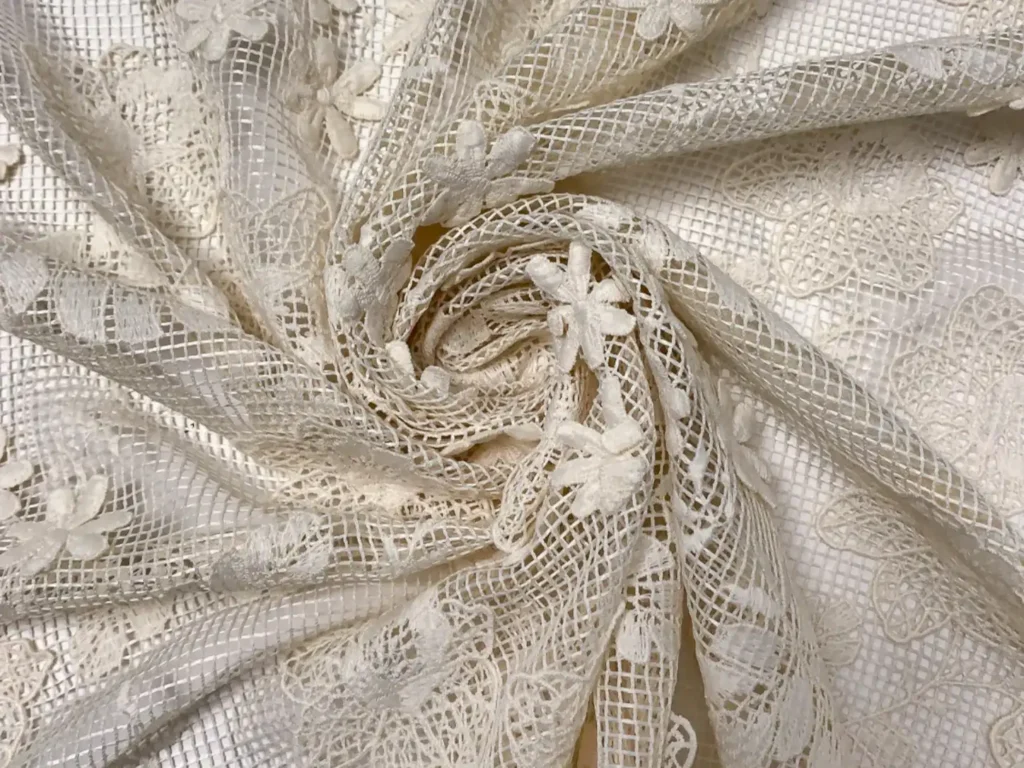
Printed or Embellished Mesh
- Suitable for: statement partywear and occasion collections
- Review points: motif placement, shade, abrasion, seam bulk
- Common risk: design mismatch at seams or visible lining contrast
Lining Structures Planned Around Coverage and Movement
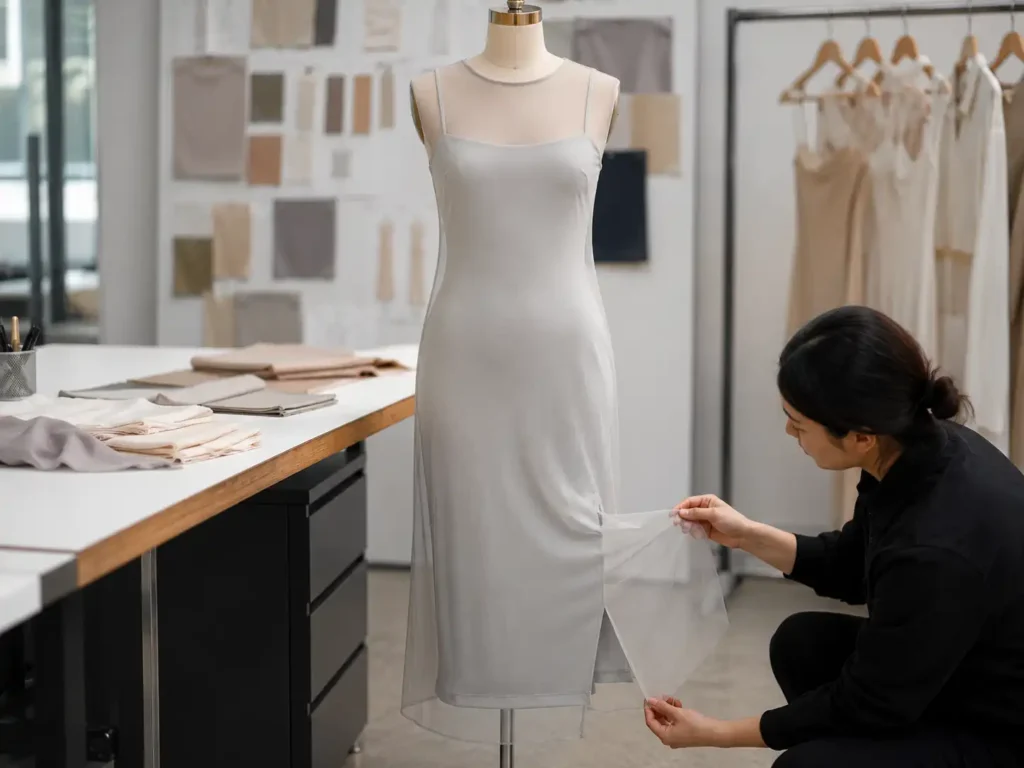
Full Dress Lining
- Best for: commercial coverage and pale mesh colors
- Development focus: layer length, zipper area, neckline roll
- Wear test: walking, sitting, stretching and garment recovery
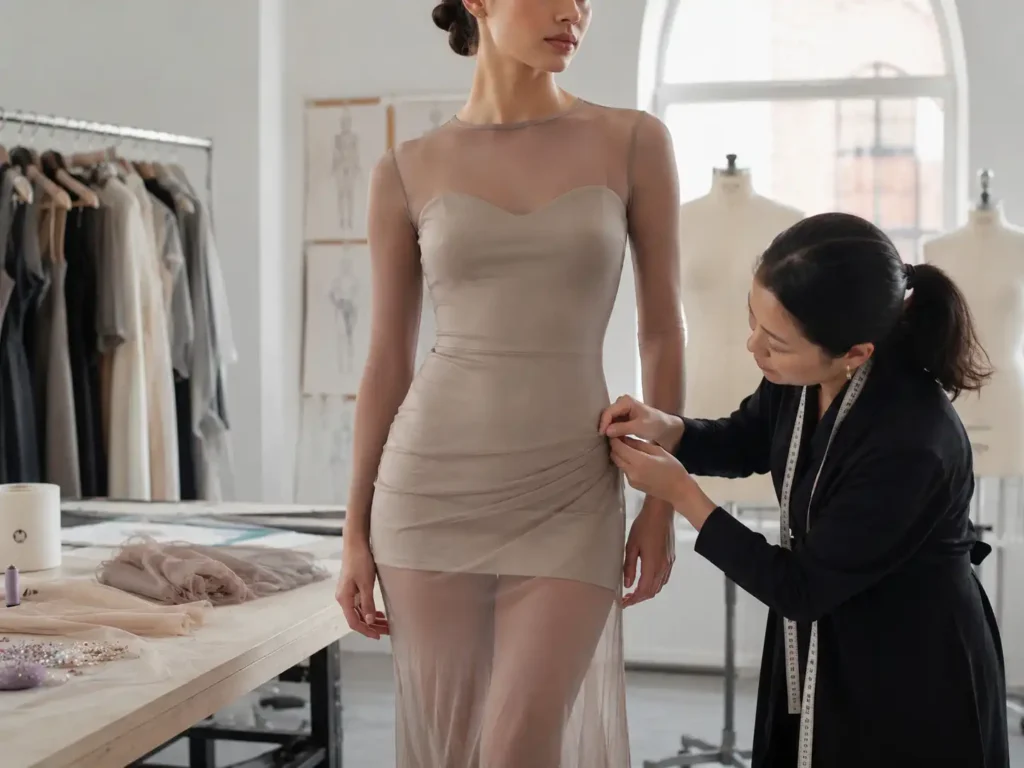
Partial Body Lining
- Best for: statement sheer designs and party dresses
- Development focus: edge shape, side coverage, grading
- Main risk: exposed lining edge under lighting or photography
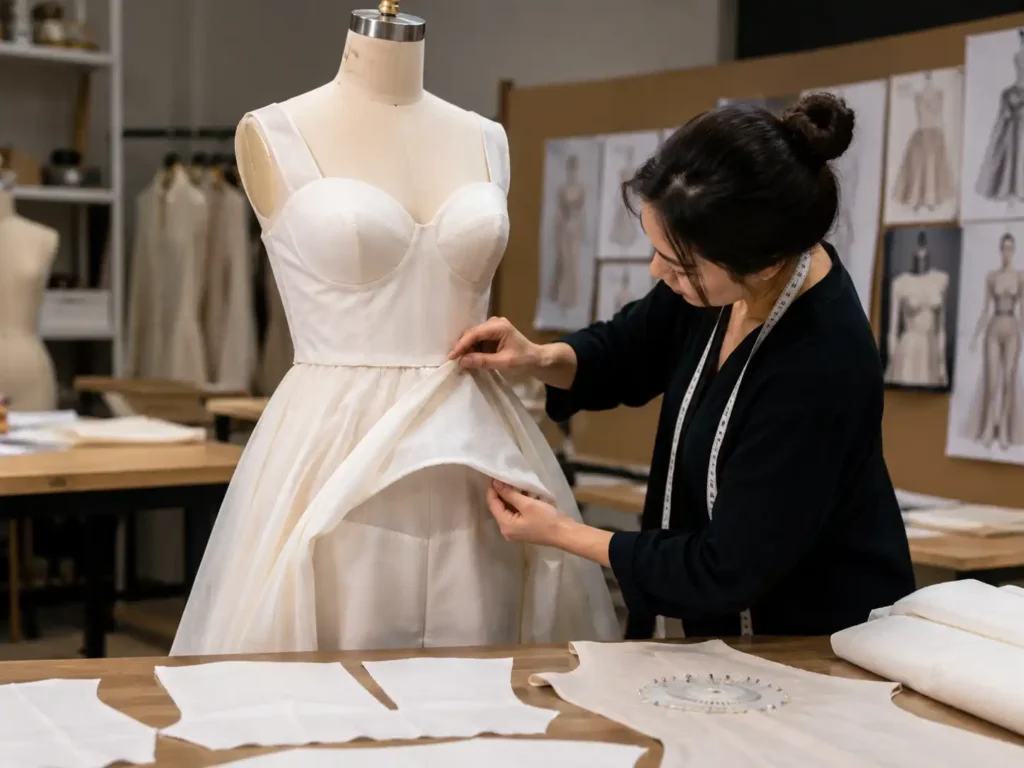
Separate Bodice and Skirt
- Best for: fitted bodices with layered or flowing skirts
- Development focus: waist thickness, support and drape balance
- Main risk: bulky waist seam or mismatched layer tension
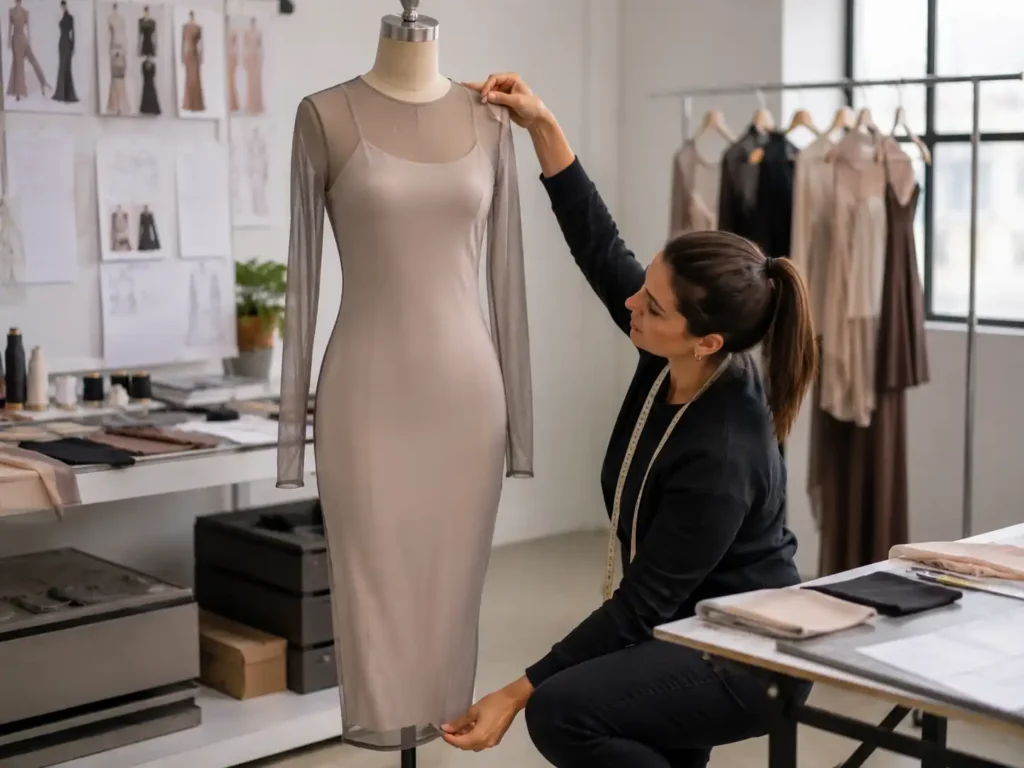
Supportive Inner Mesh
- Best for: corset, shaping and fitted occasion styles
- Development focus: compression, seam position, comfort
- Main risk: support lines becoming visible through outer mesh
Mesh and Lining Compatibility Matrix
Material selection is confirmed as a combination rather than two separate swatches. Stretch, recovery, weight, color and friction determine whether both layers move together. The matrix offers a starting direction; final approval follows sample construction, fit checking and bulk fabric confirmation.
| Outer Mesh Type | Suggested Inner Layer | Stretch Relationship | Common Application | Main Development Risk |
|---|---|---|---|---|
| Soft fashion mesh | Lightweight knit lining | Low to medium stretch, similar drape | Layered midi, maxi, sleeve overlay | Outer layer growth or hanging below lining |
| Two-way stretch mesh | Stretch jersey lining | Similar width stretch and recovery | Bodycon and ruched mini dresses | Inner layer ride-up or side-seam twisting |
| Four-way stretch mesh | Four-way tricot lining | Matched width and length movement | Close-fit dresses and active party styles | Different recovery after repeated wear |
| Power mesh | Support tricot or selective coverage layer | Controlled compression, tested by zone | Corset interiors and shaping panels | Excess pressure or visible inner ridges |
| Printed mesh | Color-matched knit lining | Selected after print and lining overlay | Printed party and fashion dresses | Combined color becoming dull or inaccurate |
| Embroidered mesh | Smooth lightweight lining | Lining protects skin and supports motifs | Occasion and event dresses | Embroidery weight distorting outer layer |
| Sequin mesh | Soft protective lining | Movement compatible with embellished base | Statement party and evening dresses | Abrasion, snagging and seam bulk |
| Double-layer mesh | Partial lining or no extra lining by design | Both mesh layers cut in controlled directions | Controlled sheer bodycon styles | Excess thickness or moire effect |
Transparency and Coverage Engineered for the Brand Look
Commercial Coverage
- Suitable for: mainstream partywear, graduation and wedding guest styles
- Review conditions: daylight, studio lighting and stretch
- Key measurements: neckline depth, lining hem and slit overlap
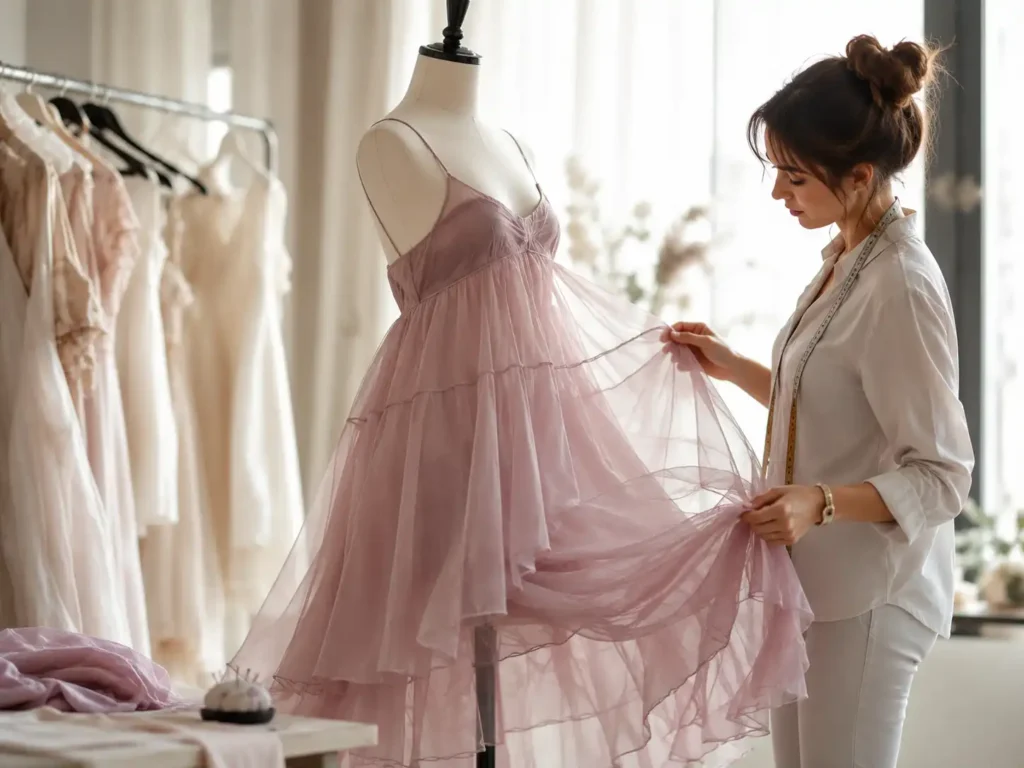
Controlled Sheer Zones
- Suitable for: statement party, bodycon and occasion dresses
- Review conditions: movement, side view and photography
- Key control: boundary placement across the full size range
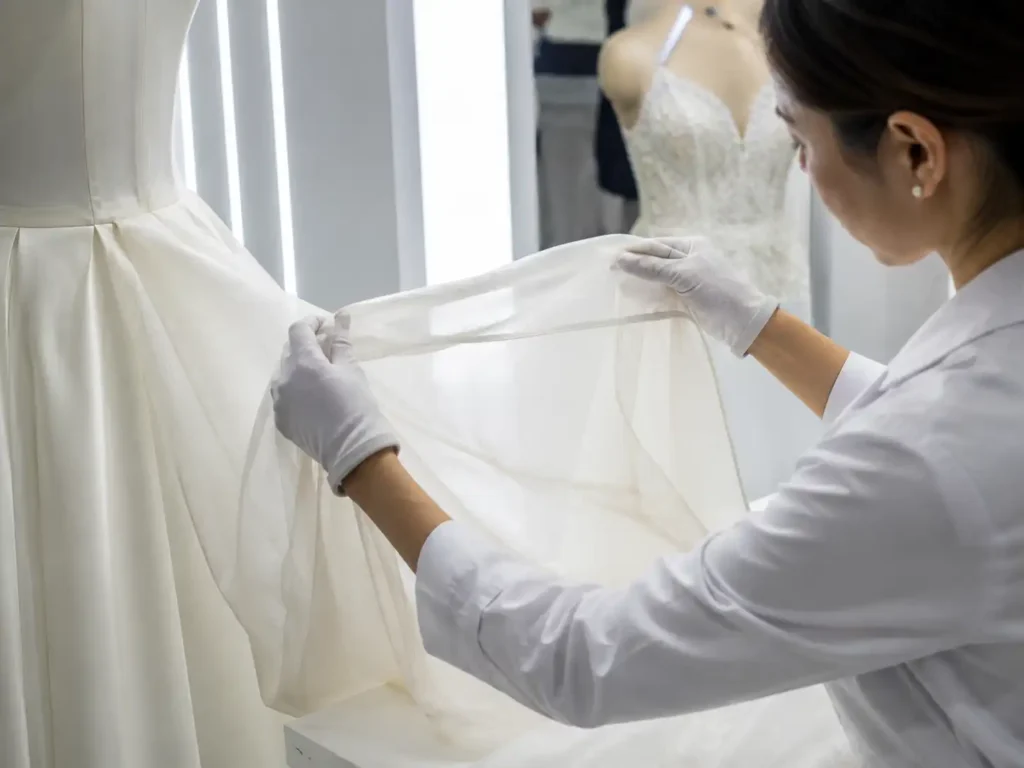
High-Impact Transparency
- Suitable for: editorial, stage-inspired and premium partywear
- Review conditions: dressing method, movement and support
- Key control: secure coverage without visible heavy construction
Fit and Pattern Control Across the Size Range
Mesh dresses are shaped by material behavior as much as measurement. Pattern development connects stretch, recovery, coverage and grading so the approved silhouette remains stable from the base size through the planned market range.
Negative Ease Based on Tested Stretch
Negative ease cannot be copied from a standard knit block without reviewing the selected mesh and lining. We compare relaxed width, controlled extension and recovery after repeated stretching. The outer layer and inner layer are tested separately, then sewn as a combined section because seam construction changes available movement. A fitted dress may need different ease at the bust, waist and hip rather than one percentage applied throughout. High-stress zones such as the center back, underarm, side waist and slit opening receive additional review.
A strong stretch value alone is not enough. Poor recovery can create a loose neckline, grown hem or rippled side seam after wear. Power mesh can require less negative ease than soft stretch mesh because compression rises quickly. Printed or embellished mesh may stretch unevenly across motifs. Sample fitting records visible drag lines, seam movement, transparency under extension and comfort during sitting. Corrections are entered into the pattern and size chart before revised sample or PP sample production.
Key pattern records include:
- Tested width and length stretch direction
- Recovery observations after repeated extension
- Finished garment measurement by key point
- Seam allowance and stitch construction
- Outer-to-inner layer length relationship
- Approved fit photos and written comments
Bust, Waist and Hip Balance
The bust, waist and hip create different demands in a fitted mesh dress. Bust coverage must remain secure without flattening the shape or opening at the neckline. Waist tension should support the silhouette without creating horizontal strain. Hip and seat areas need enough movement to prevent lining ride-up and side-seam rotation. Ruching, corset seams, cut-outs and sheer panels alter how tension travels across the garment, so each design receives a structure-specific fit review.
Bust development may involve dart position, princess seams, cups, underbust shaping, power mesh or an inner bodice. Waist shaping can be distributed through side seams, center-back seams, panels or internal support.
Hip ease and lining length are checked during walking and sitting. For mini dresses, the inner hem is measured at front, side and back after movement. For slit dresses, overlap and lining edge position are reviewed with the leg extended rather than only in a standing pose.
Important fit checkpoints include:
- Bust apex and neckline security
- Underarm and side-body coverage
- Waist seam level and horizontal balance
- Hip circumference and seat movement
- Front-to-back skirt balance
- Inner lining hem after walking and sitting
Size Grading With Coverage Rules
Size grading for mesh styles cannot rely on proportional enlargement alone. A sheer waist panel, cut-out, high slit or short lining may look balanced in the base size but expose more body when the same distances are scaled mechanically. Jinfeng Apparel establishes grade rules for garment measurements and separate coverage rules for visually sensitive points. Bust depth, side coverage, lining hem, slit overlap, strap position and panel width are reviewed against the intended fit and market.
A typical fashion range may cover XS-XL, while extended ranges can reach 2XL or 3XL according to the approved program. Exact increments follow the brand’s size chart rather than a factory default. The development team checks nested patterns, sample measurements and key balance points. When the order includes several size blocks or market-specific fits, separate standards can be maintained to avoid forcing one grading rule across incompatible body profiles.
Production files may include:
- Base-size approved pattern
- Nested grading review
- Size-specific coverage points
- Measurement tolerance by location
- Lining pattern and lining hem rules
- Final PP sample or size-set approval records

Construction Details That Keep Mesh Dresses Clean
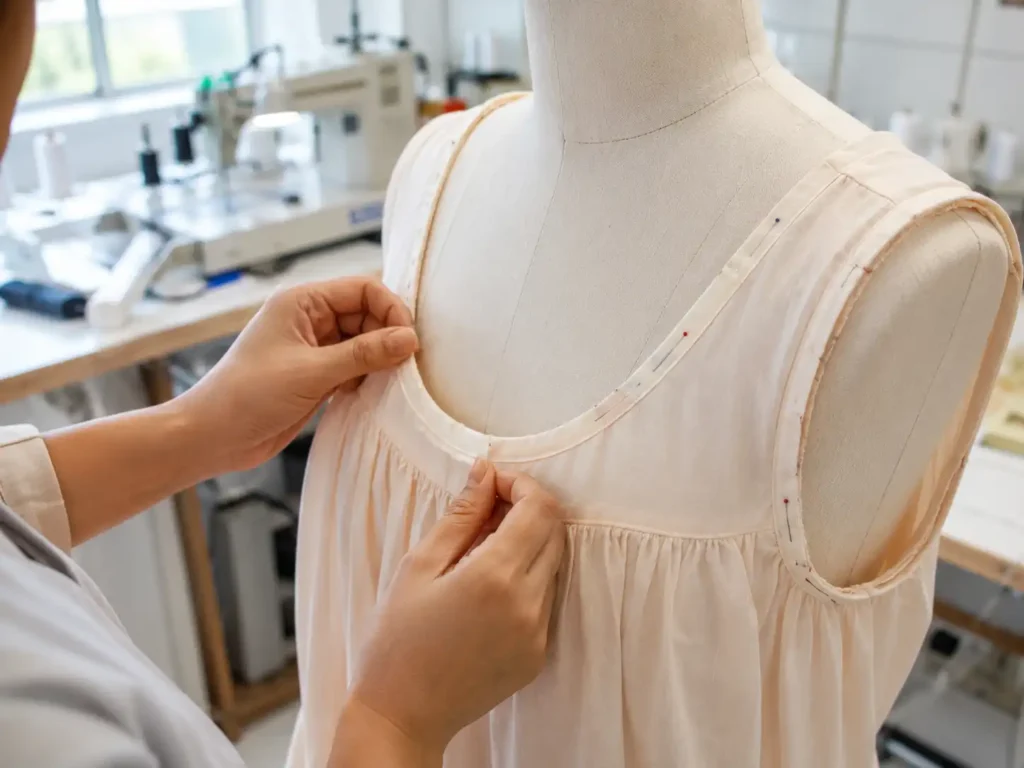
Neckline and Armholes
- Control points: edge length, symmetry, tension and recovery
- Common defect: rippled neckline or stretched armhole
- Approval method: flat measurement plus on-body movement check

Mesh-to-Lining Seams
- Control points: attachment map, seam allowance and feed balance
- Common defect: outer layer dragged by a shorter inner seam
- Approval method: hanger check, fit check and recovery check

Ruching and Layer Control
- Control points: gathering ratio, anchor points and finished length
- Common defect: one side appearing shorter or denser
- Approval method: relaxed, extended and on-body comparison

Zippers, Cut-Outs and Stress Points
- Control points: reinforcement length, zipper flatness and opening strength
- Common defect: zipper bulging or cut-out edge stretching
- Approval method: repeated opening, movement and visual inspection
Mesh Dress Sample Development From Concept to PP
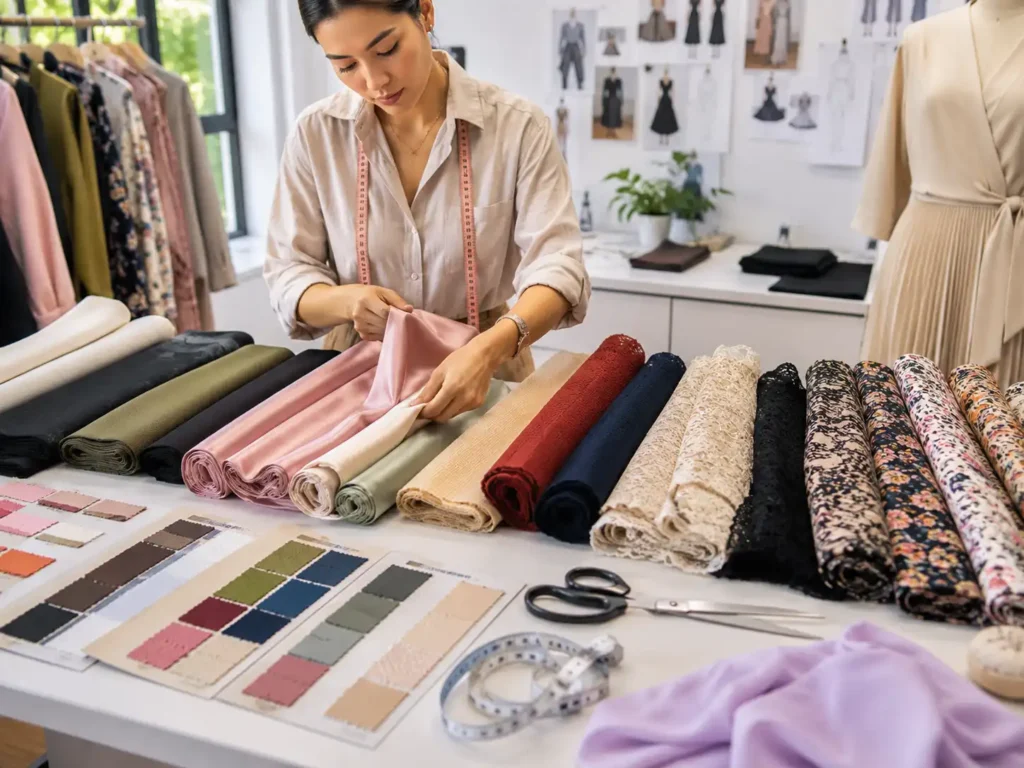
Project and Fabric Review

Pattern and First Sample
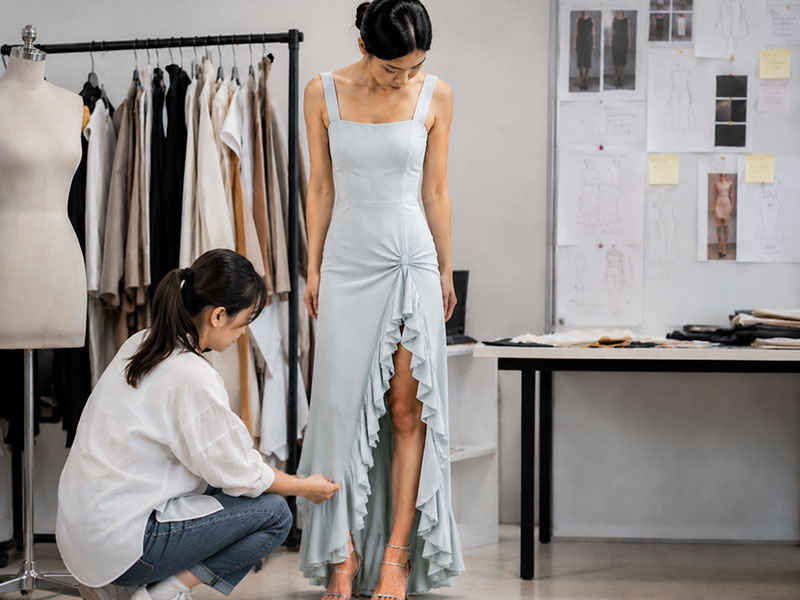
Fit Revision and Adjustment

PP Sample and Golden Sample
Fabric, Lining and Color Approval Before Production
Mesh Fabric Approval
Mesh approval records supplier reference, composition, weight, usable width, stretch direction, recovery, color, surface, transparency, MOQ and lead time.
Rolls are also considered for opening consistency, holes, snagging, printing or embroidery quality and shade variation. For fitted styles, a stretched comparison is reviewed because open spaces widen on body. For layered styles, hanging growth and drape are observed. Any approved substitute must be rechecked against the pattern and lining rather than accepted as an identical replacement.
- Confirm composition, weight and usable width
- Record width and length stretch behavior
- Approve relaxed and stretched transparency
- Review shade, surface and visible defects
- Confirm MOQ and procurement lead time
Lining Approval
Lining approval covers composition, weight, stretch, recovery, friction, hand feel, color, opacity and coverage structure.
A smooth but rigid lining may restrict a stretch-mesh dress. A highly elastic lining may climb upward if recovery and pattern length are unsuitable. The team checks whether lining creates heat, static, visible ridges or color change beneath the outer layer.
Attachment points, hem depth and edge finishing are recorded so production follows the approved coverage rather than choosing an inner layer by price alone.
- Confirm movement with the outer mesh
- Check opacity and color beneath stretch
- Review skin comfort and static behavior
- Approve lining pattern and attachment map
- Record hem position and edge finishing
Combined Color Approval
Mesh and lining create a combined color. A black lining can deepen a printed mesh; a nude lining can warm a cool pastel; a white lining may reduce contrast or make seams more visible. Approval should use layered swatches or a sample panel under relevant lighting. Thread, zipper tape, elastic, cups and labels are matched to the final garment appearance. Bulk rolls are compared with the approved combination, and different dye lots are managed when visible variation could affect garments packed in the same shipment.
- Approve layered color, not isolated swatches only
- Check daylight, indoor light and studio photography
- Match thread, zipper and internal support colors
- Record bulk shade and dye-lot references
- Separate meaningful variation before cutting
Production Standards Locked Before Bulk Cutting
Final Pattern Package
- Final base-size pattern and grading file
- Outer mesh and lining piece identification
- Stretch direction and cutting orientation
- Coverage points and finished lengths
- Approved version date and project code
PP and Golden Standard
- Confirmed bulk material and trim set
- Approved measurements and tolerance points
- Construction and finishing reference
- Label, hangtag and packing placement
- Golden sample storage and record control
BOM and QC Checkpoints
- Material and trim specifications
- Operation notes for critical construction
- Measurement points and tolerances
- Inline and final inspection checkpoints
- Packing and carton instructions
Bulk Production Control for Mesh and Lined Dresses
Production control begins before sewing and continues through packing. Mesh handling, lining identification, pattern version and inspection timing are coordinated for each style, color and size group.
Incoming Material Inspection and Preparation
Bulk mesh is checked for color, holes, snagging, width, surface condition, print or embroidery quality and meaningful stretch variation. Lining is checked for shade, opacity, hand feel and movement. Material references are compared with the approved bulk swatch and PP sample. Rolls are identified by lot where color or behavior differs. Mesh that requires relaxation or hanging is prepared before marker and cutting decisions. Embellished materials receive additional protection to reduce abrasion during storage and movement.
Material preparation also confirms usable width because an incorrect width changes consumption and marker planning. Stretch direction is marked for fabrics where length and width behavior differ. Printed or motif mesh may need placement planning before markers are finalized. Lining lots are paired with the intended outer lots when the combined color is visually sensitive. Problems found at incoming stage are isolated before cutting rather than passed to sewing for later correction.
Key records include:
- Approved bulk swatch and lot identification
- Fabric width and defect inspection
- Stretch direction and material orientation
- Outer and lining shade pairing
- Roll allocation by style or shipment
Cutting and Bundle Control
Mesh can shift, stretch or distort during spreading and cutting. Layer height, spreading tension and handling method are selected according to fabric behavior.
Fine mesh and slippery lining are kept aligned without excessive pull. Pattern pieces identify outer, lining, left, right and direction so similar transparent components are not mixed.
Coverage edges, necklines, cut-outs and slits are checked at the cutting stage because small shape errors become highly visible after sewing.
Bundles are separated by style, color, size and fabric lot. Matching outer and lining components stay together. Cut panels are protected from snagging and uncontrolled stretching. First-cut verification compares key pieces with the final pattern before volume cutting continues. For printed or embroidered mesh, motif placement and pair matching are reviewed according to the approved tolerance. Cutting QC records defects so replacement panels can be issued without mixing unapproved material.
Key controls include:
- Final pattern version confirmation
- Direction and left-right identification
- Outer-to-lining component matching
- First-cut shape and measurement check
- Bundle and lot traceability
Sewing and Inline Inspection
A pre-production meeting transfers the Golden sample, BOM, sewing instructions, measurement chart and risk checklist to the production line. Trial garments or first output pieces are reviewed before full-speed sewing. Operators receive clear direction for edge tension, mesh feeding, lining attachment, ruching ratio, zipper reinforcement and handling of transparent seam allowances. Critical operations are assigned according to skill rather than spreading complex work evenly across the line.
Inline inspection focuses on faults that become expensive after assembly: stretched neckline, twisted side seam, uneven gathers, lining caught incorrectly, visible seam bulk, zipper wave, wrong coverage level and missing reinforcement. Measurements are checked during production to identify drift early. When a correction changes handling or operation sequence, the updated instruction is communicated to the entire line and verified again on subsequent pieces.
Key controls include:
- Pre-production standard transfer
- First-output approval
- Operation-level quality checks
- Measurement drift monitoring
- Corrective action verification
Finishing, Final Inspection and Packing
Finished garments are allowed to recover before final measurement when mesh has been stretched during sewing or pressing. Thread ends, holes, snags, stains, symmetry, lining position, zipper function, seam appearance and transparency are inspected. Pressing temperature and method are selected carefully because fine synthetic mesh can distort, shine or melt under excessive heat. Long dresses and layered hems are checked for balance after hanging.
Packing protects mesh from hooks, sharp hangtags, metal trims, sequins and carton abrasion. Garments may require tissue, protective film, individual folding methods or hanger packing according to design and logistics. Labels, barcodes, size stickers, polybags and carton marks are verified against the packing instruction. Shipment records separate styles, colors, size ratios and delivery batches so warehouse receiving remains clear.
Key controls include:
- Final measurement after garment recovery
- Hole, snag, stain and seam inspection
- Lining coverage and transparency check
- Pressing and shape review
- Label, barcode and carton verification
Quality Checks Focused on Mesh and Lining Risk
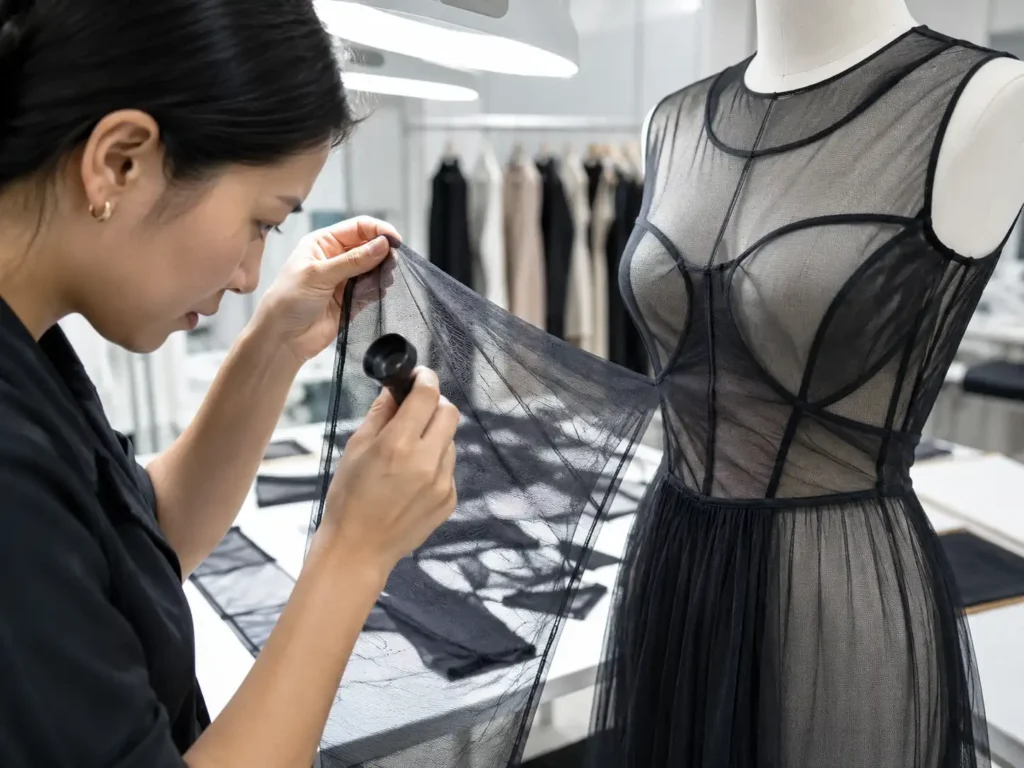
Mesh Hole Inspection
- Incoming roll and cut-panel review
- Stress-zone inspection after sewing
- Protection from sharp trims and tags
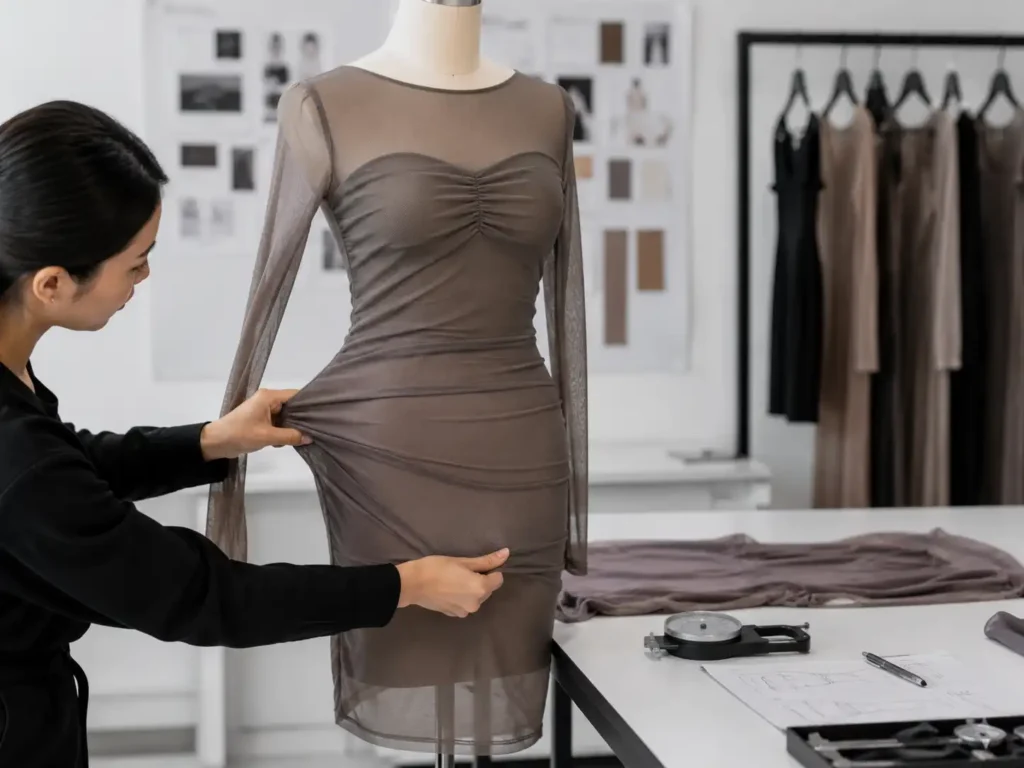
Stretch Recovery Check
- Outer and lining movement comparison
- Post-sewing recovery observation
- Neckline, waist, hip and hem review
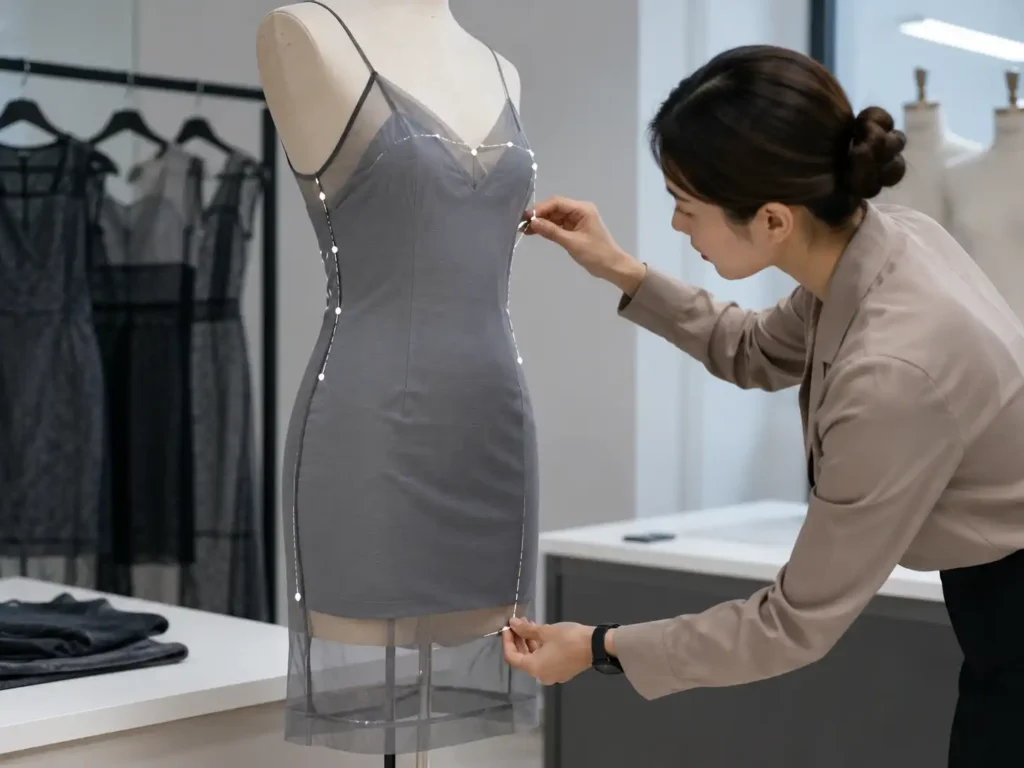
Lining Position Check
- Bust, seat and thigh coverage
- Inner hem position after movement
- Partial-lining boundary and symmetry
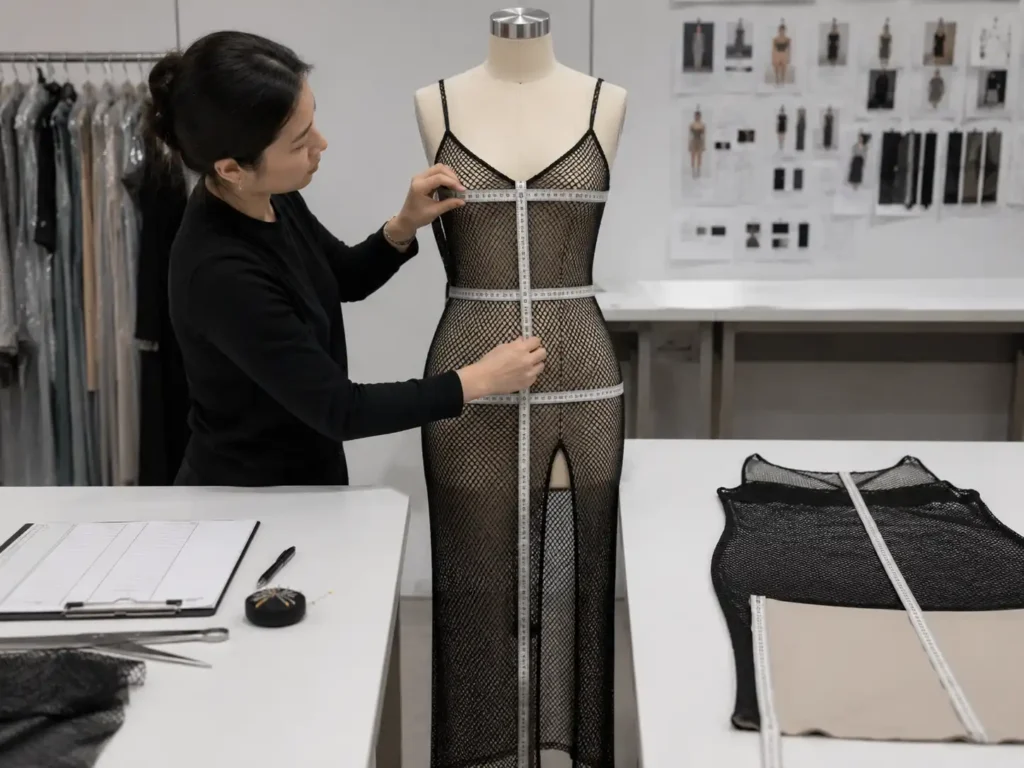
Measurement Inspection
- Approved measurement method
- Outer and lining lengths recorded separately
- Base-size and extended-size focus
Seam and Edge Inspection
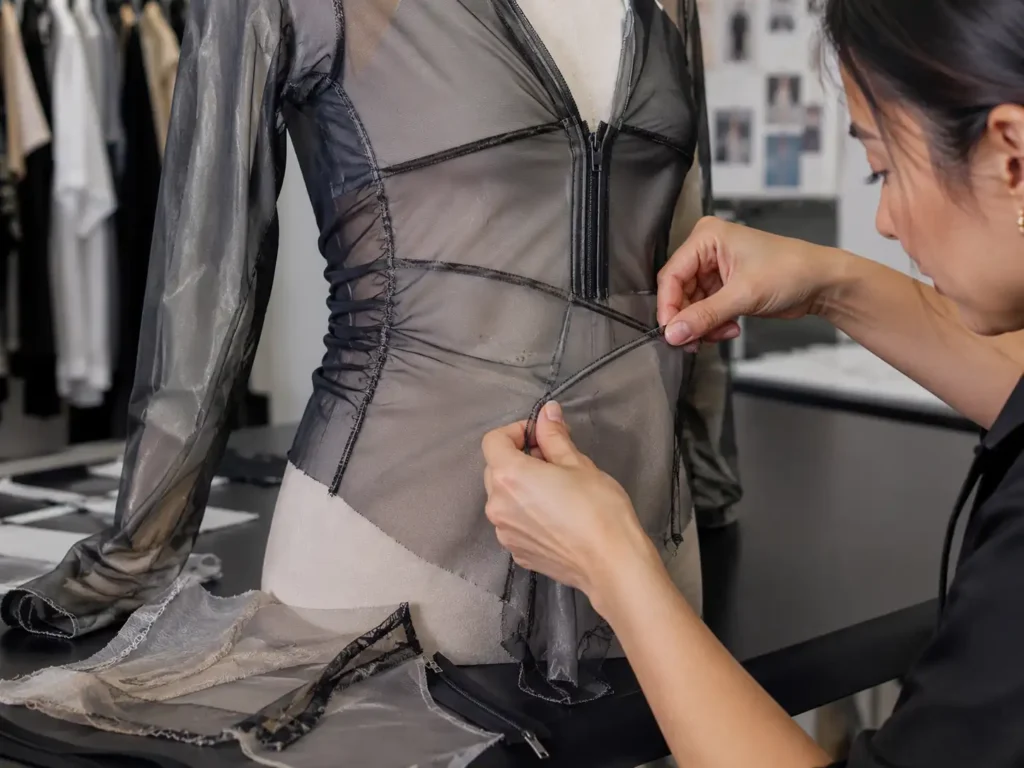
- Flat, flexible and secure seam behavior
- Edge recovery and symmetry
- Zipper, ruching and stress-point review
Final Transparency Review
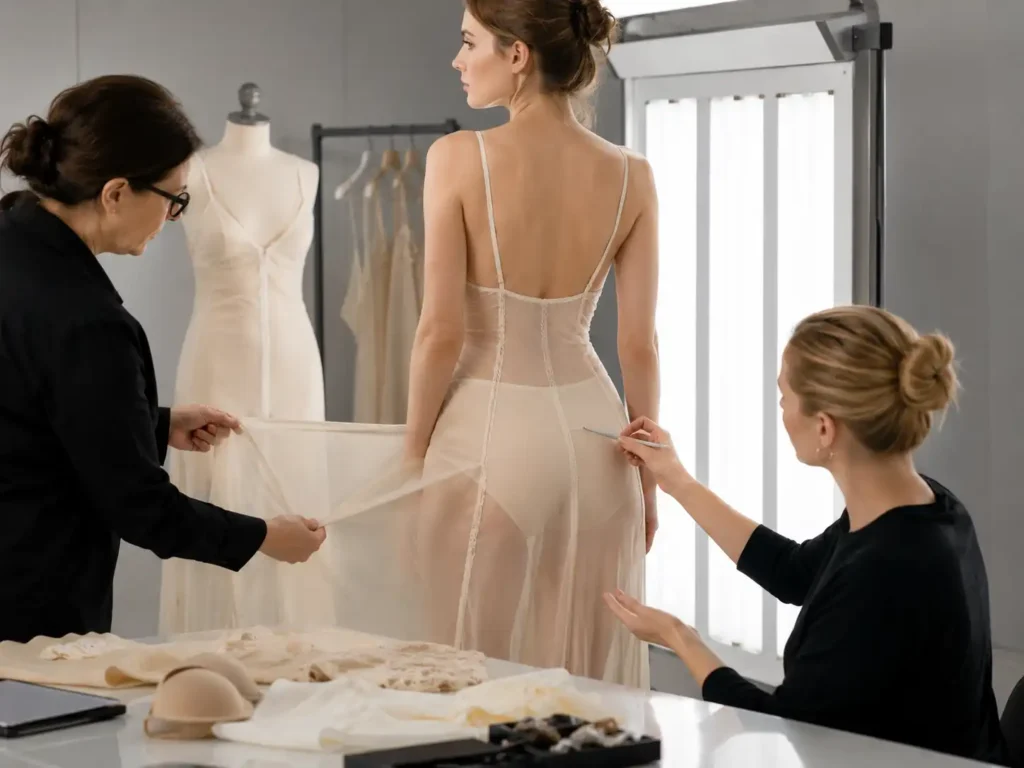
- Relaxed and stretched comparison
- Front, side and back coverage
- Internal component visibility review
Material Documentation, NDA and Design Protection
Material Documentation Support
NDA and Unreleased Styles
Jinfeng Apparel supports NDA-based cooperation for tech packs, line sheets, original samples, patterns, size charts, fabric plans, trim artwork, label files, packing designs, quantities and launch schedules.
Unreleased designs are handled within the project team and are not published without authorization.
Anonymous process examples can be discussed only when they do not reveal brand identity, proprietary artwork or commercially sensitive order information.
Batch and Supplier Records
Approved mesh, lining and trim references are recorded for bulk production and repeat orders.
Fabric lots, color references, trim specifications and supplier changes can be tracked where required.
Repeat production still receives material confirmation because mills may adjust yarn, finish, color or availability over time. Retained records shorten communication while preventing an old material name from being treated as proof of identical performance in a later season.
Private Label Packing and Export Delivery Support
Labels and Brand Details
SKU and Barcode Packing
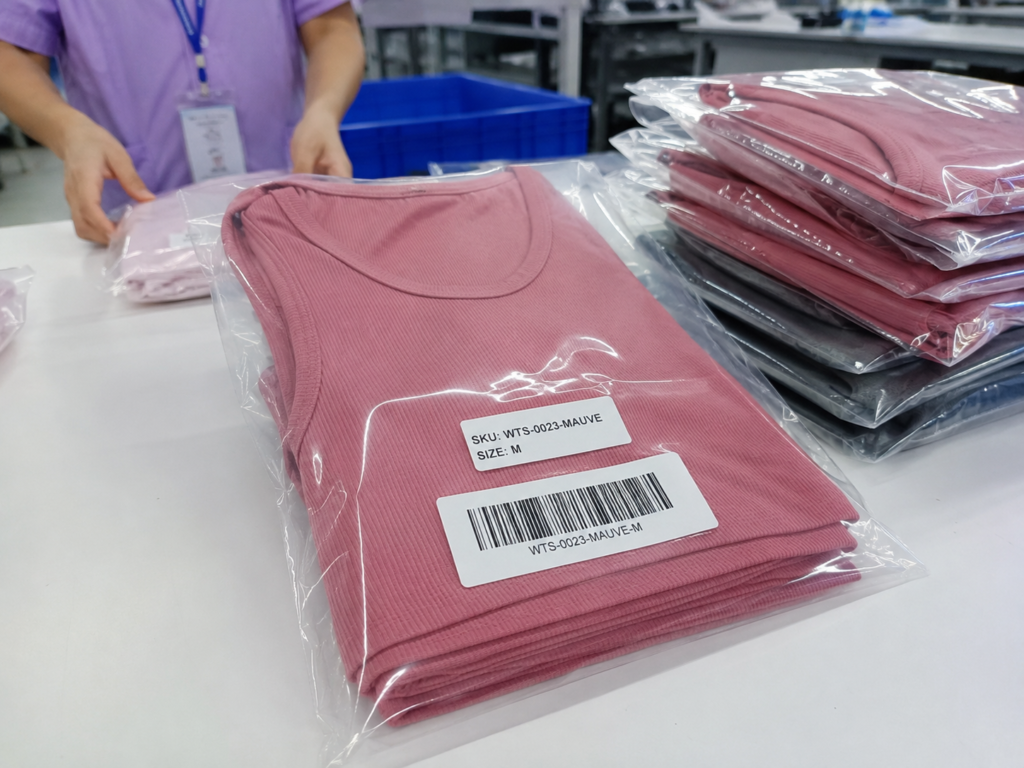
Individual packing can include barcode stickers, SKU labels, size stickers, color codes, polybags, tissue and warehouse routing information.
Multi-style orders require clear separation by style, color, size and delivery batch. Packing teams follow approved ratios and carton instructions, while QC verifies barcode and garment identity before sealing.
Mesh, sequins, hooks and metal trims are isolated when contact could cause snagging, abrasion or marks during transport.

Cartons and Delivery Planning
MOQ, Sampling and Production Planning Reference
Commercial timing depends on style complexity, material availability, approval speed and order structure. The ranges below support early planning and are confirmed again after technical review, PP approval and bulk material commitment.
| Project Item | Planning Reference | Main Factors Affecting the Range |
|---|---|---|
| Standard MOQ | From 200 pcs per style/color | Stock mesh, lining color, trims, size split and production schedule |
| Special material MOQ | Confirmed by material and supplier | Custom dye, custom print, certified fabric, embroidery, sequins and exclusive trims |
| Complex first sample | Normally 15-25 days | Mesh sourcing, lining structure, corset support, pattern difficulty and trim development |
| Revised sample | Normally 7-15 days | Scope of fit, fabric, lining or construction changes |
| PP sample | Normally 7-15 days after final materials are ready | Bulk fabric, final trims, labels, packing and approval schedule |
| Bulk production | Project schedule issued after PP and material approval | Total quantity, 10-30 style mix, color and size split, workmanship, QC and packing |
| Delivery planning | Confirmed by freight method and destination | Air, sea, combined shipment, forwarder booking and warehouse date |
Representative Multi-Style Mesh Collection Production Case
The following program reflects a realistic order structure for an established US fashion label. Brand identity and proprietary designs are not disclosed. The example shows how a 10-30 style collection can be organized without treating every mesh dress as the same product.
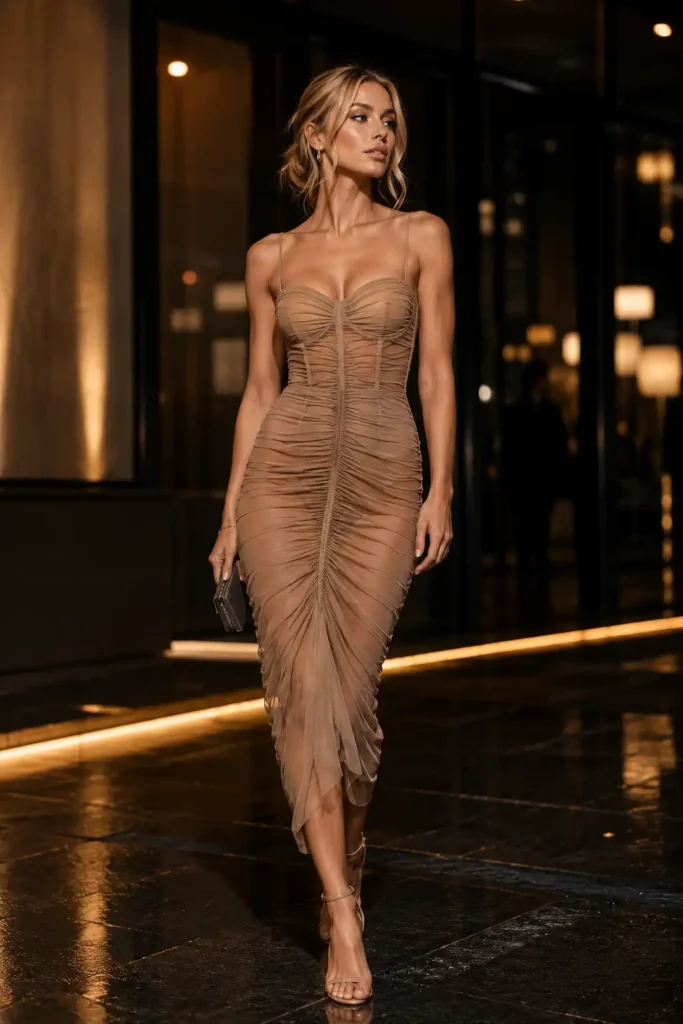
Case 1: Stretch Mesh Bodycon Dress Collection Development
Project Scope
A fashion brand developed a fitted mesh dress collection focused on body-conscious partywear and evening styles.
- Collection size: 15 dress styles
- Product categories: mesh bodycon mini dresses, ruched dresses and fitted party dresses
- Materials: stretch mesh, jersey lining, power mesh and elastic support components
- Construction details: ruching, sheer panels, fitted waist shaping and adjustable details
- Requirement: strong body fit with stable coverage and repeatable sizing
Development Challenges
The main challenge was balancing transparency, stretch and body fit.
Key risks included:
- Mesh stretching differently from lining
- Lining riding upward during movement
- Uneven recovery after wearing
- Neckline distortion
- Size grading affecting coverage balance
Manufacturing Approach
The development team focused on material compatibility and fit engineering.
Key controls included:
- Testing mesh and lining stretch together
- Adjusting negative ease based on recovery
- Reviewing bust-waist-hip balance
- Developing size-specific coverage points
- Testing ruching ratio and finished length
Additional production controls:
- Side seam stability checks
- Lining attachment standards
- Stretch recovery inspection
- Measurement control during bulk production
Manufacturing Value
The program achieved consistent body fit by treating mesh and lining as one garment system instead of two separate materials.
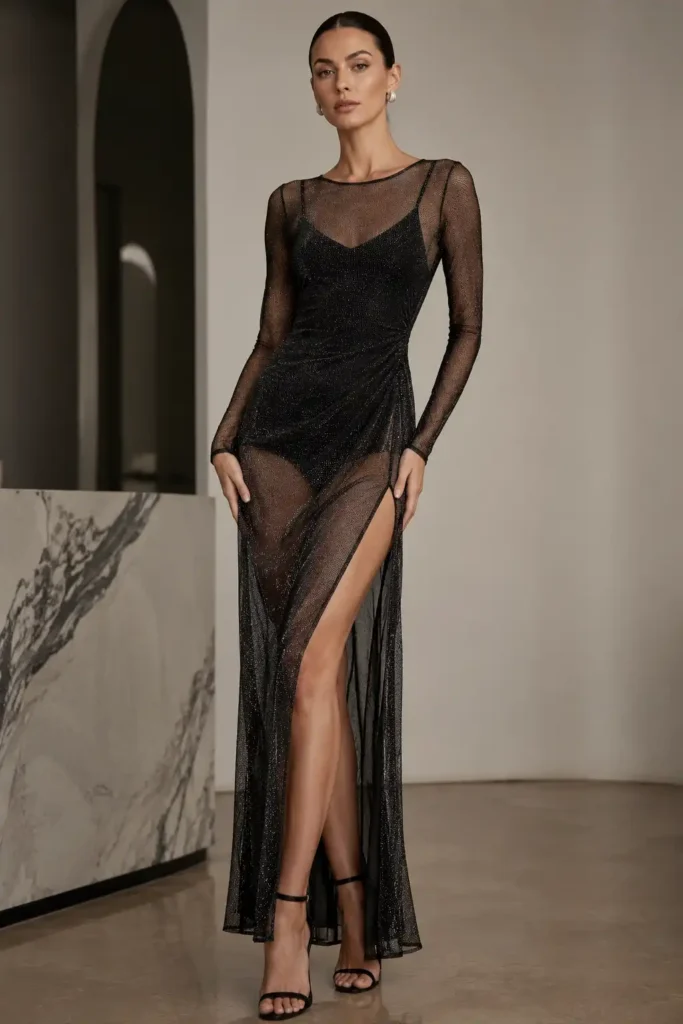
Case 2: Sheer Mesh Occasionwear Dress Collection
Project Scope
A premium occasionwear brand developed sheer mesh dresses for wedding guest, evening and special event markets.
- Collection size: 20 dress styles
- Product categories: sheer panel dresses, layered mesh gowns and elegant evening dresses
- Materials: soft mesh, embroidered mesh, satin lining, tulle and support mesh
- Construction details: transparent sleeves, illusion necklines, mesh waist panels and layered skirts
- Requirement: controlled transparency with premium finishing
Development Challenges
The collection required precise control over transparency and coverage.
Main challenges included:
- Maintaining intended sheer areas
- Preventing visible lining edges
- Matching lining color with mesh
- Protecting delicate mesh surfaces
- Keeping elegant drape after packing
Manufacturing Approach
The project used a coverage-focused development process.
Key controls included:
- Defining sheer and covered zones before pattern development
- Selecting lining based on opacity and movement
- Reviewing transparency under different lighting
- Adjusting panel placement across sizes
- Creating packing protection methods for delicate surfaces
Quality checkpoints included:
- Mesh hole inspection
- Lining position checks
- Transparency review
- Seam appearance inspection
- Final garment presentation review
Manufacturing Value
The collection maintained the intended high-fashion sheer effect while ensuring commercial wearability and production stability.

Case 3: Multi-Style Mesh Dress Brand Production Program
Project Scope
An established fashion brand required a complete mesh dress collection combining different silhouettes, fabrics and construction methods.
- Collection size: 18 dress styles
- Total production: approximately 40,000+ pieces
- Product categories: bodycon dresses, ruched minis, corset mesh dresses, layered midi dresses and occasion styles
- Materials: multiple mesh constructions, jersey lining, power mesh and supporting trims
- Requirement: consistent quality across multiple SKUs and delivery waves
Development Challenges
The project required managing different technical requirements within one collection.
Major challenges included:
- Different mesh stretch behaviors
- Multiple lining structures
- Different coverage requirements
- Size range consistency
- Coordinating production timing across many styles
Manufacturing Approach
The collection was divided according to construction risk rather than only product appearance.
Production groups included:
Fitted Mesh Group
Focused on:
- Negative ease control
- Recovery testing
- Bust and hip fitting
- Seam stability
Structured Mesh Group
Focused on:
- Power mesh support
- Cups and boning
- Internal construction
- Zipper reinforcement
Manufacturing Value
The program demonstrated that large mesh dress collections require style-level technical control while maintaining one coordinated production system.
Mesh Dress Manufacturing Frequently Asked Questions
Options may include soft fashion mesh, two-way or four-way stretch mesh, power mesh, printed mesh, flocked mesh, embroidered mesh and embellished mesh. Final selection depends on silhouette, transparency, recovery, lining, color, MOQ and lead time. Each material is reviewed against the intended construction rather than selected by appearance alone.
The team compares stretch direction, recovery, weight, friction, opacity, color and intended fit. Bodycon styles normally need a lining that moves with the outer layer, while layered occasion styles may use a lighter structure. The chosen combination is verified through sample construction, movement and coverage checks.
Yes. Partial lining can cover the bust, body, brief area, skirt or selected panels while leaving planned zones sheer. Coverage boundaries, edge shape and grading rules are confirmed during sampling. Larger sizes may require adjusted depth or width to maintain the approved balance and wearability.
Transparency is reviewed with layered materials in relaxed and stretched conditions, under normal and bright lighting, and during movement where relevant. Checks include bust, side body, seat, upper thigh, slit, back opening and visible seam allowances. Lining color and coverage position are approved with the outer mesh.
Yes. Contrast, tonal and skin-tone combinations can be developed. The final appearance is approved as a layered combination because transparent mesh changes the perceived lining color. Thread, zipper tape, cups, elastic and internal support colors are also considered when they may remain visible.
MOQ starts from 200 pcs per style/color. Special mesh, custom dye, exclusive print, embroidery, sequins, certified materials, custom trims or fine color splits may increase supplier commitments. Exact MOQ is confirmed after fabric, color, quantity and construction review.
Complex mesh, lace, sequin, corset or strapless samples normally require about 15-25 days after the main material and design direction are confirmed. Custom fabric, special trims or major revisions may extend the schedule. Revised and PP samples are planned according to the changes and final material readiness.
Yes. A reference image can begin structure and material discussion. Accurate bulk production still requires confirmed measurements, material specifications, construction details, labels, packaging and PP approval. Jinfeng Apparel can help convert reference information into patterns, size charts, BOM files and sewing instructions.
The team reviews lining stretch, recovery, friction, pattern length, negative ease, attachment points and hip movement. Corrections may include a different lining quality, adjusted inner pattern, revised side-seam balance or controlled anchoring. The garment is checked after walking and sitting rather than only on a hanger.
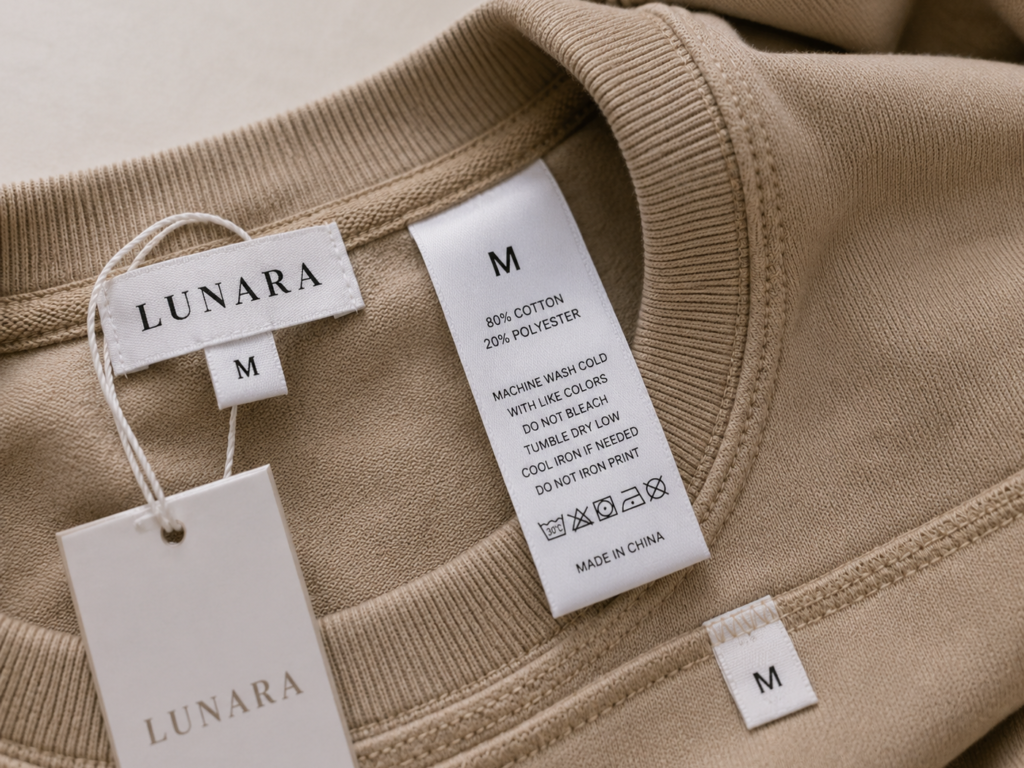
Yes. NDA-based cooperation can cover tech packs, samples, patterns, material plans, labels, packaging and unpublished designs. Private-label production can include main labels, care labels, size labels, hangtags, barcode stickers, polybags, carton marks and shipment documentation according to the approved project.

Start Your Mesh and Lining Dress Project
Send your tech pack, reference image, original sample or line sheet for a structured project review. Jinfeng Apparel will evaluate silhouette, mesh type, lining coverage, stretch and recovery, fit risk, construction, size range, target quantity, private-label requirements and launch schedule before proposing a sampling or quotation path.
Complex projects receive clearer decisions when outer fabric, lining, trims and commercial requirements are considered together from the beginning.
Helpful information includes:
- Reference image, sketch, tech pack or original sample
- Target quantity by style/color and expected style count
- Mesh preference, print, embroidery or embellishment direction
- Full, partial or supportive lining requirements
- Base size, full size range and market measurement standard
- Labels, hangtags, barcode, polybag and carton requirements
- Target launch date, destination and shipment priorities
- Any NDA, testing or material documentation requirements