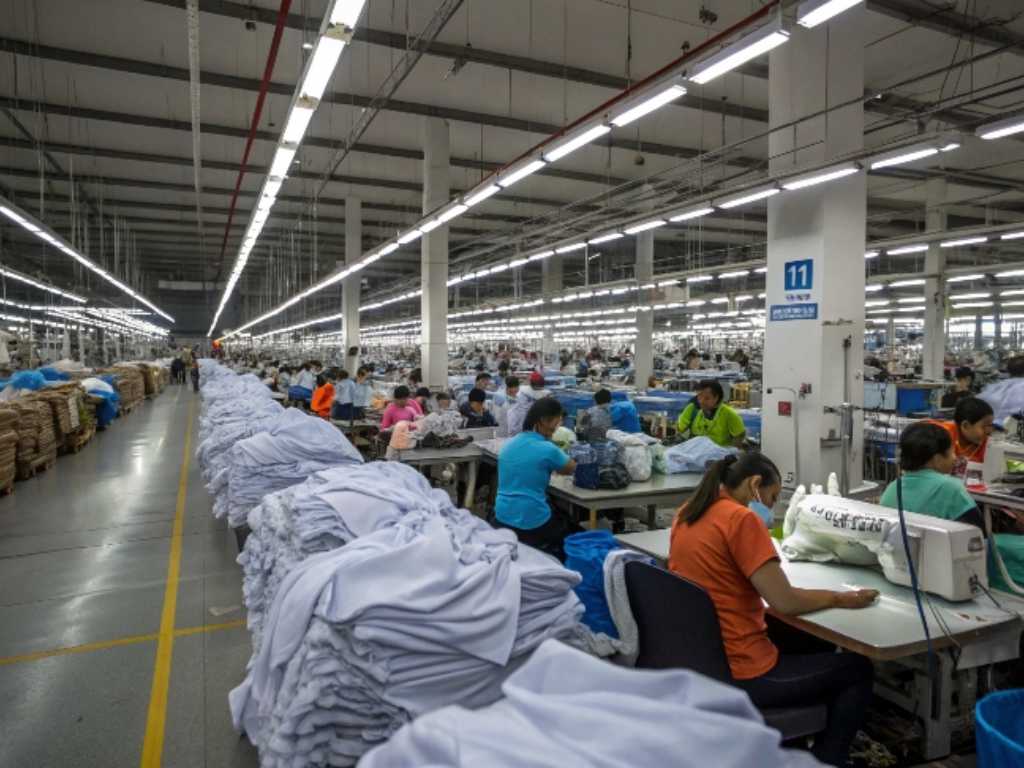
Digital Printed Dress Manufacturer
Custom print development and dress manufacturing built for seasonal collections, commercial fit, repeatable color and reliable bulk execution.
- Artwork-to-garment control: all-over, placement, border and engineered print programs aligned with actual dress patterns.
- Sampling resources: 2 sample rooms, 7+ senior pattern makers and 20+ sample machinists for print, fit and construction review.
- Development timing: standard printed dress samples generally require 10-15 days; complex mesh, satin or placement-print styles require 15-25 days after material confirmation.
- Production fit: MOQ starts from 200 pcs per style/color; exclusive print MOQ is reviewed by base fabric, print repeat, color count and printing partner requirements.
Production Scale for Printed Dress Programs
Since 2008
6 Owned Factories
10+ Production Partners
2 Sample Rooms
15+ QC Inspectors
100,000+ Pcs Monthly
Where Digital Printed Dress Programs Lose Control
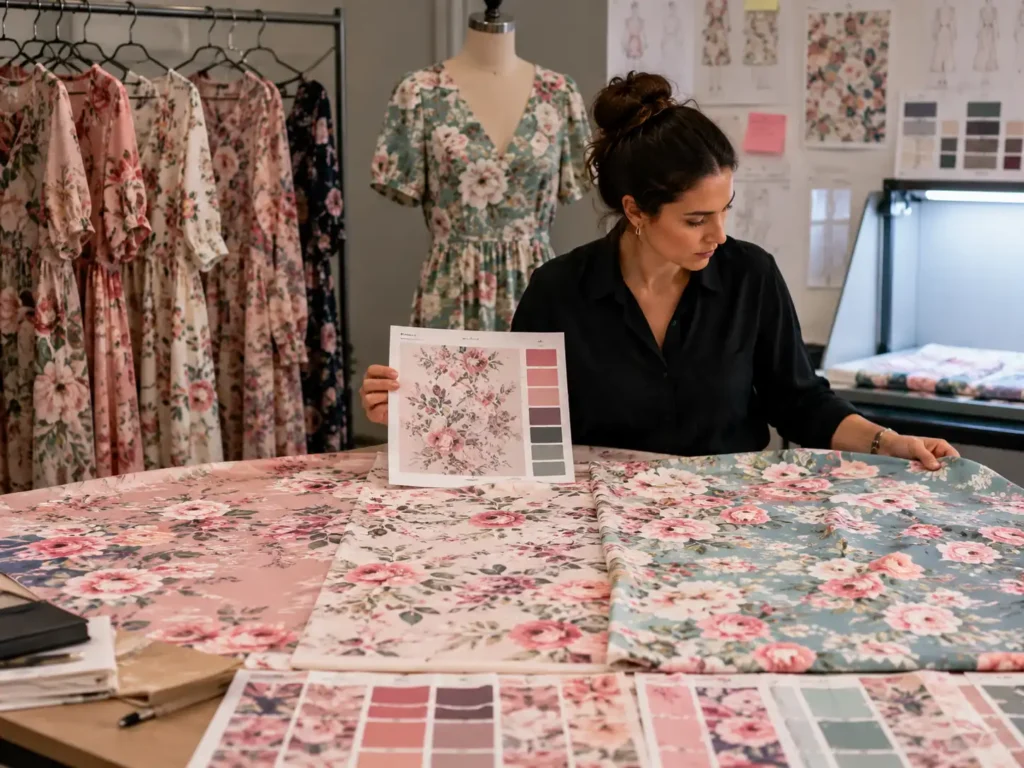
Color Drift
- Approve a physical strike-off
- Record the base fabric and batch
- Review critical colors under consistent light
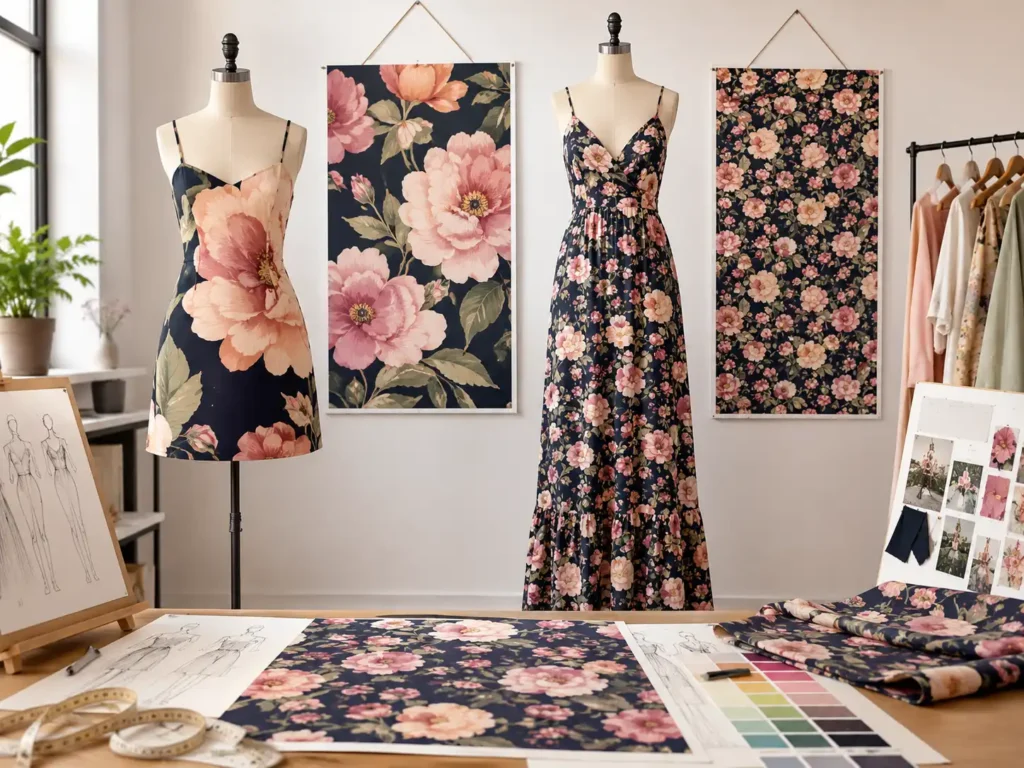
Wrong Print Scale
- Confirm repeat width and height
- Overlay artwork on key pattern pieces
- Review large motifs at bust, waist and hem
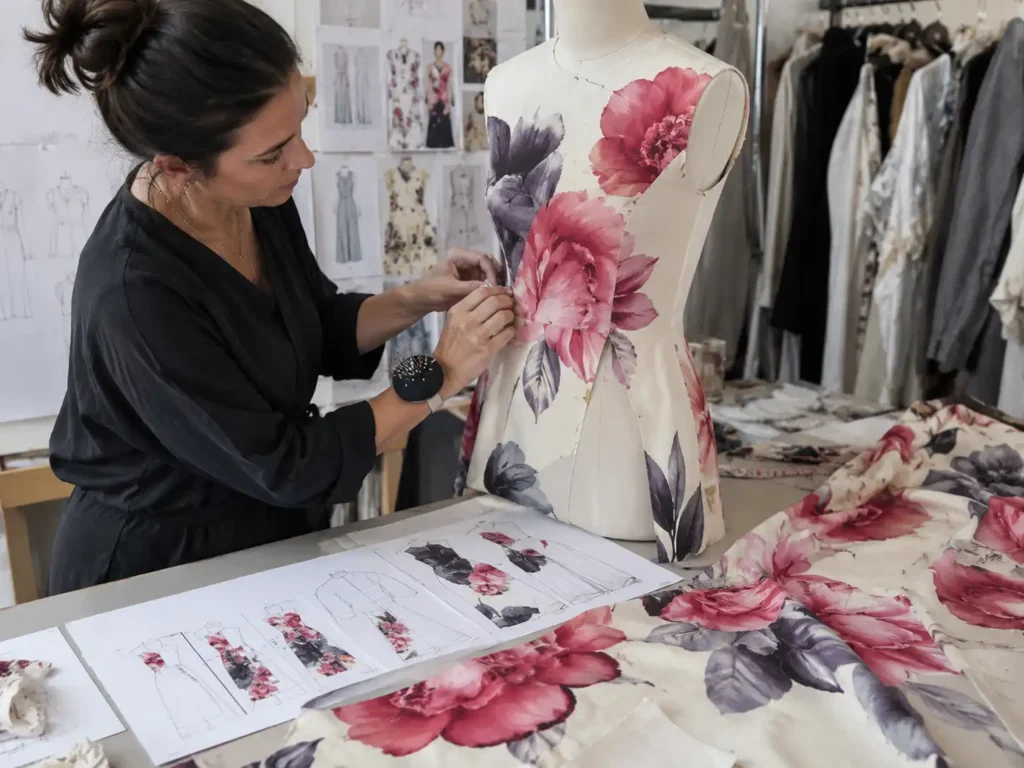
Poor Panel Placement
- Mark placement references
- Control mirrored and directional panels
- Allow extra fabric for matching
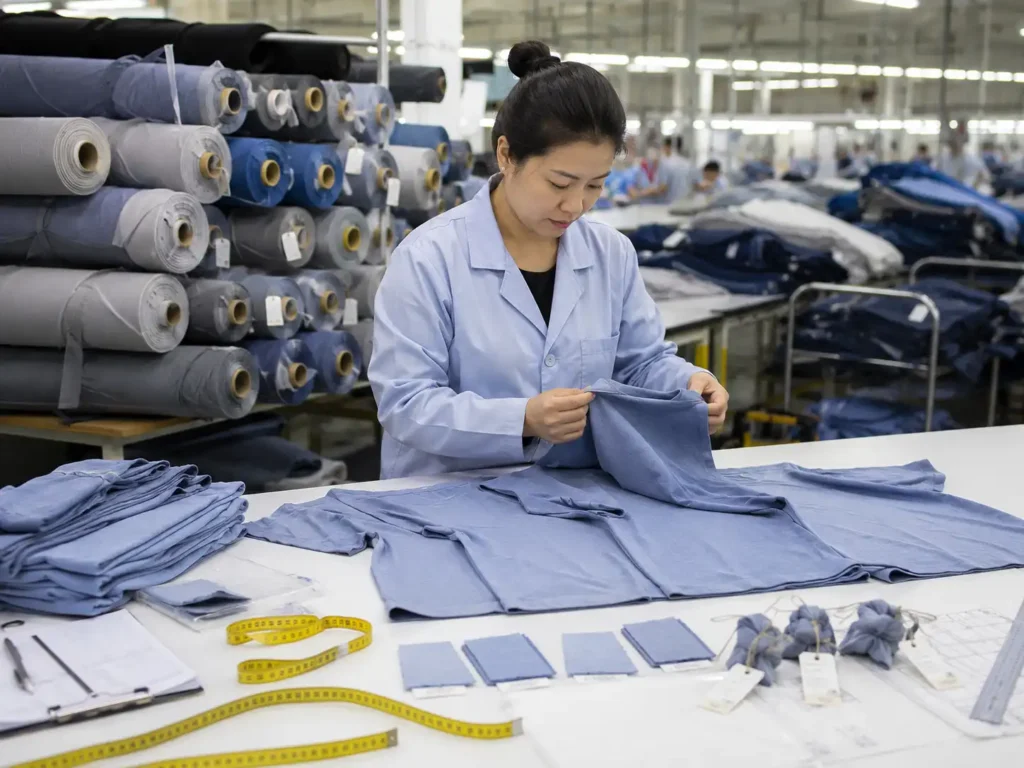
Bulk Inconsistency
- Inspect bulk fabric before cutting
- Separate print or shade lots
- Compare bulk garments with PP approval
Digital Printed Dresses Built for Commercial Collections
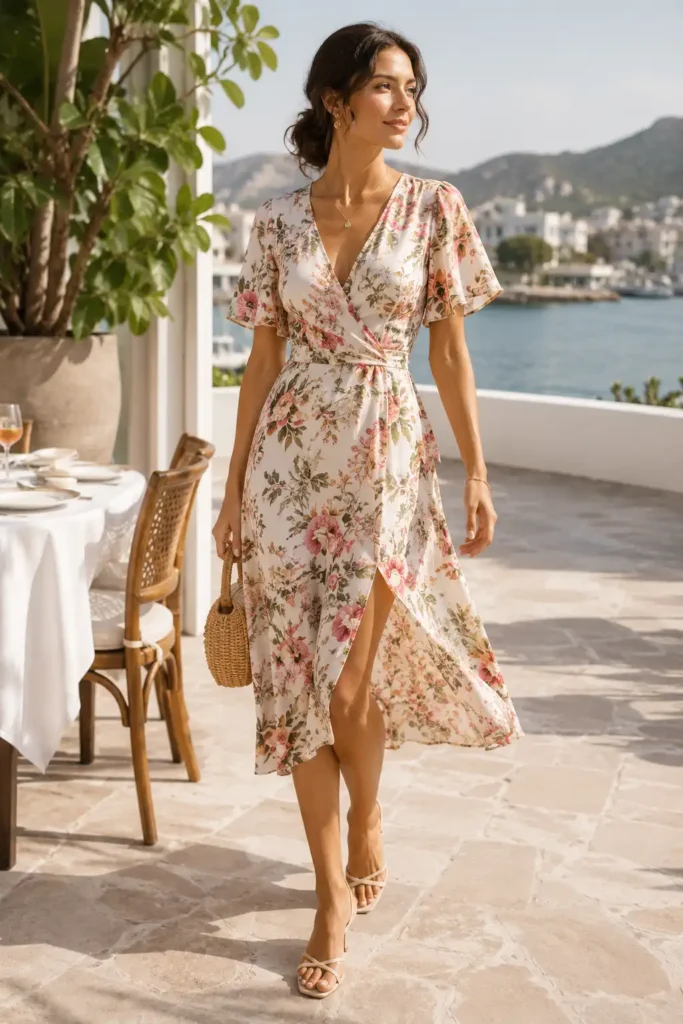
Floral Resort Dresses
- Best for resort, vacation and summer drops
- Control print direction, opacity and hem balance
- Consider anti-crease packing for travel retail

Printed Maxi Dresses
- Review full-length artwork scale
- Plan border distance from finished hem
- Confirm lining length and opacity

Printed Satin Dresses
- Control grain and shine direction
- Protect surface during sewing and pressing
- Match print color with lining and trims

Printed Chiffon Dresses
- Check transparency against lining
- Stabilize cutting and narrow seams
- Review layered print density

Printed Mesh Dresses
- Assess artwork under stretch
- Control lining coverage and transparency
- Inspect holes and print placement
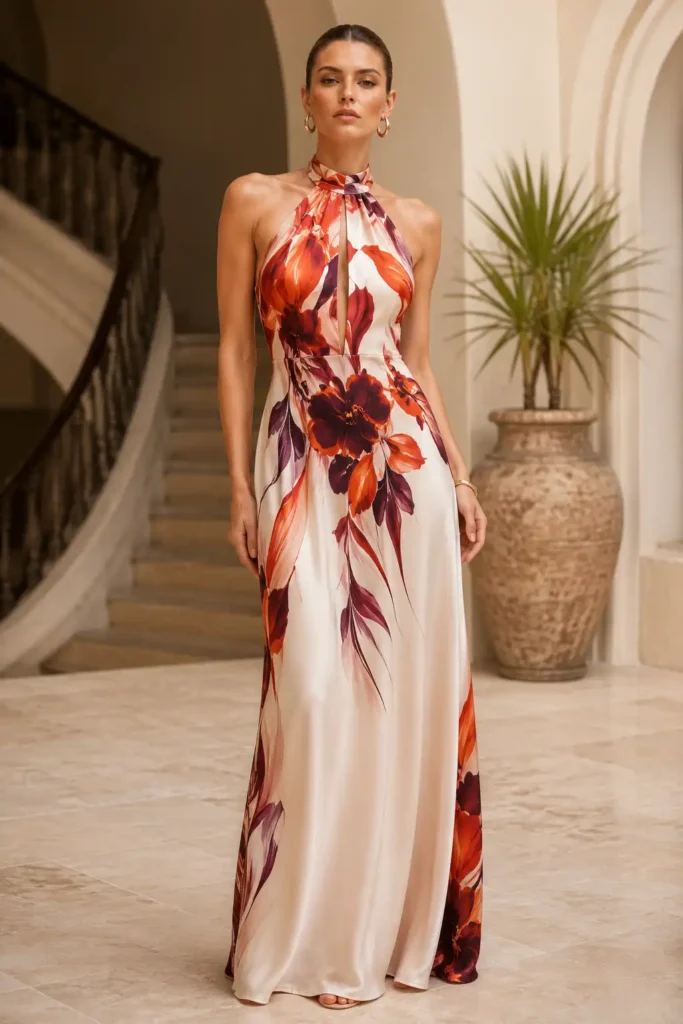
Printed Party Dresses
- Coordinate print with construction lines
- Review bust, waist and hip placement
- Protect statement surfaces in packing
Digital Print Methods for Dress Development

All-Over Print
- Best for scalable seasonal programs
- Requires repeat and direction data
- Efficient when panel matching is limited
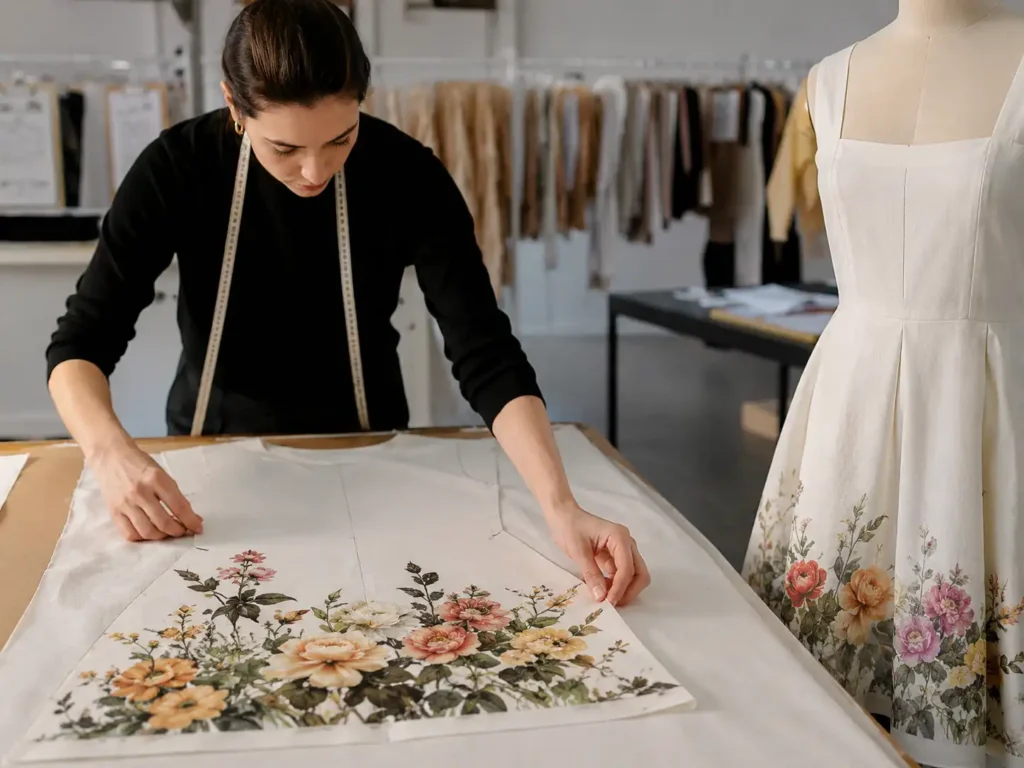
Placement Print
- High visual control
- Requires pattern-linked coordinates
- May increase material and setup cost

Engineered Print
- Suitable for signature collections
- Needs approved production pattern
- Requires controlled panel registration

Border Print
- Strong for maxi and resort styles
- Length planning is critical
- Extra fabric may be needed for matching
Base Fabrics Selected for Print, Fit and Wear
Print quality cannot be separated from the fabric. Fiber content, surface texture, weight, width, stretch, opacity, shrinkage and finishing affect color, hand feel, drape, pattern stability and final cost.
| Base Fabric | Best Dress Uses | Print Appearance | Main Control Points |
|---|---|---|---|
| Viscose / Rayon | Resort, maxi, brunch, summer | Fluid, saturated, soft surface | Shrinkage, growth, width, seam stability, hem balance |
| Chiffon | Occasion, layered, sleeve and ruffle styles | Soft color, translucent, airy | Opacity, lining, cutting slippage, narrow seams, print direction |
| Satin | Slip, party, cocktail and evening | Rich color with reflective shine | Grain direction, snags, shade appearance, pressing, crease protection |
| Crepe | Midi, cocktail, office-to-evening | Controlled color with textured surface | Weight, drape, zipper flatness, pressing, dimensional stability |
| Stretch Mesh | Bodycon, party, festival, overlay | Lightweight, transparent, stretch-sensitive | Print distortion, holes, recovery, lining, neckline stability |
| Jersey / Stretch Knit | Fitted, ruched and casual dresses | Good saturation with soft hand | Recovery, skew, shrinkage, side-seam stability, measurement tolerance |
| Linen Blend | Resort, vacation and natural-look collections | Textured, matte, relaxed | Wrinkling, slubs, shrinkage, color penetration, seam finish |
Artwork Files Needed Before Print Sampling

Repeat Artwork Package
- Repeat width and height
- Color standard or Pantone references
- Direction, rotation and crop rules
- Reference garment or intended scale

Placement Artwork Package
- Center line and key coordinates
- Finished motif dimensions
- Pattern or tech pack reference
- Rules for larger and smaller sizes
Print Scale and Placement Engineered Around the Pattern
Commercial print quality is decided where artwork meets the garment pattern. Jinfeng Apparel coordinates motif size, direction, body position, seam movement and size grading before bulk cutting.
Motif Scale Must Match the Garment Proportion
A 25 cm floral repeat can dominate a mini dress yet appear balanced on a full maxi skirt. Scale review should consider garment length, skirt sweep, bodice width, sleeve size and the distance from neckline to waist. Large motifs need a planned focal point, while small repeats need enough spacing to avoid visual noise. Jinfeng Apparel can review artwork against an intended silhouette or approved pattern, helping the design team choose a repeat scale that remains commercial across the size range.
- Mini and fitted styles: favor controlled motifs that do not overcrowd the torso or distort at curved seams.
- Midi and maxi styles: allow larger repeats but require attention to vertical flow, hem position and skirt fullness.
- Ruffles and gathers: compress or rotate motifs, so the finished visual effect must be sampled rather than judged from flat fabric.
Placement Must Respect Bust, Waist and Hip Landmarks
Placement graphics become a fit issue when a motif sits across the bust apex, waist seam, hip curve, cut-out or zipper.
A visually attractive flat layout can look unbalanced on body if garment landmarks are ignored.
Placement planning should reference center front, waistline, bust point, side seam, neckline and finished hem.
For asymmetric or one-shoulder designs, visual balance may matter more than geometric symmetry.
Jinfeng Apparel reviews placement together with pattern structure so the printed focal point supports the silhouette instead of fighting it.
Panel Matching Requires Planned Fabric Allowance
Matching large motifs across center fronts, side seams, princess seams, waist joins or skirt tiers increases fabric use and cutting time.
Not every seam requires exact matching; the decision should follow retail visibility and cost priorities.
Front-center and major waist joins may deserve tighter alignment, while hidden or curved seams may use directional consistency rather than exact motif continuity. The approved matching standard should be written into cutting and QC instructions before bulk production.
Size Grading Changes the Printed Composition
A fixed placement cannot remain identical across XS to XL when the pattern grows in width and length.
The brand must decide whether the motif keeps the same physical size, scales by garment size or shifts within defined tolerances.
Engineered prints may require separate layouts for size groups. Early decisions prevent a smaller size from losing important artwork or a larger size from showing excessive empty space. Jinfeng Apparel links placement rules with the size chart and grading plan before final approval.
Dress Patterns Developed for Print and Commercial Fit
Print visibility does not compensate for weak fit. Pattern development controls bust coverage, waist position, hip ease, skirt balance, neckline security, lining and movement across the intended size range.
Bodice Fit Controls Where the Print Sits
Bust shaping, neckline depth, strap length, armhole position and waist placement affect how a motif appears on body. A flower centered on a flat pattern can move upward or outward after the bust volume is shaped. Fitted satin, mesh or jersey styles require additional review because fabric stretch or bias behavior changes both fit and print position. Jinfeng Apparel uses pattern development and sample fitting to confirm the garment before final placement rules are locked.
Skirt Balance Protects Vertical Print Flow
Maxi, asymmetric, bias-cut and high-low skirts require balanced hems and controlled fabric direction. Soft printed fabrics can grow unevenly after hanging, particularly when panels are cut on different grain angles. The sample should be allowed to settle before final hem confirmation. Border prints need finished length planning from the beginning because shortening after sampling may remove part of the artwork or change the visual proportion.
Lining Must Support Color and Wearability
Lining choice affects opacity, comfort, stretch and the apparent color of the print. A white lining can brighten the shell; a nude lining can soften contrast; a dark lining may shift pale colors. Stretch mesh and jersey need lining with compatible extension and recovery. Chiffon and lightweight woven dresses need stable lining length so the shell remains fluid without revealing uneven layers. Shell and lining are reviewed together during sample approval.
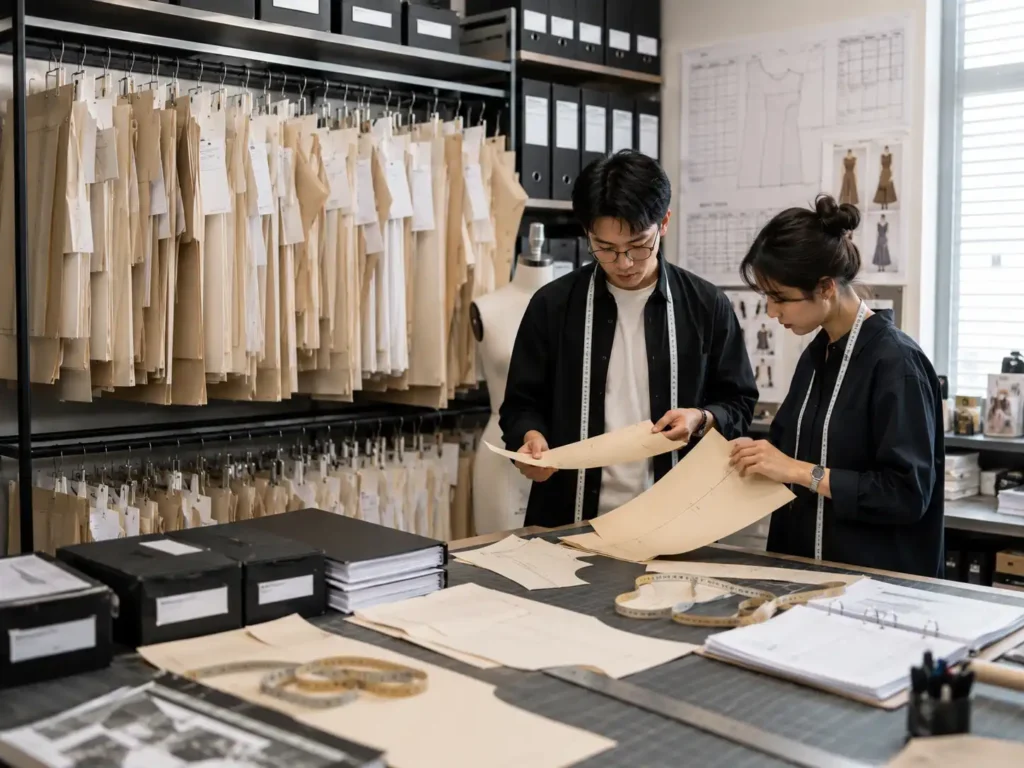
Sample Development Before Bulk Print Commitment
Project Review
Fabric Direction
Print Strike-Off
First Garment Sample
Revision Sample
PP Sample Approval
From Approved Print to Retail-Ready Delivery

Artwork Approval
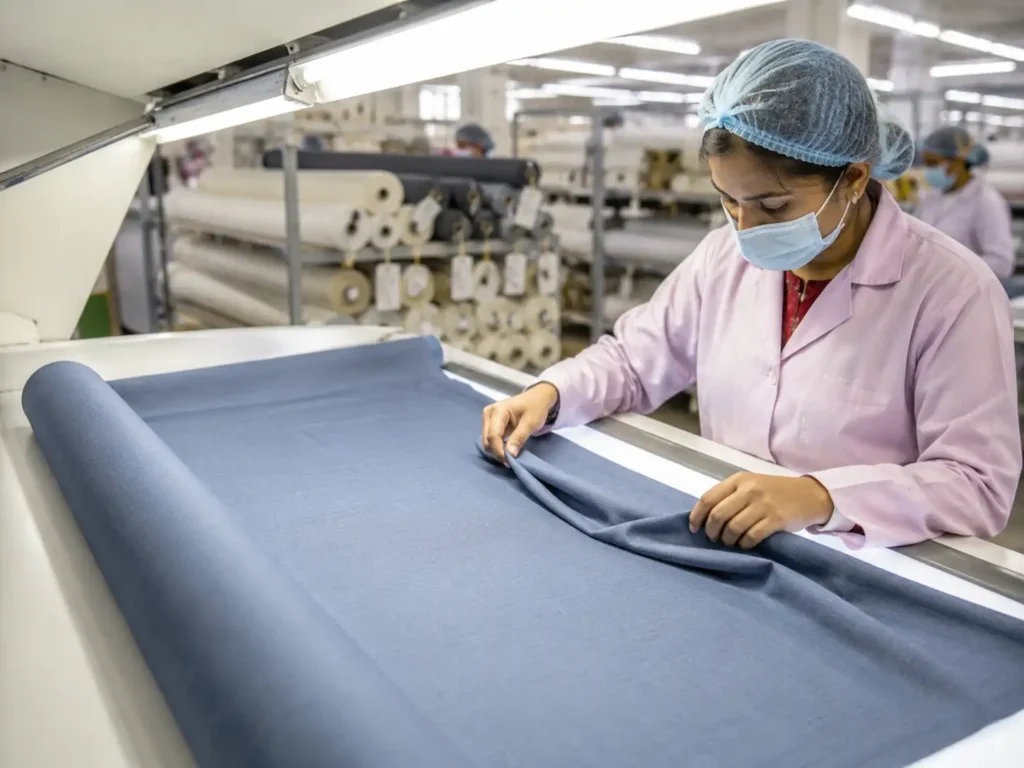
Bulk Fabric Approval
Pattern Release

Cutting Preparation

Sewing Control

Garment Inspection

Private Label Packing

Export Coordination

Color and Batch Control for Repeatable Printed Dresses
Digital print color is influenced by the file, ink system, fabric, finishing, production batch and viewing conditions. Approval records must follow the material from strike-off to repeat order.
Physical Approval Comes Before Bulk Color Release
Screen colors are not a production standard. Jinfeng Apparel requests a physical reference whenever color accuracy matters, such as a Pantone number, approved swatch, original fabric or print strike-off. Critical colors are reviewed on the selected base fabric because the same file can produce different results on satin, chiffon, viscose, mesh or jersey. Approval should record the fabric identity, artwork version, print scale and viewing condition so later comparisons use the same reference.
Bulk Fabric Is Checked Before Cutting Begins
Bulk printed fabric is inspected for color, hand feel, width, shrinkage, print defects, registration, streaks, missing areas and lot variation. Rolls with visible differences are separated rather than mixed randomly across garment bundles. Shade or print lot separation protects consistency within each shipment and makes later investigation possible. Cutting should begin only after the approved bulk fabric and final pattern are both released.
Repeat Orders Use Records, Not Assumptions
Reorders may use a new fabric batch, ink batch or production window, so color cannot be assumed identical. Jinfeng Apparel keeps approved references, fabric records, artwork versions, measurements, trims, labels and packing instructions for future production. A new bulk print still requires comparison with the retained reference. When exact continuity is critical, material booking and planned repeat-order volume should be discussed early.
- Color records: Pantone or physical standard, strike-off approval, bulk approval and lot separation.
- Material records: base fabric composition, weight, width, surface, stretch, shrinkage and supplier batch.
- Production records: artwork version, repeat dimensions, pattern version, placement notes and packing standard.
Cutting and Sewing Details That Protect the Print
Workmanship determines whether approved artwork remains intentional after the garment is cut, shaped, sewn, pressed and packed. Printed fabrics need specific controls at every production step.
- Cutting Direction and Marker Planning
Directional florals, animals, text, gradients and border prints must follow a defined top and bottom. Reversing pattern pieces to save fabric may create obvious visual errors. Marker planning also controls motif position, fabric utilization and matching allowance. Placement and engineered prints may require dedicated markers by size group. Before cutting, the team confirms final pattern, fabric width, shrinkage, direction, print lot, defects and panel quantity. Printed chiffon, satin and viscose need extra care because shifting or surface movement can change cut accuracy.
- Seam Construction and Motif Relationships
Sewing joins several printed panels into one visual composition. Seam allowance, feed tension, stretch and curved shaping can move motifs away from the planned line. Front-center seams, waist joins and visible side seams may require closer alignment than hidden seams. Jinfeng Apparel checks stitch density, seam quality, symmetry, zipper flatness, strap length, lining attachment and print relationship during in-line inspection. The approved matching level should reflect retail visibility and cost instead of demanding unnecessary exact alignment everywhere.
- Pressing and Packing Without Surface Damage
Heat, pressure and folding can change printed surfaces. Satin may show pressing marks or shine variation; mesh can distort; coated or high-saturation prints may transfer if packed before fully stable. Pressing settings follow the fabric, and finished garments are checked for color change, hard creases, shine marks and distortion. Folding boards, tissue, polybag size and carton pressure are selected according to the silhouette and surface. Maxi dresses, border prints and statement placement designs may need special folding so the visual focal area is not damaged.
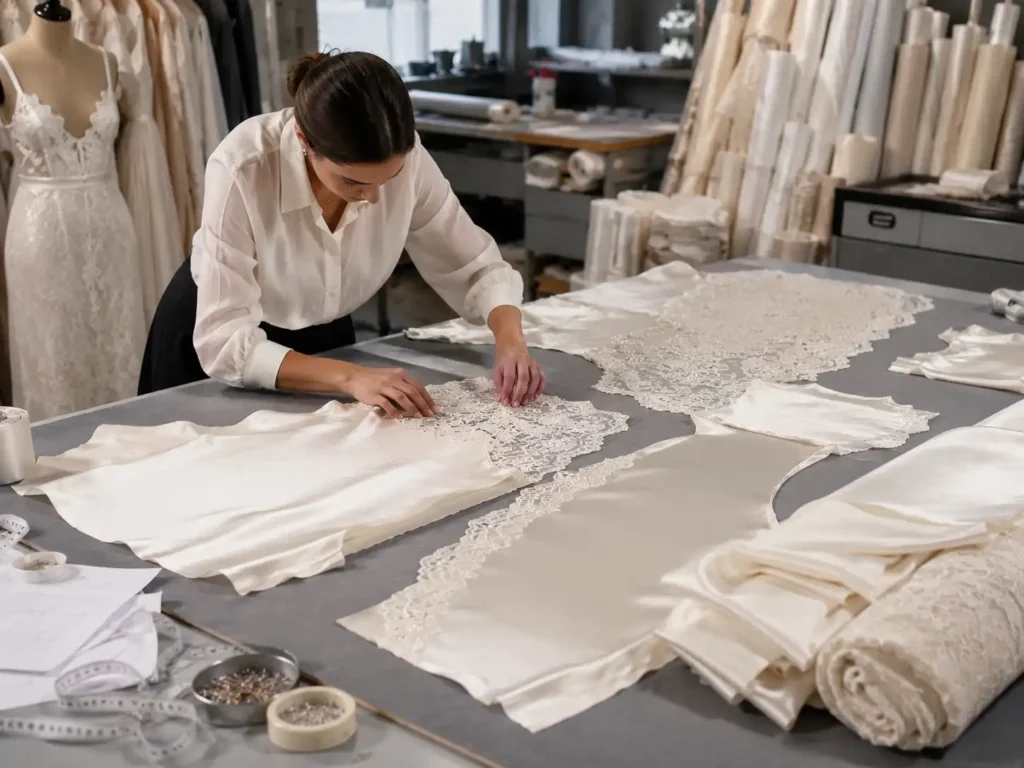
Quality Control Across Fabric, Garment and Packing
Incoming Fabric QC
- Separate print or shade lots
- Record width and shrinkage
- Flag defects before cutting
Cutting QC
- Verify top and bottom direction
- Control border and placement zones
- Protect size and lot traceability
Sewing QC
- Check visible seam alignment
- Prevent puckering and distortion
- Compare with approved construction
Garment QC
- Use confirmed tolerances
- Compare with PP sample
- Isolate nonconforming pieces
Packing QC
- Match SKU and size
- Protect printed surfaces
- Confirm shipment traceability
Testing Coordination
- Confirm test scope early
- Review supplier documents by batch
- Avoid blanket certification claims
MOQ, Samples and Production Planning
| Planning Item | Standard Direction | Variables Requiring Review |
|---|---|---|
| Garment MOQ | Starts from 200 pcs per style/color | Fabric availability, print partner MOQ, color count, construction and schedule |
| Custom Print MOQ | Quoted by approved base fabric and print route | All-over vs placement, repeat size, colors, setup, fabric width and supplier minimums |
| Standard Sample | Generally 10-15 days after material direction is confirmed | Artwork readiness, strike-off timing, trims, fit complexity and revision scope |
| Complex Sample | Generally 15-25 days after material direction is confirmed | Printed mesh, satin, corset details, engineered placement, layered or complex structures |
| Bulk Production | Scheduled after PP approval and material arrival | Quantity, style count, fabric production, production allocation, QC and packing window |
| Private Label Materials | Managed separately from garment MOQ | Woven labels, hangtags, printed polybags, barcode stickers, boxes and supplier minimums |
| Size Range | Multiple sizes within the confirmed style/color quantity | Size ratio, grading scope, special petite/tall/plus blocks and packing breakdown |
Private Label Details Prepared for Retail Delivery

Main Labels
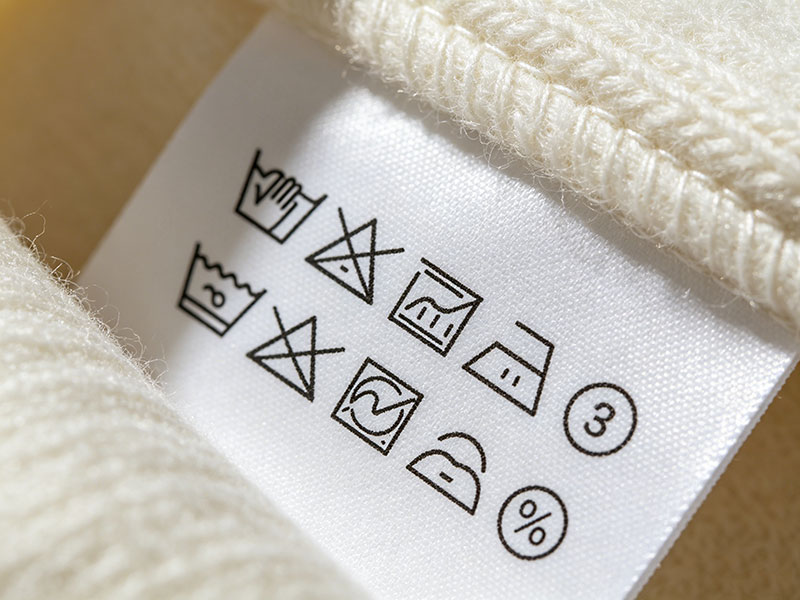
Care Labels

Hangtags
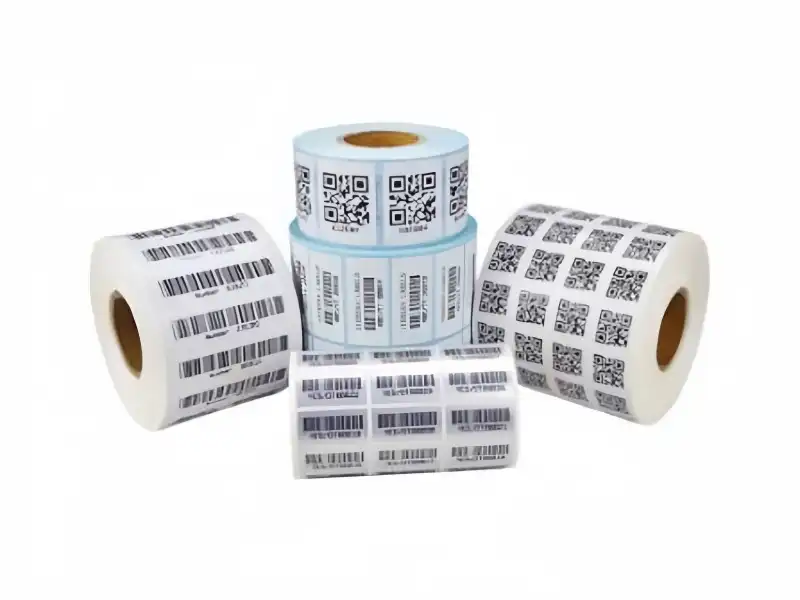
Barcode and SKU
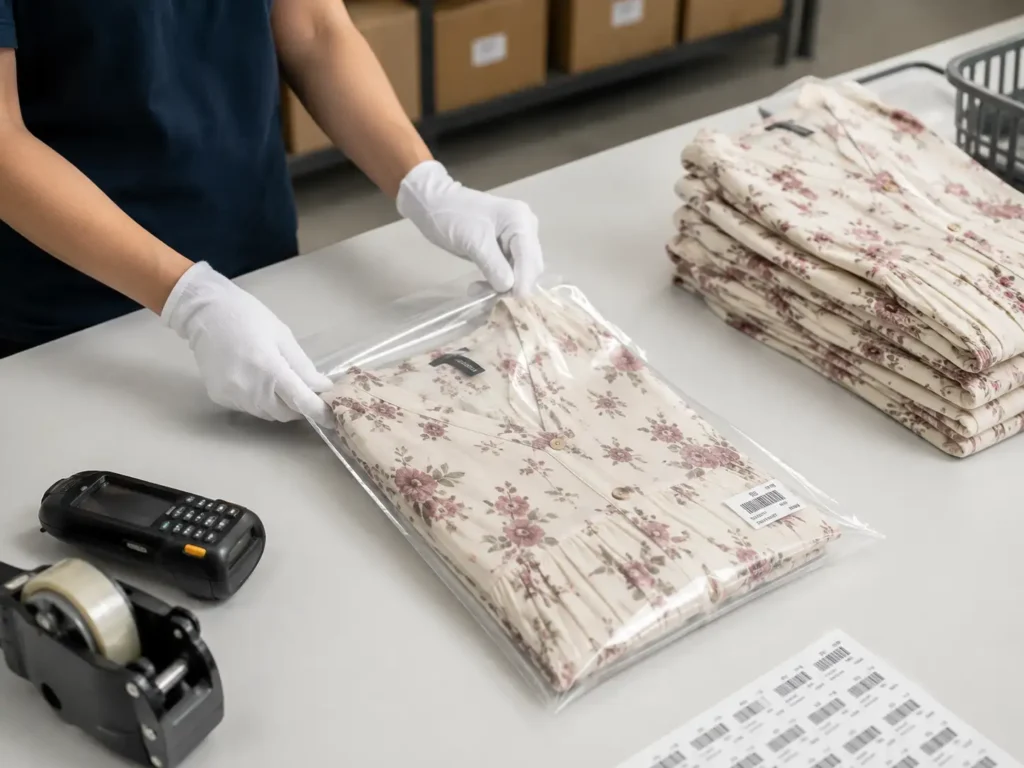
Retail Polybags
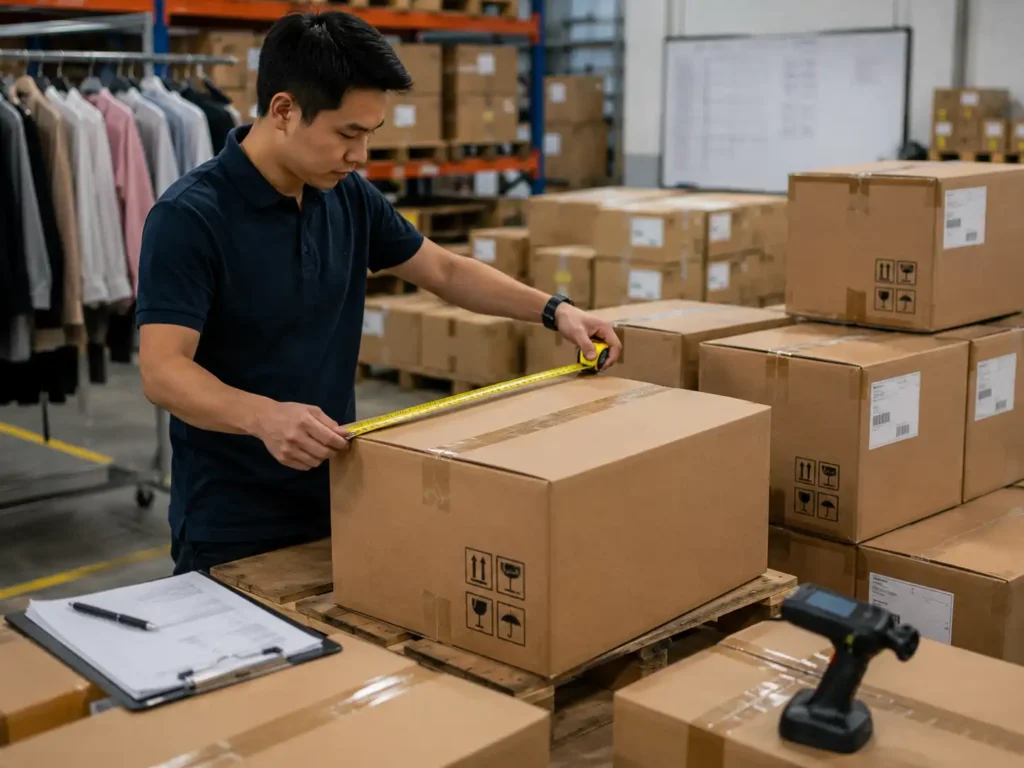
Carton Planning
Multi-Style Programs Managed Around the Launch Calendar
Style-Level Tracking
- Track sample and approval version
- Flag decisions blocking production
- Keep commercial and technical files aligned
Material Booking
- Confirm bulk fabric route early
- Separate stock and custom materials
- Coordinate lining, trims and labels
Factory Allocation
- Group compatible product types
- Reserve QC and packing windows
- Avoid late line changes
Phased Delivery
- Align split shipment with launch priority
- Protect SKU and carton traceability
- Review freight impact before approval
Digital Print Collection Development Example
The following program profile reflects the scale and workflow commonly required by established fashion labels. Brand identity and proprietary artwork remain confidential.
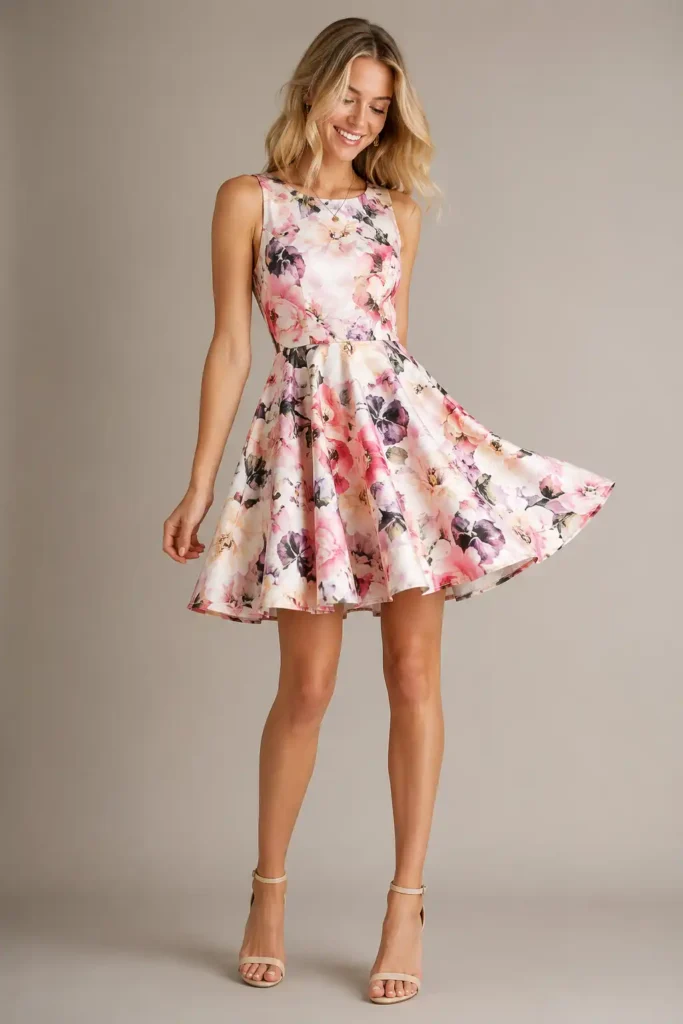
Case 1: Seasonal Printed Dress Collection for a Resortwear Brand
Project Scope
A resortwear brand developed a seasonal collection focused on lightweight printed dresses for vacation and summer markets.
- Collection size: 22 dress styles
- Product categories: floral maxi dresses, chiffon dresses, printed satin dresses and lightweight woven styles
- Fabric range: viscose, chiffon, satin and linen blends
- Print types: all-over floral prints, border prints and placement artwork
- Production requirement: consistent print appearance across multiple silhouettes and colors
Development Challenges
The collection required different print approaches across various dress structures.
Key challenges included:
- Maintaining artwork scale between mini, midi and maxi silhouettes
- Controlling color differences between satin, chiffon and viscose
- Managing large floral placement around bust, waist and hem areas
- Preventing transparency issues on lightweight printed fabrics
- Maintaining consistent appearance across multiple production batches
Manufacturing Approach
The development team connected artwork planning with garment patterns before sampling.
Control points included:
- Reviewing print scale against actual dress patterns
- Confirming physical strike-offs before bulk printing
- Adjusting motif placement according to garment structure
- Selecting suitable lining colors for lightweight fabrics
- Creating production instructions for cutting direction and panel matching
Manufacturing Value
The collection achieved a consistent seasonal visual identity by controlling artwork, fabric behavior and garment construction as one production system.

Case 2: Fast Print Dress Launch for an Ecommerce Fashion Brand
Project Scope
An online fashion brand required a fast development cycle for a new printed dress collection before a seasonal marketing campaign.
- Collection size: 15 dress styles
- Product direction: going-out dresses, party dresses and social occasion styles
- Development source: reference images, artwork files and product concepts
- Fabric selection: printed mesh, jersey, satin and stretch woven fabrics
- Requirement: fast sampling with commercial production readiness
Development Challenges
The main challenge was converting creative concepts into production-ready garments within a limited launch window.
Major risks included:
- Artwork looking different after printing on actual fabric
- Print distortion on stretch materials
- Incorrect motif placement after pattern cutting
- Sample approval delays affecting production timing
- Maintaining ecommerce photography appearance in bulk production
Manufacturing Approach
The project followed a structured development process:
- Artwork and fabric feasibility review
- Print strike-off approval
- First garment sample development
- Fit correction and placement adjustment
- PP sample confirmation before bulk production
Additional controls included:
- Artwork version management
- Pattern-linked placement references
- Size range review
- Bulk fabric inspection before cutting
- Style-level production tracking
Manufacturing Value
The brand was able to move from concept to production with clearer approval points, reducing unnecessary revisions while protecting the planned launch schedule.
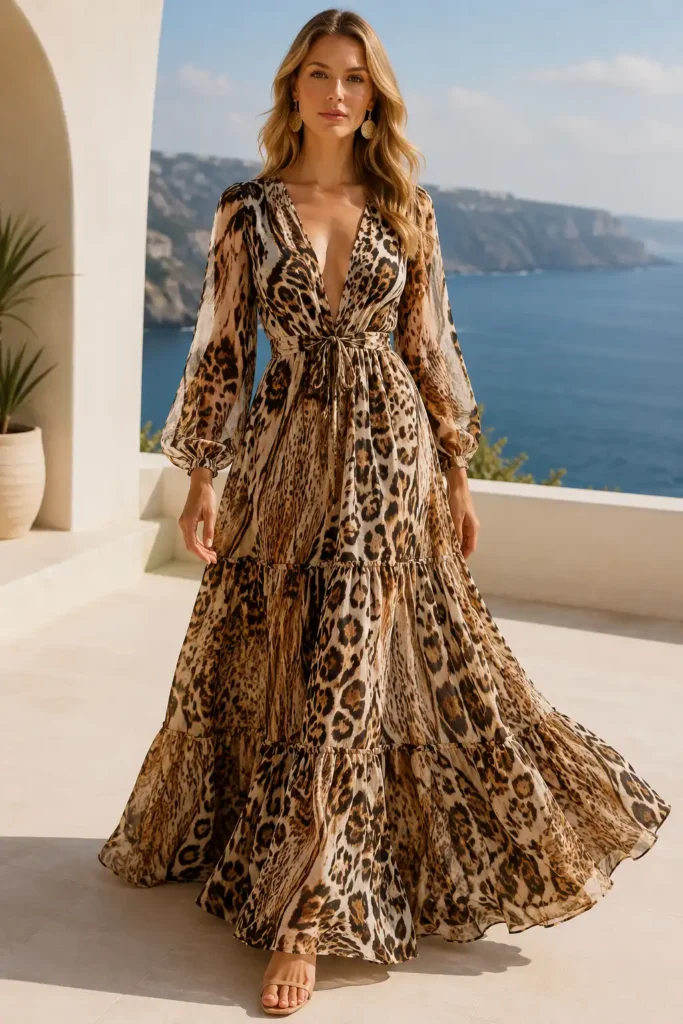
Case 3: Premium Engineered Print Dress Development Program
Project Scope
A premium fashion label developed statement printed dresses requiring advanced artwork placement and complex garment structures.
- Collection type: premium occasionwear and statement fashion
- Key styles: engineered print dresses, placement print dresses and fitted occasion styles
- Materials: printed satin, stretch mesh, chiffon and structured lining systems
- Requirement: high visual impact with controlled fit and production consistency
Development Challenges
Engineered prints require artwork, pattern and production teams to work together.
Critical challenges included:
- Maintaining motif position after size grading
- Aligning artwork with seams and garment curves
- Controlling print direction on satin surfaces
- Protecting stretch print appearance during wear
- Managing complex fitted silhouettes
Manufacturing Approach
The project used pattern-based print development.
Key controls included:
- Creating print placement rules linked to garment patterns
- Reviewing bust, waist and hip landmarks before approval
- Adjusting artwork scale for different size groups
- Controlling cutting direction and panel matching
- Establishing detailed QC standards for finished garments
Manufacturing Value
The program demonstrated how engineered printing requires more than fabric printing. Artwork planning, pattern engineering and manufacturing execution must operate together to achieve the intended retail appearance.
Production Proof Without Exposing Brand Designs
Process images should demonstrate real manufacturing activity while protecting confidential artwork, brand identity and unpublished collections.

Fabric Inspection
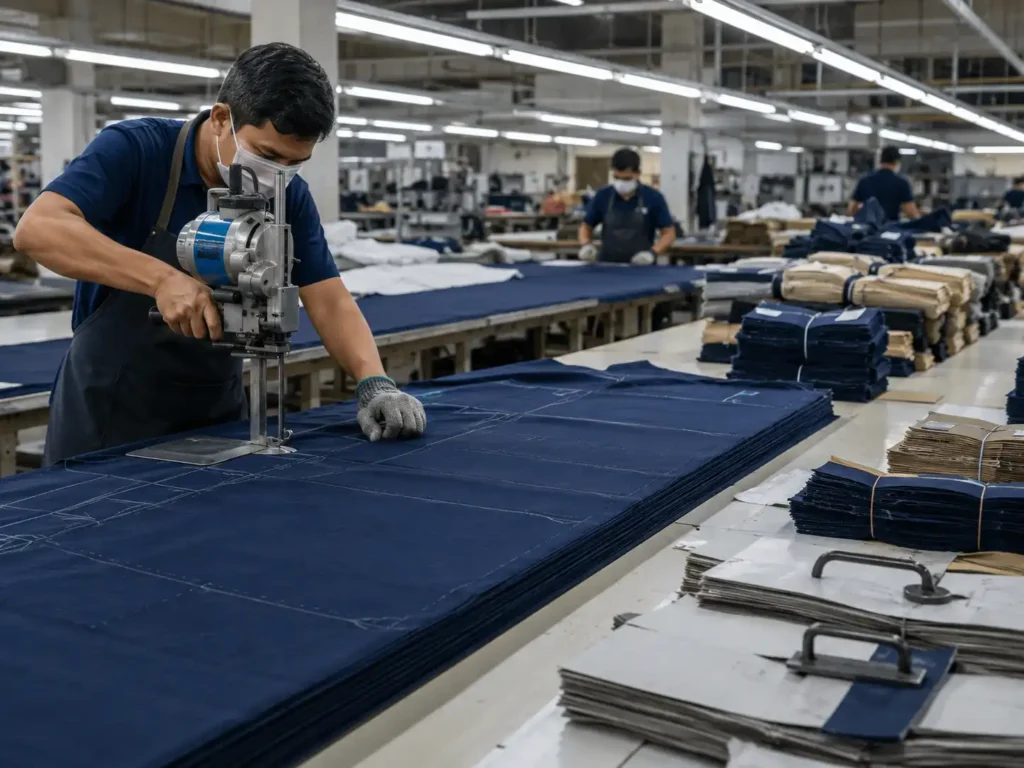
Cutting Control
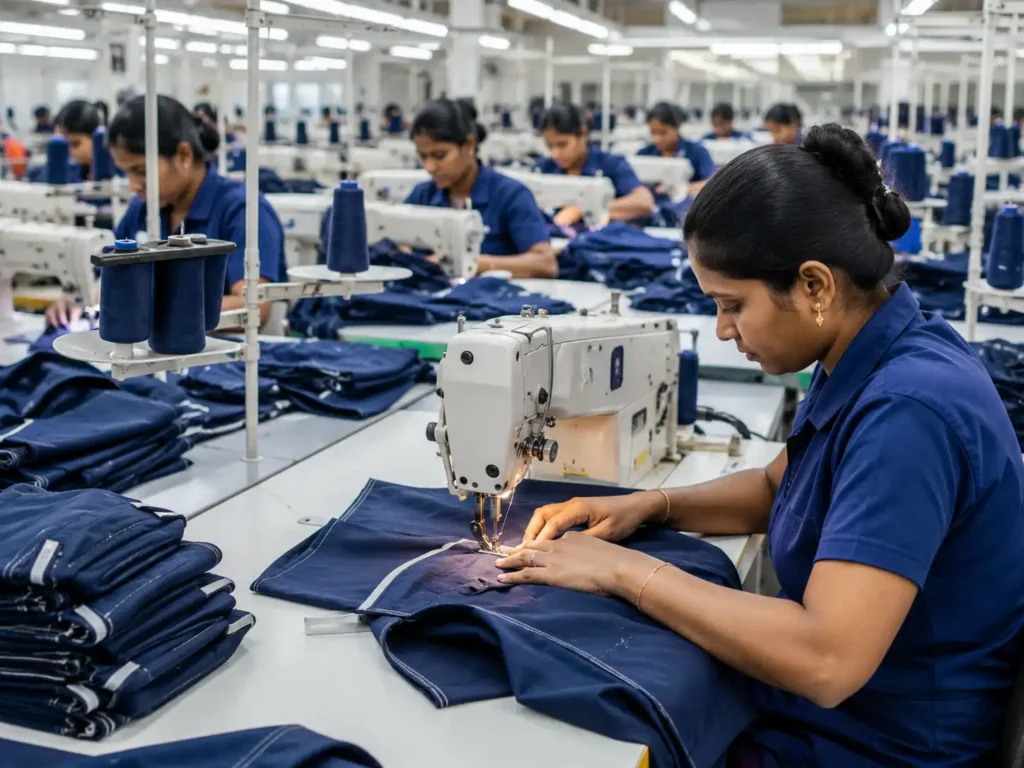
Sewing and In-Line QC
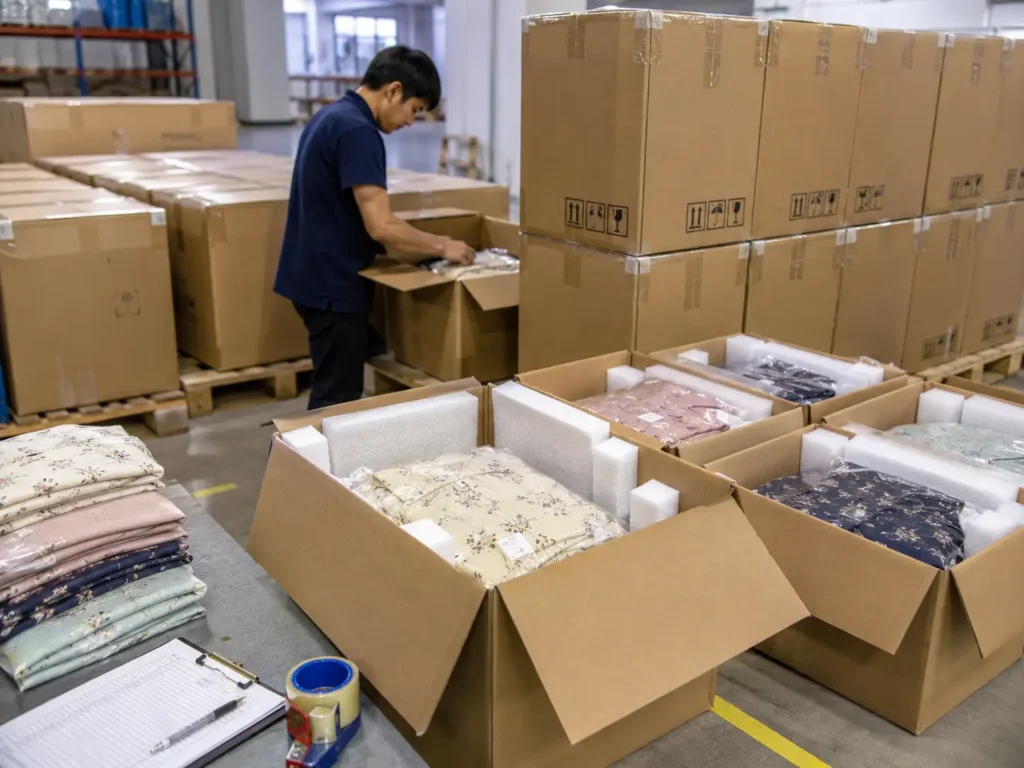
Packing and Cartons
NDA Protection and Repeat-Order File Control
Artwork Protection
Production Records
Reorder Review
Digital Printed Dress Frequently Asked Questions
Yes. Original repeat, placement, border and engineered artwork can be reviewed for fabric suitability, scale, color, pattern position and production feasibility. Production-ready files are preferred; lower-resolution references can support an initial discussion but may require artwork preparation before sampling.
Vector or high-resolution production files are preferred, together with repeat dimensions, physical size, direction, color references and placement instructions. A tech pack or style reference helps connect the artwork with the garment pattern.
Yes, but the repeat scale and placement should be reviewed by silhouette. A motif that works on a maxi dress may look crowded on a fitted mini dress. Different product groups may need adjusted scales or separate placement rules.
Garment MOQ starts from 200 pcs per style/color. Exclusive printed fabric may require a higher quantity based on base fabric, print method, repeat, color count, width, setup and printing partner requirements. Final MOQ is confirmed after artwork and fabric review.
Standard printed dress samples generally require 10-15 days after material direction is confirmed. Complex mesh, satin, corset, layered or engineered-placement styles generally require 15-25 days. Print strike-off and special material timing can extend the schedule.
Pantone references guide development, but the physical result depends on the fabric, surface, ink and finishing. Color is approved through a physical strike-off or fabric sample. Reasonable production tolerance should be confirmed before bulk printing.
Yes. Placement rules must account for pattern grading. The motif may keep the same size, scale by size group or shift within approved coordinates. The preferred rule should be confirmed before production artwork is released.
Yes. Main labels, care labels, hangtags, barcode stickers, size stickers, polybags and carton marks can be coordinated. Packaging materials may have separate supplier minimums and lead times from the garment MOQ.
Bulk fabric is checked for color, registration, defects, width, shrinkage and lot variation before cutting. Print lots can be separated, and finished garments are compared with the approved PP sample and recorded production standards.
Yes. Jinfeng Apparel supports NDA-based cooperation and protects print artwork, tech packs, patterns, samples, labels, packaging files, order information and unreleased collection details throughout development and production.

Start Your Digital Printed Dress Program
Jinfeng Apparel supports established fashion labels, sourcing teams and private-label programs that need original print development, commercial dress fit and controlled bulk production. A useful project review begins with enough information to evaluate the base fabric, print route, pattern structure, sample schedule, MOQ, private-label materials and delivery plan.
Kelly coordinates the first review with the development team and provides a clear next-step plan rather than an unsupported instant quotation.
- Style information: tech pack, line sheet, sketch, reference image or original sample.
- Print information: repeat or placement artwork, dimensions, direction, color references and intended garment position.
- Order information: quantity per style/color, size range, size ratio and planned number of styles.
- Material direction: preferred composition, weight, hand feel, stretch, opacity, drape or reference fabric.
- Brand delivery: main labels, care labels, hangtags, barcode data, polybags, carton marks and target shipment date.