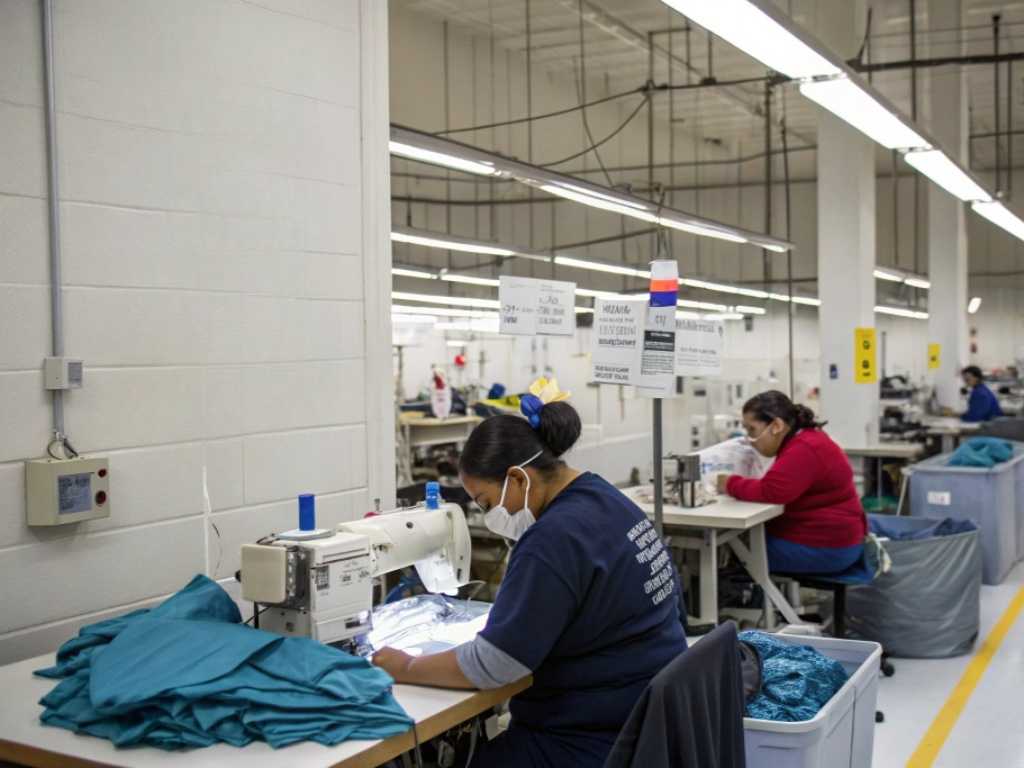
Brocade Dress Manufacturer
Develop structured brocade and jacquard dresses with controlled motif placement, refined fit, stable bulk quality, and private-label delivery.
- Collection scale: Programs commonly planned around 10-30 styles and 20,000-80,000 total garments, with factory allocation based on fabric readiness and construction complexity.
- MOQ structure: Standard production starts from 200 pcs per style/color; custom-woven, custom-dyed, metallic, certified, or specially finished fabrics may require higher supplier minimums.
- Fabric control: Repeat size, face direction, motif center, width, shade, metallic yarn condition, and cutting loss are reviewed before approved bulk cutting.
- Development scope: OEM, ODM, pattern making, sampling, revision, PP approval, bulk production, QC, private-label packing, and export coordination.
Manufacturing Depth Behind Every Brocade Collection
Since 2008
6 Owned Factories
10+ Production Partners
2 Sample Rooms
7+ Pattern Makers
15+ QC Inspectors

What Is a Brocade Dress Manufacturer?
A brocade dress manufacturer turns decorative woven fabric into commercially repeatable garments. The work includes fabric approval, pattern engineering, motif planning, sampling, controlled cutting, structured sewing, finishing, inspection, and branded delivery.
Fabric Knowledge Must Reach the Garment
A fabric mill may supply beautiful brocade, yet a finished dress can still fail when repeat size, fabric face, weave direction, thickness, shrinkage, seam behavior, and pressing response are not evaluated against the silhouette. A garment manufacturer must connect material data to pattern shape, seam placement, lining, zipper construction, hem balance, and production loss. Brocade with a 28 cm repeat behaves differently from a small all-over jacquard. A metallic floral cloth with exposed floats requires different handling from a compact matte weave. Fabric width also changes marker efficiency and unit cost, especially when a center-front motif or mirrored skirt panel is required.
- Material review: composition, weight, width, repeat, hand feel, stiffness, color, surface yarn, shrinkage, and snagging risk.
- Garment review: silhouette, seam lines, center placement, support layers, closure, movement, pressing, and packing.
- Commercial review: fabric MOQ, order quantity, cutting loss, sample plan, target cost, launch window, and repeat-order potential.
Manufacturing Is Different From Wholesaling
A wholesaler usually offers existing styles, fixed fabrics, and limited pattern control. Jinfeng Apparel develops from a tech pack, reference image, sample, sketch, line sheet, or collection direction. Pattern corrections, fabric alternatives, trim specifications, size grading, private labels, barcode systems, and packing instructions can be managed around the brand program. Approved PP and golden samples become reference standards for production and inspection. The goal is not merely to sew a decorative fabric; the goal is to deliver a dress whose motif, fit, structure, finish, and size range can be repeated across bulk quantities.
Built for Brocade Dress Programs Requiring Control
Occasionwear Brands
- Priority: fit, structure, motif, finishing, seasonal timing.
Premium Ecommerce Brands
- Priority: photo-ready samples, measurements, SKU accuracy, protective packing.
Fashion Retailers
- Priority: assortment control, labeling, carton ratio, delivery documents.
Product Development Teams
- Priority: feasibility, sampling, revision control, PP approval.
Sourcing Teams
- Priority: transparent cost drivers, factory allocation, quality evidence.
Brand Groups
- Priority: program management, repeatability, confidentiality, multi-batch delivery.
Is Jinfeng the Right Manufacturing Partner?
Best Fit For
- MOQ starts from 200 pcs per style/color.
- Multiple sizes can be distributed inside the confirmed quantity.
- Custom brocade, metallic yarn, special trims, and packaging may carry separate supplier minimums.
Not Designed For
- No one-piece fulfillment.
- No ready-stock wholesale model.
- No 1-50 piece test runs.
Why Brocade Dresses Fail Between Sample and Bulk
Motif Misalignment
Direction Errors
Metallic Yarn Snagging
Excess Seam Bulk
Incorrect Lining Support
Batch Variation
Brocade Dress Styles We Can Develop

Brocade Mini Dress
- Best for: holiday drops, party collections, evening capsules.
- Key risk: large motifs overpowering a short body length.
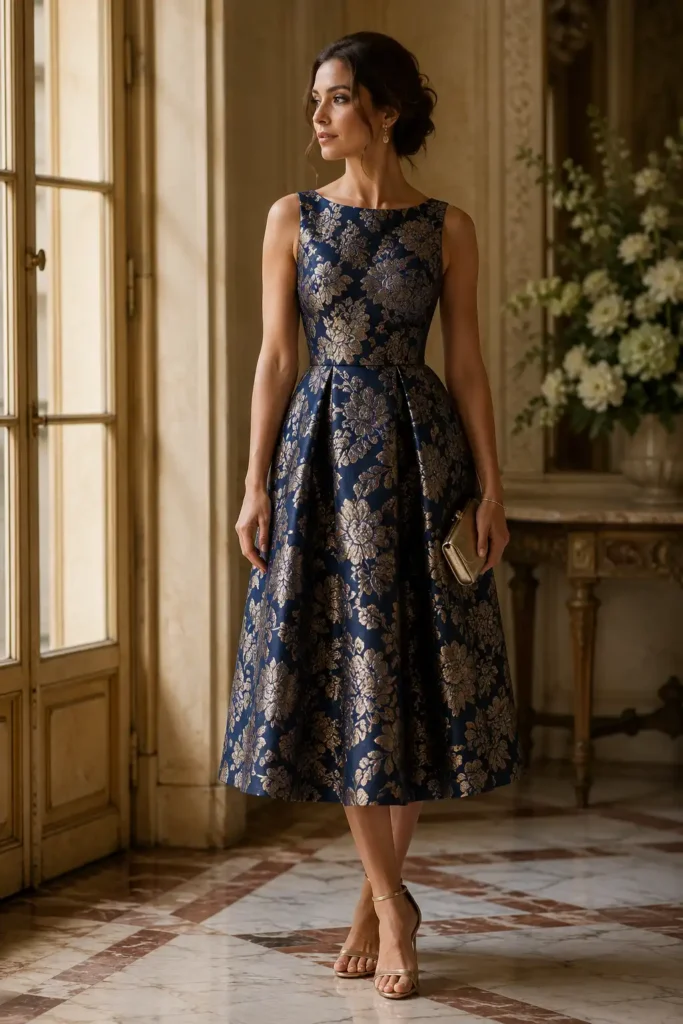
Brocade Midi Dress
- Best for: occasionwear, premium ecommerce, formal events.
- Key risk: hem balance and repeat interruption at waist seams.
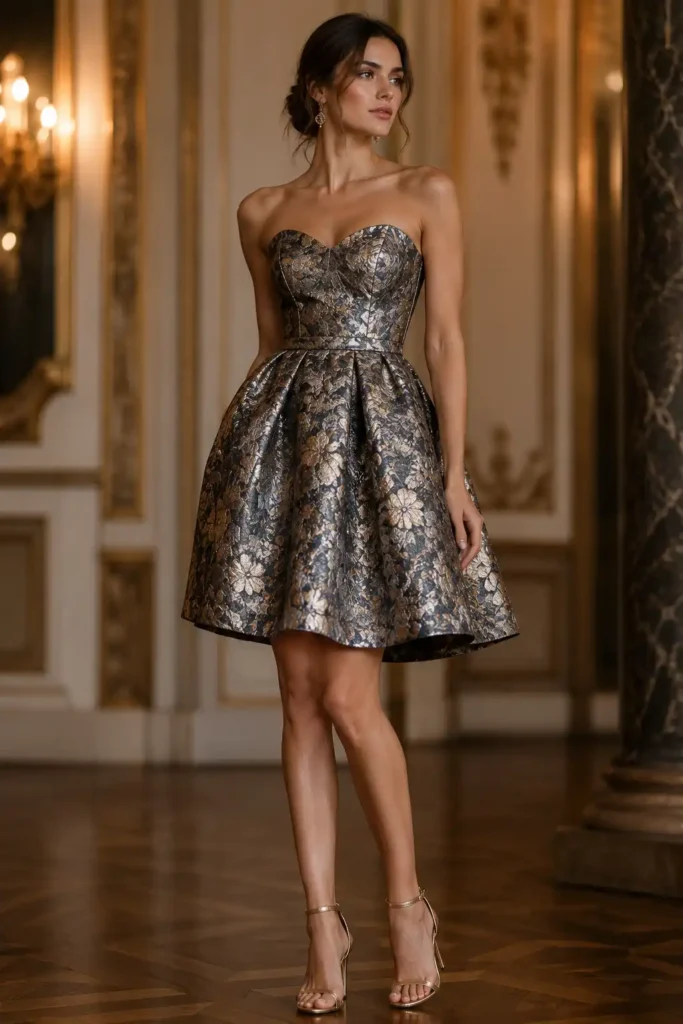
Cocktail Dress
- Best for: event dressing and holiday assortments.
- Key risk: thick seam intersections at the waist and zipper.

Party Dress
- Best for: social-first collections and seasonal launches.
- Key risk: visual inconsistency between sample lighting and bulk fabric.
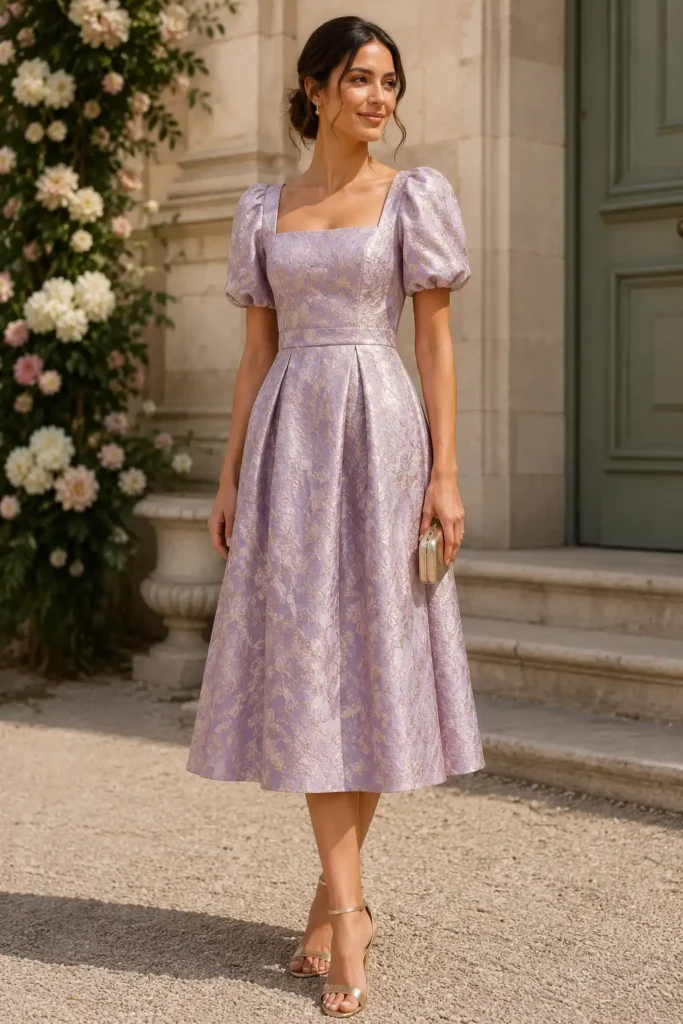
Wedding Guest Dress
- Best for: spring weddings, autumn events, formal capsules.
- Key risk: stiff armholes, tight lining, and poor movement.
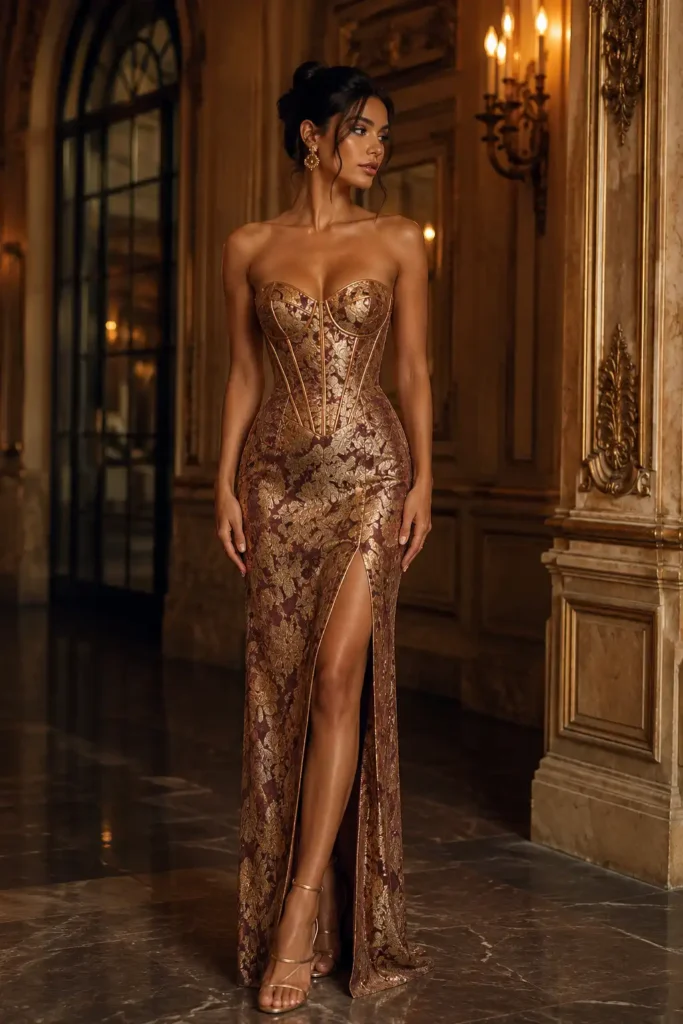
Corset Brocade Dress
- Best for: partywear, occasionwear, statement silhouettes.
- Key risk: excessive layer thickness and distorted bust shape.
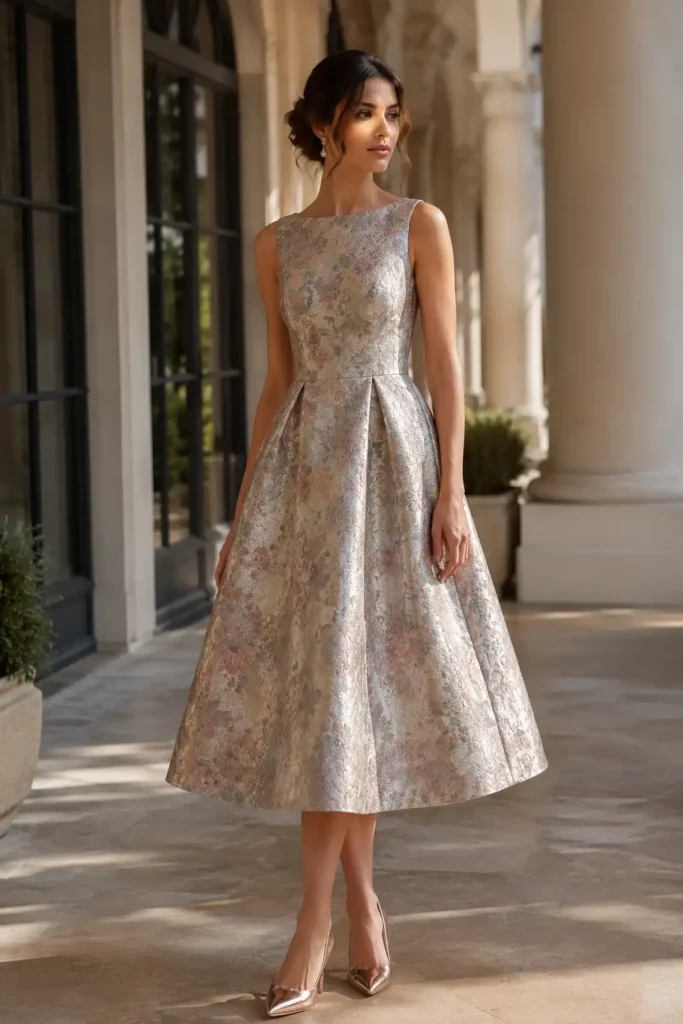
A-Line Brocade Dress
- Best for: wedding guest, formal daywear, premium retail.
- Key risk: side seams pulling forward due to uneven fabric stiffness.
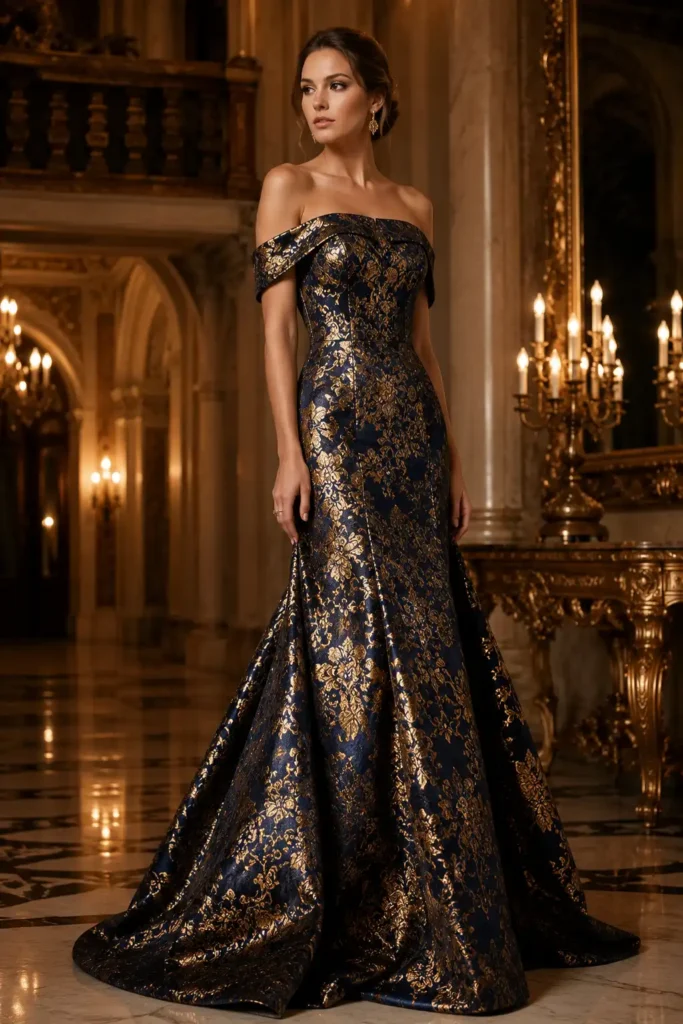
Brocade Evening Dress
- Best for: formal eveningwear and special-event collections.
- Key risk: weight, transport creasing, and long-hem imbalance.
Brocade and Jacquard Fabric Directions
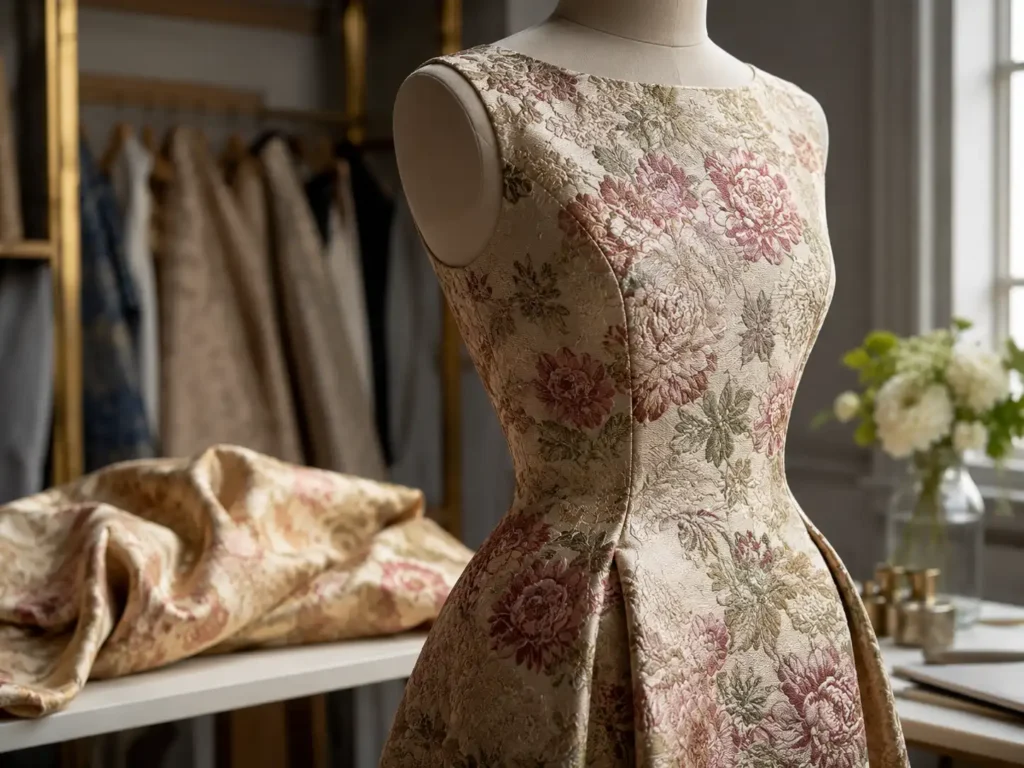
Floral Brocade
- Review: repeat size, motif center, shade grouping, and fabric width.
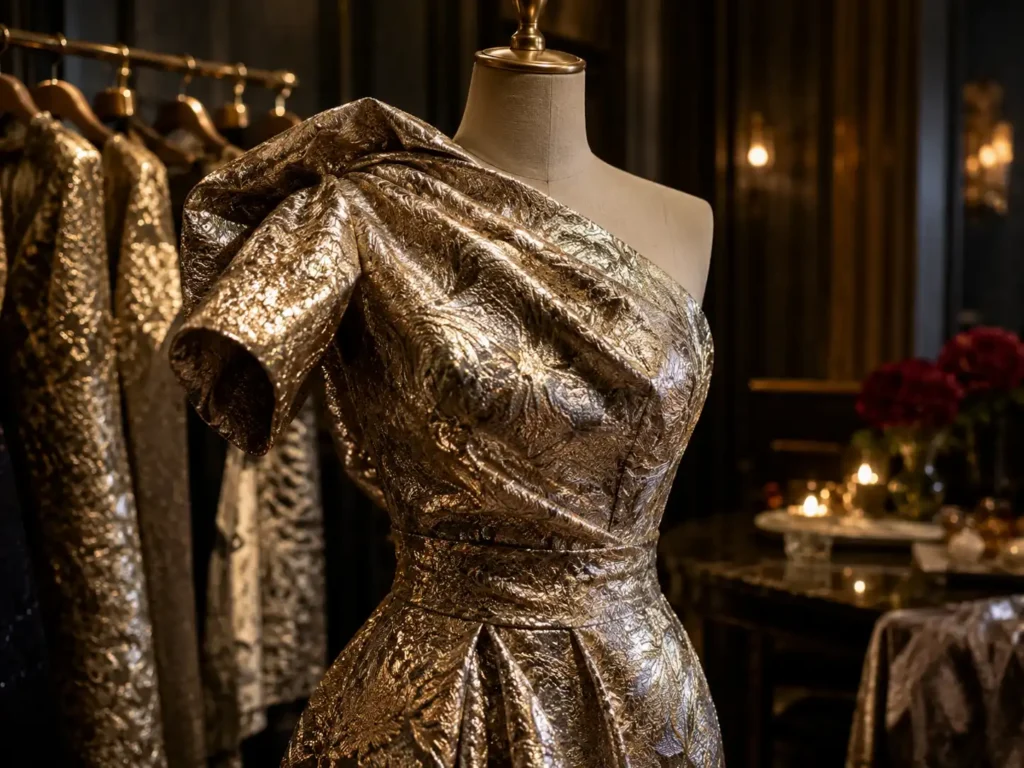
Metallic Brocade
- Review: surface durability, reflection, pressing, and protective packaging.
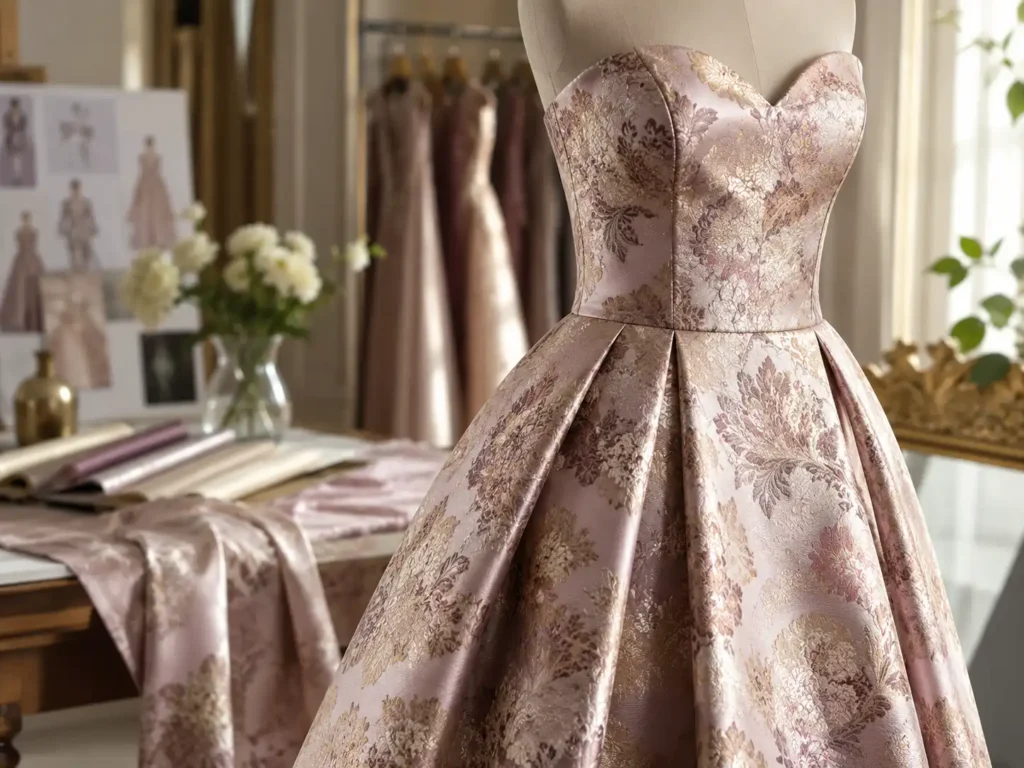
Satin Brocade
- Review: shine direction, seam show-through, and crease recovery.
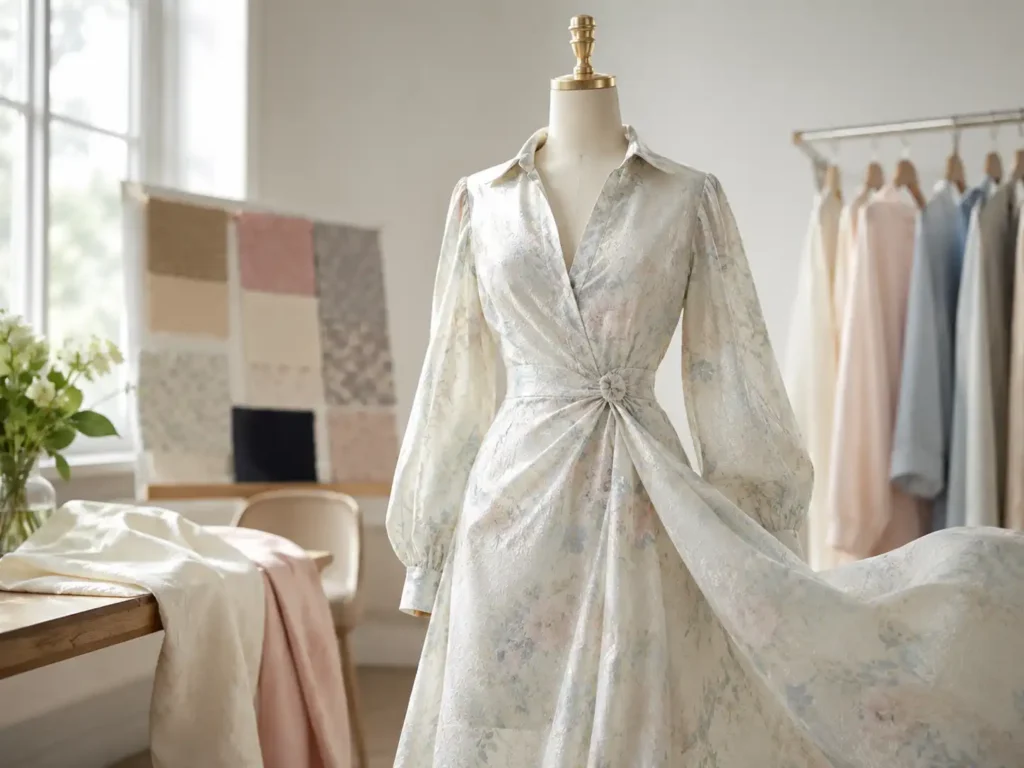
Lightweight Jacquard
- Review: drape, opacity, edge stability, and lining weight.
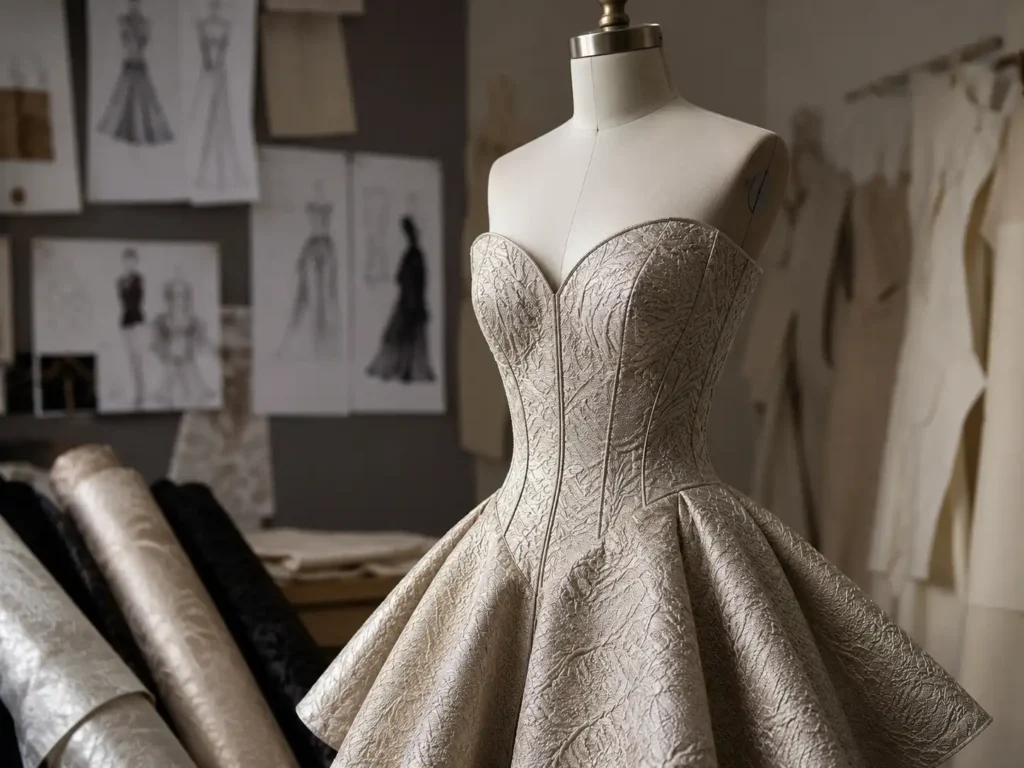
Structured Jacquard
- Review: bend recovery, seam bulk, fit ease, and support balance.
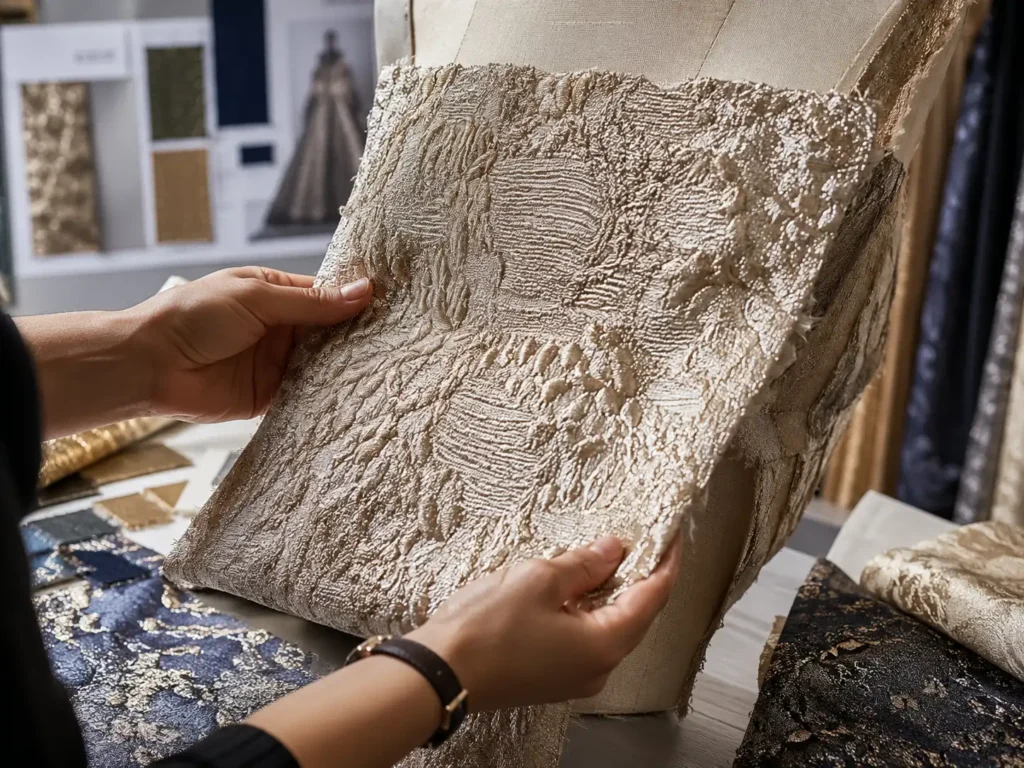
Textured Woven Brocade
- Review: texture consistency, crushing risk, and acceptable visual variation.
Match Brocade Weight to Dress Silhouette
Lorem ipsum dolor sit amet, consectetur adipiscing elit. Ut elit tellus, luctus nec ullamcorper mattis, pulvinar dapibus leo.
| Fabric Direction | Best Silhouettes | Support Need | Main Production Risk | Common Use |
|---|---|---|---|---|
| Lightweight jacquard | Mini, shirt dress, soft sleeve midi | Light lining or selective reinforcement | Fraying, transparency, seam movement | Spring, transitional, daytime occasion |
| Medium floral brocade | A-line, fit-and-flare, cocktail midi | Full lining; selective interfacing | Motif mismatch, waist bulk | Wedding guest, eventwear, premium retail |
| Structured jacquard | Corset, sculpted mini, full skirt | Underlining, boning or waist support as needed | Restricted movement, thick seams | Partywear, statement occasionwear |
| Metallic brocade | Cocktail, holiday mini, evening midi | Soft lining; protected seam finishing | Snagging, pressure marks, reflection variation | Holiday, party, evening capsule |
| Satin brocade | Column, slip-inspired, shaped midi | Smooth lining; controlled interfacing | Seam impression, glazing, creasing | Eveningwear, cocktail, premium ecommerce |
| Heavy decorative brocade | Formal gown, structured coat dress | Full structural plan and weight review | Garment weight, transport creases, seam thickness | Formal events and limited premium programs |
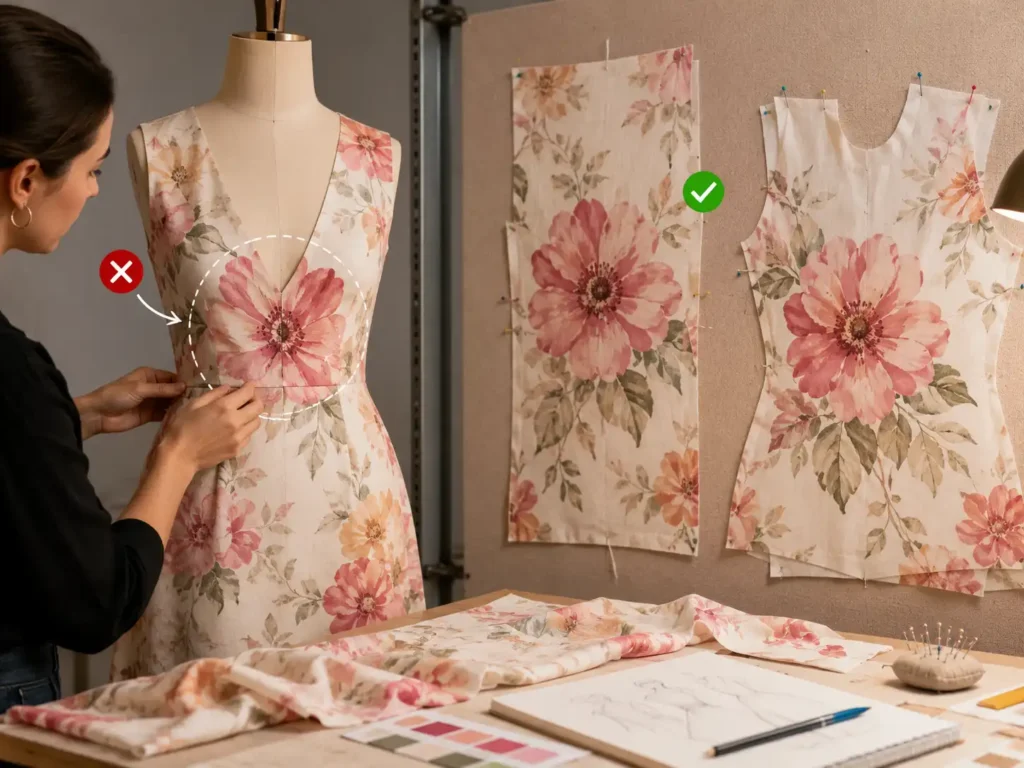
Motif Placement Starts Before Cutting
Large repeats and directional motifs require a defined visual rule before fabric is spread. Jinfeng Apparel links design intent, pattern shape, marker efficiency, and acceptable bulk variation in one approval process.
Center-Front and Focal Placement
The first decision is whether a dominant motif should sit on center front, center back, bust line, waist, neckline, or skirt panel. A marked sample or placement diagram gives production a visible reference. For symmetrical dresses, focal motifs may need alignment across princess seams or mirrored bodice sections. When the repeat is larger than the smallest pattern piece, each size is reviewed so grading does not move the motif into an awkward position. A visually strong sample cannot be treated as a random result; the placement rule must be written into the cutting and inspection standard.
- Reference point: center front, waist seam, bust apex, neckline, hem border, or selected design line.
- Allowed movement: define a realistic tolerance based on repeat scale and fabric availability.
- Size review: check the focal motif on small, base, and large sizes before final grading approval.
Left-Right Symmetry and Panel Balance
Mirrored motifs can create a premium appearance, but exact symmetry may increase consumption significantly.
The product team decides where symmetry is commercially essential: bodice fronts, collar points, sleeves, pocket flaps, or skirt panels.
Less visible areas may use controlled balance rather than exact matching.
A clear hierarchy prevents unnecessary fabric waste while protecting the areas most visible in product photography.
Sleeve pairs, front panels, and side sections are bundled with direction marks so sewing teams do not mix pieces.
Repeat Size and Marker Efficiency
Fabric consumption rises when markers must skip forward to reach the next suitable repeat. Wide repeats, border designs, large medallions, and directional shine can reduce normal nesting efficiency. Costing therefore includes fabric width, repeat length, size ratio, style count, defect allowance, and placement rule. A visually perfect sample made from unrestricted fabric cannot become the costing standard unless the same rule is feasible for bulk. Jinfeng Apparel reviews placement and estimated consumption before a production quotation is finalized.
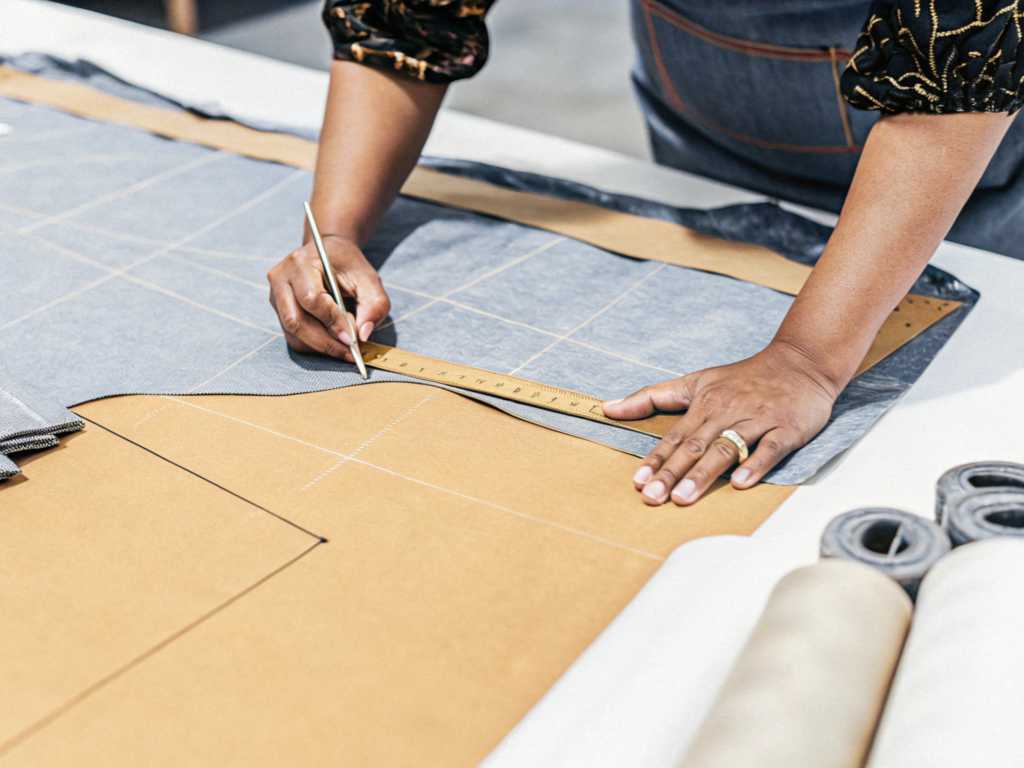
Cutting Marker Approval
Before bulk cutting, approved patterns, fabric face, direction, placement points, bundle size, and roll allocation are checked. A first lay or first-piece set can be reviewed for critical styles. Cutting records separate fabric rolls and shade groups. Pattern version and size markers are confirmed to prevent outdated revisions from entering production. Brocade cutting is treated as a controlled visual process, not only a quantity process.

Pattern Development for Structured Brocade Dresses
Brocade stiffness, thickness, and repeat scale can alter fit even when the design lines remain unchanged. Pattern engineering begins with the chosen fabric rather than a generic dress block.
Silhouette Must Match Fabric Behavior
A structured brocade can support a clear A-line or sculpted sleeve, but the same stiffness can restrict a fitted hip, armhole, or narrow skirt. The pattern team reviews ease, dart control, princess seams, waist placement, side seam balance, neckline shape, sleeve mobility, slit length, and hem volume. Fabric substitution is never treated as a simple material swap when weight, stretch, or bend recovery changes. A previously approved pattern may need correction before a new fabric is sampled.
Seam Lines Can Frame or Break the Motif
Pattern lines should either preserve the woven design or use it deliberately. Center seams may interrupt a floral medallion; princess seams may create attractive mirroring; waist seams can frame a border; panel seams can reduce bulk or improve shape. The development team reviews both fit function and visual consequence. Fewer seams may protect a large motif, while strategic seams may improve bust and waist shaping. Each decision is recorded in the tech pack or development notes.
Grading Needs Visual and Measurement Review
Size grading changes panel width, seam position, neckline depth, armhole, and length. With large motifs, grading can shift a focal element away from the approved visual position. Jinfeng Apparel reviews base-size fit first, then checks graded measurements and visual placement across the size range. Multiple sizes can be produced inside the confirmed quantity, with a brand-supplied size chart and size ratio. Pattern records, measurement tables, and approved comments are retained for repeat orders.
Lining and Support Built Around the Fabric

Full Lining
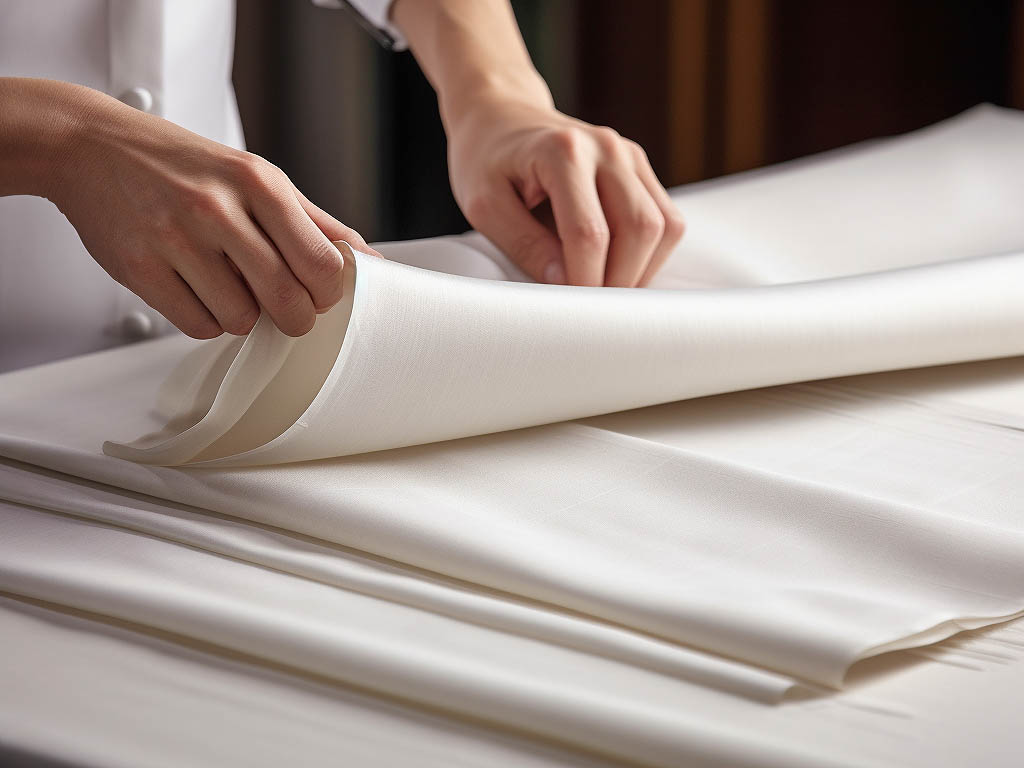
Selective Interfacing

Underlining

Boning Support
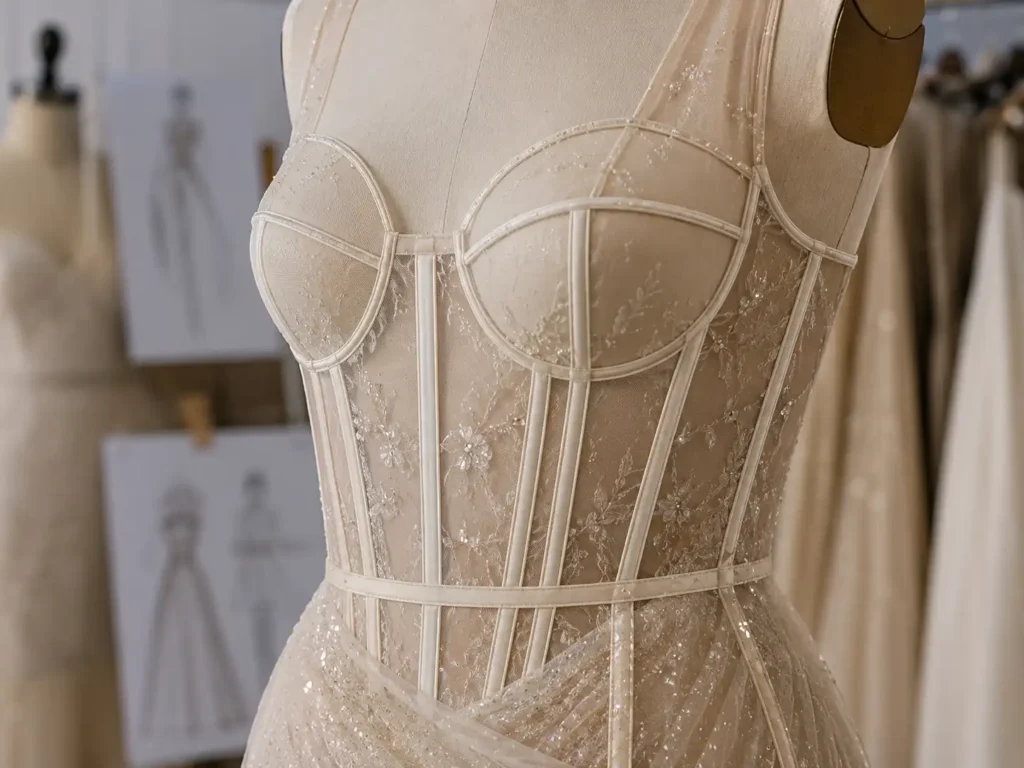
Bra Cups

Waist and Hem Support
Customize Brocade Dresses Without Losing Fabric Impact
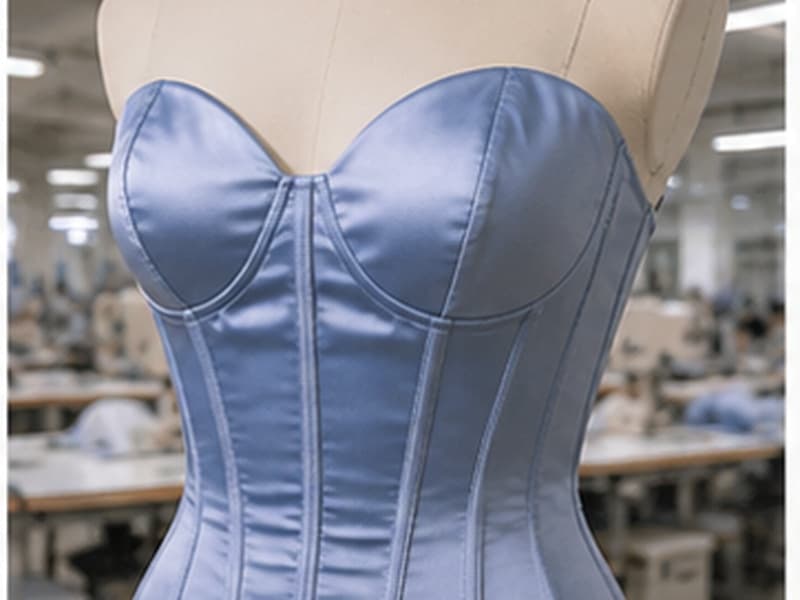
Corset Bodice
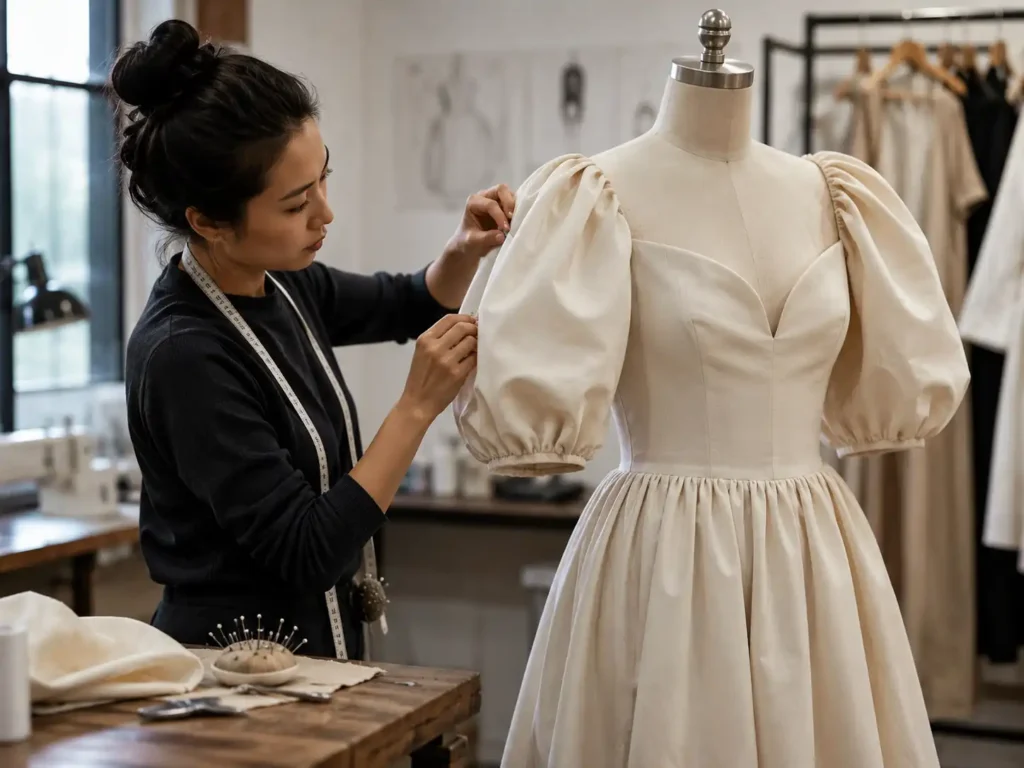
Puff Sleeves

Square Neckline
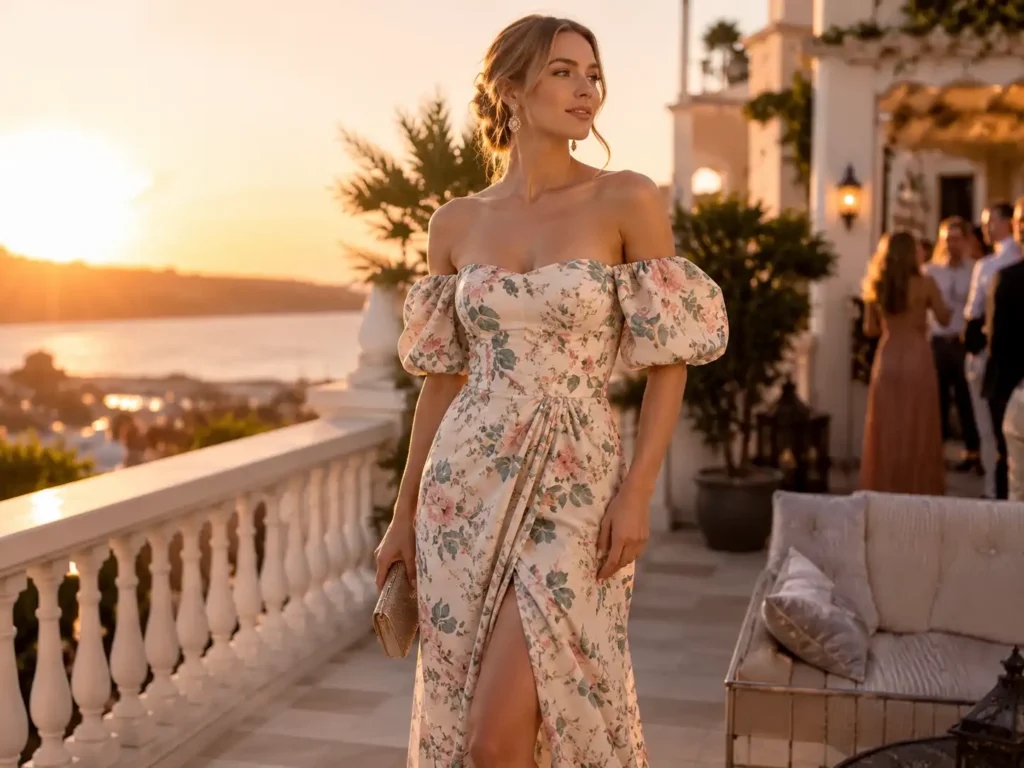
Off-Shoulder Shape
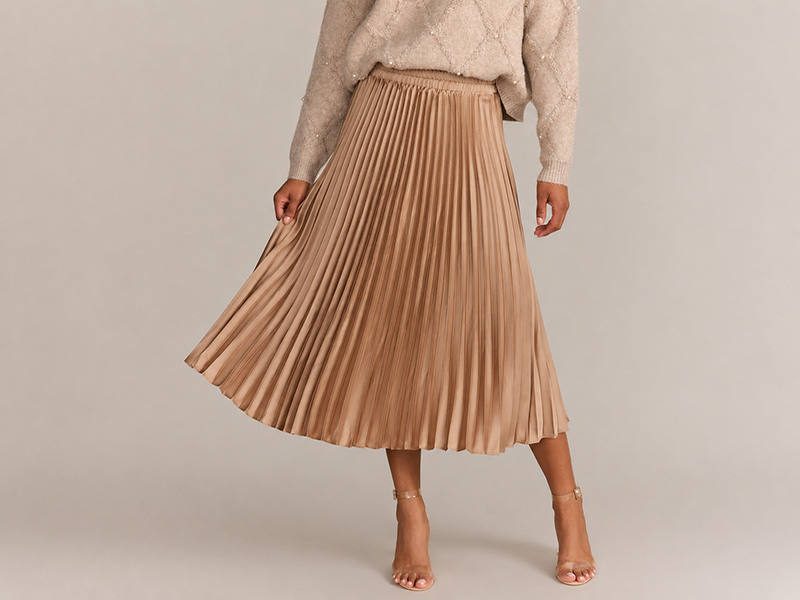
Pleated Skirt

Bow Detail

Contrast Panels
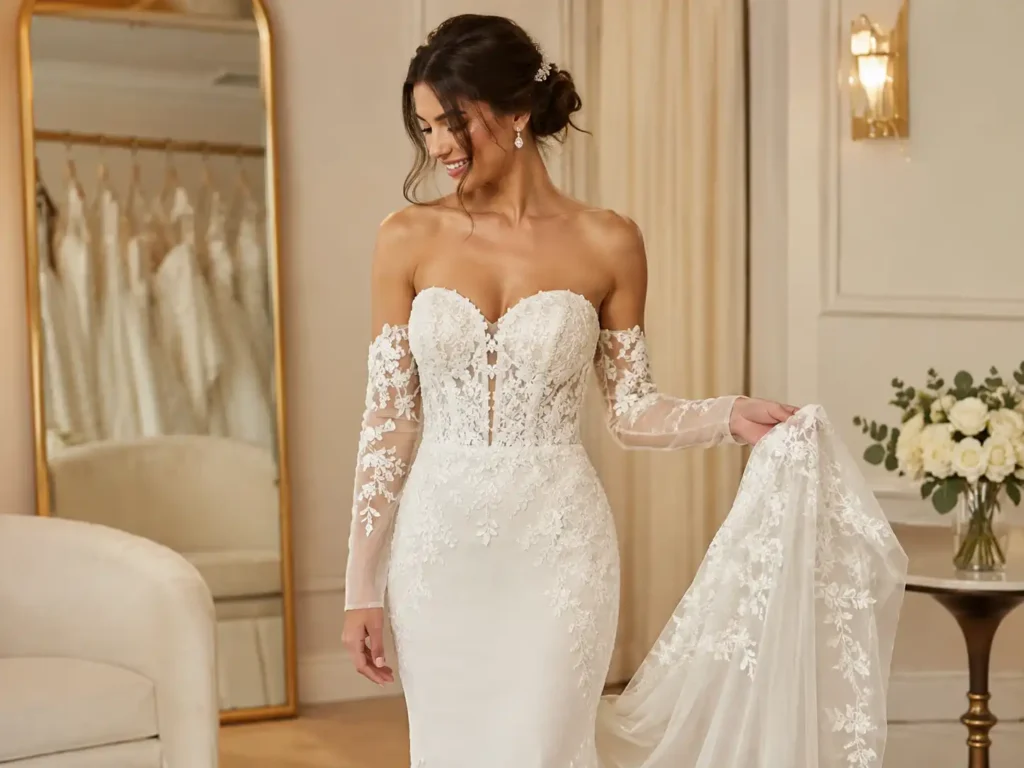
Detachable Elements

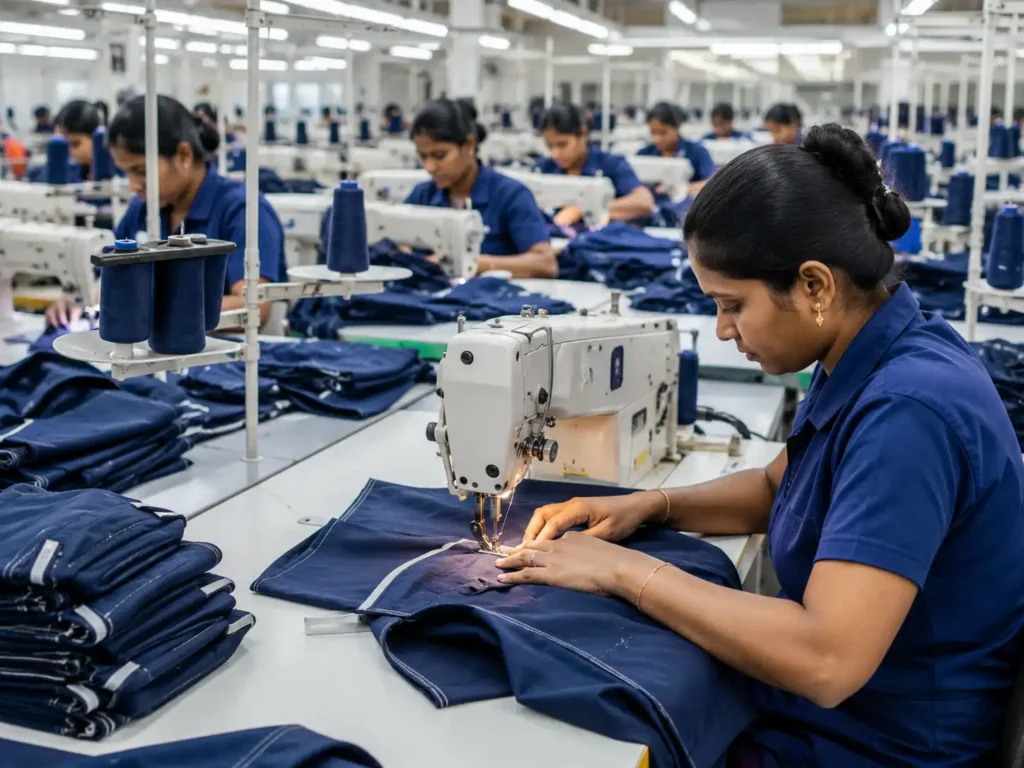
Sewing Methods for Dense Woven Fabrics
Clean workmanship depends on matching stitch, seam, layer, closure, and pressing choices to the approved brocade. Bulk standards are set from tested samples rather than generic sewing instructions.
- Needle, Thread and Stitch Balance
Needle selection must penetrate the weave without cutting decorative yarns or leaving oversized holes. Thread should support seam strength while remaining visually compatible with the fabric. Stitch density is balanced to avoid weak seams on one side and perforation or puckering on the other. Test seams are reviewed for broken yarn, skipped stitches, abrasion, puckering, and recovery after pressing. Metallic or raised surfaces may require lower friction and more frequent inspection during sewing. - Seam Allowance and Layer Grading
Dense brocade creates thickness at princess seams, waist joins, facings, darts, pleats, and zipper ends. Seam allowances are selected for construction, fraying control, and possible alteration. Layer grading reduces ridges and helps facings turn cleanly. Overlocking, binding, clean finishing, or lining enclosure is chosen according to the fabric edge and price position. Excess trimming is avoided where it could expose woven floats or weaken the seam. - Zipper and Closure Control
Invisible zippers can wave or bulge when inserted into thick seams. The zipper area may need stabilized seam allowance, reduced layer thickness, controlled pressing, and a suitable zipper specification. Hooks, snaps, buttons, or metal zippers are matched to garment weight and wearing stress. Closure position is checked on the body because brocade stiffness can transfer tension to the zipper top, waist, or neckline. - Inline Workmanship Standards
Bulk teams receive approved samples, pattern versions, measurement files, construction details, placement references, and packing instructions. First-piece approval checks seam shape, motif alignment, zipper condition, lining, internal support, and pressing. Inline inspection detects repeated defects before a full batch is completed. Correction at an early stage protects yield and reduces rework more effectively than relying on final inspection alone.
Control the Areas That Reveal Poor Workmanship
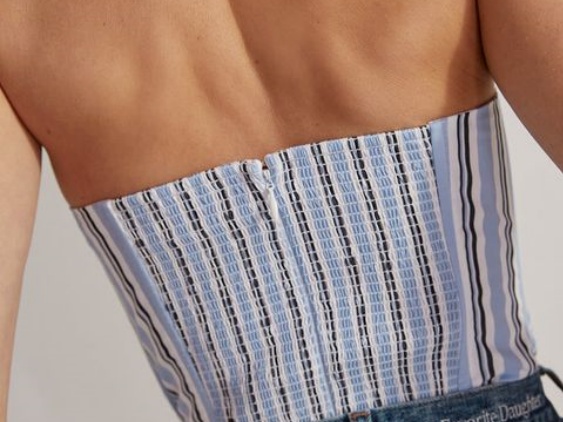
Invisible Zipper

Waist Seam

Neckline Edge

Sleeve Seam

Hem Finish
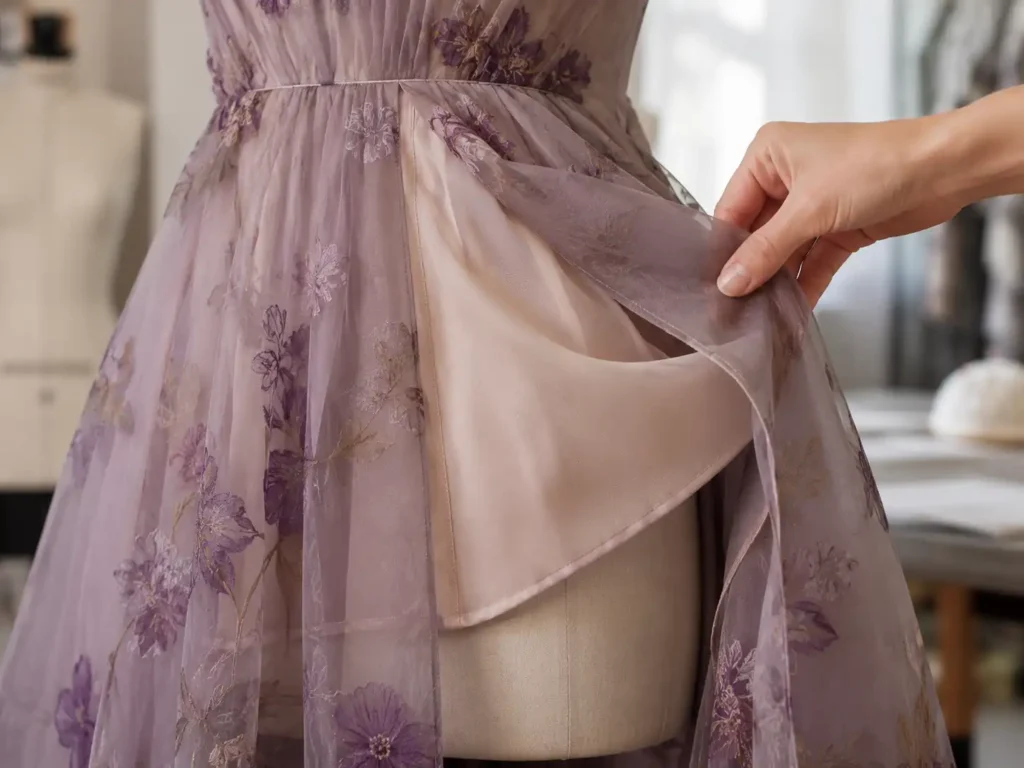
Lining Attachment
What We Review Before Brocade Sampling
Design Views
Needed for: construction and visual placement review.
Measurements
Needed for: fit, grade rule, sample checking, and bulk QC.
Fabric Direction
Needed for: material matching, consumption, and MOQ evaluation.
Trims and Support
Needed for: sample accuracy, cost, and supplier minimums.
Quantity Plan
Needed for: quotation and production scheduling.
Launch and Delivery
Needed for: calendar risk review and shipment coordination.
From Fabric Direction to Approved Brocade Sample
Project Review
Fabric Swatch
Pattern Development
First Sample
Fit Review
Revised Sample
PP Sample
Golden Sample

Lock the Bulk Standard Before Production
PP approval is the control point between development and production. Fabric, pattern, measurements, construction, labels, finishing, and packing must be aligned before bulk materials and lines are committed.
What the PP Sample Locks
The PP sample confirms approved fabric article, face, color, motif direction, pattern version, size, measurements, lining, interfacing, cups, boning, zipper, trims, seam method, pressing, labels, and intended packing. Any remaining deviation is documented and resolved before production release. A photo sample may be optimized for image timing, but it does not automatically replace the PP sample unless all bulk standards are identical and formally approved.
Why a First Sample Is Not Enough
First samples often use available fabric, temporary trims, provisional labels, or incomplete packing. Fit and visual corrections may still be open. Moving directly from a first sample into bulk increases the risk of wrong fabric, outdated pattern, inconsistent support, and unapproved measurements. Jinfeng Apparel separates first, revised, photo-ready, PP, and golden samples by purpose so development decisions remain traceable.
How Approval Enters Production
The approved standard is translated into pattern files, measurement tables, construction notes, BOM, motif references, fabric and trim approvals, label files, packing instructions, and inspection checkpoints. Production, merchandising, QC, and packing teams work from the same approved information. Changes after PP approval are controlled because late revisions can affect fabric use, cost, schedule, and finished consistency.
Bulk Production Managed by Product Risk
Production planning follows material readiness, style complexity, approved standards, quantity, color plan, and launch schedule. Brocade risks are controlled at incoming, cutting, sewing, finishing, and packing stages.
- Incoming Fabric and Roll Control
Fabric is reviewed for article, composition records, color, width, repeat, hand feel, surface condition, defects, shrinkage requirements, and available documentation. Rolls are identified so shade groups and surface variation can be managed. Metallic yarn damage, raised motif defects, stains, pulls, and pressure marks are checked before cutting. Findings are compared with the approved swatch and order requirements.
- Cutting and Bundle Control
Fabric face, direction, repeat, marker version, focal placement, size, quantity, and roll allocation are confirmed. Critical styles may use first lay or first-piece review. Cut panels are bundled by size, shade group, and direction. Clear identification reduces panel mixing and protects left-right balance. Cutting loss is recorded against the planned consumption, especially where large repeats and exact motif placement are required.
- First-Piece and Inline Control
The first sewn garment is reviewed for motif position, seam shape, zipper, lining, internal support, measurements, pressing, and overall silhouette. Inline checks focus on repeated defects such as seam puckering, broken decorative yarn, uneven waistlines, sleeve imbalance, lining tension, and surface damage. Early corrective action prevents the same defect from spreading across the order.
- Finishing, Packing and Shipment Release
Finished dresses are checked for measurements, appearance, symmetry, stains, snags, loose threads, zipper condition, hem balance, lining exposure, motif consistency, pressing, labels, barcodes, size stickers, folding, and carton assortment. Shipment release follows the agreed inspection and documentation process. AQL inspection or third-party inspection can be coordinated when specified by the order.

Quality Control from Fabric to Packed Carton
Incoming Fabric QC
Cutting QC
Inline Sewing QC
Measurement QC
Finished Garment QC
Packing QC
Brocade Dress Quality Checkpoints
The control plan below connects each production stage with common brocade risks and the evidence needed for release. Final standards can be adapted to the approved tech pack, inspection level, and warehouse requirements.
| Stage | Inspection Point | Typical Risk | Control Method | Approval Evidence |
|---|---|---|---|---|
| Fabric receipt | Article, color, width, repeat, face, surface | Batch variation, pulls, metallic damage | Roll identification and inspection | Approved swatch and fabric record |
| Cutting | Direction, motif center, symmetry, size marker | Misalignment, shade mix, outdated pattern | Marker review and bundle control | Placement reference and cutting record |
| Sewing | Seams, zipper, lining, support, measurements | Puckering, seam bulk, yarn breakage | First-piece and inline inspection | Approved construction notes |
| Finishing | Pressing, texture, hem, appearance | Glazing, crushed motif, pressure marks | Fabric-specific finishing standard | Golden sample comparison |
| Packing | Labels, SKU, folding, protection, cartons | Snagging, creasing, assortment errors | Packing checklist and carton review | Packing instruction and shipment photos |

Support Multi-Style Brocade Collections at Scale
Jinfeng Apparel combines owned factories, long-term production partners, sample rooms, merchandising, QC, and packing teams to manage multi-style women’s fashion programs without treating every style as an isolated order.
- Collection Planning by Style Family
Programs with 10-30 styles are grouped by silhouette, fabric family, construction risk, approval status, and delivery priority. Brocade minis, structured midis, corset styles, and evening dresses may require different production routing. Hero styles, campaign samples, and first delivery quantities can receive earlier development attention. Grouping reduces repeated setup and improves control of fabric, trims, labels, and packing instructions.
- Factory Allocation by Product Risk
Jinfeng Apparel operates six owned women’s fashion factories and works with more than ten long-term satellite production partners. Allocation is based on product structure, material behavior, order volume, schedule, and approved quality standard. Capacity is not treated as a fixed promise before fabric readiness and style complexity are known. The production plan is confirmed after sample approval, quantity review, and material booking.
- Program Records Support Repeat Orders
Patterns, measurements, fabric references, trim details, construction notes, labels, packing requirements, QC records, and revision comments are retained for repeat-order support. Same-style same-color repeats can move more efficiently when approved materials remain available. New colors, changed fabrics, or modified constructions are reviewed as new variables because MOQ, fit, and lead time can change.
Private-Label Brocade Dresses Ready for Your Market

Woven Labels

Hangtags
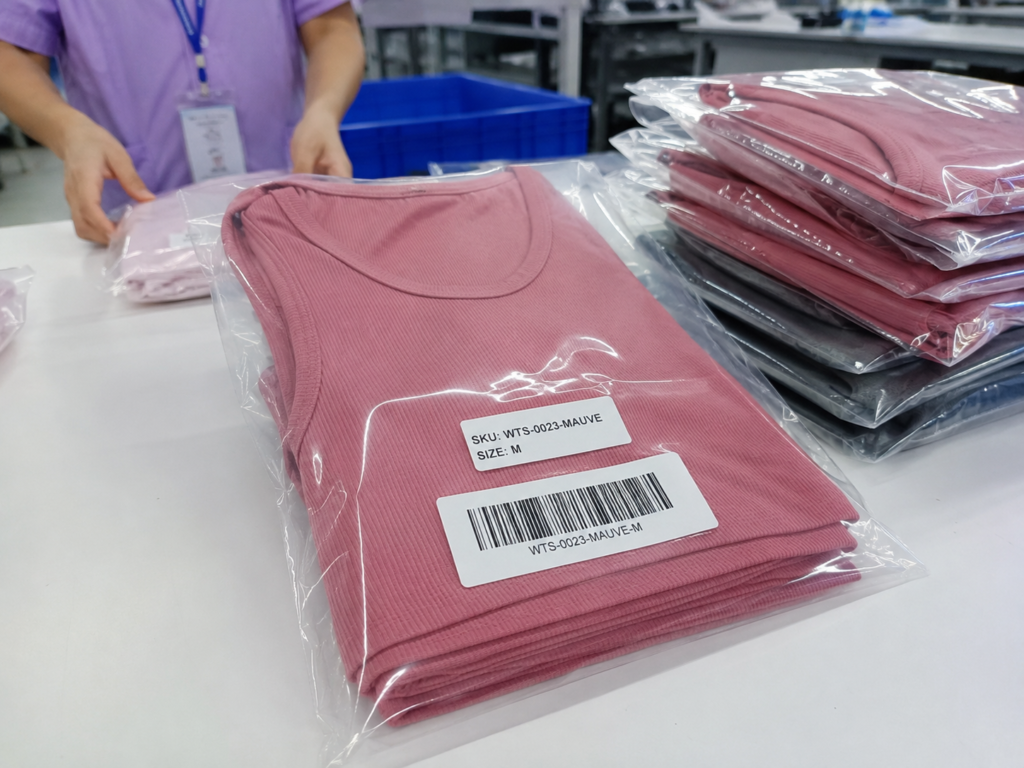
Barcode and SKU

Protective Packing
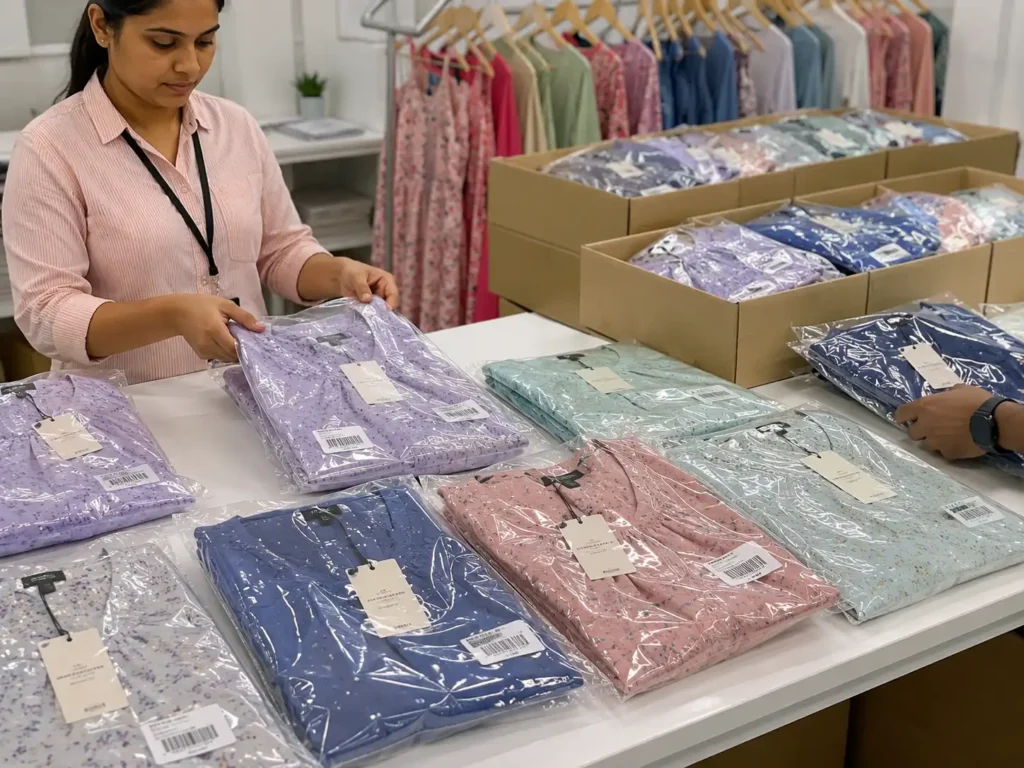
Retail Packing
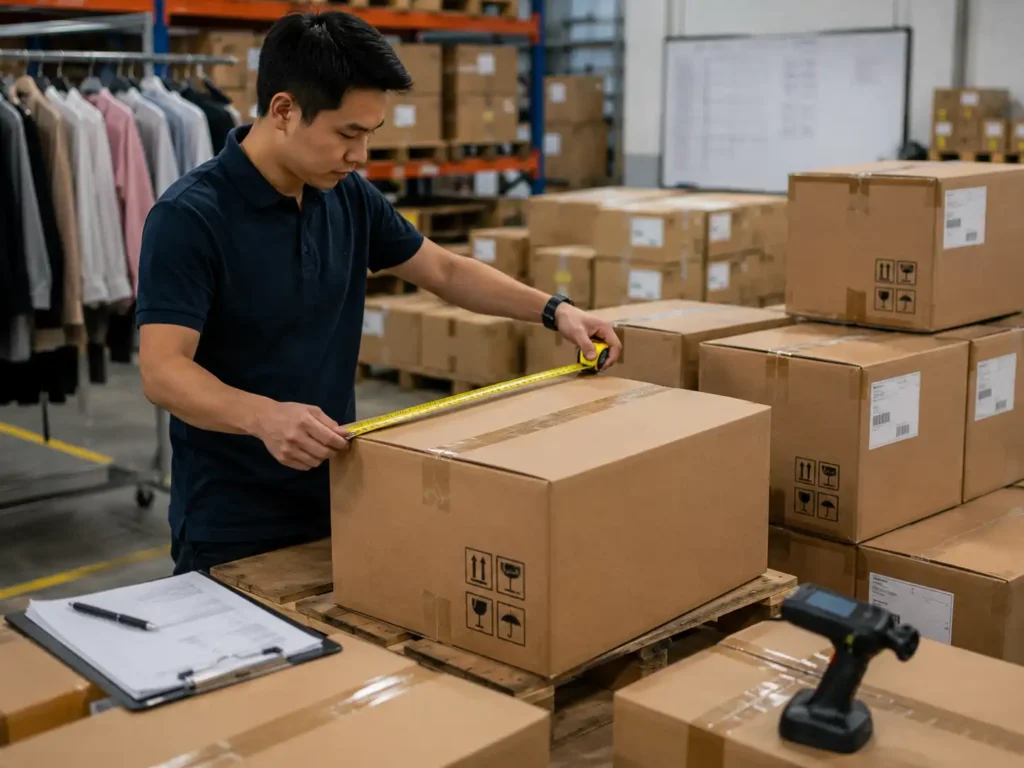
Export Cartons
Brocade Dress Development in Real Program Scenarios
US Occasionwear Collection - 18 Styles / 42,600 Pieces
- Program data: 18 styles, 42,600 pieces, 4 brocade qualities, 5 size points, 2 delivery batches.
- Key control: motif center, corset layer thickness, zipper shape, and protective folding.
- Result: consistent campaign presentation across multiple silhouettes with controlled fabric loss.
UK Premium Ecommerce Collection - 24 Styles / 67,200 Pieces
- Program data: 24 styles, 67,200 pieces, 5 fabric directions, XS-XXL, 3 major color groups.
- Key control: photography reflection, size tolerance, metallic snagging, and SKU accuracy.
- Result: stable visual standards across a wide assortment and clearer repeat-order records.
Australian Wedding Guest Program - 12 Styles / 28,800 Pieces
- Program data: 12 styles, 28,800 pieces, 2 color families, XS-XL, split shipment plan.
- Key control: movement, lining comfort, hem balance, border placement, and shipping creases.
- Result: structured eventwear with stable fit and a repeat-ready specification archive.
See How Brocade Dresses Move Through Production

Fabric Swatch Review
Motif Placement
Pattern and Cutting
Sewing Details
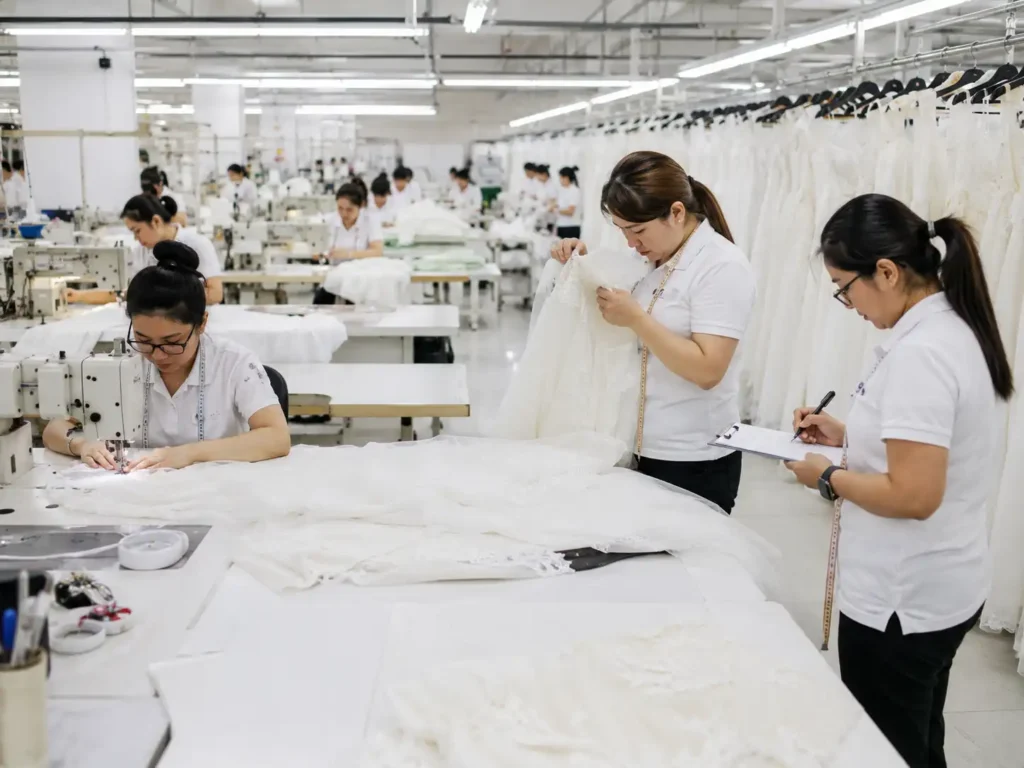
Garment QC

Packing and Cartons
Protect Unreleased Brocade Collections
Protected Development Files
Protected Brand Information
Brand name, product codes, target prices, order quantities, launch dates, label artwork, barcode files, packaging designs, warehouse guides, and supply-chain information are not published without authorization. Public case content can be anonymized by market, product type, challenge, and solution.
Controlled Sample Use
Brocade Dress Manufacturing Frequently Asked Questions
MOQ starts from 200 pcs per style/color, depending on fabric availability, color development, trims, construction complexity, packaging, and production schedule. Multiple styles totaling 200 pieces do not meet the standard MOQ. One style in two colors normally requires 200 pieces per color.
Yes. Jinfeng Apparel can review stock brocade, jacquard, metallic, satin-brocade, and specially developed fabric directions. Custom-woven, custom-dyed, exclusive, certified, or metallic articles may require higher supplier MOQ, additional approval time, and separate color or yarn confirmation.
Yes. A reference image can start the review, but accurate development also needs target measurements, size range, quantity, fabric direction, color, trims, target price, label requirements, and launch date. A tech pack or original sample improves pattern and construction accuracy.
The team defines fabric face, direction, repeat, focal position, symmetry rule, size impact, and acceptable placement range before cutting. Critical styles can use a marked sample, placement diagram, first lay, or first-piece approval. Bulk cutting follows the approved pattern and marker version.
Yes, subject to fabric review. Metallic yarn can increase snagging, pressure marks, reflection variation, and pressing risk. The selected article is checked for surface condition, handling, seam behavior, lining, finishing, and protective packing before bulk production.
Timing is confirmed after fabric availability, style complexity, trims, support layers, and required sample type are reviewed. Brocade development may include fabric swatch approval, first sample, fit review, revised sample, photo-ready sample, PP sample, and golden sample. Clear files and quick approvals reduce avoidable delay.
Yes. Multiple sizes can be distributed inside the confirmed style/color quantity according to the approved size chart and size ratio. Grading, motif placement, measurement tolerance, labels, packing ratio, and carton assortment are reviewed before bulk production.
Yes. Woven labels, size labels, care labels, hangtags, barcode stickers, polybags, dust bags, retail packaging, carton marks, and SKU packing can be arranged. Some label and packaging items have independent supplier MOQ and approval requirements.
Yes. NDA-based cooperation can cover tech packs, samples, patterns, fabric details, motif files, trims, private-label artwork, packaging, unpublished designs, order quantities, target prices, and launch schedules. Project files are handled only for the assigned development and production work.
Please send product type, reference image or tech pack, quantity per style/color, size range, fabric preference, color plan, trims, labels, packaging, target delivery, shipping destination, and testing requirements. Complete information supports a more accurate material, sampling, cost, MOQ, and schedule review.

Start Your Brocade Dress Project
Send the available development files and commercial requirements to Kelly. Jinfeng Apparel will review product structure, fabric direction, motif risk, MOQ fit, sample needs, private-label requirements, and production feasibility before proposing the next step.
A reference image can begin the conversation, while a tech pack, size chart, BOM, original sample, fabric swatch, quantity breakdown, and launch calendar allow a more accurate review. Brocade quotations depend on fabric article, width, repeat, placement rule, lining, support, construction, size range, order quantity, packaging, testing, and delivery conditions.
Clear information helps the team avoid vague assumptions and provide a focused sampling or quotation plan.
- Reference image, sketch, tech pack, line sheet, or original sample photo
- Quantity per style/color and expected size ratio
- Brocade or jacquard fabric preference, color, repeat, and target hand feel
- Lining, cups, boning, zipper, trims, labels, and packaging requirements
- Target price, launch date, shipping destination, and appointed forwarder details
- Testing, audit, AQL, warehouse, barcode, or carton requirements